Ars enters VR and destroys multiple starships in Star Trek: Bridge Crew
[embedded content]
Ars plays Star Trek: Bridge Crew
Ars and Star Trek go together, as the great philosopher once said, like peas and carrots. You won’t find a dorkier bunch of editors assembled in any one place on the entire Internet—and that’s why playing Star Trek: Bridge Crew was such an easy fit.
The VR title, originally announced almost a year ago and now available for everyone, was a big hit here in the Ars Orbiting HQ. Even before the game’s final release, we found ourselves seated in the bridge of the Federation starship USS Aegis, ready to make the Alpha Quadrant great again—even if we had to kill a few Klingons to do it. Hopefully more than a few, in fact!
Enlarge/ Artist’s impression of the aftermath of our mission.
Our crew consists of Ars Gaming Editor Kyle Orland, Ars Culture Editor Sam Machkovech, Ars Executive Video Producer S.I. Newhouse, and me. Now, dear reader, allow me to pause for a moment and prepare you: based on our impeccable credentials, I know that this news will come as somewhat of a shock, but once we sat down and got going, things quickly became…very silly.
Ars apologizes both for the limited point of view in the video—only my recording ended up being usable, so you get to see only what I saw—and also for the puerility and dumbness of the resulting product. In our defense, I can only say that when confronted with new and fantastical surroundings, it is human nature to retreat into the familiar or the absurd. And this video gets pretty absurd indeed.
Update: Our in-house editor Jennifer Hahn has a second, longer cut of our gameplay viewable here, in case your morning wasn’t silly enough already.
https://arstechnica.com/?p=1120473
Ars Christmas downtime special: four movies retold as medieval tales
Merry Christmas and happy holidays to you all, beloved readers! It’s the day after Christmas and the vast majority of the Ars staff is enjoying their well-earned vacations and preparing to return to work and tackle the new year, but a few of us—Megan, Sam the Red, Dr. Jay, and I—are holding down the fort here for the back half of the week. With Ken, Eric, and Nate out, that means they have foolishly left me in charge of things. It’s a bit like when the Enterprise’s real crew goes to bed and the night crew takes over!
Because doing real work is difficult and boring, I’ve been coming up with creative ways to dodge actual responsibilities and do fun stuff instead, and a tweet from @pinstripedline provided exactly the right inspiration for exactly the right kind of work-dodging. To wit:
For those unfamiliar with this particular meme format, this is a recreation of a scene from Die Hard in the style of the Bayeux Tapestry. It’s a somewhat older meme format, having first surfaced roundabouts 2004-ish, but it’s always been one of my favorite bits of Internet silliness. Seeing that frame from Die Hard made something click in my brain, and suddenly the medieval meme possibilities seemed endless.
And so, I present the following four films, retold as medieval tapestries courtesy of the Historic Tale Construction Kit. The Ars front page will return to normal in a few days; if this silliness doth offend, think of that, and all shall mend.
Commando: the tale of Sir Jon of Matrix
Evente Horizone
Ye Silence of ye Lambs
William and Theodore’s Most Excellent Adventure
Alexander Turnbough / EyeEm / Getty
Alexander Turnbough / EyeEm / Getty
https://arstechnica.com/?p=1432999
Study: modern masters like Jackson Pollock were “intuitive physicists”
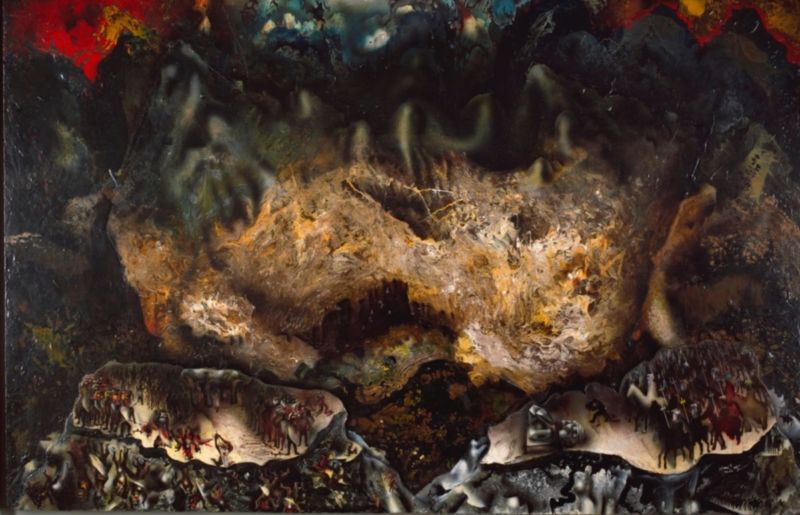
Enlarge/Collective Suicide (1936), by Mexican muralist David A. Siqueiros, is an example of the “accidental painting” technique developed by the artist.
There’s rarely time to write about every cool science story that comes our way. So this year, we’re running a special Twelve Days of Christmas series of posts, highlighting one story that fell through the cracks each day, from December 25 through January 5. Today: the fluid dynamics of modern painting techniques.
In the 1930s, a small group of New York City artist—including Mexican muralist David A. Siqueiros and Jackson Pollock—began experimenting with novel painting techniques and materials. For the last few years, a team of Mexican physicists has been studying the physics of fluids at work in those techniques, concluding that the artists were “intuitive physicists,” using science to create timeless art.
“One of the things I have come to realize is that painters have a deep understanding of fluid mechanics as they manipulate their materials,” said Roberto Zenit, a physicist who is leading the research at the National Autonomous University of Mexico. “This is what fluid mechanicians do. The objective is different, but the manipulation of these materials that flow is the same. So it is not a surprise that fluid mechanics has a lot to say about how artists paint.”
Zenit is not the first physicist to be fascinated by Pollock’s work in particular. Back in 2001, physicist Richard Taylor found evidence of fractal patterns in Pollock’s seemingly random drip patterns. His hypothesis met with considerable controversy, both from art historians and a few fellow physicists. In a 2006 paper published in Nature, Case University physicists Katherine Jones-Smith and Harsh Mathur claimed Taylor’s work was “seriously flawed” and “lacked the range of scales needed to be considered fractal.” (To prove the point, Jones-Smith created her own version of a fractal painting using Taylor’s criteria in about five minutes with Photoshop.)
Then in 2011, Boston College physicist Andrzej Herczynski and Harvard mathematician Lakshminarayanan Mahadevan collaborated with art historian Claude Cernuschi on an article for Physics Today examining Pollock’s use of a “coiling instability” in his paintings. This is basically a mathematical description for how a viscous fluid folds onto itself like a coiling rope—just like pouring cold maple syrup on pancakes. The patterns that form depend on how thick the fluid is (its viscosity) and how fast it’s moving. Thick fluids form straight lines when being spread rapidly across a canvas, but will form loops and squiggles and figure eights if poured slowly.
Pollock: “I can control the flow of paint. There is no accident.”
Herczynski et al. measured the thickness of lines and the radius of the coils in a Pollock painting showing this effect, and used that data to estimate the flow rate of the paint as the artist’s hand moved across the canvas. Pollock was also known to play with texture and viscosity when mixing his paints, often adding solvents to make them thicker or thinner. This, combined with the 2011 analysis, suggests that Pollock relied heavily on physics when painting. There’s even 1950 video footage of Pollock at work, in which he asserts, “I can control the flow of paint. There is no accident.”
Zenit’s interest, however, began with Siqueiros. Art historian Sandra Zetina contacted him about her suspicion that fluid dynamics played a role in Siqueiros’ techniques. Zenit learned about the artist’s 1936 experimental workshop in New York to encourage his fellow artists to abandon classic painting techniques and experiment with other ways of painting. (A young Jackson Pollock was among the attendees.) They used less viscous house paint instead of oils, and used wood and other unusual surfaces rather than canvas. That’s how Siqueiros came up with his famous “accidental painting” technique.
The technique involves pouring layers of paint on a horizontal surface and letting whorls, blobs, and other shapes form over time. Zenit and his colleagues were able to replicate the patterns formed by this technique using their own experimental apparatus, essentially placing a dense fluid on top of a lighter one. This creates a classic instability, because the heavier liquid will push through the lighter one. They published those results in PLOS One in 2015. According to Zenit, Pollock’s own dripping technique relies upon the same instability to produce curly lines and spots on his canvases.
Bottom center-right detail from David A. Siqueiros’ “Collective Suicide.”
A. Aviram, MoMA/Roberto Zenit
“No. 32” by Jackson Pollock is a classic example of his famous dripping technique.
Example of Jackson Pollock’s “flying catenary” technique.
Roberto Zenit
“Lion-bicyclette” (1937) by Oscar Dominguez is an example of the “decalcomania” technique.
Roberto Zenit
“Fetiche y tabú 28” (2017) by Octavio Moctezuma, part of an ongoing collaboration on the fluid dynamics of watercolor techniques.
At a meeting of the APS Division of Fluid Dynamics in November, Zenit summarized this earlier work and also gave a preview of ongoing research into three other painting techniques. The first is the “flying filament” or “flying catenary” technique used by Pollock before he had perfected dripping. Zenit and his colleagues recreated the fluid action by mounting a paint-filled brush on a rapidly rotating mechanical arm. The paint forms various viscous filaments, which are thrown against a vertical canvas.
Zenit is also studying something called the “decalcomania technique,” favored by such artists as Max Ernst, Oscar Dominguez, and Remedios Varo. It involves painting a surface and then covering it with a flexible sheet of plastic. Then the artist rips off the canvas, which removes a lot of the paint, but not in a uniform manner. “It forms these tree-like structures,” said Zenit. “In my field we call them fingers.” Preliminary results indicate the unusual patterns formed by this technique are the result of a specific type of instability that occurs when a less viscous fluid is injected into a more viscous one.
Finally, Zenit’s lab is investigating the fluid physics of watercolor painting, collaborating with a local Mexican artist named Octavio Moctezuma. “He comes to the lab with his materials and paints, and we film him,” said Zenit, the better to study the underlying physics. Because watercolors have such low viscosity, the dynamics are very different—and thus, the techniques artists employ are also different. Notably, it’s common for watercolors to exhibit the well-known coffee-ring effect.
“[Artists] learn about the flow of fluids through repetition and empiricism.”
Coffee rings are the pattern you get when a liquid evaporates and leaves behind a ring of previously dissolved solids—coffee grounds, in the case of your morning cup of joe. (You can also see the effect with single-malt scotch.) It forms because the liquid evaporates more quickly at the edges of the drop than at the center. So whatever liquid remains at the center flows outward to the edges, dragging particles with it. Those particles stick to the edge of the ring, forming a dark outline around the stain. Similarly, when a drop of watercolor paint dries, the pigment particles of color break outward, toward the rim of the drop.
So how do artists deal with the coffee ring effect if they don’t want that accumulation of pigment at the edges to happen? According to Zenit, adding alcohol to the watercolor paint can prevent it. Alternatively, an artist may wet the paper before applying the paint. “Instead of the drop remaining pinned the paper, the ink runs off,” he said. This allows the artist to play with various different effects, such as generating unusual color gradients.
“You see artists working and you immediately recognize that they know what they are doing, they know the physics,” said Zenit. “They just don’t have the formal training. They learn about the flow of fluids through repetition and empiricism. We’ve learned a lot about our own subject just by watching them work.”
[embedded content]
Courtesy of Roberto Zenit and Sandra Zetina, National Autonomous University of Mexico.
All we want for Christmas is the first trailer for Jordan Peele’s Us
Enlarge/ Adelaide (Lupita Nyong’o) tells her kids (Shahadi Wright Joseph and Evan Alex) to get their shoes on and be ready to run in Us.
YouTube/Universal
This Christmas Day, we get our first look at the trailer for Us, Jordan Peele’s much-anticipated follow-up to his 2017 film Get Out. And it looks viscerally terrifying in a way his first film, which opted for muted subtlety, was not.
Get Out was one of our favorite films of 2017, a subtle exploration of racial tensions that quietly builds to reveal its horrifying premise and inevitably bloody conclusion. It was a surprise box office hit, raking in more than $250 million globally, and snagging multiple Oscar nominations, including for Best Picture. Peele won the Oscar for best original screenplay—the first time the award has gone to a black recipient.
Us looks like more of a standard horror film, in the “home invasion by strange creatures” category. Adelaide (Lupita Nyong’o) and Gabe (Winston Duke) Wilson take their two kids (Shahadi Wright Joseph and Evan Alex) to the beach to relax and unwind with friends (one of whom is played by Elizabeth Moss). Their young son, Jason, encounters a strange figure on the beach, and that night the figure shows up at the house with three others. They break in, and that’s when the real terror begins. Because those figures are creepy doppelgängers of each family member. (Peele calls them “the Tethered.”)
Road trips for weekend getaways never bode well in a Jordan Peele film.
YouTube/Universal
The family members are dwarfed by their shadows—harbinger of what’s to come.
YouTube/Universal
Hey, it’s Elizabeth Moss, playing one of the family friends!
YouTube/Universal
Jason (Evan Alex) sees a mysterious figure on the beach.
YouTube/Universal
Blood dripping from fingers? Run away, Jason!
YouTube/Universal
Is there something out there?
YouTube/Universal
Not a sight we’d care to see lurking in our driveway at night.
YouTube/Universal
Who are the strangers? “They’re us.”
YouTube/Universal
The daughter’s doppelgänger (Shahadi Wright Joseph) is up to no good.
YouTube/Universal
A demented doppelgänger doesn’t belong in a classroom.
Shahadi Wright Joseph
Man, not even Elizabeth Moss is safe from the intruders.
Shahadi Wright Joseph
Adelaide (Lupita Nyong’o) tries to take out her doppelgänger.
YouTube/Universal
The monsters are probably going to be hard to kill.
YouTube/Universal
A weird lab with lots of rabbits.
YouTube/Universal
We are our own worst enemies, says Peele.
YouTube/Universal
Judging by the trailer, they’re also really violent, intent on killing their human doppelgängers—unless the family can kill them first. “For my second feature, I wanted to create a monster mythology,” Peele toldEntertainment Weekly. “I wanted to do something that was more firmly in the horror genre but still held on to my love of movies that are twisted but fun.”
This is still very much a Jordan Peele film, so there’s an artistry here often lacking from your average horror fare. This time the theme isn’t so much racial tension, as exploring, in Peele’s words, the ways in which “we are our own worst enemies.”
That theme seems to inform several scenes in the trailer—the family dwarfed by their own shadows as they walk along the beach, for instance. Peele has also amassed an impressive cast, all of whom play dual roles: their human selves and their creepy intruder selves. What actor wouldn’t want to tackle that kind of challenge? All in all, I think we’ll discover that Us will prove to be a hugely entertaining, intelligent horror film. We’d expect nothing less from Jordan Peele.
Us hits theaters March 19, 2019.
[embedded content]
Trailer for Jordan Peele’s Us.
https://arstechnica.com/?p=1432911
Hands-on with a $434 replica lightsaber: May the dork be with you
Ars tests an Ultra Saber replica lightsaber
Update: It’s Christmas day and Ars staffers are enjoying a winter break (inevitably filled with series binge-watching and fancy egg preparations). As such, we’re resurfacing a few favorites from the site archives appropriate for the occasion—like this review of what may possibly be the nerdiest (and most awesome) gift any of us could receive. This piece originally ran on December 17, 2016, and it appears unchanged below.
If you want to fake like a true Jedi master, your hardware options are limited. Robes and beards are easy enough to track down, but sword-like hilts that project concentrated beams of controlled, tactile light are still at least a few years out.
For those who insist on dressing in their finest Vrogas Vas linens and representing the Jedi Order in our own, simpler galaxy, replica lightsabers are the only way to go. I don’t mean the fold-up, whip-out toy sabers that you can buy at Target. For whatever reason, the legal eagles at the Disney/Lucasfilm trust have stood back and let custom saber makers run amok. As a result, you can now buy sabers that purport to be on par with movie set props—and aim to be the coolest dude in line for the next Star Wars film.
One of those manufacturers, Ultra Sabers, reached out to Ars ahead of Rogue One‘s premiere this week to see if we wanted to whip one of their rods around. As you can see in the above video, I most certainly whipped it.
Lights, sounds, and plastic bonks
Ultra Sabers’ “Dark Catalyst” model.
Sam Machkovech
Closer look at the handle.
Sam Machkovech
Power button.
Handle’s blade end.
Handle’s battery end.
This dull, domed tip helps project light around the entirety of the blade when powered on.
Ultra Sabers’ replica sabers start in the sub-$100 range, but if you want the kind of light-and-noise saber fun seen in the above video, you’ll spend no less than $150 for programmable light and sound options. Hilts, pommels, and other details can be customized as well. I went through Ultra Sabers’ site and built a maxed-out version of the “Dark Catalyst” handle, complete with a “V4” soundboard and a programmable blade (which uses WRGB light information to make the saber light up).
The total cost before shipping and tax? $434. Ohhh, maxi big da price!
You do get more for paying more; the customization options and build quality exceed what you’ll find at places like Disneyland’s own “build your own lightsaber” stations. The plasticky handle I received is solid and finished with a coating that has proven mostly smudge-proof in my on-and-off sabering over the past two weeks.
That build quality extends to the toy nature of this thing—meaning, you can, and are probably expected to, bang the plastic “blade” around, onto walls, cushions, and friends, without the blade portion coming loose from the handle or getting too dinged up with marks.
Insert a battery, hit a small power button, and the Jedi magic begins. The plastic casing and its domed tip do a good job of bouncing and projecting bright light through the entirety of the blade. Ultra Saber offers incredible uniform brightness with only a single light source.
The saber’s sound performance, on the other hand, may disappoint some hopeful Jedis. The main issue I found in my testing is with the accelerometer used to register sword swipes and trigger appropriate sound effects. It’s a binary, on-off trigger, so you won’t hear blade-whirr noises that reflect your speed or motion. Worse, this trigger just isn’t consistent. The unit is supposed to trigger noises due to both motion and blade impact, but I found the whirring didn’t trigger about a fourth of the time. (You can also quick-tap the power button to trigger an “impact” mode, in which a secondary color flashes and sounds trigger as if your saber is actively clashing with another saber.)
Let’s be clear: you’re a proud dork if you buy and own one of these things. That’s great. But your dorkiness shouldn’t be affected or diminished because your sick spin-and-jump move isn’t matched with a sick saber sound effect.
In better news, the saber sound options pre-loaded into Ultra Sabers’ “version four” sound chip are intense and Star Wars-worthy. Really, I’m amazed these sounds, in particular, don’t draw the ire of Lucasarts’ legal brass. A simple Windows app makes loading new compatible sound files into the saber’s circuit board easy. Reprogramming the blade’s colors is easy, too, should your Ultra Saber come built with a programmable light array. Once new sounds are loaded in, a long-press of the power button triggers a sound-selection process that works quickly and neatly. (Want a saber that makes loud tiger noises with every swipe? Meow, baby.)
All sound projects from the bottom of the handle, which makes sense in terms of how hands are likely to cover the rest of the handle. Indoors, this more than suffices, but the sound doesn’t project well when outdoors.
You could win this saber
Make no mistake: Ars is nowhere near an authority on replica lightsabers. This review isn’t an ironclad endorsement of Ultra Sabers’ offering, especially since I have yet to test any other high-end sabers. (I invite any saber makers in the wild to let us test their wares, so that I may become our staff’s leading replica saber critic.)
One thing I can say definitively at this time is that many nerds are manufacturing their own love-filled takes on lightsabers—or, at least, as much as they possibly can without bending the known rules of physics. This “Dark Catalyst” model has been fun to test, and while I wonder whether its $434 cost reflects Ultra Sabers’ BOM and R&D costs, I fully believe the price is right for the kind of Star Wars fan who would buy and use one of these in the first place.
That price will be far less for one of you, by the way: we’re giving away this Ars Technica-colored saber (black handle, orange default light, green “impact” light) as part of our annual charity drive. Head over there, read our official rules, and find out how this, or many other products reviewed by Ars over the past year, could be yours.
Listing image by Sam Machkovech
http://arstechnica.com/?p=1011703
Drawn together: The love affair between comics and games
Enlarge/ Ready to save the day, one side quest at a time.
Insomniac / Sony
Update: It’s Christmas Eve and Ars staffers are enjoying a winter break (inevitably filled with Santa horror movies and ample video game time). As such, we’re resurfacing a few favorites from the site archives touching on such topics—like this look at the intertwined lives of comic books and video games. This piece originally ran on November 25, 2008, and it appears unchanged below.
Growing up in the 1980s, video games and comic books were part of the regular media diet for America’s youth. Despite the fact that comics and games often featured similar storylines and protagonists, there was very limited overlap between the two industries; games weren’t yet advanced enough to compete with the rich art of the comic world. Witness: a Wolverine game in 2D, where the titular hero’s main attack was a kick.
While comic and game companies had worked together sporadically, they started joining forces more often during our teen years, usually with mixed results that left both gamers and comic fans largely indifferent. But over the past ten years, thanks to a couple of major successes, things have really taken off between the two camps, and the masses have responded with an enthusiasm that has made publishers of both industries sit up and take notice.
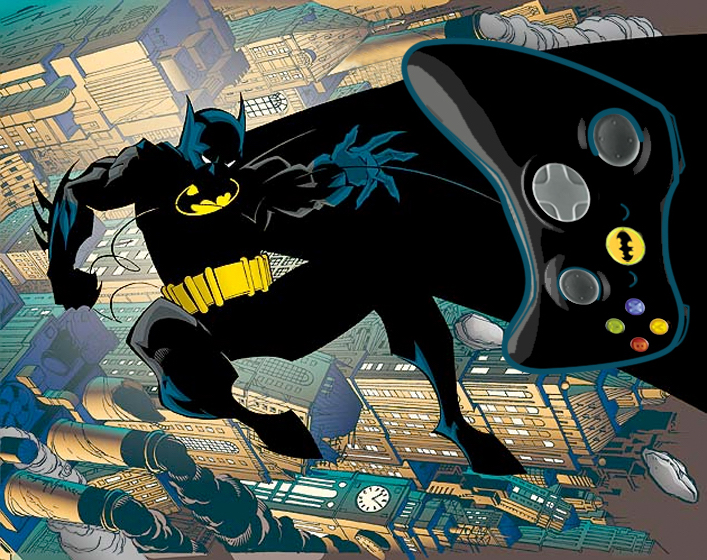
Enlarge/ Just how intertwined are the worlds of comics and video games? Closer than you think…
Bringing comic characters into video games must have seemed like a no-brainer from the start. After all, what comic fan wouldn’t salivate at the chance to take on the roles of their favorite superheroes? Comics and video games have been intertwined since the late 1970s, though games based on comics didn’t really start to have a presence until the 80s. In the beginning, only major characters like Batman and Superman were considered viable candidates for appearing in video games. Superman made his first video game appearance on the Atari 2600 in 1979; he and Batman would go on to appear on early PCs and home consoles throughout the following decade.
As you can see, comic games have come a long way from early versions.
DC / Nintendo
These games were of varying quality, and home systems were unable to replicate the artistic styles that users had come to appreciate from comic pages. Aside from the technical challenges, one of the biggest contributors to lackluster game design was the fact that these titles were licensed, which most likely meant that developers couldn’t be as creative as they would have liked. “The difficulty with any license in video games is trying to be innovative within the restraints of the license itself,” said Joveth Gonzalez of Pink Kryptonite. “If you look at games in the 80s, the most innovative games came from creators that had full control over their characters and games. By using a license, one can only wonder how restrictive the licensor was being with the game developer.”
Improvements in technology meant that games would eventually be able to adapt comic art a bit more faithfully, and these advancements were felt in the late 1980s. While home consoles were still rather primitive, who doesn’t remember playing the X-Men arcade title on that huge six-person cabinet? While the translation was “interesting” at points (Magneto greeted the X-Men with the quote “Welcome to die!”), the gameplay looked and felt like the comics. The most popular X-Men were there, with powerful super attacks. It’s hard to find a gamer or comic fan in their early 30s or older who doesn’t have fond memories of this arcade machine.
Games based on popular comics started popping up for arcades and home consoles during the end of the decade: the Teenage Mutant Ninja Turtles cabinet games (based mainly on the cartoon show, but featuring many aesthetics from the original comics) were runaway hits in arcades, while other titles like Taico’s Superman also managed to draw a respectable group of fans. Many more cheaply made comic-based games were still being released for consoles and computers, but cream rises; we remember the good games and lose the bad ones in memory.
“The movie theater by my house had both the six-player X-Men cabinet and the four-player Ninja Turtles machine,” Ben Kuchera, Ars Technica’s gaming editor (in 2008), recalls. “These games featured striking art, huge sprites, and satisfying attacks. For a comic book fan they were amazing; my friends and I dumped untold amounts of money into those slots. These games simply beat anything that was available on our home systems.”
Konami’s X-Men: arguably the best comic-based arcade game.
For the most part, crossovers between the two industries were pretty irregular throughout the 80’s, but the groundwork was there, and turning great comics into good games really started to take off during the 90s. Of course, 2D Beat ‘Em Ups were the rule of thumb, with a number of successes like Konami’s X-Men game, the tie-in based on Michael Keaton’s Batman movie, and Cadillacs & Dinosaurs (based on the delightful indie comic Xeonzoic Tales) gobbling up quarters as fast as we could shove them into the coin slots.
However, as technology improved, comic games started to cross into other genres, and less mainstream series started to make appearances on game consoles and PCs in households across America. The premiere crossover? The beloved, but inevitably doomed, adventure genre.
Dial Code: Santa Claus is our new favorite holiday cult classic
Enlarge/ Christmas Eve turns violent for young Thomas as Santa goes on a murderous rampage in Dial Code: Santa Claus.
One year before young Macauley Culkin gleefully terrorized would-be burglars in the 1990 Christmas classic Home Alone, a Rambo-obsessed little boy named Thomas battled a murderous intruder in the 1989 French film Dial Code: Santa Claus. It’s dark and violent, like all the best fairy tales, and deserves a place in the growing pantheon of alternative holiday movies for those who prefer more of an edge to their Christmas fare.
(Mild spoilers below.)
Ten-year-old Thomas comes from a long line of toy manufacturers, so naturally he has all the latest toys and gadgets to play with, plus an adorable dog named J.R. His house is an imaginative kid’s dream: a large isolated manor with tons of secret rooms and passageways that his father showed him before he died. Thomas himself (sporting a rad ’80s mullet) is a bit of a genius, good with computers and cobbling together elaborate contraptions out of toys and electronic parts.
Thomas finds himself home alone with his nearly-blind grandfather on Christmas eve, because his mother, as CEO of the family toy empire, is working late to rake in all those holiday profits. He’s set up an elaborate camera system to capture Santa Claus in the act of leaving presents. When “Santa” really does come down the chimney just after midnight, the boy thinks his dream has come true. But J.R. attacks the intruder, and “Santa” responds by brutally killing the dog with a cake knife. Thomas must use all his wits to protect himself and his grandfather from “Santa.”
Ultimately the film is about the loss of childhood innocence.
The film was highly influential with European filmmakers at the time, in large part because director Rene Manzor turned the holy day of Christmas into a violent nightmare scenario, violating a cultural taboo. Unlike Home Alone, Dial Code: Santa Claus doesn’t play the situation for laughs. It’s genuinely traumatic for Thomas: he’s in real peril, and this Bad Santa racks up quite a body count before his rampage ends.
Ultimately, the film is about the loss of childhood innocence. Thomas’ mother wants her son to have one more year of believing in Santa Claus, a way of keeping him innocent just a bit longer. She even tries to prevent him from attempting to catch sight of Santa on Christmas Eve by warning that, if he does, Santa will get mad and turn into an ogre. From Thomas’ perspective, that’s precisely what happens.
A remote estate on Christmas Eve. What could go wrong?
American Genre Film Archive
Thomas eagerly awaits Santa’s arrival on Christmas Eve.
YouTube/Alamo Drafthouse
Hark! Is that a sound coming from the chimney?
YouTube/Alamo Drafthouse
Santa Claus makes his first appearance.
YouTube/Alamo Drafthouse
J.R. doesn’t like intruders.
American Genre Film Archive
WTF? Bad Santa kills Thomas’ little dog.
YouTube/Alamo Drafthouse
A bit more Krampus than Santa.
YouTube/Alamo Drafthouse
This means war.
American Genre Film Archive
Thomas channels his inner Rambo to take revenge.
YouTube/Alamo Drafthouse
Thomas has all the toys and mad maker skills.
A booby-trapped toy train creaks toward its target.
YouTube/Alamo Drafthouse
Colored pencils make useful weapons.
YouTube/Alamo Drafthouse
A couple of darts to the neck is exactly what Santa deserves.
YouTube/Alamo Drafthouse
Grandpa hides in the secret toy room.
American Genre Film Archive
A game of cat and mouse.
American Genre Film Archive
American Genre Film Archive
Santa still wants to play.
American Genre Film Archive
American Genre Film Archive
The film’s original French title, 36.15 Code Pere Noel, refers to an early form of the Internet in France called the Minitel (other translations include Deadly Games, Game Over, and Hide and Freak). There were mini-terminals dotted around French city streets where people could pay by the minute to log in to chat, send messages, read the news, or shop. The most common access code for the terminal was “3615.” (The Minitel shut down for good in 2012. You can learn more in this article in IEEE Spectrum, about how the original builder, Daniel Hannaby, has uploaded the original source code to the cloud.)
The Minitel plays a key role in Dial Code. Thomas has a brief chat session with Santa via the Minitel, inviting him to come to his house that night. Little does he know that his jaded best buddy, Pilou, is right: that’s not really Santa on the other end. It’s a mentally unstable vagabond who seems a bit too fond of children, while being quite childlike himself.
The similarities between the two films may well just be a coincidence.
So, is Home Alone just a US knockoff, sanitized for American tastes? The jury is still out on that score. Manzor definitely noticed the similarities between the two films and threatened to sue. John Hughes, writer and producer of Home Alone, denied the charge, claiming he never saw Manzor’s film and came up with the idea while traveling to Paris for a family vacation.
3615 Code Pere Noel was distributed everywhere except North America when it was broadly released in January 1990. The similarities may well just be a coincidence, since Home Alone first hit theaters on November 16 that same year. It seems unlikely the film could have been written, cast, shot, and edited in that short a time frame. [UPDATE: Rene Manzor told me via Twitter that Dial Code: Santa Claus was first screened at Cannes in May 1989. So my argument that Hughes wouldn’t have had time to make his own film doesn’t quite work.]
Dial Code: Santa Claus stands the test of time. Previously available only on bootleg VHS, the American Genre Film Archives restored the film and screened it at the Fantastic Fest in Austin, Texas, earlier this year. And they’re screening it at select theaters all over the country through January 19 (you can find a list of screenings here), with a Blu-Ray for the US region supposedly coming soon. Snap up a copy when it does, and add it to your annual holiday viewing.
[embedded content]
Dial Code: Santa Claus trailer.
https://arstechnica.com/?p=1430097
TV Technica 2018: Our favorite shows and binges
Warning: This story discusses a handful of specific moments from TV in 2018. Though we’ve strived to avoid spoiling anything too major, please note this list includes specific references to The Good Place, Star Trek: Discovery, Westworld, Bojack Horseman, Preacher, The Americans, Killing Eve, and The Haunting of Hill House, among others.
We are in the era of “peak TV,” and between the major networks, cable channels, premium services, and streaming platforms, the TV landscape has never been more richly varied. This year’s crop of our favorite small screen moments reflects that diversity, from network sitcoms and prestige dramas to adult animated series and sci-fi favorites—and pretty much everything in between. In no particular order, here are the shows that engaged our heads and hearts this year.
[embedded content]
Michael (Ted Danson) explains how time in the afterlife works differently from human time in the episode “Jeremy Bearimy.”
The Good Place ontime in the afterlife
There is nothing quite like The Good Place. A half-hour sitcom that explores the philosophical roots of ethical behavior in a bizarro version of the afterlife? Which tripping network executive greenlit that? We’re very glad someone did, because the show has been a sheer delight since it premiered in September 2016.
Kristen Bell stars as Eleanor Shellstrop, who dies and finds herself in an afterlife called “The Good Place,” managed by Michael (played by national treasure Ted Danson), who is enamored of humans and all their petty foibles. But Eleanor on Earth was by her own admission pretty much a selfish trash bag of a human being, and she thinks she’s been sent there by mistake. Season one’s final twist completely blew up the show’s original premise.
Season two dug deep into the question of whether it is possible for a damned soul to become a better person after death, via the study of moral philosophy. Name one other sitcom that features classroom lectures on Immanuel Kant’s categorical imperative, Aristotle, Kierkegaard, and T.M. Scanlon’s seminal text What We Owe Each Other. That season ended with another radical reset: Eleanor, Chidi (William Jackson Harper), Tahani (Jameela Jamil), and Jason (Manny Jacinto) are given one more chance to become better people on Earth. After a wobbly start, the third season turned out to be just as strong and surprising as its predecessors.
True, the season lacked an instant-classic moment like Michael’s brilliant-but-bloody simulation of the Trolley Problem, which will always be my favorite. But we got plenty of other delightful gems, like Michael’s mind-bending mini-tutorial about how time works in the afterlife in the episode “Jeremy Bearimy.” Time isn’t linear in the afterlife. Apparently it “doubles back and loops around,” and the resulting timeline just happens to look like the signature of the name Jeremy Bearimy. (The dot over the “i” is Tuesdays. And also July. And occasionally never.) “I don’t know what to tell you,” Michael says to the bemused crew. “That’s the easiest way to describe it.”
The second season of Westworld didn’t draw the same level of praise from critics or vocal fans as the first. Yes, it’s needlessly baroque, nearly to the point of being impenetrable. Yes, the layering of the plot means you really do need to watch every episode more than once to get the full measure of what’s going on. Yes, a timeline diagram really does help. (That link will completely spoil everything in both seasons one and two, so click with caution.) In spite of all of those points and many others raised by the beautiful lunatics over at /r/westworld, I still think it’s the best TV show of 2018, and I can’t wait for season three.
For all its needless complexity and logical leaps, Westworld is the only thing I’ve watched in years that’s gotten me to tune in the moment it airs because I couldn’t wait even one extra second to find out what happens next (not even Game of Thrones gets my eyeballs the day it airs). And no episode this season delivered quite the “HOLY CRAP WHAT DID I JUST WATCH” hammer blow of episode seven, “Les Écorchés.”
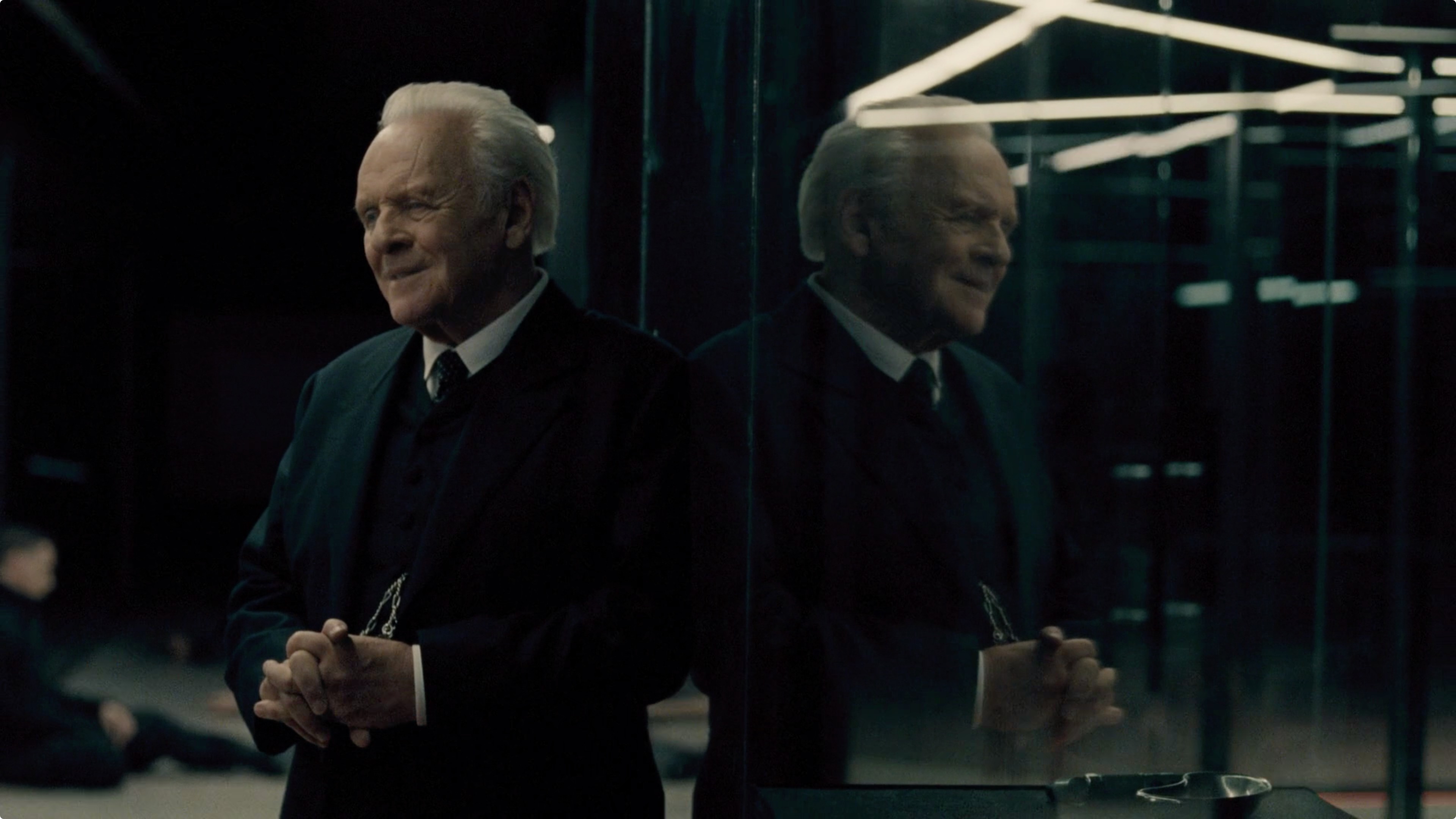
The long-promised direct confrontation between Dolores’ host army and the Delos private military forces at the Mesa takes up a significant chunk of the episode, and it’s great, but the real showpiece is the return of Anthony Hopkins’ Dr. Robert Ford—a misanthrope in the truest sense. The episode brings into further focus Ford’s pseudo-nihilistic supervillain thesis: that humanity, as a product of nothing more than evolution, is inherently valueless. We are crude hunks of self-animating meat—obstacles standing in the way of the hosts’ path to true self-actualization. It’s time for us to die and for the hosts to inherit the Earth, because in Ford’s mind, only a true “original work” has worth. The hosts, as created beings, are such a work.
It’s the same contention both Bernard and Dolores return to throughout the season: only that which is irreplaceable is real. Evolution can crap out life anywhere. The world is full of it. It’s meaningless. But the hosts—ah, now, there’s a truly unique thing.
The guy’s crazy, but man, that conceit makes for some compelling fiction.
Enlarge/ Ruth Deaver (Sissy Spacek) struggles to stay anchored in the present in “The Queen.”
Dealing with dementia on Castle Rock
Castle Rock, the new horror anthology series from Hulu inspired by the works of Stephen King, surprised me by becoming one of my favorite breakout shows this summer. The pilot opens with the suicide of the local prison warden and the discovery that he secretly kept a young man—played by IT actor Bill Skarsgård and known only as “the Kid”—captive for decades. Not only has the Kid not aged, but violent outbreaks seem to follow in his wake. Attorney Henry Deaver (André Holland) returns to his childhood home about the same time and gets swept up in the mystery while dealing with psychological fallout from his past.
Henry is also struggling with what to do about his adoptive mother Ruth (Sissy Spacek), whose age-related dementia is rapidly worsening. Spacek’s devastating portrayal of an aging woman who has become unmoored in time hits its zenith in the episode “The Queen”—the most beautifully constructed, superbly acted hour of television you’ll likely see this year.
The entire episode is told from her point of view as she walks out of a conversation in the present and into a different conversation in 1991. Showrunner Sam Shaw’s own mother suffered from dementia and died unexpectedly a few days after he started writing the series. The episode draws on insights from his experiences. For instance, Ruth uses chess pieces scattered about the house to anchor her in reality, a detail inspired by Shaw and his sister going through their mother’s belongings and recognizing the talisman-like nature of a loved one’s personal effects.
There’s plenty of other strange goings-on and moments that tug at your heart-strings in Castle Rock, with one heck of a twist in the last two episodes (and a quintessentially King-like ending). But in the end, it’s the quiet, understated horror of “The Queen” that has stayed with me the most.
Before we get on to the list, don’t miss this year’s Ars Technica Charity Drive sweepstakes. You can win part of nearly $5,000 in prizes, including limited-edition gaming collectibles, all while helping out a good cause. Entries are due by January 7, 2019. Thanks in advance for your entry!
Running through this year’s list of video games that made the most impact on the Ars staff, I’m struck by the sheer variety. Sure, there’s the usual selection of open world adventures and slick action games. But there are also a handful of fresh takes on the puzzle game genre, a few promising virtual reality games, a relatively wide variety of 2D platformers, racing games that run the gamut from realistic to campy, a couple of fighting games, and even a rhythm game! (Editor’s note: We promise you haven’t time-traveled back to 2008.)
So no matter what kind of video game you like, 2018 had some excellent titles to check out. Without further ado, our favorite games of 2018 are…
After proving to the console world that it was possible to make a game as good as the almighty Gran Turismo franchise, Microsoft’s Turn 10 Studios went and did one better. In addition to the standard Forza Motorsport racing games, now we also get treated to a new iteration of the more freeform Forza Horizon every couple of years. The FH games use most of the same cars and handle (pretty much) the same as the FM games, but instead of setting lap times on circuits like Laguna Seca and the Nurburgring, they’re open-world adventures. The latest installment is Forza Horizon 4, which arrived at the end of September.
Like its predecessors, Forza Horizon 4’s plot—really just a backdrop with a backstory—involves a music and lifestyle festival which, these days, merely serves to remind me I’m now middle aged and out-of-touch with the “yoof.” The setting this time is Great Britain; a pre-Brexit version, since there appear to be livestock in the fields and an absence of civil unrest and social breakdown. Other than a fresh locale, the big changes for FH4 are in the number of simultaneous players—now up to 72 in a session—and seasonal transitions that join dynamic day-to-night-to day lighting and dynamic weather to keep the place looking fresh.
Happily for some of our more misanthropic readers, there’s plenty to do in solo mode without ever interacting with another human being (I call this the Hutchinson demographic). But all the online gaming fun you remember from earlier installments is present and correct. If you’re looking for an accessible racing game that doesn’t confine you the blacktop, this is probably it. -Jonathan Gitlin
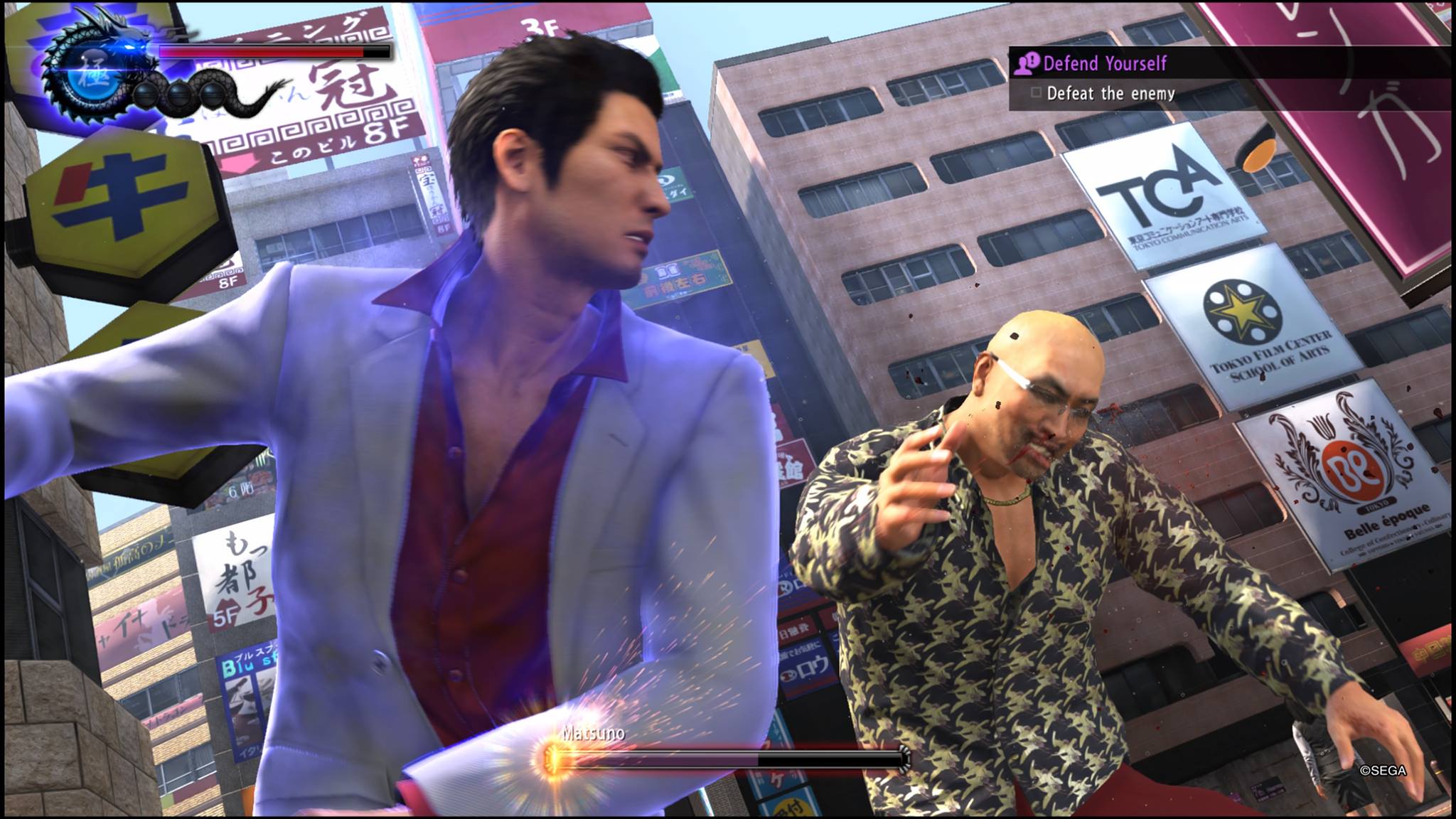
The long-running Yakuza franchise reached a climax this year. Now that the series’ longtime central protagonist, Kazuma Kiryu, is out of the picture, new games will now focus on new characters (at least for the time being). So it’s great that the Dragon of Dojima’s swan song was such a complete package. Then again, pretty much every Yakuza game is.
Yakuza 6 tells a massive, twisting story of criminal conspiracies in modern Japan. That’s the main plot, anyway. The rest of the game is full to burst with goofy, but heartfelt side quests in which Kiryu aids oddball citizens with bizarre problems. In his case, “helping” usually means punching a lot of people before talking about feelings, consent, respect, etc. These “sub-stories” may be silly, but the emotional thrust behind them is anything but.
Yakuza only recently garnered serious attention from new fans, thanks largely to its amazing prequel, Yakzua 0. But Yakuza 6 continues to act as a strangely solid jumping-on point, too. It eschews most of the series’ supporting cast to focus on Kiryu. In a way, it’s like a version of all the previous games’ themes rolled into one. So despite mostly missing fan favorite characters (e.g. Majima), it also feels like a complete package for newcomers and old fans alike. -Steven Strom
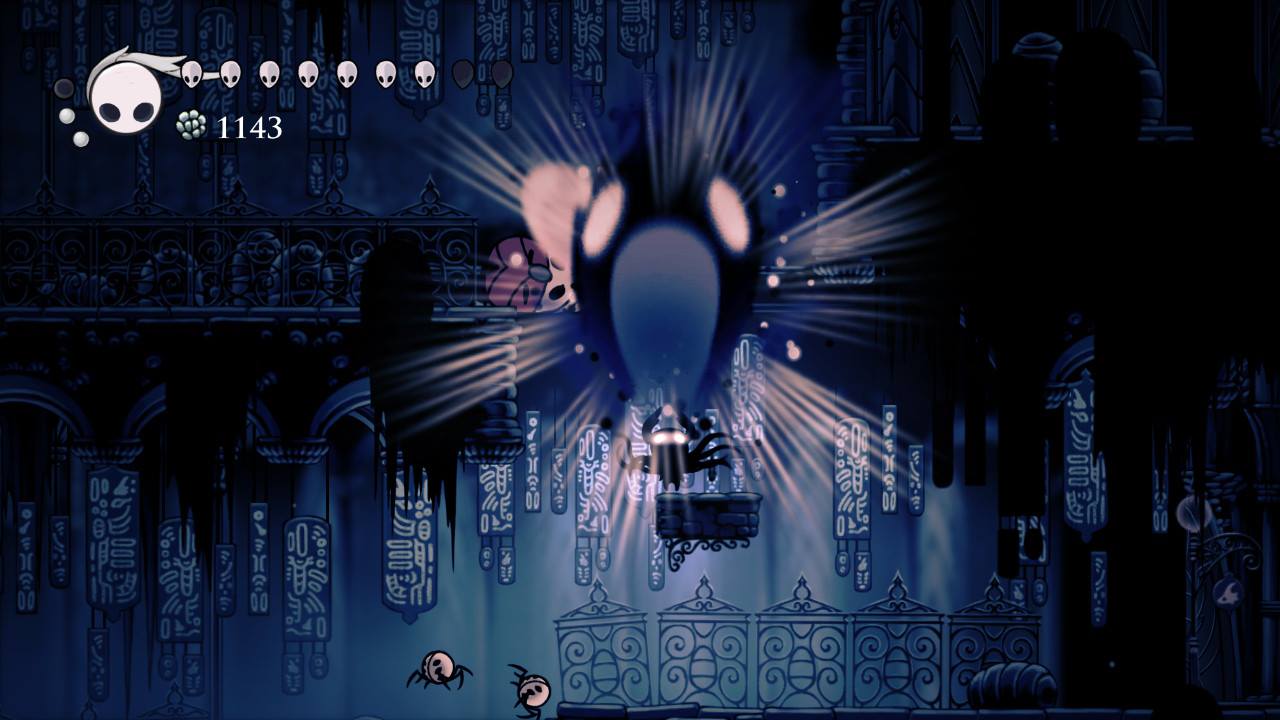
Hollow Knight is almost the textbook definition of a slow burn. Your bug-like protagonist starts off almost comically underpowered, with a sword-like nail and a floaty jump as his only protection against all manners of insectoid beasts. Though the hand-drawn graphics entice right away, the whole thing feels a bit clunky and frustrating for the first few hours.
Then you start really exploring the game’s labyrinthine cave structure, expanding a sprawling map which snakes back around on itself seemingly without end. Slowly, you build up new attacks and traversal methods in the best Metroidvania style, letting you take on an expansive menagerie of beasts with ease. You run into punishing boss battles that require perfect timing and use of all your skills.
Through it all, half the fun is just seeing the beautiful hand-drawn environments and well animated enemies, all done with an intriguing cute-yet-disgusting style. But there’s also an intensely melancholy story buried under the surface, told through ghostly apparitions and scraps of information left behind by the long departed. By the time the credits roll, it’s an experience you won’t soon forget. -Kyle Orland
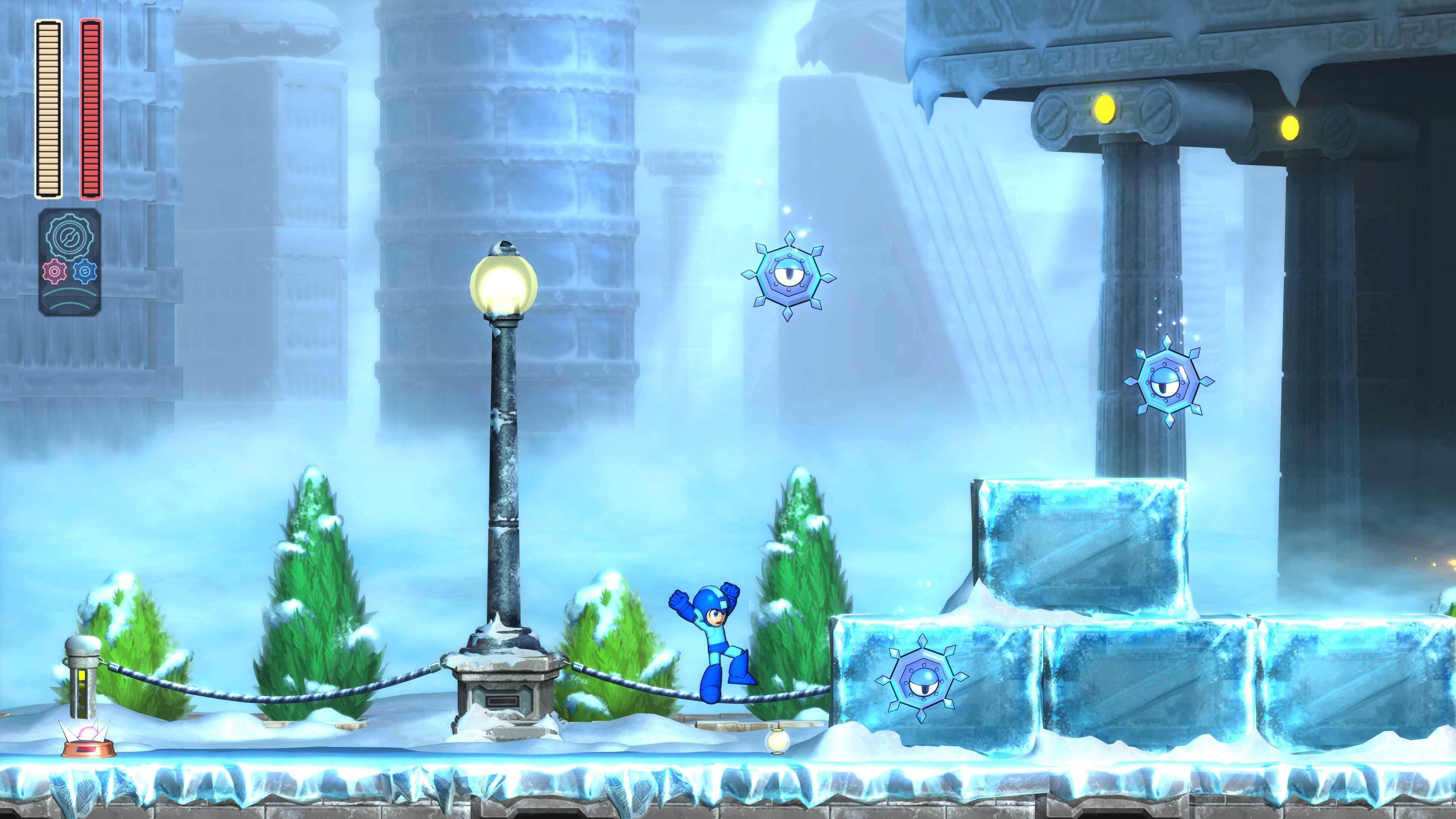
As a long time mega-fan, I was initially wary when Capcom announced Mega Man 11 would be the series’ first mainline numbered entry to do away with the hand-drawn sprite-based art style (in favor of clunkier-looking 3D animation). That concern melted away after playing this tight and inventive take on the series, which builds on genre conventions as it improves on them.
Chief among what makes Mega Man 11 work so well is the weapon selection, which gives the blue bomber plenty of directional attack options you’ll actually want to use outside of boss fights. Strong level design helps too, with longer-than-average, HD-wide stages that continually throw new and interesting challenges and enemies at Mega Man. Then there’s the Gear system, which gives Mega Man a time-limited super-speed that lets you feel like a true superhero and manage high-speed trials.
Add in some top-notch boss design, a light RPG-style item-buying progression system, and a killer soundtrack, and you have a reboot that lives up to the Mega Man name—even if I’m still not sure it looks quite right without hand-drawn pixels. -Kyle Orland
https://arstechnica.com/?p=1430345
A few of our favorite podcasts in 2018, from new to new-to-us
Enlarge/ Enjoy our favorite podcast discoveries of the year on your favorite generic “what kind of phone is that” device.
Here at Ars Technica, we love our fair share of podcasts, including our own. That doesn’t mean we do a great job covering the podcasting world, in part because we’re creatures of habit. Ars staffers have their roster of favorite subscriptions to cycle through whether hopping a train, killing time on a flight, or dusting our shelves of vinyl miniature figurines.
Whether we’ll do a better job shedding light on podcasts old and new in 2019 remains to be seen, but we’re going to give it a shot. To that end, here’s a catch-all list of podcasts that Ars staffers picked as their “favorites in 2018,” whether because they were brand new, new to us, or just continued earning the No.1 spot on a media player of choice.
Enlarge/ One taught me love. One taught me patience. And one taught me pain. (The other taught me not to attempt a stuffed pasta with a 30-minute time limit.)
John Lamparski/Getty Images
Pack Your Knives
Like anyone who has ever started a podcast, I now constantly have half-baked ideas for other podcasts. One of my favorites would be called something like “Side Hustle,” “Downtime,” or “OPP (Other People’s Passions)”—essentially, I love hearing people I find smart, engaging, funny, etc. talk about something other than what they’ve become known for. (Think beloved Avenger Jeremy Renner’s real estate hobby or author Haruki Murakami on running.)
Near the top of my theoretical guest list would be NBA writers Tom Haberstroh and Kevin Arnovitz, because they share a deep interest in two of my favorite topics: basketball and food. Quietly, these two areas have become increasingly intertwined in recent years (JJ Redick shows up in Bon Appetit, San Antonio team dinners have become the stuff of legend, and players obsess over everything from PB&J to wine). Arnovitz and Haberstroh’s new podcast, Pack Your Knives, logically builds off this trend.
The two analytics-focused journalists combine their detail-driven methods with a love of food and apply it to the culmination of “culinary” and “competition:” Top Chef. They recap seasons in progress, episode by episode, sharing insights on cuisine right next to historical statistics on the show (did you know elimination-challenge winners in episode one win the entire season 43 percent of the time?!).
Eliminated chefs come on to dish about the process, and Arnovitz and Haberstroh study the tapes (past seasons, online-only episodes of Top Chef spin-off Last Chance Kitchen) to provide listeners with the same informed perspective on faro as they’d offer on free agency. And if you’re the kind of person who prefers playoffs over pastries, naturally, these hosts have even devised a fantasy Top Chef format with an easy to follow play-along-at-home scoring system. (Season two just started, so queue up Top Chef Kentucky and listen in the day after.) —Nathan Mattise, Features Editor
Cocaine and Rhinestones
Sure looks like something from a ’70s country album cover, doesn’t it?
When it comes to techie chatter, I subscribe primarily to YouTube channels, where my favorite technical wizards can couple their spoken analysis with charts and video proof. (My No.1 subscription is from the European wizards at Digital Foundry.) Podcasts, on the other hand, usually take me to more esoteric territory about the human condition.
My favorite of these as of late is Cocaine and Rhinestones, a historical retelling of the biggest stories in 20th-century country-and-western music. It’s as “only a podcast” as you’ll find on this list. For starters, that name! No radio station programmer would dream of putting a controlled substance in the title of a regular, hour-long show. And host Tyler Mahan Coe has clearly never attended broadcast-journalism school, as his delivery and cadence are the kind of stilted stuff you might expect from a nervous undergrad.
Coe sounds like the smartest storyteller at your neighborhood bar.
But get a load of that guy’s last name: Coe. As in, the son of ’70s country music legend David Allan Coe, one of the industry’s first major “outlaw” singer-songwriters who revolted against phonier commercial takes on country music. Thus, every episode begins with a reminder that the Coe family has shared, witnessed, or been a part of some of the biggest classic country-industry stories of all time. As Coe writes on the podcast’s website:
Imagine if an entire genre of music was allowed to go out of print when we made the transition from vinyl to CD. That’s what I saw happening with the lore of country music. Most of what I’m talking about on Cocaine and Rhinestones has been written down in books but nobody’s reading those books. Many of them have never even been converted to digital format. This history wasn’t being passed on to a new generation. It was going extinct.
To his credit, Coe sounds like the smartest storyteller at your favorite, cozy neighborhood bar. He sums up various histories (music, politics, demographics) with callbacks to richer source material. He dollops his stories with revealing, catchy tunes in a ton of genres. He is careful to expose his bias before offering amusingly subjective takes. And he does well to emphasize why these stories matter, even if your understanding of country-music history is sub-novice.
My suggestion: start with the January 2018 episode about the Judd family and see if Coe’s style is up your alley. Coe hasn’t confirmed plans for a second season, but my fingers are crossed that he puts a few more country-history stories into the podcasting universe. —Sam Machkovech, Tech Culture Editor
Thunder Bay
So I’m an idiot American. But I’m curious about Canada! So when I heard that, this year, there was a new true crime podcast exploring the seedy underbelly of Thunder Bay, Ontario, I had to check it out. (Who knew Canada EVEN HAD a seedy underbelly?)
Ryan McMahon, an Anishinaabe journalist, explores how this town not that far from the Minnesota border has seen the highest rate of per-capita violence in Canada. Why? Because of colonialism, indifference, racism, corruption, and a bizarre policy of bringing First Nations students from the rural north to this town en masse. Some of them end up dead. McMahon sheds incredible light on this unbelievable story. —Cyrus Farivar, Senior Tech Policy Reporter
Radio Diaries
The Radio Diaries podcast is not new. In one form or another, its hosts have been giving microphones to people to record observations from their daily lives for two decades. But in recent years, Radio Diaries has grown into so much more, bringing to life a trove of archival audio as well as interviewing older people about past historical events.
One of my favorite things to do when I was younger—and something I wish I’d done more—was to sit with my grandparents and ask them about the world in their youth. This podcast does that but with people who were at the front lines of history. This year, there were some exceptional podcasts, including one about the Women Air Force Service Pilots during World War II.
I only wish Radio Diaries published more frequently, as new episodes only come out every few weeks. —Eric Berger, Senior Space Editor
On the Media
Television news networks are partisan, controversy-driven, and corrupted by a demand for 24/7 coverage. Print is collapsing, leaving local communities without much-needed voices. Online media is saturated with both quality reporting and dangerous exercises in irresponsibility, and it can be hard to sort through which is which.
This is for the post-truth world we’re inhabiting.
Enter On the Media, which began life as a call-in show before spreading across the nation’s airwaves via NPR. From challenging tropes about covering dead presidents to breaking down the doublespeak used by politicians across the spectrum, it provides not just the content but the context.
After the election of President Donald Trump, On the Media shared a recording of its internal discussions about how to cover the controversial new presidency moving forward. The two hosts, Brooke Gladstone and Bob Garfield, disagreed. It was messy and heated. It helped gave me a lens through which I could understand media outlets’ different choices on the matter.
On the Media is worth a regular listen even if you don’t work in the media. In the post-truth world we’re inhabiting, you have to cover the medium, not just the message, to really grok what’s going on. —Samuel Axon, Senior Reviews Editor
Tricky
In a similar vein to my colleague Samuel, I cannot say enough good things about Tricky, “a podcast about the thorniest problems in journalism.” Think of it as the successor to the late, great Guardian Media Talk podcast, in large part because one half of the Tricky host team is Emily Bell, former editor-in-chief at Guardian Unlimited and now a professor at the Columbia School of Journalism. The other half of the team is Heather Chaplin, founding director of Journalism + Design at the New School.
Short of spending an hour every week in the company of our own editor-in-chief Ken Fisher, there’s no better way to get up to speed on the tumultuous times that this industry is facing. This is particularly important with regard to the troubled relationship so much of the media has with Silicon Valley tech companies coming along and eating everyone’s lunch. And unlike Ken, Tricky just shows up in your podcast app of choice. —Jonathan Gitlin, Automotive Editor
The Read
Despite working online, I try to remove myself from the insanity of the online world as much as possible. I don’t follow Twitter beefs. I’m rarely on Facebook anymore. And I’m not one of the 122 million people who follow Kim Kardashian West on Instagram. However, I like to be kept abreast of the latest pop culture news, and for that, I turn to The Read podcast. New York City-based comedian Kid Fury and writer Crissle West host the podcast, chatting and ranting about the latest pop-culture happenings, particularly those within or that affect the black community in the US.
Recently, Fury and Crissle have devoted a segment of the podcast to talking about mental health—an important topic that’s still considered taboo in many cultures. Those discussions are always enlightening and comforting for me, and I think all listeners could benefit from hearing them. While each episode has its serious notes, The Read is overwhelmingly positive and pure fun—Fury and Crissle’s takes are always hot, their reads always biting, and I appreciate the duo’s no-holds-barred attitude when digging into current events, politics, and listener letters. —Valentina Palladino, Associate Reviewer
Hang Up and Listen
As one of the denizens of the #sportsball channel on the Ars Technica Slack, I enjoy talking about sports and listening to good takes from other people. My go-to for the latter is Hang Up and Listen, a weekly podcast from Slate.
If you’re looking for bombastic hot takes, this is not for you.
While you might hear conversations about the most recent big game, Hang Up and Listen also delves into the hows and whys of all sorts of sports. The hosts go a long way toward making Hang Up a compelling listen when it drops every Monday afternoon. Josh Levin, executive editor of Slate, and Stefan Fatsis, author of the excellent A Few Seconds of Panic: A 5-Foot-8, 170-Pound, 43-Year-Old Sportswriter Plays in the NFL and Word Freak: Heartbreak, Triumph, Genius, and Obsession in the World of Competitive Scrabble Players host the podcast and are joined by people who cover the events they discuss.
If you’re looking for bombastic hot takes, Hang Up is not for you. Tune in if you like intelligent conversation about the teams and sports you love, and stay for the Afterball. —Eric Bangeman, Managing Editor