Wildlands may be the slickest, simplest fantasy skirmish game ever made

Wildlands may be the slickest, simplest fantasy skirmish game ever made
Welcome to Ars Cardboard, our weekend look at tabletop games! Check out our complete board gaming coverage at cardboard.arstechnica.com.

Miniature battle games have been around as long as the tabletop hobby itself. From industry giants like Warhammer 40,000 to competitors like Frostgrave, The Walking Dead, or the Star Wars X-Wing Miniatures Game, there’s a huge range of options if you like to lead plastic legions to flaming, spiky, or splattery deaths.

But while mini-wargames are a thriving subsection of gaming geekdom, they’ve always existed in their own fortified compound, separated from the wider gaming audience by the complexity of their rules, the cost of their models, and the time and skill required to build and paint their armies.

Wildlands, a new release from veteran game designer Martin Wallace, aims to bridge that gap—and in the process, it turns many of the assumptions about these kinds of games on their head. A squad-based game of fantasy skirmishes, Wildlands hands players command of teams of wizards and warriors, throwing them into intense five-on-five clashes. Along the way, it combines elements of miniature battle games with clever card play, and the result is a tense, tactical experience that combines board-game-style accessibility with the competitive intensity of a full-blown wargame.

Before you play, you’ll choose one of four factions to command, each with its own set of characters and tactics. There are hardened pit fighters who aim to rush their enemies in hand-to-hand combat, evasive rogues who use speed and agility to stay out of harm’s way, magic users who employ powerful arcane attacks, and ranged combat specialists who attempt to perforate their foes while remaining a safe distance from the fray.

Once you’ve chosen a side, you do battle on one of two environments on the game’s double-sided board. The first, an underground dungeon, is full of twisting passages to traverse as you attempt to outmaneuver your opponents. The second, a ruined city, comes with areas of high and low ground—offering enticing opportunities for well-placed snipers.

Whichever battlefield you choose, though, your goals remain the same. You’ll claim a victory point every time you defeat an enemy character in combat or pick up one of the magical crystals scattered around the board. The first player to reach five points wins, and the result is a frantic scramble to claim points through violence, resource-grabbing, or a carefully calibrated combination of both.

So far, Wildlands might sound like any number of similar skirmish games. But what sets it apart from the pack is its radical simplicity. Where other battle games rely on complicated systems of stats, charts, and dice-rolling combat, Wildlands boldly hacks away at any unnecessary complexity. What remains is a bare-bones mechanical core that still manages to generate a succession of dramatic moments and thorny tactical dilemmas.

You’ll command your troops using a deck of cards—a different deck for each of the game’s factions. Every card comes with a collection of symbols letting you issue orders to the characters under your control: moving, shooting, and attacking in melee combat. But you’ll only be able to choose a single order to activate each card you play, and picking one means forgoing the chance to use the others.

Thus, on every turn you have to carefully read the state of the board and weigh up a host of different priorities. Do you want to attack a vulnerable enemy? Pull weak or wounded troops out of danger? Consolidate control of an important area? And how can you most efficiently use the cards in your hand to pull off your evolving plan?

You can play as many cards as you like on each of your turns, but your hand refills at a steady rate, which means that Wildlands also has a critically important timing element. If you splurge on cards in an all-out assault or a sweeping advance, you may leave yourself at a disadvantage on subsequent turns, forced to make the best use you can of a diminished set of available orders. This neatly represents both the chaos of battle, where you might find yourself unable to give the commands you want at the times you need, and the effects of fatigue upon your troops. Occasionally, there are times when you might even need to skip your turn, resting and rebuilding your hand in preparation for your next big play. (Although rounds pass so quickly that this enforced inactivity never feels grating.)

This design makes for some tough command decisions, but what’s truly impressive is how Wildlands builds so much action and drama on top of such a minimalist mechanical foundation. There are no complex character abilities, no text effects to pore over, no spreadsheet-like tables of stats to consult. But its warring factions and individual characters all have their own distinct flavors, and, as you play, you’ll create some truly cinematic moments.

In our first game, for instance, my gang of combat monsters surrounded an unfortunate enemy. We closed in for a four-on-one mauling, but his controller had a handful of powerful defensive cards, and he managed to prolong the scrap over multiple turns. Meanwhile, his comrades peppered my troops with arrows and crossbow bolts. He had lured me into a perfectly prepared kill zone, and, to add insult to injury, when his hit points sank toward zero, he blew himself up, taking out several of my fighters in the process.

A couple of shortcomings

For me, Wildlands is compelling to the point of addictiveness. But there are a couple of respects in which the game falls flat. The biggest is that its action and excitement don’t hold up at higher player counts. With four squads on the board, anyone with a diminished hand of cards is left unable to defend themselves and thus becomes a target for everyone else’s aggression. Rather than a chaotic whirlwind of combat, four-player games actually feel more staid and conservative.

Then there’s the artwork. The cards in player decks recycle the same pictures over and over again, and they’re pretty uninspiring: portraits of characters standing around doing nothing. Some dramatic action shots would have added to the game’s thematic flavor.

Finally, you aren’t able to tweak or customize your forces. Each group comes as a pre-defined squad, and Wildlands doesn’t have the mixing and matching of characters and abilities found in games like Warhammer Underworlds: Shadespire. But while some players might perceive this as a lack of depth, it also makes Wildlands incredibly quick to pick up and play. With no pre-game process of squad building, you’ll be able to gather your opponents, open the box, and commence with the bloodshed.

Wildlands may be the most accessible skirmish game ever devised, but it sacrifices almost nothing in the way of engaging tactical possibilities. Its publishers have already released a separate undead faction, which brings new abilities to the fight. More squads are set to follow, along with new game boards with different maps for players to fight on. And the designer has hinted at plans for new battle modes, allowing for solo play and dungeon-crawling adventure scenarios.

Whether you’re looking for a quick hit of combat or a battle game you can get into for the long haul, Wildlands is an impressive achievement.

https://arstechnica.com/?p=1420211


Anna and the Apocalypse: A zombie-Christmas-high school musical can’t be this good

[embedded content]
New trailer for Anna and the Apocalypse.

Update: During Fantastic Fest 2017, we saw a movie so good we couldn’t wait for others to see it (and simply ran the review). Anna and the Apocalypse is an extremely clever mash-up of several beloved genres that seems too odd on paper to work: zombie movie, Christmas story, and high school musical. Luckily, the film quickly attracted a distributor in early 2018. Now with Anna and the Apocalypse hitting select theaters this weekend and expanding elsewhere on December 7, 2018, we’re resurfacing our review. The piece originally ran on October 7, 2017, and it appears unchanged below.

AUSTIN, Texas—Even if it looks straight out of the DCOM (Disney Channel original movie) playbook, do not be fooled by the familiar bubblegum-ness of Anna and the Apocalypse‘s first 15 minutes.

Yes, likable young people fill in various archetypes, from the artistic outcast to the popular jerk to the nice-guy best friend who’ll forever be “just friends” with our heroine. And yes, Top 40-pop styled musical numbers focus on familiar adolescent themes of defying the expectations of others or how life doesn’t follow movie scripts in practice. At one point, a stick-in-the-mud principal devoted to rules and regulations literally proclaims, “hand sanitizer is your friend; kissing on the mouth is not your friend.”

But if the title itself or its debut at the genre-melting pot that is Fantastic Fest don’t give it away, Anna and the Apocalypse has no interest in being the next obsession of the pre-teen in your life. Instead, the film only sets up High School Musical expectations so it can swiftly and cleverly dismantle them throughout the rest of this funny, impressive, and genuinely moving ride.

Frankly, no zombie-Christmas-high school musical comedy has a right to be this good. But Anna and the Apocalypse seems destined—and definitely deserves—to earn the same cult status as the Zac Efron-fueled fodder it skewers.

’Twas the night before Christmas (pageants)

Anna heads into her final high school year before university wanting something different. Her classmates seem to already have plans set in place for future studies, but she’d prefer to take a gap year in Australia and determine what’s next after the fact. No big deal, she thinks—she’ll figure something out like always. Her best friend John accidentally lets the news slip to Mr. Shepherd on the ride to school, however, which certainly complicates things.

On top of all the future-thinking stress, Anna and her classmates have to prep for the school’s annual Christmas show that night. Her friend Lisa has a starring role, but cast members keep coming down with illnesses—four cast members called in sick just this morning. Anna’s dead-end job at the bowling alley serves as a nice excuse to still abstain, but Principal Savage (who is, of course, a delightfully petty tyrant) expresses some displeasure with the choice anyway.

It may not have been an ideal day, but everything more or less seems ho-hum as Anna cleans bowling shoes and gets ready to call it a night after work. When she wakes up in the morning, however… well, The Apocalypse portion has begun.

Not normal

No plot spoilers, but any illusions of this film being for the young go out the window in two glorious sequences introducing the mayhem. Lisa’s big solo at the Christmas pageant? This shows the comedic boundaries in play. She sings a “Santa, Baby” style original filled with amusing adult innuendo (“C’mon Santa, I made your favorite snack | Come on over, why don’t you unload your sack?”) while backed by shirtless high-school jocks in velvet shorty-shorts. The winking and applauding grandma in the crowd feels like a pseudo fourth-wall break to tell audiences, “OK, strap in.” The film goes on to have many comedic highlights, including some perfect encapsulations of the kind of humor high schoolers would probably utilize in a zombie disaster:

“I bet Bieber is a zombie,” says Chris (the artistic one), as he and John shelter in the bowling alley and scroll social media for #evacselfies. “What about Gosling?”

“Alive or dead, he’s still cool,” John replies.

“T-Swift?”

“Jesus, Chris—why would you even say that?!” John exclaims. “Tay Tay is fine; she’s fine.”

As for Anna, she initially wakes up like normal to walk to school. Earbuds in with this film’s “Wake Me Up” or “Walking On Sunshine“-style musical number beginning, she can’t help but blissfully dance a bit along her normal route. In the background, however, cars crash to avoid zombified crossing guards, and flesh-lusting neighbors fall from second-story bedroom windows. When she meets John at a playground adjacent to a graveyard, reality crashes into the two in the form of a zombie wearing a snowman costume. An over-the-top battle ensues, but Anna insists everything is fine afterward; maybe the guy got really sick. “Anna, that’s a zombie,” John insists. “That’s not normal.”

This blending of high school life, casual zombie understanding (with extreme battle sequences), and various song styles happens seamlessly throughout the rest of the film. There’s a chillwave/electronica song about tech dependence, as Internet connectivity finally gives out following a zombie horde battle; an ’80s rock ballad centers on the jocks embracing apocalypse aggression as they clear out a Christmas tree farm for Anna and co.

If this all sounds absurd when spelled out in print, remember that’s only further testament to how well this film executes its high-wire premise. There’s a reason you’ve probably never heard of Zombie Prom, while Anna and the Apocalypse will inevitably make a pop-culture splash. It may have started out as an amusing YouTube video, but it has become something multi-dimensional. (IndieWire points out the origin story: videographer Ryan McHenry, of the “Ryan Gosling won’t eat his cereal” meme, made the short and would have made the feature if cancer hadn’t tragically taken his life. Director John McPhail gives this version an appropriate amount of heart in light of that.)

Ultimately, the most impressive thing about Anna and the Apocalypse isn’t humor about Rihanna or golden showers, nor is it poignant musical number commentary on millennials or cruelty in the world today. Anna and the Apocalypse deftly shifts between tones as often as it does genre conventions, somehow managing to pack in moments of genuine emotion involving characters you quickly become invested in.

I can’t remember the last time, if ever, I teared up, snorted, got an earworm, and whoa’d at a zombie death all in the same viewing. So after another year at the film festival that explicitly hopes to deliver the unexpected, I find myself singing Anna and the Apocalypse’s praises above all others.

Anna and the Apocalypse is out in US theaters this weekend. Follow the film on social media or periodically check its website for screening information.

Listing image by Blazing Griffin / Fons PR

https://arstechnica.com/?p=1179051


A time loop meets the multiverse in Happy Death Day 2U’s first trailer

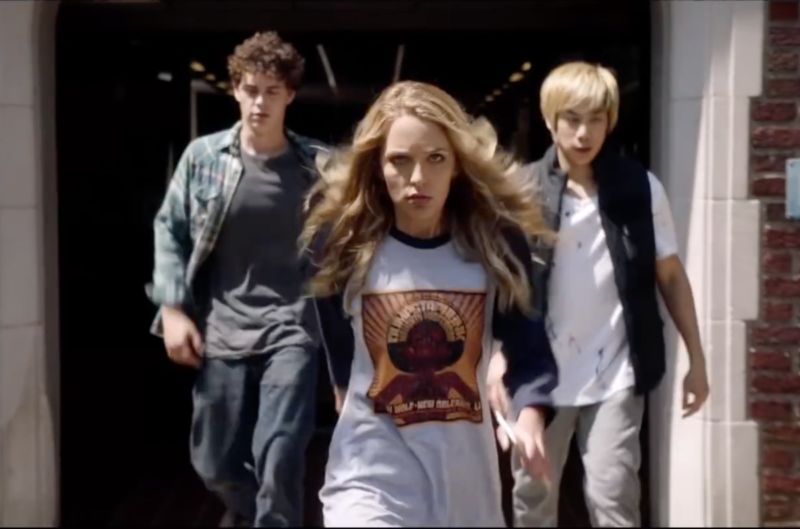
Theresa "Tree" Gelbman (Jessica Rothe) is back and stuck in a murderous time loop again, this time along with her friends.
Enlarge / Theresa “Tree” Gelbman (Jessica Rothe) is back and stuck in a murderous time loop again, this time along with her friends.
Blumhouse Productions

There’s nothing better than a clever take on the classic sci-fi time-loop trope—and that’s what we got in last year’s darkly comic slasher movie, Happy Death Day. We clearly weren’t the only ones who wanted more of the film’s take on deja vu, as evidenced by this week’s brand-new trailer for its sequel, Happy Death Day 2U.

(Spoilers for the first film below.)

If you haven’t seen the first Happy Death Day and want to avoid spoilers, you may want to skip the trailer, since it opens with a recap of the source material. So the sequel should require little to no watching of the first film (though, again, we suggest you do just that).

To wit: college student Theresa “Tree” Gelbman (Jessica Rothe) is murdered on her birthday and finds herself reliving that day over and over—just like Bill Murray’s weatherman in Groundhog Day (or Mulder and Scully in X-Files episode “Monday,” if that’s more up your alley). She takes advantage of the time loop to solve her own murder while dealing with a disturbingly jealous roommate, Lori (Ruby Modine).

I’m not typically a fan of your average slasher movie, with some notable comic-horror exceptions: Cabin in the Woods, Scream, or this year’s You Might Be the Killer. Happy Death Day fit right into that niche with its black humor and genre-mashing use of the time loop trope. The film was overshadowed by the stellar Get Out (both were produced by Blumhouse Productions and released the same year), but it still grossed $122 million worldwide against its modest $4.8 million budget and received positive reviews.

Director Chris B. Landon knew if he made a sequel, he’d want to focus on why Tree ended up in a time loop in the first place, rather than produce a straight retread. Thus, Happy Death Day 2U picks up two years after the original left off. A mutual friend walks in on Tree and her boyfriend, Carter (Israel Broussard), in his dorm room and says he’s having an extreme case of deja vu. “A day reset when you died?” Tree says. “I might be able to help you.” After all, she has died 11 times already.

She soon discovers that she is back in a time loop, but this time the killer in the creepy baby mask is also coming after her friends. (Ironically, the original killer is among the early victims.) This is a crisis for the sorority: “Who’s gonna pledge Kappa now that we have a death curse?” one of Tree’s sorority sisters complains in pitch-perfect slasher-film fashion. The only way to reset the day and save her friends’ lives is—you guessed it—for Tree to keep dying until the killer is stopped.

That’s where the twist comes in. Some helpful physics students with more over-confidence than common sense think they can reset the day without Tree having to die. Alas, something goes terribly wrong, and she finds herself having to die over and over again to catch the killer in an alternate timeline.

Happy Death Day 2U hits theaters on Valentine’s Day, February 14, 2019. Lock this murderous sequel up as a date movie, we suppose.

[embedded content]
Blumhouse Pictures’ Happy Death Day 2U trailer.

https://arstechnica.com/?p=1421003


New software will let artists control how light interacts with objects

Clouds contain billions of individual water droplets that are difficult to plot in computer graphics for movie scenes.
Enlarge / Clouds contain billions of individual water droplets that are difficult to plot in computer graphics for movie scenes.
Dartmouth Visual Computing Lab

Animators will now be able to precisely control how microscopic particles interact with light in their renderings of objects, thanks to a research collaboration between computer scientists at Dartmouth University and staff scientists at Pixar and Disney. The team will describe this new work next week at the SIGGRAPH Asia event in Tokyo, Japan; a paper is also forthcoming in the journal Transactions on Graphics.

The breakthrough will allow animation artists more creative leeway when designing the look of various objects by giving them the ability to customize the way light travels through them. It should have the biggest impact on renderings of so-called “volumetric materials”—clouds, fog, mist, skin, or marble statues, for instance. (Marble is a material that reflects some light off the surface but allows some to pass through, giving it a translucent appearance.)

“[It’s] a change that is as dynamic as the transition from black-and-white images to color.”

“There is a whole range of dramatically different appearances that artists just couldn’t explore until now,” said Dartmouth co-author Wojciech Jarosz. “Previously, artists basically had one control that could affect the appearance of a cloud. Now it’s possible to explore a vastly richer palette of possibilities, a change that is as dynamic as the transition from black-and-white images to color.”

Pixar has long been at the forefront of cutting-edge animation R&D to translate the incredibly complicated underlying math into user-friendly software capable of rendering highly realistic physical objects and movement. In 2014, Tony DeRose, senior scientist and head of Pixar’s Animation Studios, gave a lively TED-Ed talk about the math of Pixar movies, and he has also been interviewed by Numberphile. You can even take a free online course through the Khan Academy.

To realistically capture Merida's curly red hair in <em>Brave,</em> Pixar's animators had to create new algorithms.
Enlarge / To realistically capture Merida’s curly red hair in Brave, Pixar’s animators had to create new algorithms.

Hair, for example, is very difficult to render realistically, because there are hundreds of thousands of individual hairs all bouncing off each other. In a 2013 talk at New York’s Museum of Math, DeRose said Merida’s bright red curls in Brave were composed of 100,000 units, meaning there were 10 billion possible collisions. You can’t use standard compression algorithms for this; you’ll lose too much of the fine detail. So Pixar created the equivalent of a PNG or FLAC for those animations.

The latest study focuses on how light travels through various materials, interacting with the individual particles therein. A cloud, for instance, contains billions of single water droplets—far too many to ploy individually. Animators can specify how densely those particles are packed in different regions of the cloud, thereby defining its shape. But they can’t dictate how those individual droplets are arranged.

This matters because nature doesn’t necessarily arrange those microparticles randomly; there can be clumps, for instance, or the properties of certain materials would cause particles to be arranged fairly evenly apart. “By only controlling the density, current techniques basically assume that the particles are arranged randomly, without any interdependence,” said Jarosz. “But this limitation can have a dramatic effect on the final appearance.”

To solve the problem, the researchers found inspiration in atmospheric science and models of neutron transport in physics, where it is vital to know how water droplets, or particles of radioactive material, are arranged. First, the collaboration traced how a beam of light travels through a material made up of randomly arranged microparticles. Then they compared that trajectory with how a light beam travels through a more naturally ordered material.

Based on the averages of millions of runs, they came up with an accurate model for how far photons can penetrate a given material before colliding with microparticles. If you have clumped particles, as you would in a cloud, a light beam can travel farther than it would through materials with a random arrangement of microparticles. Programming that model into animation software enables animators to more easily achieve a realistic look.

DOI: Transactions on Graphics, 2018. 10.1145/3272127.3275103  (About DOIs).

https://arstechnica.com/?p=1420661


Al Lowe reveals his Sierra source code collection—then puts all of it on eBay

Al Lowe, one of Sierra On-Line‘s seminal game creators and programmers, has been sitting on a pile of his original games’ source code files for over 30 years, fully convinced that they are worthless.

“I’m 72 years old, and none of my kids want this junk!” Lowe said in an interview with YouTube personality MetalJesusRocks (aka Jason Lindsey, himself an ex-Sierra developer and a friend of Ars). “Does anybody?”

Lowe is about to find out, as the developer has begun posting eBay listings for his entire source-code collection. (You read that correctly. The whole shebang.) The sale’s opening has been accompanied by a MetalJesusRocks video (embedded below), which offers a 12-minute tour of backed-up files, original game boxes, original hint books, and more.

As of press time, Lowe has listed auctions for the first two Leisure Suit Larry games’ source code, with bids already climbing (both well above the $400 mark after they went live). Lowe indicated to Lindsey that more games’ code will follow on eBay, and this will likely include a stunning treasure trove: Lowe’s other Leisure Suit Larry games, King’s Quest III, Police Quest I, and Lowe’s games based on Disney franchises Winnie The Pooh and Black Cauldron.

What’s more, Lowe also has original backups of his complete programming pipeline, including the Sierra utilities that converted plain-text, ASCII commands to interpreted code. When pressed about how curious users could peruse these disks’ files, Lowe plainly responds, “It’s a text file! Put it in Notepad.”

In the below video interview, Lowe confidently offers his opinion on the source code collection’s rarity: “I backed everything up because I knew Sierra didn’t.”

[embedded content]
Al Lowe’s collection, hosted by MetalJesusRocks.

Lowe’s listings clarify a few things: first, he has not tested any of these disks, and second, owning these disks is not the same as owning the legal rights to freely or commercially distribute their contents. “Realize that, while you’ll have my data as of the day of Larry 1’s creation, you will not own the intellectual property rights to the game, the code, the art, or anything else,” Lowe says in the LSL1 listing. “Nor do I. The IP rights were sold over and over again, until they are now owned by a German game company.”

Beyond source code, this Sierra treasure trove includes a rare retail copy of A Gelfling Adventure, his Dark Crystal spin-off game that reused the first game’s assets, and an original-print floppy of Softporn—a game that Lowe didn’t work on but inspired him to make the Leisure Suit Larry series. As Lowe admits on eBay, he got this copy from Sierra co-founder Ken Williams himself… to replace his own pirated version at the time. (“Sure, there’s no box—because I didn’t get a box,” Lowe writes in the eBay listing. “But you get a unique piece of video game history!”)

Original game boxes, art, and hint books are likely to follow, as well. We’ll be bookmarking Lowe’s eBay channel for the foreseeable future, and we’ve reached out to the team at the Video Game History Foundation for their thoughts on this apparently rare and unique collection of game-code history.

If you’re less interested in source code and more in just playing the games, you have a few options: this depository of Sierra games programmed by Lowe and his peers, plus Lowe’s own selected collection of game files (meaning, mostly the out-of-print ones, not the LSL or King’s Quest entries).

Listing image by Metal Jesus Rocks

https://arstechnica.com/?p=1420679


The bloodbath continues: Netflix cancels Daredevil after three seasons

Promotional image of TV series Daredevil.
Enlarge / The bad guys of Hell’s Kitchen won’t have Matt Murdock (Charlie Cox), aka Daredevil, to beat to a pulp anymore.

The hits just keep coming for the various Defenders series. Per Deadline Hollywood, Netflix announced this evening that it has canceled Daredevil, just weeks after the show concluded its critically acclaimed third season. This news shouldn’t be too surprising, but this one is a particularly tough blow for fans.

Clearly Netflix is cleaning house, since this follows surprise cancellations in October of Iron Fist and Luke Cage. That just leaves Jessica Jones and The Punisher on Netflex’s roster of Defenders. Both have new seasons in the pipeline that are currently slated to air on Netflix as planned, according to Deadline’s sources. But they will, in all likelihood, be on the chopping block eventually as well.

“The Daredevil character will live on in future projects for Marvel.”

All this further fuels speculation that Disney/Marvel may resurrect all the cancelled series when it launches its new streaming service. Indeed, the Netflix statement hints as much.

The company told Deadline:

Marvel’s Daredevil will not return for a fourth season on Netflix. We are tremendously proud of the show’s last and final season and although it’s painful for the fans, we feel it best to close this chapter on a high note. We’re thankful to showrunner Erik Oleson, the show’s writers, stellar crew and incredible cast including Charlie Cox as Daredevil himself, and we’re grateful to the fans who have supported the show over the years. While the series on Netflix has ended, the three existing seasons will remain on the service for years to come, while the Daredevil character will live on in future projects for Marvel.

https://arstechnica.com/?p=1420509


Luther is back and as broody as ever in new trailer for fifth season

DCI John Luther (Idris Elba) is tracking yet another elusive serial killer in the long-awaited fifth season of BBC's award-winning crime drama, <em>Luther</em>.

Enlarge / DCI John Luther (Idris Elba) is tracking yet another elusive serial killer in the long-awaited fifth season of BBC’s award-winning crime drama, Luther. (credit: YouTube/BBC)

It’s been a long three years without our favorite brooding London detective, but the BBC just dropped its first trailer for the highly anticipated return of its award-winning series, Luther. Our hero, DCI John Luther (Idris Elba), seems as on edge and broody as ever, and that can only be good news for diehard fans.

(Some spoilers for first four seasons below.)

Luther has earned critical raves and built up a solid following since it first debuted on BBC One in 2010, and it has been one of the top-rated shows on BBC America, along with Doctor Who and Top Gear. Much of that is due to Elba’s powerhouse performance in the title role—easily his best work since he played Stringer Bell on The Wire.

Read 7 remaining paragraphs | Comments

https://arstechnica.com/?p=1420075


Putting Nintendo Switch’s 8.2 million US Switch sales in context

This morning, Nintendo sent out one of its periodic brag-heavy business press releases, this time focusing on a strong start to the US holiday shopping season. In addition to updates on lifetime US sales for the 3DS family of systems (22 million), and recent Classic Edition systems (2.5 million for SNES Classic, 2 million for NES Classic), the release highlighted more than 8.2 million lifetime US sales for the Nintendo Switch (through November 26).

That sounds pretty impressive for a system that has just hit its 20-month anniversary on retail shelves, without even two full holiday seasons under its belt. But we wanted to figure out just how those sales stack up to the competition. So we tracked down some numbers for past consoles for comparison. As you can see, the Switch’s US sales pace puts it in some pretty elite company:

Read 4 remaining paragraphs | Comments

https://arstechnica.com/?p=1419647


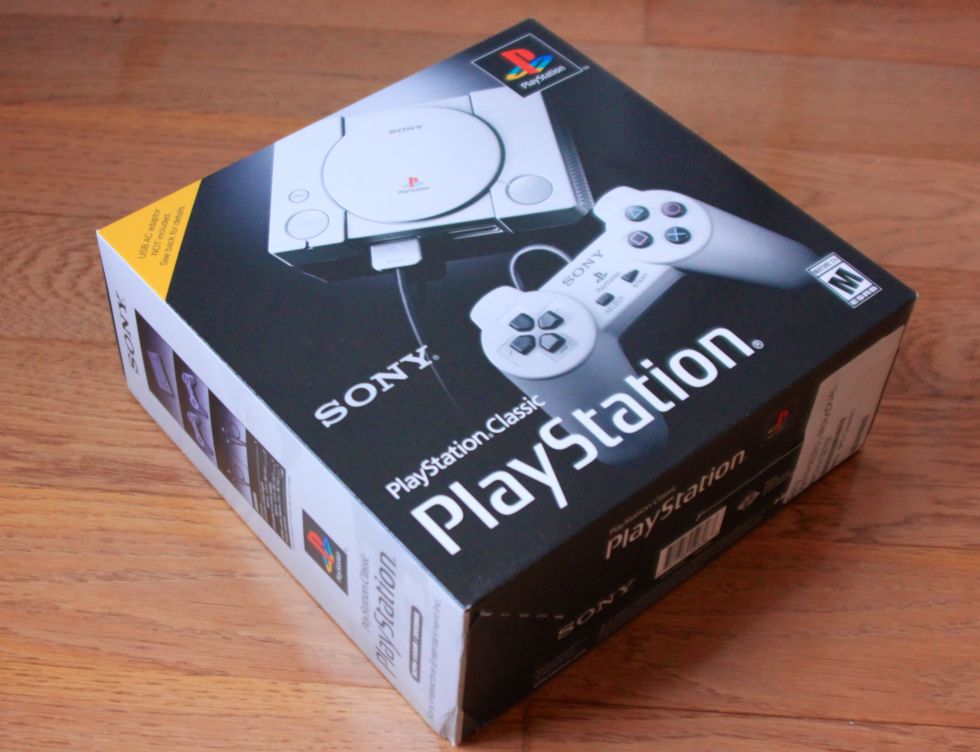
PlayStation Classic review: A far-from-classic experience

Following the success of Nintendo’s hot-selling series of “Classic Edition” plug-and-play HDMI systems, Sony is jumping into the fray this week with the PlayStation Classic. Unfortunately, the $100 emulation box, collecting 20 early CD-ROM games, is a bare-bones experience that comes with a lot of compromises that get in the way of even nostalgic appreciation for the era.

It starts from the moment you turn the system on, with a pixellated, no-frills menu that doesn’t even offer placeholder background music while you navigate. Don’t go looking for on-screen game manuals or any sort of museum-style, behind-the-scenes features either—the best you’ll get is a QR code link to an online manual (which returns a 404 error as of this writing).

Read 12 remaining paragraphs | Comments

https://arstechnica.com/?p=1419009


First trailer for Artemis Fowl might make you believe in fairies

Artemis Fowl (Ferdia Shaw) and his loyal protector, Butler (Nonso Anozie), stumble onto the world of fairies while searching for his missing father.

Enlarge / Artemis Fowl (Ferdia Shaw) and his loyal protector, Butler (Nonso Anozie), stumble onto the world of fairies while searching for his missing father. (credit: Disney)

A 12-year-old criminal mastermind gets embroiled in the world of fairies in the first trailer for Disney’s film adaptation of sci-fi/fantasy novel Artemis Fowl. And we’re not talking Tinkerbell. These are badass fairies with neutrino handguns, capable of stopping time. It all makes for some spectacular eye-candy, and having Kenneth Branagh (Thor) at the helm bodes well for the film’s success.

There are eight books in the Artemis Fowl series by Irish author Eoin Colfer, detailing the extensive exploits of the titular character. The debut novel received generally positive reviews and a few comparisons to J.K. Rowling’s Harry Potter series, although Colfer’s books have never achieved the same stratospheric commercial success. Disney is betting there’s an equally strong appetite for the Artemis Fowl series on the big screen.

The comparison understandably irritates Colfer, who describes his novels as being more like “Die Hard with fairies.” That’s a fairly accurate description. Artemis is the anti-Harry Potter. He’s a thief and a kidnapper, among other misdeeds, and he is largely untroubled by remorse. That’s part of his charm.

Read 6 remaining paragraphs | Comments

https://arstechnica.com/?p=1418889