Microsoft preps DirectStorage 1.1 with GPU decompression for faster game loads
Enlarge/ DirectStorage facilitates direct communication between your GPU and speedy modern SSDs, which can reduce game load times and speed up asset streaming.
One of the newer Xbox features that Microsoft has been working to bring to Windows is DirectStorage, a collection of features that allows fast PCI Express-based NVMe SSDs to communicate directly with your GPU. For DirectStorage 1.0, the main benefit was faster load times—up to 40 percent faster, according to Microsoft. This week Microsoft announced that it’s readying DirectStorage 1.1 for release later this year, which will allow game assets to be decompressed on the GPU instead of the CPU, speeding up decompression operations and freeing up your processor to do other things.
Normally, compressed game assets are loaded into system memory and decompressed by the CPU before being sent to the GPU. This circuitous route adds to game load times and can contribute to “pop-in” in games with big open worlds—that effect where you see a bland, less-detailed version of an object for a brief instant before more detailed textures and models have time to load in.
A sample image showing the benefits of GPU-based decompression (left) vs CPU decompression (right). Note the much lower load time and the significantly lowered CPU usage.
DirectStorage’s GPU-based decompression works with a new GPU-optimized compression format called “GDeflate,” originally created by Nvidia. Microsoft’s sample image comparing GPU decompression with GDeflate and CPU decompression using Zlib showed much faster load times (0.8 second on the GPU, compared to 2.36 seconds on the CPU) along with much lower CPU usage, though Microsoft says that the exact results will vary based on your hardware and the game you’re loading.
Using a new decompression format means that games won’t see any of these DirectStorage benefits for “free”—game developers will need to work to implement them. But despite being contributed by Nvidia, GDeflate will work just as well on AMD and Intel GPUs. Microsoft says it’s working with all three companies to make sure their drivers support GDeflate and DirectStorage 1.1.
DirectStorage 1.1’s system requirements are pretty loose. Microsoft says the feature will work on Windows 10 or 11, doesn’t absolutely require a particular type of storage, and will run on any DirectX 12-capable GPU that supports Shader Model 6, which should cover the vast majority of Nvidia, AMD, and Intel GPUs launched within the last four or five years. But for the best results, the company recommends Windows 11, an NVMe SSD, and a newer DirectX 12 Ultimate GPU (of those, the speed of your SSD will make the biggest difference).
https://arstechnica.com/?p=1890079
Carmack: “There’s a bunch that I’m grumpy about” in virtual reality
Enlarge/ “This here, this isn’t really what I meant,” Carmack said of last year’s promise to attend this year’s Meta Connect conference in the metaverse.
Last year, former Oculus CTO (and current company advisor) John Carmack threw down the gauntlet for Meta’s near-term metaverse plans. By the 2022 Meta Connect conference, Carmack said last October, he hoped he’d be in his headset, “walking around the [virtual] halls or walking around the stage as my avatar in front of thousands of people getting the feed across multiple platforms.”
Carmack’s vision didn’t come to pass Tuesday, as a jerky and awkward Carmack avatar gave one of his signature, hour-long unscripted talks amid a deserted VR space, broadcast out as plain old 2D video on Facebook.
“Last year I said that I’d be disappointed if we weren’t having Connect in Horizon this year,” Carmack said by way of introduction. “This here, this isn’t really what I meant. Me being an avatar on-screen on a video for you is basically the same thing as [just] being on a video.”
That set the tone for a presentation in which Carmack said that “there’s a bunch that I’m grumpy about” regarding the current state of Meta’s current VR hardware and software. While that grumpiness was somewhat tempered with talk of recent improvements and hope for the future of virtual reality, Carmack seemed generally frustrated with the direction Meta as a whole is taking its VR efforts.
Pushing for quantity over quality
Take Horizon Worlds, for instance, Meta’s premiere product for socializing in the company’s version of the metaverse. On the one hand, Carmack said watching Mark Zuckerberg’s Connect presentation in a Horizon room alongside a few dozen other people Tuesday offered “some genuine benefits” over watching that same presentation on a laptop screen amid his cluttered desk.
On the other hand, that’s a far cry from his vision for “arena scale support with thousands of avatars milling around… at least hundreds in large rooms… in a completely uniformly shared world.” Carmack said he wants “to be present with a live audience in a virtual space where everyone who wanted to could stay afterwards and talk as long as they felt like it.”
“Last year I said that I’d be disappointed if we weren’t having Connect in Horizon this year… This here, this isn’t really what I meant.”
Former Oculus CTO John Carmack
If you could achieve a truly virtual conference space like that, “You could just give people a free headset and still come out ahead” compared to the hassle of putting on an in-person conference, Carmack said. That kind of broadly shared world is a difficult technical challenge, Carmack said, and while Horizon “definitely can’t handle it now… it’s not an insurmountable [challenge].”
Carmack also mentioned some “public mockery about avatar quality earlier this year,” a seeming reference to a low-detail Mark Zuckerberg avatar that went viral in August after Meta shared it online. That reaction has caused “a lot of people internally [to be] paranoid about showing anything but the highest quality avatars.”
Enlarge/ The public mockery of this Mark Zuckerberg avatar means that “now a lot of people internally are paranoid about showing anything but the highest quality avatars,’ Carmack said.
But Carmack expressed some heavy skepticism at that push for avatar fidelity. He expressed a preference for spaces filled with a lot of low-detail avatars to Meta’s push for the kind of nearly photorealistic “codec avatars” that eat up too much processor power to allow for crowded virtual rooms. “We’ve got a finite amount of resources on our headsets here, and cloud rendering won’t save us in many cases,” Carmack said. “I definitely lean towards optimizing for quantity and not quality.”
And while Carmack said he was happy with the current state of Meta’s avatars, he noted that his Connect presentation was taking place in a “custom build of Horizon” designed to guarantee the level of detail on his avatar never dropped. He also turned off the much-ballyhooed face tracking features on his Quest Pro headset because, in the software’s current state, “there’s at least a decent chance that I would do something very embarrassing looking” in a very public setting.
https://arstechnica.com/?p=1889582
Nikon Small World microscopy contest 2022: Meet this year’s top 10 winners
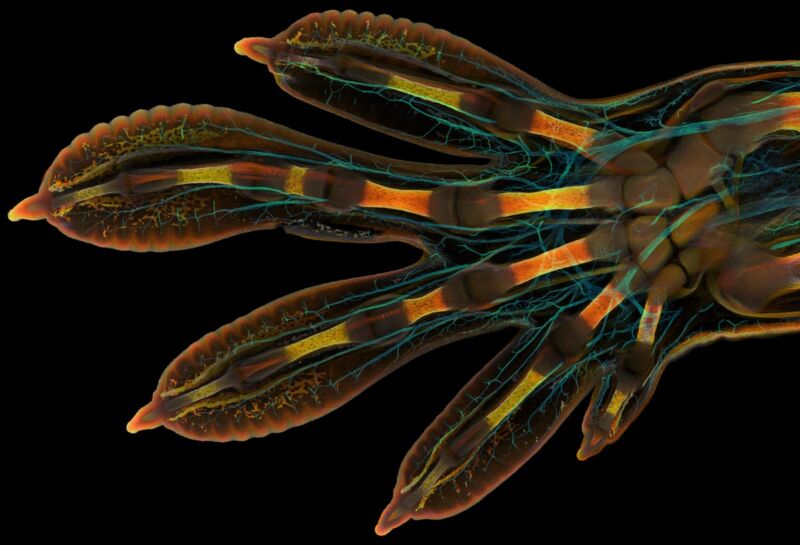
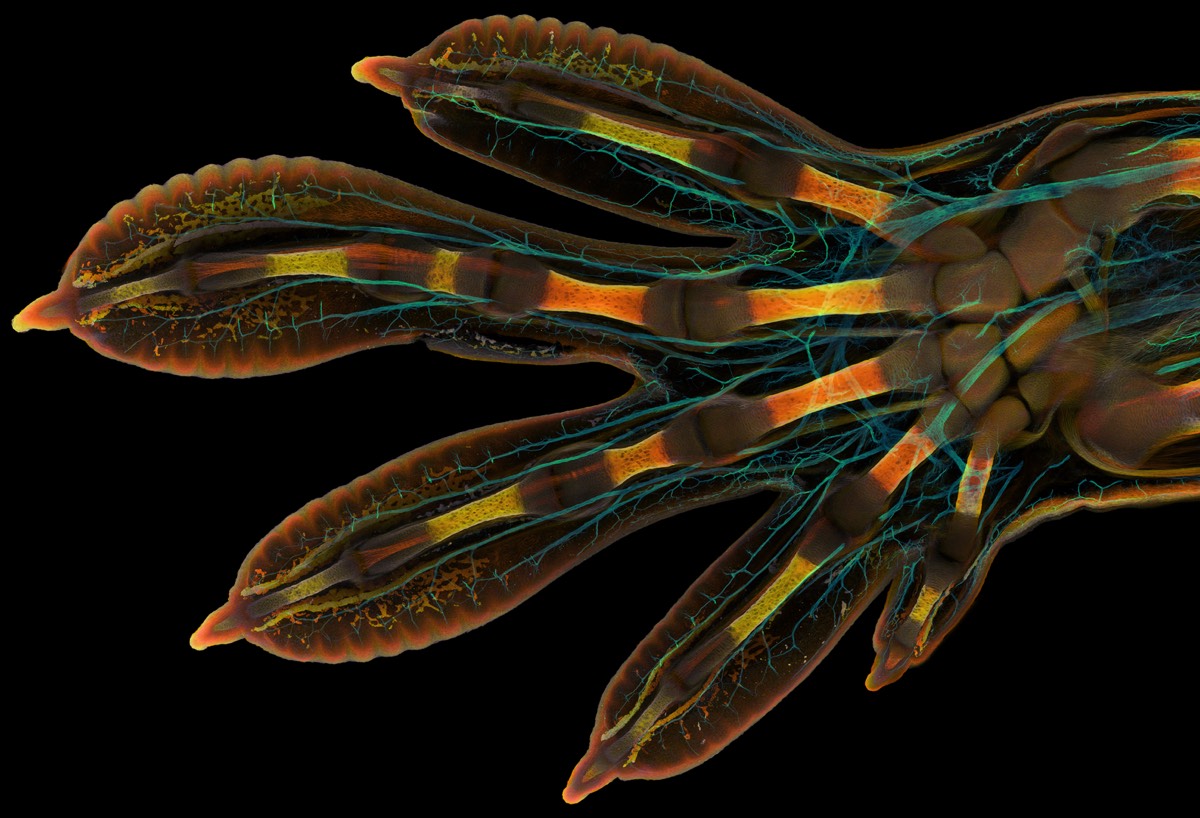
Enlarge/ This arresting image of the hand of an embryonic Madagascar giant day gecko took first place in the annual competition.
The Madagascar giant day gecko (Phelsuma grandis) is a popular exotic pet, perhaps because it looks a bit like Geico’s beloved animated gecko mascot. Adults measure about 10 inches in length and are known for their bright green body color, augmented by a red stripe running from the nostril to the eye. They can lick their eyeballs (a way to keep them clean since the creatures lack eyelids). And, of course, they sport those well-known adhesive pads on their feet and hands—ideal for clinging to smooth vertical surfaces—that physicists find so fascinating.
Now we have a unique perspective on the gecko’s most famous appendage: a striking photomicroscopy image of an embryonic hand of Phelsuma grandis, courtesy of a Swiss graduate student, Grigorii Timin, at the University of Geneva and his advisor, Michael Milinkovitch. It’s the winning image in the 2022 Nikon Small World Photomicrography Competition, designed to highlight “stunning imagery from scientists, artists, and photomicrographers of all experiences and backgrounds from across the globe,” according to Nikon’s communications manager Eric Flem.
The first step in creating the winning image was to prepare the sample using whole-mount fluorescent staining of the tissue. And an embryonic gecko hand is actually quite a large sample (about 3 mm or 0.12 inches long) when it comes to high-resolution microscopy. So Timin painstakingly merged hundreds of images—300 tiles, each containing some 250 optical sections—together using image-stitching to create the final result. Those cyan sections highlight the nerves in the embryonic hand, while other colors highlight bones, tendons, ligaments, skin, and blood cells.
Here are the remaining top 10 winners of this year’s contest. You can check out the full list of winners, as well as several honorable mentions, here—89 in all, selected from thousands of submissions around the world.
Enlarge/ Caleb Dawson of the Walter and Eliza Hall Institute of Medical Research in Melbourne, Australia: “Breast tissue showing contractile myoepithelial cells wrapped around milk-producing alveoli.”
Caleb Dawson
Enlarge/ Satu Paavonsalo and Sinem Karaman, University of Helsinki, Finland: “Blood vessel networks in the intestine of an adult mouse.”
Satu Paavonsalo & Sinem Karaman
<a href="https://rassegna.lbit-solution.it/wp-content/uploads/2022/10/nikon-small-world-microscopy-contest-2022-meet-this-years-top-10-winners-12.jpg" class="enlarge" data-height="1433" data-width="1200" alt="Andrew Posselt, University of California, San Francisco: "Long-bodied cellar/daddy long-legs spider (Pholcus phalangioides)" “><img alt="Andrew Posselt, University of California, San Francisco: "Long-bodied cellar/daddy long-legs spider (Pholcus phalangioides)" ” src=”https://rassegna.lbit-solution.it/wp-content/uploads/2022/10/nikon-small-world-microscopy-contest-2022-meet-this-years-top-10-winners-3.jpg” width=”640″ height=”764″ srcset=”https://rassegna.lbit-solution.it/wp-content/uploads/2022/10/nikon-small-world-microscopy-contest-2022-meet-this-years-top-10-winners-12.jpg 2x”>
Enlarge/ Andrew Posselt, University of California, San Francisco: “Long-bodied cellar/daddy long-legs spider (Pholcus phalangioides)”
Enlarge/ Alison Pollack, San Anselmo, California: Slime mold (Lamproderma)
Alison Pollack
Enlarge/ Ole Bielfeldt, Macrofying Cologne, Germany: “Unburned particles of carbon released when the hydrocarbon chain of candle wax breaks down.”
Ole Bielfeldt
Enlarge/ Jianqun Gao and Glenda Halliday, University of Sydney, Australia: “Human neurons derived from neural stem cells.”
Jianqun Gao & Glenda Halliday
Enlarge/ Nathanaël Prunet, University of North Carolina at Chapel Hill: “Growing tip of a red algae.”
Nathanaël Prunet
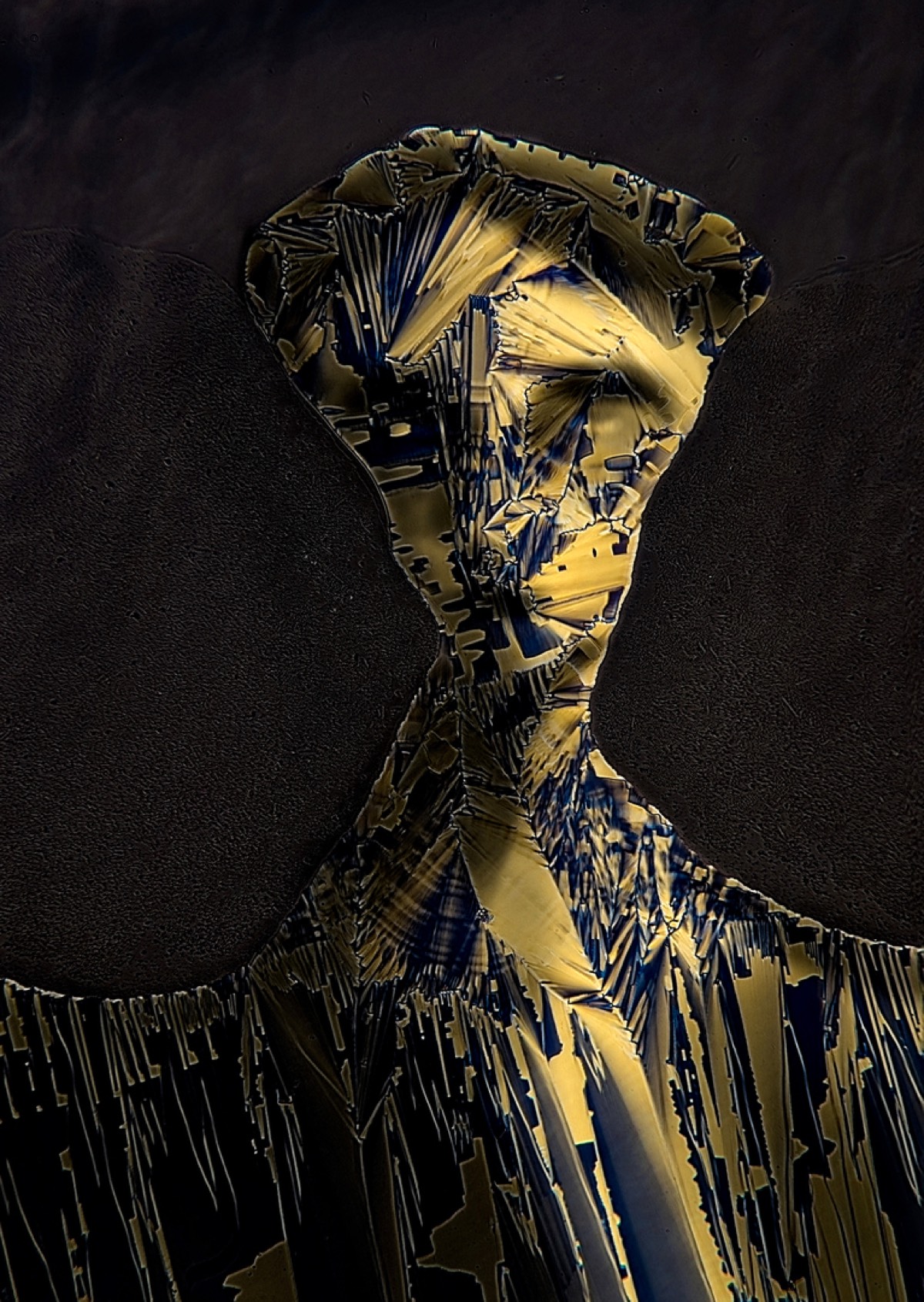
Enlarge/ Marek Sutkowski, Warsaw University of Technology, Poland: “Liquid crystal mixture (smectic Felix 015).”
Marek Sutkowski
Enlarge/ Murat Öztürk, Ankara, Turkey: “A fly under the chin of a tiger beetle.”
Murat Öztürk
https://arstechnica.com/?p=1889195
Meta continues to shovel money into the growing VR gaming segment
<img src="https://rassegna.lbit-solution.it/wp-content/uploads/2022/10/meta-continues-to-shovel-money-into-the-growing-vr-gaming-segment.png" alt="Previously a PlayStation VR exclusive, Iron Man VR will be coming to Quest 2 after Meta’s purchase of developer Camouflaj.”>
Enlarge/ Previously a PlayStation VR exclusive, Iron Man VR will be coming to Quest 2 after Meta’s purchase of developer Camouflaj.
To reinforce that success, the company formally announced its recent acquisition of three more major VR gaming studios today:
Those recent purchases add to a recent Meta game studio acquisition spending spree that already included Beat Games (Beat Saber), Ready at Dawn (Lone Echo), Sanzaru Games (Asgard’s Wrath), Downpour Interactive (Onward), and BigBox VR (Population One). In July, the Federal Trade Commission filed an antitrust lawsuit to try to stop Meta’s purchase of Within, makers of the popular VR fitness app Supernatural.
Growing, but how fast?
Meta’s additional spending on even more VR developers comes as Quest 2 headset owners seem to be spending more than ever on software. All told, Meta said today that $1.5 billion had been spent on games and apps on the Quest store since the platform launched in spring 2019. That’s up from $1 billion in cumulative app revenue the company announced in February, suggesting VR spending is accelerating at a decent pace.
On the other hand, Meta’s 30 percent share from those sales amounts to just $450 million in direct revenue over more than three years. For context, Microsoft recently revealed that it brought in $2.9 billion in revenue just from a single year of Xbox Game Pass console subscriptions, making the VR gaming market seem like a relative drop in the bucket.
Meta’s VR software revenue is still well short of the $2 billion Facebook paid for Oculus eight years ago. And that number doesn’t even capture the hefty costs for operations, R&D, and acquisitions the company has incurred since the purchase.
Meta’s “Reality Labs” division (which includes the entirety of its VR business) has lost roughly $10 billion over the last year, according to data from the company’s quarterly earnings statements. John Carmack, who served as Oculus CTO until 2019 and still serves as an advisor to the company—said in an August podcast interview that he gets “sick to my stomach thinking about that much money being spent. But that’s how they demonstrate commitment to this … Google goes and cancels all these projects, while Meta is really sticking with the funding of VR and AR even further out with it.”
When you succeed, we all succeed?
<a href="https://rassegna.lbit-solution.it/wp-content/uploads/2022/10/meta-continues-to-shovel-money-into-the-growing-vr-gaming-segment-1.jpg" class="enlarge" data-height="535" data-width="830" alt="The Walking Dead: Saints and Sinners has brought in an impressive $50 million on Quest VR, proving at least some titles can find a significant market on the platform.”><img alt="The Walking Dead: Saints and Sinners has brought in an impressive $50 million on Quest VR, proving at least some titles can find a significant market on the platform.” src=”https://rassegna.lbit-solution.it/wp-content/uploads/2022/10/meta-continues-to-shovel-money-into-the-growing-vr-gaming-segment.jpg” width=”640″ height=”413″ srcset=”https://rassegna.lbit-solution.it/wp-content/uploads/2022/10/meta-continues-to-shovel-money-into-the-growing-vr-gaming-segment-1.jpg 2x”>
Enlarge/The Walking Dead: Saints and Sinners has brought in an impressive $50 million on Quest VR, proving at least some titles can find a significant market on the platform.
Despite those heavy losses, Meta still expressed enthusiasm over how many individual developers found success with Quest 2 games. In a flurry of statistics, the company revealed that:
“Roughly one in three” of the 400 apps on Quest 2 is “making revenue in the millions.”
That includes 55 titles that have grossed over $5 million (more than double the number that had hit that mark as of last year) and 33 titles that have already grossed over $10 million (up from 22 such titles in February).
Near the very top of the Quest 2 revenue heap, The Walking Dead: Saints & Sinners has made $50 million, “nearly double its revenue on all other platforms,” Meta said
Quick sellers like Resident Evil 4 can make $2 million in revenue on Quest 2 in just 24 hours after launch. Just below that, games like Blade and Sorcery: Nomad and Zenith: The Last City, made their first $1 million on Quest in 48 hours and 24 hours, respectively.
Bonelab set the record for fast Quest 2 sales, though, earning its first million dollars in “less than an hour.”
Those are encouraging numbers for a market segment that seemed like a hopelessly small niche just a few years ago. But Meta (and its app developers) will have to see years of similarly quick revenue growth before the company’s extremely heavy investment in the space will come close to paying off.
Elsewhere in its presentation, Meta talked up some upcoming Quest games. Among Us VR—a first-person take on the viral social deduction sensation that we last saw in April, will finally launch on November 10. And Chapter 2 of the Walking Dead: Saints and Sinners franchise will show off its New Orleans setting in December.
Xbox Game Pass subscribers will soon be able to access their Xbox Cloud Gaming library through their headset, playing streaming titles on a massive, virtual 2D screen projected in VR.
https://arstechnica.com/?p=1889252
Meta announces Quest Pro, a $1,499 “mixed reality” device coming Oct. 25
The Meta Quest Pro.
A high-end price for a high-end device.
A charging cradle will let users easily charge the Quest Pro and its controllers.
A demonstration of the kinds of non-verbal communication and avatar expressions possible with the Quest Pro’s inward-facing cameras.
A demonstration of how a game like Beat Saber can be overlaid on top of “real world” surroundings for a mixed reality experience with Quest Pro.
Mark Zuckerberg shows off a new avatar design, complete with moving facial expressions, that Meta hopes to roll out in 2023,
Just under one year after rebranding as Meta, the company formerly known as Facebook announced the Quest Pro, a $1,499 “mixed reality” headset that will be shipping on October 25.
Part of that “mixed reality” pivot comes in the Quest Pro’s more open lens design, which lets users see the physical world around them in their peripheral vision. That should allow users to perform simple tasks in the real world without taking off the headset, such as “jot[ting] down a note, grab[bing] something on your desk, or just be[ing] aware of what’s going on around you,” Meta said. Users who want a more immersive experience, though, can clip on magnetic “light blockers” to the side of the headset for a “partial blocked” take on the outside world (optional accessories will allow for “fully immersed” experiences if a user wants to completely cut off their surroundings, Meta said.
Quest Pro also sports new, full-color passthrough cameras that capture four times the resolution of those on the Quest 2, Meta said. Combined with a depth system that can detect the location of objects in your environment, which allows for a mixed-reality layering of virtual items on a stereoscopic display of your real-world surroundings, complete with new “anchoring” technology that locks those virtual items in place, Meta said.
More power, more features
Tech-wise, the Quest Pro touts a Snapdragon XR2+ processor and 12GB of memory (up from 6GB on the Quest 2). That means the device “runs at 50 percent more power” than Quest 2, Meta said, with better thermal dissipation as well.
A new pancake lens design, meanwhile, folds light from the displays over itself multiple times on the way to the eye, allowing for a lens enclosure that’s 40 percent thinner than those in Quest 2. Those displays have 37 percent more pixels per inch than the Quest 2, Meta said, making for an 1800×1920 pixel per eye resolution at 90 Hz refresh rates. Those displays also generate 75 percent more contrast thanks to “local dimming technology,” Meta said, and feature a “1.3x larger color gamut” than Quest 2.
On the other end of the device, Meta’s “first ever curved cell battery” tucks behind the user’s skull to provide better overall balance, Meta said. But a Meta representative told the Verge that the battery would only last an hour or two on a single charge, before needing a full two hours to recharge.
Overall, the Quest Pro weighs in at 722 grams, Meta representatives told The Verge. That’s significantly more than the 503-gram Quest 2, but comparable to the 676 grams of the Quest 2 with its optional elite strap.
[embedded content]
The Quest Pro controllers have also been upgraded, so they are “basically their own computers,” Meta said, each sporting their own Snapdragon 662 mobile processor. Those controllers (which now have rechargeable batteries) can now track themselves with three built-in cameras, eliminating the need for any external or headset cameras or the kinds of tracking rings on old Rift and Quest controllers. That allows for 360-degrees-of-motion freedom for your hands in VR. New “TruTouch haptics” allow for more realistic force feedback as well, Meta said, while an optional clip-on stylus lets you draw precisely and virtually on real-world objects.
The Quest Pro also features inward-facing cameras that can capture a user’s facial expressions, allowing for VR avatars that show the “non-verbal expressions and gestures that can be more important than what we do or say,” as Meta CEO Mark Zuckerberg put it. Short demos showed those avatars capturing everything from eyebrow raises to subtle smiles to larger mouth movements like eating food.
Complete with glowy purple lenses
Quest Pro comes in a box: confirmed.
Comes with everything you see here.
Look ma, no tracking rings!
Quest Pro is “the first in our new line of advanced headsets” and “a high-end device designed for work and for people who want the best experience we can have in virtual reality today,” Zuckerberg said during the event. The idea is to introduce this kind of technology at the top end of the market now to “get it into our consumer devices in the coming years.”
Listing image by Meta
https://arstechnica.com/?p=1889103
Galileo confirmed as author of pseudonymous 17th century astronomy text
Enlarge/ Portrait of Galileo Galilei by Justus Sustermans, 1636. Uffizi Museum, Florence.
Public domain
In August, we reported that a letter presumably written by Galileo Galilei—part of the collection of the University of Michigan’s library—was actually a forgery, along with a similar document in the Morgan Library in New York City. Now that investigation has led to another discovery. An Italian historian has concluded that Galileo authored a 17th century treatise on astronomy under a pseudonym.
The Michigan letter purported to be a draft of an August 24, 1609, letter that Galileo wrote to the doge of Venice describing his observations with a telescope (occhiale) he had constructed. (The final letter is housed in the State Archives in Venice.) But Georgia State University historian Nick Wilding became suspicious of the manuscript’s authenticity while working on a biography of Galileo. Wilding has exposed Galileo-related forgeries in the past, most notably a copy of Sidereus Nuncius in the possession of a New York City rare-book dealer.
Michigan’s conservation laboratory determined that the ink and paper of its manuscript were consistent with the period when Galileo made his observations, but any hope of authenticity was dashed after Wilding’s investigations into the watermark. It matched documents dating back to 1790—150 years after Galileo made his discoveries.
<a href="https://rassegna.lbit-solution.it/wp-content/uploads/2022/10/galileo-confirmed-as-author-of-pseudonymous-17th-century-astronomy-text-4.jpg" class="enlarge" data-height="1821" data-width="1200" alt="Opening page of Libro della Considerazioni Astronomiche di Alimberto Mauri.”><img alt="Opening page of Libro della Considerazioni Astronomiche di Alimberto Mauri.” src=”https://rassegna.lbit-solution.it/wp-content/uploads/2022/10/galileo-confirmed-as-author-of-pseudonymous-17th-century-astronomy-text-1.jpg” width=”640″ height=”971″ srcset=”https://rassegna.lbit-solution.it/wp-content/uploads/2022/10/galileo-confirmed-as-author-of-pseudonymous-17th-century-astronomy-text-4.jpg 2x”>
Enlarge/ Opening page of Libro della Considerazioni Astronomiche di Alimberto Mauri.
Pubic domain
The Michigan letter had been authenticated by an archbishop of Pisa named Cardinal Pietro Maffi. The cardinal had two other documents in his collection purportedly signed by Galileo, and Maffi used those documents as comparisons. But these were later also shown to be forgeries. And one of them (a letter) was believed to have accompanied a 1606 treatise, Libro della Considerazione Astronomica, published under the pseudonym Alimberto Mauri. The text argued for the existence of mountains on the moon, among other insights, and attributed the motion of celestial bodies following nonuniform paths to physical causes.
The suggestion that Galileo may have written the 1606 treatise started circling shortly after it was published. For instance, according to Matteo Cosci, a historian at Ca’ Foscari University of Venice, one of Galileo’s University of Padua colleagues, Fortuna Liceti, described the pseudonymous Mauri as someone who was an expert mathematician “pretending” to be an astronomer.
Galileo was known to use pseudonyms. For instance, he engaged in in a debate over the 1604 supernova (the subject of Johannes Kepler’s 1606 treatise De Stella Nova) under the name Cecco da Ronchitti. Philosopher Lodovico delle Colombe believed this new star wasn’t new; it had always been there, but it wasn’t always visible. He adhered to the Ptolemaic model of the solar system, in which stars were fixed and unchanging. Galileo was a professor at the University of Padua at the time, and was also interested in this “stella nova.” He thought it was a new phenomenon, not a permanent star, and even proposed possible mechanisms by which it might have been produced.
Enlarge/ Historian Matteo Cosci scoured Galileo’s handwritten notes to find evidence of his authorship.
Ca’ Foscari University of Venice
Delle Colombe published his thoughts on the “stella nova,” citing not just astronomical observations but also Aristotle and other notable philosophers. A few months later, Considerazione Astronomica appeared. “Mauri” argued that astronomy should focus on observations and mathematics rather than Aristotle, and referred to delle Colombe as “our pigeon.”
Delle Colombe never explicitly identified Galileo as his adversary. But in his Risposte piacevoli e curiose (1608), he did indirectly refer to said adversary as “Mr. Mask” and “that professor that was a lecturer in Padua.” And a student at the time wrote “Galileo Galilei” under the subtitle of his copy of Risposte (“a knowing mask named Alimberto Mauri”)
Scholars in the 1970s cited the Maffi letter as evidence that Galileo had authored Considerazione Astronomica. When that letter turned out to be a forgery, Galileo’s authorship was cast in doubt. But Cosci doggedly scoured the archives at the Biblioteca Nazionale Centrale in Florence, specifically a collection of Galileo’s handwritten notes covering various topics at different time periods, which had never been published, and uncovered new evidence to support the hypothesis.
<a href="https://rassegna.lbit-solution.it/wp-content/uploads/2022/10/galileo-confirmed-as-author-of-pseudonymous-17th-century-astronomy-text-6.jpg" class="enlarge" data-height="1652" data-width="1200" alt="Frontespiece of delle Colombe's Risposte to the pseudonymous A. Mauri.”><img alt="Frontespiece of delle Colombe's Risposte to the pseudonymous A. Mauri.” src=”https://rassegna.lbit-solution.it/wp-content/uploads/2022/10/galileo-confirmed-as-author-of-pseudonymous-17th-century-astronomy-text-3.jpg” width=”640″ height=”881″ srcset=”https://rassegna.lbit-solution.it/wp-content/uploads/2022/10/galileo-confirmed-as-author-of-pseudonymous-17th-century-astronomy-text-6.jpg 2x”>
Enlarge/ Frontespiece of delle Colombe’s Risposte to the pseudonymous A. Mauri.
The strongest evidence he found for Galileo’s authorship of Considerazione Astronomica is a list the astronomer made of “places where [delle Colombe] speaks of me with contempt.” Those “places” were specific references to select passages in delle Colombe’s Risposte, but when Cosci looked them up, the references were attacking the pseudonymous Alimberto Mauri. Cosci reasoned that Galileo would not have felt personally attacked by these contemptuous references unless he was, indeed, Mauri.
Cosci’s research also unearthed a handwritten note by Galileo indicating that the astronomer was considering another reply to delle Colombe, but decided it just wasn’t worth his time. They were still arguing years later—about the motion of the Earth (mentioned in Sidereus Nuncius), the surface of the moon, and floating bodies, among other subjects—but by then, Galileo was famous and no longer felt the need for a pseudonym, per Cosci. The historian is now preparing a new edition of Considerazione Astronomica highlighting his analysis of key textual similarities between that treatise and Galileo’s other written works.
https://arstechnica.com/?p=1888548
Windows 95 went the extra mile to ensure compatibility of SimCity, other games
<img src="https://rassegna.lbit-solution.it/wp-content/uploads/2022/10/windows-95-went-the-extra-mile-to-ensure-compatibility-of-simcity-other-games.jpg" alt="Microsoft wanted people to have zero reasons not to upgrade to Windows 95. That meant making sure SimCity Classic worked, with some memory-reading workarounds.”>
Enlarge/ Microsoft wanted people to have zero reasons not to upgrade to Windows 95. That meant making sure SimCity Classic worked, with some memory-reading workarounds.
It’s still possible to learn a lot of interesting things about old operating systems. Sometimes those things were documented, or at least hinted at, in blog posts that miraculously still exist. One such quirk showed up recently when someone noticed how Microsoft made sure that SimCity and other popular apps worked on Windows 95.
A recent tweet by @Kalyoshika highlights an excerpt from a blog post by Fog Creek Software co-founder, Stack Overflow co-creator, and longtime software blogger Joel Spolsky. The larger post is about chicken-and-egg OS/software appeal and demand. The part that caught the eye of a Hardcore Gaming 101 podcast co-host is how the Windows 3.1 version of SimCity worked on the Windows 95 system. Windows 95 merged MS-DOS and Windows apps, upgraded APIs from 16 to 32-bit, and was hyper-marketed. A popular app like SimCity, which sold more than 5 million copies, needed to work without a hitch.
Spolsky’s post summarizes how SimCity became Windows 95-ready, as he heard it, without input from Maxis or user workarounds.
Jon Ross, who wrote the original version of SimCity for Windows 3.x, told me that he accidentally left a bug in SimCity where he read memory that he had just freed. Yep. It worked fine on Windows 3.x, because the memory never went anywhere. Here’s the amazing part: On beta versions of Windows 95, SimCity wasn’t working in testing. Microsoft tracked down the bug and added specific code to Windows 95 that looks for SimCity. If it finds SimCity running, it runs the memory allocator in a special mode that doesn’t free memory right away. That’s the kind of obsession with backward compatibility that made people willing to upgrade to Windows 95.
Spolsky (in 2000) considers this a credit to Microsoft and an example of how to break the chicken-and-egg problem: “provide a backwards compatibility mode which either delivers a truckload of chickens, or a truckload of eggs, depending on how you look at it, and sit back and rake in the bucks.’
Windows developers may have deserved some sit-back time, seeing the extent of the tweaks they often have to make for individual games and apps in Windows 95. Further in @Kalyoshika’s replies, you can find another example, pulled from the Compatibility Administrator in Windows’ Assessment and Deployment Kit (ADK). A screenshot from @code_and_beer shows how Windows NT, upon detecting files typically installed with Final Fantasy VII, will implement a fittingly titled compatibility fix: “Win95VersionLie.” Simply telling the game that it’s on Windows 95 seems to fix a major issue with its operation, along with a few other emulation and virtualization tweaks.
Just did it. Too cool.
An example for a game I still own – FF7 – will outright die if it sees it’s running on Win NT instead of Win95, so Windows lies based on the presence of some files pic.twitter.com/Wc08tSffcz
Install the Windows ADK and open up the Compatibility Administrator, and you can spy on some of the things Windows does for particular apps to make them work in the System Database section. If it detects files named “Horny.tif” and “bullfrog.sbk”, it updates where Windows 95/98 versions of Dungeon Keeper should put those files in Windows XP and later. Windows has to stop Tom Clancy’s Rainbox Six from accessing the CD drive while it’s already playing a movie or other media, as well as disable Alt+Tab switching while the game is open because the game can’t handle losing focus. And it’s not just older titles; Street Fighter V gets a little tweak to its DirectX implementation to run on some systems.
In 2005, longtime Microsoft staffer and The Old New thing blogger Raymond Chen documented Microsoft’s Windows 95 compatibility obsession. Chen writes that Windows 95’s development manager “took his pick-up truck, drove down to the local Egghead Software store (back when Egghead still existed), and bought one copy of every single PC program in the store.” Everybody was responsible for up to two programs, which they would install, run, and document for bugs. If a staffer finished two, they could come back to grab up to two more. And testers could keep whatever they finished.
Mike Perry, former creative director at Sim empire Maxis (and later EA), noted later that there was, technically, a 32-bit Windows 95 version of Sim City available, as shown by the “Deluxe Edition” bundle of the game. He also states that Ross worked for Microsoft after leaving Maxis, which would further explain why Microsoft was so keen to ensure people could keep building parks in the perfect grid position to improve resident happiness.
https://arstechnica.com/?p=1888556
One final mission: Star Trek: Picard wows NYCC with extended S3 teaser trailer
[embedded content]
A new extended teaser trailer for the third and final season of Star Trek: Picard dropped at NYCC.
It’s all hands on deck for Jean-Luc Picard and his old Enterprise crew in an extended teaser trailer for Star Trek: Picard that debuted during New York Comic Con this weekend. We also got a short first-look teaser for Star Trek: Discovery’s fifth season, currently in production, as well as a midseason trailer for the animated series, Star Trek: Prodigy.
(Some spoilers below.)
As fans well know by now, Discovery is set 20 years after the events of Star Trek: Nemesis. The first season’s notable guests included Jonathan Frakes and Marina Sirtis, reprising their roles as William Riker and Deanna Troi, sparking rumors about the possible return of other Star Trek: The Next Generation characters. Patrick Stewart personally invited Whoopi Goldberg to reprise her role as Guinan in S2, with John DeLancie also returning as Q, keen to stage one last trial with his old friend Jean-Luc. We even saw the of the Borg Queen (now played by Annie Wersching), and the briefest of cameos by Wesley Crusher (Wil Wheaton).
At the end of the season, we said goodbye to three main cast members: Agnes Jurati (Alison Pill), who became the new Borg Queen; Chris Rios (Santiago Cabrera), who chose to stay on Earth in a past alternate timeline with the woman he fell in love with; and the Romulan Elnor (Evan Evagora), who was shot and eventually died early in in S2, but turned up alive in the final moments of the finale in a new timeline.
Those farewells cleared the stage for the third and final season, because this time the showrunners have pulled out all the stops in the name of fan service. In April, Paramount+ confirmed that LeVar Burton (Geordie LaForge), Michael Dorn (Worf), and Gates McFadden (Beverly Crusher) would reprise their TNG roles, along with Frakes and Sirtis. Brent Spiner reprised his role as Data in S1 before morphing into Data’s creator, the human cyberneticist Dr. Noonien Soong from S2. In the third season, Spiner will reprise his role as Lore, a prototype android and Data’s “brother” first introduced in TNG. I guess his deactivation in the TNG S7 premier wasn’t “permanent” after all. Daniel Davis will also return to guest star as the holographic Professor Moriarty (“Elementary, My Dear Data,” “Ship in a Bottle”).
New cast members include Mica Burton (daughter to LeVar) as Ensign Alandra La Forge and Ashlei Sharpe Chestnut as Sidney La Forge, conn officer of the USS Titan—both Geordie’s children. We’re also getting a brand new villain for S3: Vadic (Amanda Plummer), captain of an alien ship called the Shrike. Judging by the teaser trailer, Vadic has a major grudge against Picard and his crew and seems hellbent on exacting revenge not just on him, but Starfleet as a whole.
The trailer opens with Picard just trying to enjoy a quiet evening meal in peace, when he is interrupted by emissaries. We learn he has received a distress call form Beverly Crusher: “We are being hunted.” Enter Vadic, who wastes no time opening fire on Picard and his ship, chortling with glee at the ensuing damage. That’s reason enough to bring back the old crew, although a reluctant Worf informs everyone that he now prefers pacifism to combat. (“We’re all gonna die,” Riker sighs.) Geordie also seems less than thrilled at the prospect. But Vedic is sufficiently menacing to overcome that reluctance. “We will scorch the earth under which he stands and the night will brighten with the ashes of the Federation,” Vedic declares, picking bits of scenery out of her teeth. “But first we will have vengeance.”
The third and final season of Star Trek: Picard will premiere on Paramount+ on February 16, 2023.
Star Trek: Discovery
[embedded content]
First look teaser for fifth season of Star Trek: Discovery.
The fourth season of Star Trek: Discovery wrapped a two-season arc set in the distant future. As I’ve written previously, in S3 Michael Burnham (Sonequa Martin-Green), Discovery, and her crew arrived in the future and were relieved to find that life still existed. But the galaxy was very different thanks to something called The Burn, a catastrophic event that caused all the dilithium in the Milky Way to explode and destroy much of Starfleet in the process. In the aftermath, with no warp drive possible, all the planets had become disconnected and were no longer governed by the Federation.
The Discovery crew reunited with what was left of Starfleet, figured out what caused The Burn, and managed to defeat a rival syndicate known as the Emerald Chain. In the S3 season finale, planets were beginning to rejoin the Federation—although Earth remained reluctant—and Discovery set out to bring dilithium from a nebula to planets that had been cut off by the Burn, presumably resurrecting the warp drive and enabling travel between distant worlds once again. Burnham finally became captain of Discovery.
In S4, Captain Burnham and her crew faced a devastating “gravitational anomaly” five light years in diameter moving through the galaxy—powerful enough to destroy Book’s (David Ajala) home planet of Kwejian in the very first episode. Book’s devastation and grief led him to make some questionable choices and strained his relationship with Burnham. Eventually we learned that the anomaly had been created by a new alien species, 10-C, with connected minds and a communication method beyond the scope of the crew’s universal translators. Burnham et al. ultimately saved the day, and Earth finally rejoined the Federation.
Judging by the first look from NYCC, the fifth season will kick of a new and rather different storyline: a space-based treasure hunt that seems to have a bit of an Indiana Jones vibe—including a mysterious wooden puzzle box. “The greatest treasure in the known galaxy is out there,” David Cronenberg’s Kovich tells Burnnham as the teaser opens. “What are you waiting for?” Of course she responds with an enthusiastic “Let’s fly.” Said treasure is an “ancient power” lost for centuries, and Burnham and her crew aren’t the only ones searching for it. Two of those rivals are a pair of former couriers turned criminals: L’ak (Elias Toufexis) and Moll (Eve Harlow). Also joining the cast this season is Callum Keith Rennie as Starfleet Captain Rayner, described as being on the gruff side (if course).
As we’ve reported previously, the computer-generated animated series, Star Trek: Prodigy, is aimed at a younger audience, and centers on a “motley crew of young aliens” living in the Tars Lamora prison colony in the Delta Quadrant. They stumble upon the USS Protostar, an abandoned Starfleet ship, and decide it’s the perfect vessel to get them to the Alpha Quadrant. The series is set in 2383 and takes place after the events of Star Trek: Voyager. Kate Mulgrew voices Captain Kathryn Janeway—or rather, the ship’s Emergency Training Hologram, who teaches the crew how to navigate the ship through the vastness of space.
Brett Gray voices teen maverick Dal, who takes on the role of captain; Angus Imrie voices a non-corporeal energy-based lifeforms named Zero; Ella Purnell plays a Vaunt N’Akat named Gwyn; Jason Mantzoukas voices the Tellarite Jankom Pog; Rylee Alazraqui voices an animal-loving eight-year-old named Rok-Tahk; Dee Bradley Baker voices an indestructible blob named Murf; John Noble voices Gwyn’s tyrannical father, colony leader the Diviner; and Jimmi Simpson voices the Diviner’s robotic enforcer, Drednok.
We haven’t had any new episodes since that cliffhanger midseason finale on Feb 3 (later airing on Nickelodeon on August 5). The Diviner sent a message to the Protostar and her motley crew, offering to free the remaining prisoners at Tars Lamora in exchange for the return of the ship. Dal and the rest of the crew tricked the Diviner, who turned out to be someone sent from the future to prevent his people’s destruction. Apparently civil war broke out upon first contact with Starfleet, and the Diviner had a plan to destroy Starfleet with the Protostar. He was driven mad when Zero revealed their true form, and ended up in exile on Tars Lamora. Meanwhile, Dal and his crew rescued the colony’s miners and headed toward Federation space. And we learned they were being tracked by none other than the real Captain Janeway on the USS Dauntless.
As the trailer opens, we’re told that it’s been weeks since the Protostar and her crew left Tars Lamora for good, and it’s looking like everyone’s dream of finding a place where they are truly accepted is on the brink of coming true (“We wanna join Starfleet!”). But the Federation doesn’t seem to be all that welcoming as Janeway insists that whoever stole the Protostar must be stopped. “The real me is hunting us?” hologram Janeway observes. “Good luck with that.” Clearly they can’t go and join Starfleet, but the crew decides they can still help others. And more wacky hijinks will no doubt ensue.
Star Trek: Prodigy returns to Paramount+ for the second half of its first season on October 27, 2022. A second season is already in production.
Listing image by YouTube/Paramount+
https://arstechnica.com/?p=1888457
We’ll take it: Prime Video unveils brief sneak peek at Wheel of Time S2 at NYCC
[embedded content]
Prime Video dropped a rapid-fire S1 recap and sneak peek at the second season of Wheel of Time during New York Comic Con.
New York Comic Con is happening this weekend, and the folks at Prime Video took the opportunity to unveil the briefest of sneak peek teasers for the second season of its epic fantasy series Wheel of Time, based on the novels by Robert Jordan. The new season isn’t slated to premiere until sometime next year, but the streaming platform is confident enough in the series that it’s already been renewed for a third.
(Spoilers for S1 below.)
As I’ve written previously, the series centers on Moiraine (Rosamund Pike), a member of a powerful, all-woman organization called the Aes Sedai. Magic, known as the One Power, is divided into male (saidin) and female (saidar) flavors. The latter is the province of the Aes Sedai. Long ago, a great evil called the Dark One caused the saidin to become tainted, such that most men who show an ability to channel that magic go mad. It’s the job of the Aes Sedai to track down such men and strip them of their powers. There is also an ancient prophecy concerning the Dragon Reborn: the reincarnation of a person who will save or destroy humanity.
As in the book, Pike’s Moiraine befriended a group of five young people—Egwene (Madeleine Madden), Nynaeve (Zoë Robins), Rand (Josha Stradowski), Mat (Barney Harris in S1), and Perrin (Marcus Rutherford)—whose small village has been attacked by monsters called Trollocs. The two women (Egwene and Nynaeve) showed some promise as future members of the Aes Sedai. But Moiraine also suspected one of the young people (especially the men) might be the Dragon Reborn. Moraine was accompanied on this quest by her Warder and companion, al’Lan Mandragoran (Daniel Henney), and had to avoid the Children of the Light, aka Whitecloaks, among other dangers, during her travels.
Ars Senior Technology Editor Lee Hutchinson and Senior Technology Reporter Andrew Cunningham are mega-fans of the book series, and devoted themselves to recapping every S1 episode in great detail, as well as giving frank assessments of how well the series handled adapting the source material. Their overall verdict after the S1 finale: despite some massive divergences from the books, the series was mostly entertaining, although they would have liked the show to spend more time on the story to let the main characters develop more fully. And they disliked “miserable butthead” Mat (who will be played by Donal Finn in S2), even though the book version is a fan favorite. Still, as Andrew observed, “If my biggest complaint about your show is that there wasn’t enough of it, I don’t think that’s a bad place to be coming out of your first season.”
A great deal happened in S1, far too much to summarize here. But the big news (for those unfamiliar with the books) is that Rand was identified as the Dragon Reborn and went into hiding to avoid his destiny and/or harming his friends—but not before he may have accidentally released the Dark One. We learned in the finale that there’s an armada of ships ominously heading their way. Moraine was captured by the Dark One and either stilled or shielded to keep her from channeling, leaving her in a tight spot. And Perrin helped dig up the flaming Horn of Valere, which plays a big role in the second book in the series.
The NYCC teaser whips through a series of rapid-fire moments from S1, and the new footage starts about the :23 second mark, featuring a despairing voiceover by Moraine. “We didn’t defeat the Dark One,” she says as images of our protagonists in peril flash by. “We set his strongest lieutenant free. He may be waking the Forsaken. You have no conception of the power they wield.” In the Books, the Forsaken were channelers who allied themselves with Shadow in the War of Power and used their powers for evil. They were subsequently imprisoned with the Dark One, and the prospect of their return does not bode well for our beleaguered protagonists.
https://arstechnica.com/?p=1888426
The actor who claims he co-created Mortal Kombat
<img src="https://rassegna.lbit-solution.it/wp-content/uploads/2022/10/the-actor-who-claims-he-co-created-mortal-kombat.jpg" alt="Artist's conception of the legal claims from some Mortal Kombat actors who sought "co-creator" status in court.”>
Enlarge/ Artist’s conception of the legal claims from some Mortal Kombat actors who sought “co-creator” status in court.
Today, on the 30th anniversary of Mortal Kombat, we’re bringing you an extended excerpt from the upcoming book Long Live Mortal Kombat by David L. Craddock. The book, due for publication this fall, goes behind the scenes to reveal untold stories from the killer franchise’s arcade era and explores how it impacted popular culture. This excerpt details the exaggerations and falsehoods of one of the original game’s most prolific character actors.
Anthony Marquez was at a martial arts tournament in Florida when he heard the news.
It was 1994, and Mortal Kombat was blowing up. Midway’s game had become the highest-grossing coin-op of the summer of 1993 and then lit up sales charts on consoles, selling over 3 million cartridges worldwide during the first three weeks of Acclaim’s “Mortal Monday” event that September.
Daniel Pesina held court before Marquez and their other friends, fellow martial artists who had portrayed characters in Mortal Kombat and Mortal Kombat II. Pesina said John Tobias had told him a Mortal Kombat movie was coming down the pipe, along with droves of merchandise. This was beside the inevitable home versions of Mortal Kombat II, which had been inhaling quarters since its release in the fall of ’93. The friends, who had signed work-for-hire contracts promising hourly rates in exchange for Midway’s use of their likenesses and performances, daydreamed of action figures and T-shirts sporting their digital personas.
“We’re gonna be rich,” Daniel Pesina told them.
The ringleader
When Pesina talked, the martial artists listened. It was a habit that, for many, started during their childhood. Growing up in Chicago, Pesina was 10 years Richard DiVizio’s senior. Marquez looked up to him like an older brother. John Parrish, Dr. Philip Ahn, and Katalin Zamiar deferred to him as well. Ahn was quiet, whereas Pesina was loud and outspoken. Ahn, Parrish, and Zamiar felt they owed him their jobs; Ed Boon and John Tobias had hired them to play characters in Mortal Kombat II, but Pesina had been the one to pluck them from the gym and introduce them to MK’s co-creators.
“Danny has always been our ringleader,” Zamiar says. “I’ve always called him that. He’s the one that’s kind of kept the group together. He was the oldest. When you’re in your 20s and someone’s in their 30s, that’s so much older than you, so much more experienced and wiser.”
Pesina drove home one message over and over: As Mortal Kombat swelled into a global phenomenon, Midway would take care of the characters, as the group referred (and often still refers) to themselves. “Danny was the one who told me they were going to take care of us,” DiVizio says.
“Nothing was set in stone,” says Marquez regarding Pesina’s secondhand promises of wealth. “This was all coming from Danny.”
But the “characters” didn’t know everything about Pesina’s relationship with Tobias and Boon.
<a href="https://cdn.arstechnica.net/wp-content/uploads/2022/10/Pesina_Cage-MK1.png" class="enlarge" data-height="2881" data-width="3840" alt="Dan Pesina as Johnny Cage in Mortal Kombat.”><img alt="Dan Pesina as Johnny Cage in Mortal Kombat.” src=”https://rassegna.lbit-solution.it/wp-content/uploads/2022/10/the-actor-who-claims-he-co-created-mortal-kombat.png” width=”640″ height=”480″ srcset=”https://rassegna.lbit-solution.it/wp-content/uploads/2022/10/the-actor-who-claims-he-co-created-mortal-kombat-1.png 2x”>
Enlarge/ Dan Pesina as Johnny Cage in Mortal Kombat.
Recording for Mortal Kombat’s characters began in the fall of 1991 and continued into early 1992. There were six recording sessions for the first game, each lasting a day or two. Except for the Johnny Cage shoot, one of the performers was present to assist the one in front of the camera. Boon and Tobias were fine with that arrangement; it gave Tobias’ friends a little extra cash, and a seasoned martial artist could coach performers such as Liz Malecki, who had less experience in martial arts, and help with things like balancing on the small staircase everyone sat on to pose for flying kicks and punches.
Mortal Kombat II’s character sessions took place in 1993. This time was different. Almost from the moment MKII began shooting, Dan Pesina had commandeered the role of coach and was a constant presence on the set. Tobias and Boon were fine with that arrangement, as long as the other performers didn’t mind. “Danny was the one that kind of took it upon himself to be there on every shoot,” one of the actors says. “I was told that they never asked him to do that. He just kind of did that on his own.”
Tobias and Boon viewed performers assisting one another on set as helpful but less necessary on MKII. The first game’s production had taught them how to direct their cast. Still, having an experienced martial artist on hand could be helpful, and at the very least, the guys were fun to have around.
But as recording progressed, Pesina overstepped boundaries. He would give performers unsolicited feedback or tell them to do moves a different way, as if he, not Tobias and Boon, knew what the game needed. Some performers approached the co-creators in private to complain. When they were alone, Boon and Tobias discussed their aggravation with Pesina’s interference. Something had to be done. Tobias says he eventually had an awkward conversation with Pesina and told him to cut out the unsolicited feedback.
Then, while training one day at the club, Tobias had a conversation with a personal trainer who said he had been cast in MKII. Tobias was confused; this was the first he’d heard about the trainer’s involvement. The trainer was just as baffled—shouldn’t Tobias, as a co-creator, be in the loop? As the conversation went on, Tobias realized Pesina had been passing himself off as a casting director and choreographer for months; even some performers who had actually been cast in MKII believed Pesina wielded authority. “As far as I know, Daniel was our coach, if you want to call it that,” Ahn says, “kind of like a choreography coach for all of us.”