Life Is Strange 2, episode 1 review: New setting, same heart
Article intro image

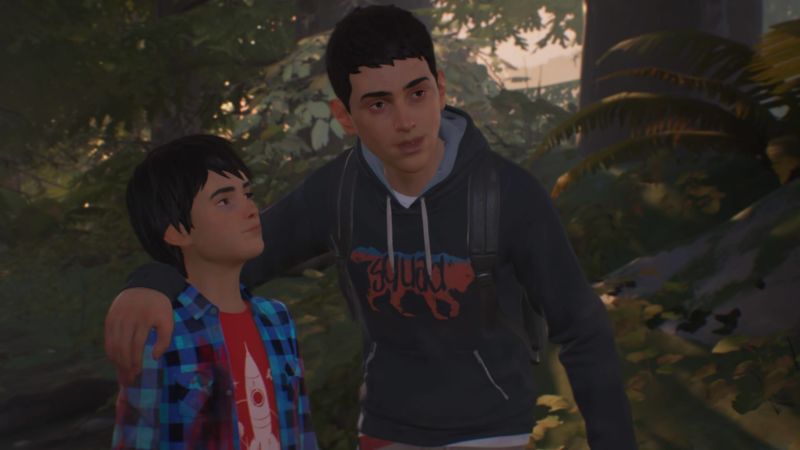
Enlarge / Sean tries his best to take care of Daniel by himself.

The first Life Is Strange was a complicated piece of work. The episodic adventure game played brilliantly with its own format, weaving a moving and potentially tragic story about two young women finding their place, both in the world and with each other. But it was also marred by some awkward writing, stiff performances, and occasionally serious misfires when it came to dealing with serious subject matter.

For the second season of Life Is Strange, developer Dontnod Entertainment faced the simple and daunting challenge of sanding off the series’ rough edges while keeping its warm heart intact. After playing the first episode, it seems they’re well on their way to doing just that.

On the run

Dontnod’s development challenge is complicated by the series’ shift into an entirely new setting, with a whole new set of characters and a modified play style to go along with it.

Meet Sean, a high school senior in Seattle with simple desires: a girl to spend time with; a good party; a small, warm family he loves dearly in that detached teenage-boy way. But what begins as a lush, domestic story on par with the first game quickly goes off the rails when a chance encounter with a bully and a police officer leaves Sean and his young brother Daniel with a startling new status quo. Their dad is dead, as is a police officer, and Daniel seems to have wild and uncontrollable psychic powers.

Read 10 remaining paragraphs | Comments

https://arstechnica.com/?p=1384275


Carmack compares Oculus Quest hardware power to last-gen game consoles

Article intro image

Any excuse to reuse this image of Carmack is a good one. (credit: Oculus VR)

SAN JOSE—In a wide-ranging and occasionally rambling unscripted talk at the Oculus Connect conference today, CTO John Carmack suggested the Oculus Quest headset was “in the neighborhood of power of an Xbox 360 or PS3.”

That doesn’t mean the Quest, which is powered by a Qualcomm Snapdragon 835 SoC, can generate VR scenes comparable to those seen in Xbox 360 or PS3 games, though. As Carmack pointed out, most games of that generation targeted a 1280×720 resolution at 30 frames per second. On Quest, the display target involves two 1280×1280 images per frame at 72fps. That’s 8.5 times as many pixels per second, with additional high-end anti-aliasing effects needed for VR as well.

“It is not possible to take a game that was done at a high-quality level [on the Xbox 360 or PS3] and expect it to look good in VR,” Carmack said.

Read 4 remaining paragraphs | Comments

https://arstechnica.com/?p=1383659


New Mystery Science Theater 3000 episodes hit Netflix this Thanksgiving

Article intro image

Enlarge / Jonah and his robot friends. (credit: Satellite of Love, LLC)

Mystery Science Theater 3000‘s 12th season is premiering in the not-too-distant future. New episodes will stream on Netflix starting on Thanksgiving Day, November 22, 2018, The A.V. Club reports. That’s just in time for the 30th anniversary of the show’s original premiere on Minneapolis local television—Thanksgiving Day, 1988.

Thanksgiving has always been tightly associated with MST3K. Not only did the show originally air on Thanksgiving, but marathons of the show around Thanksgiving are customary. The 12th season was announced by creator and original host Joel Hodgson during a livestreamed marathon last Thanksgiving.

“Thirty years ago on Thanksgiving Day 1988 is when we premiered Mystery Science Theater 3000 in the Minneapolis market,” Hodgson told The A.V. Club. “We were competing with 60 Minutes for the same time slot, and I think history has shown which is the better show.”

Read 5 remaining paragraphs | Comments

https://arstechnica.com/?p=1382809


Oculus Quest, a fully wireless VR headset, shipping spring 2019 for $399

Kyle Orland

SAN JOSE, California—Facebook used its latest virtual reality conference, the fifth annual Oculus Connect, to finally confirm retail plans for its most ambitious standalone VR product yet: the Oculus Quest. Originally known by its prototype name, Oculus Santa Cruz, the Quest will ship in spring 2019 for $399.

In terms of the sales pitch, this is the Oculus holy grail: a wireless, hand-tracked, “six degrees of freedom” VR system with apparently legitimate 3D power and no required PC or phone.

Read 15 remaining paragraphs | Comments

https://arstechnica.com/?p=1382785


Xbox One’s mouse-and-keyboard era will begin in “coming weeks,” Microsoft says

Article intro image

Enlarge / A future Xbox One controller.

Here at Ars, we’re old enough to remember when Microsoft first claimed that full support for keyboard/mouse controls on Xbox One was “months away.” (That was over 27 months ago, for those still keeping track.)

In any case, Microsoft has announced via a Tuesday blog post that the long-promised mouse and keyboard support will finally be rolling out for Xbox Insider members “in the coming weeks.” That could mean the feature is 27 weeks away, we suppose, but Microsoft also promises more information during a November 10 presentation of its Inside Xbox video series, less than seven weeks away.

Microsoft’s description of the features bears a striking resemblance to the details shared in a recent developer presentation which leaked back in June. That includes a partnership with Razer to promote the feature and the fact that mouse and keyboard support on Xbox One will remain very much optional for developers.

Read 3 remaining paragraphs | Comments

https://arstechnica.com/?p=1382581


Valve reveals just how many PC gamers plug in gamepads—and which kinds

Video game controllers.

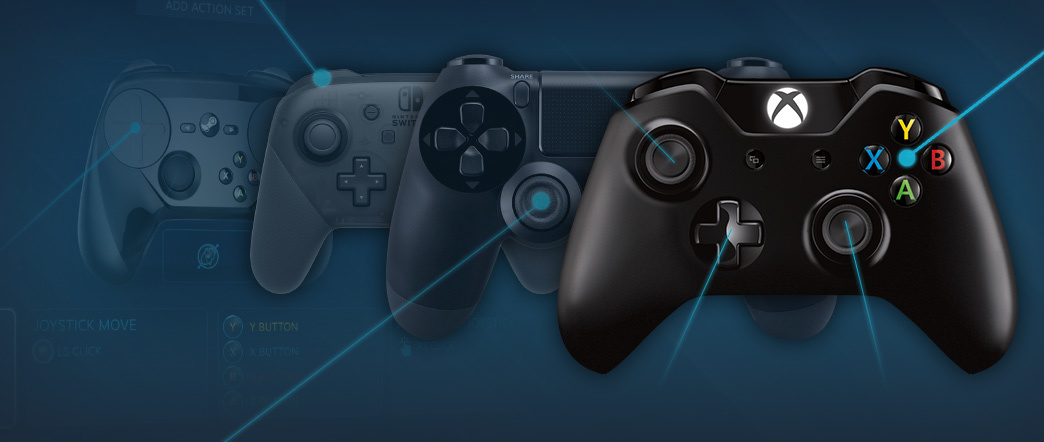
Enlarge / How third-party controllers appear in the Steam Input interface. (credit: Valve Software)

Fans of PC video games inevitably point to the options they have for how they play their favorite games, whether with a keyboard and mouse, a large array of flight-sim pedals, or everything in between. But the data coming from leading PC platform Steam points to an interesting trend: millions of PC gamers who gladly stick to the console-like experience of a standard gamepad.

A Tuesday hardware survey from Valve Software, Steam’s handler, reveals that “over 30 million” users have connected at least one gamepad to a Steam installation since the company began tracking “Steam Input” as part of its hardware surveys. And with some users connecting multiple pads to their PCs, the total number of connected Steam controllers ratchets up to nearly 60 million.

Read 5 remaining paragraphs | Comments

https://arstechnica.com/?p=1382277


Telltale plans to finish The Walking Dead despite mass layoffs

Article intro image

Enlarge (credit: Telltale)

After Friday’s surprise announcement that more than 90 percent of Telltale’s staff had been let go, the company now says it is talking to “potential partners” that could help complete the current, final season of The Walking Dead.

Part two of the planned four-part episodic adventure game series launched today, and the season was previously set to conclude on December 18. But Telltale confirmed in a tweeted statement last night that it is “actively working on a solution that will allow episodes 3 and 4 to be completed and released in some form.” To that end, the company says that “multiple potential partners have stepped forward to express interest in helping to see The Final Season through to completion.”

While 25 of Telltale’s 275 employees are being retained by the company for now, Netflix indicated in a statement that skeleton staff will be finishing up work on Minecraft: Story Mode, which is “moving forward as planned.” Negotiations between Netflix and Telltale for a potential Stranger Things episodic game are now out the window, though, and Netflix says it will be “evaluating other options for bringing the Stranger Things universe to life in an interactive medium.”

Read 12 remaining paragraphs | Comments

https://arstechnica.com/?p=1382241


SiriusXM to pay $3.5 billion for Pandora

Article intro image

Enlarge (credit: Bill McChesney)

Pandora has agreed to be acquired by satellite company SiriusXM for $3.5 billion. The deal will expand SiriusXM’s reach. The satellite company has 36 million subscribers, while Pandora has more than 70 million monthly active users.

The companies say users shouldn’t expect any immediate changes, and Pandora will continue to operate as a separate service.

Pandora has amassed a massive audience, but the company has struggled financially due to long-running fights with music labels over music licensing rates. Recently it has lost ground to rivals Spotify and Apple Music, and last year it launched a Spotify-like premium on-demand service. The company has been looking for a buyer for a couple of years.

Read 4 remaining paragraphs | Comments

https://arstechnica.com/?p=1381601


Thrustmaster TPR: The best flight sim pedals you can buy in a store like a normal person

Article intro image

Enlarge / This is probably the TPR pedals’ best angle—looks almost like a race car engine. (credit: Lee Hutchinson)

Specs at a glance: Thrustmaster Pendular Rudder pedals
Manufacturer Thrustmaster
Device type Flight simulator rudder pedals with toe brakes
Axes Three
Sensor type 3D Hall effect magnetic
Controller precision 16-bit (all axis)
Interface USB type-B
Price $499.99 at Amazon

As someone who’s gone so far as to put money in a Polish bank account for a Belarusian man named Slaw in exchange for high quality pedals, I was overjoyed when Thrustmaster’s PR people reached out recently and offered to send a review sample of their new TPR rudder pedals. As a long-time Thrustmaster Warthog owner, the key question I had about the company’s new rudder pedals was about build quality: would they be worth the $499 MSRP, or would they be like the Warthog stick and throttle—beautiful on the outside but stuffed full of crazy wires and hot glue and plastic?

Let’s answer that question right up front: no, they’re not like the Warthog. I took the things apart, and there were no loose wires and no hot glue. It’s all neat and tidy in there (and we’ve got pictures and more details a little further down).

Overall, the TPR pedals are an impressive freshman effort by Thrustmaster in a niche field where they haven’t played before—that is, high-end rudder pedals. The quality is there, but the design itself feels less like a cohesive whole and more like a design-by-committee product. It gets the job done—very well, in fact!—but I don’t think anyone could call it pretty.

Read 68 remaining paragraphs | Comments

https://arstechnica.com/?p=1378787


Review: Founders of Gloomhaven groans beneath its own weight

Article intro image

Enlarge

Welcome to Ars Cardboard, our weekend look at tabletop games! Check out our complete board gaming coverage at cardboard.arstechnica.com.

“In the age after the Demon War, the continent enjoys a period of prosperity. Humans have made peace with the Valrath and Inox. Quatryls and Orchids arrive from across the Misty Sea looking to trade. It is decided that a new city will be built on the eastern shores—a hub of trade and a symbol of many races working in harmony. Each race brings their own specialty to the city, and each race holds a desire for influence over the city by contributing the most to its construction.”

This, the opening paragraph of Founders of Gloomhaven’s bewilderingly dense manual, might mean something to hardcore board gamers—but to anyone who hasn’t played the original Gloomhaven, the current heavyweight champion of board gaming, it’s confusing (to say the least). As you’ll see, confusion and complexity are the order of the day with Founders.

Read 17 remaining paragraphs | Comments

https://arstechnica.com/?p=1380591