The slow-burn psychological horror of Castle Rock makes for must-see TV

Article intro image

Enlarge / Attorney Henry Deaver (André Holland) returns to his childhood home and must confront terrors both past and present in Hulu’s Castle Rock. (credit: Hulu)

Castle Rock, the new horror anthology series from Hulu, surprised us by becoming one of our top breakout shows this summer. Inspired by the works of Stephen King, the series has already been renewed for a second season. As we head into the last two episodes this season, Ars caught up with co-creator Sam Shaw to talk about the nature of horror, common themes, and what we can expect from the series going forward.

(Mild spoilers below for the first eight episodes.)

Shaw and co-creator Dusty Thomason previously worked together on Manh(a)ttan, a series set in the New Mexico military encampment of Los Alamos, detailing the birth of the atomic bomb in the 1940s. Despite critical raves, the show never quite found its audience and was sadly cancelled after just two seasons.

Read 14 remaining paragraphs | Comments

https://arstechnica.com/?p=1368107


“Aren’t you a little too old for that?” Two decades of playing Pokémon

Article intro image

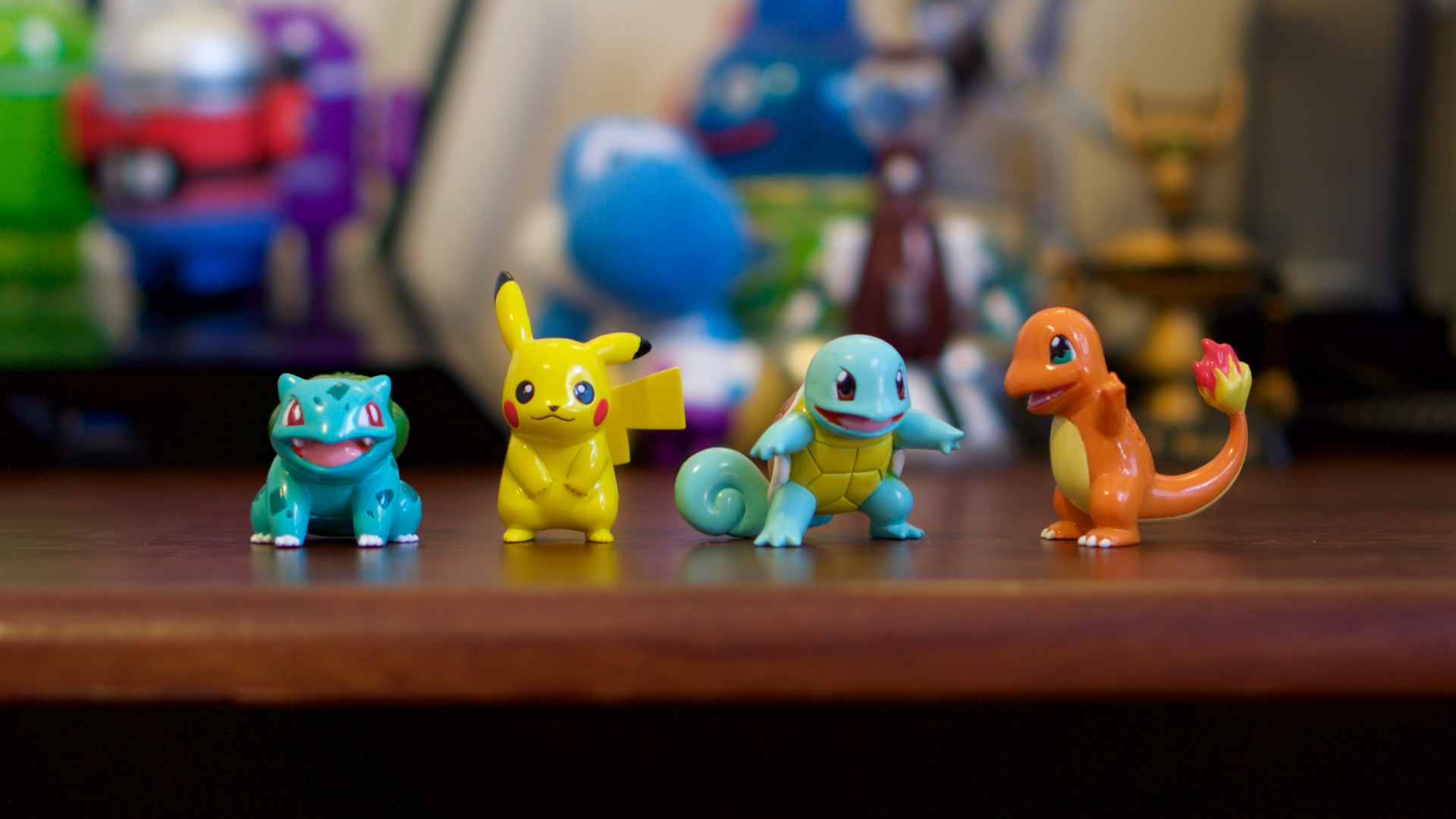
Enlarge / You’ve probably caught at least one of these, right? (credit: Andrew Cunningham)

On August 27, 1998, Topeka, Kansas became Topikachu for one day—a ceremonial renaming to celebrate the US arrival of a new video game franchise, Pokémon. While popular previously in Japan, the franchise’s impact has been felt in the US ever since. To remember this gaming landmark, we’re resurfacing this classic Ars tale of franchise fandom over Labor Day Weekend. The piece re-emerged once before in February 2016 for the 20th anniversary of the original release of Pokémon Red and Green in Japan, and it originally ran in October 2013.

I’ve been playing Pokémon games since I was 13, and I’ve felt just a little too old for the games pretty much the entire time. Having an eight-year-old brother slavishly devoted to the games, and the anime, and the trading cards, told Young Andrew all he needed to know about the age of kids who were into Pokémon. Even once he (er, me) finally gave in to his curiosity and began playing Pokémon Blue (via the No$gmb emulator on the computer), he only played it with headphones in and the door to his bedroom closed. That experience set the tone for the next decade-plus of Pokémon playing: done in secret, kept to myself, a source of shame.

I’ve never watched the anime. I don’t collect the cards. I don’t play the weird offshoot games like Pokémon Snap, Pokémon Rumble, or Hey You, Pikachu! or whatever. My possession of Pokémon merchandise is limited to a handful of figurines I picked up when I went to Japan in 2010. But every time a new game in the main RPG series has come out, I’ve been there. The games have been with me through childhood into adolescence and adulthood, and while they’ve changed (and I’ve changed) the things I enjoy about them haven’t.

Read 39 remaining paragraphs | Comments

http://arstechnica.com/?p=355021


Gallery: Exploring Nintendo’s flagship New York City store

Growing up, I loved exploring the heavily branded shopping experiences of the Disney Store and the Warner Bros. Studio Store. These days, I can get a more tech-oriented version of the same basic concept at one of Apple or Microsoft’s many retail locations. But to get Nintendo’s version of that kind of retail wonderland, I have to go to the company’s one and only Nintendo World Store location, in New York City’s Rockefeller Center.

For locals, Nintendo World is just another tourist trap. But for hundreds of tourists every day, the half-museum, half-arcade, half-expansive gift shop (yup, three halves) is a kind of mecca to pay homage to the company and its creations. The same appeal might not translate if Nintendo expanded the concept to every mall and shopping center in the country. That said, we think the depth and breadth of multi-generational Nintendo fandom could probably sustain more than a single location in one city.

Read 1 remaining paragraphs | Comments

https://arstechnica.com/?p=1367375


Between Cintiq and streaming, animation is thriving—ask Titmouse’s Chris Prynoski

Ars chats with Titmouse Animation’s Chris Prynoski. (Transcript available) (video link)

AUSTIN, Texas—Chris Prynoski remembers paper (and, no, that sentiment is not as absurd as it seems). The animation veteran has been in the field for more than two decades now with early stuff so beloved (he directed an episode of Daria and sequences of Beavis and Butthead Do America) that it now comes up in reboot conversation. “We usually get a call every couple years about a Daria reboot, and it never happens,” Prynoski tells Ars offstage at the recent RTX Animation festival. “But this time they made an announcement, so perhaps it’s more serious.”

Since then, however, both animation at large and Prynoski’s role specifically have changed. He now leads perhaps the best studio in the business, Titmouse, which Prynoski also co-founded alongside his wife Shannon back in 2000. The company works on seemingly everything: kids’ shows (Niko and the Sword of Light), cult classics (Metalocalypse), high-profile reboots (TMNT), video games, ads, virtual reality, music videos, movies, and generally just the hottest cartoons at any given moment (Netflix’s Big Mouth anyone? Season two starts in October). No one working with him starts with paper these days.

Read 11 remaining paragraphs | Comments

https://arstechnica.com/?p=1359973


The secret to successful BBQ pork butt and brisket is science

Article intro image

Enlarge / The secret to yummy brisket and ribs lies in food chemistry and phase transitions. (credit: TayFos/Getty Images)

Imagine this nightmare Labor Day scenario. You’ve invited a large group of friends over for pulled BBQ pork or a delicious beef brisket. That morning, you confidently place your meat in the smoker, handy digital thermometer in place so you’ll know just when the internal temperature reaches the perfect point. Everything seems fine for the first two hours, but suddenly the temperature stops rising. And it stays constant for hours and hours, as your friends get hungrier and hungrier, and you’re forced to order pizza in desperation.

You’ve just encountered the bane of aspiring pit masters everywhere: the Stall (also known as the Zone or the Plateau), a common phenomenon in low-temperature cooking. What, precisely, causes the stall is a perennial topic of debate among BBQ enthusiasts. Is it a protein called collagen in the meat, which combines with water to convert to gelatin at the 160°F point? Or is it due to the fat rendering, turning lipids to liquid?

Several years ago, Greg Blonder, a Boston College professor, did the experiments and came up with a definitive answer: evaporative cooling. The meat sweats as it cooks, releasing the moisture within, and that moisture evaporates and cools the meat, effectively canceling out the heat from the BBQ. These days, Blonder is the resident science advisor and myth buster at the popular BBQ and grilling site called Amazing Ribs. “I spend a lot of my time settling bar fights, basically,” he joked.

Read 8 remaining paragraphs | Comments

https://arstechnica.com/?p=1366863


PAX hands-on: Retro sequels Streets of Rage 4, Windjammers 2 take us back to ‘94

Promotional image for Streets of Rage 4

Enlarge (credit: DotEmu)

SEATTLE—PAX West has overtaken Seattle’s downtown convention center with roughly 4,000 new and in-development games across its giant expo halls. Yet somehow, it’s the kind of ragtag show where titans like Spider-Man, Artifact, and Super Smash Bros. Ultimate can stand toe-to-toe with promising indies like Due Process and Risk of Rain 2.

But before we post our usual best-of-the-best PAX wrap-up, we got a day-one opportunity to try two games that are quite unusual owing to their incredibly early status, their behind-closed-doors nature, and their “holy cow, these exist?” flavor: Streets of Rage 4 and Windjammers 2.

Axel to grind

Yes, the two PAX West games with arguably the biggest time gaps between sequels—24 years for both, if you’re counting—shared a press-only hotel suite mere blocks away from the PAX show floor. Both games will be published by the French publisher DotEmu, and both are clearly not ready for public consumption, thanks to missing assets and incomplete polish.

Read 17 remaining paragraphs | Comments

https://arstechnica.com/?p=1367447


Kin: If you can’t pick your family, hopefully you can find space weapons

Ars talks with Kin‘s filmmaking team: co-directors Josh and Jonathan Baker and screenwriter Daniel Casey. (Transcript available here.) (video link)

“Sixty grand and a space gun—who the hell are you people?”

Out of context, that mid-film Zoë Kravitz quote sounds ridiculous. But Kin, a new sci-fi adventure meets broken-family societal drama from a pair of first-time filmmakers, proves to be far more grounded in heady real-world issues than you’d expect any “kid finds alien” adventure to be. Trying to combine peanut-butter-and-kimchi this way (filmmaking-ly speaking) presents a lot of obvious challenges, from tone to maintaining a logical narrative. But filmmakers Josh and Jonathan Baker have somehow made a movie that combines all of it in a manner that never feels forced.

Read 15 remaining paragraphs | Comments

https://arstechnica.com/?p=1366711


Exclusive: Valve walks us through Artifact’s new demo, leaves us wanting more

Article intro image

Enlarge / Getting one’s Artifact on. (credit: Valve Software)

Editor’s note: This feature’s two videos include transcripts, and many of their details appear in the article’s text and galleries. So however you want to learn about Valve’s latest video game, Ars has your back.

BELLEVUE, Washington—Right as this article goes live, Valve Software is taking the wraps off its next video game, Artifact, in a major way. At this weekend’s PAX West expo in Seattle, lines of eager fans are currently waiting to play the first public demo of Valve’s online trading card game (TCG), and they have good reason to be excited.

I say that not just because of the game’s pedigree—designed in part by the creator of the world’s biggest TCG, Magic: The Gathering, and supercharged by the fantasy world and characters of the Valve smash Dota 2. I say it because Ars already went hands-on with this PAX West demo, thanks to an exclusive invite to Valve’s headquarters ahead of the show. I had a blast. Plus, unlike PAX’s attendees, I had quite the guide sitting over my shoulder: MtG‘s creator and Artifact lead designer Richard Garfield.

Read 40 remaining paragraphs | Comments

https://arstechnica.com/?p=1365263


LEGO built a drivable Bugatti Chiron out of a million pieces of Technic

Lego

As a gigantic LEGO nerd and a gigantic car nerd, the last few years have been pretty great. LEGO’s Speed Champions range has brought us brick versions of Le Mans prototypes like the Porsche 919 Hybrid and Audi R18 e-tron quattro, and classics like the Ferrari 250GTO and Ford GT40. (In fact, all of the above might be within arm’s reach on my increasingly messy desk). For those willing to spend a little more, the LEGO Technic line has bigger replicas you can build, like the yet-to-be-completed LMP2 car still in its box here in my office. (I may have a LEGO problem.) But none of them compare to LEGO’s latest creation: a full-size, drivable Bugatti Chiron.

Earlier this year, LEGO Technic released a $349, 3,599-piece scale model of the Chiron, but this latest creation is way more impressive. Made from more than a million pieces, it’s the first fully functional, self-propelled life-size LEGO Technic car ever built. In fact, LEGO says it’s the first non-glued LEGO Technic model of such complexity ever made.

Read 5 remaining paragraphs | Comments

https://arstechnica.com/?p=1366393


Nintendo shuts down tool used to build Pokémon fan games

Article intro image

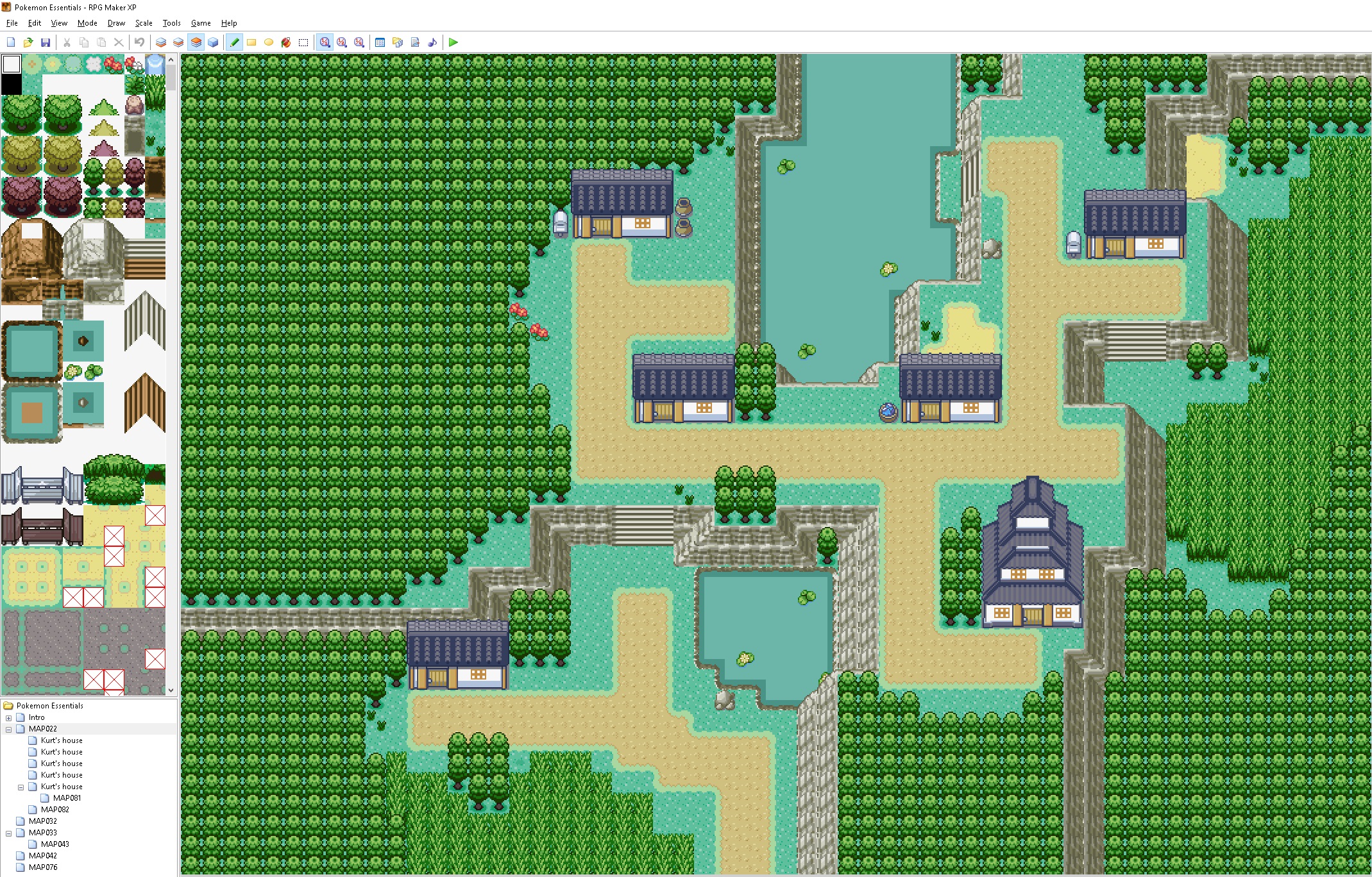
Enlarge / A screen from the Pokemon Essentials interface showing how to build a map with the tool in RPG Maker.

Nintendo has a long history of using legal action to take down fan games based on its popular copyrighted franchises. Now the company is taking aim at one of the tools used to build some of those fan games.

Since 2007, Pokémon Essentials has been a crucial part of the Pokémon fan game community. As a free mod for the paid RPG Maker software, Pokémon Essentials offers all the graphics, music, maps, and tilesets a fan game maker needs to craft their own Poké-adventure.

Fans of the tool congregated around the PokeCommunity forums and a dedicated Pokémon Essentials wiki to download files, share creations, and discuss the scene. Earlier this week, however, PokéCommunity forum moderator Marin announced that “the Pokémon Essentials wikia and all downloads for it have been taken down due to a copyright claim by Nintendo of America.” That means “we will not allow Pokémon Essentials or any of its assets to be hosted or distributed on PokéCommunity,” the announcement reads. “We sincerely apologise that we have to do this, but there is no going around it.”

Read 5 remaining paragraphs | Comments

https://arstechnica.com/?p=1365825