EA issues apology after removing Kaepernick’s name from song in Madden 19 [Updated]

Enlarge (credit: EA Sports)

Update, 8:20pm ET: EA issued an apology on Thursday after rapper Big Sean accused the game maker of censoring his song in new video game Madden NFL 19. The game maker took full responsibility for the song’s edit and issued a statement to Ars Technica on Thursday:

We made an unfortunate mistake with our Madden NFL soundtrack. Members of our team misunderstood the fact that, while we don’t have rights to include Colin Kaepernick in the game, this doesn’t affect soundtracks. We messed up, and the edit should never have happened. We will make it right, with an update to Madden NFL 19 on August 6 that will include the reference again. We meant no disrespect, and we apologize to Colin, to YG and Big Sean, to the NFL, to all of their fans, and our players for this mistake.

Original report:

EA regularly censors curse words from the songs in its video game soundtracks, but the game maker has apparently engaged in a different kind of song censorship this week—and the censored rapper in question isn’t happy about it.

Read 4 remaining paragraphs | Comments

https://arstechnica.com/?p=1352727


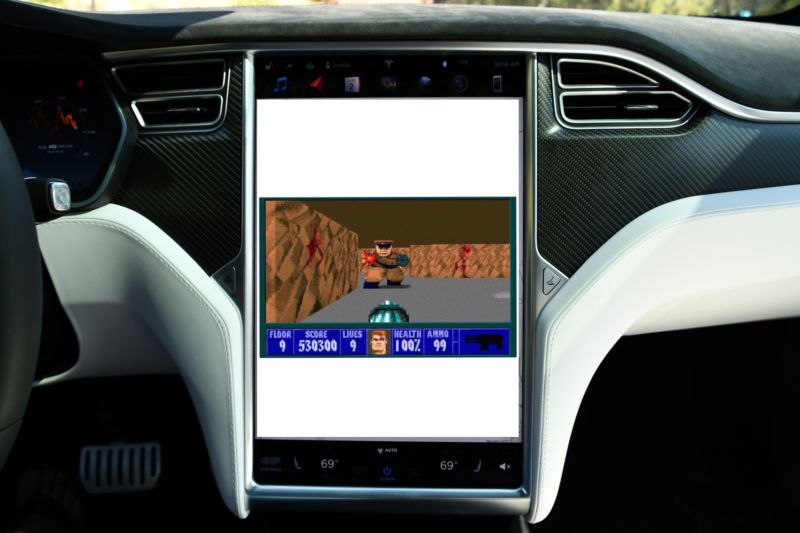
Elon Musk to video game devs: Help me put “super fun games” on Tesla screens

Enlarge / An artist’s approximation of what an in-car Tesla game might look like. Remember, steer into the Nazis. (credit: Jonathan Gitlin)

Scrutiny over Tesla autodriving issues apparently hasn’t dissuaded the car maker’s CEO from suggesting potentially unsafe products—and for once, we don’t mean The Boring Company’s $500 flamethrowers.

On Wednesday, Elon Musk used his Twitter account to officially solicit applications from video game developers to work at Tesla—specifically, on games that would be played exclusively within Tesla cars. The below tweet suggests an augmented-reality take on gaming, thanks to its vague call to combine “touch screen, phone, & car irl [in real life].”

Musk followed that up by asking interested game makers to “send examples of prior work” that emphasize “max playability & creativity.” When one Twitter follower suggested that Musk talk to Bioshock series creator Ken Levine, Musk simply replied, “Bioshock is amazing.”

Read 4 remaining paragraphs | Comments

https://arstechnica.com/?p=1351883


Bay Area: Join us 8/8 to discuss writing a novel with machine learning

Enlarge / Robin Sloan likes to play with robots in fiction and real life. He also makes his own olive oil.

Robin Sloan writes about machine learning, but he’s writing with it, too. His 2017 novel Sourdough has been hailed as one of the best and most accurate novels about machine learning ever published. In the wake of that book, Robin also built a little bot that will help you write science fiction by autocompleting your sentences with phrases taken from a massive corpus of sci-fi stories.

At the next Ars Technica Live, we’ll be talking to Robin about the reality and fantasy of machine learning, as well as what it means to write in the age of bots. Join Ars Technica’s editor-at-large Annalee Newitz and senior editor Cyrus Farivar in conversation with Robin on August 8 at Eli’s Mile High Club in Oakland. There will be plenty of time for audience questions, too. Doors open at 7pm, and the event starts at 7:30. Tickets are free.

Robin is the author of the novels Mr. Penumbra’s 24-Hour Bookstore, a New York Times bestseller published in 2012, and Sourdough. He has been doing experiments that use machine learning to auto-generate sentences for sci-fi stories, and he’s pretty sure that the audiobook for his second novel is the world’s first to include sound generated by a neural network. Previously he worked at the Poynter Institute, Current TV, and Twitter, where he worked on projects about the future of media.

Read 2 remaining paragraphs | Comments

https://arstechnica.com/?p=1351545


Valve’s first new game in 5 years, Artifact, coming in November, starting at $20

Enlarge / One of many pieces of art commissioned for the cards in Artifact, coming to Steam in November of this year. (credit: Sam Machkovech)

Valve Software’s first brand-new video game since 2013, the digital card-dueling game Artifact, finally has a release date: November 28.

This is the first Valve game since Counter-Strike: Global Offensive to launch with a fixed release price as opposed to the free-to-play model enjoyed by Valve games like Dota 2 and Team Fortress 2. Anyone who wants to play Artifact will need to buy the game’s base model at $19.99, which will be available on all Steam platforms—meaning Windows, MacOS, and Linux.

What exactly does $19.99 get you? The game maker didn’t answer this in its press release, so we reached out to Valve’s Doug Lombardi, who broke down the exact package included in that cost: two pre-made “base” decks of 54 cards each (“5 heroes, 9 items, and 40 other cards”) and 10 sealed packs of cards, which each include 12 random cards, one of which is guaranteed to be “rare.” Additional 12-card packs will be sold directly by Valve at $2 a pop at launch.

Read 7 remaining paragraphs | Comments

https://arstechnica.com/?p=1351681


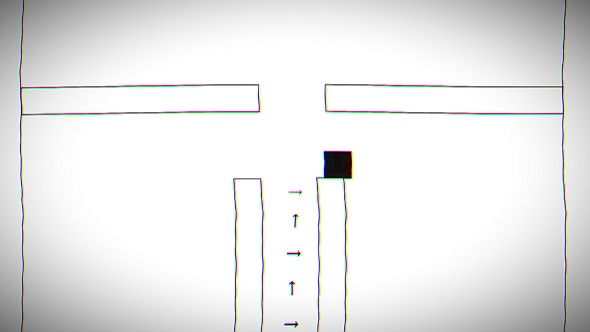
Valve removes Steam game after allegations of hidden cryptocurrency miner

A scene from Abstractism, which allegedly hid a cryptocurrency miner behind an innocuous-looking Steam game.

Valve has removed simple 2D platformer Abstractism from its Steam platform after allegations that the app hid a secret cryptocurrency miner and used misleading item-trading tactics to attract players.

YouTuber SidAlpha highlighted earlier accusations of the game’s illicit cryptomining functions in a video this weekend, laying out how the $1 Abstractism increased CPU and GPU usage well beyond the point that a simple 2D line-art game should require. In a forum response on Steam, developer Okalo Union chalked that resource usage up to the “post-processing effects rendering” required when running on high graphics settings, but that claim doesn’t really pass the sniff test for a title with such simple visuals.

In addition, a suspiciously named “SteamService.exe” file in the Abstractism‘s directory reportedly set off many antimalware services for allowing “remote execution of commands,” which would be necessary for communicating with a cryptocurrency platform (this shouldn’t be confused with the legitimate SteamService.exe executable, which exists in a different folder). In a July 23 Steam update, developer Okalo Union claimed that this file was necessary to control the game’s “Inventory Service,” which provides randomized item drops, saying directly that the executables “are not Bitcoin miner (and are not Monero miner too, honestly).”

Read 6 remaining paragraphs | Comments

https://arstechnica.com/?p=1350935


How Steve Jobs and Bill Gates defined a decade of tech—according to CNN’s The 2000s

The promo for The 2000s.

“We’re in for the communications ride of our lives,” CNN’s Greg Lefevre says in a January 2, 2000, broadcast dug up for the news network’s latest decade documentary, The 2000s. “The coming years see cell phones small enough to fit in your pocket, the promise of video phones coming true, tiny hand sized computers that know your favorite subjects, and Internet everywhere.”

Talk about prescience. Though most people reading this website can likely remember the 2000s as if it were yesterday, retrospectives and nostalgia have started to come in. And even if it feels a bit too soon-ish for such treatment, it’s hard to argue with the need to acknowledge the time period’s relevance and impact. The previous decade unequivocally changed the way we operate in a technological sense: the rise of smartphones, the start of companies like Facebook, Google, and YouTube, the ability to get whatever you want whenever you want it.

CNN has been producing these decade projects for a while now—its hour on tech in the 1990s ended up among our favorite hours of 2017 TV—and it would be easy for last night’s installment to feel particularly unsurprising. After all, “The iDecade” episode of The 2000s sets out to detail the evolution of technology from 2000 through 2010, essentially spelling out how today became today.

Read 6 remaining paragraphs | Comments

https://arstechnica.com/?p=1350315


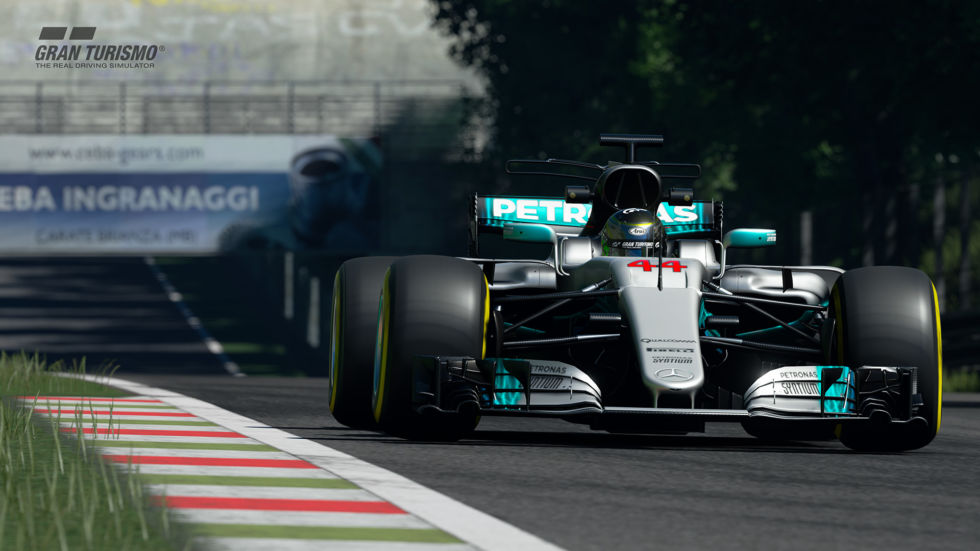
Gran Turismo Sport, revisited: More tracks, more cars, more everything

Sony

When Gran Turismo Sport arrived for the Playstation 4 at the end of last year, I wrote that it was a great game. Any lingering problems I’d had with the way Polyphony Digital had been simulating tire physics disappeared, plus it looked and sounded better than any prior installment of the franchise. But it also wasn’t perfect, particularly for long-time fans of the series with little interest in racing other humans online.

Since the October launch, Polyphony Digital has been hard at work sending out regular updates, adding new tracks, new cars, and (perhaps most importantly for much of our audience) beefing up the single player mode. The latest of these updates was pushed out to PS4 consoles this morning, adding eight new cars and a new track. Among the additions are the 2017 championship-winning Mercedes AMG F1 car, the 1991 Le Mans-winning Mazda 787B, and a 1962 Ferrari 250 GTO (serial number 3729GT for those who keep track). However, there is one tweak to the game that might enrage some: microtransactions.

Read 4 remaining paragraphs | Comments

https://arstechnica.com/?p=1350269


Review: Azul, board game of the year?

Enlarge (credit: Nate Anderson)

Welcome to Ars Cardboard, our weekend look at tabletop games! Check out our complete board gaming coverage at cardboard.arstechnica.com.

At a local game night this week, my table was playing Splendor. If you don’t know it, the game is a light “engine building” affair in which you gather gems, then use those gems to buy cards, which in turn help you by more expensive cards. You do this until you’ve racked up a certain number of points.

The game has few rules. Still, the new player at our table was bug-eyed as each of them was explained. When told that the symbols in one corner of the card were the cost to purchase, while the symbol in another corner was its effect, and the number in a third corner was its point value, a look of glazed bafflement descended upon him. When told that each player could choose between taking three gems of different colors or two gems of the same color—but only if four or more of that color gem were available–he looked like his mind had been blown apart. When told that each player could never have more than 10 chips in front of them at the end of a turn, he looked like he was going to leave the table.

Read 19 remaining paragraphs | Comments

https://arstechnica.com/?p=1350047


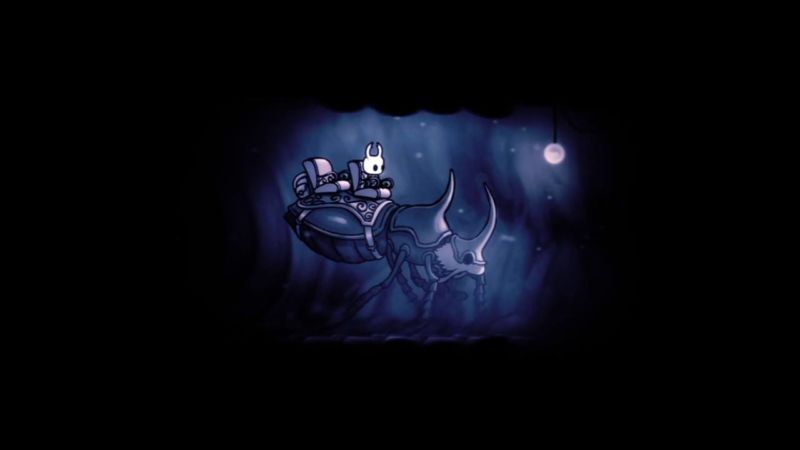
Hollow Knight beats Metroid, Dark Souls at their own brutal game

Enlarge / Giddy up, little insectoid friend. We have fightin’ (and learnin’) to do. (credit: Team Cherry)

The video game Hollow Knight may look like it has familiar trappings: Ssde-scrolling combat; deadly, hand-animated insects; a massive, explore-and-return world. Another Metroidvania, right?

I made a similar assumption before diving into the 2017 game, which has since spread its insect wings after a PC Early Access debut and flittered all the way to the Nintendo Switch. But I quickly found myself bewildered, humbled, and, quite frankly, eager to learn more. This insect-obsessed game is a full hive of meaningful, show-don’t-tell encounters.

Maybe it’s a scuttling sound. Maybe it’s a rare friendly face that doesn’t attack you on sight. More often than not, though, it’s some horrible, shrieking thing waiting to ambush you in the dark—its mind rotted by the throbbing infection that felled a supposedly once great kingdom.

Read 16 remaining paragraphs | Comments

https://arstechnica.com/?p=1349971


Lando, Luke, and Leia (non-CGI) return for Star Wars: Episode IX

Enlarge (credit: Lucasfilm)

Lucasfilm took the wraps off the primary players for the next Star Wars film on Friday, and the studio is wasting no time clarifying a key player in the film: Carrie Fisher.

A statement from Star Wars: Episode IX director and co-writer J.J. Abrams confirms that the character of Princess Leia will be played by the actor thanks to “previously unreleased footage”—and that these scenes were filmed during the making of 2015’s Star Wars: The Force Awakens, as opposed to 2017’s The Last Jedi.

“Finding a truly satisfying conclusion to the Skywalker saga without her eluded us,” Abrams wrote in the statement. “We were never going to recast, or use a CG character. With the support and blessing from her daughter, Billie, we have found a way to honor Carrie’s legacy and role as Leia in Episode IX by using unseen footage we shot together in Episode VII.”

Read 5 remaining paragraphs | Comments

https://arstechnica.com/?p=1350055