Steam updates game-content guidelines, will include “something that you hate”

(credit: Valve Software)

Steam, the long-running PC games marketplace operated by Valve Software, has consistently run into issues with approved and restricted content, and arguments about those guidelines have heated up in recent weeks. After Valve removed various “ero” games and then approved the sexualized, violence-against-women simulator Agony, users began asking what was up with Steam’s content guidelines.

A lengthy blog post by Valve’s Erik Johnson, titled “Who gets to be on the Steam store?,” saw the company frankly admit that its own staff has struggled with the same question until reaching a new conclusion.

“We’ve decided that the right approach is to allow everything onto the Steam Store, except for things that we decide are illegal or straight-up trolling,” Johnson wrote. “Taking this approach allows us to focus less on trying to police what should be on Steam and more on building those tools to give people control over what kinds of content they see.”

Read 10 remaining paragraphs | Comments

https://arstechnica.com/?p=1322341


Guitar Hero Live goes offline in December, making 92% of songs unplayable

Enlarge / Get used to never seeing this Guitar Hero TV screen (or any like it) starting in December.

In an unceremonious blog post this weekend, publisher Activision announced it will be shutting down the servers for Guitar Hero Live‘s “Guitar Hero TV” mode effective December 1. The move will effectively end access to hundreds of playable songs available only in that server-streamed mode.

The retail version of Guitar Hero Live also includes a 42-song “on-disc” soundtrack on consoles, and those songs will still be playable following the server shutdown (an iOS version, which has already been removed from the App Store, will no longer be usable at all as of December). But the game eschews the usual option of purchasing additional songs as downloadable content.

Instead, Guitar Hero Live players have free access to the few songs being streamed live at that moment on a handful of curated, rotating Guitar Hero TV channels. Players can also use in-game rewards or microtransaction purchases to essentially rent access to those online songs on-demand, including a “party pass” that gave time-limited access to all available songs. Both of these options will be cut off in December, and the in-game microtransaction purchases that help power those on-demand plays have already been shut off.

Read 7 remaining paragraphs | Comments

https://arstechnica.com/?p=1321205


Flight-sim maker threatens legal action over Reddit posts discussing DRM

Enlarge (credit: FlightSimLabs)

The last time FlightSimLabs made news outside of the insular community of high-end flight simulator fans, it was for some invasive password-extractor malware included with a recent add-on package as an ostensible “anti-piracy” measure. Today, the company is again making waves for what many see as overzealous legal threats in response to legitimate discussion of the company.

Today’s controversy begins with a Reddit thread that noted FlightSimLabs’ A320 add-on installing “cmdhost.exe” files in the “system32” and “SysWOW64” folders inside the Windows directory. The strange filename and location—which seems designed to closely match those of actual Windows system files—made some Reddit users suspicious, especially given FlightSimLabs history of undisclosed installations.

FlightSimLabs responded on Facebook last Thursday by saying that the files came from third-party e-commerce service eSellerate and were designed to “reduce the number of product activation issues people were having.” This system has been acknowledged in the FlightSimLabs forums in the past, and it apparently passes all major antivirus checks.

Read 14 remaining paragraphs | Comments

https://arstechnica.com/?p=1319063


Pillars of Eternity 2: Deadfire review: Oh, the places you’ll plunder

Enlarge / Deadfire‘s presentation feels improved in nearly every way over its predecessor.

My sword really likes being stabbed into people. I know this because she (he? it?) told me so. Her name is Modwyr, and she only stops insulting me when the conversation turns toward potential violence. It’s making me uncomfortable, but the bonus stats I get for keeping Modwyr around are too juicy to pass up. I’ve got a god to kill, after all. At least I think I do.

There is no shortage of choices to make in Pillars of Eternity 2: Deadfire. The pirate-centric sequel to developer Obsidian’s throwback RPG doesn’t skimp on that facet of the pen-and-paper role-playing game it replicates. Some of my choices from the previous game have already come back to haunt me, thanks to an imported save, though newcomers have the option to write their own history near the beginning of Deadfire.

The god of entropy is pissed. He’s not the one I’m hunting as part of Deadfire’s main story, but I lied to him in the first PoE. Now he’s promising a showdown.

I’ll get to that eventually. For the time being, though, I’ve got pirates to hunt, my own crew to manage, several imperialist governments to support or betray, and a talking sword to placate. It’s a lot of intrigue to disentangle—with consequences rearing their ugly heads immediately after doing so. But my player-character is the perfect psychic, soul-reading, pirate lord for the job.

Read 18 remaining paragraphs | Comments

https://arstechnica.com/?p=1319615


Asus’ insane gaming phone has 3 USB ports, clip-on cooling fan

Asus

After the Razer phone, Sony Xperia Play, and I guess the Nokia N-Gage, someone is trying to make a gaming smartphone again. This time it’s Asus, which has tapped its PC gaming sub-brand, “Republic of Gamers,” to create the Asus ROG phone.

The phone is still made out of the usual high-end smartphone parts, with a Snapdragon 845, with 8GB of RAM, 128GB or 512GB of storage, and a generous 4,000mAh battery. Asus says the Snapdragon 845 is the “world’s fastest,” thanks to “speed-binned” parts and a “GameCool vapor-chamber cooling” system. By grabbing only the best parts and extra cooling, Asus has been able to give the SoC a moderate clock increase from the usual 2.7GHz to 2.96GHz. The display is a six-inch, 2160×1080 AMOLED with HDR support. Rather than the usual 60Hz refresh rate, this OLED panel goes up to 90Hz. That won’t quite match the refresh speeds of Razor’s 120Hz LCD, but it’s something.

Read 11 remaining paragraphs | Comments

https://arstechnica.com/?p=1318695


We’re experimenting with Twitch content to catch up on zillions of video games

Ars Frontlog, episode 001. FF to roughly 7:00 for gameplay.

Ars Technica’s gaming trust has always strived to recommend the best in clever and killer video games. But a rising trend has made that mission more difficult: a seemingly endless fountain of content.

This statement of fact is by no means a complaint. There are more video games coming out for PCs and consoles than ever before, and many of them are quite fun. But this means that good, interesting, and uneven games alike are falling through the Ars editorial cracks more than ever before. How can we keep up?

One idea is Ars Frontlog: a new video experiment on our Twitch channel that, very simply, sees us tread water in the sea of modern game releases. The idea is that, on a regular basis, an Ars staffer will flip on a webcam and hit the “stream” button while catching up with semi-recent video games, particularly games that might otherwise escape our editorial calendar. You can either follow our Twitch channel to get alerts for when these videos will go live or just stay tuned to our traditional site, where we’ll post those recordings’ archives a few days later.

Read 6 remaining paragraphs | Comments

https://arstechnica.com/?p=1318415


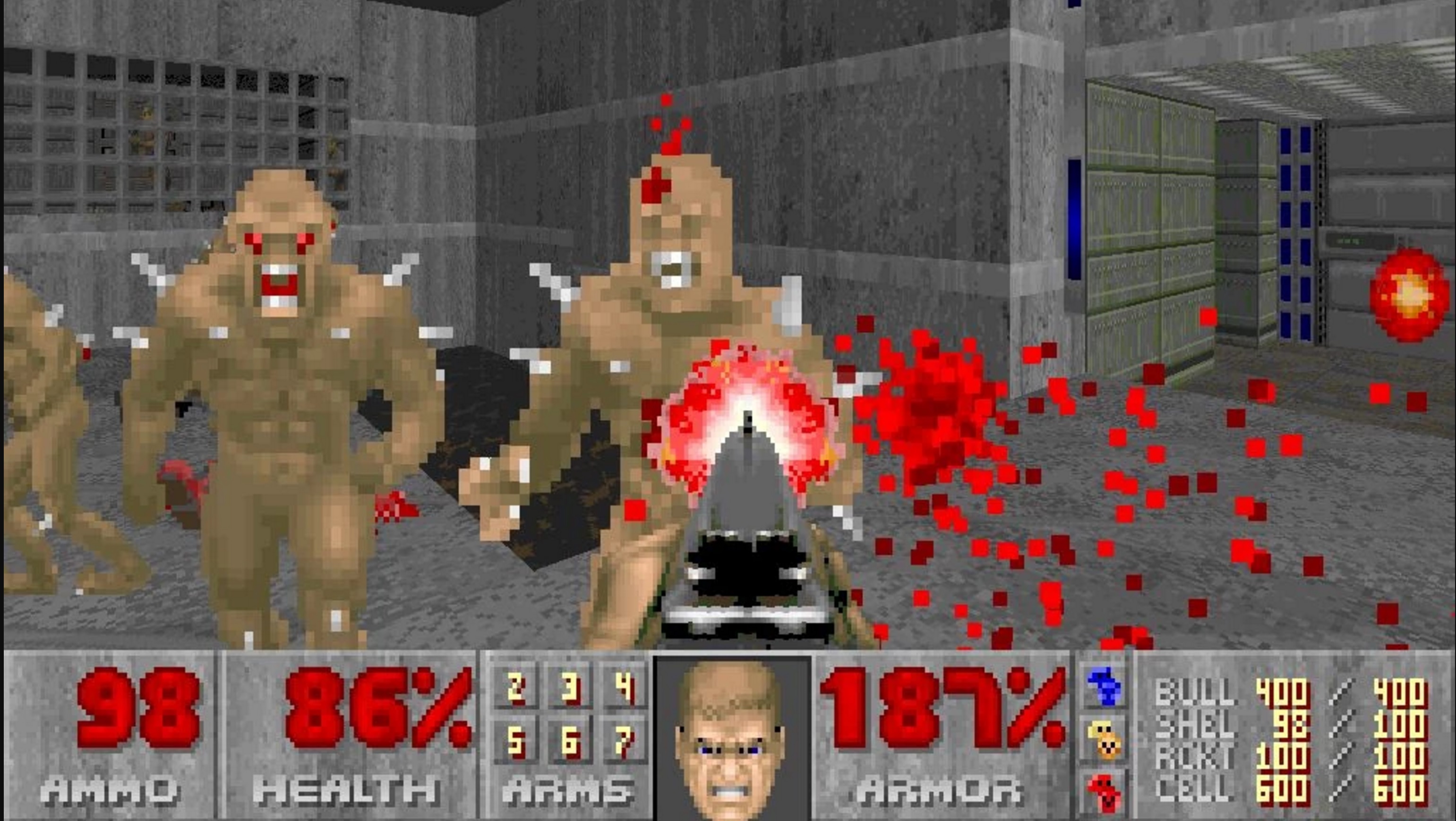
The original Doom, one of 64 Objects that shaped video game history

Enlarge / Cutting edge at the time, we swear.

Doom (1993): Doom’s success lay not only with its addicting gameplay and technical innovations, such as its introduction of a portable game engine, but also in its innovative digital distribution. Note the prominent “shareware” advertisement on the top front of the game packaging. This groundbreaking game earned a spot in the inaugural class of the World Video Game Hall of Fame.

In the early 1990s, the video game industry was still dominated by that Italian-American plumber named Mario. The gaming giant Nintendo was not just restricting the number of third-party titles that could be released for its NES and SNES consoles, but it was also enforcing a strict moral code for its games. The SNES port of the wildly popular (and gratuitously violent) arcade game Mortal Kombat, for instance, replaced blood with sweat and substituted the game’s notorious fatalities with decidedly less violent “finishing moves.” Many game designers felt suffocated by Nintendo’s sanitized ecosystem and began returning to the wild west of video game development, the personal computer, to create exciting new games that challenged graphical and moral boundaries. Then, in 1993, a space marine blasted his way through hordes of invading demons, blazing a new path for games in the process. id Software’s Doom was a seminal release in video game history, influencing the form, feel, and perception of so many first-person shooters that followed.

Doom’s story begins with id Software, and id Software’s story begins with a company called Softdisk. Softdisk created disk magazines, which were electronic publications distributed on 5.25” floppy disks that provided readers with an interactive experience using graphics, games, music, and puzzles. In the late 1980s, computer programmer John Romero was working at Softdisk, creating games that would be included alongside magazine articles. One such game was Dangerous Dave (1988), which Romero created to accompany an article about the GraBASIC programming language. Dangerous Dave was a simple game heavily inspired by Super Mario Bros. in which players collected gold cups and defeated monsters.

Read 10 remaining paragraphs | Comments

https://arstechnica.com/?p=1317789


Fortnite among the Switch ports reportedly coming to E3

Enlarge / There’s reason to believe this blurry, leaked photo of Nintendo’s E3 booth materials is authentic. (credit: AAMARMO Twitter / 4chan)

A number of credible leaks and reports suggest that Epic Games’ ultra-popular battle royale game Fortnite will be getting a Switch port in the near future.

The scuttlebutt around the Switch port started yesterday afternoon, when Fortnite showed up in a photographed list of Switch game logos that were purportedly being printed for display at Nintendo’s E3 booth. That list also included other unannounced Switch titles such as Dragon Ball FighterZ, Monster Hunter Generations Ultimate, Killer Queen Black, Paladins, and Overcooked 2.

It’s incredibly easy to generate an authentic-looking (but fake) list of E3 announcements, of course, and fraudulent “leaks” pop up all the time in the pre-E3 buzz. But there’s sufficient reason to believe this leak is authentic.

Read 4 remaining paragraphs | Comments

https://arstechnica.com/?p=1317503


Man who rescued Star Trek: TNG bridge set now faces child porn charges

Seen here in a 2014 photo, Huston Huddleston shows off a vinyl wall panel that he rescued from the trash heap. (credit: Cyrus Farivar)

Huston Huddleston, the man who gained some nerd cred in August 2012 after he “saved the bridge” of a discarded Enterprise-D touring set, has been arrested in Southern California on child pornography and other related felony charges.

In total, Huddleston now faces four charges, including one under California Penal Code 311.11(c)(1), for possessing “more than 600 images.” If convicted, Huddleston would face a minimum sentence of a year in county jail or at least 16 months in state prison. (It is not immediately clear why the criminal complaint, which Ars obtained at the Los Angeles courthouse, has four charges when online court records only show three.)

Huddleston is currently being held by the Los Angeles County Sheriff’s Department on $750,000 bail. He is being represented by David Moore, of the Los Angeles Public Defender’s Office. Moore did not immediately respond to Ars’ request for comment. On May 22, BleedingCool.com reported that Huddleston has pleaded not guilty.

Read 26 remaining paragraphs | Comments

https://arstechnica.com/?p=1316283


Hacker gets Super NES games running on unmodified NES

Tom Murphy explains how he got a Super NES game running on an unmodified NES.

At this point, we’re used to modern computers being able to perform near-perfect emulation of older gaming hardware via software trickery. The latest project from Tom “Tom7” Murphy, though, seems poised to coin its own definition for “reverse emulation” by running a playable Super NES game on actual unmodified NES hardware.

Murphy breaks down this wizardry in a pair of detailed videos laying out his tinkering process. Though the NES hardware itself is untouched, the cartridge running this reverse emulation is a heavily customized circuit board (ordered from China for about $10), with a compact, multi-core Raspberry Pi 3 attached to handle the actual Super NES emulation.

The Pi essentially replaces the PPU portion of the cartridge, connecting to the NES via a custom-coded EEPROM chip that tells the system how to process and display what would normally be an overwhelming stream of graphical data coming from the miniature computer. Only the CIC “copyright” chip from the original cartridge remains unmodified to get around the hardware’s lockout chip.

Read 7 remaining paragraphs | Comments

https://arstechnica.com/?p=1316521