E3 2023 books its physical venue, schedule—and confirms new fan-friendly twist

It's baaaaaaack!
Enlarge / It’s baaaaaaack!
ESA / ReedPOP

The annual gaming expo once known as E3 is finally drawing closer toward rebirth as a physical event. While information about the next iteration of E3 remains scarce, this week’s big news suggests a crucial change in how the decades-old event will work: a split between audience types.

The expo’s new showrunners at ReedPOP, an agency responsible for regional gaming and comic expos like PAX, EGX, and Star Wars Celebration, confirmed on Monday that E3 2023 has locked down its location and date range. Both should sound familiar to E3 fans: a week-long span in mid-June (specifically, June 13–16) at the Los Angeles Convention Center.

This time, E3 will better resemble overseas game-industry showcases like Gamescom and Tokyo Games Show. The event’s first two days, dubbed “E3 Business Days,” will exclusively host “registered industry personnel,” which ReedPOP says will include game makers, distributors, licensors, and press. E3 2023’s third day will function as a hybrid industry/public day, and the fourth will be exclusively open to public ticket purchases. During this two-day span of “E3 Gamer Days,” the event will host a theater full of “deep-dive looks at highly anticipated titles.”

Maybe this one will be fun for average showgoers

Based on our years of E3 coverage, we imagine this structure will be a net positive for anyone who attends. In the expo’s pre-COVID state, E3 primarily connected game publishers and developers with the industry’s logistics side: your Targets, Amazons, and Best Buys, along with global distribution partners, digital services, and other firms that get video games into players’ hands one way or another. At the E3 of old, those people were the priority, not average consumer attendees or even the press.

Yet the ESA’s version of E3 sold tickets to a fanbase that had come to expect gaming expos to be fun. Typically, that wasn’t the case, thanks largely to brutal waits in lines for limited numbers of gameplay kiosks—all while industry professionals waltzed past velvet ropes to skip those lines. Splitting those audiences should clear out more space for fans to actually play demos of anticipated games. ReedPOP’s announcement about a theater portion also suggests that it wants to streamline public access to “exclusive” game presentations at the show—instead of making fans wait in E3 lines just to watch behind-closed-door videos.

As of press time, we still have questions about how the show will operate. Will the attendance split between industry members and public consumers be reflected by a show floor change once E3 Business Days give way to E3 Gamer Days? Meaning, will the show’s third and fourth days add more public gameplay kiosks for unreleased games? Also, ReedPOP’s other expos are largely marked by third-party merch booths (i.e., clothing, “mystery boxes,” and retro game resellers). Will that ReedPOP status quo spill over into their version of E3, despite those booths arguably missing the point of E3’s industry-exclusive days? (Representatives for ReedPOP did not immediately answer Ars Technica’s questions on these matters.)

But who will actually be at E3 2023?

Most of all, E3 is defined by the video game developers and publishers who present there, but even before COVID forced the show’s physical incarnation to halt, major publishers had begun bowing out of the show to emphasize their own physical and digital events. Without formal confirmation of participating publishers at this point, we’re left reading various industry-event tea leaves.

On the console side, this summer’s Gamescom saw the return of Xbox at physical events, but that console family’s handlers at Microsoft didn’t participate at ReedPOP’s PAX West 2022, just minutes down the road from its Seattle-area headquarters. Nintendo, to its credit, had formal presences at both recent expos. Sony has been the most expo-reluctant company since it pulled out of E3 2019, as its PlayStation arm has been happy to alternate between YouTube presentations and limited hands-on events for the press.
The most recent PAX West was telling as far as ReedPOP’s relationships with potential participating game makers; in addition to Nintendo, the September event’s show floor had a scattershot selection of recognizable game publishers, including Bandai Namco, Devolver, and various Embracer-owned subsidiaries. But Gamescom 2022, which is not affiliated with ReedPOP, shot a little higher with its inclusion of Xbox, Sega, and Ubisoft at its events.

What’s more, Game Awards and Summer Game Fest organizer Geoff Keighley, who was affiliated with some of this year’s Gamescom events, is moving forward with a physical version of Summer Game Fest 2023. As a longtime behind-the-scenes organizer of E3-adjacent events, Keighley may flex his savviness with major game publishers to fill out his own show floor in June 2023—and leave the new version of E3 starved for content. SGF 2023’s dates, venue, and participating game makers are still unknown as of press time, but already, we are anticipating a showdown in one way or another for fans’ June 2023 game-preview bandwidth, both online and in person.

https://arstechnica.com/?p=1884572


GeForce GPUs are slowing down after installing the Windows 11 2022 Update

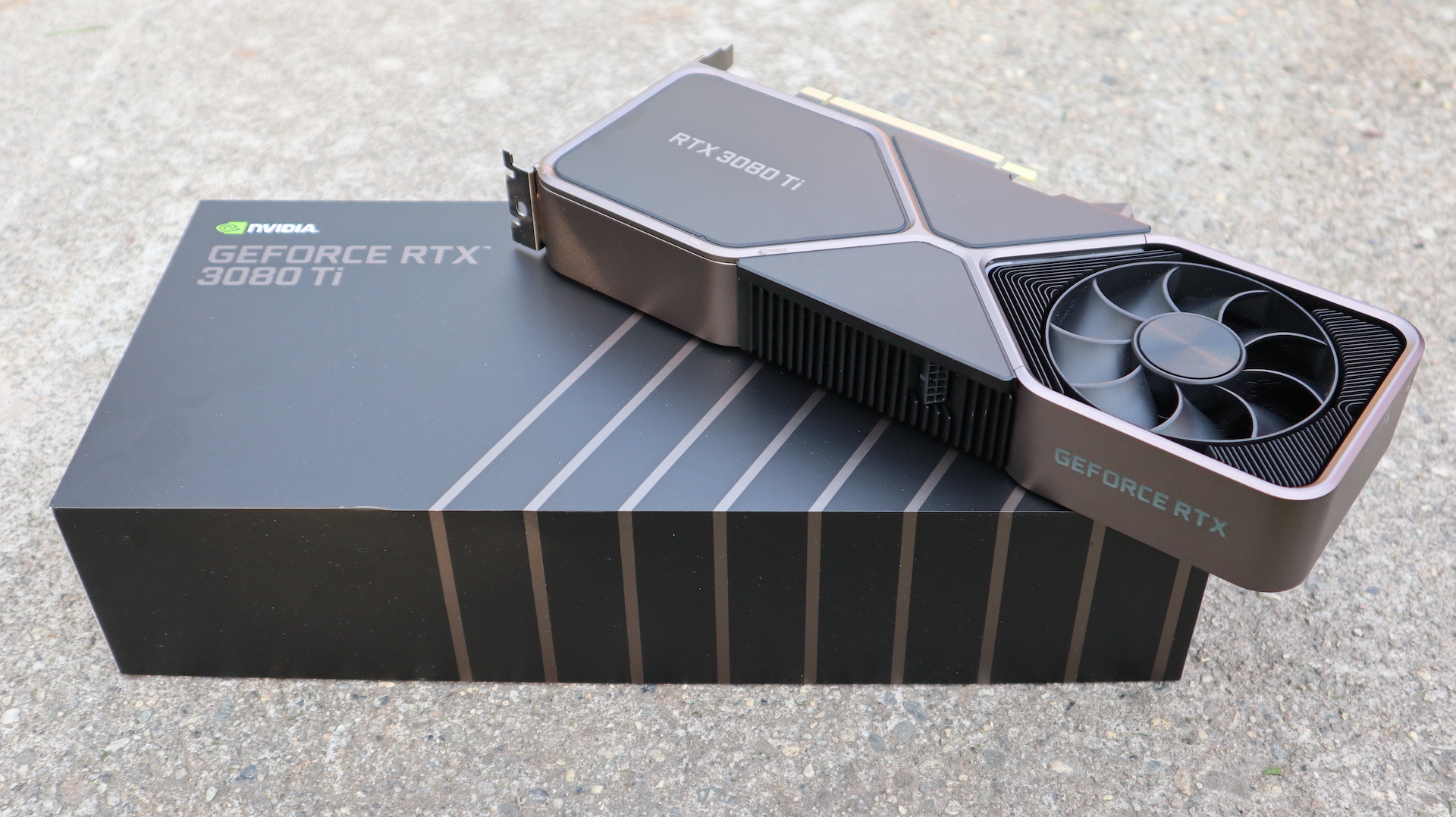
The GeForce 3080 Ti.
Enlarge / The GeForce 3080 Ti.
Sam Machkovech

Some users of Nvidia’s GeForce graphics cards are noticing severe performance issues after installing the Windows 11 2022 Update (aka Windows 11 22H2) that Microsoft released to the public earlier this week. As reported by Bleeping Computer, affected users have experience stuttering, inconsistent framerates, and slowdowns, even on fast PCs with modern components.

Nvidia says the problem is caused by some new Windows graphics debugging features that are enabled by mistake.

The company publicly acknowledged the issue and released a new beta version of the GeForce Experience software package that it says should fix the slowdown. This implies that the problem is with Nvidia’s add-on software rather than the GeForce drivers themselves; if you installed the drivers without the GeForce Experience software, you may not have noticed the slowdown in the first place.

Bugs like these are why Microsoft rolls major Windows updates out in phases, beginning with a small group of PCs and working outward. The company learned this lesson early in the Windows-as-a-service era when problems like non-functional webcams, data loss, and broken apps cropped up early in the public rollout process for significant feature updates.

https://arstechnica.com/?p=1884284


39-year-old Radio Shack laptop gets new CPU, keeps original screen

A 1983-era TRS-80 Model 100 as action hero, exploding onto the scene.
Enlarge / A 1983-era TRS-80 Model 100 as an action hero, dramatically exploding onto the scene.

Faced with a broken Radio Shack laptop from 1983, IEEE Spectrum editor Stephen Cass didn’t throw it away. Instead, he pulled out the logic board and replaced it with a modern microcontroller so he could control the vintage screen. Cass wrote about his adventure in detail for Spectrum last week.

Cass performed his operation on a Radio Shack TRS-80 Model 100—one of the first laptops ever produced—which features a one-piece “slate” form designed by Kyocera and released as the NEC PC-8201 in Japan. Its claim to fame was not only its small portable size (at 2 inches thick and 3.9 lbs), but having a great keyboard paired with its ability to run for up to 20 hours on four AA batteries.

The Model 100 included a 2.4 MHz Intel 80C85 CPU, 8 to 32K of RAM, and an eight-line, 40-character monochrome LCD with no backlight. It doesn’t sound like much compared to today’s portable beasts, but journalists loved the Model 100 because they could comfortably write stories on the go using its built-in text editor. It also included Microsoft BASIC, a terminal program, and an address book in ROM.

Excerpt from a 1983 Radio Shack computer catalog page featuring the TRS-80 Model 100 laptop.
Enlarge / Excerpt from a 1983 Radio Shack computer catalog page featuring the TRS-80 Model 100 laptop.

While some people upgrade Model 100s using new LCD screens and CPUs (keeping only the case and keyboard), Cass decided to attempt an interface with the portable’s vintage 240×64 pixel display. He found it particularly challenging because the computer handles driving the display in an unconventional way compared to today’s LCD panels.

“The M100’s LCD is really 10 separate displays, each controlled by its own HD44102 driver chip,” Cass writes. “The driver chips are each responsible for a 50-by-32-pixel region of the screen, except for two chips at the right-hand side that control only 40 by 32 pixels.” Its designers chose this method, Cass says, because it speeds up text display with limited available memory.

After working out the protocol for the screen, Cass built an interface between the screen and a modern Arduino Mega 2560 microcontroller. As the project stands now, he can display and scroll bitmapped graphics onto the Model 100’s LCD. His next step will be to try to interface the screen and keyboard (with a Teensy 4.1 development board to handle keyboard communications) to a Raspberry Pi 4 compute module, which would make for a powerful portable machine with a vintage feel.

You can read more about the technical details of his project on IEEE Spectrum’s website. Good luck, Stephen!

https://arstechnica.com/?p=1884104


Report: UK authorities have arrested a teenager linked to GTA VI leak

Artist's rendition of the recent arrest of a 17-year-old hacker in the UK.
Enlarge / Artist’s rendition of the recent arrest of a 17-year-old hacker in the UK.
Rockstar Games

A Thursday night arrest of a 17-year-old in the UK may have led to the capture of one of the biggest video game-related leakers in recent history.

London police forces confirmed their apprehension of an Oxford suspect on a social media channel regularly used for police arrest updates, and it clarified the suspect’s age, a vague charge of “suspicion of hacking,” and that the investigation was coordinated with the UK’s National Crime Agency (NCA) and specifically its National Cyber Crime Unit.

That charge was followed hours later by a report from American freelance journalist Matthew Keys alleging that the arrest revolved squarely around the recent theft and distribution of unreleased assets from British video game studio Rockstar North. This report cites “sources” to claim that the FBI was involved in this investigation and that the data seized also included portions of a massive Uber-related breach. Keys’ report, as of press time, has not been corroborated by larger newsrooms in either the US or UK.

Lapsus$ suspicions

The gaming leak in question was among the highest profile in recent history, as it essentially contained the world premiere of highly anticipated video game Grand Theft Auto VI. Up until this week’s leak, series fans were left with rumors and hearsay about its potential setting (a Miami-like city that resembles the series’ Vice City) and its protagonists (a “Bonnie and Clyde” pair of protagonists, including the first playable woman in a mainline GTA game). Both of those rumors were confirmed by the leak, which Rockstar eventually confirmed was legitimate and sourced from a 3-year-old version of the game.

Before Thursday’s arrest, the GTA VI gameplay leaker originally claimed involvement in a recent massive breach of Uber’s data, as well—and Uber publicly blamed the hacking collective Lapsus$ for that intrusion. Previously, at least one teenage boy from Oxford had been linked to the hacking efforts of Lapsus$ by a BBC report. UK authorities did not confirm that report’s veracity at the time, due to privacy rules about underage suspects. Thus, while the GTA VI leak could be connected to efforts by Lapsus$, that connection remains unconfirmed as of press time.

Ars Technica’s Dan Goodin previously reported on Lapsus$’s hacking efforts as they were chronicled by members on their official Telegram chat channels. Many of the group’s methods, at least as publicly revealed, took advantage of vulnerabilities in standard “two-factor” multifactor authentication systems—which usually revolve around less secure backup login options that an attacker can exploit. The GTA VI leaker previously suggested that they gained unauthorized access to Rockstar’s source code via accessing the company’s Slack chat interface, but as of press time, it’s unclear whether this too was a matter of “MFA bombing” to trick an employee into unwittingly accepting something like a phone call prompt.

Should this week’s Oxford arrest be connected to the GTA VI leak, that timeline would be far more accelerated than we saw in another memorable European source code leak. German hacker Axel Gembe eventually recounted the story of his apprehension after he breached Valve’s computer systems to download the source code to Half-Life 2. That raid and subsequent arrest took place roughly eight months after the leak was originally reported.

https://arstechnica.com/?p=1884067


SNES Star Fox now runs at a silky 60 fps thanks to a new hack

[embedded content]
A demonstration of the hacked, 60 fps version of Star Fox released this week (though this demo doesn’t get much above 30 fps, as noted in the bottom-left corner).

If you were a Nintendo kid in the ’90s, you were probably blown away by how Star Fox and its SuperFX chip could render full 3D worlds on 1993-era SNES hardware. If you go back to play the game today, though, you’ll probably be let down by the game’s choppy frame rate, which maxes out at a halting 20 fps.

Enter longtime Star Fox ROM hacker kandowontu, who’s responsible for the feature-packed Star Fox Exploration Showcase hack. This week, kando released a patch that unlocks 30 or even 60 fps modes in an emulated Star Fox (or Star Fox 2<!--em) ROM. The result is an extremely smooth experience that probably comes closer to matching the rose-colored memories you have of early ’90s Star Fox than the original game ever could.

A problem of design

Attempts to speed up Star Fox are nothing new in the hacking and emulation communities. For years players have overclocked SuperFX chips or run emulators at higher speeds to try to up the game’s frame rate.

The SuperFX chip is just one of many cartridge coprocessors that an SNES emulator has to handle correctly.
Enlarge / The SuperFX chip is just one of many cartridge coprocessors that an SNES emulator has to handle correctly.

But while these methods make Star Fox run more quickly (and smoothly), they also speed up the game’s internal logic to the same degree. That means enemy ships and your Arwing fly much faster than Nintendo intended, an effect that also throws the game’s excellent music out of sync with the auto-scrolling action on-screen. Tripling the game’s speed to get to a 60 fps experience makes it unplayably fast, by all accounts.

The design and limitations of the original SuperFX chip make this a tricky problem to solve. In a game like Star Fox, the SuperFX chip can take two entire frame cycles to transfer its 3D images to the system’s video RAM (that’s despite using only 75 percent of the available screen real estate). Add in calculation time for game logic, enemy movement, etc., and the game displays a new frame at just one-third of the SNES’ standard 60 fps rate.

“SuperFX games are kind of a special case,” emulator author near (aka byuu) told Ars in 2019 while discussing an overclocking-focused update to their accuracy-focused emulator bsnes. “Since they tend to not run at 60 fps due to the demands of software rasterizing entire screens on the SNES, the game logic is designed around the frame rates. So even if you speed up Star Fox, the game engine will appear to be running too fast now.”

Slow your roll

To get around this issue, kando’s hack first reprograms the game to run three frames’ worth of instructions (as measured in IRQ routines) in the space of one frame cycle (or two game cycles for 30 fps mode). But to prevent the gameplay itself from speeding up, kando programmed his version to only recalculate the game logic (or “strats”) every third frame (or every other frame for 30 fps mode). “This slows the game back down to its ORIGINAL pace,” kando writes.

Unfortunately, kando notes that this hacked version of the game still needs help from an overclocked SNES CPU and, therefore, won’t work on stock SNES hardware. Even in emulators configured to run in overclocked mode, kando warns that, in 60 fps mode, “when there are a few objects on the screen the FPS becomes very variable between 30-60 fps (there also seem to be some issues with music speed in 60 fps playback).

[embedded content]
Star Fox 2 looking smoother than ever

Limitations aside, it’s great to relive Star Fox‘s action-packed gameplay without the nausea-inducing frame rates inherent to early ’90s 3D graphics (or the nausea-inducing game speeds of previous frame rate hacks). We’ll be playing it this weekend alongside our slowdown-free, SA-1 enhanced copy of Gradius III in an attempt to relive the best version of our childhood. https://arstechnica.com/?p=1884060


Impressions: Shovel Knight Dig is my new roguelite gaming addiction

<img src="https://rassegna.lbit-solution.it/wp-content/uploads/2022/09/impressions-shovel-knight-dig-is-my-new-roguelite-gaming-addiction.png" alt="Dig deeply enough in Shovel Knight Dig, and you’ll find trippy treasure just like this.”>
Enlarge / Dig deeply enough in Shovel Knight Dig, and you’ll find trippy treasure just like this.
Yacht Club Games


Shovel Knight Dig has been on our radar since its announcement in 2019—back when games could be revealed and immediately demonstrated at physical gaming expos. That many years ago, Dig was one of a few planned series spinoffs, and its demo at that year’s PAX West show floor filled me with dungeon-digging excitement.

This week, the series’ third formal spinoff finally goes on sale on PC, iOS, and Nintendo Switch, and in great news, Dig is easily the best Shovel Knight offshoot yet. What’s more, it stands out compared to other arcadey, action-focused roguelites, and the result feels like a depth-filled mod for the mobile classic Downwell.

A new pit stop on the randomly generated road

Lots of silly chatter surrounds a new massive chasm in this otherwise peaceful village.
Enlarge / Lots of silly chatter surrounds a new massive chasm in this otherwise peaceful village.
Yacht Club Games

Shovel Knight has reasons to dig with his namesake weapon in search of treasure, secrets, and revenge. If you’re interested in this character-filled story, Dig‘s interactions with beautifully drawn and animated animals are as charming as the plot found in the mainline series’ four campaigns. Or you can mash buttons to skip the dialogue and get to the satisfying digging.

Control in this new 2D side-scrolling game resembles the mainline series, as well: Use an action button to swipe your shovel left or right (or downward if you hold down on the D-pad) while your hero lands from jumps and falls with his shovel facing downward, which not only harms vulnerable foes but also makes the Knight bounce upward off most stuff it contacts, except certain ground types. Instead of running left or right to a goal, Shovel Knight now digs downward through randomly generated levels (with a few left and right exceptions, usually found in the game’s wealth of hidden challenges).

Thanks to so many action-driven roguelikes and roguelites from the past 10 years, we’ve been down this randomly generated road before. Yet the development team at Nitrome (Super Leap Day) quickly establishes its savvy on how to pump variety and fun into randomly generated depths. One of its best differentiators is its application of gravity. While the popular game Downwell constantly drops players at high speeds and forces rapid reactions, Dig frequently gives your Knight a chance to land, survey his immediate depths, and notice what his pesky jumping ability will and won’t reach.

Each descent is broken up into smaller stages, and each stage includes a crucial treasure chest at its conclusion. Should you find each stage’s three golden gears, you can unlock this chest’s bonus item, which includes run-saving goodies like additional health and special abilities. (Like in other roguelites, health can be scarce, and too much damage can spoil a run in an instant.) Speedrun past these golden gears, and future enemy-filled stages become trickier to survive. As you shovel through destructible terrain and drop to lower platforms, each level’s golden gears, along with other useful pickups, will appear in tricky, hard-to-reach corners. They’ll require that you selectively leave some terrain and enemies unspoiled to nail a high-enough bounce.

https://arstechnica.com/?p=1883870


The case of the murdered mummies: “Virtual autopsy” reveals foul play

Face and upper body of one of two South American mummies that were likely murdered, based on a recent "virtual autopsy."
Enlarge / Face and upper body of one of two South American mummies that were likely murdered, based on a recent “virtual autopsy.”
A-M Begerock et al., 2022

An international team of scientists used CT scanning to conduct “virtual autopsies” of three South American mummies and found evidence of fatal trauma in two of them, according to a recent paper published in the journal Frontiers in Medicine. One of the mummies had clearly been hit on the head and stabbed, possibly by two assailants, while the other showed signs of massive cervical spine trauma. The third female mummy also showed signs of trauma, but the damage was inflicted post-mortem. The study is part of ongoing efforts to determine the frequency of violence in prehistoric human societies.

According to the authors, there is a large database of ancient Egyptian mummies and skeletons that show signs of having suffered a traumatic injury, but there is far less data for South American mummies, many of which formed naturally and are exceptionally well-preserved. Nonetheless, evidence of fatal trauma has been reported previously in a few cases, such as a pre-Columbian skull from the Nasca region showing rotational trauma to the cervical spine and accompanying soft tissue bleeding into the skull. An almost complete female mummy showed signs of facial bone fractures consistent with massive strikes from a weapon, as did the skull of a mummified male infant.

An extensive 1993 survey used conventional X-rays to analyze 63 mummies and mummy fragments, 11 of which showed signs of trauma to the skull. But those mummies came from different locations, populations, and time periods, making it difficult to draw general conclusions from the findings. Last year, researchers looked for signs of violence in the remains of 194 adults buried between 2,800 and 1,400 years ago in the Atacama Desert of northern Chile, 40 of which appeared to have been the victims of brutal violence.

The authors of this most recent paper have combined expertise in anthropology, forensic medicine, and pathology and relied upon CT scanning technology to reconstruct the three mummies under investigation. “The availability of modern CT scans with the opportunity for 3D reconstructions offers unique insight into bodies that would otherwise not have been detected,” said co-author Andreas Nerlich, a pathologist at Munich Clinic Bogenhausen in Germany. “Previous studies would have destroyed the mummy, while X-rays or older CT scans without three-dimensional reconstruction functions could not have detected the diagnostic key features we found.”

The first specimen Nerlich and his colleagues analyzed is known as the “Marburg Mummy,” a mummified male housed at the Museum Anatomicum of the Phillips University in Marburg, Germany. (Acquisition records describe it as a “female mummy,” so someone at the time missed the mummy’s male genitalia.) The man was likely between 20 and 25 when he died and stood roughly 5 feet, 6.5 inches (1.72 meters) tall. He was buried in a squatting position, and given the nature of the goods buried with him, he likely belonged to a fishing community of the Arica culture in what is now northern Chile. There was prior scarring of the lungs, indicating the man suffered from tuberculosis, and he had well-preserved but crooked teeth. Radiocarbon dating indicates he died between 996 and 1147 CE.

https://arstechnica.com/?p=1880352


Is Moore’s law actually dead this time? Nvidia seems to think so

The green lines make it faster.
Enlarge / The green lines make it faster.


When Nvidia rolled out its new RTX 40-series graphics cards earlier this week, many gamers and industry watchers were a bit shocked at the asking prices the company was putting on its latest top-of-the-line hardware. New heights in raw power also came with new heights as far as MSRP, which falls in the $899 to $1,599 range for the 40-series cards.

When asked about those price increases, Nvidia CEO Jensen Huang told the gathered press to, in effect, get used to it. “Moore’s law is dead,” Huang said during a Q&A, as reported by Digital Trends. “A 12-inch wafer is a lot more expensive today. The idea that the chip is going to go down in price is a story of the past.”

Sorry, how expensive?

In justifying Nvidia’s price increases, Huang defended the raw power of the 40-series cards compared with past offerings. “The performance of Nvidia’s $899 GPU or $1,599 GPU a year ago, two years ago, at the same price point, our performance with Ada Lovelace is monumentally better,” he said. “Off-the-charts better.”

But those price comparisons are a bit misleading. True, the $1,599 flagship RTX 4090 is only $100 more expensive than the $1,499 launch price for the RTX 3090 in 2020. Adjusted for inflation (which has been unusually high in recent years), the launch RTX 3090 would cost more than $1,700 in August 2022 dollars, making today’s RTX 4090 look like a relative bargain.

When you look at the lower tiers, the price increases begin to look a bit less reasonable. The RTX 4080 line—split into $899 and $1,199 pricing tiers—is significantly more expensive than the $699 and $799 launch prices for the two tiers of RTX 3080 cards in 2020. Even accounting for inflation, those cards would have launched at about $800 and $900 in today’s dollars, well below what Nvidia is asking for its RTX 4080 cards now.

What’s more, the 40-series thus far has nothing even approaching the launch price of the lowest-cost 30-series option Nvidia offered in 2020—the RTX 3070, which cost $499 back then (about $567 in today’s dollars). And there are rumors that Nvidia’s low-end 4080 card is on a less-performant chipset than its more expensive cousin, making it more technologically similar to the 3070 from the last generation.

Nvidia says the high cost of its new Ada Lovelace architecture comes with plenty of additional processing power.
Enlarge / Nvidia says the high cost of its new Ada Lovelace architecture comes with plenty of additional processing power.

Sure, one could argue that the RTX 30-series cards were priced too low—those cards were exceptionally tough to find at their launch MSRPs at the time, in large part due to extreme interest from cryptocurrency miners. But the days of widespread GPU shortages are now long gone, as cratering crypto prices and changes in the GPU crypto mining landscape have led second-hand GPU prices to fall steadily for months. Nvidia explicitly noted this trend in August, warning investors that crypto market effects “may reduce demand for our new GPUs.”

If we can’t do it, someone else can?

Generational price comparisons aside, Huang’s blanket assertion that “Moore’s law is dead” is a bit shocking for a company whose bread and butter has been releasing graphics cards that roughly double in comparable processing power every year. But the prediction is far from a new one, either for Huang—who said the same thing in 2019 and 2017—or for the wider industry—the International Technology Roadmap for Semiconductors formally announced it would stop chasing the benchmark in its 2016 roadmap for chip development.

You could write an entire book on the implications of Moore’s law (and Ars practically has), but the core assertion laid out by Intel co-founder Gordon Moore in 1965 has remained remarkably prescient: The number of transistors per chip (keeping size/price relatively constant) roughly doubles every year (in a later update, Moore would amend the doubling time to 24 months).

As Kevin Kelly laid out in a 2009 piece, though, Moore’s law is best understood not as a law of physics but as a law of economics and corporate motivation. Processing power keeps doubling partly because consumers expect it to keep doubling and finding uses for that extra power.

AMD's upcoming RDNA 3 chipset could up the pressure to keep up with Moore's law.
Enlarge / AMD’s upcoming RDNA 3 chipset could up the pressure to keep up with Moore’s law.

That consumer demand, in turn, pushes companies to find new ways to keep pace with expectations. In the recent past, that market push led to innovations like tri-gate 3D transistors and production process improvements that continually shrink the size of individual transistors, which IBM can now push out at just 2 nm.

The point here is that Huang’s purported “death of Moore’s law” isn’t entirely up to Nvidia. Even if Nvidia can no longer keep its processor power increases on trend at consistent prices, they’re not the only game in town. AMD, for instance, is already teasing that its soon-to-be-announced RDNA 3 cards could sport some larger-than-expected improvements in efficiency and overall processing power, thanks to some new chiplet-based designs.

While it’s much too soon to say how AMD and Nvidia’s new chips will compare, this is the kind of market competition that has traditionally kept hardware makers from becoming too complacent in the push toward new frontiers of relative hardware power (see also: Apple Silicon versus previous Intel-based Macintoshes). In other words, even if Nvidia can’t figure out how to keep up with Moore’s law these days, someone else might.

https://arstechnica.com/?p=1883729


Mario + Rabbids: Sparks of Hope is a more dynamic take on tactical RPGs

The gang (and the other gang) is all here!
Enlarge / The gang (and the other gang) is all here!


Even though Mario + Rabbids: Sparks of Hope is a sequel to a well-loved crossover, it’s still hard to fathom that it’s a real game. Blending the distinct worlds of Nintendo’s iconic Super Mario franchise and Ubisoft’s raving, oddball Rabbids series, the original Mario + Rabbids Kingdom Battle took many liberties with its sources. Yet it was still a game that was a passionate tribute to both.

The sequel, thankfully, seems to be leaning further into the strangeness of this odd union while also tapping further into what makes Mario and the Rabbids both so endearing. Just ahead of its planned October 20 release, I got to play several hours of this follow-up to one of the Nintendo Switch’s best tactical RPGs and found a charming and transfixing crossover that adds a bit more vibrancy to its solid predecessor.

Strange bedfellows

On paper, a Mario crossover with Ubisoft’s Rabbids as guests in a tactical role-playing game seems strange, but it’s not too far off from some genres Nintendo has infused with Mario in the past. The Mario + Rabbids series shares a lot of DNA with the likes of Super Mario RPG and the Paper Mario series but within the framework of tactical turn-based strategy systems from more mature games like XCOM or Final Fantasy Tactics.

The Mario + Rabbids series at its heart is a family-friendly take on a tactical role-playing game. One of the great successes of the original is that it presented complex gameplay systems and mechanics in an approachable way, which still felt true to the whimsical and over-the-top platforming action of Mario games.

The sequel picks up right after the events of Kingdom Battle, with Mario and friends—including the Rabbids, who effectively cosplay as the Mushroom Kingdom’s most iconic heroes—enjoying some much-needed rest. Unfortunately, that peace is short-lived, as a new galactic evil known as Cursa has invaded Mario’s world in search of Sparks, a fusion of Rabbids and the star-shaped Lumas first introduced in Super Mario Galaxy. With this new threat, the heroes unite again to explore the galaxy’s many planets to take down Cursa and her minions.

BRB, sending this "Mario dual-wielding guns" image back in time to blow the mind of 12-year-old me.
Enlarge / BRB, sending this “Mario dual-wielding guns” image back in time to blow the mind of 12-year-old me.

Sparks of Hope builds on the foundations of what Kingdom Battle established, allowing it to stretch out and develop its own approach to turn-based tactical combat. With more of a focus on exploring strange new worlds and engaging in combat that offers a greater degree of freedom and flexibility, it all comes together in ways that showcase the game’s exuberant and charming adventure across the galaxy.

With your squad, led by Mario and joined by other Nintendo characters and Rabbids, you maneuver the team across a battlefield to plan out your attack on the opposing forces. By taking advantage of terrain, enemy placement, and the myriad skills your team has—such as Mario’s energy blasters, Rabbid Peach’s rocket launcher, or Luigi’s long-range bow-and-arrow strikes—you can come up with a complex set of plans to take down your foes.

Sparks of Hope Associate Producer Quentin Correggi told Ars he believes that pairing these opposite franchises brings out some unique qualities to both, creating something that feels original.

“Working on [Mario + Rabbids] really enables us to do something never done before with Mario and other Nintendo characters,” Correggi said. “The whole [Mario + Rabbids] franchise is not just about getting these characters together, but about their two worlds colliding, too. That union of the whimsical Nintendo world and the very chaotic world of the Rabbids enables us to do much [with the heroes]. You see that in each setting in this game, too, which shows the variety and what players love about this crossover we’ve put together.”

https://arstechnica.com/?p=1883664


Andor first impressions: Star Wars inches toward the best of modern adult TV

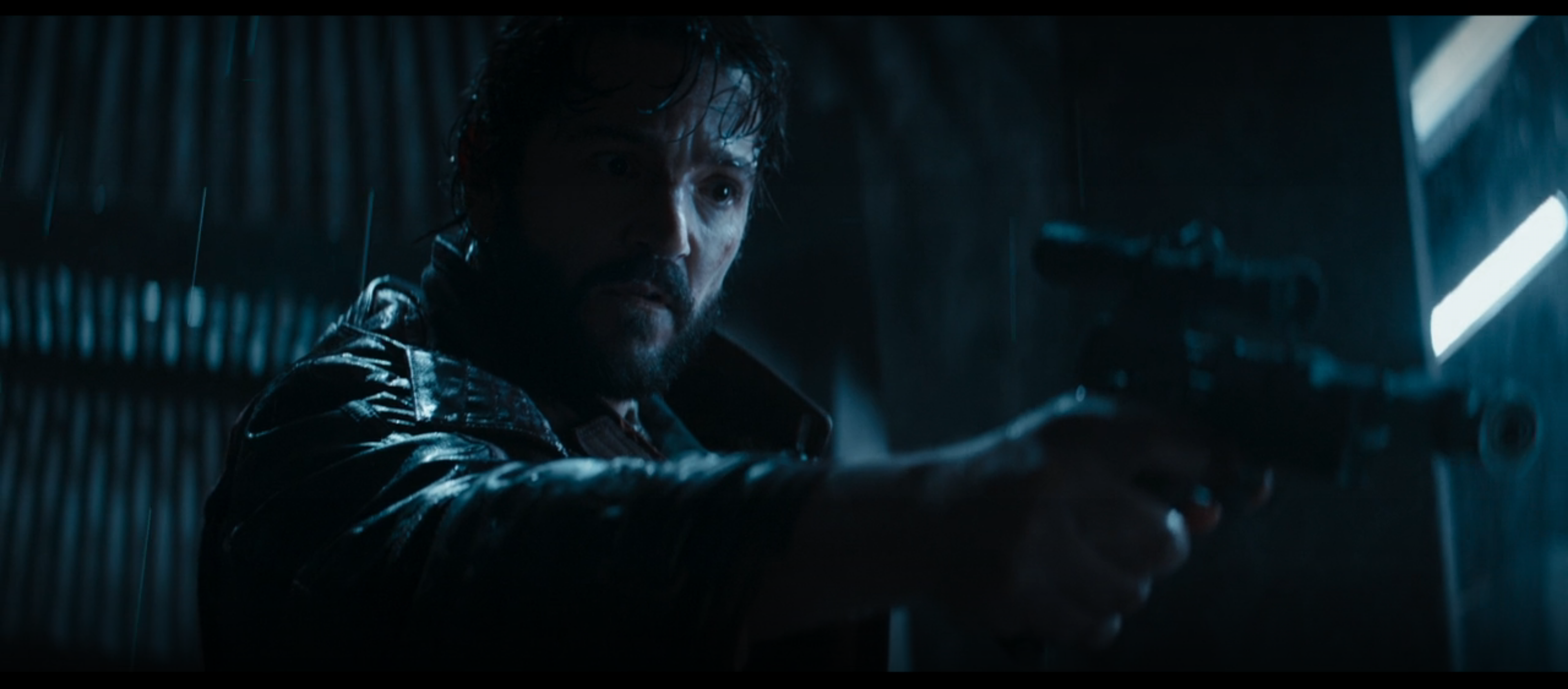
<img src="https://rassegna.lbit-solution.it/wp-content/uploads/2022/09/andor-first-impressions-star-wars-inches-toward-the-best-of-modern-adult-tv.png" alt="Diego Luna returns to the role of Cassian Andor in the newest Star Wars series on Disney+.”>
Enlarge / Diego Luna returns to the role of Cassian Andor in the newest Star Wars series on Disney+.

At its worst, Star Wars: Andor is a sanded-off PG-13 version of some of the best TV dramas of the past decade. It’s easy to see traces of The Wire, Lost, and Breaking Bad in this story of Star Wars-adjacent scum and villainy. However, as you might suspect, such nuanced TV inspirations can only go so far in a franchise that regularly features chirping droids and action figure tie-ins.

At its best, though, Andor plays out like no other Star Wars film or TV entry to date, and it bodes well for the series’ post-Skywalker future. Andor flexes its adult-ish aspirations to better resemble the gritty content that has made series sidebars like comics, novels, and video games beloved. While its momentum takes a little too long to kick in, enough quality coalesces by the end of the series’ first 100 minutes to make it a worthy recommendation for fans of compelling sci-fi television, let alone Star Wars loyalists.

At Disney+, an initial release of three episodes says a lot

Trouble seems to find Cassian Andor a lot in his series.
Enlarge / Trouble seems to find Cassian Andor a lot in his series.

This series “follows” the events of Rogue One: A Star Wars Story the only way Lucasfilm really could: by building a prequel out of its likable anti-hero, Cassian Andor. (Spoiler alert: If this series had been a direct timeline sequel to that film, it would, uh, include far fewer characters.) Since his name’s in the title, Andor features as the star, and the events rewind to both his biggest adult and childhood adventures.

Disney+ typically debuts new TV episodes on a once-a-week basis, and while a few series exceptions have launched with a bonus episode (most notably Marvel’s WandaVision), Andor is the first to approach a “binge” on launch week. Wednesday’s three-episode debut feels like a major admission from Lucasfilm: ‘Hey fans, pretty please watch all three episodes before rushing to judgment.’

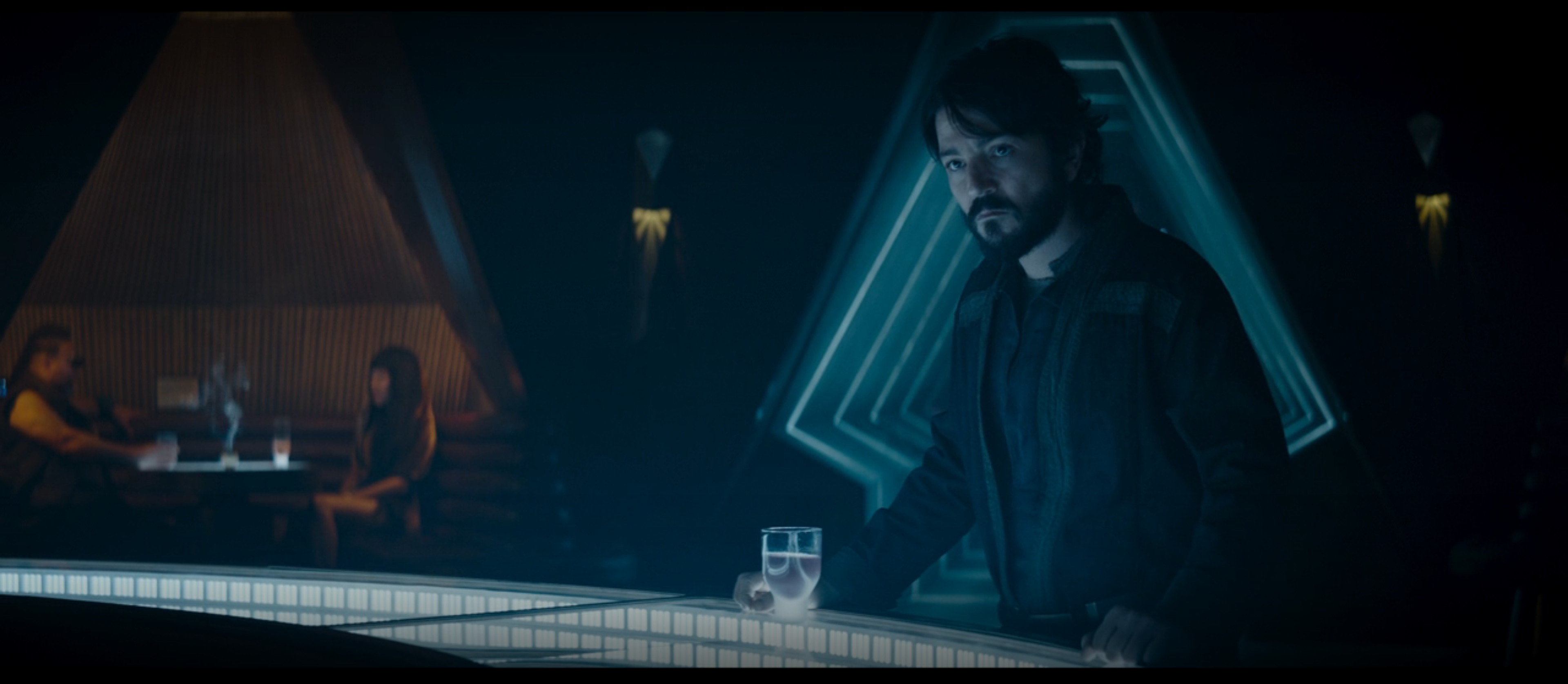
<a href="https://cdn.arstechnica.net/wp-content/uploads/2022/09/Screenshot-1983.png" class="enlarge" data-height="1723" data-width="3840" alt="You won't see a lot of droid antics on Andor, but new droid B2EMO has a few key moments.”><img alt="You won't see a lot of droid antics on Andor, but new droid B2EMO has a few key moments.” src=”https://rassegna.lbit-solution.it/wp-content/uploads/2022/09/andor-first-impressions-star-wars-inches-toward-the-best-of-modern-adult-tv-2.png” width=”980″ height=”440″>
Enlarge / You won’t see a lot of droid antics on Andor, but new droid B2EMO has a few key moments.

I am thankful that I did. Andor needs this much time to get its bearings, mostly because its opening episodes plow ahead with an entirely new cast of characters surrounding the familiar face of lead actor Diego Luna. Trailers have suggested that we’ll eventually see characters from Rogue One, Star Wars: Rebels, and other entries, but first, we have to watch Andor embrace his destiny.

At least one portion of the series thus far has Lost its way

Bix (Adria Arjona) has a long and fraught relationship with Andor to contend with in this new series.
Enlarge / Bix (Adria Arjona) has a long and fraught relationship with Andor to contend with in this new series.

If your preferred Star Wars adventures feature shady deals in alleyways, dubious-sounding no-questions-asked favors, and cold-blooded killings, Andor wastes no time baring its dark heart. Andor begins the first episode on a fact-finding mission, and while he has clearly been on his search for a while, this TV series opens with his quest going awry. Within minutes, Andor returns to Ferrix, his veritable home base where he typically picks up and sells scrap to get by. It’s time to run one last deal, he tells his few accomplices, and they need to tighten their alibis about it, just in case.

And he would’ve gotten away with his scheme, too, if it weren’t for a meddling middle manager inside an Imperial operations outpost. Deputy Inspector Karn (Kyle Soller) is the series’ first standout new character, as he bristles with impotent rage while trying to make a name for himself inside an otherwise bureaucratically restrained Empire. Karn alternates between obnoxious smugness and chest-puffing BS as appropriate, and his resulting unlikability is magnetic to watch as he bears down on Andor’s escape plan. His place in the story is probably as close as the Star Wars universe will ever get to resembling the broken law enforcement ecosystem of some of modern TV’s biggest hits.

https://arstechnica.com/?p=1883626