Daybreak Games denies reported links to sanctioned Russian oligarch [Updated]

Enlarge / Daybreak’s story on the money behind this logo has been changing recently.

Back in 2015, the former Sony Online Entertainment announced it was being bought by investment management firm Columbus Nova and changing its name to Daybreak Game Company (Everquest II, H1Z1, Planetside 2). Now that the US Treasury Department is sanctioning the Russian oligarch that owns Columbus Nova, though, Daybreak is suddenly saying that it has never had any affiliation with its ostensible parent company.

Let’s start with the few undisputed facts in this odd tale. Russian oligarch Viktor Vekselberg was placed under sanction by the US Treasury Department earlier this month for “malign” and “destabilizing activities” in various international affairs. Vekselberg, whose US assets have been frozen, is the owner of technology investment group Columbus Nova and its parent company, Renova Group.

What Daybreak now disputes, though, is that Columbus Nova ever had an ownership stake in the MMO maker. “From the get-go, Daybreak has been primarily owned by Jason Epstein, a longtime investor who also has investments in a variety of media properties,” the company wrote in a forum post yesterday. “We’re well aware of prior statements from Daybreak indicating our company was acquired by Columbus Nova. We have since clarified that the company was acquired by Jason Epstein when he was a partner at Columbus Nova, which he left in 2017.”

It’s those previous statements—which have stood uncontested for years—that are raising some eyebrows now that the companies are attempting to distance themselves from the investment management firm. Columbus Nova was mentioned a number of times in Daybreak’s February 2015 announcement press release, which doesn’t mention Epstein at all. Columbus Nova was also cited as Daybreak’s parent company in the site’s privacy policy from 2015 through at least 2017. Both of those documents have since been taken down from the Daybreak Games website, but the Internet Archive links cited above don’t forget.

Outside of those previous firsthand sources, there’s also a Polygon feature from April 2015 where Daybreak’s then-president and CEO John Smedley directly says that “after kissing a lot of frogs, we finally found a happy home with Columbus Nova. It was really a match made in heaven.” Smedley also mentions Columbus Nova’s investment in a May VentureBeat interview and in a 2016 Polygon interview.

News reports when Smedley departed the company that July also cited Columbus Nova as the studio’s owner, without apparent objection. And Columbus Nova executive Ji Ham was named Daybreak president in 2016, after a 16-month tenure from Smedley’s replacement, Russell Shanks.

What’s more, a Wikipedia user going by “Daybreakpr” tried to edit the Daybreak Games Wikipedia page on April 6, the same day the Treasury Department announced its sanctions against Vekselberg. “The company has no affiliation to Columbus Nova,” Daybreakpr wrote in the Wikipedia edit notes. “Jason Epstein is and has always been the primary owner and executive of Daybreak Game Company.” That edit was later reversed for not citing a reliable source and for appearing to come from someone with an “undisclosed financial stake” in the company.

Trust us now, not us then

Given all that, it’s a bit hard to believe that Daybreak has “no affiliation” with Columbus Nova, as a spokesperson claimed to MMO news site Massively Overpowered this week (Daybreak was not immediately available to respond to a request for comment from Ars Technica). The surprising claim looks even more suspicious given widespread reports of sudden layoffs at Daybreak yesterday afternoon and the departure of Senior Vice President Laura Naviaux on Wednesday.

Players of Daybreak games like Everquest II are understandably concerned that the disputed connections between Vekselberg and Daybreak could cause trouble for their favorite titles. Reports suggest Vekselberg’s frozen US accounts contain up to $2 billion in assets and that the Treasury Department has given his US investment funds until June 5 to sell off their interest in his companies at a loss and wind down their related operations.

Given that, it’s likely only a small matter of time until we find out if Vekselberg’s legal and financial problems will become Daybreak’s via a disputed business relationship. For now, we’ll only say that something doesn’t seem to add up.

[Update: A source inside Daybreak Games (who asked not to be named directly) responded to Ars’ request for comment to clarify once again that Daybreak was actually purchased in 2015 by Jason Epstein through his wholly-owned LLC, Inception Acquisitions. Epstein was an ownership partner of Columbus Nova at the time, leading his purchase to be conflated with ownership by Columbus Nova itself in statements and reporting, the source explained.

“At the time, they just didn’t think that that was a big deal, because both Inception and Columbus Nova were Jason’s,” said the source, who was not with the company in 2015. “Jason was the primary owner, and he owned both. Saying Columbus Nova as an investment firm seemed to make more sense [at the time]… What they should have said was ‘Jason Epstein, owner of Harmonix, purchased Daybreak,’ [or] ”Partners of Columbus Nova purchase Daybreak.'”

“We’re not denying he was there,” the source continued. But when Epstein left Columbus Nova last year, any association between the investment firm and Daybreak (through Epstein) ended, the source said. Daybreak and Columbus Nova let an announcement of that distinction “fall through the cracks” when Epstein departed, focusing instead on getting H1Z1 to a full release, they added.

What’s more, the source also said that Vekselberg’s Renova Group does not actually own Columbus Nova, despite widespread reporting through the years suggesting they do. Instead, the source said, Columbus Nova merely “managed some accounts,” for the Russian conglomerate, adding that those accounts were “not tied to Russia. Renova has other holdings and accounts, and we’ve gotten roped in.”

A 2007 SEC filing from “Columbus Acquisition Corp.” cites Columbus Nova as “the U.S.-based affiliate of the Renova Group of companies.” Despite this, the Daybreak representative promised to provide documentary evidence soon that Renova is not the owner of Columbus Nova.]

https://arstechnica.com/?p=1300173
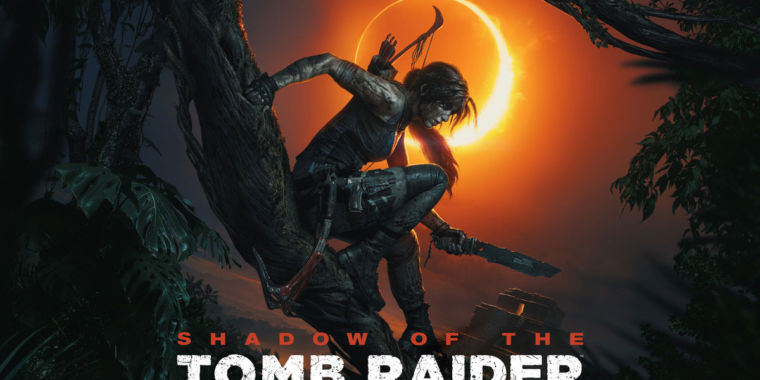


Shadow of the Tomb Raider hands-on: It’s the end of the world and Lara does not feel fine

[embedded content]

LOS ANGELES—Game publisher Square-Enix gave its new game Shadow of the Tomb Raider a public unveiling at an event last night, and I played the game for about an hour. If you liked the previous two games, you’ll probably end up liking this one.

Shadow is the third game in the Tomb Raider reboot franchise, following 2013’s Tomb Raider and 2015’s Rise of the Tomb Raider. It doesn’t have a strong connection to the recently released movie other than that the film was loosely based on the 2013 game. Square-Enix representatives said that this is the final game in a trilogy. (I doubt that means it’s the last Tomb Raider game, though.)

In the hour I played, franchise heroine Lara Croft attended a Latin American fiesta, sneaked into a villain-infested dig site, stealth-assaulted a lot of bad guys, nearly drowned about half a dozen times, solved physics puzzles in an ancient tomb, and maybe caused the actual apocalypse.

The game looks great, plays similarly to its acclaimed predecessors with just a few new gameplay mechanics, and continues the recent games’ focus on Lara’s character development.

The event

Sometimes games like this get large unveiling events coated in marketing dollars, and Shadow followed that script. The event took place at a nightclub in downtown Los Angeles called The Mayan, which is—you guessed it—Mayan themed. It was a fit for a game that tasks Lara with diving into ruins around Latin America.

There were tacos, hanging vines, huge projections of Lara in combat poses on the walls, a big marquee on the street labeled “Shadow of the Tomb Raider,” and models both male and female wearing Lara-inspired outfits, posing for pictures with visitors. It’s all totally unnecessary, but I guess it’s neat.

Attendees played the game on Xbox One developer kits and HDR TVs in a back room that had a giant ziggurat on the wall.

The gameplay

Do you like expertly crafted action cinematics that blend seamlessly with running, shooting, climbing, and jumping gameplay? Then you’ll enjoy this game, just as you probably enjoyed its two immediate predecessors.

On the other hand, do you like following a very linear path, occasionally performing active time events because sometimes the game is more interested in being cinematic than a game, in the tradition of Dragon’s Lair? Well, if you do, you’re in luck. If not, this game doesn’t make any different arguments on that front from its predecessors.

But if you know the franchise (or even the genre) then you know that going in. Like I said: it’s more of the same, and just a little more—just what you’d expect from a triple-A, action-adventure sequel.

I noticed three new gameplay interactions in Shadow that I didn’t remember from the previous titles. The first is wall-running, and it’s just what it sounds like. It’s not as easily and frequently done as in, say, the 3D Prince of Persia games, but when it’s there, it’s there. The second is rappelling from surfaces you’re climbing with your pick axe, then swinging on the rope to jump and reach new areas. Again: it works just like it does in other games. Finally, you can now dive and explore under water.

We’ve seen all this before in other entries to the genre, but back in 2013 I was very impressed by how accessible and comfortable Tomb Raider made the action-adventure tasks to which we’ve become accustomed. By that, I mean the visual language is extremely clear, and you’re rarely confused about which situations you can perform certain actions in. That remains true here. There are distinct patterns on the walls that indicate that you can rappel from them or wall-run on them. They walk a perfect line between obvious and immersive; they look like natural parts of the world, but you know them when you see them.

When you’re swimming, you always know where to go because you’re generally going toward the nearest major light source. There are also bubbles that draw your attention; they signify that there’s a spot where you can swim to the top and catch a breath. “The opposite of shadow is light,” Lead Game Designer Heath Smith told me when explaining this choice.

He also noted that the rappelling and diving mechanics were added because they play into the game’s theme of descending into darkness. The temples you explore do that, too; while temples were usually peaceful puzzle environments in the previous games, they’re more dangerous this time. There are a lot of traps and other ways to get yourself maimed.

A big chunk of the demo was dedicated to a series of physics puzzles in one of these temples, but making the wrong move didn’t just result in confusion; sometimes it resulted in death. The game’s checkpoints are generous, though.

There’s also a lot of shooting. It’s the usual fare. Stealth is prominent; where you could hide in bushes before, you can now hide in some new set pieces, like walls covered in vines. Doing so covers Lara in mud as she draws her serrated combat knife to make a kill. It’s all very Heart of Darkness or Apocalypse Now.

When Smith was asked which new features he’s most excited about, he told us about one I only got to see a little bit of: the city-like hubs. They’re bigger than what we’ve seen in previous Tomb Raider games, he said. The Latin American village in which the demo started was definitely a change of pace compared to most of Tomb Raider‘s previous environments—Lara could talk to some of the hundreds of bystanders and partake in the festivities to some degree. I didn’t see any shops or side quests in this demo, though.

The story

While the 2013 reboot of the franchise brought many technical and gameplay advancements compared to previous Tomb Raider games, it was the focus on narrative and characterization that really set it apart. It’s not like it belongs in the Criterion Collection or anything, but it’s a big step up from prior games—Lara has internal conflicts and so on, like a protagonist should. They’re a bit overwrought, but they might be a lot better than nothing.

In 2013’s Tomb Raider, she was facing her fears and overcoming her aversion to violence in order to survive. By the end of the game, she was decidedly not averting violence. After Lara discovered how powerful she can be in the first two games in the reboot series, she’s discovering how that kind of power can lead to arrogance and hubris in Shadow, if the hour or so that I played was any indication. She wears the same outfit she did in the original Tomb Raider game in the ’90s, suggesting this is the fully realized Lara Croft. But that doesn’t mean she doesn’t have flaws.

Some minor spoilers follow; they’re minor because I have the impression that they’re from very early in the game.

Lara is looking for a relic called the Key of Chak Chel in Latin America. It has some connection to her late father, and an evil organization of thugs is trying to acquire it as well. That organization wants to use it to “remake the world” without “sin” and “weakness”—whatever that means. In the course of the game, she makes an impulse decision to just take it without considering the consequences. That action, she soon learns, has literally incited the Mayan apocalypse. (No, really.) Now she has to find a mysterious “silver box” that somehow averts that eventuality, but she’ll have to overcome her impulsive and narcissistic tendencies to do that.

It’s all about Lara learning her limits. A generous critic could say the game is trying to address the “white savior” trope endemic in the genre by making Lara face the music, in the same way that 2013’s Tomb Raider attempted (with only some success) to address the dissonance between Uncharted‘s charming, down-to-earth hero and the fact that you spend most of that game casually mowing down hundreds of humans with guns.

That said, Narrative Director Jason Dozois stressed to assembled press who were inquiring about the issue that “we’re not making a social commentary on anything; we’re trying to tell the best story we can… but we’re always influenced by present-day things, even if it’s subconsciously.” He said the focus is mainly on Lara learning that her actions have consequences.

So far, it seems like a story well told, though I’m worried the franchise will continue to miss the talents of Cory Barlog, who served as cinematics director on Tomb Raider but moved on to direct Sony’s new God of War game.

The graphics

The previous two Tomb Raider games were technical milestones in some ways, if only because they came with some of the best PC benchmarking tools we’ve seen in a while. I played this new game on an Xbox One X dev kit. It looked great.

The new God of War on the PS4 Pro gave me the impression that game developers are finally crafting visual experiences with HDR in mind from the get-go, rather than as an afterthought. It means the technology is that much more impactful. That shows here more than ever. Frankly, Shadow looks amazing in HDR.

The opening sequence of the demo saw Lara walking through a large party in a Latin American street market. A full moon and an array of stars were shining in the sky, hundreds of candles rested on tables, and neon signs hung overhead, in contrast to dimly lit alleys and shifting shadows. They all looked like they were specifically designed to demonstrate the value of an HDR TV—or at least to fully take advantage of one.

I used to say Horizon: Zero Dawn was the best argument for gaming in HDR; then I played God of War. Now I think it’s Shadow of the Tomb Raider.

1440p or 4K resolutions are nice on the PS4 Pro and Xbox One X, but HDR is where modern console games really (literally) shine. This game looks great if you have the TV for it, so if you’re looking for something to show off that expensive LG OLED or that more affordable TCL Roku TV, this game will probably be a good option.

Availability

Square-Enix says Shadow of the Tomb Raider will launch on Xbox One, PlayStation 4, and Windows PCs on September 14, 2018.

Listing image by Square-Enix

https://arstechnica.com/?p=1299911


Switch is selling well, but Nintendo thinks it can sell even better

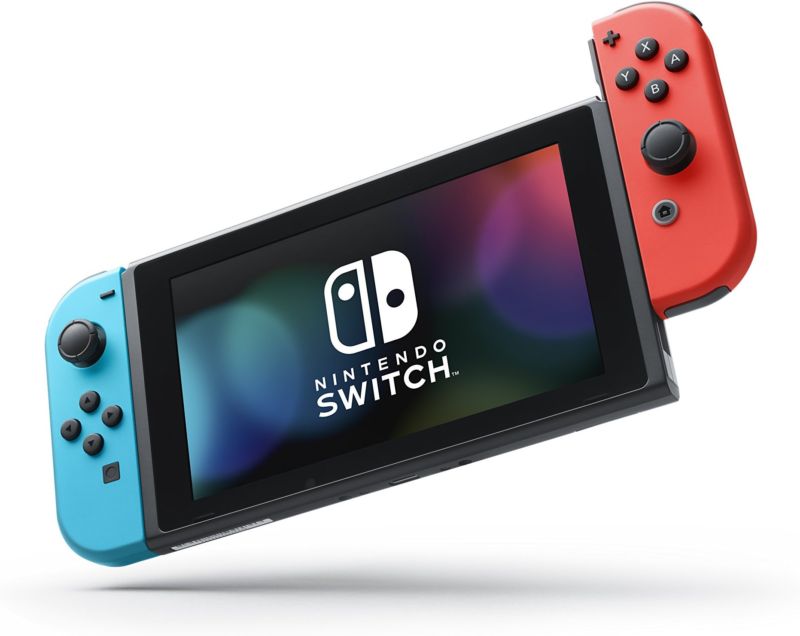
Nintendo is celebrating the end of a pretty good first year for the Nintendo Switch, with just over 15 million unit sales in the 12 months ending in March (on top of almost 3 million sales in the console’s launch month of March 2017). But Nintendo seems pretty sure that the system can perform even better in the coming fiscal year, and the company is projecting 20 million sales in the coming 12 months in a new annual report.

That target is actually a little below reports from last November, which suggested Nintendo would target annual sales of 25 million to 30 million Switch systems. Selling 20 million units in the coming year would put the Switch in the same sales range as the PS4 (which sold 17.7 million units in its second full year) but behind the sales mania of the Nintendo Wii, which sold 25.94 million units in its second full year.

The October launch of Super Mario Odyssey seems to be driving at least some of Nintendo’s hardware optimism. The game has already sold over 10.4 million units, outpacing Mario Kart 8 (9.22 million) and The Legend of Zelda: Breath of the Wild (8.48 million) despite being on the market for a much shorter time. The fact that Mario Odyssey was included in a special holiday bundle with the Switch probably didn’t hurt that performance, either.

Of course, Nintendo’s projections could be off, in either direction. A year ago, Nintendo was projecting sales of just 10 million Switch units for its first full year and was forced to increase production significantly ahead of the holiday season to reach 15 million annual sales.

Even that increase was undersold, though; Nintendo is currently one million sales ahead of the life-to-date Switch sales projections it set back in October. As Nintendo Senior Director of Corporate Communications Charlie Scibetta told Ars back in June, “we anticipated there was going to be demand for it, but the demand has been even higher than we thought.”

All those Switch owners will have a new Super Smash Bros. game to look forward to in 2018, according to Nintendo’s calendar, though those titles have a history of seeing their release dates slip. Players may have to wait longer for other previously announced marquee Switch releases like Pokemon (listed as “2018 or later”) and Metroid Prime 4 (“to be announced”).

Despite some previous signs of continued strength for the slowly declining Nintendo 3DS, the last 12 months saw worldwide sales for that system decline from 5.5 million units to about 3.6 million units. Nintendo predicts a further decline to just 1.6 million 3DS unit sales in the coming fiscal year, even with some continued software support from new Luigi’s Mansion and WarioWare games coming this year.

https://arstechnica.com/?p=1299503


A fan-made Halo PC patch meets Microsoft’s legal muscle—and apparently survives

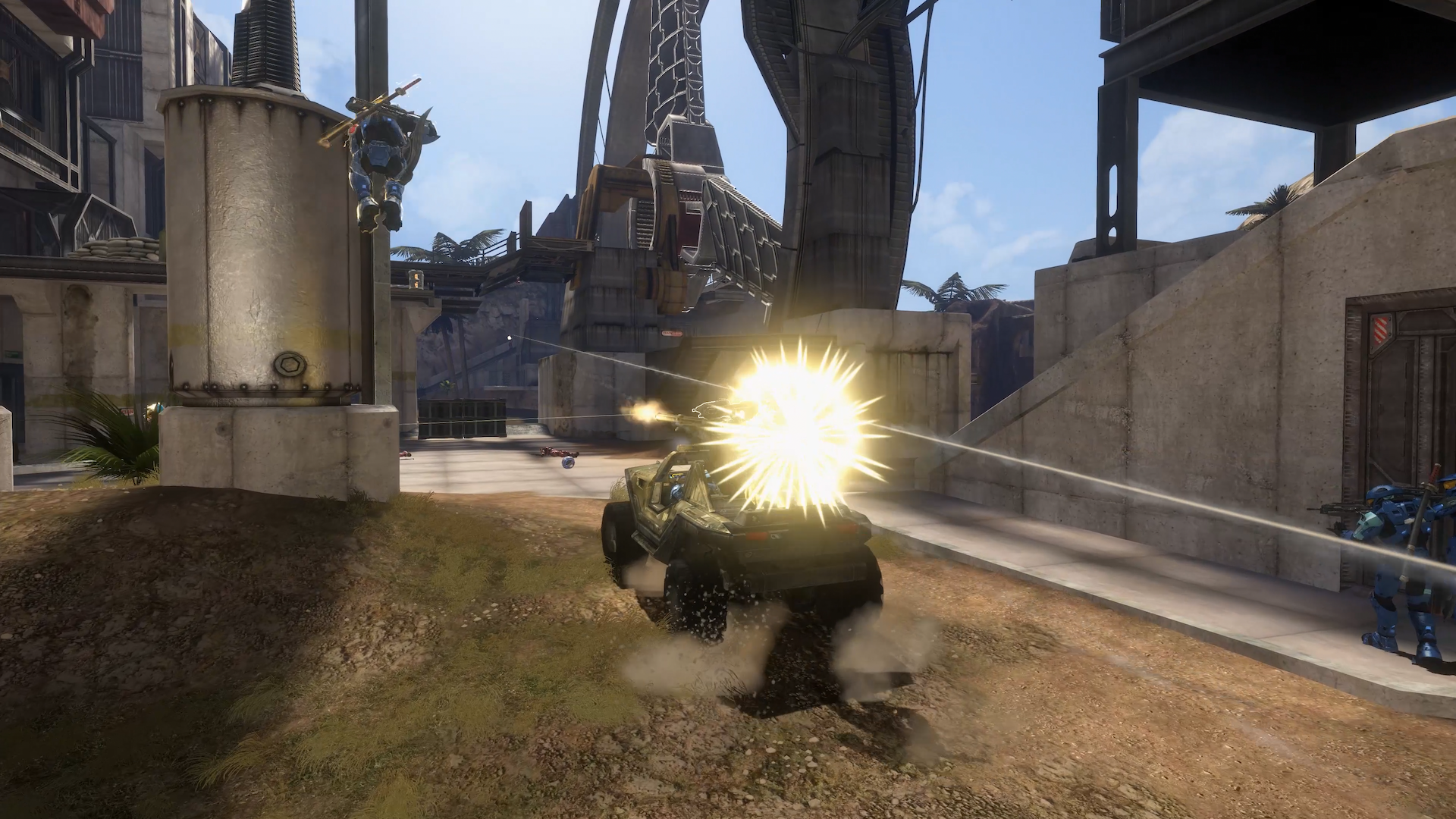
Enlarge / Want to play the canceled Halo Online project on your PC? Go through the right hoops, and you can still do so, even in spite of Microsoft’s legal action this week.
Microsoft / El Dewrito

On Tuesday, Microsoft’s Halo development studio 343 Industries posted about a fan-made modification to a PC version of the series—and the studio said that Microsoft would “protect its Halo intellectual property.” This, for all intents and purposes, sounded like yet another story of a fan-made game-tribute project facing a swift, legal smackdown.

But the story of the ElDewrito patch, designed for 2015’s Russia-only game Halo Online, appears to be a little more nuanced, if not complicated. The ElDewrito version of Halo Online is still online and functioning, with thousands of players matchmaking in its wholly free online multiplayer lobbies as of press time. Its Github repository is still online, which means the open source patch can still be downloaded. And the patch builders’ official blog says the team did not receive a formal cease-and-desist order from either Microsoft or 343 Industries.

The result is fascinating: a solid, Windows-compatible version of classic Halo 3 combat is in the wild. Now Microsoft’s required legal action is being announced alongside an apparent intent to do what the modders were already doing—to finally get more classic Halo games working for PC gamers.

In Russia, Dewrito eats you

When it comes to fan-made versions of existing video games, the stories usually don’t end well. Lawyers inevitably show up to protect their IP in spite of these games often being run by devoted, not-for-profit community groups. Everyone typically leaves with a sour cease-and-desist taste in their mouths.

This fate actually befell one Halo-related project in 2015 called ElDewrito, which aimed to fix up the weirdest Halo game ever made: Halo Online, a Russia-only, free-to-play hybrid of Halo 3 and Halo 4 for Windows PCs. The closed beta files for that Russian game leaked to the wider world, and soon after, devoted Halo fans and modders grouped together under the ElDewrito moniker (a play on its “ElDorado” filename) to collaborate on getting the game to work for players outside of Russia.

The project began life as an open source patch with conversations and collaboration taking place on sites like Reddit and Github. Ars wrote about the DMCA takedown request filed by Microsoft that same year, which took ElDewrito off Github temporarily. Yet the project found its way back onto Github shortly after our report was filed, and the reason was simple. Github was merely complying with Microsoft’s request to remove protected code from the repository, as “somebody uploaded ElDorado.exe [the game’s original, unaltered EXE] by mistake.”

With that EXE removed in a relisting, the project was no longer running afoul. The ElDewrito team continued sharing files that were in the legal free-and-clear, because they were worthless in isolation. (They simply required users to find Microsoft’s associated EXE on their own.) After Halo Online‘s closed Russian beta formally shut down in 2016, ElDewrito continued its work in earnest—aiming to build a true Halo 3 experience on that beta’s bones. ElDewrito wanted its project to include Forge modding support, peer-to-peer networking, Halo 3-specific features (like dual wielding in combat), and bug fixes.

“More Halo on PC”

Last week, the patch’s latest, biggest version (0.6) rolled out in a few ways: as a Github download, as an automatic update from within the existing ElDewrito fileset, and as a convenient, already-patched version of Microsoft’s copyrighted EXE. The latter was uploaded to various file-sharing sites, and those download links were shared at the Halo Online Reddit community.

That fact, and a groundswell of anticipation for the feature-rich patch, arguably drove rapid-fire adoption. A spike in Halo Online play on video-streaming site Twitch soon followed, and within days of that spike, the Halo powers that be responded. An update at Halo Waypoint, operated by 343 Industries, pointed to how other fan-made projects, like the video series Red Vs. Blue and the Halo Custom Edition patch, abide by “established content usage guidelines.” ElDewrito, on the other hand, appears to cross a line, according to the post:

While we are humbled and inspired to see the amount of passion poured into this project, the fact remains that it’s built upon Microsoft-owned assets that were never lawfully released or authorized for this purpose. As this project reverberated across the community, our team took a step back to assess the materials and explore possible avenues, while Microsoft, like any company, has a responsibility to protect its IP, code and trademarks. It’s not optional in other words.

343 then clarifies that Halo Online is not “abandonware” and that “many elements of that underlying code and content are still actively being used today and will continue to be in the future.” But Microsoft didn’t send anybody from ElDewrito a formal cease-and-desist. Those legal notices are apparently being aimed elsewhere: at video-streaming sites, and at anybody linking to Microsoft-owned files like ElDorado.exe. (As of press time, those EXE links have disappeared from the Halo Online Reddit community.) El Dewrito confirms that its Github repository isn’t going anywhere: “Since ElDewrito itself is simply an open source mod and not a Microsoft asset, the mod itself will not be taken down.”

“You can resume playing 0.6 as normal.”

343’s blog post says that the company told the ElDewrito team to “press pause,” which lines up with the mod team’s own confirmation. ElDewrito has acknowledged it was asked by Microsoft to “temporarily halt development until more information is available.” What’s more, 343 offered a lengthy, vague statement to admit that it sees the can of worms opened by ElDewrito:

One thing remains clear—the community really wants more Halo on PC. As we look ahead, we’re very excited about the prospects of an official classic Halo experience making its way to PC and we hope to be able to partner with the ElDewrito team and broader mod and content creation community to help inform the types of experiences and features our fans desire. While we have nothing to announce today, please know that the PC community is very important to us and top of mind as we work towards the future.

Adding those statements up leaves wiggle room for interpretations. “Partner with” and “inform experiences” could mean sending fans a survey, inviting them to test the ongoing Master Chief Collection update tests, or even outright hiring mod makers and incorporating their work into a formal Halo Online launch.

Meanwhile, those promises about increased PC support for classic Halo games will likely read as stale to fans who have been loudly begging for such a release for years. But Tuesday’s announcement could be taken as a read-between-the-lines statement of intent. Xbox chief Phil Spencer added credence to that idea by disseminating the blog post via a tweet that selectively quotes parts about PC support for Microsoft. And 343 didn’t need to write a lengthy response about ElDewrito—that post even goes so far as to list its version number, as if to slyly help clueless Googlers find the files themselves.

This will only draw more attention to the fan-made project, which the ElDewrito team has asked fans to continue legally playing: “Play the hell out of it. Create more incredible forge creations. You can resume playing 0.6 as normal.” Again, thanks to the patch’s decentralized, peer-to-peer networking base existing outside of the ElDorado codebase, Microsoft may not be able to strike that part down even if it wanted to. (We’ve been playing the patched game for the past day and can confirm it is up to Halo-freak snuff; it looks as good in 4K as the above gallery suggests.)

Thus, let me float one theory. Big companies are likely to ignore tweets and forum posts and favor hard player count numbers to prove fan interest in something like a PC version of a beloved series. ElDewrito 0.6’s playercounts might be the win-win that modders, fans, and eager 343 developers all want to move Microsoft’s bottom line as we continue to wait for news about MCC, or other beloved Halo titles, finally reaching the Windows platform.

https://arstechnica.com/?p=1298893


Behind the scenes with the hackers who unlocked the Nintendo Switch

Aurich Lawson

For end users, Monday’s public disclosure of the Fusée Gelée exploit will make it relatively simple to run arbitrary code on the Nintendo Switch and other Nvidia Tegra X1-based hardware. For Kate Temkin and the hackers at Team ReSwitched, though, discovering and publicizing the exploit was full of technical and ethical difficulties.

ReSwitched’s work on the Switch began last year, Temkin tells Ars, with an engineer going by the handle Hedgeberg working on “voltage glitching, a technique where we very, very briefly momentarily deprived the processor of power in order to make it misbehave. On Tegra X1 processors, if you precisely time that power ‘glitch,’ you can actually bypass the point where the system ‘locks’ the bootROM—effectively bypassing the mechanism that keeps the bootROM code secret.”

By October, the team had used this method to extract a copy of that secretive bootROM, and by January, Temkin says she was spending weeks reverse-engineering and documenting that code. That process “involves comparing views of machine code we’d extracted to Nvidia’s technical documentation and gradually inferring what the code was intended to do,” Temkin said.

Other hackers at December’s 34C3 conference also cited Nvidia’s own documentation as key to their own efforts to unlock the Nintendo Switch, saying that “Nvidia backdoored themselves” with a published bypass method.

Hiding in plain sight?

As part of her “day job” as a security contractor and teacher, Temkin says she already maintains a collection of USB hacking tools that helped in reverse-engineering the Tegra’s flawed USB controller code. Once that was done, it was relatively simple to spot the “length request” vulnerability that lets an attacker overflow a DMA buffer and insert code into the application stack, she said. “[It’s] not particularly difficult to find if you had a bit of USB expertise.”

“Interestingly, if I had been less interested in reverse engineering and more in security auditing, I would almost definitely have been able to find this bug without having gained access to the bootROM,” she added. “Some of the standard auditing techniques I teach my students would have easily found the vulnerability.”

Along those same lines, Temkin says Nvidia may have hurt its own hardware security by attempting to hide its bootROM code from the public. “I imagine if their bootROMs were open source, this would have been found almost immediately, and even a binary distribution of the bootROM would have made it so researchers could easily identify the vulnerability, leading to a more immediate fix,” she said.

Temkin says the same basic USB vulnerability has existed in Tegra chips “for the better part of a decade” and only remained hidden for this long because not many people cared much about previous Tegra-powered devices. “I’ve joked before that the best way to get a chip security audited is to put it in a game console,” she said. “If it had been discovered in any of the earlier processors, it could easily have been fixed before Nvidia began implementing the X1.”

In response to a request for comment from Ars Technica, an Nvidia spokesperson pointed us to a security notice posted Tuesday, which notes that “this issue cannot be exploited remotely, even if the device is connected to the Internet. Rather, a person must have physical access to an affected processor’s USB connection to bypass the secure boot and run unverified code.” Nvidia also notes that subsequent Tegra systems (like the X2) and Nvidia GPUs are not affected by the same issue.

Nintendo of America told Ars “we have nothing to announce on this topic.”

Responsible disclosure

Revealing an unpatchable method to unlock every single current X1 chip is not something Team ReSwitched takes lightly, Temkin said. The team disclosed its full report to Nvidia and vendors like Nintendo in March, she said, and signed an agreement with Nvidia to withhold public disclosure until June 15. That agreement became moot, though, when another anonymous group started leaking some of the same vulnerability details publicly early Monday morning. At that point, “we no longer felt there was a benefit to the public to keeping our work private,” Temkin said.

Even before that, though, previous tweets from Team fail0verflow showed that group had already found its own arbitrary code exploit for the Switch (which would, coincidentally, turn out to be the same one Team ReSwitched found, Temkin says). Just knowing that such a vulnerability was out there was “incredibly motivating,” Temkin said. “It’s easier to find yourself motivated to spend weeks on end reverse-engineering when you know that other hackers have found things.”

[embedded content]
A video from Team fail0verflow shows how the Tegra X1 exploit can be used to get Linux running on a Nintendo Switch.

(Shortly after Temkin released details of Fusée Gelée, fail0verflow published details of its own SofEL2 exploit, including a method for installing Linux on the Nintendo Switch. This came before the end of what fail0verflow says was its own 90-day “responsible disclosure” window, which was set to expire April 25).

With fail0verflow publicizing the existence of an exploit, ReSwitched didn’t see any point in keeping the existence of its own exploit secret from the public, Temkin said. Discussing the vulnerability publicly, she said, can “help to further raise awareness of the flaws in Tegra processors,” while demonstrating “responsible disclosure” and sharing discoveries with the chipmaker first can encourage future cooperation between vendors and security auditors.

Where do we go from here?

That said, Temkin says Team ReSwitched had frequent conversations about the ethical implications of the exploit’s wider disclosure, including the potential that it could lead to users pirating copyrighted games. “It’s difficult to balance the goals of ‘opening up’ closed hardware and preventing things like piracy,” she said. “Unfortunately, enabling people to have full access to their systems inevitably means that some people are going to use that access in ways we don’t agree with.”

“I do strongly disagree with the idea of hiding software exploits and then releasing modchips that use (potentially obfuscated) versions of them,” Temkin continued, referencing Team Xecutor’s parallel effort to develop and sell a Nintendo Switch mod chip using a similar exploit. “I think it’s both unethical—as it gives malicious actors a chance to pick up and use the vulnerabilities before they can be addressed or public knowledge can spread—and against the spirit of knowledge-exchange we want to see in the console-hacking community.”

Going forward, Temkin said Team ReSwitched will continue work on Atmosphère, a customized firmware that could be installed with the Fusée Gelée exploit. The open source project will “enable things like having homebrew applications that you can launch right from the Switch’s home menu,” she said.

As for Nintendo, Temkin said she expects the company will soon release an unadvertised, “silent” update to the Switch hardware. The Switch’s internal code already contains references to a more secure “T214” version of the X1 chip, she says, which could replace the vulnerable “T210” revision that’s in current Switch systems.

As Temkin notes in her Fusée Gelée FAQ, though, all 15-million-plus Switches currently in consumer hands “will continue to be able to use Fusée Gelée throughout its life.” In the cat-and-mouse battle between console hackers and console makers, that’s the kind of discovery that stands out.

https://arstechnica.com/?p=1299007


The Xbox One will get 120Hz support in a May software update

Enlarge / You can’t tell from this photo, but the One X is incredibly dense.

Microsoft has announced that the Xbox One will get 120Hz-display refresh-rate support in a software update for the consoles. Support for higher refresh rates opens the door for smoother gameplay, both in terms of performance and input responsiveness.

In a news post on the Xbox website, Microsoft briefly described the 120Hz feature, along with several other updates, and said they are coming this May. Other coming changes include the ability to group games and apps in new ways for easier browsing of your library, an improved interface for managing family account permissions for parents, a slight overhaul of button commands in the Xbox interface, the ability to trim game capture clips directly from the Guide interface, and improvements to the Xbox Accessories app.

Earlier this year, Microsoft added support for AMD FreeSync 2 to the Xbox One S and Xbox One X. FreeSync is a variable refresh rate (VRR) technology that reduces distracting screen tearing on many displays without impacting game performance. FreeSync, along with 1440p resolution support that was added in the same update (and now 120Hz support), all expand the Xbox One S and Xbox One X’s compatibility with computer monitors. Microsoft is positioning the Xbox One as an alternative to a gaming desktop, even if your preferred setup is in the home office rather than the living room. That said, many TVs also support 120Hz.

Let’s manage some expectations here, though: you won’t be able to play 4K games at 120fps in the upcoming 120Hz update, because the HDMI 2.0 standard used in the Xbox One S and Xbox One X isn’t capable of that. That won’t be possible until HDMI 2.1, which likely won’t be available in consumer TVs or future Xbox models until next year. For now, the Xbox One S and Xbox One X will only support 120Hz at 1080p and 1440p resolutions.

Microsoft’s news post doesn’t clarify whether 120Hz support will come to all Xbox One models or just some, but we’ll be surprised if we see it in the original Xbox One (that is, the one that precedes the more recent S or X models), because the original Xbox One uses HDMI 1.4a, which is even more limiting than 2.0.

It’s also important to note that, while the console itself will support 120Hz, the games won’t necessarily support it. There are benefits to running a game at 60fps on a 120Hz monitor, but game developers will have to update their games to offer 120fps modes to take full advantage of the technology. In most cases, the standard Xbox One and Xbox One S won’t be able to hit that target, but the Xbox One X could manage that at 1080p and 1440p for many games, should developers choose to support it.

https://arstechnica.com/?p=1297667


Frostpunk review: Urban planning at the end of the world

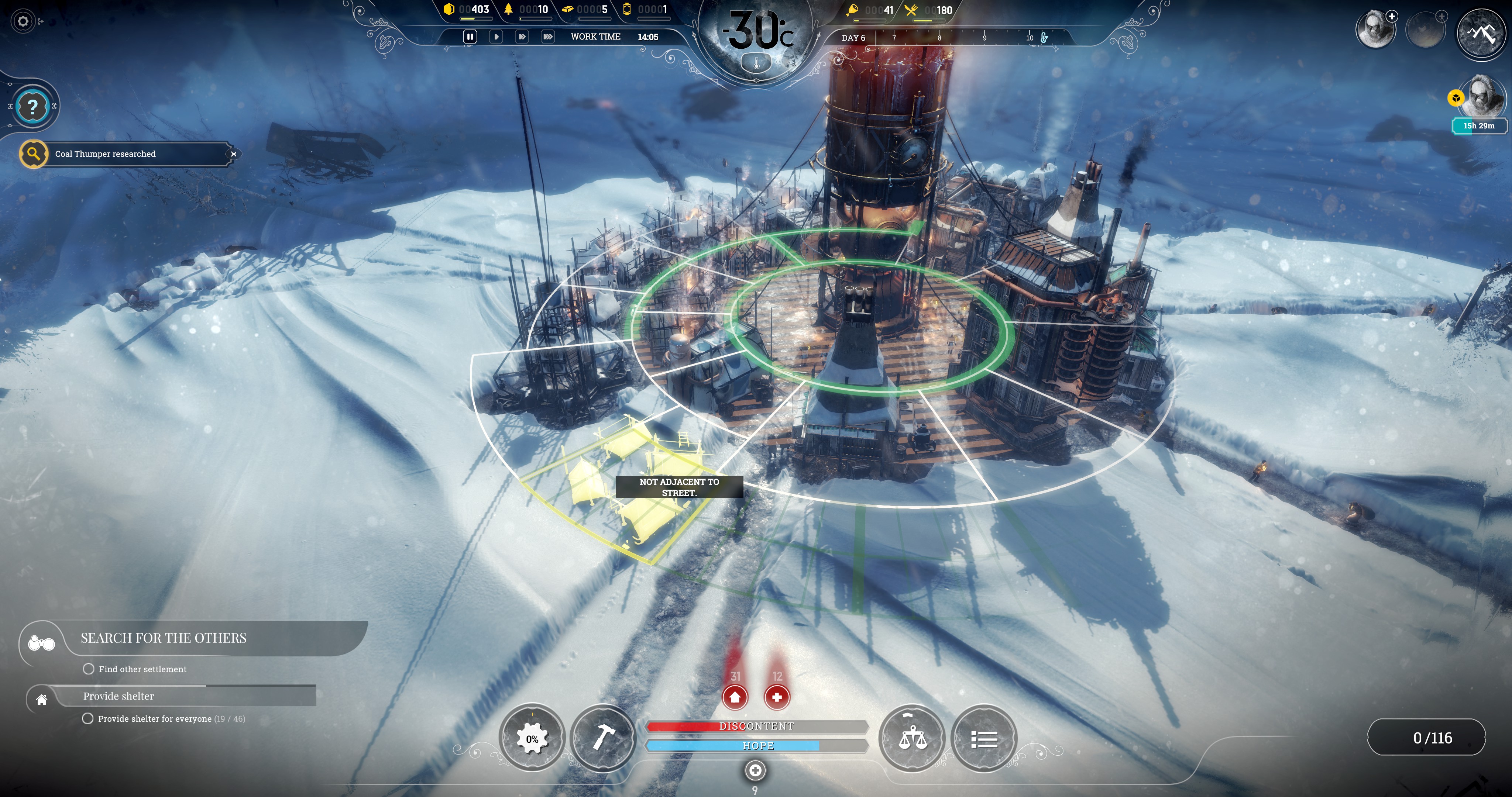
Enlarge / This house is a pixel too big to fit into that slot. It’s driving me bonkers just looking at it.

One part survival game and one part city builder, Frostpunk doesn’t give you time to play around. The citizens of this frozen, alternate-history England are cold, hungry, restless, and despairing. Your job is to manage these four societal factors—though not necessarily fix them.

Nobody is ever really happy in the world of Frostpunk. The world has already come to an icy end, after all. This reality is reflected in a series of political and technological upgrade trees that usually trade one pro for another con. Ordering the cookhouses to liquefy food rations into soup will feed more people, for instance, but it will also raise discontent. Another option is to cut the gruel with sawdust, though that might make residents (aka potential workers) sick.

That latter option won’t seem so clever, either, when those sick workers can’t collect the coal that fuels the city generator that keeps everyone from freezing to death or the wood and steel needed to build new structures. Loyal, placated citizens are a resource just like anything else in this grim take on the usual city-management simulation.

This is not a slow and relaxing sort of playground like SimCity or Cities: Skylines. Nor is it a creative exercise in making the most aesthetically pleasing city possible. True to developer 11-Bit’s pedigree (This War of Mine), Frostpunk wants you to confront what you’re willing to sacrifice to keep on living. And to do that, it constantly hits you with choices between two bad options.

Making it fit

That’s not to say you can’t enjoy the horizon you sculpt. As the game’s name hints, there’s a steampunk-in-progress art style that starts with generally believable structures and culminates in coal-fueled spider mechs and iron limbs that put amputees back to work at the end of the tech tree. There’s a sweat-of-the-brow beauty under the layer of sleet. Unlike so much other steampunk, though, this mechanized Victorian vision doesn’t ignore the human cost of industrialization. You can literally imperil the lives of an entire generation of youth by putting a child labor law on the books.

Nearly every structure you raise, from hunters’ huts to propaganda centers, is fit into semi-circular “wedges” that radiate out from the central generator. The asymmetrical pie graph look this generates is a good fit for Frostpunk’s already unique style.

What’s less appealing are the unavoidable strips of useless land that pop up in between wedges as you get farther from the city’s center. Better civic planning can alleviate some of this problem, but the strictly sized wedges leave some unavoidable wasted space sitting between usable zones.

Aesthetically, the loose-fitting zones always make my pedantic eyes bulge. But it’s also a practical nuisance, since un-upgraded structures are better heated the closer they are to the generator. Not being able to place a medical facility in a toasty district is incredibly frustrating, especially when it’s because the game’s own built-in zoning is off by just two pixels.

The uneven construction isn’t the only UI nuisance, either. Frostpunk will show you what areas of your crater city are heated when assembling architecture. It won’t, however indicate if enough of the building you want to place is in the warmth to benefit from it. I’ve arranged countless tents so that they’re touching a spare corner of heating, only to cancel construction after the fact when I found that heat wasn’t sufficient.

UI annoyances

I’d also appreciate more granular control over the game’s real-time crawl. The flow of time pauses and slows itself down when certain projects are complete, when new laws and research can be assigned, and when scripted events occur. But for some reason, the game doesn’t give much warning (besides a quick audio cue) when expeditions are ready to be managed.

These exploratory squads of workers are vital to progressing the story and to acquiring resources outside the city. So it’s a real kick in the shins when you realize they’ve been waiting on orders for several in-game days.

If I could auto-pause the game when they’re idle and ready, Civilization-style, I’d feel a lot more on top of things. Likewise, I don’t need time to always slow down when a new day’s work shift is about to start. Not being able to customize game-flow details like these feels like a real oversight.

These distractions can’t completely drown out what is otherwise a very satisfying process of turning your city into a well-oiled complex. That kind of slow accumulation of self-sufficiency can serve as a great core for telling a larger story, as recent survival game Subnautica ably proved.

[embedded content]

Frostpunk doesn’t go to quite the narrative lengths as Subnautica. It does, however, have a trickle of scripted problems that add character to your city and the people who live in it. And smaller crises, like sending your authoritarian regime to crack down on graffiti artists, or dealing with a grieving widow after you decided to store her spouse’s corpse for future use, add a sense of choice to the ghastly atmosphere and make your particular nightmare scenario unique.

Two additional scenarios—one that gives you a very limited population to work with and one focused on the haves versus the have-nots—only spin the tough choices and motivate you toward civic efficiency further. These scenarios are nice, but I wouldn’t mind a choice-free “free mode” to see what I could make from the polar populace without all the impending narrative threats.

The main menu does promise another scenario coming soon, at least. I only hope that more scenarios aren’t all that’s coming. Frostpunk might not be the open-ended city builder to revitalize that genre, but its linear focus on specific undertakings could be nearly perfect with a few tweaks. As it is, I’ll likely keep on coming back to the last city on Earth, convinced that this time I’ve got the perfect build order to keep its residents happy and fed. Tough choices be damned.

The good:

  • Satisfying upgrades to help your city become a well-oiled machine
  • Tough choices create a fancifully grim city-building story
  • Pseudo-steampunk style makes for good-looking structures under the ice

The bad:

  • Buildings don’t always “fit” the farther they get from the center
  • It’s tough to tell if you’re using heat zones correctly
  • You should be able to set when the game auto-pauses and auto-slows

The ugly:

  • Creating an authoritarian regime because you really like its upgrade tree

Verdict: Frostpunk is a city builder focused on story and setting over creativity. Minor issues hold it back but not enough to ruin its grim vision of alternate history. Buy it.

https://arstechnica.com/?p=1298247


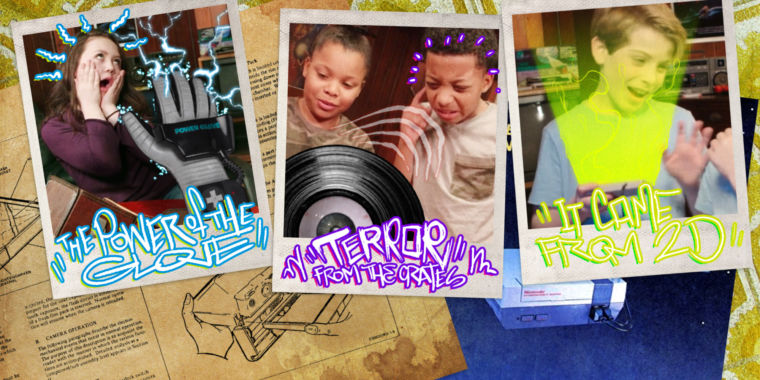
Video: We force kids to confront ’80s technology

[embedded content]
Video shot and edited by CNE. Click here for transcript.

Last, month we asked representatives from a whole range of generational cohorts what they liked about the time into which they were born. As a member of the tail end of Generation X (sometimes referred to as a “xennial,” or by my preferred nomenclature, “the Oregon Trail generation”), my 40-year-old self identified more with the older folks in the video than with the younger, primarily because teenagers are snapchatting aliens who don’t understand the true struggle of having to memorize all their friends’ phone numbers because get off my lawn or something (and speaking of lawns, why can’t I buy a fool-proof automatic lawn mowing robot in 2018?).

This time around, rather than have folks reflect on the ups and downs of their own generation, we took a bunch of really nice kids and threw them into a specially designed basement crammed full of ’80s stuff—Nintendo Entertainment Systems, record players, Polaroid cameras, and a few other odds and ends—and told them that they had to figure out each of the gadgets or we’d keep them locked down there while the rest of us devoured the craft services table.

Ha, I kid. There was no craft services table. We spent the craft services budget building the ’80s basement dungeon.

“Shake it like a…”

I have to give it to our intrepid youngsters: they were extremely nice. Possibly too nice. I’m not sure what their parents told them, but every single one of them came into this video playing things totally straight, and rather than crazy overblown forced reactions, they gave us some solid, genuine “Hmm, yes, the ’80s were an interesting time” thoughtfulness. They even kept their cool when we asked them to figure out a portable record player—something that would have struck me at age 12 as weird and anachronistic (I’ve never owned a record in my life—in 1989 when I was 11, all my music was either on cassette or CD).

Instead, the kids politely stumbled their way through the passel of old gadgets, doggedly trying to figure out some of the technical challenges of the time. I found it particularly fascinating that the kids didn’t know that you have to press down on a game cart in the original NES before turning it on, but they appeared to almost instinctively know to shake Polaroid pictures (even though that doesn’t actually help). Some behaviors have just kinda inculcated themselves into the collective unconsciousness. (The kids also wondered if they needed to dip the Polaroid pix in “water,” presumably because they’ve never encountered film themselves before, but movies and TV shows still regularly portray people doing stuff in darkrooms.)

Not gonna lie: this one was especially fun to film and edit. If you have as much fun watching it as we had making it, we’ll see if we can round this gaggle of kids up again and make them do some more stuff. Maybe we should take a page out of my own past and make ‘em try to add and configure an HP DeskJet 500 in Windows 3.1!

Listing image by Aurich Lawson

https://arstechnica.com/?p=1298219


The “unpatchable” exploit that makes every current Nintendo Switch hackable

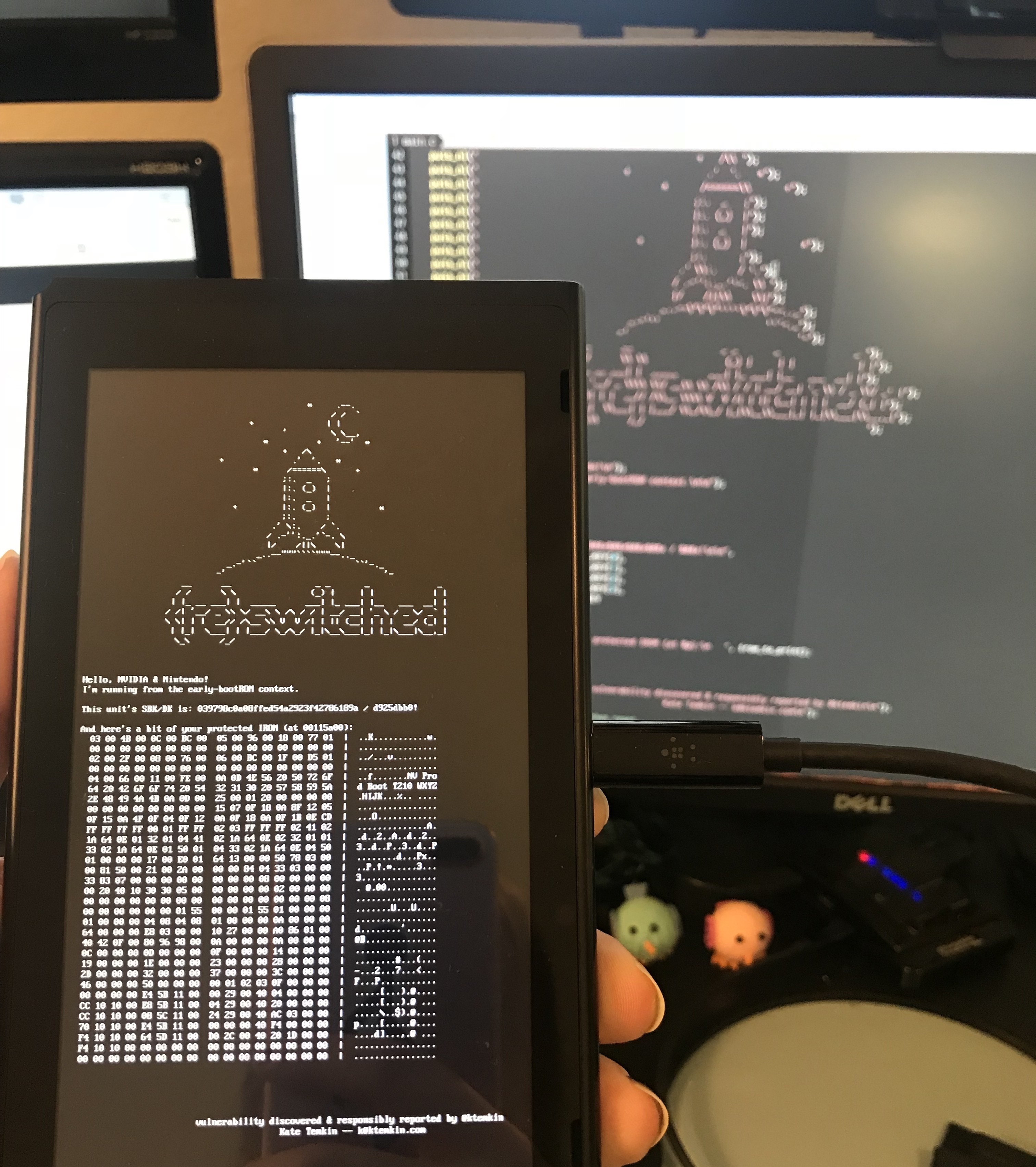
Enlarge / The “proof of concept” payload for today’s exploit shows crucial protected information from the now-exposed Nintendo Switch bootROM.

A newly published “exploit chain” for Nvidia Tegra X1-based systems seems to describe an apparently unpatchable method for running arbitrary code on all currently available Nintendo Switch consoles. Hardware hacker Katherine Temkin and the hacking team at ReSwitched released an extensive outline of what they’re calling the Fusée Gelée coldboot vulnerability earlier today, alongside a proof-of-concept payload that can be used on the Switch.

“Fusée Gelée isn’t a perfect, ‘holy grail’ exploit—though in some cases it can be pretty damned close,” Temkin writes in an accompanying FAQ.

The exploit, as outlined, makes use of a vulnerability inherent in the Tegra X1’s USB recovery mode, circumventing the lock-out operations that would usually protect the chip’s crucial bootROM. By sending a bad “length” argument to an improperly coded USB control procedure at the right point, the user can force the system to “request up to 65,535 bytes per control request.” That data easily overflows a crucial direct memory access (DMA) buffer in the bootROM, in turn allowing data to be copied into the protected application stack and giving the attacker the ability to run arbitrary code.

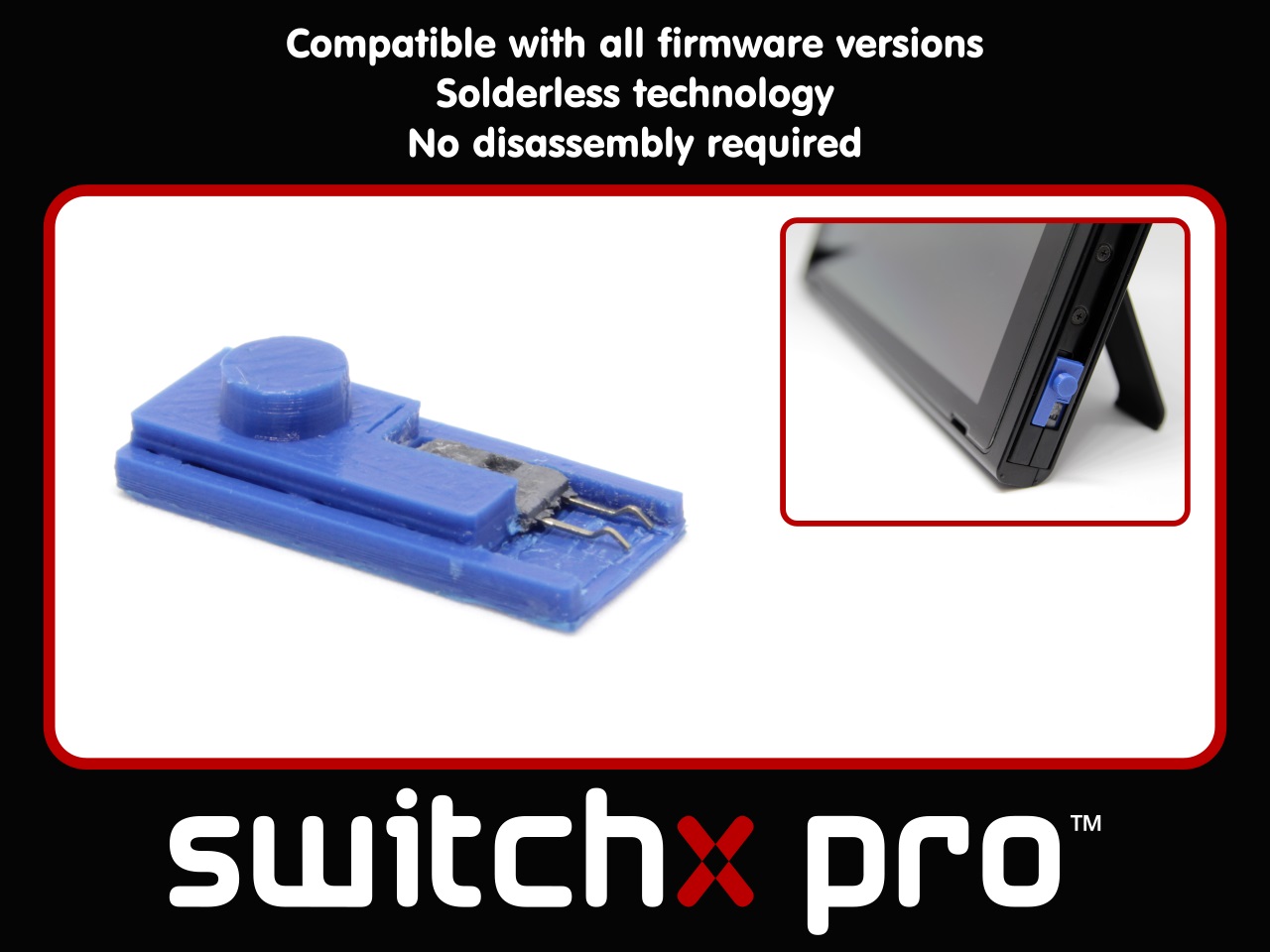
On the Switch, the hardest part of the exploit seems to be forcing the system into USB recovery mode. To do this without opening the system requires shorting out a certain pin on the right Joy-Con connector (the bit on the side of the system where the Joy-Con clicks into place). The hacking team at Fail0verflow tweeted a picture of a small plug-in device that can apparently provide this short-out easily, and the team joked that a simple piece of wire from the hardware store can do so today. Temkin also tweeted a picture suggesting that simply exposing and bending the pin in question would also work.

Unpatchable?

What makes this exploit particularly worrisome for Nintendo and other Tegra vendors is that it apparently can’t be fixed via a simple downloadable patch; the flawed bootROM in question can’t be modified once the Tegra chip leaves the factory. That’s an important security measure if the bootROM itself is secure but a big problem if the bootROM is exploited, as seems to be the case here (Nintendo and Nvidia were not immediately available to respond to a request for comment).

As Temkin writes, “unfortunately, access to the fuses needed to configure the device’s ipatches was blocked when the ODM_PRODUCTION fuse was burned, so no bootROM update is possible. It is suggested that consumers be made aware of the situation so they can move to other devices, where possible.”

Team Fail0verflow tweeted this picture of a device that can short out the required pin needed to activate the Switch's exploitable USB recovery mode.
Enlarge / Team Fail0verflow tweeted this picture of a device that can short out the required pin needed to activate the Switch’s exploitable USB recovery mode.

That suggestion is unlikely to be of much use to Nintendo, which has already shipped over 14.8 million apparently vulnerable Switch systems to the public. Previous software-level exploits of Nintendo systems (including one for the Switch) could be mitigated via downloable system updates, which Nintendo attempts to force on users by making them a requirement for new software and access to Nintendo’s online servers.

That won’t be useful for a chip-level bootROM exploit like this. But Nintendo isn’t completely powerless in this situation. Even if and when the exploit is spread widely, Nintendo may still be able to detect “hacked” systems when they sign on to Nintendo’s servers. The company could then ban those systems from using the Switch’s online functions. Nintendo did something similar when it detected early, pirated copies of Pokémon Sun & Moon on the Nintendo 3DS.

While the potential to aid software pirates is likely of primary concern to Nintendo, there are plenty of legal and handy reasons to make use of an exploit like this. We noted last October how many Switch users seem eager to hack their consoles so they can back up their internal save data to an SD card and protect themselves from complete loss in the case of a broken system.

Why now?

Right now, the general public’s use of this exploit is limited to a “proof of concept” python program and payload that can be used to display usually protected information from the Switch’s boot instruction ROM (this method requires tethering the Switch to a computer via USB, but Temkin suggests in the FAQ that future payloads will allow data to be loaded from the Switch’s SD card). Fuller details of how to use the exploit will be published on June 15, Temkin writes, adding on Twitter that “guides and information so you can use it too are forthcoming.” And work continues on a custom Switch bootloader called Atmosphère which will apparently take advantage of the exploit to run.

In the FAQ, Temkin says she has previously notified Nvidia and vendors like Nintendo about the existence of this exploit, providing what she considers an “adequate window [for Nvidia] to communicate with [its] downstream customers and to accomplish as much remediation as is possible for an unpatchable bootROM bug.”

That said, Temkin writes that she’s publicizing the exploit now in part because of “the potential for a lot of bad to be done by any parties who independently discover these vulnerabilities.” There are also hints that other groups were threatening to publish a similar exploit ahead of Team ReSwitched’s planned summer roll out, forcing today’s “early” disclosure.

The release also seems to be partially a response to Team Xecuter, a separate team that is planning to sell a modchip exploit that can allow for similar code execution on the Switch. Temkin writes that she’s opposed the Xecuter’s explicit endorsement of piracy and efforts “to profit from keeping information to a few people.”

While this is the first public disclosure of this low-level method for hacking the Switch, there’s ample evidence that many other hackers had independently discovered similar methods in their own research. In fact, this kind of exploit appears to have been key to last September’s effort to discover a method to unlock a copy of NES Golf that was hidden on every Switch consoles.

As Switch hacker smealum tweeted earlier today, “seemingly everyone had everything for months—that it remained ‘secret’ so long is kinda incredible.” [Update: Shortly after this piece went live, Fail0verflow alleged that it had been holding to “a 90-day responsible disclosure window for ShofEL2 ending on April 25th. Since another person published the bug so close to our declared deadline, we’re going to wait things out. Stay tuned.” That update also included a screen of the Dolphin emulator apparently running Nintendo’s Legend of Zelda: Wind Waker on a Nintendo Switch.]

https://arstechnica.com/?p=1297811


Detroit developer sues French press over “toxic culture” reports

Enlarge / I thought this screen from Detroit could be used as a metaphor for the current legal wrangling, but I’m not 100% sure of how.

Quantic Dream, the developer behind upcoming PS4 game Detroit: Beyond Human, has brought lawsuits against two French media outlets following articles accusing the developer of fostering a “toxic corporate culture.”

Kotaku reports on the lawsuits against Le Monde and website Mediapart, two of the three outlets that published a joint investigation of Quantic Dream in January. The third, Canard PC, told the site it has received “threatening letters” surrounding the articles but is not the subject of any lawsuits at this time.

“We’re suing their journalists,” Quantic Dream founder David Cage confirmed to Kotaku at a recent preview event.

The trio of January articles laid out a string of complaints against the company from five former Quantic Dream employees, painting a culture of alleged inappropriate behavior and homophobic, racist, and sexist jokes that were tolerated, if not encouraged, by Quantic Dream management. “The story has been written sincerely, following a well-documented, thorough investigation, respectful of the principle that both sides must be heard,” Le Monde journalist William Audureau told Kotaku. “We stick with our information.”

Quantic Dream categorically denied the articles’ accusations shortly following their publication, and founder Cage said the accusations were “ridiculous, absurd, and grotesque” in Le Monde‘s original write-up. The company noted at the time that “further complaints will follow” to protect the company’s name.

In February, Quantic Dream followed up with a statement calling the articles a “smear campaign” and warning that “several other legal actions are also underway to defend the reputation of our studio and to save the jobs of a [studio] in the forefront in its field.”

Negative reports about workplace culture or game development aren’t exactly uncommon in the video game industry. But this seems to be the first such report that has led to legal action anywhere in the world.

Under French defamation law, the sued outlets will be able to defend themselves by proving the allegations are true or by showing they were made in “good faith,” (i.e., without “personal hostility” or malice and with a measured, objective tone and balance), according to a report by the Taylor Wessing law firm.

Quantic Dream’s case will reportedly first appear in court in June.

https://arstechnica.com/?p=1297661