Enlarge/ A lookout tower stands over the mountains in Firewatch.
Valve has acquired Campo Santo, known for the outdoor exploration game Firewatch, the developer announced late Saturday. The 12-person team will relocate to Valve’s Bellevue, Washington headquarters as it continues work on In the Valley of the Gods, a search for treasure in an Egyptian desert.
“In Valve we found a group of folks who, to their core, feel the same way about the work that they do (this, you may be surprised to learn, doesn’t happen every day),” Campo Santo wrote in its announcement post. “In us, they found a group with unique experience and valuable, diverse perspectives. It quickly became an obvious match.”
Campo Santo went on to say that the decision came after “a series of long conversations” about values and “how, when you get right down to it, we, as human beings, are hard-limited by the time we have left when it comes to making the things we care about and believe in.”
Work also supposedly continues on three “full” VR games that Valve announced over a year ago, though no new details have emerged in the meantime. Valve is “very committed; they are still committed to delivering on that promise,” HTC Vive General Manager Dan O’Brien said in a recent interview with Glixel.https://arstechnica.com/?p=1297365
Drool over Marvel Comics’ rarest original art, costumes at new museum exhibit
SEATTLE—As the Marvel Cinematic Universe expands to every movie theater in the world, the MoPOP Museum of Pop Culture (formerly Experience Music Project) swoops in this week with an exhibit that reminds fans where the heck these costumed heroes came from: the comics pages.
Marvel Universe of Super Heroes, a massive, two-story exhibit, began its world-premiere run in Seattle on Saturday with a mix of incredible historical context and Marvel’s strange, narrow focus within the MCU. The very good news, as seen in the first gallery, is that the Marvel (which began life in 1939 as Timely Publications) is represented by way of a ton of original production art.
No sense in starting this gallery off slowly. Here’s Marvel Comics, issue #1, behind glass.
A closer look. Sure is a rarity.
“The only known piece of original production art from the very first Marvel comic.”
Original production art for a very early appearance of the Human Torch.
Look closely, and you’ll see fine pencil lines beneath this otherwise impeccable ink work.
To set the historical scene, one wall included a few classic cartoons, including this gorgeous piece of Flash Gordon production art.
As in, not a reproduction. Look at those original lines.
More context for the pre-superhero period of American comics.
The exhibit places this full-wall poster version of a Captain America cover near the beginning of the exhibit. It sets a tone.
The Cap’n as part of the American war effort in the 1940s.
And this is one big reason why Captain America joined the pro-war crusade.
Hiya, Captain America!
A mock-up of Jack Kirby’s drawing desk.
A very early Iron Man appearance in the series Tales of Suspense.
A Fantastic Four corner…
A closer look at this early issue.
Production art from Fantastic Four, issue 98, which paid tribute to NASA’s first moon landing.
Moon zoom.
Original production art for Tales of Suspense issue 98; pencils by Jack Kirby, inks by Frank Giacoia.
A series of touchscreen interfaces let exhibit visitors quickly flip through histories of superheroes and real-life artists alike.
Original production art from Amazing Spider-man, issue 122.
Spider-people timeline.
For whatever reason, MoPOP’s representatives weren’t keen on opening this glass up for us to take a peek. You know, to do some journalistic verification.
Marvel thought this page of original production art, portraying the first-ever appearance of Spider-man in his costume, was lost until it was rediscovered in 2008. MoPOP says this particular piece, on loan from the Library of Congress, will only be shown for three months, then put away in its vaults forever.
Thus, I zoomed in on Spidey’s outfit so out-of-towners can savor this page’s rare, public appearance. (It’s from Amazing Fantasy #15.)
More production art.
It’s Spawn-derman! (Just a Todd McFarlane joke.)
Tributes to various artists appear throughout the exhibit, like this one for “Shy” Steve Ditko.
We wish more issues were memorialized at this exhibit in such multi-page fashion, but as we learned, Marvel didn’t do a great job archiving its original production art.
Web-weaving generations.
How bad was Marvel at archiving? Well, these are the only two cels remaining from Spider-man’s original ’60s animated series. So, pretty bad.
A few rooms recreated artists’ workplaces.
The Hulk TV series’ theme song is in the house, but you have to put on headphones to hear it.
Marvel specially commissioned a few original pieces of art for this exhibit, including this callback to an early Hulk story in which he attacked a hunter to protect his forest friends.
Original Hulks.
Hulk zoom! Hulk white-out! Hulk smash!
One original piece of Thor production art.
This artwork comes from the 1978 Spider-man wall calendar and includes a ridiculous number of Marvel heroes from that era.
Captain Marvel #28, from production art to colorized cover.
Late ’60s pop-art for this Nick Fury cover, courtesy of artist Jim Steranko.
Ant-Man gets love, too. (This comes from Tales To Astonish #35.)
The cover of Avengers #116.
Cover art for Avengers #57.
The first time a black superhero graced a Marvel comic’s cover, in 1969.
Cap and Logan face off.
A tighter zoom on this amazing cover, pencilled by Mike Zeck and inked by John Beatty in 1986.
A Black Widow wall.
Iron Man suits flanked this room, which explains the glut of lights bouncing off of this framed cover.
Wolverine wall.
X-Men bursting through a faded image behind them (which was composited later in the production line).
Oh, the “Dark Phoenix” age of the X-Men. (This is Uncanny X-Men #136.)
X-Men #14, 1992.
If you were hoping to see Deadpool in this gallery, I have bad news. This cardboard cut-out is it for this exhibit.
A brief recognition of Runaways and Young Avengers… but no X-Force? C’mon, MoPOP.
Blade gets some love at the exhibit.
Daredevil meets a matador.
Daredevil wall.
The exhibit includes what little Frank Miller artwork it can get away with in a “family-friendly” space.
A cool representation of Miller’s dynamic panel-breaking style.
Get to know Misty Knight’s comic origins.
An explainer of Miles Morales becoming everyone’s favorite masked webslinger.
MoPOP has filled its exhibit’s halls with large, framed pieces of art, but the biggest stunners aren’t full-color, perfectly polished posters. Instead, that honor goes to countless production pages, all revealing original pencil lines, ink traces, white-outs, and color-request markings.
“Without private collectors, we wouldn’t have a show,” curator Benjamin Saunders frankly admitted to Ars, as pretty much every piece has a collector’s name attached. When pressed, Saunders pointed to longtime writer and producer David Mandel (Veep, Curb Your Enthusiasm, Seinfeld) as the exhibit’s largest contributor. The collection’s main exception is the first-ever appearance of Spider-man on a comic page, on loan from the Library of Congress for only three months. (“I shudder to think of the insurance value,” Saunders notes about that page.)
The exhibit’s most selfie-friendly portion is this couch, complete with a napping Thing.
He’s just resting his big, rocky eyes.
Pose with the Black Panther.
Get closer to the Black Panther.
More costumes from the 2018 Black Panther film.
This Spider-man costume doesn’t appear to come from a particular film.
This one, on the other hand, comes from 2017’s Spider-man Homecoming.
All of these costumes and props came from Thor: Ragnarok.
Cate Blanchett wore this 3D-printed helmet during production of Thor: Ragnarok.
We didn’t get to test exactly how heavy Thor’s prop hammer is.
Sam Machkovech
Battered but still action-ready.
We’re not sure which Marvel film this Nick Fury costume came from.
Ant-Man runs around this mocked-up desk as a hologram.
I checked: This is indeed a Tesseract Cube taken from the set of 2011’s Captain America: The First Avenger.
This shield was also taken from the same 2011 film.
Captain America film costumes.
I am (prop) Groot.
Gamora costume from Guardians of the Galaxy.
Black Widow costume from Avengers: Age of Ultron.
What’s behind this peephole?
Ghost Rider, of course.
Ghost Rider jacket from its film.
Dr. Strange costume from the series’ first film.
This Daredevil costume is taken from the more recent Netflix series. Meaning, no Affleck smell (assumedly).
These excited pals greet you on your way to the exhibit.
But this is not a true “how Marvel came to be” exhibit, and its pickier selection of movie and TV tie-ins make that abundantly clear. You have to walk downstairs to a “street-level” section of the exhibit to find any tributes to the X-Men, for starters, and none of that comic’s films or animated series receive any acknowledgement. Same for any Sony Pictures films, particularly the Tobey Maguire trilogy of Spider-man films. (The utter lack of Deadpool comic or film material, on the heels of its sequel’s impending launch, feels particularly weird.)
“I wanted to emphasize the story of comics to the screen and back again,” Saunders said when pressed on the selection. “We had access to Marvel’s entire print library—anything from that was fair game—and we could use that to pay the right tribute to the Fantastic Four and X-Men, which have more tangled rights histories.”
But Marvel’s tangled history as a comics publisher (under different names) from the ’30s to ’60s and its network of affiliated creators and artists don’t get a museum-level historical dive or explanation, with the exception of a few touchscreen interfaces that let visitors get to know some of the company’s biggest names a little better. Also, the exhibit’s biggest historical beats are defined by which MCU properties the exhibit can highlight with props and film costumes. The result is ultimately two things at the same time: a shameless advertisement for Marvel Studios’ film and TV output; and a must-see dive into some of the rarest, decades-old Marvel material imaginable.
The result isn’t perfect, but comic-clueless novices and obsessive collectors will each get something out of what Marvel Entertainment has delivered. No closing date has been announced, though the exhibit’s official descriptions hint that it should run well into Marvel’s official 80th anniversary in 2019.
Listing image by Sam Machkovech
https://arstechnica.com/?p=1297101
Super Troopers 2 review: Fans get what they paid for in this crowdfunded surprise
The Internet hype campaign for Super Troopers 2 sneaked in at the tail end of the crowdfunding gold rush in 2015, and that timing might have made all the difference. Crowdfunding fatigue is alive and well, after all, with the practice significantly dropping off since its mid-’10s heyday. Who knows if the Broken Lizard comedy troupe would have raised over $4.6 million if they’d launched the effort even half a year later?
What, then, did fans help create by way of an Indiegogo campaign? Exactly what Broken Lizard promised: “the version of Super Troopers 2 you’ve been waiting for.” Consider that a blessing or a curse, depending on your comedy point of view, but there’s just no getting around how spiritually faithful this sequel is to the silly-cops original. More important, however, is that this crowdfunded film does not bend to the simplest catchphrase and old-gag doldrums you might expect. Just because Broken Lizard took fans’ money doesn’t mean the comics were stuck repeating material from the 2001 film.
The result is an easy call for best crowdfunded film in recent memory. That’s a low bar to clear, of course, and Super Troopers 2 is by no means a perfect film. But its ingeniously orchestrated stupidity—like a Jackson Pollack painting made up of cop pranks and hard-R visual gags—is must-see stuff for anybody who liked the first film.
Sequel, eh?
(From L-R): Kevin Heffernan as Farva, Jay Chandrasekhar as Thorny, Erik Stolhanske as Rabbit, Paul Soter as Foster, and Steve Lemme as Mac.
Farva asks who ordered the new uniforms.
There’s something dangerous on the other side of that door, and it’s one of many scenes to let Heffernan shine as a comedic genius.
Farva briefly lets a managerial role go to his head.
Thorny once again reminds us this is the second Super Troopers film.
Up until this point, 2014’s Veronica Mars film arguably held this tiny niche’s top spot after its own $5.7 million Kickstarter campaign, but that film leaned too hard into making sure its source series’ original cast was well represented. You could argue that ST2 nearly makes the same mistake, as Broken Lizard’s primary cast falters a bit with its comedic timing and punchiness as the movie careens along. (You may barely notice, however, based solely on how the opening scene, filled with real-life, Wile E. Coyote-caliber visual gags, plays out.)
ST2‘s conceit makes up for this by giving room to an entirely new cast of doofuses. The first film’s painfully unqualified state troopers return after a vaguely referenced fall from grace. They get a new shot at redemption: the American border is about to be redrawn to incorporate a Canadian border town into Vermont, and authorities are desperate for cops to assist with the transition. Thus, Vermont’s finest must face off against weird, oafish Canadians, complete with comedically terrible fake accents, overwrought Mountie outfits, and comedy-rich cultural rivalries.
Beyond that broadening of source material, the sequel also does well to let iconic moron Farva (Kevin Heffernan) take a lead comedic position this time around. It’s an interesting balance: that the script and film direction respect the character much more, while making sure his police peers do not respect him in the slightest. The troopers’ nearly sociopathic slapstick is the series’ hallmark, after all, and this sequel doubles down on that quality (and reminds us that classics like Police Academy and Reno 911 did leave some stones unturned).
Going into further detail about ST2‘s impact and successes would give away the best moments and hearty-laugh build-ups. I went into a preview screening oblivious about which new and returning actors would appear, for example, and was happier for the surprise. (Two spoiler-free words for those who see the movie and come back to the comments section: “punching bag.” I’m still laughing about it.) The same goes for criticizing the gags and concepts that drag on a bit too long, particularly one that eventually weighs down Thorny (Jay Chandrasekhar), both figuratively and literally.
That’s about as tolerable an issue as I could imagine for this sequel. The first Super Troopers worked in the same way, with its most insane moments making up for issues with pacing and comedy clichés. A recap viewing of the original on DVD will likely answer how much you’ll enjoy this sequel.
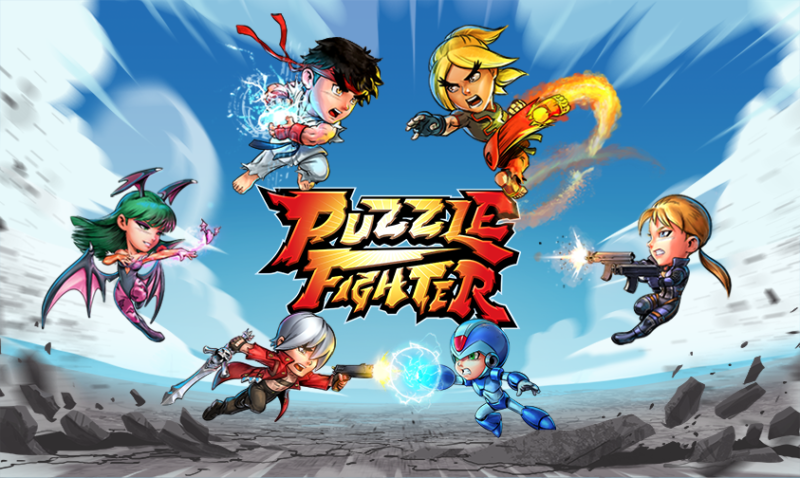
The games-as-a-service graveyard grew one larger this week, as Capcom’s Puzzle Fighter reboot received an official “sunset” announcement on Friday. The iOS and Android port of the ’90s puzzle series will have its in-game store shut down on Monday, April 23, and its servers will follow suit on July 31—meaning the game will have been playable for only eight months after its late-November launch.
That’s because the new, free-to-play Puzzle Fighter includes an always-online requirement so that players can be subjected to the timers and loot-box systems applied to both its single-player and multiplayer modes. Capcom’s announcement did not in any way hint to a patch that would let the game work in a wholly offline mode, nor did it hint to any open-sourcing of its content so that dedicated players could, say, prop the game’s bones up via DIY servers.
Friday’s announcement also didn’t reference the fact that this game’s reboot recently received PEGI ratings (Europe’s equivalent of the ESRB) for PC and consoles. And the language here doesn’t give us much hope for a non-mobile port of the Columns-like, match-gems puzzle update. Instead, the post blames the mobile version’s cancellation on Capcom Vancouver “dedicating its focus to our flagship Dead Rising franchise.”
Puzzle Fighter is thus destined to join a growing graveyard of games that relied entirely on live-server environments—and leave their players in the dust when the servers shut down. Puzzle Fighter’s plight is admittedly a little easier to appreciate, given that it launched as a free-to-play product in a mobile marketplace where one-time purchases of $5 or $10 are uncommon. Meaning, this situation doesn’t feel quite as egregious a shutdown as the retail-priced likes of Evolve and Battleborn.
Still, in addition to subscribing to the poisonous loot-box economic model—with specific-character purchases being time-limited—Capcom’s game also went the disgusting route of requiring access to “photos, media, and files” in order to operate (as opposed to siloing that kind of system access for those who didn’t want Puzzle Fighter rooting around their files). Honestly, Puzzle Fighter‘s mobile updates and tweaks seemed mostly designed to drive players to accumulate as many extra characters as possible, as the game added “support characters” to the puzzle battling. With fewer unlocked characters, a player’s support strategy options were far more limited, but they mostly worked out to a punishment for those who didn’t play by the loot-box and microtransaction rules.
The last just-pay-once version of the series, Super Puzzle Fighter II Turbo HD Remix, is currently available on Xbox 360 and PlayStation 3. It’s unclear whether Xbox’s backwards-compatible drive was stymied specifically because of Capcom’s plans to bring the newer Puzzle Fighter to newer consoles; it’s also unclear whether that 360 version will ever be patched to operate on Xbox One consoles.https://arstechnica.com/?p=1297045
Four publishers must change in-game loot boxes to avoid Dutch gambling laws
Enlarge/ Is this essentially the same as a kid buying a box of car skins in Rocket League?
Four publishers will be forced to make changes to their games in the Netherlands after a landmark report from the Netherlands Gaming Authority found their loot boxes violate laws against gambling.
Study into loot boxes: A treasure or a burden? (PDF) notes that an in-game loot box violates the country’s laws if “the content of these loot boxes is determined by chance and… the prizes to be won can be traded outside of the game: the prizes have a market value.”
While the report doesn’t identify the now-illegal games directly, a report from Dutch news site NOS names them as FIFA 18, Dota 2, PlayerUnknown’s Battlegrounds, and Rocket League. Six other studied games that do not allow for items to be traded for a “market value” were found not to violate the law.
Affected publishers have until June 20 to make changes to their loot box design before the law is enforced. Even for loot boxes that don’t violate the law, though, the Gaming Authority is asking publishers to “remove the addiction-sensitive elements (‘almost winning’ effects, visual effects, ability to keep opening loot boxes quickly one after the other and suchlike) from the games and to implement measures to exclude vulnerable groups or to demonstrate that the loot boxes on offer are harmless.”
The potential for addiction?
The Gaming Authority notes in its report that it “has not yet received any signals that demonstrate that problem players and/or addicted players are opening loot boxes on a large scale.” Still, it identifies a “moderate to high” addiction risk potential for the ten games it studied, based on a ten-dimension quantitative test previously used for casino games. In a press release, the Authority said loot boxes are “similar to gambling games such as slot machines and roulette in terms of design and mechanisms.”
Integrating luck-based loot boxes into skill-based games lowers the threshold for gambling, much like putting slot machines games in a hotel lobby, the report suggests. This ease of access increases loot boxes’ addictive potential for “socially vulnerable groups,” such as minors, the report says. Despite this, only two of the studied games are rated for adults by the Pan European Game Information system.
“To date, the providers of the games with loot boxes that were studied have not provided suitable control measures to exclude vulnerable groups from loot boxes and/or to prevent addiction,” it reads. “This means that, in any event, the minors vulnerable group can open loot boxes without any threshold and/or be tempted into opening loot boxes.”
Organizations like the US Entertainment Software Rating Board have argued that loot boxes are not gambling in part because players always receive in-game goods when a loot box is opened. The Gaming Authority bluntly says this argument is “not valid” because the randomized goods have variable market values. “It is beyond doubt that the real winner is the person who wins the major, valuable prize with a high market value.”
The Netherlands Gaming Authority says it has had “numerous discussions with other European supervisory bodies” about similar regulations throughout the continent. Belgium’s Gaming Commission similarly ruled that loot boxes are gambling last November, leading the country’s minister of justice to try to ban the practice throughout Europe.
Netflix film examines why NASA shunned women astronauts in early days
Enlarge/ An undated file photo of some of the Mercury 13 candidates.
This June, the world will mark the 55th anniversary of the first woman flying into space. Valentina Tereshkova, an amateur Russian skydiver, spent nearly three days in orbit inside a spherical Vostok 6 capsule. The first American woman, physicist Sally Ride, would not follow Tereshkova into space for another two decades.
A new documentary on Netflix, Mercury 13, examines the question of why NASA did not fly women in space early on and, in particular, focuses on 13 women who underwent preliminary screening processes in 1960 and 1961 to determine their suitability as astronauts. The film offers a clear verdict for why women were excluded from NASA in the space agency’s early days—”good old-fashioned prejudice,” as one of the participants said. Mercury 13 will be released Friday.
The film admirably brings some of these women to life, all of whom were accomplished pilots. There is Jerrie Cobb, who scored very highly in the preliminary tests and gave compelling testimony before Congress in an attempt to open NASA’s early spaceflight programs to women. Another key figure is pilot Jane B. Hart, married to a US Senator from Michigan, whose experience in the project compelled her to become one of the founders of the National Organization for Women.
Chilling chauvinism
There certainly is ample evidence within Mercury 13 to back up its central conclusion. A particularly chilling moment arises with Gordon Cooper, one of NASA’s Mercury 7 astronauts and the sixth American to fly into space. During a 1960s news conference, a male reporter asks Cooper, “The Russians have put up a woman cosmonaut. Is there any room in our space program for a woman astronaut, in your opinion?”
In his response, Cooper appears to reference an earlier flight, the 1961 Mercury-Atlas 5 mission that tested the orbital capabilities of the Mercury spacecraft before John Glenn’s orbital flight in early 1962. In this test flight, NASA flew Enos, a chimpanzee, who survived. “Well, we could have used a woman on the second orbital Mercury Atlas that we had,” Cooper answered. “We could have put a woman up, the same type of woman, and flown her instead of the chimpanzee.” Cooper and the reporters then laughed.
These, and other similar though less jaw-dropping comments, are revelatory of the kind of discrimination women had to deal with then and, in some regrettable ways, must still contend with today. (For more good insight into how the male astronauts treated Sally Ride and her female colleagues when they first came to NASA in 1978, astronaut Mike Mullane’s book Riding Rockets offers an honest assessment of his own chauvinism.)
Mercury 13 concludes with an excellent point—that had men and women landed on the Moon in the 1960s, the Apollo program would not just have proven a feat of technical engineering but a true watershed moment for equality of the sexes. Had women walked on the Moon, perhaps some young girls in schools today would not feel inferior in math classes to their male counterparts.
A counterpoint
With that said, the film has a few problems. It portrays Dr. Randy Lovelace, a NASA scientist who had conducted the official Mercury program physicals for the men, as a hero. And certainly he was ahead of his time in thinking that women were just as capable as the men and that they belonged in some of the earliest US spaceflights.
After his experience with NASA’s Mercury program, Lovelace devised a three-part testing process for 25 women: five days of medical testing in New Mexico, psychological tests in Oklahoma including a sensory-deprivation chamber, and then finally flight tests at the US Navy’s Pensacola, Florida, flight training center.
Jerrie Cobb, one of the “Mercury 13,” poses next to a Mercury spaceship capsule.
Thirteen women—hence the film’s title, Mercury 13—passed the medical screenings. But the flight tests never happened, because when US Navy officials in Pensacola asked Dr. Lovelace for the name of his government sponsor, he didn’t have one. He had been operating the “First Lady Astronaut Trainees” program entirely outside the purview of NASA and without the agency’s official sanction. It would have been helpful to understand whether the skilled pilots who underwent these tests felt duped by Lovelace or at least learn what exactly he had represented to the women trainees.
Mercury 13 could also have done with a more thorough examination of why NASA didn’t seek to include women in its early program or take over Lovelace’s program after he had found 13 skilled pilots who met the same medical standards as the Mercury 7 astronauts. I do not dispute the film’s conclusion that the men running the US government and NASA preferred to keep US spaceflight a “boys’ club.” But some of these men are still alive today, and it would have rounded out the film to get their perspective.
NASA redeemed
From a historical perspective, Tereshkova’s flight, although groundbreaking in its achievement, is probably more properly regarded as a stunt. She was not a pilot and evidently flew primarily for propaganda reasons rather than to bring women into the regular Russian corps. Of the more than 120 cosmonauts who have flown into space, just four have been women. Yes, the Russians flew a woman into space first, but this was certainly not a moment of lasting gender parity.
Meanwhile, since getting a lamentably late start, NASA has taken significant steps in this regard. The space agency has flown 45 women into space and, of its last two astronaut classes (2013 and 2017), nine of the 20 astronaut candidates were women.
More than that, women have begun to take prominent roles in spaceflight. The home of NASA’s astronaut corps, Johnson Space Center, has been directed by Ellen Ochoa since 2012. And last year, Peggy Whitson, who has flown into space three times, broke the record for most time spent in space by a US astronaut, with a cumulative total of 665 days in orbit aboard the International Space Station. Nearly six decades after the events in Mercury 13, US women aren’t just flying—they’re helping to lead.
https://arstechnica.com/?p=1293791
Better than reality: New emulation tech lags less than original consoles
[embedded content]
This video comparison shows how RetroArch emulation can actually react to button inputs more quickly than original NES hardware.
While early game consoles like the Atari 2600 sample and process user inputs between frames, consoles since the NES usually run that game logic while a frame is rendering. That means the game doesn’t output its reaction to a new input until the next frame after the button is pressed at earliest. In some games, the actual delay can be two to four frames (or more), which can start to be a noticeable lag at the usual 60 frames per second (or about 17ms per frame).
An experimental Input Lag Compensation mode being rolled out in new versions of RetroArch fixes this issue by basically fast-forwarding a few hidden frames behind the scenes before displaying that first “reaction” frame in the expected spot. So in a game like Sonic the Hedgehog, which has two frames of input lag, the game will quickly emulate two additional, hidden frames after every new input. Then, the emulator actually shows the third post-input frame (where Sonic first shows a visible reaction) timed for when the first post-input frame would naturally appear, cutting out the delay a player would usually see.
This extra emulation work obviously comes with a lot of extra processing overhead, but that’s not a big concern for emulating older systems running on modern, multi-core PCs (slower processors on the Raspberry Pi and other microconsoles boxes might run into more problems). Save states help make sure the internal game logic doesn’t get out of sync during the “run-ahead” process, while audio output running on different cores can make sure the music and sound effects don’t end up wonky.
Work on “LAGFIX,” as the feature is being called by RetroArch developers, has been going on since early March and continues to be refined and debugged by the community through regular open-source builds. The community is also working to document the “natural” lag in long lists of classic games in order to calibrate the new feature for as many pieces of software as possible.
This isn’t the first time emulators have tried to improve on the raw experience of the original source hardware. Many emulators use overclocking and memory management tricks to remove the sprite flickering and/or slowdown that occurred on many classic games. Others try to “upgrade” those blocky pixel graphics with automatic HD upscaling or polygonal 3D graphics, with varying levels of success.
But better-than-real-hardware response times for input is arguably the biggest improvement to the experience the retro gaming community has yet seen. Now all that remains is the inevitable debates with authenticity-obsessed enthusiasts that argue a few frames of input latency was the “intended” and therefore “better” experience.
When we got a chance to talk to Hearthstone game director Ben Brode recently, we wanted to go beyond the kind of strategy and card-level gameplay analysis that has already flooded the Internet in the past four years. So, in the tradition of our Unanswered Mysteries of Overwatch video, we took a deep dive with Brode into the behind-the-scenes design process for making Hearthstone‘s thousands of cards.
We don’t want to spoil all of the entertaining anecdotes Brode shared with us during our wide-ranging talk, but keep an eye out for the following as you watch the video (or read the transcript):
Brode’s thoughts on “the optimal state of the game” and what makes it so hard to achieve
Which popular cards Blizzard never expected to see high-level play
The never-seen card concept that would have allowed for “a 3-mana 600/600 minion”
The hidden Lich King vocal tracks that few players ever heard in the course of play
The secret song that unlocks a volcano explosion on the Journey to Un’goro board
The design thinking behind mechanics like Fatigue and Echo.
Are there any other games you’d like us to give the Unsolved Mysteries treatment in the future? Let us know in the comments and we’ll see what we can do!
https://arstechnica.com/?p=1295163
Yakuza 6: The Song of Life review: Grandpa battle simulator
Enlarge/ Improvisational “Heat Actions” end fights quickly.
Yakuza 6: The Song of Life is not the game I was expecting. The series’ newest numbered release (actually the seventh, after Yakuza 0) has long been billed as the swan song for longtime protagonist Kazuma Kiryu. As such I expected a celebration of the hero’s interpersonal relationships—those key moments of Yakuza storytelling that have propelled the series forward for more than a decade.
Strangely, though, Yakuza 6 feels like yet another solid, introductory jumping-on point after 2016’s prequel and last year’s remake of the first game. It opens with Kiryu enjoying another stint in prison; this time for three years. When he gets out, his adopted daughter is in a coma, his closest allies are in prison, and the Tojo Clan he once served is at war with an entirely new criminal faction. Without these direct ties to the past, Yakuza 6 feels like a fairly self-contained—if not exactly clean—tale of international criminal conspiracy.
I’ll be honest. I wasn’t thrilled about this de facto “reset” at first. Kiryu and company have carried Yakuza through six numbered games, three spin-offs, two full remakes, and a couple of movies. Much of that wealth of history is completely missing this time around. Where were Daigo, Haruka, and the kids from the Morning Glory orphanage? How could Sega send Kiryu off without resolving the violent sexual tension between him and Goro Majima?
Most of these characters make cameo appearances (or, as in Haruka’s case, are off-screen plot motivators) in Yakuza 6, but the vast majority of the game feels like a “normal” Yakuza title, not the cavalcade of fan service you might expect. After the first couple of hours, it becomes clear why. By cutting Kiryu off from his usual allies and resources, The Song of Life brings that smoldering, compassionate charisma of his to the surface.
Putting the “family” in “organized crime family”
The search for answers about his daughter’s condition—and the newborn son she left behind (gasp!)—soon takes our hero to the fictional town of Onomichi, Hiroshima. There he must win over a rural Yakuza family in typical Kazuma Kiryu fashion: by beating the crap out of them and their enemies.
But these manly displays of fist-fueled emotion only scratch the surface of what makes Kiryu tick. They’re gameplay excuses to crack the armor of the criminal bluster the Onomichi gang uses to protect their wounded souls. And The Song of Life sums up this theme more succinctly than any other Yakuza game.
Once the crap has been firmly cut through, that trademark Kazuma Kiryu empathy can slip in through earnest man-to-man heart-to-hearts. That’s what Kiryu fights for in the first place: not to create pawns who owe him or underlings who fear him but to widen and deepen his never-ending family of misfits.
That’s how Haruka became his daughter. That’s how Majima became his soulmate. Now, it’s how Yakuza 6’s largely brand-new cast becomes his latest band of brothers. And heaven help the circle of over-the-top villains who try to abuse those familial ties for their own greed. They get a whooping, too.
Repetitive but thrilling gameplay
The gameplay portion of these fights play out in equally typical Yakuza fashion: with a mix of light-light-heavy punch combos, occasional grappling, and by building up “Heat” to perform super moves. But Yakuza 6’s brand-new Dragon Engine shakes the formula up by, among other things, allowing greater freedom of movement.
In past Yakuza games, starting a fight usually locked you in a tiny arena. Now you’re free to run, snag improvised armaments, and change locales at will. That can lead to more of the series’ signature environmental and weapon takedowns (the aforementioned Heat-fueled super moves). Even if the animation never changes, I still never get tired of throwing opposing gangsters groin-first into telephone poles or arm-locking a man with a pair of chopsticks. But these added moments of flair also feel less necessary than ever before.
“Clan Battles” are RTS minigames where you fight New Japan Pro Wrestling stars. Really.
Kazuma Kiryu summed up in a single moment.
Grandpa Kiryu’s two-finger typing cements how out of the loop he is after three years in jail.
Yakuza 6‘s substories are as strong as ever, this time with a “tech culture” satire.
Kiryu versus horny, angry Siri is probably my favorite side quest.
One-on-one battles are where the series’ brawling combat shines.
Baby Coddling Simulator 2018.
Yakuza‘s explosive style is head and shoulders above nearly any other series.
This is exactly how my own dad smiles for every photo.
This baseball team management sim is fun but doesn’t quite exceed Yakuza 0‘s hostess club.
The Song of Life has the most forgiving combat of any Yakuza game I’ve yet played. Sometimes that feels like an almost objectively good thing. A lot of the series’ past “challenge” came from downright unfair boss fights, where overcharged enemies would just be immune to holds and finishing blows. Or maybe you’d spend a full minute rope-a-doping a stationary enemy with too much health who existed solely to block your path down a hallway. Not any more! Still, I might have preferred some deeper challenge to the combat, even if it was optional.
Yakuza 6 also changes up the way you earn and distribute experience points by splitting them into five different categories and tasking you to engage with different side content to earn them all. It’s a great reward for going out drinking, singing karaoke, or playing a fully functional Virtua Fighter cabinet in the arcade—in theory. But without big, obvious dragons to slay (like Yakuza 0’s towering Mr. Shakedown or the harder Majima Everywhere fights from Yakuza Kiwami) the gobs of XP don’t feel like much of a reward.
Melodrama and microdrama
Thankfully, then, the side activities are still well worth seeing for their own sake. Yakuza’s lovable “substories” are back and just as fancifully juxtaposed to the main story’s drama as ever. And if Yakuza 0 was a send-up of the booming ’80s economy, this year’s satire centers on tech culture tchotchkes.
Kiryu’s time lost to prison is the perfect setup to start introducing the nearly 50-year-old grandfather to more modern “conveniences.” A marriage proposal involving a runaway Roomba, for instance, sports just the right mix of saccharin comedy and eye rolling. But my personal favorite side moment is probably the B plot where Kiryu stops a horny, vindictive Siri knock-off from taking over the world. Ongoing side activities also include running your own cat cafe and getting into real-time strategy gang wars with New Japan Pro Wrestling stars.
Put plainly, there’s a lot to do in Yakuza 6. If you boiled every activity down, few would technically qualify as more than fetch quests or the same light-light-heavy battles you engage with all over the game. But Yakuza is a franchise about what you do, not always how you do it. The joy is in discovering what wacky, soap opera-style twist Sega dreamed up this time. The magic is in wondering how the hell both wildly different tones fit so well together.
If Yakuza 6 has a weakness, it’s likely on the melodramatic end of things. The overarching story is fine but far less focused than the still-fresh prequel, Yakuza 0. What starts as a missing-persons mystery quickly spirals out of control. By the middle of the game, it’s all-out war between four major criminal organizations, a shady corporation, dirty politicians, and all the sub-factions underneath.
Things settle back into the relatable interpersonal stakes the series excels at but not before giving in to the series’ worst storytelling impulses just a little. One major villain too many is conveniently silenced by a mysterious gunman’s bullet, for instance. One (or perhaps two or three) too many women are used purely as plot devices with nothing close to the agency of literally every male character in the game. Yakuza desperately needs to crawl over this female characterization hump, but if anything it has regressed a bit by laying up the once-playable Haruka in a hospital bed for most of the game.
I make this look good
When it plays to its strengths, however, Yakuza 6 does justice to the muscle-bound big boys it lingers over. It’s electrifying when a boss’ name, title, and entire clan lineage slam on-screen as he and Kiryu fling themselves at each other in a slow-motion clash leading into a seamless camera twist starting a fight. And it remains electrifying every single time it happens. Simply put, no other game of this scale holds a candle to Yakuza on stylistic impact and consistency.
[embedded content]
That sense of style goes beyond camera cuts and character models you can count every pore off of, too. One early scene sets the tone when Kiryu meets with an up-and-coming Yakuza looking to seize a top spot in the Tojo Clan. With just one line of dialogue and some stellar voice acting, the character both appeals to Kiryu’s vanity—addressing his once-legendary status in the organization—and makes a thinly veiled insult about his predecessor’s fading star. Kiryu, in response, says everything he needs to by saying nothing at all.
It’s a small, subtle kind of interaction, but those are sorely missing from many big-budget video games where spectacle seems so much more marketable. And Yakuza 6 manages to sneak these moments in constantly among the explosions of blood, sweat, raging emotions, and fighting spirit. It’s not the best blend of bombast and character drama the series has ever seen (that’s still Yakuza 0 for me), but it’s up there.
I expected something slightly different for Kazuma Kiryu’s closing chapter. I expected a look back at the tangled web of his life and the lives he’s drawn to himself over 30 fictional years. Instead, Yakuza 6 cuts through that web and down into the bone of the character—as well as the series itself.
The execution isn’t always perfect. After so many very similar games, maybe that proves Yakuza could use a total reset right about now. But this is still an appropriately larger-than-life send-off for a larger-than-life character who doesn’t lose sight of why he got that way in the first place.
The good:
Subtle, detailed storytelling blended well with bombast
Jumps between bizarre comedy and melodrama as smoothly as ever
Combat is hard-hitting and flashy
Incredible sense of style
Surprisingly decent jumping-on point for a long-running series
The bad:
Longtime fans will miss some familiar faces (Majima!)
Combat could be just a little more challenging
Twisting plot can be tough to follow
The ugly:
After so many Yakuza games, the developers still can’t write interesting female characters
Verdict:Yakuza 6 sums up its lead character succinctly and emotionally, while shaking up enough to make the return ride feel fresh. Buy it.
https://arstechnica.com/?p=1295351
Billy Mitchell says he’s “not going to stop now” after scoreboard ban
[embedded content]
Mitchell addresses Twin Galaxies’ decision publicly for the first time.
In his first public statements since being banned from video game scoreboard Twin Galaxies, Billy Mitchell promised to provide witnesses and documents that would “show that everything was done professionally, according to the rules” regarding his now-removed Donkey Kong high scores. “We’ve been at this since 1982, and it’s not going to stop now,” he promised.
Mitchell starts by acknowledging that there is now “a true, professional due diligence being done to investigate things that happened as far as 35 years ago in a professional manner, not in a shock jock mentality designed to create hits.” At the same time, though, he questions the integrity of the “current regime” at Twin Galaxies that “wants to reach back 35 years” to question long-standing scores.
This is an apparent reference to the scoreboard’s sale in 2014, when it came under the management of current Head Custodian and Caretaker Jace Hall. Under Hall, the scoreboard implemented a new, more stringent adjudication policy that directly led to Mitchell’s lifetime ban, thanks to frame-by-frame analysis of video evidence.
Prior to 2014, Twin Galaxies scores were usually confirmed by a loosely policed but tight-knit group of volunteer referees (a group of which Mitchell was a member, at one point), sometimes based on eyewitness testimony alone. Many of Mitchell’s Twin Galaxies scores were previously posted at least in part on the authority and corroboration of referee Todd Rogers, who himself was banned from Twin Galaxies in January for lying about achieving an impossible score on Atari 2600 title Dragster.
In announcing Mitchell’s Twin Galaxies ban, Hall promised “the truth is the priority. That is the concern. Whatever it takes. Twin Galaxies continues to strive to earn and maintain trust over time by making supportable decisions and taking sensible actions.”
Mitchell’s not giving up
Despite Twin Galaxies’ decision, Mitchell makes vague gestures toward “witnesses [and] documents” that “will show that everything that has been done—everything was done professionally, according to the rules” that existed before 2014. “Everything will be transparent, everything will be available. I wish I had it in my hands right now, I wish I could hand it to you, but it’s taken a considerable amount of time.”
It’s hard to take that promise seriously, though, when Mitchell failed to engage directly with Twin Galaxies during the nearly two months the scoreboard spent adjudicating video evidence of his prior submissions. Instead, Mitchell made grandiose claims to a friendly interviewer that the “original tape” would show “what I say is true.”
Now that Twin Galaxies has reviewed that original tape comprehensively, though, Mitchell is pointing instead to “witnesses [and] documents” that will somehow override the scoreboard’s technical determination that an emulator was used (which has always been against Twin Galaxies’ rules for this score category). Twin Galaxies also notes that Carlos Pineiro, a third party Mitchell engaged to do his own analysis of the evidence, came to a conclusion consistent with the scoreboard’s (Mitchell has not responded to a request for comment from Ars Technica).
Enlarge/ Mitchell rides an oversized Donkey Kong machine in the recent Citrus Bowl parade.
Mitchell also tried to downplay the severity of his questioned score back in February, telling the X Cast podcast, “I guess I would kind of understand if I’m sitting there on a razor’s edge, a thousand points in front of somebody else, well I guess you’d really want to make sure the score’s correct. But since it’s No. 12 in line, like I said, this has so little to do with the success and the fun and the excitement that I do in the gaming world, it’s nearly irrelevant.”
That’s also a hard argument to swallow, given that one of Mitchell’s disputed scores was, at the time, recognized as a world record and the first million-point game of Donkey Kong ever played. The dramatic revelation of that now-questioned tape was a central plot point in the 2007 documentary The King of Kong, which helped increase Mitchell’s profile as something of a niche media celebrity.
With Mitchell’s scores now invalidated, Twin Galaxies recognizes fellow King of Kong subject Steve Wiebe with the first confirmed million-point Donkey Kong game. “I’m not the champ any more, but getting recognition for being the first to a million is a great consolation,” Wiebe told Variety in the wake of the decision. “That’s what I was really bummed out about 11 years ago.”
A legacy tarnished
Part of the tragedy of the whole Billy Mitchell saga is that he’s by no means a bad Donkey Kong player. In a live, audience-viewed performance on real hardware at the 2004 Midwest Gaming Classic, Mitchell achieved a Donkey Kong score of 933,900, an accomplishment only a handful of other players can claim (Donkey Kong Forum currently lists Mitchell as the 47th-best Donkey Kong player ever, based on that performance). But the evidence suggests that Mitchell wasn’t satisfied with merely being one name among many in the upper echelons of Donkey Kong play and that his use of MAME emulation may have allowed for the splicing of multiple recordings to manipulate randomization and push his claimed scores even higher.
That apparent emulator use, after years of denials, throws all of Mitchell’s achievements into question, including his claims on the first-ever “perfect” game of Pac-Man in 1999. Guinness World Records, which works with Twin Galaxies, has now removed that record alongside all others previously earned by Mitchell in the wake of the Donkey Kong dispute. This is despite the fact that Mitchell’s Pac-Man game was captured via an over-the-shoulder camcorder and among multiple contemporary witnesses on real hardware provided by New Hampshire’s Funspot arcade.
Given his over-the-top and oft-parodied personality and his promise that he’s “not going to stop now,” Mitchell will likely continue to try to cling to his share of the limelight in the classic gaming world. In the end, though, he’ll likely be remembered as gaming’s version of baseball’s Pete Rose: a top performer whose legacy is forever tarnished by an impossible-to-ignore history of lying and cheating.