CliffyB’s Radical Heights is a new low for cashing in on the PUBG craze

Enlarge / How “X-treme” is this game’s “Early Access” period? Quite.

For all the flak and attention Cliff “CliffyB” Bleszinski has garnered over the years, the developer has always at least put his name behind solid video games. His most recent self-admitted financial failure, Lawbreakers, at least did a fine job carrying Bleszinski’s old-school, Unreal Tournament torch, in spite of its issues with difficulty curve and generic art.

But Bleszinski and his current studio, Boss Key Productions, made a sharp turn last week in pronouncing the figurative death of Lawbreakers while simultaneously hinting at a new project. Turns out, that new project was precisely the thing that crowded out Lawbreakers‘ continued development, and the game maker only waited four days to announce its new focus: Radical Heights, an ’80s-themed PUBG clone.

Boss Key’s Monday announcement included a promise that Radical Heights would enter “Xtreme” Early Access the following day, so we decided to wait and give the game a whirl before making any assumptions. It sure looked like a bandwagon cash-in, after all, but maybe it’d come with some CliffyB magic.

Instead of blowing up our expectations, however, the free-to-play game has landed as a battle royale dud.

Gray box bonanza

Before even discussing the PUBG-like gameplay, there’s the matter of Radical Heights abusing the benefit of the doubt afforded to an “Early Access” tag in PC gaming.

This tag usually works at its best when small, scrappy developers want to get novel or experimental game concepts into eager players’ hands—at the expense of a few glitches or visual bugs. But very rarely do developers go as aggressively as Boss Key has this week in shipping a game whose assets couldn’t look more unfinished or untested.

Current popular battle royale games, particularly Playerunknown’s Battlegrounds (PUBG) and Fortnite, are largely defined by their massive island arenas. Landmarks, specially crafted buildings, and meticulously designed cityscapes guide players both visually and strategically, and this adds to the fun and immersion of scaling and surviving these limited-time, ever-shrinking battles. Radical Heights, however, has shipped with a map that is made up of at least one-third “gray box” buildings—meaning, they feature incredibly simple geometry with zero textures and zero art-driven assets. In other words, they look like someone used a computer mouse to model the most basic architectural concept in only a few minutes, then copy-and-pasted it all over.

Worse are the various areas in the game’s kinda-woodsy world that slap PlayStation 2-era cars, vehicles, and buildings into random spots. Unlike the gray-box buildings, these assets are textured and modeled, but only to a bare minimum. It’s not just that all this stuff is ugly; it also feels entirely slapdash in terms of design and architecture. Nothing in Radical Heights feels like it was built for the kind of emergent battles—either close-up or ranged—that pop up in a given 15-minute battle royale game. Everything in this game’s world is either stupidly flat (with one to three empty, useless cars tossed in for good measure) or set up as an obnoxious, twisty series of corridors.

Beyond that, Radical Heights doesn’t do much to shake up the core gameplay loop of a battle royale shooter—at least, not in immediately positive ways. Just like other games in the genre, your mission is to land on an island and outlast all other opponents while the island’s “safe zone” shrinks over time. You also land with nothing and must pick up weapons, ammo, and items scattered in the island’s various buildings.

Er, that last detail has a caveat: you can find in-game cash during every session, which you can either spend during a given match or sock away via any ATMs you find on the battlefield. That cash can then be saved for future games so long as you run to an ATM and tap its menus to “withdraw.”

The ability to shore up past successes for future game boosts feels skeezy.

With so many kiosks in the game offering weapons, armor, and items in exchange for this in-game cash, there’s absolutely a benefit to socking your cash away once you’ve outfitted yourself in one match… as a way to more quickly boost yourself for your next match. You also keep a percentage of any cash you’ve picked up if you die without making a deposit.

(Worth noting: every kiosk and building that has anything to do with in-game cash is lavishly rendered with flashing lights and details. But not the buildings or cars. Interesting priority there, Boss Key.)

All of this becomes more confusing when you consider that this in-game cash is advertised as a currency to buy cosmetic items—but as of press time, Radical Heights‘ in-game shop doesn’t accept in-game cash for its outfits unless you stumble upon them hidden in a battlefield. Until you do that (which isn’t too frequent in the game’s current state), you have to pump real-world money into Boss Key’s “gems” currency to dress your character up. To review: in-game cash is only earned via gameplay, while the game’s gems require real-world cash.

Late to another genre

The pre-match lobby is also painfully barren, but at least you can ride around on BMX bikes with a bunch of other people. If that's your thing.
Enlarge / The pre-match lobby is also painfully barren, but at least you can ride around on BMX bikes with a bunch of other people. If that’s your thing.

This ability to shore up past successes for future game boosts feels skeezy, quite frankly. It’s also the only notable genre-impacting tweak, as Radical Heights otherwise remixes battle royale tropes in shoulder-shrug ways. Instead of a constantly shrinking safe-zone circle, RH divides its map into a bunch of squares, then cancels most of the squares out as a match goes along. Instead of driveable cars or buggies, RH lets you hop on a BMX bike (because, um, the ’80s). And the weapon arsenal is pretty much identical to other battle royale shooters: submachine guns, pistols, shotguns, semi-automatics, and sniper rifles.

All of which is to say: Radical Heights doesn’t aspire to any particular heights in terms of twists or gameplay mechanics. That makes its unoptimized engine and abundance of bugs all the harder to swallow. The game currently runs like dog food on reasonable gaming PCs, in spite of looking like simple-texture, low-poly trash. Collision detection is all kinds of broken, which means your character’s legs will often walk through surfaces, and you can expect glitches when approaching apparent objects and cover structures. Audio feedback for crucial cues like footsteps and weapon fire is currently quite inconsistent; some steps and movements are eerily silent while others send out far-too-loud signals to opponents. That’s in addition to the game’s current issues with servers and weapon balancing—but those are more forgivable in a game’s first day of existence.

The last time Boss Key showed up late to a popular genre (meaning Lawbreakers among a crowd of “hero shooters”), the company at least did so with ridiculous amounts of polish and serious attempts at remixing and fine-tuning what players had come to expect. But Radical Heights is trying to do the same thing—butt into well-trodden territory—with an astonishing mix of unrefined issues and a loud, real-world money marketplace. There’s just no forgiving the game’s lack of polish with a gesture toward the “Early Access” tag.

Later this week, we’ll have a story on another emerging battle royale game—one so promising and interesting that we’re not going to besmirch its name by slapping it onto the end of a Radical Heights write-up. I only hint to it to point out how hot and competitive the genre is becoming, and, therefore, what kind of insane heights Boss Key will soon have to climb to have any chance of me-too success.

This article has been updated to correct an error about alternate ways to unlock costumes in the game.

https://arstechnica.com/?p=1291113


Extinction review: Shadow of the colossal disappointment

Enlarge / The towering Ravenii are impressive to look at, less so to fight.

At my most reductive, I’d call Extinction one long string of escort missions. The game struggles and claws to add more variety, in small ways, but it never shakes up or fleshes out its core rhythm enough to justify a full game. Instead, it feels like a frustrating proof of concept, unworthy of its evocative title.

Backing up a bit, Extinction is an action-platformer clearly influenced by Shadow of the Colossus, Devil May Cry, and especially the anime Attack on Titan. A medieval-fantasy world—of which we only catch shallow glimpses—is under siege by towering, teleporting ogres called “Ravenii” who can topple whole cities with ease. You play as a bland meatbrain who, as we learn through a handful of barely animated 2D cutscenes, is also a magical warrior called a Sentinel. The title grants him enough parkour powers to run up the speechless invaders and lop their heads off.

And lop heads he does. Constantly. Head lopping is pretty much Extinction’s only neat trick, though even that novelty crumbles faster than the settlements you’re meant to protect. It doesn’t take long at all to figure out how sloppy the process really is.

Off with their heads

You can’t just kill one of the Ravenii, for instance. First, you need to charge up a decapitating strike. That means bounding around the city, killing largely meaningless lesser monsters by mashing the square button, or standing next to large crystals long enough to teleport handfuls of civilians to safety. This is where the “escort” elements kick in. Besides needing to complete a given objective before the ogres destroy too much of each city, you want to protect civilians from the man-sized goblins. That way you can bank them for killing blows later on.

But you can’t protect everyone or everything. If you try to stop harriers from depleting your precious human resources, the 10-story trolls will instead whack your city’s health bar (which, since you infinitely respawn on death, is usually the real failure state). If you try to stop or slow down the big Ravenii—when that’s even possible—the foot soldiers will chip away at your bank of rescue-worthy citizens. And while their deaths don’t damage the city much, the lack of easily bankable energy makes it more of a hassle to build up killing blows.

That difficult balance would be fine if Extinction felt like it wanted you to make tough choices. But despite the constantly shifting nuisances, the game isn’t usually very challenging. Mostly, it’s just a hassle. Losing survivors doesn’t mean you’ve lost, it just means you likely need to waste some time repeatedly stunning an ogre and halting its advance by chopping off a regenerating leg or two. Then you can grind out the little buggers in mediocre ground combat until its time to make a Ravenii strike.

Of course, killing the giants isn’t always that simple. Most of the Ravenii come with armor plates that need to be severed before you can hack the limbs underneath. At first, I thought this was how Extinction would add real complexity and variety to its titan slaying. I only needed to hit basic wooden armor with a slow-motion dash strike, for instance. But iron armor required me to line up against specific weak points multiple times.

It’s soon clear that’s as deep as the rabbit hole goes, however. Gold armor works the same as iron, but with more weak points you only need to hit once. Thorn armor does damage if you touch anything but the weak point. Spiked armor, the most powerful stage of Ravenii equipment, does shake things up slightly by asking you to get the beasts to break their own armor while swinging at you. But that puts you at the mercy the ogres’ often infuriating AI, which makes the whole process even more frustrating.

Lightweight decapitation

What’s worse, the actual act of dismantling and toppling these beasts isn’t very satisfying. It looks impressive the first 10 times or so times—all sparks, blood, and speed—but it always feels weightless. The monsters literally disintegrate beneath you once their heads leave their shoulders.

Repeating this insubstantial formula over and over only makes Extinction’s glitches more obvious, too, such as when a bracer’s glowing weak point clips inside of a Ravenii’s bicep, making it impossible to hit.

But the real drag is trying to line up your slow-mo strike midair and realizing the game’s camera won’t quite let you direct your gaze as high as you need. So you fall back to the ground and sloppily run up the Ravenii’s back again (assuming you don’t clip into the creature’s armpit and need to start over yet again).

[embedded content]

There’s a survival mode, along with daily challenges that randomize the Ravenii encounters, in case repeating the same five objectives (rescue X civilians, kill Y Ravenii) across the same half-dozen maps in the campaign isn’t enough for you.

It was more enough for me. I reached “enough” the first time I lost to a Ravenii spawning inside a mission-critical watchtower, destroying it and ending the mission instantly. But I still suffered through the same thing eventuality five more times in the campaign’s 34 missions—which, while it only took me about an afternoon to complete, wad far too long.

That’s just how thin Extinction feels. Its core concept of a tiny, nimble warrior toppling giants is sound. The better stories and games from which it borrows prove that. But a concept alone can’t stand in for variety, polish, and impact for very long.

The good:

  • Running up to and decapitating giant ogres looks impressive.

The bad:

  • Combat and killing blows have no weight.
  • Mash-y ground-level combat against sponge-y enemies.
  • Bland, poorly presented story.
  • Clipping and camera issues get in the way.
  • Incredibly repetitive.

The ugly:

  • Dashing heroically up to a world-conquering monster, slamming face-first into his armpit, and flopping back to Earth.

Verdict: Extinction is a good idea poorly executed over and over again. Skip it.

https://arstechnica.com/?p=1290679


Westworld’s S2 spoiler tease turns into Reddit-trolling Rickroll [Updated]

Update, 11:30pm ET: As some Westworld fans predicted, Monday’s tease of a full second-season spoiler bonanza, weeks before the April 22 premiere on HBO, didn’t quite add up.

Series co-creator and executive producer Jonathan Nolan hopped onto Reddit just shy of midnight on Monday to follow through on his earlier promise of posting a spoiler-filled video, should his request (detailed in the report below) exceed 1,000 net Reddit upvotes.

“We left this in your hands,” Nolan wrote before attaching a YouTube link. “Some may feel this is a drastic step, but I, for one, love and trust this community.”

Yes, it’s a Rickroll (about as “drastic” a step as you’ll find on the Internet, some would argue), but it’s done with a clever, Westworld twist. It’s embedded below.

[embedded content]
Westworld’s second-season “primer,” as posted by co-creator Jonathan Nolan on Monday.

Original article:

Westworld executive producers and co-creators Jonathan Nolan and Lisa Joy continued beating the hype drum for the TV series’ second season with a Reddit AMA (Ask Me Anything) thread on Monday. Ahead of the season’s April 22 premiere on HBO, however, Nolan isn’t just dropping hints of what to expect. He’s suggesting that HBO is fully prepared to spoil the season before a minute of Westworld airs.

Nolan closed the AMA by thanking fans for their questions—and pointing out his ongoing interest in their theories. He also pointed out that fans’ theories, once reported by outside parties and news outlets, often function more like full-on content spoilers for what’s to come on the show. This sparked internal HBO discussions, Nolan noted, which led him to post what he’s calling a “potentially highly controversial” question:

If you guys agree, we’re going to post a video that lays out the plot (and twists and turns) of season 2. Everything. The whole sordid thing. Up front. That way, the members of the community here who want the season spoiled for them can watch ahead and then protect the rest of the community and help to distinguish between what’s ‘theory’ and what’s spoiler.

How will HBO determine whether this video should be posted? By waiting for the total upvote count attached to Nolan’s question to exceed 1,000 points. As of press time, the question has a 173-point score (which adds up its collective upvotes and downvotes) and rising.

The show’s full cast has greenlit this course of action, Nolan noted, and he said the idea is a natural result of “a new age and a new world in terms of the relationship between the folks making shows and the community watching them.” He compared the decision to Game of Thrones fans taking a far more spoiler-protective approach to discussing that series’ fifth season.

The AMA also included confirmation that the character of Dr. Ford was written specifically with Anthony Hopkins in mind, that the series’ creators dedicated a lot of time to playing modern video games like Red Dead Redemption and Bioshock “for ‘research,'” and that series actor Jeffrey Wright has a good sense of humor—by jumping into the AMA and being subjected to a “global reset” by Nolan.

If you live in San Francisco or Philadelphia and are eager to dive into the second season (but would rather not go the Nolan-spoiler route), a pair of special sneak-preview screenings (on April 18 and 21, respectively) may be up your alley.

https://arstechnica.com/?p=1290735


Analyzing the newest Hearthstone cards with game director Ben Brode

In a livestream event today, Blizzard revealed the final handful of unrevealed cards from its upcoming Hearthstone expansion, The Witchwood, which launches April 12 with 135 new cards. Over the weekend, we got a sneak peek at 20 of those cards and discussed their design and potential with the game’s ever-genial director, Ben Brode.

Click through the gallery above to see the newly revealed cards and read about Brode’s thoughts on where new abilities like Rush and Echo fit into the current state of the ultra-popular card game (with a little bit of our own analysis thrown in for good measure).

https://arstechnica.com/?p=1290387


Humble is selling a huge gaming history ebook collection for $15

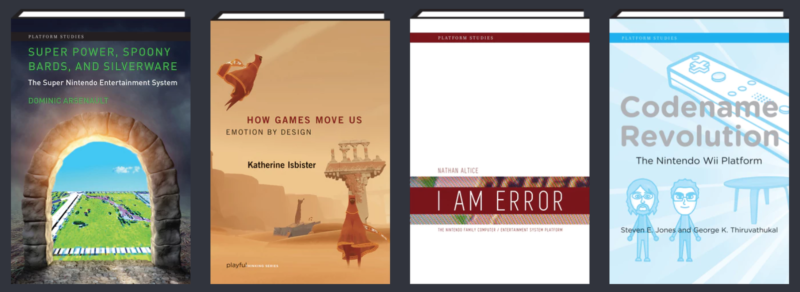
Enlarge / Four of the bundle’s 18 books from MIT Press.

You’d be forgiven for letting a Humble Bundle pay-what-you-want sale whiz by without thinking about it. The shop has been bundling software and ebooks for eight years at this point, so while the discounts are still quite solid, the novelty has worn off.

But Monday’s sale stands out for what appears to be a first for Humble: an entire ebook sale dedicated to video game history.

MIT Press, which has been publishing game-studies essays and books since 1998, has packed 18 of its gaming-specific ebooks into a single $15 bundle. (Should you elect to pay less, you can pick up fewer books at the $1 and $8 tiers.) It’s not a comprehensive collection from the publisher, but as an entry point to the highly analytical and tech-heavy collection, this Humble Game Studies Bundle is particularly good at offering more of MIT Press’s timeless titles, particularly analyses of various game consoles during their active lifespans.

You’ll have to jump to the $15 tier for the best of these, including lengthy looks at the NES, Super NES, and Wii—though, gosh, we wish MIT Press’s history of the Amiga was in this set. But really, this is an easy buy for a few weekends’ worth of game-design reading that offers equal dives into technical specifications and esoteric, “how to design games” ruminations.

https://arstechnica.com/?p=1290573


Gallery: The streamers, game makers, and costumed players of PAX East 2018

BOSTON, MA—The one overwhelming impression I’ll take away from this year’s PAX East is that gaming culture is now undeniably driven by “content creators,” professional gamers, and amateur players sharing their work and their play with the world.

This is far from a new trend, both in gaming in general and at conventions like PAX East, which attracted tens of thousands of gamers to the Boston Convention and Exhibition Center this weekend. Streaming and eSports stars have been a growing presence in the expo hall and in the panel rooms for a few years now, after all.

But things seem to have reached a tipping point at this year’s show. The PAX Arena booth was one of the most raucous in the whole convention, drawing huge crowds for competitions in everything from Fortnite to FIFA. Right next door Geico—of all companies—once again hosted a major Hearthstone tournament that drew throngs of applauding fans for major player personalities. Other booths held their own amateur and professional competitions (including a whole lot of PUBG) to highlight their hardware, their software, or, in the case of Discord, their surprisingly popular community management hubs.

Amazon-owned streaming site Twitch took up a large portion of the show floor with a lavish booth that provided a respite for its “partners,” that “exclusive group of the world’s most popular video game broadcasters, personalities, leagues, teams, and tournaments” as Twitch puts it. Not to be outdone, Facebook Gaming had its own lavish booth next door highlighting how it, too, can let you share livestreamed gameplay video with your friends on its massive platform.

Microsoft is trying to get in on the same space with Mixer, its own streaming solution that featured yet another massive booth where content creators could stream from soundproof booths. Nearby, the usually staid Nintendo hosted a constant stream of live commentary over four-on-four Splatoon 2 matches, trying to encourage its own eSports phenomenon. And farther down the show floor, signings for YouTube and Twitch personalities like JackSepticEye weaved around in massive, three-hour queues.

While there was the usual selection of single player indie games on hand this year, and virtual reality continues to be a major draw at live events like these, it was the booths and events focused on sharing that seemed to have the biggest impact. It’s a trend that seems likely to continue as the generation that grew up taking broadband Internet and online gameplay for granted continues to grow into an ever larger force in the gaming market.

We’ll have more game impressions and embargoed news from the PAX show floor in the coming days. For now, check out the gallery above to see some of the best costumes, products, and promotional displays we came across on the show floor.

https://arstechnica.com/?p=1290171


Nintendo warns against using substandard Switch charging cables

Enlarge / The controller charging cable shown here is one of the best ways to charge the Switch itself from a USB-A output.

We were overjoyed when we first found out that Nintendo was ditching its usual proprietary charging ports on portable systems in favor of USB-C power for the Nintendo Switch. Unfortunately, not all third-party charging cables are created equal, and picking the wrong one can lead to dead hardware or longer-than-necessary charging times.

Nintendo is getting a bit more proactive about this problem now, noting in a new Japanese FAQ page (machine translation) that users should only use USB-C cables with a 56kΩ resistor with the Switch.

When charging the Switch from a source with the older USB-A output (the boxy, rectangular one), Nintendo recommends only using the official “HAC-010” cable that comes with the Switch Pro Controller or Joy-Con Charging Grip. That cable is also available for individual purchase in Japan, but it doesn’t seem to be sold individually in North America. That said, a Nintendo of America support mod recently said that “any USB cable that supports a USB Type C port should work just as well” for controller charging, so maybe being “official” isn’t so important in this case.

Using non-approved or poorly rated cables might damage the Switch or prevent it from receiving sufficient power, Nintendo of Japan warns. That’s a story observant Ars readers should know all too well from tales of fried Chromebooks and substandard mobile phone chargers.

And even if a third-party cable doesn’t fry your Switch, it might charge the system very slowly if it doesn’t carry the full amperage required by the USB-C spec. If you’re really worried about compatibility, a handy USB-C power meter can give you all the details you need.

The new recommendation comes weeks after reports that some Switch systems were getting bricked after being updated to recent firmware and plugged in to third-party docks from the likes of Nyko. Nyko told Kotaku at the time that it believed the issue was related to the Switch’s handling of the HDMI connection, while Nintendo simply warned that unlicensed accessories “might not work at all with our game systems, and they could have compatibility problems with certain games, the Nintendo Switch system itself, and other licensed accessories and peripherals.”

https://arstechnica.com/?p=1289133


Lawbreakers “failed to find an audience,” dev officially admits FPS defeat

Enlarge / You can still buy into and blast through Lawbreakers, but Boss Key confirmed on Thursday that the game’s original update “road map” has been effectively canceled.

Lawbreakers, the 2017 video game that saw Cliff “cliffyb” Bleszinski (Unreal, Gears of War) come out of game-design retirement, has admitted defeat in the competitive online-shooter fray.

A Thursday announcement from developer Boss Key Productions confirmed that the game will only be “supported in its current state,” meaning that it will no longer receive major content updates and perhaps not even minor tuning ones. The reason, Boss Key explained, is that Lawbreakers “failed to find enough of an audience to generate the funds necessary to keep it sustained in the manner we had originally planned for and anticipated.”

The news also included a confirmation that the developer will not convert the $29.99 game to a free-to-play product. “While a pivot to free-to-play may seem like the easiest change to make, a change of this magnitude takes publishing planning and resources to do it,” the developer wrote.

Within weeks of its August launch, Lawbreakers‘ low concurrent player counts became a hot topic among gaming outlets. That number’s maximum dropped below 200 by the end of August and below 30 by the end of October. Though the game stood out with an emphasis on high-speed action and anti-gravity maneuvers, its mix of confusing classes, generic art direction, and brutal difficulty made it a tough sell—which was only exacerbated by the game’s apparent similarities to the gargantuan Blizzard shooter Overwatch. Bleszinski himself criticized the idea of his high-speed game ever working on consoles… before the game was eventually confirmed to receive a simultaneous launch on PlayStation 4.

Shocking news from the <em>Lawbreakers</em> team? Not really.
Enlarge / Shocking news from the Lawbreakers team? Not really.

Thursday’s news followed nearly four months of official silence from the developer. The silence began with the team admitting in December that it was not in an “advantageous position” to deliver many of the promises from its ambitious “Q4 roadmap,” which would have included another character class for players to pick from.

That December update mentioned “internal adjustments” at the studio meant to “unlock new possibilities” in 2018, and Thursday’s update seems to clarify the vague hint: “We also need to focus on other projects with fresh creative leaders. We have been working on something new, and we can’t wait to share more about it! It’s a passion project that we’re in complete control of.”

Boss Key’s specific mention of “control” appears to put some blame for Lawbreakers’ demise on its publisher, Nexon Entertainment. The additional mention of “fresh creative leaders” could mean someone other than Bleszinski will lead whatever’s next from Boss Key. Bleszinski mostly remained mum after the news was revealed, other than to confirm to a fan that he is still indeed working at the studio.

https://arstechnica.com/?p=1288793


PUBG creators finally decide a copycat game has gone too far, file suit

Enlarge / How often do you see a frying pan meme in a lawsuit?

As expected, the massively popular online shooter Playerunknown’s Battlegrounds (PUBG) has been followed by a wave of imitators, particularly on smartphones. But it has been unclear if or when the game’s creators would ever consider legal action against any of these copycats. In particular, a brief chest-puffing incident involving the similar, and hugely popular, Fortnite Battle Royale came and went last year without incident.

That changed on Monday with a suit filed against NetEase, a Chinese game publisher with two very PUBG-like games on smartphones. The suit, filed in Northern California’s US District Court by PUBG Corp (a wholly owned subsidiary of Korean game publisher Bluehole), alleges both copyright and trademark violations by NetEase’s mobile-only games Rules of Survival and Knives Out.

Much like PUBG, NetEase’s games offer 100-person online battles on an island that players parachute onto. The battles revolve around a constantly shrinking “safe zone,” a specific set of military-grade weapons and armor, and a variety of island-crossing vehicles. What’s more, NetEase’s games beat PUBG to iOS, which invited a substantial number of “PUBG on phone” comparisons before the official version finally hit mobile devices.

PUBG Corp points out in the suit that it first took action by sending a complaint to Apple on January 24 about the games being on the App Store. (The suit doesn’t clarify if PUBG Corp asked for those games to be delisted at that time.) Apple forwarded that complaint to NetEase one week later, and NetEase responded via email on January 31, “denying that Rules of Survival and Knives Out infringe PUBG Corporation’s rights.”

The suit individually describes characteristics of the game as “a copyrightable audio-visual work, individually and/or in combination with other elements of Battlegrounds,” and it includes screenshots of the competing game to make a case of infringement. Remarkably, PUBG Corp lists what it believes are 25 copyrightable characteristics about the game. Some of those are far more specific to PUBG (a constantly shrinking circle that players must rush towards to stay alive; a group of 100 players all jumping from an airplane at a match’s outset) than others (a pre-match lobby in which players can run around and shoot guns, damage models based on which body parts are shot, the use of a specific suite of popular military weapons).

PUBG Corp’s argument appears to hinge on that “in combination with other elements” label, as both targeted games include examples of each of the 25 elements by way of screenshot or gameplay description. As the lawsuit contends, “The use of cookware as a weapon or armor in a shooter game, the use of certain vehicles and landscapes and combinations thereof, the use of distinctive supply boxes, and the celebratory reference to chicken are elements of ornamental flair that are not functional but have acquired secondary meaning, as shown by their use by players in memes, parodies, skits and other contexts to refer to the Battlegrounds game and to its developer, i.e., PUBG.”

The alleged offenses in these comparisons range from “clearly inspired” to “near-exact copies.” Rules of Survival‘s biggest offenders according to the suit include a nearly identical “rural aqueduct” structure on its map, specific use of a frying pan as both a melee weapon and a piece of armor, and identical-looking sniper rifle cheek pads (an anomaly that PUBG says is proven out by a Google image search of all things).

PUBG Corp goes so far as to say that any NetEase use of chickens, including this "rubber chicken melee weapon," is crossing a line because of references to the phrase "winner winner chicken dinner." That's brought up in a larger case of many similarities between the games, but in isolation, it's hard to tell whether the rubber chicken point could stick.
PUBG Corp goes so far as to say that any NetEase use of chickens, including this “rubber chicken melee weapon,” is crossing a line because of references to the phrase “winner winner chicken dinner.” That’s brought up in a larger case of many similarities between the games, but in isolation, it’s hard to tell whether the rubber chicken point could stick.

In making its case about misleading consumers, PUBG Corp also pointed to various ad campaigns from both of NetEase’s games. Many of them make repeated references to the anachronism “winner winner chicken dinner,” which PUBG popularized last year. One Rules of Survival ad campaign even included an image of a two-seater buggy, a vehicle that exists in PUBG but does not currently exist in Rules of Survival.

Otherwise, both NetEase games revolve largely around the same systems implemented in PUBG, though it’s unclear at what point similar UI, houses, weapons, cars, terrain, and even loot boxes stop looking like “similar shooters”—especially in a crowded gaming marketplace with so many of those elements—and start looking like intentionally deceptive copies.

PUBG Corp’s list of complaints goes so far as to invite a comparison to its biggest rival, Fortnite Battle Royale, which inadvertently appears when the suit includes screenshots of iOS searches for the term “PUBG.” (Fortnite is number two in that search.) After all, out of the 25 characteristics listed in this suit, Fortnite Battle Royale certainly contains some of the biggies, like a beginning-of-match air-drop and a constantly shrinking circle. But anybody wondering why PUBG Corp didn’t sue Epic Games, the makers of Fortnite, can look at this suit for a pretty solid explanation. Many other Fortnite Battle Royale elements, including map structure, building designs, a lack of vehicles, and wholly different armor implementation, keep it clear of this lawsuit’s precisely direct comparisons.

PUBG Corp has asked the court to award damages and to have NetEase blocked from operating either game any longer.

https://arstechnica.com/?p=1288651


Online gaming could be stalled by net neutrality repeal, ESA tells court

Enlarge / Xbox One X Console Controller.

A video game industry lobby group is joining the lawsuit that seeks to reinstate net neutrality rules in the US, saying that the net neutrality repeal could harm multiplayer online games that require robust Internet connections.

The Entertainment Software Association (ESA) yesterday filed a motion for leave to intervene so that it can support the case against the Federal Communications Commission. The lawsuit, filed by a mix of Democratic state attorneys general, tech companies such as Mozilla, and consumer advocacy groups, seeks to reverse the FCC’s December 2017 vote to eliminate net neutrality rules.

The ESA said its members will be harmed by the repeal “because the FCC’s Order permits ISPs to take actions that could jeopardize the fast, reliable, and low-latency connections that are critical to the video game industry.”

ESA: Net neutrality protects online gaming

The net neutrality rules prohibit Internet service providers from blocking or throttling lawful Internet traffic and prevent paid prioritization deals in which ISPs would charge online services for better access to Internet users. The rules are technically still on the books until after the US Office of Management and Budget approves some “modified information collection requirements.”

The ESA brief, filed in the US Court of Appeals for the District of Columbia Circuit, says that the no-blocking and no-throttling rules are crucial to the video game industry:

The FCC’s Order eliminates the rules that prevent broadband providers from blocking, throttling, and otherwise interfering with consumers’ access to content online. Absent these protections, ESA and its member companies will have no effective legal recourse against broadband provider conduct that impairs consumers’ online video game experiences. In particular, broadband providers are now permitted to engage in practices that degrade consumers’ traffic. That, in turn, could have significant consequences for the enjoyment of multiplayer online games and cloud-based game play services, both of which require low-latency connections to support rapid and continuous interactivity.

While music and movie streaming providers can use buffering to account for network problems, the ESA said that “games cannot be buffered to compensate for problems with the broadband connection.”

But it isn’t just online gaming that the ESA is worried about—the net neutrality repeal could also harm downloads of large games, the ESA said. “Degradation of consumers’ traffic could also impact game distribution networks, which depend upon adequate and consistent bandwidth to deliver large file downloads in a timely manner,” the group wrote. “ESA therefore supports enforceable open Internet protections that have helped fuel dynamic growth, competition, and innovation in the video game industry.”

ESA represents big players in the video game industry such as Sony, Nintendo, Microsoft, Bethesda, Capcom, Disney, EA, Epic Games, Konami, Magic Leap, Nvidia, Ubisoft, Square Enix, and Warner Bros.

“Consumers deserve rules of the road that prevent blocking, throttling, and other restrictive conduct,” ESA General Counsel Stan Pierre-Louis said in an announcement. “ESA will make that case in the months ahead on behalf of America’s gamers and game makers.”

More online companies defend net neutrality

As an intervenor in the case, the ESA can be represented in oral arguments and would file briefs in support of the lawsuit. The ESA will play a similar role as the Internet Association, a lobby group for Amazon, Google, Facebook, Netflix, and other Web companies, which also filed a motion to intervene this week.

The Internet Association brief says the net neutrality repeal leaves Internet companies and consumers with “no effective legal recourse against broadband providers that distort competition and impede communication by preventing or discouraging consumers from reaching the online content of their choice.”

The Internet Association also noted that the repeal eliminates FCC oversight of interconnection payment disputes, which can harm online service quality when content providers refuse to pay the price ISPs demand for direct network connections.

A few other groups filed motions to support the case against the FCC this week. They include the National Association of Regulatory Utility Commissioners, the Computer & Communications Industry Association, and the Writers Guild of America, West.

The FCC, as the defendant in the case, will be supported by intervenors who oppose net neutrality rules. Lobby groups that represent every major home Internet and mobile broadband provider in the US already filed motions to support the FCC in the case.

The case is titled Mozilla Corporation v. Federal Communications Commission and United States of America.

https://arstechnica.com/?p=1288657