Spirit Island review: Finally, an anti-colonialist board game

Enlarge / Get off my island.

A side effect of Euro-style board games’ preoccupation with European history as a theme is that many such games hinge on colonialism. Most board games are not “pro-colonialist,” of course, but simulating a long history of European imperialism necessarily means that a lot of us sit around on game nights trying to figure out the most efficient way to exploit the resources (and sometimes, uncomfortably, the people) of a newly “discovered” land.

Spirit Island, a cooperative strategy game for one to four players, flips this well-worn script on its head. Instead of playing as settlers building out villages and roads in a new land, you and your friends take on the role of god-like elemental spirits charged with protecting the island’s various landscapes from those pesky invaders, who are controlled by the game itself. It’s kind of like a complex, wildly asymmetric Pandemic—but here, people are the disease.

The island’s natives are there to help you fight back when they can, but it’s mostly up to you and your teammates to destroy the settlers’ fledgling cities, remove the blight they introduce as they ravage your pristine lands, and gain more and better powers to help you on your way. Gameplay is driven by cards, and as the game progresses, you’ll get more and better powers and strike more and more fear into the invaders’ hearts. Drive them off to win.

Spirit Island follows the template of most co-op game engines, with each round allotting a phase to the players during which they can mount an attack against the game’s machinations.

Then, of course, the game gets a turn.

Firestarter

The invaders first enter the island as explorers, represented by spindly little miniatures armed with flags and conquistador helmets. They then build towns and cities, which bolster their strength in the map’s various segmented landscapes. Then, presumably due to underdeveloped carbon footprint reduction programs, they ravage the land. Ravaging causes blight, represented by plastic tokens taken from a supply that’s assembled at the beginning of the game. If the invaders cause enough blight to wipe out your supply, you instantly lose.

Of course, this being a co-op board game—a genre that prides itself on cultivating a sadomasochistic relationship with its players—there are actually three ways to lose. In addition to death-by-blight, you can also lose by letting the invaders wipe one of the player-controlled spirits off the island. Or you can simply run out of time—in this case by burning through the “invader deck.”

The game's invader track always lets you know what's coming.
Enlarge / The game’s invader track always lets you know what’s coming.

The invader deck is a wonderful bit of design that acts a bit like a programmed AI which controls the invaders’ actions. Every turn, cards move down a track, and the invaders on the landscape types shown on the cards will do the action of the slot they’re on. In the above example, the invaders will explore the jungle (put new explorer minis on the green spaces), then build towns and/or cities in the wetlands, then ravage in the mountains. The “explore” and “build” actions are essentially the game’s way of spawning new threats for you to deal with; the “ravage” action is the game attacking your land. If the minis on the ravaged land do more damage than you’re able to defend against, the landscape will be blighted.

Co-op game engines generally drive the action by starting fires each round that you need to put out as quickly as possible. There’s never enough time do everything, of course, so you have to prioritize disaster response to the most pressing matters. Spirit Island keeps this general setup, and the game’s invader card track ensures you know what’s coming every round. The invaders are going to ravage in the mountains next turn, but they’re building in the wetlands, which are already being overrun. Do you take the blight hit to work on hampering their expansion?

Fear cards let you take extra actions depending on how scared the invaders are.
Enlarge / Fear cards let you take extra actions depending on how scared the invaders are.

You win by clearing every invader—including explorers, towns, and cities—off the board. At least, that’s your goal when the game begins. As you reduce the invaders’ cities to cinders and fertilize the land with their blood, the colonists start to get jittery. “Fear” is a resource, represented by tokens, that you generate as you terrorize your unwanted guests. Cause enough of it and you uncover Fear cards, which give you extra actions. Clear away enough Fear cards and your win conditions change, becoming easier as the invaders start to reconsider their surprisingly antagonistic new home. By the end of the game, you only have to clear out the invaders’ cities to win—the explorers and towns can stay (head canon: the leftovers are driven into the sea, shrieking regret and repentance as the game’s credits roll).

The game boasts complexity and depth rarely seen in one-and-done co-ops. Figuring out how to manage the ever-expanding mass of invaders requires you to constantly think several turns ahead. Deciding how to play your cards is a wonderfully thinky puzzle and easily the best part of the game, but again, it’s complex. Players prone to “analysis paralysis” may feel the gears in their heads grinding to a halt as they work out all the possible permutations of actions—and how to combo their actions with those of their teammates. Cooperation is essential here, and that cooperation can compound the complexity (and play time).

Build-A-Spirit

Co-op games are wildly popular in board gaming. They allow players to work together to overcome a common threat, which is perfect for players who don’t want to fight their friends in their free time. Personally, I’ve never been much of a fan.

Competitive Eurogames almost always allow you to build stuff, whether that’s something concrete like a kingdom made of tiles or something more abstract like an economic engine. At the end of a competitive Euro, win or lose, you have something that you’ve built. If you lose a co-op, which you often will (co-ops are hard by design), you… just kinda lose. If you win, it generally means you’ve successfully limped across the finish line after spending 90 minutes fighting for every breath.

Spirit Island bridges this gap for me by letting me build something: my spirit. Every single round, your spirit gets better. At the beginning of the round, each player gets to choose between three or four “growth” options for their spirit. Many of them allow you move a disc or two off tracks on your player board and put them on a landscape on the central board. As you uncover spaces on those tracks, you gain access to more energy (think “mana”) and extra card plays.

By the end of the game, you feel like a literal god, playing cards to push invaders around the map with violent waves and explosive volcanoes, setting traps and watching as a teammate detonates a perfect combo that wipes out an entire metropolis. Later rounds see the invaders exploring and ravaging multiple lands every turn, which provides for a great sense of progression. You get stronger and stronger, and the invaders start frantically throwing more bodies at you as they get increasingly desperate. This is far from the only co-op game with an emphasis on character progression, but the narrative arc of each game feels especially satisfying here.

Left: a minor power. Right: a much more complex major power.
Enlarge / Left: a minor power. Right: a much more complex major power.

The cards that represent your powers allow you to push and pull the enemy around the board, deal damage, buff up allies, generate fear, and just generally cause mayhem. Elemental symbols on the left-hand side of each card let you trigger special, spirit-specific effects, which adds even more complexity to your calculations.

When you get new cards, you draw four from one of two decks and choose one. There are minor and major powers; the majors are naturally more powerful, but they’re also more expensive to play—and they force you to forget (discard) another card from your stock. One of the growth options lets you reclaim your played cards at the expense of slowing down your growth on the board, so choosing the right moment to take a tempo hit to get all your goodies back is essential.

The spirits themselves—there are eight included in the base game—all play completely different from one another, with different starting cards, growth options, special powers, and even wildly different energy generation and card play potential. Play to your strengths, shore up your friends’ weaknesses, and draft cards that work well in your team composition.

Spirit Island also plays surprisingly well as a solo game, though playing with one spirit is about all I can handle—the cognitive load required when playing as two or more spirits is… heavy.

The variety of spirits, a bunch of randomized power cards, and a variable setup mean there’s a ton of replayability in the box, while scenarios and country-specific adversaries introduce new rules and let you scale up the difficulty. The game is always hard, but you can make it very hard if you’re really itching for punishment. And if you burn through the base game’s content and want even more options, the Branch and Claw expansion adds two new spirits, a new adversary, and new powers, cards, and scenarios.

The game’s MSRP of $80 is a bit high, but if you’re at all interested in co-ops with a cool theme and even better gameplay (and you’re not afraid of doing a bit of thinking), Spirit Island is an easy recommendation. It was one of our favorite games of 2017, and we’re still playing it obsessively.

https://arstechnica.com/?p=1281049


Game developers push for unionization amid insecure positions, excessive OT

Aurich Lawson / Getty

SAN FRANCISCO—Going into the Game Developers Conference this week, you could foresee some of the hot topics that would be consuming the world’s largest gathering of game makers: stuff like real-time raytraced graphics, fantastical blockchain-based business schemes, and how to design games for augmented reality. But another surprising issue has overtaken many of the discussions in the Moscone Center hallways this week: that of unionization.

Labor organizing isn’t a new idea in the game industry—the first time I personally wrote about the issue was in Electronic Gaming Monthly more than a decade ago. There seems to be more momentum for the idea among the grassroots developers on hand at the conference this year, though, thanks in large part to an organized movement called Game Workers Unite. The organization, which isn’t a union itself, formed over private Facebook groups and Discord chats in recent weeks and has practically blanketed the Moscone Center with brochures and zines encouraging developers to band together against exploitative working conditions, uncertain project-based job security, and excessive, life-consuming crunch time.

“We are currently forming an anonymous and horizontal organization of people dedicated to advocating for workers’ rights and the crafting of a unionized games industry,” GWU writes on its website. “We represent all workers in game development and we seek to increase the visibility of our cause through community building, sharing resources, and direct action. We seek to bring hope to and empower those suffering in this industry.”

The head of at least one organization that already represents game developers seems ambivalent at best about a union’s ability to alleviate that suffering. Jen MacLean, who was named executive director of the International Game Developers Association in September, pushed back a bit against the unionization effort in multiple interviews at the conference.

“One of the problems is that if somebody leaves there are a hundred people lined up to take their place,” MacLean told USGamer about what she sees as the root of difficult working conditions at some publishers. “The reason that a smaller studio is laying people off is not the reason EA is shutting down Visceral, and a union is not going to help the smaller studio that says, ‘You know what, we only have money for payroll for three more months.’”

“To assume that suddenly if you unionize, everything will be great, I don’t think that is a reasonable assumption,” MacLean followed up in an interview with Kotaku, where she also warned of potential “unforeseen consequences” that could come with organizing.

Coming together

IGDA Executive Director Jen MacClean
Enlarge / IGDA Executive Director Jen MacClean

The issue came to a bit of a head at a contentious but respectful roundtable discussion MacLean led Wednesday, titled “Union Now? Pros, Cons, and Consequences of Unionization.” Hundreds of developers flocked to the standing-room only session to highlight the issues they’d want a union to address and the ways they felt organizing could help.

One developer shared a story of working excessive, mandatory “crunch time” hours for nine months and being rewarded only with a week of paid time off. Many others pointed to a need for more stability and career security amid the regular cycle of hirings and firings that surround most larger, project-based studios. Others felt unions could help protect marginalized developers, help enforce overtime and moonlighting laws, or give them an outlet for complaints other than a human resources department that may be more sympathetic to the company than the employee.

MacLean, who generally came across as receptive to the crowd’s ideas, still expressed concerns about a developers’ union essentially having to “sign off” on new projects or new hires. Unions won’t do anything to ameliorate the exploding costs of launching a major new game, she argued, or prevent studios from being forced to shut down if those games fail to sell (MacLean’s tenure as CEO of Curt Schilling’s failed 38 Studios venture may have informed that position somewhat).

But other attendees argued that, while a union couldn’t save a project or company that was fated to fail, it could help soften the landing for the workers affected. “What I’m hearing here is that unions focus leverage,” IATSE union representative Steve Kaplan said. “That’s what unions do… If you’re not at the table you’re essentially on the menu. If the company needs to make a cut or make a change, you’re in consideration unless they have to come and ask you first.”

With the issues and concerns laid out and discussion of organizing increasingly out in the open among developers, the mechanics of actually putting an effective game-industry union together is still an open question. Under US law, individual studios could organize separately if a majority of the employees force a vote on the issue. Such studios would need to be strong enough to withstand pressure from resistant publishers, though (and, potentially, from gamers angry about any impact on their favorite games’ production schedule). The game industry could instead emulate the job-based, cross-company guild structure prevalent in Hollywood, but the diffuse nature of job responsibilities and work locations could make that more difficult.

The real question for now, though, is whether this new burst of unionization activity and momentum will last beyond this week. If interested developers can keep the conversation going once they leave the relatively tight-knit confines of the Game Developers Conference, then this might be the time when a game developer’s union finally gets off the ground. If not, the effort could fizzle as so many in the industry have before it.

https://arstechnica.com/?p=1280313


How blind players succeed at sports video games they’ve never seen

[embedded content]
As you watch this video, close your eyes and imagine playing the game.

SAN FRANCISCO—Blind people might not seem like a natural audience for most video games since they can’t experience the “video” part that’s a definitional piece of the experience. At a fascinating Game Developers Conference Presentation this week, though, EA Sports Accessibility Lead Karen Stevens talked about how she discovered a significant existing base of blind players in EA’s games and how the company is moving to serve it.

The process began when Stevens received an email from a blind gamer complaining that changes to the kick-power meter in Madden NFL were making the latest version of the game impossible for them to play. Reaching out to other blind gamers through the forums on audiogames.net, Stevens found plenty of players figuring out their way through UFC, NHL, and even Need for Speed games without being able to see the menus or action on-screen.

“We already had an audience; they were just struggling,” Stevens said. “We were ignoring part of our audience.”

With that revelation, Stevens dived into the forums to figure out just how these blind gamers were managing in games that were decidedly not designed with them in mind. In games like Madden and NHL, blind gamers are helped by the detailed play-by-play commentary that provides a useful running account of what’s happening on-screen, “kind of like listening to a game on the radio,” she said. Both games also have helpful camera angle options where the goal is always to move “up” on the screen and AI that automatically moves teammates until you actively take control, simplifying things immensely.

In a game like Need for Speed, blind players can find the road by following the path of AI cars. Tracking audio cues like changing engine pitch (to indicate speed), directional stereo sounds when the cars are turning, and whooshing sounds for passing obstacles can help generate a mental map for a course even when it can’t be seen. After a while, these players can essentially memorize the tracks, using the rumbling controller to know when they’re going off course or into a collision.

“As long as they know they’re close, they can try,” Stevens said. “It’s not as good an experience [as competitive sighted gamers get], but it is an experience. And having an experience is the most important thing.”

A helping hand

With the blind portion of the audience identified, Stevens transitioned from general development to spend the last six months as EA Sports’ first accessibility lead, identifying the problems blind players have and working with the development team to fix them. In Madden NFL, for instance, there’s now an option to add a slight rumble when the game’s moving kick meter passes over the correct power and accuracy zones. Other unique rumble patterns can help players identify different types of play calls in menus or feel when the ball changes hands.

After those kinds of changes were implemented, Stevens literally blindfolded the development team to get past the lingering “No way can a blind person play Madden” resistance. “They were like, ‘Wow, this actually works!’” she said.

From there, Stevens said she had more leverage to push for changes that let blind players complete the game’s new story mode, including an option that lets players “fail forward” after a few failures in a row, so they can at least complete the narrative.

Stevens has also worked to create an EA accessibility portal, which launched last week with extremely detailed, screen-reader-friendly guides on everything from setting up an Origin account to explaining the basics of football for people who’ve never seen it. This kind of accessibility is now an integrated part of the EA Sport design pipeline, and the company maintains a dialogue with blind players about their needs.

Stevens urged other developers to reach out to the blind and sight-impaired portion of their player base, asking about the pain points that stop them from enjoying the games. A few “low-hanging fruit” changes implemented early in the design process can instantly unlock a huge new portion of the audience, and small changes in accessibility can lead to major advances over time, as long as you don’t let things regress as the user interface changes.

For blind players, Stevens says, “It’s not about a competitive gaming experience. It’s about playing with friends and children. Yes, it would be wonderful if they could have the same experience as a competitive gamer. But really it’s important that they have an experience.”

Listing image by EA Sports

https://arstechnica.com/?p=1279689


Unreal Engine + $60,000 GPU = Amazing, real-time raytraced Star Wars [Updated]

SAN FRANCISCO—In the computer graphics community this week, companies from Nvidia to Microsoft have been stressing just how important real-time raytracing will be to making games look more movie-like in the near future. Epic Games used a striking demo at a Game Developers Conference keynote presentation this morning to show just how much better raytracing can make real-time, interactive graphics look with top-of-the-line hardware right now.

The Star Wars “Reflections” demo, made with the cooperation of Nvidia and ILMxLAB, showed two extremely realistic-looking and talkative Stormtroopers clamming up in an elevator when the shiny Captain Phasma pops in. Running on what Epic still refers to as “experimental code” (planned to be introduced to Unreal Engine for production later this year) the raytracing in the demo allows background elements like the guns and the opening elevator doors to reflect accurately off Phasma’s mirror-like armor in real time. These are the kinds of effects that Epic CTO Kim Libreri highlights they’ve “never been able to do before [with rasterized graphics].”

With raytracing, developers can change the shape of the light in a scene on the fly, in turn changing the character and the diffuse “softness” of the shadows in the scene. The way the raytraced shadows allow for gentle gradations of light as characters and objects block parts of the scene is one of the most apparent improvements over the harsher, “pre-baked” light in rasterized graphics. The raytracing technology also gives the scene a realistic, cinematic depth-of field effect automatically, with no need for fancy shaders or tricks implemented manually by developers.

Getting a “cinematic” 24fps with real-time raytracing still requires some serious hardware: it’s currently running on Nvidia’s ultra-high-end, four-GPU DGX Station, which lists for $60,000 [Update: After publication, Epic reached out to clarify that the demo was running on a DGX Station, and not a DGX-1 as originally stated during the interview.] . Even with that, some elements of the scene, like the walls, need to be rasterized rather than made fully reflective, Libreri told Ars. And the Volta technology that is key to powering this kind of performance isn’t even available in consumer-grade GPUs below the $3,000+ Titan V, so don’t expect this kind of scene to run on your home gaming rig in the near-term.

But Libreri adds that the tech requirements have been lessened considerably by a de-noising process that dynamically raises or lowers the number of simulated light rays that are necessary for various parts of the scene, based on their importance to the scene in total. Nvidia’s Gameworks de-noising code can get things down to as low as two rays per pixel (from a maximum of six), severely lowering the GPU overhead necessary for doing these complex lighting calculations in real time.

“We’ll be in a hybrid place for a few years where part is rasterized, part is raytraced,” Libreri said. “The film business was based on rasterization for two decades [and] finally started making the move to raytracing a decade ago.”

He added, “It’s just a matter of time” before raytracing is the standard in games, too.

In the meantime, though, we can enjoy this glimpse of just how realistic PC games could look in the future.

[embedded content]

https://arstechnica.com/?p=1279567


China’s largest game publisher adds Ubisoft to its massive portfolio

Ubisoft’s protracted financial battle with French media company Vivendi ended on Tuesday with a surprise announcement: effective immediately, Vivendi is out of Ubisoft’s financial picture. In order to retain its corporate structure, Vivendi’s shares in the company have been bought up—and one of the biggest buyers, as it turns out, is major Chinese gaming publisher Tencent.

The other buyers involved include Ubisoft itself, which has bought up the majority of Vivendi’s former shares, and the Ontario Teachers’ Pension Plan. Vivendi, which formerly owned a whopping 27.3 percent stake in Ubisoft, has additionally pledged not to buy any Ubisoft stock for the next five years.

Tuesday’s news ends a 2.5-year attempt by Vivendi to brute-force its way to owning a majority of Ubisoft through stock acquisition. That hostile takeover attempt, in part, forced Ubisoft co-founder Michel Guillemot to resign from Ubisoft-affiliated mobile-game publisher Gameloft in 2016.

Tencent’s placement in the deal is minor from a company-control perspective, with its new five-percent stake in Ubisoft likely not disrupting decisions on a board-of-directors basis. However, the deal does not include any provisions about Tencent’s future as a Ubisoft investor or controller.

That oversight is curious, as Tencent has been nothing but bullish in recent years about investments in Western game studios. Tencent is perhaps best known in the United States for owning a majority stake in two huge gaming companies: Riot Games, the makers of League of Legends, and Epic Games, the makers of Unreal Engine 4 and game series like Fortnite. (And as the owner and operator of PUBG Corp, Tencent has a stake in both leading entries in the “battle royale” gaming genre.)

The Chinese publisher also has a majority stake in Supercell, the Finnish developer of smartphone megahits Clash of Clans and Clash Royale, and it already owns a significant number of shares in the Activision-Blizzard family, which it purchased when Vivendi dumped its share in that company in 2013. This is all nothing compared to the billions-of-users empire Tencent operates via the QQ platform.

All of this means that Tencent is the company to watch right now for anybody interested in where money is moving in the world’s triple-A gaming space. Ubisoft’s statement about its Tencent agreement revolves largely around how the French games publisher will “accelerate its development in China,” which could mean getting more of its current series (Assassin’s Creed, Rayman, The Crew) in front of Chinese players or hiring more developers in that burgeoning game-development economy. It’s hard to imagine Ubisoft’s game development pipeline not changing as a result to at least some extent—especially to capitalize on a largely free-to-play gaming economy in China.

https://arstechnica.com/?p=1279021


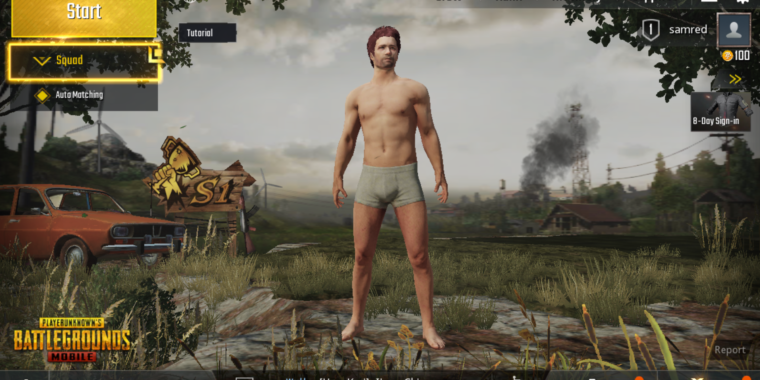
Playerunknown’s Battlegrounds is now free on iOS, Android—and dang, it’s solid

The competition for the world’s biggest “battle royale” video game got even hotter on Monday with a not-too-surprising announcement: Playerunknown’s Battlegrounds now has a free mobile version available across the world. Downloads are now live for all iOS 9.0 and later devices and most Android 5.1.1-and-above devices with at least 2GB RAM.

Based on our preliminary tests of the live American version, this famously unoptimized game is way more playable—even on older, legacy devices—than it has any right to be.

Monday’s news follows last week’s surprising announcement that the similar shooting game Fortnite: Battle Royale had already begun rolling out beta invites to its own mobile version. Unlike Epic Games’ product, however, PUBG Mobile requires no closed-beta invites.

PUBG Mobile itself was no secret, having received a rollout on Chinese iOS and Android devices in February—and that launch decision may have to do with PUBG‘s publisher, Tencent, operating in China. That was followed by a “soft” rollout of PUBG Mobile last week, which was only pushed to Canadian Android smartphone and tablet users.

If you haven’t guessed, PUBG Mobile pulls off its “free-to-play” price point by selling in-game currency for real money, which can be used to unlock loot boxes. If you want to unlock a certain cosmetic item for your PUBG soldier, you can grind through various in-game challenges for a slow shot at the perfect loot box or you can spend more money to more quickly access intriguing outfits, hats, and the like. As much as I detest the predatory, slot machine-like system of loot boxes, I find it’s at least more forgivable for a wholly free game.

Victory within my mobile reach

Especially for a game that you would not be crazy to assume won’t even work on your phone. Nobody wants to pay the PC and console price of $29.99 only to find PUBG Mobile doesn’t hold up to mobile-processor scrutiny.

Before I began typing this report, I set my current Android device to download the game’s 975MB installer—and I wasn’t even sure if the game would load. The reason being: I’m using my backup phone thanks to my primary device having its battery utterly die. (Thanks a lot, HTC 10.)

I had to test PUBG Mobile on a once-premium Nexus 6, which Google doesn’t even support with official Android updates anymore. Turns out, this was a great way to emphasize just how surprisingly optimized this game appears to be. On my late-2014 phone, PUBG Mobile ran smoothly enough for me to play with something resembling proficiency. I’d compare the game’s frame-rate performance to the uneven stuff found on the game’s current “early access” Xbox One build, though the above gallery shows off how atrocious of a visual downgrade you can expect to get when working at such a comparable level.

(For those who’ve never played battle-royale games like PUBG: the standard game dumps 100 online players onto a single island with zero weapons or armor. They must scour the island in search of weapons, armor, items, and vehicles so that they can move toward a randomly chosen central point of the island; outside of that central safety zone is an increasingly growing field of poison gas, so you’re forced to run—and to kill other competitors along the way. The last person or team standing wins.)

PUBG Mobile is at its best when it automates the game’s usual management tasks so that players can focus on movement and gun aiming without having to fiddle with menus. Run up to a door and a convenient text prompt pops up to open or close it. Walk over anything that improves your current build—meaning armor boosts, health pickups, any weapons when you’re running empty, or upgrades and ammo to anything you have equipped—and your character will automatically pick them up. Other items that aren’t obvious upgrades (new clothing items, different weapon choices) will appear as white boxes to be tapped.

Every primary “need this at all times” function has a clear place on the screen for tapping, mostly at the lower-right end of the screen. Jumping, crouching, going fully prone, shooting, and pulling up a gun’s scope all get dedicated buttons, and a map button is also easily accessible. (When you get health pickups, those will get dedicated bottom-of-screen buttons, as well.) The bottom-left of the screen includes a virtual run-and-strafe joystick, while dragging your right finger anywhere in open space will work like aiming an FPS game’s mouse.

All of these functions change when you hop into a vehicle—at which point, you even get a convenient “switch seats” button for the sake of quick “aghghghgh we’re getting shot at” moments with teammates.

My first session went surprisingly well, though my familiarity with the game’s fictional, default island of Erangel and my knowledge of best PUBG practices didn’t hurt. Still, I was able to maneuver around, gather gear, find teammates (thanks to clearly marked UI), ferry them around in my four-wheeler, and even rack up three clean kills (some blind-fired, some scoped) before I eventually got taken out by a three-strong squad who’d taken higher ground. Our team had to settle for second place. This good first-game performance may very well be thanks to other players being wholly new to the mobile interface, but I’ll continue to assume it’s because I’m so great at video games.

I wouldn’t dream of calling this a definitive version of PUBG. And further testing will be required for fans to suss out exactly what they’re losing in this translation (such as physics effects, how cars bounce down hills, true precision gunplay, or excessive auto-aim assists). But for those moments on the go when I have 20 minutes to kill and access to a battery charger and decent reception, I’m totally sold on what already exists in the game’s first day of “official” worldwide release.

Listing image by Tencent / PUBG Corp.

https://arstechnica.com/?p=1278445


People’s Republic of Desire film review: Yes, Black Mirror is already here

AUSTIN, Texas—If you’ve ever asked yourself how long a Black Mirror episode might take to turn into real life, the new documentary People’s Republic of Desire has an answer: roughly four years.

Really, the best way to describe this feature-length look at Chinese Internet streamers is to point to the British series’ first-season episode “Fifteen Million Merits,” which aired in 2011 and starred Get Out‘s Daniel Kaluuya. The episode imagined a future, Internet-driven popularity contest that tore people’s lives apart. According to the filmmakers behind People’s Republic of Desire, that episode’s level of life-bending insanity had already unfolded in China by 2015, fueled largely by the millions-strong video-sharing site YY. And the results aren’t pretty.

The result, with its millimeter-range focus on major YY personalities, deservedly won this week’s South by Southwest jury prize for best documentary. Though it leaves some questions and topics unexplored, People’s Republic of Desire still delivers a fascinating, character-driven story that Internet fans in the West should pay particular heed to—especially as live-streaming services develop and mature on our side of the Pacific.

Tuhao triangle

YY, for the uninitiated, works similarly to American video-streaming site Twitch in that it lets anybody create a channel, stream live video from their computer, operate a chat room, and accept real-money tips from viewers. But YY’s initial and most popular focus wasn’t on videos of people playing games or creating projects. YY’s most popular hosts and stars focus primarily on streaming themselves talking, singing, or faking like radio-show hosts, with male and female hosts appealing to viewers for dramatically different reasons.

“I swear by my breasts—if I lie, they’ll never develop!” That’s 21-year-old woman Shen Man, a former nurse from the Chinese province of Chengdu, addressing a live chat room of over 10,000 YY users early in People’s Republic of Desire. Shen is one of the service’s highest-ranking stars, and her feed consists primarily of her singing over karaoke-caliber MIDI tracks with a pedestrian voice—pleasant, not pretty—while responding to her viewers in either pedestrian or sexually charged ways.

One donor admits to spending a whopping $2 million on YY stars.

A documentary camera focuses on one of Shen’s highest-paying patrons as he watches her. She specifically calls this man out by his handle in an online feed, speaking of him in complimentary and suggestive ways, and the man’s eyes roll into the back of his head as we watch him tap away at his mouse in response. With every tap, the film shows a superimposed image of various amounts of money appear (represented in the YY interface by diamond rings, cars, and airplanes, depending on the amount of money attached).

This donor admits to spending a whopping $2 million on YY stars since joining the network as a viewer. Others appear as talking heads with tallies like $500,000 and $700,000, and they each offer explanations. One admits that she needs “something to do other than buying stocks” while stroking a luxurious pet. The $2 million man very curtly and briefly explains where his excess of money comes from: “I’m a profiteer.”

We come to find out that YY encourages money spending, in part, by building every user’s spending habits into the site’s interface. Shen describes it as a “love triangle,” made up of three parts: hosts, “diaosis,” and “tuhao.” The term diaosi is Chinese slang for “loser,” and that term has grown in popularity as a self-referential label for those who have banded together in response to China’s newly emerging income gap. On YY, they fill up hosts’ chat feeds with small gifts and endless banter.

Those users also find themselves attracted to hosts who receive big bucks in gifts from tuhao users (a Chinese slang term for the nation’s “bling”-minded nouveau riche class). Those big spenders admit that there’s appeal in feeling like a big dog in these diaosis-dominated chat rooms and receiving verbal adoration and recognition from hosts and diaosis alike.

PRoD presents all of this YY-triangle content with a dramatic, CGI-loaded mock-ups of the Web interface that looks like something out of a massive reality show. In real life, YY’s interface is mostly white and homely, and the film smartly presents this fantastical, imaginary version of how fun and wild YY seems next to real-life footage of users glumly tapping away at phone and desktop interfaces.

“Of course I’m resentful”

The film’s human element is driven by deep looks into two streamers’ lives: Shen Man and Big Li. The latter is championed as a diaosi “hero” by his mostly male fans, a fact that he shouts out repeatedly in referring to his fans as a “nation” and “army.”

Li plays a few incredible roles at once: a beloved loser (which fuels his Chinese online fame), a prodigal son (whose family applauds his fame but demands he do more), a reveler in fame, a mess of a father, and a bumbling child when pushed to extremes by his own insecurities. His story of rags-to-riches-to-worse is a spoiler minefield to describe at length, but it’s ripe with incredible “I can’t believe that actually happened” moments. One domestic abuse episode plays out right in front of the documentary’s cameras, while another utter emotional meltdown is streamed to Li’s thousands of online fans, in which he blurts to those throngs, “I only bring you disappointment.”

“There are hidden rules in this world. [Tuhao] will ask to meet in person, or something else.”

Shen, meanwhile, juggles a massive amount of responsibility while amassing online fame. Yet she barely revels in the Hollywood-style life you’d expect of YY’s most viewed starlet (who rakes in over $200,000 a month in the process). We see her walk a single red carpet at a YY-affiliated awards show, but otherwise, she’s going out to average, slummy restaurants with no real-life friends her age. Instead, her deadbeat father hangs on with nothing in the way of “managing” or assisting in her fame. He’s her only remaining parent after she grew estranged with her mother as a child, and she keeps him and a grandparent’s home and bills paid for while simmering with resentment.

And while her father smiles and laughs to see her rack up viewers and money, Shen lets the filmmakers into the darker half of this patron-driven video service: “There are hidden rules in this world. [Tuhao] will ask to meet in person, or something else. Of course I’m resentful.” Later in the film, online rumors emerge about a relationship she started with a patron, and fans in the chat room—who, throughout the film, are shown boldly talking about her body parts and calling her a whore—mock her for supposedly sleeping with someone who “only” contributed $300 as a YY fan. Shen responds directly to these chat insults by one-upping the jerk online commenters, sarcastically declaring that she’s ready to sleep with anyone who gives her $300, no questions asked.

“Buying gifts is the only way”

Only one obsessive YY fan gets anything in the way of spotlight treatment. This makes sense to some extent, as it’s not captivating stuff to watch a motorcycle-parts warehouse worker stare adoringly at his smartphone screen. But he’s in PRoDfor a big reason: to show what depths YY fans will go to prop up their online heroes, to the tune of hundreds of dollars. For a nation whose migrant workers make roughly $400 a month in wages, that’s no small sacrifice. But based on how this one fan’s story is framed, it’s hard to tell whether he’s a rare outlier or whether YY is largely propped up by broke, obsessive streamer fans.

In some ways, the documentary treads well-worn ground about the price of fame—about issues like pressure, social detachment, fleeting success, and even plastic surgery. (Already by 21, Shen has gotten work on her nose, eyes, and other parts of her face.) PRoD also tries to make fans’ love of these talk shows look like an example of computer-driven isolation, and in some scenes—when rooms full of young Chinese people stare at streaming sites while sitting side by side—that feeling comes through loud and clear. But at other times, like when one fan admits, “I’m not lonely—I can watch Big Li,” I’m reminded of similar American fandom for talk show hosts like Howard Stern. (Though, again, Howard Stern has probably never had his fans say things like this Shen Li fan’s quote: “if you want to interact with her, buying gifts is the only way.”)

PRoD doesn’t necessarily do a good job making a case that these Web stars—who operate from their own homes and appear to control their own creative output—have it particularly worse than Hollywood or music-industry stars dragged through a public-eye wringer or behind-closed-doors sexual misconduct. And the movie leaves questions about Chinese government intervention untouched—which is a bizarre oversight when talking about a service that dances so brazenly with sexuality and fans connecting as “armies.”

[embedded content]
People’s Republic of Desire trailer

But the filmmakers’ access to Shen and Li, as examples of “average” Chinese citizens turning into massive celebrities, does a lot to sell PRoD‘s story of how YY deliberately games these stars’ lives and output for maximum profits. YY, we eventually find out, takes a whopping 60-percent cut of all site donations. Its users allege that YY sorts all streamer rankings and advertising based not on general, year-round stats, but on how well each host does during the site’s annual 15-day streamer-popularity contest. We see two of these contests play out, and these are full of hosts begging and pleading with viewers to dump millions of dollars of real money into “votes.”

Eventually, that $2 million donor from earlier reappears in a new role: as a promoter and agent, who pumps his own energy, time, and even donation money into stars’ contest funds in order to game the system. This doesn’t quite work out during the 2016 contest that marks the film’s conclusion, in which two high-ranking YY stars spend millions of their own dollars on securing a top rank on the site. “Only the platform is the winner,” the agent says, and then he gestures to the two highest-ranked stars on an interface. “Two fucking losers.”

Eastern online services have always led the charge with in-game and in-app purchases, while Western games and apps have slowly ramped up their own use of them. PRoD’s most compelling impact is in showing us exactly what could play out, for fans and creators alike, if the online economy falls headlong into a complicated tangle of content, money, popularity, and sense of inclusion.

People’s Republic Of Desire had its world premiere at South By Southwest 2018 and is not currently slated for wide distribution.

https://arstechnica.com/?p=1275715


VR headsets have become the new arthouse—the best of SXSW’s fantastic VR festival

After roughly three years of commercial viability, virtual reality seems to have excelled within a different realm than the one I typically wonder about: the film festival. Events like Sundance, Tribeca, and South By Southwest already overflow with weird, not-quite-accessible films about real-world drama, emotions, and nonsensical stories. And today, the only venue that fits those works better than arthouse theaters, quite frankly, is the ornate, vision-filling VR headset.

But filmmakers aren’t just descending onto hardware like HTC Vive, Oculus Rift, and Samsung GearVR in a boring, flash-in-the-pan manner. At SXSW 2018 in particular, they’re finally exhibiting a proficiency in two equally important extremes: what VR can sell that normal films cannot, and what VR must compromise or let go of for the sake of a better film experience.

I went eyes-on with nearly two dozen VR experiences at SXSW 2018, and I’ll be honest, some of them were rough. Some filmmakers still think that a 360-degree video that forces viewers to crane their neck and hunt around for content is a good idea (geez, please stop making those). Others packed far too much visual noise or too many unnecessary interactions into a 3D world that never answered the important question of why its content and message was better in VR than on a flat screen.

But the five experiences I list below all left me with both shivers and with hope for VR as an important storytelling medium for years to come.

Hold the World

VR Attenborough (left) guides real-life Attenborough (right) through <em>Hold the World</em>. The amount of polygonal detail devoted to his face, arms, and shirt is remarkable in action.
Enlarge / VR Attenborough (left) guides real-life Attenborough (right) through Hold the World. The amount of polygonal detail devoted to his face, arms, and shirt is remarkable in action.

My first glimpse at this VR experience was a window into someone else’s session, in which they appeared to look passively at giant whale bones set to a black background. Meh, I thought. Then I was ushered to my own kiosk, and when I sat down, I was taken aback by something quite different: a remarkable volumetric capture of a living, breathing Sir David Attenborough.

After clicking through a few menus in this seated Oculus Touch experience, I was transported to a laser-scanned room in London’s Natural History Museum, where Attenborough sat directly in front of me. The man was recreated entirely using real-time graphics technology, which developers confirm was filmed with a 106-camera rig at Microsoft’s headquarters in the Seattle area, as he introduced a variety of fossils. Hold the World essentially sits users down with Attenborough at the NHM while he rambles in effusive yet succinct fashion about a range of massive and tiny species from ancient eras. Instead of whale and dinosaur fossils, I opted to check out the collection’s smaller specimens: a dragonfly and a trilobite. (“We have a dragonfly here!” a developer incredulously shouted.)

The basic experience sounds like most any other 3D educational app: grab and rotate 3D models of specimens while listening to informative narration. But this Sky VR production, out of the UK, kicks it up a notch by having users sit with Attenborough—and I emphasize “sit” for a technological reason. The devs confirmed to me that this perspective allowed the team to focus its polygonal and texture budget on the absolutely remarkable detail in his face and shirt—all full of wrinkles, shadows, and details that remained static and high-quality even as I moved my head to look at Sir David from all sides. I compare this to last year’s SXSW VR award winner After Solitary, which had to invest more polygonal budget on its subject’s full body walking around. That one looks interesting but blurry; this limited, focused presentation reaches a whole other level.

[embedded content]
Hold the World trailer

Quite frankly, Attenborough’s rendering took my breath in a way that I haven’t felt about real-time facial rendering since the premiere of Half-Life 2. It’s just stunning stuff. The primary caveat, really, is that Attenborough’s virtual likeness does not react to users; he does not match your gaze, and his entire animation cycle is fixed. But the stunning-looking tech is clearly a sign of the next-level facial animation that we’ll see in real-time graphics soon enough.

Beyond that holy-cow bluster, Hold the World also succeeds because of how it thoughtfully combines narration, laser-scanned fossils, and “fossils coming to life” moments. (These aspects, by the way, are way better sold with a VR headset and audio, as opposed to viewing someone’s silent session on an external monitor.) I want very badly to sit science-interested kids down with this VR experience and have them pick up fossils with motion-tracked controllers, be encouraged by Attenborough to look at particular points (with fascinating Attenborough trivia as your reward for doing so), and set into motion some really clever and cleanly staged transitions from static, “stretch to zoom” fossils to how scientists imagine the beasts acted when they were alive.

It’s unclear whether Hold the World will launch “this spring” as a tragically short final product (only eight fossils appeared to be available) or whether its smartphone-VR versions will look terrible in comparison. Even with those issues in mind, I still strongly urge anybody with interests in digital education and VR to put this on their wishlist.

Wonderful You

Next up is another science-education app in VR, and thus, it has to face off with the plainly superior Hold the World. There’s a little less polish here, and the educational content on offer is narrower.

But my retelling of the SXSW virtual reality forum would be incomplete without a mention of this experience, which I have affectionately dubbed “The Theater of the Womb.” Wonderful You is a collection of five short films made for sit-down, head-tracked VR systems, and that distinction is important. Each six-to-eight minute film revolves around the development of a human sense while still in the fetus stage, and it’s easy to imagine the films’ content—all static, with no interactivity or required movement—as an easy fit for a standard 2D screen.

The design team at BDH Immersive, with its apparent background in video digital effects work, has gotten the memo on exactly how to frame a sit-down VR film. The result feels like sitting inside the craziest theater ever made. Theatrical principles, in terms of framing a full 3D scene and attracting users’ attention to various directional elements, are all off the charts in these five films.

As an example, the app’s section about human eyesight anchors its timeline of human development with some unforgettable visual moments. Take the creation of the optic nerve. This portion begins with viewers hovering through an inside-the-body void of dark, pink walls before a small detail explodes in the periphery: the nerve beginning to form, spotlit dramatically with cells forming under unrealistically bright light. (This effect is boosted in no small part by VR panels’ ridiculous contrast ratios, which benefit from OLED technology.) The creation of this element slowly builds in the periphery, and as your sight naturally goes in that direction, the opposite end of your visible frame explodes with its own creation of cells.

It’s as if the human body concocts its own Lady & the Tramp spaghetti-kiss scene. It looks that dramatic and sweet.

The same can be said for a scenes in which blurry vision organically clears up, or when tiny hair follicles form on a face with particularly entrancing animations attached, or when the app plays thoughtfully with not-quite-claustrophobic camera angles, letting you admire the human form quite close while offering a healthy amount of visual breathing room. And for all five human senses, the entire head-tracked VR space is utilized in a “less is more” way. Particle and light-ray effects fill out various empty parts of a scene, to anchor a sense of true presence while still blacking out your periphery. The directors never force you to hunt-and-peck to find content.

Every scene within this app (now free on the Oculus Store) should be commended for concentrating its polygons and its lighting on immaculately rendered human forms—because, quite frankly, a derpy looking pre-born infant would break all of Wonderful You‘s potential. Some of the musical cues and narration err on the side of cheesiness, sadly, but the app is at least careful to frame its various “16 weeks in” and “24 weeks in” narration stories without any, er, politically leaning angles. Meaning, interested biology fans on either side of the aisle can get something here.

Greenland Melting

My pick for SXSW’s best VR experience last year, After Solitary, has received a follow-up of sorts from the same production-company combination of Emblematic Group and PBS’s Frontline. You won’t be shocked to hear that I am again shouting out their VR documentary efforts, but my raves are more tempered this time around.

Greenland Melting is both better and worse than its 2017 sibling for the same reason: increased scope. Viewers aren’t just stuck in a tiny room this time; now they’re boating around, walking toward, and taking helicopter rides above massive glaciers in Greenland, all while joined by passionate researchers who want to answer why these things are melting so danged fast.

Again, Emblematic reached out to 3D-capture company 8i to use its volumetric capture solutions, and as a result, the film’s two researchers appear right next to you as you survey a massive glacier right in front of you. Walk around them and the app will restitch their appearance in real time to reflect your angle and perspective. The way they subtly appear in various scenes and how these semi-blotchy 3D people can aim their gaze in your direction to talk about the subject without looking creepy are admirably pulled off.

Unfortunately, Emblematic appears to have scaled its rendering of your environs, including far-off mountain and glacier detail, with lower-specced PCs in mind, and the results can look, at worst, like someone super-zoomed on a low-res Google Earth render.

Still, the filmmakers use fully tracked 3D space to great effect—particularly in one moment when the viewers’ perspective is lowered so that they stand in near-glacier water at roughly waist height. This is when the hosts invite viewers to get on their knees, at which point they’re underwater and see how much ice is down there compared to the stuff visible from the surface. (It’s one thing to see a slide about age-old glaciers and icecaps in science class; it’s altogether different to put your head in arctic water and see them firsthand.)

This caps off an elegantly telegraphed story of research about the exact forces driving rapid glacial melting, and it’s followed by a dramatic airplane ride in which viewers can walk over to the craft’s windows and look down to take in the scope of how expansive these glaciers really are.

Emblematic continues to embrace the superior results of fully tracked VR over lesser 360-degree video efforts, and they should be commended for that—and for understanding how to keep viewers’ attention in busy scenes with a mix of information, audio, and visual cues. Emblematic did not announce a commercial release date for Greenland Melting‘s launch, but filmmakers on hand at SXSW say they’re already plotting work on a follow-up experience about further glacial research and scientific advocacy.

Listing image by SkyVR

https://arstechnica.com/?p=1274747


Rum and Bones: Second Tide—A piratical tabletop MOBA

Charlie Theel
Welcome to Ars Cardboard, our weekend look at tabletop games! Check out our complete board gaming coverage at cardboard.arstechnica.com—and let us know what you think.

Rum and Bones: Second Tide is a board game that combines pirates with ideas drawn from Multiplayer Online Battle Arenas (MOBAs). The concept alone is worth a million doubloons; but how well does it work in practice?

If you’re not familiar with a MOBA, it’s basically an online multiplayer arena brawl where two teams of players square off. Each controls a single character attempting to push up through “lanes” and slay AI-controlled minions as well as opposing heroes. It’s an addictive esport due to the intense level of competition accompanying RPG-like character growth. This winning formula has propelled games like League of Legends to the top of the charts.

But translating that experience to the tabletop world—capturing that dynamic flow while minimizing a mountain of overhead—is tricky. Rum and Bones already took its shot with the original 2015 release. The second edition, released last year, streamlines the existing ruleset to narrow its vision and strike closer to its MOBA DNA.

Much like the first go-round of Rum and Bones, the results are a mixed bag.

A pirate’s life

You’re a pirate, and the goal here is to be the first player to amass eight victory points. This is accomplished by destroying enemy objectives—rigging, sails, etc.—or by plunging your rusty blades into the squishy flesh of opposing heroes, knocking them out of action. The latter path is a new addition in Second Tide and helps to rein in the length of play. One large issue with the original release was the penchant for players to ignore targets and the whole affair to last an unreasonable amount of time.

The issue with this change is that playtime is still somewhat bloated, undermining the patch job. More importantly, games will often finish with few objectives demolished. It’s exceedingly easy to get caught up in the back-and-forth struggle of miniature-on-miniature violence and commit to the kill. The tragedy here is that the game steers away from its MOBA ancestry, yet those are the exact pieces that differentiate this release from the scores of tactical miniatures games.

Battling it out with your trio of heroes is solid fun, though. One of the factions includes half-man, half-fish marauders who inspire wide grins. Grabbing hold of the rigging and leaping from one ship to the other like Manimal gone feral offers a galley full of thrills. Cutting down the weak deckhands and utilizing a suite of asymmetrical special powers is satisfying and does capture the qualities of its influences. You spend coins earned from slaughtering foes to purchase and upgrade your abilities, increasing player investment and joy. The entire hero aspect of the game is spot on and fulfilling.

But apart from the heroes, the other half of your force is the mindless crew. This collection of pale-faced swashbucklers moves toward the opposing ship with all the cunning of a hungry zombie. They follow a set path, stopping when they run into the enemy and throwing down a meager attack. Conceptually, this is fine as it mimics the pressing creep found in MOBA designs; it gives you shiny targets to blow apart with your sluggers. Unfortunately, tedium creeps in as the repetitive nature of moving an army of faceless miniatures turn after turn overwhelms. The back-and-forth dynamic of crew slamming upon crew feels incremental and boring, a stark shift from the gripping nature of hero play. It saps much of the momentum by saddling players with all the overhead of constant figure movement, thus highlighting a limitation of cardboard gaming.

Counter-balancing that tedium is the slick activation system that throttles back and forth between players. Each player takes a turn activating a single hero or an entire crew before pitching play back to their opponent. This offers a much-improved feel to the first iteration of this design, which had players activating all of their pieces within a lengthy turn structure. You can respond more tactically within the boundaries of this system and downtime is reduced.

This system also helps to approximate some of the speed of a real-time game. The board develops in interesting ways and priorities shift more quickly. It helps to keep you cognitively engaged, at least when you’re not scooping up those crew members by the handful and slowly nudging them toward doom.

Release the Kraken!

Bolstering the solid atmosphere are the numerous little flourishes, like the fact that each side has a deck gun that gets to rain down pain each round. One of my favorite aspects is the ability to leap from ship to ship via suspended rigging. (Players can also draw the attention of the neutral Kraken as the cost of playing powerful cards from their hand each round. Eventually, this sea beast rises from the depths and terrorizes everyone nearby; it’s dramatic, engaging stuff.)

All of this drama is bolstered by the dice-based combat, where you toss handfuls of six-siders looking for hits. Many elements of this game let loose and commit to randomness head-on. Those attracted to the lovely miniatures and over-the-top theme will have no problem buying into some chance cube chaos.

Rum and Bones: Second Tide is a tough one. It has moments of glory scattered among rote actions and monotony. Its playtime can occasionally extend too far, and it primarily functions as a two-player game. (Rule options exist for three or four participants, but this feels forced into the play-space and is accomplished by slicing the creative control of each team in half.)

If you can push the problems below deck and out of sight, you can ride headlong into the storm with a pistol in each fist. If you can’t, well, there’s always League of Legends.

https://arstechnica.com/?p=1277463


Fortnite brings out the 10-year-old fort builder in all of us

Enlarge / I’m king of the mountain!

Fortnite: Battle Royale hasn’t quite grabbed me. While the game is at least accurately named, the gunplay—originally designed to let players mow down hordes of mostly mindless AI bots—isn’t as suited for culling other human players in a Battle Royale mode. Developer Epic Games seems to know this and is tirelessly tuning the overnight smash hit’s bullet burping. And while 3.4 million concurrent players (as of February) don’t seem dissuaded by this continued fine-tuning, I still feel like the gameplay isn’t quite up to snuff.

Yet I still can’t stop thinking about the game. That’s partly because it’s seemingly the biggest game on the planet—hot on the heels of the extremely similar, previously biggest game on the planet, PlayerUnknown’s Battlegrounds. But it’s not just that. Fortnite appeals to me, personally, because it does more than remind me of my past. It gives me glimpses into an alternate present.

An engineer deferred

There was a time, long before I even cared about video games (much less wrote about them), when I seemed fated to become some kind of engineer. That was how my parents saw my future, anyway; the two farmers-turned-bankers didn’t have many positive things to say about career prospects that didn’t involve a lot of math. So my creative endeavors (mostly drawing, back then) always led to a response like, “Yeah, that would make a good hobby.”

I didn’t particularly mind this narrow career ideal at the time. I liked building things. Between soccer and speech classes, I filled sketchbooks with impractical structures and robots. Two of my uncles, both engineers themselves, humored me by helping with mock-up Battle Bot “schematics” that never left the page.

A bit of that old obsession has resurfaced in Fortnite: Battle Royale. The shooting may not meet my gameplay standards, but racing to build the most efficient fortresses sure does. And that’s just how most of Fortnite’s pitched battles end—in spastic competitions to raise zig-zagging siege towers, each player looking to gain high ground over (and cover from) the other.

Fortnite really takes me back to those days of Battle Bots and uncles, and the scads of tree forts that arose from that same obsession with making something out of nothing. My brother, friends, and cousins built those forts in the woods near a park and in the shelterbelts overlooking the creek behind my grandmother’s place. We even set up a sort of wall-less headquarters (reinforced with snow during the winter) between three pine trees which, I would later find out, belonged to our mayor.

Nobody ever kicked us out, though. Well, nobody else ever kicked us out. We attacked each other all the time—either for the snowball fight fun of it, or because of “very serious” fallings-out. For me, that fort-building was a chance to show off something I felt trained to be good at in the childhood turf wars that would have happened anyway.

I like to watch

These days, I’m not good enough at Fortnite to see the closing moments of most matches firsthand. That, plus my natural disinclination to the gunplay, has pushed me toward watching matches on Mixer’s never-ending, mildly brilliant “HypeZone” channel. The streaming service cycles between players who have reached the top 10 of their respective matches. It’s Fortnite at its most geographically and dramatically condensed. And it’s exactly the kind of junk-food viewing I need to fill the Junkyard Wars-shaped hole in my life.

In this phase of the game, rocket launcher duels dissolve into cooperative races against the clock as panicky combatants rush to escape the all-destroying storm that pushes them closer together over the course of a match. The few competitors at this stage will build improbable bridges under their very feet and sprout brick citadels with arrow slits for snipers to see through. Often, winners are victorious not with bullets but with pickaxes—toppling towers to introduce their foes above to aggressive fall damage below.

Wheeeeee!
Enlarge / Wheeeeee!

Building in games might always appeal to me in a creative context, but these competitive building scenarios also tickle the math-loving sectors my parents drilled into my brain—the ones that have made me obsess over efficient character builds in EVE Online, Darkest Dungeon, and Dota 2 ever since. The winner in Fortnite: Battle Royale isn’t just determined by who shoots better or faster; it’s about who can master the space they’re in.

https://arstechnica.com/?p=1277321