Hello Neighbor is among the worst games of 2017

Enlarge / There isn’t much obvious rhyme or reason to the game’s puzzles, which turn a 10-minute level into an hour-long affair.

Hello Neighbor won’t be the very last game I review this year. I can only pray that it will be the worst. As of now, the first-person stealth puzzler is the worst game I can remember covering in a long time.

That’s a shame, because the premise is promising enough. It’s like a suburban take on Rear Window set in the world of Psychonauts’ Milkman Conspiracy. Empty, twisted cookie-cutter houses embody a cartoonish paranoia. The player character, a young boy presumably native to the breezy street where the game takes place, sees something he shouldn’t. His titular neighbor has shoved a shrieking somebody (or something) into his basement. It’s your job to learn who or what.

All of this is implied through imagery. It has to be, since there isn’t really any dialogue in Hello Neighbor. There’s also no tutorial or anything like a basic breakdown of the controls, either. That quickly becomes a problem as you realize nothing works as it should, from avoiding your pursuer to stacking crates to sneak in through windows.

The box and the breaking point

Hello Neighbor is nominally a stealth game. You need to dodge the clutches of the mustachioed neighbor or face being teleported back to the beginning of a given level. But it’s really a puzzle game—one where you poke around for the right objects to open the right doors or flip the right switches at the right times.

It all feels terribly uncertain. There’s no option to drop objects you pick up, for instance, only varying degrees of hurling them. That becomes an issue almost immediately in the game’s very first puzzle, which calls for careful crate stacking. Maybe you’ll huck a box as gently as possible into a wall or the ground only to have it phase through solid matter thanks to the game’s serious clipping issues. Or maybe it’ll bounce so hard it flies 30 feet in the air. Or maybe it’ll hit you so hard that your character does the flying! The physics are so world-class wonky, on top of the imprecise item control, it’s hard to know what to expect.

Around these obstacles is the inscrutable neighbor. The penalty for being caught by him isn’t too rough; you just restart a level with some or all of your progress intact. But it’s not always clear how much progress is lost. Sometimes broken windows and stacked crates stay that way. Other times, they don’t.

Likewise, and even more frustrating, it’s next to impossible to map the neighbor’s behavior. Sometimes he can hear you tiptoeing around him through walls or 50 paces over his shoulder. Other times I could sprint up behind him and not be heard. Whatever the case, it’s incredibly difficult to plot an escape if and when his sharp alert music does sound off. You can fling debris into his face to slow him down or try to hide in cabinets, but otherwise your means of escape feel paltry compared to your frustratingly unstoppable assailant.

You can’t peek around corners. If a door opens inward, it’ll clock your character’s face unless you approach it from just the right distance and angle (which is just the most exquisitely frustrating thing when you need to beat a hasty retreat). You can’t actually move objects out of the way without picking them up, either, so you need to clear out inventory space just to shift some debris that’s blocking a story-critical door. Oh, and lining up your reticule to interact with objects in the first place is fiddly as all get out.

A series of unfortunate problems

If this review seems like an endless list of grievances so far, that’s reflective of how Hello Neighbor feels moment to moment. The game is all about reaching some puzzle—a door that needs opening, or window that needs breaking-—and remembering every glaring technical problem in sequence. Then it’s starting all over again if the physics break in just the wrong way to reset your progress to zero or if the neighbor boxes you into a corner.

You can’t even save scum or easily restart levels if things go completely sideways. As with getting caught by the neighbor, “restarting” a section doesn’t actually reset anything. It just teleports you back to the beginning of the level; your inventory and progress remain unchanged. So when I accidentally chucked a critical flashlight in a pitch black basement, I figured it would be easier to just start over rather than trying in vain to retrieve it. Nope, the flashlight remained lost, forcing me to fumble around for the necessary button in the dark for a half hour. Restarting was only really useful when I reached an otherwise game-breaking bug that trapped me between two fences.

Incomprehensible, unsatisfying, forgettable

[embedded content]

Even without the technical problems, you’d still have to puzzle out Hello Neighbor’s quite unintuitive puzzles. The tutorial-free first level does at least imply you need to get into the basement. But the actual first step in the mission is to reach the attic, collect a magnetic doohickey, and use it to snag an innocuous piece of jagged metal that turns out to be a lockpick. Things only get more obtuse from there as the game’s loose plot turns more surreal.

That surrealism is enticing, but it’s just not enough to make up for the game’s panoply of issues. Even well after its public release, Hello Neighbor still looks and feels unfinished. A few bug fixes and additions (like an easy setting for your opponent’s AI) haven’t shored up the core gameplay issues, much less the general lack of polish. The neighbor still shivers and skids across the ground. The audio still pops when the alert music abruptly cuts out as you escape…

While there’s a promising premise here, Hello Neighbor is an increasingly surreal mess. Its visual storytelling, which strangely mostly plays out in scenes after you get caught, can’t stand up in a deluge of bad design. Here’s hoping I won’t have to play another game like it before 2018. 

The good:

  • A surreal premise blending Rear Window and Psychonauts

The bad:

  • Infuriating, ham-fisted controls
  • Buggy, uncertain physics
  • Nonsensical puzzles
  • Inscrutable enemy AI
  • Game-breaking bugs

The ugly:

  • Pushing a story-critical object through a wall and having to figure out where it wound up

Verdict: Hello Neighbor is the worst game I’ve reviewed all year. Skip it with prejudice.

https://arstechnica.com/?p=1237637


Big titles must wait as Nintendo pushes back 64GB Switch game card rollout

Mark Walton

Those wishing for 64GB Nintendo Switch game cards will have to keep waiting. According to a Wall Street Journal report, Nintendo pushed back the rollout of 64GB game cards until 2019, citing “technical issues” as the problem. Game developers get Switch cards from Nintendo, so this means that they’ll have to wait to get game cards that can support big titles.

Currently, Switch devices have 32GB of internal storage; however, it comes out to about 26GB of usable space, as a portion is reserved for system software. Switch game cards currently support 32GB of storage, and they’re able to easily hold games like Super Mario Odyssey and The Legend of Zelda: Breath of the Wild.

Nintendo planned to release 64GB game cards in the second half of 2018 to support larger games, but it appears those cards won’t be ready for another full year or more. Some big titles require more storage from the get-go, and 32GB simply won’t cut it.

Users have the option to buy physical game cards or download titles from Nintendo’s eShop. Physical game cards provide the benefit of additional storage so that developers and users don’t rely solely on the Switch’s internal storage space.

Nintendo initially attempted to alleviate the storage issue with the Switch’s microSD card slot, which can hold an extra 2TB of space. However, 2TB microSD cards aren’t available yet, and not every microSD card is the same. Some big titles require high-speed microSD cards to run properly.

Those who prefer to download games electronically are almost required to have a microSD card installed if they plan to play any huge games. Some titles available now, like L.A. Noir, pose a challenge because they come close to the Switch’s internal 32GB limit. L.A. Noir takes up about 29GB of storage but also requires an additional 14GB download for “required gameplay data as well as general bug fixes and improvements.”

While some analysts don’t believe the Switch’s success hinges on heavy-duty games, the delay of the higher-capacity game cards will frustrate some users of the portable console. There’s no word on when Nintendo could launch the 64GB game cards in 2019.

https://arstechnica.com/?p=1237491


Nerdy films in 2017: Ars picks the year’s best and most beautiful

Need a good, nerdy movie marathon for year’s end? 2017 concluded with a surprisingly robust selection of enjoyable flicks in the Ars pantheon, which we consider a mix of sci-fi, fantasy, documentaries, genre pieces, and tech-specific fare. This year’s quality really only became apparent once I found myself enjoying putting this year-end list together. (Sometimes, these best-of pieces can be slogs. Not for 2017’s films.)

The following picks are not numbered or ranked, but the recommendations get better and better from bottom to top.

Starting with the cheese: xXx: Return of Xander Cage, Valerian and the City of a Thousand Planets

It’s hard to believe, but 2017 started with a thrilling, enjoyable surprise in the form of a new xXx film that was actually equal parts fun and clever. Ars editor-at-large Annalee Newitz and I vociferously agreed that Vin Diesel had possibly turned in his best “himbo” or “male Barbie” performance yet in a film that might have otherwise played out like a cheap, mindless entry in the Chinese-action-snoozer pantheon. From her January review:

“Jam-packed with fantastic character actors, full of ridiculously insane fight scenes, and centered on a functionally impossible piece of technology, xXx: Return of Xander Cage is everything you need from an action flick. There’s a thin scrim of a plot involving an evil laptop called Pandora’s Box, whose superpowers involve ‘spying on everybody,’ ‘controlling satellites,’ and injecting hostile poop emojis into Web sessions. Just kidding about that last bit. This movie does not know about Web sessions. But I’m not kidding about how Vin Diesel’s performance as ‘underground blogger’ Xander Cage is goofily badass, and the hijinks of his crew are equally fun.

“xXx: Return of Xander Cage is a delightful action flick with a heart of gold. There’s no complexity. The good guys are obviously going to win. Everybody in the diverse cast looks hot and tough. Characters express their feelings with lines like ‘that was fucking awesome!’ It’s the perfect weekend diversion for the middle of darkest winter.”

Meanwhile, Valerian just barely crosses the threshold for deserving a year-end nod. This gorgeous, silly, wooden-acting burst through countless sci-fi clichés has a dumb beginning, some dumb parts in the middle, and a painfully dumb ending.

And yet! From my July review:

“Even with its issues, I still had a blast. I went into my Valerian screening hoping to get ‘Luc Besson sci-fi,’ with elaborate, beautifully illustrated sequences, tongue-in-cheek schlock, and a weirdly French skew on high-octane cinema. Those expectations were met. I laughed, cheered, and roared both at and with the film. Valerian comes packed with just enough Fifth Element flavor to make it worth a solid, low-expectations trip to the movie theater.

“Valerian plays out like Besson’s thank-you gift to the original comic series, which he (and many other sci-fi authors and filmmakers) have paid uncredited homage to for decades. His trippy, uncompromised vision takes enough chances to make this uneven film stand out above other ho-hum sci-fi, and I’ll take ambition and giant failures in my popcorn fare over paint-by-numbers action films any day of the week.”

Mission Control

Before Ars Technica’s expansive, comprehensive Apollo video series went live, the documentarians behind Mission Control brought together many of the Apollo program’s primary players to talk exhaustively about NASA’s most insane efforts. From Eric Berger’s April review:

“The 100-minute documentary is a fantastic way to relive the glory days of America’s space program through the eyes of those sitting behind the consoles, poring over data, and making difficult calls. One of the best aspects of the film is its homage to Chris Kraft, the nation’s first flight director, who used his experience in flight testing at the National Advisory Committee for Aeronautics to conceive of, and develop plans for, tracking and controlling the flight of spacecraft into outer space. Kraft tells some of the story of mission control’s origin in his own words, saying that he became notorious for ‘saying what he thought.’

“The film excels in other ways, at least from my perspective as a space buff, space writer, and amateur space historian. It puts the spotlight on a group of men from varying backgrounds, many of them quite humble, and then shows the evolution of mission control from a basic operation into the complex organization that led to human landings on the Moon.”

Listing image by Disney

https://arstechnica.com/?p=1236651


Lost Destiny symphonic album, complete with Paul McCartney, has totally leaked

The original symphonic treatment for the game Destiny was long thought lost, thanks to it being shelved after a major staffing shake-up at developer Bungie. But Destiny fans received quite the Christmas miracle—albeit a legally dubious one—when fans discovered and posted an apparent rip of the album in question, titled Destiny: Music of the Spheres.

The 8-track, 48-minute album leak, which is live as of press time at more than a few mirrors, was quickly confirmed as legitimate by two major contributors to the project: former Bungie composer Marty O’Donnell and former Bungie creative director Joe Staten. O’Donnell offered a “I think this is it” on Monday via Twitter, followed by an emphatic post of “Finally! #NeverForgotMotS.” Staten followed up with acknowledgement that Sir Paul McCartney himself sang a lyric Staten had suggested, then added, “Glad #MOTS is finally out for all to hear.”

Music of the Spheres began life as a pre-release symphonic-album concept helmed by O’Donnell and his composing partner Michael Salvatori, and its creation and production eventually figured into the messy lawsuit that floated above O’Donnell’s “termination” from Bungie. Before the lawsuit, the album had received buzz—not surprising, given that it featured a freaking Beatle as a singer and songwriter. After O’Donnell and Bungie parted ways, however, the album sat in Bungie’s vaults, even though O’Donnell  had publicly given Bungie his blessing to put the album out as an official, complete release.

Instead of Bungie officially releasing the album, however, a pair of Destiny music fans did the honors on Christmas day. Tlohtzin Espinosa and Owen Spence had spent over a year working on their own MotS-recreation project, which was made up of existing Destiny song snippets edited together based on sleuthing about the album. (Eurogamer’s report on this fan-album project is exhaustive and highly recommended to read.) The duo told Kotaku that they’d received a tip about a copy of the album, then pulled the trigger on posting the full album as a free Soundcloud stream. They posted additional links and comments in a lengthy Reddit post, in which they pointed out the potential legal issues surrounding their decision: “I do not intend to piss off Bungie, and I apologize if this is morally wrong,” Spence wrote. “I just want you guys to hear what was intended by the composers of Destiny.”

After getting advance notice about the album’s impending release, Kotaku tracked down O’Donnell for comment. He described feeling “quite relieved and happy,” then pointed out that while his father was alive to see the album’s public release (and happy about it), his mother had passed two years earlier. “Although she loved listening and shared it with some of her friends (she was a musician), she never understood why it wasn’t released,” he said to Kotaku.

[embedded content]
The Destiny: Music of the Spheres album in its entirety, courtesy of Tlohtzin Espinosa and Owen Spence. (Apologies if this has been delisted by the time you reach this article.)

As Espinosa and Spence had already deduced, Music of the Spheres includes more than a few melodies and movements already included in the 2014 Destiny game and other Destiny-related videos. But hearing these pieces chained together in order is another experience altogether. MotS impresses with its ability to tell musical stories that are equal measure bold and curious—a quality that O’Donnell always infused into his Halo game scores. McCartney’s album-closing song, meanwhile, sounds more like an over-earnest, end-of-game credits song than a pop-charts smash, but it’s about as good of a game-credits song as you’re likely to hear.

O’Donnell’s latest album came out earlier this year. Echoes of the First Dreamer serves as a “musical prequel” to the VR game Golem currently being produced by his new Seattle company Highwire Games.

Listing image by Tlohtzin Espinosa and Owen Spence

https://arstechnica.com/?p=1237433


10 excellent comics that flew under the radar in 2017

Enlarge / Super Sons is actually about Super Pets. And that’s a good thing.

Comic book news this year was dominated by which major characters from DC and Marvel died, which turned evil, and which did one and then the other. Big events are a lot of fun and give us a chance to see iconic characters in new ways, but it’s also worth taking a look at the smaller-but-still-awesome stuff going on in comics. Here are some of the one-shots, the less widely promoted series, and the just-plain-weird comics that you might have missed during the last year.

Image Comics

1. Redlands

Redlands, Florida, is a small town with no shortage of darkness. Whether more of that darkness comes from the coven of witches trying to take control of the community or the conduct of the ordinary citizenry is for you to decide. This horror comic starts out with a siege on the town’s police station that leaves the reader unsure of who is more frightening but with little sympathy for either side. And things get scarier from there. The writing, by Jordie Bellaire, doesn’t give us any easy answers. The art, by Vanessa Del Rey, is reminiscent, with its muddy murk and startling colors, of 30 Days of Night. It gives us the impression that every scene is lit incompletely by flashlight and that anything could jump out of the darkness. You can pick up the floppies—issue five comes out on December 20—or make a note to get the first trade in March.

Marvel Comics

2. Punisher: The Platoon

Punisher: The Platoon is Garth Ennis’ return to the character he made famous. He did this in part by using the Marvel Max imprint to separate the Punisher from most of the rest of the DCU and add the kind of explicit content that anyone living in the Punisher’s world would come across. He also did it by giving Frank Castle a history that included more than just his family getting shot.

An enthusiastic writer of war comics, Ennis used fellow marines, other soldiers, and an author of a book about the Punisher to explore Frank Castle’s military career. In The Platoon, he introduces two new point-of-view characters. While those in his platoon slowly come to view Frank Castle as a hero, General Letrong Giap and the deeply wounded Sister Ly are Viet Cong fighters who have a very different perspective. Unlike the Punisher’s usual opponents, they, as much as the American fighters, are the protagonists. This book isn’t about ideology. It’s about how war is engaging and exhilarating and, at the same time, a wasteful slaughter of good people on both sides. The next issue is out on December 27.

3. Super Sons Annual #1

The title is Super Sons, but it’s actually the Super Pets. No, that’s not true. It’s actually an excuse for writer Peter Tomasi and artist Paul Pelletier to be as silly as they want to be. Pets are going missing, and it’s up to Krypto, Superboy’s dog, and Titus, Robin’s dog, to find them. That means a few pages of action and many pages of Streaky, Detective Chimp, Batcow, and doggy slobber on all of them. It’s on the shelves now. Have fun.

Valiant Comics

4. Secret Weapons

This series deals directly with a running joke. What happens to all the “gifted” superheroes with crap powers? It’s something that mainstream comics ignore (practically speaking, how useless is Wolverine?) and other media treat mostly as comedy. Secret Weapons finds the humor in these kinds of powers but takes them seriously. The series is self-contained enough to read alone, but it takes over where the previous series left off. A scientist had created a “superhero factory,” and while some of the people he created are legitimately powerful, there are a handful of kids who, for example, try to materialize a shotgun but instead make a novelty umbrella or know how to communicate with birds.

Amanda Knee is Livewire, an experienced hero who can take control of machinery, and she sees ways that these novelty acts could become useful. Eric Heisserer, who wrote the screenplay for Arrival, deserves credit for thinking these powers through, but artist Raul Allen and colorer Patricia Martin set a perfect tone. Given the subject, overly shadowed panels would make this comic about endangered teens part of the grim-n-gritty brigade, while caricatures would make it a joke. Crisp lines with vivid-but-not-cartoonish color give it just the right feel. All four issues are out.

Archie Comics

5. Betty and Veronica: Vixens

Archie Comics’ Betty and Veronica get together and form a biker gang. This means plenty of panels of them on motorcycles, hair whipping in the wind, helmets securely in place. It means crop tops and tank tops and partially unzipped tops. It means fist bumps and perfectly lined eyes and Veronica putting a choke hold on a guy stupid enough to harass a group of biker chicks. And it means, when the gang is contemplating going to war with a rival biker gang, Betty reaches into her purse for “protection” and brings out… brass knuckles. It’s a hoot. It blends female solidarity with mad-at-the-world aggression with Archie Comics’ unshakeable wholesomeness. The first issue hit comic shops November 22.

6. Hostage

Guy Delisle’s graphic novel about the kidnapping of Doctors Without Borders administrator Christophe André is light on action scenes and heavy on the kind of mental work it takes to make it through months alone in a room, terrified and bored. The trick is to put us through what André went through without boring us as well. Like André, we have little to keep us occupied. There’s a mattress on the floor. There’s a radiator, to which André is chained. There’s a window that’s boarded up, and there’s a light bulb that doesn’t get turned on. At least we have André.

Drawn & Quarterly

André is hard on himself, hating that he “allows” himself to be controlled by his captors, but DeLisle’s book, based on André’s recollections, leaves the reader admiring him. With nothing to do but turn his situation over in his mind, he comes to remarkable conclusions quickly—in one scene, we see him reason his way through to a conclusion that his captors may well have bungled the attempt to even make contact with a negotiator and that all his time up to that moment was wasted. Soon, though, his need to make sense of things turns in on itself. André has no information, so his questions do nothing but frustrate him. Living through the situation means finding a way to keep it together mentally. And then doing it again and again, day after day, with no end in sight. DeLisle’s book is a tough one, but it will stay with you. Published by Drawn & Quarterly, it’s on the shelves now.

7. Nick Fury

After a look at what real trouble looks like, there’s no shame in diving into pure fantasy. The adventures of Nick Fury Jr., gadget-laden superspy, will give you a sugar rush. A shameless James Bond riff, this has Nick Fury Jr., son of grizzled warhorse Nick Fury, spying it up on the French Riviera. The comic is pure joyful play. The relish that writer James Robinson and artist Alejandro Cal Oliveira bring to the character and the visuals is palpable. Story? I gave you the words “Nick Fury,” “James Bond,” and “French Riviera.” You know the story. On the shelves now.

Dynamite Entertainment

8. Centipede

Every year there’s a comic that is better than it should be. Last year it was The Flintstones. This year it’s Dynamite Entertainment’s Centipede. Yes, the one based on the Atari game. Dale Trell is the last man on Sty-Rek, his planet, and he’s going to go out and murder the monster that killed his world. The funny thing is, he didn’t much like his world. In a twist that might feel a little too on-the-nose for some, Dale liked myths and heroic stories (including Earth memorabilia) in a way that isolated him from the rest of his planet. Dale was in a civilization that would be featured in comic books, but within that civilization he was a comic-book-reading nerd, who is now in a comic-book adventure. The premise begins to loop in on itself, but the theme stays strong. Does isolating yourself by burying your head in an alternate reality or in the past cut you off from the here and now? Or does cultivating a different mindset come in handy? Dale is alive, after all. He has a plan. No one else on his planet can say the same.

First Second

9. Demon: Volume 4

Jason Shiga, the creator of the Demon series, has a degree in mathematics and has found a way to inflict his expertise on both his characters and the rest of the world. His character, Jimmy Yee, is drawn with a childlike reliance on solid colors and basic shapes, hangs himself, shoots himself, slits his wrists, and will not die. Why not? That is the question of volume one, which you can read in its entirety online. The series has just concluded with volume four, which came out in November. Its cover shows Jimmy standing on a mountain of dead bodies and is an appropriate reflection of the book’s contents. The series is a quick read, if you have the stomach to see cute little Jimmy Yee commit the most grotesque acts on both himself and others in an attempt to find the solution to his variation problems.

10. Calexit

If you look at comics this year, you’ll see themes: rage, ridicule, and dystopia. For the most part, the stories enacting these themes have been allegorical. Calexit, from Black Mask Studios, is explicit. Writer Matteo Pizzolo imagines a world in which California secedes from the United States, and the United States goes to war with California. The point-of-view characters are Zora, an immigrant-turned-fugitive-turned-resistance-leader, and Jamil, a smuggler who looks to his own advantage, given that he’s convinced that no one else will. Artist Amancay Nahuelpan makes the world by turns dark, grubby, and garish.

Black Mask Studios

The variations in the art will probably reflect the way in which people see the comic. Some readers will see it as a satire. Others might see it as inspiration. Others as horror. A few will see it as a comedy, albeit an unintentional one. There’s a reason people in theaters break into laughter during horrific action or tragic death scenes. If you don’t share the characters’ perspective, high drama is ridiculous. Depending on your political viewpoint, Calexit might give you goosebumps or a good laugh. The first issue hit the stands in July of 2017. The second will come out in January 2018. Whatever your political affiliation, this is one of the few comics that may end up as a historical document. You might want to check it out.

https://arstechnica.com/?p=1227143


A Christmas gift from Game Boy ROM hackers: Super Mario Land 2 in color

The Christmas holiday season is traditionally a great time to kick back and catch up on forgotten video games, and usually, we recommend doing so with majorly discounted video game sales. That’s still the case (and every platform, from Steam to Nintendo eShop to Xbox Live to PlayStation Network to GoG, seems to have a sale going on right now), but this year’s coolest holiday offer cannot be purchased: an out-of-nowhere ROM hack for one of Nintendo’s best original Game Boy games.

Today, a classic-game hacker who goes by the handle Toruzz released a “ROM patch” for Nintendo’s 1992 game Super Mario Land 2: Six Golden Coins. This 25th-anniversary release adds a “DX” suffix to the game’s name, and that’s because it’s been designed specifically to run on original Game Boy Color hardware. As a result, the ROM hack adds support for the Game Boy Color’s expanded color palette—which could run up to 56 colors on the screen simultaneously, as broken down by various sprite-specific palettes—along with support for the GBC’s faster CPU.

The result isn’t just a more beautiful and colorful version of the classic game (which, if you’re keeping track, served as the official debut of Mario’s rival Wario). It also removes the game’s issues with screen flickering, and it introduces a few gameplay twists, including the brand-new option to play as a fluttery-jumping Luigi. In order to play this updated version, you’ll need access to the original ROM (which is easier to do legally thanks to low-priced cartridge-ROM dumpers like the $50 Joey). Once you’ve patched it with Toruzz’s file, you can then dump the ROM back onto a compatible cartridge and play the game on a Game Boy Color, Game Boy Advance, or Game Boy Player.

GIF proof that the jumping physics for Mario and Luigi have been tweaked in this ROM hack.

Nintendo never released an official, colorized version of Super Mario Land 2: 6 Golden Coins for its later portable systems. Instead, Nintendo slapped the “DX” treatment onto the original NES Super Mario Bros. on the Game Boy Color, along with Legend of Zelda: Link’s Awakening DX. Coincidentally, Toruzz’s ROM-hacking history includes a tweak to Link’s Awakening DX to clean up its text boxes and fonts. (Maybe the person should change his/her ROM-hacking handle to ToruzzDX.)

Nintendo’s history with community-developed ROM hacks and releases has been inconsistent for years. Some hacks, from Tomato’s famed Mother 3 English-language patch to a Pauline-rescues-Mario twist on Donkey Kong, have remained online for years. Others, from a Pokémon game patch to a rebuilt Metroid 2: Return of Samus, were almost immediately DMCA-lasered out of orbit. Thus, if you’re a classic-Nintendo fan with any interest in this SML2 patch, you should probably download first, ask questions later.

Listing image by Toruzz/Nintendo

https://arstechnica.com/?p=1237231


Ars Technica’s best video games of 2017

Before we get on to the list, don’t miss this year’s Ars Technica Charity Drive sweepstakes. You can win one of nearly 100 prizes, including limited-edition gaming collectibles, all while helping out a good cause. Entries are due by January 4. Thanks in advance for your donation!

In recent years, it has become a cliché for us to say just how hard it is to narrow down an entire year of video games into a list of the 20 best titles everyone should play. That said, I’d still argue that 2017 was more ridiculously packed with quality releases than pretty much any year in the past decade. While single-player adventures dominated our rankings this year, the full list encompasses everything from traditional shooters and throwback platformers to indie puzzles and narratives, plus a few VR experiences for good measure.

Without further ado, our favorite games of 2017 are…

20. Cuphead

Studio MDHR, Xbox One/Windows

[embedded content]

Judged purely for its gameplay, Cuphead is perhaps too much of a throwback to the 8-bit era. The game’s practically unbroken series of boss fights each proceed in its own basic pattern every time, and Cuphead artificially extends its length through some unforgiving difficulty. Even on “easy” mode, it’s the kind of game likely to appeal only to a certain kind of reflex-focused gaming masochist who enjoys throwing controllers.

But Cuphead still claws its way onto this year’s must-play list almost exclusively because of its presentation. The screen-filling, hand-drawn bosses look like they were pulled directly from a 1930s cartoon, with expressive and lifelike animation that’s literally like nothing we’ve ever seen in a video game before. The music and sound effects, too, capture the throwback feel of early animated film shorts in a way that seems like it shouldn’t be interactive.

Even if you’re not in the mood for a tough-as-nails, run-and-jump-and-shoot boss-rush experience, you owe it to yourself to watch some video of Cuphead being played well. Your childhood self will appreciate the artistry and technical wizardry of it, if nothing else.

-Kyle Orland

19. Statik: Institute of Retention

Tarsier Studios, PSVR

[embedded content]

For all the pros and cons of virtual reality, one of its strongest features is its ability to make you feel trapped in a virtual world. You can’t look over at your friend sitting next to you on the couch or bring up your phone for a quick Twitter break. It’s just you and the fictional world encompassing your senses in every direction.

Statik leans into this feeling by literally trapping you in a seat in a sterile laboratory with a blurry-faced scientist guiding you through ill-defined tasks. With your hands trapped in a puzzle box, you have to fiddle with every single button on the PS4 controller to simply figure out what is possible in each unique box, then use careful observation of your surroundings to figure out just what’s expected of you.

The puzzles themselves can be remarkably clever and are never so obtuse that the solution feels unreasonable once it’s found. More than that, though, Statik does an amazing job of creating a creepy, horror-style atmosphere without relying on jump scares, grotesque imagery, or dim lighting. In VR, being trapped with only your own brain to rely on can be the scariest thing of all.

-Kyle Orland

18. RiME

Tequila Works, PC/PS4/Xbox One/Switch

[embedded content]

If you had high hopes that RiME would emerge as a new face in the Zelda-like genre—owing to its childish hero and his animal friends—you may have been disappointed to learn it lands a little more firmly in the “walking simulator” camp. But as an entry in genres long trodden by Team Ico and Thatgamecompany, RiME launched with a surprising number of new game design ideas.

The game’s greatest strength is how it leads players both visually and emotionally through a vague-yet-powerful story. It’s easily one of the prettiest games released in 2017, in spite of the fact that its limited, simple geometry was built for the last generation of game consoles. Just a reminder, folks: you don’t need more pixels, more HDR, or more tricks to build a game world worth gasping at.

RiME succeeds where last year’s abstract, odd Abzû failed by understanding how to give weight to interactive moments. In RiME, players are given serious agency within a beautiful, confusing universe, and the game’s successful tug-of-war between progress and loss is a serious game design milestone.

-Sam Machkovech

17. Night in the Woods

Infinite Fall/Finja, Windows/Mac/Linux/PS4/Xbox One/iOS/Android

[embedded content]

I don’t know if you’ve looked at the outside world in the year 2017, but it’s not pretty. Night in the Woods imparts two messages that lots of people have been trying to get across for a while: things have been ugly for much, much longer than one year, and hanging out with your friends helps ease the pain.

College dropout Mae (who, like everyone else in the game, is a 2D talking animal) returns home to find her Rust Belt town in economic decay. It has been that way for years, of course, but distance has given her some perspective and a powerful need to reconnect with friends. Enter the gang at the center of Night in the Woods: Bea, Gregg, Angus, and the Simpsons-like cast of oddballs orbiting around them. Together they do crimes. Together they solve mysteries. Together they try to combat the everyday sadness that affects us all at one point or another by just being in each others’ company.

Things get a little weirder than that, but the weird stuff isn’t the real focus. Night in the Woods is a low-key adventure game in which characters, not puzzles or grand adventures, are the centerpiece. It’s exactly the kind of thing to sit down and chill out with after a hard day of following each new disaster on social media. It might even remind you that you’ve got some friends of your own to help you get through the day.

-Steven Strom

16. Destiny 2

Bungie / Activision, PS4/XB1/PC

[embedded content]

Declaring Destiny 2 one of the year’s better games isn’t difficult to do, at least within the vacuum of how much fun you can harvest from a few months of play. D2‘s planet selection, primary quests, and secondary “grind after you beat the game” content all expand upon the original game’s promise of being fun even when you return to previously scoured lands. There’s more plot, more emergent battling, more scale and depth, and more writing that actually makes a lick of sense.

But the months since the primary game’s launch have been pitifully slow and stagnant. More than 10 weeks went by without a single major “quality of life” patch to how the game works. Destiny 2‘s first-few-weeks bluster only lasted so long before players had questions. The new game was built from the ground up to allow quicker, more frequent updates to keep the game fresh, right? So how could Destiny 2 so quickly fail to put its money where its mouth was? Why were we running into a wall of boring weapons and boring rewards, even as the game’s super-hard Raid content emerged?

All of this lowered Destiny 2 quite a bit on the Ars year-end list. Its final position is a recognition of the fun laid out thus far along with a massive, eyebrow-raise questioning how Bungie could screw up this honeymoon phase twice.

-Sam Machkovech

https://arstechnica.com/?p=1233939


TV Technica 2017: Our 10 favorite watches

Warning: This story discusses a handful of specific moments from TV in 2017. Though we’ve strived to avoid spoilng anything major, please note this list includes specific references to Stranger Things 2, Mr. Robot S3, Master of None S2, and Last Week Tonight among others.

More and more big players started entering the TV game in 2017: Facebook and Apple began devoting resources to original content, and old media stalwarts such as CBS and Disney decided a standalone streaming service was worth an investment. The downside of this seemingly imminent TV future is obvious: if you think it’s hard to find a show to talk about at work now, wait ‘til we all have to subscribe to 15 different services to stay up on the latest darling of TV critics.

Still, the upsides may be worth navigating that headache. There has never been more room and opportunity for a diverse set of creators to get their shot. And that ever-increasing mass of shows to sample means it’s better than ever for fans of certain television niches. Whether you want things that are only teen-focused, tech-focused, or terror-focused, chances are, multiple options exist and a few of them will be well worth a binge-weekend investment.

Around Ars—whether dealing with TV, film, music, books, or something else entirely—we tend to prefer our pop culture with a heavy dose of science and technology involved. So when looking back at the television that stuck with us in 2017, our mind doesn’t necessarily go to the same “best” shows you may find on lists at Uproxx or EW. Instead, we fondly remember (and recommend) some of the Ars Techn-iest moments on the small screen below in no particular order.

With apologies to Frankie manipulating mom for a new phone on Better Things, Better Call Saul‘s awesome VFX team, “Pulling a Brockmire,” and SNL on “Papyrus“…

[embedded content]
Dude has serious hops.

CNN travels back in time to the “dawn” of the Internet

I didn’t live through most of the decades CNN has given the multi-part documentary treatment to, but I still enjoyed my various trips through The Sixties, The Seventies, and The Eighties (all on Netflix currently). So I couldn’t DVR CNN’s The Nineties documentary fast enough when the network announced it earlier this year—especially since “The Information Age” stood as one of the topics.

If you want to see Tom Brokaw compare Bill Gates to Holden Caulfield or Connie Chung nudge him to jump over a chair (before the Microsoft CEO walks out), you’re in luck. “The Information Age” relies heavily on delightfully poorly aged news segments and interviews with tech journalists (such as colleague Steven Levy) to balance three main topics: the impact and mainstream introduction of the Internet, the business battles between Microsoft and all comers (from Netscape to Apple and the US Department of Justice), and the immensely important stuff to come just after the decade’s end (like Google starting up or Y2K hysteria).

Folks following the news at the time get a fun nostalgia trip filled with broadcasters in awe of the fact that Bill Clinton and Billy Idol both had e-mail addresses or Oracle’s Larry Ellison making a Nostradamus-like Game of Thrones allusion well before HBO got into dragons (“Silicon Valley is just one output against the great evil to the North,” Ellison says while flying over in a helicopter). And for folks like me—old enough to remember the sound of a modem, not old enough to remember that Microsoft was once deemed a monopoly—the hour proves quite illuminating. Either way, it’s hard to watch this hour and not come away with a few smirk-worthy moments. (I personally recommend looking for RadioLab’s Robert Krulwich doing broadcast TV on how the porn industry introduced online shopping and Bill Gates’ face meeting a pie in Belgium.)

TV returns to where no one has gone before

To those of us who seem to stream everything from Battlestar Galactica to Deep Space Nine on the regular, 2017 evidently saw this market opportunity and happily (/heartily) obliged. Star Trek: Discovery and Mystery Science Theater 3000 returned to much fanfare, each by and large delivering the stuff that attracted fans in the first place. And a pair of new “happening on a spacecraft” series—SyFy’s The Expanse and Fox’s The Orville—furthered your viewing options whether you prefer jokey or dramatic space. Given the recent news that Ronald Moore has paired up with Apple for a future sci-fi project, we may be entering a modern renaissance for spaceship TV fans.

American Vandal: The real crime? More people haven’t seen this

Are you a recovering Serial-fan who can still recite holes in the Adnan case from memory? Have you once spent a weekend obsessing over details in things like Making a Murderer or The Jinx? In 2017, Netflix gave you the greatest genre gift, and its name is American Vandal.

Calling American Vandal a mere parody of the blossoming true-crime style sells this eight-episode series way, way short. To start, it is perhaps the most well-made version of a true crime documentary done by teenagers I’ve ever seen. The main whodunnit is appropriately juvenile yet contains real stakes. The evidence collection taps into the ABP (always be posting) nature of a high schooler today. And the meticulous attention to detail—computer model recreations of house-party conversations; extensive YouTube research on one suspect’s failed Jackass-like video troupe—feels pitch-perfect as the passion project of some A/V club nerd with technical skills and time to kill.

That alone would be a worthy watch filled with plenty of genre in-jokes and over-the-top moments done in an extremely somber (and therefore hilarious) tone. But American Vandal sneaks in layers of story and meaning its trailer doesn’t even begin to hint at. I know folks went nuts over teen dramas such as The Runaways or 13 Reasons Why in 2017, but by season’s end there may be no better glimpse at the psyche and unique social dynamics of modern-day high school than American Vandal. And somehow on top of that, this series manages to also incorporate smart commentary on the continuing blurry line between life and content, the “always on” nature of the social media age. I laughed a lot, but I’ve been thinking even more afterward, thanks to American Vandal.

Listing image by Netflix

https://arstechnica.com/?p=1234151


The best board games of 2017

2017 was a great year for tabletop games, and we spent a lot of time playing them. As usual, the board game release schedule is slanted heavily toward the latter months of the year, so we couldn’t get absolutely everything we wanted to play to the table. This is doubly true for Eurogames, as the Spiel show in Essen, Germany, came even later in October than usual this year.

That said, we love the list we came up with. Here, in no particular order, are our favorite games of the year. Be sure to let us know your favorites in the comments, and here’s to another great year of cardboard, cubes, cards, and miniatures in 2018.

Note: Ars Technica may earn compensation for sales from links on this post through affiliate programs.

Gloomhaven

Isaac Childress, Cephalofair Games, 1-4 players, 90-150 minutes, age 12+
Currently unavailable

Arguably the biggest board game of the year, Gloomhaven rode a massive wave of hype to surf to the top of both the strategic and thematic “top games” list on Board Game Geek. Gloomhaven finally made its way to Kickstarter backers earlier this year, and the response was so overwhelmingly positive that a second round of crowdfunding secured almost $4 million for its second printing.

But is it good? God, yes. Gloomhaven blows fresh air into the frankly stale campaign co-op dungeon-crawler genre by eschewing dice and instead letting players plan out their movement and attacks through ingenious cardplay. Eurogame-y strategic mechanics combine with sword and sorcery to make that holiest of holy games—a deep strategy title with an absorbing, immersive atmosphere. Legacy elements change the game as you play, and there is so much content crammed into its (gigantic) core box that it feels like a game that has seen years of expansions. A crowning achievement. Read our review here.

—Aaron Zimmerman

Azul

Michael Kiesling, Plan B Games, 2-4 players, 30-45 minutes, 8+
$35 on Cardhaus

Azul will have to be in contention for next year’s Spiel des Jahres gaming awards in Germany. The game defines “elegance” with its minimal ruleset, gorgeous presentation, and speedy turns. It also turns out to be amazing fun—Azul is my most-played new game of 2017.

Based on Islamic-inspired Portuguese tiles called azulejos, this pure abstract involves collecting sets of similar tiles and slotting them into rows on your personal game board. When a row is completely filled, one of its tiles is moved over into the square pattern to the right, garnering bonuses depending on placement and for completing rows and columns. Turns are quick, and each set of tiles you grab creates both problems and opportunities for other players. Get tired of the base game and an advanced variant exists on the back side of the player boards. Michael Kiesling, creator of the criminally overlooked Sanssouci (among many other well-regarded designs), looks to have another hit on his hands.

—Nate Anderson

Spirit Island

R. Eric Reuss, Greater Than Games, 1-4 players, 90-120 minutes, age 13+
$59 on Amazon

We first saw Spirit Island at this year’s Gen Con, but, due to the game’s limited availability, we were only recently able to get ahold of a copy. After a handful of sessions, I can report that I am head over heels for this game.

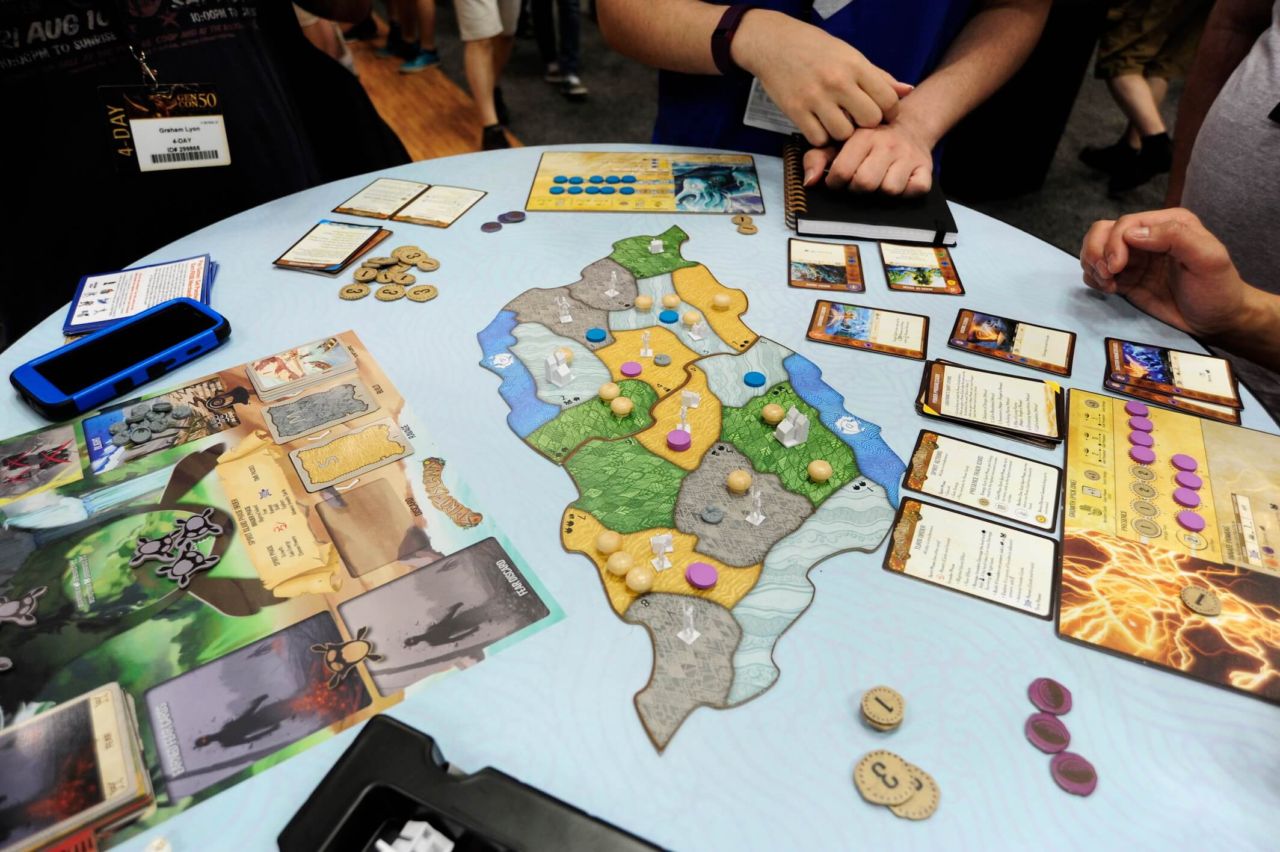
Spirit Island is like a co-op reverse-Catan that plays like a weird and wonderful mashup of Pandemic and Magic. Instead of playing as settlers building out villages and roads on a new island—a theme well-trod in board games—you take on the role of the elemental spirits charged with protecting the island’s various landscapes from those pesky invaders, who are controlled by the game itself. The island’s natives are there to help you fight back when they can, but it’s mostly up to you and your teammates to destroy the settlers’ nascent cities, remove the blight they introduce as they ravage your pristine lands, and gain more and better powers to help you on your way.

Gameplay is driven by cards, and as the game progresses, you’ll get more and better powers and instill more and more fear into the invaders’ hearts. Drive them off to win. In addition to its great theme, the game brings a ton of strategic depth. Whereas most co-op games tend to sit in the light-to-medium strategy level, Spirit Island is a meaty, heavy Euro. The game’s eight spirits play wildly differently from each other, so replayability is very high. Look for our review soon.

—Aaron Zimmerman

Pandemic Legacy: Season 2

Rob Daviau & Matt Leacock, Z-Man Games, 2-4 players, 60 minutes, age 14+
$64 on Amazon

The sequel to the semi-official best board game of all time might not quite live up to the utter platonic perfection of its illustrious ancestor, but it’s still a heck of a game. In short, you and three chums will work together to try to rekindle the embers of humanity 71 years after a torrent of deadly diseases swept the globe, in a familiar-but-different reimagination of the classic Pandemic ruleset. The legacy format should by now be familiar to most people, but it’s what makes Season 2 so compelling: each round your group plays counts toward the story, so every loss or stroke of bad luck brings the planet closer to its plague-riddled end, while every victory snatched from the jaws of defeat unlocks another unexpected little bonus.

In all, you play 12 to 24 games representing the course of a year, with the board and your characters changing each time as you unlock stickers to represent growing or falling populations, new skills, or scars picked up in the line of duty. This time around, you start with a tiny playing area: the known world is the East Coast of the Americas and the west of Europe and Africa, plus the three mid-Atlantic safe havens from which players distribute dwindling stocks of supplies to keep the sickness at bay. As you go along and explore more of the world, you expand the play area and your horizons by literally sticking bits of the world to the board. Without giving the plot away, there is true pleasure in all the ways the designers let you unlock more goodies. Read our review here.

—Tom Mendelsohn

Sagrada

Peter Wocken, Floodgate Games, 1-4 players, 20-40 minutes, age 14+
Currently unavailable

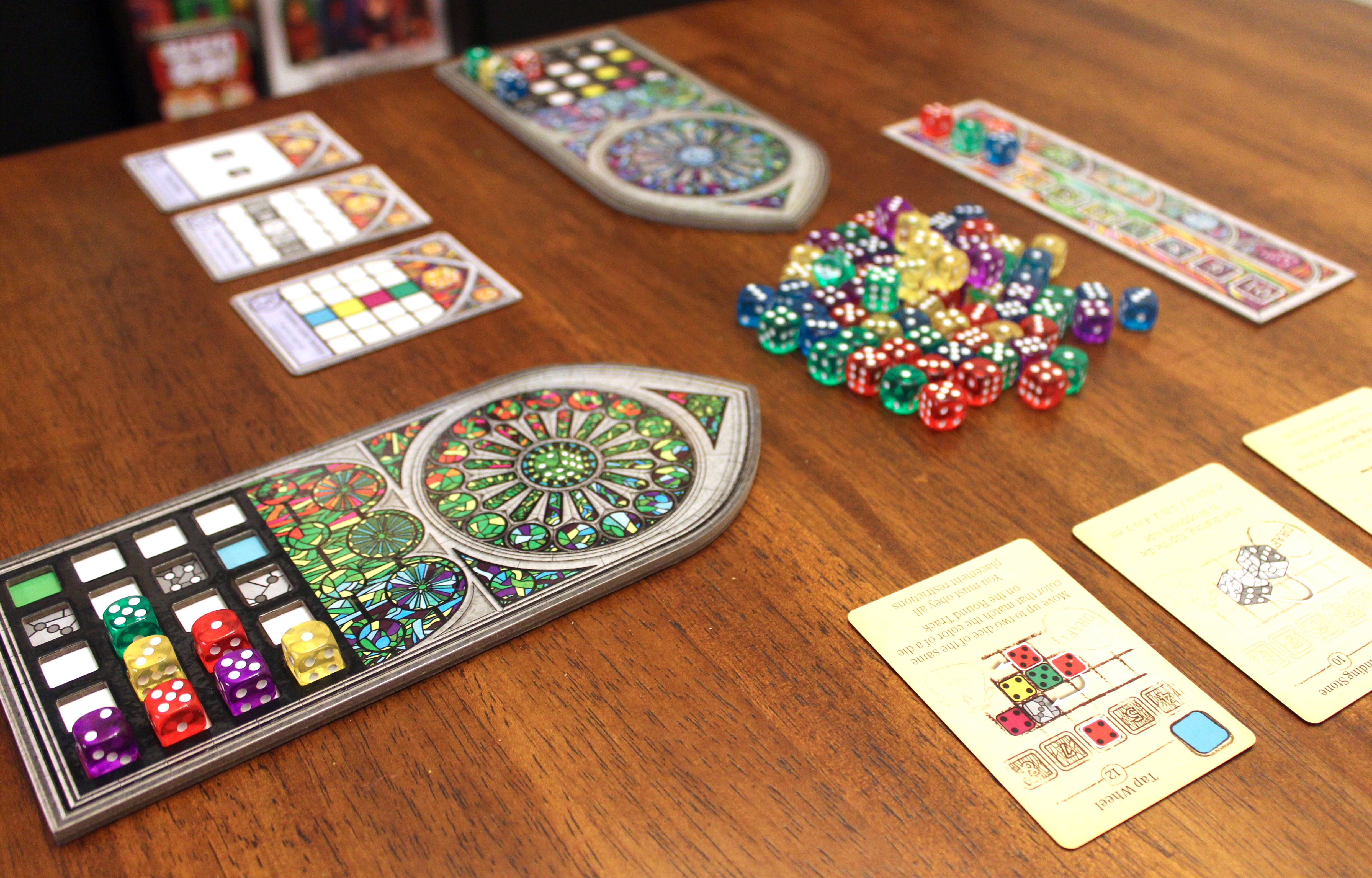
Constructing real stained-glass windows may or may not sound like a good time, but it’s pure pleasure in the world of Sagrada. In this dice-drafting game, players take turns picking dice from a pool available each round, then slotting those dice into the “window” they’re constructing on a personal player board. The boards themselves dictate where certain dice can go—only red dice here, only 2s there—while the game has its own global placement rules.

The trick is combining these placement restrictions with the dice on offer in any given round to maximize points based on the four different scoring cards that shape each game (three of these cards are public, while the fourth is private to each player). Because this can be difficult, the game also offers “tools” that can alter some of the rules—for a fee. Sagrada plays quickly, looks gorgeous on the table, and is a satisfyingly thinky experience with low rules overhead. Highly recommended for gamers who like solving gorgeous puzzles.

—Nate Anderson

https://arstechnica.com/?p=1233429


Reminder: Donate to win swag in our annual Charity Drive sweepstakes

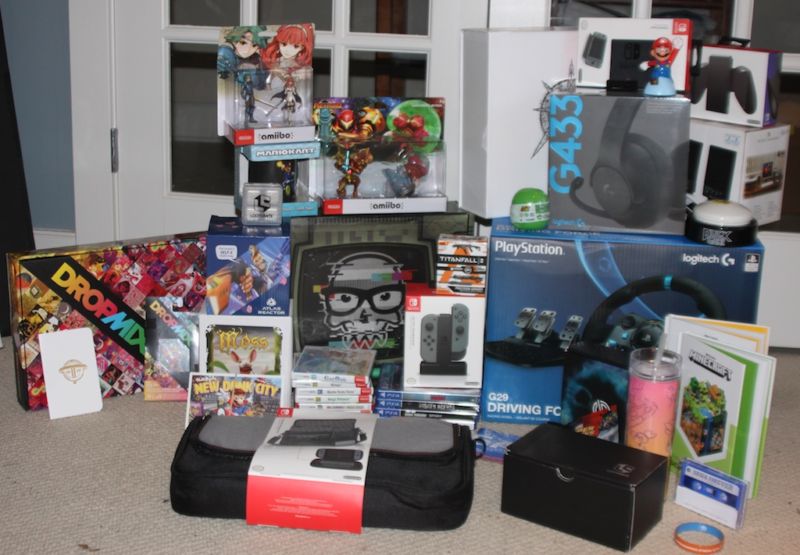
Enlarge / In addition to that sweet mixtape, here are just some of the prizes you could win by entering this year’s sweepstakes.

Here in the season of giving, hundreds of Ars readers have already given nearly $12,000 to the EFF and/or Child’s Play in this year’s Ars Technica Charity Drive Sweepstakes.

That’s a long way from the more than $38,000 we raised last year, but there’s still time for our readers to dig deep and set a new giving record for the site. That also means you still have time to get an entry in for a chance to win a piece of our massive pile o’ swag, which we can’t keep anyway (no purchase necessary for entry).

If you haven’t had a chance to give yet, follow the instructions below to get your donation counted and your entry logged for the sweepstakes. If you have given already, our deepest thanks from everyone here at Ars.

How it works

Donating is easy. Simply donate to Child’s Play using PayPal or donate to the EFF using PayPal, credit card, or bitcoin. You can also support Child’s Play directly by picking an item from the Amazon wish list of a specific hospital on its donation page. Donate as much or as little as you feel comfortable with—every little bit helps.

Once that’s done, register your entry in our sweepstakes. Just grab a digital copy of your receipt (a forwarded email, a screenshot, or simply a cut-and-paste of the text) and send it to ArsCharityDrive@gmail.com with your name, postal address, daytime telephone number, and email address by 11:59pm ET Monday, January 4, 2018. (One entry per person, and each person can only win up to one prize. US residents only. NO PURCHASE NECESSARY. See official rules for more information, including how to enter without making a donation. Also refer to the Ars Technica privacy policy.)

We’ll then contact the winners and have them choose their prize by January 31 (choosing takes place in the order the winners are drawn).

Remember to check out the sweepstakes launch post for a list of all the potential prizes, and thanks in advance for your donation!

https://arstechnica.com/?p=1236441