Sorry, PlayerUnknown, you probably can’t stop Battlegrounds‘ copycats

In the months since PlayerUnknown’s Battlegrounds became an out-of-nowhere top-selling hit, the Battle Royale genre of last-man-standing free-for-alls has been surging in popularity. Brendan “PlayerUnknown” Greene, though, says he isn’t too happy with the slate of “copycats” that have followed in Battlegrounds’ wake.

“There’s no intellectual property protection in games,” Greene complained to BBC Newsbeat recently. “In movies and music there is IP protection and you can really look after your work. In gaming that doesn’t exist yet, and it’s something that should be looked into.”

“Some amazing games pass under the radar,” he continued. “Then someone else takes the idea, has a marketing budget, and suddenly has a popular game because they ripped off someone else’s idea. I think it’s something the industry needs to look into. You’re protecting the work of artists basically. Games are art for a large part, and so I think it’s important they’re protected.”

Greene isn’t entirely correct when he says IP protection doesn’t exist in video games. Audiovisual elements like art, music, sound effects, character design, and text are all protected in games in much the same way they are in movies and music. When it comes to a game’s overall design and rules, though, US copyright law offers scant protection.

To be sure, a wholesale copy of a game that mimics the original in literally every way would probably be found to infringe on copyright. That’s what happened in a 2012 case brought by The Tetris Company against mobile title Mino, which mimicked Tetris in practically every way.

That said, it doesn’t take much to change a wholesale clone of a game into a legally distinct title that is merely “inspired” by the earlier game.

“Mino still could have gotten around the copyright protections with some relatively simple changes,” attorney and Law of the Game blogger Mark Methenitis told Ars at the time of the ruling. “If all of their shapes were five blocks, and the grid had different dimensions, and the blocks weren’t practically identically styled, I’m not sure we get to an infringement finding.”

It’s a problem that is particularly vexing for the developers of simpler indie titles, which are often easier to copy wholesale.

A Battle Royale patent?

To get more robust legal protection for a piece of game design, publishers have to go past simple copyright and through the much more rigorous process of filing for a patent. Game elements from loading screen minigames to racing game “ghost modes” have been covered by such patents in the past, forcing copycat companies to pay decades of licensing fees for the privilege of using the ideas. While patents for the design of entire games are sometimes granted (see Crazy Taxi‘s patent for one prominent example), it’s generally easier to patent a single unique gameplay idea.

Battlegrounds publisher Bluehole might be able to file for a patent for an integral element of the game, such as the encroaching cloud of poison that slowly shrinks the playing field. In theory, to get that patent, Bluehole would have to be able to show that idea was new, useful, and non-obvious in the world of gaming when it was created. In practice, though, companies often get patents for game design ideas even if they weren’t the first ones to use them (the Commodore 64’s Invade-a-load predated Namco’s patent on the same idea by eight years).

<em>Fortnite</em>'s Battle Royale map, complete with marked landmarks and a visible "run here to a safe radius" marker.
Enlarge / Fortnite‘s Battle Royale map, complete with marked landmarks and a visible “run here to a safe radius” marker.

Absent such a patent, though, there’s not much Bluehole can do to stop every publisher out there from cashing in on the Battle Royale craze, as they seem eager to do these days. Bluehole can make strongly worded statements against copycat modes in games like Fortnite and threaten to “contemplate further action” all it wants, but there’s not much it can do legally to stop those games from existing (unless the games directly steal things like character and art assets).

But Bluehole and Greene shouldn’t necessarily despair for their much-copied idea. Ultra-popular games from Pac-Man and Super Mario Bros. to Doom and Street Fighter II each inspired hundreds of clones in their heyday. While the earliest of these were just blatant ripoffs of a popular concept, the “copycat” phase eventually led to the flourishing of entire game genres as developers added their own tweaks and refinements to the formula. While the original creators didn’t maintain full control over the genres they inspired, those gaming progenitors usually went on to become some of the best-loved and most valuable franchises in gaming.

In his BBC interview, Greene is hopeful that developers will move on to the “genre flourishing” phase of their Battle Royale efforts soon. “I want other developers to put their own spin on the genre… not just lift things from our game,” he said. “I want this genre of games to grow. For that to happen you need new and interesting spins on the game mode. If it’s just copycats down the line, then the genre doesn’t grow and people get bored.”

https://arstechnica.com/?p=1233293


A toy story for nerds like us—Netflix’s The Toys That Made Us doc drops next week

Yesterday, Netflix quietly dropped a trailer (which is, for now, viewable only through the service) for an upcoming eight-part docuseries called The Toys That Made Us. Debuting on Friday, December 22, the project takes viewers back to perhaps the start of modern toy collecting—the 1980s.

The series comes from producer Brian Volk-Weiss, who has worked with Netflix on a bunch of comedy specials and notably did the 50 Years of Star Trek documentary for the History Channel. And it arrives at a time when obsessive nerd culture documentaries are seemingly being produced at an all-time high: Robert Kirkman has been taking viewers into the back stories of major comic characters on AMC, the My Life in Gaming guys continue churning out looks at historic games like Night Trap, and early 2018 will have more The Toys That Made Us alongside docs like the Midway arcade game-focused Insert Coin. Presumably, like many of the creators of such docu-content, Volk-Weiss grew up during the era of these toys and has himself become a collector over the years. (You can hear more of the backstory in this podcast where Volk-Weiss talks to the League of Geeks team.)

The first four episodes of The Toys That Made Us premiere next week, and based on the trailer, fans can expect He-Man, Star Wars, Barbie, and GI Joe to have their big-screen moments first. Following the series on Twitter, you can see behind-the-scenes images hinting at LEGO, Star Trek, Cabbage Patch, superheroes, wrestlers, Transformers, and Teenage Mutant Ninja Turtles still to come next spring.

For a sample of what you can expect, the trailer has fans reminding us that Barbie had 180 careers and that “GI Joe was a doll, this is not a doll—this [He-Man] is an action figure!” Given the timing, we’ll be particularly interested in a look at the Star Wars figures. The original Star Wars toys were a far cry in terms of quality from what the licensed Last Jedi collectibles will be—Kenner’s original specs called for a single-color injected plastic with just two spray-on colors. In fact, when modern companies like ReAction set out to do ’80s-style remakes, they’ve generally been made to match our memory of such toys—not the low-quality reality.

Even still, things like those Kenner Star Wars figures remain beloved and proved extremely valuable. “The Star Wars films have made roughly $7 billion at the box office,” one expert says (presumably in a pre-Last Jedi world). “The toys have made twice that amount.”

Listing image by Netflix

https://arstechnica.com/?p=1233133


It’s happening: Aliens are shooting up human space stations in Elite Dangerous [Updated]

Enlarge / Time to blow this taco stand.

Thargoids. If you’re a regular Elite Dangerous player, you know the name—they’re the enigmatic insectoid Big Bad Guys of the Elite universe that series co-creator David Braben has been teasing us with for a few years now. As far back as early 2015, Braben has been answering our repeated questions of “Where are the Thargoids?!” with the same quiet refrain: “They are coming.”

Folks, they’re here. And they do not like us.

We don’t go to the Pleiades

2014’s Elite Dangerous has its share of mysteries, and biggest among them are the Thargoids, who appear to focus their activities around the Pleiades Cluster. First encountered in 1984’s Elite in their massively powerful and difficult-to-kill octagonal spacecraft, the series’ lore says that humans were only able to defeat the technologically superior aliens via a biological weapon called the mycoid virus. But then, after a century of silence, the Thargoids crept back onto the stage. Almost a year ago, reports began to surface from players who had been ripped out of hyperspace by unknown enormous spacecraft that appeared impervious to all conventional attacks. A few months ago players learned that the unknown craft were indeed the Thargoids we’d been anticipating for so long and that the game’s 2.4 update would focus on their return from wherever they’d gone.

While at first the encounters were scary but peaceful, the 2.4 update changed things. Players were invited to join community goals to develop new weapons and defenses against the threat, and the Thargoids began fighting back when fired upon. Players researched and built more advanced toys to even the odds (with Elite publisher Frontier Developments tweaking those odds a bit as things unfolded), but things appeared to be contained. As indicated in the lore, the Thargoids stuck to the space around the Pleiades Cluster. Players were generally safe as long as they didn’t go there.

And then things escalated.

[embedded content]
This video by CMDR GluttonyFang shows an evacuation operation on one of the damaged stations. As usual, Frontier’s visual and sound design is outstanding and adds hugely to the tense, anxious feeling of the exercise.

Game over, man

Posts began flooding the game’s subreddit and official forums saying that human space stations were coming under attack. Stations in Elite Dangerous are enormous and invulnerable to human weapons (programmatically so), and when a player attacks one, they’re chopped into hamburger by the station’s automatic overpowering response. But the Thargoids have weapons humans don’t—and they’ve begun using them.

At least three stations (all affiliated with the primary anti-Thargoid in-game faction, the Aegis) in the area surrounding the Pleiades have come under attack: The Oracle in Pleiades Sector IR-W d1-55, Titan’s Daughter at Taygeta, and Linman Legacy in HIP 16753. In all cases, there are now “rescue ships” parked close to each station, and players have the opportunity to attempt to land at the damaged stations and help evacuate the stations’ populations to the rescue ships.

The visuals and sound design of the new content is absolutely top notch—par for the course for Frontier. As seen in the video above, the stations all bear distinctively Thargoid-ish attack marks, including odd spore-like growths on their reactor cores. The usual calm interaction with traffic control has been replaced with a breathless emergency message, and players need to fit heat sinks to their ships to avoid taking heat damage in the burning docking bays. Once you’ve snagged up as many passengers as possible (you’ll need to outfit your ship with economy-class cabins), players can whisk them away to the waiting rescue ship, then head back and grab some more.

Rescue ranger!
Enlarge / Rescue ranger!

Of course, as serious as this all is, it wouldn’t be Elite without player shenanigans. According to numerous posts and tweets, players attempting to participate in the rescue missions in open multiplayer are having to deal with not just the environmental hazards of the damaged stations but also with other players attacking them—either because they’re role-playing as Thargoid sympathizers or, more likely, just for the lulz. In fact, Frontier has apparently anticipated exactly these shenanigans and is selling both “xeno hunter” and “xeno ally” nameplates for players to display on their ships in-game.

What fresh hell…

We’re still early in the 2.4 rollout, and this set of station attacks is likely still prologue for what Frontier promises will be a wild set of content updates throughout 2018—collectively referred to as “Beyond.” The “Beyond” content includes not just more Thargoid attacks but a large number of improvements and tweaks to in-game systems. Frontier is putting time into addressing shortfalls in the game’s core components, like how crimes are(n’t) handled, the (lack of) in-game trading tools, and the (random) grind of engineering upgrades.

The timeline for <em>Elite Dangerous</em> 2.4 content, from October's Frontier Expo.
Enlarge / The timeline for Elite Dangerous 2.4 content, from October’s Frontier Expo.

And while all those changes sound like welcome fixes, high-concept in-game events like the Thargoid rollout are where the flash and excitement are. Describing new trade tools to a prospective Elite player isn’t going to get them to plop down money for the game; but sweet-ass alien attacks with burning stations and rescue missions? Yeah, that’ll do it.

We reached out to Frontier about the unfolding galactic war, but a company spokesperson informed Ars that they are not commenting on events in progress. I’m pretty sure I could hear maniacal laughter in the response.

Stay safe out there, commanders, for the void is dark and full of… insects or something.

Updated: This article originally stated that commanders who performed rescue operations at all three stations could get access to the “Rescue” ship decal pictured above, but this is not the case. The decal was instead only offered as a reward for activities during the 2.4 beta. Ars regrets the error.

https://arstechnica.com/?p=1233093


Mr. Robot S3: If you abandoned f-society last year, it’s time to come back

Enlarge / The holiday season is always stressful, perhaps more so for the Alderson family.
USA Networks
Warning: This story contains spoilers for S2 and S3 of Mr. Robot.

Early in last night’s S3 finale, Elliot has engineered his way into an FBI mole’s apartment and must search for something. If he can find what the Dark Army has on this guy, he/Mr. Robot thinks, then maybe they can leverage that and take down the Dark Army. Drawers frantically open, paper and pictures toss about, and then…. Irving, the hacker collective’s fixer, calmly appears out of nowhere to flip through books on the FBI agent’s shelf.

“I just finished this book. I got it on tape. I didn’t care much for the ending. Story can have a mediocre beginning, middle, and often times it does. But it’s always gotta have a ‘wow’ ending—otherwise, what’s the point?” he tells Elliot. “And whatever scheme you’re trying to come up with, it’s not going to change the inevitable.”

I don’t think it intended to, but Irving and the Mr. Robot writers’ room kinda sorta conversed with the audience in this moment. Sam Esmail and co. took a lot of grief and potentially alienated a section of viewers last year with a methodical S2 that hinged on a second annual major twist. But as S3 wrapped up last night, I found myself reinvested in the show like it was 2015 all over again. The team punctuated S3 with the wow this underrated season deserved, and the whole of these past 12 episodes reinvigorated confidence that Mr. Robot always had a similarly riveting endgame in mind. In retrospect, S2 was just necessary to get there.

Single story > single season

Even as the show took TV critics by storm and earned Emmy nominations with its first season, Esmail always maintained Mr. Robot started out as a screenplay and simply transitioned to television. Accordingly, he said the show should run four or five seasons from the get-go (USA recently committed to a fourth season). On a recent episode of The Watch podcast, the creator mentioned how watching Breaking Bad convinced him this kind of single cohesive story told over multiple years could work.

“I do remember seeing Breaking Bad and thinking to myself, ‘oh man, that’s one story,’” Esmail said. “Even prestige TV prior to that like The Sopranos or The Wire, any of those other shows had season-long arcs. They were procedural in a seasonal way. But Breaking Bad was one story from beginning to end. And, of course, they had different objectives each season, but it felt like a cohesive thing. That inspired me.”

In this line of thinking, the revelation that Elliot spent time in jail last year would merely be a small twist in the first half of a film… as opposed to a much debated plot twist midway through a hyped television season. And the true halfway point of Mr. Robot would’ve come sometime during S3, which ends by finally putting Elliot in direct odds with big bads White Rose and the Dark Army. Both the events of this season—some surprisingly violent ends, major shifts for both f-society and the FBI—and the setup going forward feel satisfying.

The issue, of course, is that some viewers will never get to this point. In an era with so many entertainment options and so many ways to catch up on something critical consensus deems “good,” the incentive to continue on with a show that loses your interest is minimal. And with something like Mr. Robot (for many, it built up a single season of good will) as opposed to an entity like Game of Thrones (multiple seasons of such investment before hitting a “clunker”), an audience’s amount of patience is simply lower.

Esmail’s commentary on The Watch can be illuminating here, too. He places this past season (S7) of Game of Thrones within his top television of 2017 despite hosts Andy Greenwald and Chris Ryan each dismissing it as a sort of set-piece-moving collection of episodes. But if a television show strives to have a singular story ala films or print fiction, Esmail argues, those kinds of passages become necessary for building the overall narrative:

If we’re in this atmosphere where shows need to tell a singular story, you’re going to have seasons that are steps to set up the next thing. Just because you don’t have every pay off or every thing coming to a conclusion by the end of the season, it’s not a mistake. S5 was bemoaned, but I thought it was great. It set up S6 and everyone went ape-shit over S6, but S6 wouldn’t have worked without S5. Go back and revisit S5, it’s a great season of television… What you’re going to do is love the final season, and you’ll realize this season was obviously necessary to get to that. We need to appreciate the different stages of storytelling you have to go through to tell a single story. There has to be a way to appreciate when a show changes gears and see the forest through the trees a little bit.

Frenetic and fantastic

Obviously, whether dealing with the trees proves worth the time investment is impossible to know in the moment. While S2 of Mr. Robot left more questions than it answered and offered some frustrating plot points (in addition to the Elliot prison sentence, remember Tyrell Wellick was nonexistent after being arguably the second most important character in S1), S3 largely stayed riveting.

Creatively, Esmail and the team seemed to hit another level. Episode five’s production high-wire act saw an engaging heist story (again with Angela stepping up to the plate and executing a hack) done entirely in a one-shot aesthetic. And the show found new ways both visually and narratively to incorporate Elliot’s lack of control over the Mr. Robot persona. The team used glitch sounds and stunted pictures in various ways. They had Mr. Robot tossing his body into harm’s way to protect the plan or later communicating with Elliot via their psychiatrist, bathroom mirror soap, and computer text (the call back to their early Ferris wheel conversations in the finale was particularly nice). Like Stranger Things’ use of Mike and Eleven, Mr. Robot seemingly kept its most dynamic interaction—Elliot and Mr. Robot—to a minimum for most of the season, but the fact that this didn’t derail everything speaks to the strength of the story and supporting cast in S3.

New characters like Bobby Cannavale’s Irving brought a level of comedic relief initially before morphing into hyper-violent Lynchian-type villains later on (based on sequences like Angela’s interactions with the house manager at the Price estate or her chat with White Rose in earlier seasons, it shouldn’t shock anyone to learn Esmail is a big Twin Peaks fan. He even interviewed that series’ co-creator Mark Frost for The Talkhouse this fall). Old favorites like Leon somehow delivered more of what made them delightful (Knight Rider > Frasier) while finding additional ways to surprise. His unflinching loyalty to the Dark Army late season—with Trenton and Mobley, in the barn, and at Elliot’s apartment—made him terrifying. Add in the typical level of technical detail and the continued layering of the 5/9 attacks’ impact throughout the show (Elliot spends an entire episode seemingly dealing with depression and suicide ideation; we see military-enforced curfews and fires in the streets in the background of many episodes), and the television-making here seems to rival anything else currently airing.

Maybe S3 wasn’t perfect. Did we need an entire hour of Wellick’s backstory journey, or could that have been interspersed with more present-day story? Have the Trump digs felt natural (a finale revelation that the Dark Army helped a Russian propaganda machine) or distracting (White Rose asking a right-wing talk show host to really pump up Trump in the run-up to 2016)? The answers will differ from viewer to viewer, but it’s clear S3 hews closer to the highs of that first Mr. Robot run than it does to the up-and-down nature of the second.

When taken into context with Esmail’s grand vision, it appears the series is about to hit its third act at full speed. Dom’s life has changed dramatically, Angela no longer believes in a sci-fi dream, and Elliot has a new bullseye for his superhero-like hacking abilities (plus a recommitted sidekick within him). Accordingly, the hype and anticipation for S4 should surpass where fandom stood heading into this 12-episode run, but it’s easier to feel confident in what’s to come after a plethora of hair-on-your-arms late season moments like that last Elliot monologue.

“One good thing came out of all this—they showed themselves, the top one percent of the one percent, the ones in control, the ones who play God without permission,” he says. “And I’m going to take them down; all of them.”

https://arstechnica.com/?p=1232425


The Last Jedi has something unusual for a Star Wars movie: Nuance

Enlarge / Watch out for giant faces and TIE fighters!

Spoiler-free assessment

There are a lot of good things I expected from Star Wars: The Last Jedi, but nuance wasn’t one of them. You can usually depend on this franchise to deliver zoomy action steered by easily recognizable good guys and bad guys, their motivations untainted by complexity. The possible exception would be The Empire Strikes Back, and The Last Jedi Writer/Director Rian Johnson is obviously trying to evoke that film here.

Luckily, The Last Jedi is not a reboot or recreation of The Empire Strikes Back, the way The Force Awakens was of A New Hope. Jedi turns our characters into multi-faceted people and takes the series in new and unexpected directions.

Without giving away any of the plot, I can say that The Last Jedi’s greatest strength comes from its characters—and of course the actors who play them. Instead of giving us legendary heroes whose main job is to propel the plot, The Last Jedi focuses on our protagonists’ struggles with the same everyday problems that all sentient creatures face. They are conflicted, disappointed, and unsure what to do. They go on wild goose chases. They do the wrong thing, or the right thing for the wrong reasons. In other words, they feel realistically ordinary. Luke actually makes fun of his mythical reputation when the wide-eyed Rey (Daisy Ridley) begs for his help (Mark Hamill is in fine form here as a sarcastic old dude).

The grand arc of the Star Wars series is about how the scrappy Rebels fight the yoke of Imperial oppression. But at the same time, the movies have always revolved around aristocratic families and their precious dynastic bloodlines. What sets The Last Jedi apart, ultimately, is that we’ve finally got a team of Rebels who feel like members of a nascent democracy. They’re mostly Plebeians, not Patricians, regular people who rely on each other to rise up and challenge an authoritarian military power that’s galactic in scope.

At a time when the rebellion is on the brink of annihilation, it’s refreshing to see the franchise abandon its fixation on princesses and Skywalkers. Sure, they’re around—both Carrie Fisher as Leia and Adam Driver as Kylo Ren are standouts—but increasingly our attention is on the gleefully self-identified “Rebel scum” like Finn (John Boyega) and engineer Rose (newcomer Kelly Marie Tran). Sometimes this makes it feel like we’re trying to follow too many characters, especially in the middle of the film.

But The Last Jedi delivers enough desperate action and saber-smashing to make us feel like there’s always something bigger at stake. Our rebels are battling for a true Republic, where ex-janitors can stand on equal footing with generals.

As the action unfolds, there are plot twists you might not expect. And when the camera looks deep into Kylo Ren’s eyes… let’s just say it’s actually creepy in a way that goes beyond the usual “guy in a black cape” theatrics. Long after you’re done with your popcorn, you’ll find yourself wondering what the real difference is between the Light Side and the Dark Side. Despite a few meandering scenes, The Last Jedi is successful both as an edge-of-your-seat adventure and as a political fable that feels almost timeless.

And now… a little more analysis with light spoilers

There are some very minor spoilers after the gallery.

The Last Jedi continues The Force Awakens‘ preoccupation with passing the torch, as Luke and Leia must learn to take a back seat to Finn, Rey, Poe, and the brave engineer Rose. As I said earlier, this film is as much about character as it is about plot—some early reviews have accused it of being aimless because the action mostly focuses on a couple of harebrained Rebel schemes.

The Last Jedi is, in fact, a very dark film. It’s reminiscent in some ways of the 2003 Battlestar Galactica miniseries where humanity is being rapidly blown to bits by cylons who can track them anywhere. As the action begins, we discover that the First Order has figured out a way to engineer the Rebels’ certain defeat—unless Rose and Finn can pull off a desperate trick. Meanwhile, Rey is with Luke, trying to learn as much as she can from the Jedi Master as he decides whether to rejoin Leia and the rest of the resistance.

Light and dark

It’s all relatively straightforward until the film starts building on the twisted connection between Rey and Kylo Ren that we saw in The Force Awakens. Kylo Ren is what Anakin should have been in episodes 1-3. He’s magnetic and repulsive, and Driver skillfully plays him as balanced between infantile rage and nihilistic calm. Rey is a perfect foil for him, with her gravitas and clear sense of justice.

We’ve seen good characters struggle before with temptation by the Dark Side. But I don’t recall ever seeing an evil character struggle with temptation by the Light the way Kylo Ren does. Sure, there was the turning of Darth Vader—but that felt like a deathbed confession. We never got to see what Darth Vader would do after turning back to the Light. The Last Jedi teases us with this possibility for Kylo Ren, just as it teases us with Rey’s inner darkness.

Rey and Kylo Ren’s evolving relationship raises intriguing philosophical questions that lurk beneath the surface of the action. Are we witnessing a transformation of the Force itself? What if Light and Dark need each other to survive? What if the Dark Side actually has something to offer that isn’t just evil and horror?

New layers to the worldbuilding

These questions remain subtext, and indeed it’s possible to enjoy The Last Jedi without mulling over any spiritual conundrums at all. There’s plenty to enjoy just in the movie’s epic worldbuilding. We get a closer look at the power structure of the First Order, but we also get to goof around on Luke’s Jedi retreat island with its stunning vistas and weird wildlife. There are ocean cows, milked by Luke in one of the film’s many comic moments; and of course there are the delightful porgs, already a fan favorite, who look like a cross between guinea pigs and penguins run through a Meitu filter.

Some of this worldbuilding has an edge to it. When Finn and Rose go to the luxurious casino city Canto Bight, frequented by the galaxy’s wealthiest arms dealers, we get to see another side of the war. Here, guests with no loyalty to Leia or Snoke dine in gilded rooms while slaves live in the stables. Their only ruler is profit. It feels like Director Johnson is taking us on a frenetic cruise through his vision of the Star Wars universe, which makes sense when you consider that he recently signed a deal with Disney to create his own, original Star Wars trilogy unconnected to the main storyline.

While some viewers will delight in the new worlds we see in The Last Jedi, others may find these plotlines boring or pointless. We learn a lot about Finn and Rose’s back stories and see why Hux (Domhnall Gleeson, camping it up) is pissed at Kylo, but these bits are admittedly less vital to the plot of Kylo Ren’s true relationship to Luke—and the real story about Rey’s parents. Plus, what about the freaking resistance? There are definitely moments when we simply lose sight of what’s going on in the war because we’re watching BB-8 deal with a drunk alien who thinks the little droid is a slot machine.

That said, The Last Jedi is a challenging and satisfying movie on many levels. It’s fluffy and diverting at times but ultimately delivers a much-needed message about how hope will always reignite the resistance against political failure and galactic chaos.

https://arstechnica.com/?p=1232029


Crytek sues Star Citizen developers over game engine

Enlarge / Star Citizen‘s developers are flying into their own legal asteroid field, courtesy of Crytek.

Star Citizen‘s lengthy and heavily crowd-funded development has been marked by numerous changes to the project’s direction and scope, including a move from Crytek’s CryEngine to Amazon’s Lumberyard in late 2016. That change is now the focus of a lawsuit from Crytek, which accuses Star Citizen developers Roberts Space Industries (RSI) and Cloud Imperium Games (CIG) of copyright infringement and breach of contract.

The complaint, filed in the US District Court for Central California, lays out how RSI agreed to work exclusively with CryEngine in a 2012 agreement, an agreement it says was broken when RSI moved to Amazon’s Lumberyard engine in late 2016.

In a blog post following that transition, RSI’s Chris Roberts explained that Lumberyard was essentially a more promising fork of an earlier CryEngine build that fit better as a base for “StarEngine,” his name for the “heavily modified” version of CryEngine the developers were then using. “Crytek doesn’t have the resources to compete with this level of investment and have never been focused on the network or online aspects of the engine in the way we or Amazon are,” Roberts wrote.

In its complaint, though, Crytek says its agreement with RSI and CIG laid out that CryEngine would be the exclusive engine used for the game and that RSI would “display Crytek trademarks and copyright notices in the Star Citizen video game and related marketing materials.” Crytek says it offered the developers “a below-market license rate” on CryEngine and “invested significant time and expense in creating impressive demonstrations and proofs-of-concept” to help with the game’s initial crowdfunding campaign in exchange for this exclusivity deal.

Crytek also accuses RSI and CIG of breaking their agreement by using CryEngine on the standalone Squadron 42, a spin-off, single-player campaign announced in late 2015 that Crytek says was not covered by the original contract. Crytek further alleges that RSI did not provide promised CryEngine bug fixes mentioned in the contract and shared confidential pieces of CryEngine code in a “BugSmashers” video series.

“We are aware of the Crytek complaint having been filed in the US District Court,” a spokesperson said in a statement provided to Ars Technica. “CIG hasn’t used the CryEngine for quite some time since we switched to Amazon’s Lumberyard. This is a meritless lawsuit that we will defend vigorously against, including recovering from Crytek any costs incurred in this matter.”

Still waiting

The lawsuit is another problematic wrinkle for the extremely ambitious and long-delayed Star Citizen, which released a third alpha version to a small subset of backers in October. The game has now raised over $173 million in crowdfunding from nearly 2 million backers, leading to a panoply of stretch goals expanding the size and scope of the online space-faring simulation since its original $6.3 million Kickstarter in 2012.

Some players have tired of waiting for RSI and CIG to live up to their vision, though, including a group that is tracking 522 separate developer promises that are overwhelmingly still unfulfilled or broken at this point. Roberts has been pushing back on allegations of feature creep since 2015, though, calling “bullshit” on demands for a “less impressive game” that meets “artificial deadlines.”https://arstechnica.com/?p=1232371


Disney to buy part of 21st Century Fox for $52 billion

Disney announced today that it will acquire a huge portion of 21st Century Fox in an all-stock deal valued at $52.4 billion. As part of the deal, Disney will own 21st Century Fox’s film and television studios, some of its cable networks, and international TV businesses, as well as popular titles including The Simpsons, X-Men, and Avatar. The deal represents a huge shift in content ownership in Hollywood, giving Disney even more titles, characters, and stories to build upon across all its existing properties and any new services the company debuts in the future.

Disney did not acquire all of 21st Century Fox—the deal focuses on the company’s entertainment businesses. 21st Century Fox announced plans to spin off its news and sports broadcasting businesses into a new company dubbed “Fox.” This company will focus on news and sports and will include Fox News Channel, Fox Business Network, FS1, FS2, among other properties.

If the deal gains regulatory approval, Disney’s already gigantic pool of content will expand even further. The company will own cable channels including National Geographic, FX Networks, Fox Sports Regional Networks, and international networks like Star TV and Sky. 21st Century Fox is expected to complete its acquisition of Sky, a popular network in the UK and Europe, by mid-2018. If and when it does so, Disney will own all of Sky.

This also has implications for the Marvel comic book universe. 21st Century Fox retained some character rights even after Disney bought Marvel in 2009, but this deal would bring all those rights, including those to X-Men, Fantastic Four, and Deadpool, back to Disney. Crossovers between worlds are also possible, and may be likely, as Disney notes in its press release that the deal will let the company “create richer, more complex worlds of interrelated characters and stories that audiences have shown they love.”

Disney’s content grab is about more than just building complex worlds and new stories. The company is slated to debut its own streaming service in 2019 and this deal provides Disney with even more content to bolster it with. That streaming service will directly compete with Netflix, a company that has been focusing more on creating original content rather than acquiring existing titles. Netflix pledged to spend $7 billion to $8 billion in 2018 on original content with the hopes that it can continue to make hit series like Stranger Things and The Crown.

2019 may be far in the future, but Disney is already making moves to separate itself and its content from existing services. The company already pulled major titles including Star Wars from Netflix, and it’s likely that other Disney content will eventually disappear from Netflix and other services well before its own streaming service debuts.

Another interesting result of the Disney-21st Century Fox deal is that Disney will have a majority stake in Hulu if the deal is approved. Disney already owned 30 percent of the streaming service while 21st Century Fox owned another 30 percent. It’s unclear how Disney will treat Hulu in the future, particularly after the launch of its forthcoming streaming service.

But the deal still has to pass regulatory approval before any of this content shuffling can take place. While Comcast was approved to purchase NBCUniversal in 2011, the Trump administration has sought to block AT&T’s purchase of Time Warner. It could be over a year before we know if Disney and 21st Century Fox can close the deal.

https://arstechnica.com/?p=1232251


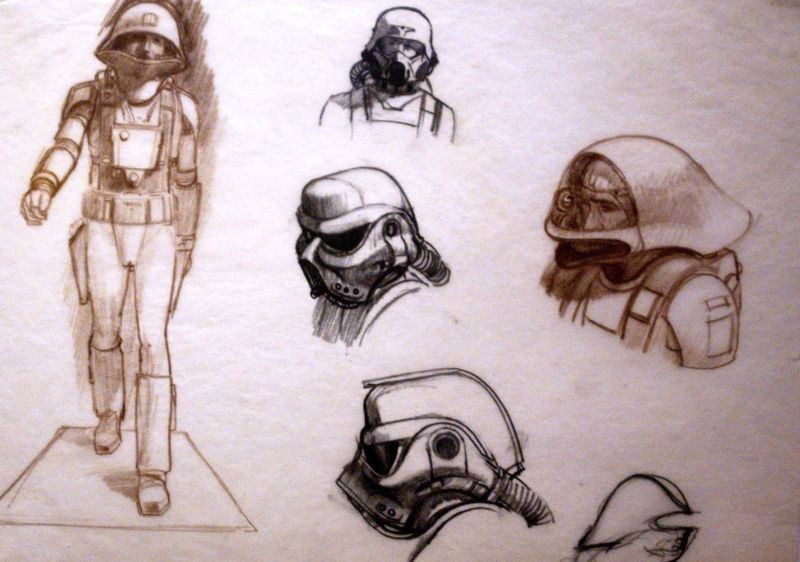
Ever wondered what 1975’s The Star Wars would have looked like?

Enlarge / Original sketches of Imperial Storm Troopers by artist Ralph McQuarrie.
Spencer Platt/Getty Images
Relax, this post contains no spoilers.

While most Star Wars pieces you’ll see this week are focused on the soon-to-be-revealed adventures of Finn, Rey, Poe, and BB-8, today we’ve got a blast from the past to share with you—sort of. As any self-respecting nerd will tell you, the whole look-and-feel of the Star Wars universe owes a lot to Ralph McQuarrie. In 1975, George Lucas hired the conceptual artist to create the characters and worlds that then only existed on the pages of his scripts. So McQuarrie’s paintbrush created the first images of C-3PO, R2-D2, Darth Vader, stormtroopers, and others, not to mention all those TIE fighters, X-Wings, and Y-Wings.

His paintings and concept art heavily informed Lucas’ filmmaking, and the director reproduced many of McQuarrie’s pieces in Star Wars. But quite a lot changed between the earlier scripts McQuarrie was working from and the film that audiences saw in 1977. Stormtroopers used lightsabers. Luke Skywalker was a girl. And the Millennium Falcon looked very, very different. Now, thanks to the 2017 graduating classes of the DAVE School, we have an idea of what a 1975-era movie—The Star Wars—would have looked like:

[embedded content]

In Mark Cotta Vaz and Shinji Hata’s book, The Star Wars Archives, McQuarrie said “my job, as George defined it, was to capture the grand theme, scale, the complexity of structures. After that, they’d worry about the effects and whether it could be built or not.”

Advances in CGI—in part driven by Lucas and the stories he wanted to tell—can now free the artist’s vision in a way that simply wasn’t possible 40 years ago.

McQuarrie went on to work with Lucas on the next two Star Wars films, and he had a hand in the spacecraft we saw in Battlestar Galactica, Close Encounters of the Third Kind, and E.T. But his early work remains relevant; in theThe Star Wars Archives we also learn an sketch for R2-D2 depicted “the droid perched on a large ball bearing.” Lucas ditched this for the tripod undercarriage we know and love, but that sure sounds like a description of the adorable BB-8 to me.

Now, if you’ll excuse me, it’s almost time to start rewatching everything before The Last Jedi arrives later this week.

https://arstechnica.com/?p=1231625


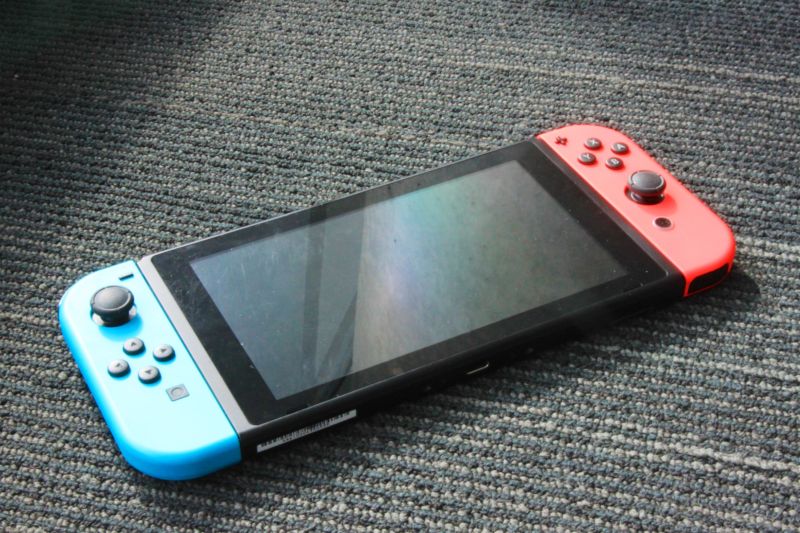
Putting Nintendo Switch’s 10 million sales in context

If you’ve been following video game news at all this year, you’re probably tired of hearing stories about how the Switch is the hottest selling console since the Sliced Bread 64. With Nintendo announcing this morning that its console has sold 10 million units in under nine months—before its first holiday season is even complete, to boot—we thought we’d skip the wordy analysis and just give you some relevant numbers that put the Switch’s current sales in context. As far as recent consoles go, the Switch’s sales so far put it in some pretty rarified company.

(Note that for most of these comparisons with other consoles, the time period includes an entire holiday season following a mid-November launch).

https://arstechnica.com/?p=1231065


Gorogoa review: Beneath four panels hide gaming’s most beautiful surprise

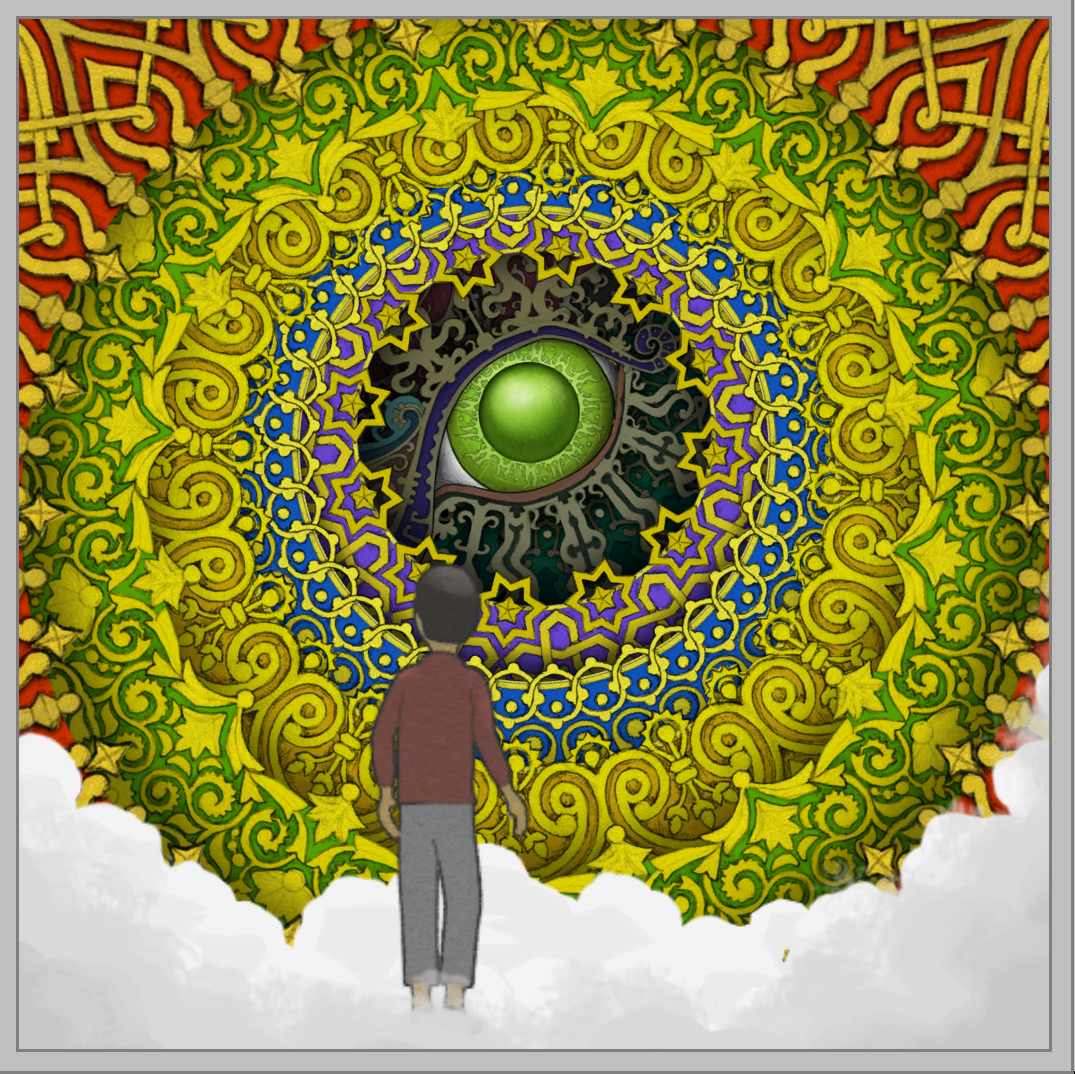
Enlarge / Look into the eye of the incredible Gorogoa.

After my last click of the mouse, the screen went to black, with only the word “Gorogoa” flashing. Those seven all-caps letters exploded out of the emptiness I’d just exposed by solving the final puzzle.

I nearly doubled over in my chair, overwhelmed with the emotion I felt trying to make sense of what had transpired. The game gave me some breathing room to do so, with a solemn song playing while credits rolled. After those, a single panel appeared. The game had begun again. Flipped to page one.

I describe this “ending” moment because it answers a critical concern about the puzzle game Gorogoa, which has been in development for an astonishing six years and was made almost entirely by one man, Jason Roberts. Gorogoa is, quite frankly, short. At the end of six years of development, Roberts has produced a little over two hours of gameplay.

But that’s like saying your favorite illustrated book is only 24 pages or your favorite children’s movie is only 70 minutes. Like those kinds of art, Roberts’ creation stands out because it absolutely works as a “play it again” dive into spirituality, loss, and rebirth. Gorogoa‘s clever gameplay tricks and gorgeous, hand-drawn art will stay with you for a long time.

Panel placement

Roberts’ creation raised eyebrows back in 2012 when he released a free, playable demo of its opening puzzle. Much of that original version still exists in the final Gorogoa, which starts out feeling like a successor to Myst. You see a hand-drawn boy studying at a desk, flipping through pages, until he pauses, awaiting your input. Aim your mouse until it turns from a cursor to a finger-shaped pointer, then click and prod the scene along.

What makes Gorogoa different from something like Myst becomes apparent almost immediately, when the panel you’ve been clicking shifts to the top-left of the screen. As it turns out, Gorogoa‘s playfield is a two-by-two grid of four panels. And now, when you click on that original panel, you lift its outer edge. Click-and-drag to drop that frame elsewhere on the grid to continue.

This trick is Gorogoa‘s alpha and omega. Sometimes, you’ll pull a frame or border off of one panel to reveal an entirely new landscape underneath it, which you can click through to expose new puzzles. Other times, you’ll realize that some of the panels’ contents line up perfectly, perhaps in the shape of a door or a window, and you can combine them to make a new path. Still other times, you might notice that one panel’s left edge is covered in symbols… which line up perfectly with another panel’s right edge. Maybe you should arrange those panels to sit side-by-side in the two-by-two grid and see what happens.

Those are just a few of the awe-inspiring tricks that play out when clicking on panels, moving panels, combining panels, and more. Gorogoa‘s rules of engagement change at a moment’s notice, and entire, elaborate scenes can vanish with a single puzzle-solving click, leading you to an altogether new mechanic and new panel-shifting rules.

Base camp

Gorogoa‘s best moments come when you click around the exact way Roberts intends for you to, at which point his illustrative handiwork explodes. 3D effects occasionally play out to punch up the transitions between his major puzzles, but for the most part, Gorogoa is all drawn by hand material. Roberts’ artistic approach loudly resembles the works of children’s book illustrator Graeme Base (Animalia, The Eleventh Hour), in that every scene is packed with intricate line work and hidden details. In many of its scenes, Gorogoa adds the bonus of exposing more art simply by clicking on a scene.

Roberts’ use of hidden doodads can be slightly obnoxious if you’re dead set on solving puzzles and not admiring beauty, as some of the click-to-zoom moments do nothing more than linger over an incredible piece of art. Gorogoa‘s “play it again” appeal helps here, as Roberts tells quite a story through his hundreds of unique panels. In the course of gameplay, Roberts does a remarkable job summoning older motifs and archetypes, like the chorus of a song, which works to ground the game’s visual cornucopia. Still, the second (and even third) return to Gorogoa is nigh essential to understand its story and its characters. (Or is it just one character?)

At its worst, Gorogoa expects you to click through certain puzzles in an exact order and not necessarily with rhyme or reason as to why. In my first run-through, I ran into two “pause and come back” stumper points in which I already knew the solution, but not Roberts’ preferred clicking path. These were annoying but tolerable. Otherwise, the game lays out plenty of clues and organic nudges to guide you through its ever-changing rules and systems. Part of Gorogoa‘s brevity is that its puzzles rarely get in the way of appreciating Roberts’ visually rich world. (He’s also careful to reduce clutter and over-complication; you won’t find an “inventory” menu or any other outside system. Just click to navigate.)

Do you have kids? Buy and share Gorogoa as soon as you can. This game is admittedly dark and somber, but its saddest content is more of an issue of tone and confusion than outright inappropriate material, and its delightfully illustrated puzzles do not come more recommended for children. Hardcore puzzle fans, meanwhile, should do their best to take a breath while coming up with Gorogoa‘s solutions and admire the gorgeous story.

Should you rush along, feeling like a puzzle-solving genius, that’s OK. Gorogoa will flip its own pages back to the beginning when you finish. And you should definitely play it again.

The good:

  • Arguably the prettiest hand-drawn, hand-illustrated video game ever made.
  • Panel-sorting system pays off as much with clever puzzles as it does with wonderful story-related revelations.

The bad:

  • Those moments when certain puzzles’ solutions are obvious, but the exact clicking order isn’t.

The ugly:

  • Even as a short-and-sweet game, it’s hard to say goodbye to Gorogoa‘s story so soon.

Verdict: Buy.

https://arstechnica.com/?p=1212893