Portal 2 ends 9 years of Xbox 360 “Games with Gold” freebies
Enlarge/ It’s more than a decade old, but Portal 2 remains a premiere co-op puzzle game.
Starting September 16, Portal 2 will be the last Xbox 360 game made available for free to Xbox Live subscribers via the Games for Gold program.
Microsoft told subscribers in July that its monthly Games with Gold offerings “will no longer include Xbox 360 titles” starting on October 1 because “we have reached the limit of our ability to bring Xbox 360 games to the catalogue.” The Games with Gold program will continue to offer free monthly Xbox One games, though, as it has since 2015.
While Microsoft stopped producing Xbox 360 hardware in 2016, all but a handful of the Games for Gold offerings from the system’s library have been backward compatible on the Xbox One (and, more recently, the Xbox Series X/S). Redeemed Games with Gold titles can still be played and redownloaded even after a user cancels an Xbox Live Gold subscription as well.
Interestingly, September’s Games with Gold offerings also include Thrillville, an original Xbox title that was made compatible with more modern Xbox hardware in November 2021. This is just the 19th original Xbox game offered via the Games with Gold program, and it’s the first since Conker: Live and Reloaded was added in July 2021.
Microsoft has in recent years faced persistent rumors that it is planning to phase out its Xbox Live Gold subscriptions in favor of the more expensive and expansive Xbox Game Pass subscriptions. Microsoft shut down those rumors in August 2020, saying in a statement that Xbox Live “is an important part of gaming on Xbox today and will continue to be in the future.” Last July, though, VentureBeat reporter Jeff Grubb said on the Giant Bomb podcast that “I just wanted to reiterate, Xbox Live Gold is still on a board somewhere saying ‘this is going to go away at some point.'”
Sony launches lighter PS5 model for second straight year
Enlarge/ Let’s open you up and see if we can get rid of some of those weighty internal components, OK?
At its launch in 2020, the PlayStation 5 wasn’t just one of the biggest game consoles ever made. It was also one of the heaviest, with the full-fledged Disc Drive Edition weighing in at 9.9 pounds (4.5 kg) and the Digital Edition hitting 8.6 lbs (3.9 kg). Today, though, the eagle-eyed reporters at Press Start have noted the release of a new set of PS5 models that weigh about 13 percent less than their launch counterparts.
The new PS5 models (CFI-1202A and B for the Disc and Digital versions, respectively) first showed up on some Japanese retail sites over the weekend with a planned September 15 launch date. But Press Start reports that the new models are on shelves in many Australian retailers right now, including manuals listing their official weights at 8.6 lbs (3.9 kg) for the Disc Drive Edition and 7.5 lbs (3.4 kg) for the Digital Edition. No other changes are apparent in either the size of the system’s casing or the listed system specs, according to the report.
Lighter and more expensive than ever
Those who follow the minutiae of game console hardware manufacturing might remember that this isn’t the first internal revision to the PS5 hardware. The CFI-11XX models—which also hit Australia first in August 2021— came in at 9.25 lbs (4.2 kg) and 7.9 lbs (3.6 kg) for their Disc and Digital Editions, respectively. That effectively splits the weight difference between the launch model and the newest model hitting Australia today.
Model
Year
Disc Drive
Digital
CFI-10XX
2020
9.9 lbs (4.5 kg)
8.6 lbs (3.9 kg)
CFI-11XX
2021
9.25 lbs (4.2 kg)
7.9 lbs (3.6 kg)
CFI-12XX
2022
8.6 lbs (3.9 kg)
7.5 lbs (3.4 kg)
Later testing showed last year’s weight reduction was due to a smaller, redesigned heat sink that seemed to improve the console’s heat dissipation. It’s not immediately clear what makes the newest models lighter, but supplier-sourced reports from earlier in the year suggest Sony was moving toward a new, 6 nm production process for the system’s AMD-made CPU. Besides potentially helping with manufacturing yields, that change could also have been part of an internal redesign that sports fewer weighty parts than in the past (or just an even better, lighter heat sink).
The Australian launch of the new PS5 model comes days after Sony raised the suggested retail price of the PS5 by up to 13 percent in many non-US regions, including Australia. Interestingly, the Japanese price increase is set to go into effect on September 15, the same day that Japanese retailers list for the launch of the new CFI-1200 model.
Both Editions of the PS5 have shown a nearly linear weight-loss pattern in less than two years on the market. If those trends continue at the same rates, the Disc Drive Edition of the PS5 will weigh exactly zero pounds on August 31, 2034, with the Digital Edition hitting weightlessness on March 20, 2035. Frankly, we don’t see any reason to doubt the eventual release of a mass-free PS5 in the fullness of time.
https://arstechnica.com/?p=1876773
Meta’s next VR headset will launch in October
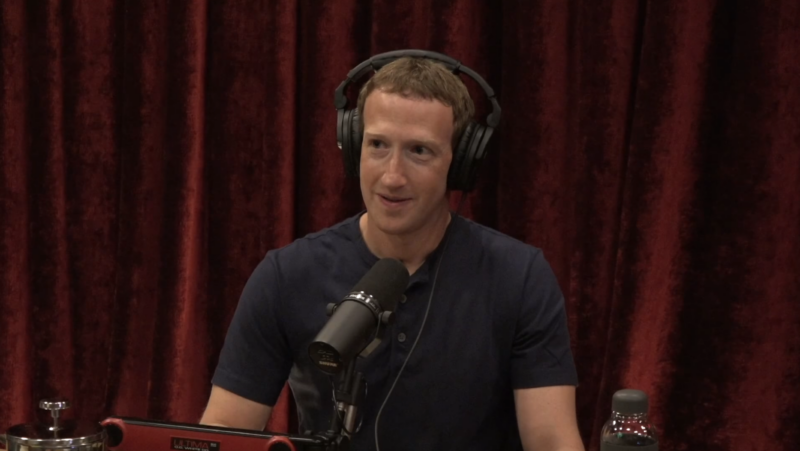
Enlarge/ Mark Zuckerberg discusses Meta’s VR ambitions on The Joe Rogan Experience.
Meta CEO Mark Zuckerberg has publicly pinned a launch window for the company’s next major VR headset. In an interview on The Joe Rogan Experience podcast, Zuckerberg said the device is coming at Meta’s Connect conference in October.
Zuckerberg described some key features of the new headset—most notably the ability to track your facial expressions and represent them on your virtual avatar. He again explained that his focus is on using VR as the ultimate expression of technology connecting people—for example, by facilitating eye contact within VR.
“When you’re on a video call, you don’t actually feel like you’re there with the person. To me, what virtual reality unlocks is that it really convinces your brain that you’re there,” he said.
These features fit previous reveals and reports about Project Cambria, a VR headset project Zuckerberg discussed briefly at last year’s Connect. Recently, Bloomberg ran a story suggesting that the headset will be called the Meta Quest Pro.
Whether it’s called Project Cambria, Meta Quest Pro, or something else, it’s expected to be priced as a high-end device.
In late July, Meta announced that the Quest 2’s base configuration (the one with 128GB of storage) would leap from a $299 MSRP to $399 and that the more expensive model with 256GB would jump from $399 to $499.
And over the past several months, various industry analysts have said that Meta won’t be able to sustain its practice of selling headsets at a loss, especially with a big competitor like Apple poised to enter the market.
So while we don’t know how much this new headset will cost, you can bet it will be quite a bit pricier than the Quest 2 at either its old or new price.
https://arstechnica.com/?p=1876392
The GPU shortage is over. The GPU surplus has arrived!
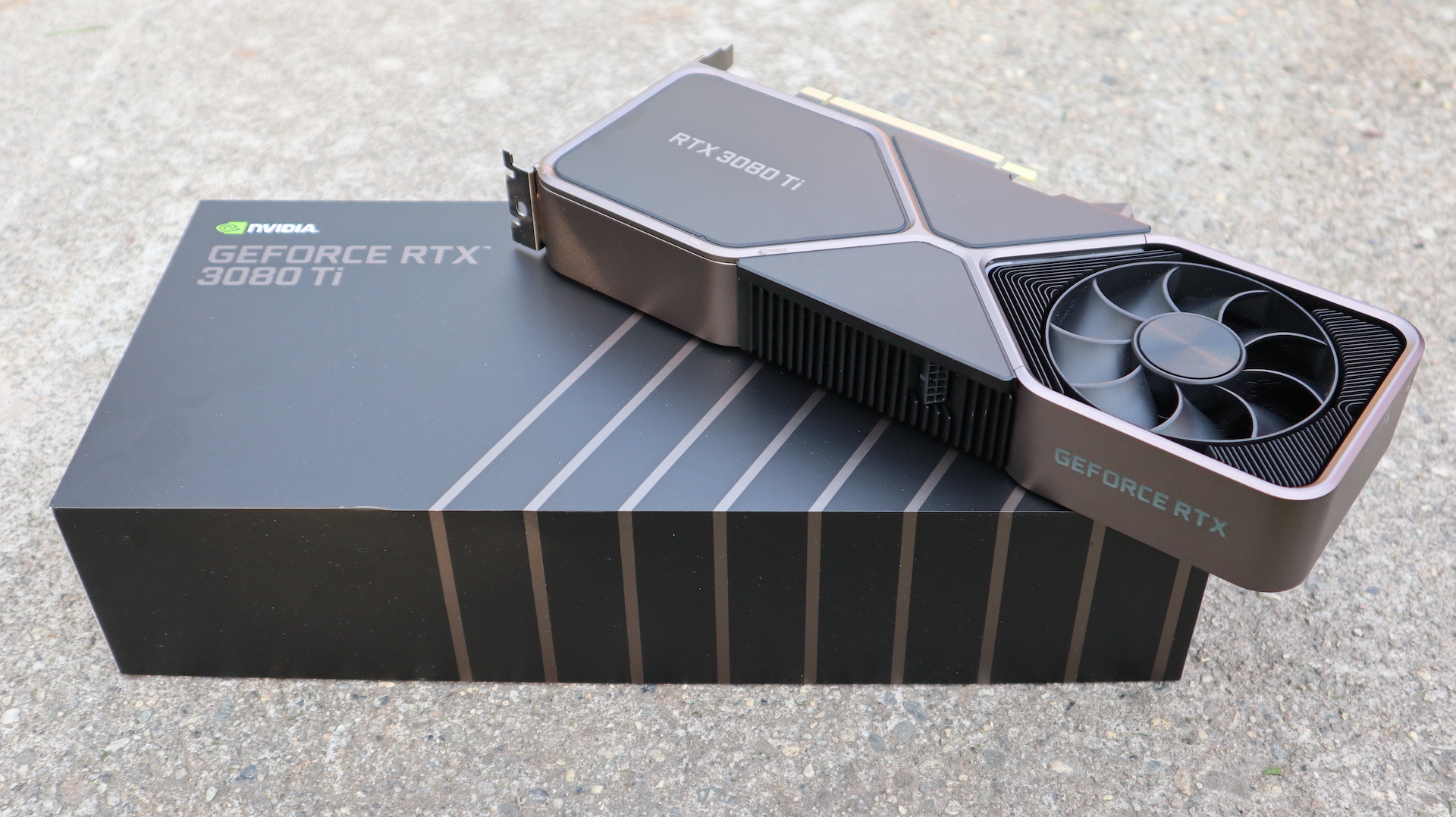
Enlarge/ Nvidia couldn’t make enough GPUs last year, but now it has the opposite problem.
Sam Machkovech
How quickly things change: A year ago, it was nearly impossible to buy a GeForce GPU for its intended retail price. Now, the company has the opposite problem. Nvidia CEO Jensen Huang said during the company’s Q2 2023 earnings call yesterday that the company is dealing with “excess inventory” of RTX 3000-series GPUs ahead of its next-gen RTX 4000 series release later this year.
To deal with this, according to Huang, Nvidia will reduce the number of GPUs it sells to manufacturers of graphics cards and laptops so that those manufacturers can clear out their existing inventory. Huang also says Nvidia has “instituted programs to price position our current products to prepare for next-generation products.” When translated from C-suite to English, this means the company will be cutting the prices of current-generation GPUs to make more room for next-generation ones. Those price cuts should theoretically be passed along to consumers somehow, though that will be up to Nvidia’s partners.
Nvidia announced earlier this month that it would be missing its quarterly projections by $1.4 billion, mainly due to decreased demand for its gaming GPUs. Huang said that “sell-through” of GPUs, or the number of cards being sold to users, had still “increased 70 percent since pre-COVID,” though the company still expects year-over-year revenue from GPUs to decline next quarter.
Demand for PCs and PC components is mostly down across the board, partly because of recession fears and partly because people bought so much PC hardware early in the pandemic. Nvidia is also selling fewer GPUs to cryptocurrency miners, both because of falling prices and Ethereum’s long-anticipated transition away from GPU mining. Nvidia CFO Colette Kress insisted that the company is “unable to accurately quantify the extent to which reduced crypto mining contributed to the decline in gaming demand,” notably because Nvidia has gotten into trouble with the SEC for obscuring the number of GPUs it was selling to cryptocurrency miners in the past.
The upshot for consumers is that new and used GPU prices should continue to fall, as they have been for most of the year, and that we can expect at least a few RTX 3000-series cards to hang around well after the launch of the RTX 4000 series. People who want the best performance they can get should probably wait for those cards to launch (AMD and Intel are planning new CPU launches soon, too). However, it’s the best time in years to overhaul or replace your gaming desktop for anyone still getting by with older GPUs and wanting to upgrade.
https://arstechnica.com/?p=1876083
Sony raises PlayStation 5 console prices in many regions, effective immediately
Enlarge/ Wanna buy one of these in many parts of the world? Starting today, that’s gonna cost you a little bit more.
Sam Machkovech
In the early hours of Thursday morning, Sony announced massive news for its PlayStation 5 console family. Around the world, console prices are going up.
The price hike for both models of PlayStation 5 (one with a disc drive, one without) is effective immediately in at least six regions, with Japan joining the price-hike fray on September 15. Sony’s announcement lists specific price increases for some of its biggest gaming territories, yet it additionally warns that “select markets” may see their own price hikes in the coming days. These include territories in the Asia-Pacific region, Central and South America, and the massive cluster of nations that comprises the EMEA (Europe, the Middle East, and Africa).
Somehow, one particular region is out of Sony’s price-hike crosshairs for now: the United States.
PS5 price hikes, August 2022
New
Old
Percentage increase
Europe
549.99 euro
499.99 euro
10
Europe (all-digital)
449.99 euro
399.99 euro
12.5
UK
479.99 pounds
449.99 pounds
6.7
UK (all-digital)
389.99 pounds
359.99 pounds
8.3
Japan*
54,980 yen
49,980 yen
10
Japan (all-digital)*
44,980 yen
39,980 yen
12.5
China
4,299 yuan
3,899 yuan
10.3
China (all-digital)
3,499 yuan
3,099 yuan
12.9
Australia
AU$799.95
AU$749.95
6.7
Australia (all-digital)
AU$649.95
AU$599.95
8.3
Mexico
MX$14,999
MX$13,999
7.1
Mexico (all-digital)
MX$12,499
MX$11,499
8.7
Canada
CA$649.99
CA$629.99
3.2
Canada (all-digital)
CA$519.99
CA$499.99
4
* Japan’s price hike will not go into effect until September 15, 2022.
The price hike appears to be a flat amount of currency in each affected region for both PS5 models. Thus, on a percentage basis, the more affordable PS5 models without disc drives are hit harder by today’s news. Canada gets off the easiest with today’s increase on a percentage basis, while Europe, Japan, and China are each tied for PS5’s harshest price increases.
Sony attributes the across-the-board price jumps to two major economic factors: rising inflation and historic lows for the Japanese yen. The US’s purchasing power doesn’t seem immune to either of those issues, so it’s unclear whether Sony’s assurance that “there will be no price increase in the United States” is an ironclad one.
Bad news for the upcoming PSVR2?
The price hike follows similar news from Meta’s virtual reality division, which opted to raise prices for its Quest 2 VR system late last month. Meta attempted to soften the impact of its $100 across-the-board price hike by including a free download of its popular rhythm-action game Beat Saber, which normally retails for $30.
As of press time, Sony has not suggested that it will include any downloadable freebies as part of its price-hike plan, though its jump in price currently doesn’t appear to exceed 13 percent in any region, as opposed to Meta’s price increase reaching either 25 or 33 percent, depending on the model.
Ars Technica’s Kyle Orland recently researched the history of console prices, though his analysis mostly revolved around the Nintendo Switch, a 2017 console that has had more years to grow long in the tooth in terms of its price-to-performance ratio. If that mega-selling console had followed historic console pricing trends, Orland’s analysis suggests its price might have dropped by now to a figure between $150 and $180 in the United States. Yet a combination of economic factors, including a chip shortage and unusually high demand for a years-old gaming system, has helped Switch hold fast to its original MSRP worldwide.
Orland’s report was prompted in part by Nintendo recently assuring investors and financial watchdogs in its home nation of Japan that Switch’s price would not increase in the near future. Neither Sony nor Microsoft’s Xbox division had made similar promises ahead of Thursday’s PS5 news. Microsoft enjoys a few advantages compared to Sony within the same inflation-filled marketplace: namely, a more diverse financial portfolio, more than double Sony’s cash reserves, and much less reliance on the Japanese yen. Time will tell whether Microsoft will continue absorbing the inflation-related costs of keeping its own Xbox console prices static.
https://arstechnica.com/?p=1876040
Comedian George Lopez sues Pandora for $5.5M for “brazen” copyright infringement
According to a lawsuit filed this week by comedian George Lopez, all Pandora had to do to negotiate streaming rights for two of his popular comedy specials was contact him directly. Instead, Lopez’s complaint says that Pandora considered the comedian a “cash cow”—alleging that Lopez is yet another comedian whose copyrighted materials have been illegally streamed to Pandora listeners without the streaming service securing proper licensing or sharing royalties.
“Pandora found a cash cow in a new revenue stream, and in a brazen business decision determined that the risk was worth the gain—that is until now,” Lopez’s lawyer, Richard S. Busch of the Los Angeles law firm King & Ballow, wrote in the complaint.
Busch was already representing other comedians suing Pandora, including Lewis Black, Ron White, and the estates of late comedians George Carlin and Robin Williams. According to The Wrap’s exclusive report, all the lawsuits have been consolidated and will be heard in the California Central District Court before the end of August.
Lopez is seeking $5.5 million in statutory damages, which equates to $150,000 per comedy clip Pandora allegedly streamed. He alleges that, at minimum, if 37 comedy tracks made available by Pandora from two albums were streamed just once by his 117,000 monthly listeners, Pandora has broadcast nearly 1.5 million comedy clips without his permission annually. He says this has been happening for at least three years.
The total damages could go up, though, especially if the court hears evidence that Pandora profited more from Lopez’s comedy. Lopez could also seek higher damages if the lawsuit drags on and Pandora continues streaming his comedy. In both cases, the court can decide if Lopez is entitled to more compensation.
Lawyers for Lopez and Pandora Media did not immediately respond to Ars’ questions, but as of this writing, Lopez still has an active artist page on Pandora. By clicking the comedian’s face—which shows him grinning while clutching his own bobblehead—Pandora plays a short ad before many listeners can begin streaming popular bits from two of Lopez’s earliest comedy specials, “Right Now Right Now” and “Team Leader.”
Lopez retained exclusive copyrights on his materials and says he is the sole entity losing out when listeners stream those specials, which bothers him. “Unfortunately, Mr. Lopez has not received a fraction of a penny for any of these broadcasts or streams,” the complaint reads.
A Lopez victory could be a win for all comedians and podcasts
The Wrap reported that Pandora argues that if the court sides with Lopez and other comedians, that “would upend longstanding industry precedent.” The company “denies ever stiffing any comedian, claiming it has paid out millions in royalties via comedians’ record companies.”
Both Black and Lopez contest that they do not count among comedians who have been paid. In their consolidated lawsuit, both are suing Pandora for two separate instances of copyright infringement. First, distributing a copyrighted sound recording, and second, distributing a copyrighted spoken-word recording. If the comedians win, it’s possible, for the first time, that comedians and podcasters could begin enjoying the same rights and compensation as musicians when dealing with services streaming their recordings.
“Anyone wishing to obtain the right to do so, must get a license from the respective copyright owner in both of these copyrights, and pay agreed-to royalties,” Lopez’s lawsuit reads.
Comedy copyright infringement was “brazen”
The lawsuit also noted that Pandora used to be transparent about infringing on comedian copyrights in SEC filings. Lopez’s complaint claims that the company “admitted that it would very likely face copyright infringement liability as a result” of not contacting comedians like Lopez before streaming content. It alleges that the company only stopped admitting to this practice after SiriusXM acquired Pandora.
In 2021, SiriusXM reported that 74 percent of Pandora’s profits came from advertising. Previously, in 2017, Pandora reported to the Securities and Exchange Commission that streaming popular comedy and podcasts was considered critical to its perceived value to listeners of its ad-based services. In Lopez’s complaint, the comedian alleges that part of SiriusXM’s seeming strategy “to increase its stock price helping them to reorganize the company” with Pandora was to deprive comedians like Lopez of “hard-earned royalties” while the companies (which still operate separately) earned “billions.”
SiriusXM did not immediately respond to Ars’ request for comment.
In the same 2017 SEC filing, Pandora reported, “Failure to obtain or retain rights to comedy, podcasts, or other non-music content on acceptable terms, or at all, to successfully monetize and generate revenues from such content, or to effectively manage the numerous risks and challenges associated with such expansion could adversely affect our business and financial condition.”
Lopez alleges the practice has already harmed him, and it’s possible that by adding his heft as a leading comedian worldwide to the lawsuit, righting his wrong could protect much less famous entertainers who discover potential copyright infringements.
His complaint says that Pandora knew that Lopez—”an industry leading comedian, actor, and comedy writer for nearly 30 years”—”would suffer” and failed to ever reach out to him. Now he has joined up with other comedians to prove that he, “in fact, did suffer the brunt of the harm caused by Pandora’s unauthorized acts,” not just from alleged illegal streaming in California, but also “around the world.”
Enlarge/ There are only so many hours in a Bavarian murder investigation set in the early 1500s.
Microsoft / Obsidian
Since its reveal earlier this year, new video game Pentiment has been shrouded in secrecy and confusion. We knew it was being developed by Obsidian Entertainment, yet we also thought it might be a wild divergence from that beloved studio’s biggest hits (Fallout New Vegas, The Outer Worlds).
That suspicion was confirmed last week in a pre-Gamescom conference hosted by its gameplay director and art director, who comprise one-sixth of its full development staff. You read that correctly: Obsidian’s first video game since being acquired by the deep pockets of Microsoft will launch in November with a team of only 13 people on the credits.
[embedded content]
Pentiment gameplay reveal, June 2022.
Game director Josh Sawyer doesn’t mince words about this peculiar game’s budget and scope—nor about its corporate handlers finding the right place to put it.
“I’ve wanted to make a historical game for a long time, but I can’t remember the exact moment where I said, ‘What if it was a narrative adventure and very small?'” Sawyer says in a video conference. “I will say, it wasn’t until Microsoft was going to acquire us that I thought, we can do this now”—he pauses with a nervous laugh—”for two reasons.” Those being, Microsoft had suggested in the acquisition that the studio could explore “unusual and experimental” fare, and Microsoft’s subscription-driven Game Pass platform might be a better fit than traditional retail for a game like Pentiment: an accessible, non-combat, decision-driven murder mystery set in the wake of the tumultuous Protestant Reformation. “Whatever ideas I had about maybe doing something like this, they didn’t seem achievable until Microsoft acquired us.”
Sadly, not a good time period for David Caruso’s sunglasses
Everything I’ve seen and read about Pentiment leans into this kind of game-publishing serendipity, where a publisher has a vested interest in unique-looking games that don’t lean on existing IP (aka, might struggle as a crowdfunded pitch) and don’t have to sell for $60 or more on store shelves. And it’s grand luck for Sawyer, who admits he spent his college years studying German history after being inspired by his own family’s unclear genealogy, which eventually led him to deeply research the Bavarian period this game is set in.
Andreas’ narrative is pre-defined in some ways, but players can guide other elements of his story based on decisions made in the game, along with pre-gameplay determinations about his personality.
Decisions…
…decisions…
…decisions.
Obsidian describes Pentiment as a “narrative adventure with RPG elements,” and its team leads repeat this like a mantra: “narrative adventure,” and “not an RPG at its heart.” Yet, the designers also emphasize the game’s constant threads of tough decisions and moral gray areas that follow lead character Andreas, an artist living in a small Bavarian village in the early 1500s, over the course of many years. The game begins with Andreas learning that his best friend has been accused of a murder that he didn’t commit, then realizing he’s his friend’s only advocate. You spend the rest of Pentiment trying to solve exactly who did commit that murder, only to see Andreas become a small-village detective who investigates other crimes over the years.
When any historically accurate phrase is confusing in the game, tap a shortcut button to check out a glossary full of relevant definitions.
The same system can remind you of what a named character looks like, which might spur your memory about prior interactions.
Sawyer makes clear that Andreas has finite resources available as a detective in an era that didn’t really have detectives, let alone forensics or, really, much in the way of formal crime investigations. “There’s lots of ambiguity,” Sawyer says. “And you eventually have to pin each murder on somebody, but it’s never going to be clear if that’s really the person. You can use your best judgment or pick the person you want to see go!” he adds with a laugh.
He suggests that decisions big and small accumulate in the course of the game’s many years, and players also have to be mindful that they can only take so much time with village denizens along the way. During a large meal in the middle of town, the choice of who you sit with not only impacts who you gain intel from but also may affect anyone you do not sit with; or you may make conversational choices in the middle of town that others may overhear and keep track of. Sawyer is careful to clarify that these systems have limits: “There are no [visible] meters [tracking people’s emotions]. Just try to track things that seem like characters pay attention to, and the game will let you know when they’re paying attention and when [those topics] come up again.”
https://arstechnica.com/?p=1875731
We’re loving the lavish epic visuals in the new LOTR: Rings of Power trailer
[embedded content]
Prime Video’s new original series, Lord of the Rings: The Rings of Power.
Based on notes and lore penned by J.R.R. Tolkien, the eight-episode series will revolve around the late author’s “Second Age” era. Per the official description:
This epic drama is set thousands of years before the events of J.R.R. Tolkien’s The Hobbit and The Lord of the Rings, and will take viewers back to an era in which great powers were forged, kingdoms rose to glory and fell to ruin, unlikely heroes were tested, hope hung by the finest of threads, and the greatest villain that ever flowed from Tolkien’s pen threatened to cover all the world in darkness. Beginning in a time of relative peace, the series follows an ensemble cast of characters, both familiar and new, as they confront the long-feared re-emergence of evil to Middle-earth. From the darkest depths of the Misty Mountains, to the majestic forests of the elf-capital of Lindon, to the breathtaking island kingdom of Númenor, to the furthest reaches of the map, these kingdoms and characters will carve out legacies that live on long after they are gone.
As we’ve reported previously, the large ensemble cast includes Morfydd Clark as a young Galadriel, “now a hardscrabble warrior leading the Northern Armies,” who is determined to hunt down her brother’s killer. She ends up adrift at sea with a new character named Halbrand (Charles Vickers). Charles Edwards plays Celebrimbor, whom hardcore LOTR fans will recognize as the elven smith who forged the legendary rings. Robert Aramayo plays a younger version of Elrond, and Maxim Baldry will play the infamous Isildur, ancestor of Aragorn, who eventually defeated Sauron but fell victim to the One Ring’s corrupting power. Peter Mullan plays the dwarf King Durin III.
There’s also a breed of hobbits known as the Harfoots, who mostly try to stay hidden and keep to themselves. But two curious young hobbits, Poppy Proudfellow and Nori Brandyfoot (played by Megan Richard and Markella Kavenagh, respectively), are more adventurous and somehow encounter The Stranger (Daniel Weyman), a mysterious man “who falls from the sky in a flaming meteor.”
Enlarge/ A Harfoot hobbit with a big heart offers an apple to a mysterious stranger.
YouTube/Prime Video
The first teaser landed in February during the Super Bowl and gave us some eye-popping visuals, consistent with the rumored $500 million budget for the series. Prime Video released a nearly two-and-a-half-minute teaser trailer in July, two weeks before San Diego Comic-Con. This was followed by a full trailer during the convention. Attendees were treated to four exclusive clips from the series, each focusing on different protagonists. As Ars Tech Culture Editor Sam Machkovech reported:
The dwarvish Prince Durin IV participates in a rock-smashing contest; the series’ leading harfoot duo encounter and are nearly caught by a sleeping giant; Arondir manages to defeat a number of orc captors while restrained in chains; and the leading elf duo of Galadriel and Elrond share a solemn conversational moment that, at least in this event’s context, could be seen as flirty.
This latest trailer opens with a voiceover by Galadriel, telling us that her brother gave his life “hunting the enemy.” She takes up the cause in his stead. She asks for others to stand with her, as we see shots of several central characters who, one presumes, will become her comrades in arms. Or perhaps they will decline the offer. That seems to be the case with Halbrand, who insists, “I am not the hero you seek,” suggesting a dark secret in his past. “Whatever you did, be free of it,” Galadriel tells him.
Galadriel seems to be emerging as the most major protagonist, but we also get new footage of several other characters scattered throughout Middle-earth, including dwarves and hobbits. The latter, while humble, do have their strengths. “One thing we can so better than any creature in all Middle-earth—we stay true to each other, with our hearts even bigger than our feet,” Nori’s dad, Largo Brandyfoot (Dylan Smith), says. It looks like different kinds of struggles and battles will be waged on many different fronts, as befitting a sweeping epic series of this magnitude.
Ars Technica may earn compensation for sales from links on this post through affiliate programs.
Listing image by YouTube/Amazon Prime
https://arstechnica.com/?p=1875448
Review: House of the Dragon prequel series makes a solid debut
Enlarge/ Matt Smith stars as the scheming and ruthless Prince Daemon Targaryen, heir presumptive to the Iron Throne.
Making a prequel to a beloved series is never easy, especially when it’s a prequel to one of the most influential blockbuster series of the last decade—one that whiffed its finale so badly that it alienated some of its most devoted fans. HBO’s House of the Dragon rose to the challenge, debuting last night with a solid, promising pilot episode. Granted, it suffers a bit in comparison with Game of Thrones (especially the earlier seasons). But this was an eminently watchable and entertaining pilot that might even win back some of those alienated fans if the rest of the season lives up to that promise.
(Some spoilers below.)
As I’ve written previously, House of the Dragon is set about 200 years before the events of Game of Thrones and chronicles the beginning of the end of House Targaryen’s reign. Those events culminated in a civil war and the extinction of the dragons—at least until Daenerys Targaryen came along. The primary source material is Fire and Blood, a fictional history of the Targaryen kings written by George R.R. Martin. The book begins with Aegon I’s conquest of the Seven Kingdoms of Westeros, thanks to the family’s advanced weaponry: dragons. This is followed by a period of relative peace before the inevitable succession crisis. The final two sections of Fire and Blood deal with the fallout of that crisis and serve as the primary source material for House of the Dragon.
Enlarge/ Paddy Considine plays King Viserys I Targaryen, a warm, kind-hearted ruler who is desperate for a male heir.
Anyone who has read Fire and Blood will find the opening of House of the Dragon very familiar, since it hews very closely to the source material. We basically get a Westeros history lesson, as a voiceover explains how a council of lords selected King Viserys I Targaryen (Paddy Considine) to succeed Jaehaerys I (Michael Carter), passing over the other potential heir, Princess Rhaenys (Eve Best), a dragonrider known as “the Queen Who Never Was”—because patriarchy. The lords simply won’t accept a woman as their ruler, no matter how capable and deserving she might be.
Fast-forward several years into Viserys I’s reign, and nothing much has changed. The king once again lacks a male heir, oblivious to his fierce dragonrider daughter, Rhaenyra’s (Milly Alcock), potential as anything other than an ornament to the court. His brother, Daemon (Matt Smith) is heir presumptive, but that might be about to change. Queen Aemma Arryn (Sian Brooke) is once again pregnant and nearing her due date after a stillbirth and five miscarriages. Viserys is confident that he will soon have a son—so confident that he organizes a jousting tournament to celebrate the coming blessed event.
The jousting sequences are first-rate, which shouldn’t be surprising, since the pilot’s director (and co-showrunner of the series) is none other than Miguel Sapochnik, who filmed some of the most eye-popping, complicated battles on Game of Thrones. After more than 60 years of peace in Westeros, the knights are a wee bit bloodthirsty, and it’s just a matter of time before the tournament descends into a brutal, blood-drenched free-for-all. (The sight of a squire vomiting off to one side amid the carnage is a nice touch.)
https://arstechnica.com/?p=1875294
VESA wants to replace monitor response time specs with ‘ClearMR’ stamps
Let’s say you’re buying a new PC monitor, TV, or laptop and want an idea of how clear fast movement would appear on it. What information would you consider? Specs like response time and refresh rate provide an idea of display speed. But if you think about it, a measurement of time isn’t a particularly straightforward answer to the question of, “How much motion blur will I see?” In response, the Video Electronics Standards Association (VESA), which makes other display standards, including DisplayPort and Adaptive-Sync, today announced a new specification program that puts a label on displays quantifying their expected motion blur performance.
The Clear Motion Ratio Compliance Test Specification (ClearMR) is a standard and logo program for consumer displays, including PC monitors, TVs, laptops, tablets, and all-in-ones (several products are already certified). It introduces a series of tiers with a numerical value that’s supposed to indicate to consumers the display’s ratio of clear pixels to blurry ones during fast-paced movement. For example, ClearMR 7000, which has a “Clear Motion Ratio” range of 6,500 to 7,500, means the display would have a clear-to-blurry ratio of 65–75:1 or 65–75 times more clear pixels than blurry ones.
VESA ClearMR Tier
Clear Motion Ratio (CMR) Range
ClearMR 3000
2,500 ≤ CMR < 3,500
ClearMR 4000
3,500 ≤ CMR < 4,500
ClearMR 5000
4,500 ≤ CMR < 5,500
ClearMR 6000
5,500 ≤ CMR < 6,500
ClearMR 7000
6,500 ≤ CMR < 7,500
ClearMR 8000
7,500 ≤ CMR < 8,500
ClearMR 9000
8,500 ≤ CMR
In an interview with Ars Technica, Dale Stolitzka, senior principal researcher at Samsung Display’s America R&D Lab and lead contributor to ClearMR, said that VESA settled on ClearMR 3000 as the lowest tier befitting laptops with screens in the 90–120 Hz range. Displays that are 60 Hz would typically not qualify for ClearMR certification.
ClearMR 9000, meanwhile, represents the best performance but leaves room for improvement, as you can see in the images below:
Enlarge/ A rolling wheel in the rain (top) and napkin and knife in a kitchen (bottom) displayed at different ClearMR performance levels.
Enlarge/ The same images at higher ClearMR performance levels, plus still versions.
Enlarge/ Test patterns displayed at different ClearMR certifications.
Enlarge/ The same patterns at higher ClearMR certifications, plus the patterns as still image.
VESA’s member list is a long one, including the likes of Intel, Samsung, AU Optronics, LG Display and Electronics, and Lenovo, so you can expect thorough and complex testing methodologies. That includes setting a speed at which VESA measures blur. ClearMR testing includes measurements of a test pattern moving across the screen at 15 degrees per second, which Stolitzka said is about the amount of time it takes for an object to move across a screen in approximately four seconds.
While that’s pretty fast, including for gaming, it doesn’t equate to “one big blur,” as Stolitzka put it. “Most” non-action movies won’t have motion that fast, he noted, while some games, like first-person shooters and strategy games, may have faster motion.
ClearMR vs MPRT or GtG response time
VESA believes ClearMR paints a more informative picture of potential motion blur than looking at response time specs, be it motion picture response time (MPRT) or gray-to-gray (GtG).
“It is our goal that ClearMR will replace existing metrics that are used in advertisements for blur-based metrics that are solely based on time, like MPRT. I would be perfectly happy if I didn’t see that in advertisements anymore,” Stolitzka said.
According to VESA’s announcement, MPRT, which measures how long it takes for a display to change pixels from black to white and then to black, isn’t sufficient for characterizing blur because it’s based on time alone and “cannot account for a number of image enhancement and blur mitigation techniques, such as excessive overshoot and undershoot, which can create artifacts and distortions that negatively impact image quality.”
Further, MPRT, as well as GtG response time, only measures from 10 percent of the transition to 90 percent.
GtG response, which many vendors, especially gaming monitor ones, list in lieu of MPRT, measures the amount of time it takes a pixel to change from one shade of gray to another, but vendors cherry-pick those results. And you don’t know what specific transition points a vendor used for their GtG measurement. For example, it could be presenting the average transition time (again, 10–90 percent of that transition) from light gray to dark gray, or mid-gray to light gray, or white to black, as examples.
ClearMR certification tests displays at an ambient room temperature of between 72.5° and 76° Fahrenheit with the display at default settings, native resolution, max refresh rate, and backlight strobing (if available) disabled.
A bar with different luminances moves across a small box on the display and is measured with a camera at a fixed location equal to 1.5 times the height of the display being tested. Multiple frames are shot to create a composite image, providing an idea of what the user would see when blur moves across the screen.
The specification also accounts for displays that use overdrive to increase response time. Overdrive can reduce motion blur but can also result in visual artifacts, like ghosting and coronas (check out BlurBusters for some good examples). So, VESA limits overshoot to under 20 percent and undershoot to under 10 percent.
Currently, ClearMR only pertains to SDR content, but VESA said HDR support will come in the near future.
Until then, the ClearMR will offer a way for vendors to provide a standardized way of characterizing SDR motion blur in a way that’s easier for the mind to translate into real-life use. It also provides a way for vendors to discuss motion blur performance in the same language.