Saints Row game review: An open-world mess beyond redemption

<img src="https://rassegna.lbit-solution.it/wp-content/uploads/2022/08/saints-row-game-review-an-open-world-mess-beyond-redemption.png" alt="Catching air after glitch-colliding with a boulder is probably the Saints Row reboot’s most fun quality. That’s… not a good sign.”>
Enlarge / Catching air after glitch-colliding with a boulder is probably the Saints Row reboot’s most fun quality. That’s… not a good sign.

The Saints Row series emerged in the Xbox 360 era as a cheeky, irreverent response to the likes of Grand Theft Auto. By its fourth game, however, the open-world series’ cars, heists, sex-toys-as-weapons gimmick, and explosive gunfights had seemingly run out of new directions to go.

Previews suggested that this week’s new series reboot, simply titled Saints Row, might wipe the slate clean to provide a fresh perspective on the crime-spree genre. Instead, this game simply wipes the slate clean—and leaves it that way.

Saints Row (2022) is the rare open-world game that makes an average Ubisoft open-world game of the past five years seem refreshing by comparison. Describing this game as a regression to the Xbox 360 era would be an insult to the late 2000s’ best open-world adventures. It can’t touch the adventurous exploration, satisfying mechanics, and supercharged bombast of 2007’s Crackdown, while its hole-filled plot and cookie-cutter characters aren’t fun to laugh at, let alone with.

Worst of all, should you ignore this advice because you’re eager for mindless chaos, steel yourself for a technical and mechanical nightmare. This game’s ratio is roughly nine agonizing technical hiccups and annoyances for every chuckle-worthy explosion or glitchy physics mishap.

A counterfeit cosplay knockoff of Master Chief

<a href="https://cdn.arstechnica.net/wp-content/uploads/2022/08/Saints-Row-badguys.png" class="enlarge" data-height="2160" data-width="3840" alt="You'd be excused for confusing this screen with the Watch Dogs series; it’s but one way the new Saints Row feels creatively bankrupt.”><img alt="You'd be excused for confusing this screen with the Watch Dogs series; it’s but one way the new Saints Row feels creatively bankrupt.” src=”https://rassegna.lbit-solution.it/wp-content/uploads/2022/08/saints-row-game-review-an-open-world-mess-beyond-redemption-1.png” width=”980″ height=”551″>
Enlarge / You’d be excused for confusing this screen with the Watch Dogs series; it’s but one way the new Saints Row feels creatively bankrupt.

The trouble begins as you attempt to make sense of what’s going on in this game, which structurally resembles any GTA-like game of the past 15 years. As a professional criminal, you take on gigs to raise your notoriety, either through linear campaign levels or various missions dotted around an open-world map. The game opens with you hanging out with three housemates, each with their own hustles and enterprises on the side, and these characters’ voice acting and camaraderie are solid enough. Too bad you barely spend time with them. Instead, you’ll waste the campaign’s first five hours working for some kind of American black ops organization, all while dressing like a counterfeit cosplay knockoff of Master Chief.

Are you dismantling criminal rings? Battling terrorists? Doing dirty work for a government that needs secrets buried? It’s all unclear because the dialogue in these missions mostly focuses on your character bickering with their commanding officer in repetitive, unfunny fashion. These missions take place on largely linear paths and offer few creative or amusingly over-the-top paths to success. Run forward, shoot basic pistols and machine guns, and repeat, with an occasional crudely animated cutscene suggesting that these missions are more exciting than they really are.

Why are these linear levels not overcharged with, say, a full arsenal of shoulder-mounted rocket launchers, a tank driving on top of another tank, or other ridiculousness that matches the irreverence of the series’ past 15 years? Is it because the writers at Volition want me to care about a whiny commanding officer who otherwise doesn’t exist in the course of normal gameplay? If this portion of the game is supposed to be fun or funny, I sure didn’t get it.

<a href="https://cdn.arstechnica.net/wp-content/uploads/2022/08/Saints-Row-criminals.png" class="enlarge" data-height="2160" data-width="3840" alt="The game's best comedic moments resemble the bumbling bad-criminal moments of films like Bottle Rocket, though without advancing the schtick in any way.”><img alt="The game's best comedic moments resemble the bumbling bad-criminal moments of films like Bottle Rocket, though without advancing the schtick in any way.” src=”https://rassegna.lbit-solution.it/wp-content/uploads/2022/08/saints-row-game-review-an-open-world-mess-beyond-redemption-2.png” width=”980″ height=”551″>
Enlarge / The game’s best comedic moments resemble the bumbling bad-criminal moments of films like Bottle Rocket, though without advancing the schtick in any way.

This series of missions ends abruptly, with little clarity about why your black-ops workload has vanished. Instead, your roommates run into trouble with local gangs in this game’s fictional version of Las Vegas, dubbed Santo Ileso, and your response is to start your own gang. There’s more plot at this point about each regional gang’s interests conflicting with each other, but without any memorable kingpin characters in each territory, the conceit falls flat. Your roommates are the game’s best characters, at least, but they’re underutilized, and their chatter is relegated to moments when gunfire breaks out, making whatever they’re talking about indiscernible. (Upon completing one mission, one roommate, who works as a DJ between crime sprees, speaks his own social media posts out loud, saying “hashtag blessed” without any sense of irony.)

https://arstechnica.com/?p=1874814



Behold this award-winning image of fungus making a fly its “zombie” slave

The story of a conquest: The fruiting body of a parasitic fungus erupts from the body of its victim.
Enlarge / The story of a conquest: The fruiting body of a parasitic fungus erupts from the body of its victim.

The striking photograph above vividly captures the spores of a parasitic “zombie” fungus (Ophiocordyceps) as they sprout from the body of a host fly in exquisite detail. Small wonder it won the 2022 BMC Ecology and Evolution image competition, featured along with eight other honorees in the journal BMC Ecology and Evolution. The winning images were chosen by the journal editor and senior members of the journal’s editorial board. Per the journal, the competition “gives ecologists and evolutionary biologists the opportunity to use their creativity to celebrate their research and the intersection between art and science.”

Roberto García-Roa, an evolutionary biologist and conservation photographer affiliated with both the University of Valencia in Spain and Lund University in Sweden, snapped his award-winning photograph while trekking through a Peruvian jungle. The fungus in question belongs to the Cordyceps family. There are more than 400 different species of Cordyceps fungi, each targeting a particular species of insect, whether it be ants, dragonflies, cockroaches, aphids, or beetles. Consider Cordyceps an example of nature’s own population control mechanism to ensure that eco-balance is maintained.

According to García-Roa, Ophiocordyceps, like its zombifying relatives, infiltrates the host’s exoskeleton and brain via spores scattered in the air that attach to the host body. Once inside, the spores sprout long tendrils called mycelia that eventually reach into the brain and release chemicals that make the unfortunate host the fungi’s zombie slave. The chemicals compel the host to move to the most favorable location for the fungus to thrive and grow. The fungus slowly feeds on the host, sprouting new spores throughout the body as one final indignity.

Those sprouts burst and release even more spores into the air, which go forth to infect even more unsuspecting hosts—what García-Roa calls “a conquest shaped by thousands of years of evolution.” Board member Christy Anna Hipsley praised García-Roa’s winning photograph for its “depth and composition that conveys life and death simultaneously—an affair that transcends time, space, and even species. The death of the fly gives life to the fungus.”

The winners and runners-up in individual categories are below.

Winner: Relationships in nature

Gone with the berry. Flying under the influence—a waxwing feasts on fermented rowan berries.
Enlarge / Gone with the berry. Flying under the influence—a waxwing feasts on fermented rowan berries.

This image of a Bohemian waxwing (Bombycilla garrulus) feasting on fermented rowan berries is the work of ecologist Alwin Hardenbol, a postdoc at the University of Eastern Finland. Per Hardenbol, the birds love the berries so much that they will migrate to wherever the berries are most plentiful—not just Finland, but also Western, Eastern, or Central Europe. Waxwings can eat twice their own weight in rowan berries in a single day. The birds get sustenance, and the berries get to disperse their seeds.

However, “while this relationship is highly beneficial for seed dispersal, it does not come without a cost for the birds,” Hardenbol said. “As the berries become overripe, they start to ferment and produce ethanol which gets Waxwings intoxicated, sometimes leading to trouble for the birds, even death. Unsurprisingly, waxwings have evolved to have a relatively large liver to deal with their inadvertent alcoholism.”

Runner-up: Relationships in nature

Trachops &amp; Tungara. A bat locates its dinner via tuning into a frog’s broadcast to attract a mate.
Enlarge / Trachops & Tungara. A bat locates its dinner via tuning into a frog’s broadcast to attract a mate.

Alexander T. Baugh, a behavioral biologist at Swarthmore College, snapped this image of a hungry fringe-lipped bat (Trachops cirrhosis) feasting on a male tungara frog (Physalalamus pustulosus) at the Smithsonian Tropical Research Institute in Panama. The bats’ hearing is fine-tuned to detect the low-frequency mating calls of the frogs, pitting natural and sexual selection against each other. And should their froggy prey prove to be of the poisonous variety, the bats’ salivary glands can neutralize the toxins in the skin.

Winner: Biodiversity under threat

The Baobab tree. The relationship between a group of African elephants and a Baobab tree strains as droughts strike.
Enlarge / The Baobab tree. The relationship between a group of African elephants and a Baobab tree strains as droughts strike.

Samantha Kreling of the University of Washington captured a trio of African elephants sheltering from the sun under a large baobab tree in Mapungubwe National Park, South Africa. The baobab tree has evolved to thrive in extremely dry climates by storing water in its trunk whenever drought strikes. Elephants, in turn, can dig into those trunks to get water to drink.

The image shows visible marks where the elephants have stripped the bark in search of precious water. Baobab trees have historically healed quickly from this kind of damage, but climate change has brought more drought, and the elephants have been stripping the bark faster than the trees can heal. The editorial board felt this image “highlights the need for action to prevent the permanent loss of these iconic trees.”

https://arstechnica.com/?p=1874865


Sega packs unreleased games, new arcade ports into Genesis Mini 2

[embedded content]
A trailer detailing all the games on the Sega Genesis Mini 2, some of which are fresh releases or ports.

After revealing just 23 named titles back in July, Friday morning Sega announced the full lineup of 60 games that will be included on the limited supply of US Sega Genesis Mini 2 units starting on October 27. Beyond the usual retro suspects, though, that list includes a couple of games that have never been released in any form, as well as several fresh arcade ports and Genesis titles sporting new features for their plug-and-play rerelease.

<a href="https://cdn.arstechnica.net/wp-content/uploads/2022/08/Devi-Pii-Genesis.png" class="enlarge" data-height="2320" data-width="1654" alt="The previously unreleased Devi &amp; Pii looks like an interesting, competitive take on a Breakout-style game.”><img alt="The previously unreleased Devi &amp; Pii looks like an interesting, competitive take on a Breakout-style game.” src=”https://rassegna.lbit-solution.it/wp-content/uploads/2022/08/sega-packs-unreleased-games-new-arcade-ports-into-genesis-mini-2.png” width=”300″ height=”421″ srcset=”https://rassegna.lbit-solution.it/wp-content/uploads/2022/08/sega-packs-unreleased-games-new-arcade-ports-into-genesis-mini-2-2.png 2x”>
Enlarge / The previously unreleased Devi & Pii looks like an interesting, competitive take on a Breakout-style game.

Those unreleased retro games include Devi & Pii, a title designed by Sonic 3 developer Takashi Iizuka. The “paddle-style game” looks like something of a cross between Arkanoid and Twinkle Star Sprites, with one or two players shifting back and forth to juggle angels and avoid bouncing devils.

The Genesis Mini 2 will also see the worldwide premier of Star Mobile, a game completed in 1992 by little-known journeyman developer Mindware but never actually released. The puzzle-heavy gameplay involves stacking stars on a carefully balanced mobile in a way that reminds us of the tabletop game Topple.

Besides those two never-before-seen titles, the Genesis Mini 2 features a few Sega arcade games that are being “ported” to Genesis-level hardware for the first time. These include:

  • Fantasy Zone: The cute-and-cuddly side-scrolling shooter gets ported to the Genesis by the same team that ported Darius on the first Genesis Mini, with a new Easy Mode that wasn’t in the arcades.
  • Space Harrier and Space Harrier II: While the sequel was already technically native to the Genesis, these new ports use “modern technology” to provide a much smoother sprite scaling function than was previously possible on 16-bit hardware (it’s unclear if these new ROMs could run on a standard Genesis).
  • Spatter: A little-known 1984 maze game featuring a clown on a bouncing tricycle.
  • Super Locomotive: A 1982 train game focused on switching tracks to avoid collisions.
  • VS Puyo Puyo Sun: A competitive two-player-exclusive “demake” of the third game in the popular color-matching puzzle series, with “new rules not found in the original version.”
<a href="https://cdn.arstechnica.net/wp-content/uploads/2022/08/OutRun-Genesis.png" class="enlarge" data-height="2354" data-width="1680" alt="The version of Outrun on the Genesis Mini 2 will feature new music.”><img alt="The version of Outrun on the Genesis Mini 2 will feature new music.” src=”https://rassegna.lbit-solution.it/wp-content/uploads/2022/08/sega-packs-unreleased-games-new-arcade-ports-into-genesis-mini-2-1.png” width=”300″ height=”420″ srcset=”https://rassegna.lbit-solution.it/wp-content/uploads/2022/08/sega-packs-unreleased-games-new-arcade-ports-into-genesis-mini-2-3.png 2x”>
Enlarge / The version of Outrun on the Genesis Mini 2 will feature new music.

Other titles that were first released on the Genesis decades ago are getting brand-new features for their Genesis Mini 2 re-releases. These include:

  • Hellfire: Sega’s trailer discusses unspecified “new features and options for the Genesis.”
  • OutRun: The four in-game radio stations will now include “new [music] tracks not featured in the original.”
  • Phantasy Star II: The classic RPG now features “adjustable movement speed and a new easy mode.”
  • Rainbow Islands Extra: The “Extra mode” with new enemies comes to North America for the first time.
  • Truxton: Comes with a new option to play background music “at its original arcade speed.”

None of these titles or additions may have the sheer star power of the shelved Star Fox 2 that finally appeared on the Super NES Classic Edition. Still, taken together, they show a certain level of care and attention to detail on Sega’s part that goes well beyond just throwing some ROMs on a cheap emulation box.

The complete list of titles available on the Sega Genesis Mini is included below (titles that were previously announced in July are marked with a *).

Genesis titles

  • After Burner II *
  • Alien Soldier *
  • Atomic Runner
  • Bonanza Bros. *
  • ClayFighter
  • Crusader of Centy
  • Desert Strike: Return to the Gulf
  • Earthworm Jim 2
  • Elemental Master
  • Fatal Fury 2
  • Gain Ground
  • Golden Axe II
  • Granada
  • Hellfire
  • Herzog Zwei
  • Lightening Force: Quest for the Darkstar *
  • Midnight Resistance
  • OutRun *
  • OutRunners *
  • Phantasy Star II
  • Populous
  • Rainbow Islands Extra
  • Ranger-X
  • Ristar
  • Rolling Thunder 2 *
  • Shadow Dancer: The Secret of Shinobi
  • Shining Force II
  • Shining in the Darkness *
  • Sonic 3D Blast *
  • Splatterhouse 2 *
  • Streets of Rage 3
  • Super Hang-On
  • Super Street Fighter II: The New Challengers
  • The Ooze *
  • The Revenge of Shinobi
  • ToeJam & Earl in Panic on Funkotron
  • Truxton
  • Vectorman 2 *
  • Viewpoint
  • Virtua Racing *
  • Warsong

Sega CD titles

  • Ecco the Dolphin (CD Ver.)
  • Ecco: The Tides of Time (CD Ver.)
  • Final Fight CD
  • Mansion of Hidden Souls *
  • Night Striker *
  • Night Trap
  • Robo Aleste
  • Sewer Shark
  • Shining Force CD *
  • Silpheed *
  • Sonic The Hedgehog CD *
  • The Ninjawarriors *

Bonus games

New ports and/or previously unreleased titles

  • Devi & Pii
  • Fantasy Zone *
  • Space Harrier II (and Space Harrier)
  • Spatter
  • Star Mobile *
  • Super Locomotive
  • VS Puyo Puyo Sun

Ars Technica may earn compensation for sales from links on this post through affiliate programs.

https://arstechnica.com/?p=1874808


Library’s prized Galileo manuscript turns out to be a clever forgery

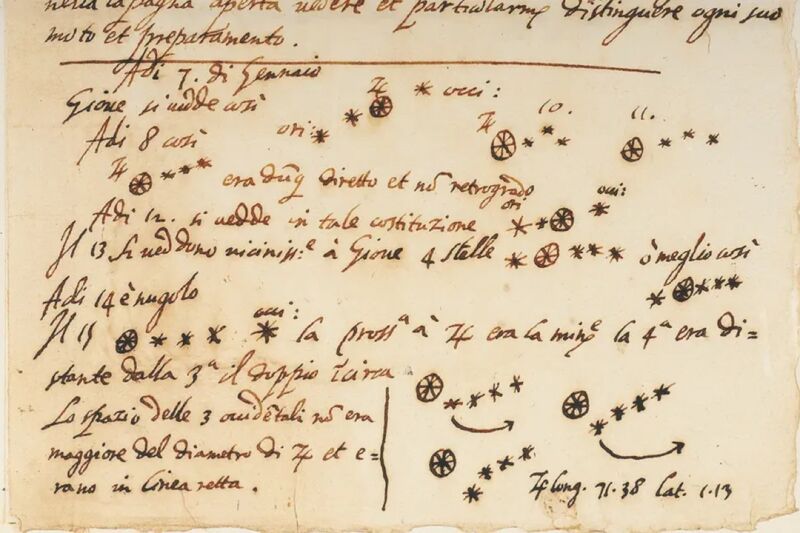
Annotations recording Galileo's discovery of the four moons of Jupiter, from the single-leaf manuscript in the collection of the University of Michigan. The library recently discovered the manuscript is a 20th-century forgery.
Enlarge / Annotations recording Galileo’s discovery of the four moons of Jupiter, from the single-leaf manuscript in the collection of the University of Michigan. The library recently discovered the manuscript is a 20th-century forgery.

Since 1938, one of the most prized items in the University of Michigan library’s collection has been a rare manuscript page allegedly written by Galileo. But after an internal investigation, the library’s curators have concluded that the manuscript is in fact a fake—and most likely executed by a well-known 20th-century forger. The curators were tipped off about the forgery by Georgia State historian Nick Wilding, who became suspicious of the manuscript’s authenticity while working on a biography of Galileo.

“It was pretty gut-wrenching when we first learned our Galileo was not actually a Galileo,” Donna L. Hayward, interim dean of the University of Michigan’s libraries, told The New York Times. Nonetheless, the library opted for transparency and publicly announced the forgery. “To sweep it under the rug is counter to what we stand for,” Hayward said.

The single-leaf manuscript in question purported to be a draft of an August 24, 1609, letter that Galileo wrote to the doge of Venice describing his observations with a telescope (occhiale) he had constructed. (The final letter is housed in the State Archives in Venice.) Galileo first heard of a marvelous new instrument for “seeing faraway things as though nearby” in a letter from a colleague named Paolo Sarpi, who had witnessed a demonstration in Venice. Unsatisfied with the performance of the available instruments, Galileo built his own, even learning to grind his own lenses to improve the optics.

Portrait of Galileo Galilei by Justus Sustermans, 1636. Uffizi Museum, Florence.
Enlarge / Portrait of Galileo Galilei by Justus Sustermans, 1636. Uffizi Museum, Florence.
Public domain

The first object Galileo studied was the Moon, toward the end of 1609, and then Jupiter when it was closest to the Earth and hence the brightest object in the evening sky (apart from the Moon itself, of course). He noted on January 7, 1610, that Jupiter appeared to have three fixed stars nearby. Intrigued, he returned to looking at the planet the following night, expecting the then-retrograde body to have moved from east to west, leaving the three little stars behind. Instead, Jupiter seemed to have moved to the east.

Puzzled by the planet’s behavior, Galileo returned to the formation repeatedly, observing several key details. First, the little stars never left Jupiter but appeared to be carried along with the planet. Second, as they were carried along, they changed their position with respect to each other and to Jupiter. Finally, he discovered a fourth little star.

Galileo concluded that the objects were not fixed stars but small moons that revolved around the planet. And if Jupiter had four orbiting moons, then the Earth could not be the fixed center of the universe, as most scholars believed at the time. This observation provided the first empirical support for Copernicus’ theory that the Sun rather than the Earth was at the center of the Solar System. Galileo published this groundbreaking observation in his book Sidereus Nuncius (Starry Messenger) in March 1610.

Galileo's "cannocchiali" telescopes at the Museo Galileo, Florence.
Enlarge / Galileo’s “cannocchiali” telescopes at the Museo Galileo, Florence.

The top half of the library’s manuscript is the alleged draft of Galileo’s letter to the doge of Venice, dated circa August 9, 1609. The bottom half, supposedly written months later, contains a series of “doodles” that depict Jupiter’s moons—once thought to be original notes from Galileo’s observations in January 1610.

Enter Nick Wilding, who has exposed Galileo-related forgeries in the past, most notably a copy of Sidereus Nuncius in the possession of a New York City rare-book dealer. This copy supposedly included an inscription by Galileo, as well as five of his watercolors of the Moon. Although the paper and binding of Sidereus appeared to be genuine, Wilding eventually found that it, along with another copy listed in the 2005 Sotheby’s catalog, both had an identical blotch on the title page that could be traced back to a 1964 facsimile edition. “If [the forger] hadn’t been greedy enough to make two copies, I wouldn’t have been able to prove the forgery,” Wilding told The New York Times in 2012.

When he turned his attention to the Michigan manuscript, Wilding thought that some of the letter forms and word choices seemed odd, and the ink on the top and bottom halves seemed very similar, despite those sections having been (allegedly) written months apart. So he emailed the library requesting information about the document’s provenance, as well as an image of its watermark.

The University of Michigan library acquired the manuscript in 1938 as a bequest from a Detroit businessman named Tracy McGregor. McGregor had purchased the manuscript at auction four years earlier; it had previously belonged to a wealthy collector named Roderick Terry. According to the auction catalog, the manuscript had been authenticated by an archbishop of Pisa named Cardinal Pietro Maffi. The cardinal had two other documents in his collection purportedly signed by Galileo, and Maffi used those documents as comparisons.

But Wilding found that there is no record of the Michigan manuscript in Italian archives. Furthermore, Maffi had acquired the two documents he used for comparison from the notorious early 20th-century counterfeiter Tobia Nicotra, calling the cardinal’s authentication into question.

https://arstechnica.com/?p=1874592


Hands-on: Logitech’s tiny G705 wireless mouse is more versatile than it looks

Logitech G705 wireless mouse
Enlarge / Logitech G705 wireless mouse.
Scharon Harding

I’ll admit it; I have a lot of PC mice. And it’s not just because I review them. Between traveling, multiple computers, gaming, and my living room, I have interest in multiple mice that cater to different needs.

One of those needs is portability. Sure, it’s easy enough to find a mouse that’s wireless and lightweight, but often that comes with limited comfort and/or pared-down features.

At first glance, Logitech’s G705 wireless mouse, announced in late July, seemed too minute to pack real power or accommodate anything but smaller hands. But a few hours into using the peripheral have shown me there’s more than meets the eye in this tiny mouse.

Confusing setup

Logitech’s G705 comes with a 2.4 GHz USB-A dongle, (plus a wireless extender and cable), or you can connect via Bluetooth LE. Logitech includes both because it markets this as fit for gaming and claims the dongle offers latency as low as 1 ms with a 1,000 Hz polling rate, compared to Bluetooth, which limits the mouse’s polling rate to 133 Hz. Since I was gearing up for a day of work, I decided to use Bluetooth, which should also yield better battery life, but this wasn’t so easy at first.

Some wireless mice that offer both dongle and Bluetooth connections have a physical switch to toggle between the two wireless modes or a light indicator to let you know what mode you’re in. The G705’s underside only has a power toggle and a purple button with a mysterious hieroglyphic of two squares and two arrows, plus a light that’s either light blue (dongle connection) or dark blue (Bluetooth). For some, the color difference may not be strong enough for easy reading.

Things could be a little simpler under here.
Enlarge / Things could be a little simpler under here.
Scharon Harding

Even more confusing, Logitech’s included instructions don’t mention that you have to press the button in order to switch between dongle or Bluetooth mode or even that the light indicator can be two (slightly) different colors.

For an amount of time I’d rather not admit to, I was trying to pair the mouse via Bluetooth when it was in dongle mode. I had to use the mouse’s support page to figure things out.

Trading RGB for extra software

If you thought going to a website to figure out how to switch between wireless modes was annoying, you’ll be even more perturbed by this next part.

Like many peripherals with a gaming focus, the G705 has a bounty of features, like programmable buttons and DPI (see our PC mouse terms guide for more on DPI and other mouse lingo) customization, available through software. If you’re happy with how the mouse is programmed and the three preset DPI settings (changeable out-of-the-box by the button south of the scroll wheel), you could make do without Logitech’s G Hub app, but then there’s no way to rid the thing of RGB.

The three RGB zones run around the edge of the mouse, with most of it getting covered when I used the mouse. RGB is a divisive topic in PCs. The LEDs can be gaudy or, worse, intrusive, and can be hard to disable or customize.

You need the app to turn off the light show.
Enlarge / You need the app to turn off the light show.
Scharon Harding

But in a wireless, portable device like this, the bigger issue is battery life. The G705 has the potential to be a multi-device accessory, since it’s only 0.19 pounds and so small. But having to download G Hub on every device in order to use it sans RGB (assuming the app is supported) makes that transition much more painful.

Logitech claims the mouse can last for up to 40 hours with the RGB on but didn’t specify brightness level or effect used. When I left RGB on max brightness for two hours, the mouse’s in-app battery meter read 90 percent.

https://arstechnica.com/?p=1874530


Old laptop hard drives will allegedly crash when exposed to Janet Jackson music

Old laptop hard drives will allegedly crash when exposed to Janet Jackson music
Western Digital

It sounds like something out of an urban legend: Some Windows XP-era laptops using 5400 RPM spinning hard drives can allegedly be forced to crash when exposed to Janet Jackson’s 1989 hit “Rhythm Nation.”

But Microsoft Software Engineer Raymond Chen stands by the story in a blog post published earlier this week, and the vulnerability has been issued an official CVE ID by The Mitre Corporation, lending it more credibility.

According to Chen, CVE-2022-38392 was originally discovered by “a major computer manufacturer,” and it can affect not just the laptop playing the song but adjacent laptops from other PC companies as well. The specific hard drive model at issue—again from an unnamed manufacturer—would crash because “Rhythm Nation” used some of the same “natural resonant frequencies” that the drives used, interfering with their operation.

Anyone trying to independently recreate this problem will face several obstacles, including the age of the laptops involved and a total lack of specificity about the hard drives or computer models. The CVE entry mentions “a certain 5400 RPM OEM hard drive, as shipped with laptop PCs in approximately 2005” and links back to Chen’s post as a primary source. And while some Windows XP-era laptop hard drives may still be kicking out there somewhere, after almost two decades, it’s more likely that most of them have died of natural causes.

The issue was also apparently partially resolved by the PC manufacturer at the time. Chen says the company addressed the problem “by adding a custom filter in the audio pipeline that detected and removed the offending frequencies during audio playback.” This wouldn’t completely fix things since these laptops’ hard drives would still crash if they were exposed to another device that was playing the song. But “Rhythm Nation” had apparently declined enough in popularity by the early 2000s that the issue didn’t become a widespread problem.

Sound frequencies can interfere with the operation of spinning hard drives, as demonstrated in this popular, old YouTube video of a man increasing disk latency and hurting performance by screaming at a server rack. So even if we can’t confirm firsthand that “Rhythm Nation” wrecks old laptops, we can definitely say that stranger things have happened.

https://arstechnica.com/?p=1874520


Hundreds of cosmetic MultiVersus mods stop working in apparent crackdown

<img src="https://rassegna.lbit-solution.it/wp-content/uploads/2022/08/hundreds-of-cosmetic-multiversus-mods-stop-working-in-apparent-crackdown.jpg" alt="Mods like this one, which replaces Lebron James with Jesus, no longer work in Multiversus.”>
Enlarge / Mods like this one, which replaces Lebron James with Jesus, no longer work in Multiversus.


The hit, new free-to-play Warner Bros. arena-fighter MultiVersus has enjoyed a robust modding scene since the game was still in its early access beta. This week, though, that community is on life support as players and developers report the game will no longer run with any modification installed.

Users on mod distribution site Game Banana started noticing the change around noon on Wednesday, with some discussing potential workarounds that might let their mods still work. By that afternoon, though, modder Ghost suggested on Twitter that “MultiVersus will no longer boot up if you have mods installed. They killed modding of any kind.”

The move was seemingly confirmed by MultiVersus Game Director Tony Huynh, who tweeted overnight that a user-reported game-crashing issue “might be because your client has been modded. If so you’ll need to remove the mods to play.”

In the few weeks since MultiVersus‘ public launch, modders have crafted hundreds of reskins that make existing characters look like other pop-culture mainstays, from Lola Bunny and Luigi to Master Chief and Jesus Christ. Other mods could replace background art or music, add new visual effects to characters, or, uh, put duct tape over Velma’s mouth, if that’s what you’re into. These cosmetic mods only applied to a player’s local copy of the game and didn’t impact the integrity of online gameplay.

Buy some DLC instead?

This isn’t the first time Warner Bros. has made moves against MultiVersus modding. The publisher reportedly started issuing copyright strikes against Twitch streamers using modded characters in their videos earlier this month. At the time, Huynh confirmed in a tweet that “streaming with a modded client” was grounds for a DMCA copyright strike against at least one streamer.

While Warner Bros. hasn’t responded to a request for comment from Ars Technica, some players suspect the crackdown on mods could be an attempt to stifle competition for official MultiVersus DLC. The free-to-play game brings in revenue primarily by selling Season Pass content subscriptions that include new “variant” costumes and looks for many characters. Warner Bros. also sells separate DLC packs that include “unlock tickets” for upcoming characters like Rick & Morty and Black Adam.

Warner Bros. might worry that players will be less likely to buy this kind of content if similar (or near-identical) cosmetic content is available as free mods. But games like Crusader Kings II have managed to thrive with both paid DLC content and a wide range of free user-made mods, showing it’s not impossible for both types of content to coexist without ruining a free-to-play business model.

While modders haven’t given up on finding ways around MultiVersus‘ apparent new mod ban, Warner Bros. will likely keep squashing any new modification methods as well. When it comes to this version of the metaverse, apparently only officially recognized characters need apply.

https://arstechnica.com/?p=1874540


Embracer acquires rights to Tolkien-related IP, teases new LOTR films

A classic photo of famed author J.R.R. Tolkien, modified to reflect the new steward of his most famed intellectual property as of this week's megaton acquisition announcement.
Enlarge / A classic photo of famed author J.R.R. Tolkien, modified to reflect the new steward of his most famed intellectual property as of this week’s megaton acquisition announcement.
Getty Images / Sam Machkovech

Swedish game publisher Embracer Group has racked up headlines in the past few years thanks to megaton acquisitions of video game studios, and on Thursday morning, the company announced it has grown further still. Its latest acquisition spree includes one surprising company outside its usual business purview: Middle-earth Enterprises.

This company is better known as the exclusive handler of all Lord of the Rings and Hobbit novels, along with all intellectual property derived directly from those J.R.R. Tolkien fantasy masterworks. The financial terms of this deal with previous handler the Saul Zaentz Company were not disclosed, but Embracer is already eager to tease brand-new films featuring the aforementioned novels’ characters.

No production plans have been set for new films just yet; rather, Embracer says in a press release that it wants to “explore additional movies based on iconic characters such as Gandalf, Aragorn, Gollum, Galadriel, Eowyn, and other characters from the literary works of J.R.R. Tolkien.” The deal has a logical connection to Embracer’s existing business in the form of LOTR-themed board games already being produced by its subsidiary, Asmodee, while it’s hard to imagine Embracer not immediately assigning one of its many wholly owned video game studios to the franchise in one way or another. Embracer has yet to suggest plans to produce a Tolkien-themed video game, however. Instead, its Thursday announcement hinted to “new opportunities for fans to explore this fictive world through merchandising and other experiences.”

Importantly, this deal does not materially affect Amazon’s upcoming, highly budgeted Rings of Power TV series. That series’ pitch was led directly by the Tolkien estate and presented to various platforms before Amazon emerged with a winning bid, and the deal cleverly sneaked past Middle-earth Enterprises’ rights, because it involved texts and materials not covered by the long-standing SZC arrangement. Embracer suggests it “has financial interests” in the Amazon series, but it’s unclear whether Embracer will see any cut of that production’s profits, or if they merely benefit from more publicity and attention to all things Tolkien.

That’s a lot of Embracin’

Embracer named six other companies as acquisition targets, with four resembling traditional game development houses: Tripwire Interactive, the American studio responsible for the Killing Floor and Maneater series; Tuxedo Labs, a Swedish studio best known for the PC-exclusive destruction-simulation game Teardown; Tatsujin, a Japanese developer staffed by arcade-era developers with plans to work on series from the esteemed Toaplan games library (particularly the classic “shmup” Truxton and the beloved meme machine that is Zero Wing); and Bitwave Games, another Swedish studio with plans to both collaborate with Tatsujin and also create ports of NES-era classics like Sunsoft’s lost 8-bit gem Gimmick. The latter announcement appears to spoil at least one news item from a Sunsoft-related event scheduled for later on Thursday.

Outside of formal game studios, Embracer’s three other named acquisitions seem designed to diversify the company’s gaming business portfolio. The best-known of these, Limited Run Games, has risen to prominence among gaming fans in the past five years thanks to its focus on physical game releases. Typically, Limited Run opens up preorders for cartridges and discs of games that have previously launched as digital-download exclusives; once the preorder period completes, the publisher typically shuts down orders for the game in question, especially since the games in question are often cult classics or niche favorites (though it occasionally publishes games from larger game studios, particularly certain versions of games in the Doom series). Embracer did not suggest in its acquisition announcement that it plans to shift Limited Run’s business model.

Embracer is additionally acquiring Singtrix, a karaoke system manufacturer launched by patent holders previously involved in the Guitar Hero series. That acquisition’s announcement does little to clarify what consumers might expect from an Embracer-run Singtrix, other than a suggestion that the company is working on “the next pop culture musical experience,” which may or may not involve a future video game-like project. There’s a chance that Embracer’s third non-studio acquisition, the European peripheral manufacturer Gioteck, could help Embracer build some kind of physical musical peripheral to go with whatever Singtrix is whipping up, but that’s only speculation at this point.

In addition to all of these announcements, Embracer buried news of another game studio acquisition that it is not prepared to announce “due to commercial reasons.” Instead, Embracer suggested that this unnamed studio counts as “the third- or fourth-largest” game studio it entered plans to acquire today—which suggests that it’s not necessarily a massive studio. (If this were the third- or fourth-largest acquisition in the company’s entire history, on the other hand, that would be worth no less than $525 million, which is what it paid for the entirety of Saber Interactive in early 2020.)

Thursday’s news follows the shocking May announcement that Embracer had acquired the entire Western operations of Square-Enix, and those studios’ lucrative IP (including the Tomb Raider, Legacy of Kain, and Deus Ex series), for a mere $300 million. That announcement included confirmation that the studios were moving ahead with games in both the Tomb Raider and Deus Ex series, though neither Embracer nor its newly owned studios have revealed anything more about such games since the May news broke. That followed its acquisitions of well-known game studios such as Gearbox Entertainment (Borderlands), 4A Games (Metro Exodus), and Deep Silver Volition (Saint’s Row, Red Faction). https://arstechnica.com/?p=1874477


When context is key: “Hunger stones” go viral, but news first broke in 2018

A hunger stone in the Elbe River in Děčín, Czech Republic. The oldest readable carving is from 1616, with older carvings (1417 and 1473) having been wiped out by anchoring ships over the years.
Enlarge / A hunger stone in the Elbe River in Děčín, Czech Republic. The oldest readable carving is from 1616, with older carvings (1417 and 1473) having been wiped out by anchoring ships over the years.

Stories have been circling around the Internet this past week about the re-emergence in certain Czech and German rivers of so-called “hunger stones“—rocks embedded in rivers during droughts to mark the water level and warn future generations of the likely famine and hardship to come whenever the stones became visible again. The coverage has been fueled largely by an August 11 tweet noting one stone in particular, inscribed with a dire warning: “If you see me, weep.”

Hunger stones (hungerstein) are very much a real thing with a long and fascinating history. And Europe is in the midst of a historically severe drought—severe enough that water levels may indeed be sufficiently low for the stones to re-emerge once more. But that August 11 tweet and the related coverage are actually rehashing a series of news stories from 2018, when the re-emergence of the hunger stones in the midst of that year’s extreme drought in Europe made headlines.

It’s hardly an egregious case of misinformation, but it does provide an illustrative example of why including context is so important in the digital age—even in a relatively simple tweet enthusing about newly acquired knowledge.

The stone referenced in the August 11 tweet is located on the Elbe River in Děčín, Czech Republic—one of the oldest such landmarks in the region. The earliest readable inscribed date is 1616, but older carvings marking the droughts of 1417 and 1473 were wiped out by anchoring ships over the centuries. Other drought years carved in the stone include 1707, 1746, 1790, 1800, 1811, 1830, 1842, 1868, 1892, and 1893. It’s actually possible to see this particular stone some 126 days out of the year, thanks to the construction of a dam that was built on a tributary of the Elbe in 1926.

The stone also features an inscription likely added in 1938: “Neplač holka, nenaříkej, když je sucho, pole stříkej” (“Girl, don’t weep and moan, if it’s dry, water the field”). Another Elbe stone can be found near Bleckede, with the inscription Geht dieser Stein unter, wird das Leben wieder bunter (“When this stone goes under, life will become more colorful again”).

A 2013 paper examining the history of drought in the Czech region from 1090 to 2012 relied in part on hunger stones as “epigraphic data” of past droughts, supplementing evidence gleaned from annals, chronicles, diaries, tax documents, religious records, letters, printed manuscripts, and modern instrumental data. (Apparently in 1393, the drought was so severe it was possible to cross the River Vltava on its bed, and the water was “as green as grass.”)

Frankly, that paper is worth reading just for the historical anecdote concerning a priest named Prokop Diviš, known for serendipitously constructing one of the earliest grounded lightning rods. Diviš set up his “weather instrument” at his parsonage in June 1754. It was composed of several tin boxes and more than 400 metal spikes, and Diviš thought it could drive off storms. (The scientific community at the time was less than impressed with his theories.)

Five years later, in the fall of 1759, local villagers demanded Diviš remove it, convinced that it had been the cause of that summer’s drought. The authors suggest the priest’s personal enemies had riled up the crowd. The following March, the villagers broke the chains holding the instrument down, and a thunderstorm the following night knocked it over. But their victory was short-lived. There were so many thunderstorms that summer, damaging the fields and vineyards, that the villagers asked him to re-install his weather instrument. “His response was not positive,” the authors wrote.

Hunger stone at Dresden-Pillnitz, near the stairs of Pillnitz Castle's western sphinx. Inscriptions record droughts in the years 1778, 1893, 1904, 2003, 2018.
Enlarge / Hunger stone at Dresden-Pillnitz, near the stairs of Pillnitz Castle’s western sphinx. Inscriptions record droughts in the years 1778, 1893, 1904, 2003, 2018.
Dr. Bernd Gross/CC BY-SA 3.0

When Central Europe was yet again besieged by drought in 2018, the Elbe plummeted to its lowest levels in more than half a century, and news stories began circulating about the re-emergence of some of the hunger stones. The Associated Press, NPR, Smithsonian, and Atlas Obscura were among the outlets that covered the story.

So why has the story re-emerged now? Kim LaCapria, writing at Truth or Fiction, thinks it started with an August 10 post to the subreddit r/todayilearned, linking to the Wikipedia entry on hunger stones “simply as a point of interest.” Perhaps not coincidentally, two days before that, low-water levels in Lake Mead due to the extreme megadrought resulted in the discovery of yet another set of human remains—the fourth body found so far. So, as conversations about drought and climate change circulated in the ether, they created the perfect conditions to reignite interest in the hunger stones, sparking a fresh flurry of news stories—like this one.

https://arstechnica.com/?p=1873971


Sweeping report alleges inequity, sexual harassment at Nintendo’s American HQ

Sweeping report alleges inequity, sexual harassment at Nintendo’s American HQ

Through the first half of 2022, Nintendo of America has been in the crosshairs of critics and the US National Labor Relations Board thanks to reports and formal complaints about working conditions for its contracted employees, all brought into the spotlight after a reported layoff allegedly involved pro-union sentiment. In the months since that story broke out publicly, Kotaku reporter Sisi Jiang has tracked down even more allegations about the famed game publisher’s American headquarters—and the allegations land squarely in the domain of sexual harassment and gender inequity.

A sweeping report published at Kotaku on Tuesday recounts roughly one decade of internal incidents among NoA’s pool of temporary employees, dating back to “the early Wii U era,” backed by a number of on-the-record allegations from former Nintendo staffers along with anonymous reports. The report includes attempts to reach out to Nintendo of America’s leadership, an associated temp agency, and individual staffers who were named as workplace sexual harassers, but Kotaku says it never received answers to its questions.

Many of the reported issues revolve around a divide between full-time employees, colloquially known as “red badges,” and the rest of the company’s American workforce, which was managed by temp hiring agency Aerotek before that company was absorbed into another company during a recent reorganization. The women who spoke to Kotaku both on and off the record collectively suggest that their hopes for turning part-time status into a full-time Nintendo career were strained by being women. One anonymous source said, “your chance was probably worse as a girl,” while another who spoke on the record suggested women weren’t given work-related goals or metrics to grow their careers, instead being told to essentially increase “face time” with male colleagues.

According to the sources, this unclear path to advancement led to issues where women faced workplace sexual harassment, then had to brush it off in order to not be perceived as “overly sensitive” and have a clearer path to becoming a red badge, complete with more stable pay and benefits.

She left the company after being “warned to be less outspoken.”

One former QA tester suggests she found this out the hard way after reporting a male translator’s uncouth behavior in a workplace Microsoft Teams chat room in 2020, which included comments about his favorite Pokemon character to have sex with and his attraction to a clearly underage female character in the free-to-play video game Genshin Impact. The staffer in question, who spoke anonymously, says she left the company after Aerotek not only failed to act on the report but also “warned her to be less outspoken,” all while colleagues figured out that she had filed the complaint and “blamed her” for doing so.

https://arstechnica.com/?p=1874051