Excel esports on ESPN show world the pain of format errors

Ladies and gentlemen, let's get ready to modelllllllll!
Enlarge / Ladies and gentlemen, let’s get ready to modelllllllll!

If you watched ESPN2 during its stint last weekend as “ESPN8: The Ocho,” you may have seen some odd, meme-friendly competitions, including corgi racing, precision paper airplane tossing, and slippery stair climbing.

Or you might have seen “Excel Esports: All-Star Battle,” a tournament in which an unexpected full-column Flash Fill is announced like a 50-yard Hail Mary. It’s just the latest mainstream acknowledgment of Excel as a viable, if quirky, esport, complete with down-to-the-wire tension and surprising comebacks.

[embedded content]
The full Excel Esports All-Star Battle.

The Financial Modeling World Cup (FMWC) hosts regular international competitions, both invitational and open to anyone, in which Excel pros strive to solve as many questions as possible from a complex task. You can download all three of the tasks used in last weekend’s battle for free.

ESPN showed a 30-minute edited version of the full two-hour-and-48-minute all-star battle between previous champions. The ESPN broadcast showed one of the three rounds; it focused on calculating how many points different spins of a free, online slot-machine-like game would generate for players. There were many spins and some quirky scoring rules.

[embedded content]
First problem in the Excel Esports All-Start Battle.

Featured in this all-star battle was 2021 FMWC World Cup winner Diarmuid Early, an FMWC grandmaster from Ireland who claims 10,000 hours in Excel. (He would be Lambda if he were a function, he said.) The winner of the first championship in 2020, Joseph Lau (28,600 hours, Isological), also competed, along with six other highly ranked function warriors.

Diarmuid took a commanding lead in the first slot-like task, racking up more points more quickly in a first round than anyone has in an FMWC competition. Others faced the kinds of challenges that regular users see in less combative Excel work. Polish competitor Gabriela Strój told the hosts that “one stupid error”—leaving a formula linked to the wrong sheet—likely cost her hundreds of points. David Brown from the US said that his major problem was pasting from his 32-bit Windows-based Excel to the official online Excel answer sheets, which left his formulas treated as text.

The top four of the eight competitors moved on to round 2, simulating a yacht regatta in Excel. Diarmuid and third-ranked Andrew Ngai made it through. The two competed on creating a score-tracking mechanic for an entirely Excel-based retro-style 2D platformer, “Modelario.” Ngai eked out the win, although with only 411 of a total 1,000 possible points. Ngai’s reward for a more than two-hour cell-based marathon: a trip to Tucson, Arizona, for the FMWC finals.

Part of the fourth level of the Excel-based platformer "Modelario" that two FMWC competitors had to score based on controller input. Neither contestant made it to the fifth level.
Enlarge / Part of the fourth level of the Excel-based platformer “Modelario” that two FMWC competitors had to score based on controller input. Neither contestant made it to the fifth level.

If you feel like you’ve found your sport after watching that kind of linked-sheet sprinting, consider the FMWC Open, which requires no invitation, ranking, or specific experience. Qualifiers and the competition take place in late October.

https://arstechnica.com/?p=1872073


Sonic the Hedgehog doesn’t need easily legible legends on his mechanical keyboard

Sonic the Hedgehog mechanical keyboard
Enlarge / Sonic the Hedgehog mechanical keyboard.

When you’re a beloved blue eulipotyphla with the speed of a race car, all the golden rings, a pal like Tails, and even a pair of hit feature films, you start feeling like you can do anything. That includes typing on a truncated mechanical keyboard without letters, numbers, or any other legends written on the top of the keycaps.

Higround, known for gaming gear, is releasing today a trio of 65 percent mechanical keyboards made in collaboration with Sega, as spotted by Nintendo Wire, as well as other Sega-focused gear, including keycaps and mousepads.

<a href="https://cdn.arstechnica.net/wp-content/uploads/2022/08/292751966_2571964156274401_5703346928642739469_n.jpg" class="enlarge" data-height="722" data-width="1080" alt="Dreamcast's Sonic Adventure 2 mechanical keyboard.”><img alt="Dreamcast's Sonic Adventure 2 mechanical keyboard.” src=”https://rassegna.lbit-solution.it/wp-content/uploads/2022/08/sonic-the-hedgehog-doesnt-need-easily-legible-legends-on-his-mechanical-keyboard-1.jpg” width=”980″ height=”655″>
Enlarge / Dreamcast’s Sonic Adventure 2 mechanical keyboard.

Pictures from the brand show a trio of keyboards coming to life with colorful details delivering nostalgic imagery anywhere from, depending on the keyboard, the loops and rings of the Green Hill Zone in 1991‘s Sonic the Hedgehog to the contrasting profiles of Sonic and Knuckles from 2001’s Sonic Adventure 2 to the rainbow-colored arrow keys mimicking console controller buttons in tribute to Sega’s last globally released console, the Dreamcast.

The PBT, dye-sublimated keycaps on the keyboards are 1.5 mm thick, according to Higround, and ditch informative legends on their topsides in favor of an artful appearance when viewing the keyboard from the top down. But from a typical seated position, you should be able to see legends side-printed on the front of the keycaps. You don’t have to be a touch typist to use the Sega keyboards, but if you’re not, they’ll be harder to use at first than the typical keyboard.

Sega Dreamcast mechanical keyboard.
Enlarge / Sega Dreamcast mechanical keyboard.

Sonic’s gotta go fast, so it’s fitting that the keyboards use Speed Silver linear mechanical switches from TTC. They’re specced for about 3.4 mm total travel, with a 1.08 mm actuation point and 45 grams of force to actuate (if you’re unsure of what that means, check out our mechanical keyboard guide). Those numbers make them a bit shorter to actuate and bottom out than the common Cherry MX Red switch (4mm / 2mm / 45gf); although, Higround could have gone shorter with low-profile mechanical switches to fit the speed theme even more.

The mechanical switches have Sonic-blue-like housing.

If you’re looking for a speedy way to complete those spreadsheets, the Sega keyboards aren’t a winning fit since they lack a numpad.

Ultimately, you need a combination of Sega and linear typing fandom and the ability to work without a numpad (some touch-typing skills wouldn’t hurt either) in order for these keyboards to be something that can help you level up your productivity, rather than an interesting collector’s item.

But the keyboards aren’t as polarizing as they could be… at least they don’t make you type in Elvish.

https://arstechnica.com/?p=1871810


Indie devs outraged by unlicensed game sales on GameStop’s NFT market [Updated]

Indie devs outraged by unlicensed game sales on GameStop’s NFT market [Updated]
Aurich Lawson | Getty Images


In the first week of GameStop’s recently launched NFT marketplace, the NiFTy Arcade collection stood out from the pack. Instead of offering basic JPEGs, the collection provided “interactive NFTs” linked to HTML5 games that were fully playable from an owner’s crypto wallet (or from the GameStop Marketplace page itself).

There was only one problem: Many of those NFT games were being minted and sold without their creators’ permission, much less any arrangement for the creators to share in any crypto profits.

While the man behind NiFTy Arcade has since been suspended from GameStop’s NFT marketplace, he’s still holding on to the tens of thousands of dollars in cryptocurrency he made by selling those NFTs before the suspension. And while the NFTs in question are no longer listed on the GameStop NFT marketplace, the unlicensed games themselves can still be accessed on GameStop’s servers and across a distributed file storage system, where they may now be functionally impossible to remove.

What if an arcade, but with NFTs?

NiFTy Arcade creator Nathan Ello told Ars his collection grew out of a desire “to highlight potential use cases for NFTs beyond static images.” But Ello got a bit abstract when asked to explain the utility of freshly minted NFT versions of games that were already freely playable elsewhere on the web.

“If people find value in these NFTs, that’s a bonus, but my intent is to create and showcase games that are playable within NFT marketplaces and within NFT wallets,” he told Ars. “Should someone want the convenience of playing the game directly from their wallet or their own profile page on the marketplace without having to navigate to mine, then they’re welcome to buy a copy.”

The NiFTy Arcade collection, as it appeared on the GameStop NFT marketplace on July 15.
Enlarge / The NiFTy Arcade collection, as it appeared on the GameStop NFT marketplace on July 15.

Ello ended up selling hundreds of NFTs based on the NiFTy Arcade collection’s first three games, making at least 46.7 ETH (worth about $55,000 at the time) from those sales as of July 15 (Update: NiFTy Arcade has clarified to Ars that it earned only 8.4 ETH from initial sales of the NFTs in question. The remainder of the 46.7 ETH cited was secondary sales, on which NiFTy Arcade earned just a 10 percent fee. Ars regrets the confusion.) But for at least two of those games—Worm Nom Nom and Galactic Wars—Ello admitted he never sought the necessary permission from the original creators before selling them. There’s also evidence that Ello minted and distributed a number of other games through NFT marketplaces without the creators’ permission, including Breakout Hero, Super Disc Box, and Invader Overload, according to Joseph “Lexaloffle” White, the creator of the PICO-8 pixel game engine.

https://arstechnica.com/?p=1871371


Evo weekend is here: How to watch the fighting game event of the year

The crowds this year will be smaller, and masked, but offline is back in Vegas
Enlarge / The crowds this year will be smaller, and masked, but offline is back in Vegas

After a two-year pandemic-induced break the Evolution Championship Series (better known as just Evo), the annual celebration of all things fighting games, is back in Las Vegas this weekend. Thousands of fighting game players and fans will fill the halls and arena at the Mandalay Bay casino to make their attempts at a top 8 finish, get in casual games with people from around the globe, watch panels, browse Artist Alley, and just generally soak up a chance to be offline with the fighting game community again.

In a more normal year, I’d be there myself, maybe not trying for that top 8 finish, more like just trying not to go 0-2 in Street Fighter V or Third Strike. But despite a robust mask and vaccine policy I’m just not feeling like traveling or being in Vegas with the current state of the world. So I’m going to spend my weekend cozy at home streaming a ridiculous amount of content and trying not to feel like I’m missing out too much. If you’d like to join me here’s a quick guide to what the weekend has to offer.

An Evo overview

You may have heard of Evo before, perhaps from the infamous Evo Moment 37 video or from Sony’s acquisition of the tournament series in 2021. If you’re not already a fighting game tournament watcher, here are the basics of how Evo works. There are eight main games featured, which I’ll list below, as well as a huge amount of less official side tournaments. Each game has the same basic structure, you start in a pool of players, everyone on equal footing. Tournaments are double-elimination, meaning you have to lose twice to be out. If you can win several matches in your pool without being eliminated, you move up to the next one, eventually leading to a top 24 bracket, then a top 8, which leads to the grand finals.

Part of the excitement of watching pools is the upsets. The previous champion has to start the same as anyone else, and there’s no guarantee an unknown won’t hand them their first loss, putting them in the loser’s bracket and one game away from losing that top 8 repeat dream.

As you advance deeper into the matches, the level of play becomes more high level and tense, so if you’re less inclined to spend hours watching the safe bet is to catch a top 24 or wait for the top 8 to see the real high-stakes matches play out.

Every game will feature commentary by people who are experts in understanding and explaining the on-screen action. With a few basics under your belt and their patterns, you should be able to keep up even with games you’re not familiar with.

The key to understanding the double-elimination format is everyone starts out in the winner’s bracket. If you lose once you go to the loser’s bracket. Lose from there and you can sit and watch the rest, you’re done. Mathematically this means that when you get to top 8, half will be in the loser’s bracket, half in the winner’s bracket, and the grand finals match will have a winner’s side and a loser’s side.

To win the entire tournament from the loser’s side you need to beat the other player twice, once to send them to loser’s (known as resetting the bracket). Making a loser’s run is no easy task, but a bracket reset always gets the crowd hyped up. They love an underdog, but it also means another set to watch.

If you see an L or a W next to someone’s name on the stream overlay that’s indicating if they’re playing from the winner’s or loser’s bracket. The last thing that’s handy to know is most games are run as first to two, so you have to win two games to beat someone. This generally becomes the first to three wins in top 8.

Dominique “SonicFox” McLean congratulates Goichi “GO1” Kishida for winning the grand finals of Dragon Ball FighterZ at Evo 2019

The games

This year the main featured games at Evo are:

  • Street Fighter V: Champion Edition
  • Guilty Gear Strive
  • Mortal Kombat 11: Ultimate
  • Tekken 7
  • The King Of Fighters XV
  • Melty Blood: Type Lumina
  • Dragon Ball FighterZ
  • Granblue Fantasy: Versus
  • Skullgirls: 2nd Encore

All games will be streamed on Twitch starting Friday, August 5 at 10 am Pacific Time. A complete interactive schedule of all the games can be found here. Half the games will have top 8s from the main hall on Saturday. The other four (King of Fighters, Tekken, Street Fighter, and Guilty Gear) will have their top 8 on Sunday in the Mandalay Bay arena.

There are also community-run tournaments for an additional 52 titles, everything from the alternate World War II title Akatsuki Blitzkampf, to barely-a-fighting-game-kinda-like-frisbee-air-hockey Neo Geo classic Windjammers. A list of all 52 games as well as a viewer’s guide summary for each one can be found here, so check that out if you want to dig into the wider range of titles you might not be familiar with.

Playing in a top 8 in the arena at Evo is one of the highest levels of fighting game achievement.

https://arstechnica.com/?p=1871675


Xbox’s latest dev tools add surprise boost for memory-strapped $299 Series S

The cheesy visual multiplying effect applied to this Series S isn't meant to imply that it's getting four times the memory boost in this week's Microsoft GDK update. The actual multiplication amount is impossible to confirm until Microsoft updates its public-facing documents on the matter.
Enlarge / The cheesy visual multiplying effect applied to this Series S isn’t meant to imply that it’s getting four times the memory boost in this week’s Microsoft GDK update. The actual multiplication amount is impossible to confirm until Microsoft updates its public-facing documents on the matter.
Sam Machkovech

The latest update to the Microsoft Game Development Kit (GDK), an official API that targets game development on Xbox consoles and Windows PCs, seemed to be set in stone when it was announced in June. Two months later, however, that update has gone live with a surprise bonus that’s so new it hasn’t yet been detailed on the company’s Github repository.

The news instead comes from an official unlisted Microsoft video, first spotted by XboxERA reporter Jesse Norris, which included a tantalizing proclamation. The June GDK is currently live two months after its named month, and it now includes an increased memory allocation exclusively for the lower-priced $299 Xbox Series S console.

This video does not link to specific patch notes or announcements, and as of press time, searches through the publicly shared GDK do not clarify how this memory allocation boost was achieved. Microsoft representatives did not immediately answer Ars’ questions on this update’s technical breakdown.

Getting devs closer to Series S’ 10GB memory total

In the meantime, it’s reasonable to assume that this newly available pool of RAM, which the video’s narrator describes as “hundreds of megabytes,” had been allocated elsewhere on Series S systems up until today’s update—perhaps tied up by OS-level processes (which previously sucked up roughly 2GB of Series S’ total 10GB pool) that the company has since been able to slash.

Ars’ sources have confirmed what has largely been known by testers and researchers of current-gen consoles: The gap in available RAM between the $499 Xbox Series X (16GB total) and the cheaper Series S (10GB total) has made cross-platform development between the two systems trickier than Microsoft originally advertised. In Microsoft’s best-case scenarios, a Series X game that targets 4K resolutions and incredibly high-resolution textures can downscale all textures for the sake of a 1080p TV screen and otherwise get away with an identical rendering load, mostly thanks to a lot of other architecture being identical between the consoles (particularly the CPU and storage specs).

As more third-party devs have found since getting familiar with the 2-year-old consoles, that’s not how development environment transposal always works. Some developers are still finding that their virtual environments, effects budgets, and lighting scenarios get bottlenecked not only by less total GDDR 6 RAM but also a shrink in its bandwidth, down from the 320-bit bus of Series X to the 128-bit bus of Series S.

Thus, even a tiny jump of, say, 200MB in RAM, or 2.5 percent, could make a significant difference for a developer trying to transpose a certain fidelity level of shadows or ambient occlusion from Series X to Series S. The “hundreds of megabytes” count could be even higher, anywhere between 512MB and 768MB, though we’re still waiting to hear exactly how much.

Few modern games are a Rift Apart from past-gen consoles

The move comes while both current-gen consoles continue to fall short on some of their biggest technical sales pitches, at least on a software level. Many of the biggest games of the past two years have failed to illustrate truly game-changing features, particularly the near-infinite virtual worlds that might be enabled by a combination of PCI-E 4.0-graded storage and supercharged memory pipelines.

This was exacerbated by a few highly anticipated Sony games rolling back their previous “current-gen exclusive” statuses in favor of cross-gen launches on PS4 and PS5, seemingly to keep game sales while current-gen systems were largely sold out and behind production schedule. Thus far, we’re largely left with last year’s Ratchet & Clank: Rift Apart as a gorgeous demonstration of power exclusive to current-gen consoles.

At least in the case of the Xbox ecosystem, as more current-gen exclusives gear up for their launches, more memory parity between Series X and Series S could help development efforts for 2023 games like Forza Motorsport and Starfield. By the time those games launch, Series S’ default, scant built-in storage count of 512GB could grow, or its proprietary storage expansion cards could come down in price. Either move would boost the weaker, cheaper system’s sales pitch if newer games indeed fulfill the Series S promise of “as powerful as Series X, but for 1080p TVs.”

https://arstechnica.com/?p=1871648


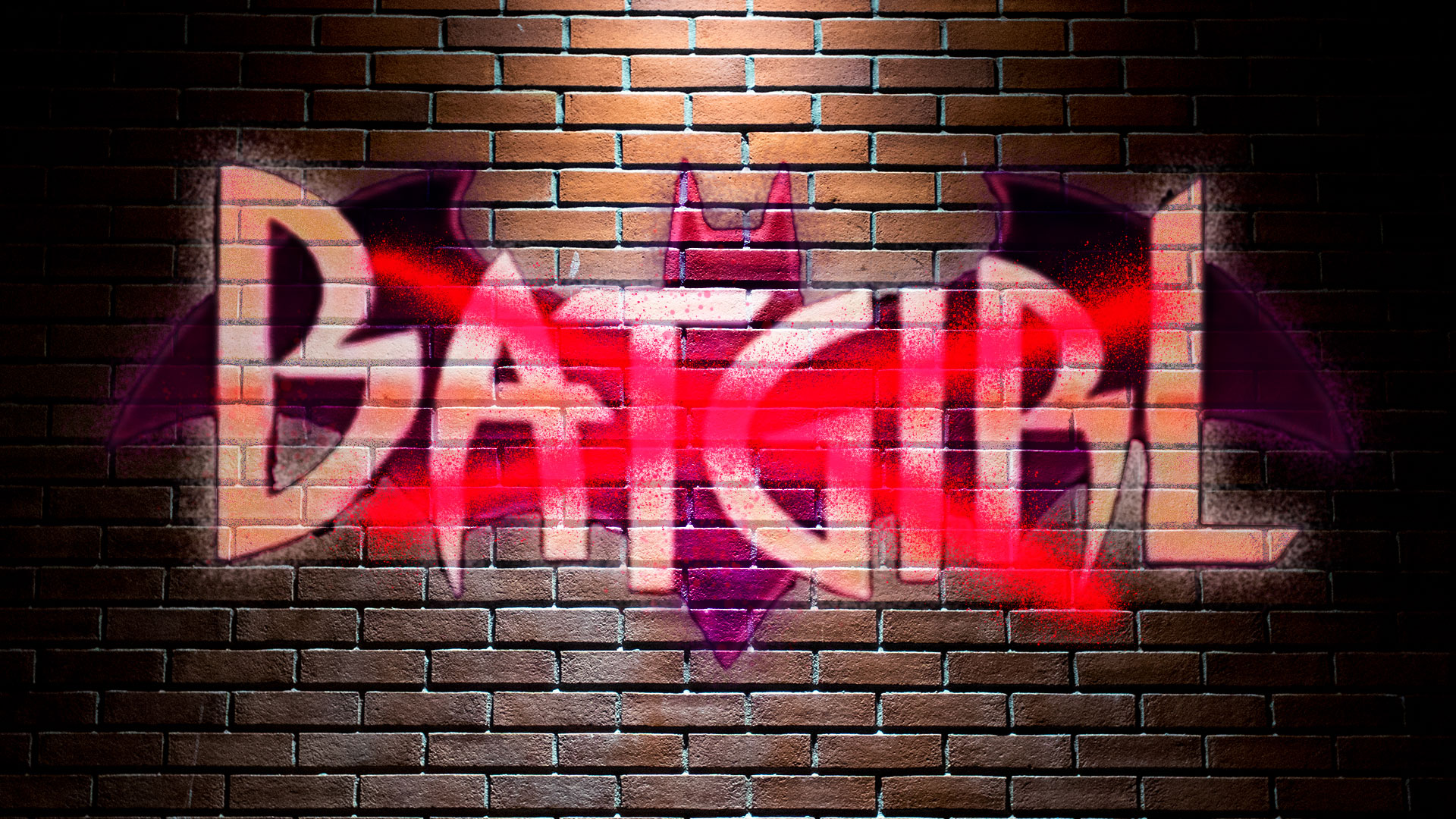
WB Discovery merger strikes down “nearly finished” live-action Batgirl film

<img src="https://rassegna.lbit-solution.it/wp-content/uploads/2022/08/wb-discovery-merger-strikes-down-nearly-finished-live-action-batgirl-film.jpg" alt="We hardly knew ye, feature-length live-action film version of Batgirl, and perhaps we never will.”>
Enlarge / We hardly knew ye, feature-length live-action film version of Batgirl, and perhaps we never will.
Aurich Lawson / Warner Bros

In response to mounting reports and rumors, the creative teams behind the upcoming straight-to-HBO-Max films Batgirl and Scoob 2: Holiday Haunt confirmed this week that both had been canceled and locked away to apparently never be released in any way, shape, or form.

The bizarre news began unfolding on Tuesday thanks to a report from the New York Post, which alleged that Batgirl, a feature-length, live-action reimagining of the DC Comics superhero that began production last year, would be outright shelved and hidden away in the wake of test screenings. The nearly complete film, which had a budget exceeding $70 million and co-starred Michael Keaton as the character of Batman for the first time in nearly 30 years, was reportedly “unspeakable” on a quality basis.

Two inevitabilities: Death (of possibly decent DC films) and taxes

Shortly after that report went live, well-placed industry rags blamed Batgirl‘s cancellation on a different issue: accounting and taxes. Deadline pointed to a limited-time opportunity for new WB corporate owners Discovery, which initiated its $108 billion acquisition of Warner in May 2021, to write off both Batgirl and the CGI animation feature Scoob 2: Holiday Haunt as a “purchase accounting maneuver.” The outright cancellation would have to happen by “mid-August,” according to Deadline; any other attempt to commercially release either film in any way (streaming, theatrical runs, VOD sales) would nix the accounting move.

A similar report from Variety indicates that Warner Bros. Discovery CEO David Zaslav has been on a public tear to reassure potential filmmakers that the new company would reverse course on HBO Max’s pandemic strategy of releasing films day-and-date on the same day as their theatrical runs. That public strategy, according to Variety, aligned with the new leadership’s private belief that potential tentpole films, particularly those starring DC Comics characters, should either launch in theaters or not at all. And Deadline refutes the NY Post’s assessment of Batgirl‘s quality, suggesting that its sole test screening “wasn’t that bad.”

Should those reports be accurate, the films may truly never see the light of day, since there’s zero way for either production, each rich with Warner-owned IP, to easily be licensed or sold off to an outside distribution company. Official responses from the affected films’ crews imply just as much.

“Maybe one day they will insha’Allah”

“As directors, it is critical that our work be shown to audiences, and while the film was far from finished, we wish that fans all over the world would have had the opportunity to see and embrace the final film themselves,” co-directors Adil El Arbi and Bilall Fallah wrote on social media on Wednesday. “Maybe one day they will insha’Allah [God willing].” The post went on to laud the film’s cast and crew, particularly star Leslie Grace (In the Heights) and supporting cast members Brendan Fraser and JK Simmons. (You may recognize the co-directors’ names from their fantastic work on recent Disney+ exclusive Ms. Marvel, along with the 2020 action film Bad Boys for Life.)

Scoob 2: Haunted Holiday hadn’t racked up as much hype, but this sequel to a well-reviewed HBO Max exclusive was slated to feature a number of notable voice performances, including Mark Hamill, Ming Na-Wen, Patrick Warburton, and JB Smoove. The resulting film was reportedly sitting pretty as far as test screenings were concerned.

“Why cancel a 95% finished holiday movie this close to Fall, when you’re guaranteed kids watching it from right after Halloween until at least New Years?” Scoob 2 co-writer Paul Dini posted on Twitter on Tuesday. “Makes no business sense, especially as both kids & parents dug the WIP [work-in-progress] screening.”

Warner Bros. Discovery representatives distributed a statement on Tuesday suggesting that Batgirl‘s cancellation was due to “a strategic shift as it relates to the DC universe and HBO Max.” The statement acknowledged Scoob 2: Holiday Haunt‘s cancellation, as well, but did not offer any reason as to why that film got the ax—and it didn’t clarify whether those strategic shifts will affect the fraught production of upcoming film The Flash, still scheduled to launch in June 2023.

The Tuesday statement also breezed over the company’s strange decision to quietly delist six HBO Max-exclusive films from that platform on Wednesday morning. These included space-colonization rom-com Moonshot, the Truman Show-like dystopia of Superintelligence, and a number of star-studded films that never quite lit up HBO Max’s streaming charts.

This week’s combination of cancellations and delistings has us wondering what Warner Bros. Discovery’s quarterly financial results meeting, scheduled for Thursday, August 4, will have in store. In particular, we wonder whether these moves are required steps for the company ahead of an effort to combine its existing pair of streaming services: Discovery+ and HBO Max. In one report, sources suggest an HBO Max staffing cutdown as severe as 70 percent could begin unfolding this week.

https://arstechnica.com/?p=1871325


DIY Tinycade aims to bring Alt Ctrl games to the masses

DIY Tinycade aims to bring Alt Ctrl games to the masses
P. Gyory et al., 2022

What’s a frustrated game designer to do when stuck at home during a global pandemic? If that designer is Peter Gyory, a graduate student at the University of Colorado, Boulder, you figure out how to make a game out of the piles of discarded cardboard lying around the house.

The result is Tinycade, created by Gyory and several colleagues at UCB’s ATLAS Institute. All you need to make your own Tinycade game is some cardboard, a smartphone, two small mirrors, rubber bands, and toothpicks. “The restriction I gave myself was that if you couldn’t go to the grocery store and buy it, I couldn’t use it in Tinycade,” said Gyory. He and his collaborators presented their work in June at the Association for Computing Machinery on Creativity and Cognition in Venice, Italy, with a paper published in the conference proceedings.

Gyory is part of a growing community of game developers interested in building Alt Ctrl (alternative controller) games, which employ novel physical interfaces for players. Hot Swap, for example, involves steering and managing the sails of a ship with individual inputs that must be swapped while playing. Octopad will turn a Nintendo Entertainment System controller into eight distinct parts, turning any game played on the system into “a real-time co-op strategy game,” per the authors, while Cook Your Way “educates players on how the immigration process strips people of their culture with its faux kitchen controller, complete with a knife and pot.”

The digital fabrication boom has driven much of this work, most notably 3D printing and laser cutting. And most Alt Ctrl games typically piggyback on interface prototype platforms like Arduino or Makey Makey. These require a certain degree of technical expertise, however, and most Alt Ctrl games are only showcased at festivals devoted to that subfield, excluding a large potential audience for those games.

“By using common materials and simple crafting approaches, we hope Tinycade games can bridge this gap,” the authors wrote. “If a designer can build their game from spare cardboard, then all they need to do is share the crafting instructions with potential players. Furthermore… we encourage the design of controllers that can be easily disassembled, repurposed, and replaced.”

The only electronic component they used was a smartphone. The body of the system is meant to evoke the shape of a classic arcade cabinet and is laser-cut out of cardboard for easy assembly. This involves folding the parts along scored lines and inserting the tabs in the proper slots, as well as gluing two small mirrors to the inside. Otherwise, the cabinet is almost completely empty.

Next, players need to build the controller for the game. Then, they just need to place their smartphone into the cabinet and launch the game. A key component of Tinycade is the use of computer vision in the interface, specifically Printed Paper Makers, which lets a designer use markers to create functional interfaces out of paper. The phone’s screen displays the gameplay, while the rear-facing camera detects the markers. The mirrors on the inside serve as a periscope, aligning the camera’s view with the back of the control panel.

Gyory et al. used a JavaScript port for the computer vision component. “For each marker identified, we can calculate its unique id, x, and y position in the camera, rotation, and each corner,” the authors wrote, which makes the controller function. “Using JavaScript also enabled us to rapidly iterate on games without worrying about build times or operating system restrictions. This approach means that Tinycade is not bound to a specific hardware or system.”

https://arstechnica.com/?p=1870572


3 years after launch, Apple Arcade loses 15 games

<img src="https://rassegna.lbit-solution.it/wp-content/uploads/2022/08/3-years-after-launch-apple-arcade-loses-15-games.png" alt="Art from Various Daylife, one of the games that left Apple Arcade in August 2022.”>
Enlarge / Art from Various Daylife, one of the games that left Apple Arcade in August 2022.

Several games that were previously available as part of the Apple Arcade subscription service have been removed.

Fifteen titles have been dropped, and all of them are games that were introduced in the early days of the service. Since mid-July, these games had appeared in a “Leaving Arcade Soon” section of the Apple Arcade tab in the App Store. That section is now gone, suggesting that these are the only games that will be removed in the immediate future.

Apple revealed that these games would be leaving Arcade within that section, so subscribers had a little over two weeks’ notice. But there’s a little more time for those currently playing the games.

A support document released by Apple clarifies that the games will remain playable for an additional two weeks for users who previously downloaded the games. Once the games are no longer playable, users will be presented with a pop-up explaining they’re unavailable.

The games are leaving the service because the agreements between the developers and Apple have concluded, but those agreements don’t prevent developers from making those games available as direct purchases or downloads through the App Store outside of the Arcade subscription now.

In some cases, the games on the open App Store could be almost identical to their Arcade counterparts, but in others, there could be differences. And sometimes, the developers may opt not to re-introduce their games in the App Store.

Apple provides the infrastructure for players to import their saved progress from the Arcade versions to the App Store versions, but developers must choose to support that, so that may not always be a possibility.

As with TV subscription services like Netflix, the deals developers signed with subscription services are not typically permanent, so expect the Arcade library to shuffle over time, just as we’ve seen with Xbox Game Pass.

There’s no clear path to long-term preservation for games removed from the service, but Apple and app developers may extend expiring agreements in some cases.

Here’s a full list of games that have not been renewed:

  • Atone: Heart of the Elder Tree
  • BattleSky Brigade: Harpooner
  • Cardpocalypse
  • Dead End Job
  • Don’t Bug Me!
  • Dread Nautical
  • EarthNight
  • Explottens
  • Lifeslide
  • Over the Alps
  • Projection: First Light
  • Spelldrifter
  • Spidersaurs
  • Towaga: Among Shadows
  • Various Daylife

https://arstechnica.com/?p=1870961


EA cracks down on modders selling their custom Sims 4 content

<img src="https://rassegna.lbit-solution.it/wp-content/uploads/2022/08/ea-cracks-down-on-modders-selling-their-custom-sims-4-content.png" alt="Look, we had to see this shot from a Sims 4 "male pregnancy" mod while researching this story, so now you do, too!”>
Enlarge / Look, we had to see this shot from a Sims 4 “male pregnancy” mod while researching this story, so now you do, too!

Last month, EA published an update formalizing its policy that mods for The Sims 4 “cannot be sold, licensed, or rented for a fee.” But the publisher tells Ars that there is still one important exception that should ensure many Sims modders can continue to make significant income from their game-expanding creations.

EA’s new modding policy, first published July 21, is pretty direct in saying that Sims 4 mods “must be non-commercial and distributed free-of-charge” and that they can’t “contain features that would support monetary transactions of any type.” According to the published policy, those who want to monetize their Sims modding work are limited to indirect methods like “passive advertisements and requests for donations” on their own websites (but not within the mods themselves).

Despite this recent formalization, this policy isn’t entirely new. In late 2017, former EA Community Manager Amanda Drake wrote on the game’s forums that mod creators “cannot lock content they make using our game behind a paywall.” But that post also carved out a specific loophole for creators who wanted to offer an incentive to encourage donations via sites like Patreon:

As long as the content is still made available FOR FREE we do not mind these types of pages. Folks who have a Patreon page are welcome to provide folks with “early access” incentives for their content but it should be made available to the general public within 2-3 weeks of it being given to folks early.

In the years since, dozens of Sims modders have made use of that exception. Patrons get priority access to mods-in-development in exchange for monthly Patreon donations, then the finalized mods are posted for free to all players weeks later. That can be a pretty lucrative arrangement, too; the biggest Sims modders can have thousands of patrons who pay up to $10 or $20 a month each, in part to gain early access to new custom content.

A loophole left open

With EA’s new policy update last month, though, many modders worried that the special language about the “early access” Patreon exception was nowhere to be found. Instead, the new text simply states that “all users must be able to access the Mods in full for free regardless of whether they donate.”

In the days since EA’s update, concerned modders have reached out seeking clarity on whether their business models would be impacted. On Tumblr, modder marylnsims posted a response they got from EA Support saying that, “yes you are right early access is not allowed for modders.”

Ever wanted to turn your Sim into a sorcerer? Mods can do that.
Enlarge / Ever wanted to turn your Sim into a sorcerer? Mods can do that.

While some in the community doubted the reliability of that response, the uncertainty led some modders to remove their early-access Patreon content out of an abundance of caution. “It’s really upsetting to see early access be wiped out but I hope you all can continue to support my work, even without the early access perk,” modder JellyPaws wrote on Patreon.

Others, like modder Maxis Match CC World, wrote that they would stick with the status quo of early access “until EA declares whether it is allowed or not!” Modder SimRealist similarly wrote that early access would continue for their patrons “until I hear otherwise from EA… If it is deemed otherwise with an official statement from EA, we will change our processes and go from there.”

Fortunately for those modders, EA has clarified to Ars that the early access exception for Patreon donations remains in place. While “all users must be able to access Mods in full for free… creators may still run a reasonable early access period for their content,” an EA spokesperson said.

That will be welcome news to many in the Sims modding community, who worried that restrictions on early-access patron rewards could impact their livelihoods. “I am unsure if I can continue making mods if early access isn’t allowed,” marlynsims wrote on Twitter over the weekend. “Due to health reasons, Patreon is my only source of income, which is not EA’s responsibility.”

“Patreon early access is one of the only reasons I can afford my own medications, food, pet care and apartment so I can live above my disabled dad to take care of him,” JellyPaws added.

https://arstechnica.com/?p=1870938


Raspberry Pi 4 expands 3D potential with Vulkan update

3D racing game screenshot
Enlarge / Real Racing running on a Vulkan-powered Raspberry Pi 4.

The Raspberry Pi 4 has hit a major graphics milestone, adding support for a more modern Vulkan 3D API. While that doesn’t mean a smooth Doom (2016) experience on the single-board wonder, it does help Pis running Android and points to some future powers.

Raspberry Pi CEO Eben Upton announced the Pi 4’s Vulkan 1.2 conformance on Monday. Support isn’t available yet in downloadable Pi-friendly operating systems but should be coming soon.

For most people using their Pi as a server, a DIY controller, or a light desktop, Vulkan 1.2 conformance won’t be noticeable. Desktop graphics on the standard Raspberry Pi OS are powered by OpenGL, the older graphics API that Vulkan is meant to replace. There is one group that benefits, says Upton: games and other 3D Android applications. Android uses Vulkan as its low-overhead graphics API.

As with most Raspberry Pi advancements, there could be unforeseen opportunities unleashed by this seemingly tiny change. Vulkan 1.2 support gives developers the same 3D-graphics interface (if not anywhere near the same power) as 2019 NVIDIA graphics cards, 2020 Intel chips with integrated graphics, and dozens of other devices. With a Vulkan 1.0 driver installed, developer Iago Toral was able in 2020 to get the original Quake trilogy mostly running on a Pi 4, with not-too-shabby frame rates.

Pushing a modern Vulkan driver forward for the Pi 4 has a special significance to Pi CEO Upton. Before he worked on Raspberry Pi, Upton was part of the Broadcom team that designed the VideoCore 3d GPU chip, the same one mounted on every Raspberry Pi board. Upton also represented Broadcom from 2007-2012 at Khronos, the graphics API standards body that oversaw standards like OpenGL. OpenGL was already showing its age during Upton’s time, and he was part of the initial effort to launch its successor, Vulkan.

If you’re set on tinkering with Vulkan 1.2 support on a Pi before the drivers arrive in stable builds, you’ll need, according to Pi Chief Marketing and Communications Officer Liz Upton, “a clean install of Mesa from GitHub, and then you’ll need to do some high-pitched screaming.” You’ll also need a Raspberry Pi 4 itself, the purchasing of which can be another scream-inducing ordeal at the moment.

https://arstechnica.com/?p=1870842