Analogue Pocket’s 1.1 update already paying dividends: jailbreak, Neo Geo core

No, we did not have "Neo Geo as the first community development for Analogue Pocket" on our FPGA bingo board.
No, we did not have “Neo Geo as the first community development for Analogue Pocket” on our FPGA bingo board.
Sam Machkovech

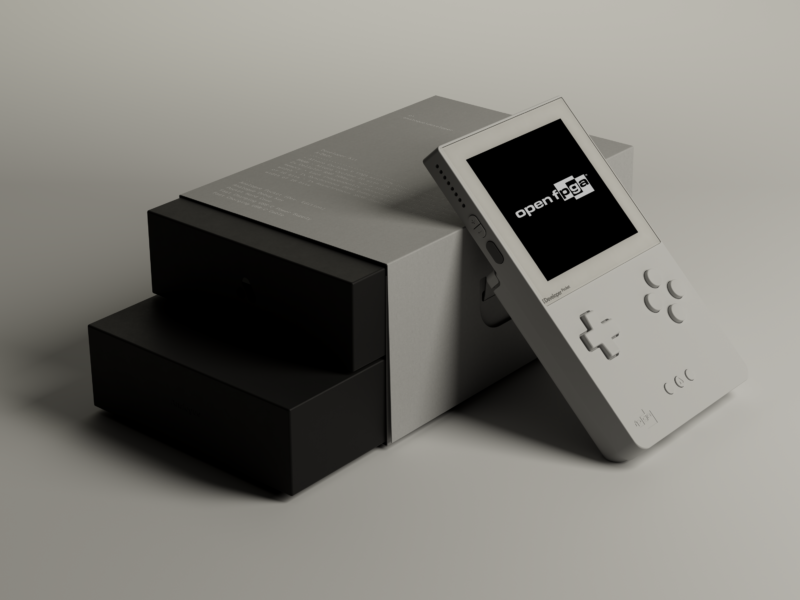
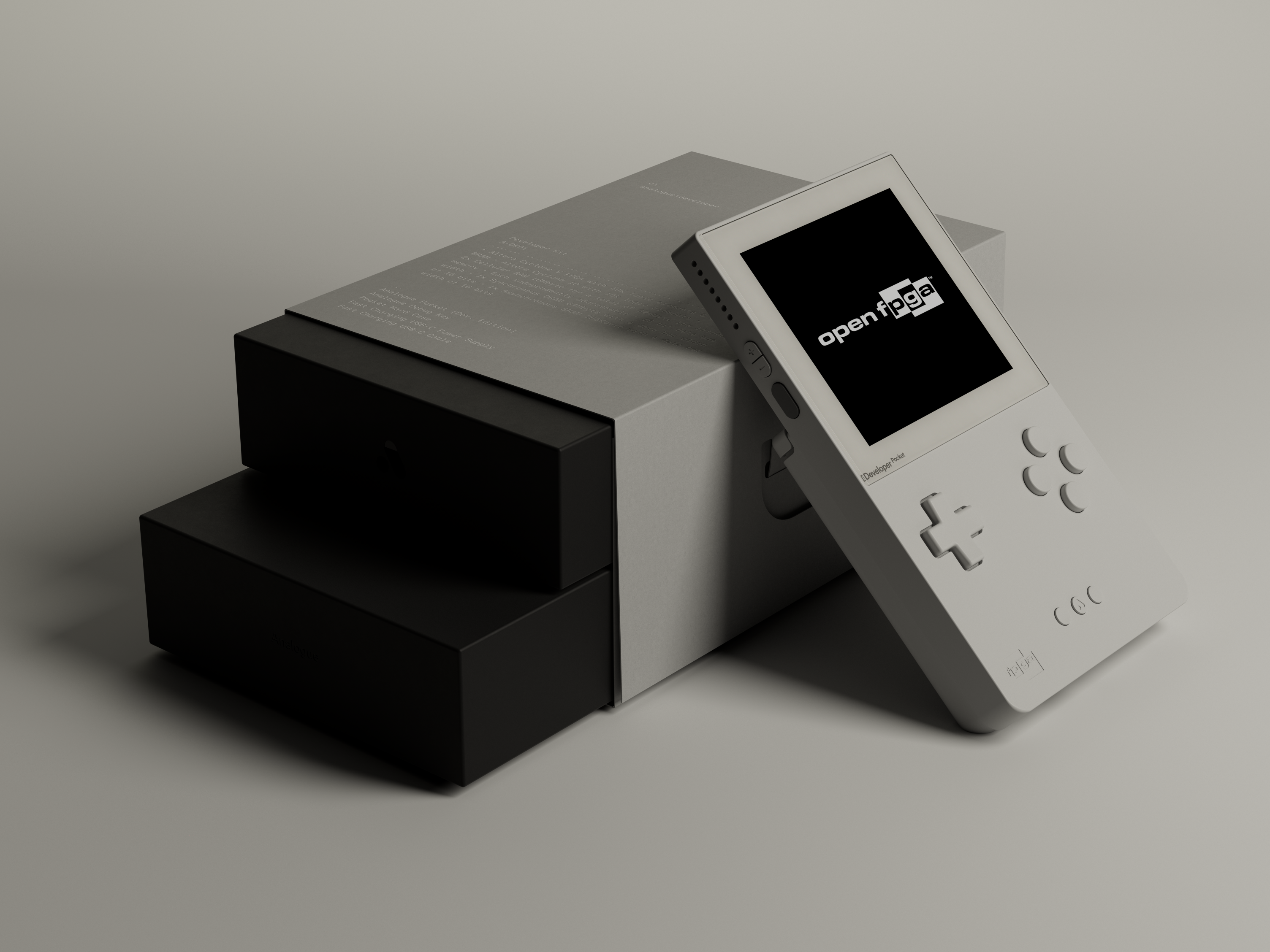
A major update to the portable, retro-minded Analogue Pocket gaming system landed on Friday, and its new “OpenFPGA” features are the highlight. Thanks to last week’s “1.1” patch, anyone in the open source development community can build hardware-emulation “cores” to make Pocket mimic nearly any gaming and computer system up until the early ’90s, if not newer than that.

Our chat with Analogue’s CEO left us wondering exactly how OpenFPGA would work, but we didn’t have to wait long to find out. By the end of Friday, the system was essentially “jailbroken” as far as its support of “Game Boy”-branded games was concerned. And things got even spicier on Monday morning with the surprise emergence of a core that supports a system far more powerful than either the Game Boy or Game Boy Advance.

Ladies and gentlemen… Pocket is floating in space

The physical cartridge slot on Analogue Pocket supports any game with Nintendo’s Game Boy branding, up to the Game Boy Advance, and that’s the obvious selling point for the system compared to something like an emulation box. If you’re the kind of gamer who prefers physical media but wants modern hardware perks, Analogue Pocket is arguably the system for you.

Yet even owners of cartridges may prefer skipping physical media in some cases, especially to add convenience to a portable system, and that goes doubly for use cases like homebrew or Japanese games with community-developed English translations. Thus, since my Analogue Pocket review was published, interested buyers commented whether the system might receive a jailbreak—a way to skip physical cartridges and instead play ROM files loaded onto the system’s microSD slot.

Hours after my Pocket 1.1 article was published, the answer arrived in the form of a pair of downloads at GitHub. These files are cores for Pocket’s OpenFPGA system, with one supporting Game Boy and Game Boy Color game files and the other supporting GBA game files. Put these cores into a microSD card, then put compatible game files into appropriate directories on the same card, and presto: Analogue Pocket will now play Game Boy-branded games, no cartridge required.

These files’ origins are dubious; they appeared on a new GitHub account almost immediately after 1.1 went live—guaranteeing that its creators had some form of early access to Analogue’s development environment prior to the launch. (The accounts refer to a pair of British psychedelia bands, Spacemen 3 and Spiritualized, which is certainly an interesting identifier.) One of the related accounts confirmed that it additionally had access to a slew of Pocket-formatted image files that had previously only been available to members of the press, designed to make the 1.1 update’s “Library” system look nicer. The latter account did not identify itself beyond saying its owner is “an FPGA engineer,” so it’s unclear if these developers were part of the Analogue Pocket development process—though one claim that its cores had been “heavily tested for months” implies a very cozy relationship with Analogue as a company.

The biggest catch at this point is that these cores won’t function without transferring “BIOS” files from Game Boy and GBA systems. When you use a cartridge on Analogue Pocket, you’re playing these games with a BIOS file independently developed by Analogue—and that’s the reason you don’t see “Nintendo” or “Game Boy” splash screens before playing those games. (Those brief splash screens were part of Nintendo’s original BIOS systems.)

Additionally, the new GB and GBA cores skip the coolest visual processing options built into Analogue Pocket, which exploit the high resolution of Pocket’s panel to add LCD-styled effects to its modern IPS screen. The anonymous developer behind these cores claimed that these filters would come to the GB, GBC, and GBA cores once “an API update from Analogue” goes live.

https://arstechnica.com/?p=1870698


Bungie shuts Destiny 2 text chat to stop malicious exploit

A screenshot of a character in Destiny 2
Enlarge / It’s quiet… too quiet…

Over the weekend, players in the Destiny 2 community started to notice a game-breaking bug that could be activated just by sending in-game chat messages to other players. Bungie responded on Saturday by temporarily disabling all in-game chat while it investigates the issue.

“The team is aware of the exploit right now that is causing some players to be kicked and are actively working on identifying what’s causing the issue and addressing it,” Destiny 2 Community Manager Liana Rupert wrote on Twitter just before chat was disabled across the game.

Scrub those inputs

The damaging exploit involved a string over 200 characters long, composed mostly of Chinese characters, according to multiple players who came across it over the weekend (and who shared the forbidden text with Ars Technica). The specific way those Chinese characters are encoded in Unicode means each one can take up more memory space than a single-byte ASCII character.

Observers suggest that difference means the message, as encoded, could overflow into other areas of in-game memory, even if the message itself seemed to meet the usual character-length checks meant to prevent this. The result of that overflow was a so-called WEASEL error that immediately crashed the recipient’s game, as can be seen in this sample video.

Before the shutdown, players could be hit by the exploit through the game’s targeted “whisper” chat messages or through local chat messages sent from members of your own Fireteam.

Destiny‘s text troubles come months after Amazon’s New World MMO faced trouble from players who figured out how to process HTML strings in the in-game chat box. This led to multiple exploits including one that flooded players’ screens with pictures of giant sausages and another that crashed games when players hovered over a specially formatted link.

Bungie had already scheduled a hotfix rollout for Tuesday, August 2, so this whole issue could be fully resolved rather shortly. But let this be a lesson to all you coders out there: make sure you’re fully sanitizing your inputs before letting them get sent across your gaming chat!

https://arstechnica.com/?p=1870721


Official Andor trailer shows us what the birth of a revolution looks like

[embedded content]
Diego Luna reprises his role as Cassian Andor in the new Disney+ prequel series Andor.

Disney+ has released an action-packed trailer for Andor, the forthcoming 12-episode prequel series set five years before the events of Rogue One, starring Diego Luna as Cassian Andor.

As we’ve reported previously, our first look at the series came from a behind-the-scenes teaser in December 2020 during Disney’s Investors Day. We got a short teaser earlier this year at Star Wars Celebration. Andor has been described as a “tense, nail-biting spy thriller,” with Tony Gilroy, who co-wrote Rogue One, serving as showrunner.

The story begins with the Empire’s destruction of Cassian Andor’s homeworld and will depict his transformation from a “revolution-averse” cynic to a major player in the nascent rebellion who is willing to sacrifice himself to save the galaxy. According to Deadline Hollywood, Luna described Andor as “the journey of a migrant. That feeling of having to move is behind this story—that shapes you as a person. It defines you in many ways, and what you are willing to do.”

Per the official description:

The Andor series explores a new perspective from the Star Wars galaxy, focusing on Cassian Andor’s journey to discover the difference he can make. The series brings forward the tale of the burgeoning rebellion against the Empire and how people and planets became involved. It’s an era filled with danger, deception and intrigue where Cassian will embark on the path that is destined to turn him into a rebel hero.

The ensemble cast also includes Genevieve O’Reilly as Mon Mothma, a senator of the Republic who helped found the Rebel Alliance, as well as Forest Whitaker reprising his Rogue One role as Clone Wars veteran Saw Gerrera. Stellan Skarsgård (as Luthen) and Adria Arjona co-star as the resistance fighters who recruit Andor to the cause. Kyle Soller, Denise Gough, Fiona Shaw, Robert Emms, and David Hayman have all been cast in undisclosed roles. Alan Tudyk was supposed to be returning as the reprogrammed Imperial droid K-2SO, but his appearance was scuttled during rewrites.

The new trailer opens onto a remote settlement on high alert as a low-flying Empire spaceship moves into view. “To steal from the Empire, you just walk in like you belong,” Cassian says in a voiceover as we see a small boy (one assumes a young Cassian) sneak into an Empire stronghold, presumably to commit petty theft. “They’re so proud of themselves. So fat and satisfied. They can’t imagine that someone like me would ever get inside their house.”

But the Empire is exerting a stranglehold on Andor, “choking us so slowly we’re starting not to notice,” Luthen says when he approaches a grown-up Cassian to recruit him to the rebellion. “Wouldn’t you rather give it all to something real? I need all the heroes I can get.” Saw knows what to call this: “War.” And Mon Mothma is well placed to help, making herself an irritation to distract the Empire from her true purpose: fomenting a rebellion.

The first three episodes of Andor premiere on Disney+ on September 21, 2022. The remaining nine episodes will air weekly, concluding on November 23, 2022. A second 12-episode season is already in development and purportedly will lead directly into the events of Rogue One.

Ars Technica may earn compensation for sales from links on this post through affiliate programs.

Listing image by Disney+

https://arstechnica.com/?p=1870604


Star Trek icon Nichelle Nichols dead at 89

<img src="https://rassegna.lbit-solution.it/wp-content/uploads/2022/07/star-trek-icon-nichelle-nichols-dead-at-89.png" alt="Nichelle Nichols made TV history with her portrayal of Nyota Uhura in Star Trek: the Original Series.”>
Nichelle Nichols made TV history with her portrayal of Nyota Uhura in Star Trek: the Original Series.

Actress Nichelle Nichols—who made history with her portrayal of Nyota Uhura on Star Trek: The Original Series—died Saturday, July 30, at the age of 89. Her son Kyle Johnson announced Nichols’ passing on her official Instagram account, saying his mother had died of natural causes. (The LA Times reported cause of death as heart failure.) Deadline Hollywood confirmed her passing with Gilbert Bell, her talent manager and business partner of 15 years. Nichols suffered a mild stroke in 2015 and was diagnosed with dementia in 2018. She rarely appeared in public after that.

(Last year we wrote about Woman in Motion, a new documentary about Nichols and her recruitment work for NASA, directed by Todd Thompson (streaming on Paramount+). Much of the following is adapted from that text.) 

Nichols started her career as a dancer and singer. She had wanted to become the first Black ballerina, and by age 14 landed her first gig at the Sherman Hotel in Chicago. She subsequently toured the US, Canada, and Europe with Duke Ellington and Lionel Hampton before settling in Los Angeles in 1960 to pursue acting.

Among Nichols’ first roles was playing a Black soldier’s fiancee on a short-lived series called The Lieutenant, produced by Gene Roddenberry. The episode (which never aired) was entitled “To Set It Right” and dealt explicitly with racial prejudice. So when Roddenberry began developing a new series, originally titled Wagon Train to the Stars, he thought of her for one of the roles. That show became Star Trek, and Nichols made history as Uhura. (In her autobiography, Nichols revealed that she had been romantically involved with Roddenberry before he met his wife, Majel Hudec, although the affair ended well before she was cast in Star Trek.)

Nichols very nearly quit the series after the first season, frustrated with what she perceived to be a constantly diminished role. But a chance encounter with Martin Luther King Jr. changed her mind. “You cannot, you cannot,” she recalled him saying when she told him she wanted to leave the series. “For the first time on television, we will be seen as we should be seen every day, as intelligent, quality, beautiful people, who can sing, dance, and can go to space, who are professors, lawyers. If you leave, that door can be closed because your role is not a Black role, and it is not a female role, he can fill it with anybody, even an alien.”

With co-star William Shatner, Nichols also engaged in what is widely touted as the first interracial kiss on US scripted television in the 1968 TOS episode, “Plato’s Stepchildren.” As Cyrus Farivar wrote for Ars in 2018:

The smooching scene has been commonly referred to as television’s first interracial kiss—but there’s compelling evidence that it actually wasn’t. Still, this bisou remains an iconic Star Trek moment at a time in America when there were very few mainstream media depictions of mixed-race intimacy. After all, “Plato’s Stepchildren” aired just 18 months after the Supreme Court decided the case of Loving v. Virginia, which overturned all bans on interracial marriage in the United States.

According to The Hollywood Reporter, the scene in “Plato’s Stepchildren” was shot one way with the actors’ lips meeting (as the show’s creator, Gene Roddenberry, wrote it) and another where they don’t. However, actors William Shatner (Kirk) and Nichelle Nichols (Uhura) both flubbed the non-kiss takes so that the director (who was concerned about possible backlash) would be forced to use the real McCoy.

After the original series ended, Nichols attended a 1975 Star Trek convention, where NASA’s director of science was also speaking. He expressed his admiration for Uhura. She in turn spoke about her love of space and NASA, but also of her sense of disenfranchisement. When NASA claimed it couldn’t find qualified Black people, Nichols didn’t buy it, insisting that Black people and women weren’t applying to the program because they didn’t believe NASA was serious about giving them a chance. So she became a NASA spokesperson through her company, Women in Motion.

<a href="https://rassegna.lbit-solution.it/wp-content/uploads/2022/07/star-trek-icon-nichelle-nichols-dead-at-89-1.jpg" class="enlarge" data-height="801" data-width="1200" alt="Nichelle Nichols in Todd Thompson's 2021 documentary Woman in Motion.”><img alt="Nichelle Nichols in Todd Thompson's 2021 documentary Woman in Motion.” src=”https://rassegna.lbit-solution.it/wp-content/uploads/2022/07/star-trek-icon-nichelle-nichols-dead-at-89.jpg” width=”640″ height=”427″ srcset=”https://rassegna.lbit-solution.it/wp-content/uploads/2022/07/star-trek-icon-nichelle-nichols-dead-at-89-1.jpg 2x”>
Enlarge / Nichelle Nichols in Todd Thompson’s 2021 documentary Woman in Motion.
Paramount+

Nichols traveled all over the country, trying to recruit women and minorities to the shuttle program. When she started, 100 of NASA’s aspiring recruits were women, and just 35 were minorities. By the time she submitted her final report, those numbers had swelled to 1,649 women and 1,000 minorities in a group of 8,000.

Among those recruits were Sally Ride and Judith Resnick—the first and second American women in space, respectively—as well as Guion Bluford Jr. and Ron McNair, the first and second Black astronauts in space, and Ellison Onizuka, the first Asian American in space. Col. Frederick D. Gregory also heeded the call and wound up serving on three shuttle missions before becoming NASA deputy administrator.

McNair, Resnick, and Onizuka were all crew members on the Space Shuttle Challenger for the doomed mission STS-51-L. The shuttle broke up in the air just 73 seconds after launch on January 28, 1986, killing everyone on board. Nichols was devastated by the loss, particularly of Resnick, with whom she had become quite close.

In his Instagram post, Kyle Johnson asked for privacy for the family as they grappled with their loss. “Her light … like the ancient galaxies now being seen for the first time, will remain for us and future generations to enjoy, learn from, and draw inspiration,” he wrote. “Hers was a life well lived and as such a model for us all.”

https://arstechnica.com/?p=1870547


Sega Genesis Mini 2 will be in much shorter supply than original

The Sega Genesis Mini 2 will not be sold at traditional brick-and-mortar stores, so this is instead an artistic approximation of the system's apparent scarcity.
Enlarge / The Sega Genesis Mini 2 will not be sold at traditional brick-and-mortar stores, so this is instead an artistic approximation of the system’s apparent scarcity.
Aurich Lawson | Getty Images

The miniature console fad has abated since its NES Classic and SNES Classic peak, with fewer companies giving the concept a shot. Sega remains an exception, however, as it’s launching not one but two new retro-minded machines by year’s end.

Only one of those, the Sega Genesis Mini 2, is coming to the United States. And Sega confirmed to Ars Technica that the system in question would be in incredibly limited supply: “around one-tenth” the count of the 2019 Sega Genesis Mini.

Mini production run for Mini 2

The news came as a surprising answer to a completely different question. Ars reached out to Sega shortly after the Genesis Mini 2 was announced, because we wanted clarity on exactly who was producing and shipping the system.

The Genesis Mini 2 was confirmed months after Sega announced a similar living room box for its Japanese audience, the Mega Drive 2. The “2” indicates that this is a follow-up to the 2019 concept, only with an entirely new selection of built-in, emulated classics from Sega’s 16-bit console generation (this time with Sega CD games thrown in).

Sega of America handled the promotion and shipment of the 2019 Genesis Mini, while this year’s Genesis Mini 2, slated to ship on October 27, appears to be handled entirely by Sega of Japan. For one, its official site is in English, but it’s hosted at Sega’s Japanese domain. More importantly for interested buyers, the Genesis Mini 2 is only available through an Amazon US listing, which claims that all purchases will be shipped from Japan—thus skipping Amazon’s usual Prime shipping discounts and guarantees (and possibly burdening American buyers with customs issues).

My questions about Genesis Mini 2 shipments were forwarded to Sega of Japan’s corporate office, which eventually confirmed that the new miniaturized console was a “Japan-only project” for the company. “The Sega Genesis Mini 2 could only be produced in small numbers due to the global semiconductor shortage,” reads a letter from the Sega president’s office, so the company opted to produce a small Western batch of Genesis Mini 2s alongside its order of Mega Drive Mini 2s.

“The number of units for this project makes up around one-tenth of the total for the previous Genesis Mini,” the letter states.

Might need to make up your preorder mind

Since Sega never announced total sales figures for the original Genesis Mini, or other regions’ Mega Drive Mini sales, we can’t accurately estimate how reduced this manufacturing count is. Anecdotally, the original Genesis Mini seemed to fall somewhere between the rampant sellouts of Nintendo’s own systems and the underperforming, rapidly discounted fate of 2018’s disappointing PlayStation Mini. Upon its release, Genesis Mini stock remained stable and accessible even through early 2020 (and had its own deep discounts by May 2020). These days, it’s no longer manufactured and hovers in the $160-200 range at both official retailers and eBay listings (well above its original $80 MSRP).

Most miniaturized consoles from the past decade have come and gone with only one or two manufacturing runs, much to customers’ chagrin. Sega’s statement doesn’t suggest confidence that we should expect anything different from their newest machine—and the same goes for the Japan-only Astro City Mini V, which will resemble the 2020 Astro City Mini (which I previously reviewed) but this time includes a vertically oriented monitor and classic arcade games to match.

The statement does not clarify what percentage of scaling may have been applied to the Mega Drive Mini 2 compared to the first Mega Drive Mini—but it also doesn’t mention anything about a European model, which leaves us doubting that Sega of Europe will manufacture a system that is full of multilanguage games with “Mega Drive 2 Mini” branding.

As of press time, Amazon’s US site still shows the Genesis Mini 2 available at a price hovering around $103—which has fluctuated since its announcement, owing to its Japanese manufacturing origin and its price being based on the Japanese yen. This update from Sega of Japan suggests that anyone interested in the Western version of Genesis Mini 2, which will contain Western versions of some games and original Japanese versions of others, should not hesitate to place an order.

Ars Technica has already ordered its own Genesis Mini 2 hardware and is in touch with Sega of Japan about getting its hands on the system ahead of its launch. But in light of this apparent scarcity, my review of the 2019 original may help you make up your mind before it’s too late to get this one anywhere near MSRP. Both Genesis Mini models are made by the same team at M2 and apparently revolve around the same emulation cores and interfaces. I mostly praised that system for its price-to-content ratio and glowing emulation performance, and this system’s announced games thus far include serious Genesis and Sega CD classics at a similar price-per-game ratio (along with a default bump to a six-button controller as its pack-in option).

Ars Technica may earn compensation for sales from links on this post through affiliate programs.

https://arstechnica.com/?p=1870420


Despite $100 price increase, Meta Quest 2 still offers historically cheap VR

Screenshot of promotional video for VR equipment.
Enlarge / You could be this gleeful, too, if you were in the Meta Quest 2!


If there’s one rule about computer and video game hardware, it’s that prices always come down after launch. The Meta Quest 2 became the exception that proves the rule this week, as Meta announced a coming $100 price increase for the popular standalone VR headset, to $400.

The increase, which Meta blamed on “rising costs,” suggests the company may be trying to rein in subsidized hardware pricing that has contributed to nearly $1 billion in monthly losses for its virtual reality division in the most recent quarter.

But when you look at the short history of consumer-grade home virtual reality headsets, the Meta Quest 2 is still a historically cheap VR entry point, even after the price increase. That’s especially true when you account for inflation and the extra hardware needed to power most other comparable headsets on the market.

$400 ain’t what it used to be

Fig. 1: $400 is still a middle-of-the-road nominal price for consumer-facing VR headsets.
Enlarge / Fig. 1: $400 is still a middle-of-the-road nominal price for consumer-facing VR headsets.

To see how the Quest 2’s price shaped up, we gathered historical price data for a variety of popular headsets that offer full “six degrees of freedom” head and hand tracking (that eliminates cheaper options like the Samsung Gear VR and Oculus Go). We also included the cost of any hand-tracking controllers and external tracking hardware (when applicable), so the launch-era Oculus Rift doesn’t enter the picture until the launch of the $200 Oculus Touch controllers months later.

Ignoring the extra cost of the hardware needed to power all these “tethered” VR headsets, the $400 Quest 2 is right in the middle of the nominal historical price range for consumer level VR. While headsets like the Oculus Rift and HTC Vive launched in 2016 at prices around $800 (with controllers included), those prices quickly came down through 2017.

By 2018, most headsets were settling in a nominal price range of $300 to $500, with high-end exceptions like the HTC Vive Pro and Valve Index serving the “money is no object” portion of the market. And while value-minded consumers could find deals like a $229 Samsung Odyssey Plus in early 2020, $300 to $400 has been the lowest reasonable asking price for most VR headsets in recent years.

Fig. 2: Adjusting for inflation, the Meta Quest 2 is still one of the cheapest VR options ever available.
Enlarge / Fig. 2: Adjusting for inflation, the Meta Quest 2 is still one of the cheapest VR options ever available.

When you adjust for inflation, though, the Quest 2’s $400 price ends up looking much better, shifting to near the bottom-end of historical headset pricing. That might be surprising, considering that we’ve only had five or six years for inflation to chip away at the relative value of earlier headsets. But given how inflation has approached double-digit annualized rates in recent months, $400 today looks a lot different than it did even in the late 2010s.

https://arstechnica.com/?p=1870323


Blazepods are interesting training gear, but they’re overkill for casual users

One of my better data traces.
Enlarge / One of my better data traces.

Fans of Formula 1 may have noticed that many drivers engage in reaction training before getting into their cars at the start of a race. For some, this is as simple as working with a trainer and some tennis balls. But you might have noticed 2021 champion Max Verstappen slapping some illuminated pods, like a wireless version of the old Simon game from the late 1970s.

They’re called Blazepods, and they’re Bluetooth-linked training lights that have their roots in an interactive playground in Israel. Blazepod’s founder developed a series of exercises for the system, like capture the flag and relay races. “It was such a success, they knew they needed to make this wireless,” explained Brian Farber, Blazepod’s director of business development. “And then they started implementing [them] and understanding what the benefits were—everything from the cognitive to connecting the brain and the body together, decision-making, reaction time, and then actual analytics. It just kind of took off from there.”

Max Verstappen might be Blazepod's highest-profile user.
Max Verstappen might be Blazepod’s highest-profile user.

Blazepod offered to send Ars a set to test, and since I’ve been in the middle of a fitness kick, and some distant part of my brain still thinks it can be a racing driver, I took the company up on the offer.

The Blazepods are hardwearing gray-and-blue plastic pucks, about 3 inches across. The tops are transparent and contain LEDs and a touch sensor. They stack and fit on top of a USB charging base, and they have about 10 hours of battery life. As you might expect, there’s a smartphone app that communicates with the pods; the app features plenty of training programs, including beep tests and reaction-time training, as well as balance and core exercises.

You can refine the list of activities the app suggests by telling it which sports you’re interested in—soccer, basketball, baseball, rugby, American football, racquet sports, and so on. Additionally, you can program your own exercises. I did this using all six pods as they were arrayed on my desk, and they lit up randomly for 30-second cycles.

The benefit, according to Farber, is that “it’s getting the brain to fire and process a little bit faster and more efficiently. It’s the visual stimulation—everything you do as a driver is done with your eyes, right? For the most part, yes, you do have a radio and you are getting information, but the dangerous part is not catching things with your eye,” he said.

I’d like to say that the pods revolutionized my training regimen, but truthfully, I’m not that dedicated. The six-pack of pods is compact enough that you can travel with it, and I did take it on the road with me a few times. However, without accessories like suction mounts, you won’t be able to do much more than spread them out on the ground or on a desk. My early tests were marred by the pods occasionally failing to register a hit, which made the reaction time data unreliable, but a software update appears to have solved that problem quite well.

The pods’ performance may have improved, but I’m not really sure that my reaction times have decreased, and I haven’t been spending enough time with racing sims to see if there has been any real improvement there, either.

When I spoke with Farber, he told me that although the technology was originally developed to let kids play, “we took a shift really early on, realizing what we had here was really aimed at an athlete, not necessarily a child.”

As I write this, that resonates—not because I think I’m a child, but also because I know I’m not an athlete, and therefore not really the intended user. That’s particularly true considering the cost—a pack of six pods starts at $329, and there’s a subscription service that allows you to add more pods and share activities at a cost of $14.99 a month or $149.99 a year. For actual athletes, coaches, trainers, and fitness instructors, I can see the appeal, but for casual users, the product is probably overkill.

Listing image by Blazepod

https://arstechnica.com/?p=1870243


Analogue comes out swinging with Pocket 1.1 update: “We’re not f-ing around”

Every Analogue Pocket system will function as a "dev kit," but this special developer version of the portable system will be sent to interested FPGA "core" developers starting this week as a freebie to encourage their contributions to Analogue's new, not-quite-open OpenFPGA standard.
Enlarge / Every Analogue Pocket system will function as a “dev kit,” but this special developer version of the portable system will be sent to interested FPGA “core” developers starting this week as a freebie to encourage their contributions to Analogue’s new, not-quite-open OpenFPGA standard.

Upon its launch in December, the portable Analogue Pocket system immediately stood out as a supercharged way to play classic portable cartridges from Game Boys. While its design borrows heavily from the Gunpei Yokoi original, its physical makeup is attractive and modern, and its mix of FPGA hardware and overkill, high-resolution IPS screen do wonders for old-school games.

But Analogue dropped the ball on part of its sales pitch: a sweeping “1.1” system update that was supposed to launch in “January 2022.” Analogue never said why this patch was delayed. Was it a matter of its developers struggling to deliver? Was Analogue biding its time while shipments of the $199 Pocket hardware, and its companion $99 Analogue Dock for TVs, remained scarce, partly due to a global chip shortage?

Whatever the reason, the 1.1 update finally arrives today as a free download—and it sees Analogue taking its boldest steps yet into new territory. In a conversation with Ars Technica, Analogue CEO Christopher Taber suggested that the company’s prior emphasis on console-specific FPGA systems (like the Super Nt and Mega Sg) may give way to a more open, MiSTer-like approach.

Thanks to today’s new “OpenFPGA” initiative, the Analogue Pocket could become your one-stop shop for playing multiple consoles’ games on a single system—assuming that certain uses are opened up.

A primer on FPGA, hardware emulation, and MiSTer

Analogue describes OpenFPGA as an operating system and platform for the Pocket and potential future Analogue hardware. It allows third-party developers to write and publish a “core” that can re-create any classic computer platform or console family. But “open” is relative here, so let’s clarify a few points.

For starters, what is a core? When you put a Game Boy cartridge into a Pocket, its FPGA-fueled hardware recognizes that it’s from the Game Boy, and it then parses a series of instructions (also known as a “core”) to emulate the original Game Boy on a hardware level. That’s different from software emulation, which tricks a combination of processor and OS to take calls originally intended for a Game Boy and treat them like they’re native to something like Windows or Android.

Hardware emulation tends to deliver more accurate versions of classic games in aspects like timings and hardware limitations, all while reducing button-tap lag and supporting newer video formats like HDMI. Ars readers have seen this in systems made by Analogue, which tend to revolve around a single console family and a working cartridge slot, along with the MiSTer community, which goes a different route.

MiSTer boxes combine off-the-shelf DE-10 Nano motherboards, Altera Cyclone FPGA chips, and community-developed cores to pull off the same hardware-emulation trick, only without waiting on a single manufacturer like Analogue to, say, add support for other computer and console families. You can only run Super Nintendo and Super Famicom games on a Super Nt. On a MiSTer box, you can load dozens of cores on the same piece of hardware, ranging from popular ’80s PCs like the ZX Spectrum to consoles as powerful as the first PlayStation. But you also have to contend with a completely open hardware marketplace to purchase everything you need to get a MiSTer working (though some hobbyists will sell you pre-made kits for a premium).

You can dump floppy discs or cartridges and load their games and apps onto any working MiSTer core, but as an open platform, MiSTer doesn’t mandate how you get or load games. Officially, Analogue systems have required physical cartridges, but longtime Analogue programmer Kevtris previously published “jailbreak” firmware for the company’s systems that allows users to put game ROMs onto an SD card and play them that way. Kevtris has not confirmed any plans to do the same for Analogue Pocket.

https://arstechnica.com/?p=1870000


The players are the problem: Community managers complain of excessive harassment

I'll show that know-it-all community manager who's boss...
I’ll show that know-it-all community manager who’s boss…

In video games, community management is all about listening to the concerns of the fans and communicating with them in a way that makes them feel that their concerns are being heard. But what happens when some of the concerned players become a cause for concern themselves?

That’s the question two major gaming companies have faced in recent days, with community managers saying that harassment from customers is making it harder for them to do their jobs.

The first example comes from the Destiny 2 community on Reddit, where one member posted Wednesday lamenting the shrinking number of threads that receive an official reply from Bungie. Destiny 2 Community Manager Dylan “dmg04” Gafner responded to explain that he has taken some time off due to “some serious harassment towards me and my family,” which has led to “an amount of reduced communications as the team plans future protections / strategies to help avoid these sorts of things.”

The harassment Gafner is talking about goes beyond “just rude replies on Twitter or vague comments,” he wrote, and encompasses “real threats toward our people and our studio” from fans. Some of that harassment has apparently come through private channels. “Just because you can’t see it directly in a given tweet or forum reply doesn’t mean that it didn’t happen,” Gafner wrote.

Gafner’s statement comes just days after Destiny 2 developer Bungie filed a lawsuit against one fan who the company says has made threats against Gafner and other Bungie employees after evading multiple ban attempts in the game.

“I will be very clear in saying that I appreciate the studio in the amount that it’s helped me personally after some serious harassment towards me and my family,” Gafner wrote. “I’m taking time off in part because of this.”

While Gafner acknowledged that “it’s a bummer that we don’t have as much interaction here as of late,” the reduced communication isn’t intended as a “retaliatory action” against the respectful bulk of the community. “Sometimes, we just need to take some time to get things straightened out,” he wrote. “Can take weeks, can take months—just like any given development pipeline, as we want what’s best for our players AND our employees. That said, we can’t just move about ‘business as usual’ until things are resolved. It sucks, but we want to be sure that folks are safe and taken care of.”

Minecraft madness

The second instance of recent gaming community conflict comes from the world of Minecraft, where developer Mojang recently announced a new global chat moderation system that could lead to player bans that apply even on private servers.

In a FAQ following that announcement, Mojang clarified that it is focused less on minor infractions like swearing and more on serious instances of “hate speech, bullying, harassment, sexual solicitation, or making true threats to others.” Mojang also says it will not be actively monitoring chat on private servers (absent a player complaint), that humans will be involved in any ban decisions, and that bans will be subject to appeals.

Despite that, the new moderation regime has led to a lot of pushback from fans. Many angry fans are organizing under the #SaveMinecraft hashtag, which includes plenty of dramatic comparisons to George Orwell’s 1984. “Just remove the chat report system completely,” a Twitter user wrote in one of the less overwrought examples on the hashtag. “Servers should be in charge of moderation like they have always been.”

Writing on Reddit, relatively new Community Manager MojangMessh said that while the company “appreciate[s] and value[s]” this kind of feedback, Mojang is “not planning on changing” its new chat moderation system. Listening to feedback “does not mean that feedback will always change the design principles Mojang Studios adheres to,” MojangMeesh added.

But MojangMeesh went on to criticize some members of the Minecraft community for taking their feedback too far. Overzealous and harassing messages from some fans have ended up hindering communication between the company and its players, he wrote:

There have been some folks following Mojang employees around here on Reddit, responding to unrelated posts from them and commenting about this system. Please understand that this behavior does not encourage employees to reach out to the community, nor will it bring about the changes you’re wanting. If you feel strongly about something in Minecraft, please tell us in the appropriate locations (such as these threads) because we want to hear what you have to say! However, harassment does not help anyone: not the devs who receive it, nor the players who are passionate about an upcoming change. We want to maintain a constructive and open dialogue with you, and this kind of behavior inhibits that.

While problematic players are nothing new in the world of gaming, it’s rare to see community managers making such direct and public complaints about harassment that makes it harder for them to do their jobs. Here’s hoping that cooler heads in these communities prevail and that the companies involved will continue to give their community specialists the support they need.

https://arstechnica.com/?p=1869941


Sylvester Stallone is a grizzled, disillusioned superhero in Samaritan trailer

[embedded content]
Sylvester Stallone stars as an aging superhero long believed to be dead, in Samaritan.

Action legend Sylvester Stallone has dabbled in the superhero genre before, most notably as Judge Dredd (1995), the Ravager Stakar Ogord in Guardians of the Galaxy Vol. 2. (2017), and the voice of King Shark in The Suicide Squad (2021). (He’s reprising his Ravager role for Guardians of the Galaxy Vol. 3.) With his new film Samaritan, Stallone gets to play an aging superhero living anonymously as a garbage man, tormented by his past. Judging by the official trailer, it’s the perfect role for the 73-year-old action star, combining all the best elements of his long, illustrious career.

Samaritan is the brainchild of screenwriter Bragi Schut, best known for Escape Room (2019) and 2011’s Season of the Witch. He first penned a spec script for the film about 10 years ago. But spec scripts can meander through the Hollywood studio ecosystem for years before even being optioned, never mind going into development. So in the meantime, Schut adapted his screenplay into a series of graphic novels for Mythos Comics—the opposite of the usual process these days, with studios competing for recognizable IP to adapt into blockbuster films.

First published in 2014, the comic book version upends the genre’s typical setting of a superhero arriving at a crime-ridden cesspool of a city to take on the bad guys and clean things up. This version depicts the gradual degradation of fictional city of Acropolis after its superhero, Samaritan, is presumably killed in battle against the aptly named superhuman Nemesis inside a burning warehouse. (Nemesis is also killed).

The story is told from the viewpoint of a young boy named Sam, a kid who loves to draw and daydream as his single mom works to save enough money for them to move somewhere less dangerous. Sam is the kind of kid who gets bullied a lot. He’s also curious and soon begins to suspect that the aging garbage man who lives across the street might be more than he seems—i.e., he might be Samaritan, alive and living a life of anonymous retirement.

MGM finally acquired Schut’s spec script in 2019 and hired Julius Avery to direct. Filming was interrupted by the pandemic, which also delayed the film’s release date several times. When Amazon Studios acquired MGM earlier this year, it decided to release the film on its Prime Video streaming platform.

Given that Samaritan began as a script and was adapted into a graphic novel, many of the latter’s story elements have been preserved for the film. Per the official premise:

Thirteen-year-old Sam Cleary (Javon “Wanna” Walton) suspects that his mysterious and reclusive neighbor Mr. Smith (Stallone) is actually a legend hiding in plain sight. Twenty-five years ago, Granite City’s super powered vigilante, Samaritan, was reported dead after a fiery warehouse battle with his rival, Nemesis. Most believe Samaritan perished in the fire, but some in the city, like Sam, have hope that he is still alive. With crime on the rise and the city on the brink of chaos, Sam makes it his mission to coax his neighbor out of hiding to save the city from ruin. 

In addition to Stallone and Walton, the cast includes Pilou Asbaek (best known as Euron Greyjoy from Game of Thrones) as Cyrus; Dascha Polanco as Isabelle; Martin Starr as Arthur; Moises Arias as Reza Smith; and Deacon Randle as The Fireman.

The trailer opens with garbageman Joe Smith collecting bits of junk on his rounds—just something to keep him busy. We see him watching the nightly news (with its litany of crime and violence) while eating a bowl of cereal, as the newscaster predicts the city will soon implode. But then Joe sees Sam being chased into an alley by bullies and comes to his rescue, revealing his super strength in the process. And Sam realizes he’s found Samaritan, who’s still alive 25 years after being presumed dead.

Nobody believes Sam, of course, and even Joe denies it at first. But eventually, the two become an unlikely pair. Joe admits he’s not as strong as he once was: “Things start to fall apart when you stop caring. And I stopped caring a long time ago.” Joe runs afoul of Cyrus, who makes it clear to his minions that he wants Joe dead. Joe makes quick work of the would-be assassins. There’s plenty of action, but the trailer also teases the mystery of why Samaritan decided to disappear all those years ago in the first place. As someone says in a voiceover, “The things you bury tend to haunt you.”

Samaritan debuts on August 26, 2022, on Prime Video.

Prime Video

Listing image by YouTube/Prime Video

https://arstechnica.com/?p=1869653