PlayStation’s new “digital collectibles” are definitely not NFTs

Sony has taken steps to allay hex-shaped NFT fears about its new "rewards" service.
Enlarge / Sony has taken steps to allay hex-shaped NFT fears about its new “rewards” service.
Sony Interactive Entertainment / Sam Machkovech

On Thursday, Sony Interactive Entertainment posted a surprise announcement about a new service coming to PlayStation consoles. Most of the details about the new “PlayStation Stars” initiative, which resembles other gaming services’ “rewards” perks, sound promising, but at Ars Technica, Sony’s choice of a two-word phrase instantly put fear into our hearts: “digital collectibles.”

Thankfully, members of the SIE PR team were quick to the draw with an email reply to allay our fears: No, this is not Sony’s stab at NFTs.

“They are not one-of-a-kind”

The new service, slated to launch “later this year,” will cost nothing to join and will exist outside the PlayStation Plus subscription family. PlayStation Stars, as vaguely described in Sony’s Thursday announcement, revolves around a soup of connected concepts, but on its face, it basically resembles the Microsoft Rewards system in the modern Xbox console family. The TL;DR version: get digital rewards for playing video games.

PlayStation Stars members can play specific PlayStation console games to complete “campaigns” and “activities,” though only campaigns are described in the Thursday announcement. These range from tasks as simple as playing a particular game in a given month to more dedicated tasks like collecting game-specific PlayStation Trophies or even getting the first unlock of a game’s hard-to-attain “platinum” trophy in a region as large as a time zone. As described, these campaigns may correlate with games tied to the PlayStation Plus service—much like how Microsoft Rewards favors Xbox Game Pass titles.

Should you complete campaigns and activities within PlayStation Stars, you can expect at least two types of “rewards.” The first one described today, dubbed “loyalty points,” can be spent on a “catalog” of digital offers, and these include credit for PlayStation Network purchases or redemption offers for “select” PSN products like games. And I already mentioned the second reward type, dubbed digital collectibles, which sounded suspiciously like NFTs in Sony’s initial announcement:

They are digital representations of things that PlayStation fans enjoy, including figurines of beloved and iconic characters from games and other forms of entertainment, as well as cherished devices that tap into Sony’s history of innovation. There will always be a new collectible to earn, an ultra-rare collectible to strive for, or something surprising to collect just for fun.

In an emailed statement to Ars Technica, SIE Senior Public Relations Manager Aram Jabbari clarifies that these are not NFTs. “These digital collectibles are created just for our loyalty program, and while some can be rare, they are not one-of-a-kind, nor does [PlayStation Stars] leverage blockchain technology,” Jabbari writes.

Thus, as described, these digital collectibles may merely resemble a more old-fashioned approach in the gaming world, where cosmetic 3D objects can be displayed after doing something unique or challenging in a video game without any financial system adding artificial scarcity. The PlayStation 5’s pack-in video game Astro’s Playroom already includes a similar system, as the game includes unlockable 3D models of older PlayStation hardware as secret in-game trinkets, no purchase required. (Speaking of PS5: Jabbari declined to clarify whether PlayStation Stars will function across all PlayStation console families or whether it will be locked to the newer PlayStation 5 console.)

Should we expect “DylaNFTs” any time soon?

Ars Technica readers may already be familiar with many, many, many, many NFT-related pitches from modern gaming companies. (Many.) Should you require more information on the topic, my Ars colleague Kyle Orland has written a lengthy guide on the intersection of video games and the staking of related assets on a blockchain.

SIE has been careful not to suggest that concepts like NFTs or blockchain-staking are coming to PlayStation consoles or services, yet its parent company Sony has found other ways to invest in the concepts. The biggest came in the form of a $1 billion investment in Epic Games, which Sony Chairman Kenichiro Yoshida described at the time as an opportunity “to deepen our relationship in the metaverse field.” The statement also mentions other initiatives like digital video production, thus muddying the exact dollar-by-dollar equation of how much Sony is investing in gaming-related blockchain content.

At least one other Sony division has been much bolder about attaching directly to NFTs as a commercial concept. In March, Sony Music partnered with Bob Dylan’s son to mint NFTs based on Dylan’s works, though as of press time, the service in question doesn’t suggest that such digital items (DylaNFTs?) are going on sale any time soon.

https://arstechnica.com/?p=1866873


Two-minute-plus teaser for LOTR: Rings of Power drops ahead of Comic-Con

[embedded content]
Prime Video’s new fantasy series, The Lord of the Rings: The Rings of Power, is adapted from the writings of J.R.R. Tolkien and debuts on September 2, 2022.

Hollywood is gearing up for San Diego Comic-Con next week—the first in-person version of the hugely popular and influential convention since the pandemic hit. Prime Video decided this was the perfect time to release a new, nearly two-and-a-half-minute teaser trailer for its upcoming series, The Lord of the Rings: The Rings of Power. It feels very much in the spirit of J.R.R. Tolkien’s novels and Peter Jackson’s classic film trilogy.

The first teaser for the new eight-part series landed in February during the Super Bowl and gave us some eye-popping views of the quality world-building we can expect. Per the official description:

This epic drama is set thousands of years before the events of J.R.R. Tolkien’s The Hobbit and The Lord of the Rings, and will take viewers back to an era in which great powers were forged, kingdoms rose to glory and fell to ruin, unlikely heroes were tested, hope hung by the finest of threads, and the greatest villain that ever flowed from Tolkien’s pen threatened to cover all the world in darkness. Beginning in a time of relative peace, the series follows an ensemble cast of characters, both familiar and new, as they confront the long-feared re-emergence of evil to Middle-earth. From the darkest depths of the Misty Mountains, to the majestic forests of the elf-capital of Lindon, to the breathtaking island kingdom of Númenor, to the furthest reaches of the map, these kingdoms and characters will carve out legacies that live on long after they are gone.

The large ensemble cast includes Morfydd Clark as a young Galadriel, “now a hardscrabble warrior leading the Northern Armies,” who is determined to hunt down her brother’s killer. She ends up adrift at sea with a new character named Halbrand (Charles Vickers). All we know about him is that he is “running from his past.” Charles Edwards plays Celebrimbor, whom hardcore LOTR fans will recognize as the elven smith who forged the legendary rings.

Robert Aramayo plays a younger version of Elrond—”a canny young elven architect and politician.” (Aramayo also played the young Eddard Stark on Game of Thrones.) And Maxim Baldry will play the infamous Isildur, ancestor of Aragorn, who eventually defeated Sauron but fell victim to the One Ring’s corrupting power. 

Among other new characters, Sophia Nomvete plays the dwarven Princess Disa, and Orwain Arthur plays Prince Durin IV, but there’s no indication of what their relationship might be. Ismael Cruz Cordova plays a silvan elf named Arondir, and Nazanin Boniadi plays his love interest, Bronwyn, a single mom described as “a human village healer.”

There’s also a breed of hobbits known as the Harfoots, who mostly try to stay hidden and keep to themselves. But two curious young hobbits, Poppy Proudfellow and Nori Brandyfoot (played by Megan Richard and Markella Kavenagh, respectively), are more adventurous and somehow encounter “a mysterious lost man whose origin promises to be one of the show’s enticing questions.” That’s probably The Stranger (Daniel Weyman). Other characters include the dwarf King Durin III (Peter Mullan). The streaming platform has not yet revealed who will be playing Sauron.

https://arstechnica.com/?p=1866757


EA pulls a “reverse Ubisoft,” makes some old BioWare DLC free

Don't worry, my sweet. BioWare Points can't hurt you anymore.
Enlarge / Don’t worry, my sweet. BioWare Points can’t hurt you anymore.

Single-player downloadable content for the PC versions of Dragon Age: Origins, Dragon Age II, Mass Effect 2, and Mass Effect 3 will be available for free going forward. The change—which EA is announcing via apparent emails to some Origin users—comes alongside the pending shutdown of the BioWare Points digital currency system.

Those BioWare Points used to be the only way to purchase DLC for the developer’s legacy titles. And because those points rarely went on sale, the price of that DLC relative to the heavily discounted base games would sometimes get a little ridiculous. As an angry change.org petition noted in 2015, “to purchase enough BioWare Points to own all DLC for the [Mass Effect] series would total $105; over 3 times the cost of all three base games.”

In 2017, though, EA released moderately priced DLC bundles for its legacy BioWare titles, making it much more affordable and convenient to purchase story-based expansions and content packs that offer more character customization options.

While those DLC packs are still listed for sale on Origin, users can now get the same DLC by going through the “Extra Content” option in their games library. All Mass Effect DLC is also included as part of the recently released Legendary Edition.

Many users also expressed frustration with the fact that BioWare Points were only sold in bundles of 800, often leaving them with leftover points after making DLC purchases that didn’t divide evenly into point packages. Players who currently have BioWare Points will be able to spend them on Mass Effect 3 multiplayer packs until October 11, EA writes. After that, those points will no longer be usable, and multiplayer packs will only be purchasable with in-game currency earned through gameplay.

DLC and other content previously purchased with BioWare Points will still be accessible, EA writes. That’s in sharp contrast to Ubisoft, which announced last week that a coming server shutdown means DLC purchases from PC games like Assassin’s Creed 3 and Far Cry 3 will no longer be playable after September 1.

BioWare recently revealed Dreadwolf as the title for the next Dragon Age game, which won’t release until 2023 at the earliest. And in 2020, the company launched a teaser trailer promising that “Mass Effect will return.” https://arstechnica.com/?p=1866778


Amazon leaks Genesis Mini 2—Sega immediately confirms its October 27 launch

Like the previously announced Japanese "Mega Drive Mini 2," this "Genesis Mini 2" will be modeled after the system's "Model 2" variant—and has the same box design as the old "Core System" look of the mid-'90s.
Enlarge / Like the previously announced Japanese “Mega Drive Mini 2,” this “Genesis Mini 2” will be modeled after the system’s “Model 2” variant—and has the same box design as the old “Core System” look of the mid-’90s.
Amazon / Sega

Though you may have your eyes stuck on Amazon this week due to Prime Day promotions, the site wound up making news for a select segment of retro gamers on Wednesday by leaking a new Sega product: the Genesis Mini 2. Roughly one hour later, Sega made it official by rolling out a dedicated Sega Genesis Mini 2 website.

If this mini-console concept looks familiar, that’s because Sega of Japan already announced its own version of this product, the Mega Drive Mini 2, earlier this year, slated to launch overseas in October. Today’s newly announced “Genesis”-themed version has a firmer release date of October 27, and it, too, will include “over 50” classic games from the Sega Genesis, Sega CD, and arcade. As Sega reps have previously explained, both the Mega Drive Mini 2 and Genesis Mini 2 are powered by an entirely new system-on-ship (SoC) compared to 2019’s original Genesis Mini, which means it will include larger flash storage and improved processing needed to properly emulate the Sega CD console.

Speaking of upgraded hardware: The box art confirms that Sega is including a six-button Genesis controller this time, though only one, not a pair. Sega has confirmed that any three- and six-button pads made for the original Genesis Mini will work on this hardware.

Deflated yen discount, muted a bit by extra shipping

As originally spotted by journalist Alex Donaldson, the Genesis Mini 2 appeared on Wednesday in a listing that was possibly generated by Sega’s Japanese Amazon account, as it restricts orders to American addresses but requires that buyers pay for shipping from Japan. As of press time, Sega of America officially links to this Amazon listing as the miniaturized console’s exclusive retailer, and it still requires a hefty shipping fee from Japan to the United States. The order I placed, for example, charged $21.99 for shipping—that’s over 20 percent of the listed retail price of $103.80.

Sega of Japan may be running the show on this Western release, then, as the Genesis Mini 2’s official site is hosted at a “sega.co.jp” address. As of press time, Sega of America representatives had not yet answered Ars Technica’s questions about orders and shipments from Japan.

How many classics from the West will fill out the empty boxes this time around?
Enlarge / How many classics from the West will fill out the empty boxes this time around?

Sega is rolling out new-game announcements at a once-every-three-weeks pace, so we’re still left wondering exactly which games will fill out the system’s Western version—and how many of the games will be derived from exclusively Japanese versions. This week’s Genesis Mini 2 premiere includes a few boxes taken from the Japanese Mega Drive and Mega CD versions of certain games, though for the games in question, much of the text is already in English.

The 23 games announced for the Western Genesis Mini 2 thus far:

  • After Burner II
  • Alien Soldier #
  • Bonanza Bros.
  • Fantasy Zone (arcade port to Genesis spec)
  • Lightening Force
  • Mansion of Hidden Souls **
  • Night Striker ** #
  • The Ninjawarriors ** #
  • The Ooze
  • OutRun
  • OutRunners
  • Rainbow Islands Extra
  • Rolling Thunder 2
  • Shining Force CD **
  • Shining in the Darkness
  • Silpheed **
  • Sonic 3D Blast
  • Sonic CD **
  • Splatterhouse 2
  • Star Mobile (previously unreleased)
  • Super Hang-On
  • Vectorman 2
  • Virtua Racing

**: Sega CD
#: Japanese version

As a reminder, this list does not include any games that already launched on 2019’s Sega Genesis Mini. Four of the games in the above list had not yet been announced for the Japanese Mega Drive Mini 2: The Ooze, Outrunners, Super Hang-On, and Sonic 3D Blast. Sega of Japan will host another game-announcement event for its miniaturized system variant on Friday, July 15, so those games may show up soon enough on that side of the Pacific.

https://arstechnica.com/?p=1866533


Bayonetta 3 on Switch will include an optional “put on more clothes” mode

"My blood runs cold/My memory has just been sold..."
Enlarge / “My blood runs cold/My memory has just been sold…”

Most fans of the Bayonetta franchise will no doubt be happy to hear that the upcoming Bayonetta 3—which is now planned for an October 28 release exclusively on the Switch—will feature a title character that’s “sexier than ever,” according to developer Platinum Games. But for players who have young children in the house and still want to “play right in the living room without having to worry about what’s on screen,” Platinum says it will include a mode that covers up some of the partial nudity the series is known for.

In a tweeted video, Platinum shows how “Naive Angel Mode” will add additional covering to Bayonetta and other characters that might be showing a little too much skin for sensitive players. That includes extra skin covering during some of Bayonetta’s dramatic special attacks, where her flowing hair stops serving as her clothing (yes, really) and starts serving as a weapon.

While this new family-friendly mode will tone down the nudity, it’s unclear if it will also limit the over-the-top violent “torture attacks” that will be making a return in the upcoming sequel. For Bayonetta 2, the ESRB described those in part as “exaggerated and intense acts of violence [with] enemies thrown into spinning spiked wheels; characters decapitated by a guillotine; a dragon ripping characters apart [and] large blood-splatter effects and gore can be seen frequently.” Not exactly content you might want a child seeing over your shoulder during living room play.

It’s also unclear if Naive Angel Mode will limit the “suggestive taunts and poses (e.g., [characters] opening their legs, dancing on poles)” that the ESRB identified in the last Bayonetta game. The M rating for Bayonetta 3 includes content descriptors for “violence, blood and gore, partial nudity, and strong language” but is missing the “suggestive themes” that the ratings organization identified in both previous Bayonetta titles.

I don’t want to see that!

Family-friendly filters like this aren’t completely unheard of in video games. Gore filters that censor the most violent scenes are available in games like Sunset Overdrive and Gears of War, to name just a few (and don’t forget the Mortal Kombat blood code that served a similar purpose for some ’90s console gamers). Series like Rock Band and the Jackbox Party Packs are among the many that include in-game options to filter or eliminate bad language as well.

<a href="https://cdn.arstechnica.net/wp-content/uploads/2022/07/cyberpunknudity.jpg" class="enlarge" data-height="1440" data-width="2560" alt="Scenes like this one in Cyberpunk 2077 are a lot more revealing when the nudity filter isn’t turned on.”><img alt="Scenes like this one in Cyberpunk 2077 are a lot more revealing when the nudity filter isn’t turned on.” src=”https://rassegna.lbit-solution.it/wp-content/uploads/2022/07/bayonetta-3-on-switch-will-include-an-optional-put-on-more-clothes-mode.jpg” width=”640″ height=”360″ srcset=”https://rassegna.lbit-solution.it/wp-content/uploads/2022/07/bayonetta-3-on-switch-will-include-an-optional-put-on-more-clothes-mode-1.jpg 2x”>
Enlarge / Scenes like this one in Cyberpunk 2077 are a lot more revealing when the nudity filter isn’t turned on.

In-game toggles for nudity are less common, in part because even partial nudity in games is still less common than extreme violence or bad language. But Cyberpunk 2077 and Rust are among the recent games that include nudity toggles in their options menus. Papers, Please also included a no-nudity option that Apple tried to make the only option available for the game’s 2014 iPad port. Apple would later reverse that decision and chalk it up to a misunderstanding.
Nintendo, for its part, has reportedly been trying to encourage more M-rated games on its platforms since 2017. Optional in-game filters like these seem like a smart way to allow that kind of content without completely cutting off players who might still be worried about sexual and/or violent images. https://arstechnica.com/?p=1866548


Analysis: GameStop’s NFT marketplace earns the company just $45K in first day

Is GameStop's "power to the players" NFT marketplace bringing any power to GameStop itself?
Enlarge / Is GameStop’s “power to the players” NFT marketplace bringing any power to GameStop itself?


GameStop’s new NFT marketplace—which finally launched in beta on Monday after months of teases and hype among some retail traders—has brought the game retailer about $45,000 in transaction fees in its first 24 hours, according to an Ars-exclusive analysis. While that revenue is a minimal drop in the bucket for a company of GameStop’s size, it also means GameStop is now a surprisingly large player in the quickly shrinking market for NFTs.

Ars’ analysis is based on publicly available data from the Gamestop NFT marketplace webpage. So far, that marketplace is sorted into nearly 54,000 distinct NFTs (many of which are available in multiple limited “editions”) that are all part of one of about 250 collections. The combined, displayed “total volume” for those NFTs—which includes both initial sales by the creator and subsequent sales by secondhand purchasers—totaled about 1,835 ethereum (ETH) as of Tuesday afternoon (roughly $1.98 million at current ETH market prices).

GameStop takes a 2.25 percent marketplace fee on all those transactions (broadly in line with competing marketplaces), which translates to about $44,500 at current market rates. The rest of that sales volume goes to the people selling the NFTs, after crypto network fees and a variable creator royalty fee are taken into account.

Of those 250 collections, the most popular—a set of 10,000 animated GIFs called MetaBoy—currently accounts for 25 percent of GameStop NFT trading volume. The top four NFT collections on the service so far account for just over 52 percent of all trading. On the other end, 48 collections representing 317 distinct NFTs have yet to see any exchanges on the GameStop platform. The median collection on the service has seen about 0.9 ETH ($970) in trading volume so far.

A drop in the bucket

On the one hand, $45,000 in daily transaction fees will practically not impact GameStop’s bottom line, which brought in over $6 billion in net sales (or $16.5 million per day) in its last full fiscal year. Put another way: If GameStop’s NFT transaction fee revenue remains constant at its current level for an entire year, it will represent just 0.27 percent of the company’s fiscal 2021 revenues.

GameStop’s NFT transaction fees are also paltry when compared to the $1.271 billion in cash on hand the company had at the end of 2021. Much of that nest egg came from a massive sale of the company’s still heavily inflated stock last June.

An example of a Metaboy NFT, part of the GameStop marketplace's most popular collection.
Enlarge / An example of a Metaboy NFT, part of the GameStop marketplace’s most popular collection.

On the other hand, GameStop’s NFT marketplace is distinctly different from the bulk of the company’s business. GameStop’s thousands of retail stores require spending on physical inventory, shipping and warehousing costs, retail employee wages, or brick-and-mortar store maintenance. Those costs were largely responsible for GameStop’s $381 million loss in its last fiscal year, despite all that revenue.

By contrast, GameStop’s “non-custodial” NFT blockchain—which runs on Loopring, a “Layer 2” solution that itself runs on top of ethereum—doesn’t come with any of those ongoing costs. And while GameStop has reportedly invested tens of millions of dollars to start its NFT marketplace, the transaction fee revenue it’s making from the effort probably comes with little overhead.

https://arstechnica.com/?p=1866242


Sonic Origins fan-made mod halted with three words: “Screw this game”

Artist's interpretation of Sonic fans' impatience over a recent game's lack of updates and patches.
Enlarge / Artist’s interpretation of Sonic fans’ impatience over a recent game’s lack of updates and patches.
Sega / Sam Machkovech

Three weeks after its launch on modern consoles and PCs, the retro gaming collection Sonic Origins has continued coming under fire from various fans and critics, each uncovering issues that range from nitpicky to noticeable. Without any formal response from Sega on if or when the collection may receive a patch, one group of fans took it upon themselves to deliver their own mod on PC—only to then confirm that they were immediately halting and deleting their efforts.

The mod in question, dubbed BetterOrigins, was poised to correct apparently unfaithful elements found in the Sonic Origins versions of classic Sonic The Hedgehog games. In particular, the mod had already swapped art and sprites due to fact that some of them had been lifted from different games. (As an example, the “skidding” animation in Sonic Origins‘ version of Sonic 1 was actually lifted from Sonic CD, which the mod corrected.)

But as the group of apparently three modders made progress on various art swaps and patches, the team ran at Sonic speeds into a brick wall: The game’s “script” access was closed off. “After really digging into the files for this game, its [sic] become way clearer that this game is absolute shit,” a modder by the name of XanmanP wrote in a post that has since been deleted. Until Sega opens up fan access to the game’s scripts, he wrote, “there’s not a whole lot we can ‘fix’ without just redoing sprites.” (XanmanP did not immediately answer Ars Technica’s questions about what this script access could look like.)

The mod page originally suggested that the project might return someday, then added, “for now, screw this game.” This update, posted on Tuesday, was followed hours later by a total shutdown and deletion of the acrimonious update text. XanmanP clarified why: “This mod is never coming back now. All these news sites posting about what I said is way too much for me. I’m done.”

Stealth comes out of hiding

Examples of significant Sonic Origins bugs, which were not addressed by the BetterOrigins mod before its GameBanana page was edited, include massive computational spikes on PC when the game is left in its “main menu” interface, full of 3D models of classic characters; a bug in Sonic 2 that leaves the series’ popular sidekick Tails endlessly jumping (and making repeated jumping noises that cannot be stopped) and wholly stuck outside the screen’s field of view; a video playback issue in the Switch version of Sonic CD; and a bug that can erase progress in the collecting of “Chaos Emeralds” in select games.

These issues come on top of the general price-to-content ratio that I called out in my review of the Origins collection, which were exacerbated by a puzzling decision to lock certain aesthetic and “museum” content behind DLC paywalls.

Today’s mod project shutdown follows a troubling launch-day statement in June made by Stealth, a longtime Sonic game modder and programmer. Stealth is credited as a member of the Headcannon development team that is beloved in the Sonic community for its work on the series’ widescreen ports to smartphones, along with its contributions to the critically acclaimed Sonic Mania. On Origins‘ launch day, Stealth warned that “wild bugs” could be found in the collection, for which he took some responsibility.

“Every one of us is very unhappy about the state of Origins and even the Sonic 3 component,” Stealth wrote in a lengthy Twitter thread. “We weren’t too thrilled about its pre-submission state, either, but a lot was beyond our control.” The thread claims that requests to delay the game or submit major last-minute fixes were denied by Sega, though while Stealth clarifies that certain Sega staffers were great to work with, the thread doesn’t single out the biggest sources of these grudges.

Stealth has not posted on Twitter since the late-June thread went live. As of this article’s publication, Sega has not responded to Ars’ questions about if or when fans might expect patches to Sonic Origins on any of its platforms.

[embedded content]
Some examples of Sonic Origins issues found by the community in the game’s first three days on digital store shelves.

https://arstechnica.com/?p=1866158


Camo Sharks documents hunt for evidence that great white sharks change color

<img src="https://rassegna.lbit-solution.it/wp-content/uploads/2022/07/camo-sharks-documents-hunt-for-evidence-that-great-white-sharks-change-color.jpg" alt="A Great White shark swims off the coast of South Africa. The new NatGeo documentary Camo Sharks explores whether these apex predators of the deep are capable of changing color to better sneak up on prey.”>
Enlarge / A Great White shark swims off the coast of South Africa. The new NatGeo documentary Camo Sharks explores whether these apex predators of the deep are capable of changing color to better sneak up on prey.
National Geographic/Hansa Winshaw

This year marks the 10th anniversary of National Geographic’s Sharkfest, and the NatGeo channel is marking the occasion with an intriguing new documentary exploring whether great white sharks can change their color to hunt more effectively. Camo Sharks follows marine biologist and research coordinator for Blue Wilderness Research Unit Ryan Johnson and graduate student Gibbs Kuguru in the field as they attempt to gather evidence to support the hypothesis that these ocean predators can tweak the dermal cells in their skin to change color as a means of camouflage.

A native of New Zealand, Johnson grew up in a beach-side town, absorbing the conventional wisdom that dolphins were “the good guys” and sharks were “the bad guys.” When he decided to become a marine biologist, he wanted to work with dolphins. When he was 20, he had the chance to do some research on great white sharks in South Africa, which were facing tremendous pressure at the time from over-fishing, leading to a rise in shark attacks.

“They had just become very popular as a delicacy,” Johnson told Ars. “The shark fin soup trade had gone crazy, and [sharks] were getting mass slaughtered. It was an awakening of awareness for me. I realized this needs attention, a lot more so from my perspective, at least, compared to dolphins.”

Since then, Johnson has studied such questions as whether the great white shark cage-diving industry makes sharks increasingly dangerous to humans and has conducted satellite and acoustic tracking of great whites. He has also studied the impact of eco-tourism on sharks, investigated the bite strength of great whites, and studied predator-prey games between great whites and the seals they hunt.

Based on his field experience, Johnson had long thought that great white sharks might be able to change their color. Shark scientists identify specific animals by their dorsal fins, scars, and other distinguishing marks. Often, he recalled, he and his team would spot a light-colored shark in the morning and another darker-colored shark in the afternoon and would assume they were two different animals. “But then you’d go back and look at the photos and think, ‘Ah, this isn’t a new shark. This is the same one. The dorsal fin marking is the same,'” said Johnson.

Then he met Gibbs Kuguru, who was conducting his PhD work in the Maldives on color changes in blacktip sharks. “I said, ‘Hey, man, what if I told you great whites also change their color?'” Johnson recalled. Kuguru thought the idea sounded fascinating, and the pair started researching the topic. They found cases of sunbathing hammerhead sharks and certain rays that could change their color, for instance. 

Other past studies have found that zebra sharks change color as they age, and rainbow sharks can sometimes lose color due to stress and aging. And as we reported in 2019, a new family of small-molecule metabolites in the lighter parts of the skin of swell sharks (Cephaloscyllium ventriosum) and chain cat sharks (Scyliorhinus retifer) enable them to absorb blue light in the ocean and essentially turn the light green, making them appear to glow. (The phenomenon is known as biofluorescence, not to be confused with a related phenomenon, bioluminescence.)

https://arstechnica.com/?p=1865233


That Ubisoft DLC you purchased may soon be completely unplayable [Updated]

<img src="https://rassegna.lbit-solution.it/wp-content/uploads/2022/07/that-ubisoft-dlc-you-purchased-may-soon-be-completely-unplayable-updated.jpg" alt="If you purchased Assassin’s Creed Liberation HD during last week’s Steam Summer Sale, you now have less than two months to play it before it stops working.”>
Enlarge / If you purchased Assassin’s Creed Liberation HD during last week’s Steam Summer Sale, you now have less than two months to play it before it stops working.

Ubisoft has announced it will be decommissioning the online servers for a number of its older titles. But in addition to the expected loss of the online multiplayer portions of these games, the shutdown also means that single-player DLC for the PC versions of those titles will no longer be accessible, even for those who have already purchased and downloaded it before the coming shutdown.

According to Ubisoft’s announcement, “the installation and access to downloadable content (DLC) will be unavailable” on the PC versions of the following games as of September 1, 2022:

Assassin’s Creed 3
Assassin’s Creed: Brotherhood
Driver San Francisco
Far Cry 3
Prince of Persia: The Forgotten Sands
Silent Hunter 5

DLC for the console versions of these games (which is verified through the console platform stores and not Ubisoft’s UPlay platform) will be unaffected, when applicable. Assassin’s Creed III and Far Cry 3 are also available on PC in remastered re-releases that will not be affected by this server shutdown (though the remastered “Classic Edition” of Far Cry 3 is currently unavailable for purchase from Ubisoft’s own website).

In addition, Ubisoft notes that the Steam version of Assassin’s Creed Liberation HD “will not be accessible” at all following the September 1 shutdown. That PC port of a 2012 Vita title will still be available as part of the 2019 Assassin’s Creed III Remastered package, though.

The standalone version of Liberation HD was on sale for 75 percent off during last week’s Steam Summer Sale. That great deal was tempered somewhat by the undisclosed fact that players will only have roughly two months to play the game before it becomes completely useless.

[Update: In a statement provided to Polygon, Ubisoft clarified that “only DLCs and online features will be affected by the upcoming decommissioning. Current owners of those games will still be able to access, play or redownload them.”

“Our teams are working with our partners to update this information across all storefronts and are also assessing all available options for players who will be impacted when these games’ online services are decommissioned on September 1st, 2022,” the statement continues. “It has always been our intention to do everything in our power to allow those legacy titles to remain available in the best possible conditions for players, and this is what we are working towards.”]

Not a new problem

Ubisoft’s “multiplayer and online services availability” explanation page currently lists 53 PC titles for which purchased add-on content will “no longer be available” thanks to server shutdowns. The list includes titles released as far back as 2013.

“Closing the online services for some older games allows us to focus our resources on delivering great experiences for players who are playing newer or more popular titles,” the company writes. “The decision to close the online services for a title is always taken with the consideration of our player base, including the level of interest they still have in the game.”
While gamers are by now used to losing online multiplayer access for older games, server shutdowns that impact previously purchased and/or downloaded single-player content are rarer. Those situations are not unheard of, though; NBA2K players lost access to their single-player saves when servers for older games shut down, for instance, and Guitar Hero Live players lost access to hundreds of cloud-based songs that were only available on the streaming “Guitar Hero TV” mode when those servers shut down. Onerous and/or outdated DRM can also make some downloaded content impossible to back up if something goes wrong with the original copy. https://arstechnica.com/?p=1865513


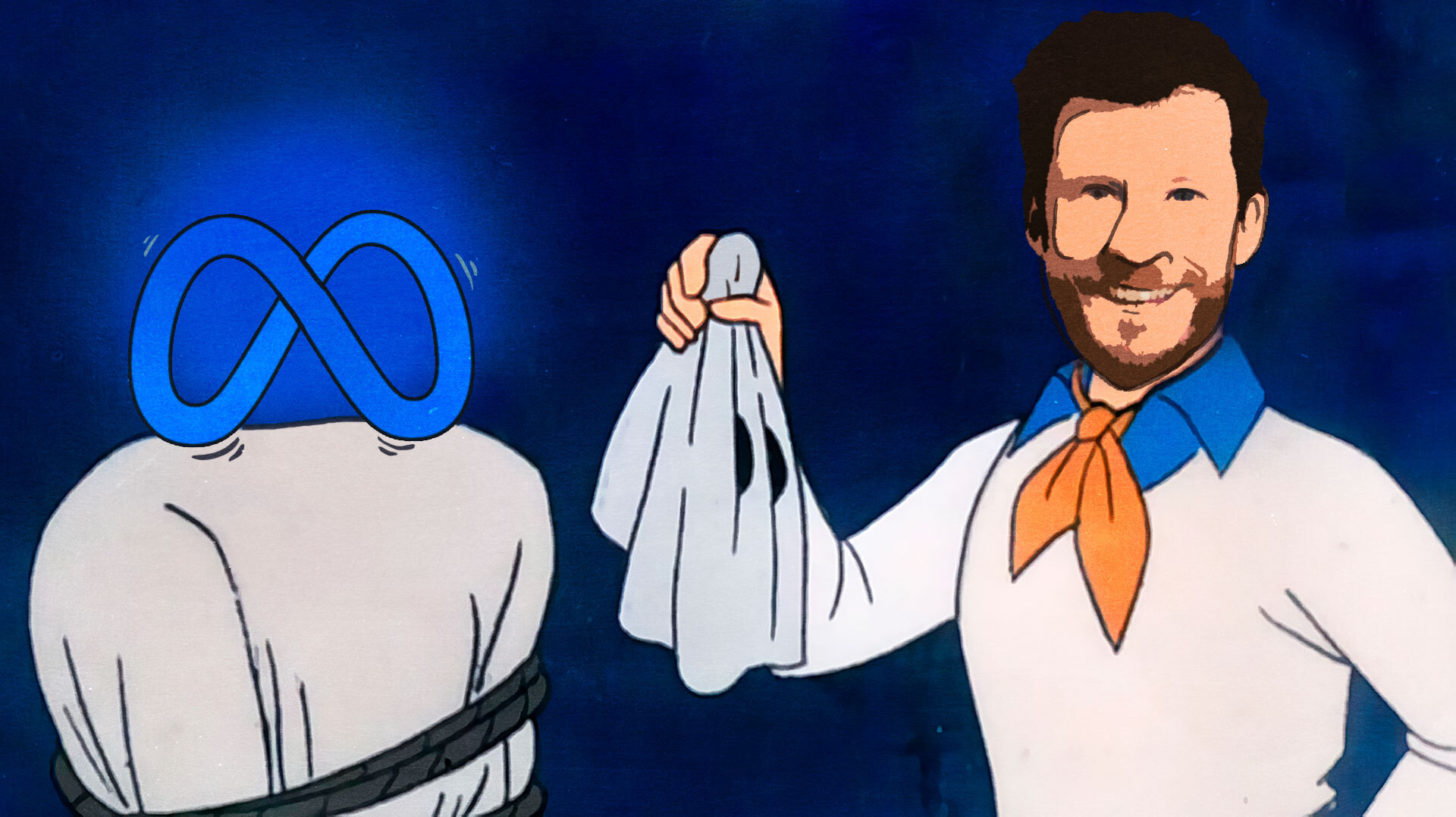
Meta removes Facebook account mandate from Quest VR—but is that enough?

<img src="https://rassegna.lbit-solution.it/wp-content/uploads/2022/07/meta-removes-facebook-account-mandate-from-quest-vr-but-is-that-enough.jpg" alt="Let's just see who you really are under that mask of a positive-sounding Facebook policy reversal…”>
Enlarge / Let’s just see who you really are under that mask of a positive-sounding Facebook policy reversal…
Hanna Barbera / Aurich Lawson

Credit where credit is due: The Meta Quest virtual reality platform, previously known as Oculus Quest, will soon remove its obnoxious Facebook account mandate. As announced on Thursday, starting in August, both new and existing Quest headset users will be able to use the system’s default operating system and digital download store without tying their “real-name” social media accounts to the service.

This is a good course correction of a bad decision. In 2020, I wrote at length about the dangers of VR’s “Facebookening,” which arose when the Quest VR platform dumped its existing Oculus account system in favor of required Facebook accounts. This decision forced a cross-pollination between VR headsets and years of social media posts and messages, including the cookies and metadata from connected sites and services. It demanded a level of “real name” compliance that we’ve never seen from other major Western computing devices and operating systems.

Worse, the move tacitly threatened anyone wanting to sidestep the rules by creating a dummy Facebook account. Facebook famously disallows aliases and fake names, and while it doesn’t check for ID at account creation, it can lock accounts at any time if it detects “suspicious” activity. To unlock an account, the company will usually request some form of “official” photo identification. If someone converted their Oculus account to a name like “Guy Incognito” and got stuck in a lockdown state, Facebook was well within its rights (granted by its terms of service) to keep the account and all its associated software purchases locked away.

Awaiting a better look at FB decoupling

As announced, the new “Meta Account” system will correct some of these most glaring issues. But will it be enough?

It’s hard to definitively answer this question. First, the new account system hasn’t gone live, so we can’t test one crucial aspect of the change. According to Meta, anyone who switched from an Oculus account to a Facebook-tied identity will be able to decouple all Facebook identity information while creating a new Meta Account starting in August.

We want to see what this update looks like: how software-purchase transfers will work, what notices may appear on affected Facebook accounts after the transfer, and how aggressive the company will be about asking Quest users if they’re really sure they want to sever Facebook from their headset experience. (Meta has already indicated that it will let users attach Facebook and Instagram credentials if they want.) Facebook representatives have not answered our questions about these concerns as of press time.

There’s also the matter of exactly what traces of Facebook user data may remain. This week, we’re still reeling from a well-placed allegation, attached to a lawsuit, about Facebook’s official policy to “undelete” seemingly deleted account data when requested by law enforcement agencies. A Meta spokesperson said the claims were “without merit,” but even if that’s true, we already know that Facebook has made users’ sensitive data available to bidders and openly manipulated social media experiences for the sake of experiments. Facebook is in the business of harvesting as much user data as possible and keeping all relevant user records available for as long as possible—so much so that we’ve yet to find clarification about Facebook data decoupling from Meta accounts in any of the company’s new ToS disclosures unveiled this week.

https://arstechnica.com/?p=1865119