God of War Ragnarok bundles include Steelbook cases with no discs inside
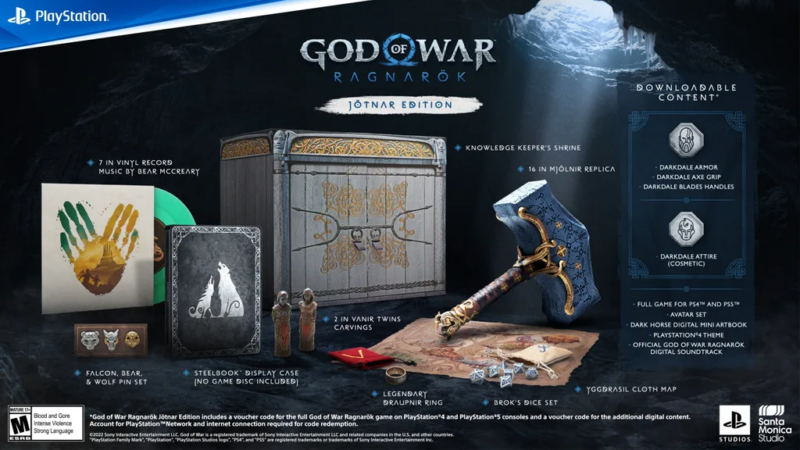
Don't be fooled by that Steelbook case—there's no physical disc to be found in this pricey bundle.
Enlarge / Don’t be fooled by that Steelbook case—there’s no physical disc to be found in this pricey bundle.

On Wednesday, Sony released an unboxing video highlighting all the bonuses included in the premium Collector’s Edition and “Jotnar Edition” of November’s God of War Ragnarok. But if you watched through that video, you might have noticed one conspicuous element missing: a physical copy of the game.

The omission of a disc is especially odd given that both special editions include the kind of Steelbook display case you would usually use to store your game disc in style. In this case, though, the PlayStation Blog specifically points out that there is “no game disc included” with the Steelbook. If you want a copy of the game to put inside that case, you have to shell out an additional $60 or $70 for the physical Standard Edition of the game. Otherwise, you’re stuck with the digital download code that comes with the pricier special editions (while Sony hasn’t announced pricing yet, similar Collector’s Editions from Sony have run $200 and up in the past).

Players who pre-order a Ragnarok Collector’s Edition won’t even be able to preload their digital copy of the game to play immediately on launch day. Instead, they’ll have to wait for physical receipt of their package and the “printed voucher code” included inside, then start what could be a lengthy download, depending on their connection speed.

Leaving discs out of the priciest packages isn’t a completely new move for Sony. February’s release of Horizon Forbidden West featured a $199 Collector’s Edition and a $229 “Regalla Edition” that were also full of physical bonuses but lacking in physical game discs. Forbidden West did come in a limited $70 to $80 “Special Edition,” though, which included a Steelbook, mini art book, and a disc-based copy of the game. With Ragnarok, the only physical copies will be available in the bare-bones “Standard Edition” (and a “Launch Edition” that includes some free DLC).

<a href="https://cdn.arstechnica.net/wp-content/uploads/2022/07/horizoncollect.jpg" class="enlarge" data-height="900" data-width="1600" alt="For $229, this Horizon bundle included plenty of physical collectibles but no physical disc.”><img alt="For $229, this Horizon bundle included plenty of physical collectibles but no physical disc.” src=”https://rassegna.lbit-solution.it/wp-content/uploads/2022/07/god-of-war-ragnarok-bundles-include-steelbook-cases-with-no-discs-inside.jpg” width=”640″ height=”360″ srcset=”https://rassegna.lbit-solution.it/wp-content/uploads/2022/07/god-of-war-ragnarok-bundles-include-steelbook-cases-with-no-discs-inside-1.jpg 2x”>
Enlarge / For $229, this Horizon bundle included plenty of physical collectibles but no physical disc.

Sony isn’t completely alone in this trend, either. May’s release of the remastered Mass Effect: Legendary Edition launched alongside a “Legendary Cache” bundle of physical collectibles that didn’t include a copy of the game at all (physical or digital). And back in 2020, Ubisoft announced that some of its $199 collector’s edition games for the Xbox would include download codes rather than discs (though physical editions were also available at one point).

A shrinking niche?

The lack of physical discs in these collector’s editions is more than a little weird, considering how many other tangible products are packed into these bundles. After all, you’d think the kind of person willing to spend hundreds of dollars for rings, dice, statues, vinyl soundtracks, and other physical ephemera surrounding a game would also like a physical copy of the game.

But that isn’t necessarily a given these days. Keep in mind that a good number of console owners are now playing on an Xbox Series S or a PS5 Digital Edition that doesn’t even have a disc drive. Early retail spot checks suggested that roughly a quarter of all PS5 owners may not be able to play a disc-based game, for instance.

That chunk of the audience probably includes many players that still want physical tchotchkes representing their love of their favorite games, even if they don’t care about playing those games on physical discs anymore. And while Sony could split its collector’s editions into physical and digital versions (or simply bundle both together, a la “disc to digital” movie releases), that could end up more costly and complicated for an already constrained supply chain.

Remember, too, that this is all happening against the backdrop of an industry where physical game releases are increasingly becoming a niche part of the market. Sony’s latest earnings report shows that 66 percent of its game sales in the last fiscal year came as digital downloads rather than discs, up from 43 percent in the 2018 fiscal year. And Sony’s number might actually be low for the industry; Capcom says a full 80 percent of its sales are digital these days and that it expects that ratio to grow in the coming years.

In other words, the same trends leading to GameStop stores that have more Funko Pops than games may be leading to collector’s editions that don’t have physical games at all. As odd as it seems, physical copies of the games themselves might be becoming the least “collectible” part of the video game collector’s market these days.

https://arstechnica.com/?p=1864820


How Zelda fans changed the ending to Ocarina of Time on a vanilla N64

<img src="https://rassegna.lbit-solution.it/wp-content/uploads/2022/07/how-zelda-fans-changed-the-ending-to-ocarina-of-time-on-a-vanilla-n64.png" alt="This... isn't supposed to happen in Ocarina of Time. Here’s the story of how some fans made it happen anyway—all on a stock N64 with an unmodified Ocarina cartridge.”>
Enlarge / This… isn’t supposed to happen in Ocarina of Time. Here’s the story of how some fans made it happen anyway—all on a stock N64 with an unmodified Ocarina cartridge.
Summer Games Done Quick

Shortly after our guide to Summer Games Done Quick 2022 went live, the event hosted an astounding demonstration of a classic video game—one that has since crowded that Ars article’s replies. If we want to split hairs, this run through the 1998 N64 classic Legend of Zelda: Ocarina of Time is not a “speedrun,” but it’s another example of the “TASBot” concept transforming games in ways we would never have dreamed of 24 years ago.

The team of fans and programmers responsible for this week’s “Triforce-percent” demonstration have since revealed how they achieved the feat with nothing more than a stock N64 and an original Ocarina retail cartridge—though the secret involves controller inputs so fast and precise that they cannot be performed by anything less than a computer.

Nothing stale about this run

[embedded content]
An early 2020 video that explains how stale reference manipulation works. You may want to watch this before watching the SGDQ 2022 video, embedded further below.

The 53-minute demonstration (embedded at the end of this article) opens with an exploit previously unearthed in late 2019, which the community dubbed “Stale Reference Manipulation.” This exploit takes advantage of a vulnerability in the game’s original 1.0 version, which allowed players to manipulate numerical values assigned to specific objects in the game’s memory. The breeziest explanation for this complicated technique can be found in a YouTube video from early 2020 (embedded above), as it spells out the various numerical values assigned to each object in the game, such as their X-, Y-, and Z-axes and their rotation.

Savvy players can make values overlap or overwhelm the game’s original code so they can be manipulated as players see fit. The technique we see in this week’s run requires Link to pick up a rock while going through a “loading zone,” a hallway used to disguise loading pauses on N64 hardware, and to do so in a way that the game was not designed to handle.

Initially, this exploit was a speedrunning tool, as it could trick the game into loading the final credits sequence and technically count as a “completion” within only a few minutes. But the Triforce-percent run goes much further.

RAMming new content into a classic game

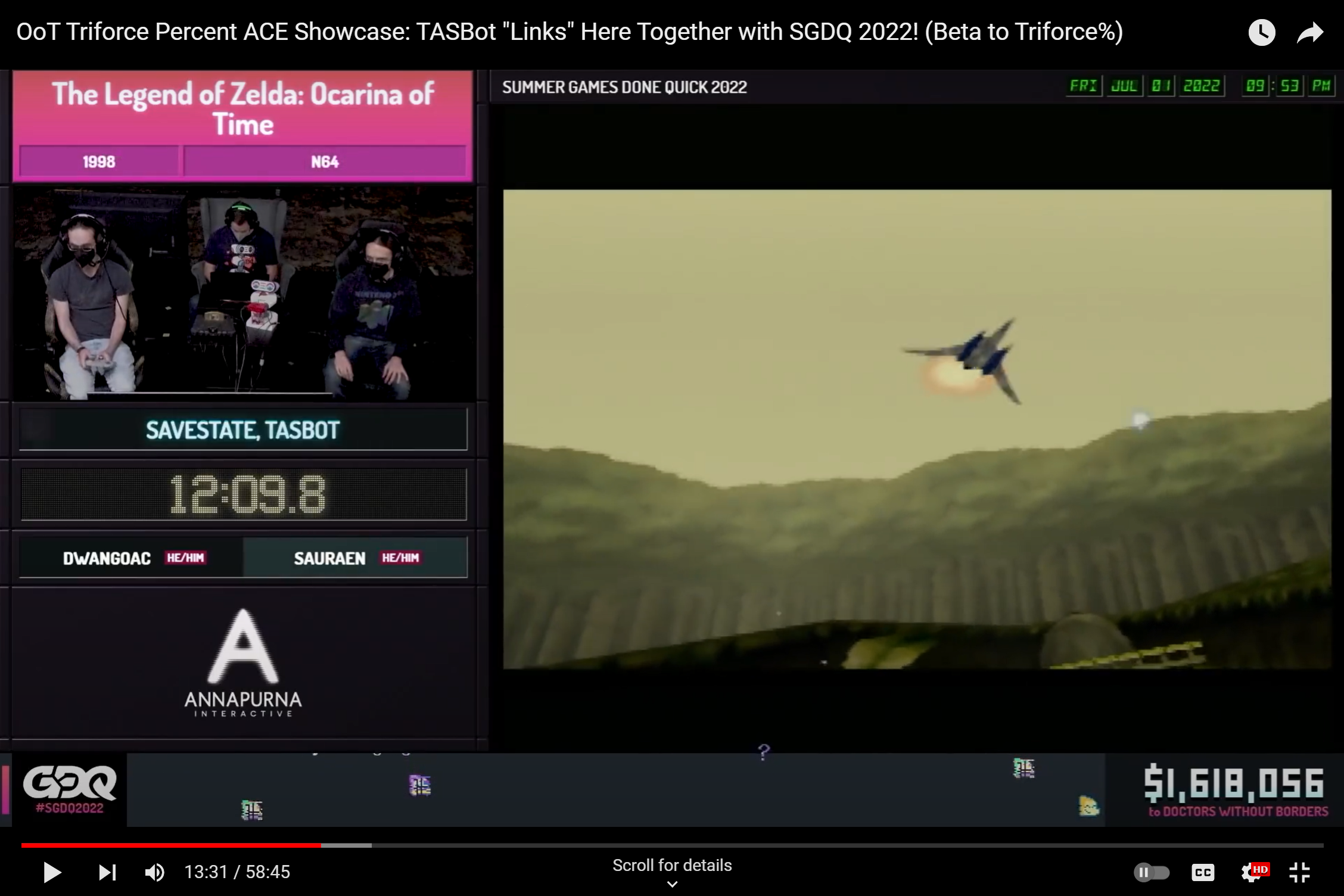
<a href="https://cdn.arstechnica.net/wp-content/uploads/2022/07/Screenshot-103.png" class="enlarge" data-height="1504" data-width="2256" alt="Hey, wait, that doesn't belong here... but as the TASBot demonstration team points out, an Arwing from Star Fox 64 was left in the original Ocarina cartridge, as a reminder that this object was used to test certain animation routines in the early development period.”><img alt="Hey, wait, that doesn't belong here... but as the TASBot demonstration team points out, an Arwing from Star Fox 64 was left in the original Ocarina cartridge, as a reminder that this object was used to test certain animation routines in the early development period.” src=”https://rassegna.lbit-solution.it/wp-content/uploads/2022/07/how-zelda-fans-changed-the-ending-to-ocarina-of-time-on-a-vanilla-n64-1.png” width=”980″ height=”653″>
Enlarge / Hey, wait, that doesn’t belong here… but as the TASBot demonstration team points out, an Arwing from Star Fox 64 was left in the original Ocarina cartridge, as a reminder that this object was used to test certain animation routines in the early development period.
Summer Games Done Quick

By picking up and dropping specific items, then making the game’s hero Link move and perform maneuvers in a specific sequence, the TASBot team opens up a Pandora’s box of what’s known as arbitrary code execution—the type of vulnerability used by hackers the world over to make a closed computer system run whatever code they want. What’s more, the TASBot chain of moves and commands begins to tell the N64 to accept button input from all four N64 controllers as if it’s code.

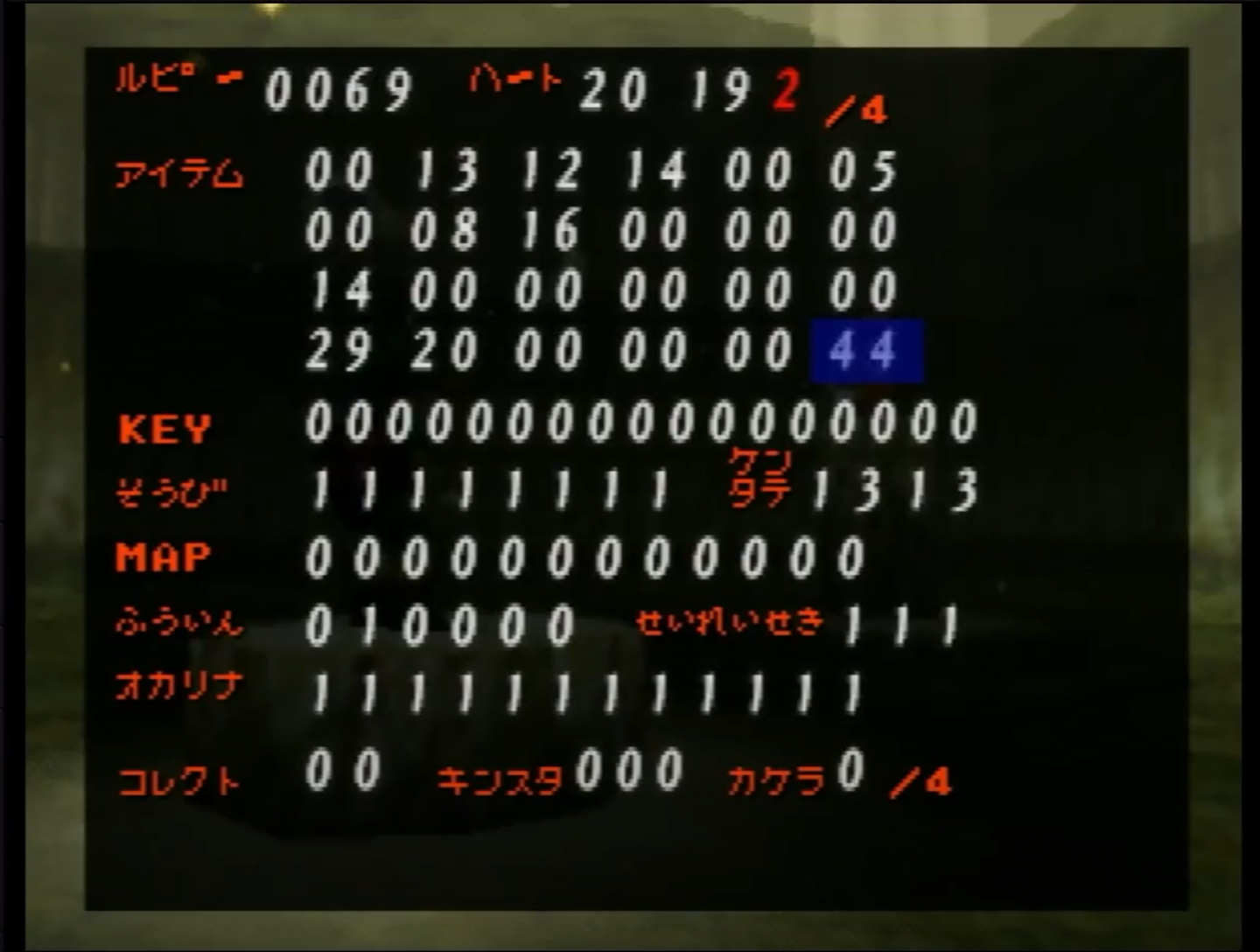
This item-manipulation menu was left in the game as a beta element, easily unearthed for use in the SGDQ 2022 run.
Enlarge / This item-manipulation menu was left in the game as a beta element, easily unearthed for use in the SGDQ 2022 run.
Summer Games Done Quick

At this point, a computer takes over all four N64 controller ports and sends a rapid-fire series of button taps, as if it were a zillion-finger superhero equivalent to The Flash. The glitched-out Ocarina cartridge has instructed the N64 to accept each button tap in a way that corresponds to specific code strings. Once enough of this payload has been sent, the team can return normal control to the “player one” port, so that a real person can play through an entirely new sequence of content—all being dumped into the N64’s random-access memory (RAM) by the other three controllers’ incredibly fast input.

These on-the-fly patches can do many incredible things that, combined, resemble a fully blown patch of a cartridge’s read-only memory (ROM), though the TASBot team restricts itself to changes that specifically apply to the console’s RAM: tiny changes to existing code, total file replacements, or commands to tell the game to ignore content that it would normally load from the ROM. As a result, this exploit can glitch or crash if players go outside the expected path that this exploit is optimized for.

https://arstechnica.com/?p=1864227


Diablo Immortal is bringing in over $1 million a day in microtransactions

Use cash to buy orbs.


Despite backlash from some players, Diablo Immortal‘s free-to-play, microtransaction-laden game design seems to be working out just fine for Blizzard’s bottom line. Using data from mobile analysis firm Appmagic, MobileGamer.biz estimates that the iOS and Android versions of the game brought in $49 million in earnings from just over 10 million mobile downloads in the versions’ first 30 days of availability.

Those estimates, based on public charts provided by the mobile platforms, don’t include the PC version of the game and, thus, may be underselling the scale of its financial success. With PC players included, Blizzard announced that Diablo Immortal hit 10 million installs after just over a week, well ahead of the mobile download pace estimated by Appmagic.

By comparison, Diablo III took nearly six months to sell 10 million copies after its troubled launch in 2012. But that game sold for $60, making it hard to compare directly to a free-to-play game that has brought in an estimated average of less than $5 in earnings per download, according to Appmagic.

The long tail

While Diablo III‘s earnings were front-loaded on initial sales, though, Diablo Immortal seems well-positioned to bring in additional revenue from its existing player base for a long while. As of Monday, for instance, the game was still the 34th highest-grossing app on the entire iOS App Store, despite having fallen to 134th in terms of new downloads.

Many of those initial Immortal players (and payers) will eventually fall away from the game, of course. But that process might happen slower than you may think. Estimates of Android app retention from analysis firm Quettra suggest an app that launches in the “top 10” on the Google Play Store (as Diablo Immortal did) can expect to keep close to 60 percent of its initial users after three months. And public data from mobile hits like Pokémon Go, Angry Birds, and Candy Crush Saga suggests that roughly 10 to 20 percent of all players who had downloaded those games were still regular players a full year or two after launch.

That suggests Diablo Immortal will have millions of active players well into next year and beyond. And while the vast majority of those players will never spend a single cent on the game, the top-end whales could easily spend enough on the game’s confusing sets of currencies to keep the revenue rolling in for Blizzard for a long time.

Blizzard has promised that the upcoming Diablo IV will limit microtransactions to optional cosmetics. But the early performance for Diablo Immortal helps show why the free-to-play business model can be so appealing for a publisher like Blizzard, even if it can be annoying for many players.

https://arstechnica.com/?p=1864288


The best game-exploiting speedruns of Summer Games Done Quick 2022

All four of the mascots seen in this SGDQ promo image appear in various speedruns hosted over the past week.
Enlarge / All four of the mascots seen in this SGDQ promo image appear in various speedruns hosted over the past week.
Summer Games Done Quick


The Games Done Quick series of charity events has long been a favorite among the gaming fans and critics at Ars Technica since it combines classic, beloved video games and carefully studied methods to break them apart in search of high-speed exploits.

This year’s summertime installment is particularly special, as it’s the first in 2.5 years to take place at a physical venue—albeit with some of the most stringent masking and distancing requirements we’ve seen in a livestreamed public show in 2022. (GDQ’s organizers appear to read the news, which makes sense for a series that benefits the likes of Doctors Without Borders.) Even with precautions taken, its combination of players, commentators, and crowds in the same room has brought excitement back to its broadcasts, which is why we’re pulling together some of the best runs from the past week, as archived at GDQ’s official YouTube channel.

The event is still ongoing as of this article’s publication, which means you can watch it right now via its Twitch channel. The event’s final runs, dedicated to Elden Ring, will conclude in the late hours on Saturday, July 2.

[embedded content]
Tunic speedrun, Summer Games Done Quick 2022

Tunic, 2022, “true ending” run

If you haven’t yet played Tunic, we recommend you pause before watching this game-breaking, spoiler-filled romp through many of its biggest secrets. (My March review of the game has far fewer spoilers.) But if you’ve already collected the game’s slew of hidden “instruction booklet” pages, consider this a must-watch, because it includes a compelling guest on real-time commentary: Andrew Shouldice, the game’s lead designer, programmer, and artist.

He’s joined by a member of the Power-Up Audio team, which worked on the game’s soundtrack, and they divulge tons of information about how the game was made—including confirmation about how many of the biggest exploits were intentionally left by the devs in the game. At one point, Shouldice watches a trick begin to play out, telling the crowd that he programmed it to be a possibility but could never personally trigger it. Moments later, the speedrunner demonstrated the trick, allowing him to warp through a wall and bypass a ton of tricky content.

[embedded content]
Halo Infinite speedrun, Summer Games Done Quick 2022

Halo Infinite, 2021, “no tank gun” run

Many classic games’ speedruns include multiple categories, and the most broken ones are known as “any-percent” runs, since they allow players to use any tricks and skip any quests that they want. In certain games’ cases, these kinds of runs can be boring to watch, and the infamously glitchy Halo Infinite is no exception.

This speedrun begins with a demonstration of the “tank gun,” which bolts an unlimited-ammo gun to Master Chief’s feet. That’s too much assistance for speedrunners’ tastes, but this SGDQ demonstration still includes a ton of wacky tricks that combine geometry clipping and otherworldly physics exploits—all boosted by Chief’s immediate access to a new grappling hook item. Sure, the hook makes players move much faster through the world, but it also figures into a wild glitch that makes players bounce off explosive barrels in ways that defy gravity.

[embedded content]
Thunder in Paradise speedrun, Summer Games Done Quick 2022

Thunder in Paradise, 1995, all-cutscenes run

We’re not sure whether this is GDQ’s first speedrun dedicated to a full-motion video (FMV) game, but it’s certainly one of the dumber examples of the mid-’90s CD-ROM genre. Thunder in Paradise is based on the short-lived TV series of the same name, which starred Terry “Hulk” Hogan alongside Jack Lemmon’s son as a crime-solving action duo on the beach, and it was as bad as that sounds. The video game version, relegated to the CD-I console, forces players to watch excruciatingly bad live-action footage between light gun shootout sections.

In most video game speedruns, players skip as many cinema scenes as possible, but GDQ elected to show this game’s filmed footage in its entirety while cheesing the gun gameplay parts as quickly as possible. Strap in, brother.

https://arstechnica.com/?p=1863948


Cuphead expansion pack review: As good as DLC gets

<img src="https://rassegna.lbit-solution.it/wp-content/uploads/2022/06/cuphead-expansion-pack-review-as-good-as-dlc-gets.jpg" alt="In the new expansion pack The Delicious Last Course, Miss Chalice makes three.”>
Enlarge / In the new expansion pack The Delicious Last Course, Miss Chalice makes three.
Studio MDHR

Some people will look at an expansion pack like Cuphead: The Delicious Last Course and make up their minds after a single glance. This $8 add-on’s beautiful brutality follows the same path as the original 2017 game Cuphead, a notoriously tough descendant of the Mega Man school of game design. Maybe you love playing games that are as beautiful as they are difficult. Maybe you don’t.

I’m here to talk about Last Course because I might be a lot like you. I’m not Last Course‘s target audience. I never beat the original Cuphead. I have contended that a tough game like this is easier for me to watch than it is to play. But when I saw the expansion’s hands-on demo at this month’s Summer Game Fest Play Days, I shrugged my shoulders, grabbed a gamepad, and gave it a shot. Might as well occupy myself between other scheduled game demos, I thought.

And then I fell in love. For whatever reason, the demo I played, and my subsequent completion of Last Course‘s “normal” difficulty content, grabbed me and wouldn’t let go—which is why I’m compelled to recommend picking it up.

Another island getaway—with useful new abilities

Miss Chalice can only join the battle when she tricks one of the original main characters to chomp on a magical cookie. This temporarily sends someone else to a ghost realm so that she can join in. The trio goes on a quest to bring her back to life for good, no tricky cookies required.
Enlarge / Miss Chalice can only join the battle when she tricks one of the original main characters to chomp on a magical cookie. This temporarily sends someone else to a ghost realm so that she can join in. The trio goes on a quest to bring her back to life for good, no tricky cookies required.
Studio MDHR

Like many other classic “expansion packs,” Last Course requires owning the original game (which is conveniently on sale at most digital download storefronts between this article’s publication date and July 7) and bolts new content onto Cuphead‘s 2D action foundation. The original game divided its 18 boss battles across three “islands” of content, and Last Course adds, among other things, six bosses on a new island.

Miss Chalice's double-jump ability will be useful to get away from those pesky gnomes gathering at her feet.
Enlarge / Miss Chalice’s double-jump ability will be useful to get away from those pesky gnomes gathering at her feet.
Studio MDHR

It also introduces a third playable character, named Miss Chalice, and she appears when you equip a Chalice-specific “charm” on either existing character (Cuphead or Mugman). She comes with four points of health by default (compared to three points for the other characters) and three unique abilities: an invincible dodge-roll, a double-jump, and a parry dash. (The latter gives players a larger “hitbox” when attempting the game’s crucial parry maneuver, making it easier to counter enemies’ specially colored attacks.) Since she must be activated as a charm, Miss Chalice can’t equip other charms in the game, and in two-player co-op sessions, only one person can turn their character into Miss Chalice.

As I made clear earlier, I’m not a Cuphead pro, so I was delighted by the new, novice-friendly character when I first tested the game at Summer Game Fest. All of her special abilities are tuned for higher maneuverability to help you contend with the chaos that is an average Cuphead boss battle, and in addition to her extra point of health, she also has a custom “super attack” option that doesn’t do any damage. Instead, it gives her an additional, temporary point of health, and this can be regenerated during long, brutal boss fights. Once she’s unlocked, she’s available in the original campaign’s levels as well, which makes her a nifty entry point for anyone like me who never beat the original campaign.

https://arstechnica.com/?p=1863647


Blizzard will purchase 100-person Spellbreak studio to help make WoW content

<img src="https://rassegna.lbit-solution.it/wp-content/uploads/2022/06/blizzard-will-purchase-100-person-spellbreak-studio-to-help-make-wow-content.png" alt="Spellbreak battles are full of splashy elemental explosions and floaty acrobatic dodges.”>
Enlarge / Spellbreak battles are full of splashy elemental explosions and floaty acrobatic dodges.


Blizzard Entertainment has acquired Boston-based Proletariat, the studio behind the magic-heavy battle royale game Spellbreak. Spellbreak will shut down by early 2023 as the workers at the 100-person studio transition to work on World of Warcraft and its upcoming “Dragonflight” expansion.

VentureBeat reports that Proletariat and Blizzard have been in acquisition talks since last December and that the companies have been working together since last month. That’s well before Tuesday’s public announcement that the studio would be ending development on Spellbreak after more than four years:

Our vision was to create a fresh, multiplayer action-spellcasting game with exceptional movement and class customization that would give players the chance to unleash their inner battlemage. We are grateful to everyone in the game’s community for exploring the magical worlds and experiences we created together. Spellbreak was an ambitious project that saw our team push new boundaries in design and development and we are excited to continue to innovate as we create new titles in the future.

After an impressive beta in early 2020, Proletariat bragged that it had over 5 million Spellbreak players in the weeks after the game’s late 2020 launch. That player base seems to have declined substantially over time, though; data from SteamDB shows Spellbreak‘s concurrent player numbers on Steam sitting at well under a thousand and consistently declining over the last 12 months (though those numbers don’t reflect players on consoles or the Epic Games Store, where the game had PC exclusivity for a year).

Proletariat CEO Seth Sivak told VentureBeat that success with critics wasn’t enough for Spellbreak to stand out from the crowded battle royale field and that the game “just couldn’t get the escape velocity necessary for us to continue to expand it.”

More grist for WoW’s content mills

Blizzard doesn’t often look to outside studio purchases to supplement its workforce; its largest acquisition in the past two decades seems to be the 40-person Swinging Ape studios in 2005. In a statement to VentureBeat, Blizzard Entertainment President Mike Ybarra hinted that the acquisition would provide much-needed staffing to spread out the work required for a massive undertaking like World of Warcraft:

We are putting players at the forefront of everything we do, and we are working hard to both meet and exceed their expectations. A big part of caring for our teams is making sure we have the resources to produce experiences our communities will love while giving our teams space to explore even more creative opportunities within their projects. Proletariat is a perfect fit for supporting Blizzard’s mission in bringing high-quality content to our players more often.

World of Warcraft General Manager John Hight also told VentureBeat that it has sometimes been hard to hire enough people to keep up with what he called “a voracious appetite for content” among WoW‘s fan base. “You have to make sure that the people who make WoW and the people who play WoW are well supported,” he said.

The Proletariat purchase also comes as Activision Blizzard itself is finalizing its record-setting sale to Microsoft. Then there are the harassment scandals at the company that have contributed to executive departures and game delays at Blizzard, not to mention the cancellation of this year’s Blizzcon.

While the WoW player base has been on a decline since peaking at 46 million monthly active users in 2017, the game still enjoyed 26 million monthly active users as of mid-2021.

https://arstechnica.com/?p=1863433


Sony finally announces a 4K monitor you might actually want 

Sony InZone monitor
Enlarge / Sony’s InZone monitors use a “low-depth tripod stand” to provide more room for other peripherals, Sony said in its video announcement.

Known for everything from TVs to cameras and smartphones, Sony is getting into gaming peripherals, it announced Tuesday. Sony’s new InZone brand will include a pair of monitors, plus wireless and wired headsets aimed at PC and, naturally, PlayStation gamers.

Sony’s first consumer monitors in ages

Sony isn’t likely a name you think of when going PC monitor shopping. It hasn’t made consumer monitors since the early 2000s, though it has continued to sell expensive, chunky professional monitors for broadcast and production. That changes with the flagship Sony inZone M9 and its sibling, the InZone M3.

The M9, never to be confused with the Samsung M8 4K smart monitor announced in March, is a 27-inch 4K HDR monitor with a 144 Hz refresh rate. Its most interesting feature, however, is its LED backlight with full-array local dimming (FALD), which—along with VESA DisplayHDR 600 certification and 95 percent claimed DCI-P3 coverage—is particularly appealing for HDR users.

Sony depicts the M9's FALD backlight.
Enlarge / Sony depicts the M9’s FALD backlight.

In its video announcement, Sony said it decided to use a FALD backlight to make the IPS panel’s contrast more comparable to a VA monitor without sacrificing the lower response times IPS can achieve. The M9 claims a 1ms gray-to-gray (GtG) response time.

Sony didn’t specify how many dimming zones the monitor has, which is a significant factor in how effective the feature is. However, early reviews from CNET, Forbes, and Tom’s Hardware, point to 96 dimming zones. Considering you can find monitors with more than 1,000 FALD zones, there are obviously more advanced local dimming monitors available than the InZone M9.

Sony claimed the display has an 80,000:1 dynamic contrast ratio. It didn’t share static contrast ratio numbers, so we’d love to see dynamic contrast in action to see if it’s effective.

For console gamers, Sony’s M9 supports Auto HDR Tone Mapping which, in a press release, Sony said works with the PlayStation 5 “to automatically recognize the monitor during initial setup and [optimize] HDR settings.”

“Additionally, the monitor will automatically switch to Cinema Mode when watching movies on PlayStation 5 and Game Mode when playing games,” Sony’s announcement said.

Samsung recently started selling a 4K, 240 Hz monitor, but the M9’s speed specs should be sufficient for most gamers. There’s also G-Sync Compatibility to fight screen tears when your GPU’s frame rate doesn’t match the monitor’s refresh rate and variable refresh rate for the PS5 via HDMI 2.1.

The M9 was announced alongside the M3. It’s a 27-inch 1920×1080 display with a 240 Hz refresh rate for those who prioritize speed over sharp image quality but don’t need the fastest refresh rate natively found in gaming monitors today, 360 Hz.

The M3 has lesser VESA DisplayHDR certification that promises a minimum brightness of 400 nits with HDR and a smaller color claim of 99 percent sRGB.

Although both screens are for gamers, they can also be home office hacks. Since they’re KVM monitors, you can use them to control two PCs with the same keyboard, mouse, and headset, Sony said.

Sony said the M9 would be available this summer for $900, and the M3 will be $530 “within 2022”.

A trio of headsets

All the headphones have a flip-up boom mic, so you can easily tell if you're muted.
Enlarge / All the headphones have a flip-up boom mic, so you can easily tell if you’re muted.

Sony’s newfound gaming efforts also include a trio of headsets that are already available in the US. They’re the Sony InZone H9, H7, and H3 and, of course, shouldn’t be confused with Asus’ TUF Gaming series of gaming headsets, like the H1 Wireless or the H3.

The wireless Sony InZone H9 gaming headset (40mm neodymium drivers, 5-20,000 Hz frequency range) has a 32-hour battery life claim, while the InZone H7 (40mm neodymium drivers, 5-20,000 Hz frequency range) claims 40 hours before needing a charge.

<a href="https://cdn.arstechnica.net/wp-content/uploads/2022/06/headsets.jpg" class="enlarge" data-height="1079" data-width="1915" alt="The H9 adds noise-canceling tech incorporated from Sony’s 1000X-series headphones. “><img alt="The H9 adds noise-canceling tech incorporated from Sony’s 1000X-series headphones. ” src=”https://rassegna.lbit-solution.it/wp-content/uploads/2022/06/sony-finally-announces-a-4k-monitor-you-might-actually-want-3.jpg” width=”980″ height=”552″>
Enlarge / The H9 adds noise-canceling tech incorporated from Sony’s 1000X-series headphones.

The more affordable Sony InZone H3 (40mm neodymium drivers, 10-20,000 Hz frequency range), meanwhile, is wired.

All three headsets support 360-degree spatial sound, which you customize by using an app to take a photo of your ear. Note that you’ll need a PC with a USB-A port and Windows 10 or later to use the feature.

For PS5 gamers, the feeling of spatial audio will have to be attempted through the console’s Tempest 3D AudioTech.

Sony is selling the InZone H9 for $300, the H7 for $230, and the H3 for $100.

Ars Technica may earn compensation for sales from links on this post through affiliate programs.

https://arstechnica.com/?p=1863146


Review: Razer Kishi V2 refines the “gamepad that clamps to phone” concept

<img src="https://rassegna.lbit-solution.it/wp-content/uploads/2022/06/review-razer-kishi-v2-refines-the-gamepad-that-clamps-to-phone-concept.jpg" alt="It's not a Razer device unless it's posed next to a bunch of custom RGB lighting, right? In great news, the Razer Kishi V2 includes zero glaring lights, which we prefer here at Ars Technica.”>
Enlarge / It’s not a Razer device unless it’s posed next to a bunch of custom RGB lighting, right? In great news, the Razer Kishi V2 includes zero glaring lights, which we prefer here at Ars Technica.

In the years since the phrase “don’t you people have phones” became a Blizzard-mocking meme, I’ve found myself honestly playing more video games on my smartphone. (But not Diablo Immortal, which spawned the meme.) In particular, Xbox Cloud Gaming, Google Stadia, and other cloud-gaming services have shined as options on my phone when Wi-Fi or 5G reception is decent.

While select games on these services have on-screen buttons as options, I won’t play with anything less than a physical gamepad. Until this month, I relied on a standard, slim 8Bitdo gamepad, especially when traveling, but this required a phone-to-gamepad plastic harness—and, gosh, those things fall apart when tossed into my bags. There’s gotta be something better, right?

Enter the Razer Kishi V2. At the somewhat steep price of $100, this clamp-to-your-phone gamepad is not a slam-dunk recommendation for anyone who doesn’t regularly play console-styled games on their phone. But it gets closer to earning that value than Kishi’s 2020 version.

A brief primer on the last-gen Kishi

The original Kishi model from 2020. Notice all the plastic stuff on the bottom? That makes it hard to connect certain smartphones.
Enlarge / The original Kishi model from 2020. Notice all the plastic stuff on the bottom? That makes it hard to connect certain smartphones.

Technically, the first Kishi is even older than that. Razer’s debut Kishi model was a rebrand of the Gamevice gamepad, which launched in 2017 for the iPhone 6 generation. When Razer and Gamevice collaborated on a controller, it came in two versions: Android, with a USB Type-C port, and iOS, with a Lightning port.

In either case, users are expected to turn their smartphone sideways, then connect half to the gamepad’s port. Pull the gamepad’s other half, and a tension-based mechanism will let it stretch to fit over the other side of your phone. Once fully clasped, you have a makeshift Switch-like option for your smartphone: joysticks, triggers, and “bumpers” on both sides, a D-pad on the left, and an ABXY button array on the right.

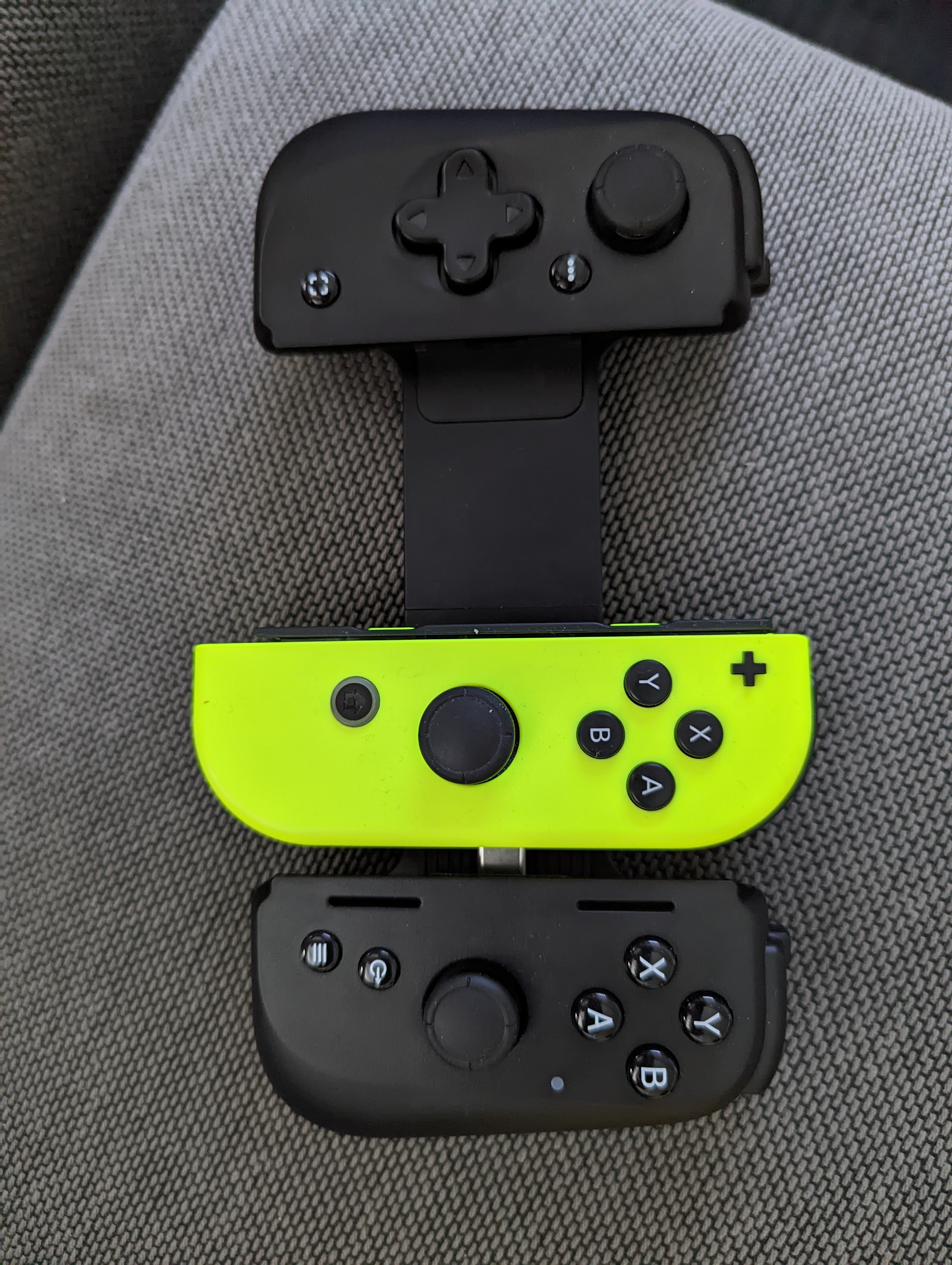
Kishi V2 (top), Kishi V1 (bottom).
Enlarge / Kishi V2 (top), Kishi V1 (bottom).
Sam Machkovech

Like other Gamevice controllers, the 2020 Kishi V1’s best perks included solid joysticks and an easy-to-fold split design so that you could clasp its halves together when disconnected from a phone to fit it more easily in a crowded a bag. But the rest of its buttons left me quite unmoved; the tension on the analog triggers felt cheap, and its D-pad and ABXY button array were mushy.

Worse, the first Kishi’s extendable strap system adds a certain amount of plastic bulk that isn’t compatible with some phone models (particularly the “camera bump” found on newer Pixel phones) or doesn’t extend far enough to support larger smartphones.

A different kind of portable gaming “switch”

A high-res peek at the Kishi V2.
Enlarge / A high-res peek at the Kishi V2.

This month’s Kishi V2, which was made without Gamevice’s involvement, solves every single complaint on the above list (with the exception of only having an Android model available as of press time). My favorite part about Razer’s new model is an upgrade to clicky microswitches, which honestly aren’t common enough in modern gamepads. If you’ve ever used a Neo Geo Pocket, you know exactly what I’m talking about: They’re responsive and noticeably loud.

This leads to a dramatic improvement in responsiveness and comfort for the D-pad, ABXY array, and bumpers. As someone who likes to pack a few favorite 8- and 16-bit games on an Android emulator, I am happy to report that the sensation of tricky 2D platforming challenges in the likes of Mega Man benefits from these new buttons’ balance of size, spacing, and button-press travel. Kishi V2’s analog triggers have also been revised, and while they get nowhere near the satisfying default tension of an Xbox or PlayStation gamepad, their somewhat hollow pressing sensation is a marked improvement over the first Kishi’s tense-yet-flimsy triggers.

A photo to clarify my point about distance between the ABXY array and the joystick; Kishi V2 as compared to a Switch Joy-Con.
Enlarge / A photo to clarify my point about distance between the ABXY array and the joystick; Kishi V2 as compared to a Switch Joy-Con.
Sam Machkovech

Despite liking the button improvements, I have a nitpick. Kishi V2’s ABXY array is 1.5 mm closer to the right-side joystick than the same arrangement on a standard Nintendo Switch Joy-Con. As a result, an adult-sized thumb can expect to accidentally touch Kishi V2’s right-side joystick while focusing on old-school ABXY button taps—unless you rotate your thumb placement to compensate. Adjusting for this felt a bit unnatural for me, and I could see this being a deal-breaker for certain hands, but I still prefer Kishi V2’s ABXY use case more than the original Kishi by a longshot.

Also, I prefer the Kishi V1’s joysticks, which are the tiniest bit smaller than what you’ll find on an Xbox gamepad but otherwise copy those solid joysticks’ thumb feel and tension. Kishi V2’s joysticks look and feel identical to those found on a Switch Joy-Con, right down to the tiny notches in each cardinal direction. So far, they’ve been entirely serviceable in first-person shooters that require careful aim and frequent joystick-pressing clicks. But my testing has not been extensive enough to determine whether Kishi V2 owners should expect mechanical failures that resemble the dreaded Joy-Con drift issue.

https://arstechnica.com/?p=1863247


Steam Deck shipments “more than double” this week—so let’s estimate how many

Steam Deck shipments “more than double” this week—so let’s estimate how many
Aurich Lawson | Getty Images

For anyone trying to buy a modern piece of gaming hardware, good news is beginning to peek through the dreary clouds of chip shortages and manufacturing hold-ups. This week’s optimism comes from a player outside the expected console- and GPU-making fray.

Valve, the longtime software maker responsible for the mostly brilliant Steam Deck handheld PC, announced on Monday that it has caught up with that system’s “shipping estimate” schedule. According to Valve, everyone who ordered a Steam Deck system with a “Q2 2022” shipping window has been emailed with the option to order and pay for their own device.

The real news begins with buyers in the Q3 2022 window, as they’ll be contacted beginning on June 30—at higher volumes.

“Production has picked up,” Valve’s official Steam Deck social channel announced on Monday. “After today, we’ll be shipping more than double the number of Steam Decks every week!”

A fuzzy estimate of what “more than double” will mean

It’s currently difficult to quantify how many systems that could be. Valve has kept Steam Deck shipment stats private since that system’s February 2022 launch. For now, we have a fuzzy path to estimating Steam Deck ownership, as the system received a patch adding support for the Steam Hardware Survey in May, which allows PC owners to opt in to divulging their system specs.

Currently, the Steam Hardware Survey includes exactly one line item that correlates to Steam Deck hardware: “AMD Custom GPU 0405.” This RDNA 2 graphics solution is part of the Steam Deck’s custom AMD system-on-chip (SoC), not found on any other computing device on the market. Steam’s May hardware survey counts the 0405’s userbase as a sliver of the service’s userbase: 5.2 percent of all Linux users, who are themselves 1.12 percent of all Steam users. (This AMD GPU doesn’t appear in the OS-agnostic count of all GPUs on Steam.)

Steam’s last announced figure of 132 million monthly active users came at the beginning of 2022. If we apply the Steam Hardware Survey’s percentages to that figure, we can extrapolate that roughly 77,000 Steam Deck systems were in the wild when Valve’s process automatically gathered data in the final week of May. (While Steam users have to opt in to the Steam hardware survey, it’s still the best estimate we have of the Steam user base.)

Deck systems included in the Steam Hardware Survey had to arrive and be activated by the end of May, which leaves us with a shipping window from February 28 to May 23: 12 weeks. We can roughly estimate that 6,400 Steam Decks shipped per week from Valve’s manufacturing lines to customers in its earliest days. A “more than doubling” of manufacturing and shipping capacity may start at 13,000 weekly Steam Deck shipments. (A margin of error could mean that the May survey counted 11 or even 13 weeks’ worth of shipped Deck PCs.)

Still an order of magnitude behind Nintendo Switch

As of press time, Valve reps have not answered Ars Technica’s questions about the Steam Deck manufacturing and shipping processes. The best insight we can glean comes from Valve designer and engineer Lawrence Yang, who told fans via his Twitter account, “as you may imagine, it’s pretty difficult to make hardware right now, and the team has been kicking ass behind the scenes to keep Steam Deck production ramping.”

Valve’s announcement follows a noticeable spike in GPU availability over the past month, though in that case, the count may have as much to do with manufacturing efficiency as it does a massive backtrack in cryptocurrency mining operations. Dropping prices on both new and used hardware indicates a stabilization of that supply-and-demand line, but it’s arguably being affected by used GPUs that have taken a cryptomining beating before landing on used marketplaces. We’ll have to wait for Nvidia’s long-rumored RTX 4000 series of GPUs to get a clearer look at whether new PC GPUs can clear modern manufacturing hurdles.

Current-gen console manufacturers are still struggling to tread water in consumer demand, as both PlayStation 5 and the Xbox Series X/S family remain perennially sold out at both online and big-box retailers. Due to their allocations of parts, those console families are estimated to remain in short supply through 2022. Many of those orders are exclusive to paid services like Walmart+, Best Buy Totaltech, and Amazon Prime; if you’d rather not pay for such services, consider following savvy online-shopping trackers on social media, though their notices usually require acting within hour-long windows or less.

Perhaps the best context for both consumer demand and manufacturing speed remains the Nintendo Switch, whose three models combined to sell 23.06 million units worldwide during Nintendo’s fiscal year 2022, or roughly 443,000 systems per week. Valve obviously has catching up to do on both manufacturing and consumer demand to get anywhere near a Switch-like shipping rate, but to Valve’s credit, Deck hardware isn’t sitting unsold on store shelves. Any Steam Deck orders placed today land in a backlog of shipping “after Q3 2022″—though once Deck’s shipping speed increases in the coming weeks, that estimate may tighten.

Outside of comparisons to other gaming-hardware manufacturers, this week’s announcement may be good news for a different slew of gaming fans: virtual reality users. Valve’s apparent work on a new VR system continues to leak via mentions in its Source Engine. If Valve is now more easily manufacturing Steam Deck systems, the same could apply to any future VR system launch. https://arstechnica.com/?p=1863038


PlayStation studios, major publishers break silence on abortion rights [Updated]

Just some of the game franchises represented by studios coming out in support of reproductive rights today.
Enlarge / Just some of the game franchises represented by studios coming out in support of reproductive rights today.

Last month, Insomniac Games (Spider-Man) CEO Ted Price reportedly told his employees that parent company Sony “will not approve ANY statements from any studio on the topic of reproductive rights.” That is apparently no longer true, as Insomniac and other Sony studios have tweeted statements in support of “reproductive freedom” in the wake of this morning’s Supreme Court decision overturning the long-standing Roe v. Wade precedent on the issue.

“We are human beings who make games,” Insomniac tweeted this morning. “Reproductive freedom and bodily autonomy are human rights.”

By the afternoon, many of Sony’s other North American game studios had started tweeting similar messages, including Sucker Punch (Ghost of Tsushima), Naughty Dog (The Last of Us), Santa Monica Studio (God of War), San Diego Studio (MLB: The Show), and Bend Studio (Days Gone). Some of Sony’s European studios, including Media Molecule (LittleBigPlanet), Guerilla Games (Horizon), and PlayStation London Studio, have also joined in with tweeted statements of support.

“Naughty Dog believes reproductive freedom and bodily autonomy are basic human rights and essential to the health and wellbeing of everyone,” the studio wrote in its tweet. “We will continue to uphold these values and actively support all our employees in receiving the care they need and want.”

Travel and other support

That bit about “actively support[ing]” employees may be less important for the Santa-Monica-based Naughty Dog since California seems likely to continue protecting abortion access via legislation. For Sony studios in less abortion-friendly states, though (such as Austin, Texas-based Bluepoint Games), the parent company has yet to publicly follow the lead of Microsoft, which committed in early May to fund out-of-state travel for employees that needed it to seek abortion-related care.

Destiny-developer (and soon-to-be-Sony-subsidiary) Bungie led the game industry by offering strong public support for “reproductive choice” last month. Today, Bungie updated its public statement on the issue and outlined its own travel-reimbursement program “for any employee to use when they or a dependent cannot get access to the healthcare they need where they live. We remain undeterred in our commitment to stand up for reproductive choice and liberty.”

In a statement provided to the press, Activision Blizzard reaffirmed its plans, first announced earlier this month, to offer “expanded medical travel benefits” for issues “including reproductive health, gender-affirming treatment, transplant care, and any other medical care… that is not available in a covered person’s state, or within 100 miles of where they live.”

Other major game publishers including Ubisoft, Bethesda, Niantic Labs, and Devolver Digital have tweeted out statements in support of reproductive rights today. And the International Game Developers Association told Ars in a statement that “we believe bodily autonomy and choice over one’s own reproductive and healthcare matters” are crucial to the organization’s mission. “One must be in control of their own health matters in order to successfully manage their career and life.”

Earlier this month (and amid reported pressure from employees) Electronic Arts tweeted a Pride Month statement that included the phrase “Women’s Rights are Human Rights.” [Update at 8:27 pm ET: On Friday EA issued a much more detailed statement saying that it “will soon offer expanded travel health benefits, for eligible U.S. employees and their eligible dependents.”]

https://arstechnica.com/?p=1862832