Microsoft will start banning players from all private Minecraft servers

<img src="https://rassegna.lbit-solution.it/wp-content/uploads/2022/06/microsoft-will-start-banning-players-from-all-private-minecraft-servers.jpg" alt="Players that Microsoft bans from Minecraft will soon also be prevented from joining private servers like this one.”>
Enlarge / Players that Microsoft bans from Minecraft will soon also be prevented from joining private servers like this one.


Since its initial release over a decade ago (and even following Microsoft’s 2014 acquisition of developer Mojang), Minecraft has let players create private servers where they’re in full control of what behaviors (and players) are allowed. Next week, though, Microsoft is set to roll out a new update that lets it ban a Minecraft player from all online play, including private servers and those hosted on Microsoft’s subscription-based Realms plan.

Earlier this week, Microsoft launched a pre-release version of Update 1.19.1 for the Java Edition of Minecraft, which will go live for everyone on Tuesday, June 28. That update will add the ability to report users who abuse the game’s chat system and allow for “reported players [to be] be banned from online play and Realms after moderator review.”

On a recently updated “Why Have I been Banned from Minecraft?” help page, Microsoft notes that banned players will also get a message when they “sign into Minecraft on any platform (non-Java Edition) [aka “Bedrock”].” That message will clarify that “banned players are not allowed to play on servers, join Realms, host or join multiplayer games, or use the marketplace. They are also not allowed to access Minecraft Earth. Xbox players will no longer have access to their worlds [emphasis added].”

Whose moderation is it, anyway?

While bans will limit players’ ability to join private servers, Microsoft suggests that its “highly trained moderation staff is looking at the most egregious violations in public Featured Servers and Realms… Personal worlds will not be reviewed.” Private server owners will also still be able to issue bans that apply to that server alone and which are “at the discretion of the server owner.” Microsoft says it will “not intervene in private servers aside from overt violations of the Minecraft EULA and our Terms of Service.”

The help page also suggests that many moderation decisions will lead to temporary suspensions, while permanent bans will be reserved for “the most severe violations of our Community Standards.” Those Community Standards cover common moderation topics like “hate speech, bullying, harassing, sexual solicitation, or threatening others” but also things like “excessive posting or spamming” in chat, creating “negative and disparaging” content, or posting personal information about “yourself or others.”

A sample ban message as seen on Microsoft's "Why have I been banned?" help page.
Enlarge / A sample ban message as seen on Microsoft’s “Why have I been banned?” help page.

A help page on player chat reporting lays out other moderation categories like “imminent harm – self-harm or suicide, terrorism or violent extremism, non-consensual intimate imagery, [and] drugs or alcohol.” Other potential reporting categories like “‘Profanity’, ‘Nudity or pornography’, and ‘Extreme violence or gore'” were recently removed in a new release candidate, according to the update notes.
The chat reporting help page also lays out that reports must be initiated by a player and will be reviewed by the moderation, which should hopefully limit the false-report problems sometimes associated with more automated moderation systems. Microsoft warns that abusing the chat reporting system by knowingly sending incorrect or irrelevant moderation requests or inciting others to do the same “can lead to repercussions for your account.” And banned players will be able to file for a case review if they feel they have been banned unjustly.

On social media, it’s not hard to find players reacting negatively to the encroachment of Microsoft moderation decisions on their private game spaces. “Minecraft, although family friendly, and primarily catered towards children, is a game played by many adults that desire private spaces where they may play the game in certain ways or communicate in certain ways that are inappropriate for younger audiences,” writes Reddit user Phantom-Soldier-405. “By severely restricting the ability for adults to enjoy games in their way, Microsoft is not only losing popularity and profits in the long run, but also giving themselves an even worse reputation than they already have with handling games.”

Reddit user quillka put it more bluntly: “Leave the player hosted servers alone! They have their own moderation and are capable of handling themselves. It has been this way for years and has worked for years.”

Some players are also worried that the new reporting functions will be abused, despite Microsoft’s stated protections. “I understand Mojang’s intentions are likely good, but trolls *will* get people falsely banned and there’ll likely be next to nothing they can do about it,” one Twitter user wrote in response to the update announcement.

Public clearinghouse MinecraftServers.org currently lists more than 31,000 private online Minecraft servers, a number that likely represents just a fraction of the privately controlled servers out there.

https://arstechnica.com/?p=1862730


Divers recovered giant head of Hercules from Antikythera shipwreck in Greece

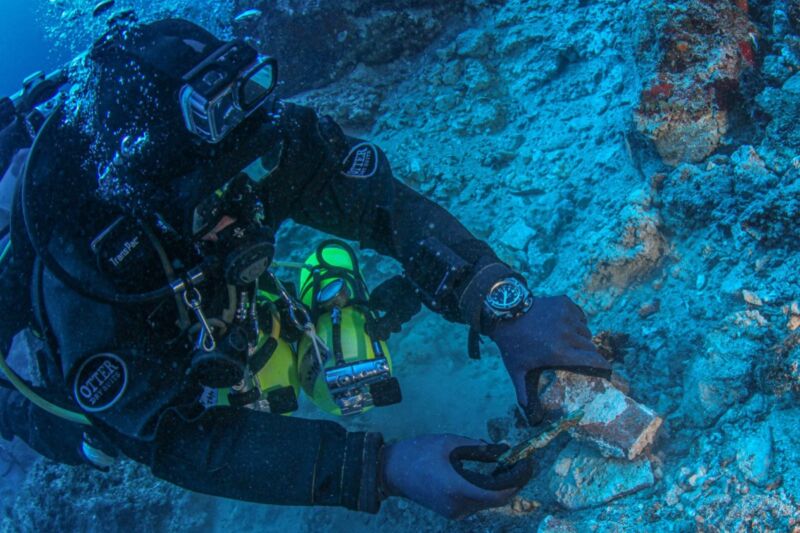
A diver with the Return to Antikythera project carefully excavates an artifact.
Enlarge / A diver with the Return to Antikythera project carefully excavates an artifact.
Nikos Giannoulakis/Return to Antikythera

The so-called Antikythera mechanism, recovered from the wreckage of an ancient cargo ship off the coast of Antikythera Island in Greece, might be the world’s oldest analog computer. The mystery surrounding its purpose and origin continues to fascinate scientists and enthusiasts alike to this day. But it’s not the only treasure salvaged from that Antikythera wreck. An ongoing underwater archaeological project most recently recovered a large marble head of a bearded male figure believed to be part of a statue of Hercules. Divers also recovered a marble plinth with the lower legs of another statue, two human teeth, and several pieces of the cargo ship’s equipment.

As we’ve previously reported, in 1900, a Greek sponge diver named Elias Stadiatis discovered the wreck, which was apparently surrounded by rotting corpses on the sea floor. The captain, Dimitrios Kondos, didn’t believe Elias at first and thought the nitrogen in his breathing mix had affected the diver’s senses. So Kondos dove down to the site himself, emerging with an arm from a bronze statue. 

Kondos and his crew had recovered all kinds of artifacts from the shipwreck by mid-1901, including 36 marble sculptures (representing Hercules, Ulysses, Diomedes, Hermes, and Apollo, among others); a bronze statue dubbed “The Philosopher” (circa 340 BCE); a bronze lyre; pieces of glasswork; and three marble horse statues. Along with the Antikythera mechanism, these precious artifacts are now housed in the National Archaeological Museum of Athens.

The salvage work ended that summer, however, after one diver died and two others were paralyzed from decompression sickness. No further attempt was made to excavate the treasures of the Antikythera wreck until famed explorer Jacques-Yves Cousteau visited the site in 1953. Twenty-three years later, Cousteau returned and worked with archaeologists to recover nearly 300 more artifacts. They dredged a section of the wreck to reveal artifacts previously hidden from view. These included hull planks, ceramic jars, bronze and silver coins, jewelry, and more marble and bronze statues. Cousteau’s 1976 expedition also recovered scattered human bones from at least four different people.

The wreck was left alone again for nearly 40 years until a Woods Hole Oceanographic Institute (WHOI) marine archaeologist named Brendan Foley (now at Lund University in Sweden) got permission from the Greek government in 2012 to undertake a complete diving survey of the wreckage site. As a bonus, they found a second ancient shipwreck just a few hundred meters south of the Antikythera wreck.

Foley’s team used mixed-gas closed-circuit rebreather technology for their survey, which gave divers over half an hour of time underwater each day—much longer than prior expeditions. Furthermore, the Exosuit—described as “Iron Man for underwater science”—allowed divers to descend to 1,000 feet (over 300 meters) and remain underwater for several hours, with no need to decompress as they returned to the surface.

https://arstechnica.com/?p=1861898


Cult of the Lamb hands-on: Animal Crossing meets the dark arts

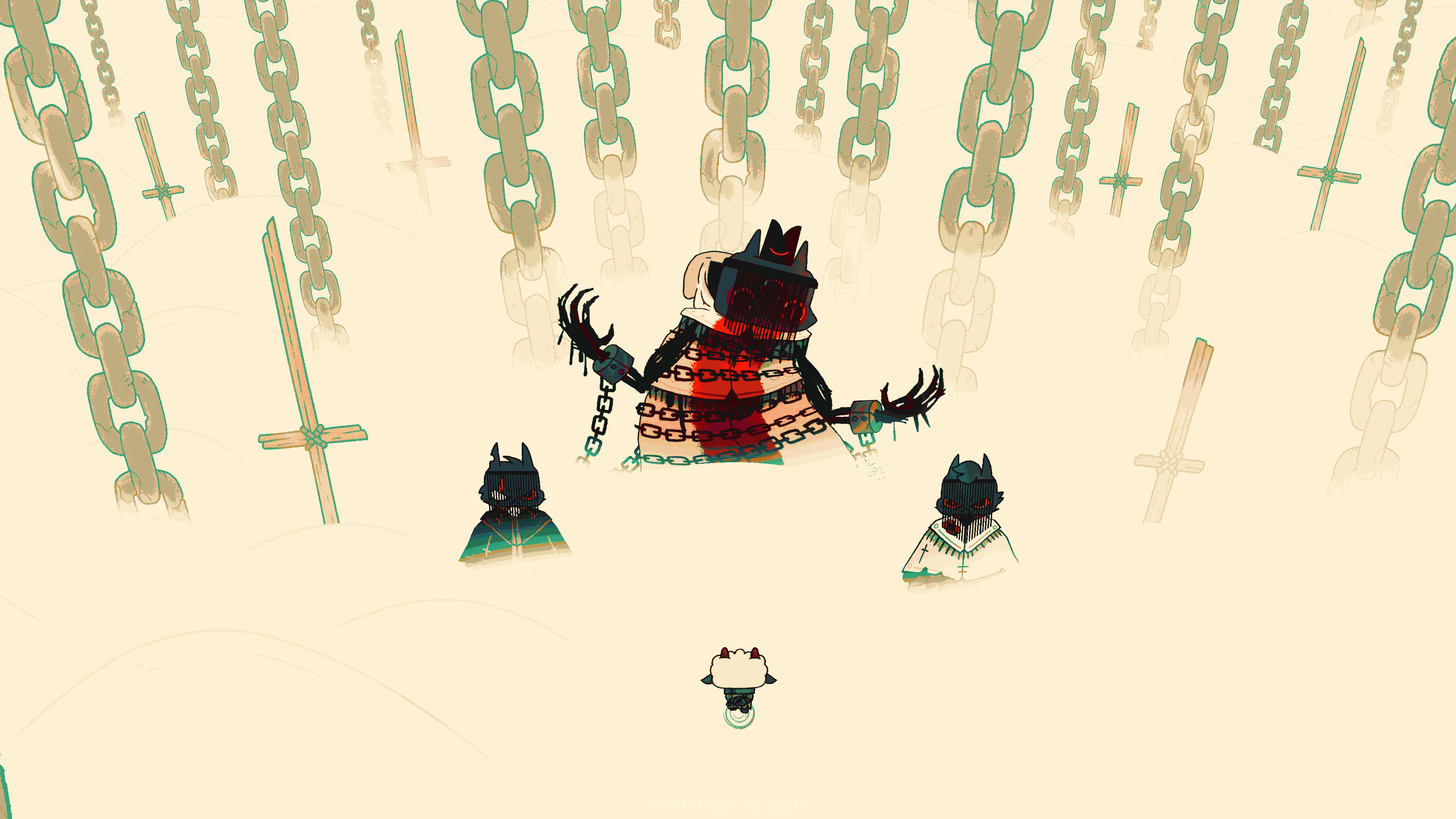
You know the sweet old nursery rhyme: Mary had a little lamb, but then it was resurrected by the devil and forced to create a murderous cult.
Enlarge / You know the sweet old nursery rhyme: Mary had a little lamb, but then it was resurrected by the devil and forced to create a murderous cult.
Devolver / Massive Monster

When I first played Cult of the Lamb, launching August 11 on PC and all major console families, I imagined that its demonic tone originated as an internal joke for its development team. Perhaps the creators at Massive Monster sat around looking at the sim-management likes of Animal Crossing and The Sims, then thought that the only way they’d surpass those games is by striking a deal with the devil.

Then they went ahead and made a sim game where players do exactly that. After 90 minutes spent playing the game’s expanded demo, provided by its publishers at Devolver Digital, I’m inclined to think its choices about tone, art direction, and sim-meets-Satan gameplay were the right call. (There’s currently a free public demo as well, available on Windows and MacOS, but it’s much shorter than what I’ve sampled.)

The One Who Waits

Seems like a trustworthy entity. Let's make a deal for our soul.
Enlarge / Seems like a trustworthy entity. Let’s make a deal for our soul.

Cult of the Lamb begins with the game’s hero, a Disney-like cartoon lamb, being led to its slaughter as a form of religious sacrifice. But death is only the beginning in this game. In the afterlife, you meet a mysterious underground beast wrapped in chains, simply named The One Who Waits. You’re given the option to rise from your grave, grow a cult full of devout followers, expand your mastery of the demonic arts, and defeat a series of monstrous rivals. You can answer this call in one of two responses: “yes” and “absolutely.”

A peek at my underdeveloped cult. Notice that two of the characters have socialized and become friends. This can change their attributes in ways that are useful, but they may also get sad if one of them dies of gastrointestinal disease (which can happen).
Enlarge / A peek at my underdeveloped cult. Notice that two of the characters have socialized and become friends. This can change their attributes in ways that are useful, but they may also get sad if one of them dies of gastrointestinal disease (which can happen).

After battling through a top-down, Zelda-like sequence and killing your prior captors, a guide with similar demonic inclinations teaches you how to find, free, and convert down-on-their-luck woodland creatures. The game’s formal loop begins with you assigning basic tasks to your sole follower on an expansive plain that your cult calls home: gather resources, build structures, tend farms, and so on. Once your follower is occupied, enter a gate that takes you to a randomly generated series of battling rooms, where you’ll make progress on your kill list, gather rarer resources, and find and conscript more easily influenced animals to join your cult.

Assigning tasks, giving gifts: all in a day's work as a cult founder.
Enlarge / Assigning tasks, giving gifts: all in a day’s work as a cult founder.

Bring them back to the village, and that’s when you begin the game’s leader-of-a-cult cosplay in earnest.

Everything you need to become more powerful revolves around maintaining your cultists’ faith and loyalty; the former can be exploited and drained from each cultist like an ectoplasm of sorts, while the latter sticks around as more of a permanent “experience point” meter. The time between demon-hunting battles can be spent conducting faith-draining services, spending individual time with cultists to make them happier, or learning about and resolving side quests that they ask about.

Just another day of teaching the good word. Today, we learned a ritual where I can kill one of my followers to claim rare items and resources. Everyone seems on board with the plan!
Enlarge / Just another day of teaching the good word. Today, we learned a ritual where I can kill one of my followers to claim rare items and resources. Everyone seems on board with the plan!

That’s one way to save on resources

Unlike run-of-the-mill RPGs, however, you have an option outside of being helpful. Maybe you don’t care about certain cultists, or maybe you missed the timing window to help them resolve issues like starvation, disease, or losing faith. (The longer you’re out adventuring and battling, the more adrift certain followers may become back at the cult farm, as indicated by an always-running day-night cycle.)

Early in the game’s skill-tree system, cult leaders learn that they have the option to outright sacrifice their followers, which can bestow rare rewards on your cult. This might cost some of the admiration of your other followers, but from what I can tell, savvy cult leaders can still balance their emotional needs while feeding their lust for blood and power.

Each combat encounter is randomly generated, and your hero begins each with randomly assigned melee and ranged attacks. The game's skill-tree decisions can grant you more options in terms of weapons or other completely different perks.
Enlarge / Each combat encounter is randomly generated, and your hero begins each with randomly assigned melee and ranged attacks. The game’s skill-tree decisions can grant you more options in terms of weapons or other completely different perks.

Cult of the Lamb could have invented a half-battling, half-sim ecosystem that sounds a lot simpler or drier, and without the Satanic overtones, the game very much resembles the 1991 SNES classic Actraiser. The devs, artists, and writers at Massive Monster deserve credit for making this game fun to talk about, look at, and ponder; its systems of cult management lean into brutality in ways that make sense yet add mechanical fun to the question of how players might move forward as cult leaders. One of the game’s skill trees asks a brutal question early on: Would you rather build beds for your followers or develop the ingenuity to build disease-reducing graves, instead? At first, you can’t have both. Decisions, decisions.

But this game does more than merely lift another decades-old game’s mechanics. While its randomly generated battling levels clearly draw inspiration from Binding of Isaac, Cult of the Lamb‘s upgrade system requires careful curation of the cult’s farm region, in terms of resource management, skill-tree decisions, and even side quests to unlock more “Tarot cards” (which are shuffled and randomly dealt during battling encounters to increase your chances of survival). A series of unlockable village outposts near your cult add everything from amusing new characters to side quests to mini-games, including a clever tap-to-reel fishing mode and a tricky, surprisingly engaging spin on Yahtzee.

https://arstechnica.com/?p=1862418


Final Fantasy XVI aims for M rating to portray “difficult adult themes”

[embedded content]
A recent trailer for Final Fantasy XVI hints at a Game of Thrones-style epic war storyline.

Next year’s Final Fantasy XVI aims to be the first mainline, numbered game in the franchise to receive an M (for Mature) rating from the Entertainment Software Rating Board. That’s according to producer Naoki Yoshida, who told GameSpot in a recent interview that the higher age rating is needed to tell a story with “difficult adult themes.”

Responding to a question about “implied nudity” in a recent trailer for the game, Yoshida complained a bit about age ratings that he sees as “becom[ing] more and more restrictive recently regarding what can or cannot be shown.” While acknowledging that those ratings are important to protect younger players, Yoshida said a lower age rating can be “somewhat of a hindrance” to storytelling.

“You find yourself changing things that you wanted to do in the game based on that rating,” Yoshida said. “You wanted to show something, but because you have this certain rating that you need to go to—you need to move the camera away. And that ends up making the entire experience feel a little bit cheaper.”

To get around that problem, Yoshida said Final Fantasy XVI will be “pursu[ing] a mature rating in most of the regions that will be releasing the game.” That isn’t just for the sake of being “more violent or… more explicit,” he said, but to “explore those more mature themes that the game tackles.”

In the US, early 2D Final Fantasy games have generally received ESRB ratings of E (for Everyone) or E-10+ (for Everyone 10 or older). Series entries from the 3D era overwhelmingly max out at a T (for Teen) rating; Final Fantasy XV, for instance, received a T rating for “Language, Mild Blood, Partial Nudity, [and] Violence.” The ESRB’s write-up of the game’s content noted “realistic gunfire” and impaled characters, as well as “some female characters [that] are depicted topless, with breasts that lack discernible details (i.e., no nipples).”

Only two spin-off games using the Final Fantasy name have received M ratings in the past: 2015’s Final Fantasy Type-0 HD and 2022’s Stranger of Paradise: Final Fantasy Origin. The latter game’s story didn’t seem to benefit from the rating’s relative lack of restrictions, though; VentureBeat’s review summarized the critical consensus by describing the game’s “ugly graphics, shallow characters, and nonsensical script.”

In other promotional interviews surrounding Final Fantasy XVI‘s planned Summer 2023 release on PS5 and PC, Yoshida revealed that the game will depart from its predecessor by not offering players free-form “open world” exploration. “To bring a story that feels like it spans an entire globe and beyond, we decided to avoid an open world design that limits us to a single open world space, and instead focus on an independent area-based game design that can give players a better feel of a truly ‘global’ scale,” Yoshida told IGN.

Yoshida also promised some extreme variety in the fights between the Final Fantasy XVI‘s powerful Eikons, which can be summoned by gifted characters in the game’s world. “For example, maybe one Eikon-versus-Eikon battle… will be reminiscent of a 3D shooter. whereas another Eikon versus a different Eikon, it’s more like a pro wrestling match, and then maybe even a third with one Eikon versus another Eikon will transform an entire area into a battlefield,” Yoshida told Game Informer. “And so again, we didn’t reuse these systems, and each one of these Eikon-versus-Eikon battles is unique and will change with each battle.”

https://arstechnica.com/?p=1862254


A brief history of (unintentionally) unbeatable games

<img src="https://rassegna.lbit-solution.it/wp-content/uploads/2022/06/a-brief-history-of-unintentionally-unbeatable-games.jpg" alt="A promised patch should soon allow KOTOR II players to beat the game on Switch.”>
Enlarge / A promised patch should soon allow KOTOR II players to beat the game on Switch.

Last week, publisher Aspyr officially acknowledged the existence of a game-breaking glitch in the recent Switch port of Star Wars: Knights of the Old Republic II. That glitch, which crashes the game after the “Basilisk Crash” cutscene on the planet Onderon, has the inconvenient side effect of making the Switch version completely unbeatable.

While Aspyr promised this game-breaking glitch would be fixed in the game’s next downloadable patch, plenty of game developers in the past haven’t had that option. KOTOR II on the Switch is the latest in a long line of games that were literally impossible to complete (or to get a full, 100 percent completion rate) when they launched.

Here, we’re not talking about games like The Sims or Tetris that are designed not to have a win condition and/or always end in failure for the player (though some games that seem like they fall in that category are surprisingly beatable). We’re also not talking about games where the player is forced to reset after accidentally stumbling into an in-game predicament where they can no longer make progress (TV Tropes has a massive list of games that fit this description).

No, instead we’re talking about games that are supposed to be beatable but, for one reason or another, can’t be fully completed regardless of what the player does (short of using external cheats). While gaming’s short history has seen plenty of these games, here are a few notable examples that should make Aspyr feel a little better about its recent KOTOR problems.

Sqij! (ZX Spectrum, 1987)

[embedded content]

Beyond unbeatable, the Spectrum port of this cute Commodore 64 game was totally unplayable due to a programming glitch that made the game fail to respond to any keyboard inputs. But that may not have been a simple oversight.

Eurogamer has the story of coder Jason Creighton, who was tasked with making the Spectrum version of the game despite not being provided with a copy of the Commodore original. When publisher The Power House insisted that Creighton do his best based on a map of the original game, he turned around a last-minute project written in Laser BASIC, rather than machine code.

While Creighton says he didn’t intentionally break the game’s controls, the unplayable mess still made it past the publisher’s quality control and hit British store shelves at the bargain-basement price of 2 pounds. Still sounds like a lot of money for a game where you can’t move, but what do we know?

Teenage Mutant Ninja Turtles (MS-DOS, 1989)

[embedded content]

For the most part, this PC version is a pretty faithful port of the famously difficult first TMNT game for the NES, which was also released in 1989. For some inexplicable reason, though, a single block is missing from a sewer section in Level 3, making an otherwise trivial gap impossible to clear. The oversight was fixed in time for the game’s 1990 European release, but US players were stuck unless they knew how to cheat.

Chip’s Challenge (Windows, 1992)

[embedded content]
A version of Chip’s Challenge level Spirals that has been edited to be beatable.

The fourth version of the Microsoft Entertainment Pack for Windows is well-remembered for this tile-based puzzle game, itself a port of the 1989 Atari Lynx original. But that port changed a single tile in level 88, removing a wall and changing a former dead-end into an open corner. That, in turn, causes the level’s walker enemies to fly out of that corner in a straight line, blocking the player’s progress for good.

The oversight was fixed for subsequent Windows releases of the game, and while early players could technically skip level 88, they would do so knowing there was at least one level they would never beat.

X-Men (Genesis, 1993)

[embedded content]

Those who played this early ’90s action game may remember an ingenious/frustrating puzzle in the later levels, where the game told the player to “Reset the computer.” After searching the bare room for a reset button, clever players would hopefully figure out that they had to press the reset button on the Genesis console itself (spoilers for a 29-year-old game, we guess). That little trick worked because the Genesis reset button left a few areas of RAM untouched, letting the game “remember” the player’s progress upon restarting.

However, this inventive design trick became problematic when players tried to play the game on the Sega Nomad. That’s because the portable version of the Genesis doesn’t have a dedicated reset button, meaning players are stuck when they reach the late-game puzzle. And while some fans have gone to great lengths to fix that hardware issue, it’s probably easier to dig up a classic Genesis and reach for that reset button.

https://arstechnica.com/?p=1862064


No hope for Hawkins? Trailer for Stranger Things S4 Part 2 is pretty bleak

[embedded content]
We’re eagerly awaiting the two-part finale to the fourth season of Stranger Things. Will Hawkins survive?

It was admittedly an odd creative decision to split the fourth season of Stranger Things into two unequal parts. While Part 1 (consisting of the first seven episodes) was a bit bloated, it nonetheless told a compelling story, set up some real stakes, and left viewers mulling over multiple cliffhangers. Fortunately, we don’t have long to wait to see what happens next, and Netflix just dropped an exciting new trailer foreshadowing what we can expect from the final two episodes, each of which clocks in at well over an hour’s run time. And things look pretty bleak for the Hawkins gang.

(Some spoilers for S4 Part 1 below, but we’ve tried to avoid revealing the biggest plot twists.)

Since the official trailer for Part 1 dropped in May, we’ve known that this season’s big bad hails straight from classic D&D lore. It’s Vecna, a once-powerful wizard who first became undead and then became a lich. Although Vecna (in the lore, at least) was destroyed, over time he achieved godhood. His left hand and left eye survived his bodily death and became powerful relics.

The series gives Vecna a very different backstory that connects the character to everything that has happened in Hawkins since the first season. He rather resembles Freddy Krueger from the Nightmare on Elm Street franchise, except he preys on people’s (especially teens’) negative thoughts and feelings rather than their dreams. The horrible fates of his victims lead to an outbreak of “Satanic Panic” in the wholesome town of Hawkins. And that’s all I’ll say about Vecna for now.

<a href="https://rassegna.lbit-solution.it/wp-content/uploads/2022/06/no-hope-for-hawkins-trailer-for-stranger-things-s4-part-2-is-pretty-bleak-2.jpg" class="enlarge" data-height="787" data-width="1200" alt="Straight outta D&amp;D: Vecna won’t stop until he’s taken everybody.”><img alt="Straight outta D&amp;D: Vecna won’t stop until he’s taken everybody.” src=”https://rassegna.lbit-solution.it/wp-content/uploads/2022/06/no-hope-for-hawkins-trailer-for-stranger-things-s4-part-2-is-pretty-bleak.jpg” width=”640″ height=”420″ srcset=”https://rassegna.lbit-solution.it/wp-content/uploads/2022/06/no-hope-for-hawkins-trailer-for-stranger-things-s4-part-2-is-pretty-bleak-2.jpg 2x”>
Enlarge / Straight outta D&D: Vecna won’t stop until he’s taken everybody.
YouTube/Netflix

Meanwhile, the entire Byers clan, including Eleven (Milly Bobbie Brown), has relocated to Southern California, where Will (Noah Schnapp) and Eleven naturally find themselves high school outcasts. Mike (Finn Wolfhard), Dustin (Gaten Matarazzo), Lucas (Caleb McLaughlin), Max (Sadie Sink), Nancy (Natalia Dyer), Steve (Joe Keery), and Robin (Maya Hawke) remained in Hawkins, where Lucas’ newfound basketball abilities wins him admission to the popular crowd. (It must be said that the high school dynamics in the opening S4 episodes are unrelentingly cliché; this is not what Stranger Things does well.)

Hopper (David Harbour) is being kept prisoner by the Russians, but he’s plotting a breakout with a Russian guard nicknamed Enzo (Tom Wlaschiha). This involves sending a coded message to Joyce (Winona Ryder), who promptly hops on a plane to Alaska with Murray Bauman (Brett Gelman)—inexplicably leaving her kids at home and in the dark as to the true nature of her “business trip.” Then Eleven gets snatched and brought to a secret underground lair run by none other than her “Papa”: Dr. Martin Brenner (Matthew Modine). The remaining Byers kids hit the road to rescue her.

Flashbacks tell us more about Eleven's early days in Dr. Brenner's lab and a certain tragic event.
Enlarge / Flashbacks tell us more about Eleven’s early days in Dr. Brenner’s lab and a certain tragic event.
Netflix/YouTube

But does Eleven actually need rescuing? There were substantial flashbacks to Eleven’s early days in Dr. Brenner’s lab, before she tore open a gateway between our world and the Upside Down. We learned that a mysterious incident caused the death of nearly all the child subjects apart from Eleven, whose fragmented memories of that time seem to implicate Eleven as the culprit. (Prior seasons certainly established that she is capable of killing, albeit almost always in self-defense.) It seems Dr. Brenner has been recruited to help her recover her powers, lest Vecna’s activities enable the Upside Down to take over our world entirely.

Given the three distinct storylines in three separate locales, a lot went down in the first seven episodes, and things ended on three cliffhangers. Joyce reunited with Hopper as he escaped from his Russian prison, but they still have to find a way back to the US. Steve, Nancy, and D&D dungeon master Eddie Munson (Joseph Quinn)—easily this season’s breakout character—got trapped in the Upside Down.

Dustin, Lucas, and Erica (Priah Ferguson) found another gate to rescue them, but Vecna snatched Nancy’s mind at the last minute, with Steve torn between trying to save Nancy right then or looking out for the younger kids in the “real” world. As for Eleven, she learned the truth about what really happened in the laboratory that tragic day—and the true nature of the threat her friends now face back in Hawkins.

https://arstechnica.com/?p=1861952


The 10 best games we physically played at Summer Game Fest, Tribeca

Kiosks, controllers, masks, and games: Gaming-preview events hit a little different in 2022, but we'll take whatever we can get.
Enlarge / Kiosks, controllers, masks, and games: Gaming-preview events hit a little different in 2022, but we’ll take whatever we can get.
Summer Game Fest: Play Days + Seth Cuddeback

LOS ANGELES—The past week’s Summer Game Fest has mostly been a virtual affair, full of trailers for video games that may or may not launch in the next 18 months. Still, as the game industry draws closer to convention-preview normalcy, we scored invites to two early-June events with playable coming-soon games.

You may have already seen my biggest hands-on highlights from those events: Street Fighter 6, which is fantastic, and Sonic Frontiers, which is weird but promising. This article sums up the “best of the rest,” based on hands-on tests at the Summer Game Fest Play Days event in Los Angeles and a series of remote-connection Tribeca Games Festival demos.
The events were missing some of the world’s biggest developers and publishers—arguably because many of their games have been pushed to 2023. Despite this list skewing more to the indie side, we stand behind these game preview highlights thanks to how they felt to play.

[embedded content]
Cuphead: The Delicious Last Course gameplay trailer.

Cuphead: The Delicious Last Course

Platforms: PC, Xbox, PS4, Switch
Planned release: June 30
Links: Steam | Nintendo eShop | Xbox | Official site

The bullet-hell brutality of Cuphead will return later this month as a $7.99 DLC pack. If the sample boss level I played is any indication, this DLC will hit a sweet spot for series fans instead of turning the Cuphead formula upside down.

A new playable character Ms. Chalice is available as a “charm” that one player can equip at any time, and she comes with a few novice-friendly perks, including an additional point of health, a double-jump, a parry that doubles as a forward dash, and a somersault that adds a few frames of invincibility. Her new abilities weren’t necessarily imperative in the new boss battle I played—though due to being terrible at Cuphead, I still struggled with the fight’s three phases, which included an abrupt transition to floating, rotating platforms (think Super Mario World‘s second Reznor fight).

She’s available in a new campaign that executive producer Marija Moldenhauer tells Ars is comparable to the original game’s third isle—which included seven bosses and two platforming levels. Moldenhauer says the DLC will have six bosses, which she insists are more involved and complicated than the standard game’s selection, but she wouldn’t otherwise clarify what else the DLC will contain.

Moldenhauer also says that the DLC includes nearly as many hand-drawn backgrounds and frames of animation as the entirety of the standard Cuphead campaign. This could mean that the boss battles I haven’t yet played are even more intense or that there’s another massive platforming challenge to come. Either way, $7.99 seems like a must-buy DLC option for anyone already invested in Cuphead‘s meticulously hand-drawn 2D action.

[embedded content]
F1 2022 VR gameplay trailer

F1 2022

Platforms: PC, Xbox Series X/S, Xbox One, PS5, PS4
Planned release: June 28
Links: Epic | PSN | Xbox | Official site

EA and Codemasters hosted an F1 2022 gameplay demo to show off the series’ newest feature: VR racing. Codemasters producers on site confirmed that the studio’s combined brain trust had matured enough to add a VR mode to F1, thanks to contributions from those who worked on VR modes in DiRT Rally and Driveclub VR. (Evolution Studios made the latter before Codemasters acquired it in 2016).

The game maker’s kiosk combined Fanatec’s CSL DD F1 bundle with a Quest 2 VR headset. In great news, the result strikes the right balance between fidelity and performance, along with considerations for VR comfort while navigating F1-worthy straightaways. The only comfort exception came from moments when the game’s particle-filled clouds filled my gameplay view, which made my headset’s frame rate tumble. This issue usually arose after a gnarly spinout when I drove all driving assists disabled; when I leaned on the game’s optional F1-for-dummies, all-assists mode, F1 2022 felt like a fantastic carnival ride.

Codemasters didn’t have much else to show off for F1 2022 at SGF, but the driving was fun enough to excite me for playing its VR mode on my PC when it launches on June 28.

[embedded content]
Animal Well gameplay trailer

Animal Well

Platforms: PS5, PC
Planned release: Early 2023
Links: Steam | PSN | Official site

At some point, the oversaturation of indie “seek-adventure” games (better known as “Metroidvanias”) has to run its course, right? What can anyone else do to top the critically acclaimed likes of Hollow Knight, Axiom Verge, and Cave Story?

While I’m not immediately convinced that Animal Well will surpass the genre’s other greats, my hour-long demo has me very, very intrigued. For one, it has new, beautiful ideas for rendering pixel art, thanks to its sole designer, programmer, and artist building the game’s engine from scratch—and condensing the complete package thus far to a 10MB limit. The game’s lighting and physics models are some of the most impressive I’ve ever seen in a 16-bit aesthetic, perhaps even surpassing the pixelated, chemical-reaction madness of Noita.

Additionally, this adventure has smart ideas for how to skip combat entirely. Animal Well asks players to focus on tricky maneuvers, puzzle-solving, and hidden-path discovery as they unravel the mysteries that cloak its lack of dialogue. Instead of wielding weapons, your eight-pixel blob of a hero must make the most of items like firecrackers—which cast lighting effects on the 2D world while scaring potential foes—and a handy grappling whip that can be tossed into crevices to grab otherwise untouchable world elements.

Snappy controls and otherworldly pixel-art designs have made my demo experience with Animal Well memorable thus far, and I look forward to its eventual release (currently pegged to a vague “early 2023” window).

https://arstechnica.com/?p=1861645


The 25 best games we saw during this year’s “Not E3” showcases


While 2022 was yet another year without an E3, game publishers big and small haven’t stopped releasing tons of hype-filled trailers during the usual summer promotional season. After sifting through Summer Game Fest and the Microsoft/Bethesda showcase, we’ve spent much of the week watching literally hundreds of trailers, as featured in the Future Games Show, IGN Expo, Wholesome Direct, Day of the Devs, the PC Gaming Show, and many others.
We’ve picked out 25 titles whose presentations stood out for one reason or another. Scroll through for a collection of titles we’ll be watching over the next year or so. And keep an eye out for hands-on impressions from our own Sam Machkovech, who sampled a handful of these games at a Summer Games Fest event earlier this week.

A Little to the Left

[embedded content]

Platforms: Switch, PC, Mac, Android, iOS
Planned release: 2022
Links: Steam | Itch.io (w/ demo) | Official website

Ostensibly a game for organization freaks, A Little to the Left asks players to tidy up by arranging books, game cartridges, spoons, lampshades, and more into nice, neat arrangements, all while a mischievous cat tries to mess things up again. As you move through the tidying, though, the basic organizing tasks morph into puzzles that are “a little more surreal,” according to the trailer. There’s also a “daily tidy delivery” for a quick hit of new organizational puzzles each day.

Agent 64: Spies Never Die

[embedded content]

Platforms: PC
Planned release: 2022
Links: Steam (w/ demo)

This game isn’t subtle about being directly inspired by GoldenEye 007, right down to its blocky polygons and limited character animations. But this unlicensed spiritual sequel also sports obvious modern improvements like a smooth frame rate and a lack of fog, meaning it should look and play like your nostalgic memories of GoldenEye rather than, uh, the actual experience of playing N64 GoldEneye these days. The ability to “make and share your own campaigns” should also ensure plenty of new content well after release.

Bramble: The Mountain King

[embedded content]

Platforms: PC, consoles
Planned release: 2023
Links: Steam | Twitter

Watching this trailer, I learned that Norse folktales can be way more intense than their American equivalents. Bramble is based on stories meant to scare children away from going too close to the water and drowning, and the example here definitely succeeded on this viewer. The short snippets of gameplay make it look like the game is a pretty standard exploration/platform title, but strong environmental and character design have us keeping our eyes out anyway.

Deceive Inc.

[embedded content]

Platforms: PS5, Xbox Series S/X, PC
Planned release: “Coming soon”
Links: Steam | Twitter | Alpha sign-up

This stylish competitive multiplayer spy game will see competitors disguising themselves to get a drop on their opponents and extract key objectives in a fun-looking twist on the capture-the-flag concept. The trailer reminds us of games like Deathloop and Spy Party—or even the underloved multiplayer portions of Assassin’s Creed games—in the very best ways.

https://arstechnica.com/?p=1861584


It’s the hosts versus humanity in tantalizing Westworld S4 trailer

[embedded content]
The fourth season of HBO’s original series Westworld, returns on June 26.

The teaser for the fourth season of Westworld that dropped last month was tonally evocative and visually stunning, but it told us very little about what to expect from the narrative. Now we have the full trailer, and it has made us eager to learn more, as it looks like the show is about to head into some very interesting places.

(Spoilers for prior seasons below.)

As we’ve reported previously, Westworld‘s third season was the first to take place largely outside the tightly controlled environment of the original theme parks. Opening three months after the events of the S2 finale, Dolores (Evan Rachel Woods) had re-created her host body. We learned she was targeting an AI system called Rehoboam, which was developed by a company called Incite. To access the system, Dolores had to take on its creator, Engerraund Serac (Vincent Cassel), and various other adversaries with their own motives for stopping her—including William, aka the Man in Black (Ed Harris), who vowed to destroy any remaining hosts.

In the S3 finale, Maeve (Thandiwe Newton) and Dolores battled it out, and Dolores ended up in the hands of Serac. She was connected to Rehoboam but refused to give Serac any data about the hosts, so he deleted her memories. It was actually quite a moving scene, as in her last moments, Dolores made an emotional appeal to convince Maeve to turn on Serac. Rehoboam was deleted, William was seemingly killed by a host replica of himself, and Bernard (Jeffrey Wright) learned that the system was merely delaying the collapse of human civilization rather than preventing it. He entered the Sublime, hoping to figure out how to rebuild. The final shot was Bernard re-emerging into his body, covered in dust—so who knows how much time had passed?

As the series has progressed, it has become harder and harder to keep track of the convoluted plot, multiple timelines, and characters—who’s a host, who’s human, who was human and is now being controlled by a host, which host is in which body, and so forth. The third season definitely unraveled a bit in the second half, although the finale was pretty powerful, giving us hope for the fourth season.

This new trailer provides more hope about the direction of the series. It opens with the host formerly known as Dolores waking up as a new persona, Christina, identified as a writer. Her voiceover informs us that this is the story of a girl who can see what nobody else can:  “That there’s something wrong with the world. And that it’s her fault.”

Meanwhile, Charlotte Hale (Tessa Thompson) has captured the Man in Black. “Your kind made a sport out of hunting us,” she tells him as we see a small bug crawl into his eye. “You controlled our every move, and now I’m going to do the same to you. It’s time to evolve into the species that we were meant to become.” Bernard might have found a path toward realizing that evolution. But what if, as another voiceover contends, “We’re not here to transcend. We’re here to destroy.”

It seems that Maeve has re-created a Westworld prototype of some sort; a horrified Caleb (Aaron Paul) finds himself in the middle of it just as everything sets into motion. There is a montage of explosions, fight scenes, and an attack by a creepy, faceless android host, plus a brief shot of Teddy Flood (James Marsden) looking far more violent than his original programming intended. The final shot shows Caleb screaming as flies crawl over his face, presumably seeking an orifice through which to enter the body and assume control.  Christina might want a story with a happy ending, but there are clearly forces at work intent on ensuring she doesn’t get it.

The fourth season of Westworld premieres on HBO Max on June 26, 2022.

Listing image by YouTube/HBO Max

https://arstechnica.com/?p=1861486


Review: Pixar’s Lightyear squanders its sci-fi reboot potential

<img src="https://rassegna.lbit-solution.it/wp-content/uploads/2022/06/review-pixars-lightyear-squanders-its-sci-fi-reboot-potential.png" alt="This Buzz Lightyear is supposed to be the "real-life" version of the character, which the real-life humans in Toy Story saw before buying the cuter toy version of the Buzz character. Still with me? Yes, this week’s new Pixar film is weird.”>
Enlarge / This Buzz Lightyear is supposed to be the “real-life” version of the character, which the real-life humans in Toy Story saw before buying the cuter toy version of the Buzz character. Still with me? Yes, this week’s new Pixar film is weird.
Disney / Pixar

Hollywood has produced quite a few superhero, sci-fi, and fantasy “origin” films, which rewind a series’ timeline to take a deeper look at a popular character. But I’m not sure we’ve ever seen a film that goes to the trouble of telling the origin story… of a manufactured toy in a fictional universe.

That is what this week’s Lightyear is: a fictional film that explains why a fictional toy was created in another fictional film. The overly serious Toy Story hero Buzz Lightyear, full of catch phrases and push-action tricks on his plastic spacesuit, wasn’t originally a children’s cartoon character, Pixar now says. The toy we grew to love was actually the children’s-toy version of a serious “live-action” sci-fi hero—or, at least, live in the way that Andy was a “real” person in the Toy Story universe.

Buzz looks lost—in more ways than one.
Enlarge / Buzz looks lost—in more ways than one.
Disney / Pixar

Part of me hoped that such a twist on an existing fictional character would let Pixar run wild with classic sci-fi inspirations. But that’s not what Lightyear is. This new film, debuting exclusively in theaters, is nowhere near the tribute to past boundary-pushing blockbusters that its trailer suggested.

Instead, it awkwardly splits the difference between a ’90s Bruckheimer flick and a modern Pixar family romp. The result is, unsurprisingly, a perfectly watchable film, and it comes with the usual Pixar standards of top-tier digital animation effects, solid voice acting, likable characters, and moments both touching and hilarious. But unless you’re a preteen at roughly the same age as Toy Story‘s Andy, you’ll likely feel shortchanged by the film as a whole.

“This is that film”

<a href="https://cdn.arstechnica.net/wp-content/uploads/2022/06/vlcsnap-2022-06-16-09h38m53s531.png" class="enlarge" data-height="1080" data-width="1920" alt="The film opens with a standard Star Ranger mission, in which Buzz is joined by a partner that, for some reason, never got her own toys in the Toy Story universe.”><img alt="The film opens with a standard Star Ranger mission, in which Buzz is joined by a partner that, for some reason, never got her own toys in the Toy Story universe.” src=”https://rassegna.lbit-solution.it/wp-content/uploads/2022/06/review-pixars-lightyear-squanders-its-sci-fi-reboot-potential-2.png” width=”980″ height=”551″>
Enlarge / The film opens with a standard Star Ranger mission, in which Buzz is joined by a partner that, for some reason, never got her own toys in the Toy Story universe.
Disney / Pixar

An early text crawl opens the film with direct mentions of Toy Story‘s timeline, along with a suggestion that Lightyear was Andy’s favorite film as a kid. “This is that film,” the text concludes. A redesigned Buzz Lightyear, now voiced by Chris Evans (Captain America) with a very Tim Allen-like affectation and an actual mop of hair, lands a massive shuttle spacecraft onto an unfamiliar planet. When that landing goes awry, he, his Space Rangers, and hundreds of military personnel are trapped and unable to return to Earth due to a newly broken warp drive.

Though this opening scene sets up his solid rapport with another Space Ranger (played by Uzo Aduba, Orange Is the New Black), that bond is soon interrupted by a massive plot rug-pull. To keep spoilers to a minimum, Buzz gets caught up in a guilt spiral over the failed landing, and he chooses to plow ahead with an idea that could get his entire crew back home. This obsession leads to a massive schism between him and the rest of his crew.

The new, ragtag crew.
Enlarge / The new, ragtag crew.
Disney / Pixar

So much so, in fact, that the film resets at the 30-minute mark to introduce a new supporting cast. The well-trained Space Rangers vanish, and they’re replaced by a ragtag trio of space-colony outcasts. Their apparent leader, a young woman named Izzy (voiced by Keke Palmer), has more ambition and excitement than she does experience.

https://arstechnica.com/?p=1861329