Sega, still doing what Nintendon’t, announces a tiny Sega CD retro console
Enlarge/ Sega’s Mega Drive Mini 2 includes Sega CD games and, for a little extra, an adorable recreation of the Sega CD attachment. But it has only been announced for Japan, at least for now.
Sega’s Genesis Mini console was one of the only officially licensed retro emulation boxes that came close to the NES and SNES Classics’ combination of software quality and hardware authenticity, even if its emulation wasn’t quite perfect and its game selection was missing some heavy hitters. The company’s mini-Game Gear was also the first officially licensed device to make the mini-console fad portable.
Sega is going back to the well one more time with the Mega Drive Mini 2, which will be released in Japan this October (the Mega Drive was what the Genesis was called outside of the US). The console will cost 9,980 yen before tax; at just under $80, this is in line with the pricing of earlier mini-consoles.
The Mega Drive Mini 2 will include an entirely different 50-game lineup, anchored by Sega CD titles like Sonic the Hedgehog CD and Shining Force CD. New Mega Drive games have also made the cut, including Virtua Racing and Thunder ForceIV, and a version of the Sega arcade game Fantasy Zone has also been thrown in for good measure (the original Genesis Mini includes Super Fantasy Zone, the Genesis-native entry in the franchise).
The new console re-creates the Model 2 version of the Mega Drive design, as well as the later six-button version of its gamepad.
Every aspect of the hardware’s design is lovingly detailed and true to the original. While the original Genesis Mini was modeled on the initial design of the Genesis/Mega Drive hardware, the Mega Drive Mini 2 is a re-creation of the redesigned “model 2” version of the console that came out circa 1994. It also includes the six-button version of the Genesis’ gamepad—the Japanese Mega Drive Mini shipped with two of these instead of one, while the Genesis Mini came with the older three-button gamepad design instead.
The console is all you need to play the games, Sega CD titles included, but for maximum authenticity, Sega is selling a purely cosmetic Sega CD accessory. It includes period-accurate mounting hardware and spacers for either version of the Mega Drive Mini, a tiny Virtua Racing cartridge, and a tiny Sonic the Hedgehog CD disc. The attachment will also be released in October for 4,500 yen (about $35).
Emulation is being handled by M2, the same team that did the original Mega Drive Mini. If the console is released outside of Japan, pricing, accessories, the design of the console, and the list of playable games may be different.
https://arstechnica.com/?p=1858029
What the simple mathematical abilities of animals can tell us about ourselves
Aurich Lawson
We often think of mathematical ability as being uniquely human, but in fact, scientists have found that many animal species—including lions, chimpanzees, birds, bees, ants, and fish—seem to possess at least a rudimentary counting ability or number sense. Crows can understand the concept of zero. And a study published in April found that both stingrays and cichlids can take this rudimentary “numerosity” to the next level, performing simple addition and subtraction for a small number of objects (in the range of 1 to 5).
“There are lots of animals that can do addition and subtraction,” Butterworth told Ars. “Bees can. Bees can represent zero as well. So it’s not surprising to me that stingrays and cichlids can do it.” His book explores how the ability to process mathematical information and extract numerical data from their environment is critical to an animal’s ability to survive and thrive. In fact, there might just be an innate understanding of math at its most basic level that was passed down the evolutionary chain from our most distant common ancestors.
Butterworth’s interest in the number sense of animals has its roots in his early work as a psycholinguist in the 1980s. When he met an Italian psychologist named Carlo Semenza at a conference, he became intrigued by human disorders in language, like aphasia, and mathematical cognitive disorders, particularly dyscalculia. Christian Agrillo, one of Semenza’s students who came to work with Butterworth, was an expert on fish and gave a talk on his research demonstrating that some small fish have numerical abilities. Butterworth was fascinated and eventually developed a parallel research program focusing on the numerical abilities of fish. “And once you get into fish, there’s all sorts of other animals that grab your interest,” he said.
Butterworth is still studying the genetics and neuroscience underlying number sense in fish, with plans to conduct brain imaging studies later this year. And just how does one go about peeking inside a fish’s brain as it counts? “First of all, you need to insert a [biofluorescent] gene, where when neurons connect, when synapses connect, they light up,” said Butterworth. “Then you have to have a fish whose head is transparent—a larval version of the fish. That way you can see what’s going on in the fish’s brain using a microscope, while it is choosing the size of the tank with more objects in it.”
Ars sat down with Butterworth to learn more.
https://arstechnica.com/?p=1857091
BioWare reveals Dreadwolf as the next Dragon Age title
It has been nearly eight years since Dragon Age: Inquisition launched as the most recent full game in Bioware’s acclaimed RPG series and nearly four years since an unnamed sequel was first teased at the 2018 Game Awards. On Thursday, developer BioWare revealed an official title for that sequel—Dragon Age: Dreadwolf—and confirmed the game won’t be coming until 2023 at the earliest.
In a brief blog post, BioWare confirmed the new game will focus on antagonist Solas, the mysterious elven hedge mage who was introduced as the Dread Wolf in Inquisition. Solas was also central to that game’s 2015 Trespasser DLC and featured heavily in a four-minute Gamescom 2020 behind-the-scenes featurette on the game.
In its announcement, BioWare describes Solas as someone whose “motives are inscrutable and his methods sometimes questionable, earning him a reputation as something of a trickster deity—a player of dark and dangerous games.” The developer also insists that “if you’re new to Dragon Age, you have no need to worry about not having met our antagonist just yet. He’ll properly introduce himself when the time is right.”
BioWare references that 2018 teaser in writing, saying that “we suspect you have questions and they’ll be answered in time.” More information on the game is promised later this year, though the game itself won’t be released in 2022.
The trickle of new Dragon Age details comes as BioWare has largely ignored the franchise in recent years in favor of sci-fi epics like Mass Effect: Andromeda and Anthem. Last year, Bloomberg reported that EA had been pushing an online multiplayer focus for the upcoming sequel but had pivoted to a single-player game after the success of Jedi: Fallen Order and the relative failure of the multiplayer-focused Anthem. Dreadwolf will be the first Dragon Age release since the departure of BioWare General Manager Casey Hudson and franchise Executive Producer Mark Darrah in late 2020. Darrah was replaced as executive producer by Bioware Austin studio head Christian Dailey, who then announced he was leaving a few months ago. The game’s current developers include Game Director Corinne Busche, Production Director Mac Walters, and Director of Product Development Benoît Houle, all overseen by BioWare General Manager Gary McKay. https://arstechnica.com/?p=1857871
Employee’s family drops wrongful death lawsuit against Activision Blizzard
The parents of former Activision employee Kerri Moynihan have asked a court to drop a wrongful death lawsuit that they filed in March against the company.
The Los Angeles Superior Court lawsuit alleged that harassment Moynihan suffered at the company contributed to her 2017 suicide, which took place during a corporate retreat at Disney’s Grand Californian Hotel & Spa. But Axios reports that Moynihan’s parents requested on May 6 that the suit be dropped “with prejudice,” preventing them from filing the same action again. No reason was given for the request, and neither side of the case commented on the move to Axios.
Moynihan’s story was referenced heavily in a California Department of Fair Employment and Housing lawsuit against Activision Blizzard filed last July, though her name was not made public at that time. “We are sickened by the reprehensible conduct of the DFEH to drag into the complaint the tragic suicide of an employee whose passing has no bearing whatsoever on this case and with no regard for her grieving family,” Activision Blizzard said in a statement issued shortly after that lawsuit was filed.
In addition to the DFEH lawsuit, Activision still faces a number of lawsuits from shareholders and a reported SEC investigation surrounding the company’s alleged failure to share material information surrounding employee misconduct. A separate lawsuit into the company by the federal Equal Employment Opportunity Commission was controversially settled for $18 million last September.
https://arstechnica.com/?p=1857540
Diablo Immortal impressions: A good smartphone game saddled with F2P nonsense
<img src="https://rassegna.lbit-solution.it/wp-content/uploads/2022/06/diablo-immortal-impressions-a-good-smartphone-game-saddled-with-f2p-nonsense.png" alt="Welcome to hell. By that, we mostly mean Diablo Immortal‘s setting, but that sentence could also describe the figurative distaste we have for the new game’s economic choices.”>
Enlarge/ Welcome to hell. By that, we mostly mean Diablo Immortal‘s setting, but that sentence could also describe the figurative distaste we have for the new game’s economic choices.
Activision Blizzard
The best thing about Diablo Immortal is that it’s a fun, professionally crafted action RPG befitting the Diablo name. The new Activision Blizzard game, launching on iOS and Android on Wednesday and Windows PCs on Thursday, immediately impresses as one of the better smartphone-first ARPG games on the market. And my 10 hours in its universe have allayed my previous fears about its production values.
The worst thing about Diablo Immortal is its economy. My pre-release testing of the final game was marked with menus and in-game characters alike selling me new types of “orbs,” “stones,” gold, and other confusing microtransactions. At best, the game can be enjoyed despite this nonsense.
But the bean counters at Activision Blizzard aren’t willing to offer a one-time purchase in Diablo Immortal for fair, nag-free adventuring. (Worse, as of press time, the publisher appears to be doubling down on a famous 2012 fiasco.) That’s doubly tragic because the game is otherwise a fun, smartphone-friendly option for addictive dungeon delving—which leaves me stuck between recommending a perfectly fine smartphone adventure and warning about its ickiest aspects.
Driving a Rift between fans
I’ll start by getting to the microtransaction content since at least two nations have banned Diablo Immortal from their marketplaces ahead of its launch. The game indeed includes “loot boxes” that run afoul of regulations in the Netherlands and Belgium, though Diablo Immortal’s system differs from popular examples like EA Sports’ card packs or Fortnite‘s “llama” system.
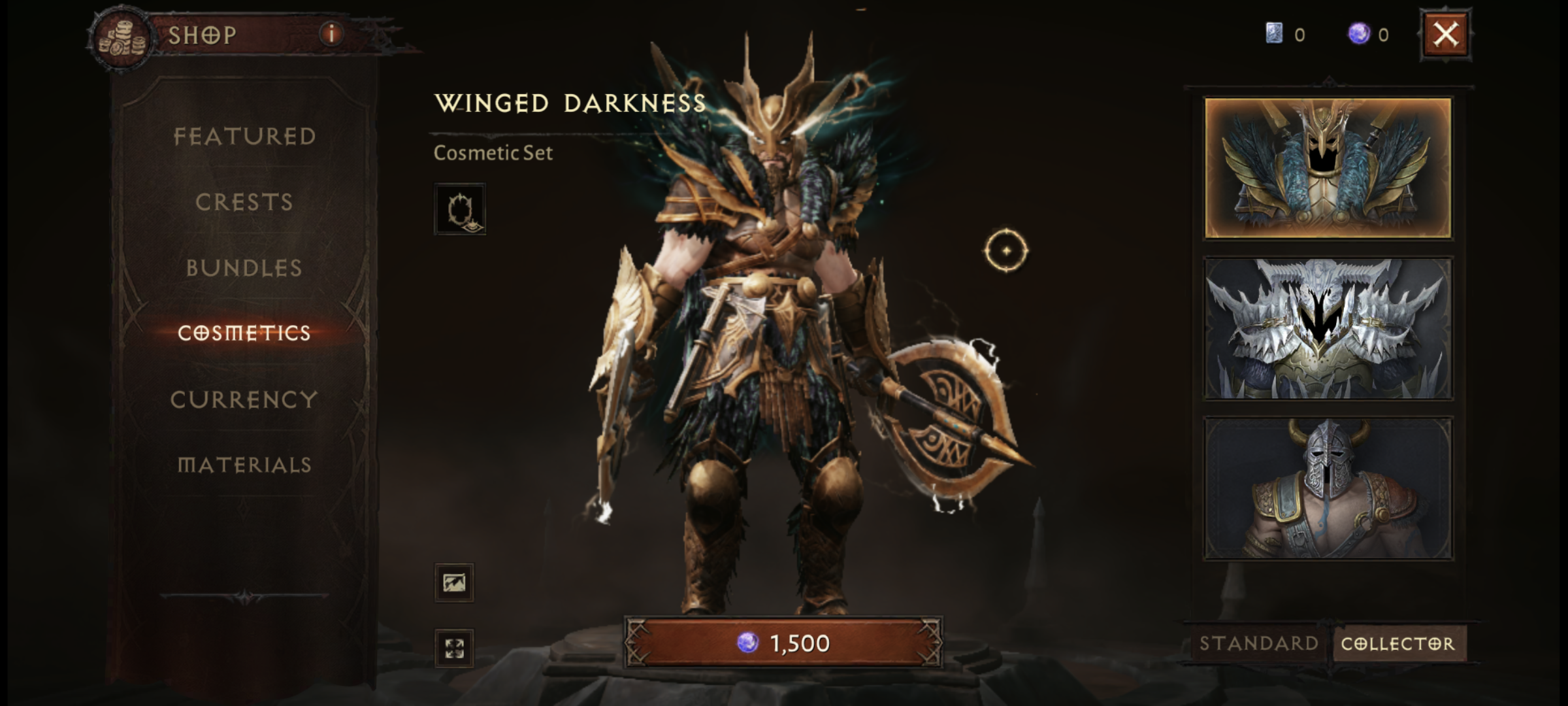
Everything below relates to purchasing options related to Diablo Immortal‘s gameplay and mechanics, not cosmetics. If you like the idea of paying $10 to $15 to dress your favorite warrior in outlandish garb, that’s here as well. I believe those kinds of purchases prey upon children who equate flashier cosmetics in social video games with real-life social clout, but that’s tame compared to some of the stuff I’ve seen in Diablo Immortal.
On their face, Elder Rifts (no, not “Elden Rings”) seem like classic Diablo stuff. They add Interesting modifiers to a randomly generated dungeon run, and they reward cool, unique loot. But…
…the best loot requires spending “legendary crests,” which either take forever to grind via in-game mechanics or can be bought instantly with real-world cash.
The game’s linear, Diablo III-like introduction eventually leads players to a hub town, and its storefronts advertise the game’s full slate of in-game purchase opportunities. The loot-boxiest of these is the “Elder Rift,” which is a randomly generated dungeon delve. Players can “guarantee” the number and quality of each dungeon run’s rewards based on the number and type of “crests” they dump into its entrance. (When I say “rewards,” I mean stuff that your character can equip for special offensive or defensive abilities. The first one I earned gave all of my attacks a 10 percent chance to add an electric spark that chained to nearby foes. Stuff like that.) Lower-level crests can be earned in-game, while “legendary” crests must be purchased with real-world money (after players are forced to burn through one free legendary crest).
Imagine a loot box that requires a 5–10 minute spike in challenge to see the randomly awarded loot inside, and you’ve got legendary crests in a nutshell. To Activision Blizzard’s credit, if a player elects to use a crest and then either fails an Elder Rift challenge or gets disconnected from the game’s always-on servers, the crest is refunded.
https://arstechnica.com/?p=1857419
Two European countries won’t get Diablo Immortal because of loot box laws
Blizzard’s upcoming open beta launch of Diablo Immortallater this week will be skipping the Netherlands and Belgium, thanks to regulations in those countries that consider games with randomized loot boxes to be illegal gambling.
“Diablo Immortal will not be available in Belgium or the Netherlands, and will not appear on Battle.net or the Belgian and Netherlands App or Google Play Stores,” an Activision Blizzard spokesperson told Eurogamer over the weekend. “This is related to the current operating environment for games in those countries. Accordingly, pre-registrations for the game are not accessible in those markets.”
Activision Blizzard reportedly let Belgian and Dutch players preregister for the game’s public beta test and listed the game briefly on mobile app stores in both countries. But the company quietly changed course in recent months, as Dutch gaming news site Tweakers noticed over the weekend.
On the Diablo Immortal subreddit, one user shared a purported message from Blizzard Support stating that players in the Netherlands and Belgium “will not be able to install Diablo: Immortal due to the countries’ gambling restrictions.” Belgian and Dutch players who download the game in another country or through a VPN could see their accounts banned, the message continues, though Blizzard has not imposed such bans in those countries in the past.
Legal eagles
In April 2018, government agencies in both the Netherlands and Belgium ruled in quick succession that randomized loot boxes were illegal “games of chance” that provided players with items that have “variable market values.” Activision Blizzard was among the many companies that have made changes to games in those countries in the intervening years, disabling loot box sales in Heroes of the Storm and Overwatch to comply with the laws.
That decision doesn’t seem to have affected Blizzard’s thinking on Diablo Immortal, though, and the company doesn’t seem to be considering a version of the free-to-play game without randomized item purchases either. The Diablo Immortal development team has discussed how in-game purchases will “never circumvent core gameplay” or let players purchase gear or experience points directly.
While a number of US legislators at the federal and statelevels have tried to advance bills limiting the impact of randomized loot boxes in games, all of those efforts have stalled before becoming law.
https://arstechnica.com/?p=1857228
We tasted the expanded collection of Star Trek wines and found them… wanting
Enlarge/ The official Star Trek Wine collection has expanded from two varieties to six.
Sean Carroll
Back in 2019, (partly) in honor of the announcement of Star Trek:Picard, Ars staffers held an informal tasting session to sample two bottles of official Star Trek Wines, a collaboration between CBS Consumer Products and Wines That Rock. And the wines were…. far better than we expected, although very much over-priced.
Picard has now wrapped its second season, with a third currently in production, and the folks behind Star Trek Wines have expanded their collection from two varieties to six. So a second informal wine tasting was clearly in order. And who better to help us in this noble endeavor than Q himself—aka actor John de Lancie—and The Orville writer Andre Bormanis, who launched his career as a science advisor on TNG? They joined a fresh group of tasters (eight people in all) on a cool late spring evening in Los Angeles, where the nibbles were plentiful and the conversation flowed freely. (Wine assessments were anonymous, in keeping with the gathering’s super-casual vibe. And the wine was purchased out of pocket, not gifted for promotional purposes.)
Let’s start by revisiting the original two varieties. First up: a 2017 Sonoma Valley zinfandel, described as a blend of 87 percent zinfandel, blended with petite sirah and just a hint of syrah.. The packaging plays up the fictional connection, claiming the wine is produced under the United Federation Special Reserve Label, “blended by our intergalactic sommelier and designed to fit the palates of multiple planets.” (The back label tasting notes adds “Andalorian spice” to the description just for fun.)
The original Ars verdict back in 2019: “This is a fairly typical robust California zinfandel, light, smooth, and fruit forward. It’s young, with a fairly high alcohol content, and it pairs nicely with cheeses and charcuterie. As a bonus, the bottle design is terrific, even though clear glass is not conducive to long-term storage for wines. Drink the wine now and save the bottle if you’re keen on collectibles.” (I was less fond of this one, since I prefer dryer, less jammy wines.)
The Federal Reserve zinfandel received similar comments from our new group of tasters, many of whom also noted the fruit forward profile and soft finish. Those who like fruitier wines in general tended to like this zinfandel more than others. “Solid ‘Susie Second” bottle,” wrote one taster, while another called it a “pretty good zin—go, Federation!” But others noted an odd aftertaste and declared the wine “not good.”
<a href="https://rassegna.lbit-solution.it/wp-content/uploads/2022/05/we-tasted-the-expanded-collection-of-star-trek-wines-and-found-them-wanting-3.jpg" class="enlarge" data-height="868" data-width="1200" alt="Andre Bormanis—writer on The Orville and past science advisor for TNG—and John de Lancie (TNG, Picard) De Lancie is holding the night’s clear winner: a Bordeaux blend from the (very real) Chateau Picard. “><img alt="Andre Bormanis—writer on The Orville and past science advisor for TNG—and John de Lancie (TNG, Picard) De Lancie is holding the night’s clear winner: a Bordeaux blend from the (very real) Chateau Picard. ” src=”https://rassegna.lbit-solution.it/wp-content/uploads/2022/05/we-tasted-the-expanded-collection-of-star-trek-wines-and-found-them-wanting-1.jpg” width=”640″ height=”463″ srcset=”https://rassegna.lbit-solution.it/wp-content/uploads/2022/05/we-tasted-the-expanded-collection-of-star-trek-wines-and-found-them-wanting-3.jpg 2x”>
Enlarge/ Andre Bormanis—writer on The Orville and past science advisor for TNG—and John de Lancie (TNG, Picard) De Lancie is holding the night’s clear winner: a Bordeaux blend from the (very real) Chateau Picard.
Sean Carroll
Next up: a Bordeaux blend from Chateau Picard (the label claims it’s a 2386 vintage to keep the conceit going): 85 percent cabernet and 15 percent merlot. As I noted previously, this is a bona fide winery, with a centuries-old vineyard in the St.-Estephe region. It just so happens that Jean-Luc Picard’s family has long run a fictional vineyard of the same name, albeit in the Burgundy region rather than Bordeaux—it features prominently in Picard. The real winery agreed to collaborate on a special edition of their cru bourgeois vintage for the Star Trek collection.
Our 2019 verdict: “It’s a solid, tasty Bordeaux blend, dryer than the zinfandel, with a longer finish and more interesting spices, even if lacks that ‘Andalorian spice.’ It is, in short, quintessentially French, and proof that even in the 24th century, terroir still matters.”
The Bordeaux blend also came out on top with the 2022 tasting crew, who declared it “perfectly quaffable” and “surprisingly good.” The wine is light and dry, “easy on the palate,” with “a clean finish,” and fairly well balanced. It’s almost as if Bordeaux wine makers have had centuries of experience to draw upon. This was the only bottle the tasting crew polished off completely.
Alas, the four new varieties in the Star Trek wine collection fall far, far short of their predecessors. We’ll start with the merely bland and inoffensive: an Andorian Blue Premium Chardonnay and the United Federation of Planets Special Reserve Sauvignon Blanc.
The Andorian Blue is, indeed, blue in hue, no doubt thanks to the addition of a food dye. (“What is this, a substrate for a COVID test?” one taster quipped.) It’s a gimmick that imparts a very slight aftertaste that is all the more noticeable because the wine otherwise barely has any flavor. That’s unusual for a chardonnay. I’m not especially fond of white wines, but good chardonnays are generally light to medium body, crisp, and a bit citrus-y. The Andorian Blue is indeed light, but it’s missing any distinctive flavor notes—other than that unfortunate hint of blue dye.
Meanwhile, the Sauvignon Blanc is so light that one taster wrote, “Does it exist at all?” Another commented, “What is this? Yellow water infused with wine essence?” The kindest comments were that the wine was “unassuming” and would make a good fit for a weekend afternoon BBQ, or perhaps a suitable accompaniment to spicy Thai food.
Enlarge/ “The Cardassians will never rule the galaxy with wine like this.”
Paramount Domestic Television
That brings us to the truly bad: a Klingon Blood Wine and a Cardassian Kanar Red Blend. In retrospect, it’s probably not surprising that the wines marketed with the most blatant appeals to fan service were also deemed largely undrinkable by nearly all the tasters. (I will give the Star Trek Wine folks props for creative bottle design, especially the corkscrew shape of the Cardassian blend.)
The broad consensus was that the Klingon Blood Wine is trying to be a pinot noir and falling short; it’s basically a very fruity California cabernet, with perhaps a hint of pepper. “Whoever supplied this blood ate nothing but fruit salad the week prior,” one taster noted, with another simply writing, “Way too sweet.” The most generous assessment was that it is “drinkable but not extraordinary.”
Finally, there is the Cardassian Kanar Red Blend—easily deemed the worst wine in the collection by our tasters. “Two degrees less sweet than a Boone’s wine cooler,” one taster wrote. (The taster is not a wine cooler fan.) “The Cardassians will never rule the galaxy with wine like this,” another wrote. I found it vile and reminiscent of Welch’s grape juice. But it would probably pair well with Do-Si-Dos or a similar peanut butter cookie if you’re feeling nostalgic for the PB&J flavors of your childhood. And it must be said that at least one taster seemed to like it.
With the evergreen caveat that taste in wine is highly subjective, here’s our recommendation. Stick with the original two bottles for your Star Trek wine, or save yourself some money and get something comparable for a fraction of the price—unless, of course, you’re really keen to collect the whole set of unusual bottle designs. Or you’re a Cardassian who loves really sweet wine.
https://arstechnica.com/?p=1856835
Are TikTok algorithms changing how people talk about suicide?
Rafael Elias | Getty Images
Kayla Williams has never said the word “suicide” on TikTok, even though she uses the platform to discuss mental health issues with her 80,000 followers. Since the beginning of the pandemic, the 26-year-old student from Berkshire, England, has posted multiple videos about suicidal ideation and her stay in a psychiatric ward. Some of these clips are lighthearted, others far more serious. Yet Williams does not utter the word “suicide” to her front-facing camera, or type it in her captions, for fear the TikTok algorithm will censor or remove her content. Instead, she uses the word “unalive.”
The hashtag #unalivemeplease has 9.2 million views on TikTok; #unaliving has 6.6 million; #unaliveawareness has an additional 2.2 million. Though #suicideprevention is a frequently used tag on the app, the hashtags #suicide and #suicideawareness do not exist—if you search for them, TikTok pulls up the number for a local crisis helpline. It’s a well-intentioned policy, initiated in September 2021, a year after a graphic video of a suicide spread across the app. But users have also come to fear elusive content moderation filters that seemingly suppress or remove videos discussing death, suicide, or self-harm.
While the word “unalive” first became popular in 2013 (when it was used in an episode of Ultimate Spider-Man), Google searches for the term have spiked dramatically in 2022. From TikTok, “unalive” has spread to Twitter and Reddit; YouTubers also use it so their content isn’t demonetized. Depending on the context, the word can refer to suicide, murder, or death. Though “unalive” is often used comedically on TikTok, people like Williams also use it to talk candidly, forge a community, and signpost resources on the app. The rapid rise of “unalive” therefore raises a worrying question: What happens when we don’t openly say “suicide”?
“I think it kind of makes a joke out of such a serious subject,” Williams says of the term. Though she likes saying “unalive” when she intentionally wants to make videos “less heavy,” she adds: “It doesn’t sit right with me because we should be able to talk about the heavy stuff without being censored.”
Williams worries that the word “unalive” could entrench stigma around suicide. “I think as great as the word is at avoiding TikTok taking videos down, it means the word “suicide” is still seen as taboo and a harsh subject to approach,” she says. She also swaps out other mental health terminology so her videos aren’t automatically flagged for review—“eating disorder” becomes “ED,” “self-harm” is “SH,” “depression” is “d3pression.” (Other users on the site use tags like #SewerSlidel and #selfh_rm).
Prianka Padmanathan is a clinical academic in psychiatry at the University of Bristol; in 2019, she conducted a study on language use and suicide, surveying slightly less than 3,000 people affected by suicide. Padmanathan asked the participants to rate the acceptability of descriptors on the topic and found that “attempted suicide,” “took their own life,” “died by suicide,” and “ended their life” were considered the most acceptable phrases to discuss nonfatal and fatal suicidal behavior.
A number of those surveyed raised concerns regarding the complete avoidance of the word “suicide.” One participant said it was “dangerous” and “isolating” to avoid the word, while another said, “My brother committed suicide and my sister attempted suicide. I don’t think we should be scared of using the word.”
“Overall, respondents indicated a preference for terms that were perceived to be factual, clear, descriptive, commonly used, non-emotive, non-stigmatizing, respectful, and validating,” Padmanathan says. Further research is needed to determine whether “unalive” could potentially be stigmatizing, but she notes that words can and do affect the way we think about suicide, citing a 2018 study.
https://arstechnica.com/?p=1857008
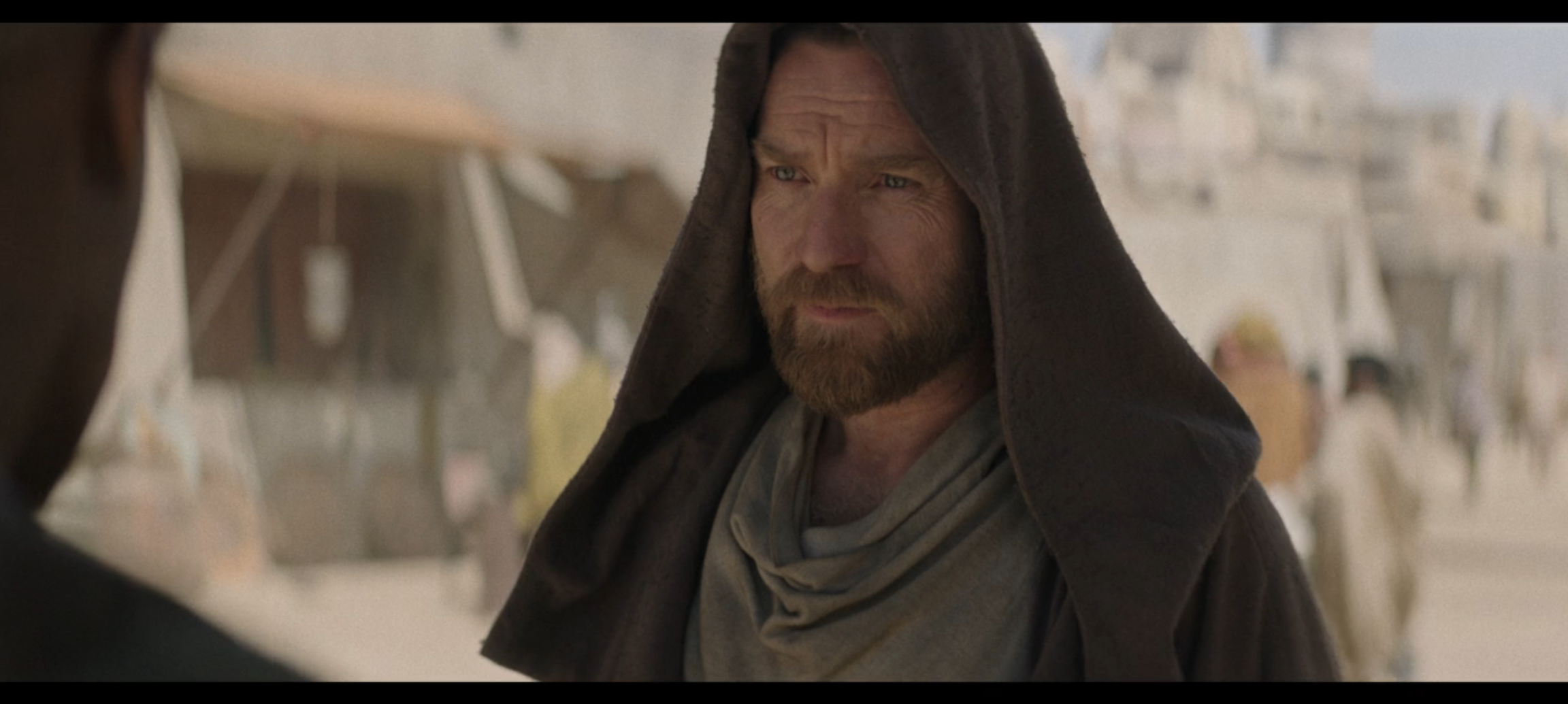
Review: Obi-Wan Kenobi debuts with prequel redemption in its scope
<img src="https://rassegna.lbit-solution.it/wp-content/uploads/2022/05/review-obi-wan-kenobi-debuts-with-prequel-redemption-in-its-scope.png" alt="Ewan McGregor shines in Obi-Wan Kenobi.”>
While the Disney+-ification of Star Wars has mostly been good for fans, last year’s The Book of Boba Fett saw the franchise move into a coasting period. It landed somewhere between The Mandalorian and Clone Wars without either the compelling, Western-homage atmosphere of the former or the fist-pumping fan service of the latter.
The best thing I can say about Obi-Wan Kenobi, whose first two episodes debuted last night on Disney+ (out of a six-episode series), is that it feels like its own distinct Star Wars show, perhaps somewhere closer to a 1970s detective procedural. You know the kind: The haggard cop is tired of this crap, hangs up the badge, says he’s moved on, yet is still stuck on a lingering failure that keeps him one hair-trigger pull away from getting back into the fight.
That formula needs the right lead actor and world-building team to get fans to watch another attempt at the formula—which, let’s be clear, isn’t that many steps away from how The Mandalorian ropes its lead into a life-changing adventure. Thankfully, Ewan McGregor remains on board as the titular character in Obi-Wan Kenobi—and sees him steer his Obi-Wan performance closer to the charm and gravitas of the character’s original actor, Sir Alec Guinness.
Enlarge/ Obi-Wan, seen here waking up terrified about his Midi-chlorian count. (Kidding. He’s reliving past Anakin-related trauma.)
I point to a “’70s procedural” vibe for an important reason, and it’s less of a criticism and more of a clarification. Obi-Wan Kenobi, only two episodes in, is in no way beholden to a single tone, and it can apparently flip on an episode-by-episode basis. Really, the series’ promotional flurry, full of intrigue-filled trailers and interviews with the likes of McGregor and Hayden Christiansen, has pulled off an incredible misdirect, as if Lucasfilm spent the last month telling fans, “This isn’t the plot you’re looking for.”
The spoiler-free way of telling it is that the first two episodes generally follow three plots: Obi-Wan’s personal journey, which has grown all the more somber 10 years after the events of Revenge of the Sith; a diametrically opposed hunt conducted by Inquisitors, eager to fulfill their Order 66 orders and kill all remaining traces of Jedi; and a previously unspoiled character introduction, which drags the other plotlines’ orbits together like a megaton magnet. In each case, the camera generally follows one major character, with a few peeks into other characters’ lives to help build the storytelling.
Obi-Wan Kenobi, seen hiding in his own series.
Kenobi’s point of view, through his macrobinoculars.
Joel Edgerton returns as Owen Lars (or, as you may better know him, Uncle Owen).
Disney / Lucasfilm
Things start slowly on the suns-scorched surface of Tatooine, where Obi-Wan has taken up residence since the events of Episode III, and most of the TV series’ trailers thus far have focused on this unsurprising event. Obi-Wan has built a life of solitude and routine, and the first overlong episode arguably spends a lot of time lingering on this—though such a focus is helped by an impeccably edited summary of the prequel trilogy’s events, meant to sear the seeming death of Anakin Skywalker into Obi-Wan’s brain. The series does a solid job clarifying that its audience must work through that trauma as much as Obi-Wan does, and this sells the moments when he’s forced to talk to anyone else on Tatooine and basically admit he’s not the Jedi he once was.
In other words: If you struggled with how a certain Jedi changed over the decades in a certain modern feature-length sequel, this slow-burn return to a lapsed Jedi’s struggles was probably made for you.
Yes, this review is vague—because it’s spoiler-free
Yet the third aforementioned plot, the one I’m leaving unspoiled, is a firm reminder that Lucasfilm wants to deliver for fans of the prequels, and it does so more on a tonal basis than in the form of cameos or other blink-and-you’ll-miss-it fan service. (Though there’s still plenty of that, which I generally blame on Dave “I co-created Clone Wars” Filoni making sure the world built in his CGI animated series gets lip service whenever it’s appropriate and tasteful.) Obi-Wan is eventually forced to confront his demons about working as a protector and guardian, something he’s clearly still screwed up about, and he needs a great co-lead to make this process both believable and fun to watch.
We absolutely get that as far as the casting and writing are concerned. Obi-Wan Kenobi‘s “new” character is sweet, touching, and believable in all the ways they need to be, and McGregor packs discomfort and trauma into negotiations with this co-lead while also jumping across rooftops and contending with comically one-dimensional foes.
The best thing about these first two episodes is how it makes space for very different characters to interact with each other in a slow-burn fashion—and how it gives audience members young and old alike the screen time and capacity needed to empathize with each. This is where I always felt like George Lucas failed with the prequels, as he was more keen on telling a jam-packed, lore-building story than buffering it with the relatable conflict, laughs, and cheese that bond us to the stars of an intergalactic journey.
Director Deborah Chow immediately delivers a better vision of balancing character development, drama, antics, and laughs inside a very prequel-adjacent universe, even if she’s clearly working within the constraints of a limited budget. Thus far, Obi-Wan Kenobi suffers a decent amount from constrained soundstages and reliance on green screen trickery to make environments look bigger and more alive than they really are. But, again, ’70s procedural stuff here. Slow burns over cinematic bombast. I’m okay with the trade—especially since Chow cleverly works around it by letting guest stars spread their wacky wings (which, again, I will not spoil here). McGregor is an incredible straight man in these scenes, and he delivers some of the series’ best laughs without cracking a single joke.
The Third Sister, ready to strike.
Grand Inquistor, as played by Rupert Friend, is on the Jedi hunt.
Sung Kang as Fifth Brother.
Disney / Lucasfilm
But this series is clearly steering away from laughs in one crucial aspect, as teased by the last seconds of the second episode. I’m looking forward to how that crucial moment of darkness will emerge and play off the prequel-like whimsy established thus far, and I’m optimistic based on how the two premiere episodes have already juggled darkness and light.
Ars Technica may earn compensation for sales from links on this post through affiliate programs.
https://arstechnica.com/?p=1857021
Disney+ drops teasers for Andor and Willow TV series at Star Wars Celebration
[embedded content]
Disney+’s forthcoming Andor series will focus on Rogue One‘s Cassian Andor.
Disney+ unveiled two teaser trailers for upcoming series at the Lucasfilm studio showcase panel during Star Wars Celebration in Anaheim, California, on Thursday. The first was for Andor, a 12-episode prequel series set five years before the events of Rogue One, starring Diego Luna as Cassian Andor. The other was for Willow, a new series intended as a sequel to the 1988 cult classic fantasy film of the same name, set decades after the events of the original film.
The streaming platform also confirmed that the much-anticipated Star Wars series Ahsoka will premiere in 2023, along with a new kid-centric series called Star Wars: Skeleton Crew, set during The Mandalorian‘s timeline and starring Jude Law. Also, the third season of The Mandalorian will premiere in February 2023, featuring the bounty hunter’s return to Mandalore with Grogu, as well as Katee Sackhoff reprising her S2 role as Bo-Katan Kryze. (Chances are she wants to retrieve the Darksaber that Mando won.)
Andor
We haven’t seen or heard much about Andor after the reveal of a behind-the-scenes teaser in December 2020 during Disney’s Investors Day. Andor has been described as a “tense nail-biting spy thriller,” with Tony Gilroy, who co-wrote Rogue One, serving as showrunner. It begins with the Empire’s destruction of Cassian Andor’s homeworld and will depict the birth of the Rebellion. According to Deadline Hollywood, Luna described Andor as “the journey of a migrant. That feeling of having to move is behind this story—that shapes you as a person. It defines you in many ways, and what you are willing to do.”
The Andor series will explore a new perspective from the Star Wars galaxy, focusing on Cassian Andor’s journey to discover the difference he can make. The series brings forward the tale of the burgeoning rebellion against the Empire and how people and planets became involved. It’s an era filled with danger, deception and intrigue where Cassian will embark on the path that is destined to turn him into a rebel hero.
The ensemble cast also includes Genevieve O’Reilly as Mon Mothma, a senator of the Republic who helped found the Rebel Alliance, as well as Forest Whitaker reprising his Rogue One role as Clone Wars veteran Saw Gerrera. Stellan Skarsgård and Adria Arjona co-star as the resistance fighters who recruit Andor to the cause. Kyle Soller, Denise Gough, Fiona Shaw, Robert Emms, and David Hayman have all been cast in undisclosed roles. Alan Tudyk was supposed to be returning as the reprogrammed Imperial droid K-2SO, but his appearance was scuttled during rewrites. The droid might meet up with Cassian during the second season, which is already in development and purportedly will lead directly into the events of Rogue One.
[embedded content]
Disney+ will also debut Willow in November, a series that serves as a sequel to the 1988 fantasy film.
Willow
We know much less about the Willow TV series, although fans of the film will be thrilled to hear that Warwick Davis is returning as the Nelwyn dwarf sorcerer Willow Ufgood. The original film was directed by Ron Howard, and it told the story of a child with a rune birthmark who was prophesied to bring about the downfall of the evil sorceress Queen Bavmorda. The child is set afloat on a grass raft and found by a village of little people (the Nelwyn). Willow leads a party to find a community of Daikini (tall people) to raise the baby. Many magical adventures ensued.
The Oscar-nominated 1988 film debuted to mixed critical reviews, but made a decent showing at the box office, earning $137.6 million globally—even though it never became the blockbuster hit producer George Lucas had hoped it would be. Lucas and Davis had discussed the possibility of a sequel series as early as 2005, but Disney+ didn’t give the project the green light until October 2020, with Howard on board as an executive producer.
Enlarge/ “If you call this a ‘low five,’ I swear to…”
The official synopsis describes the series as “an epic period fantasy series with a modern sensibility set in an enchanted land of breathtaking beauty”—so, very much in the same vein as the original film. It continues:
The story began with an aspiring magician from a Nelwyn village and an infant girl destined to unite the realms, who together helped destroy an evil queen and banish the forces of darkness. Now, in a magical world where brownies, sorcerers, trolls, and other mystical creatures flourish, the adventure continues, as an unlikely group of heroes set off on a dangerous quest to places far beyond their home, where they must face their inner demons and come together to save their world.
In addition to Davis, the case includes Erin Kellyman as a servant named Jade, who is training to become a warrior; Ruby Cruz as Jade’s friend Kit, a princess who assembles a party to rescue her twin brother; Ellie Bamber as a kitchen maid named Dove; and Amar Chadha-Patel as a thief named Boorman, who is promised his freedom in exchange for helping the party. Dempsey Bryk, Talisa Garcia, Ralph Ineson, and Rosabell Laurenti Sellers have been cast in undisclosed roles.
The first two episodes of Andor will debut on Disney+ on August 31, 2022, with new episodes airing weekly after that. Willow premieres on Disney+ on November 30, 2022.