Are we on the verge of an 8K resolution breakthrough in gaming?

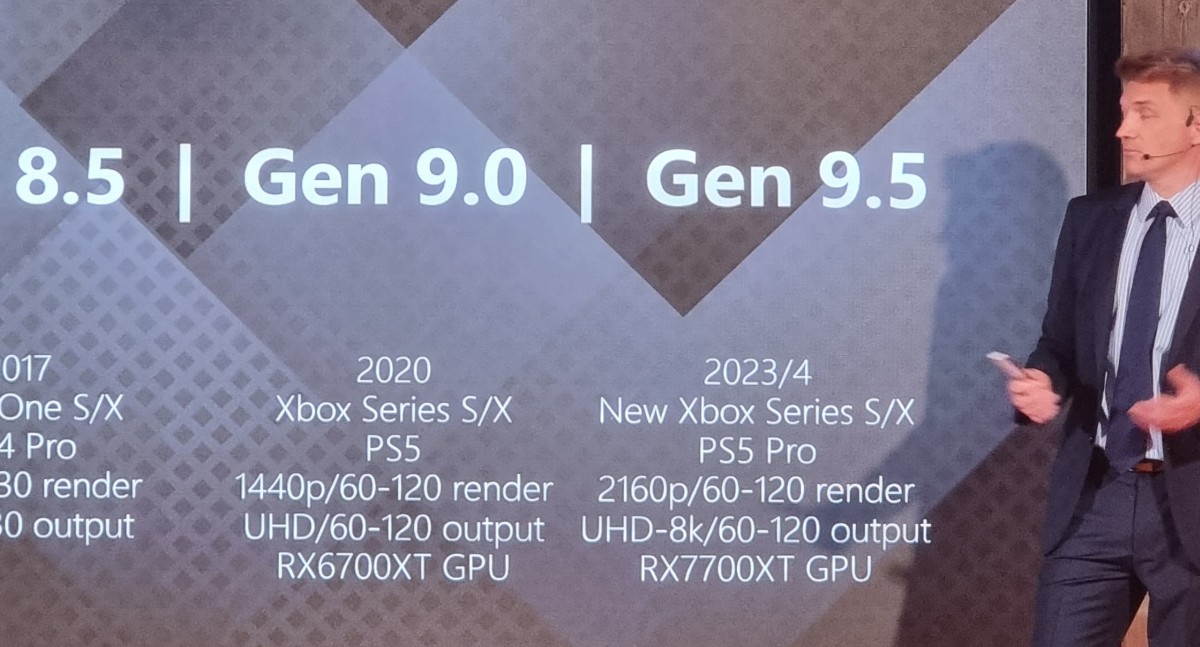
A slide from TV manufacturer TCL guesses at some details for the next micro-generation of high-end game consoles.
Enlarge / A slide from TV manufacturer TCL guesses at some details for the next micro-generation of high-end game consoles.


With the 2020 release of the Xbox Series X and PlayStation 5, we’ve started to see the era of console games that finally make full use of TVs capable of 4K resolutions (i.e., “Ultra HD” 3840×2160 pixels) that have become increasingly popular in the marketplace. Now, though, at least one TV manufacturer is already planning to support 8K-capable consoles (i.e., 7680×4320 resolution) that it thinks could launch in the next year or two.

Polish gaming site PPL reports on a recent public presentation by Chinese TV and electronics maker TCL. Tucked away in a slide during that presentation is a road map for what TCL sees as “Gen 9.5” consoles coming in 2023 or ’24. Those supposed consoles—which the slide dubs the PS5 Pro and “New Xbox Series S/X”—will be capable of pushing output at 8K resolution and up to 120 frames per second, according to TCL’s slide.

First off, there’s little reason to believe that a lesser-known TV manufacturer has leaked the first official word of Sony and Microsoft’s next console plans. As GamesBeat’s Jeff Grubb points out, you can tell TCL is speculating on console makers’ plans “because they put the information up in big letters on a stage. If the company knew what it was talking about, then it would be under a non-disclosure agreement.”

Still, speculation about a new mid-generation upgrade isn’t completely far-fetched. After all, it was four years after the Xbox One and PS4 launched that we saw the Xbox One X and PS4 Pro, which offered their own resolution bumps over their predecessor consoles.

Since we’re speculating anyway, it’s worth asking the question: Is there any real value in a console that can output at 8K resolution? And are gamers going to need to upgrade to an 8K-capable TV in the foreseeable future?

Diminishing returns

The answer to that first question depends largely on the screen size and the viewing distance for your gaming setup. Those variables determine the “angular resolution” of an image, i.e., how many pixels can be squeezed into each degree of your vision.

A person with 20/20 vision generally can’t discern visual details that measure smaller than 1/60th of a degree of angular resolution on their retina. Using that heuristic, display resolutions beyond 4K only become “worth it” for displays 65 inches and above if you’re sitting 4 feet or less from the screen, according to an analysis by RTINGS.com. That’s pretty cramped for most living rooms.

A graph showing where most people can discern a difference in different display resolutions, based on screen size and viewing distance.

More rigorous studies of how viewers perceive visual detail also suggest limited advantages in moving from 4K to 8K displays. TechHive’s Scott Wilkinson detailed one study in 2020, a double-blind test led by Warner Bros., which asked participants to rate the relative quality of a number of film clips rendered in both 4K and 8K. That test got results from nearly 140 participants with a variety of visual acuity levels sitting at either five or nine feet away from an 88-inch OLED screen.

The study set up a subjective scale for participants to rate the two different versions of each clip: “same” (0); “slightly better” (+1); “better” (+2); and “much better” (+3) (If the 4K clip was judged better, the results noted a negative value). On average, the participants rated the 8K clips just 0.252 points better than their 4K counterparts. While that is technically an improvement, it’s one that gets you only a quarter of the way to “slightly better” on the study’s subjective scale.

What’s more, a slight majority of participants watching six of the seven clips said both resolutions looked the same; they literally couldn’t tell the difference. A significant minority of participants also said the 4K image looked better, which could suggest they were guessing.

A slight majority of participants in a double-blind study saw no discernible difference between a 4K and 8K image video clips.
Enlarge / A slight majority of participants in a double-blind study saw no discernible difference between a 4K and 8K image video clips.

Who’s in the market?

Right now, 8K TVs are an expensive niche, with high-end displays running close to $30,000. Given that, and the relative dearth of 8K-ready content, it’s not surprising that manufacturers shipped fewer than 100,000 8K-capable TVs worldwide in the last quarter of 2021, according to Omdia Research. And while prices will no doubt come down, Omdia sees 8K sets in just over 2.6 million households worldwide by 2026, and “no convincing market demand of further 8K service development” worldwide.

In other words, we might finally be hitting the point where the law of diminishing returns will finally force console manufacturers and game makers to stop chasing more and more pixels as a selling point. But that doesn’t mean there’s no space for improved pixel densities in gaming. PC players, who routinely sit just a foot or two from increasingly large monitors, could probably benefit from at least one more doubling of the linear pixel density in their displays.

And let’s not forget VR displays, which routinely sit just a couple of inches from the player’s eyes. Oculus founder Palmer Luckey told Ars back in 2013 that a VR headset would need to generate an 8K “per eye” resolution “to get to the point where you can’t see pixels. And to get to the point where you couldn’t see any more improvements, you’d need several times that.” How’s that for a “retina display”?

Listing image by RTING.com

https://arstechnica.com/?p=1856740


Sony estimates its PC games sales will jump 375% over next year

Sony estimates its PC games sales will jump 375% over next year
Andrew Cunningham / Sam Machkovech

Sony’s latest financial forecasts, tucked into a Wednesday presentation to investors, saw the company disclose plenty about its varied tech and entertainment platforms. Still, the presentation had a ton to say about its gaming space. Deservedly so: Sony’s “game and network services segment” drove a whopping $25.1 billion in global sales of hardware, software, and other products during the company’s “fiscal year ’21” ending in March 2022. (Microsoft won’t have its forecast available until its fiscal year closes in June; its gaming division reported $15.37 billion in sales for the 2020 fiscal year in June 2021.)

While perusing the company’s presentation, which combined present-day numbers with forward-looking estimates, one page stood out: “exponential growth” coming to its slate of games for PCs. The result is arguably Sony’s most bullish admission of how many Sony games, including previous PlayStation exclusives, could land on PCs in the next nine months.

$300 million, spread over how many games?

<a href="https://cdn.arstechnica.net/wp-content/uploads/2022/05/sony-pc-port-chart.png" class="enlarge" data-height="637" data-width="1150" alt="This slide, as provided by Sony, doesn't clarify an important detail, but SIE president Jim Ryan later confirmed that these estimates do not account for sales of either Destiny 2 or its DLC.”><img alt="This slide, as provided by Sony, doesn't clarify an important detail, but SIE president Jim Ryan later confirmed that these estimates do not account for sales of either Destiny 2 or its DLC.” src=”https://rassegna.lbit-solution.it/wp-content/uploads/2022/05/sony-estimates-its-pc-games-sales-will-jump-375-over-next-year-1.png” width=”980″ height=”543″>
Enlarge / This slide, as provided by Sony, doesn’t clarify an important detail, but SIE president Jim Ryan later confirmed that these estimates do not account for sales of either Destiny 2 or its DLC.
Sony Interactive Entertainment

There’s no way for Sony to reach its sales estimate for FY22 without more new games—and lots of them. Its past two fiscal years of PC game sales total roughly $115 in revenue, driven by three ports of previous PlayStation 4 exclusives onto Windows: Horizon Zero Dawn, Days Gone, and God of War (2018).

Yet Sony insists that its next fiscal year will end with $300 million in PC game sales—a 375 percent jump year-over-year and nearly triple the past two years of combined PC game sales. That bold estimate only gets more audacious when we clear up an obvious question: No, Sony is not including sales of Destiny 2, which was developed by Sony’s recently acquired studio Bungie, as part of this estimate.

Instead, Sony Interactive Entertainment president Jim Ryan indicated that this drive would be fueled in part by the previously announced PC port of Uncharted: Legacy of Thieves Collection (including both Uncharted 4 and its semi-sequel The Lost Legacy), along with two “unannounced” games. Ryan did not clarify whether the two games in question are merely unannounced ports of existing PlayStation console games or whether they may be entirely new games or franchises slated to simultaneously launch on PC and PlayStation.

Either way, in the short term, SIE has yet to release a PC game in its modern push that has exceeded $40 million in revenue in a single calendar year. Its three most recent PC ports have arguably entered a downward trajectory of reduced revenue. If we want to be particularly optimistic about per-game revenues, SIE would need no less than five new PC game launches, all selling at gangbuster levels, to get near its bullish estimate.

Nvidia’s 2021 dollop of tea leaves, newly examined

Bizarrely, the best resource we can turn to about potential Sony PC ports comes from the infamous “Nvidia leak,” which included stub entries posted on Nvidia’s GeForce NOW servers in September 2021 (and more in November). The leak had some truth to it, confirming wholly unannounced fare like the Grand Theft Auto Definitive Trilogy and Ruined King: A League of Legends Story. It also included two of Sony’s eventually announced PC ports.

The remaining games from that September 2021 list, in alphabetical order:

  • Demon’s Souls
  • Déraciné
  • Ghost of Tsushima
  • Gran Turismo 7
  • Helldivers 2
  • Horizon Forbidden West
  • “Ratchet and Clank” (no subtitle clarifying which sequel)
  • Returnal
  • Sackboy: A Big Adventure

Notice that the list skips PlayStation-exclusive franchises, like Marvel’s Spider-Man and The Last Of Us, in favor of unexpected titles like a From Software PlayStation VR exclusive and an unannounced sequel to a 2015 twin-stick shooter. In other words, it isn’t a catch-all list of top-selling console exclusives. Yet it’s still unclear exactly which of these had been formally submitted to Nvidia by Sony as planned PC ports and which, if any, were given Nvidia stub pages out of mere speculation.

Two games from that list, Returnal and Ghost of Tsushima, also appeared in a November Github leak of potential PC game launches sourced from Nvidia servers—though, at the time, those two games had PC port dates that have since come and gone. While Sony and Nvidia can claim plausible deniability about these lists, it’s tempting to re-read them as a path toward accruing $300 million in single-year revenue—even if its inclusion of recent PS5 exclusives raises our eyebrows. (On the other hand, Sony’s obnoxious decision to link Gran Turismo 7 to an always-online server structure would at the least pave its high-speed track toward PCs.)

However Sony’s PC porting plans shake out over the next year, it planted seeds for its bullish growth when it acquired the PC game-porting powerhouse Nixxes nearly one year ago. More interesting in the frame of this week’s PC revenue estimates, it’s worth noting that we still haven’t seen the fruits of that acquisition, as Nixxes didn’t contribute to the development of the God of War (2018) port that launched earlier this year.

The rest of the presentation teases further growth in PC game sales in the years to come, along with an equally bullish push for new games on smartphone platforms. By 2025, SIE estimates that half of its game-launch output will be on PlayStation 5, with the other half split roughly 60/40 between PC and mobile platforms, respectively. It also sees the publisher, which has primarily focused on one-off triple-A games during the PlayStation 4 era, announce its intent to release far more “live service” games, with two unannounced games coming by the end of FY22 and roughly 12 being operated by Sony by the end of FY25.

https://arstechnica.com/?p=1856598


Big-budget The Lord of the Rings: Gollum video game gets a 2022 release date

It’s been quite a while since we’ve had a new, triple-A Lord of the Rings game, but that’s going to change on September 1, according to developer and publisher Daedalic Entertainment.

“Story-driven action-adventure game” The Lord of the Rings: Gollum will ship this fall on PC, PlayStation 4, PlayStation 5, Xbox One, and Xbox Series X|S. A Nintendo Switch version will arrive later in the year. Announced in 2019, the game was initially planned for a 2021 release, but it was delayed to 2022, and this is the first time we have a firm date for it.

Based on a gameplay video released last year, The Lord of the Rings: Gollum appears to be a stealth game like Assassin’s Creed, Splinter Cell, or Metal Gear Solid. Like Assassin’s Creed, it will involve a fair bit of climbing and platforming. But unlike recent stealth games, it will be a linear affair rather than an open world. It follows the (mostly) untold story of Gollum’s activities during the book The Fellowship of the Ring, when Frodo and company were traveling from The Shire eastward to Rivendell, Moria, and beyond.

[embedded content]
This new cinematic trailer accompanied the release date announcement.

Whether you’re a fan of the books, the movies, or some other iteration, one of the most interesting aspects of Gollum’s character has always been the internal conflict between Smeagol, the pitiful individual who found the One Ring, and Gollum, the alter-ego whose corruption and malice is driven by the ring. It seems that will play out in the game, too, with the player having to make choices between what Smeagol or Gollum wants. Those choices will change how the titular character’s story plays out in the long run.

The last triple-A video game set in Middle-earth was 2017’s Middle-earth: Shadow of War, a sequel to 2014’s Middle-earth: Shadow of Mordor. The two games in that series also took heavy inspiration from Assassin’s Creed, albeit more on the combat and open-world side than the stealth side. But neither prominently featured characters from The Lord of the Rings books, and some players felt they didn’t really reflect the spirit of Tolkien’s work.

The Lord of the Rings: Gollum appears to be a bit of a wild card. Daedalic, the studio working on it, is best known for 2D, point-and-click adventure games and other smaller titles, not 3D stealth-action games. And initial impressions on gaming sites to a 20-minute gameplay demo shown last week behind closed doors seem mixed.

But we’ll all find out come September whether this game recaptures that long-lost The Lord of the Rings magic. Daedalic certainly seems to have high hopes for it—it launches the day before Amazon’s new, live-action The Lord of the Rings prequel TV series premiere.

Listing image by Daedalic Entertainment

https://arstechnica.com/?p=1856182


Top Gun: Maverick spoiler-free review: A worthy return to the danger zone

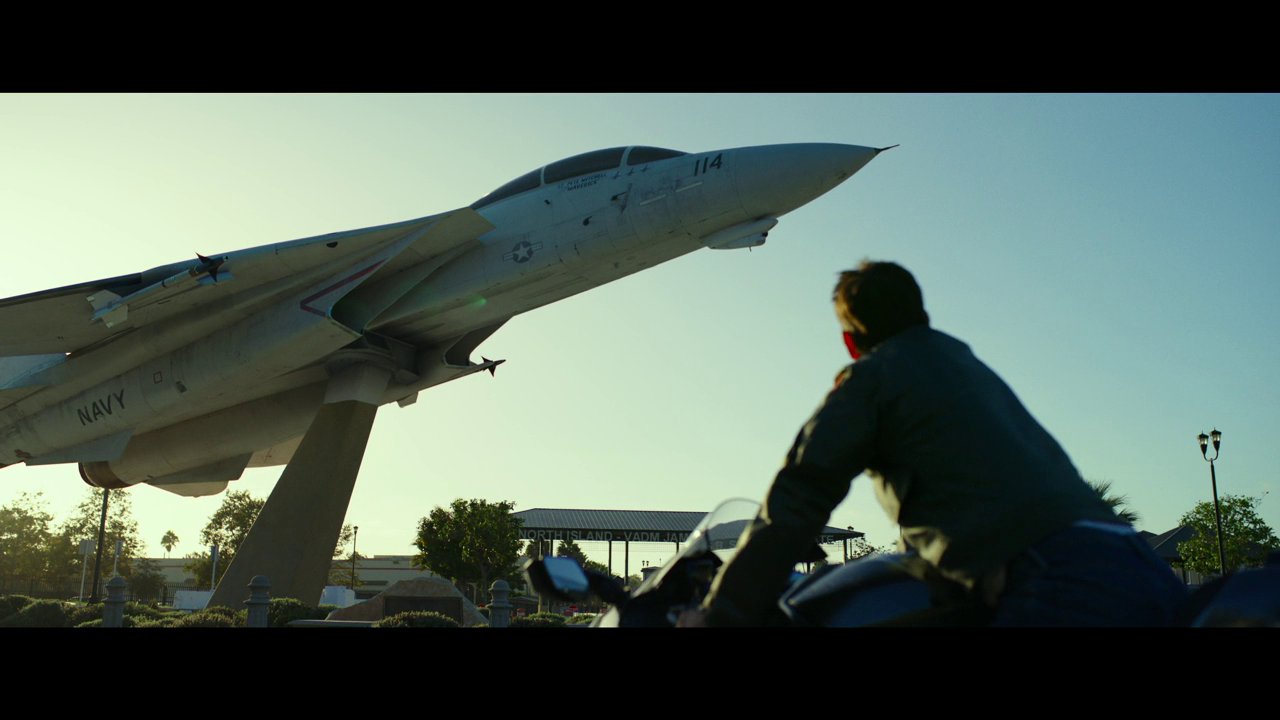
Tom Cruise, still crazy after all these years.
Enlarge / Tom Cruise, still crazy after all these years.
Skydance Productions

As I walked out of my review screening of Top Gun: Maverick, coming down from its adrenaline-filled finale, a small part of my brain began looking for dents in the film’s armor. Maybe it’s the critic in me, but my thoughts didn’t need long to land on stuff from the original film—a plot point, a stylistic choice, a particular character—that didn’t return this time.

I chewed on those thoughts for a second, but before I could lose myself in cataloging them at length, a sensation came over me. It landed like a massive G-force blast, as if I were a jet fighter pilot attempting a seemingly impossible climb: one of great satisfaction with this sequel and admiration that this film pulled off the impossible feat of adhering to the old while doing something new.

Returning to old haunts.
Enlarge / Returning to old haunts.
Skydance Productions

The series’ predilection for steering military theater toward Hollywood-style silliness is arguably more tolerable, as tempered by a savvy script and cutting-edge stunt work. The character development hits important notes for both Pete “Maverick” Mitchell and the people in his high-speed orbit, and the film’s focused supporting cast mostly hits the mark.

Perhaps most important of all, an aging-yet-excited Tom Cruise never steps beyond his pay grade. The Top Gun star of roughly 35 years ago ruled movie theaters for different reasons than the man he is today, yet this film never sees his character Maverick betray his beloved traits or feel like an old man faking like a 20-something hotshot.

A few of the series’ moving parts have been jettisoned so many years later, and lifetime fans of the film will definitely notice them. But Top Gun‘s core tenets—incredible fighter-jet combat, enjoyable cheese, and the big-grin smile of Cruise—have returned in arguably finer form than the original.

“Don’t think, just do”

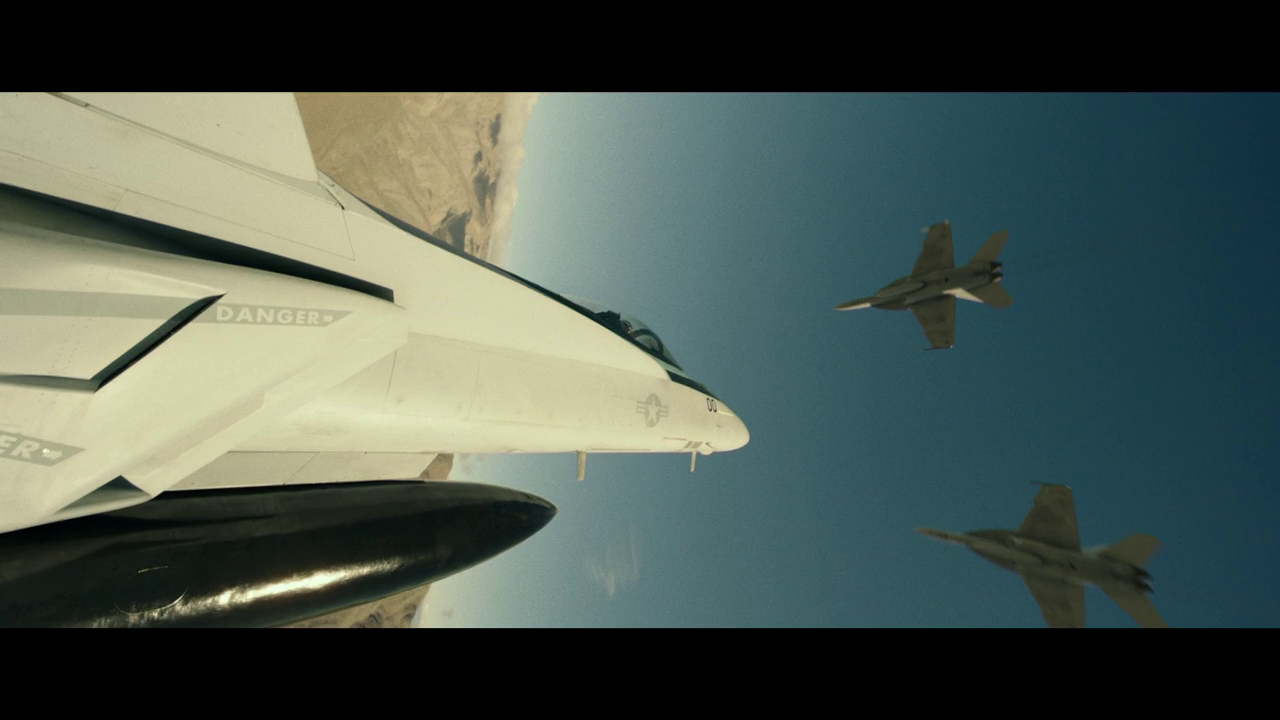
Skydance has only released traditional theater ratio footage of the film for consumption outside of theaters, so you'll have to trust me when I say that shots like this look doubly incredible inside a 16:10 ratio container.
Enlarge / Skydance has only released traditional theater ratio footage of the film for consumption outside of theaters, so you’ll have to trust me when I say that shots like this look doubly incredible inside a 16:10 ratio container.
Skydance Productions

Top Gun: Maverick has the added benefit of looking incredible on a large screen, and it’s perhaps the best IMAX format showcase of the past five years. Cruise and co. were clearly eager to take cinematic air combat to the next level, and there’s no getting around it: If you have to stitch three hospital-grade masks together or rent out a private room to feel comfortable in a public movie theater in 2022, you should consider doing so for this film.

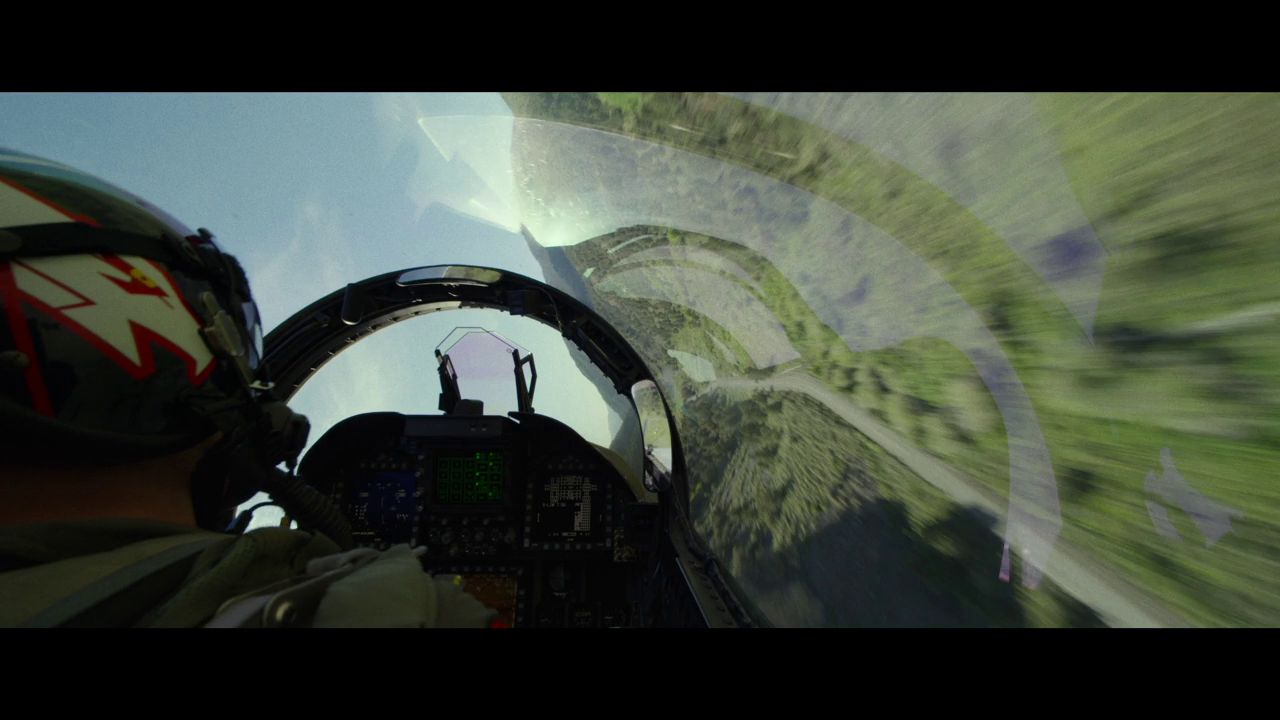
Every major flight scene includes per-cockpit camera rigs that emphasize the added height of IMAX’s 16:10 ratio, and in these moments, flying is choreographed to let this camera angle showcase Top Gun-caliber stuff. You might see another plane in view, or vapor trails, or dumped flares dancing and billowing smoke, or a glancing shadow of the jet against the Earth’s surface because the F/A-18 Hornet is actually flying that freaking low in real life. In these moments, the actors don’t hesitate to explode with emotion, whether shrinking back or splashing their palms on the cockpit glass that extends across the entire IMAX screen.

<a href="https://cdn.arstechnica.net/wp-content/uploads/2022/05/topgunmav04.png" class="enlarge" data-height="720" data-width="1280" alt="In Top Gun: Maverick, all buzzing is essential—and it’s always portrayed with incredible detail.”><img alt="In Top Gun: Maverick, all buzzing is essential—and it’s always portrayed with incredible detail.” src=”https://rassegna.lbit-solution.it/wp-content/uploads/2022/05/top-gun-maverick-spoiler-free-review-a-worthy-return-to-the-danger-zone-3.png” width=”980″ height=”551″>
Enlarge / In Top Gun: Maverick, all buzzing is essential—and it’s always portrayed with incredible detail.
Skydance Productions

Top Gun: Maverick spends a lot of time in this perspective, so it’s good to see the stunt teams and cinematographers repeatedly strike a hot beach volleyball high-five over this collaboration. Yet the crew also makes up for lost time since the first film was made by letting external cameras, including expertly staged drones, linger over death-defying flight sequences or use wide-angle shots to show how foolishly close its stunt flyers zip past each other. The 1986 style of hard camera cuts to stitch together a shot-down bogey are done. This time, we get to watch full dogfights that lead up to each climactic kaboom.

Really, the lengths to which this film goes to favor real-life stunts over green-screen trickery is incredible. Everyone will have a different favorite on this front, but mine is a dramatic fly-by somewhat early in the film that I won’t spoil for you, except to say that it was reportedly filmed with actors taking the real-life brunt of its buzz. You’ll know it (and feel it) when you see it.

My only shoulder-shrug about the air-combat content comes from a few CGI-filled briefings. In each of these, commanding officers point at holograms and break down each step of a mission or exercise—as if Cruise insisted that this film resemble the Mission: Impossible series in one way or another. While these moments are tolerable, I felt they were explanation overkill that took time away from getting the film’s cameras up into the danged skies.

https://arstechnica.com/?p=1855941


Gorr the God Butcher is coming for Thor in new Love and Thunder trailer

[embedded content]
Marvel Studios released the official trailer for Thor: Love and Thunder during Game 4 of the NBA Eastern Conference finals.

With the film’s release mere weeks away, Marvel Studios finally released the official full trailer for Thor: Love and Thunder last night during Game 4 of the NBA Eastern Conference finals.

As I’ve reported previously, Thor: Ragnorak director Taika Waititi signed on for the fourth installment of the Thor films in 2019, adapting elements from the Mighty Thor comic books by Jason Aaron. (He’d read them while making Ragnarok.) That storyline follows Jane Foster being diagnosed with breast cancer and eventually becoming the Mighty Thor. Natalie Portman, who plays Foster in the franchise, has said both those elements will be in the film. (The Internet was abuzz when set photos of Portman leaked in March 2021, showing just how much muscle the diminutive actress had gained for the role.)

Per the official synopsis:

The film finds Thor (Chris Hemsworth) on a journey unlike anything he’s ever faced—a search for self-discovery. But his retirement is interrupted by a galactic killer known as Gorr the God Butcher (Christian Bale), who seeks the extinction of the gods. To combat the threat, Thor enlists the help of King Valkyrie (Tessa Thompson), Korg (Taika Waititi) and ex-girlfriend Jane Foster (Natalie Portman), who—to Thor’s surprise—inexplicably wields his magical hammer, Mjolnir, as the Mighty Thor. Together, they embark upon a harrowing cosmic adventure to uncover the mystery of the God Butcher’s vengeance and stop him before it’s too late.

Also joining forces with Thor are the Guardians of the Galaxy: Chris Pratt as Peter Quill/Star-Lord; Pom Klementieff as Mantis; Dave Bautista as Drax the Destroyer; Karen Gillan as Nebula; Vin Diesel voicing Groot; and Sean Gunn as Kraglin Obfonteri, the former second-in-command of Yondu. Jeff Goldblum will reprise his role as the Grandmaster, ruler of the planet Sakaar. Melissa McCarthy will play Hela, and Russell Crowe will make a cameo appearance as Zeus.

Two Thors are better than one.
Enlarge / Two Thors are better than one.
YouTube/Marvel Studios

Marvel released a teaser last month that focused on Thor getting his “god bod” back and embarking on the aforementioned journey of self-discovery. We also got a hint of a battle involving the Guardians of the Galaxy. The clear highlights were an uber-buff Portman wielding Mjolnir as the Mighty Thor in the final frame and a glimpse of the “Goat Boat” (introduced in February as an official LEGO set), pulled by two goats named Toothgnasher and Toothgrinder.

But we didn’t see any of the film’s big bad, Gorr the God Butcher. The comics’ Gorr has a deadly cloak of tendrils and wields the god-killing All-Black the Necrosword, forged by the same primordial deity who created the symbiotes who eventually became Venom. His vendetta against the gods has its roots in the loss of Gorr’s entire family; when he denied the gods’ existence in his grief, his tribe cast him out. After snagging the dark god Knull’s sword, he became the God Butcher until Thor defeated him.

Our first look at Christian Bale as Gorr the God Butcher.
Enlarge / Our first look at Christian Bale as Gorr the God Butcher.
YouTube/Marvel Studios

In the trailer, we briefly see Gorr emerging from what appears to be swirls of black tendrils, but he is clad in deathly white elsewhere—an entirely suitable look given his sworn mission. In fact, he’s depicted primarily in gray tones even in scenes with other characters, who are shown in full color to make the contrast more stark. The only time we see Gorr in color is in a scene clearly depicting the origins of his vendetta. “The only ones who gods care about is themselves,” he declares. “So this is my vow. All gods will die.” One presumes his vow includes Zeus and the Olympians, which might explain their presence in the film.

The rest of the trailer focuses on Thor’s reunion with Jane in her new Mighty Thor incarnation, cleverly set up by Korg telling a tribe of children a campfire story about Thor the Space Viking. Thor has clearly missed Jane more than she missed him; he’s counted their time apart down to the day. But he refuses to admit as much to Valkyrie, even as he admires Jane’s new fighting prowess. We see Valkyrie battling Gorr, but it’s the showdown with Thor that will likely be the film’s climax. “You are not like the other gods I’ve killed,” we hear Gorr say, presumably to Thor. The latter replies, “Because I have something worth fighting for.”

Zeus (Russell Crowe) flicks a bit too hard.
Enlarge / Zeus (Russell Crowe) flicks a bit too hard.
YouTube/Marvel Studios

Of course, we get some much-needed comic relief when Thor, Valkyrie, Jane, and Korg visit Zeus’s realm among the Olympians. Zeus attempts to remove Thor’s disguise with a flick, but he flicks a bit too hard, and all Thor’s clothing flies off. The Space Viking is left standing naked in chains, his butt tastefully blurred out for trailer purposes. “Should we help him?” Jane asks Valkyrie. “I mean, eventually,” Valkyrie replies, offering her pal a grape.

Thor: Love and Thunder hits theaters on July 8, 2022.

Marvel Studios

Listing image by YouTube/Marvel Studios

https://arstechnica.com/?p=1855978


The kids are older and not all right in final Stranger Things S4 trailer

[embedded content]
Netflix has dropped the final trailer for Stranger Things S4 (Volume 1).

The fourth season of Stranger Things is almost here—at least the first seven episodes since the release is split in two. So Netflix released a spooky final trailer, chock full of 1980s horror tropes, on the heels of the revelation last month that the season’s Big Bad will be a Dungeons and Dragons villain named Vecna.

We’ve previously reported that David Harbour is returning as Hopper, along with the rest of the main cast. Winona Ryder (Joyce Byers), Finn Wolfhard (Mike Wheeler), Natalia Dyer (Nancy Wheeler), Noah Schnapp (Will Byers), Charlie Heaton (Jonathan Byers), Gaten Matarazzo (Dustin Henderson), Joe Keery (Steve Harrington), Caleb McLaughlin (Lucas Sinclair), and Sadie Sink (Max Mayfield) all return.

We also know the fourth season is the first to mostly occur outside of Hawkins since Eleven and the Byerses have moved away, and Hopper is in a Russian prison. Maya Thurman Hawke returns as Robin, Brett Gelman is back as Murray Bauman, Cara Buono returns as the Wheeler matriarch, and we’ll be seeing more of Priah Ferguson, who plays Lucas’ sassy younger sister, Erica. Robert Englund of Nightmare on Elm Street fame is among the new cast members, a nice little nod to classic ’80s horror. Englund plays Victor Creel, the former owner of the spooky Creel House featured in one of the teasers.

S4 is the longest season yet in terms of running time; not one of its nine episodes runs less than an hour. (Prior seasons had the occasional shorter 35- to 45-minute episode, and episodes only rarely ran past one hour.) Because the main characters have been split up, three distinct storylines must be woven together, prompting the Duffer brothers to call S4 their “Game of Thrones season.” The sheer length of the run times prompted the brothers (with the concurrence of Netflix) to release S4 in two installments.

The Duffer brothers also revealed there would be a new monster for the gang to battle: the aforementioned Vecna. Per Collider:

In D&D lore, Vecna was a once-powerful wizard who became a lich after becoming undead. He was eventually destroyed, with only his left hand and left eye surviving his death. Over time, even after being killed, he achieved godhood, but his hand and eye remained missing, becoming powerful relics for those adventurers who would seek to wield them for themselves.

So Vecna should be a formidable foe. The full trailer dropped last month. It was set to Journey’s “Separate Ways (Worlds Apart)” and brought full-blown Lovecraftian horror vibes that made us keen to see what this new season has in store. Among other highlights, we got a spooky house with a mysterious grandfather clock, spontaneous levitation, an eyeless old man, and a brief glimpse of a grotesque humanoid figure sprouting the oozing tentacles that serve as the calling card of the Upside Down.

The new trailer brings more of the same energy, opening on an other-dimensional scene drenched in red hues as a voice declares, “It’s time. Don’t try to be heroes.” This voice is presumably Vecna. Even though they’re told there’s no shame in running, that’s not what our plucky crew is all about, and they’re certainly not going to start now. Even if Eleven lost her telekinetic powers in the S3 finale, and the members live in different parts of the country, they’re still a team. But there’s still time for the geeky humor we’ve come to love as Dustin braves 20 to 1 odds with a roll of the dice in a game of Dungeons and Dragons.  (“Never tell me the odds.”)

The first seven episodes of Stranger Things S4 drop on Netflix on May 27, 2022. The final two episodes will become available on July 1, 2022. It’s an odd way to divide the fourth season, but we’ll be watching.

Listing image by YouTube/Netflix

https://arstechnica.com/?p=1855887


Mission: Impossible–Dead Reckoning trailer teases Ethan Hunt’s swan song

[embedded content]
Tom Cruise and his plucky team are back to save the world (again) in Mission: Impossible–Dead Reckoning Part One.

The official trailer for Mission: Impossible–Dead Reckoning Part One (aka Mission: Impossible 7) is here and chock-full of the kind of global intrigue and jaw-dropping stunts fans have come to expect from this hugely successful franchise. The trailer was shown in April exclusively at CinemaCon and the intent was to release it this coming weekend when the highly anticipated Top Gun: Maverick finally (finally!) hits theaters. But an online leak supposedly forced Paramount’s hand, so we get to see star Tom Cruise drive his motorcycle off a cliff a week early. We’ll have to wait until next summer, however—that’s 2023—to see the film.

(Mild spoilers for previous films in the franchise below.)

Launched in 1996 with the first Mission: Impossible, the franchise is one of the highest-grossest film series, with a combined global box office take of more than $3.5 billion so far. The first film was set six years after the 1988-1990 TV series, itself a sequel to the original TV series that ran from 1966 to 1973. Cruise’s character, Impossible Missions Force (IMF) agent Ethan Hunt, was framed for the murder of his team during a botched mission and falsely accused of selling government secrets to an arms dealer. Over the course of the film, he unmasked the real culprit and cleared his name.

Five more films followed, most recently 2015’s Rogue Nation and 2018’s Fallout, both directed by Christopher McQuarrie, who also helms Dead Reckoning Parts One and Two. (McQuarrie won an Oscar for his screenplay for The Usual Suspects, and also directed Cruise in 2012’s Jack Reacher.) Both of the recent Mission: Impossible films were box office hits, grossing $682 million and $791 million globally, respectively. Fallout was also the most critically acclaimed, with many considering it the best installment in the franchise. So fans were thrilled when McQuarrie signed on to write and direct the seventh and final installments.

Getting the team back together: Benji (Simon Pegg), Luther (Ving Rhames), Isla Faust (Rebecca Ferguson), and Ethan Hunt (Tom Cruise)
Enlarge / Getting the team back together: Benji (Simon Pegg), Luther (Ving Rhames), Isla Faust (Rebecca Ferguson), and Ethan Hunt (Tom Cruise)

Paramount originally intended for both parts of Dead Reckoning to be filmed back-to-back but scuttled that plan by early 2021. The production was delayed repeatedly due to the COVID-19 pandemic. (A recording of Cruise shouting at crew members for violating COVID protocols on set—hence risking even more costly delays—went viral in December 2020.)  There was also a fire on a motorcycle stunt rig during filming in Norway, and a dispute over whether or not McQuarrie would be able to blow up a 1908 bridge in Poland for a pivotal action sequence involving a train wreck. The scene was ultimately filmed on a set built in an abandoned quarry.

Ving Rhames and Simon Pegg will reprise their respective roles as IMF computer technician Luther Stickell and IMF technical field agent Benji Dunn, while Rebecca Ferguson will be back as former MI6 agent Ilsa Faust, her character in Rogue Nation and Fallout. Dead Reckoning is meant to be the swan song of Cruise’s Ethan Hunt, so we’ll also see the return of Henry Czerny’s Eugene Kittridge, the former IMF director in the first Mission Impossible film. Angela Bassett—who played Fallout‘s CIA director—had originally signed on to return as Erika Sloane, but COVID-19 travel restrictions scuttled that plan.

Hayley Atwell joins the cast as Grace.
Enlarge / Hayley Atwell joins the cast as Grace.
YouTube/Paramount Pictures

Cruise still insists on doing many of his own stunts, including that infamous motorcycle scene featured at the end of the trailer. (We don’t see how he survives, but survive he must, given the existence of Part Two.) The cast also includes Hayley Atwell as Grace; Vanessa Kirby as Alanna Mitsopolis, aka the White Widow, a black market arms dealer who is the daughter of the villain “Max” in the first film; Frederick Schmidt as Alanna’s brother Zola Mitsopolis, who acts as her enforcer; and Shea Whigham as Jasper Briggs.

Rob Delaney, Indira Varma, Mark Gatiss, Cary Elwes, Charles Parnell, Pom Klementieff, Lampros Kalfuntzos, and Greg Tarzan Davis will also appear in as-yet undefined roles. There’s not much indication of the plot, but we can assume that the Big Bad—played this time around by Esai Morales—will have a fiendish plot to destroy and/or dominate the world, and Ethan and his plucky IMF team and allies will fight like hell to foil him.

Rebecca Ferguson's Ilsa Faust sports a killer eye patch after an unfortunate incident involving space debris.
Enlarge / Rebecca Ferguson’s Ilsa Faust sports a killer eye patch after an unfortunate incident involving space debris.
YouTube/Paramount Pictures

The trailer opens with a lone figure on horseback galloping across a desert, before cutting to quick scenes around the globe—including the obligatory nightclub scene featuring scantily clad gyrating bodies. There are car chases, gunfights, a boat ride in Venice, Ethan and the Big Bad fighting on top of a speeding train, and the release of a deadly gas—everything you want from a spy action flick. “Your days of fighting for the so-called greater good are over,” we hear Czerny’s Kittridge tell Ethan, adding that it’s time to choose a side.  ‘You’re fighting to save an ideal that doesn’t exist. Never did.” I’m guessing Hunt will fight for that elusive ideal anyway.

Mission: Impossible–Dead Reckoning Part One hits theaters on July 14, 2023. Part Two began filming in March and currently is slated for release on June 28, 2024.

Listing image by YouTube/Paramount Pictures

https://arstechnica.com/?p=1855695


Review: New Chip ‘N Dale movie hilariously spoofs classic games, cartoons

When there's danger!
Enlarge / When there’s danger!

Traditionally, when Disney films skip theaters and go straight to video, it’s not a good sign. That has changed somewhat now that the Disney+ content beast needs to be fed, yet the company still differentiates between “triple-A television” like The Mandalorian and “cheap, kid-friendly movies” like the Air Bud series.

Hence, today’s Disney+ premiere of Chip ‘N Dale: Rescue Rangers—a PG-rated reboot with little in the way of advance press screenings—had us assuming the worst, despite its comedy pedigree. The Lonely Island (“Lazy Sunday,” “Mother Lover”) is all over the film’s credits, but how much of the group’s boundary-pushing Saturday Night Live work could survive the family-friendly demands of a straight-to-Disney+ launch?

I’m here with surprisingly good news. Chip ‘N Dale is a self-aware comedy romp that families will appreciate. What’s more, it knows exactly when and how to toy with ’80s and ’90s gaming, cartoon, and pop-culture references without losing character development and physical comedy.

Time-to-male-strippers: Only a few minutes (but PG-rated, we swear)

As far as the two characters' aesthetics are concerned, even rendering of elements like motion blur is different between the pair. The result looks pretty cool in motion.
Enlarge / As far as the two characters’ aesthetics are concerned, even rendering of elements like motion blur is different between the pair. The result looks pretty cool in motion.

The film is Disney’s best-ever hybrid of live-action, CGI, and hand-drawn animation, with lead characters Chip (voiced by John Mulaney) and Dale (voiced by Andy Samberg) each offering different spins on modern animation. Chip combines 3D rendering with a cel-shaded filter, hand-drawn touches, and intentionally narrowed animation speeds in order to look like a living 2D cartoon, complete with tasteful touches of ambient occlusion and light-bounce rendering.

Dale, as part of a running gag in the film, has gotten “CGI surgery” and emerges as a fully 3D-rendered chipmunk. The film begins by zooming in on his disproportionate eyes and other uncanny-valley weirdness for comedic effect, but this quickly softens, and as the film barrels toward emotional, kid-friendly connections between the chipmunks, Dale eventually looks quite good, with his animated, glossy eyes standing out.

Mild spoilers ahead, but we’re being mindful of how easily spoiled some of the gags in this film are.

Samberg’s opening narration suggests that the phrase “Chip ‘N Dale” is likely to remind viewers of a few things—and it then flashes a PG-rated image of male strippers. The film’s script and visual gags do a masterful job of making similar above-kids’-heads references or blink-and-you’ll-miss-them jabs at the gaming and cartoon worlds.

The film’s most howl-worthy stuff skewers beloved Disney properties and Disney rivals alike. So much so, in fact, that I watched the entirety of the credits to see exactly who got thanked for allowing their biggest franchises to be either passive-aggressively mocked or outright, er, melted in this film. Though a few gags reach back to the earliest days of Disney’s film catalog, a majority will land for any parents in the room who grew up in the Gen-X or elder millennial camps. That’s probably not surprising for a film whose lead characters hail from the “Disney Afternoon Collection” of late ’80s characters. If you can imagine a cartoon that emerged or competed with Disney around that time, it’s likely to appear here in either obvious or subtle ways.

The duo, seen here finishing each other's... sandwiches.
Enlarge / The duo, seen here finishing each other’s… sandwiches.

Mulaney and Samberg each double down on the archetypes of their two characters: Chip is brainy and assertive as a leader but also a stick-in-the-mud about pushing boundaries, while Dale favors impulsive and goofy solutions to serious problems, albeit while stomaching some raging insecurities. We get to see each lead character move on from early ’90s fame to their “adult” lives for the next 25 years or so before they’re forced to reunite. Their old castmate Monterrey Jack has crossed the wrong loan shark, and Chip and Dale decide to bury their decades-old feud to do some rescuing and rangering. (One of the plot threads has Mulaney’s Chip opining about Monterrey’s issues, and if you’re familiar with Mulaney’s real-life trials and tribulations, you may darkly chuckle the same way I did during these moments.)

https://arstechnica.com/?p=1855487


Blizzard offers refund for nerfed $25 Hearthstone card

Shine bright like a diamond.
Enlarge / Shine bright like a diamond.


Last month, Hearthstone broke a long-standing precedent by selling a single cosmetic card upgrade for a whopping $25 (or a similar amount of in-game currency). Now that the expensive card’s power level is being scaled back, Blizzard is offering a generous refund to players who made that purchase—and it’s letting them keep the ultra-rare card, to boot.

Drek’Thar has been an extremely popular Hearthstone card since its release in December alongside the Fractured in Alterac Valley set. Thanks to the card’s ability to draw and summon two minions from your deck whenever cast (if your deck is constructed correctly), Drek’Thar was showing up in upward of 20 percent of all competitive decks this month, according to HSReplay.net statistics, and decks with the card were winning more than 60 percent of the time.

A diamond is forever

For months, Hearthstone players could find a Legendary Drek’Thar in regular packs, craft a copy by using in-game dust gained from excess cards, or earn a “free” Golden copy by completing various in-game quests. Starting April 5, though, Blizzard added a way to obtain a new version of Drek’Thar: pay $25 (or 3,000 in-game gold) to purchase an ultra-rare “Diamond” upgrade.

Diamond cards were first introduced in a late-March Hearthstone update as a purely cosmetic modification to existing cards. The ultra-rare Diamond versions, which come complete with custom animations, are targeted at hardcore collectors who want to show off the rarest and prettiest versions of their cards.

For the most part, players could obtain Diamond cards by completing quests on the game’s Tavern Pass Reward Track or by collecting full sets of other Legendary rarity cards. Drek’Thar was the exception, though; the only way to get the Diamond version of that card was to buy it with in-game gold or cold, hard cash during his April sales window.

Many players weren’t happy about that sales tactic, as exemplified by a popular Reddit thread full of complaints about perceived greed on Blizzard’s part. “It’d be one thing if you’d get multiple diamond cards, but for a single card, it is not even close enough to be worth 25 USD,” user prplehuskie13 wrote in a representative comment.

Sorry for the nerf—have some gold

Fast forward to Thursday, when Blizzard’s Hearthstone update 23.2.2 scaled back Drek’Thar’s in-game power level. Now, instead of summoning two additional minions, the card only summons one when cast. The change has led to an immediate reduction in Drek’Thar’s usage and win rates, according to HSReplay.

These kinds of nerfs are pretty common when a card becomes too dominant in the Hearthstone metagame. And when they happen, Blizzard offers affected players refunds in the form of in-game dust that can be used to craft other cards (while also letting players keep the newly nerfed cards in their collection).

For players who spent money on Diamond Drek’Thar, though, Blizzard is going the extra mile with its refund. “Any players who own Diamond Drek’Thar at the time that the patch goes live will automatically receive 3,000 Gold when they log in as a refund,” the company wrote.

That’s enough gold to buy 30 packs of cards, which would usually cost $35 to $40 if purchased in various bundles. And that refund is on top of the nerfed Diamond Drek’Thar itself, which players will get to keep as evidence of their conspicuous digital consumption.

While Blizzard stopped short of giving actual money back to players who spent $25 for a Diamond Drek’Thar, the in-game gold is a pretty generous bonus for those who made the investment. And who knows—maybe it will make those Hearthstone whales even more willing to throw money down on a single cosmetic card upgrade in the future.

https://arstechnica.com/?p=1855442


A time paradox births a “freaking Kugelblitz” in Umbrella Academy S3 trailer

[embedded content]
The third season of The Umbrella Academy will debut in June on Netflix.

The Hargreeves siblings return to 2019 only to find themselves caught in an alternate timeline where they were never adopted by their wealthy father in the official trailer for The Umbrella Academy S3. Instead, they must confront their alt-timeline counterparts, the Sparrow Academy, and ward off yet another apocalypse as they try, once again, to return home.

(Spoilers for first two seasons below.)

For those unfamiliar with the premise, in S1, billionaire industrialist Sir Reginald Hargreeves (Colm Feore) adopted seven children out of 43 mysteriously born in 1989 to random women who had not been pregnant the day before. The children were raised at Hargreeves’ Umbrella Academy, with the help of a robot “mother” named Grace (Jordan Claire Robbins) and became a family of superheroes with special powers. But it was a dysfunctional arrangement, marred by the tragic death of one of the children, and the family members ultimately disbanded, only reuniting as adults when Hargreeves died. They soon learned that they had to team up to prevent a global apocalypse.

As I’ve written previously, S1 ended on a cliffhanger, after Vanya (Elliot Page) rediscovered his powers and destroyed the Moon with the acoustic energy he accumulated playing the violin in a concert at the Icarus Theater. As the Moon’s fragments rained down on Earth, marking the start of the apocalypse, Five (Aidan Gallagher) offered to bring his siblings back with him in time so they could once again try to avert the destruction of the world. The S1 finale ended with the group’s time jump.

(l-r) Allison (Emmy Raver-Lampman), Viktor (Elliott Page), Luther (Tom Hopper), Five (Aidan Gallagher), Diego (David Castaneda), and Klaus (Robert Sheehan) returned to an altered timeline in 2019.
Enlarge / (l-r) Allison (Emmy Raver-Lampman), Viktor (Elliott Page), Luther (Tom Hopper), Five (Aidan Gallagher), Diego (David Castaneda), and Klaus (Robert Sheehan) returned to an altered timeline in 2019.
YouTube/Netflix

But that jump didn’t go smoothly. The siblings landed in the early 1960s, but they all arrived at different times between 1960 and October 1963 in Dallas. Five landed on November 25, 1963, just in time to witness nuclear annihilation linked to the fact that history had been altered when the assassination of President John F. Kennedy did not occur. Five managed to travel back to 10 days before the nuclear apocalypse and track down the separated siblings, all of whom had built new lives for themselves.

The Umbrella Academy had to figure out how to avert the apocalypse while negotiating a deal with the Handler (Kate Walsh), head of the Commission, so they could return to their original timeline. They were also being pursued by a trio of Swedish assassins determined to wipe them out. And we learned that their adoptive father, Reginald Hargreeves, was actually an interdimensional being with some pretty devastating super powers of his own.

The siblings ultimately managed to travel back to 2019, only to find that the timeline had been altered. Hargreeves was still alive in this timeline and had adopted five different “gifted” children who made up the Sparrow Academy—one of whom was their deceased sibling Ben (Justin H. Min), who appeared in the first two seasons as a ghost who could only communicate through Klaus (Robert Sheehan). In the new timeline, Ben is very much alive and remembers nothing about the Umbrella Academy or his original siblings.

Their dead sibling Ben (Justin H. Min) is very much alive in this timeline and part of the rival Sparrow Academy.
Enlarge / Their dead sibling Ben (Justin H. Min) is very much alive in this timeline and part of the rival Sparrow Academy.
YouTube/Netflix

That’s quite a setup for S3. Per the official premise:

After putting a stop to 1963’s doomsday, the Umbrella Academy return home to the present, convinced they prevented the initial apocalypse and fixed this godforsaken timeline once and for all. But after a brief moment of celebration, they realize things aren’t exactly (okay, not at all) how they left them. Enter the Sparrow Academy. Smart, stylish, and about as warm as a sea of icebergs, the Sparrows immediately clash with the Umbrellas in a violent face-off that turns out to be the least of everyone’s concerns. Navigating challenges, losses, and surprises of their own—and dealing with an unidentified destructive entity wreaking havoc in the Universe (something they may have caused)—now all they need to do is convince Dad’s new and possibly better family to help them put right what their arrival made wrong. Will they find a way back to their pre-apocalyptic lives? Or is this new world about to reveal more than just a hiccup in the timeline?

We know that Vanya will come out as a transgender man, Viktor, in S3, mirroring Elliott Page’s own real-life transition. And it looks like Ritu Arya will be reprising her role as Lila, the late Handler’s adopted daughter (and Diego’s love interest) from 1963, who can mirror the powers of other gifted people. Ben’s fellow Sparrows in the new timeline are Marcus (Justin Cornwell), Fei (Britne Oldford), Alphonso (Jake Epstein), Sloane (Genesis Rodriguez), and Jayme (Cazzie David).

It's Pogo! The super-intelligent chimp is Reginald Hargreeve's closest assistant.
Enlarge / It’s Pogo! The super-intelligent chimp is Reginald Hargreeve’s closest assistant.
YouTube/Netflix

The trailer picks up where S2 left off, as the Umbrellas confront Reginald, who insists they don’t belong there, leading to the reveal of the Sparrows and Ben. “When we jumped here we created a time paradox,” Five explains. “Our little paradox brought forth the freaking Kugelblitz.” In physics, a kugelblitz is a black hole formed from radiation rather than matter. In the series, the Kugelblitz is a glowing cube that seems to be some kind of powerful weapon. It might just be turning into a black hole (if it isn’t one already), since it seems the paradox is swallowing everything up. That’s right, we’ve got another looming apocalypse on our hands, and only four or five days to save the world.

It’s good to see that the wry humor that raised S2 above its rather more dour freshman outing is intact. There’s the inevitable battle between Umbrellas and Sparrows, but perhaps they’ll decide to combine their gifts and work together, because apocalypse. There’s a great scene where Viktor tells Marcus that he’s not better than him. “I ended the world twice,” Viktor says. “And you? You’re just meat and spandex.” Burn!

Could this be an alt-timeline take on the comics' Hotel Oblivion?
Enlarge / Could this be an alt-timeline take on the comics’ Hotel Oblivion?
YouTube/Netflix

We might meet the alternate versions of the Umbrellas in this new timeline, since even though they weren’t adopted by Hargreeves, they should still exist. And what should our originals do when they meet those other selves? Diego wants to kill that self, and Klaus wants to sleep with his counterpart. (“Oh, come on, as if you wouldn’t climb Luther Mountain,” he says when Luther objects.) Avoidance is the wisest course of action, which probably means nobody will take it.

And is that the Hotel Oblivion making an unexpected appearance, renamed the Hotel Obsidian? In the comics, the hotel is a tower on another planet, built by Hargreeves, that serves as a prison for all the criminals captured by the Umbrella Academy. It’s briefly mentioned in The Umbrella Academy: Apocalypse Suite and plays a major role in 2019’s The Umbrella Academy: Hotel Oblivion, in which a supervillain named Perseus X breaks out all the prisoners in 1980. We’ll have to see how much, if any, of this storyline will find its way into the series—it doesn’t look like the hotel is on another planet, and the name has been changed—but its presence here in an alternate timeline is intriguing.

The third season of The Umbrella Academy drops on Netflix on June 22, 2022.

Listing image by YouTube/Netflix

https://arstechnica.com/?p=1855211