AMD’s FSR 2.0 debut, while limited, has upscaled our GPU hopes

AMD's artistic interpretation of how FSR works. It's a bit more complicated than this four-box rendering implies—especially when we consider how much better FSR 2.0 is.
Enlarge / AMD’s artistic interpretation of how FSR works. It’s a bit more complicated than this four-box rendering implies—especially when we consider how much better FSR 2.0 is.

Out of all the battles between graphics card manufacturers, the fight over image upsampling and reconstruction is the most interesting to follow, mostly because more gamers can actually take advantage of the results. This week, that battle has become even hotter, thanks to AMD finally landing a considerable blow.

Despite only working on one game as of press time, AMD’s new FidelityFX Super Resolution (FSR) feature finally passes the sniff test that its “1.0” version flunked last year. This week’s updated “2.0” version works on a larger number of GPUs in the wild than Nvidia’s comparable option, and it lets players get closer to good-enough pixel counts when running on 1440p or 4K panels. But the caveats in play leave us viewing the results as good news for older or mid-range GPUs rather than the solution to the supply issues everyone is facing.

A brief explainer on Nvidia DLSS and AMD FSR

Image upsampling, as delivered by the likes of Nvidia and AMD, can take a game with a smaller pixel resolution and intelligently blow it up to fill popular screen resolutions like 1080p, 1440p, and 4K. If these systems work as advertised, they’ll produce something comparable to raw pixels—or sometimes look sharper since they also include an anti-aliasing pass to remove “jaggies” and other visual defects.

The rollout of Nvidia’s deep learning super-sampling (DLSS) in 2018 came with asterisks, however; it required newer “RTX”-level GPUs, made only by Nvidia, and leaned on dedicated rendering cores. Nvidia’s sales pitch at the time centered on machine learning. After running bazillions of 3D game-rendering scenarios, the company came up with a number of crisscrossing formulas to predict which pixels in your video games to draw next. The resulting formulations, run on RTX GPUs, could spit out remarkably accurate guesses in real time, making games look quite good without adding button-tap latency as a trade-off. Why should your game render the entirety of a 4K-resolution scene, Nvidia essentially asked, if our machine learning model can interpret something closer to 1080p and blow it up larger with incredibly high accuracy?

Nvidia’s model also drew upon temporal information, which one of the most popular anti-aliasing solutions, temporal anti-aliasing (TAA), already does. When AMD finally showed up with its FSR system in 2021, however, its calculations didn’t account for things like motion vectors and the likely direction of player movement. The initial results looked less like an intelligent upscaling system and more like a mix of pixel-doubling and unoptimized anti-aliasing (honestly, not much better than the “checkerboard” rendering seen in many PS4 Pro games).

That “FSR 1.0” model improved somewhat over the past year, enough to make it an occasionally recommended toggle to get weaker PCs to run compatible games more reliably, but the feature never aimed to be better than DLSS. Rather, it worked on far more PCs—and even on AMD’s competitors, scaling down to as low as Nvidia’s GTX 1000 and 1600 series. (That’s great news for owners of the GTX 1060 since it’s not at the “RTX” level that DLSS demands, and the card has consistently topped the Steam Hardware Survey charts.)

https://arstechnica.com/?p=1854157



A different side of time: Hulu drops trailer for The Orville: New Horizons

[embedded content]
Seth MacFarlane’s epic space adventure series The Orville: New Horizons returns exclusively as a Hulu original series.

We here at Ars have sorely missed the intrepid crew of the USS Orville. Production on the third season of The Orville abruptly halted in March 2020 due to the onset of the COVID-19 pandemic. But the series is finally coming back with a new home on Hulu, a new name (The Orville: New Horizons), and an entertaining new trailer rife with all the space-based action and buoyant good humor in the face of danger that we’ve come to expect from this sci-fi series.

(Spoilers for prior seasons of The Orville below.)

As I’ve written previously, the series is set aboard the USS Orville (ECV-197), an exploratory spaceship in the service of a 25th-century interstellar alliance known as the Planetary Union. Series creator and star Seth MacFarlane (Family Guy), who plays Capt. Ed Mercer, was a huge fan of Star Trek growing up, particularly The Next Generation, so it’s not surprising that The Orville has embraced a similar sensibility. As I wrote in my S2 review, “This is a smart series that combines humor and witty dialogue with cutting-edge science, ethical musings, the occasional literary reference, and genuine heart.”

The first season introduced us to the characters and their fictional world while developing the central relationships. The second season put those relationships to the test, with an ambitious and emotionally powerful two-part finale, in which an alternate timeline is created wherein the Kaylons have conquered half the known galaxy (and annihilated Earth in the process). The two-parter followed the classic trope of how changing a seemingly insignificant detail in the grand scheme of things—Ed and Kelly going on their first date—can have world-altering ramifications. The Orville was destroyed in the process of trying to restore the original timeline, but we had no idea whether that effort was successful.

There will be 11 episodes in the third season, two less than for prior seasons, but each episode will be 12 to 15 minutes longer. All the main cast members are returning, with the addition of new cast member Anne Winters, playing navigator Ensign Charly Burke. S3 also marks one of the final roles of Norm Macdonald who voiced Lt Yaphit, the gelatinous, shapeshifting engineer; Macdonald died last fall after a long battle with cancer.

<a href="https://rassegna.lbit-solution.it/wp-content/uploads/2022/05/a-different-side-of-time-hulu-drops-trailer-for-the-orville-new-horizons-1.jpg" class="enlarge" data-height="801" data-width="1200" alt="Captain Ed Mercer (Seth MacFarlane) and Commander Kelly Grayson (Adrienne Palicki) on the bridge of the USS Orville.”><img alt="Captain Ed Mercer (Seth MacFarlane) and Commander Kelly Grayson (Adrienne Palicki) on the bridge of the USS Orville.” src=”https://rassegna.lbit-solution.it/wp-content/uploads/2022/05/a-different-side-of-time-hulu-drops-trailer-for-the-orville-new-horizons.jpg” width=”640″ height=”427″ srcset=”https://rassegna.lbit-solution.it/wp-content/uploads/2022/05/a-different-side-of-time-hulu-drops-trailer-for-the-orville-new-horizons-1.jpg 2x”>
Enlarge / Captain Ed Mercer (Seth MacFarlane) and Commander Kelly Grayson (Adrienne Palicki) on the bridge of the USS Orville.
YouTube/Hulu

Per the official premise: “Set 400 years in the future, The Orville: New Horizons finds the crew of the USS Orville continuing their mission of exploration, as they navigate both the mysteries of the universe and the complexities of their own interpersonal relationships.” Hulu dropped the first few minutes of the opening S3 episode in February at the same time the streaming platform announced it was pushing the release of The Orville: New Horizons from March to June, partly to soften the blow for eager fans.

The official trailer gets all literary with an opening reference to the 19th century sonnet “Ozymandias,” by Perche Bysshe Shelley, so at some point we’re probably going to be dealing with themes of the ultimate impermanence of even seemingly dominant empires. And it’s clear that the Kaylons still pose a considerable threat to humanity in general and the crew of the Orville in particular. (“You will surrender or you will die” isn’t exactly mincing words.) Ed still hopes for a better future. But can there ever be a peaceful co-existence, as Kaylon crew member Isaac (Mark Jackson) hopes, if one race wants the other dead?

The Orville: New Horizons debuts on Hulu on June 2, 2022.

Listing image by YouTube/Hulu

https://arstechnica.com/?p=1854108


Lego’s latest millennial nostalgia-bait is a 1,508-piece transformable Optimus Prime

If you’re tired of having to choose between your Lego bricks and your Transformers at playtime, Hasbro and the Lego Group have teamed up to solve your problem. A new Optimus Prime kit, due out on June 1 for $169.99, is both a 1,508-piece Lego set and a fully functional Transformer with 19 points of articulation.

In addition to transforming from a robot into a truck, the Optimus Prime kit includes a jetpack, an ion cannon, and an Energon ax and cube—everything your Lego Optimus Prime will need to fight Lego Decepticons if any ever make it to Earth.

Optimus Prime comes with the accessories you'd expect, also in Lego form.
Enlarge / Optimus Prime comes with the accessories you’d expect, also in Lego form.
The Lego Group

The Optimus Prime collaboration is the latest Lego set aimed at a very specific audience: formerly Lego-loving kids who have grown up and acquired a source of disposable income. Past entries in this series include a scale-model Lego Nintendo Entertainment System with a “working” TV, a folding question block set that re-creates some of Super Mario 64‘s most recognizable worlds in miniature, and the entirety of the Lego Art lineup.

Ars Technica may earn compensation for sales from links on this post through affiliate programs.

Listing image by The Lego Group

https://arstechnica.com/?p=1853999


Nvidia takes first step toward open source Linux GPU drivers

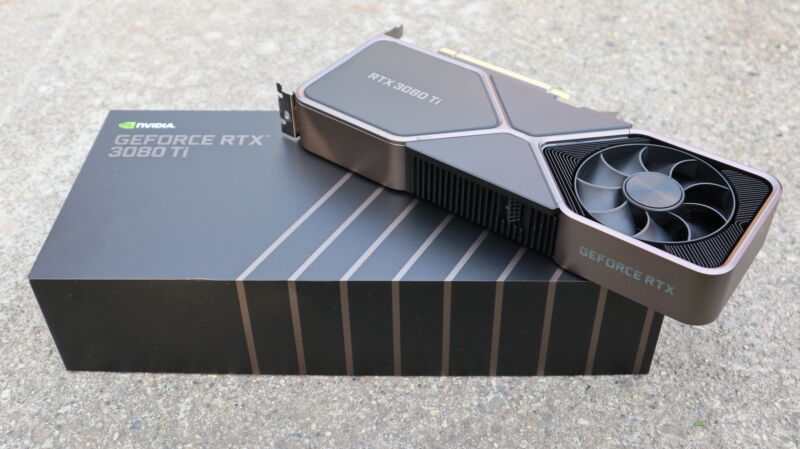
The RTX 3080 Ti.
Enlarge / The RTX 3080 Ti.
Sam Machkovech

After years of hinting, Nvidia announced yesterday that it would be open-sourcing part of its Linux GPU driver, as both Intel and AMD have done for years now. Previously, Linux users who wanted to avoid Nvidia’s proprietary driver had to rely on reverse-engineered software like the Nouveau project, which worked best on older hardware and offered incomplete support at best for all of Nvidia’s GPU features.

“This release is a significant step toward improving the experience of using NVIDIA GPUs in Linux, for tighter integration with the OS, and for developers to debug, integrate, and contribute back,” says a blog post attributed to several Nvidia employees. “For Linux distribution providers, the open source modules increase ease of use. They also improve the out-of-the-box user experience to sign and distribute the NVIDIA GPU driver. Canonical and SUSE are able to immediately package the open kernel modules with Ubuntu and SUSE Linux Enterprise Distributions.”

Nvidia is specifically releasing an open source kernel driver under a dual MIT/GPL license and is not currently open-sourcing parts of the driver that run in user space. This includes drivers for OpenGL, Vulkan, OpenCL, and CUDA, which are still closed source, in addition to the firmware for the GPU System Processor (GSP). Nvidia says these drivers “will remain closed source and published with pre-built binaries,” so it doesn’t sound like there are immediate plans to release open source versions.

Nvidia is still behind both Intel and AMD when it comes to open source GPU drivers—both companies maintain open source kernel and user space drivers, along with closed-source firmware. But this is a first step toward open source parity for Nvidia’s Linux driver packages.

Nvidia’s open source drivers only support the company’s Turing-based GPUs and newer, including the GeForce GTX 1600 series, the RTX 2000 and 3000 series, and Quadro workstation GPUs based on the same architecture. The company’s proprietary drivers go all the way back to 2012’s Kepler architecture.

The open source drivers also won’t be integrated upstream into the Linux kernel yet, since, as Phoronix reports, the API, ABI, and the interface between the kernel driver and the GSP firmware interface have not been finalized. This means that everything, from the firmware to the kernel driver to the user space drivers, needs to match versions to work properly (today’s release is version R515.43.04). Once those interfaces have been finalized, the driver can be upstreamed into the kernel, and different versions of the firmware, kernel driver, and user space drivers should be able to interoperate.

Nvidia says that support for its data center GPUs in the current drivers is “production ready” in this initial release but that support for GeForce, Quadro, and other consumer GPUs is “alpha quality”—this isn’t software you’ll want to rush to install unless you’re wanting to kick its tires on a testbed system or contribute to the code yourself.

Hector Martin, one of the developers behind the Asahi Linux distribution, criticized Nvidia for moving many functions into its closed-source firmware, which the open source driver then calls into. Martin calls the open source driver “a net win for practical purposes” since the blob of proprietary code can be sandboxed more readily. “But no freedom was gained, for people who care about that,” he writes. “[About] the same amount of code is closed [as before].”

https://arstechnica.com/?p=1853894


EA Sports officially ends FIFA partnership after 30 years of games

Doesn't quite have the same ring to it, but maybe that's just because it's new...
Enlarge / Doesn’t quite have the same ring to it, but maybe that’s just because it’s new…

EA Sports announced today that the soccer title it publishes in 2023 would be part of the new EA Sports FC brand, doing away with the FIFA name the series has used since the days of the Sega Genesis and Super NES. The announcement marks a significant break for one of the oldest and most popular continuous franchises in video game history.

“We’re thankful for our many years of great partnership with FIFA,” EA CEO Andrew Wilson said in a statement. “The future of global football is very bright, and fandom around the world has never been stronger. We have an incredible opportunity to put EA Sports FC at the heart of the sport, and to bring even more innovative and authentic experiences to the growing football audience.”

EA’s coming FIFA-less soccer game will still have “more than 300 individual licensed partners, giving players access to more 19,000 athletes across 700 teams, in 100 stadiums and over 30 leagues around the world.” Those partners include major international leagues like the Premier League, LaLiga, Bundesliga, UEFA, CONMEBOL, and more.

Aside from the name on the cover, the newly branded game will also be missing any official reference to the World Cup, the quadrennial international tournament run by FIFA. EA partnered with FIFA to release separate branded FIFA World Cup titles every four years from 1998 through 2014 and introduced a separate World Cup mode to its lucrative Ultimate Team digital card game for FIFA 14. That integration expanded to a wider World Cup update in FIFA 18.

Reports suggest FIFA 23—which will launch later this year as EA’s final game with the FIFA license—will further expand the World Cup mode and include the Women’s World Cup for the first time in franchise history. “Our final FIFA product will also include more game modes, features, teams, leagues, players, and competitions than any previous edition,” EA said in a statement.

A bitter divorce

EA’s split with FIFA isn’t exactly a surprise. The gaming mega-publisher publicly said it was “reviewing our naming rights agreement with FIFA” last October amid reports of clashes over exclusivity and licensing costs. And a February report suggested that Wilson told EA employees that the FIFA license has “precluded our ability to be able to branch into the areas that players want” in terms of gameplay.

Even the specific EA Sports FC branding isn’t a surprise; the term showed up in trademark filing last year, and VentureBeat journalist Jeff Grubb confirmed the name in a March chat with Giant Bomb.

Last year, The New York Times reported that FIFA was asking EA to double the $150 million the publisher was already paying annually for the rights to its brand name. Meanwhile, EA was reportedly beginning to question how much value the FIFA name brought its popular game franchise.

“Basically, what we get from FIFA in a non-World Cup year is the four letters on the front of the box, in a world where most people don’t even see the box anymore because they buy the game digitally,” Wilson reportedly told employees in a November all-hands meeting.

FIFA says it will continue its annual branded soccer video game releases without EA.
Enlarge / FIFA says it will continue its annual branded soccer video game releases without EA.

Perhaps in anticipation of today’s announcement, FIFA announced yesterday that it is already working with new partners on “non-simulation” soccer games that will launch later this year. That wording brings to mind Take-Two’s 2020 announcement of the return of the NFL2K franchise, which will get around EA’s exclusive license for NFL “simulation” games by offering “non-simulation football game experiences.”

But FIFA also says it is “engaging with leading game publishers, media companies, and investors in regard to the development of a major new FIFA simulation football game title for 2024.” The organization also says it will continue the convention of numbered annual FIFA game releases with its new partners.

“I can assure you that the only authentic, real game that has the FIFA name will be the best one available for gamers and football fans,” FIFA President Gianni Infantino said in a statement Monday. “The FIFA name is the only global, original title. FIFA 23, FIFA 24, FIFA 25, and FIFA 26, and so on—the constant is the FIFA name and it will remain forever and remain the best.”

EA’s partnership with FIFA dates back to 1993’s FIFA International Soccer, which has been followed by annual releases every year as well as occasional spinoffs like FIFA Street. The only game series with a comparable unbroken annual streak of releases is EA’s Madden NFL franchise, which started in 1988 and will retain that branding despite John Madden’s death late last year.

https://arstechnica.com/?p=1853363


The Man in Black is back to ruin everyone’s perfect day in Westworld S4 teaser

[embedded content]
Our favorite killer android, Delores (Evan Rachel Wood), is back in the upcoming fourth season of HBO’s sci-fi series Westworld.

HBO dropped the first teaser trailer for the upcoming fourth season of its visionary sci-fi drama, Westworld, and it looks like we’re in for another wild, convoluted ride.

(Spoilers for first three seasons of Westworld below.)

As I’ve written previously, the titular Westworld is one of six immersive theme parks owned and operated by a company called Delos Inc. The park is populated with a “cast” of human-looking androids, called hosts. The park’s well-heeled visitors can pretty much do whatever they like to the hosts and don’t generally view the hosts as anything more than unfeeling props in their private dramas. But the hosts’ creator/co-founder and park director of Westworld, Dr. Robert Ford (Anthony Hopkins), “awakened” a host named Dolores (Evan Rachel Wood) to true sentience. The first season concluded with a bloody massacre, as the reprogrammed hosts rose up to take revenge on the guests.

S2 had an even more convoluted plot spanning multiple timelines. Dolores began recruiting other hosts to fight off Delos security forces while searching for the door to the real world, intent on taking revenge by wiping out the human race. In the S2 finale, Dolores led her fellow hosts to the Forge, a kind of central database, and several hosts uploaded their minds into a digital world known as “the Sublime.” Dolores then transferred their minds to a safer location. Ultimately, three of the hosts were shown entering the real world in the central timeline: Dolores, Bernard (Jeffrey Wright), and a rebuilt host version of former Delos executive Charlotte Hale (Tessa Thompson).

William, aka the Man in Black (Ed Harris), makes a sinister appearance.
Enlarge / William, aka the Man in Black (Ed Harris), makes a sinister appearance.
YouTube/HBO

The third season was the first to take place largely outside the original virtual theme parks. Opening three months after the events of the S2 finale, Dolores had re-created her host body. We learned she was targeting an AI system called Rehoboam, developed by a company called Incite. To access the system, Dolores had to take on its creator, Engerraund Serac (Vincent Cassel), and various other adversaries with their own motives for stopping her—including William, aka the Man in Black (Ed Harris), who vowed to destroy any remaining hosts.

In the S3 finale, Maeve (Thandiwe Newton) and Dolores battled it out, and Dolores ended up in the hands of Serac. She was connected to Rehoboam but refused to give Serac any data about the hosts, so he deleted her memories. It was actually quite a moving scene, as in her last moments Dolores made an emotional appeal to convince Maeve to turn on Serac. Rehoboam was deleted, William was seemingly killed by a host replica of himself, and Bernard learned that the system was merely delaying the collapse of human civilization, rather than preventing it. He entered the Sublime hoping to figure out how to rebuild. The final shot was Bernard re-emerging into his body, covered in dust—so who knows how much time had passed?

Shhhh... Charlotte (Tessa Thomson) is up to something.
Enlarge / Shhhh… Charlotte (Tessa Thomson) is up to something.
YouTube/HBO Max

The teaser trailer doesn’t give us many hints as to where the story will go in the fourth season. There’s no dialogue at all, although the visuals are as striking as always. We see our various main characters seemingly enjoying a perfect day—strolling through a desert, sipping coffee on a high-rise—and then the menacing figure of the Man in Black appears, no doubt instilling a frisson of dread in those who catch a glimpse. And it looks like the virtual park is being revived and populated with new hosts.

Westworld has always been quite sophisticated in its storytelling. That’s a large part of its appeal, of course, but as the series has progressed, it’s gotten harder and harder to keep track of the convoluted plot, multiple timelines, and characters—who’s a host, who’s human, who was human and is now being controlled by a host, which host is in which body, and so forth. The third season definitely unraveled a bit in the second half, leading to mixed or downright negative critical reactions. I still very much enjoyed that season, but I’d love to see the show find a little more focus and recapture some of its earlier magic for S4. We’ll definitely be tuning in.

The fourth season of Westworld premieres on HBO on June 26, 2022.

Listing image by YouTube/HBO

https://arstechnica.com/?p=1853159


Return to Pandora with the first teaser for Avatar: The Way of Water

[embedded content]
James Cameron is finally bringing a sequel to 2009’s Avatar to theaters with Avatar: The Way of Water.

If you ventured into the theater to watch Doctor Strange in the Multiverse of Madness this weekend, you probably got to see the first teaser for Avatar: The Way of Water, the long-awaited sequel to the 2009 science-fiction blockbuster Avatar. Director James Cameron has spent more than a decade making the first of a planned four sequels, a large fraction of which takes place in underwater environments.

(Spoilers for the 2009 film below.)

Cameron wrote a treatment for Avatar way back in 1994, and it was supposed to be the director’s next big project after he wrapped his blockbuster Titanic. But Cameron realized the technology did not yet exist to make the film he envisioned. He spent several years working to develop what he needed, including a cutting-edge virtual camera system to direct the motion-capture scenes. (He compared it to “a big, powerful game engine.”)

The visionary gamble paid off. The finished film set new box office records upon its release; it was the highest-grossing film until Avengers: Endgame briefly took the top spot in 2019. (A March 2021 Chinese re-release put Avatar back on top.) Critics were mostly positive, praising the technological achievements, although some pointed out that the storytelling suffered slightly. Cameron also consulted with multiple scientists while designing the world of Pandora (a moon orbiting a gas giant exoplanet called Polyphemus in the Alpha Centauri A system). Avatar was nominated for nine Oscars, ultimately winning for Best Art Direction, Best Cinematography, and Best Visual Effects.

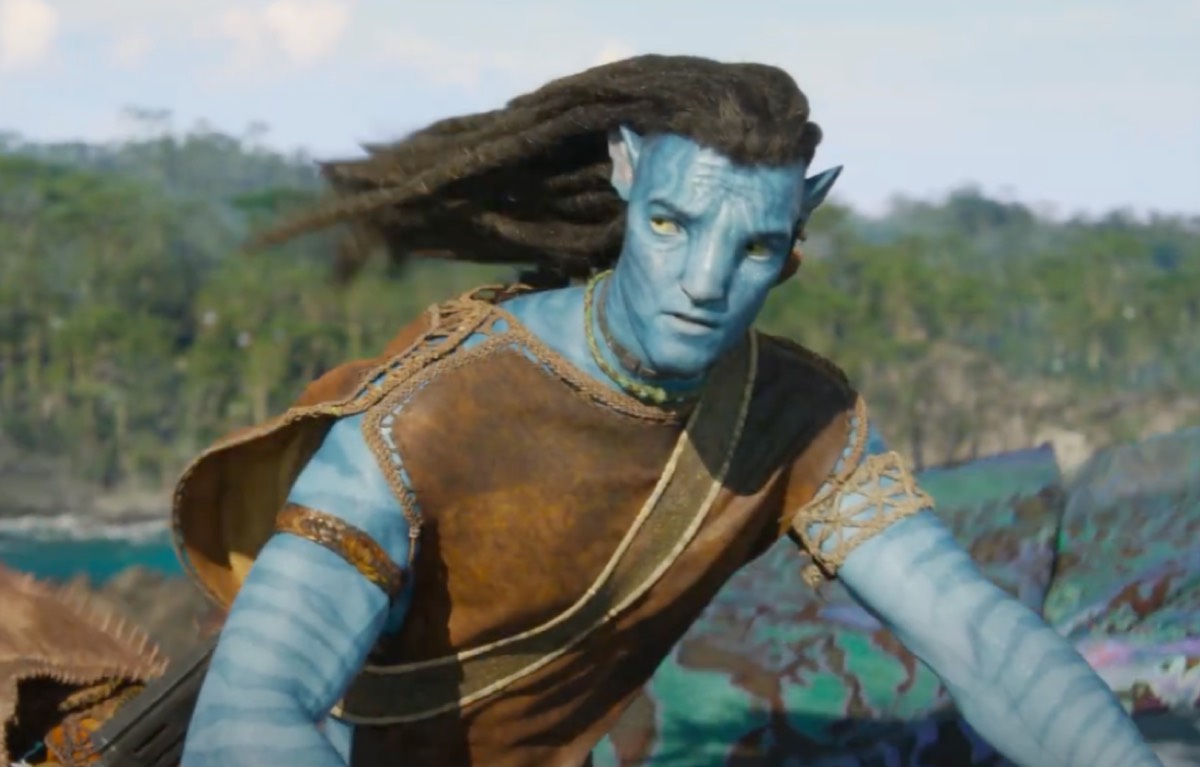
Sam Worthington reprises his role as Jake Sully, now permanently in his avatar form.
Enlarge / Sam Worthington reprises his role as Jake Sully, now permanently in his avatar form.
YouTube/20th Century Studios

Even before Avatar‘s release, Cameron expressed his hope of making two sequels, widening the story’s scope to include other moons of Polyphemus. The first would feature Pandora’s ocean and involve shooting footage at the bottom of the Mariana Trench with a deepwater submersible. (Cameron made the first solo descent to the trench in 2012 thanks to one such submersible.) But once again, he needed technology that didn’t exist yet—namely, for filming motion capture scenes underwater. As Cameron explained to Collider in 2017:

It’s never been done before and it’s very tricky because our motion capture system, like most motion capture systems, is what they call optical base, meaning that it uses markers that are photographed with hundreds of cameras. The problem with water is not the underwater part, but the interface between the air and the water, which forms a moving mirror. That moving mirror reflects all the dots and markers, and it creates a bunch of false markers. It’s a little bit like a fighter plane dumping a bunch of chaff to confuse the radar system of a missile. It creates thousands of false targets, so we’ve had to figure out how to get around that problem, which we did. Basically, whenever you add water to any problem, it just gets 10 times harder. So, we’ve thrown a lot of horsepower, innovation, imagination and new technology at the problem, and it’s taken us about a year and a half now to work out how we’re going to do it.

I expect we’ll hear more about the various technological advances achieved to make this film as the studio marketing ramps up.

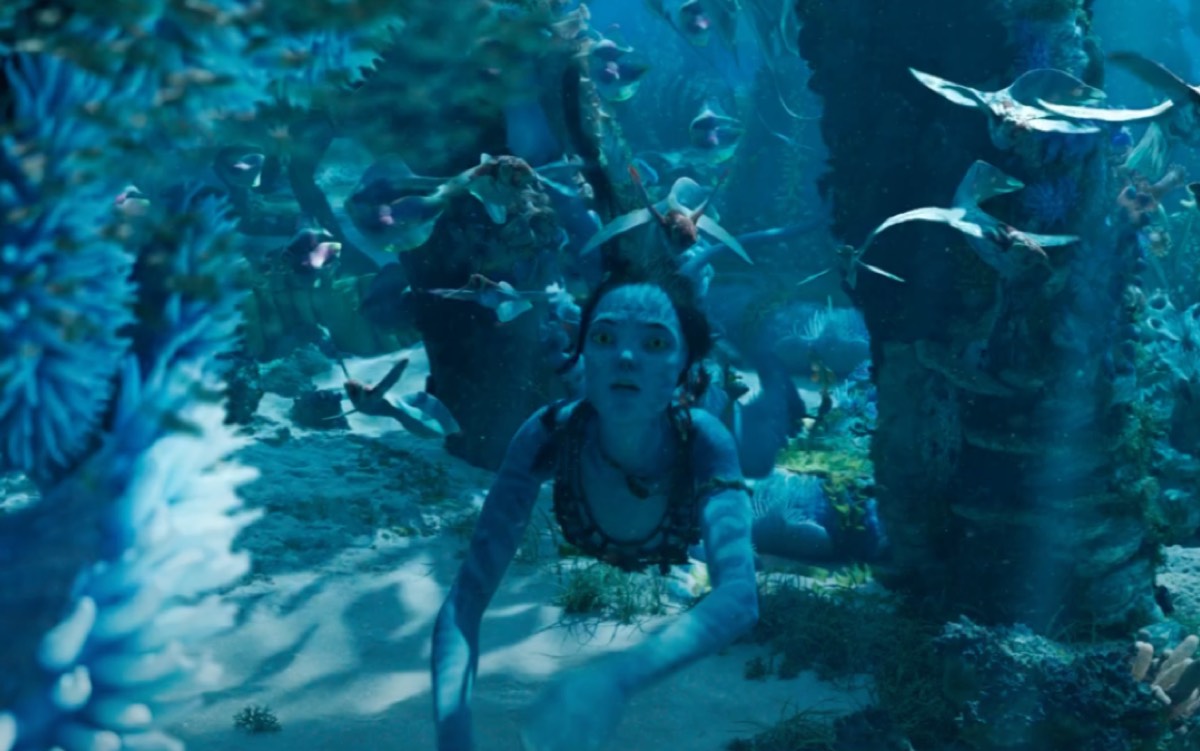
Several actors had to receive special training to shoot the many underwater scenes.
Enlarge / Several actors had to receive special training to shoot the many underwater scenes.
YouTube/20th Century Studios

Sam Worthington and Zoe Saldana are reprising their roles as Jake Sully and Neytiri, respectively. Jake decided to meld with his avatar permanently at the end of the first film, so he could be with Neytiri and start a family on Pandora. Per the official synopsis: “Set more than a decade after the events of the first film, Avatar: The Way of Water begins to tell the story of the Sully family (Jake, Neytiri, and their kids), the trouble that follows them, the lengths they go to keep each other safe, the battles they fight to stay alive, and the tragedies they endure.”

That’s pretty vague but consistent with what we’ve heard over the years. Jamie Flatters, Britain Dalton, and Trinity Bliss play the pair’s three children (Neteyam, Lo-ak, and Tuk), while Jack Champion plays a teen named Spider born on the human base, who is rescued and adopted by the couple. Sigourney Weaver (Dr. Grace Augustine), Stephen Lang (Colonel Miles Quaritch), and Matt Gerald (Corporal Lyle Wainfleet) will also be returning, despite all three having died in the original. And CCH Pounder returns as Mo’at, Neytiri’s mother and the Omaticaya clan’s spiritual leader. Cameron has said that Quaritch will once again be the primary antagonist. The return of that old threat forces Jake and his family to leave their home and explore other parts of Pandora—hence “the way of water.”

https://arstechnica.com/?p=1853070


NiceHash defeats Nvidia’s GPU crypto-mining limits, does not appear to be a scam

NiceHash defeats Nvidia’s GPU crypto-mining limits, does not appear to be a scam

Nvidia began releasing LHR (or “Lite Hash Rate”) graphics cards last year to slow down their cryptocurrency mining performance and make them less appealing to non-gamers. Late last week, crypto-mining platform NiceHash announced that it had finally found a way around those limitations and released an update for its QuickMiner software that promises full Ethereum mining performance on nearly all of the LHR-enabled GeForce RTX 3000-series GPUs.

Unlike past attempts to disable the LHR protections, NiceHash’s workaround appears to be the real deal—Tom’s Hardware was able to confirm the performance boosts using QuickMiner and a GeForce RTX 3080 Ti.

For now, NiceHash says that the LHR workaround will only work in Windows, with “no Linux support yet.” The more flexible NiceHash Miner software doesn’t include the workarounds yet, though it will soon. NiceHash also says that the software won’t accelerate mining performance on newer GeForce cards that use version 3 of the LHR algorithm, a list that (for now) includes the RTX 3050 and the 12GB version of the RTX 3080 but which will presumably grow as Nvidia releases new GPUs and updated revisions for older GPUs.

Miners have been trying to find ways to circumvent the LHR limitations since they were introduced. The first card to use LHR, the GeForce RTX 3060, was defeated by a botched driver release from Nvidia. Other workarounds have included flashing alternate BIOSes and mining multiple cryptocurrencies on the same card.

But LHR workarounds can also be too good to be true. Another group promised LHR-defeating drivers in February, but they didn’t do what they said they’d do and ended up being full of malware.

Whether this LHR unlock has an impact on the pricing or availability of GPUs remains to be seen. Bitcoin and Ethereum prices have been falling recently as interest rate increases and stock market turmoil have pushed investors toward safer bets. Ethereum’s “merge,” which will switch the currency from a mining-driven “proof-of-work” system to an ownership-driven “proof-of-stake” system, is also allegedly a few months away, though that has been the case for several years now. At this point, buying up a bunch of new GPUs for cryptocurrency mining, even with the performance improvements and price decreases, could still be a risky investment.

https://arstechnica.com/?p=1853037


Today’s intended Wordle solution pushed to 2027 due to “major recent news event”

Today’s intended Wordle solution pushed to 2027 due to “major recent news event”

The New York Times has altered the Wordle solutions list to avoid an answer for today’s puzzle that would have “seem[ed] closely connected to a major recent news event,” as the company put it in a public note this morning.

Today’s originally intended solution, FETUS, was first added to the game’s word list last year, when Wordle creator Josh Wardle included it among the randomly ordered list of roughly 2,300 five-letter words intended to define the daily word game for years to come. The New York Times has pushed that term to the end of the game’s solutions list, where it is now scheduled to appear sometime in late 2027 (it remains to be seen if today’s news focus on the Roe v. Wade Supreme Court decision will still be as much of a concern by then).

Copies of the Wordle webpage on the Internet Archive show the Times making the change for today’s puzzle sometime on May 6. As such, players who have not refreshed the Wordle webpage in the last few days “may see an outdated answer that seems closely connected to a major recent news event,” as the Times wrote.

Players who don’t refresh will also remain out of sync with others playing the updated version of the game. The Times wrote that it has “continued to discover challenges” following its seven-figure acquisition of the game in January. “We’re now busy revamping Wordle’s technology so that everyone always receives the same word.”

A sensitive subject

Calling the original placement of FETUS “unintentional” and a “coincidence,” the Times wrote that “we take our role seriously as a place to entertain and escape, and we want Wordle to remain distinct from the news. But because of the current Wordle technology, it can be difficult to change words that have already been loaded into the game. When we discovered last week that this particular word would be featured today, we switched it for as many solvers as possible.”

Last week’s edits to the word list, which are viewable by looking at the game’s Javascript source code, also pushed a handful of other words—BUTCH, STALK, FLACK, WIDOW, and AUGUR—to the end of the solutions list.

In February, the Times removed seven then-upcoming Wordle solutions (and 25 options for valid guesses) from the game’s rotation, mostly to remove gendered or racial slurs from consideration. In late March, the company also pushed another 18 solutions to the back of the line, including VOMIT, FANNY, ECLAT, and FELLA.

In a recent earnings call, the Times said Wordle, which remains free, brought in “tens of millions” of new players to the site’s Games section and “played an outsized role in the quarter’s engagement and subscriber growth.”

https://arstechnica.com/?p=1853017


Duke Nukem Forever’s 2001 build appears online, may fully leak in June

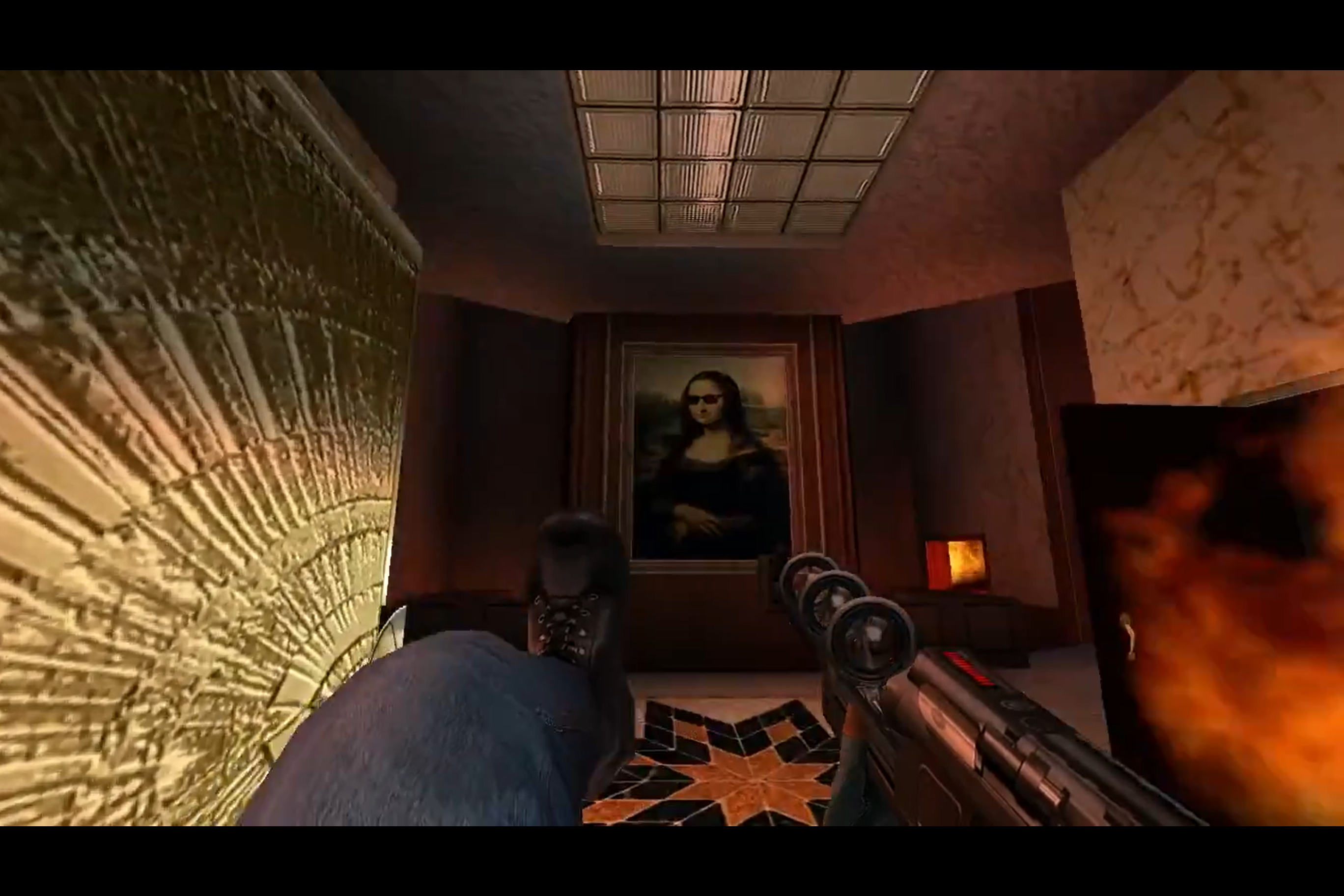
<img src="https://rassegna.lbit-solution.it/wp-content/uploads/2022/05/duke-nukem-forevers-2001-build-appears-online-may-fully-leak-in-june.png" alt="Apparent footage from a 2001 build of Duke Nukem Forever has leaked, 21 years later. As this version of the Mona Lisa might say, deal with it.”>
Enlarge / Apparent footage from a 2001 build of Duke Nukem Forever has leaked, 21 years later. As this version of the Mona Lisa might say, deal with it.

The story of Duke Nukem Forever’s development appeared to be tied up in a bow when the game finally launched in 2011, a whopping 14 years after it had been announced. But the first-person shooter that was eventually cobbled together by Gearbox Software, crappy as it was, didn’t necessarily show the game’s whole story.

Arguably the game’s most famous trailer came at E3 2001; it showed off a bombastic, explosion-filled romp through Las Vegas that actually looked like a playable video game, apparently rendered in that era’s version of Unreal Engine. This week, we’ve learned just how playable that version of the game was—with at least one of Duke Nukem Forever‘s original creators backing up its authenticity.

“A smattering of test levels”

The game’s latest leak, posted to 4chan on Sunday and widely shared by Duke Nukem fansite duke4.net, appears to be made of original 2001 code and assets. It includes a one-minute video of first-person carnage in a very Duke-appropriate environment of a strip club called “Slick Willy.” The sequence was apparently played and captured by the build’s leaker.

In addition, the leaker suggested that the build’s playable files, source code, and official map editor could be released in June—which would coincide with the E3 trailer’s 21st anniversary—and responded to various 4chan doubters by posting additional images based on their requests. These included screengrabs of the build’s file and folder lists, along with images from other sections of the game and a higher-res peek at “the redneck from the E3 trailer.”

<a href="https://cdn.arstechnica.net/wp-content/uploads/2022/05/dukeleak-01.png" class="enlarge" data-height="900" data-width="1600" alt="Doubters requested this image from the newly discovered Duke Nukem Forever build, and the leaker obliged.”><img alt="Doubters requested this image from the newly discovered Duke Nukem Forever build, and the leaker obliged.” src=”https://rassegna.lbit-solution.it/wp-content/uploads/2022/05/duke-nukem-forevers-2001-build-appears-online-may-fully-leak-in-june-1.png” width=”980″ height=”551″>
Enlarge / Doubters requested this image from the newly discovered Duke Nukem Forever build, and the leaker obliged.

Though this week’s video only includes three demonstrated guns (pistol, shotgun, semi-automatic rifle), the leaker suggested that nearly all options in the video’s weapons-list interface are functional, with the exception of “the chainsaw and the freezer.” It’s unclear if the game files have been manually patched to work on modern PCs or whether interested players will need to pull out era-appropriate PCs with proper drivers, OSes, and hardware. (Optimistic retro gamers may want to pillage their closets for spare GeForce 6600 XT GPUs, just in case.)

Shortly after the video and its related screencaps made the rounds, former Duke Nukem Forever project lead George Broussard confirmed its apparent authenticity on Twitter, telling fans that “the leak looks real.” He said that while it may be playable, it shouldn’t be looked at as a game, “just a smattering of barely populated test levels.”

https://arstechnica.com/?p=1853001