Half-Life Alyx is now fully playable without VR hardware

<img src="https://rassegna.lbit-solution.it/wp-content/uploads/2023/04/half-life-alyx-is-now-fully-playable-without-vr-hardware.jpg" alt="Artist's conception of VR players watching calmly as non-VR players run to finally try Half-Life Alyx for themselves.”>
Enlarge / Artist’s conception of VR players watching calmly as non-VR players run to finally try Half-Life Alyx for themselves.


When we named Valve’s Half-Life Alyx as one of our favorite games of 2020, we added an important caveat that the game was wholly inaccessible to a “majority of interested players who either don’t own a suitable VR system to play it or have no intention of getting one.” Those non-VR players can rejoice this week, though, as there is now a “NoVR” mod that makes Half-Life Alyx completely playable without a headset.

Since launching on GitHub almost a month ago (and hitting “early access” on ModDB in late March), the NoVR mod has attracted “thousands” of players, according to its creators. But it wasn’t until Script Update #6 this weekend that the “entire game can now be played from start to finish” without a VR headset, the creators wrote.

Installation is as simple as copying a downloaded folder into your Steam installation and adding a short text string to the launch options. And while the mod doesn’t work with any save files created in the VR version of the game, you can use a handy level select to jump to your favorite parts without getting into virtual reality.

The mod’s creators also say that NoVR mode is “much less demanding” than Half-Life Alyx‘s high-end (for 2020) system requirements would suggest. That’s because the game no longer needs to effectively render each frame twice to create VR’s stereoscopic 3D effect. The modded version of the game seems to run just fine on a Steam Deck, too, if you’re looking for a gaming experience that’s about as different as possible from the original, all-encompassing virtual reality design.

Lost in translation

[embedded content]
Sample gameplay from Half-Life Alyx played without a VR headset (some story spoilers).

For a game built with VR controls and viewpoint in mind, the Alyx NoVR mod is impressively playable without a headset. Everything from shooting headcrabs to picking up items with the gravity gloves works more or less as you’d expect in a “standard” first-person shooter (though we did have to restart a few times to get some interactions to work during our testing).

That said, the mod uses certain shortcuts and tricks to get around puzzles and moments designed for hand-tracking controls. An early multitool puzzle that involves tracing your hands along electrical wires through a wall is now automatically solved with a simple press of the E key, for instance.

Base functionality aside, even simple interactions lose a little something in the transition to the flat screen. The experience of opening a door, for instance, loses some of its physical immediacy when using your hand to pull a handle is replaced with a simple press of a keyboard button. The same goes for using a keyboard to activate a health kit on the wall rather than sticking your whole arm in and watching it get robotically stitched up in VR.

And as we noted in 2020, a mouse and keyboard can’t effectively simulate “us[ing] one hand to magnetically yank a useful object in the distance while using the other to aim and shoot a gun.”

Those experiential differences aren’t a surprise to at least one member of the Half-Life Alyx development team. In 2020, Valve’s Robin Walker said in an interview with Polygon that he knew even before the game’s release that a non-VR version was “going to happen” eventually. That said, Walker felt that version “will clearly demonstrate to people why we did this in VR… it will be a very crisp way of seeing all the stuff we got for the move into VR.”

Despite the compromises, though, the VR-free version of Half-Life Alyx opens up the game’s stellar storytelling and top-notch environments to a much wider audience. If you’ve been wanting to see what all the Alyx hype is about without taking the full VR hardware plunge, now is your chance.

https://arstechnica.com/?p=1930728


Resident Evil 4’s new paid DLC should have been a free cheat code

Why spend hours grinding for better weapons when you can just spend $2.99 for a golden ticket?
Enlarge / Why spend hours grinding for better weapons when you can just spend $2.99 for a golden ticket?

Capcom surprised fans of the recently released Resident Evil 4 remake over the weekend by adding a timed, score-focused Mercenaries mode as a piece of free DLC. But that DLC also comes with an addition that might seem out of place for the single-player title: microtransaction power-ups.

RE4 players can now purchase a variety of “Resident Evil 4 Weapon Exclusive Upgrade Tickets” on Steam at a price of $2.99 for one or in bundles of up to $9.99 for five. In exchange for this payment, players can “have access to a weapon’s exclusive upgrade at any time, regardless of the weapon’s level. Not only that, but once unlocked, the upgrade itself is free of charge!”

These same weapon upgrade tickets can be earned without spending real money by using earned in-game currency or fully leveling up a weapon’s stats through gameplay. With this new DLC, though, Capcom is apparently hoping many players will want to pay to avoid the grind and blaze through the game’s challenges with the most powerful weapons available.

What are you selling?

These kinds of optional skip-the-grind paid upgrades aren’t exactly new to the gaming world, especially in online titles. In 2014, World of Warcraft started offering a $60 “Level 90 character boost” for players who wanted to skip spending hours killing digital beasts for experience points. In 2015, Payday 2-maker Starbreeze Studios added stat boosts to the tradable skins players got from paid loot box DLC. And GTA Online players using real money to buy fake money has been a major cash cow for publisher Take-Two for years now.

That's only 67 cents per level. ORDER NOW!
That’s only 67 cents per level. ORDER NOW!

Even in single-player games, though, publishers have sometimes taken to selling the “benefit” of letting players avoid the need to play the game to unlock the best digital loot. Capcom’s own Resident Evil Village sells a “Survival Resources Pack” bundle of in-game items for 99 cents, and the Resident Evil 2 remake lets players pay an extra $4.99 to unlock all in-game rewards.

Still, the addition of this kind of paid upgrade in Resident Evil 4 has us longing for the days when “instant unlock” abilities came as free cheat codes instead of paid DLC. Gamers of a certain age undoubtedly have fond memories of using a quick “idkfa” to get more powerful in Doom or using SimCity 2000‘s “infinite money” code to quickly construct the metropolis of their dreams without worrying about attracting a solid tax base first.

When it comes to single-player games, these kinds of fun, sandbox-style features should be considered a core part of the experience, not something the publisher monetizes through nickel-and-dime DLC. In today’s gaming world, though, if people are willing to pay to skip the most annoying, grindy parts of a game, publishers like Capcom will keep offering them the option to do so.

https://arstechnica.com/?p=1930402


Klaus Teuber made Catan, and it changed the world’s expectations for board games

Klaus Teuber in front of a Catan type logo
Enlarge / Klaus Teuber, in 2015 at a games festival in Essen, Germany. Teuber created The Settlers of Catan (later just Catan), along with other award-winning board games.
Picture Alliance via Getty Images

I was in my early 30s when I first played The Settlers of Catan. I had been at a bar with a small group one freezing winter night in 2012 in Buffalo, New York. One of us, eager to share his recent obsession, declared it was time for the outing’s next stage. We went to his barely unpacked new apartment nearby. He pulled the game from a plastic tote, opened it on a wobbly dinette table, and laid out the board, apologizing for the moisture-warped edges. I took a picture (on my HTC Thunderbolt) because, having had a few, I wanted to ensure I’d remember this game with the wooden pieces and weird amount of sheep.

<a href="https://cdn.arstechnica.net/wp-content/uploads/2023/04/catan4.jpg" class="enlarge" data-height="1225" data-width="1225" alt="Settlers of Catan, as I saw it in early 2012.”><img alt="Settlers of Catan, as I saw it in early 2012.” src=”https://rassegna.lbit-solution.it/wp-content/uploads/2023/04/klaus-teuber-made-catan-and-it-changed-the-worlds-expectations-for-board-games-1.jpg” width=”300″ height=”300″ srcset=”https://rassegna.lbit-solution.it/wp-content/uploads/2023/04/klaus-teuber-made-catan-and-it-changed-the-worlds-expectations-for-board-games-4.jpg 2x”>
Enlarge / Settlers of Catan, as I saw it in early 2012.
Kevin Purdy

It was an inauspicious start to the rest of my board gaming life. Growing up in the ’80s and ’90s, then starting my young adult life in the early 2000s, I’d regarded board games as something you do in situations where you can’t do anything else: power outages, cabins in the woods, gatherings with people without known shared interests. They weren’t really going to be fun, and you wouldn’t necessarily play them, but someone would get to be the winner, and time would pass. Catan changed that—for me and for what are now legions of modern board game enthusiasts.

From a German basement to 32 million copies

You may have seen the news this week that Klaus Teuber, the German designer who created The Settlers of Catan (now just Catan), died on April 1 at age 70. Teuber developed Die Siedler von Catan in the early 1990s, playing with ideas of Icelandic settlements, tinkering in his basement while working full-time at a dental lab. He’d bring up new iterations for his wife and kids to test every weekend, he told The New Yorker. The breakthrough, he said, was using hexagonal tiles instead of squares.

Klaus Teuber, holding an early version of Catan and his Spiel des Jahres prizes in 1995.
Enlarge / Klaus Teuber, holding an early version of Catan and his Spiel des Jahres prizes in 1995.
Uta Rademacher via Getty Images

Teuber has created other memorable games, with two pre-Catan titles winning the top board game prize in Germany (and the world), the Spiel des Jahres. But Catan was the right game at the right time. Its 1995 release gave it time to infiltrate European gamers, then American Eurogame enthusiasts, and then, crucially, the still-nascent Internet. BoardGameGeek.com wouldn’t show up until 2000, but by then, Catan had done its groundwork. It offered a face-to-face, objects-on-a-table counterpoint to a culture rapidly accepting online chatter and screen-based gaming. A 2009 feature in the Wall Street Journal captures the game just as it had overtaken Silicon Valley (with cameos from StumbleUpon, Zynga, RapLeaf, and other terribly 2009 names).

Guido Teuber, Klaus’ son, said that sales spiked in Silicon Valley in 2007 to 2008, just after the game became available on Amazon and in Barnes & Noble. He told the Journal he was initially surprised by the “techie interest” but “then we saw how they need social interaction after sitting all day in front of a monitor.”

<a href="https://cdn.arstechnica.net/wp-content/uploads/2023/04/GettyImages-1041036130-scaled.jpg" class="enlarge" data-height="1952" data-width="2560" alt="Klaus Teuber in 2015 at a games fair in Essen, Germany, attempting to set a world record with more than 1,000 others for the largest simultaneous game of Catan.”><img alt="Klaus Teuber in 2015 at a games fair in Essen, Germany, attempting to set a world record with more than 1,000 others for the largest simultaneous game of Catan.” src=”https://rassegna.lbit-solution.it/wp-content/uploads/2023/04/klaus-teuber-made-catan-and-it-changed-the-worlds-expectations-for-board-games-3.jpg” width=”640″ height=”488″ srcset=”https://rassegna.lbit-solution.it/wp-content/uploads/2023/04/klaus-teuber-made-catan-and-it-changed-the-worlds-expectations-for-board-games-6.jpg 2x”>
Enlarge / Klaus Teuber in 2015 at a games fair in Essen, Germany, attempting to set a world record with more than 1,000 others for the largest simultaneous game of Catan.
Roland Weihrauch/picture alliance via Getty Images

What makes Catan (and Eurogames) different

The simplest way to explain what makes Catan and other “Eurogames” different from mainstream US board games is that they are relatively easy to learn yet offer many layers of deeper strategy for those who keep playing. They also typically don’t let players be removed from the game before the final score tallying, they have a greater reliance on strategy, resource management, and risk/reward consideration than luck, and they feature less direct conflict between players.

Peruse the list of Spiel des Jahres winners and finalists since Catan‘s 1995 release, and you’ll get the gist of the types of games I’m talking about: Carcassone, Puerto Rico, Ticket to Ride, Dominion, Pandemic, Forbidden Island, 7 Wonders, Terraforming Mars, Azul, Wingspan. It’s possible to win these games your first time playing, but experienced players have an edge, softened just a bit by luck. They give you something to think about when it’s not your turn, so you’re not just waiting, but many such games are not so demanding as to preclude pizza, beer, and side conversations. And they have a time of play printed on the box, typically 90 minutes or less, that is realistic (at least when everyone knows the rules).

https://arstechnica.com/?p=1929865


Artists astound with AI-generated film stills from a parallel universe

An AI-generated image from an #aicinema still series called
Enlarge / An AI-generated image from an #aicinema still series called “Vinyl Vengeance” by Julie Wieland, created using Midjourney.

Since last year, a group of artists have been using an AI image generator called Midjourney to create still photos of films that don’t exist. They call the trend “AI cinema.” We spoke to one of its practitioners, Julie Wieland, and asked her about her technique, which she calls “synthography,” for synthetic photography.

The origins of “AI cinema” as a still image art form

Last year, image synthesis models like DALL-E 2, Stable Diffusion, and Midjourney began allowing anyone with a text description (called a “prompt”) to generate a still image in many different styles. The technique has been controversial among some artists, but other artists have embraced the new tools and run with them.

While anyone with a prompt can make an AI-generated image, it soon became clear that some people possessed a special talent for finessing these new AI tools to produce better content. As with painting or photography, the human creative spark is still necessary to produce notable results consistently.

Not long after the wonder of generating solo images emerged, some artists began creating multiple AI-generated images with the same theme—and they did it using a wide, film-like aspect ratio. They strung them together to tell a story and posted them on Twitter with the hashtag #aicinema. Due to technological limitations, the images didn’t move (yet), but the group of pictures gave the aesthetic impression that they all came from the same film.

The fun part is that these films don’t exist.

The first tweet we could find that included the #aicinema tag and the familiar four film-style images with a related theme came from Jon Finger on September 28, 2022. Wieland, a graphic designer by day who has been practicing AI cinema for several months now, acknowledges Finger’s pioneering role in the art form, along with another artist. “I probably saw it first from John Meta and Jon Finger,” she says.

It’s worth noting that the AI cinema movement in its current still-image form may be short-lived once text2video models such as Runway’s Gen-2 become more capable and widespread. But for now, we’ll attempt to capture the zeitgeist from this brief moment in AI time.

Julie Wieland’s AI story

To get more of an inside look at the #aicinema movement, we spoke to Wieland, who’s based in Germany and has racked up a sizable following on Twitter by posting eye-catching works of art generated by Midjourney. We’ve previously featured her work in an article about Midjourney v5, a recent upgrade to the model that added more realism.

AI art has been a fruitful field for Wieland, who feels that Midjourney not only gives her a creative outlet but speeds up her professional workflow. This interview was conducted via Twitter direct messages, and her answers have been edited for clarity and length.

Ars: What inspired you to create AI-generated film stills?

Wieland: It started out with dabbling in DALL-E when I finally got my access from being on the waitlist for a few weeks. To be honest, I don’t like the “painted astronaut dog in space” aesthetic too much that was very popular in the summer of 2022, so I wanted to test what else is out there in the AI universe. I thought that photography and movie stills would be really hard to nail, but I found ways to get good results, and I used them pretty quickly in my day-to-day job as a graphic designer for mood boards and pitches.

With Midjourney, I reduced my time from looking for inspiration from Pinterest and stock sites from two days of work to maybe 2–4 hours, because I can generate the exact feeling I need, to get it across for clients to know how it will “feel.” Onboarding illustrators, photographers, and videographers has never been easier ever since.

https://arstechnica.com/?p=1904461


Chrome will support the WebGPU API by default—here’s why that’s important

Chrome will support the WebGPU API by default—here’s why that’s important
Andrew Cunningham/Google

Google announced today that it would enable WebGPU support in its Chrome browser by default starting in version 113, currently in beta. In development since 2017, WebGPU is a next-generation graphics API that aims to bring the benefits of low-overhead APIs like Microsoft’s Direct3D 12, Apple’s Metal, and Vulkan to web browsers and other apps.

WebGPU support has been available but off by default in Chrome for a while now, because the API wasn’t finalized and things could break from update to update. Google says that Mozilla and Apple will eventually support WebGPU in Firefox and Safari, and browsers like Microsoft Edge and Opera that rely on the Chromium browser engine can presumably choose to switch it on just as Google has.

Chrome 113 supports WebGPU on Windows, macOS, and ChromeOS to start, with “support for other platforms” like Linux and Android “coming later this year.” This browser version should roll out to all Chrome users sometime in May.

Support in Chrome is a big boost for any new standard, whether it’s a new or updated API, image format, or video codec. Chrome accounts for roughly two-thirds of browser market share worldwide, according to StatCounter data, and nearly 80 percent of all browser market share if you count other Chromium-based browsers. Once Safari and Firefox add support, virtually all web browsers everywhere will be able to run WebGPU code, so it’s worth explaining in brief what WebGPU is and why it exists.

What is WebGPU?

WebGPU is a successor of sorts to WebGL, a much older API that allows OpenGL-based graphics to be rendered in your browser without requiring additional third-party plugins like Adobe’s Flash. Though revolutionary when it was announced in 2009, WebGL today suffers from many of the same problems OpenGL does: It doesn’t take advantage of all the features of current GPUs, it can lose performance because of driver overhead, and it has only limited and kludgey support for GPU compute workloads.

“Whereas WebGL is mostly for drawing images but can be repurposed (with great effort) to do other kinds of computations, WebGPU has first-class support for performing general computations on the GPU,” says the draft document explaining why WebGPU exists. The new API will enable improved graphics in frameworks like Babylon.js and game engines like Unity; will support GPU-accelerated workloads like the ones used for machine learning and AI; and can make it easier for web-based photo and video apps (among others) to use the kind of GPU acceleration that native apps benefit from.

WebGPU is being developed by a working group that includes members from Google, Microsoft, Apple, Mozilla, Intel, and many other companies, and as a result, the API has been designed to be as widely compatible as possible. WebGPU isn’t a direct implementation of any existing graphics API, but rather is its own API that sits on top of and interfaces with Direct3D 12, Metal, and Vulkan. This explainer from Surma, an engineer at Shopify and former Googler, sums it up well (emphasis ours):

“While WebGL is just a thin wrapper around OpenGL, WebGPU chose a different approach. It introduces its own abstractions and doesn’t directly mirror any of these native APIs. This is partially because no single API is available on all systems, but also because many concepts (such as extremely low-level memory management) aren’t idiomatic for a web-facing API. Instead, WebGPU was designed to both feel “webby” and to comfortably sit on top of any of the native graphics APIs while abstracting their idiosyncrasies. It’s being standardized in the W3C with all major browser vendors having a seat at the table.”

This has the benefit of making WebGPU code very portable—write WebGPU code, and as long as users have hardware and a browser that supports it, you should get the same result on a Windows system running Direct3D and an Android phone running Vulkan. And it avoids some of the hacks that keep WebGL running—for instance, WebGL on Windows and macOS doesn’t even use OpenGL directly, but rather a translator called ANGLE that turns OpenGL API calls into Direct3D and Metal API calls instead. With WebGPU, there’s no need to start a separate project to write around a slow or poorly maintained OpenGL implementation.

WebGPU also has its own shader language (WGSL), which the Chrome team is still working to support—today’s announcement says that Google “plans to provide deeper access to shader cores” via WGSL in a future release. Like the rest of the WebGPU API, WGSL is intended to be platform-agnostic and easily translatable to the preferred shader language of whatever operating system you’re running it on.

Finally, despite the “web” in its name, the WebGPU API isn’t restricted to browsers. The wgpu project is a version of WebGPU for Rust that allows WebGPU apps to be written and run outside of web browsers.

If you want to experiment with WebGPU now, the beta version of Chrome 113 is available here. A GitHub repo of code samples is available here, and there’s also official documentation about both WebGPU and WGSL.

https://arstechnica.com/?p=1929889


Microsoft crackdown disables emulators downloaded to Xbox consoles

It was nice while it lasted...
Enlarge / It was nice while it lasted…
Aurich Lawson | Getty Images


Back in 2020, we reported that emulator developers were using a hole in the Xbox Store’s app distribution system to get around Microsoft’s longstanding ban on emulators running on Xbox consoles. This week, though, many of the emulators that were distributed through that workaround have stopped working, the apparent victims of a new crackdown by Microsoft.

Xbox emulator makers and users can’t say they weren’t warned. In the “Gaming and Xbox” section of Microsoft’s official Store Policies, section 10.13.10 clearly states that “products that emulate a game system or game platform are not allowed on any device family.”

Microsoft’s enforcement of this clause has historically focused on removing emulators published as “private” UWP apps to the Xbox Store. Those apps could be distributed to whitelisted users via direct links accessed on the system’s Edge browser, getting around the usual approval process for a public store listing.

Previously, users who downloaded one of these “hidden” emulator listings before Microsoft’s inevitable takedown could run that emulator on an unmodified retail system indefinitely. That is no longer the case; trying to launch downloaded versions of emulators like Xenia or Retrospection on an Xbox console now generates an error saying, “Unable to launch this game or app. The game or app you’re trying to launch violates Microsoft Store policy and is not supported.”

How dare you try to violate Microsoft Store policy...
Enlarge / How dare you try to violate Microsoft Store policy…

“Ladies and gentlemen, it’s been a good run,” wrote Twitter user gamr13, who helps distribute an Xbox version of the RetroArch emulator front end. “For the past 2 years, we’ve promoted legal emulation on a popular platform that people have genuinely enjoyed. It’s a true shame to see Xbox crack down on emulation… This is a shot in the face.”

Despite the crackdown, a separate method for installing Xbox emulators using the system’s paid-access Developer Mode appears to still work. There are also reports that consoles that have stayed completely offline and not downloaded some recent system updates may still be able to use previously downloaded emulators.

Evolving enforcement

“We continually evolve our mechanisms for reviewing and taking enforcement actions on content distributed to the Store to ensure alignment with our Microsoft Store Policies,” Microsoft said in a statement to Kotaku.

It’s not clear if there’s a specific reason that Microsoft decided to roll out these “evolved mechanisms” of emulator enforcement now. That said, the emulation scene recently saw an Xbox-compatible port of Xenia, a popular Xbox 360 emulator. That version lets modern Xbox consoles run a variety of Xbox 360 games that Microsoft still sells directly in its store, as well as some Xbox 360 titles that aren’t supported by Microsoft’s official backward-compatibility feature.

There are also some unconfirmed reports that January’s beta launch of the Wii/GameCube emulator Dolphin on Xbox may have drawn the ire of Nintendo. That company has a history of taking legal action against ROM distribution sites, even if the emulators themselves are probably legally protected.

In the PC space, meanwhile, the Dolphin emulator is currently planning to launch on Steam, where it will join RetroArch’s collection of emulation cores and EmuDeck‘s less official collection of Steam Deck-compatible emulators, among others.

https://arstechnica.com/?p=1929935


Star Wars fans, rejoice! Here’s the first teaser for the Ahsoka series

[embedded content]
Disney+ has released the first teaser trailer for its forthcoming Star Wars series, Ahsoka, starring Rosario Dawson.

Star Wars Celebration Day kicked off with the release of an extended teaser for Ahsoka, the latest interconnected series in the Star Wars franchise set to debut this summer on Disney+. Written by Dave Filoni, the series stars Rosario Dawson in the title role.

The Jedi Padawan of Anakin Skywalker, Ahsoka was first introduced as a supporting character in 2008’s animated film Star Wars: The Clone Wars and the subsequent animated series. The character returned in the sequel series Star Wars Rebels (2014-2018) as a member of the Rebel Alliance, operating under the codename Fulcrum, and made numerous other cameo appearances in the extended Star Wars universe. Dawson’s live-action version made her debut in The Mandalorian‘s second season. We last saw Ahsoka briefly in The Book of Boba Fett, when she passed on a gift of chain mail to Grogu after warning Mando/Din Djarin that his presence would be a distraction from Grogu’s Jedi training. We all know how that turned out: Din and Grogu reunited and went on to share even more adventures in The Mandalorian S3, which will wrap later this month.

The official premise for Ahsoka is short and sweet: “Set after the fall of the Empire, Ahsoka follows the former Jedi knight Ahsoka Tano as she investigates an emerging threat to a vulnerable galaxy.” In addition to Dawson, the cast includes Natasha Liu Bordizzo as Sabine Wren, a young Mandalorian warrior, graffiti artist, and former bounty hunter; Mary Elizabeth Winstead as Hera Syndulla, a former pilot for the Rebellion; Eman Esfandi as Ezra Bridger, a former con artist and thief who trained as a Jedi; and Ray Stevenson as Baylan.

Genevieve O’Reilly and Diana Lee Inosanto reprise their roles as Mon Mothma and Morgan Elsbeth, respectively, while David Tennant is back voicing Huyang, a lightsaber-crafting droid who appeared in The Clone Wars. Hayden Christensen will return as Anakin Skywalker, Ahsoka’s former Jedi mentor who fell to the dark side of the Force and became Darth Vader. We’re also likely to get more of Ahsoka’s backstory, since Savannah Steyn will play a younger version of the character. And while we know we’ll be seeing Grand Admiral Thrawn—an Imperial military leader who leads the remnants of the scattered Galactic Empire in a campaign against the New Republic in a trilogy of novels and Star Wars Rebels—we don’t yet know who will play him.

This is just an extended teaser, so we’re not offered much in the way of plot details. The teaser opens with an ominous voiceover warning that “something’s coming.” Whatever it is, it’s “something dark,” and our cloaked heroine can sense it. “This is a new beginning,’ Baylan says in another ominous voiceover. “For some, war. For others, power.” For Ahsoka, it starts with reuniting with Sabine, but the reunion seems a bit tense given how much “things have changed.” Ahsoka has started hearing whispers about the return of Thrawn “as heir to the Empire.” That means, as always, preparing for the worst, even though there are very few Jedi left.

Ahsoka will debut on Disney+ in August 2023.

Listing image by YouTube/Disney+

https://arstechnica.com/?p=1929871


Sony worries Microsoft will only give it a “degraded” Call of Duty

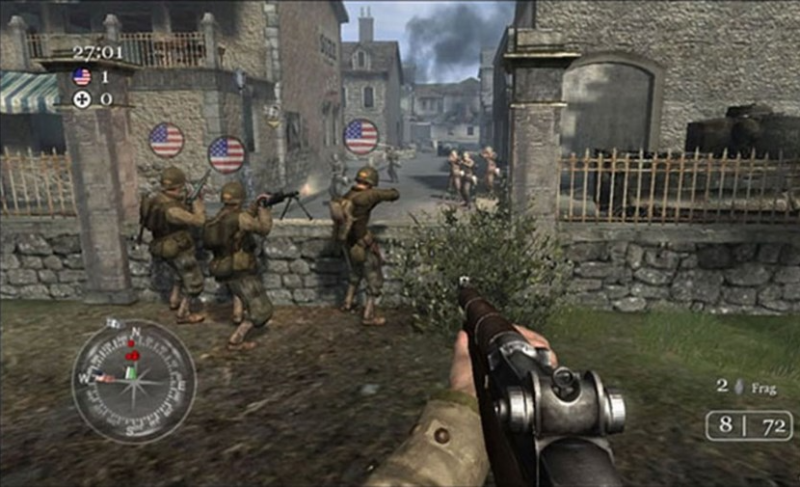
Artist's conception of what Sony thinks the next Call of Duty might look like on the PS5 (and definitely not a screenshot from Call of Duty 2 on Xbox 360. Nope. No way).
Enlarge / Artist’s conception of what Sony thinks the next Call of Duty might look like on the PS5 (and definitely not a screenshot from Call of Duty 2 on Xbox 360. Nope. No way).
Activision


Late last month, UK regulators said they no longer believed a proposed Microsoft-owned Activision would bar Call of Duty games from PlayStation platforms, a reversal of earlier preliminary findings. Even if you grant that premise, though, Sony says that it’s still worried Microsoft could give PlayStation owners a “degraded” version of new Call of Duty games in an effort to make the Xbox versions look better.

“Simply… making it as good as it could be”

In a newly published response to the UK’s Competition and Markets Authority, Sony says the regulators’ recent turnaround is “surprising, unprecedented, and irrational.” The company takes specific issue with the regulators’ “lifetime value” modeling, which Sony says heavily undervalues what an Xbox-exclusive Call of Duty would be worth to Microsoft.

Beyond those technical concerns, though, Sony says it worries that Microsoft might subtly undermine PlayStation “simply by not making it as good as it could be.” That could include small changes to the game’s “performance [or] quality of play,” but also secondary moves to “raise [Call of Duty’s] price [on PlayStation], release the game at a later date, or make it available only on Game Pass.” Microsoft would also “have no incentive to make use of the advanced features in PlayStation not found in Xbox,” Sony says, an apparent reference to the PS5 controller’s advanced haptics and built-in audio capabilities.

In its own newly filed response, Microsoft reiterated that it has “no intention to withhold or degrade access to Call of Duty or any other Activision content on PlayStation.” That follows on a March filing where Microsoft promised Sony parity on Call of Duty’s “release date, content, features, upgrades, quality, and playability.”

But Sony’s response reflects a continued lack of trust in such promises. The company cites detailed analyses from the likes of Digital Foundry in saying that “the technical quality of Modern Warfare II was similar across platforms” in today’s market. After a merger, though, Sony argues that “Microsoft would have different incentives because degrading the experience on PlayStation would benefit Xbox, PlayStation’s ‘closest rival.'”

[embedded content]
A Digital Foundry video that finds current versions of Call of Duty perform similarly across PlayStation and Xbox platforms.

This kind of “partial foreclosure” strategy might “trigger fewer gamer complaints” than full Xbox exclusivity for Call of Duty, Sony says, while also allowing Microsoft to “still secure revenues from sales of Call of Duty on PlayStation for a transitional period.” But Sony says the long-term results of this kind of “degraded” PlayStation version would be the same as a full PlayStation ban: Call of Duty players abandoning Sony and moving to Microsoft’s platforms.

Such a move would “seriously damage our reputation,” Sony Interactive Entertainment CEO Jim Ryan told the CMA in a recent hearing. “Our gamers would desert our platform in droves and network effects would exacerbate the problem. Our business would never recover.”

“Attuned to quality”

This isn’t the first time Sony has expressed concerns over PlayStation getting a “worse” Call of Duty deal. In early March, Sony worried about the economic incentives of negotiating a Call of Duty licensing fee with a Microsoft-owned Activision. “Today, Activision is incentivized to reach an agreement with [Sony] to distribute Call of Duty,” the company wrote. After a merger, though, Microsoft-owned Activision “would benefit from a failure to distribute Call of Duty on PlayStation,” Sony said.

Sony also argued in March that these kinds of platform parity issues “could arise even without an active decision on the part of Microsoft to degrade Call of Duty on PlayStation.” For instance, Microsoft might be “incentivized to support and prioritize development of the Xbox version of the game, such as by using its best engineers and more of its resources.”

Sony worries that Call of Duty ownership will be an effective "lever" over console competition for Microsoft.
Enlarge / Sony worries that Call of Duty ownership will be an effective “lever” over console competition for Microsoft.
Getty Images | Bloomberg

In its March update, the UK’s CMA said it found these kinds of arguments from Sony generally unpersuasive. “We have provisionally concluded that, although such strategies could degrade PlayStation’s offering to some extent, they would not materially affect its ability to compete,” the regulators said.

But Sony argues back that even a small difference in Call of Duty quality, availability, or price between the platforms could “quickly harm [Sony’s] reputation and cause a loss of engagement and of players.”

“It is difficult to conceive of an industry where consumers are more attuned to quality and where quality affects purchasing decisions,” Sony writes. “Call of Duty gamers are passionate, knowledgeable, and sophisticated. Gamers engage with each title in the franchise immediately after its release, are keenly aware of a game’s price, quality, and features, and regularly compare the quality, performance, and features of their favorite games across PlayStation and Xbox.”

We’ll see if those kinds of arguments are ultimately persuasive when the CMA releases its final report, which is due by the end of April.

https://arstechnica.com/?p=1929772


PC gaming market is set to grow again after pandemic and overstock corrections

Someone playing games at a Republic of Gamers display
Enlarge / Intel GPUs, ultra-wide monitors, and a vague sense that it’s time for some gamers to refresh: These are some of the factors that have one report showing industry growth for PC gaming.
Peerapon Boonyakiat/SOPA Images/LightRocket via Getty Images

PC gamers may be concerned about losing their jobs in 2023, but not so much that they can ignore a glut of new GPU and ultra-widescreen monitor options.

That’s the elevator-pitch version of Jon Peddie Research’s report on PC gaming hardware sales and costs. At a high level, it suggests that while mid-range gaming will see only gradual growth from 2023 through 2025, both entry-level and high-end hardware should see notable upticks through 2025. The market should recover more than $5 billion overall from its 2022 drop-off, with the high end taking $3.92 billion and entry level $2.29 billion.

PC gaming market figures from JPR.

Reading exactly which bits of PC hardware fit into which segment, and getting more detail on how JPR put these numbers together, costs even more than a 40-series Nvidia card, at $27,500 per year for access. So we’re left to wonder which cards, monitors, chips, and other gear fit into entry-, mid-level, and high-end. But JPR does suggest a few factors moving the numbers around:

  • “Focus by manufacturers” in high-end, “but at the expense of developing mid-range offerings”
  • Intel’s entry into discrete graphics (entry-level)
  • AMD’s “older GPUs,” now discounted to entry-level prices.
  • A recovering economy and a “system replacement refresh cycle” in 2024
  • Ultra-wide and super-high-res displays at “lower” prices ($320)

None of those forecasted trends seems irrational, although wider monitors with higher-refresh rate, at the entry- and mid-level price points seem more likely to take off in the next couple of years than 8K, which is still in its infancy. With the crypto mining market for GPUs having finally abated, and with Intel and AMD offering far more options below the high end, a reasonable but notable boost in entry-level system purchases could be viable.

Then again, nearly every other piece of hardware inside a gaming PC has recovered from pandemic-level pricing. Gigantic, insanely fast NVMe drives are constantly being offered and discounted. AMD is offering gaming-focused CPUs not only at the high end, but at a mid-tier level that unlocks the potential of higher-end cards. That leaves motherboards, power supplies, memory, and other components, which in most normal people’s self-built gaming PCs are some mixture of entry, mid, and high-end. It’s a strange market to track and think about; I’m impressed JPR is even attempting to make sense of it.

https://arstechnica.com/?p=1929662


Review: The Super Mario Bros. Movie is a madcap love letter to fans

Me-ow.
Enlarge / Me-ow.
Nintendo; Illumination Entertainment & Universal Pictures

I’ve been waiting three decades for Hollywood to make a film that could wash away my disappointing memories of seeing the 1993 Super Mario Bros. movie in theaters on opening weekend.

Yes, I know that famously messy production has now become something of a cult classic among people who are now nostalgic for its uniquely ’90s vibe. But I’m still not completely recovered from my experience as a 10-year-old Mario superfan who was crushed to see a completely unrecognizable version of Mario on the silver screen. Rather than a loving homage to the world of my favorite video game, that younger version of me got an unrelated gonzo steampunk fever dream with the barest sprinkling of Mario references layered on top.

If anything, Illumination’s The Super Mario Bros. Movie has the opposite problem. This film version captures all the fun and vibrancy of the Mario games, with enough references to familiar characters, items, and locations to make even a die-hard Mario fan’s head spin. But the movie is so maniacally focused on squeezing in so many of those references at a madcap pace that the film comes off as unfocused, cluttered, and nearly incomprehensible from a story perspective.

It’s also everything that a 10-year-old version of me could ever have dreamed of a Mario movie being.

Let’s-a-go

The Mario games aren’t exactly known for their deep plots, so it should be no surprise that this film’s story is almost painfully straightforward. Mario and Luigi, two tight-knit but struggling Brooklyn plumbers, get separated when they unexpectedly fall into the fantastical Mushroom Kingdom. Instead of the usual Mario-saves-the-princess tale, Mario seeks Princess Peach’s help to rescue his brother from Bowser’s evil clutches. Peach—cast here as an endearing badass girl boss eager to protect her mushroom subjects—leads a fish-out-of-water Mario on a quest to recruit allies and stop Bowser for good.

I won’t spoil the ending, but was it really in doubt? Mario’s platform games tend to end only one way, after all…

No clogs in this pipe.
Enlarge / No clogs in this pipe.
Nintendo; Illumination Entertainment & Universal Pictures

There are a few perfunctory attempts at deeper characterization as the plot meanders from point to point. Mario gets an annoying family of Italian stereotypes, for instance, just so the film can spend roughly 30 seconds examining his drive to impress a withholding father. Bowser, meanwhile, is driven by dual desires to destroy the Mushroom Kingdom and force Peach to wed him under duress, a dichotomy that the film is at least self-aware enough to poke fun at.

These and other tropey subplots—the “enemies become friends” one; the “family is stronger together” one; the “meet-cute romantic interest” one—are not given nearly enough time to breathe, even by the standard of similar family films. If you were hoping for some Paper Mario-style lore—or even a focused, character-heavy, Super Mario Adventures-style quest—you’ll end up disappointed.

https://arstechnica.com/?p=1929552