Terahertz imaging reveals hidden inscription on 16th-century funerary cross

Georgia Tech's Alexandre Locquet (left) and David Citrin (right) with an image of the 16th-century funerary cross used in their study.
Enlarge / Georgia Tech’s Alexandre Locquet (left) and David Citrin (right) with an image of the 16th-century funerary cross used in their study.
Georgia Tech-Lorraine

In 1843, archaeologists excavated the burial grounds of Remiremont Abbey in Lorraine, France (the abbey was founded in the 7th century). It was medieval custom to bury the deceased with cross-shaped plaques cut from thin sheets of lead placed across the chest. The crosses often included inscribed prayers, but many of those inscriptions have been rendered unreadable over the ensuing centuries by layers of corrosion. Now, an interdisciplinary team of scientists has successfully subjected one such funerary cross to terahertz (THz) imaging and revealed its hidden inscription—fragments of the Lord’s Prayer (Pater Noster)—according to a new paper published in the journal Scientific Reports.

“Our approach enabled us to read a text that was hidden beneath corrosion, perhaps for hundreds of years,” said co-author Alexandre Locquet of Georgia Tech-Lorraine in Metz, France. “Clearly, approaches that access such information without damaging the object are of great interest to archaeologists.” According to the authors, this approach is also useful for studying historical paintings, detecting skin cancer, measuring the thickness of automotive paints, and making sure turbine blade coatings adhere properly.

In recent years, a variety of cutting-edge non-destructive imaging methods have proved to be a boon to art conservationists and archaeologists alike. Each technique has its advantages and disadvantages. For instance, ground-penetrating radar (radio waves) is great for locating buried artifacts, among other uses, while lidar is useful for creating high-resolution maps of surface terrain. Infrared reflectography is well-suited to certain artworks whose materials contain pigments that reflect a lot of infrared light. Ultraviolet light is ideal for identifying varnishes and detecting any retouching that was done with white pigments containing zinc and titanium, although UV light doesn’t penetrate paint layers.

There are also many X-ray imaging technologies that have been used to reveal new details about artifacts, including a famous 1788 portrait of Antoine Lavoisier and his wife by the Neoclassical painter Jaques-Louis David; the hull of Henry VIII’s favorite warship, the Mary Rose, which sank in battle in 1545; the 14th-century tomb of Edward of Woodstock (aka the Black Prince); and the mysterious Antikythera mechanism, an ancient device believed to have been used to track the heavens.

<a href="https://rassegna.lbit-solution.it/wp-content/uploads/2022/05/terahertz-imaging-reveals-hidden-inscription-on-16th-century-funerary-cross-2.jpg" class="enlarge" data-height="463" data-width="1200" alt="Three views of the painting Madonna in Preghiera. (l-r) visible-light photography, ultraviolet fluorescence, and infrared reflectography. “><img alt="Three views of the painting Madonna in Preghiera. (l-r) visible-light photography, ultraviolet fluorescence, and infrared reflectography. ” src=”https://rassegna.lbit-solution.it/wp-content/uploads/2022/05/terahertz-imaging-reveals-hidden-inscription-on-16th-century-funerary-cross-1.jpg” width=”640″ height=”247″ srcset=”https://rassegna.lbit-solution.it/wp-content/uploads/2022/05/terahertz-imaging-reveals-hidden-inscription-on-16th-century-funerary-cross-2.jpg 2x”>
Enlarge / Three views of the painting Madonna in Preghiera. (l-r) visible-light photography, ultraviolet fluorescence, and infrared reflectography.
Junliang Dong et al., 2017

THz imaging fills a critical gap in frequencies ranging from about 100 GHz to 10 THz, according to co-author David Citrin of Georgia Tech. The technique gives researchers the ability to image a large object quickly and cheaply extract useful information about that object. Even better, THz radiation can penetrate paints and glazes without damaging the objects being imaged.

Citrin has compared the technique to how seismologists identify various layers of rock in the ground by emitting pulses of sound and then measuring the returning echoes. THz imaging uses high-frequency pulses of electromagnetic radiation in much the same way, measuring how that terahertz radiation reflects off the various layers of paint.

This latest project builds on Citrin’s 2017 work applying terahertz scanners and data processing to examine the layers of a 17th-century painting: the Madonna in Preghiera, attributed to the workshop of Giovanni Battista Salvi da Sassoferrato. The painting was placed face-down, and the scanner emitted pulses of THz radiation every 200 microns across the canvas, measuring the reflections to discern layers between 100 to 150 microns thick.

https://arstechnica.com/?p=1850911



The best games we played at PAX East 2022

The best games we played at PAX East 2022


This year’s PAX East was a bit of a strange experience. The last time we attended the show was just weeks before the entire country began shutting down due to the pandemic. After a canceled show in 2021, the Boston Convention Center was once again filled with gaming fans this year, though now all of them were wearing masks (with strict enforcement).

Many of the big-name publishers that were at previous PAX shows were missing this year, whether because of pandemic risks or shrinking promotional travel budgets. That left the usual mix of indie developers and publishers hanging on to their floor space—though not really expanding to fill in the gaps.

Even though the total selection of games on offer seemed smaller, there were plenty of standout titles. Here are the nine games we’ve been thinking about ever since we left Boston.

Dwerve

[embedded content]

Developer: HalfHuman Games
Platforms:
Windows, Mac, Linux, Switch
Planned release date:
May 31, 2022
More info: Official website | Steam | Demo

It’s almost cliché for many indie games these days to simply take two popular genres and smash them together to create a new concept. For Dwerve, though, the combination of an action RPG and a tower defense game works to create something special.

While you can attack the various foes you find in Dwerve directly, you’ll quickly be overwhelmed if you do. Instead, each battle presents a new opportunity to run around while placing various automated defenses to pester the waves of enemies flooding across the countryside.

Positioning is key to maximizing each tower’s damage potential and that of the traps that slow down your foes and ideally funnel them down a hellish path of death. But battles aren’t “set it and forget it” affairs—as the swarms take out your defenses, you have to rush to replace them without simultaneously exposing yourself to damage.

The bog-standard young-boy-goes-out-to-save-the-world story isn’t especially notable, but even that small bit of structure helps provide some shape to the seeming pointlessness of most tower defense games. And while the on-site demo barely went beyond the tutorial stage, the appeal of the core gameplay loop was readily apparent.

Dordogne

[embedded content]

Developer: Un Je Ne Sais Quoi
Platforms: Windows, Switch
Planned release date: 2023
More info: Official website | Steam

On a PAX show floor dominated by high-octane action games, Dordogne felt like a breath of fresh mountain air on a cool spring day. That’s an appropriate feeling for this game, which is all about exploring the countryside of rural France as Mimi, a 32-year-old who just inherited her grandmother’s cottage.

The small slice of the game we played took place well before that inheritance, though, with Mimi exploring her memories of a visit with her grandmother at 10 years old. Wandering through those watercolor memories, Mimi records sounds, takes photos, and grabs stray words from her thoughts to collect in a journal that the player puts together at the end of each in-game day.

The game’s hand-painted environments and thoughtful sound design evoke a childlike wonder, as do little touches like Mimi running around with her hands outstretched at her side like she’s about to take off in Super Mario World. But just underneath that idyllic, carefree facade are strong signs that Mimi is struggling with some traumatic changes in her life and emotions that she’s scarcely equipped to handle.

Even those who didn’t grow up in the French countryside should be able to relate to the painful process of growing up in this charming game.

https://arstechnica.com/?p=1850692


Activision news flurry: Shareholder vote, WarCraft smartphone game tease

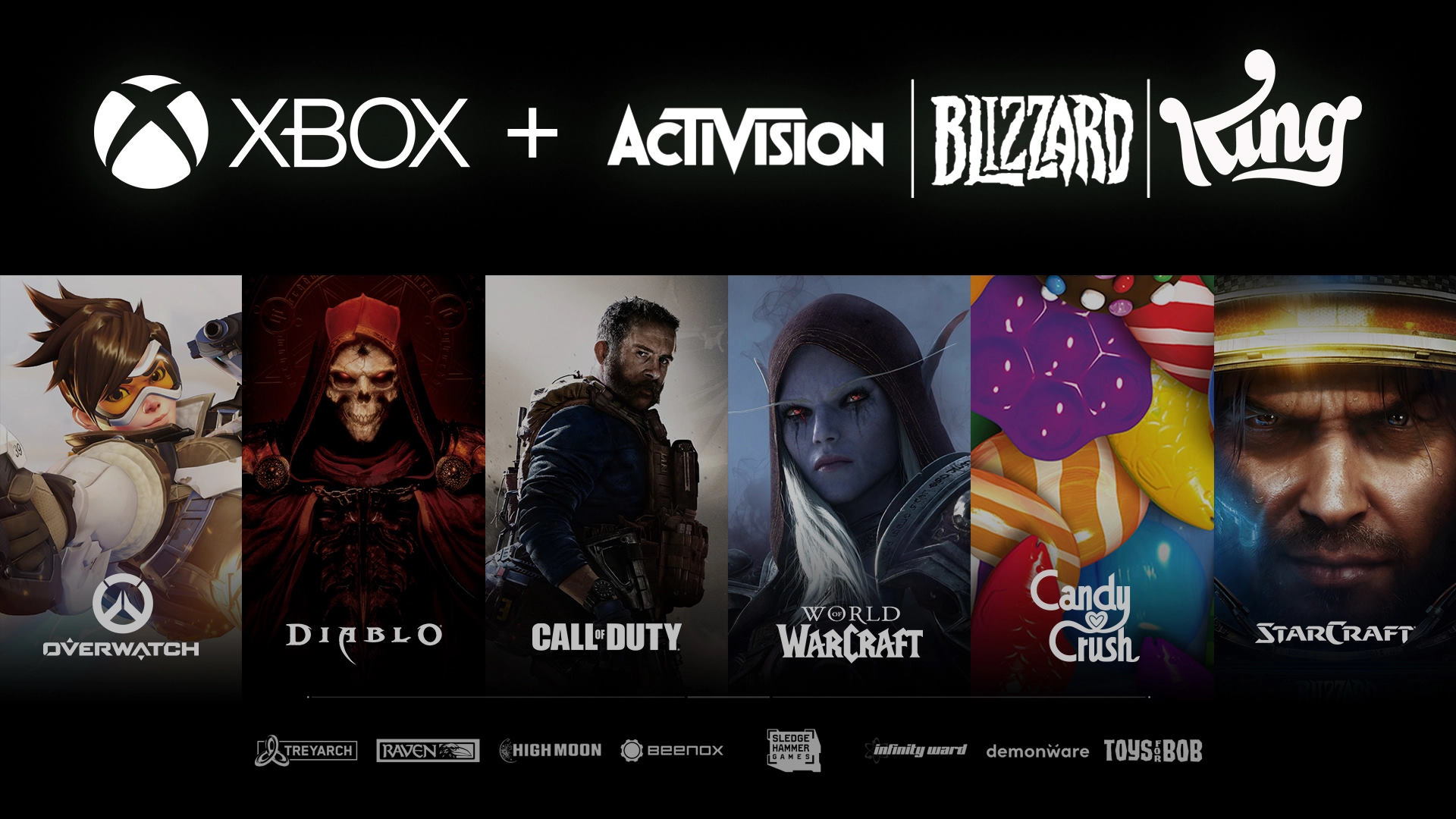
Just a few of the Activision franchises that will become Microsoft properties if and when the acquisition is finalized.
Enlarge / Just a few of the Activision franchises that will become Microsoft properties if and when the acquisition is finalized.
Microsoft / Activision

On Thursday, Microsoft and Activision-Blizzard cleared the second-biggest hurdle remaining in their plan to complete a $68.7 billion acquisition deal: existing shareholder buy-in.

ATVI shareholders have voted overwhelmingly in favor of approving Microsoft’s bid to acquire Activision-Blizzard, and a company announcement counted over 98 percent of shareholder votes in the “yes” column.

On a dollars-and-cents level, anyone currently holding on to Activision stock is likely interested in the potential cash windfall coming their way should the deal be completed. Ahead of the shareholder vote on Thursday morning, Activision stock prices were trading around $76 per share, while Microsoft’s acquisition terms include a buyout amount of $95 per share.

FTC is next, and critics allege “undue concentration of market power”

That share price has been steadily dipping since an upward spike on January 18, the same day Microsoft and Activision announced their potential deal. As Bloomberg points out, the gap between the current trading price and the acquisition valuation is higher than many significant mergers and acquisitions hovering in the United States, particularly the impending Twitter buyout spearheaded by Elon Musk. Such gaps often indicate a lack of market confidence in a proposed deal surviving regulator scrutiny.

Sure enough, Federal Trade Commission approval remains the final likely hurdle for Microsoft’s acquisition deal to survive before the deal can begin taking official shape, and as of press time, reports indicate the FTC will take lead in performing an antitrust review of the deal. This follows a January 18 announcement (yes, the same day that Microsoft announced its acquisition intentions) that the FTC and US Department of Justice sought public comment in their efforts “to better detect and prevent illegal, anticompetitive deals in today’s modern markets.”

Soon after, critics of the proposed Microsoft-Activision merger published open letters decrying the deal and calling out its antitrust aspects. One such letter, posted on March 1 and signed by 15 advocacy groups, alleged that the deal “may lead to an undue concentration of market power when viewed as a vertical or horizontal merger, threaten data privacy and security, undermine consumer protection online, impinge on the consumer right to repair and exacerbate worker disempowerment and wage suppression.” The letters’ claims about Microsoft’s grip on the video gaming and cloud computing markets were arguably exacerbated by Microsoft’s bullish financial disclosures earlier this week, which pointed to continued jumps in revenue in both of those markets.

Should the acquisition clear all regulatory scrutiny, Microsoft will arguably still have significant Activision-Blizzard fallout to deal with, primarily in the form of ongoing legal pressure over widespread accusations of pay disparity and sexual harassment throughout Activision Blizzard’s network of game studios. That case entered a new, bizarre phase earlier this month when a top California state lawyer on the case resigned in protest, pointing to Governor Gavin Newsom’s decision to fire a lead attorney in the agency handling the state’s lawsuit.

The games keep coming

Yet Activision Blizzard continues barreling full steam ahead as far as new video game launches and teases are concerned. Hours after the Thursday shareholder vote concluded, the company announced a countdown for a new WarCraft game announcement at 1 pm ET on Tuesday, May 3. The game in question is slated to launch on mobile phones, and Blizzard has teased “exciting news for heroes of Azeroth looking to take their adventures on the go.”

That language suggests some kind of full-fledged “adventure” in the WarCraft universe, as opposed to a smartphone-style puzzle or idle game, but it’s not necessarily a clear hint of what’s to come. For a better guess, we turn to Bloomberg reporter Jason Schreier, who suggested at gaming forum ResetERA earlier this week that Blizzard is currently working on at least two smartphone games in the WarCraft universe, and the ones he knows about are “one Pokémon Go [and] one other Clash-ish one,” referring to either Clash of Clans or Clash Royale.

This news follows the long-awaited beta for Overwatch 2 finally going live on Tuesday, whose Twitch streams immediately broke viewership records for Blizzard games. Its concurrent viewership count exceeded 1.4 million this week, arguably due to a Twitch promotion that fed free beta keys to viewers as “drops” so they could access the beta on their own PCs during the three-week test. And in easily the least surprising Activision-related news, the company also unveiled the first logo and tease of the next Call of Duty video game on Thursday, dubbed Call of Duty: Modern Warfare 2—apparently a sequel to the CoD spinoff’s 2019 reboot, as opposed to a remaster of the original 2009 sequel (not confusing at all, nope).

https://arstechnica.com/?p=1851073


Call of Duty cheaters are being struck blind by anti-cheat software

Hey, where'd everybody go?
Enlarge / Hey, where’d everybody go?
Chaos / Activision

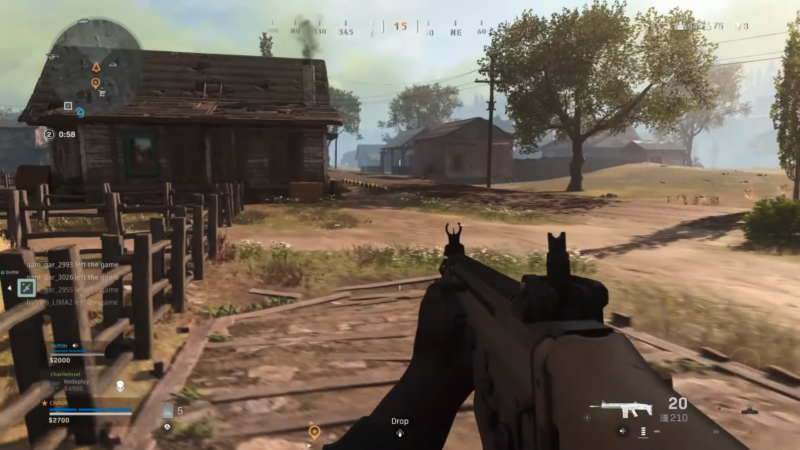
Players caught cheating in Call of Duty can now be punished with a penalty that makes them unable to see their opponents, a new anti-cheat mitigation feature that Activision calls “cloaking.”

Cheaters that are subject to a cloaking penalty will find that “characters, bullets, even sound from legitimate players will be undetectable,” according to a post on the official Call of Duty development blog. Those cheaters will remain fully visible to non-cheaters, though; Activision quips that “they’ll be the players you see spinning in circles hollering, “Who is shooting me?!'”

The latest anti-cheat update will roll out first for Call of Duty: Vanguard, then applied to the free-to-play Warzone, Activision says, “to minimize and issues players may encounter.” It also comes on top of another cheating mitigation measure, called Damage Shield, which was announced in February and “disables the cheater’s ability to inflict critical damage on other players.”

You might think that Activision would be better served just banning cheaters and booting them from a match as soon as they’re detected, rather than merely messing with their effectiveness. But Activision wrote in February that instant mitigation “leaves the cheater vulnerable to real players and allows [the anti-cheat team] to collect information about a cheater’s system.” Activision also insists that there’s “no possibility” of a false positive punishing non-cheaters with mitigation drawbacks, and that “we will never interfere in gunfights between law-abiding community members.”

After Damage Shield debuted in February, Activision said it noted “a decline in cheat reporting,” but “we know the work is never done.” The company also says it continues with “testing and deploying a variety of new mitigation and detection techniques,” some of which players haven’t noticed en masse yet.

Beyond the ban

Call of Duty‘s new cheat mitigation tools continue a long history of creative punishments for video game cheaters that go beyond mere suspensions or bans. In 2012, Rockstar Games quarantined its cheaters into a “Cheaters Pool” lobby, letting them use their exploits only against each other. Meanwhile, players caught cheating in Pokémon Go were stuck in an in-game purgatory where they could only find and catch common Pokémon like Pidgeys.

<a href="https://cdn.arstechnica.net/wp-content/uploads/2017/05/pokemon-go-pidgey.png" class="enlarge" data-height="720" data-width="1280" alt="Common Pokémon like this Pidgey were all some Pokémon Go cheaters were able to see in the game.”><img alt="Common Pokémon like this Pidgey were all some Pokémon Go cheaters were able to see in the game.” src=”https://rassegna.lbit-solution.it/wp-content/uploads/2022/04/call-of-duty-cheaters-are-being-struck-blind-by-anti-cheat-software-1.png” width=”640″ height=”360″ srcset=”https://rassegna.lbit-solution.it/wp-content/uploads/2022/04/call-of-duty-cheaters-are-being-struck-blind-by-anti-cheat-software-2.png 2x”>
Enlarge / Common Pokémon like this Pidgey were all some Pokémon Go cheaters were able to see in the game.

Gears of War 2 players who cheated to get in-game achievements risked having their lifetime Gamerscore set to zero across their Xbox account. More recently, Riot Games let some League of Legends cheaters back into the game during a limited two-hour livestream where they fought against developers who were also using cheats.

In November, Activision also warned that players caught repeatedly cheating in Call of Duty games risked an account-wide ban that would apply across “any past, present, and future titles in the Call of Duty franchise.” Electronic Arts rolled out an even harsher punishment on an unrepentant FIFA cheater, who in 2020 was banned from all EA games and services after “post[ing] abusive and threatening messages and videos about EA employees and competitive players on social media.”

Activision’s new anti-cheat tools build on top of Call of Duty‘s Ricochet anti-cheat system, the kernel-level driver the company used late last year. Despite the tool’s low-level access to a player’s system, Activision says that Ricochet only actively checks the user’s system when a Call of Duty game is running. Richochet can’t look at unrelated files.

https://arstechnica.com/?p=1850906


So long, Bethesda Launcher: Here’s how to move its games to a Steam account

Something new can now be found deep in the void that is the Bethesda Launcher's logo.
Enlarge / Something new can now be found deep in the void that is the Bethesda Launcher’s logo.
Bethesda / Valve / Sam Machkovech

If you’ve been waiting to crack open a bottle of Balmora Blue Wine and pour one out for the soon-to-be-shuttered Bethesda Launcher, today might be the day.

Bethesda has now formally rolled out a method to seamlessly transfer most PC games and virtual currencies purchased or acquired on the 6-year-old Bethesda Launcher storefront. On May 11, the launcher will no longer function, and you’ll need to use Steam to access any games you had acquired via Bethesda Launcher from that point on.

Starting Wednesday, you can officially transfer all compatible content to Steam and safely uninstall the Bethesda Launcher. As Ars Technica has confirmed, the process could be painless for you.

Useful links, simple account transfer process

Most of the author's personal Bethesda Launcher library came in the form of free software giveaways over the years.
Enlarge / Most of the author’s personal Bethesda Launcher library came in the form of free software giveaways over the years.

If you have previously used the Bethesda Launcher, log in to Bethesda.net to see what content is associated with your account. Anything labeled “game,” “expansion,” “DLC,” or “currency,” with the exception of content related to The Elder Scrolls Online, should be compatible with Bethesda’s Steam transfer process.

Beginning the formal migration.
Enlarge / Beginning the formal migration.

That account page has a sidebar on the right with two more useful tabs. Start with “linked accounts.” If you don’t already have a Steam account connected here, use the plus-sign box on this page to enter your Steam username and password. Once that’s done, click the “transfer library” tab, and this will allow you to transfer the entirety of your account’s Steam-compatible contents to a single Steam account. Instead of doling out Steam redemption codes for each game, Bethesda will coordinate the whole game-credential transfer in the background, which took about 10 minutes for my personal account.

Are you sure?
Enlarge / Are you sure?

If your Bethesda.net account is full of games that you already own on Steam, this might be a good time to reach out to a friend in need of free games and make an arrangement. Just keep in mind that you don’t get “duplicate” copies or Steam gift options for games that you own on both Bethesda Launcher and Steam, and you cannot break out your extra games here before moving them to Steam; dupes disintegrate in the process.

This process takes about 10 minutes.
Enlarge / This process takes about 10 minutes.

Some of this process might look familiar, as Bethesda already rolled out a milder version of the transfer process in early 2020. Fallout 76 ‘s earliest owners were able to claim a free copy of the game on Steam as part of its delayed launch on that platform, so long as they had linked a Steam account by April 2020. This free offer came in part because Fallout 76 does not support cross-play between players on Bethesda.net and Steam.

Caught this news too late? Don’t fret

Success! Goodbye forever, Bethesda Launcher.
Enlarge / Success! Goodbye forever, Bethesda Launcher.

In good news for anyone who sees this article well after May 11 and freaks out: calm down. It’s okay. The official Bethesda.net site will remain online for the foreseeable future for a few reasons, the biggest being that any lapsed Bethesda Launcher accounts will hang out in a hermetically sealed state, waiting for affected users to log in at any point and initiate a transfer of games and currencies to Steam. Bethesda.net will continue to function for games that support its logins, as well, whether to grant game-specific perks or keep track of save files.

The biggest non-Steam exception to today’s transfer process is The Elder Scrolls Online, which has always required its own PC launcher (much like other popular MMOs that are sold on Steam). If your Bethesda Launcher library has any offline save and configuration files, you’ll need to move those manually to your newly installed Steam versions. For pretty much all affected games, the process is as simple as moving files from an old install folder to a new one, and Bethesda details exact file locations on a helpful support page. That process is different for Doom Eternal, however, as its save files must be moved with a custom save conversion tool available starting today as a free download.

https://arstechnica.com/?p=1850756


Diablo Immortal was built for mobile, but now it’s coming to PCs, too

<img src="https://rassegna.lbit-solution.it/wp-content/uploads/2022/04/diablo-immortal-was-built-for-mobile-but-now-its-coming-to-pcs-too.png" alt="In case you couldn't tell, this Diablo Immortal footage from Blizzard was captured on a PC.”>
Enlarge / In case you couldn’t tell, this Diablo Immortal footage from Blizzard was captured on a PC.


It has been nearly three and a half years since Blizzard first announced Diablo Immortal as the first smartphone-only entry in the popular PC and console action RPG series. So it came as a surprise this morning when Blizzard announced that the game’s June 2 mobile launch would be accompanied by a free-to-play open beta on Windows PCs.

“Community feedback has been imperative to the development of Immortal and has influenced the game in many ways, as you’ll come to see,” Blizzard wrote in an announcement post. “One recurring piece of feedback we especially took to heart was the desire to play Immortal on PC.”

The PC open beta will offer “full cross-play and cross-progression support” with the “uncompromised AAA mobile experience” from the get-go, Blizzard promised. But while the “built from the ground up for mobile” version sounds like it has been fully polished and tuned, the PC experience launching in June will be initially set up to “collect player feedback, make changes, and fine-tune this version of Immortal until we feel it delivers a finalized experience for all courageous adventurers.”

When the PC beta period ends, “all the progress and purchases you’ve made will be maintained,” Blizzard said.

A controlled mix of new and old

In a lengthy blog post detailing the PC porting process, Blizzard discussed how the development team went “back and forth” on whether a PC version was worthwhile in the first place:

On the one hand, we felt that we wouldn’t be doing the title justice by releasing a game originally designed for mobile on PC; on the other hand, we wanted to make sure the game reached as many players as possible—especially our most dedicated PC fans. In the end, the deciding factor was that we knew many of you would attempt to play this game through an emulator, thus leading us towards building a better experience.

After trying “several alternative setups” for the PC Immortal controls, the development team focused on “preserv[ing] major elements of the iconic Diablo control scheme” for Windows players. The tapping and swiping on mobile have been replaced on the PC with a scheme that will be familiar to any Diablo player: left-clicks for movements and attacks, keys for abilities and potions.

But Blizzard has also added a WASD control scheme “as an additional movement tool” for the first time in a Diablo game. This allows for “moving while attacking simultaneously” with charged abilities, as players can on mobile, while also easing the need for “relentlessly left-clicking for both moving and attacking,” Blizzard said.

Porting from a tiny mobile screen to massive PC monitors also meant scaling down the user interface elements and adding hotkeys for major menu functions, Blizzard said. And while the game will also support handheld controllers, a keyboard will still be needed to type messages to other players on PC.

While Blizzard says the Immortal-on-PC “experiment” will “feel a little different from other PC Diablo games,” it says that “seasoned PC veterans” should be “arm[ed]… with familiar tools as you journey back through Sanctuary.” Blizzard says over 30 million players have preregistered to try out Immortal across all platforms, which should ensure a robust initial player base for the game’s eight-player “warbands,” 150-person “clans,” and player-versus-player combat, which includes 1-versus-30 showdowns. The company also promises “the largest Diablo game we’ve released” at launch and says that “new content will be released regularly to players for free in the years to come, including new zones, dungeons, and character classes.”

Work still continues on Diablo IV, which we first laid our hands on in 2019 but which is now expected to launch after 2022. https://arstechnica.com/?p=1850237


Tandis review: The ultimate geometry-based puzzle game

<img src="https://rassegna.lbit-solution.it/wp-content/uploads/2022/04/tandis-review-the-ultimate-geometry-based-puzzle-game.jpg" alt="By moving simple shapes from one grid to the next, Tandis players can apply mathematical functions to their shapes and enjoy immediate shape-shifting results—all used to solve the game’s tricky, unique puzzles.”>
Enlarge / By moving simple shapes from one grid to the next, Tandis players can apply mathematical functions to their shapes and enjoy immediate shape-shifting results—all used to solve the game’s tricky, unique puzzles.
Mahdi Bahrami

The puzzle-gaming genre of “making shapes out of formulas” is currently ruled by a single designer. Five years after his last sensational stab at the genre, Iranian-born game-maker Mahdi Bahrami has returned with an even more impressive—and, at times, hair-pullingly difficult—puzzling masterpiece.

Tandis, out this week on both Steam and as a direct, DRM-free purchase for $15 (temporarily on sale for $13.49), is arguably the coolest execution of high-level math I’ve ever seen in a PC game. Even better, its challenge is disguised in the form of a tinker-toy. Hand this to any young, budding mathematician, and watch them get hooked on what’s ultimately a brilliant edutainment gem in disguise.

Axes and allies

The beauty of Tandis comes from how it turns the formulaic manipulation of X, Y, and Z axes into a gaming mechanic. Typical education about mathematical formulas revolves around plotting solution results on a 2D grid to see what shapes they generate. That’s fine enough—though doing this requires the mathematical grokking of a formula itself. But what if you could do this kind of thing much faster, and in 3D, by dragging shapes onto an easily understood series of grids, then watching them transform into fantastic new shapes in response?

<a href="https://cdn.arstechnica.net/wp-content/uploads/2022/04/20220422114825_1.jpg" class="enlarge" data-height="1080" data-width="1920" alt="The beginning of the first Tandis puzzle.”><img alt="The beginning of the first Tandis puzzle.” src=”https://rassegna.lbit-solution.it/wp-content/uploads/2022/04/tandis-review-the-ultimate-geometry-based-puzzle-game-1.jpg” width=”640″ height=”360″ srcset=”https://rassegna.lbit-solution.it/wp-content/uploads/2022/04/tandis-review-the-ultimate-geometry-based-puzzle-game-4.jpg 2x”>
Enlarge / The beginning of the first Tandis puzzle.

In every Tandis puzzle, players are handed a single geometric shape (sometimes with full 3D properties, sometimes as a flat 2D polygon), then are shown the puzzle’s solution, which is a different geometric shape. Let’s start with a simple example. In the game’s first puzzle, your starting shape (which you can pick up) is one-fourth the volume of the “solution” block (which you cannot touch).

The right-side grid is double the length and width of the left-side grid. Putting a piece on either generates a new piece on the other that is proportional.
Enlarge / The right-side grid is double the length and width of the left-side grid. Putting a piece on either generates a new piece on the other that is proportional.

Pick the shape up with your mouse, then place it on a grid made of black-and-white squares. To the right of that, a new shape appears on a grid of bigger black-and-white squares, and the resulting shape is twice as large on all axes—which, coincidentally enough, is how much bigger the right-side black-and-white squares are. (Mathematically, that’s a simple multiplication of all axes’ values.) You can pick up either shape, and at this point, the larger one perfectly matches the solution shape. Pick it up and move it to a podium next to the solution and Tandis will scan your submission to confirm that its size, shape, and curves are close enough.

Simple rectangle block on left becomes squiggly rectangle block on right.
Enlarge / Simple rectangle block on left becomes squiggly rectangle block on right.

The next puzzle hints to how hairy Tandis will eventually become. Its left-side grid is made of black-and-white squares, while the other grid is full of squiggly lines. Put a right-angled shape onto the left-side grid, and it will come out of the right-side grid with its X and Y axes in equally squiggly form. (Mathematically, we’re looking at a parabolic equation applied to a single axis here.)

From here on out, Tandis only becomes more intense, and its challenge potential is perhaps best summarized by the below collection of shape-manipulation GIFs, as made by Bahrami.

If a puzzle has multiple grids on its table, you can put a shape onto any of them to generate manipulated shapes on the other grids. Use your mouse to lift any one of those new shapes, then move it onto another grid for the sake of a recursive formula application. If one grid transforms a 2D shape into a 3D donut, you can grab the resulting donut, shift it onto the donut-izing grid, and distort it that much more as a result. The exact placement of 3D shapes onto the more intense grids additionally changes which portions of their shapes are manipulated.

https://arstechnica.com/?p=1849907


Biologist, elite climber team up to hunt for new species in The Last Tepui

[embedded content]
Elite climber Alex Honnold teams up with NatGeo to bring biologist Bruce Means to the top of a massive “island in the sky” in The Last Tepui.

Deep in the Amazon jungle, magnificent rocky tabletop towers rise abruptly from the foliage, often cloaked in thick clouds. They’re called “tepuis” (“house of the gods”), and their plateaus, or mesas, are completely isolated from the forest below. That makes them a tantalizing potential source for exotic new species. National Geographic is marking Earth Day with the release of a new documentary, The Last Tepui, featuring renowned biologist Bruce Means teaming up with elite climber Alex Honnold and a veteran NatGeo team to become the first people to summit one of these remote structures.

(Some spoilers below.)

Anyone who has seen the Oscar-winning 2018 documentary Free Solo will be familiar with Honnold. He emerged seemingly out of nowhere in 2007 with a free solo climb of Astroman and the Rostrum in Yosemite National Park and soon became a dominant force in climbing. Free Solo documented Honnold’s quest to become the first to complete a free solo climb of El Capitan—not without controversy, given the very real risk of Honnold dying in the attempt. (Spoiler alert: He survived, completing the climb in 3 hours and 56 minutes.)

Means is less of a household name, but he is very much a giant in the biological sciences, having spent much of his storied career hunting for new species all over the world. Means had been on 33 expeditions to this tepui-rich region, but he had never managed to reach the top of one, given the challenge of climbing what NatGeo explorer and expedition leader Mark Synott (Lost on Everest) describes as “crazy towers in the jungle.” This expedition would be a “first ascent” for one tepui in particular, as well as what would likely be the 80-year-old Means’ last trip to the jungle.

<a href="https://rassegna.lbit-solution.it/wp-content/uploads/2022/04/biologist-elite-climber-team-up-to-hunt-for-new-species-in-the-last-tepui-2.jpg" class="enlarge" data-height="801" data-width="1200" alt="Renowned biologist Bruce Means and elite climber Alex Honnold travel to the Amazon jungle to hunt for new species in The Last Tepui.”><img alt="Renowned biologist Bruce Means and elite climber Alex Honnold travel to the Amazon jungle to hunt for new species in The Last Tepui.” src=”https://rassegna.lbit-solution.it/wp-content/uploads/2022/04/biologist-elite-climber-team-up-to-hunt-for-new-species-in-the-last-tepui.jpg” width=”640″ height=”427″ srcset=”https://rassegna.lbit-solution.it/wp-content/uploads/2022/04/biologist-elite-climber-team-up-to-hunt-for-new-species-in-the-last-tepui-2.jpg 2x”>
Enlarge / Renowned biologist Bruce Means and elite climber Alex Honnold travel to the Amazon jungle to hunt for new species in The Last Tepui.
National Geographic/Renan Ozturk

Like the Galapagos Islands, these 60 tepuis (sometimes called “islands in the sky”) are rich in biodiversity, with many plants and animals not found anywhere else in the world. Most are made of sheer blocks of Precambrian quartz arenite sandstone, remnants of a large sandstone plateau that once covered the granite floor of this region. One of the most famous is Mount Roraima (aka Roraima Tepui)—an inspiration for Arthur Conan Doyle’s 1912 novel The Lost World, about the discovery of a stunning prehistoric world thriving in isolation on top of the tepui.

Sinkholes sometimes form on the mesas, becoming as large as 1,000 feet in diameter and 1,000 feet deep. Ecologically, they are “islands within islands” and boast many species unique to that particularly sinkhole. So tepuis are hot spots of biodiversity. But even getting to the base of these structures can pose a major challenge, as the NatGeo team in The Last Tepui discovered.

Directed by Taylor Rees, the documentary follows Means, Honnold, Synott, and the rest of the crew as they hike through the dense vegetation of the jungle, with their guides hacking through the foliage to blaze a trail. The climbing sequence is genuinely suspenseful, and Honnold’s mastery is on full display. The documentary features the kind of stunning panoramic views one would expect from National Geographic, and the climbing team even managed to conduct an interview with Good Morning America from their precarious Ledge Camp—all thanks to the wonders of 21st-century technology.

"Tepui" translates to "house of the gods."
Enlarge / “Tepui” translates to “house of the gods.”
National Geographic/Renan Ozturk

All that hardship and nail-biting suspense paid off scientifically: DNA analysis confirmed six new species among the specimens collected during the trip. Perhaps the best part of the documentary is Means himself, whose love for science and the region is palpable throughout. “This is my Shangri-La,” he tells the camera while wading through a shallow river. “I’ll be leaving the planet sometime, and I’ll miss it.”

Ars sat down with Honnold and Rees to learn more.

https://arstechnica.com/?p=1848743


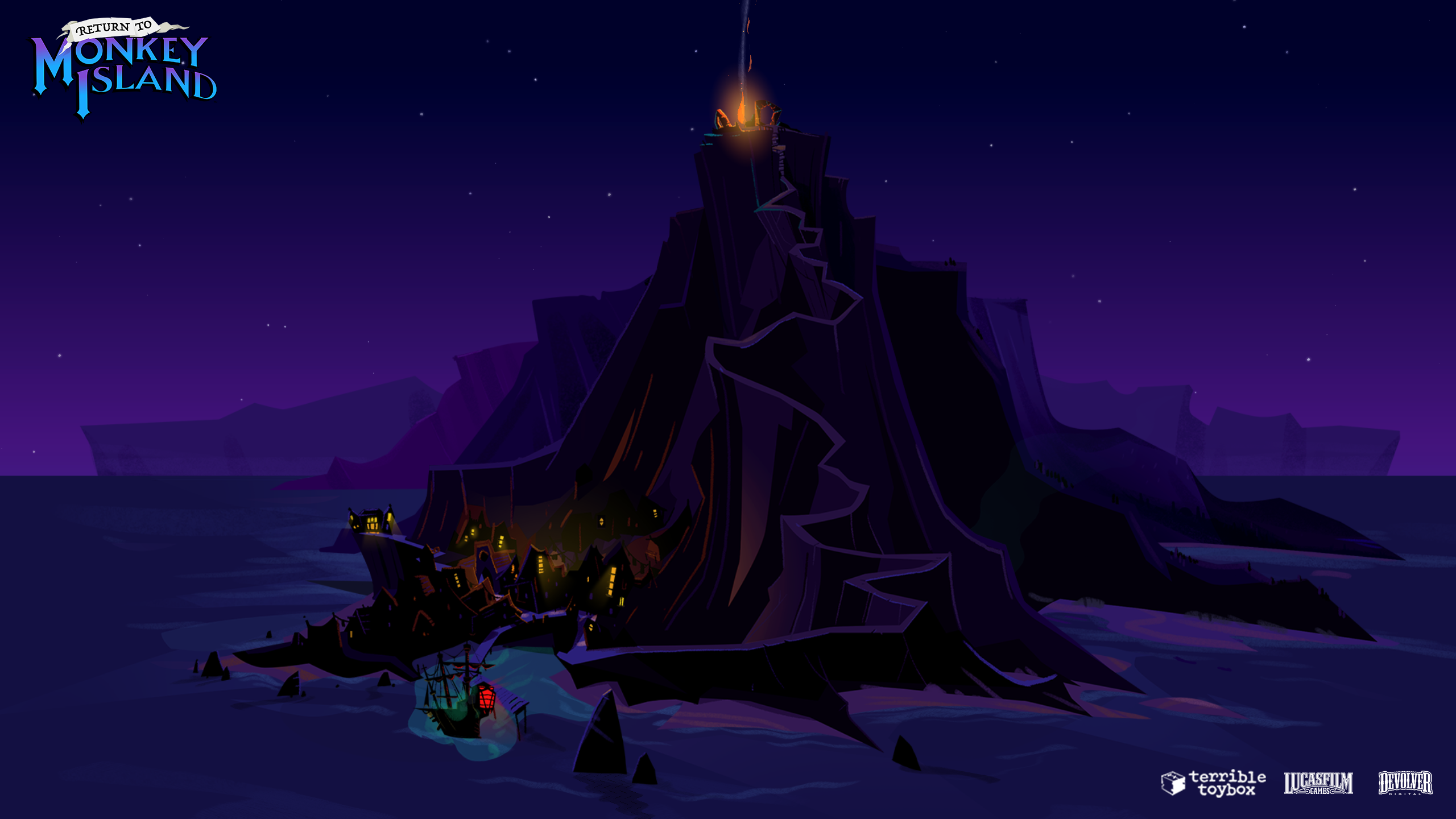
In rare interview, Monkey Island designers tell Ars about long-awaited Return

Welcome back. We've been expecting you.
Enlarge / Welcome back. We’ve been expecting you.


Nine years ago, The Secret of Monkey Island creator and designer Ron Gilbert wrote a blog post laying out what he would do if he made another Monkey Island game. But now that Gilbert is actually working on Return to Monkey Island—his first work on the franchise in over three decades—he told Ars that the 2013 blog post seems like it was written by a completely different person.

“That article was just this weird stream of consciousness,” Gilbert told Ars in a recent interview. “I don’t remember the exact incident, but I remember I was feeling a little depressed that I wouldn’t ever get to make another Monkey Island and that really kind of spawned that article.”

“I think if I could redo that article, I would probably cage it a bit differently because these aren’t things that absolutely will happen or absolutely things I’ll do,” Gilbert continued. “Anybody who’s involved in any creative process knows that as soon as you start, everything changes. Coming up with ideas, you change the story, you change characters, you change puzzles. Everything is not written in stone.”

A long time coming

Today, Gilbert describes the process that finally led him back to Monkey Island as “a star alignment thing.” While Gilbert said he had considered a return to the series many times over the years, it wasn’t until a pitch from publisher Devolver Digital a few years ago that “the ball started moving forward on stuff.”

Before diving back into Monkey Island, though, Gilbert said he wanted to make sure any new game could live up to expectations that have risen sky-high after three decades of the first two Monkey Island games being hailed as the pinnacle of classic adventure game design. “That was my No. 1 concern when Devolver first approached me about this—just the weight of [expectations],” he said. “Was that something I really wanted to take on?”

To get past those fears, Gilbert consulted with fellow Monkey Island programmer and writer Dave Grossman to discuss whether revisiting the setting would actually be valuable. The pair asked themselves a series of questions before committing: “Do we have a good idea? Can we move this forward? Do we have… a story that fits the legacy?”

LeChuck’s ship being loaded up to set sail.
Enlarge / LeChuck’s ship being loaded up to set sail.
Devolver Digital

“For me, [the prospect of] working with Ron definitely was a big draw,” Grossman told Ars. “[But] just to sort of check ourselves, we got together before we definitely said yes to make sure that we had something to say with [a new game], that we were going to be able to take it in some interesting directions. So we met for a weekend and decided that, yeah, that was the case, and we should make a game.”

With that settled, Gilbert said Devolver took the lead in handling the business end of the deal with Disney, which owns the IP rights to the Monkey Island franchise through its 2012 LucasArts acquisition. Since then, Gilbert said he has had some “lengthy conversations” with Disney and ended up “very happy with the responses” and the assurances he got that his team would have full creative freedom on the project. While Disney “certainly have had feedback, good feedback, [and] we’ve taken some of their feedback,” Gilbert said, he has been happy that the corporation has allowed him to “build the game I wanted to build.” https://arstechnica.com/?p=1849647


Paradox gives its official blessing to Vampire: The Masquerade fangames

<img src="https://rassegna.lbit-solution.it/wp-content/uploads/2022/04/paradox-gives-its-official-blessing-to-vampire-the-masquerade-fangames.png" alt="Survival horror game Descent is one of the first Vampire: The Masquerade fangames to be officially licensed under the Unbound program.”>
Enlarge / Survival horror game Descent is one of the first Vampire: The Masquerade fangames to be officially licensed under the Unbound program.

Vampire: The Masquerade video game publishing house Paradox Interactive has announced a program that allows fans to create, publish, and profit from video games set in the pen-and-paper RPG’s dark, urban-gothic universe.

Paradox said the Unbound program was inspired by the success of the recent Vampire Jam, in which nearly 90 developers had a month to create games based on Vampire: The Masquerade‘sWorld of Darkness mythos. “While we could only award one grand prize to Heartless Lullaby, we knew we had to create a platform that empowered our community to work on the projects they love while giving them the support they need to be successful,” World of Darkness Community Developer Martyna Zych said in a statement.

Developers that take part in the Unbound program will receive “a personal, non-exclusive, non-transferable, nonsublicensable, royalty-bearing right, and license” to the World of Darkness IP “to develop, localize, publish, sell, distribute, promote, and advertise” their game, according to an extensive license agreement.

In exchange, Paradox will take a 33 percent cut of the net revenues brought in by any Unbound games. Developers can bring in additional funds through donations or by publishing content on Youtube or Twitch, though, as outlined in Paradox’s “Dark Pack” content agreement. Developers also retain the rights to any of the completely original art and music they create for the game, which can be reused or resold as they see fit.

Unbound developers can’t do whatever they want with the World of Darkness IP, though. Games have to be submitted to Paradox for review, and the publisher will make sure titles don’t use the World of Darkness “in any manner deemed socially or educationally damaging.” Unbound games also can’t include the use of “hazardous substances” or “cause harm when used.”

While real-world historical settings are allowed, the submission guidelines prohibit mixing in other fantasy settings such as “science fiction, steampunk, cyberpunk or similar” into the 5th Edition rules. The terms “Vampire: The Masquerade” or “World of Darkness” can’t appear in the game’s title, either, presumably to avoid brand confusion with Paradox’s own titles or other official products.

Games published through Unbound can only be distributed on indie platform itch.io, which already hosts a handful of such games from the Vampire Jam. Unbound games can be offered for free, but those that charge money need to cost at least $5.99, for some reason.

Paradox promises “a streamlined launch process” for games submitted through Unbound and says developers should follow up if their game isn’t approved within 10 business days. Paradox also dangles the possibility of “additional marketing support from World of Darkness” for some titles in the program.

Paradox’s efforts to create a legal setup for developers to profit from games based on their licensed IP goes quite a bit further than most video game publishers. While publishers like Sega and Capcom have historically not taken action against fangames based on their popular properties, that usually only applies “so long as no profit is involved,” as Sonic the Hedgehog Social Media Manager Katie Chrzanowski said last May. On the other end of the spectrum, publishers like Nintendo can be downright overbearing in enforcing their IP rights against fan-made titles that use its characters. https://arstechnica.com/?p=1849821