CNN+, the streaming-only fork of CNN with a mix of exclusive content and the news network’s Video on Demand archives, will shut down at the end of the month—only 31 days after it debuted.
The service launched on March 29 as a $5.99 standalone service, despite coming from the same corporate family that’s loudly pushing HBO Max—and, thanks to a recent massive acquisition, also controls Discovery+. In a Wednesday statement on the CNN+ shutdown, current Warner Bros. Discovery President and CEO J.B. Perrette appeared to acknowledge the market reality of one-too-many streaming options: “In a complex streaming market, consumers want simplicity and an all-in[-one] service which provides a better experience and more value than stand-alone offerings.”
While CNN+ launched with high-profile exclusive hosts like former Fox News host Chris Wallace and NPR vet Audie Cornish, and reportedly met internal expectations with a subscriber count as high as 150,000, it also began life as part of the old AT&T Time Warner corporate structure. In the wake of Discovery’s acquisition of all things Time Warner from AT&T, Perrette and new CNN CEO and Chairman Chris Licht have repeatedly gone on the record expressing their interest in creating a single megaton streaming option for its combined media properties.
As CNN itself has reported, a Wednesday town hall meeting hosted by Licht included allegations that the new Discovery leadership team’s hands were tied as far as coordinating a streaming-only CNN service with the outgoing CNN leadership, particularly former CNN head Jeff Zucker. Licht told CNN’s staff that he “could not legally communicate with CNN executives before the deal was official” about its own plans, and he added that “some of this was avoidable,” yet “prior leadership decided to just keep going.”
Statements made by Licht suggest that the company’s existing and future-planned CNN+ content may very well be rolled into a digital-only project not yet revealed, though leadership wasn’t ready to announce plans for, say, a special CNN hub on HBO Max.
Hopefully, whatever future plan comes to pass will include a smarter combination of CNN+’s streaming content and CNN’s live cable news feeds. The current CNN+ model requires anyone paying a $5.99/mo fee to add cable subscription credentials in order to watch live content, and only select cable providers are currently compatible with this sign-in process.
In addition to the loud distraction of a merger and lead executives coming and going, CNN+’s emergence arguably wasn’t helped by former corporate parent AT&T Time Warner’s financial woes in the telecom space. Plummeting DirecTV subscriber numbers, in particular, cursed AT&T Time Warner for most of the time that it operated the satellite-TV provider, and it elected to spin DirecTV off as a subsidiary in August 2021.
The previous speedrun record for a big-league streaming shutdown belonged to Quibi, which lasted close to eight months. Quibi managed to burn through over $1.75 billion in talent acquisition and promotions before shutting down less than a year after it launched as a “smartphone-focused” streaming-video service. Its remnants were eventually picked up by Roku for pennies on the dollar.
On Wednesday, the latest Oculu—er, Meta Quest virtual reality gaming showcase revealed a mix of sequels and new games coming to the all-in-one Quest 2 system “within the next year.”
New, spooky enemies in the Bonelab universe. You can tear these apart with your VR hands.
Grab a separated limb to solve a puzzle.
We’re out of the Boneworks factory environments and into spookier places this time around.
Of course, it’s not a Boneworks sequel without smacking glowing men with a pan.
A gravity-manipulation gun makes this classroom setting a lot more fun.
The event’s biggest game reveal came in the form of Bonelab, a sequel to 2019’s innovative-but-clumsy PC-VR exclusive Boneworks. Its designers at Stress Level Zero insist that this sequel will come to the weaker Quest 2 hardware, along with a PC-VR version “later this year.”
Like the PC original, Bonelab will revolve around a mix of parkour- and physics-driven interactions with guns and melee weapons, only this time, it will take place in a variety of fantasy-style levels and include new monsters, like walking skeletons—which VR players can apparently grab with their hands and tear apart, bone by bone. Its Quest 2 version will support community-made mods like maps, weapons, and outfits—though it’s unclear exactly how those will be built and imported into the Quest version.
Official logo for the upcoming Ghostbusters VR game.
Meta / Sony
The teaser trailer has a ton of motion blur, so this is the clearest snippet we have to share thus far.
The event’s other major surprise is harder to call a “game” thus far, owing to its reveal as a pre-rendered CGI concept, but Meta CEO Mark Zuckerberg thought it important enough to show up for the event’s “one more thing” snippet: Ghostbusters VR. Developed by nDreams, the makers of VR stealth game Phantom: Covert Ops, this new game appears to work as a four-player co-op adventure, where players explore factory-styled levels with ghostbusting gear to zap and capture ghosts. It’s unclear whether this game and its lack of legitimate gameplay footage will launch within the event’s promised “within the next year” window.
The event didn’t clarify why a Sony-affiliated film property like Ghostbusters is launching its first home VR game on Meta Quest 2, as opposed to Sony’s own upcoming PlayStation VR2 system. The series has previously appeared in a “VRcade” experience that combined VR headsets with real-life “4D” twists like spinning fans and scents.
Manipulate the lo-fi world of Cities VR with your hands.
Step one: Select a hospital.
Step two: Find the right place to construct it.
Step three: Place the building, elicit joy from your citizens.
Another look at the add-buildings interface.
Why look at a computer monitor full of budgets when you can… look at a virtual computer monitor full of budgets?
In an example of a “genre we’d like to see more of in VR,” Cities VR was announced as a new entry in the long-running city-building sim series and its first game in virtual reality. Its trailer is quite revealing, as it shows how typical Cities menus appear in clever, VR-specific ways based on hand and wrist placement. The trailer showed an aspiring VR mayor doing typical series tasks like checking budgets, placing buildings, managing street traffic, and altering geography—all either from a bird’s-eye camera angle or directly at street level, while walking around an admittedly lo-fi simple-texture VR universe.
https://arstechnica.com/?p=1849417
Director of famously canceled EA Star Wars game is back to make a Star Wars game
<img src="https://rassegna.lbit-solution.it/wp-content/uploads/2022/04/director-of-famously-canceled-ea-star-wars-game-is-back-to-make-a-star-wars-game.jpg" alt=""Skydance" is the key indicator of what's to come, since that game studio is led by former Star Wars Ragtag director Amy Hennig.”>
Enlarge/ “Skydance” is the key indicator of what’s to come, since that game studio is led by former Star Wars Ragtag director Amy Hennig.
Skydance New Media / Lucasfilm Games
Lucasfilm Games’ latest announcement might sound boilerplate: Another Star Wars adventure game is coming, and it doesn’t have a release date, screen shots, or target platforms.
And yet, this Tuesday announcement is turning heads for a major reason: It brings Amy Hennig back to the Star Wars video game fold, nearly five years after her last major Star Wars project crashed and burned.
Criminal families, scoundrels, and action-packed heists to come?
Hennig, who led development of the cult-classic Legacy of Kain series before directing Uncharted 2 and Uncharted 3, is now leading a game-development team at Skydance New Media. In late 2021, her team announced work on an “all-new game” set in the Marvel Entertainment universe—which arguably means the House of Mouse that controls Marvel, Star Wars, and more has been impressed enough by Hennig’s early Marvel efforts to double-dip.
As part of the Tuesday announcement flurry, Hennig offered a sly nod to the reality of returning to Star Wars game development, posting on Twitter, “Never tell me the odds.”
How much of the Ragtag project might be sourced and resurfaced as a template for Hennig’s next Star Wars game? The ashes of Ragtag were, according to a Hennig interview, transferred to an “open-world” EA Star Wars game that we’ve yet to see signs of. It’s unclear whether that included content like characters, voices, and stories or technical assets, leaving the original Ragtag script and concept available for Lucasfilm Games to reuse as it sees fit. (Either way, EA still has a few more not-yet-revealed Star Wars games in its release schedule.)
Should Skydance get the rights to reuse any Ragtag content, its new Star Wars game could revolve around life immediately after the destruction of Alderaan and follow the exploits of at least one Han Solo-like bounty hunter in “a story about criminal families, scoundrels, and action-packed heists,” as Jason Schreier previously reported for Kotaku. (That’s not the same as a canceled 2013 third-person adventure game, Star Wars 1313. That one revolved around Boba Fett and, according to a January leak, looked remarkably similar to Uncharted.)
This week’s news follows the megaton “April Fools” announcement that Lucasfilm Games and legendary Lucasarts developer Ron Gilbert had shaken hands on development of a new Monkey Island point-and-click sequel. https://arstechnica.com/?p=1849090
Leaked Game Boy emulators for Switch were made by Nintendo, experts suggest
Enlarge/ Are we looking at an official Game Boy Advance emulator made by Nintendo?
The two leaked emulators—codenamed Hiroko for Game Boy and Sloop for Game Boy Advance—first hit the Internet as fully compiled NSP files and encrypted NCA files linked from a 4chan thread posted to the Pokemon board Monday afternoon. Later in that thread, the original poster suggested that these emulators “are official in-house development versions of Game Boy Color/Advance emulators for Nintendo Switch Online, which have not been announced or released.”
In short order, dataminers examining the package found a .git folder in the ROM. That folder includes commit logs that reference supposed development work circa August 2020 from a NERD employee and, strangely enough, a developer at Panasonic Vietnam.
NERD’s history includes work on the software for the NES Classic and SNES Classic, as well as the GameCube emulation technology in last year’s Super Mario All-Stars, so the division’s supposed involvement wouldn’t be out of the ordinary. Footage from the leaked Game Boy Advance emulator also includes a “(c) Nintendo” and “(c) 2019 – 2020 Nintendo” at various points.
While suggestive, none of this is exactly hard evidence of Nintendo’s involvement in making these emulators. Some skepticism might be warranted, too, because there is some historical precedent for an emulator developer trying to get more attention by pretending their homebrew product is a “leaked” official Nintendo release.
Enlarge/ Why would an official Nintendo emulator make reference to third-party flash carts?
Some observers also pointed to other reasons to doubt that these leaks were an “official” Nintendo work product. ModernVintageGamer and others noted that the leaked GBA emulator includes an “export state to Flashcart” option designed “to confirm original behavior” on “original hardware,” according to the GUI. That option is illustrated with a picture of an EZFlash third-party flash cartridge in the emulator interface, an odd choice given Nintendo’s previous litigious attacks on such flashcart makers.
A “savedata memory” option in the emulator also references the ability to “inter-operate with flashcarts, other emulators, [and] fan websites…” That’s a list that would serve as a decent Johnny Carson “Carnac the Magnificent” setup for “things Nintendo wouldn’t want to reference in an official product.”
“I’m absolutely convinced of its legitimacy”
So, did these emulators actually come from Nintendo or is it all an elaborate hoax? Nintendo hasn’t responded to a request for comment, so we consulted with a video game historian who has been actively involved in tracking, cataloging, and preserving Nintendo prototypes through various online communities for years. While that source asked to remain anonymous to avoid any potential blowback from Nintendo, they said they were “99.9% sure [the emulators are] real” and that “personally I’m absolutely convinced of its legitimacy.”
The strongest evidence of Nintendo’s involvement with these emulators, our source said, was the security signature on the NSP files. That signature ensures the NSPs can only run on development hardware “due to prototypes being signed with different keys than retail games are,” our source said. Someone trying to install the emulator files on a hacked retail Switch “will just run into errors and it won’t boot.”
It’s theoretically possible that a homebrew developer with access to Switch development hardware could dummy up a signed file like this. But our source said that it is “extremely hard to fake a dev signed NSP. Only those with a good understanding and access to the SDK would know how to.” Doing so would also require “many many hours [spent] learning how to use the extensive SDK,” our source said. That kind of intimate SDK knowledge “isn’t really a focus at all for most [homebrew] developers on the Switch,” who focus on other tools to make software for hacked retail units, they added. https://arstechnica.com/?p=1849079
Buff Thor is back and trying to find himself in Love and Thunder teaser
[embedded content]
Taika Waititi directed Thor: Love and Thunder, part of the MCU’s Phase Four.
Marvel fans have been loudly clamoring for something, anything, in the way of a trailer for Thor: Love and Thunder, given that the release is just a few months away. Their wish has now been granted. Marvel just dropped a long teaser for the Taika Waititi-directed film.
Waititi signed on for the fourth installment of the Thor films in 2019, adapting elements from the Mighty Thor comic books by Jason Aaron. (He’d read them while making Ragnarok.) That storyline has Jane Foster being diagnosed with breast cancer and eventually becoming the Mighty Thor. Natalie Portman, who plays Foster in the franchise, has said both those elements will be in the film.
We haven’t really seen Portman’s Foster since 2013’s The Dark World. The character was always among the least interesting, to be honest. But Portman agreed to reprise her role after meeting with Waititi, who promised a fresh take for the character, and having her wield Mjolnir would definitely qualify. (The Internet was abuzz when set photos of Portman leaked in March 2021, showing just how much muscle the diminutive actress had gained for the role.)
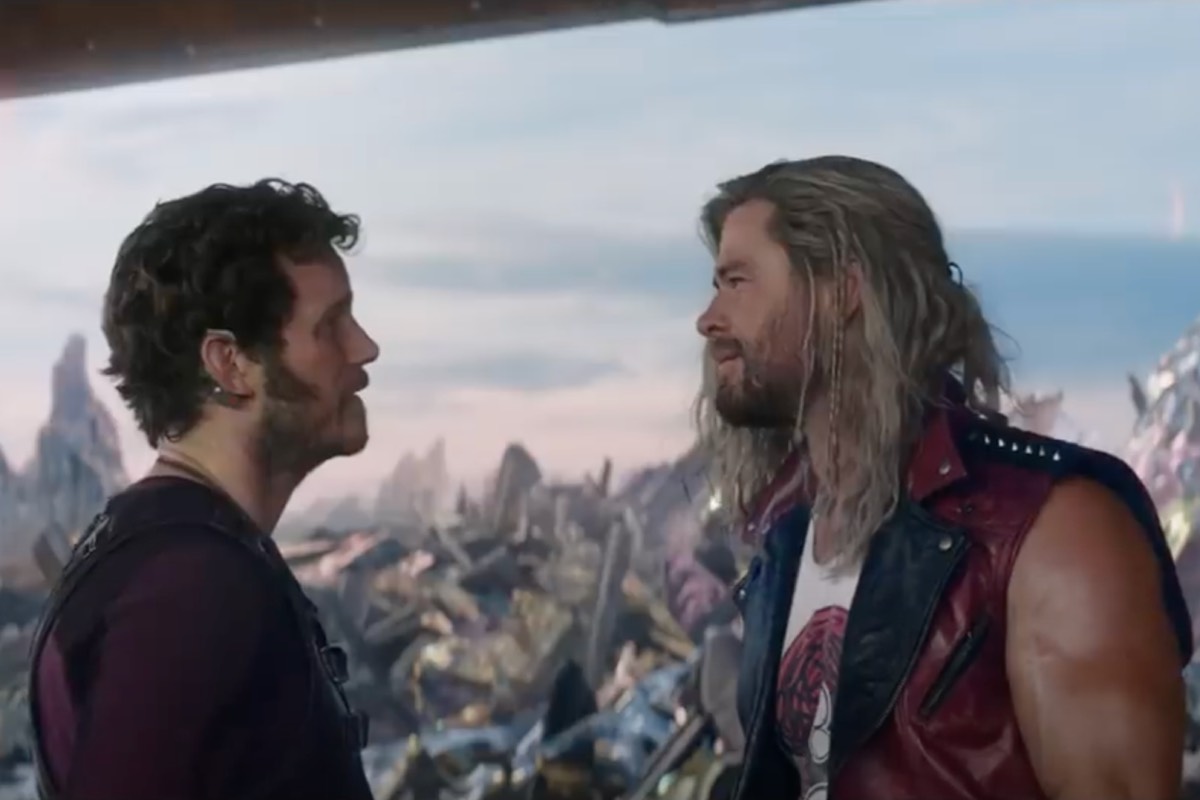
Enlarge/ Peter Quill (Chris Pratt) and Thor (Chris Hemsworth) have a moment. “What? Just listening.”
YouTube/Marvel Studios
Here’s what we do know, per the official synopsis:
The film finds Thor (Chris Hemsworth) on a journey unlike anything he’s ever faced – a quest for inner peace. But his retirement is interrupted by a galactic killer known as Gorr the God Butcher (Christian Bale), who seeks the extinction of the gods. To combat the threat, Thor enlists the help of King Valkyrie (Tessa Thompson), Korg (Taika Waititi) and ex-girlfriend Jane Foster (Natalie Portman), who—to Thor’s surprise—inexplicably wields his magical hammer, Mjolnir, as the Mighty Thor. Together, they embark upon a harrowing cosmic adventure to uncover the mystery of the God Butcher’s vengeance and stop him before it’s too late.
Also joining forces with Thor are the Guardians of the Galaxy: Chris Pratt as Peter Quill/Star-Lord; Pom Klementieff as Mantis; Dave Bautista as Drax the Destroyer; Karen Gillan as Nebula; Vin Diesel voicing Groot; and Sean Gunn as Kraglin Obfonteri, the former second-in-command of Yondu. (James Gunn consulted on the script since this film will help set up Guardians of the Galaxy Vol. 3, slated for 2023). Waititi will be back as the Kronan gladiator, Korg, and Jeff Goldblum will reprise his role as the Grandmaster, ruler of the planet Sakaar. Melissa McCarthy will play Hela, and Russell Crowe will make a cameo appearance as Zeus.
Enlarge/ Welcome to New Asgard and a “Goat Boat” sighting.
YouTube/Marvel Studios
Set to the dulcet tones of “Sweet Child O’ Mine” by Guns N’ Roses, the teaser opens with Thor pondering his future. “These hands were once used for battle,” we hear him say. “Now they’re but humble tools for peace. I need to figure out exactly who I am. I want to choose my own path.” Look, Thor has been through a lot, between the harrowing events of Ragnarok, Infinity War, and Endgame, losing most of his family and all but a handful of Asgardians. So who can blame him for not wanting to be a superhero anymore, preferring to just “live in the moment,” man?
Thor’s personal journey starts by getting in shape, doing battle ropes like a champ (only, with chains, because this is Thor), and he’s soon back in prime fighting shape—he’s just not all that interested in fighting. No doubt there will be battles and drama and a bit of romance, but there’s still plenty of that distinctive Waititi humor. “Remember what I told you,” Quill tells his crew. “You ever feel lost? Just look into the eyes of the people that you love.” The camera focuses on the Guardians. And then Thor’s smiling face appears, making Quill a wee bit uncomfortable. “What? Just listening,” Thor beams.
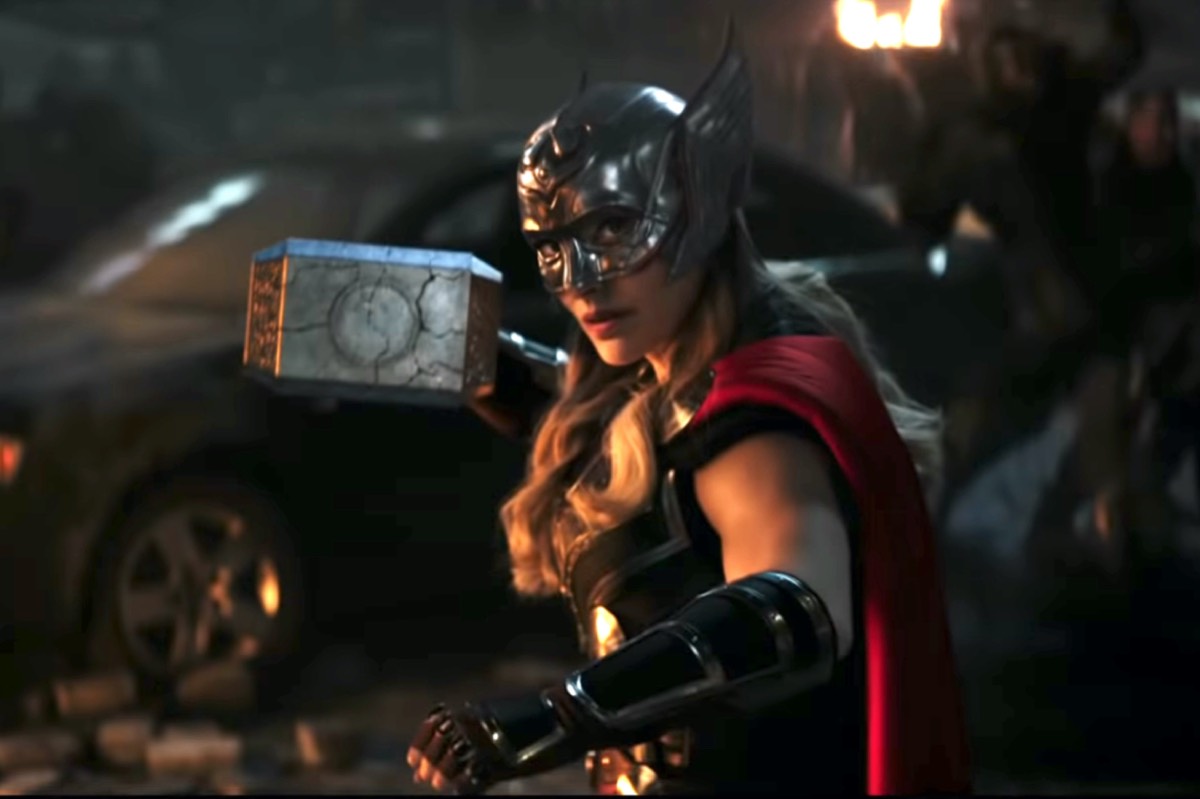
Enlarge/ If she had a hammer: Natalie Portman wields Mjolnir as the Mighty Thor.
YouTube/Marvel Studios
There’s a brief glimpse of Crowe’s Zeus, and Thompson’s Valkyrie looking like a boss in a chic suit (reminiscent of her Men in Black: International role). We don’t see Gorr, so it’s not clear how closely the character will hew to the comics. The comics’ Gorr has a deadly cloak of tendrils and wields the god-killing All-Black the Necrosword, forged by the same primordial deity who created the symbiotes who eventually became Venom. So there are some visually striking possibilities to work with.
At least we finally get to see Portman wielding Mjolnir as the Mighty Thor in the final frame; she looks magnificently buff. And is that the “Goat Boat” (introduced in February as an official LEGO set) taking off to give Thor a fresh adventure? (The two goats in the LEGO set are named Toothgnasher and Toothgrinder, and they’re pulling the ship.) Waititi called Thor: Love and Thunder “the craziest film” he’s ever done, “as if 10-year-olds told us what should be in a movie and we said yes to every single thing.” Our inner 10-year-olds are eager to see more.
Thor: Love and Thunder hits theaters on July 8, 2022.
Marvel Studios
Listing image by YouTube/Marvel Studios
https://arstechnica.com/?p=1848777
Review: Playdate earns its $179 price tag with cute design, memorable games
Cranking in downtown Seattle.
Sam Machkovech
Cranking at the toy store.
Sam Machkovech
Cranking between two vinyl figurines—which are made of similar material as the Playdate.
Sam Machkovech
Cranking before a movie—and notice how readable the screen is thanks to pre-movie lighting from above.
Sam Machkovech
The cute, portable, and banana yellow $179 Playdate console is now shipping to its first batch of preorder customers, so we’re now free to review the quirkiest gaming system in years.
Thanks to chip shortages and general manufacturing chaos, buying Playdate is much less fun than using it. If you preordered the system in July 2021 after reading my hands-on preview, great. If you waited for a proper review like this one, however, expect a backorder queue of no fewer than eight months. (At least Panic say it will make as many Playdates as people want to buy, instead of pulling an NES Classic and limiting production.)
The lock screen can be customized with an analog clock, a digital clock, or this “word clock.”
Sam Machkovech
3.5 mm jack for headphones; USB Type-C jack for power and file transfers with a PC.
Sam Machkovech
The author plays with the Playdate on a friend’s couch.
I’m partial to experimental, quick-fire indie fare, which the Playdate is clearly tailored toward. This most often means lo-fi point-and-click adventures, arcadey score-chasers, and quirky platformers—either with a crank or without. If that sounds like a fresh breath of air—possibly akin to the earliest days of devs exploiting the novelty of touchscreens on either the earliest iPhone or the original Nintendo DS—then Panic’s hardware and software ecosystem will hold up their end of the bargain to affirm your bias.
That preview came after testing just four of the system’s included games. This week, I can more fully answer the question of what Playdate delivers for $179, including a look at all 24 of its “first season” games.
Panic’s earliest Playdate sales pitch included the “surprise factor” of two new games unlocking each week for 12 weeks. If you’re buying Playdate to enjoy the ritual of tearing off virtual wrapping paper and revealing surprises on a weekly basis, this review merely summarizes what you can expect from the system’s included games. Think of it like picking up wrapped gifts and shaking them a few times.
If you’d rather know exactly what $179 buys you after 12 weeks, I have broken out game-specific mini-reviews into a separate report. That report clarifies how many weeks you’ll have to wait for each game to unlock, as well.
I hope you’ll come away knowing whether Playdate is your perfect boutique portable or whether you’d be happier investing $179 into something like a Raspberry Pi, an Analogue Pocket, or a Steam Deck.
Diminutive yet still mostly excellent
While reading my mix of praise and criticism, keep in mind that I have an ideal Playdate owner in mind: a wide-eyed, world-questioning pre-teen, eager for a variety of portable, accessible gaming experiences that combine classic gameplay principles and silly text with reckless, crank-fueled abandon. (This may also apply to the wide-eyed pre-teen inside many of us.)
Playdate, compared to a Nintendo Switch.
Sam Machkovech
It’s not even two-thirds the size of the Switch screen.
Sam Machkovech
“Banana-yellow” may be inaccurate if you’re a Pantone purist, but here, have a banana size comparison.
Sam Machkovech
Though this is a “final” review, it recaps much of what I already wrote about the “near final” hardware in July 2021. In terms of physical form factor and general usability, Playdate then is seemingly identical to Playdate now.
Meaning: I’ve never seen a lightweight game system with this combination of comfort, control precision, and screen clarity that also manages to run simple games smoothly. Its portable gaming prowess is unsurprising, as the music-gadget wizards at Teenage Engineering are behind much of Playdate’s design. I’m cool with the compromises required to squeeze so much into so little, but interested buyers should keep those compromises in mind.
Final retail Playdate (left), preview hardware (right).
Sam Machkovech
Final retail Playdate (left), preview hardware (right). This image is the only one where you’re likely to perceive a significant difference. Let me know if you notice how they differ here.
Sam Machkovech
Final retail Playdate (left), preview hardware (right).
Final retail Playdate (left), preview hardware (right).
Playing the entire “first season” of 24 included Playdate games hasn’t changed my general impression of the device; instead, it reminded me that there’s only so much comfort owners can expect from a 3×3 inch (74×74 mm) device. As I previously wrote:
Playdate fits neatly in an adult-sized palm, which might lead you to expect claw-hand woes once you hold it with two hands (think Nintendo’s Game Boy Micro). Panic avoids this pitfall with a few crucial design-language tricks, including thinness (9 mm), lightness (3.03 oz / 86 g), and adequate width. Combine those three factors, and the system lands in adult hands without requiring awkward weight bracing.
So the Playdate gets away with a smooth, rubberized finish like the exterior of a vinyl toy. This never feels “light and cheap”—since that lightness and cheapness are crucial to its handheld gaming comfort. Instead of including gamepad-like curves that fit into hands, the Playdate buttresses its four corners with mild curves, and these roll across a palm quite comfortably.
https://arstechnica.com/?p=1847088
All 24 of Playdate’s included games, reviewed
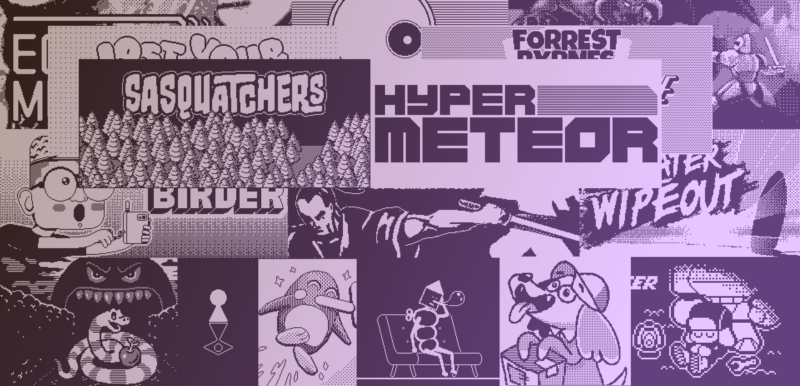
Enlarge/ This is your last chance to turn back before finding out what all these Playdate game icons mean.
Panic / Sam Machkovech
If you’re reading this article before perusing my full Playdate hardware review, stop right now. Click that link, read today’s hardware-specific review, and get the context for why this portion has been broken out to its own space.
Okay, cool. You know what you’re in for: a full spoiler-rama overview of all 24 Playdate-exclusive games that come as part of the quirky system’s $179 price tag. As an additional spoiler, these titles are listed in their unlock order, since Panic mandates that the games appear on owners’ devices as part of a two-per-week download process. (The main system review explains why you might not want to know this stuff just yet, and it includes a spoiler-free breakdown of the system’s included games.)
The number next to each game name designates its unlock week, not its rating. (Thus, if you want to spoil only the first four weeks of games, stop once you reach the “5”s.) Ars doesn’t score game reviews, but since there are so many titles to pick through, I’m opting for a simple set of distinctions: “thumbs-up,” “shoulder shrug,” and “thumbs-down.” These labels apply to both a game’s fun factor and its Playdate uniqueness.
These are miniature reviews, owing as much to the number of games as to their general brevity. If you’re looking for massive games, Playdate is not for you. But if you’re looking for a massive overview of a system’s launch library, strap in.
1:Whitewater Wipeout Made by: Chuhai Labs Fun factor: Thumbs-up Playdate uniqueness: Thumbs-up
Turn the crank directly downward to begin piloting.
Move left and right to gain speed, but don’t go too far into the crashing half of the wave or you’ll fall off.
Aim your surfboard properly when you land a trick, or you’ll crash.
Playdate’s first unlock for new owners makes sense as a splashy “launch” game. Whitewater Wipeout relies on the crank in a way that would be difficult to replicate with a joystick. The game runs smoothly, and it looks good in black and white.
It also sets Playdate’s tone. WW is one of many games in Playdate’s first season that revolves around a 1980s arcade mentality of quarter-munching, score-chasing action. Every session begins with your character catching a wave, steering a surfboard, and balancing speed, jumps, and mid-air tricks as you steer away from the wave’s dangerous crest. This is all seen from a top-down 2D perspective that resembles the classic surfing mode in California Games, only much smoother. Every session inevitably ends with the wave’s crest overtaking you, usually within 90 seconds.
The goal, as with other good quarter-munchers, is to score as much as you can before the wave catches up, which you do primarily by spinning the crank during mid-air wave hops. Rotate your real-life crank 720, 1080, or 1440 degrees, and your surfer will respond in kind (so long as the surfer has enough air and speed; it doesn’t move one-to-one with your crank). You can rotate the crank over 2,000 degrees in real life in the time it takes your surfer to more realistically turn 1080.
Thankfully, it’s easy to decipher the disconnect between those speeds and adjust accordingly, so basic gameplay feels fun and fair. It’s not like a frantic Mario Party mini-game that might aggravate you for not recognizing your frantic joystick turns. Playdate’s crank is precise. Unlike WW‘s preview build, the game now offers trick tweaks via the D-pad, and these add spice to the basic gameplay. But I’m still sad that Chuhai Labs didn’t add an additional mode to exploit the crank-to-surf mechanic. I previously suggested a “surf through rings” approximation of Wave Race 64, which could’ve been fun.
But in the Playdate first-season universe, content-filled patches are unlikely for this or any other game. That might be your cup of tea, in terms of games landing as “finished” nuggets of fun instead of stuttering out of the gate with missing content, but younger players should brace themselves for older-school content expectations.
1:Casual Birder Made by: Diego Garcia, Max Coburn Fun factor: Thumbs-up Playdate uniqueness: Thumbs-up
Normally, the game looks like a black-and-white Pokemon clone. When you tap your “camera” button, however, the interface transforms into a camera that you move with the D-pad. In this mode, the 2D assets take on 3D depth, which means you’ll have to focus your pictures using Playdate’s crank.
Silly writing abounds in Casual Birder.
Do you even bird, brah?!
In this Pokemon-like RPG, you take photos of birds, solve mysteries, and tap through conversations with off-kilter NPCs. The game’s writing reeks of Gen Z attitude, what with its frequent texting shorthand of phrases like “IDK,” and that levity matches the game’s art style and “find all the birds” whimsy.
To fill out your bird-o-dex, solve simple puzzles to get birds to fly to convenient points on a screen, at which point you’ll tap a button to pull out your camera. Playdate’s crank works as the camera’s “focus,” and the game’s 2D world will suddenly take on 3D depth in the form of a pixellated blur for nearby or distant objects like signs and trees. Having never seen “focus” as a mechanic in a 2D game before, I have to say, I am impressed at how nimbly these devs implemented the system.
This is a fantastic first-week unlock for Playdate, owing to its chill pace, charming script, and one-more-bird prodding to keep taking photos and solving puzzles.
2: Crankin’s Time-Traveling Adventure Made by: uvula (Keita Takahashi, Ryan Mohler), Matthew Grimm, Shaun Inman Fun factor: Thumbs-up Playdate uniqueness: Thumbs-up
Once you see this startup screen, start cranking to move time forward and wake Crankin up.
The two little birds colliding into Crankin’s torso mean he’s failed the day and must rewind and fast forward time once again to get into position for when he sees them again.
You’ve beaten the puzzles and made it, but you’re still late to your date. (It’s a very Krazy Kat situation, in terms of always comically failing.)
The faster you complete a level, the sillier the rejection animation at the end.
Legendary game-maker Keita Takahashi (Katamari Damacy, Noby Noby Boy) has returned with his best game in years, and it’s Playdate’s most recognizable game thus far. It was the first game demonstrated during a series of 2019 Playdate expo appearances. It looks cute. And it is as close as Playdate gets to a “mascot” game.
Crankin gets his name from his reliance on Playdate’s unique control method, as he’s frozen in time until you turn the physical crank forward and backward. Each level in CTTA is a day in his life, and every day, he wakes up realizing he’s late for a date. His side-scrolling, run-and-jump path to each date is set in stone, and you wind the crank to move him forward and backward along that path. Stop cranking and he remains frozen, even when he bows to sniff a flower or jumps to grab a pull-up bar—while everything else around him moves in real time. If any moving creature touches him, he returns to the starting point.
Winning each level, then, requires understanding how Crankin will react to static, harmless objects like tea tables and stairs, then going forward and backward in time so that he can “jump” or “duck” to avoid the harmful creatures coming his way. Is a butterfly moving toward you at head height? Crank backward to the point where Crankin had previously stopped to sniff a flower. Is something coming from behind? Crank forward to make sure your hero runs ahead of that danger.
This is the most linear, puzzle-focused game ever made by Takahashi, and the method of surviving and advancing through levels is rarely more intense than “rotate until you find Crankin’s perfect animation spot to pause.” But that’s okay: CTTA does time manipulation in a different way than I’ve seen since Braid‘s launch, and most levels are easy to appreciate as standalone puzzle boxes. A few exceptions will push your crank-turning tolerance, however, so be prepared to securely brace your handheld system when, say, a sounder of swine start chasing your hero at ridiculous speeds. Overall, at least, the game’s insane difficulty spikes have been smoothed since its pre-release testing period—while challenge seekers can try to speedrun the game to accumulate “stars.”
Moving Crankin forward and backward through time is easier to perfectly control with a rigid crank than with either a joystick or analog triggers. The system’s limited processing power is enough to render this game’s cute black-and-white characters, all coded with a mix of hand-drawn animation frames and sprite manipulation (thus looking smooth and artful, not like an old Flash game). And the high-contrast screen makes it easy to discern animations that range from adorable to hilarious. Like other Takahashi classics, CTTA‘s emphasis on humor is boosted hugely by a wacky sound design department, complete with Simlish jibber-jabber and judiciously placed fart noises.
2: Boogie Loops Made by: May-Li Khoe, Andy Matuschak Fun factor: Thumbs-down Playdate uniqueness: Thumbs-down
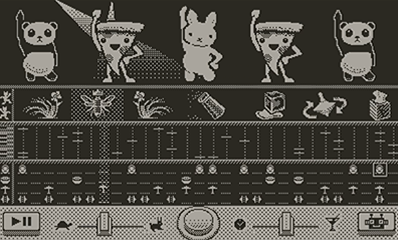
In Boogie Loops, move a cursor with Playdate’s D-pad to select and adjust various melody and drum sounds. By manipulating these, you can create an oft-repeating loop of chiptune music or just modify any of the three built-in loops that come included with the game.
Boogie Loops is a music sequencer for the young set, and its limited sound bank and lack of real-time modulation controls make it hard to recommend as a serious sound toy. Use the D-pad and A button to select and change drum and melody sounds on individual loops, then sequence those loops to make something resembling a longer, ever-changing song.
Though Playdate includes both a gyroscope and a crank, Boogie Loops doesn’t take advantage of either for trippy, real-time sound-effect options. I’d honestly love to see a DJ or electronic musician take Playdate onto a concert stage and apply turntable-like effects to its sounds via the crank, but Panic representatives made it clear that this is a simple, button-only music app.
As one of Playdate’s earliest unlocks, Boogie Loops may benefit from players sticking with it in a form of Stockholm syndrome. Think about being a 1990s kid and only having Mario Paint as a way to express your musical creativity; Boogie Loops will likely charm younger players in a similar way (and they’ll arguably do a better job tolerating the app’s lack of instructions).
https://arstechnica.com/?p=1848221
Rockstar edits out “transphobic” content from GTA V remasters
In recent years, the press and LGBTQ+ groups have been putting pressure on Rockstar Games to remove or change content they see as “transphobic” in Grand Theft Auto V. Now, players have noted a few such changes to transgender representation in the “expanded and enhanced” upgrades to the game recently released for the PlayStation 5 and Xbox Series X/S.
Reddit user JayProspero was among the first to notice a change to the action figures lining the wall of the office in the in-game arcade. A hot-pink-clad “Captain Spacetoy” figure, in a box highlighting “interchangeable genitalia,” has been removed in the new console versions of the game; an alternative figure with a more reserved outfit and “posable vomit direction” remains on the wall.
In new-gen GTAV/GTAO, Rockstar appear to have disabled the trans caricatures or “drag queens” from spawning outside Cockatoos. This could be following a plea from OutMakingGames last year. I hope this provides comfort to anyone who felt these NPCs depicted harmful stereotypes 🏳️⚧️
Kirsty Cloud, who helps run fan community GTAnet, has also highlighted that over-the-top trans woman character models, apparently referred to as “drag queen” in the game’s files, no longer spawn outside Cockatoos, an in-game nightclub. While those character models can still be accessed in the game’s sandbox-style Director Mode, dialogue options that make explicit reference to their gender and sexuality have been removed.
A successful pressure campaign?
Rockstar hasn’t responded to a request for comment on the apparent changes. But the move comes months after content like this was labeled “transphobic” by Out Making Games, a self-described “group of hundreds of LGBTQ+ games professionals working in the UK games industry.” In an open letter written in September, the group cited coverage from Kotaku’s Carolyn Petit that called out problems with trans representation in the original 2013 release.
“Unlike other random NPCs, the way Rockstar designed GTA V‘s trans people actively plays into the hateful stereotypes harbored by many transphobic players,” Petit wrote. “The trans sex workers you can encounter, with their garish makeup and prominent penis bulges, seem calculated to be ridiculous and repulsive to players who bring their pre-existing transphobia to the game with them. It’s as if they’re designed specifically so that some players could relish hurting and killing them because they are trans.”
Some critics have been noting GTA V‘s reductive and derogatory treatment of trans characters since the game’s original release. And in 2020, Engadget’s Jessica Conditt expressed concern that the then-upcoming remasters wouldn’t reflect how “the conversation around transgender rights, visibility and violence has changed significantly in the past seven years.”
“I think there’s a huge responsibility on all games, all types of media, to not rely on lazy stereotypes,” Birmingham City University lecturer Dr. Ben Colliver told Conditt in 2020. “In the Grand Theft Auto series, a lot of the stereotypes to me seem to be there just for comedic effect. They’re just there so that trans people and LGBT people more broadly are a joke.”
The new console remasters are “a great opportunity to remove transphobic elements from the game and have a positive impact on the new generation of players who will pick up a copy,” Out Making Games wrote in its open letter. “Given the cultural impact GTA V has around the world, Rockstar has a social responsibility to your players (many of whom may be LGBTQ+), to your staff and to the world at large to not promote violence against trans and gender diverse people.”
Steph Curry stars in new Nope teaser airing during NBA playoff games
[embedded content]
Jordan Peele’s upcoming film Nope aims to reimagine the summer movie.
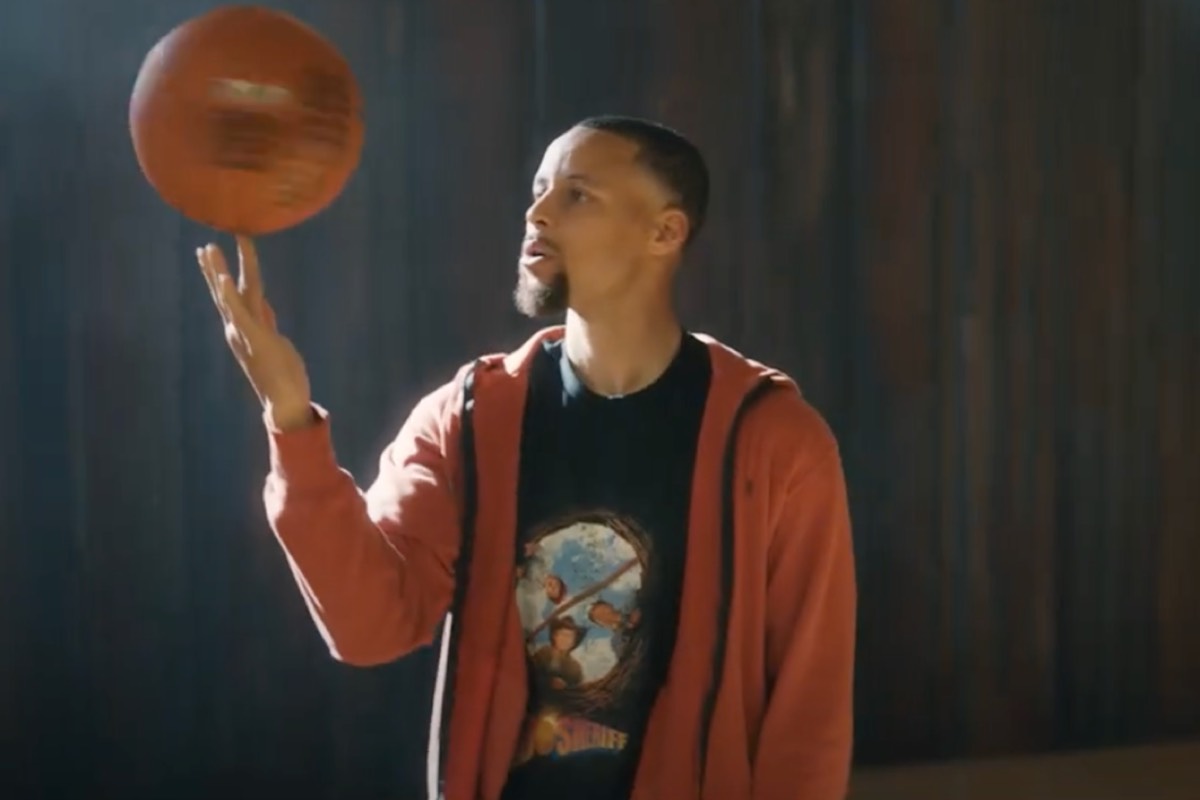
The NBA playoffs kick off today! Universal Pictures marked the occasion by dropping a new teaser for Jordan Peele’s forthcoming new film, Nope, featuring eight-time NBA All-Star Steph Curry of the Golden State Warriors.
As we’ve reported previously, Peele has cemented his status as the current master of thought-provoking horror, starting with Get Out, his surprise box office hit that earned more than $250 million and snagged Peele an Oscar for best original screenplay—the first time the award has gone to a Black recipient. Get Out is a subtle exploration of racial tensions that quietly reveals its horrifying premise and builds to an inevitably bloody conclusion. In Peele’s 2019 follow-up, Us, the theme wasn’t so much racial tension—it was exploring, in Peele’s words, the myriad ways in which “we are our own worst enemies.”
Enlarge/ Eight-time NBA All Star Steph Curry of the Golden State Warriors shows off his moves in 30 second teaser.
YouTube/Universal Pictures
The first trailer dropped in February—very moody and atmospheric but offering very few details. (There might be aliens involved, or Peele wants us to think there are as a bit of misdirection.) Trailers for Peele’s films never reveal too much, since much of the pleasure of his movies comes from their frequently bizarre twists.
All we know thus far about Nope is that Daniel Kaluuya (who was nominated for an Oscar for Get Out) asJames Haywood, Keke Palmer (Hustlers, Black Panther) as Jill Haywood and Steven Yeun (Minari, Okja) as Brian. All are “residents in a lonely gulch of inland California who bear witness to an uncanny and chilling discovery.” The cast also includes Michael Wincott as Craig, Brandon Perea as Kevin, Barbie Ferreira as Danielle, and Donna Mills as Bonnie Clayton.
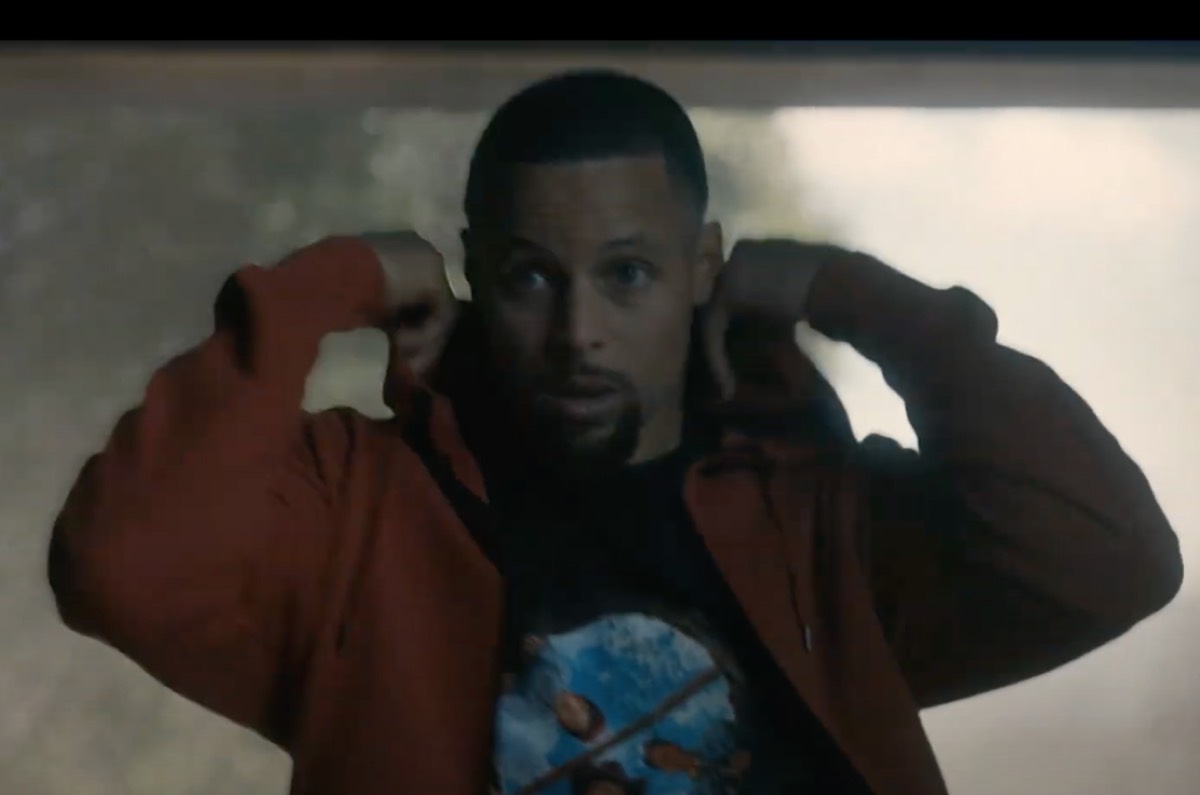
The new 30-second teaser recreates elements of that first trailer. We see Curry in an empty barn on an isolated horse ranch. He drops the needle on a record and proceeds to shoot a few baskets. But then the power suddenly goes out. A curious Curry heads to the barn entrance just as the wind kicks up and we see an ominous shadow fall across the scene as he stares at the sky. Whatever he sees isn’t reassuring. He pulls up his hoodie and walks off with a curt, “Nope.”
Verdict: the highly photogenic Curry won’t be winning an Oscar any time soon, but it’s a cute meme-worthy marketing move by the studio. Nope hits theaters on July 22, 2022. Based on what we’ve seen so far, we’re still saying “Yep.”
Explaining why gamers are adopting Windows 11 more slowly than Windows 10
There was a time shortly after Windows 10’s release when Microsoft would release specific adoption numbers frequently, trumpeting how quickly the then-novel free update was being adopted by users of Windows 7 and Windows 8. The company hasn’t repeated that strategy for Windows 11, leaving us to rely on third-party data to see how quickly people are picking up the new OS.
We’ve pulled a few months’ worth of the Steam Hardware & Software Survey data and compared it to the months immediately following Windows 10’s release. This data is imperfect and inevitably a bit noisy—Steam users need to volunteer to send in the data—but the disparity in adoption is large enough that we can draw at least some conclusions.
Windows 11 was released to the public in October 2021, and Windows 10 was released in July 2015. In both cases, we used the Internet Wayback Machine to dig up seven months of data, including the month immediately before the release of each operating system. We charted the usage numbers for 64-bit versions of the operating systems (32-bit versions, along with versions like Vista and XP, are lumped into “other”), combining the numbers for Windows 8.1 and 8.0.
Windows 11’s adoption has been steady, but lower than Windows 10’s early adoption.
Andrew Cunningham
Windows 10 benefitted from a lot of pent-up demand, taking a huge chunk of Windows 8’s share in its first two months.
Andrew Cunningham
The upshot is that Steam users are migrating to Windows 11 about half as quickly as they moved to Windows 10. Six months after its release, Windows 10 ran on 31 percent of all Steam computers—nearly one in three. As of March 2022, Windows 11 runs on just under 17 percent of Steam computers—about one in six. Three-quarters of all Steam computers in 2022 are still running Windows 10.
Windows share around 6 months after Windows 11’s release. The black wedge here represents non-Windows computers running Steam.
Andrew Cunningham
Windows share around 6 months after Windows 10’s release. The black wedge here represents non-Windows computers running Steam.
Andrew Cunningham
It’s easy to interpret these results as an indictment of Windows 11, which generated some controversy with its relatively stringent (and often poorly explained) security-oriented system requirements. At least some of this slow adoption is caused by those system requirements—many of the PCs surveyed by Steam probably can’t install Windows 11. That could be because users have an older unsupported CPU or have one or more of the required security features disabled; Secure Boot and the firmware TPM module were often turned off by default on new motherboards for many years.
But there are other compelling explanations. Windows 11’s adoption looks slow compared to Windows 10, but Windows 10’s adoption was also exceptionally good.
Windows 8 and 8.1 were not well-loved, to put it mildly, and Windows 10 was framed as a response to (and a fix for) most of Windows 8’s user interface changes. And people who were still on Windows 7 were missing out on some of the nice quality-of-life additions and under-the-hood improvements that Windows 8 added.
You can see that pent-up demand in the jump between July 2015 and September 2015. In the first two months of Windows 10’s availability, Windows 8 hemorrhaged users, falling from around 35 percent usage to 19 percent. Virtually all of those users—and a smaller but still notable chunk of Windows 7 users—were moving to Windows 10. Windows 11 also got a decent early adopter bump in November 2021, but its gains every other month were much smaller.
In contrast, Windows 11 was announced with little run-up, and it was replacing what users had been told was the “last version of Windows.” Where Windows 10 replaced one new, unloved OS and one well-liked but aging OS, Windows 11 replaced a modern OS that nobody really complained about (Windows 10 ran on over 90 percent of all Steam computers in September 2021—even Windows 7 in its heyday couldn’t boast that kind of adoption).
It’s also worth noting that Microsoft didn‘t try to re-create that initial burst of adoption for Windows 11. Following some turbulence after early Windows 10 servicing updates, Microsoft began rolling updates out more methodically, starting with small numbers of PCs and then expanding availability gradually as problems were discovered and ironed out. Windows 11 only entered “its final phase of availability” in February, ensuring that anyone with a compatible PC could get Windows 11 through Windows Update if they wanted it.