Calif. lawyer resigns “in protest,” points to Newsom “interference” in Activision case

Calif. lawyer resigns “in protest,” points to Newsom “interference” in Activision case
Aurich Lawson | Getty Images

One of the main lawyers in California’s ongoing discrimination and harassment case against Activision Blizzard has resigned, citing “interference” by the office of Governor Gavin Newsom.

Bloomberg reports that Melanie Proctor, the assistant chief counsel for California’s Department of Fair Employment and Housing (DFEH), said in a resignation email Tuesday that Newsom’s office “repeatedly demanded advance notice of litigation strategy and of next steps in the litigation.” That interference, which Proctor says increased with her agency’s “wins” in state court, “mimick[ed] the interests of Activision’s counsel,” Proctor wrote.

The resignation letter noted that Chief Counsel Janette Wipper previously combatted this interference by “attempt[ing] to protect” the agency’s autonomy to prosecute, but Proctor alleges that her efforts directly led to Wipper being “abruptly terminated.” In response, Proctor filed her own resignation notice on Wednesday—which she claims is “in protest of the interference and Janette’s termination.”

“Avenues of legal recourse”

Proctor’s resignation email, as reviewed by Bloomberg, concluded with a direct criticism of Governor Newsom’s office. “Justice should be administered equally, not favoring those with political influence,” she wrote.

Instead of responding directly to questions about the allegations, the office of Governor Newsom referred reporters to a DFEH spokesperson, who has declined to comment on anything regarding personnel matters. In a statement sent to Ars Technica, a representative for Wipper confirmed that Newsom terminated her role at the DFEH on March 29 in spite of Newsom’s office reappointing Wipper to that role only four months earlier. In response, she is considering filing a claim under the California Whistleblower Protection Act, among other possible “avenues of legal recourse.”

The initial inciting lawsuit, filed in July 2021, alleged that Activision Blizzard was rife with sexual harassment and gender-based pay-disparity issues. The suit’s interviews “almost universally confirmed that working for Defendants was akin to working in a frat house,” the suit read.

In the months that followed, the SEC opened up an investigation into the allegations—and into whether Activision Blizzard failed to properly disclose what it knew about discrimination, sexual harassment, and other personnel issues to shareholders. The investigation began one month after Activision Blizzard shareholders filed their own lawsuit over the same issues.

“Potential prejudicial impact”

By September, Activision Blizzard settled a separate federal case, whose investigations dated back to 2018, over a similar spate of pay disparity and harassment allegations. The settlement required Activision Blizzard to create a compensation fund for affected employees. The negotiated sum of $18 million amounted to less than half a percent of the company’s annual revenue in 2020.

In the wake of that settlement, Activision Blizzard pushed back against the DFEH lawsuit by alleging a conflict of interest, pointing to its belief that lawyers for the California state lawsuit were also involved “in leadership roles” in the federal case. The DFEH called Activision Blizzard’s allegation an “improper procedural vehicle based on a substantive nonissue” and decried the September federal settlement for having a “potential prejudicial impact” on its ability to enforce California state law. The company’s own filings to delay that federal $18 million settlement were denied by a federal judge in February.

Before her firing from the DFEH, Wipper led recent high-profile cases against major California tech firms. Her agency’s filing against Riot Games over allegations of sexual harassment, discrimination, and pay disparity concluded in December with a $100 million settlement. And a February lawsuit filed against Tesla Inc. alleged widespread racial discrimination at the company’s Fremont factory, including claims that the workplace was racially segregated and that staffers used racist slurs to designate the portion of the factory where Black workers congregated.

Activision Blizzard, meanwhile, found its future fortunes shifting wildly once it announced a January acquisition deal with Microsoft valued at $68.7 billion. The move was eventually followed by an SEC investigation over allegations of insider trading ahead of the deal’s announcement.

Kyle Orland contributed to this report.

https://arstechnica.com/?p=1847785


Slaw Device is back: RH Rotor Pedals rule the skies—for $475

The new hotness: RH Rotors at right, compared to older RX Vipers at left.
Enlarge / The new hotness: RH Rotors at right, compared to older RX Vipers at left.
Lee Hutchinson

It’s always exciting to see an e-mail pop up from Wiaczesław Oziabło—better known as the “Slaw” behind Slaw Device. An engineer and purveyor of high-end flight control pedals for the “crazy enthusiast” market, he’s famous for producing devices that look less like computer peripherals and more like gleaming metallic works of art.

It’s even more exciting when that e-mail promises something new and cool. “After a long break,” Oziabło wrote, “we continued and finished preparations for the production of RH Rotor rudder pedals. At the moment, I have several sets of these rudder pedals, which were only used for photos and videos.” He offered to send me one of the near-final preproduction models for review, noting that it will have only minor differences from the production-run devices.

I accepted immediately, and a couple of weeks later, DHL deposited a heavy box on my front porch. In it was Slaw Device’s latest offering: the RH Rotor pedals.

The RH Rotors

Let’s open with two things: First, these pedals are great. Second, these pedals cost $475.

I bring up the price now because for a lot of folks, it will be a deal-breaker. And while the RH Rotors are cheaper than the Thrustmaster TPRs (which I reviewed in 2018 and which now cost $599), and while you’d have to be crazy to pick the mass-produced Thrustmaster kit over these hand-made beauties, there’s just no getting around the fact that $475 is a lot of money for a single peripheral. And it’s not even a joystick—this is a set of three-axis pedals intended to provide yaw control for an aircraft or spaceship.

If you can stomach the cost, you’ll get a rock-solid device that will likely last you for a decade or more. Like previous Slaw Device hardware, the RH Rotors are an interlinked dance of struts and sliding metal plates built around a center roller-cam with two different engagement profiles, one with a pronounced center detent and one smooth. Most of the controller is made from powder-coated aluminum and steel, and the entire thing weighs a hefty 7.7 kilograms. There’s a bit of assembly required—you have to attach the pedal arms and toe brake struts—but it takes about five minutes max, and all the tools you need are provided in the accessory kit.

The RH Rotors have a wide and long base that’s studded with rubber anti-slip pads; the pedals are designed to be stable and usable on pretty much any type of flooring you might have. They’re also equipped with mounting holes if you want to bolt the pedals in place to a cockpit (or directly to the floor if that’s how you roll).

https://arstechnica.com/?p=1847307


EVE Online’s success shows why gaming doesn’t need NFTs

<img src="https://rassegna.lbit-solution.it/wp-content/uploads/2022/04/eve-onlines-success-shows-why-gaming-doesnt-need-nfts.png" alt="In-game ships and structures like these have real value to EVE Online players even without NFTs.”>
Enlarge / In-game ships and structures like these have real value to EVE Online players even without NFTs.


Nearly 19 years after its launch, EVE Online still has one of gaming’s most robust virtual economies, as the game’s detailed monthly economic reports attest. So when developer CCP says it has “no plans to add blockchain technology into EVE Online… for the foreseeable future,” it should probably cause proponents of crypto gaming to wonder why.

In a Monday blog post, CCP CEO Hilmar Pétursson wrote that the company is always “exploring new technologies and new possibilities” to help fulfill its mission to have “the EVE Universe outlive us all: EVE Forever.” But while he said that blockchain tech has “a lot of untapped potential,” he noted that there is “a lot of work needed before [blockchain is] ready for EVE-scale games.”

Pétursson leaves CCP a bit of wiggle room, though, by clarifying that non-fungible tokens will be absent from Tranquility, the main server cluster that serves as the home for the game’s global player base. So CCP may still experiment with blockchain technologies on the Chinese Serenity servers or mobile spinoff Eve Echoes, which have their own completely separate economies and player bases [Note: This portion initially misstated the nature of some alternative EVE Online servers. Ars regrets the error].

Pétursson explicitly nodded in this direction in his post. “While we remain intrigued by the technology, for us, NFT stands for ‘Not for Tranquility,'” he wrote. “Overall, the EVE IP will continue to push the boundaries of digital economies and virtual worlds—and we will continue to explore that outside of [Tranquility].”

Deriving value from fun

Proponents of NFT gaming often imply that the technology is necessary to impart true “value” and player “ownership” of in-game assets, which the game’s creator will otherwise lock up and render valueless for the players. But the long-term success of EVE Online‘s economy serves as a key counterexample, proving that NFTs are unnecessary for the creation of a stable in-game value exchange between players.

Players in EVE Online can use real money to buy PLEX, which can be traded for the “Omega Clone” game-time subscriptions that offer access to most game features and cosmetic and character-enhancing items.

But PLEX can also be traded for ISK, the main in-game currency used to purchase ships, modules, and much more. ISK can also be converted back into PLEX on the open market, thus encouraging players to earn more ISK through in-game mining, industry, or plain-old piracy (via PvP battles, for instance).

(While PLEX and ISK can’t officially be converted back into real money, black-market exchanges allow players to “cash out” their in-game assets.)

<a href="https://cdn.arstechnica.net/wp-content/uploads/2022/04/eveolineplex.jpg" class="enlarge" data-height="726" data-width="1290" alt="Hundreds of dollars' worth of PLEX, which drives EVE Online‘s in-game economy.”><img alt="Hundreds of dollars' worth of PLEX, which drives EVE Online‘s in-game economy.” src=”https://rassegna.lbit-solution.it/wp-content/uploads/2022/04/eve-onlines-success-shows-why-gaming-doesnt-need-nfts.jpg” width=”640″ height=”360″ srcset=”https://rassegna.lbit-solution.it/wp-content/uploads/2022/04/eve-onlines-success-shows-why-gaming-doesnt-need-nfts-1.jpg 2x”>
Enlarge / Hundreds of dollars’ worth of PLEX, which drives EVE Online‘s in-game economy.

There are a few prerequisites to making an in-game economy like this work. First, there has to be a core group of players interested in playing the game for its own sake rather than playing primarily as a way to make money. EVE Online‘s appealing gameplay helps give some inherent value to PLEX, which can be traded for more game time. With a steady average of 34,000 players online at any given time over the last five years, EVE Online has definitely satisfied that requirement.

Many NFT games thus far have put the economic cart before the appealing-gameplay horse, though. Last May, a Twitter poll from Axie Infinity co-founder Jeff Zirlin found that only 15 percent of players said the gameplay was their favorite thing about the simplistic beast-battling game. Nearly half of all respondents said the economy was their favorite part, suggesting there is too much focus on asset speculation among the player base.

https://arstechnica.com/?p=1847465


The simple, 9-minute, no-attack method for beating Elden Ring

[embedded content]
Elden Ring doesn’t look that hard in this sub-nine-minute speedrun…

In the nearly two months since Elden Ring was released, the average player has reportedly needed dozens of hours to finish the “main story” portion of the game. Given that, the fact that the speedrunning community can now demonstrate a complete start-to-finish Elden Ring run in under nine minutes might be a little surprising.

Even for experienced Elden Ring players, watching Distortion2’s takedown of the game in 8 minutes, 56 seconds—a run in which he doesn’t attack a single enemy—can be confusing. So let us help you out with a quick primer on the short history of Elden Ring speedrunning thus far and the glitches and exploits that are driving players through the Lands Between in ever-shorter amounts of time.

Wrong warps and flying horses

Just days after Elden Ring‘s late February release, players marveled at traditional deathless runs that clocked in at just under 2.5 hours. Soon, though, players were dipping into old Dark Souls speedrunning tricks to bypass tough bosses or reach new map sections via careful, barely survivable jumps. That led to the first public, sub-hour Elden Ring speedrun by Twitch streamer LilAggy on March 9, just 12 days after the game’s release.

Just days later, though, Distortion2 had already taken that time down to 28:59 by using “wrong warp” techniques. These glitches take advantage of a quirk where the game can sometimes lose track of a player’s true position in the world. In those cases, reloading the game will see that player “warp” to the “default location” at the center of the current area. That wrong warp can save a lot of tedious traversal and avoid many threats at the same time.

[embedded content]
One of the earliest speedrun videos for Elden Ring clocked in at around 2.5 hours.

Days later, speedrunners stumbled upon another key glitch that lets your horse, Torrent, essentially walk on air. The Pegasus glitch, as it would quickly come to be called, requires a player to drop their mount off the side of a cliff before reloading and reviving the steed, who now has the ability to gallop without ground under their feet. While the Pegasus glitch was a curiosity among speedrunners at first, the community soon found ways to fly their horse into certain boss areas in unexpected ways and defeat the unwary foes easily.

Zip-a-dee-doo-dah

These glitches were just a preamble to the ultimate Elden Ring speedrunning tool: a still-mysterious exploit called zipping. While the community doesn’t fully understand what underlying conflict in the game’s code causes zipping, speedrunners are still more than happy to use the technique to “zip” across vast distances in the blink of an eye.

Performing a zip is a highly technical process that requires a particular environment and execution. First off, the method only seems to work if the game is running at a stable 60 fps frame rate (or perhaps 30 fps, with more difficult timing). Even then, the glitch is inconsistent across different hardware; even using input macros that remove timing from the equation doesn’t always result in success.

If everything is set up correctly, though, a player has to hold down block and wait between 129 and 135 frames for when their idle animation cycle starts to loop. The player then starts walking forward and releases the walk button precisely 139 frames after the block began. To get their button timing perfectly within that one-frame, 16.6 ms window, some speedrunners resorted to using a metronome set to 108 or 109 beats per minute, letting go of the walk button after exactly four beats.

If performed correctly, some odd interaction between the two dueling animation cycles causes the game to freak out and warp the player forward vast distances, even going through in-game architecture. The discovery let Distortion2 make judicious use of zips to beat Elden Ring in just over 12 minutes last week.

Going mega

Breaking the 10-minute plateau, though, would require the more recent discovery of what the speedrunning community is calling the mega zip. For some reason, players found that pushing a second directional input in a 12-to-14-frame window after the first zip could increase their zipping distance by a factor of two to four.

[embedded content]
YouTuber Daravae explains the theory and technique behind the mega zip.

While these lengthier mega zips are helpful for getting around the Lands Between even faster, they’ve proven most useful for skipping the only previously unskippable boss fight in these speedruns: Maliketh.

To do so, speedrunners built upon another recent discovery that used the Pegasus glitch to gallop into the sky and away from a tricky boss. After galloping far enough away from the boss arena, the ground under that boss’ feet would get despawned from the game’s active memory. The boss then falls into the void, dying without any combat.

While the Pegasus glitch wasn’t always possible or convenient for many boss fights, the Twitch streamer “seeker” demonstrated that a mega zip could similarly get the player far enough away to despawn the ground under Maliketh during Elden Ring‘s final section. With that proof of concept in hand, Distortion2 recorded a truly staggering sub-nine-minute run over the weekend without fighting a single enemy.

Despite the amazing time, this latest record run was slowed down by quite a few failed zip attempts. Distortion2 writes in the video description that they “will keep grinding this for sub 7,” ensuring the quest for even shorter times will continue. By the time that happens, though, the community may find another technique that breaks the game open further.

Listing image by Bandai Namco

https://arstechnica.com/?p=1847241


Check out the portable, cranky Playdate before our review goes live next week

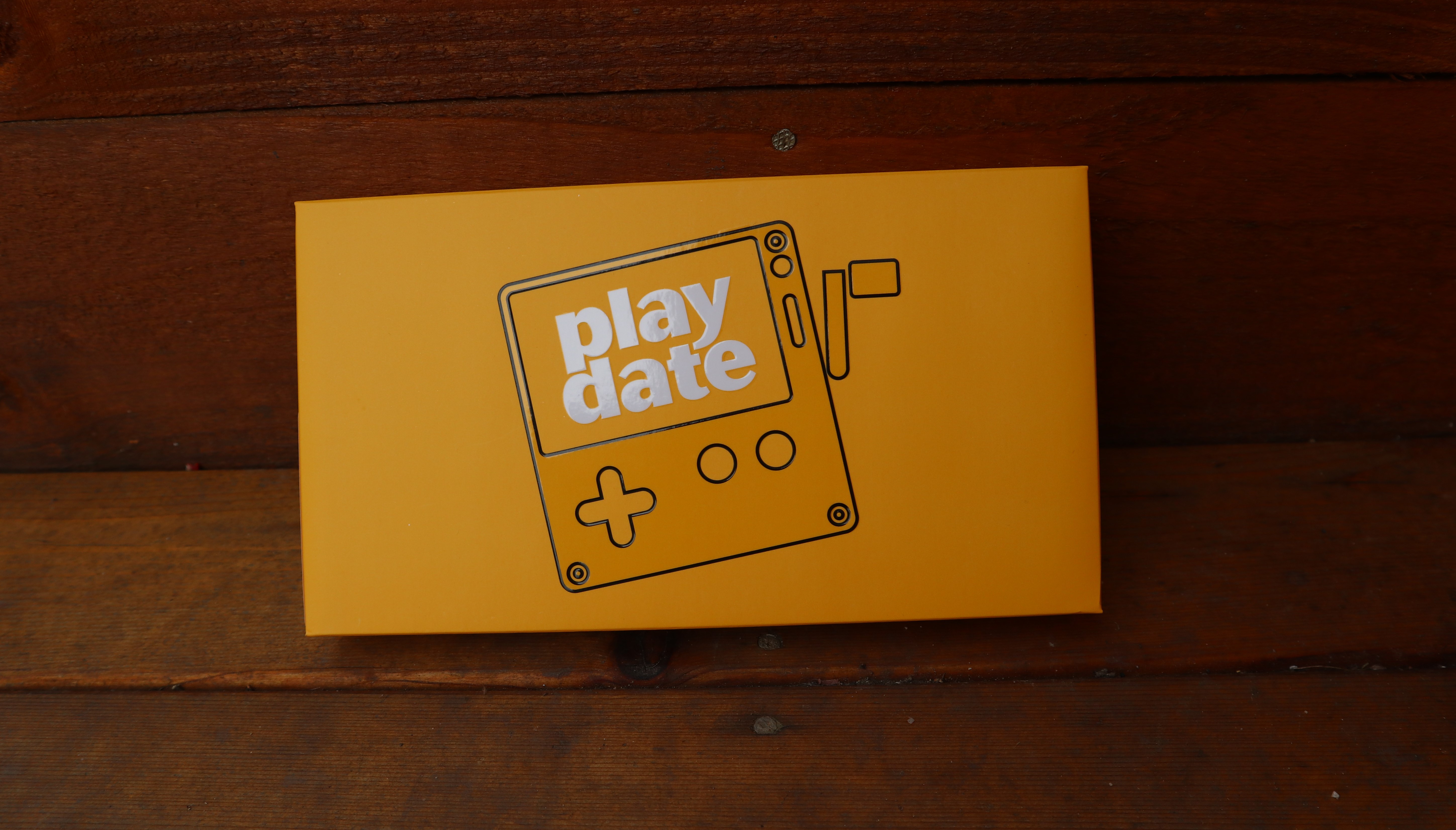
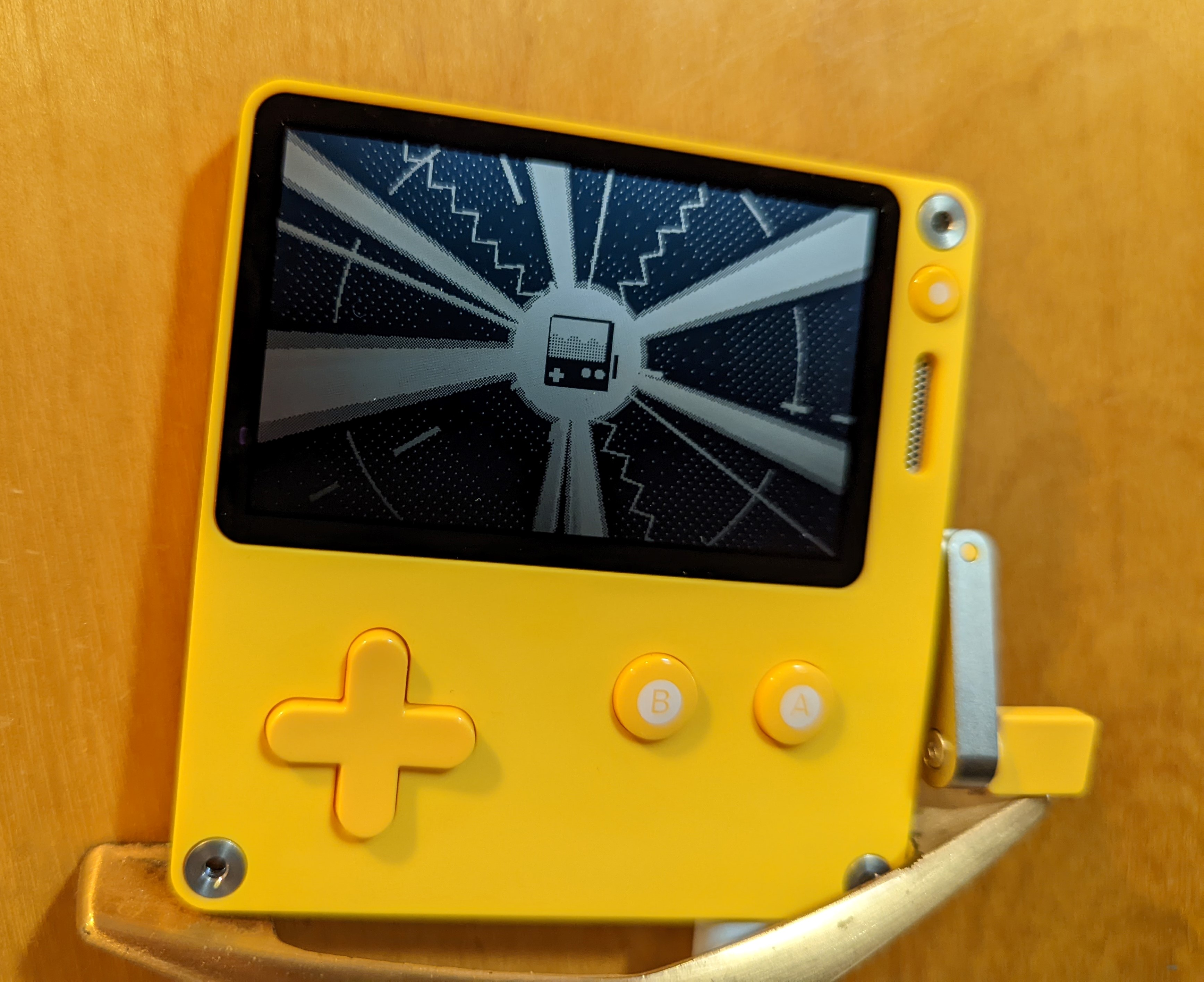
Next week, we can show you way more of Playdate's final retail version. For now, settle on this capture from the system's setup process, along with a look at its unboxing.
Enlarge / Next week, we can show you way more of Playdate’s final retail version. For now, settle on this capture from the system’s setup process, along with a look at its unboxing.
Sam Machkovech


Nine months ago, the team responsible for the portable Playdate game system sent us the device’s “near-final” version for preview. I spent weeks carrying, tapping, and cranking it while testing four preinstalled games. It’s a unique and fun device, even if it lands more in the “quirky hipster” column than the “must-have” one.

Unboxing time.
Enlarge / Unboxing time.
Sam Machkovech

But that preview was inherently limited by issues like a non-final OS and 83 percent of the system’s games not being ready. Next week, I will be able to report on everything else about the retail version of the Playdate, which I’ve been testing for a couple of weeks now. In particular, I’ll answer whether the device’s mix of unique shape and 24 built-in games are worth its $179 retail price (and its “2023” estimate for new orders placed as of press time).

My Playdate system review will be published in one week, on Monday, April 18, at 1 pm ET.

Ahead of that review, the system’s producers at Panic and Teenage Engineering have invited me to share a tease of how the final hardware looks… so long as I don’t show anything beyond its adorable introductory animation, which appears after a brief setup process and a control introduction. The intro requires new users to tap every gameplay button (A, B, all D-pad directions, plus a few rotations of the crank). Doing this sets simple Rube Goldberg devices into motion. The cartoony animations and catchy music are charming.

[embedded content]
The Playdate intro animation, captured by Panic.

Although I’m embedding a video of the full animation, it looks different on a standard web browser than it does on the Playdate’s responsive, high-DPI screen, which combines e-ink crispness with fast-switching LCD properties. The still photos in this article, taken with my personal smartphone, are quite crisp, despite some of the pictures capturing full-blown animations. I will have more to say about the screen’s overall performance in my Playdate review.

The system and its box, meanwhile, should look familiar. Last year’s box was the same shape and design, only with newly revised logos and text. Aesthetically, you’d be hard-pressed to tell the difference between either system, thanks to identical buttons and dimensions.

https://arstechnica.com/?p=1847102


Apollo 10 1/2 review: A Linklater movie about nothing (and the Moon landing)

<img src="https://rassegna.lbit-solution.it/wp-content/uploads/2022/04/apollo-10-1-2-review-a-linklater-movie-about-nothing-and-the-moon-landing.jpg" alt="Young Stan, the star of Apollo 10 ½, is voiced by newcomer Milo Coy. As an adult, Stan is voiced by Jack Black. After School of Rock and Bernie, this is Black’s third film with Linklater, making him an unlikely, late-career avatar for the Houston-born filmmaker. He’s the DiCaprio to Linklater’s Scorsese.”>
Enlarge / Young Stan, the star of Apollo 10 ½, is voiced by newcomer Milo Coy. As an adult, Stan is voiced by Jack Black. After School of Rock and Bernie, this is Black’s third film with Linklater, making him an unlikely, late-career avatar for the Houston-born filmmaker. He’s the DiCaprio to Linklater’s Scorsese.

The new Netflix film Apollo 10 ½: A Space Age Childhood is a magic trick. It has no stakes, no conflict, no villain, no love interest, no money problems, and no one learns anything. Yet, by some miracle, it’s engaging throughout. I hesitate to describe it as the story of a boy named Stan (newcomer Milo Coy) who grew up next to the Manned Spacecraft Center during the Apollo program. Why? Because “story” implies actions leading to other actions, and that’s not what Apollo 10 ½ is about. To quote Homer Simpson, “It’s just a bunch of stuff that happened.”

The movie is the work of filmmaker Richard Linklater, who, like Stan, was born and raised in Houston. Apollo 10 ½ is Linklater’s Roma or Belfast: a semi-autobiographical love letter to the time and place that formed him. (He could have called it Clear Lake.) Perhaps its closest analog is The Tree of Life by fellow Texan Terrence Malick. Both films involve children playing in mists of DDT amid “long summer days of play and idleness” while cosmic things they don’t fully comprehend happen nearby.

Air Bud, meet space Stan

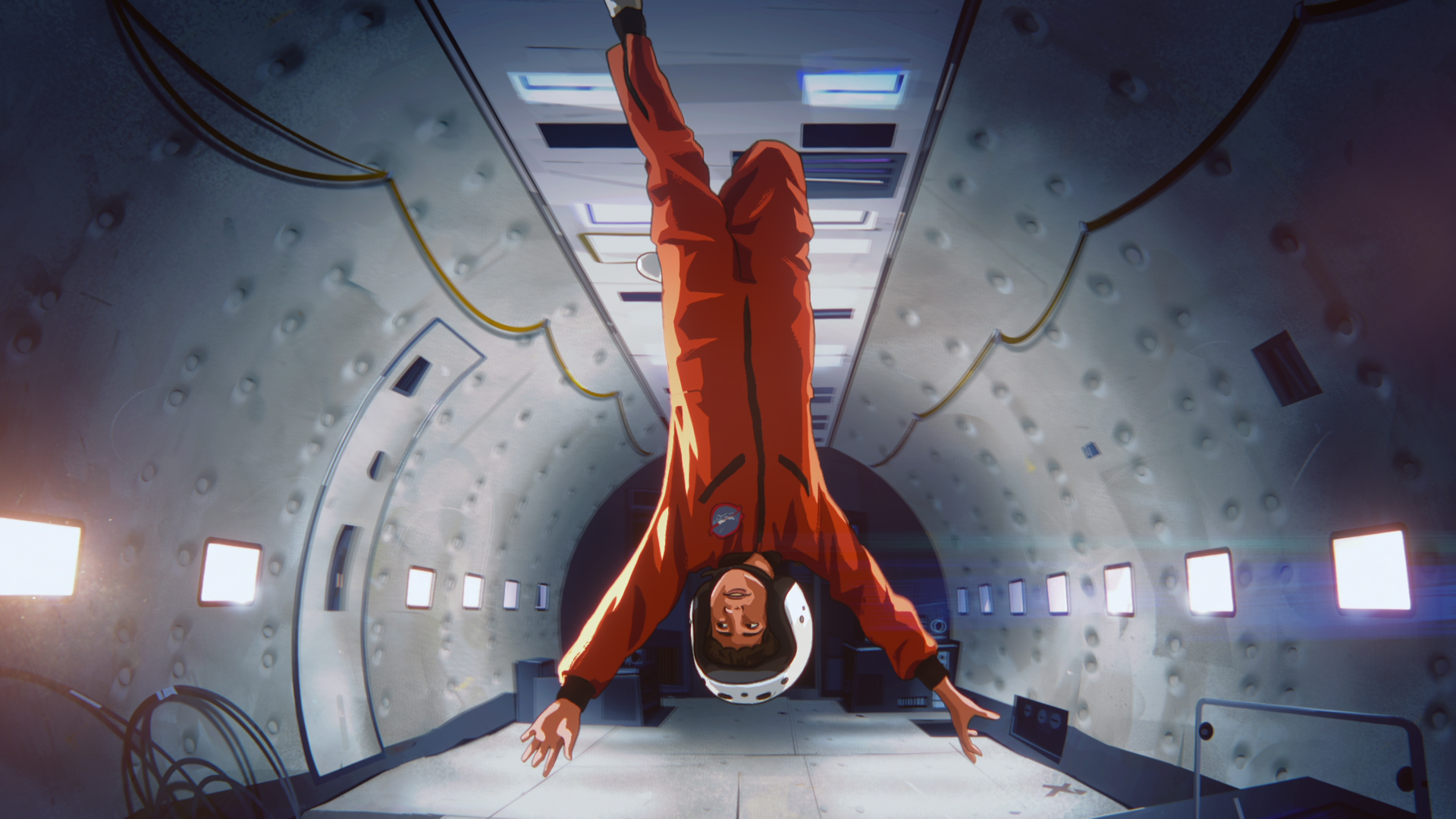
<a href="https://cdn.arstechnica.net/wp-content/uploads/2022/04/Apollo_10_1_2__A_Space_Age_Childhood_01_27_29_15.png" class="enlarge" data-height="1080" data-width="1920" alt="An unlikely space mission. Quite unlikely, based on the unreliable narrator in Apollo 10 ½.”><img alt="An unlikely space mission. Quite unlikely, based on the unreliable narrator in Apollo 10 ½.” src=”https://rassegna.lbit-solution.it/wp-content/uploads/2022/04/apollo-10-1-2-review-a-linklater-movie-about-nothing-and-the-moon-landing.png” width=”980″ height=”551″>
Enlarge / An unlikely space mission. Quite unlikely, based on the unreliable narrator in Apollo 10 ½.

Apollo 10 ½ is narrated by an adult Stan (Jack Black, Jumanji) in the present day, and the result is like a better version of something you might hear in a bar. Adult Stan tells things out of order, goes on about extraneous details, and introduces characters but forgets to do anything with them. All the while, in the background, humans are about to land on the Moon. Imagine a Linklater classic like Slacker or Dazed and Confused, then add the Texas space race and a sprinkle of rotoscoped psychedelia, and you get the idea.

Remember that time NASA hired me to pilot a rocket before I knew how to drive a car?
Enlarge / Remember that time NASA hired me to pilot a rocket before I knew how to drive a car?

Linklater has stripped away many of the artifices of storytelling to present a rambling yet brisk list of memories. But he permits himself one storytelling convention. Among the responsibilities of being an older relative—say, a dad or a cool aunt or a grandpa—is telling youngsters bald-faced lies. Adult Stan just happens to let slip (offhandedly, no big deal) that he was recruited by NASA to go to the Moon when he was in elementary school. NASA accidentally made the first lunar lander too small, you see, and the agency needed a child to test the lander out in secret before the proper adult Moon landing.

[embedded content]
Apollo 10 ½ trailer.

This plot line is never once convincing in the reality of Apollo 10 ½. Is it a dream sequence? Is this a fantasy Stan has as a child? Is Stan the victim of too many big red kickballs to the skull? The more likely explanation is that adult Stan is our slovenly uncle, the viewers are his little ones, and he’s pulling our legs for the heck of it. Also, Stan’s tall tale gives Linklater the barest minimum of a clothesline on which to hang his vignettes.

Goofing around or serious NASA training? In Linklater's latest film, the line between these extremes is always blurry.
Enlarge / Goofing around or serious NASA training? In Linklater’s latest film, the line between these extremes is always blurry.

The movie is set in the suburbs that sprang up around the Manned Spacecraft Center (now Johnson Space Center) in the 1960s. The buildings, streets, neighborhoods, and schools are brand new, in the same way that Stan and his schoolmates are building themselves up from scratch. The neighborhood kids—whose names, appearances, and personalities run together—play baseball in the street, ride aimlessly on bikes, and give presentations on outer space that their classmates drowsily half-listen to. They roam from screen to screen at the drive-in theater and try to get free games out of pinball machines. They scour construction sites for supplies to build wooden forts in their yards (the foliage put in by the builders is still decades from being tall enough to accommodate tree houses).

Mom (Lee Eddy, Red vs. Blue) uses the power of chain-smoking to run the household, while NASA bureaucrat Dad (Bill Wise, Sonic Rebuilt) holds court from his easy chair and tries to come up with wisdom to impart to his brood. The space race infuses everything; we see used car lots describing their prices as “out of this world!” Characters drift in and out, much like they do in memory. I’d be hard-pressed to name Stan’s siblings, and if his parents had names, I didn’t catch them.

Tall tales require big mission control stations.
Enlarge / Tall tales require big mission control stations.

Along the way, we periodically see a moderately engaged Stan taking part in astronaut training and simulations. After being impressed by his kickball skills, a couple of suits pull him off the schoolyard and recruit him. (The NASA guys are played by Zachary Levi of Shazam and Glen Powell, who played—wouldn’t you know it—astronaut John Glenn in Hidden Figures.) Stan relates all this with the same timbre he uses to describe most things in Apollo 10 ½, i.e., it’s not as exciting as going to AstroWorld.

https://arstechnica.com/?p=1846334


Bandai Namco scrubs Ms. Pac-Man from its own classic game

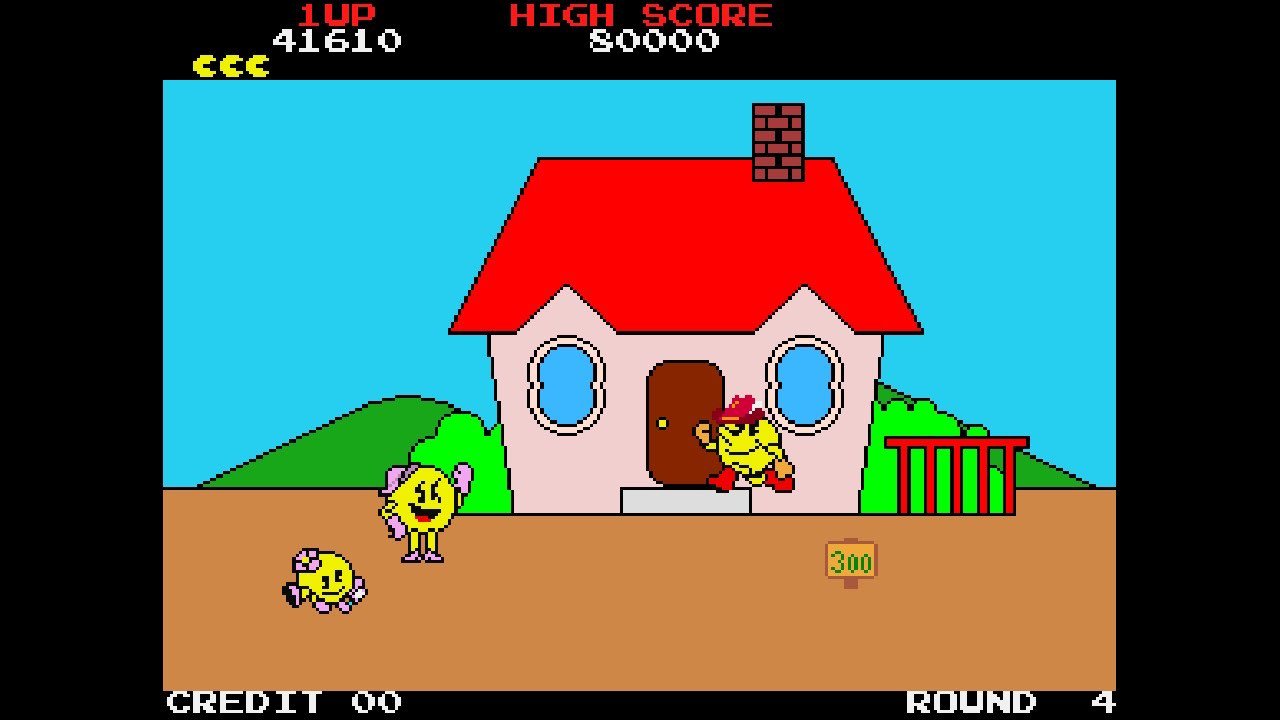
Who's that Pac-lady in the pink hat, and what has she done with Ms. Pac-Man?
Enlarge / Who’s that Pac-lady in the pink hat, and what has she done with Ms. Pac-Man?

Obsessive Pac-fans of a certain age may remember Ms. Pac-Man’s cameo appearance in Pac-Land, the 1984 side-scrolling spin-off that first gave Pac-Man legs. This week’s re-release of the game on the Switch seems to have thrown the “miss” down the memory hole, though, an odd retcon that may be the result of the complicated legal history surrounding Ms. Pac-Man‘s creation.

Pac-Man book contributor Ryan Silberman and artist Nick Caballero were among the first to note the apparent change on Twitter this week. They highlighted Pac-Land Switch screenshots in which Ms. Pac-Man’s iconic bow and high, red boots have been replaced with a character sporting pink high heels and a matching hat. The sprite for the baby-sized Jr. Pac-Man has been similarly changed to remove the trademark red bow that was first seen in 1983’s Jr. Pac-Man.

<img alt="Ms. Pac-Man and Jr. Pac-Man as they appeared in the original release of Pac-Land. The pair have been edited out of this week’s Switch re-release.” src=”https://rassegna.lbit-solution.it/wp-content/uploads/2022/04/bandai-namco-scrubs-ms-pac-man-from-its-own-classic-game.png” width=”638″ height=”481″>
Ms. Pac-Man and Jr. Pac-Man as they appeared in the original release of Pac-Land. The pair have been edited out of this week’s Switch re-release.

Leaving the sprites in their original form would have obviously been the simpler choice for Hamster, which publishes the Arcade Archives series on Switch. And the description for Pac-Land‘s Arcade Archives re-release notes that the “series has faithfully reproduced many classic Arcade masterpieces,” making such a minor change even more bizarre. What’s going on here?

Who owns Ms. Pac-Man?

Bandai Namco hasn’t responded to a request for comment from Ars Technica regarding the modification. But the move probably has something to do with the long and complicated legal history of Ms. Pac-Man itself.

While the original Pac-Man is a wholly owned Namco creation, the Ms. Pac-Man arcade cabinet started life as a “speed-up kit” called Crazy Otto that was created by a group of MIT students calling themselves General Computer Corporation (GCC). That modification kit was eventually spun into the 1982 release of Ms. Pac-Man, with Namco’s official blessing.

In a 1983 lawsuit, GCC acquired a perpetual right to receive a royalty any time Namco re-released a new version of Ms. Pac-Man or Jr. Pac-Man (which GCC also developed). That royalty, which was renegotiated in 2008, helps explain why those two games are so rarely included in Pac-compilations to this day.

Fast-forward to 2019, when AtGames announced it had acquired those royalty rights from GCC during its attempts to release a new Ms. Pac-Man retro cabinet. That in turn led to a lawsuit from Namco Bandai that was settled in 2020 for undisclosed terms. https://arstechnica.com/?p=1846823


Roberta and Ken Williams open up about their first video game in 25 years

Roberta Williams and Ken Williams at the 2022 Game Developers Conference.
Enlarge / Roberta Williams and Ken Williams at the 2022 Game Developers Conference.
Sam Machkovech

SAN FRANCISCO—Legendary game programmer Ken Williams needed only a moment to chew on my question. He and equally famed game designer Roberta Williams had set themselves up for the query by recounting a principle from their time at Sierra On-Line, the video game company they founded that revolutionized PC gaming in the 1980s and ’90s.

Sierra games, they said, stood out because they were built “with blinders” from the rest of the games industry. Nobody worked at competitors’ companies; nobody played competitors’ games. And after each Sierra game’s release, its individual sales record would determine the budget and scope of the lead designer’s next game.

I asked how that math works for their new, out-of-nowhere game announcement in March 2022, Colossal Cave 3D. This reimagining of the first text adventure, the one that Roberta eventually modded into her classic 1980 game Mystery House, is about as detached from her designs in Sierra’s heyday as it can be, mostly due to its shift into (optional) hand-controlled VR adventuring. Does Sierra’s founding principle about budgets and production scope still apply if a lead designer’s “last game” launched over 20 years ago?

Ken paused for a beat, then made a wholly different point. And he isn’t necessarily wearing blinders about the game industry’s modern view of classic game makers.

“I’ve seen where Sierra alumni and others have made a comeback and have done kind of a less-than-perfect game,” Ken said. “And we don’t want to do that. We’d rather throw it in the garbage than do something that ain’t—”

Here Roberta interrupted, as she was apt to do in our conversation, by saying, “It has to be good.”

“It’s got to be good,” Ken agreed.

“We’re both very type-A people”

Ken noted that this project is far from the days of Sierra running a megaton game-sales business, and he was blunt: “For us, it’s not really about the money. If the game sinks or swims, it ain’t gonna change our life at all. So it’s really about, you know, honoring the original designers’ legacy.”

Before choosing a classic game to re-create, the Williamses weren’t necessarily aiming to get back into commercial game design, even when the COVID-19 pandemic left a lot of lapsed creators and artists looking for things to do. Ken and Roberta each began the pandemic working on their own books—his, the history of Sierra On-line; hers, a historical fiction dive into mid-1800s Ireland—only to realize that worldwide lockdowns hadn’t necessarily lifted by the time they were each done with their projects. “We’re both very type-A people,” Roberta said. “We have to be busy with challenges and doing.”

Ken had finished his book while Roberta was wrapping up her own, and during that overlap period, Roberta noticed Ken filling up the screen of their home theater with game programming interfaces and tutorial videos. “I finally questioned him” after seeing this trend repeat over a few days, Roberta said.

After talking about Ken’s decision to learn the Unity programming language, she motioned to Ken. “Explain what your game design was,” she said.

Ken paused, then deadpanned, “Nah.”

Rather than repeat Roberta’s brief explanation (“he wanted to keep his old programming skills fresh”), Ken said his return to programming began with educational software. “If you’re a kid now and don’t know how to program when you grow up, you’re gonna be in deep trouble,” Ken said. “We’re shifting away from factory work. So I just like the idea of teaching kids to program because I’m a programmer. I think everybody has to program.”

So he began work on a possible revival of the Sierra series Dr. Brain—”and [Roberta] said that was a stupid idea,” he quipped. A laugh-filled back-and-forth ensued:

“No, I did not say that!”

“Well, you gave me that impression!”

Ken then faced me, saying, “She got all down in the dumps.” Eager to get my eye contact back, Roberta looked at me and said, “No, I just said, ‘Is it fun?'”

https://arstechnica.com/?p=1846664


Russian Doll S2 trailer is a trippy time-traveling delight

[embedded content]
Natasha Lyonne and Charlie Barnett (return for the upcoming second season of the Netflix series, Russian Doll.

A mysterious portal through time opens up in the New York City subway in the first trailer for the second season of Russian Doll, Netflix’s Emmy Award-winning sci-fi dramedy that was an Ars Technica favorite in 2019. Co-stars Natasha Lyonne and Charlie Barnett (reprise their roles, and this time they face a different kind of supernatural phenomenon on their existential journey.

(Spoilers for the first season below.)

Co-created by Lyonne, Amy Poehler, and Leslye Headland, the season one plot centered on a chain-smoking game developer named Nadia Vulvokov (Lyonne), who died repeatedly the night of her 36th birthday party and kept looping back to the host’s funky East Village bathroom.

Naturally, Nadia wanted to get to the bottom of what was happening, although her sleuthing was hampered by repeated accidental deaths. Then she met a young man named Alan (Barnett) in an elevator who was also reliving the same day—the day when he proposed to his girlfriend only to discover she’d been having an affair. Soon Nadia and Alan realized there might be a crucial connection between them.

In the season finale, Nadia and Alan became trapped in two separate timelines, each contending with a version of the other who was unaware of the time loop connecting the original versions. Nadia saves the alternate version of Alan in her timeline, while Alan saves the alternate Nadia in his timeline, thereby breaking the loop. It’s implied in the final scene that the pair become friends in both timelines.

Season one deservedly received rave reviews when it debuted in 2019. “Russian Doll is a weird, ribald, thoroughly enjoyable ride that deserves every bit of the praise it has received,” I wrote in my review. “The sight gags and whip-smart dialogue are priceless. And much credit goes to Lyonne as its raspy-voiced star. She’s smart, tough, uncompromising, foul-mouthed, and unapologetic about her lifestyle, but haunted by past trauma and regret—and also capable of shining moments of generosity and selflessness.”

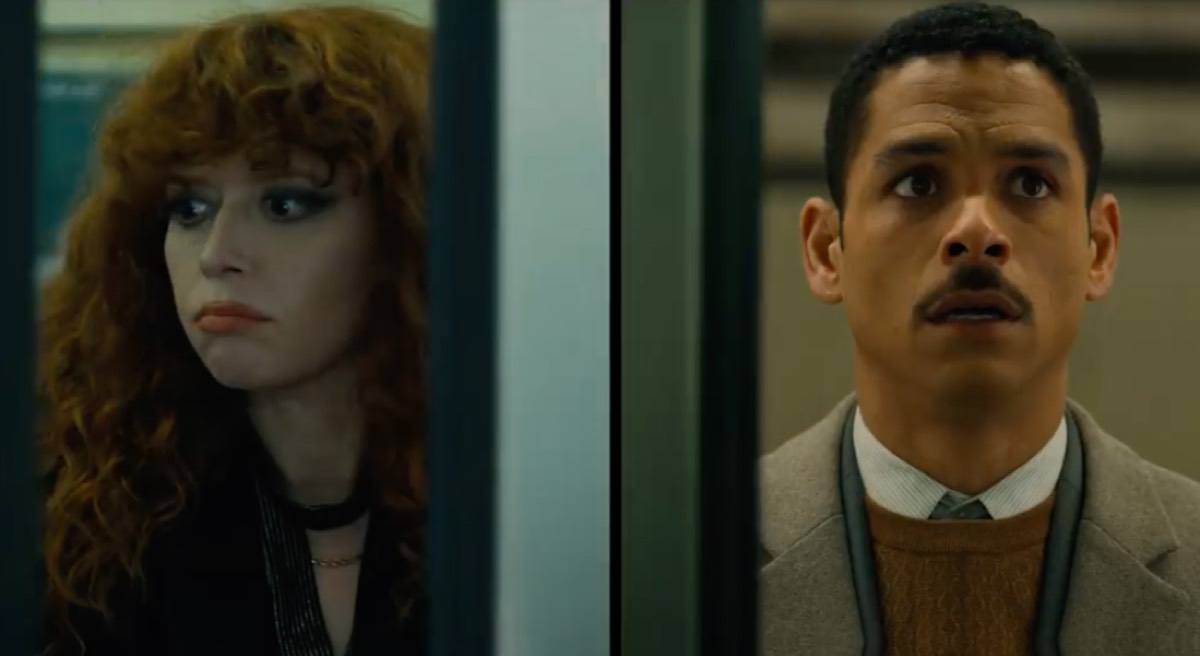
Nadia (Natasha Lyonne) and Alan (Charlie Barnett) find a time portal in the New York City subway.
Enlarge / Nadia (Natasha Lyonne) and Alan (Charlie Barnett) find a time portal in the New York City subway.
YouTube/Netflix

Season one was so perfect, I would have been happy for the series to end right there. But with Lyonne returning as both star and showrunner, odds are good the second season could be just as stellar—especially with the addition of Schitt’s Creek‘s Annie Murphy to the cast. Per the official premise:

Discovering a fate even worse than endless death, this season finds Nadia and Alan delving deeper into their pasts through an unexpected time portal located in one of Manhattan’s most notorious locations, the New York City subway. At first they experience this as an ever-expanding, era-spanning, intergenerational adventure, but they soon discover this extraordinary event might be more than they bargained for and, together, must search for a way out.

As the trailer opens, Nadia is in the subway when Horse (Brendan Sexton III), the homeless man she befriended in season one, shouts, “Is that your train?” Then Nadia wakes up in a subway car in the 1980s. When she informs Alan (now sporting a thin mustache) that she’s become a “time prisoner,” he naturally asks if he should be worried, given what transpired the last time Nadia’s reality started to warp. As she says, “Inexplicable things happening is my entire modus operandi.”

Things get pretty trippy from there, as Nadia ponders whether she and Alan have some unfinished business. At least part of the plot involves one family that “lost its gold twice on a train.” And it looks like Nadia’s BFF, Maxine (Greta Lee), will be getting in on the supernatural shenanigans as well.

Russian Doll season two arrives on Netflix on April 20, 2022.

Listing image by YouTube/Netflix

https://arstechnica.com/?p=1846635


Rockstar, Remedy shake hands on new Max Payne 1+2 remaster series

Promotional image for video game Max Payne.
Enlarge / Max is back.

Remedy Entertainment and Max Payne are together again—and the reunion is coming in the form of a full-blown remake of the hard-boiled series’ first two action games.

The news arrived on Wednesday in the form of a press release signed off by both Remedy, the series’ creators, and Rockstar Games, the franchise’s current rightsholder after the license passed between companies in the early ’00s. The two companies have entered a publishing partnership that will see Rockstar finance a remaster of Max Payne and Max Payne 2: The Fall of Max Payne as a combined gameplay package.

Both games will be remade using Remedy’s proprietary Northlight game engine, which was most recently used in Ars Technica’s 2019 Game of the Year, Control. In addition to a launch on PC, the resulting two-game package will be a current-gen console exclusive on Xbox Series X/S and PlayStation 5. This means the game could possibly flex the same ray-tracing muscles seen in 2021’s Control Ultimate Edition, also a current-gen exclusive. No date for the game has been announced, and “The project is currently in the concept development stage,” according to the press release.

A new deal to numb older Paynes

Coincidentally, this news comes on top of Remedy’s existing publishing deal with Epic Games. That deal guarantees that Epic and Remedy will work together to launch two multiplatform games “in the same franchise:” One game will be triple-A in scope, and the other will be smaller. No date for either Epic-related game has been set since that March 2020 announcement, and neither company clarified whether the franchise in question is new or based on an existing Remedy IP like Alan Wake.

Remedy has not announced any target storefront for the PC version of its Max Payne remasters. Based on Rockstar’s recent track record, the game will likely appear on the Rockstar Games Launcher as at least an option, if not an exclusive. (We hope that Remedy will steer this project in a better direction than another recent Rockstar remaster debacle.)

The last time Remedy formally spoke about its relationship with Max Payne was in 2018 during the run-up to Control‘s 2019 launch. Studio lead and Payne co-creator Sam Lake confirmed that the shuffling of the series’ license in the early ’00s meant that Max Payne 2 was the final game Rockstar wanted Remedy to deliver. Nearly a decade later, Rockstar went on to produce Max Payne 3 as an in-house project with a decidedly different scope (though this third game at least kept Payne’s original voice actor).

As I wrote in a 2012 review of Max Payne 3 for the now-defunct iPad-only magazine The Daily:

Occasionally, the game unleashes Rockstar’s knack for convincing character relationships, but for the most part, those have been swept away to make room for a criss-cross of crime syndicates and crooked cops. That plot won’t elicit a second playthrough; neither will the score-more-points replay mode nor a numbingly average take on online multiplayer. That being said, the set pieces, shootout choreography, and satisfying gunplay make this one of the industry’s best story-driven single-player games in some time, and the plot and dialogue are far from garbage. Still, the way Rockstar stretched a 2-hour plot over a 10-hour journey makes one thing clear—linear material isn’t Rockstar’s bag just yet.

This came after Rockstar’s piddling 2008 attempt to turn Max Payne into a Hollywood franchise. The Mark Wahlberg vehicle remains one of Rotten Tomatoes’ worst-scoring films of all time.

Remedy has yet to clarify whether the gameplay or the dialogue for either game will be revised in any way to align with modern expectations. Though both original Max Payne games remain beloved as relics of the PlayStation 2 era—complete with hard-boiled dialogue and their use of a still-novel “bullet time” mechanic lifted from films like The Matrix—other third-person action games have blown past those standards in the decades since.

https://arstechnica.com/?p=1846367