Gran Turismo 7 will rejigger its game economy after backlash
<img src="https://rassegna.lbit-solution.it/wp-content/uploads/2022/03/gran-turismo-7-will-rejigger-its-game-economy-after-backlash.jpg" alt="Don't let GT7‘s grind rain on your parade, the economy is being fixed.”>
Enlarge/ Don’t let GT7‘s grind rain on your parade, the economy is being fixed.
When Gran Turismo 7launched earlier this month, it was no surprise that the game’s economy was not exactly forgiving. But displeasure among players boiled over a couple of weeks later after a bungled update took down the game servers—and therefore basically the entire game—for more than a day.
I would like to apologize for the frustration and confusion caused last week with our patch updates which resulted in not only a server outage but also adjustments to the in-game economy which were made without a clear explanation to our community.
Every player who had a copy of the game by the time the post went live in the early hours of Friday morning will, at some point in the very near future, find an extra million in-game credits in their account as a goodwill gesture.
But bigger changes are in store for the game’s April update. This will revamp the in-game economy, increasing payouts by as much as 100 percent for some races, as well as adding better rewards for completing the Circuit Experience section of the game.
Endurance races will also appear, with eight one-hour races added to the Missions section of the game. Yamauchi says that these races will have higher reward payouts. Similarly, the payouts for online races are increasing.
Players will now be able to accumulate 100 million (non-microtransaction) credits as opposed to just 20 million credits, which may come as welcome news to those busy exploiting the game with Remote Play PC scripts to earn credits.
Other tweaks will expand the game. Yamauchi says that the game will get “a few additional patches deployed between now and the end of April, which will add new cars and course layouts.” Other near-term updates include more endurance races (including 24-hour races), the ability to sell cars, and more races at the game’s various world circuit locations.
https://arstechnica.com/?p=1843682
Wordle creator describes game’s rise, says NYT sale was “a way to walk away”
<img src="https://rassegna.lbit-solution.it/wp-content/uploads/2022/03/wordle-creator-describes-games-rise-says-nyt-sale-was-a-way-to-walk-away.jpg" alt="Josh Wardle speaks at the 2022 Game Developers Conference in San Francisco about his gaming sensation Wordle.”>
Enlarge/ Josh Wardle speaks at the 2022 Game Developers Conference in San Francisco about his gaming sensation Wordle.
Sam Machkovech
SAN FRANCISCO—Josh Wardle, creator of the game Wordle, arguably holds a world record for the fastest sale of a massive new game the instant it became a worldwide phenomenon.
Hence, his presentation at the 2022 Game Developers Conference has a different flair than the usual “post-mortem” dissection of a finished game. His presentation has plenty to dissect, including the “low seven figures” deal that saw him sell the whole thing to The New York Times at the end of January. But in addition to questions about how Wordle was born, Wardle seems aware of the unspoken question on everyone’s mind: Why would you move on just as the game took off?
Answering both of those questions, to some extent, requires appreciating that the Times had been in Wardle’s mind well before Wordle joined its family.
“The best co-op gaming experiences”
“The New York Times, in the end, was actually a really good buyer for the game,” Wardle says while standing at a GDC podium in modest dress: gray shirt, blue jeans, slightly receding hair pushed back with thick glasses covering his expressive face. “I think they’ll be great stewards. Their games play an important part in the origin of Wordle. They treat their players with respect. I don’t think they’re going to cover the game in ads or anything.”
Exactly how the Times handles Wordle from here on out, however, is not Wardle’s concern—a fact he emphasizes in this talk, when he expresses his relief to finally be free of the “stress” that Wordle added to his life. Before he parted ways with Wordle, there was the matter of building it.
“I think crosswords are one of the best co-op gaming experiences,” Wardle tells the crowd, and in his case, this means the daily, meditative play he and his partner shared at the beginning of 2021, pens primed over the New York Times’ crosswords in particular. “There’s something about looking at a clue and someone else looking at the same clue but arriving at a different solution that’s kind of beautiful. It teaches you something about the other person.”
Wardle warns the crowd that he’ll be getting “a bit MFA, arts degree” as he points to a quote from literary theorist Terry Eagleton: “Language is the very air I breathe.” Wardle then pleads with the conference’s crowd of game devs to think about making more games with words rather than fearing backlash for making stuff that resembles Words With Friends: “If you make words a core mechanic of your game, everyone comes to your game having a deep understanding of its fundamentals. You don’t have to teach them about words.”
Wordle’s mastermind talks about Mastermind
<a href="https://cdn.arstechnica.net/wp-content/uploads/2022/03/IMG_2485.jpg" class="enlarge" data-height="3041" data-width="3979" alt="This is the very first build of Wordle, before it was called Wordle. You can see its project name in the header bar, "Words With Text," which hints to Wardle’s Words With Friends obsession at the time.”><img alt="This is the very first build of Wordle, before it was called Wordle. You can see its project name in the header bar, "Words With Text," which hints to Wardle’s Words With Friends obsession at the time.” src=”https://rassegna.lbit-solution.it/wp-content/uploads/2022/03/wordle-creator-describes-games-rise-says-nyt-sale-was-a-way-to-walk-away-1.jpg” width=”980″ height=”749″>
Enlarge/ This is the very first build of Wordle, before it was called Wordle. You can see its project name in the header bar, “Words With Text,” which hints to Wardle’s Words With Friends obsession at the time.
Sam Machkovech
After explaining exactly how Wordle works (players get six guesses to figure out a five-letter word), Wardle cops to a comparison that many avid gamers (including commenters on Ars’ first Wordle article) have made about his eventual hit game: the 1980s board game Mastermind.
When building Wordle‘s first prototype in 2013, Wardle thought back to the “guess the color” system of the aforementioned board game. “What if you were guessing words instead of colored sequences?” he asks the crowd. The final game’s five-letter concept stuck at that long-ago point, but Wardle realized something wasn’t right when he dumped a massive list of every possible five-letter word into the app’s random-word pool:
<a href="https://cdn.arstechnica.net/wp-content/uploads/2022/03/IMG_2487.jpg" class="enlarge" data-height="2945" data-width="4247" alt="Wardle decries the fact that certain five-letter words are all but impossible for average players to guess, at least through the gaze of Wordle‘s systems.”><img alt="Wardle decries the fact that certain five-letter words are all but impossible for average players to guess, at least through the gaze of Wordle‘s systems.” src=”https://rassegna.lbit-solution.it/wp-content/uploads/2022/03/wordle-creator-describes-games-rise-says-nyt-sale-was-a-way-to-walk-away-2.jpg” width=”980″ height=”680″>
Enlarge/ Wardle decries the fact that certain five-letter words are all but impossible for average players to guess, at least through the gaze of Wordle‘s systems.
Sam Machkovech
“It turns out that these are all valid five-letter words,” Wardle says while displaying the above image, drawing a laugh from the crowd. After testing the worst outliers in his game, he had a revelation: When players encounter a word they’ve never heard of or used in common speech, they are left with little rational means of guessing what the next letter might be, even as grays, greens, and yellows accumulate. Early players couldn’t ascertain how those letters might connect to each other (i.e., trying common consonant and vowel combinations). The result was identical to Mastermind, where the color draw is random. Wardle didn’t want that.
“What’s fun about Wordle, I think, is what you can tease out, based on what you know about language,” Wardle says. “What the word should be.”
https://arstechnica.com/?p=1843493
Daniels brings the multiverse to madcap life in Everything Everywhere All at Once
<img src="https://rassegna.lbit-solution.it/wp-content/uploads/2022/03/daniels-brings-the-multiverse-to-madcap-life-in-everything-everywhere-all-at-once.jpg" alt="Daniel Kwan and Daniel Scheinert—collectively known as Daniels—are the directors of the new sci-fi action/dramedy Everything Everywhere All at Once, starring Michelle Yeoh.”>
Enlarge/ Daniel Kwan and Daniel Scheinert—collectively known as Daniels—are the directors of the new sci-fi action/dramedy Everything Everywhere All at Once, starring Michelle Yeoh.
The incomparable Michelle Yeoh plays a harried Chinese American laundromat owner facing an IRS audit in the new science fiction action comedy Everything Everywhere All at Once. Evelyn Wang is just trying to sift through a mountain of paperwork and crumpled receipts to keep her life from falling apart when she unexpectedly gets pulled into an epic battle across multiple timelines. And the stakes couldn’t be higher: the very survival of the entire multiverse is on the line.
Directors Daniel Kwan and Daniel Scheinert—collectively known as Daniels—are known for their ability to straddle genres, deftly blending comic absurdity and outré weirdness with moments of gut-wrenching poignancy. Everything Everywhere All at Once is only their second feature film together, but you’d never know it by the assured hand Daniels brought to bear on the project, somehow bringing a chaotic jumble of disparate elements together into a coherent whole that both surprises and delights. The two creators said they found inspiration while they were writing the script in classic kung-fu films, as well as The Matrix and Fight Club.
“I fell in love with those movies,” Kwan said. “I was like, man, if I could just make something half as fun as The Matrix, but with our own stamp and our spirits, I would just die happy.”
Ars sat down with Kwan and Scheinert to learn more.
(Some spoilers below but no major reveals.)
Ars Technica: Why the multiverse? What is it that drew you to that concept?
Daniel Kwan: One of the first times I thought about the multiverse was maybe 15 years ago. I was watching Sherman’s March, a documentary. One of the many relationships in that movie was a linguist who talks about modal realism [a philosophical argument holding that all possible worlds are real in the same way as the actual world]. I started to go down a Wikipedia rabbit hole. And I was like, “This is fantastic and beautiful.” You know what’s really embarrassing? I got so sucked into modal realism that I never finished the movie. Does it have a happy ending? I have no idea.
https://arstechnica.com/?p=1842370
Report: EA Sports to finally move forward with FIFA-less soccer game
Enlarge/ Ars Technica’s MS Paint interpretation of what appears to be a finalized divorce between EA Sports and FIFA.
EA Sports / Sam Machkovech
Hidden amidst the usual “coming this fall” slate of video game announcements is one big change: the extrication of “FIFA” from all future EA Sports products.
On Thursday, Giant Bomb reporter and host Jeff Grubb followed up on an October 2021 report about the trademarked term “EA Sports Football Club,” possibly shortened to “EA Sports FC.” Grubb wondered exactly what the EAFC might refer to. EA Sports games come packed with a variety of single-player and online modes that range from cinematic story sequences to card-collecting, microtransaction-fueled frenzies. So the trademark could have referred to any kind of in-game mode—or the term could have been snapped up for nonpublic-facing reasons.
Around the same time, EA Sports provoked questions on the topic by publicly suggesting on its official blog that it might “rename our global EA Sports [soccer] games.” EA did this all while retaining its licensing arrangements with various soccer leagues and clubs. This public suggestion could have been done for any number of reasons—perhaps to put pressure on FIFA itself to relent in aggressive, high-dollar licensing requests, lest EA Sports take both its literal and figurative ball and go home. Privately, EA executives told staffers that its arrangement with FIFA was far from fruitful, in terms of holding back possible development and design directions for future games.
Grubb’s Thursday installment of the “Grubbsnax” live stream and podcast saw him allege that the rumors were true: “EA Sports Football Club, or EA Sports FC: That’s the name.” After recalling the October 2021 trademark reveal, Grubb doubled down: “That’s the name… at least, as it’s planned right now.”
Following FIFA’s own trademark update
Grubb’s announcement came after he discovered that the central FIFA organization had recently re-upped its own internal trademarks for the FIFA brand to add “video games” in a way that had not previously been registered. This move alone wasn’t a clear indicator of EA Sports’ divorce from FIFA, but it does suggest that FIFA as an organization could launch its own internally developed, FIFA-branded soccer game. Exactly when that hypothetical game might debut (or whether it would resemble EA Sports’ successful and controversial Ultimate Team mode) is entirely unclear as of press time.
Grubb also expressed surprise that EA Sports had not already gone to the trouble of announcing the name switch. He suggested an announcement and trailer had been “planned” to happen by this point in March 2022. Getting the news out of the way by early 2022 will arguably allow EA to less awkwardly celebrate its soccer series’ 30th anniversary in late 2023.
EA Sports representatives did not immediately respond to Ars Technica’s questions on the matter.
https://arstechnica.com/?p=1843420
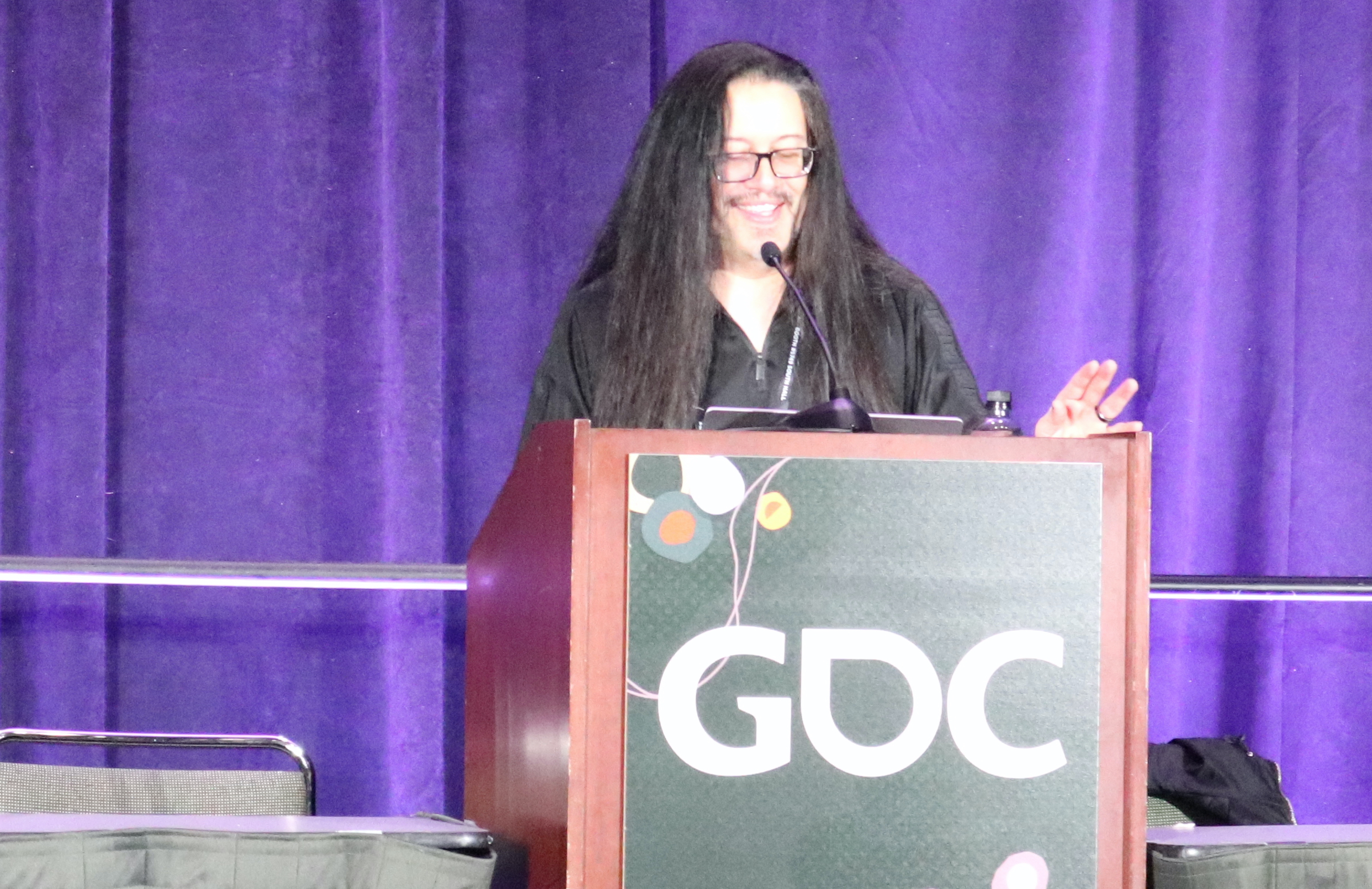
Wolfenstein 3D secrets revealed by John Romero in lengthy post-mortem chat
SAN FRANCISCO—While the game series Doom and Quake have been heavily chronicled in convention panels and books, the same can’t be said for id Software’s legendary precursor Wolfenstein 3D. One of its key figures, coder and level designer John Romero, appeared at this year’s Game Developers Conference to chronicle how this six-month, six-person project built the crucial bridge between the company’s Commander Keen-dominated past and FPS-revolution future.
And if six months for a landmark game seems fast, you should pause for a history lesson.
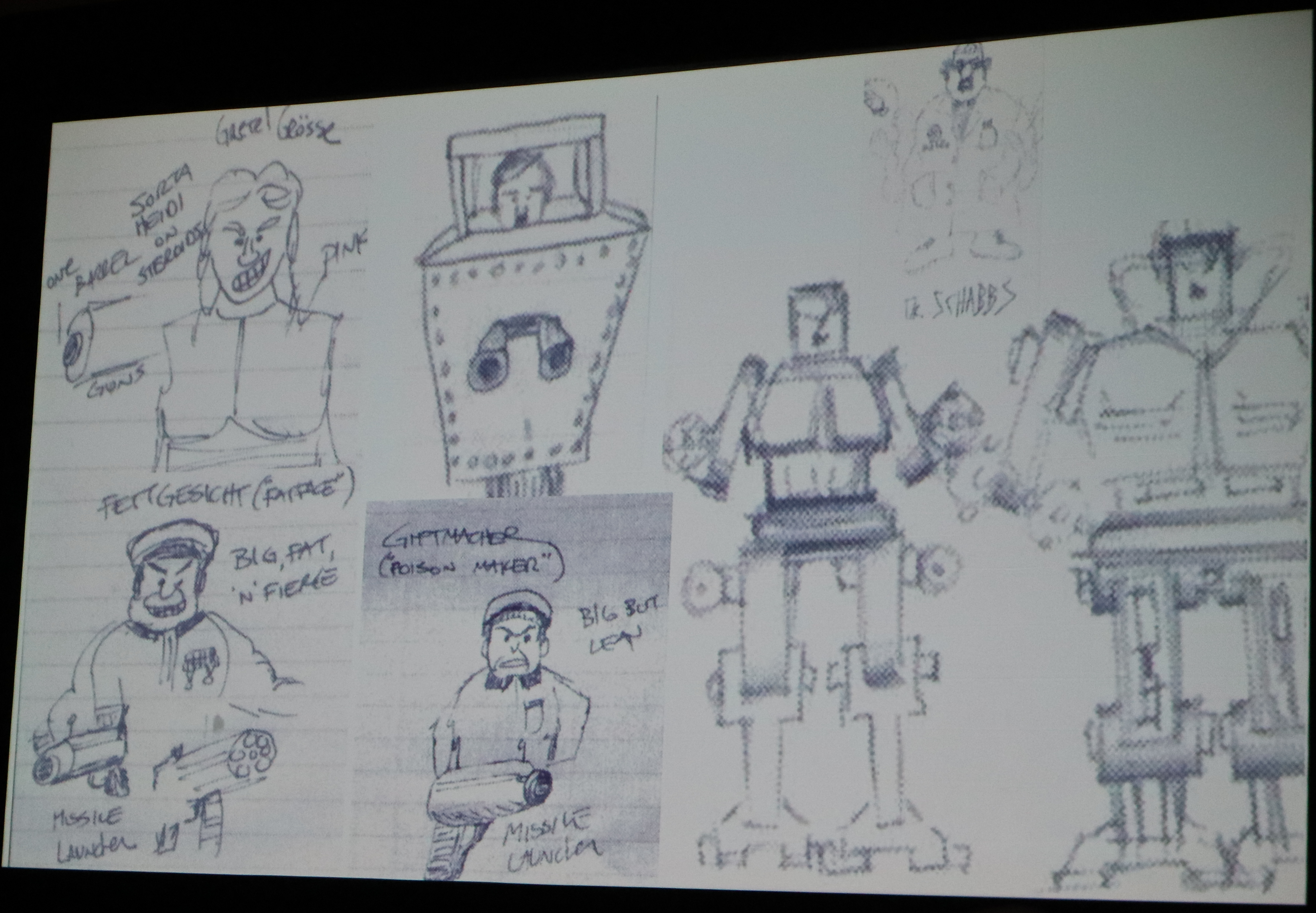
<a href="https://cdn.arstechnica.net/wp-content/uploads/2022/03/IMG_2400.jpg" class="enlarge" data-height="2801" data-width="4039" alt="Original concept art for Wolfenstein 3D.”><img alt="Original concept art for Wolfenstein 3D.” src=”https://rassegna.lbit-solution.it/wp-content/uploads/2022/03/wolfenstein-3d-secrets-revealed-by-john-romero-in-lengthy-post-mortem-chat-1.jpg” width=”980″ height=”680″>
“In the last six months of 1991, we started and shipped five games,” Romero says as a lead-in to the genesis of Wolfenstein 3D‘s development. This included multiple Commander Keen side-scrolling games, and id Software began the year of 1992 by prototyping the game that would have been Keen 7, whose major technological advancement would have been parallax-scrolling backgrounds. After helping id Software complete the game’s first demo in one week, Romero announced that he wasn’t interested in keeping the Keen series going. id Software co-founder Adrian Carmack agreed—”I’m sick of Keen“—and John Carmack (no relation) “viewed the carnage” and assessed that a change might very well be in order.
“We should make another 3D game with texture mapping,” Romero suggested, as a nod to the slow-but-novel game Catacomb that they’d also shipped in 1991. After co-founder Tom Hall suggested an on-foot follow-up to id’s 1991 curio Hovertank (seriously, what a busy year!), Romero says he countered “instantly” with his own pitch: a 3D remake of the 1981 Apple IIe classic Castle Wolfenstein. “That idea won instant approval,” he says.
id Software used original level-design software to build maps in Wolfenstein 3D.
Sam Machkovech
id Software used original level-design software to build maps in Wolfenstein 3D.
Sam Machkovech
There was a catch, however: Work on the id Software remake began before anyone involved, including publisher Apogee, had secured the rights to the classic Muse Software series. Could that happen, or would id Software have to rename the game? (Romero was stubborn: “We tried coming up with a new name, but nothing was cool enough.”) In April 1992, assistant artist Kevin Cloud was tasked to track down Castle Wolfenstein‘s rights. Weeks later, he discovered that a woman owned the entirety of Muse’s output, and she was willing to sell the Wolfenstein trademark outright to id Software for $5,000.
During the panel’s Q&A, Romero confirms that id Software not only met Castle Wolfenstein creator Silas Warner but showed him Wolfenstein 3D‘s retail version shortly after its 1992 launch. To do this, folks from id drove to Kansas City with a $5,000 color Toshiba laptop in tow to meet Warner at a convention where he was speaking. At the event, Warner signed one of id Software’s Wolfenstein 3D printed manuals, which Romero says is still at id Software’s offices.
Gatling over stealth; independence over Sierra
By March 1992, id Software had gutted some of the gameplay elements that made the original Apple IIe game an office favorite. The company’s original development plan included the sneakier aspects of the 1981 game and its 1984 sequel: walking carefully, searching dead bodies for loot, dragging incapacitated guards out of hallways to avoid being spotted, and picking locks for items. While playtesting the early first-person action, as tuned by engine lead John Carmack, the team discovered something surprising.
“The more fun part was running and gunning,” Romero says. “Stopping to drag a guard or unlock a chest really slowed down the innovative, high-speed running and blasting Nazis at the core of the game.” The new game’s thrilling nature was aided in particular by a directive from publisher Apogee, who insisted the game support SoundBlaster sound cards and their robust digital sample playback. “The sound of the Gatling gun, the enemy shouting sounds, the pain sounds, and the death sounds: They were the heartbeat of the game,” Romero says.
id Software decided to “listen to the game” once its most exciting aspects became apparent, and Romero uses this as a teaching moment: “When you’re making a game, you’re trying to find the fun as soon as you can. And sometimes, the fun isn’t in the features that you thought were going to be fun.” And so Wolfenstein 3D‘s stealth elements were wholly jettisoned within its first month of development.
Enlarge/ A photo of Roberta Williams in her 1990s home taken by John Romero while visiting her and Ken Williams.
Sam Machkovech
At the start of February, Roberta Williams, legendary designer of the King’s Quest series, invited the id Software staff to visit her home in Oakhurst, California, after receiving a copy of Commander Keen from Romero in the mail and enjoying it. The visit included a full tour of gamemaker Sierra’s offices, as co-hosted by programmer and Sierra co-founder Ken Williams, and a chance encounter with legendary game coder Warren Schwader, who Romero says was responsible for all of his father’s favorite PC games.
This was followed by the folks from id Software eagerly showing both Williamses their latest build of Wolfenstein 3D. “[Ken] was not visually impressed,” Romero says. The demo was cut short after only 30 seconds, at which point Ken booted up a copy of Red Baron. “I was dumbfounded,” Romero says. “Here’s the future, the start of a new genre, the first-person shooter, and Ken did not pay any notice.” (It reminded him of the same cold response his team got from showing off Dangerous Dave, the precursor to Commander Keen, to the publishing team at Softdisk 18 months earlier.)
Still, between the Wolfenstein 3D demo, the existing Keen output, and id’s ability to make $50,000 a month selling shareware, Ken was charmed enough to make id Software an offer: a total company buyout for $2.5 million of Sierra stock. Romero and his colleagues mulled the offer for a day, then countered that they’d take the deal if it included an immediate payment of $100,000 and a letter of intent. “No thanks, but good luck with everything,” Ken replied.
In a GDC 2022 interview with Ars Technica, Ken Williams confirms Romero’s account is accurate, and he now admits some remorse: “I should’ve done the deal,” he says.
“The sanctity of his code”
<a href="https://cdn.arstechnica.net/wp-content/uploads/2022/03/IMG_2402.jpg" class="enlarge" data-height="2480" data-width="3104" alt="Romero explains that W3D‘s floor tiles were "blank," at least in terms of visual data. This gave id Software flexibility to assign a tag of some kind to those tiles, and the designers settled on "sound zones." If a gunshot or attack occurred on a tile connected to others, that would make any other connected enemy "hear" the sound and move toward it according to each enemy’s assigned AI routine. A shut door would leave a monster closet intact until it was opened, as the above image demonstrates. Yet Romero clarifies that a few levels include "devious" sound-zone placement that would make an end-of-level enemy hear you much farther away. Players would hear the faint sounds of doors opening and closing as the distant, aware enemy narrowed in on your position. This sound-driven terror was wholly intentional on Romero’s part.”><img alt="Romero explains that W3D‘s floor tiles were "blank," at least in terms of visual data. This gave id Software flexibility to assign a tag of some kind to those tiles, and the designers settled on "sound zones." If a gunshot or attack occurred on a tile connected to others, that would make any other connected enemy "hear" the sound and move toward it according to each enemy’s assigned AI routine. A shut door would leave a monster closet intact until it was opened, as the above image demonstrates. Yet Romero clarifies that a few levels include "devious" sound-zone placement that would make an end-of-level enemy hear you much farther away. Players would hear the faint sounds of doors opening and closing as the distant, aware enemy narrowed in on your position. This sound-driven terror was wholly intentional on Romero’s part.” src=”https://rassegna.lbit-solution.it/wp-content/uploads/2022/03/wolfenstein-3d-secrets-revealed-by-john-romero-in-lengthy-post-mortem-chat-3.jpg” width=”980″ height=”783″>
Enlarge/ Romero explains that W3D‘s floor tiles were “blank,” at least in terms of visual data. This gave id Software flexibility to assign a tag of some kind to those tiles, and the designers settled on “sound zones.” If a gunshot or attack occurred on a tile connected to others, that would make any other connected enemy “hear” the sound and move toward it according to each enemy’s assigned AI routine. A shut door would leave a monster closet intact until it was opened, as the above image demonstrates. Yet Romero clarifies that a few levels include “devious” sound-zone placement that would make an end-of-level enemy hear you much farther away. Players would hear the faint sounds of doors opening and closing as the distant, aware enemy narrowed in on your position. This sound-driven terror was wholly intentional on Romero’s part.
Sam Machkovech
As far as getting the game out, Romero doesn’t offer horror stories about major stopgaps in the art, coding, music, sound, or level-design process. The biggest exception is a story about a major gameplay change that happened two months into development and how it required buy-in from John Carmack.
The issue stemmed from the lack of secret areas in the earliest levels. How could Wolfenstein 3D reward players who poked around and searched for hidden trinkets? Romero and Tom Hall suggested “push walls,” which would use non-door textures to hide a mix of door animations and unique sounds that players would find if they tried to “open” the right non-door part of the wall.
“John didn’t want to add push walls,” Romero says. “It’d violate the sanctity of his code. It’d be a hack.”
But the level designers were in a bind, having no other clever system available in Carmack’s otherwise blistering 3D-textured engine to hide secrets. By the end of the following month, Carmack “heard the request enough times” and caved. This led to an explosion in secret areas, and Hall interrupts Romero from the GDC audience at one point in the talk to own one of his follies: “Sorry about the maze that you can’t complete!” Moments later, he unbuttons his shirt amidst the GDC crowd to reveal an original Wolfenstein 3D T-shirt.
https://arstechnica.com/?p=1843183
How to make online games less toxic? GDC devs debate moderation
Enlarge/ How can online gamemakers adapt both existing and new titles with systems that make guys like this less angry? Three presenters at the 2022 Game Developers Conference offer their own suggestions. (None include the obvious tip that this stock-photo guy should upgrade his old Xbox 360.)
SAN FRANCISCO—As long as popular video games depend on online services like matchmaking and chat, those games will suffer from toxicity, harassment, and bullying. Or at least that’s the assumption that some panelists at this year’s Game Developers Conference (GDC) are eager to either soften or nullify altogether.
Ahead of the conference’s show floor opening on Wednesday morning, we listened to a few participants offer their hopes for more positive social gaming environments—and three perspectives stood out as a combined pitch for a brighter future. The proof isn’t yet in these pitches’ pudding, but each points to different, seemingly smarter steps toward a better online-gaming ecosystem.
Turning the temperature down on “heat maps”
The first pitch, from game-moderation startup Good Game Well Played (GGWP), suggests aiming an AI-powered laser at the problem. Co-founded by pro gamer and entrepreneur Dennis “Thresh” Fong, GGWP is designed to slot into existing games’ moderation systems to make report-based moderation stronger by coupling it with two types of real-time data: voice chat and gameplay “heat maps.”
The project began near the outset of the 2020 pandemic, Fong tells Ars Technica, after he chatted with existing gamemakers about the variety of toxic behaviors in online games. Fong was startled by one unnamed game’s revelation: Less than 1 percent of its user-generated reports were followed up with moderation. (Industrywide stats on that topic remain obfuscated, in part, since playerbases are fragmented across a number of online portals, ranging from Xbox Live and PlayStation Network to publisher- and game-specific matchmaking queues. Industrywide audits don’t really exist to confirm toxic online trends across them all.)
The issue, Fong says, boils down to available resources. Insults, bad sportsmanship, and even racist slurs go to the back of the moderation queue in this unnamed game. Reports of violent threats, self-harm, danger to children, and other extreme cases are what gets attention.
Enlarge/ Sample stat dump from a hypothetical GGWP-linked game.
This iceberg approach leaves enough annoying, gameplay-centric toxicity intact to frustrate players—or drive them out of certain games entirely. Thus, Fong and his eventual GGWP partners began plotting a system to triangulate any in-game reports with data from the gameplay sessions in question. Fong says that, with one API call, GGWP can funnel voice chat through its systems and use voice recognition to parse whatever language was used by a reported player. Other API calls can do the same for tracking each gameplay session’s relevant data, then checking whether a reported player has negative patterns in other sessions in the same game.
Tracked behaviors in GGWP’s eyes include friendly fire, rage-quitting, body blocking (intentionally standing in the way of your teammates while they try to attack enemies), and feeding (playing poorly on purpose to let opponents win). Fong also suggests that players who don’t exhibit any of GGWP’s tracked negative traits could benefit from a positive reputation score—though exactly how a game would recognize that remains unclear.
Fong suggests that GGWP’s voice chat tracking systems will recognize session-specific context, particularly when the audio in question is between friends. He believes this will work by using a constantly evolving AI model trained on in-game chat. However, when pressed about the system’s ability to parse language that might target traditionally marginalized groups, Fong suggested that the phrase “get back in the kitchen” could mean different things to different people in an online game. (As of press time, GGWP’s public website doesn’t include any women listed on its board.)
https://arstechnica.com/?p=1842953
Kirby and the Forgotten Land goes down smooth like a Kirby game should
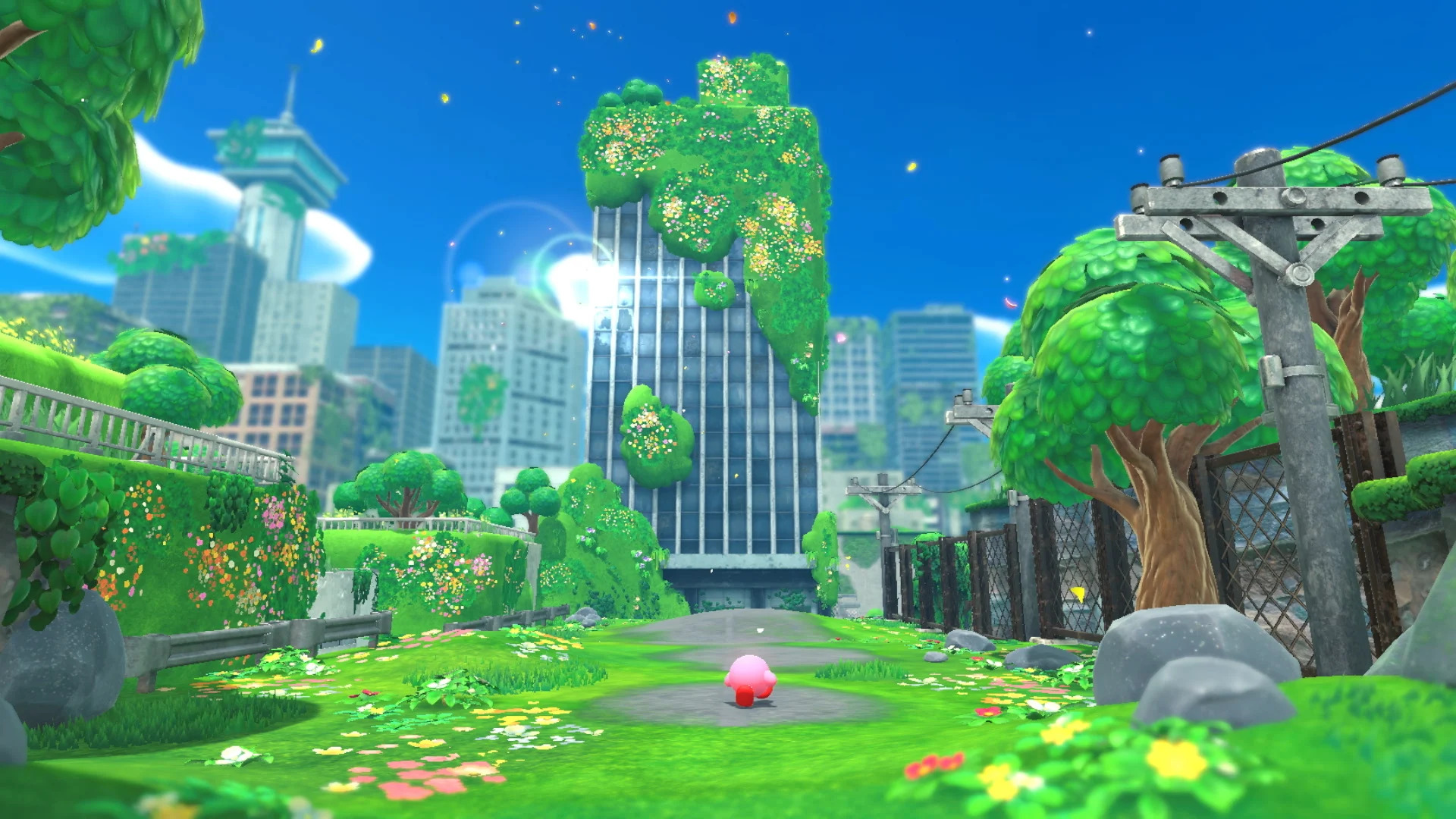
<img src="https://rassegna.lbit-solution.it/wp-content/uploads/2022/03/kirby-and-the-forgotten-land-goes-down-smooth-like-a-kirby-game-should.jpg" alt="Don't let this image fool you—Kirby‘s 3D adventure is far from an open-world game.”>
Enlarge/ Don’t let this image fool you—Kirby‘s 3D adventure is far from an open-world game.
Kirby and the Forgotten Land was the first game I played for review after sinking dozens of hours into Elden Ring. That’s a bit like jumping from an ice bath straight into a pool heated precisely to your body temperature.
Like a warm pool, Kirby‘s first fully 3D adventure is so inviting that you barely notice you’re engaging with a game in the first place. In true franchise tradition, the game offers little resistance and loads of guidance through a veritable theme park filled to the brim with a wide variety of pleasant distractions and secrets to uncover.
In a sense, it’s the anti-Elden Ring, a perfect palate cleanser for those who have overdosed on video game punishment lately.
A new dimension
From the outset, the most striking thing about Forgotten Land is the contrast between the candy-coated characters and the decaying, semi-realistic setting. There’s a sense of surrealism in seeing a pink blob fight a giant hammer-wielding ape amid crumbling, moss-covered buildings. Somehow, though, the incongruity works, and the game remains enjoyable to look at throughout.
While previous Kirby games have used 3D polygons to add some depth to their presentation, the franchise gameplay has by and large been confined to a single 2D plane (save for mini-games like Kirby 3D Rumble). Forgotten Land is a big step for the franchise that has been waiting for its Super Mario 64-style full-3D moment for decades.
Enlarge/ Haven’t you always wanted to explore the decaying ruins of a mall with Kirby?
Despite the added dimension, though, you shouldn’t expect a Super Mario Odyssey-style open world here. Almost every level is still a mostly straight path from point A to point B, with very little room for unguided exploration or backtracking. You may run into an occasional short hidden branch on the way that loops back to the main path, but for the most part, this is a decidedly Crash Bandicoot-style take on 3D level design.
The player can’t even directly control the camera, as there’s only one perspective that makes sense—the one that points forward. The game uses this quirk to its advantage, hiding many secrets in ways that are hard to spot from the fixed perspective.
Enlarge/ Levels that look wide open are usually anything but.
Searching for those hidden bits among the crowded scenery provides a lot of the optional challenge in the game. There are a seemingly endless number of collectibles to find, and while some are locked behind timer-based challenges, most just have to be picked out from the environment. In a sense, that part of Forgotten Land is a bit reminiscent of a simple hidden object game.
Mo’ mouthful, mo’ problems
Despite the game’s 3D expansion, Kirby’s signature ability to copy moves from certain swallowed enemies still features prominently, sometimes offering multiple ways to defeat a boss or conquer a challenge. For the most part, though, the “correct” ability is obvious and provided nearby—you’ll need the dig ability to dig under a fence, for instance, or the ice ability to skate over lava.
This time around, those abilities can be permanently upgraded—bombs become homing bombs, a sword becomes a giant sword, and so on. Occasionally, these upgrades offer tradeoffs between power and speed that need to be considered. Usually, though, they just power up Kirby, to the point where some of the most overpowered abilities make it trivial to roll through entire screens of enemies without a care.
To earn the items needed to unlock these ability upgrades, you must work your way through dozens of short, themed “treasure road” stages that run parallel to the main game. These levels essentially serve as extended tutorials that explain advanced techniques while offering an extra time-based challenge for players who want to test their reflexes.
In Forgotten Land, Kirby’s abilities expand (pun intended) with the creepily named “mouthful mode.” Now, rather than stealing powers from enemies, Kirby can wrap his gelatinous body around specific objects in the environment, gaining a new shape and themed moves as he does. These “mouthful” objects range from the straightforward (a car that powers racing mini-games) to the mundane (a traffic cone that can flip over to wedge through cracks in the ground) or the bizarre (a giant stairway that can waddle around and fall over to crush enemies).
https://arstechnica.com/?p=1843084
Gran Turismo 7 players use PC Remote Play to automate the in-game grind
Enlarge/ Why spend time or money earning in-game currency when a PC script can do it for free?
In our review of Gran Turismo 7, we warned that players should “be prepared to grind” for the in-game credits needed to buy some expensive in-game cars. We also said the game “will try to tempt you to open your real wallet to buy in-game credits a little more frequently than you might like.” Now, some enterprising players have found a way to avoid that grind for Gran Turismo 7 credits: They’ve automated a credit-earning method that doesn’t require actually playing the game.
The method—publicized Monday by PSNProfiles user Septomor and noted by VGC—takes advantage of some PC scripting tools and PlayStation’s Remote Play tool. By sending preset inputs to a local PS4 or PS5 via Remote Play, the PC script runs through a single race automatically and ceaselessly, earning what some users are reporting is millions of in-game credits in a day (and/or avoiding hundreds of dollars in microtransaction costs that could buy those credits).
The automation follows the release of GT7’s controversial version 1.07 patch, which greatly depressed the number of credits players can earn per race. The patch increased the in-game time required to earn GT7‘s most expensive cars by about 63 percent, according to a GT Planet analysis, making an already grind-heavy game even grind-heavier (and likely encouraging more players to spend real money to skip that grind).
“I know with nerfs people are not happy and are probably turned off by the enormous grind, or at least I am,” Septomor wrote alongside a post publicizing the automation. “So here are some scripts, created to adjust for those nerfs.”
“In GT7, I would like to have users enjoy lots of cars and races even without microtransactions,” Polyphony Digital’s Kazunori Yamauchi wrote in a post-patch update on the Gran Turismo website. “At the same time, the pricing of cars is an important element that conveys their value and rarity, so I do think it’s important for it to be linked with the real-world prices. I want to make GT7 a game in which you can enjoy a variety of cars lots of different ways and if possible would like to try to avoid a situation where a player must mechanically keep replaying certain events over and over again.”
Gran Turismo 7‘s version 1.07 patch was also responsible for a more-than-30-hour server outage that hobbled the game last week. The outage barred gamers from most single-player modes as well as multiplayer races. The game’s online servers were linked to single-player progression as an anticheating tool, as Yamauchi told Ars during a preview event for the game. https://arstechnica.com/?p=1842964
Take a peek inside a flickering candle flame with these 3D-printed shapes
[embedded content]
New research from MIT explores fire from a whole series of new perspectives. The research uses deep-learning approaches that extract the vibrational features of flames as flickering objects and renders them into sounds and materials.
The 19th-century physicist Michael Faraday was known not only for his seminal experimental contributions to electromagnetism but also for his public speaking. His annual Christmas lectures at the Royal Institution evolved into a holiday tradition that continues to this day. One of his most famous Christmas lectures concerned the chemical history of a candle. Faraday illustrated his points with a simple experiment: He placed a candle inside a lampglass in order to block out any breezes and achieve “a quiet flame.” Faraday then showed how the flame’s shape flickered and changed in response to perturbations.
“You must not imagine, because you see these tongues all at once, that the flame is of this particular shape,” Faraday observed. “A flame of that shape is never so at any one time. Never is a body of flame, like that which you just saw rising from the ball, of the shape it appears to you. It consists of a multitude of different shapes, succeeding each other so fast that the eye is only able to take cognizance of them all at once.”
Now, MIT researchers have brought Faraday’s simple experiment into the 21st century. Markus Buehler and his postdoc, Mario Milazzo, combined high-resolution imaging with deep machine learning to sonify a single candle flame. They then used that single flame as a basic building block, creating “music” out of its flickering dynamics and designing novel structures that could be 3D-printed into physical objects. Buehler described this and other related work at the American Physical Society meeting last week in Chicago.
Enlarge/ The dynamics of a flickering candle flame. Researchers use deep learning to first explore what the vibration of a single flame sounds like and then generalize the approach to a larger fire that creates a variety of sounds.
As we’ve reported previously, Buehler specializes in developing AI models to design new proteins. He is perhaps best known for using sonification to illuminate structural details that might otherwise prove elusive. Buehler found that the hierarchical elements of music composition (pitch, range, dynamics, tempo) are analogous to the hierarchical elements of protein structure. Much like how music has a limited number of notes and chords and uses different combinations to compose music, proteins have a limited number of building blocks (20 amino acids) that can combine in any number of ways to create novel protein structures with unique properties. Each amino acid has a particular sound signature, akin to a fingerprint.
Several years ago, Buehler led a team of MIT scientists that mapped the molecular structure of proteins in spider silk threads onto musical theory to produce the “sound” of silk. The hope was to establish a radical new way to create designer proteins. That work inspired a sonification art exhibit, “Spider’s Canvas,” in Paris in 2018. Artist Tomas Saraceno worked with MIT engineers to create an interactive harp-like instrument inspired by the web of a Cyrtophora citricola spider, with each strand in the “web” tuned to a different pitch. Combine those notes in various patterns in the web’s 3D structure, and you can generate melodies.
In 2019, Buehler’s team developed an even more advanced system of making music out of a protein structure—and then converting the music back to create novel proteins not seen in nature. The aim was to learn to create similar synthetic spiderwebs and other structures that mimic the spider’s process. And in 2020, Buehler’s team applied the same approach to model the vibrational properties of the spike protein responsible for the high contagion rate of the novel coronavirus (SARS-CoV-2).
Enlarge/ Machine-learning-rendered image of a flame and its 3D-printed fabrication.
Markus Buehler
Buehler pondered whether this approach could be expanded enough to study fire. “Flames, of course, are silent,” he said during a press conference. However, “Fire has all the elements of a vibrating string or vibrating molecule but in a dynamic pattern that’s interesting. If we could hear them, what would they sound like? Can we materialize fire? Can we push the envelope to generate bio-inspired materials that you could actually feel and touch from that?”
Like Faraday centuries before, Buehler and Milazzo started with a simple experiment involving a single candle flame. (A larger fire will have so many perturbations that it becomes computationally too difficult, but a single flame can be viewed as a basic building block of fire.) The researchers lit a candle in a controlled environment, with no air movement or any other external signals—Faraday’s quiet flame. Then they played sounds from a speaker and used a high-speed camera to capture how the flame flickered and deformed over time in response to those acoustic signals.
Assembly simulation of flames into a princess in a fairytale garden.
Markus Buehler and Mario Milazzo, MIT
“There are characteristic shapes that are created by this, but they are not the same shapes every time,” Buehler said. “This is a dynamical process, so what you see [in our images] is just a snapshot of these. In reality, there are thousands and thousands of images for each expectation of the acoustic signal—a circle of fire.”
He and Milazzo next trained a neural network to classify the original audio signals that created a given flame shape. The researchers effectively sonified the vibrational frequencies of fire. The more violently a flame deflects, the more dramatically the audio signal changes. The flame becomes a kind of musical instrument, which we can “play” by exposing it to air currents, for example, in order to get the flame to flicker in particular ways—a form of musical composition.
“Fire is vibrational, rhythmic and repetitive, and continuously changing, and this is what defines music,” said Buehler. “Deep learning helps us to mine the data and particular patterns of fire, and with different patterns in fire, you can create this orchestra of different sounds.”
Buehler and Milazzo have also used the various shapes of flickering flames as building blocks to design novel structures on the computer and then 3D-print those structures. “It’s a bit like freezing a fire’s flame in time and being able to look at it from different angles,” said Buehler. “You can touch it, rotate it, and the other thing you can do is look inside the flames, which is something that no human has ever seen.”
https://arstechnica.com/?p=1842413
After CP77 mess, CD Projekt Red will switch to Unreal for next Witcher game
CDPR | Aurich Lawson
The Witcher is coming back. No, there won’t be a new TV series, novel, virtual card game, or other project affiliated with the popular Polish fantasy series. Today, CD Projekt Red confirmed that its tentpole video game series will continue with an entirely new adventure game.
The news arrived on Monday via an image of the franchise’s trademark wolf medallion covered in snow, with glowing eyes peeking through the frost. The announcement included a four-word tagline: “A new saga begins.”
“Decided from the earliest possible phase”
The teaser image was quickly followed by an official CDPR press release, which confirms that the studio will be using Unreal Engine 5 to develop the new game as opposed to the internally developed REDengine used in prior Witcher games and 2020’s Cyberpunk 2077. The press release says that the company will continue REDengine development to support ongoing CP77 expansion content, patches, and other updates.
CDPR seems eager to communicate to fans what UE5 adoption will bring to its next project:
It is vital for CDPR to have the technical direction of our next game decided from the earliest possible phase, as in the past, we spent a lot of resources and energy to evolve and adapt REDengine with every subsequent game release.
Unsurprisingly, CDPR on Monday did not give any time estimate or target platforms for its next Witcher installment, let alone a name for the game. (And we have to wonder whether “new saga” suggests multiple upcoming games or some kind of games-as-a-service product.) For context, CP77 was first announced in May 2012 before launching in an arguably incomplete state in December 2020.
CDPR’s Monday announcement points to the Polish developer entering an unusual relationship with Epic Games. The announcement claims the deal will see CDPR devs helping Epic “tailor [UE5] for open-world experiences.” That kind of unusual partnership could carry with it financial incentives for both companies, but neither Epic nor CDPR explained how this portion of the announcement will play out. UE5 is already off to a promising start as a bona fide video game engine, proven in part by an incredible real-time open-world Matrix experience playable on the PS5 and Xbox Series X/S. https://arstechnica.com/?p=1842538