Warren Spector’s studio hasn’t worked on System Shock 3 for years

Scary promotional image for video game.

Warren Spector’s OtherSide Entertainment stopped work on the highly anticipated System Shock 3 in 2019, Spector confirmed in a recent interview with GamesBeat. The announcement definitively ends hopes that Spector’s studio might still be working with new publisher Tencent on the follow-up to the 1994 PC gaming classic and its 1999 sequel.

The System Shock 3 project was first announced way back in 2015. Spector—known for producing the original System Shock as well as his work on Deus Ex, Thief, and Epic Mickey—made a splash in 2016 when he left academia to return to game development and joined the team at OtherSide Entertainment to work on the planned sequel.

But the project started to show public signs of trouble in early 2019, when OtherSide had to buy back the publishing rights to the game from Starbreeze Entertainment. Though OtherSide was able to show a public demo of System Shock 3 later that year, by early 2020, the entire development team was reportedly “no longer employed” by OtherSide.

By May 2020, though, Spector was saying publicly that OtherSide still had plenty of funds to pursue development on its own and was reportedly courting interest from prospective publishers. A few days later, OtherSide announced via tweet that Chinese gaming giant Tencent “will be taking the System Shock franchise forward,” adding that “as a smaller Indie studio, it had been challenging for us to carry the project on our own. We believe Tencent’s deep capabilities and expertise as a leading game company will bring the franchise to new heights.”

That vague announcement left OtherSide’s continued involvement in the project unclear, to say the least. In a message on the OtherSide forums at the time, community manager Alyssa Marshall said that the studio was “still involved” despite the Tencent acquisition. “But we can’t speak on it much further than that at this point in time,” she added. “As we are allowed to make more information public, we will do so.”

That followed closely on an earlier message from OtherSide Marketing VP Walter Somol insisting, “We’re still here,” which gave fans a glimmer of hope in OtherSide’s continued involvement.

That’s all, folks

That’s where things stood until Saturday, when Spector told VentureBeat point-blank that OtherSide “worked on [System Shock 3] in 2018 and 2019. That was it.” Spector also reiterated that “Tencent is taking the franchise forward. It’ll be up to them to say what they want to say. There’s not much clarification I can give you.”

The System Shock 3 team had 17 people at its peak, Spector said, and though it was a “good team… we ran into some circumstances. Tencent is now taking the franchise forward. It’s good for everybody, honestly.”

The end of the System Shock 3 project led Spector to “a period of personal recovery,” he said. “I’m not sure how to say it. I take this personally, you know? Game development is not just a job to me. It took me a while to get my creative juices flowing again. And then COVID hit. The world got crazy.”

Elsewhere in the interview, Spector talks vaguely about an “all-original” project that he sees as “the next step in immersive sims… If we pull it off, people are not going to be ready for what’s going to hit them.”

Separate from System Shock 3, developer Nightdive Studios has been working on a reboot of the original game since a successful 2016 Kickstarter. In the intervening time, that project has seen significant delays, though a teaser trailer and playable demo finally hit about a year ago.

https://arstechnica.com/?p=1840867


Check out the first five minutes of Showtime’s Man Who Fell to Earth

[embedded content]
Chiwetel Ejiofor stars as an alien who comes to Earth in hopes of saving the people on his home planet in Showtime’s new series The Man Who Fell to Earth.

SXSW attendees this weekend were treated to the world premiere of Showtime’s new sci-fi series, The Man Who Fell to Earth, starring Chiwetel Ejiofor as an alien who comes to Earth in hopes of saving the people on his home planet. The network followed up that premiere by releasing a sneak peek at the pilot episode’s first five minutes.

As we reported previously, the new TV series is based on the classic 1963 novel by Walter Tevis, which already spawned an iconic 1976 film adaptation featuring rock star David Bowie as the titular alien. Developed and written by Alex Kurtzman and Jenny Lumet, it began as a project for Hulu before moving to CBS All Access (which has since been absorbed into Paramount+). Showtime will air the series in the US, with Paramount+ carrying it internationally. Per the official logline, “The Man Who Fell to Earth will follow a new alien character (Ejiofor) who arrives on Earth at a turning point in human evolution and must confront his own past to determine our future.”

The TV adaptation introduces some clear deviations from the source material, starting with Ejiofor’s character, an alien named Faraday. Bill Nighy plays Thomas Jerome Newton, the character Bowie played. (He even sports a similar dashing hat.) Naomie Harris co-stars as Justin Falls, described as “a brilliant scientist and engineer who must conquer her own demons in the race to save two worlds.” She has a young son who bonds with Faraday. The cast also includes Westworld‘s Jimmi Simpson as Spencer Clay; Rob Delaney as Hatch Flood; Sonya Cassidy as Edie Flood; Joana Ribeiro as Lisa Dominguez; Annelle Olaleye as Molly Falls; Josh Herdman as Terry; and Kate Mulgrew as Drew Finch.

The official trailer dropped last month and focused on Faraday making Justin’s acquaintance. The first five minutes show us Faraday presumably much later into his tenure on Earth. He has become a tech billionaire in the vein of Steve Jobs, thanks (one presumes) to patenting some of that sweet alien technology. (That’s certainly how Thomas amassed his wealth in the novel and 1976 film, in hopes of using the funds to build spaceships to transport his people.)

Reptilian alien eyes!
Enlarge / Reptilian alien eyes!
YouTube/Showtime

The opening five minutes are basically the equivalent of an Apple showcase event, culminating with Faraday introducing a mysterious black cube. Ejiofor is pitch-perfect as he delivers his speech about adapting to survive, climbing out of a hole, and so forth, which the audience seems to think is a metaphor. But those scenes are intercut with flashbacks of Faraday’s fiery arrival, where he really does put on a new skin and claw his way out of a deep hole. We even get a brief glimpse of yellow reptilian alien eyes gazing out of the darkness.

The Man Who Fell to Earth drops April 24, 2022, on Showtime in the US and on Paramount+ internationally. Color us curious to see how Kurtzman and Lumet have reimagined this iconic piece of science fiction for the 21st century.

Listing image by YouTube/Showtime

https://arstechnica.com/?p=1840660


Activists are reaching Russians behind Putin’s propaganda wall

Activists are reaching Russians behind Putin’s propaganda wall
Nikolai Vinokurov | Getty Images

René has nothing to do with the invasion of Ukraine. The 34-year-old lives more than 1,000 km away in Nuremberg, Germany. He has no family there, and he’s never been to the country. But when Russia invaded, he wanted to help. So on the dating app Tinder, he changed his location to Moscow and started talking to women there about the war.

“I had a conversation with a girl who said [the invasion] is only a military operation and the Ukrainians are killing their own people and stuff like that, so I got into an argument with her,” says René, who asks not to share his surname because he doesn’t want his clients to know about his activism. “I also had some reactions like, ‘Thank you for telling us.’”

Since the Kremlin invaded Ukraine, Russians have existed behind a wall of propaganda that protects them from the details of what is happening on the ground. Russia’s state media calls the invasion a “special military operation,” never a war. Troops are pictured handing out aid, not blowing up buildings. According to official pollsters, the Kremlin’s narrative is sticking. Support for sending troops into Ukraine is high, lingering at around 70 percent. Although it’s unclear how reliable those numbers are, The New York Times reported anecdotal evidence that even Russians with Ukrainian relatives believe only military infrastructure is being targeted in “precision” strikes and that images showing violence against civilians are fake.

But an idea is gaining traction online: if Russians learn the truth about Ukraine, they might rise up and oust the war’s architect, President Vladimir Putin. In the past week, people have been testing that theory by sending messages to ordinary Russians through reviews on Tinder and Google Maps, and under state-sponsored posts on Facebook before the platform was blocked in Russia last week.

Reaching out to Russians siloed online was a tactic initiated by Ukrainian President Volodymyr Zelenskyy the night of February 23, when he posted a selfie video in Russian. “You are told this flame [war] will bring freedom to the Ukrainian people, but the people of Ukraine are already free,” he said. Then, early in the invasion, a volunteer army of hackers was drafted to Ukraine’s defense. But now even ordinary Internet users are finding a role in the war, using the social media platforms the Kremlin has not yet blocked. “Hello Russian people,” wrote one woman under a Facebook post by Russian news agency TASS last week. “Since the Kremlin influences all information, we from Germany want to inform you that a terrible war is going on in Ukraine provoked by Putin.”

“Reaching Russians within Russia is really, really hard for anyone because the Russian state maintains such tight control over their media environment,” says Laura Edelson, a computer scientist studying misinformation at New York University. She says the Russian state has been very effective at creating a shared set of beliefs: that the Ukrainian government is full of Nazis who are committing war atrocities. “What you want to do is chip away at that false narrative,” she says.

That is what René says he is trying to do on Tinder, one of the few social media platforms the West still shares with Russia. To kick off his Tinder campaign, he asked a Russian friend to translate some text urging people still living in the country to “speak out” against the war so he could use it as his profile picture on the app. After he shared the text he was using on Twitter, he noticed other people were also adopting the idea.

https://arstechnica.com/?p=1840403


Soldier Boy and Crimson Countess revealed in The Boys red band teaser

[embedded content]
Prime Video’s hit series The Boys returns for a third season on June 3.

Prime Video unveiled a new red band teaser for the third season of its hit series, The Boys, during a SXSW panel on Saturday. The show is based on the comic book series of the same name by Garth Ennis and Darick Robertson. There are a couple of new faces among the cast, plus a scene in the teaser that definitely takes place in THAT infamous storyline from the comic book series.

(Spoilers for the first two seasons below.)

The Boys is set in a fictional universe where superheroes are real but are corrupted by corporate interests and a toxic celebrity-obsessed culture. The most elite superhero group is called the Seven, operated by the Vought Corporation, which created the supes with a substance called Compound V. The Seven is headed up by Homelander (Antony Starr in a career-making performance), a violent and unstable psychopath disguised as the All-American hero. Homelander’s counterpart as the head of the titular “boys” is Billy Butcher (Karl Urban), a self-appointed vigilante intent on checking the bad behavior of the Seven, especially Homelander, who brutally raped Butcher’s late wife.

The S1 finale ended with a major cliffhanger: Butcher, intent on blowing himself up and taking Homelander with him, changed his mind when the psychotic superhero told him he’d discovered that Butcher’s ex-wife, Becca (Shantel VanSanten), was still alive—and raising her (superpowered) son, Ryan (Cameron Crovetti), the result of her rape by Homelander. That’s pretty much where S2 picked up.

As the season opened, the Boys were fugitives, having been framed for a S1 murder actually committed by Homelander. Their attempts to clear themselves were hampered by a mysterious assassin who kept blowing up anyone who could give them useful leads. They were also charged with tracking a telekinetic terrorist who turned out to be Kimiko’s (Karen Fukuhara) younger brother, Kenji (Abraham Lim). Butcher struggled to accept Becca’s son Ryan, while Homelander tried to be a father figure and teach Ryan how to use his powers.

Homelander (Antony Starr) must deal with the aftermath of the S2 finale, plus a possible new superpowered rival.
Enlarge / Homelander (Antony Starr) must deal with the aftermath of the S2 finale, plus a possible new superpowered rival.
YouTube/Prime Video

Homelander’s dominance of Vought was also challenged when CEO Stan Edgar (Giancarlo Esposito) brought on a new member—Stormfront (played by Aya Cash, who stole scene after scene). The two became lovers and Stormfront helped Homelander recover from a PR disaster. Of course, Stormfront turned out to be a Nazi-affiliated superhero formerly known as Liberty, and the first superhero created with Compound V. And Homelander experienced his first moral dilemma, torn between the woman he loved and his general hatred of all things Nazi.

In the S2 finale, Homelander and Stormfront kidnapped Ryan, forcing a showdown between Butcher and Becca. Ryan crippled Stormfront with his laser eyes when she threatened his mother—but accidentally killed Becca too. Ryan was taken into CIA custody after a grief-stricken Homelander was blackmailed into letting them go. A-Train (Jesse T. Usher) and Starlight (Erin Moriarty) rejoined the Seven, but The Deep (Chace Crawford) was once again excluded. Meanwhile, Hughie (Jack Quaid) left the Boys to work for Congresswoman Victoria Neuman (Claudia Doumit)—who, unbeknownst to him, is the mysterious assassin.

What will S3 bring? One helpful clue is that the first S3 episode is entitled “Payback.” In the comics that’s the name of an early Vought group of superheroes, the successor to The Avenging Squad, which was destroyed in the Battle of the Bulge in the 1940s. Payback is loosely based on Marvel’s Avengers. Its members include Eagle the Archer, who appeared in S2 of the TV series (played by Langston Kerman). He’s the one who recruited Deep and A-Train to the Church of the Collective, before the cult turned against him. A fictional Seven on 7 news report last summer informed us that Eagle had quit the superhero gig after the Church publicly humiliated him, and is now trying to become a rapper.

Jensen Ackles plays Soldier Boy, a former WWII cohort of Stormfront, aka Liberty.
Enlarge / Jensen Ackles plays Soldier Boy, a former WWII cohort of Stormfront, aka Liberty.
YouTube/Prime Video

Two other Payback members are joining the cast in S3: Soldier Boy (Jensen Ackles)—briefly name-checked in S2 as a colleague of Stormfront back when she went by Liberty—and  Crimson Countess (Laurie Holden), who has heat-related powers. There is no news yet on whether we’ll be seeing other Payback members such as Tek Knight, Swatto, and Mind Droid (who is romantically involved with Crimson Countess in the comics), but the odds seem good.

We also know that the third season will incorporate one of the comic’s most shocking storylines: Herogasm, a standalone comic miniseries in which the Boys infiltrate Vought’s annual party for its superheroes on a secluded island, which which turns out to be just one long weekend of kinky sex and drug use. Fans had been daring showrunner Eric Kripke to bring that storyline to the screen, and he confirmed on Twitter last January that the sixth S3 episode will indeed be titled “Herogasm.”

Laurie Holden joins the cast as Crimson Countess.
Enlarge / Laurie Holden joins the cast as Crimson Countess.
YouTube/Prime VIdeo

Just how far will the series take the Herogasm storyline? It’s difficult to predict—the comic panels are pretty explicit—but the mere concept alone should push the boundaries of what Prime Video has thus far allowed The Boys to put on screen. I mean, apart from all the blood and guts, S2 had a hilarious throwaway scene where the Boys encounter Love Sausage (Andrew Jackson), whose exposure to Compound-V gave him a stretchable prehensile penis that he can deploy as a weapon. It played out exactly how you’d expect. All we see in the teaser is a snippet of Deep gazing longingly at a starfish while engaged in sex—which is just so Deep. (We already watched him fend off the advances of a horny dolphin in S1.)

As for the rest of the teaser, the biggest reveal is that Butcher decides to even the odds by taking Compound V himself, thereby gaining his own laser-eyed superpowers. Given that the substance is known to have some serious side effects, will Butcher become even more unstable? (Yeah, probably.) We get glimpses of Soldier Boy and Crimson Countess, and a lot of exploding heads and bodies. In other words, the series shows no signs of reining in the gloriously violent outrageousness that has become its trademark.

The Boys S3 debuts on Prime Vido on June 3, 2022.

Listing image by YouTube/Prime Video

https://arstechnica.com/?p=1840606


Why Werner Herzog thinks human space colonization “will inevitably fail”

<a href="https://cdn.arstechnica.net/wp-content/uploads/2022/03/38097_017.jpg" class="enlarge" data-height="2160" data-width="3840" alt="Could humans eventually fly to exoplanets on massive "generational" spaceships? Last Exit: Space explores such a hypothesis with intriguing and sometimes darkly hilarious results.”><img alt="Could humans eventually fly to exoplanets on massive "generational" spaceships? Last Exit: Space explores such a hypothesis with intriguing and sometimes darkly hilarious results.” src=”https://rassegna.lbit-solution.it/wp-content/uploads/2022/03/why-werner-herzog-thinks-human-space-colonization-will-inevitably-fail.jpg” width=”980″ height=”551″>
Enlarge / Could humans eventually fly to exoplanets on massive “generational” spaceships? Last Exit: Space explores such a hypothesis with intriguing and sometimes darkly hilarious results.

Last Exit: Space is a new documentary on Discovery+ that explores the possibility of humans colonizing planets beyond Earth. Since it is produced and narrated by Werner Herzog (director of Grizzly Man, guest star on The Mandalorian) and written and directed by his son Rudolph, however, it goes in a different direction than your average space documentary. It’s weird, beautiful, skeptical, and even a bit funny.

In light of the film’s recent streaming launch, father and son Herzog spoke with Ars Technica from their respective homes about the film’s otherworldly hopes, pessimistic conclusions, and that one part about space colonists having to drink their own urine.

“My accent is a joke”

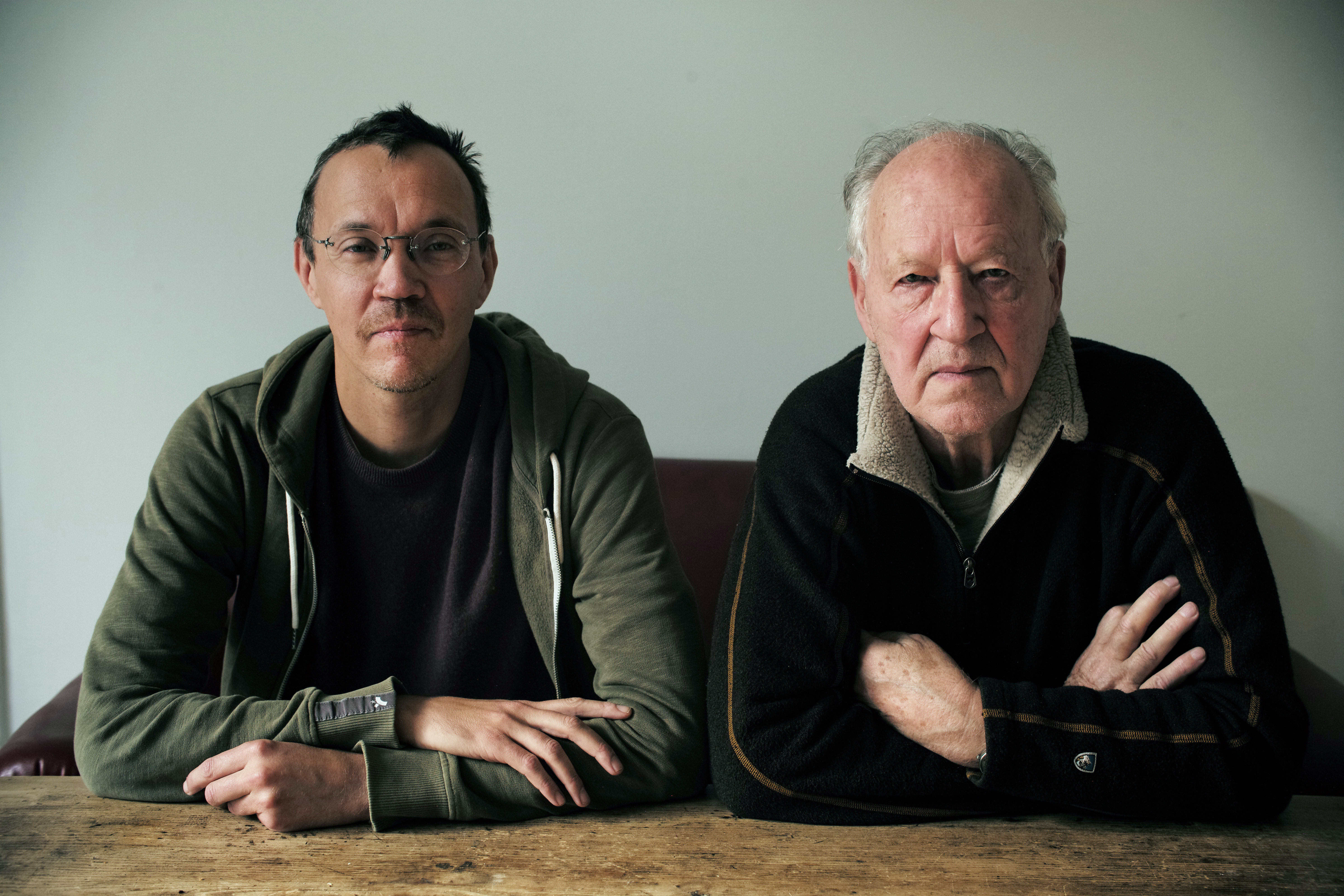
Writer/director Rudolph Herzog (left) poses with producer/narrator Werner Herzog (right).
Enlarge / Writer/director Rudolph Herzog (left) poses with producer/narrator Werner Herzog (right).
Lena Herzog

“[As a narrator], I always spoke in a deadpan [voice], and of course there’s a certain humor in it because listening to my accent is a joke already,” Werner says from his current home in Los Angeles. His son Rudolph, phoning in from Germany, scoffs at this, to which Werner replies, “Well, to some!”

Werner notes that the script is his son’s, who says that “all of my films are comedies, even if they don’t look like comedies.” Rudolph’s inclination for dark humor is seen throughout Last Exit: Space, which is largely anchored by interviews with researchers, engineers, and ex-astronauts, though the director is also eager to feature skeptics, futurologists, and voices that he admits he “politely disagrees with.”

Werner, as narrator, periodically clarifies certain points about humankind’s interest in space colonization. In rare instances, he editorializes, such as when Werner describes the efforts of SpaceX, Blue Origin, and Virgin Galactic as humans “venturing out into space in a testosterone-fueled competition.” Other times, Werner opts for dryly funny narration of how bleak certain space colonization efforts may turn out.

“The reality of life on Mars would be sobering,” he says. “Astronauts would hunker down in radiation-proof bunkers, enjoying drinks of recycled urine.”

“I knew when I speak about [drinking] your own urine, if I say it deadpan, it becomes hilarious,” Werner tells Ars Technica. “If I had made a big fuss about it with my voice, it wouldn’t have worked.” He then tells Ars that he’s familiar with an ecosystem of comedians and YouTube creators that parody his voice, acknowledging that he gets the comedy of it. “I made a film in Antarctica once, and before I even started editing, there was already a satire out—about a film I hadn’t really started yet!” he says.

Though I was unable to find the satirical video in question, the finished product leans into Werner’s proclivity for darkly funny deadpan, both in narration and visual content. Here’s an example from the gorgeous 2007 documentary Encounters at the End of the World:

[embedded content]
Excerpt from Werner Herzog’s Encounters at the End of the World.

https://arstechnica.com/?p=1840450


Pokemon Go will soon be unplayable in Russia

Russian players will soon not be able to join in scenes like this.
PG/Bauer-Griffin/GC Images


Pokemon Go developer Niantic has become the latest company to answer Ukraine’s call to cut off Russia by stopping downloads of its games in the country. But Niantic is also going further than some of its peers, saying that “gameplay will also be suspended [in Russia and Belarus] shortly.”

“We stand with the global community in hoping for peace and a rapid resolution to the violence and suffering in Ukraine,” Niantic said in a tweeted announcement late Thursday night.

Niantic joins major game publishers—including Take-Two, Ubisoft, Electronic Arts, Activision Blizzard, Epic Games, and CD Projekt Red—as well as all major game console makers in preventing new players from obtaining their games and products in Russia during the ongoing invasion. But those other game companies have largely stopped short of suspending access for Russian customers that previously purchased games before the sanctions started.

Epic Games was explicit in making this distinction, saying that, while it is “stopping commerce with Russia,” it is “not blocking access for the same reason other communication tools remain online: the free world should keep all lines of dialogue open.” Thus, Russian players can still enjoy Fortnite, even though they can’t buy in-game items or win cash prizes in Fortnite tournaments.

Niantic, though, is taking the extra step of cutting access to its games in Russia. That covers Pokemon Go—which wasn’t officially available in Russia until late 2018—and newer titles like Harry Potter: Wizards Unite and Pikmin Bloom.

Suspending Russian access is an especially direct move for Niantic’s games, which all rely on a player’s GPS-tracked location for access (though there have been ways around this in the past). Shunning the Russian market might not be a major sacrifice for Niantic, though; the country didn’t even rank in the top-10 countries by total players in January 2021, according to Statista data.

In addition, collecting money from Russian players has likely been increasingly difficult for a company like Niantic, as major payment processors and the Google Play Store have already cut Russia off.

https://arstechnica.com/?p=1840404


DeepMind’s new AI gives historians a powerful new tool to interpret the past

This fragmented inscription records a decree concerning the Acropolis of Athens and dates back to 485-484 BCE.
Enlarge / This fragmented inscription records a decree concerning the Acropolis of Athens and dates back to 485-484 BCE.
Wikimedia/CC BY-SA 3.0

Google DeepMind has collaborated with classical scholars to create a new AI tool that uses deep neural networks to help historians decipher the text of damaged inscriptions from ancient Greece. The new system, dubbed Ithaca, builds on an earlier text restoration system called Pythia.

Ithaca doesn’t just assist historians in restoring text—it can also identify a text’s location of origin and the date of creation, according to a new paper the research team published in the journal Nature. In fact, Ithaca has already been used to help resolve an ongoing debate among historians about the correct dates for a group of ancient Athenian decrees. An interactive version of Ithaca is freely available, and the team is making its code open source.

Many ancient sources—whether they be written on scrolls, papyri, stone, metal, or pottery—are so damaged that large chunks of text are often illegible. Determining where the texts originated can also be a challenge, since they have likely been moved multiple times. As for accurately determining when they were produced, radiocarbon dating and similar methods can’t be used since they can damage the priceless artifacts. So the daunting and time-consuming task of interpreting these incomplete texts falls to so-called epigraphists who specialize in those skills.

As the folks at DeepMind wrote in 2019:

One of the issues with discerning meaning from incomplete fragments of text is that there are often multiple possible solutions. In many word games and puzzles, players guess letters to complete a word or phrase—the more letters that are specified, the more constrained the possible solutions become. But unlike these games, where players have to guess a phrase in isolation, historians restoring a text can estimate the likelihood of different possible solutions based on other context clues in the inscription—such as grammatical and linguistic considerations, layout and shape, textual parallels, and historical context.

To help speed up the process, DeepMind’s Yannis Assael, Thea Sommerschield, and Jonathan Prag collaborated with researchers at the University of Oxford to develop Pythia, an ancient-text restoration system named after the high priestess who served as the Oracle of Delphi by delivering the pronouncements of the god Apollo.

Detail from the Chalcis Decree, an inscription that records an oath of allegiance sworn by the city of Chalcis to Athens. Traditionally dated to 446 BCE, it was recently redated to 424 BCE.
Enlarge / Detail from the Chalcis Decree, an inscription that records an oath of allegiance sworn by the city of Chalcis to Athens. Traditionally dated to 446 BCE, it was recently redated to 424 BCE.
Acropolis Museum/Socratis Mavrommatis

The researchers’ first step was converting the Packard Humanities Institute (PHI) database—the largest digital collection of ancient Greek inscriptions—into machine-actionable text they called PHI-ML. That amounted to about 35,000 inscriptions and more than 3 million words from the 7th century BCE through the 5th century CE. Next, the researchers trained Pythia (with both words and the individual characters as inputs) to predict the missing letters of words in those inscriptions. Pythia was trained to use the pattern-recognition capabilities of deep neural networks.

When faced with an incomplete inscription, Pythia produced as many as 20 different possible letters or words that might fill in the gaps, as well as the confidence level for each possibility. It was up to the historians (i.e., the “domain experts”) to sift through those possibilities and make a final determination based on their subject matter expertise.

The team tested the system by comparing Pythia’s results on completing 2,949 inscriptions with those of Oxford graduate students in epigraphy. Pythia’s output had a 30.1 percent error rate, compared to 57.3 percent error rate for the students. Pythia was also able to complete the task much more quickly, requiring just a few seconds to decipher 50 inscriptions, compared to two hours for the students.

And now Assael and his cohorts are back with Ithaca. In addition to the text restoration capability, Ithaca makes predictions about the geographical attribution of incomplete inscriptions. The probability distribution over all possible predictions is helpfully visualized on a map, “to shed light on possible underlying geographical connections across the ancient world,” the team wrote in an accompanying blog post. For chronological attribution, Ithaca produces a distribution of its predicted dates between 800 BCE to 800 CE.

Using Ithaca, classicists were able to restore the damaged inscription concerning the Acropolis of Athens.
Enlarge / Using Ithaca, classicists were able to restore the damaged inscription concerning the Acropolis of Athens.
Epigraphic Museum/Wikimedia CC BY 2.5

Testing revealed that Ithaca on its own is able to achieve 62 percent accuracy in the restoration of damaged text, compared to 25 percent accuracy for human historians. But the combination of man and machine boosts the overall accuracy to 72 percent, which Assael et al. believe demonstrates “the potential for human-machine cooperation” in the field. As for attributing inscriptions to their original location, Ithaca can do so with 71 percent accuracy and date the inscriptions to within 30 years.

Ithaca has already had the chance to demonstrate its usefulness to historians in a test case involving a set of Athenian decrees that have been at the center of a dating controversy. Historians had previously pegged the dates of the decrees to no later than 446 BCE. That assessment was based on certain letterforms (known as the Attic three-bar sigma) that the Athenian bureaucracy used during this period. After 446 BCE, the Athenians switched to an Ionic four-bar sigma for its decrees.

This was the standard dating methodology for Athenian inscriptions until other historians began to question its assumptions, particularly since several decrees dated this way seemed to conflict with the historical accounts of Thucydides. These historians uncovered evidence that the Attic letterform had continued to be used in official documents long after 446 BCE. They concluded that the dates of many of these decrees should be earlier—around 420 BCE. Ithaca predicted a date of 421 BCE, very much in keeping with that conclusion.

https://arstechnica.com/?p=1839561


The best games from PlayStation’s March 9 “State of Play” presentation

Promotional image for upcoming video game.
Enlarge / Exoprimal is a promising-looking new co-op battler from Capcom, and it’s not just coming to PlayStation consoles.

If you didn’t catch Sony’s latest State of Play video presentation, which concluded earlier today on YouTube, consider this a quick guide to the presentation’s best reveals of previously unknown games—along with mostly good news for enthusiasts outside the PlayStation console family, thanks to many cross-platform launch assurances.

[embedded content]
Exoprimal gameplay reveal.

Exoprimal (PS5, PS4, XSX/S, XB1, PC) — “2023”

This brand-new series sees Capcom entering the class-based co-op shooter universe, and the results look like a cross between Overwatch and Earth Defense Force. In Exoprimal, Earth has been overrun by, er, dinosaur outbreaks—so much so that TV weather reports revolve around whether or not a mysterious floating orb might emerge and dump hundreds of ravenous dinosaurs onto cities on a given day. To drive this point home, the trailer begins with a ridiculous number of velociraptors falling from the sky and stomping through city streets. Other dinosaur species soon follow. (I’m going to call that a “high-pressure system.”)

Earth’s mightiest mech-suit warriors show up during dino outbreaks in four-player co-op teams, each emphasizing familiar co-op battling roles (tank, DPS, etc.) and having their own special abilities to contend with waves of dinosaurs. While I wish this was somehow connected to Capcom’s classic Dino Crisis series, the trailer didn’t leave any space to make such a connection. Still, should this game feel anywhere as good as Capcom’s better-every-year Monster Hunter series, it could be a welcome over-the-top co-op option.

[embedded content]
TMNT: The Cowabunga Collection reveal.

Teenage Mutant Ninja Turtles: The Cowabunga Collection (PS5, PS4, XSX/S, XB1, Nintendo Switch, PC) — “2022”

Nearly every Ninja Turtles arcade and console video game released in the ’80s and ’90s is coming to this retro-minded collection. In even better news, the filled-to-bursting Cowabunga Collection won’t be locked to PlayStation consoles. The complete Game Boy, NES, SNES, Genesis, and arcade output of Ninja Turtles—including every cross-platform variant of titles like Tournament Fighters—will eventually land on PC, Xbox, and Nintendo Switch, as well.

The Cowabunga Collection really does go to great lengths to include every TMNT game from the comic and cartoon series’ biggest pop-culture heyday. That means you can look forward to slamming your head against a wall while contending with the brutal difficulty of the series’ first NES game. (You can also look forward to using that game’s handy new instant-rewind feature.) Meanwhile, other games in the collection will be boosted by online versus and co-op modes when appropriate.

For completists, here’s the full list, confirmed shortly after the Sony event concluded:

• Teenage Mutant Ninja Turtles (Arcade)
• Teenage Mutant Ninja Turtles: Turtles in Time (Arcade)
• Teenage Mutant Ninja Turtles (NES)
• Teenage Mutant Ninja Turtles II: The Arcade Game (NES)
• Teenage Mutant Ninja Turtles III: The Manhattan Project (NES)
• Teenage Mutant Ninja Turtles: Tournament Fighters (NES)
• Teenage Mutant Ninja Turtles IV: Turtles in Time (Super Nintendo)
• Teenage Mutant Ninja Turtles: Tournament Fighters (Super Nintendo)
• Teenage Mutant Ninja Turtles: The Hyperstone Heist (Sega Genesis)
• Teenage Mutant Ninja Turtles: Tournament Fighters (Sega Genesis)
• Teenage Mutant Ninja Turtles: Fall of The Foot Clan (Game Boy)
• Teenage Mutant Ninja Turtles II: Back From The Sewers (Game Boy)
• Teenage Mutant Ninja Turtles III: Radical Rescue (Game Boy)

[embedded content]
Returnal Ascension expansion reveal.

Returnal: Ascension (PS5) — March 22

This unexpected expansion, arriving in two weeks as a free patch, offers two ways to, uh, re-return to Returnal. The first adds full-fledged online co-op to the game’s existing procedurally generated campaign, which may very well help anyone who’s still contending with the game’s punishing-yet-satisfying difficulty. (As a fun exercise, go through my colleague Kyle Orland’s recent feature and map out how Returnal aligns with the Ars Difficulty Matrix™.)

The second part of the patch adds an entirely new, even-more-difficult chapter, available exclusively to players who’ve reached the “Icarian Grapnel” content in the normal campaign. The new chapter promises an increasingly insane amount of high-speed, alien-augmented combat for those who’ve mastered Returnal thus far. Considering how much I loved this game and how highly I placed it on Ars’ games of 2021 list, I have nothing but optimism about this entirely free update.

[embedded content]
The DioField Chronicle reveal.

The DioField Chronicle (PS5, PS4, XSX/S, XB1, Nintendo Switch, PC) — “2022”

This is likely as close as Square Enix fans are going to get to a Final Fantasy Tactics sequel in the near future. The DioField Chronicle‘s use of stylized, pen-stroke drawings for its primary characters makes this new game look much like FF‘s first game on PS1. But the teams behind DioField Chronicle have opted not to slap any FF branding on this hybrid of turn-based and real-time tactical combat. This decision was arguably made because DioField‘s mechanics stray significantly from the slower pace and three-quarters perspective of the FF spinoff.

Additionally, Platinum Games is on board as co-developer, and Square Enix may not be ready to let Platinum take the driver’s seat for its most well-known gaming series (which celebrates its 35th anniversary later this year).

Still, Platinum’s expertise with frantic action games may pump excitement and new ideas into the long-in-the-tooth JRPG tactics genre, and Platinum’s love of ridiculous visual bombast is on full display in today’s new trailer. The trailer teases a battle system that appears to generally make movement and basic attacks available on a regular basis, while “special” attacks require spending character-specific points and waiting on cooldown timers. How exactly these mechanics will factor into the game’s flow of battle remains to be seen.

For the rest of the State of Play event’s reveals and game updates, including a long-awaited return to Square Enix’s Valkyrie Profile series, check out a brief recap below. Or you can click here for the longer version.

[embedded content]
Sony State of Play wrap-up, March 2022.

https://arstechnica.com/?p=1839994


Paramount+ drops enigmatic first teaser for Star Trek: Strange New Worlds

[embedded content]
Anson Mount stars as USS Enterprise Capt. Christopher Pike in Star Trek: Strange New Worlds.

Two major science fiction franchises went head-to-head today by dropping high-profile teasers. First, Disney+ dropped the first teaser for Obi-Wan Kenobi, the latest spinoff series in the Star Wars universe. Not to be outdone, Paramount+ has introduced the first teaser for Star Trek: Strange New Worlds, the latest spinoff series in the Star Trek franchise that serves as a prequel to The Original Series.

As we’ve reported previously, one of the highlights of Star Trek: Discovery‘s second season was the appearance of classic Original Series (TOS) characters Capt. Christopher Pike (Anson Mount), Number One (Rebecca Romijn), and Spock (Ethan Peck). The actors reprise their roles in Star Trek: Strange New Worlds, created by Alex Kurtzman, Akiva Goldsman, and Jenny Lumet. Set in the decade before TOS, Pike and his crew will navigate the USS Enterprise through the galaxy, exploring new worlds along the way.

The show’s executive producers and key cast members were on hand last month for a virtual panel discussion as part of the 2022 Winter Television Critics Association (TCA) meeting. In addition to unveiling the poster art, Goldsman confirmed that Strange New Worlds will return to the episodic structure of classic Star Trek—making it a rare beast in this era of serialized storytelling and streaming platforms—and will respect existing canon.

In addition to Mount, Romijn, and Peck, Babs Olusanmokun plays Dr. M’Benga; Celia Rose Gooding has the unenviable task of filling Nichelle Nichols’ shoes as Cadet Nyota Uhura; Jess Bush plays Nurse Christine Chapel; Melissa Navai plays Lt. Erica Ortegas; Bruce Orak plays an Aenar named Hemmer who is blind in one eye (Aenar are an albino subspecies of Andorians that are generally depicted as blind); and Christina Chong plays La’An Noonien-Singh. The latter character is apparently related to the classic revenge-obsessed Star Trek villain Khan, according to Goldsman, although we have no specifics yet on what that connection might be.

The crew explores one of those strange new worlds.
Enlarge / The crew explores one of those strange new worlds.
YouTube/Paramount+

This new teaser opens on a ranch in winter, with a bearded Pike on horseback, presumably in retirement. (This is consistent with the TOS episode “The Cage,” where we first meet Pike as he is debating retiring from Starfleet.) Then a small spacecraft zooms past as we hear a voice calling Pike back to action.

Several tantalizing scenes of the titular strange new worlds flash by as we hear Romijn’s Number One (who now has a name: Una Chin-Riley) in a voiceover: “No matter how many stars there are in the sky; no matter how many galaxies swirl beyond our own; no matter what the mathematical probabilities or the number of times we say ‘We are not alone in the universe’; our first visit from the stars is always the province of children’s stories and science fiction—until one day it isn’t.” We’re excited to see more.

Star Trek: Strange New Worlds debuts on Paramount+ on May 5, 2022.

Listing image by YouTube/Paramount+

https://arstechnica.com/?p=1839930


Obi-Wan Kenobi premiere trailer: Familiar faces meet deadly Inquisitors

Screenshot from trailer for upcoming Star Wars TV series.
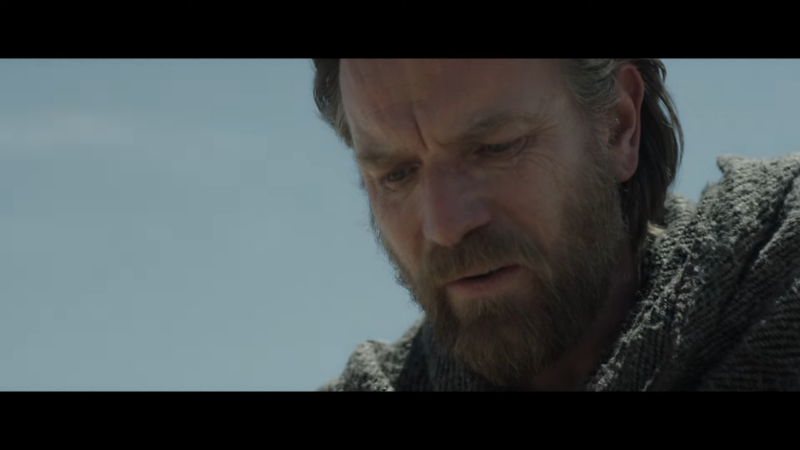
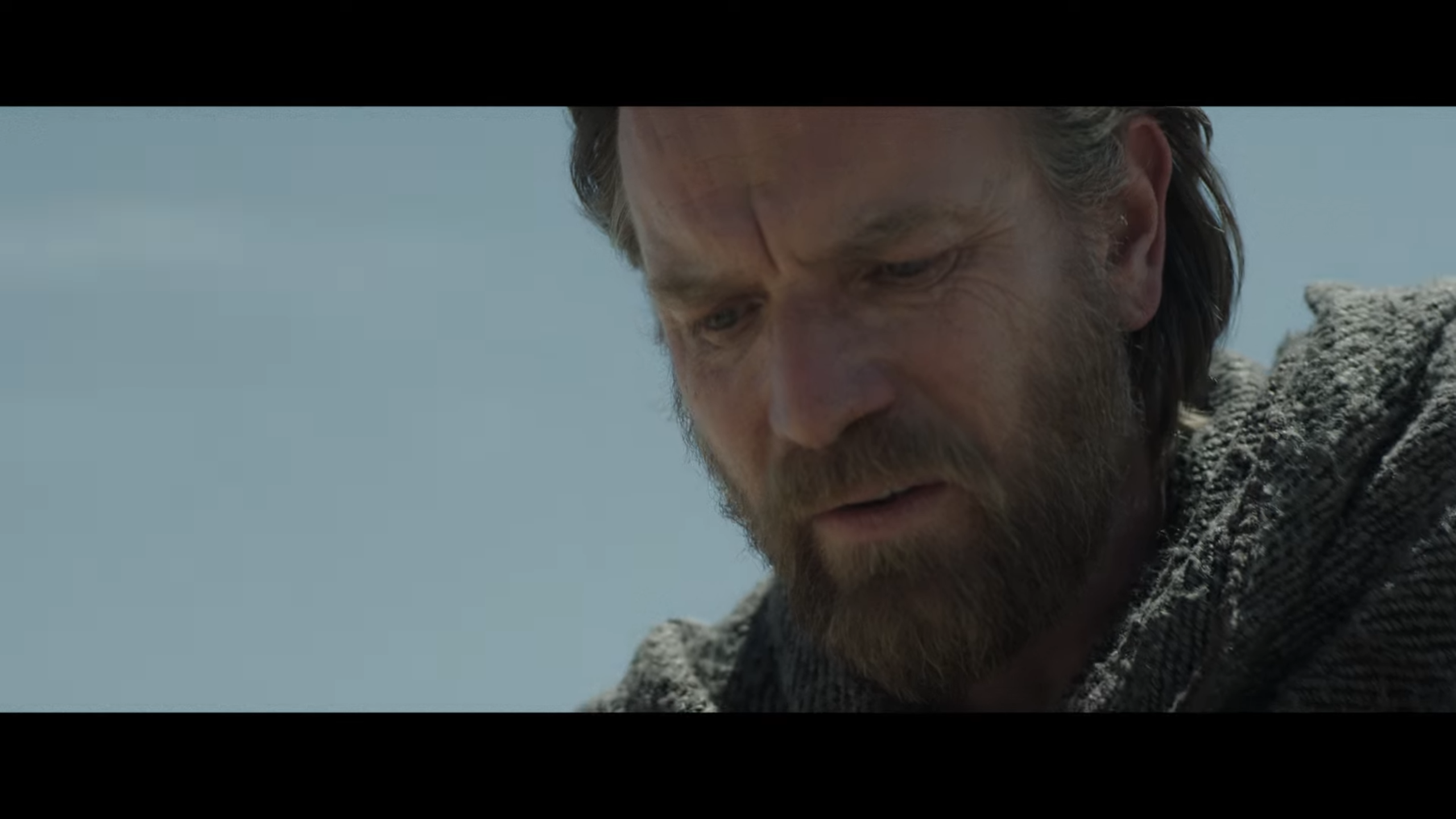
Enlarge / Finally, we see Ewan McGregor return to the role of Obi-Wan Kenobi in… Disney+’s Obi-Wan Kenobi, debuting May 25.

Disney+ is about to fill its shortest-ever gap between live-action Star Wars TV series, thanks to a six-episode run of Obi-Wan Kenobi starting May 25. And with less than three months to go, Lucasfilm has finally dropped its first substantial look at the return of Ewan McGregor to the Star Wars universe.

The long-rumored series, which has been hovering in fans’ minds since it leaked in 2019, is finally emerging as a real thing after production slowdowns (which somehow hit before a worldwide pandemic). Tuesday’s 90-second trailer is much beefier than the tease we saw a few months ago, and the new footage includes sweeping images of the TV series’ environments while teasing us with plot developments to come. In terms of callbacks to familiar content, we get an intriguing look at Kenobi’s inevitable cave-exile future, which includes the character spying on what appears to be a childhood version of Luke Skywalker as flanked by Uncle Owen and Aunt Beru (played by the same actors from the series’ prequel film trilogy). “Stay hidden,” Kenobi suggests in the trailer’s narration.

Seconds later, a Palpatine-like voice makes clear that Jedi are to be hunted, as per the prequel-series mandate of Order 66. In the case of Kenobi, certain events may compel this Jedi to leave his hiding place. “Their compassion leaves a trail,” the voice says. “The Jedi code is like an itch. They cannot help it.” And at least one familiar hunter, Fifth Brother (a character who debuted in the CGI-animation series Star Wars Rebels), emerges in brand-new, live-action form with a wicked, superspinning red lightsaber to get on with such a hunt. (Though this character looks much like the Grand Inquisitor in the above saber-filled image, Disney’s press notes say this fella is indeed Fifth Brother, as portrayed by Sung Kang of The Fast & The Furious: Tokyo Drift fame.)

Meanwhile, the trailer’s focus on Reva, the Third Sister in the Order of the Inquisitors, includes enough hero-shot coverage to suggest that her allegiances or priorities could shift to something other than hunting Kenobi by the series’ conclusion. But based on the trailer’s footage thus far, that won’t happen until she has at least taken orders from the Sith and interrogated average citizens on Tatooine (including Uncle Owen).

<a href="https://cdn.arstechnica.net/wp-content/uploads/2022/03/Screenshot-10832.png" class="enlarge" data-height="1440" data-width="2560" alt="It's not a new Star Wars TV series until there’s a droid. So far, we don’t know much about this hunk of metal.”><img alt="It's not a new Star Wars TV series until there’s a droid. So far, we don’t know much about this hunk of metal.” src=”https://rassegna.lbit-solution.it/wp-content/uploads/2022/03/obi-wan-kenobi-premiere-trailer-familiar-faces-meet-deadly-inquisitors-1.png” width=”980″ height=”551″>
Enlarge / It’s not a new Star Wars TV series until there’s a droid. So far, we don’t know much about this hunk of metal.
Disney / Lucasfilm

Thanks to this trailer’s loud ties to Inquisitor-led hunts for remaining Jedi, fans may very well want to do some homework by watching Rebels and maybe even catching up on Star Wars comics before the first Obi-Wan Kenobi episode debuts on May 25. (Additionally, my Ars colleague Jennifer Ouellette dove into what we know so far in a February explainer.)

[embedded content]
Obi-Wan Kenobi first-look trailer.

https://arstechnica.com/?p=1839852