Razer adds joystick-like control to a small mechanical keyboard

Razer Huntsman Mini Analog
Enlarge / Razer’s Analog Optical mechanical switches.

Do you use a keyboard and mouse or a controller when playing PC games?

One of the biggest advantages gamepads have over keyboards is the joystick, which provides pressure-sensitive control in a way that most keyboards can’t. Razer’s Huntsman Mini Analog, released Thursday, makes the debate a bit more complicated.

The full-size version has an 8,000 Hz polling rate, but the Mini sits at the standard 1,000 Hz.
Enlarge / The full-size version has an 8,000 Hz polling rate, but the Mini sits at the standard 1,000 Hz.

The name says it all. Razer’s latest keyboard is a small clacker with pressure-sensitive mechanical keys. Proprietary analog optical switches can detect how hard you’re pressing a key and adjust input accordingly. This differs from how most keyboards function; typical boards use digital input and read either a 0 or 1 value (not depressed or depressed). All of the keys in the 60 percent keyboard can be programmed to use analog input via Razer’s software.

I’ve used these switches in Razer’s full-size Huntsman V2 Analog keyboard and found them most helpful for steering in driving games—I’d apply a light tap for a turn or bottom out to speed. The switches can also allow for variable character movement speed.

Linear switches should already make the keyboard quieter, but there's sound dampening foam on the bottom chassis, too.
Enlarge / Linear switches should already make the keyboard quieter, but there’s sound dampening foam on the bottom chassis, too.

Analog mechanical keyboards are far from mainstream. There are some examples, like Wooting’s mechanical keyboards, that work in a way that’s similar to the Huntsman Mini Analog. There’s also the Cooler Master’s MK850, which gave eight of the keyboard’s Cherry MX Red switches analog functionality through infrared technology.

Razer doesn’t provide a list of supported games, but the keyboard’s product page says that analog input will work with “any game that can be used with a gamepad.” Aimpad, which makes the analog tech for the MK850, has a list of supported games here, but it may be outdated.

MSRP is $150.
Enlarge / MSRP is $150.

You can also program the keys to perform two inputs with one press. For example, pressing E could register an E when the key is depressed 1.5 mm and then enter a Q once you press the key all the way down 3.6 mm. This maneuver can be complicated to master, but it could be helpful in some gaming applications, such as executing a combo. Unlike analog sensitivity, you don’t need a supported game to use this feature.

Discreet branding.
Enlarge / Discreet branding.

Razer’s software allows you to set each key’s actuation point at 1.5–3.6 mm. Ultimately, the keyboard should offer one of the most advanced ways to customize how each key works.

With a detachable (USB-C to USB-A) cable and small form factor, the keyboard is less clunky than most mechanical keyboards and is a more portable option than the full-size Huntsman V2 Analog.

Detachable USB-C to USB-A cable.
Enlarge / Detachable USB-C to USB-A cable.

It’s also worth noting that the Huntsman Mini Analog is 1,000 Hz, not 8,000 Hz, like the numpad-equipped version.

Razer keyboards are typically expensive, and the inclusion of optical mechanical switches with unique analog control only exacerbates the issue. The keyboard costs $150, compared to $120-$130 (depending on the mechanical switch selected) for the non-analog version. The keyboard seeks to justify its higher price with features like per-key RGB, doubleshot PBT plastic keycaps, and five onboard memory profiles.

Ars Technica may earn compensation for sales from links on this post through affiliate programs.

https://arstechnica.com/?p=1838203


Epic Games begins to show it’s “more than games,” acquires Bandcamp

Combined logos for Epic and Bandcamp.
Enlarge / Well, we didn’t see this one coming. But based on rumors that Ars Technica is familiar with, maybe we should have.
Aurich Lawson | Epic + Bandcamp

At some point, Epic Games might need to drop the word “Games” from its moniker and admit what kind of company it wants to be.

Today the game maker moved to acquire Bandcamp, an online music-streaming service that revolves around DRM-free purchases of MP3s, FLACs, and other audio files. The news emerged via press releases from both Bandcamp and Epic on Wednesday. As of press time, neither side of the deal has clarified its financial terms.

The move follows increasingly aggressive steps by Epic to become an entirely new kind of digital media company in the near future.

A quicker way to slap SoundCloud rap into Fortnite?

Thus far, Epic’s growth trajectory has involved acquisitions of gaming studios, software developers, and tool creators, all of which make sense with Epic’s Unreal Engine product. The companies in question have brought Epic tools like superior compression or more realistic virtual humans, which all slot into open-ended 3D-creation systems like Unreal Engine 4 and 5.

But what exactly does Bandcamp bring to the Unreal Engine table? As of press time, Epic isn’t saying. The best hint comes in Epic’s Wednesday press release on the matter, which emphasizes Epic’s “vision to build out a creator marketplace ecosystem for content, technology, games, art, music and more.”

While this might sound like Epic wants to acquire Bandcamp’s backend, web storefront, and iOS/Android apps—which are a user-friendly breath of fresh air compared to the continued clunkiness of Epic Games Store—this wording suggests that Bandcamp could be rolled into the Unreal asset sales ecosystem. Want to license and use music in the Unreal Engine project of your dreams? Perhaps future creators would search for tunes inside of Unreal Engine using Bandcamp’s existing tags (“math rock,” “SoundCloud rap,” “sex jazz“) and pay a license accordingly, the same way they currently find textures, assets, or other licensed content.

Additionally, Epic is doing a bad job of hiding a story that has been brewing in its home state of North Carolina ever since the company acquired and began developing a new 980,000-square-foot headquarters in early 2021. Sources familiar with Epic Games’ dealings have pointed to job listings (not necessarily under the “Epic Games” banner) that blur the line between video game production duties and live-action filming needs. At least some of these positions involve this new, massive physical location, which was previously a mall down the road from Epic’s existing offices in Cary, North Carolina.

That news follows Unreal Engine’s increasingly popular utility in TV and film production throughout Hollywood. Ars Technica has previously covered how beloved film director/producer Jon Favreau favored Unreal Engine as a real-time digital effects system and how UE allowed camera crews and actors alike to frame and preview CGI aspects in the middle of a live-action shoot. https://arstechnica.com/?p=1837685


Even in the metaverse, you can’t escape the taxman

Promotional image for Second Life.
Enlarge / OK, open your eyes. Surprise! Now you have to pay local sales taxes on your virtual land purchase!


Second Life, the long-lived online metaverse that still attracts nearly a million monthly active users, has announced it will start charging US users local sales tax on many in-game purchases for the first time since its launch in 2003. That could be a significant drag on the online universe’s robust in-game economy and serve as a warning for other nascent metaverse efforts hoping to sell virtual goods to US residents.

In announcing the move Monday, Second Life developer Linden Labs cited the 2018 Supreme Court decision South Dakota v. Wayfair, Inc., Et Al. That decision established that states and localities could charge sales tax even for products sold by online companies that don’t have a physical presence in that state. Following that decision, Linden Labs says it has “done our best to shield our residents from these taxes as long as possible, but we are no longer able to absorb them.”

As such, starting March 31, Second Life users will be billed for local taxes on recurring billings such as subscriptions and land fees. Linden Labs will continue to absorb any taxes charged on one-time purchases like name changes and purchases of L$ in-game currency. But those costs will be passed on to users “at some point in the future” Linden Labs writes.

“This is news we don’t enjoy sharing, but for the health of the business and of Second Life, we can no longer continue absorbing these tax burdens,” Linden Labs writes. “Thank you for your understanding and your continued support of Second Life.”

Declare the pennies on your eyes

Specific sales tax rates can vary widely from state to state, and many localities charge additional sales taxes on top of that. Residents in four states—Delaware, Montana, New Hampshire, and Oregon—pay no sales tax at all, while seven cities—including Seattle, Chicago, Los Angeles, and Oakland, California—charge residents over 10 percent in combined state and local sales taxes on every purchase.

Those taxes could have a significant impact on Second Life‘s US customers, who account for nearly half of the user base, according to SimilarWeb estimates for visits to SecondLife.com. All told, Second Life still generates roughly $600 million in economic activity each year and pays users over $80.4 million annually in real-world cash, according to a September report from VentureBeat.

While US users have long had to pay income taxes on any real-world money pulled out of the Second Life economy, the additional sales tax fees could be a significant drag for many users month to month. “I have to think this will have a huge impact on the Second Life economy and the community culture as a whole,” longtime Second Life observer and journalist Wagner James Au writes.

One user on the Second Life community forums, Teresa Firelight, detailed how local California taxes will add about $20 a month to their current $202 of monthly investments in Second Life regions and land parcels. That increase could force them to cut back on spending for alternate avatars (or “alts”), which each come with their own taxable $8.25 monthly premium subscription. “Plus there is the annoyance factor… being annoyed at a tax may make me want to cut back my premium alts even more as they expire,” Firelight writes.

This virtual tropical island may look a lot like a real-world tax haven, but don't be fooled...
Enlarge / This virtual tropical island may look a lot like a real-world tax haven, but don’t be fooled…

While the new cost could come as a shock to US Second Life users, those in Europe have been paying value-added tax rates of up to 17 to 27 percent on Second Life purchases since 2007.

Griping about taxes isn’t new to Second Life, either. Early in the game’s history, Linden Labs tried to create a complicated tax system that automatically deducted more in-world L$ from users that built more in-world objects (thus using up more of Linden Labs’ server resources). That led to an organized in-universe tax revolt, which in turn led Linden Labs to change to its current system of charging users directly for land via a monthly fee.

Linden Labs’ experience could serve as a cautionary tale as other major companies all rush to launch their own metaverse offerings. That includes companies using so-called “Web3” technologies like cryptocurrencies and NFTs to power their virtual economies.

Aside from possible local sales tax exposure, cryptocurrencies can be taxed as income or capital gains when they’re earned, sold, or converted to another form. NFTs, meanwhile, could likely be taxed as collectibles, attracting a top capital gains tax rate of 28 percent in the US. And the IRS is starting to crack down on enforcement for crypto-based earnings thanks to a provision in last year’s bipartisan infrastructure bill.

https://arstechnica.com/?p=1837357


Sony patents method for “significant improvement of ray tracing speed”

While video game consoles have finally reached the age of ray tracing, performing those graphical calculations in real time can still be tough on consumer-level hardware. A PS5 game like Gran Turismo 7, for instance, can only handle ray-traced visuals in replays thanks to the processing requirements.

With a newly filed patent, though, Sony engineer Mark Cerny lays out a method that could significantly speed up the ray-tracing process by offloading certain calculations from the GPU to specially designed ray-tracing unit (RTU) hardware. The outlines of the new ray-tracing process are laid out in a patent application titled “System and method for accelerated ray tracing with asynchronous operation and ray transformation.” The application was published in the European Union last week after being filed last August.

In Cerny’s method, the RTU hardware is specially designed to efficiently traverse so-called acceleration structures in a 3D environment, going through a stack of bounding volumes to identify points where a virtual light ray intersects with an object. Those intersections are then sent to a shader program running on the GPU, which determines whether the object is opaque (a “hit” for the ray-tracing algorithm) or transparent (i.e., the intersection can be ignored).

In the case of a hit, the GPU can then send that information back to the RTU, which can “shorten the ray, as there is no point testing past the location of the intersection of the ray with [the opaque object].” That saves processing time that would be wasted calculating further “hits” for objects that are occluded by a closer object.

Crucially, these RTU functions “can be asynchronous with respect to the shader program.” That means the GPU can perform other functions as it waits for the RTU to send back any intersections it finds between light rays and in-game objects.

Handling these basics functions in the RTU (which “may include hardware circuitry” specially designed for this traversal) “may result in a significant improvement of ray tracing speed,” the patent says, “as the shader program is only performing hit testing. It is not performing acceleration structure traversal or managing the corresponding stack.”

When will we see results?

The publication of a patent like this from Sony suggests the company has its eye on improving ray-tracing performance on the PlayStation 5. But it’s unclear how the method described in this patent would integrate with the console’s current ray-tracing pipeline, which is built on AMD’s RDNA2 architecture.

That AMD pipeline already uses ray accelerators to help calculate intersections. The pipeline, however, leaves the costly acceleration structure traversal (i.e., moving through a series of “bounding volumes” in 3D space) to the GPU shader. That’s in contrast to Nvidia’s graphics cards, which essentially handle the entire ray-tracing pipeline on specialized cores.

As such, the PS5’s ray-tracing cores may not be designed to efficiently handle the traversal as described in this patent. But future redesigns of the PS5 processor (a la the PS4 Pro) or future Sony hardware altogether could make use of a new hardware architecture designed to take advantage of this patent-pending method.

Or maybe not. Companies often file patents for features that never become consumer products for one reason or another. In this case, the method is buried so deep in the hardware that average users might not even notice if/when it’s implemented. Still, a glimpse at how a company like Sony is looking to improve the efficiency of its graphical pipeline is interesting.

Andrew Cunningham contributed to this report.

Listing image by CD Projekt Red

https://arstechnica.com/?p=1837139


How the games industry shake-up could play out

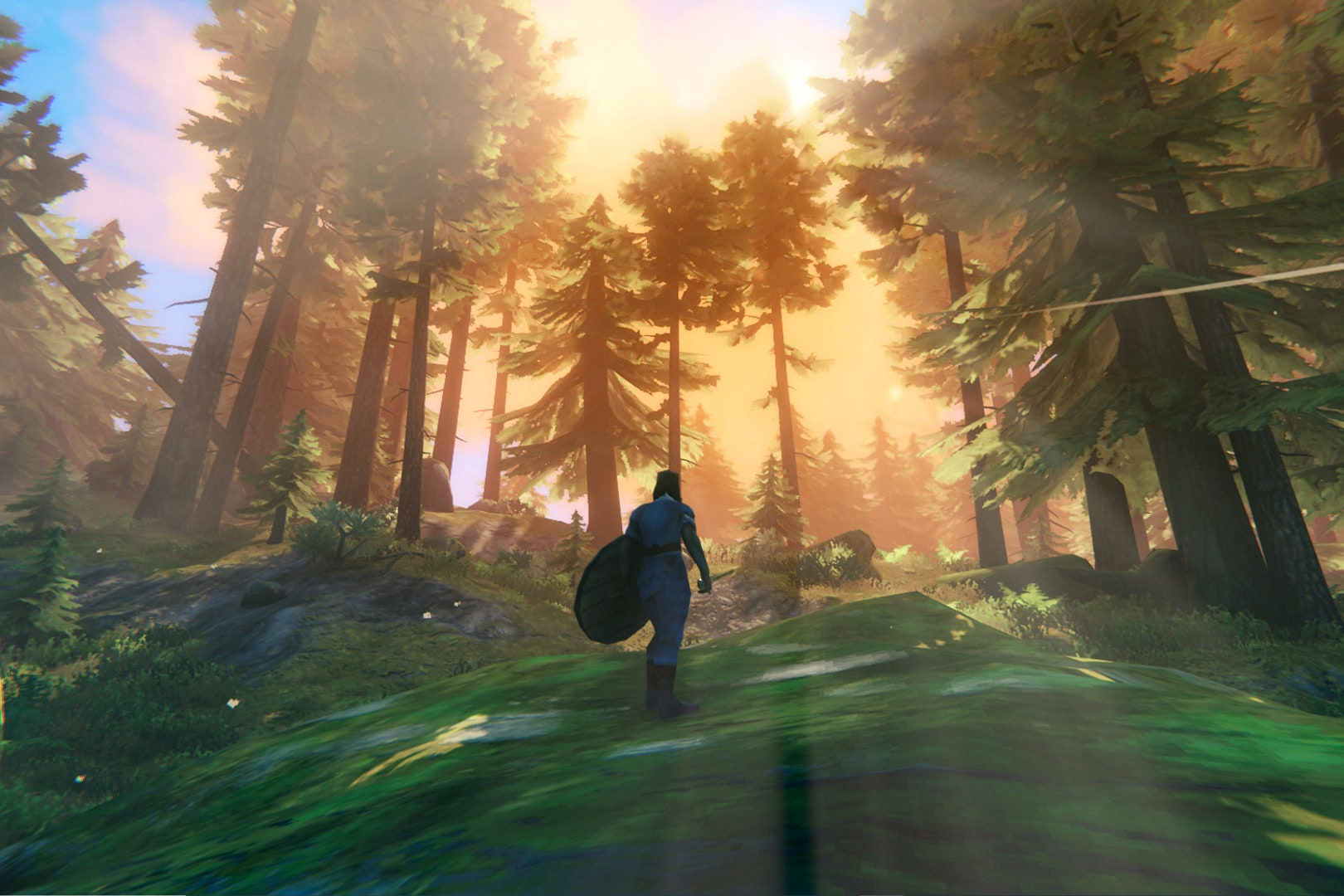
<img src="https://rassegna.lbit-solution.it/wp-content/uploads/2022/02/how-the-games-industry-shake-up-could-play-out.jpg" alt="Valheim“>
Enlarge / Valheim
Iron Gate AB

Kylan Coats came up with a plan to start a studio before he had even made a game, as an undergrad spending summers as a QA tester between classes. Back then, his mid-thirties seemed like the age to make this transition. If things went to plan, he would have the experience to succeed, but if everything exploded, he could still return to a AAA career. Coats worked in the industry for 14 years, but it was only after an unforeseen layoff from Obsidian Entertainment that his husband reminded him of this conviction. “He brought it up like, ‘Hey, you’ve been talking about starting your own studio for the longest time, why not now?’” Coats says.

After a good year doing contract work, more profitable than any year previous, he started Crispy Creative. His first game was an idea he’d been mulling over for a while. “Every dev always has a few of their own game ideas,” he says. A Long Journey to an Uncertain End is a queer narrative space opera, in Coats’ words. Players control a rogue spaceship fleeing between colorful Mœbius-like planets; tasks include shuttling drag queens off on grand adventures. It’s not the type of game a bigger studio would touch, he says. With Crispy, not only is he free to be creative, but his work environment is healthy: Staff don’t have to kill themselves to meet a deadline, and he can nurture mental health and inclusivity. He’d been critical of leadership in the past, so starting Crispy was the moment to put up or shut up, he says.

“This is now over four years of me being independent. In about six months, this will have been the longest job I’ve ever had, which is really scary,” he says. “But also really crazy, because I’m like, ‘Why didn’t I do this earlier?’ I’m making so much more money, I have so much more freedom, why did I deal with the politics with big studios. And now I’ve talked to other people who are doing the same thing.” Coats is a small part of two big movements in the games industry. One is conspicuous. Last month, Microsoft bought Activision-Blizzard for $68 billion, the biggest tech purchase ever. Eleven days later, Sony, whose stock plummeted in the wake of Microsoft’s deal, devoured Bungie, creator of Halo and purveyor of Destiny. The games industry, it would seem, is consolidating. Yet, less conspicuously, the industry is also splintering. Developers say they feel like they are part of a wave: Veterans, weary of the industry’s increasing corporatization, are leaving the AAA world to forge their own path.

What makes a studio “indie”?

Independent is a sticky word. “Indie” evokes an aesthetic—pixel art or lo-fi graphics; deep themes or demanding mechanics—as much as a state of ownership, an ambiguity that can blur the facts on the ground. Independent funding varies: Developers tend to distinguish their status by budget size. Crispy, for instance, is closer to what most people think of when they think of indie development: a “single I” in response to the AAA. We’re tiny and scrappy; balancing client work, spare time, and no small amount of hope to put together our first title,” says Coats.

The studio Gardens, founded by the artists responsible for Journey, Dustforce, and What Remains of Edith Finch, call itself “triple I,” since it has received, for a small team at least, substantial financial support. The founders of Gravity Well, former developers at Respawn Entertainment, which made Apex Legends, explain that they are too big to consider themselves indie; but they are independent in that they have creative control. “[We’re] able to lean in to potentially riskier creative decisions, to prioritize team health, and provide significant profit sharing from our games to the team,” the team says over email.

Developers are artists, but making games is work. In fact, development, infamously exploitative and breakdown-inducing, is exactly the sort of work that the pandemic has made many of us less likely to tolerate. Couple stories on r/antiwork, in which employees with broken limbs are reprimanded for overuse of a stool, with Blizzard’s sexual-harassment scandals, and the Great Resignation, says Coats, could just as easily be called the Great Reprioritization. “When you’re faced with a potentially life-ending global pandemic, you question why are you killing yourself for all this stuff,” he says. “Because you could get sick next week and be in the hospital intubated.”

This type of work is notorious: the crunch. Drew McCoy, game director at Gravity Well, describes himself as a “recovering workaholic.” Bosses have long exploited the fact that games are a “passion industry,” he says. In his experience, you aren’t forced to crunch, but no one stops you either, a state of affairs that doesn’t work for people with kids; you end up with massive attrition as older developers leave.

In the build-up to Apex Legends, McCoy worked 80-hour weeks. The burnout afterward lasted more than a year. That he, a guy who was teaching himself to code in Basic at 9 years old, considered leaving the industry pointed to something rotten at its core. “We’re very open to everyone: If you need time off, we have an unlimited [paid time off] policy,” McCoy says. Crunch “has driven how I think about building a team and building company values and goals. Because it’s just nothing but detrimental. You get worse work from people.”

Developers are also fed up with other long-standing impediments. At Obsidian, Coats says, leadership was entrenched: He had to threaten to quit before he got “senior” in his title. Coats says there were few female leads, and female developers left because they didn’t see a future for themselves. Sarah Sands, executive producer at Gardens, left the industry twice for similar reasons: Being a woman in gaming meant she was paid less than her male peers. She was persuaded to go back by promises of the chance to push for a more diverse staff, a commitment to mental health, a 35-hour workweek, and robust benefits. Just the other week, in the middle of a sunny day, she went roller-skating and returned to work energized.

https://arstechnica.com/?p=1836741


Steam Deck: The comprehensive Ars Technica review

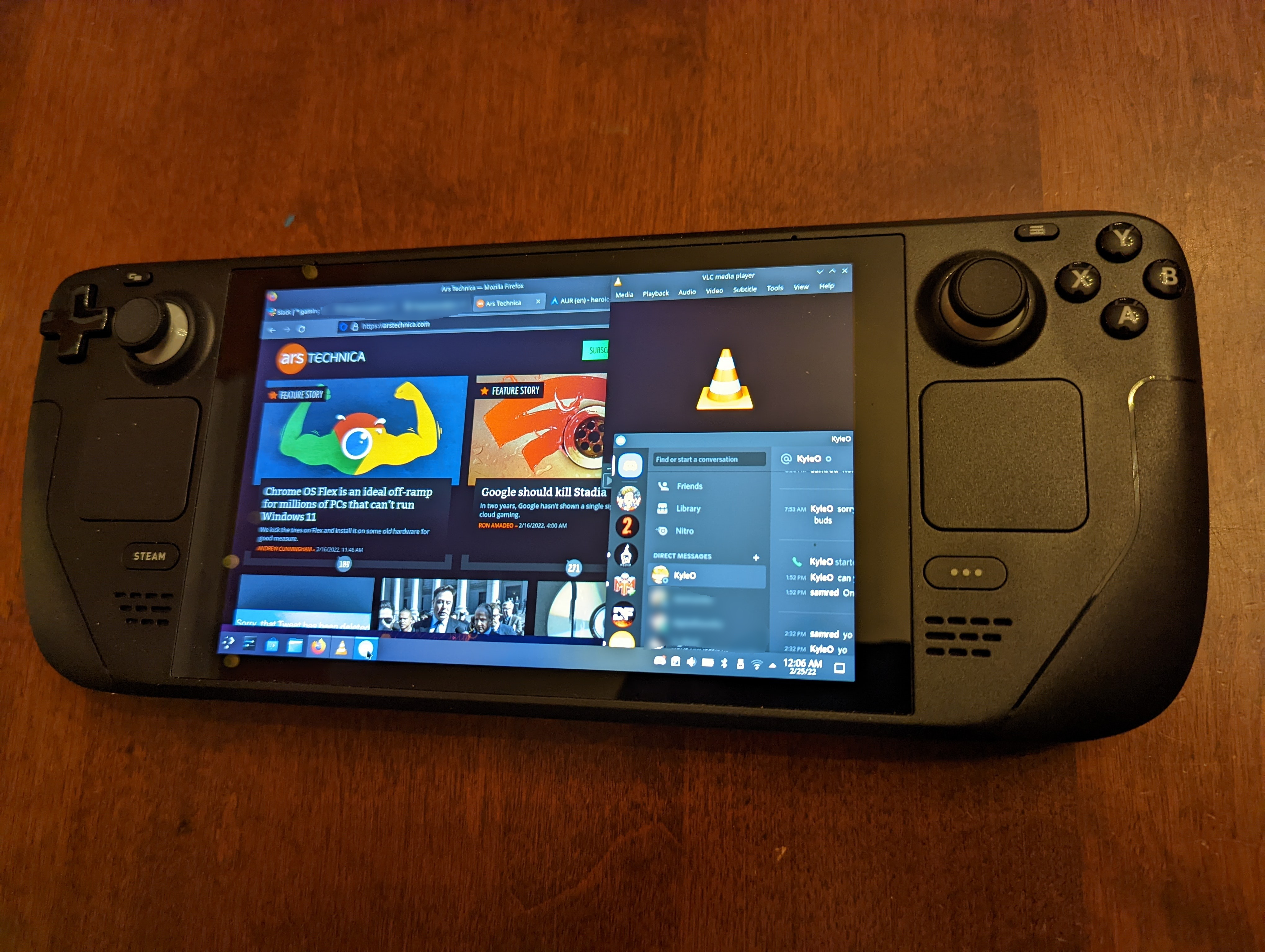
The Steam Deck has arrived.
Enlarge / The Steam Deck has arrived.
Sam Machkovech

The Steam Deck, the new $399-and-up Switch-like PC made by Valve, sometimes feels like the most impressive portable gaming system ever made. But it’s also not finished.

Like other hot electronics in 2022, Valve’s first bespoke PC launch—which resembles a supersized Game Gear but is, at its heart, a Linux PC—is limited by a strained supply chain and an ongoing chip shortage. But if you’d like to feel better about missing the Deck’s first wave of preorders, or seeing a delayed shipping estimate of “Q2 2022” and beyond for new orders, this review is for you.

Produced by Sean Dacanay. Click here for transcript.

When the Steam Deck works as intended, it’s easily the best Nintendo Switch-like PC on the market. Its processing power, build quality, software flexibility, and Linux-to-Windows wizardry can breathe new life into (some of) your PC gaming back catalog. The Deck beats all other PC and Android options in this space. The right game, running at a smooth 30 fps with visual bells and whistles enabled (or 60 fps when possible), might even convince you to put your Switch into storage.

As a first-generation piece of hardware, the Steam Deck looks good, feels sturdy, and performs well (especially given its base price of $399). But the software side of the Deck is currently rough.

The Deck’s bugs, quirks, and outright failures stand in stark contrast to the Switch. In too many situations where the Nintendo Switch “just works,” you may find yourself saying to the Deck, “Just work, please!”

Windows and Linux support

A tighter zoom on the Steam Deck.
Enlarge / A tighter zoom on the Steam Deck.
Sam Machkovech

One of the biggest caveats to this review is that the Deck currently lacks one potential selling point: compatibility with Windows 10. After providing Ars Technica with review hardware, Valve confirmed that certain Windows drivers for the Steam Deck were not ready. That remained the case as I wrapped up this review.

While I had the option to dual-boot Windows 10 and Linux during the review period, it didn’t feel fair to do so without full OS-level support for things like the CPU, the GPU, and audio playback. We’ll take a closer look at the Steam Deck’s Windows 10 experience once drivers are ready, but based on what I’ve found with the device’s built-in fork of Linux, I’m not confident that using Windows 10 will be a smooth experience.

Speaking of Linux, I’ve moved my testing of the Deck’s version of Arch Linux into a separate article. Can you go into the command line and install whatever you want? Can you bring Linux apps into SteamOS? Do you love Flatpak? Click here to dive into that stuff.

A history primer: Why the heck is Valve releasing a Linux PC?

Valve provided this image of various Steam Deck prototypes made over the years in its skunkworks labs.
Enlarge / Valve provided this image of various Steam Deck prototypes made over the years in its skunkworks labs.

The Steam Deck is Valve’s first stab at creating its own PC form factor. That separates the Deck from “Steam Machines,” i.e., desktop gaming PCs that Valve consulted on but didn’t produce. Both concepts arose from the same premise: make the massive ecosystem of Steam games work on non-Windows machines—and without requiring that Steam game devs patch or update their existing code.

In 2012, Valve co-founder Gabe Newell lambasted Microsoft’s increasingly draconian approach to software installation on Windows. At the time, Microsoft’s public statements and development efforts suggested that a “closed garden” might come to Windows—which, among other things, would threaten Valve’s ability to freely sell games on millions of PCs.

Fast-forward a full decade, and Valve has a much cozier relationship with Microsoft’s gaming division. (At press time, Microsoft has committed to Steam simul-launches for most of Microsoft’s major Xbox games. Last year, Valve even went to the trouble of sending Xbox head Phil Spencer his own prerelease Steam Deck.) Yet Valve still likes the idea of gaming PCs that can run games from its Steam storefront without needing Windows.

This probably boils down to money. Valve has already sunk years of work and tons of cash into its Steam Proton initiative, which combines a Wine compatibility layer and appropriate drivers to boot Windows games inside of Linux. If Valve can get most of Steam’s popular games running on the Deck without paying a per-device Windows license fee, the company could make out like a bandit—or, at the very least, keep the Deck’s launch prices down.

https://arstechnica.com/?p=1835478


A brief tour of the Steam Deck’s Linux implementation

Linux on a Steam Deck! Let's dive in.
Enlarge / Linux on a Steam Deck! Let’s dive in.
Sam Machkovech

Our Steam Deck review is now live, and it’s massive—almost as big as Valve’s new portable PC. With that in mind, I decided to write a shorter article about the Steam Deck’s implementation of Linux since a lot of Ars Technica readers are interested in that use case.

Our full review goes into greater detail about installing and playing Windows games through Valve’s customized Wine compatibility layer, dubbed Steam Proton. This is the default way to access your favorite Steam games, and as our review explores, that proposition is currently iffy. But that’s not the same as using the Deck as a Linux machine. In this companion article, we’ll explain what’s going on with Valve’s first dedicated Linux PC and what it currently can (and cannot) do.

Donating some Plasma knowledge

As Ars Technica reported last year, the Steam Deck runs on a customized fork of Arch Linux. SteamOS is basically a GUI wrapper that runs on top of Arch Linux, and visually, it splits the difference between Steam’s “Big Picture Mode” and the controller-friendly menus of the Nintendo Switch. If you want to use the Deck primarily as a gaming machine, with access to common Steam features like friends lists, notifications, achievements, and forums, SteamOS delivers. Many of its pages work natively with the Steam Deck’s buttons and joysticks, but some run inside a web browser and can only be manipulated by swiping and tapping the Deck’s screen.

You can “switch to desktop” at any time to use the Deck more like a standard computer running Linux. This option, found in the Deck’s “power” menu, closes the SteamOS GUI and opens KDE Plasma, a popular Linux desktop interface. If you’re unfamiliar with Linux, consider this a baby step into the world of open source operating systems. It largely resembles Windows, complete with a bottom-left button that brings up a Start-like selection of shortcuts, and it comes with Plasma’s crucial “Discover” app.

If you dislike Arch Linux or KDE Plasma for any reason, you can grab your preferred Linux distro and install it on another partition. (The same goes for Windows, which I briefly mention in the full review.) But while running another OS, you’ll lose all of the Steam Deck’s native support for its built-in controls and hardware-specific optimizations. Still, Steam Proton as an initiative works across the Linux ecosystem, so installing a different distro won’t leave you entirely in the dark.

Your quickest path to customizing the Steam Deck’s KDE Plasma interface is to search the online Discover database for self-contained installation packages called “flatpaks.” Chances are good that if a flatpak exists for a native Linux-compatible app, it will not only appear in Discover but also be available as a one-click install on the Deck’s internal storage. Descriptions and public reviews appear alongside each Discover search entry.

If you’d rather use standard Linux command line functions to find and install software, that’s also an option by default… so long as the installs in question are only done with flatpaks.

Decked out in armor

The Steam Deck’s flavor of Arch Linux is covered in armor, meaning that a significant portion of the Deck’s internal storage is set to read-only mode. Valve engineer Lawrence Yang said this has been done to save users from “getting your Steam Deck into a bad state or compromising your data,” and he warned that any installations inside the Steam Deck’s read-only image can be wiped out with any SteamOS system update. During my review period, these updates came on a near-daily basis, and based on my findings, I believe Valve has more of them in store in the short term.

Those who don’t mind disregarding Valve’s warnings, the company said, can write onto the read-only image by entering the following into the Steam Deck’s command line:

sudo steamos-readonly disable

In offering these instructions, Yang was very clear: “Don’t do this unless you know what you are doing.” But once this step is taken, the Steam Deck will accept your every pacman and sudo command.

https://arstechnica.com/?p=1836500


This 5,300-year-old skull shows evidence of the earliest known ear surgery

Lateral view of a skull found at the El Pendón site in Spain, showing signs of a primitive form of ear surgery.
Enlarge / Lateral view of a skull found at the El Pendón site in Spain, showing signs of a primitive form of ear surgery.
ÑFotógrafos Photography Study

Archaeologists have excavated a 5,300-year-old skull from a Spanish tomb and determined that seven cut marks near the left ear canal are strong evidence of a primitive surgical procedure to treat a middle ear infection. That makes this the earliest known example of ear surgery yet found, according to the authors of a recent paper published in the journal Scientific Reports. The Spanish team also identified a flint blade that may have been used as a cauterizing tool.

The excavation site is located in the Dolmen of El Pendón in Burgos, Spain, and consists of the remains of a megalithic monument dating back to the 4th century BCE, i.e., the late Neolithic period. The ruins include an ossuary holding the bones of nearly 100 people, and archaeologists have been excavating those remains since 2016.

In July 2018, the team recovered the skull that is the subject of this latest study. The skull was lying on its right side, facing the entrance of the burial chamber, and while most of the cranium was intact, no teeth remained. The missing teeth, plus the loss in bone density and fully ossified thyroid cartilage, indicated that this was the skull of an elderly woman aged 65 or older.

The skull was excavated at the El Pendón site in Reinoso, Burgos, Spain in 2018.
Enlarge / The skull was excavated at the El Pendón site in Reinoso, Burgos, Spain in 2018.
S. Diaz-Navarro et al., 2022

Evidence of perforations were found on both sides of the skull near the mastoid bones (located just behind the ear). The authors suggested that these perforations were the result of two surgical interventions, one on each ear, by someone with rudimentary anatomical knowledge. There was more bone remodeling on the right ear, indicting that the first surgery was performed to treat what was likely a life-threatening condition, given the risks associated with such a procedure during this period.

The woman survived the first procedure and endured a second surgery on the left ear sometime after. The authors were unable to determine whether the procedures were done back-to-back or whether months or even years passed between them. Regardless, “It is thus the earliest documented evidence of a surgery on both temporal bones and therefore, most likely, the first known radical mastoidectomy in the history of humankind,” they wrote.

This was a fairly common surgical procedure to treat acute ear infections by the 17th century, per the authors, and skulls showing evidence of a mastoidectomy have been found in Croatia (11th century), Italy (18th and 19th centuries), and Copenhagen (19th or early 20th century). Perhaps the oldest type of skull surgery is cranial trepanation—the drilling of a hole in the head—which has been well-documented along the Iberian Peninsula. Five skulls recovered from a site close to the Dolmen of El Pendón showed evidence of trepanation, and the individuals apparently survived those procedures, despite the lack of antibiotics and a high risk of complications.

Set of cut marks identified on the left temporal bone of the skull. Insets: enlarged images of the cut marks in the left ear, next to the mastoid.
Enlarge / Set of cut marks identified on the left temporal bone of the skull. Insets: enlarged images of the cut marks in the left ear, next to the mastoid.
S. Diaz-Navarro et al., 2022

What condition might have prompted such an intervention? The authors ruled out a cholesteatoma—an injury to the temporal bone that can cause hearing loss, vertigo, and other complications—even though this is one of the most well-documented diseases in pathological studies of ancient skulls. But cholesteatoma tends to erode the bony wall (scutum) separating the ear canal from the mastoid, and the scutum was intact on both sides of the woman’s skull. The authors also ruled out a bone tumor or malignant external otitis (a fast-spreading infection of the ear canal and temporal bone).

The authors concluded that the most likely condition was acute otitis media, aka a middle ear infection, which had spread to the underlying bone, specifically the mastoid bone (mastoiditis). The condition would have been easy enough to diagnose, since the infection causes visible swelling and redness as fluid and mucus build up inside the ear. If a middle ear infection spread to the mastoid bone, the bone’s honeycomb-like structure would have also filled with fluid and mucus. Untreated, this would have led to hearing loss and possibly meningitis. Mastoiditis resulting from a middle ear infection was one of the leading causes of death in children prior to the wide availability of antibiotics (and it is mercifully a rare condition today).

A modern mastoidectomy involves removing the cells in the mastoid bone’s hollow air-filled spaces. In a radical mastoidectomy, the surgeon will first make a cut behind the ear and then use a bone drill to open access to the middle ear cavity. Then the surgeon will remove any infected mastoid bone or tissue, stitch up the cut, and bandage the wound. Per the authors, their late Neolithic ear surgeon would have followed a similar (albeit much cruder) procedure, removing the affected bone to drain the middle ear and then connecting the mastoid bone with the tympanic cavity surrounding the bone of the inner ear.

https://arstechnica.com/?p=1835516


In leaked comments, EA says FIFA license is holding back soccer game design

Artist's conception of the jockeying for position between EA and FIFA in this licensing fight.
Artist’s conception of the jockeying for position between EA and FIFA in this licensing fight.


We’ve known for months that EA has been questioning the value of its nearly three-decade-long relationship with FIFA, the international soccer governing body whose name has become synonymous with an ultra-popular video game series. Now, though, newly leaked statements attributed to EA CEO Andrew Wilson detail how “ironically, the FIFA license has actually been an impediment” to some of the ways EA wants to “grow the franchise.”

“Our players tell us they want more modes of play, different things beyond 11 vs. 11 and different types of gameplay,” Wilson said in a November all-hands meeting, according to a Video Games Chronicle report. “I would tell you, it’s been a fight to get FIFA to acknowledge the types of things that we want to create because they say our license only covers certain categories… FIFA is just the name on the box, but they’ve precluded our ability to be able to branch into the areas that players want.”

Beyond gameplay, the FIFA license also limits EA’s ability to include “more cultural and commercial brands” in the game, Wilson reportedly said. FIFA’s existing relationship with Adidas bars the inclusion of any Nike-branded products or imagery in the game, for instance.

And Wilson reportedly said that even when FIFA does end up approving something, “because of the nature of the approval timetables and the various things around our FIFA licence, that’s actually been really hard, and we’re moving much slower than we want.”

This wouldn’t be the first time a coveted sports license had an impact on game design. In American football, the NFL asked Midway to tone down features like late hits and excessive celebrations in the over-the-top NFL Blitz series. When EA brought back NFL Blitz in 2012, the league reportedly asked for the game’s most excessive violence to be toned down to align with “their take on player health and safety.”

EA’s NFL license also stops other publishers from making any “simulation” games that bear the league’s official support. Thus Take-Two says that titles in its coming revival of the NFL2K brand “will be non-simulation football game experiences,” whatever that means.

A strained relationship

The comments come during the most protracted public battle between EA and FIFA since FIFA International Soccer was released on the Sega Genesis back in 1993. Last October, EA publicly confirmed that it was “reviewing our naming rights agreement with FIFA” and that it was considering renaming the series going forward. Shortly after that announcement, The New York Times reported that FIFA was asking EA to double the nearly $150 million it pays annually for those licensing rights.

FIFA responded to EA’s move by issuing its own statement saying it was “adopt[ing] a new commercial positioning in gaming and eSports” and “engaging with various industry players, including developers, investors and analysts, to build out a long-term view of the gaming, eSports, and interactive entertainment sector.”

Would "FIFA Ultimate Team" still bring in billions of dollars if it was just called "EA Sports Ultimate Team"? EA might be preparing to find out.
Enlarge / Would “FIFA Ultimate Team” still bring in billions of dollars if it was just called “EA Sports Ultimate Team”? EA might be preparing to find out.

FIFA’s reported licensing ask of over $1 billion for every four-year World Cup cycle is significant, even for a series that recently brought in $1.62 billion just from annual “Ultimate Team” microtransaction sales. And FIFA’s push for more money apparently has EA wondering whether it’s getting sufficient value from that licensing relationship, which is one of over 300 it has with individual soccer teams, leagues, and other partners for the game.

“Basically, what we get from FIFA in a non-World Cup year is the four letters on the front of the box, in a world where most people don’t even see the box anymore because they buy the game digitally,” Wilson reportedly said. During World Cup years, the added authenticity of having a digital version of the international tournament “is important, but it’s not the most important [thing],” Wilson continued.

Wilson also said he had discussed his complaints with FIFA President Gianni Infantino directly, wrapping the financial and game design issues together. “I said, ‘Listen, the money’s a thing: We don’t want to pay more money than this license is worth,'” he reportedly said. “But it’s not about that, it’s really about our ability to deliver games and experiences that our fans want in a timely fashion.'”

Last October, EA filed for European and British trademarks for “EA Sports FC,” suggesting a potential rebranding if the FIFA licensing discussions fall through.

https://arstechnica.com/?p=1836420


X-rays help unlock secrets of King Tut’s iron dagger, made from a meteorite

Burial bling.
Enlarge / The burial mask of Egyptian pharaoh Tutankhamen recovered from the boy king’s tomb.

Among the many items recovered from King Tut’s tomb was a dagger made of iron, which is a material that was rarely used during Egypt’s 18th dynasty. That iron likely came from a meteorite, and a recent paper published in the journal Meteorites and Planetary Science sheds further light on precisely how that iron dagger was forged, as well as how it came into Tut’s possession.

Tutankhamen was the son of Akhenaten and ascended to the throne when he was just 8 or 9 years old. He wasn’t considered an especially important pharaoh in the grand scheme of things, but the treasures that were recovered from his tomb in the 1920s are what led to his fame. Those treasures included the famous gold burial mask (pictured above), a solid gold coffin, thrones, archery bows, trumpets, a lotus chalice, and various pieces of furniture.

These became part of a global touring exhibition, which received worldwide press coverage during the 1960s and 1970s in particular. The mummy even inspired a couple of songs: Steve Martin’s hit “King Tut” (which debuted on Saturday Night Live in 1978) and the lesser-known “Dead Egyptian Blues,” by the late folk rock singer Michael Peter Smith (which contains the immortal line, “Your sarcophagus is glowing, but your esophagus is showing”).

Photograph of Tutankhamen's iron dagger taken at the time of discovery.
Enlarge / Photograph of Tutankhamen’s iron dagger taken at the time of discovery.
Harry Burton

CT scans of Tut’s mummified remains in 2005 revealed that the young king had a deformed left foot and likely used a cane (several canes were found in the tomb). He also had a partially cleft hard palate and perhaps a mild case of scoliosis. The Egyptian Supreme Council of Antiquities and National Geographic commissioned a facial reconstruction of the boy king, which was ultimately cast in silicone. How he died remains a mystery: malarial infection, a nasty fall, and sickle cell anemia have all been proposed as possible causes of death. (Murder by blunt force trauma to the head was ruled out by the CT scan.)

Among the more than 5,000 artifacts recovered from Tut’s tomb were 19 objects made of iron, including the dagger with its golden hilt, a miniature headrest, an amulet, and a set of blades that may have been used for the “opening of the mouth” ceremony (performed so that the deceased could eat and drink in the afterlife).

There were also metallic beads and other precious stones strung across the mummy’s waist and neck. Scientists analyzed one of the beads in 2013 and found that its microstructure and composition were very similar to that of an iron meteorite. The iron was likely worked into small thin sheets before being fashioned into beads. Archaeologists believe the use of iron was a means of indicating high status during this period in Egypt.

As for the dagger, its high nickel content led scientists to believe the iron for its blade likely came from a meteorite. This was confirmed in 2016, when the blade was subjected to X-ray fluorescence spectroscopy (a nondestructive testing method) to analyze its composition. The blade turns out to be mostly iron, with 11 percent nickel and 0.6 percent cobalt—a composition that is indeed comparable to that of iron meteorites. By contrast, the nickel content of artifacts made from terrestrial iron ore is never higher than 4 percent.

The iron dagger of King Tutankhamen with its gold sheath. The full length of the dagger is 13.5 inches (34.2 cm).
Enlarge / The iron dagger of King Tutankhamen with its gold sheath. The full length of the dagger is 13.5 inches (34.2 cm).
D. Comelli et al., 2016

However, that 2016 study didn’t address the type of meteorite that supplied the iron or how the dagger might have been made. There is no archaeological evidence of iron smelting in Egypt until the 6th century BCE, and the earliest known example of Egyptian use of metallic iron dates to around 3400 BCE—before Egypt became a single state ruled by a pharaoh around 3000 BC. Options for the dagger’s manufacture include cold working, which involves cutting and polishing an iron meteorite; hot working, in which the iron is melted at high temperature and subsequently cast; or low-temperature heating and subsequent forging.

The dagger’s origin is also an open question. Unlike the other iron artifacts found in Tut’s tomb, which were crudely fashioned, the dagger had been expertly made. There is written evidence of a foreign origin in diplomatic correspondence written in Akkadian from the Egyptian royal archives known as the Amarna letters (in the form of tablets). The letters mention a list of gifts sent to Amenhotep III (Tut’s grandfather) by the king of Mitanni on the occasion of the former’s marriage to a princess of Mitanni. The list includes a dagger with a blade of iron and a gold hilt with inlays of lapis lazuli.

https://arstechnica.com/?p=1835519