Musk says he wants to install Steam games in Tesla infotainment centers
Enlarge/ Drive through the Lands Between in style…
Since Tesla first introduced in-car gaming with a 2019 port of Cuphead, the list of games available on its “Tesla Arcade” platform has slowly grown to include just under 20 games. Now, though, Tesla CEO Elon Musk has expressed interest in expanding that list of Tesla-compatible games to include the tens of thousands of titles available on the Steam gaming platform.
In true Musk style, the informal announcement of those plans came via a thrown-off tweet in a thread expressing admiration for CD Projekt Red’s Cyberpunk 2077 (a game that has previously been demoed running on the infotainment system for the Model S Plaid). “We’re working through the general case of making Steam games work on a Tesla vs specific titles,” Musk wrote. “Former is obviously where we should be long-term.”
A car’s infotainment center may seem like an odd fit for many of the high-end games available on Steam. But Tesla cars have long sported high-end graphics cards at the heart of both their Media Control Units (for the infotainment console) and the Electronic Control Units used to power the cars’ autopilot self-driving systems.
At the Computex conference last June (as reported by The Verge), AMD CEO Lisa Su said the company was working with Tesla to provide Ryzen APUs and “a discrete RDNA2-based GPU that kicks in when running AAA games, providing up to 10 teraflops of compute power.” That would put the system roughly on par with a modern console like the PlayStation 5, though some of that 10 teraflops may be split among other components (like the ECU) that can’t be used for gaming.
Su added that “we look forward to giving gamers a great platform for AAA gaming,” a statement that takes on new meaning in light of Musk’s tweet about Steam. Tesla Autopilot Analyst Dan James also tweeted back in May about an opportunity for “Linux game devs to work on something *extremely* exciting at Tesla!” Reading between the lines a bit, that could also be a reference to plans for integration with Steam and the Proton-powered Steam Play system that lets Windows-based games run on Linux platforms such as the Steam Deck (and Tesla cars).
Elden Ring review: Come see the softer side of punishing difficulty
Enlarge/ OK, a little to your right. Little more… there. Hold it. OK, say “cheese.”
I’ve never been able to get very deep into Demon’s Souls or any of the thematically similar follow-ups developer From Software has become known for in recent years. The last time I seriously tried, delving into Dark Souls II in 2014, I documented the “maddeningly beautiful suffering” I endured while dying 65 times in an eight-hour slog to beat a single boss.
While that experience gave me some appreciation for From Software’s uncompromising game design, it was also enough to convince me that I didn’t have the temperament to pour dozens of hours into these sorts of games. I get why so many people find this unforgiving style appealing, and I’ve even willingly dipped my toes into From Software’s further catalog from time to time. But I just couldn’t overcome the frustration factor necessary to really commit to a deep dive into these meticulously crafted worlds.
Then the buzz began for Elden Ring, the latest game in what has become known as From’s “Soulsborne” style. Director Hidetaka Miyazaki promised in interviews that the new title would be more accessible than his previous From Software work, with quality-of-life improvements like more frequent checkpoints, easier health management, and an open-world design that doesn’t gatekeep progress behind nigh-impossible bosses.
“I don’t want to enforce any playstyle or particular route because I’d like [players] to experience that sense of freedom,” Miyazaki said. “And I realize that while we offer games with a high level of challenge, we design them in a way that feels fulfilling to overcome.”
That kind of talk was enough to get me to dive deep into the Soulsborne world one more time. And I’m glad I did. While Elden Ring doesn’t really make the Soulsborne experience any easier, per se, its open-world design and gameplay adjustments tweak the balance of rewards and frustrations just enough to make the whole experience enjoyable—even for a skeptic like me.
A fallen world
The involvement of legendary fantasy author George R.R. Martin in Elden Ring’s development might have some players hoping for a Song of Ice and Fire-style story that captures the internecine history and complex interpersonal family drama of warring factions. Those hopes would be misplaced, though, as Elden Ring’s storytelling is characteristically sparse and cryptic.
A short introductory cutscene introduces players to the titular Elden Ring, a powerful, magical piece of jewelry that has been shattered and had its pieces distributed to the children of Queen Marika. The shards give those children the “mad taint of the newfound strength” that leads to a “war from which no lord arose.”
As a result, the shattered world of the Lands Beyond is now filled with the Tarnished, those who are “dead who yet live.” As one such Tarnished of “no renown,” it’s up to you to hunt down your fellow Tarnished, unite the pieces of the shattered ring, and bring order to a now-chaotic land.
Enlarge/ One of the only expository cutscenes in the game comes right at the start.
That initial info dump is by far the most direct exposition you’ll get from Elden Ring. You’ll have to figure out everything else from the snippets of information shared by the world’s scattered non-player characters, who are holding out amid the destruction in ruined churches or dilapidated shacks.
Almost to a person, these “survivors” speak with a creepy, ethereal tone that suggests an utter lack of hope. They all present their fragmentary lore in a cryptic, roundabout manner that offers only the barest hint of how the world got to its current state. Piecing together the social history of this fallen world is like trying to solve a jigsaw puzzle when you only get a single random piece every half hour.
Instead of exposition, Elden Ring leans on extremely strong environmental storytelling. Every part of the game’s sprawling map seems masterfully crafted to point to a deeper history you’ll only ever be vaguely aware of.
You might climb a jagged stone outcropping to realize minutes later that it’s actually the half-shattered head of a gigantic statue of some long-forgotten hero of the old world. Later, you could stumble on a flooded town where you have to dance across the barely visible rooftops above the swamp-waterline to reach your next objective. Then you’ll happen upon a ramshackle mining operation with layer upon layer of vertical scaffolding extending deep into a mountain.
It’s not just the architecture, either. You’ll catch enemies lingering around the tattered remains of fallen heroes, guarding their valuable gear with both zealousness and indifference. Or you might spot a caravan of undead soldiers leading two giants chained to a mysterious cart and marching in a damned circuit forever.
There’s a pervasive, unsettling air of recently faded grandeur—echoes of a massive civilization you’ll never truly know. While there’s surely lore to be mined for those determined enough to piece it together, Elden Ring is much more effective at imparting vibes than distinct plotlines, and it’s probably better off for it.
https://arstechnica.com/?p=1836011
Chiwetel Ejiofor plays an alien named Faraday in Man Who Fell to Earth trailer
[embedded content]
Bill Nighy, Naomie Harris, and Chiwetel Ejiofor star in The Man Who Fell to Earth, Showtime’s new series based on a 1963 novel.
Showtime has released the official trailer for its upcoming new sci-fi series, The Man Who Fell to Earth, starring Chiwetel Ejiofor as an alien who comes to Earth in hopes of saving the people on his home planet. It’s a bold move, considering that the series is based on the classic 1963 novel by Walter Tevis, which already spawned an iconic film adaptation featuring rock star David Bowie.
(Spoilers for the 1963 novel and 1976 film below.)
Tevis’ novel tells the story of a humanoid alien from a planet called Anthea, which is suffering from severe drought. Going by the name Thomas Jerome Newton, the alien travels to Earth in hopes of transporting the remnants of his people to our soggy orb. Thomas patents a bunch of advanced alien technology from his own planet and makes a fortune, with plans to use that wealth to construct spaceships for his people. He finds a friend and ally in a fuel technician named Nathan Bryce.
Thomas also earns the love of a woman named Betty Jo, although he does not reciprocate her feelings. It is Betty Jo who introduces him to sex and alcohol, and he becomes addicted to the latter. Eventually Bryce discovers his buddy is an alien, and while Thomas is initially relieved to have someone know his secret, the CIA and FBI have been tracking him since his arrival on Earth. He is imprisoned and subjected to many invasive tests, one of which permanently blinds him. Unable to complete his mission, Thomas records one last message to broadcast to his home planet before fully giving in to drink.
Enlarge/ The late David Bowie starred in the 1976 film adaptation.
British Lion Films
The Man Who Fell to Earth is quite the tragedy of existential loneliness and alcoholism. So filmmaker Nicolas Roeg’s decision to cast rock star David Bowie as Thomas in the director’s 1976 film adaptation was, in retrospect, inspired. Bowie already had an otherworldly, androgynous appearance and was frank in a 1983 interview about inhaling a good 10 grams of cocaine a day during filming: “I wasn’t of this Earth at that particular time.” Roeg’s film followed the basic plot of the novel while putting his own distinctive artistic touch on the project, and the film received mostly positive reviews upon release. It’s now considered a science fiction cult classic (for good reason) and among Roeg’s best work.
Developed and written by Alex Kurtzman and Jenny Lumet, this new TV adaptation began as a project for Hulu before moving to CBS All Access (which has since absorbed into Paramount+). Showtime will air the series in the US, with Paramount+ carrying it internationally. Per the official logline, “The Man Who Fell to Earth will follow a new alien character (Ejiofor) who arrives on Earth at a turning point in human evolution and must confront his own past to determine our future.”
Enlarge/ Chiwetel Ejiofor plays an alien named Faraday who comes to Earth—a departure from the source material.
YouTube/Showtime
The TV adaptation introduces some clear deviations from the source material, starting with Ejiofor’s character, an alien named Faraday. Bill Nighy plays Thomas Jerome Newton, the character Bowie played. (He even sports a similar dashing hat.) “I brought you here to finish what I started,” Thomas tells Faraday, indicating that this is a sequel of sorts instead of a straightforward adaptation. Earth is on the same trajectory as their dying planet. “This is how we all survive,” Thomas insists. But there are still those who would prefer to take out the aliens rather than work with them for a mutually assured survival.
Naomie Harris co-stars as Justin Falls, described as “a brilliant scientist and engineer who must conquer her own demons in the race to save two worlds.” She has a young son, and the relationship they have with Faraday seems reminiscent of The Day the Earth Stood Still. (That’s an element possibly borrowed from the largely forgettable 1987 made-for-TV version of The Man Who Fell to Earth.) The cast also includes Westworld‘s Jimmi Simpson as Spencer Clay; Rob Delaney as Hatch Flood; Sonya Cassidy as Edie Flood; Joana Ribeiro as Lisa Dominguez; Annelle Olaleye as Molly Falls; Josh Herdman as Terry; and Kate Mulgrew as Drew Finch.
Enlarge/ Bill Nighy plays an older version of Thomas Jerome Newton, the character once portrayed by David Bowie.
YouTube/Showtime
The Man Who Fell to Earth will debut April 24, 2022, on Showtime in the US and on Paramount+ internationally.
RIP Bethesda Launcher: Here’s how its nearly full transfer to Steam will work
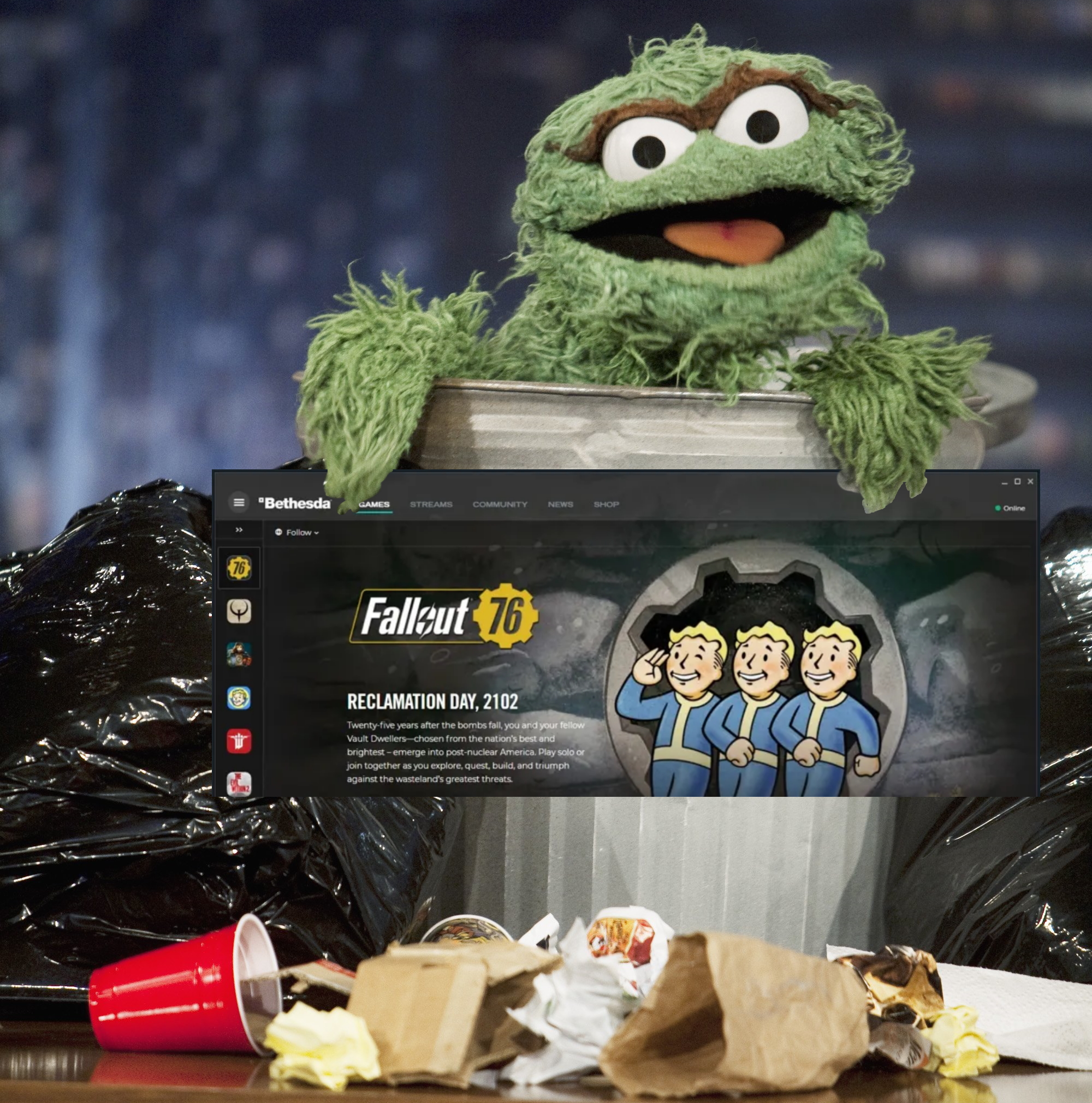
Enlarge/ Bethesda will finally dispose of its publisher-exclusive PC-game launcher starting in April.
Getty Images / Sam Machkovech
In a welcome change of pace, a video game maker has announced the retirement of a “launcher” app for PCs, as opposed to announcing and releasing yetanotherone to a crowded market.
Bethesda Launcher, as maintained by the game maker and publisher of the same name, will fully shut down at some point in “May,” the company announced on Tuesday. Thankfully, affected users will get to carry every BL purchase and license over to Valve’s Steam storefront starting in “early April.”
This week’s announcement FAQ does not clarify exactly how license transfers will be handled, leaving us to assume that users will log in with their affected credentials to a website and receive a list of Steam redemption codes. In promising news, Bethesda insists that all games’ paid DLC and microtransaction currencies will transfer to the Steam versions seamlessly, so long as players log into a Bethesda.net account while in-game. The same goes for Fallout 76‘s “Fallout 1st” membership, though any recurring subscriptions handled via BL will not auto-renew in April and beyond. Those users will have to set up a new subscription plan via the game’s Steam version.
Some save files may require manual copying-and-pasting from an old Bethesda Launcher folder to a new Steam one, while others will automatically transfer, likely via Bethesda.net account linking. Any friend lists handled by BL will carry over into Steam via Bethesda.net credentials, as well.
I got 76 problems…
Boot the existing Bethesda Launcher starting today, and you’ll see this warning pop up. The same thing appears when attempting to access the “store” inside of the launcher.
When Bethesda Launcher arrived in 2016, it was the latest in a series of publisher-specific PC-game launchers that aimed to redirect Steam’s 30 percent cut of revenue directly into game makers’ coffers. On paper, the move made sense for companies that had already invested in games-as-a-service infrastructure; how hard could a single additional EXE be?
Of course, every major Steam competitor learned the hard way by fumbling feature rollouts and quality-of-life tweaks. But Bethesda Launcher in particular suffered because it asked PC gamers to move away from the mod-friendly ecosystem of Steam, which breathed significant life into Bethesda’s ambitious-but-buggy duo of Fallout 3 and Elder Scrolls V: Skyrim, and toward the closed, controlled, microtransaction-filled garden of Creation Club.
Bethesda arguably has a certain business-minded reason to dump its launcher, anyway: its propensity to accidentally launch DRM-free versions of games on that interface. And this doesn’t mean the game maker is done using exclusive launchers, as The Elder Scrolls Online will continue to support a standalone launcher, much like other popular MMOs.
https://arstechnica.com/?p=1835877
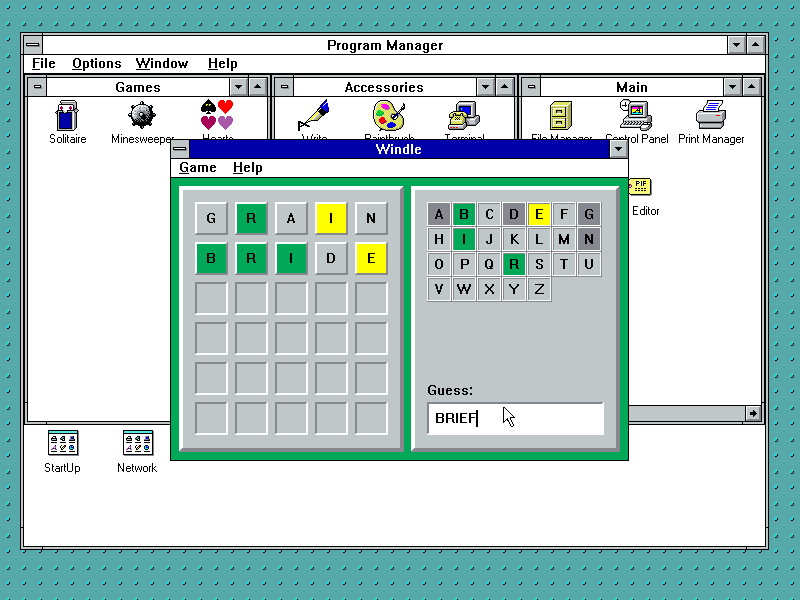
If you’re still on Windows 3.1, Windle is the best way to get in on the Wordle craze
<img src="https://rassegna.lbit-solution.it/wp-content/uploads/2022/02/if-youre-still-on-windows-3-1-windle-is-the-best-way-to-get-in-on-the-wordle-craze.png" alt="Windle is a clone of Wordle meant to fit in with old Windows games like Minesweeper and Chip’s Challenge.”>
Enlarge/Windle is a clone of Wordle meant to fit in with old Windows games like Minesweeper and Chip’s Challenge.
If you thought that Wordle was old news, here’s something even older: Dialup.net has created and released Windle, a Wordle clone designed to run on Windows 3.1 and the early ’90s PC hardware that would have been running Windows 3.1.
You could run Windows 3.1 and its apps on modern hardware within a virtual machine or DOSBox, but to maximize its authenticity, Windle was built and run on period-appropriate hardware with period-appropriate tools. The PC used was a Gateway 2000 4DX2-66V with a 66 MHz Intel 80486 DX2 CPU, Windows 3.11 for Workgroups, and the very first version of the Borland Delphi development environment. Running on the original hardware helped expose issues that may not have been evident in a virtualized copy of Windows 3.1—like a system hang that would occur as the entire dictionary was loaded into memory by a 66 MHz processor, for example.
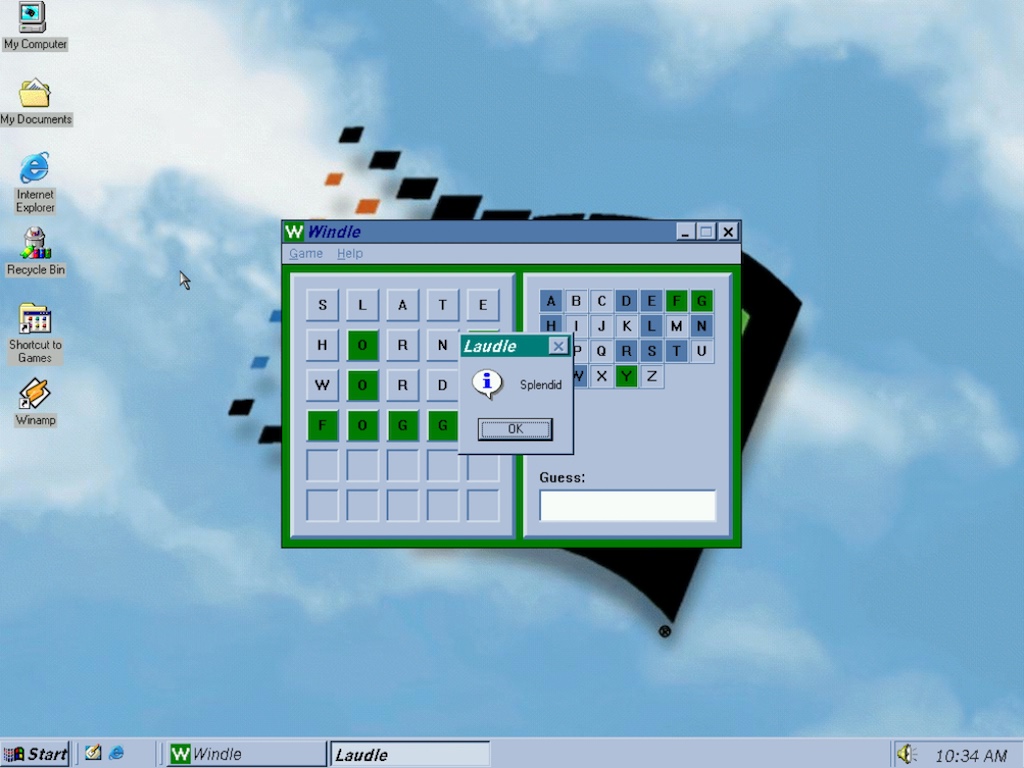
<a href="https://cdn.arstechnica.net/wp-content/uploads/2022/02/windle98.jpeg" class="enlarge" data-height="768" data-width="1024" alt="Playing Windle works great in a virtual Windows 98 SE environment, just like the other Microsoft Entertainment Pack games. “><img alt="Playing Windle works great in a virtual Windows 98 SE environment, just like the other Microsoft Entertainment Pack games. ” src=”https://rassegna.lbit-solution.it/wp-content/uploads/2022/02/if-youre-still-on-windows-3-1-windle-is-the-best-way-to-get-in-on-the-wordle-craze.jpg” width=”980″ height=”735″>
Enlarge/ Playing Windle works great in a virtual Windows 98 SE environment, just like the other Microsoft Entertainment Pack games.
Andrew Cunningham
Windle was designed to fit in withMicrosoft Entertainment Pack games like Chip’s Challenge, JezzBall, Minesweeper, and Rodent’s Revenge, making its aesthetic instantly recognizable to anyone who grew up surrounded by the bulky beige PCs of the early ’90s. Like those games, it also runs well in early 32-bit versions of Windows like Windows 95 and 98—I tested it using a Windows 98 Second Edition installation I set up in DosBox-X to run old games and other software.
If you want to run Windle without unearthing an ancient PC or setting up a virtualized ’90s Windows environment, Dialup.net also provides a 32-bit build of Windle that will run on modern 64-bit versions of Windows 10 and Windows 11, though it “won’t look as classic as it does on Windows 3.1.” The 64-bit versions of Windows can’t run 16-bit software without some kind of virtualization or emulation.
Windle isn’t the only retro Wordle clone that exists—the game has also been ported to the original Game Boy and various Palm PDAs. Hardware limitations keep these ports from using the same dictionary and UI as the web-based version, but the core gameplay is simple enough that even the Game Boy’s monochromatic screen can get the basics across.
https://arstechnica.com/?p=1835859
Sony offers a first look at the orb-like PSVR2 headset
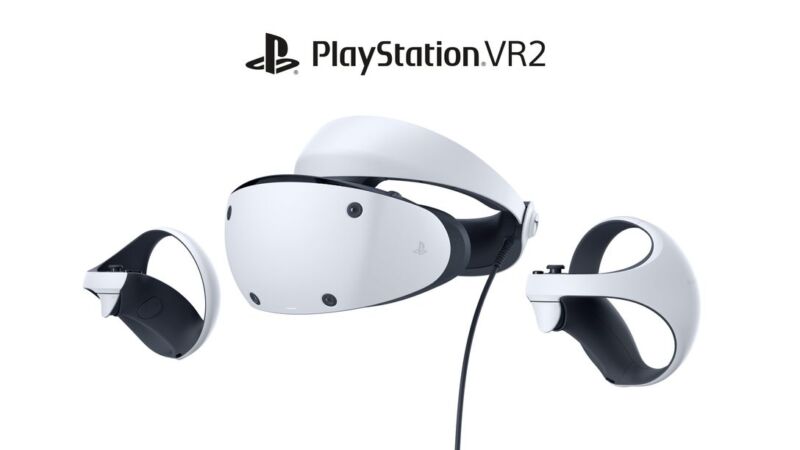
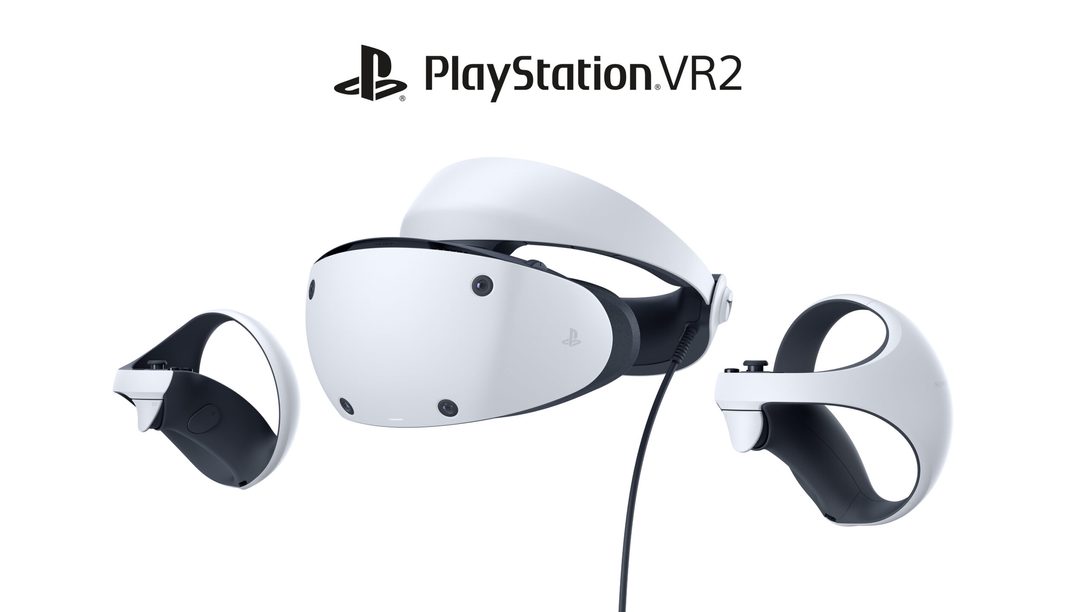
Enlarge/ Say so long to the original PSVR’s glowing blue lights
It was just shy of a year ago today that Sony first announced the (then-unnamed) PlayStation VR2. Today, the company showed off the first photos of the upcoming PS5-compatible headset’s design, highlighting a number of aesthetic and functional changes over 2016’s original PSVR.
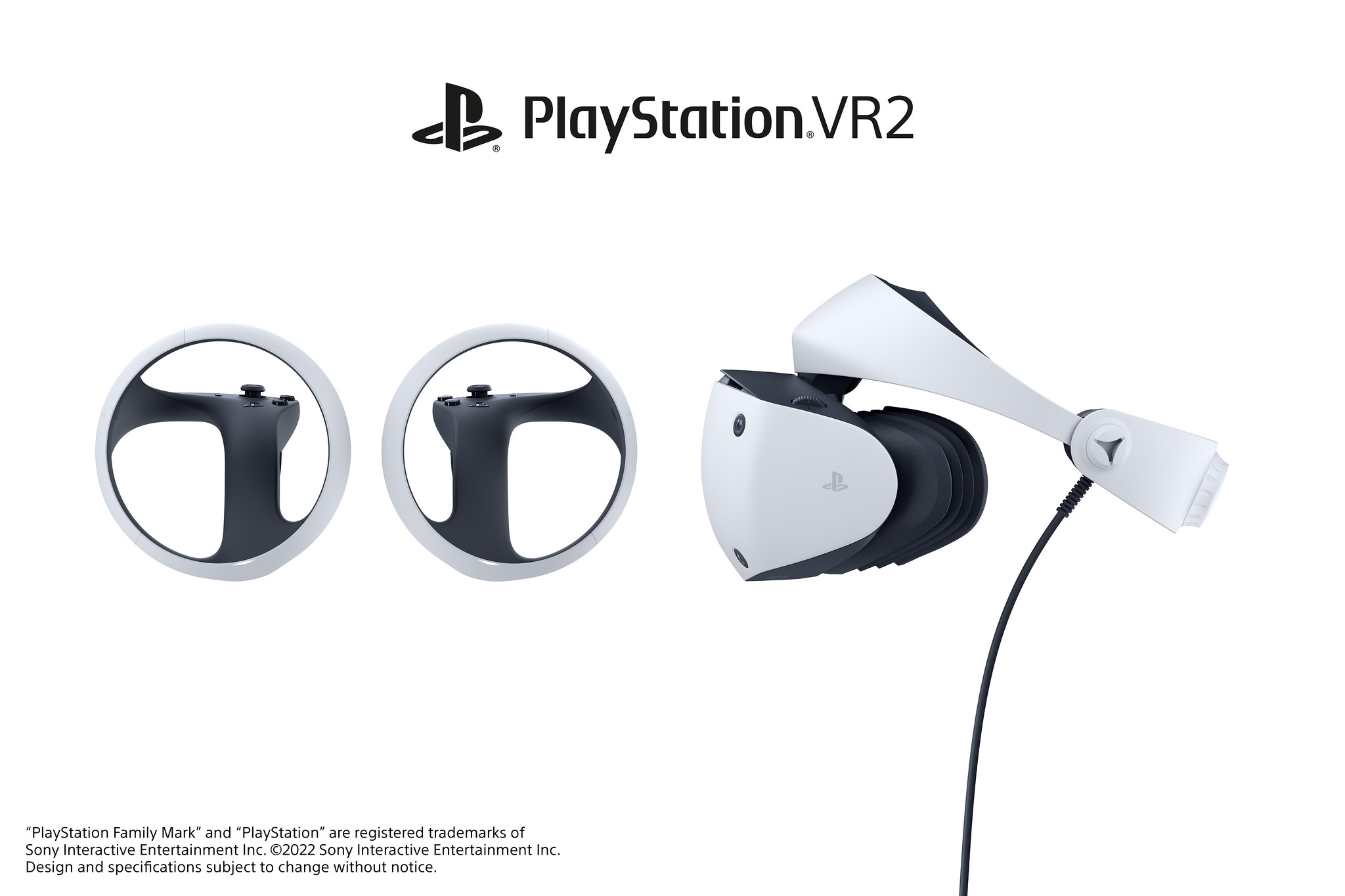
In a blog post Tuesday morning, Sony confirmed that the PSVR2 will mimic the general ergonomics and balancing of the first PSVR. That means an adjustable headband that tucks under the back of the skull and around to the front of the forehead, offering a base for an adjustable scope area that hangs down in front of the eyes. We called that design “exceedingly comfortable” when we reviewed the first PSVR back in 2016, so we’re glad Sony hasn’t messed with those ergonomics too much this time around.
Enlarge/ A side view highlights the headband and hanging scope design.
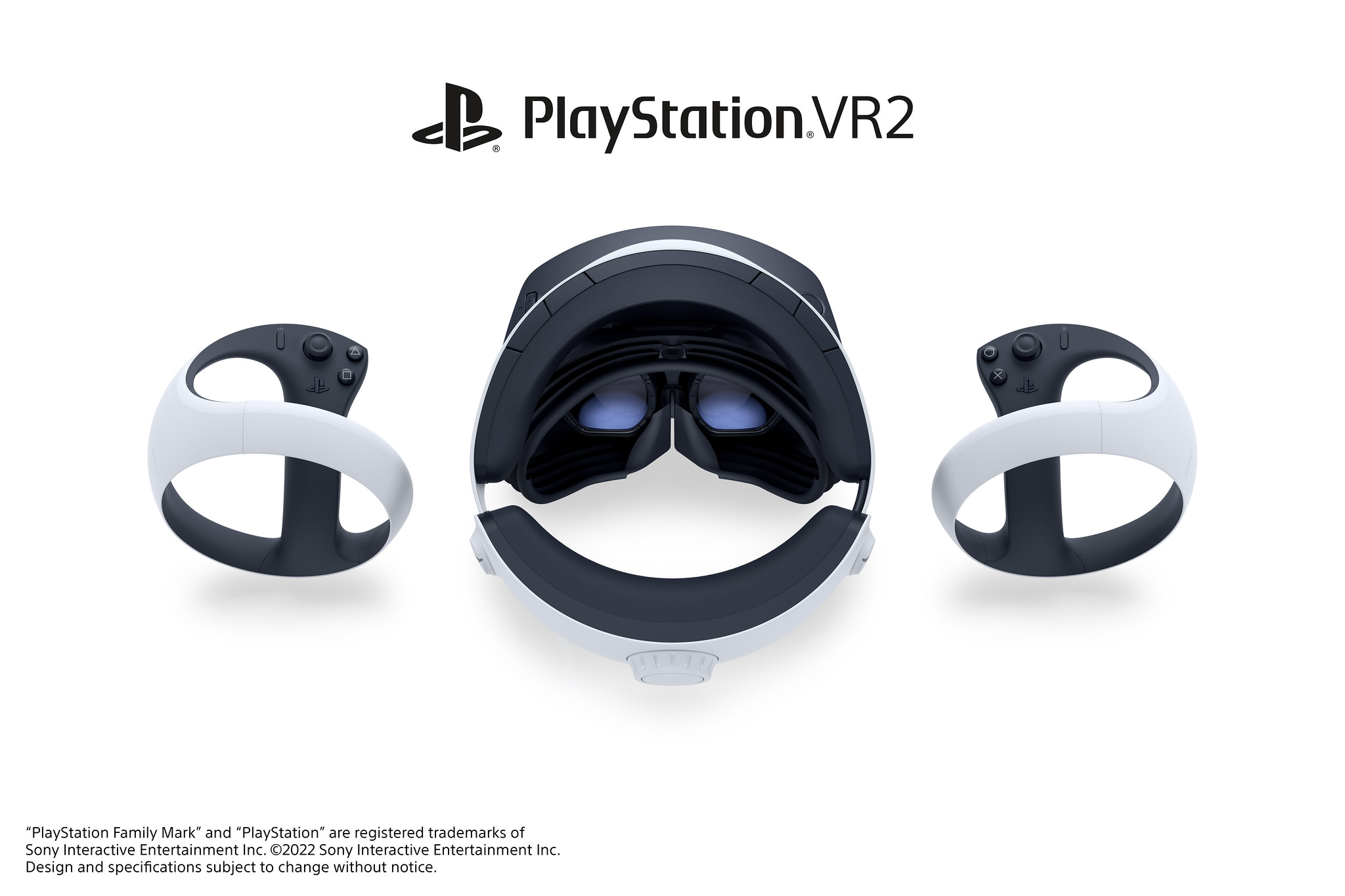
As far as significant design changes, the PSVR2 will now offer a lens adjustment dial that can slide each lens side to side in order to match the player’s interpupillary distance. Getting a good match there can be key to providing a sharp focus and preventing eye strain and motion sickness in VR, which is why such lens sliders have been a common feature on headsets like the Oculus Rift and Quest for years now.
Sony also highlighted the more rounded “orb shape” for the upcoming headset that it says “represents the 360-degree view that players feel when they enter the virtual reality world.” The new, slimmer shape weighs less than the original PSVR (though we’re not sure how much) despite the previously revealed addition of a force-feedback motor.
Enlarge/ While prototype PSVR2 controllers have been all black, they now match the white of the PS5 itself.
A new system of vents in the PSVR2 allows for cooling airflow to “avoid having the lens fog up,” according to Sony Senior Art Director Yujin Morisawa. New photos also show an updated white casing for the PSVR2’s orb-like controllers, matching the design of the headset and PS5 itself (and replacing solid black prototypes shown in previous info dumps).
Sony confirmed the general specs of the PSVR2 last month, including OLED panels with 2,000×2040 pixel resolution per eye, 110-degree field of view, eye-tracking, and an “inside-out” head-tracking system that doesn’t require any outside camera hardware. The PSVR2 will also connect to a PlayStation 5 with a single cable, obviating the mess of wires and connection boxes needed to operate Sony’s first console VR headset.
In a patent filed in 2017, Sony laid out a manufacturing method that could end the problem of crepuscular ray “lens flare” in headsets like PSVR2. Sony hasn’t yet highlighted any such feature in its public comments about the upcoming headset, though.
While a Chinese supply chain report last month suggested Sony is hoping to ship millions of PSVR2 headsets by the end of 2022, there has been no official confirmation of a price or release date from Sony. The original PlayStation VR sold over 5 million units as of early 2020.
https://arstechnica.com/?p=1835832
Study finds 90 percent of medieval chivalric and heroic manuscripts have been lost
[embedded content]
An ecological model has been applied to estimate the number of lost medieval manuscripts in Europe.
Those who study human culture must grapple with what amounts to an incomplete data set, since researchers are limited to poring over the books, manuscripts, paintings, sculptures, and other artifacts that have survived to learn about a given period. We call this predicament “survivorship bias,” and it can lead to underestimations of just how diverse a society might have been in terms of the cultural materials produced. Teasing out how much of a cultural domain may have been lost is a considerable challenge.
The field of ecology might be able to help. According to a new paper published in the journal Science, an international team of researchers has adapted an ecological “unseen species” model to estimate how many medieval European stories in the chivalric romance or heroic tradition survived and how much has been lost. The authors also presented their findings last week at a virtual meeting of the American Association for the Advancement of Science (AAA).
The team looked at medieval works in Dutch, English, French, German, Icelandic, and Irish and concluded that only about 9 percent of medieval manuscripts survived. However, losses were significantly lower in Icelandic and Irish literature, suggesting that island ecosystems might help preserve culture. In fact, the team’s results were very similar to the estimates made by scholars using other data, such as references to lost works that appear in surviving manuscripts.
Enlarge/ Lavishly illustrated German manuscript containing the Arthurian romance of Wigalois.
CC-BY University Library Leiden
“A lot of literature went missing, and we don’t know what it is, but using this method we can get some idea, at least, about how much of the jigsaw puzzle is missing,” said co-author Matthew Driscoll of the University of Copenhagen. For instance, Arthurian legend has survived in a very wide range of story cycles, and scholars aren’t likely to have missed a similar highly popular and influential literary tradition. However, “I’m 100 percent certain that there are romances dealing with the Knights of the Round Table that have not survived,” said Driscoll. “There must be. This is exactly where you think, ‘Damn, we could have made a great film about that if we’d had it.'”
The field of ecology uses bias correction in statistical models that can account for so-called unseen species in a given ecosystem to determine the richness of species diversity. The model used in this study is known as the Chao1 method, developed by Anne Chao of National Tsing Hua University, another co-author on the paper.
The idea to adapt Chao’s model came from co-author Folgert Karsdorp of KNAW Meertens Institute, whose research focuses on cultural evolution and looking for methods in biological evolution that might be applicable to the cultural domain. “I was looking for ways of dealing with this selection bias of estimating the cultural population,” said Karsdorp, and when he came upon the Chao1 model, “We figured we might as well try it on this really hard question of lost medieval literature.”
Enlarge/ Opening of medieval Irish tale Cath Leithreach Ruibhe.
CC-BY Royal Irish Academy (Dublin)
The Chao1 model is meant to give users an accurate estimate of how many species inhabit an area, said co-author Mike Kestemont of the University of Antwerp. First, scientists collect “abundance data,” counting all the animal species they can observe. The issue is that certain hard-to-observe species will be missed in that count. (Snow leopards, for instance, are notoriously difficult to spot.)
The Chao1 formula will look at those species that don’t appear often in the abundance data. If you only spotted a species once, for example, it would be designated “F1.” If you’ve spotted a species twice, it would be F2. Those numbers can then be used to calculate F0—the number of species that have been observed exactly zero times in an area. “Then you have a lower bound on the estimates of the number of species you didn’t observe,” said Kestemont.
But can an ecological model really be applied so readily to such a markedly different scholarly domain? “Intuitively, it’s a weird thing to say that a literary work behaves like a species,” Kestemont acknowledged. “In fact, this method isn’t even specific to ecology.” Chao1 is so general that it’s been used in lots of other fields, with “species” standing in for classes of stone tools (archaeology); types of die for ancient coins (numismatics); different causes for a given disease (epidemiology); genes or alleles (genetics); and distinct vocabulary words (linguistics), to name a few.
<a href="https://rassegna.lbit-solution.it/wp-content/uploads/2022/02/study-finds-90-percent-of-medieval-chivalric-and-heroic-manuscripts-have-been-lost-6.jpg" class="enlarge" data-height="792" data-width="1200" alt="The only surviving fragment of a German manuscript containing Wolfram von Eschenbach's Willehalm.”><img alt="The only surviving fragment of a German manuscript containing Wolfram von Eschenbach's Willehalm.” src=”https://rassegna.lbit-solution.it/wp-content/uploads/2022/02/study-finds-90-percent-of-medieval-chivalric-and-heroic-manuscripts-have-been-lost-2.jpg” width=”640″ height=”422″ srcset=”https://rassegna.lbit-solution.it/wp-content/uploads/2022/02/study-finds-90-percent-of-medieval-chivalric-and-heroic-manuscripts-have-been-lost-6.jpg 2x”>
Enlarge/ The only surviving fragment of a German manuscript containing Wolfram von Eschenbach’s Willehalm.
CC-BY Huis Bergh (’s-Heerenberg)
“It’s even been used to estimate the number of stars in a galaxy or the number of bugs in a piece of software that haven’t been discovered yet,” said Kestemont. “The real question is ‘in which conditions wouldn’t we be able to apply it?'” As long as you can distinguish something akin to “species,” the model works very well.
In adapting the model, Kestemont and his co-authors treated literary works as species and manuscript copies as sightings of a species. They counted works that only appeared sparsely in the historical record and then used those counts to calculate F0—in this case, the number of works that once existed but scholars have never observed. A work was considered “lost” when none of the documents that once preserved it still survived.
This approach allowed the researchers to estimate the size of the original population of works and manuscripts as well as the losses sustained across the Dutch, French, Icelandic, Irish, English, and German vernaculars. They found that there would have been 40,614 specimens (manuscripts) across all six vernaculars, of which 3,649 still survive—a 9 percent survival rate. As for literary species (works), 38 percent have survived.
The method also produced “evenness” profiles for each of the six vernaculars included in the study, an aspect the researchers believe constitutes an overlooked factor in the survival of cultural works and artifacts. “It’s basically a distribution of manuscripts over works,” explained co-author Katarzyna Anna Kapitan, an Old Norse philologist at the University of Oxford, the University of Copenhagen, and the University of Iceland. “If you have a literary tradition that is even, it means that all literary works have more or less equal numbers of copies of manuscripts that preserve it. If it’s uneven, then you will have work that is preserved in a lot of manuscripts and then some works that are preserved in just one or two.” The latter works are less likely to survive.
Enlarge/ Recently discovered fragment of a French manuscript containing the epic story of Anseÿs de Gascogne.
CC-BY University Library Antwerp
English medieval literature had a particularly high loss rate for works and manuscripts written in Old and Middle English, with just 7 percent of manuscripts surviving, amounting to the preservation of only 38 percent of chivalric and heroic works. “It might have something do with the different cultural status of English in that period,” co-author Daniel Sawyer of the University of Oxford explained, referring to the French-speaking Norman Conquest of England in 1066. “For a significant part of the Middle Ages, French was [one of] the more prestigious spoken language in England. I suspect books containing romances or heroic stories in English tended to be mid- or small-sized and less impressive and therefore more prone to being recycled.”
https://arstechnica.com/?p=1834060
HP and Lenovo Chromebooks expected to support Steam
HP’s Pro c640 G2 enterprise Chromebook is expected to get Steam support.
HP, Lenovo, Acer, and Asus are expected to be among the first companies to release gaming Chromebooks. A code change in the Chromium Gerrit suggests the vendors are working on Chrome OS devices that will support Steam.
In January 2020, Google said it would bring Steam to Chromebooks, and the plan may be starting to take shape. 9to5Google spotted a code change on Saturday showing a list of what appears to be Chromebook models that will support Steam:
When asked about the report, Acer told Ars Technica that it’d “need to defer to Google on the minimum requirements/plans for Steam on Chrome.” No other laptop maker contacted got back to us in time for publication. Google has told Ars Technica in the past that a lot of experimentation happens in the Chromium Gerrit, so things can look different by the time changes hit consumers.
That said, last month, the Chromium Gerrit also showed work on RGB keyboard support for Chromebooks, another sign that gaming Chromebooks could be coming.
Expected minimum specs
It appears Chromebooks will require some pretty beefy specs to run Steam. Currently, expected minimum specs include an Intel 11th-Gen i5 CPU and 8GB of RAM. As noted by 9to5Google, there may be other Chromebooks added to the list down the line, especially since we have yet to hear official confirmation from Google, Steam, or any laptop companies. The publication pointed to a Chromium Gerrit link showing Intel 10th-Gen and AMD CPU testing.
Interestingly, there’s no detail on Arm-based chips. Although there are no Chromebooks with dedicated Nvidia GPUs, 9to5Google noted Chromium Gerrit contributions from Nvidia employees that it said would “be used exclusively by the virtual machine that will be used by Steam.”
Nvidia has been working with MediaTek, the maker of many Arm-based SoCs found in Chromebooks, on a reference platform supporting Chromium, Nvidia SDKs, and Linux. The company has promised to bring capabilities like ray tracing and Nvidia’s DLSS to Arm-based chips and has demoed such features working on the MediaTek Kompanio 1200 chip expected to land in Chromebooks. Since we’re talking about the first Chrome OS devices with dedicated Nvidia graphics cards, we’d expect those gaming Chromebooks to command a higher price tag, too.
The Chromebook models detailed in the Chromium Gerrit are pretty pricey already. Acer’s Chromebook 515, for example, currently starts at $650, while the Asus Chromebook Flip CX5 can be found for $830 with an i5. HP’s c640 G2 Chromebook starts at $489 but goes up to $1,254 for an i5.
With Google Stadia flailing, it will be interesting to see Google’s next attempt at attracting PC gamers.
Update 2/21/2022, 4:05 p.m. ET: Added comment from Acer.
Ars Technica may earn compensation for sales from links on this post through affiliate programs.
https://arstechnica.com/?p=1835614
Capcom announces next-gen Street Fighter sequel, return to rollback netcode
<img src="https://rassegna.lbit-solution.it/wp-content/uploads/2022/02/capcom-announces-next-gen-street-fighter-sequel-return-to-rollback-netcode.png" alt="Ryu is back (and bearded, hubba hubba). Welcome to the world of Street Fighter 6.”>
Enlarge/ Ryu is back (and bearded, hubba hubba). Welcome to the world of Street Fighter 6.
After years of speculation, rumors, and teases, Capcom confirmed the inevitable: a new generation of Street Fighter is coming.
The Japanese game studio concluded a week-long countdown with a Monday-morning unveil of Street Fighter 6. The 30-second teaser video focuses squarely on two lead characters: the classic dragon-punching Ryu, and the series’ newest character, Luke, (introduced as DLC in Street Fighter V). After the camera lingers over shifting fingers, wiggling toes, and bouncing muscles, it zooms out to show the rivals stare each other down and rev up attacks, each rival accentuated by brief paint-splash effects.
Flexing to make veins bulge. Is this a hint at a new mid-battle mechanic for the series?
Luke stares Ryu down.
Capcom’s new trailer emphasizes details like beads of sweat and rippling muscles.
Also, curling toes.
Bouncing around.
Some paint-stroke flourishes, like in other modern 3D Street Fighter games.
While this trailer clearly doesn’t include “final” gameplay (or, really, any game-like combat), the brief footage zooms in on elements like fingernails, hair, and clothing, as if to suggest that we’re seeing the game’s planned level of real-time detail (as opposed to a pre-rendered cinema sequence). Capcom has yet to confirm what 3D engine this game will run on, but from first glance, the trailer’s hair animations and reflective skin resemble characters in RE Engine games like Resident Evil 7 and Resident Evil Village.
Enlarge/ “Footage represents a game still in development.” I mean, of course. There aren’t even health bars yet!
The trailer concludes with a brand-new Street Fighter 6 logo, which sees the letters “SF” surrounded by an MMA-styled hexagon. Could this mean the game will emulate the grappling-heavy mechanics of popular productions like UFC? Or did Capcom simply pick a six-sided shape in honor of the game’s number?
[embedded content]
Street Fighter 6 announcement teaser.
Either way, Capcom ends the trailer by suggesting fans won’t see more SF6 news until “this summer,” which probably means the game’s development period is still quite early. Capcom wasn’t ready to announce target platforms, despite the two characters looking far more detailed and realistic than in any other Capcom fighting game.
https://arstechnica.com/?p=1835568
Review: Space Force S2 retains the comedic magic, but it’s starting to lose its luster
Enlarge/ (l-r) Ben Schwartz as Tony Scarapiducci; Tawny Newsome as Angela Ali; Steve Carell as General Mark Naird; Jimmy O. Yang as Dr. Chan Kaifang; Don Lake as Brigadier General Bradley Gregory; Diana Silvers as Erin Naird; and John Malkovich as Dr. Adrian Mallory.
The Netflix absurdist comedy Space Force was an Ars favorite in 2020, easily winning a spot on our annual list of best TV shows. We loved the show’s wickedly sly humor, absurdist set-ups, and unexpected heart. It’s finally back with a second season, and while much of the old magic remains intact, it’s starting to lose its luster just a bit—perhaps because we only got seven episodes instead of ten (thanks, never-ending pandemic).
(Spoilers for S1 below.)
As we’ve reported previously, the series was created by Steve Carell and Greg Daniels (who also created Parks and Recreation and Upload). Space Force was inspired in part by the Trump administration’s announcement that it would establish a national Space Force. Carell plays four-star general Mark Naird, a decorated pilot with dreams of running the Air Force.
But in the pilot episode, his dreams for promotion were dashed when he was tapped instead to lead the newly formed sixth branch of the US Armed Forces: Space Force. His new appointment earned the mockery of Naird’s four-star general rival Kick Grabaston (Noah Emmerich). Ever the good soldier, Mark uprooted his family and moved to a remote base in Wild Horse, Colorado where he and a colorful team of scientists and aspiring “Spacemen” struggled to meet the White House insistence on getting American boots on the Moon (again) by 2024, thereby achieving “total space dominance.”
Naird naturally butts heads with his chief scientist, Dr. Adrian Mallory (John Malkovich), a pacifist who has misgivings about working for the Department of Defense. Mark’s wife, Maggie (Lisa Kudrow) is in prison, and his daughter Erin (Diana Silvers) resents having to live in Colorado. The impressive main cast also includes Ben Schwartz as social media director Tony Scarapiducci; Jimmy O. Yang as Dr. Chan Kaifang, Mallory’s lead assistant; Tawny Newsome as Captain Angela Ali, a helicopter pilot who becomes one of the mission’s astronauts; and Don Lake as Brigadier General Bradley Gregory, Naird’s adjutant.
Enlarge/ Mallory shows the NASA Apollo astronaut gallery to a visiting Chinese scientist who is a moon landing denier.
Somehow, Space Force succeeds in getting those boots on the moon—but so does China. In the S1 finale, the Joints Chief of Staff were outraged by the Chinese astronauts’ desecration of the Apollo 11 Lunar Flag Assembly (they rolled over it in a rover). Naird’s strategy for a mild attack on the Chinese habitat was over-ruled by the Secretary of Defense, who ordered the destruction of the Chinese lunar base, which would likely trigger all-out war.
Mallory threatened to resign, and Naird decided to defy his orders. That, in turn, led to Grabaston executing a military coup and taking over Space Force, arresting Mallory and Naird. The US astronauts were told to attack the Chinese habitat with wrenches. They returned from this dubious mission to find that the Chinese astronauts had crippled the US base, putting their very survival at risk. And, scene.
Enlarge/ Chan recruits the science team to analyze the status of his fledgling relationship with Angela.
That first season was inexplicably panned by critics (viewers were far more positive). Maybe those critics weren’t watching the same series, because we here at Ars loved the show, even though Senior Space Editor Eric Berger had some issues with the depiction of the space-tech. It’s not The Office, nor is it Veep, and that’s a good thing. My take:
Space Force‘s approach to comedy is that of a precision scalpel carefully sheathed to avoid inflicting too much damage with its cuts. There’s an underlying warmth and affection for all these fallible characters trying to do something extraordinary, making us root for them even as we laugh at their pratfalls…. Malkovich shines like a supernova as Dr. Adrian Mallory, a committed pacifist, passionate about his science, working for a military operation (“Space should be a zone of wonder, not of conflict and death”). His languid acerbic wit and genteel sophistication are the perfect foil to Carell’s tightly wound, rough-around-the-edges, everything-by-the-book general, who feels deeply but keeps those feelings bottled up, as a good soldier should. Their unlikely friendship, forged in the fires of a nigh-impossible task, is the heart and soul of the series.
Netflix clearly felt the series performed well enough to warrant a second season. The season picks up a few months after the finale. Angela and her fellow astronauts (including the Chinese) managed to make it back to Earth, and Space Force is now subject to a disciplinary hearing before the new administration’s Secretary of Defense (Tim Meadows). Naird emerges still in charge of Space Force, but the fledgling agency has four months to prove itself—and its budget has been slashed in half.
Enlarge/ Patton Oswalt guest-stars as Captain Lancaster, deployed on a one-man mission to Mars.
Meanwhile, Angela is struggling with her new national hero status and distancing herself from her fledgling relationship with Chan. He handles it pretty much like the lovable nerd he is: by constructing an elaborate flowchart complete with equations to assess the situation. (Dude, take a hint from that returned-text ratio.) Mallory’s beloved manned Mars mission gets the axe, leaving its lone astronaut, Captain Lancaster (Patton Oswalt) in a precarious predicament. Naird’s wife, Maggie, files for divorce, and Erin is ambivalent about going to college, angling to take a gap year instead.
The writers do an excellent job of giving each member of the gifted ensemble cast their moment in the spotlight. Nor so they skimp on small throwaway comic moments that can ornament a scene, like the fact that US satellites in the series are all named after 70s rock bands (Genesis, Rush, Blue Oyster Cult). In the strongest episode, Naird and Mallory host a diplomatic dinner with a visiting delegation from China. Mallory spars with the delegation’s chief scientist, a defiant moon landing denier who needles Mallory by dismissing Neil Armstrong as a “terrific actor.” Meanwhile, Naird, a notorious lightweight, must hold his own, shot-for-shot, against the Chinese general to successfully negotiate a 50/50 split of the moon’s resources.
However, because of the shortened season, S2 just doesn’t have the breathing room to develop the grace notes that so enriched the storytelling of that first season, especially with regard to the interpersonal relationships. The characters don’t really develop much at all, making that whole aspect feel rather thin. I especially missed the subtle moments between Naird and Mallory, although Carell and Malkovich deliver their usual impeccable performances. This is still a delightful, eminently bingeable series and I’m rooting for a full third season without the constraints of shooting during a full-blown pandemic.
The second season of Space Force is now streaming on Netflix.
[embedded content]
Steve Carrell and John Malkovich star in the second season of the Netflix comedy Space Force.