Pokémon Legends: Arceus is a breath of fresh air for a stale franchise

<img src="https://rassegna.lbit-solution.it/wp-content/uploads/2022/01/pokemon-legends-arceus-is-a-breath-of-fresh-air-for-a-stale-franchise.jpg" alt="Pokémon Legends: Arceus is as close as we’ve ever gotten to an open-world Pokémon game.”>
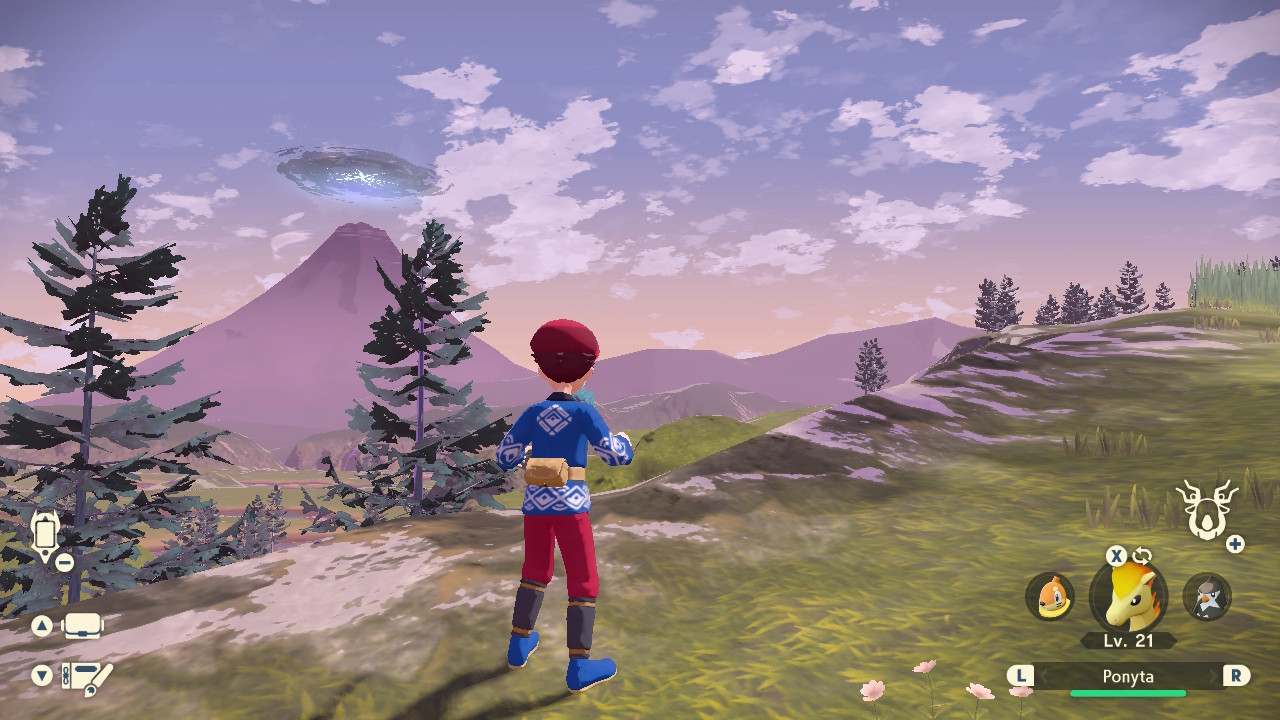
Enlarge / Pokémon Legends: Arceus is as close as we’ve ever gotten to an open-world Pokémon game.

Last year’s by-the-numbers Pokémon Diamond and Pearl remakes did even less than most Pokémon games to spruce up and modernize the series’ decades-old formula. That’s understandable for a remake of a 2006 Nintendo DS game, but the games were still disappointing follow-ups to the more adventurous Sword and Shield.

The good news is that if you’ve been waiting for Game Freak to really shake up Pokémon‘s gameplay without totally burning it to the ground and starting from scratch, Pokémon Legends: Arceus is the game you’ve been waiting for. Part Pokémon and part Breath of the Wild, Legends takes the free-roaming “Wild Area” concept from Sword and Shield and updates the series’ catching and battling mechanics to match.

That’s not to say it’s a perfect fusion of those disparate elements. Its mission-based structure gets pretty fetch quest-y, it leans heavily on an over-familiar roster of existing Pokémon, and the aging Switch hardware sometimes struggles to make it look good, especially when docked. But despite those problems, the whole package works together surprisingly well, and it makes the Pokémon feel fresher than it has in quite a while.

Ancient history

<a href="https://cdn.arstechnica.net/wp-content/uploads/2022/01/legends-02.jpg" class="enlarge" data-height="720" data-width="1280" alt="Legends uses a pre-modern aesthetic for the Hisui region, loosely resembling Japan in the early 20th century. “><img alt="Legends uses a pre-modern aesthetic for the Hisui region, loosely resembling Japan in the early 20th century. ” src=”https://rassegna.lbit-solution.it/wp-content/uploads/2022/01/pokemon-legends-arceus-is-a-breath-of-fresh-air-for-a-stale-franchise-1.jpg” width=”980″ height=”551″>
Enlarge / Legends uses a pre-modern aesthetic for the Hisui region, loosely resembling Japan in the early 20th century.

Legends is set up as a distant prequel to Diamond and Pearl that takes place in the Hisui region, which will someday become the modern Sinnoh region. The decision to set Legends not just in the past but way in the past gives it a distinct flavor from main-series Pokémon games. You aren’t just putting together a Pokédex—you’re assembling the first Pokédex. Item shops exist, but you’ll need to craft the vast majority of Pokéballs and other items you use with found materials. And there are few cities, no gyms, and no Pokémon League, which lets the series experiment with new modes of character progression.

Hisui is split up into five different biomes—you can’t walk from one end of Hisui to the other as you can in BotW‘s Hyrule, but each of the five areas has distinct topography that keeps things from getting too samey as you progress. Each biome is inhabited by a rampaging Noble Pokémon whom you must calm and befriend, which replaces gyms and badges as the main way the game marks your progress. There are also plenty of side quests to keep you distracted if you don’t want to rush right to the end.

Filling out your Pokédex helps you rank up, which gets you access to better items, additional side quests, and the later regions of the game.
Enlarge / Filling out your Pokédex helps you rank up, which gets you access to better items, additional side quests, and the later regions of the game.

Your character, a member of Galaxy Team, also has a rank within the organization. You rank up by filling out your Pokédex, and you won’t be allowed into the game’s later biomes if your rank isn’t high enough (your rank also affects the kinds of items you’ll be able to craft, among other things). In the main series, all you need to do to fill out a Pokédex is see and catch a single Pokémon of each species. But in Legends, filling out each entry is done by accomplishing a series of sub-tasks, involving everything from catching multiple Pokémon of a single species to seeing Pokémon use specific moves in battle.

Important items like Potions and Pokéballs can be bought pre-made, but you'll be making the vast majority of them yourself using found materials.
Enlarge / Important items like Potions and Pokéballs can be bought pre-made, but you’ll be making the vast majority of them yourself using found materials.

Catching and battling Pokémon in Legends is refreshingly fast and satisfying compared to the usual formula. There are no more random battles and no swirly, time-consuming transitions between exploring and battling. All Pokémon are fully visible and walking around—if you want to catch one, the best way to do so is to sneak up on it and toss a Pokéball.

Some wild Pokémon will scamper away if they notice you getting near. Others will get mad and attack you directly. It’s possible to get totally knocked out by a wild Pokémon’s attacks, which will send you back to the nearest base camp with fewer items and a bruised ego. But you can defend yourself by tossing out one of your Pokémon, triggering an essentially traditional turn-based Pokémon battle.

https://arstechnica.com/?p=1828366
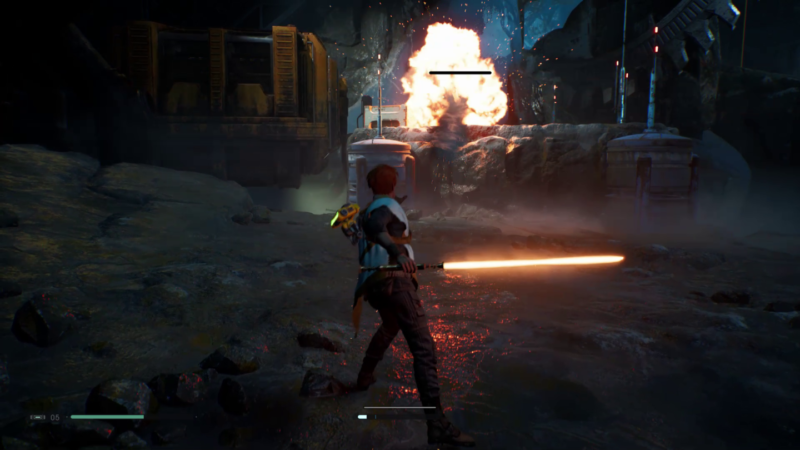


Three new Star Wars video games are in development at EA, Respawn

Screenshot from videogame Star Wars Jedi: Fallen Order
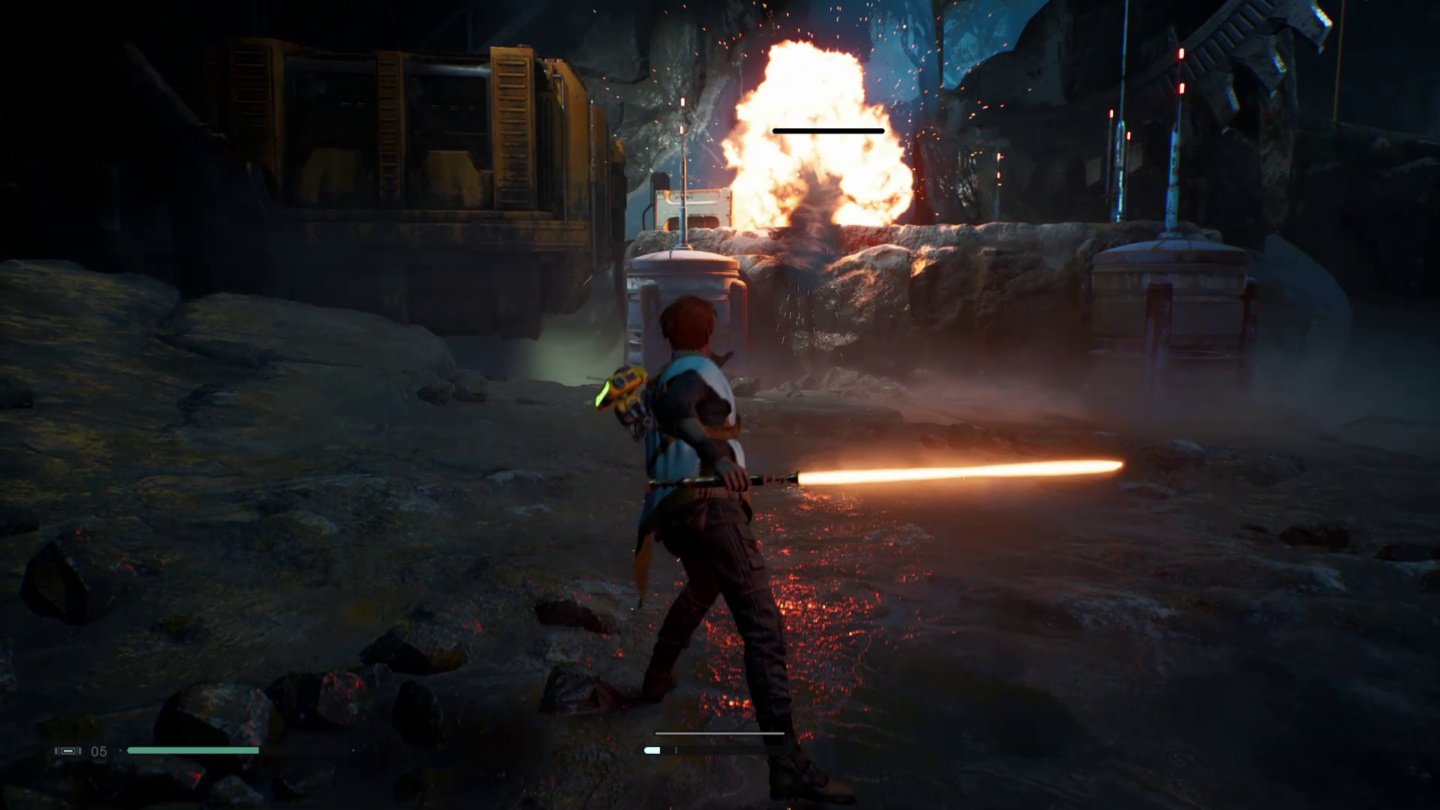
Enlarge / Star Wars Jedi: Fallen Order. Yes, the colon comes after the “Jedi.”

EA and Lucasfilm Games have jointly announced that three new Star Wars games are in development at Respawn, the studio that developed Star Wars Jedi: Fallen Order.

Among those three planned games is a sequel to Fallen Order, which was a story-driven, Souls-like melee combat action and exploration game. The other two games include a first-person shooter and a strategy game, but EA’s press release did not provide details about those titles beyond their respective genres.

The first-person shooter will be led by a former producer for the Star Wars: Battlefront franchise of online shooters set in the Star Wars universe. The strategy game will be produced by Respawn, but its lead developer will be Bit Reactor. Bit Reactor is a new studio formed in part by developers who previously worked on the recent entries in the XCOM franchise.

Respawn is currently best known as the developer of the popular online battle royale shooter Apex Legends, but the studio’s pedigree runs deeper—it is led by many of the same people who made the wildly popular Call of Duty 4: Modern Warfare back in 2007. That game established the formula for the next decade of online shooters until that formula was upended by the popularization of the battle royale subgenre. Credit for the battle royale’s triumph goes in large part to Epic Games’ massively successful Fortnite, although Fortnite did not create the subgenre.

Respawn also made both Titanfall games, which were single-player shooters set in the same universe as the more recent Apex Legends. And very recently, Respawn co-founder Vince Zampella was put in charge of EA’s Battlefield franchise of online military shooters after Battlefield 2042‘s mixed critical and player reception last year.

The announcement from EA and Lucasfilm Games did not include any details at all about the characters, stories, or settings in the new Star Wars games.

EA has had exclusive rights to publish games set in the Star Wars universe since 2013. However, that deal ends soon. Non-EA Star Wars games are already in development, including an open-world game published by Ubisoft and developed by Massive Entertainment (The Division) and a narrative adventure game by Quantic Dream (Detroit: Become Human, Heavy Rain, Beyond: Two Souls).

In other words, players who want to play big-budget Star Wars games are going to have more options in the next few years than they have since the 2000s.

https://arstechnica.com/?p=1828277


Beware—trolls are out to spoil tomorrow’s Wordle for you

<img src="https://rassegna.lbit-solution.it/wp-content/uploads/2022/01/beware-trolls-are-out-to-spoil-tomorrows-wordle-for-you.jpg" alt="Artist's conception of Wordle players trying to avoid foreknowledge of tomorrow’s puzzle solution.”>
Enlarge / Artist’s conception of Wordle players trying to avoid foreknowledge of tomorrow’s puzzle solution.
Adam Drobiec / EyeEm


If you’re one of the many, many people hooked on Wordle—and especially if you’re someone who likes to share your spoiler-free results publicly each day—we have a word of warning for you. There are people who are determined to spoil your good time by shoving tomorrow’s Wordle answer in your face.

The spoiler Twitter account Wordlinator was one of the most prominent trolls on the scene, describing itself as “sent from the future to terminate wordle bragging.” @Wordlinator would reply to seemingly random Wordle-results tweets with impolite messages designed to “teach you a lesson” by including the answer to the next day’s game (as archived here).

It’s not hard

Wordlinator and its ilk take advantage of Wordle‘s less-than-secure Javascript coding, which lists the answer to all 2,315 of the game’s five-letter puzzles in daily order in a plaintext array buried in publicly viewable files referenced in the webpage’s source code.

Obfuscating future answers probably wasn’t a high priority when Wordle was originally created as a fun distraction for creator Josh Wardle’s partner and some friends. Now that the game is a worldwide phenomenon, though, trolls are taking advantage of the lax security to effectively see into the future and spoil the fun.

Wordlinator, which was still active as of Monday afternoon, has now been suspended for violating Twitter’s rules (likely due to Twitter’s policy on spam and unsolicited replies). But while Wordlinator has been taken down, there’s nothing stopping others from using the same method to ruin Wordle just because they can. Just today, I stumbled on this TikTok user, who brags about creating a Python script that can “email the Wordle solution to my enemies at midnight every night.”

To that bot-creator and everyone else who feels the need to troll the world in this way, may we suggest simply muting the word “Wordle” on your social media app of choice or politely asking your friends to stop sharing their results? Ruining Wordle for everyone else doesn’t make you a cool countercultural iconoclast; it just makes you the latest version of the people screaming about Professor Dumbledore in 2005 (warning, 16-year-old spoilers in that link).

https://arstechnica.com/?p=1828232


Retired FBI agent has new theory about who betrayed Anne Frank’s family to Nazis

<img src="https://rassegna.lbit-solution.it/wp-content/uploads/2022/01/retired-fbi-agent-has-new-theory-about-who-betrayed-anne-franks-family-to-nazis.jpg" alt="Anne Frank in 1940. A new book, The Betrayal of Anne Frank: A Cold Case Investigation, by Rosemary Sullivan, claims that a retired FBI special agent and a team of investigators have solved the mystery of who betrayed the Frank family to the Nazis.”>
Enlarge / Anne Frank in 1940. A new book, The Betrayal of Anne Frank: A Cold Case Investigation, by Rosemary Sullivan, claims that a retired FBI special agent and a team of investigators have solved the mystery of who betrayed the Frank family to the Nazis.
Public domain

Former FBI special agent Vincent Pankoke was looking forward to a relaxing retirement hanging out at the beach when he left the agency. Instead, he was drawn into solving a famous cold case: the question of who betrayed Anne Frank and her family to the Nazis, leading to their arrest and deportation to a concentration camp. Only the father, Otto Frank, survived. To find his own answer to that question, Pankoke assembled his own crack team of dogged investigators. They spent five years poring over every bit of pertinent material, setting up an extensive online database, and developing an AI program to help them sift through it all and find new connections.

While admitting that the case is circumstantial and some reasonable doubt remains, Pankoke et al. believe the most likely culprit is a man named Arnold van den Bergh, a local Jewish leader who may have handed over lists of addresses where fellow Jews were hiding to the Nazis in order to protect his own family. The Pankoke team’s story was featured in a segment on 60 Minutes earlier this week (see video at end of post) and is covered in detail in a new book by Rosemary Sullivan, The Betrayal of Anne Frank: A Cold Case Investigation.

Millions of people have read The Diary of Anne Frank since it was first published posthumously in 1947. It has been translated into 70 languages and inspired a theatrical play and subsequent Oscar-winning 1959 film, featuring Millie Perkins in the title role. Anne Frank was born in Frankfurt, Germany, but the family fled the country and settled in Amsterdam after Adolf Hitler came to power. They didn’t flee quite far enough: the Nazi occupation of the Netherlands began in May 1940 and eventually forced the Franks (and many other Jews) into hiding.

A model of the building where Anne Frank stayed, including the Secret Annex.
Enlarge / A model of the building where Anne Frank stayed, including the Secret Annex.

Anne received the famous diary on June 12, 1942, for her 13th birthday, around the time the Gestapo began deporting Jews in Amsterdam. On July 6, the Frank family began their lives in the Secret Annex attached to the office building at Prinsengracht 263, where Otto Frank had worked. It was only accessible via a door on the landing, kept hidden by a bookcase. Victor Kugler, Johannes Kleiman, Miep Gies, and Bep Voskuijl were the only employees who knew where the Franks (and later, the Van Pels family) were hiding. The four supplied the families with food and other necessities, knowing full well that they could be condemned to death by the Nazis for aiding Jews.

Anne chronicled their lives in the Annex in her diary for the next two years, making her final entry on August 1, 1944. Just three days later, German police led by SS officers stormed the Annex, arresting the Franks and the Van Pels family and transferring them to the Westerbork transit camp after interrogation. Kugler and Kleiman were also arrested and held at a penal camp for “enemies of the regime.”

Gies and Voskuijl were questioned, but not detained, and found the pages of Anne’s diary strewn around the floor when they returned to the Annex, preserving it for posterity. As the whole world now knows, 15-year-old Anne Frank died (likely of typhoid fever) at Bergen-Belsen between February and April 1945, the day after her older sister Margot. Their mother, Edith, had died of starvation the year before.

A reproduction of Anne Frank's diary, part of a permanent exhibition about the life of Anne Frank at the Simon Wiesenthal Center and the Museum of Tolerance.
Enlarge / A reproduction of Anne Frank’s diary, part of a permanent exhibition about the life of Anne Frank at the Simon Wiesenthal Center and the Museum of Tolerance.
Katie Falkenberg/Los Angeles Times/Getty Images

There were two separate official investigations into who may have betrayed the family: one in 1947-1948 and the second (conducted by the Dutch police) in 1963-1964. In both cases, the findings were inconclusive. Since then, there have been several independent investigations identifying different possible suspects.

For instance, Melissa Muller’s 1998 biography of Anne Frank concluded that a woman named Lena Hartog, wife of the company’s assistant warehouse manager, betrayed the family. In 2003, Carol Ann Lee came to a different conclusion in her biography of Otto Frank: the culprit was a man named Anton “Tonny” Ahlers, a member of the National Socialist Movement in the Netherlands. Stockroom manager Willem van Maaren was another suspect, and since several possible culprits knew each other, there is also the possibility that more than one person betrayed the Frank family.

A 2015 biography of Bep Voskuijl (co-authored by her son Joop) suggested that one of Bep’s sisters, Nelly, may have snitched on the Franks. Nelly fell in love with a young Austrian Nazi, had worked for a year on a German air base, and had political leanings that had sufficiently estranged her from the family that she left their house. This theory holds that Nelly—who returned to Amsterdam in 1943 when her romance soured—may have been the anonymous female caller who (allegedly) tipped off the SS about the secret Annex, per the testimony of SS officer Karl Josef Silbauer, who made the arrests.

The Anne Frank House undertook its own investigation and arrived at a surprising new theory in 2017, thanks to the efforts of a historian named Gertjan Brock. It’s possible, Brock suggested, that there was no betrayal, and the SS raid was really part of ongoing attempts to track down purveyors of illegal goods. This theory holds that the officers just happened to stumble upon the Jewish families hiding in the attic.

https://arstechnica.com/?p=1826737


Judge’s order slaps Roblox player with permanent game ban

<img src="https://rassegna.lbit-solution.it/wp-content/uploads/2022/01/judges-order-slaps-roblox-player-with-permanent-game-ban.jpg" alt="A court order has led to a longtime Roblox player being banned from the popular game.”>
Enlarge / A court order has led to a longtime Roblox player being banned from the popular game.
Aurich Lawson | Roblox | Shark Fin Studios

A lawsuit filed by the Roblox Corporation, the operator of one of the most popular online games in the West, concluded last week with a rare order from a US District Court—that a defendant must be permanently banned from an online video game and its associated services.

The dubious honor goes to Benjamin Robert Simon, better known to the Roblox community as Ruben Sim, who had previously received an IP-based Roblox ban after allegedly violating the game’s terms of service. Simon operates a Roblox gameplay and criticism YouTube channel, which currently has 849,000 subscribers.

$150,000, not $1.6 million

The judgment, which came as a stipulated order agreed upon by both the plaintiff and defendant, also requires Simon to pay $150,000 to Roblox. Exactly how that number breaks down based on the suit’s allegations is unclear, but the original suit says that Simon posted a threat in October 2021 that apparently targeted that year’s Roblox Developers Conference. The tweet included a threatening statement without a clear indication of either satire or comedy and said, “San Francisco Police are currently searching for notorious Islamic Extremist [name redacted]. If you see this individual at RDC please call 911 immediately.” The post included a hyperlink to a video titled “SOMEONE BLOW UP ROBLOX NOW,” which had been deleted from YouTube in 2015 but was temporarily re-uploaded, and that video (now once again offline) included direct threats to the Roblox Corporation.

The September 2021 lawsuit (PDF) alleges that this post—along with a follow-up post saying, “Don’t come to RDC tomorrow”—contributed to the company putting the event into “a temporary lockdown while local police and private security conducted a search to secure the facility.” The lawsuit also alleged that this disruption cost Roblox Corporation “over $50,000.”

The January 14 judgment (PDF), which Ars Technica has reviewed, does not include a line-by-line accounting of Roblox Corporation’s many allegations about Simon’s activities related to Roblox, and the only other claim with a firm number attached references Simon’s alleged repeated efforts to evade Roblox’s bans, use the service, and share videos of his exploits. Roblox Corporation says that it spent “over $100,000” to “investigate and block” Simon’s repeated ban evasions. The final judgment is far less than the $1.6 million Roblox Corporation originally sought.

No legal precedent established

The suit says that Simon “repeatedly posts libelous statements about Roblox’s founder and CEO, attributing false statements and conduct to the CEO that Defendant Simon knows to be false and which he makes with intent to cause injury to the reputation of the CEO and of Roblox.” This, among many other allegations, might have been explored further with screenshots or archived social media posts had the suit gone to trial, though in the end, both parties agreed to the terms of the US District Court’s judgment.

In the case of some allegations, Roblox Corporation’s lawsuit includes extensive chat logs that were hosted by Simon’s YouTube channel as proof of his history with ban evasion and violations of Roblox‘s terms of service. Other allegations, including the ones about Roblox‘s CEO and about graphic imagery allegedly uploaded by Simon to Roblox‘s servers, are not accompanied by text or image evidence in the suit’s initial filing. Simon has agreed to delete any social media content that violates the terms of the court order. The original lawsuit sought the total deletion of Simon’s social media accounts and presence, but the final court order includes no such demand.

As a stipulated order agreed upon by both parties, this lawsuit’s conclusion does not establish a legal precedent for users who violate an online service’s terms of service, get banned, and evade that ban in one way or another to return to the game or app in question.

https://arstechnica.com/?p=1827525


This 22-year-old builds chips in his parents’ garage

Sam Zeloof completed this homemade computer chip with 1,200 transistors, seen under a magnifying glass, in August 2021.
Enlarge / Sam Zeloof completed this homemade computer chip with 1,200 transistors, seen under a magnifying glass, in August 2021.

In August, chipmaker Intel revealed new details about its plan to build a “mega-fab” on US soil, a $100 billion factory where 10,000 workers will make a new generation of powerful processors studded with billions of transistors. The same month, 22-year-old Sam Zeloof announced his own semiconductor milestone. It was achieved alone in his family’s New Jersey garage, about 30 miles from where the first transistor was made at Bell Labs in 1947.

With a collection of salvaged and homemade equipment, Zeloof produced a chip with 1,200 transistors. He had sliced up wafers of silicon, patterned them with microscopic designs using ultraviolet light, and dunked them in acid by hand, documenting the process on YouTube and his blog. “Maybe it’s overconfidence, but I have a mentality that another human figured it out, so I can too, even if maybe it takes me longer,” he says.

Zeloof’s chip was his second. He made the first, much smaller one as a high school senior in 2018; he started making individual transistors a year before that. His chips lag Intel’s by technological eons, but Zeloof argues only half-jokingly that he’s making faster progress than the semiconductor industry did in its early days. His second chip has 200 times as many transistors as his first, a growth rate outpacing Moore’s law, the rule of thumb coined by an Intel cofounder that says the number of transistors on a chip doubles roughly every two years.

Zeloof now hopes to match the scale of Intel’s breakthrough 4004 chip from 1971, the first commercial microprocessor, which had 2,300 transistors and was used in calculators and other business machines. In December, he started work on an interim circuit design that can perform simple addition.

Zeloof says making it easier to tinker with semiconductors would foster new ideas in tech.
Enlarge / Zeloof says making it easier to tinker with semiconductors would foster new ideas in tech.

Outside Zeloof’s garage, the pandemic has triggered a global semiconductor shortage, hobbling supplies of products from cars to game consoles. That’s inspired new interest from policymakers in rebuilding the US capacity to produce its own computer chips, after decades of offshoring.

Garage-built chips aren’t about to power your PlayStation, but Zeloof says his unusual hobby has convinced him that society would benefit from chipmaking being more accessible to inventors without multimillion-dollar budgets. “That really high barrier to entry will make you super risk-averse, and that’s bad for innovation,” Zeloof says.

Zeloof started down the path to making his own chips as a high school junior, in 2016. He was impressed by YouTube videos from inventor and entrepreneur Jeri Ellsworth in which she made her own, thumb-sized transistors, in a process that included templates cut from vinyl decals and a bottle of rust stain remover. Zeloof set out to replicate Ellsworth’s project and take what to him seemed a logical next step: going from lone transistors to integrated circuits, a jump that historically took about a decade. “He took it a quantum leap further,” says Ellsworth, now CEO of an augmented-reality startup called Tilt Five. “There’s tremendous value in reminding the world that these industries that seem so far out of reach started somewhere more modest, and you can do that yourself.”

Computer chip fabrication is sometimes described as the world’s most difficult and precise manufacturing process. When Zeloof started blogging about his goals for the project, some industry experts emailed to tell him it was impossible. “The reason for doing it was honestly because I thought it would be funny,” he says. “I wanted to make a statement that we should be more careful when we hear that something’s impossible.”

Zeloof’s family was supportive but also cautious. His father asked a semiconductor engineer he knew to offer some safety advice. “My first reaction was that you couldn’t do it. This is a garage,” says Mark Rothman, who has spent 40 years in chip engineering and now works at a company making technology for OLED screens. Rothman’s initial reaction softened as he saw Zeloof’s progress. “He has done things I would never have thought people could do.”

Zeloof’s project involves history as well as engineering. Modern chip fabrication takes place in facilities whose expensive HVAC systems remove every trace of dust that might trouble their billions of dollars of machinery. Zeloof couldn’t match those techniques, so he read patents and textbooks from the 1960s and ’70s, when engineers at pioneering companies like Fairchild Semiconductor made chips at ordinary workbenches. “They describe methods using X-Acto blades and tape and a few beakers, not ‘We have this $10 million machine the size of a room,’” Zeloof says.

Zeloof had to stock his lab with vintage equipment too. On eBay and other auction sites he found a ready supply of bargain chip gear from the 1970s and ’80s that once belonged to since-shuttered Californian tech companies. Much of the equipment required fixing, but old machines are easier to tinker with than modern lab machinery. One of Zeloof’s best finds was a broken electron microscope that cost $250,000 in the early ’90s; he bought it for $1,000 and repaired it. He uses it to inspect his chips for flaws, as well as the nanostructures on butterfly wings.

https://arstechnica.com/?p=1827533


Picard and Guinan have a warm reunion in S2 trailer for Star Trek: Picard

[embedded content]
The second season of Star Trek: Picard premieres March 3, 2022 on Paramount+.

It has been a long, pandemic-fueled wait, but the second season of Star Trek: Picard is almost here, and we now have an official trailer. In addition to seeing Jean-Luc Picard (Patrick Stewart) encounter his mischievous former frenemy, Q (John de Lancie), fans’ hearts will warm to see the retired Starfleet captain reunite with Guinan (Whoopi Goldberg), the El-Aurian bar hostess from Star Trek: The Next Generation.

As I wrote in my review last year, the series is set 20 years after the events of Star Trek: Nemesis. The first season opened with Jean-Luc Picard (Patrick Stewart) having retired to the family vineyard. His bucolic existence was interrupted by the arrival of a mysterious woman named Dahj (Isa Briones) who pleaded for his help. Alas, Picard failed to save her. She was killed in front of him by Romulan assassins belonging to a radical sect known as the Zhat Vash, who is dedicated to eradicating all artificial life forms. Picard discovered that Dahj was actually a synthetic—technically Data’s “daughter”—and she had a twin sister, Soji, who was also in danger.

Resolved to save Soji, Picard asked Starfleet for a ship, but he had been gone a long time, and his entreaties were rebuffed. Never one to admit defeat, Picard amassed his own scrappy crew over the next few episodes for his unauthorized rescue mission. The crew included Cristobal Rios (Santiago Cabrera), a skilled thief and pilot of the ship La Sirena; Raffi (Michelle Hurd), a former Starfleet intelligence officer and recovering addict; Dr. Agnes Jurati (Alison Pill); and a Romulan refugee, Elnor (Evan Evagora).

Seeing Guinan and Picard together again gives us some warm fuzzies.
Enlarge / Seeing Guinan and Picard together again gives us some warm fuzzies.
YouTube/Paramount+

Some details about the second season have been trickling out over the last year. We know, for instance, that even though Picard’s consciousness is now in a synthetic body, the show will still explore themes of dealing with the last stage of one’s life, the nature of connectedness—hence the return of Q and Guinan—and Picard’s struggle with his own personal history, which will include time traveling to the past. Per the official synopsis:

Picard takes the legendary Jean-Luc Picard and his crew on a bold and exciting new journey: into the past. Picard must enlist friends both old and new to confront the perils of 21st century Earth in a desperate race against time to save the galaxy’s future—and face the ultimate trial from one of his greatest foes.

Patrick Stewart personally invited Whoopi Goldberg to reprise her role as Guinan in S2 during an appearance to promote S1 on The View in January 2020. Paramount dropped an initial S2 teaser in April last year, on First Contact Day, that strongly hinted that fan favorite Q—an extra-dimensional being with power over time, space, the laws of physics, and reality itself—would return and that the second season would play with time. A one-minute teaser dropped last July, giving us our first look at Q.

Q (John de Lancie) is up to his old tricks.
Enlarge / Q (John de Lancie) is up to his old tricks.
YouTube/Paramount+

That teaser also showed us that time has been broken in S2, with many significant changes. We saw Elnor and Raffi fleeing for their lives, Soji dressed all in white, Rios in a snazzy new Federation uniform with new insignia, and Agnes Jurati in civilian garb. Also, Seven of Nine awoke in an unfamiliar apartment, and when she looked in the mirror, her Borg implant was gone.

The full trailer has some of that same footage, and more. It opens with Picard ruminating on the moments that still haunt him, “moments upon which history turns.” Then, he wakes up in a different timeline, with Q welcoming Picard to the “road not taken.” The Federation doesn’t seem quite so noble as the version we’ve known in the past, and what is that mysterious blue substance in a vial that Q gives to Altan Inigo Soong (Brent Spiner)?

The Borg Queen (Annie Wersching) is also back and might be to blame for some time shenanigans that transport Picard and his crew back to 2024. Star Trek: Deep Space Nine fans will understand the significance of that year, detailed in the two-part episode “Past Tense.” It’s the year of the Bell Riots, a protest and crackdown that proved so violent that America embarked on a course of social and political reform that ultimately led to the formation of the Federation. So messing with that point in the timeline could have some serious repercussions.

Annie Wersching plays the Borg Queen this time around.
Enlarge / Annie Wersching plays the Borg Queen this time around.
YouTube/Paramount+

Desperate for someone who can help him understand what is going on with the divergence in time, Picard walks into a bar that just happens to be run by Guinan—perhaps a bit less posh than Ten Forward, but still plenty cozy. “I’m gonna need some tea. Earl Grey. Piping hot,” Guinan says, wearing a truly spectacular red hat. She warmly embraces her old friend, assuring him, “I believe you have one final frontier yet to come.”

The second season of Star Trek: Picard premiers on Paramount+ on March 3, 2022. A third season filmed concurrently, so we’ll be getting even more adventures from the crew of La Sirena.

Listing image by YouTube/Paramount+

https://arstechnica.com/?p=1827532


Here’s why some games aren’t “verified” for Steam Deck compatibility

Pictures of the Steam Deck.
Enlarge / The Steam Deck, from Valve.

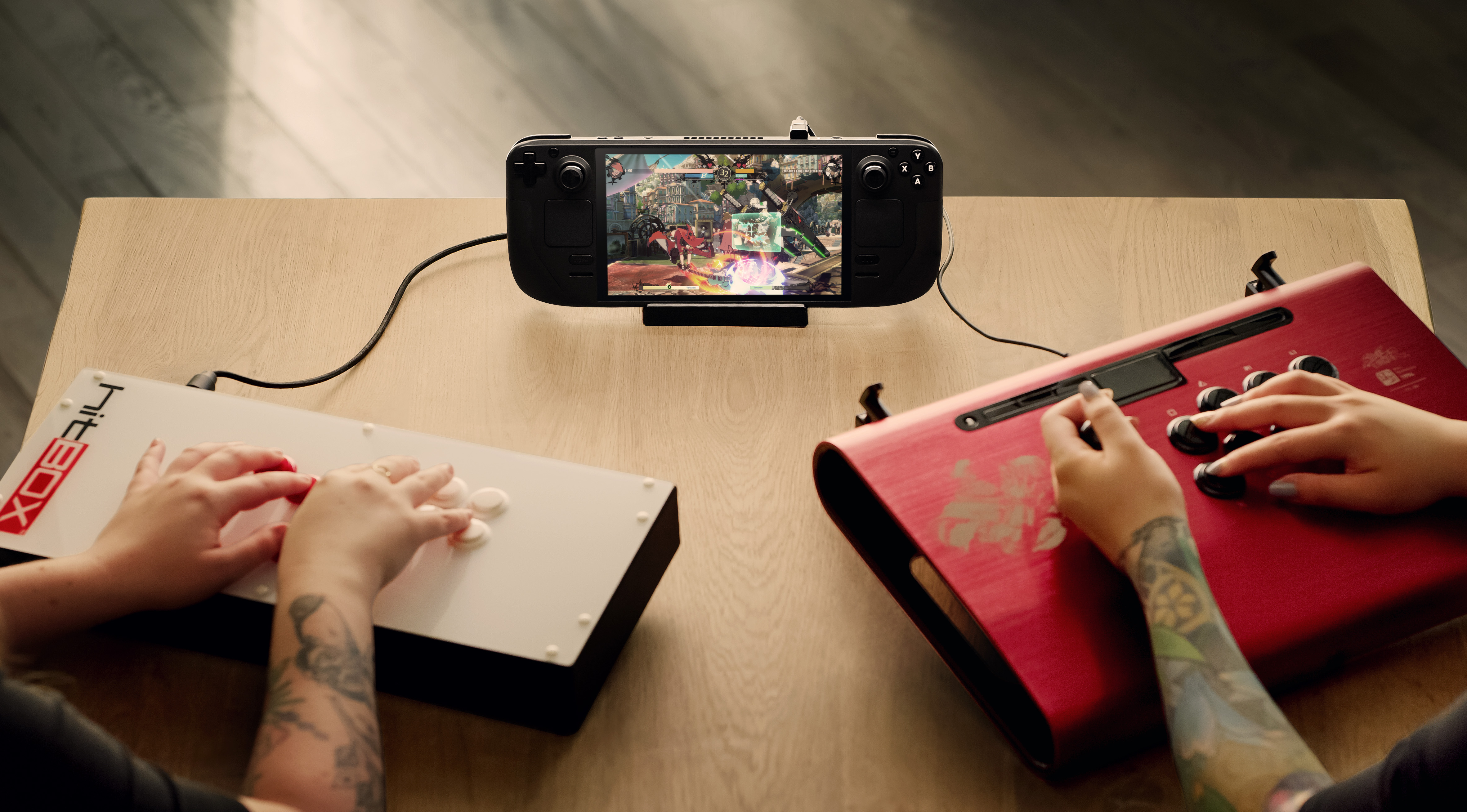
Back in October, Valve laid out the specific review guidelines that a Steam game would have to follow to earn an optional “Deck Verified” badge on its Steam Store page. Now, the results of the first of those verification reviews are starting to leak out, and they’re showing some minor input and interface issues across a handful of games running on Steam Deck.

While the Deck Verified badges have yet to show up on the Steam Store itself, the metadata surrounding the program is already being added to the Steam backend for some titles ahead of the Steam Deck’s planned launch next month, as picked up by services like SteamDB. Of the 86 games with verification review results so far, 41 have at least one issue preventing them from receiving a full “Verified” badge.

First, the good news: Almost all of those un-verified games are still rated as “Playable” under Steam’s guidelines. Only five reviewed games so far have received the dreaded Steam Deck “Unsupported” badge from Valve. Four are virtual reality games, which fail for the simple listed reason that “Steam Deck Does Not Support VR Games.” The fifth, Persona 4 Golden, seems to fail because in-game videos use a problematic Windows Media Player codec that could be difficult to implement through Steam Deck’s Linux Proton compatibility layer. “Valve is still working on adding support for this game on Steam Deck,” the game’s metadata says.

Every single “Playable” or “Verified” game, on the other hand, has a “default graphics configuration [that] performs well on Steam Deck.” That lines up with Valve’s July promise that the Steam Deck will be able to run “really the entire Steam library” at 30 fps with the device’s native 800p resolution.

Not perfect, but still “playable”

The common issues that differentiate a “Verified” game from a merely “Playable” one on the Steam Deck often amount to input annoyances. In 15 of the 36 “Playable” titles identified so far, for instance, a launcher or setup tool “may require the touchscreen or virtual keyboard or have difficult-to-read text,” according to Steam.

There are also 14 games identified so far in which “entering some text requires manually invoking the on-screen keyboard” and 11 that “require use of the touchscreen or virtual keyboard or a community configuration.” A total of 13 games don’t support “external controllers for the primary player,” which could be a problem if you want to plug in your own device via USB.

For some Steam games, this kind of external input won't work for primary player control on the Steam Deck.
Enlarge / For some Steam games, this kind of external input won’t work for primary player control on the Steam Deck.

Visual interface problems are also relatively common in the first batch of Deck Verified reviews. Unreadably small text has been identified as a problem in nine titles, while 14 “sometimes show mouse, keyboard, or non-Steam-Deck controller icons” when played on the Deck.

The Deck Verified program also goes out of its way to identify games that require an Internet connection either for first-time setup (11 titles so far) or throughout single-player gameplay (nine titles). This is a notable issue for Electronic Arts games, which require the use of the third-party Origin client on top of Steam’s own DRM and could make playing on the go more difficult.

While this initial list of Steam Deck compatibility problems is far from a randomly chosen scientific survey, it’s still an interesting look at the small issues that are likely to affect some titles when the hardware launches. It will be interesting to see how many “Playable” titles issue updates to achieve full “Verified” status after the Steam Deck is in players’ hands.

Keep reading for details on the 86 games that have been reviewed for the Deck Verified program as of this writing.

https://arstechnica.com/?p=1827618


Members of Activision’s Raven Software QA team form a union

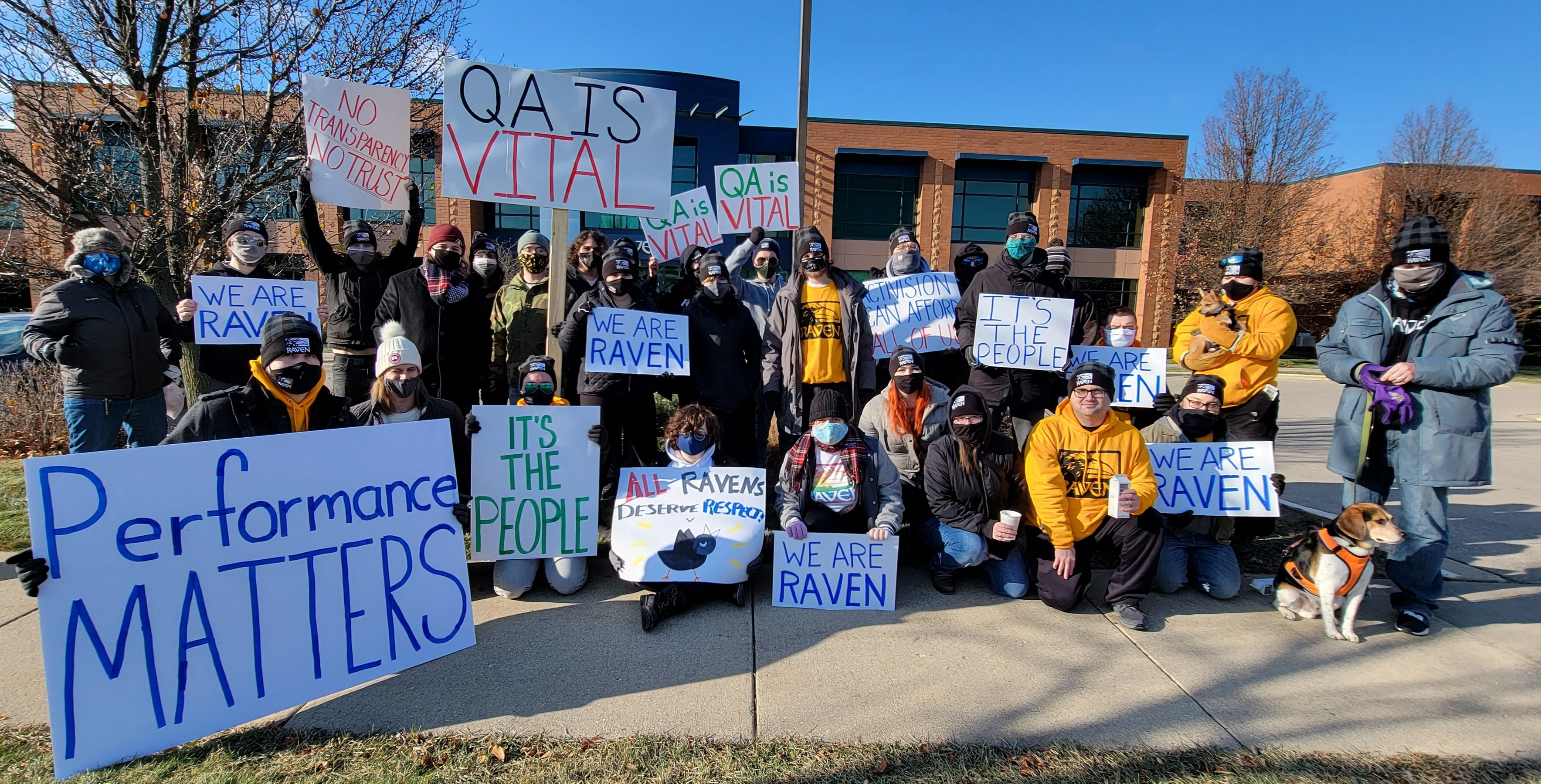
Warmly dressed and mostly masked workers hold protest signs.
Enlarge / Striking employees demand the reinstatement of Raven Software QA contractors who were let go in December.

The members of Activision Blizzard subsidiary Raven Software’s quality assurance department are seeking voluntary recognition of their union, a first for workers at a major American video game publisher.

The newly formed Game Workers Alliance union is asking Activision to recognize its right to represent the 34 QA testers at the studio, which works primarily on the Call of Duty series. The union has formed with the help of the Communication Workers of America—which has for years been publicly working to organize the game industry through its Campaign to Organize Digital Employees (CODE)—and A Better ABK Workers Alliance, which is working to organize the much broader group of over 9,500 Activision employees.

(Ars Technica writers are members of the NewsGuild of New York, a subsidiary of the CWA.)

A representative for the CWA confirmed that 78 percent of the Raven Software QA unit has expressed support for the union, well above the majority threshold needed for formal representation. If Activision does not voluntarily recognize the union in the coming days, the group plans to go forward with a formal National Labor Relations Board election to force recognition. Once the union is recognized, Activision would be required to negotiate with members over certain legally defined issues.

In a Twitter thread announcing the union, the Game Workers Alliance said it is seeking more sustainable and realistic development timelines with less “crunch time,” better communication and transparency from management, improved compensation and career development opportunities, and more opportunities for “empowering underrepresented voices.”

“Quality Assurance Testers are consistently undervalued, undercompensated, and overworked,” the Game Workers Alliance wrote on Twitter. “We, the Quality Assurance Team at Raven Software, are passionate about creating a work environment in which our profession is recognized for its integral role in the success of game development.”

A long time coming

The announcement of the union formalizes a labor uprising at Raven Software that started last month when many Raven employees walked off the job to protest the treatment of 12 contract testers who were unceremoniously laid off. That walkout quickly evolved into an open-ended strike that included 20 Raven QA workers and 60 total employees from among the rest of Raven’s over 300 employees and Activision Blizzard’s over 9,500 workers.

In recent weeks, the number of striking Activision Blizzard employees has dwindled to 20, a CWA spokesperson told Ars Technica. The CWA is not providing strike assistance to those employees, the spokesperson said, instead pointing to an independent strike fund that has been set up to support strikers.

The 12 laid-off Raven testers, whose contracts officially end on January 28, are among those supporting the union effort, according to The Washington Post. Activision Blizzard had ignored departmental management urging the company not to go through with those layoffs, according to Raven testers who talked to the Post.

Blizzard employees participating in a walkout to protest the company's Hong Kong protest policies in 2019.
Enlarge / Blizzard employees participating in a walkout to protest the company’s Hong Kong protest policies in 2019.

A Better ABK has also organized two separate walkouts at the company in recent months. Those were set up to protest widespread allegations of sexual assault and discrimination that have roiled the company in the months since a California agency lawsuit against the publisher became public. In 2019, the company also faced a brief employee walkout over its treatment of a pro Hearthstone player who publicly expressed support for Hong Kong.

While Microsoft recently announced plans to purchase Activision for a record $68.7 billion, Raven QA member Erin Hall told The New York Times that the timing of the union announcement was coincidental. In an interview with The Washington Post, Xbox Gaming CEO Phil Spencer said he “[doesn’t] have a lot of personal experience with unions” but that “we’ll be having conversations about what empowers them to do their best work, which as you can imagine in a creative industry is the most important thing for us.”

In a statement, the CWA said Activision has “used surveillance and intimidation tactics, including hiring notorious union busters, to silence workers” instead of collaborating with them. In a letter sent to Activision employees shortly after the strike started, Activision executive Brian Bulatao urged employees to “consider the consequences of your signature on the binding legal document presented to you by CWA” and said that “active, transparent dialogue between leaders and employees” was a “better path” than going through a drawn-out collective bargaining process.

Last month, the management of independent game studio Vodeo Games formally recognized a worker union that has the support of 100 percent of unit employees.

https://arstechnica.com/?p=1827493


Review: Fraggle Rock on Apple TV+ is the Muppet series Disney+ wishes it had

The Fraggles are back, clap, clap. And they're a blast to watch again, clap, clap.
Enlarge / The Fraggles are back, clap, clap. And they’re a blast to watch again, clap, clap.
Jim Henson Company / Apple TV+

The video-streaming world has long suffered from content fragmentation, and modern-day Muppet access is no exception. If you want to revel in all things Jim Henson, you’ll need subscriptions to no less than three streamers: Disney+ (which has the most Henson films and series), HBO Max (which has a lock on Sesame Street), and Apple TV+. In a fairer cosmos, a unified Henson+ service would let fans feast upon the entire Muppet-verse like giddy Cookie Monsters. Alas.

Those streaming services don’t just divvy up classic Muppet content, either. They each feature brand-new series from the Jim Henson Company, either with newly invented characters or old favorites reliving their glory days. Keeping up with all that content has been tricky, but we at Ars have done our best, always with the hope that one of the new properties will deliver a good-enough mix of nostalgia, production values, and freshness.

This week, Fraggle Rock: Back to the Rock nails that exact combination and breathes new life into the formerly HBO-exclusive universe.

Dance and sing all day

For the uninitiated, Fraggle Rock began life in 1983 as a wholly new Muppet-filled, live-action universe with a twist few of its viewers realized: it had different video segments in different regions. Hence, the “Silly People” (humans) on HBO in the United States differed from the humans on televisions in France, Germany, or the UK. (All other Muppet voices were dubbed for different languages.)

So the oblivious human character Doc looked different depending on where you grew up. But the rest of the colorful Muppet cast of the original Fraggle Rock looked the same everywhere, and the series’ premise—about an underground world of furry, singing, radish-chomping critters—was also the same everywhere. The show targeted a slightly older audience than Sesame Street while seldom veering into the rated-G-for-adults absurdity of The Muppet Show. It resembled an ’80s sitcom in terms of bumbling hijinks and tidy, heartwarming resolutions—though with the standard Henson addition of at least two song-and-dance sequences per episode.

Back to the Rock isn’t the first time Apple TV+ has resurrected the Fraggles: the streaming service brought us a half-dozen episodes of Fraggle Rock: Rock On in 2020. Each five-minute episode revolved around familiar characters like Gobo and Red videoconferencing on the Fraggle version of Zoom—and though the series underwhelmed, it was arguably a welcome way for children to learn how to cope with the weirdness of a humanity-wide lockdown. This week’s new series, conversely, is a full return to the Fraggle-verse of old, complete with a massive underground lair built by tiny, beady-eyed characters known as Doozers.

Each of the reboot’s 13 episodes clocks in at roughly 25 minutes with a setup that will sound familiar to series fans. Uncle Traveling Matt sends a new “artifact” from the world of the Silly People to his nephew Gobo, and this object’s discovery leads him and the rest of his familiar Fraggle friends (Boober, Mokey, Red, and Wembley) to get up to some kind of caper. Back to the Rock comes out of the gate with a surprise twist: Uncle Traveling Matt actually shows up at Fraggle Rock for once, and he has a special request that shakes up the rest of the Fraggle cast.

While this leads to non sequiturs and good-spirited chaos—not to mention the aforementioned song-and-dance numbers—episodes typically end with a Fraggle having an epiphany about themselves or their fellow furry friends. (Revelations are usually set to a somber, Full House-style piano.) It’s all good-natured stuff meant for the 10-and-up set, with a mix of adult-friendly gags and cheesy song lyrics like Hip, hip, hooray / We’re gonna dance and sing all day.

Five-point star of personality clashes

While reviewing the series’ first few episodes without any children nearby, I groaned at some of the lyrics and dialogue meant for little kids. Yet each episode’s most saccharine, kid-friendly content never veers into fingers-on-chalkboard territory. FR:BttR nails this the same way its forebear did—by bouncing its wacky archetypes off of each other to comedic effect. The five-point star of personality clashes amongst the lead Fraggles remains a series highlight: Gobo’s plucky-yet-insecure urge to adventure; Red’s exuberant-yet-impatient desire to pull off extreme tricks and games; Wembley’s kind, trembling unease; Mokey’s hippie-dippie spirituality and connection to deeper forces; and Boober’s mix of neurosis and chill.

https://arstechnica.com/?p=1827233