Radeon RX 6500 XT is bad at cryptocurrency mining on purpose, AMD says

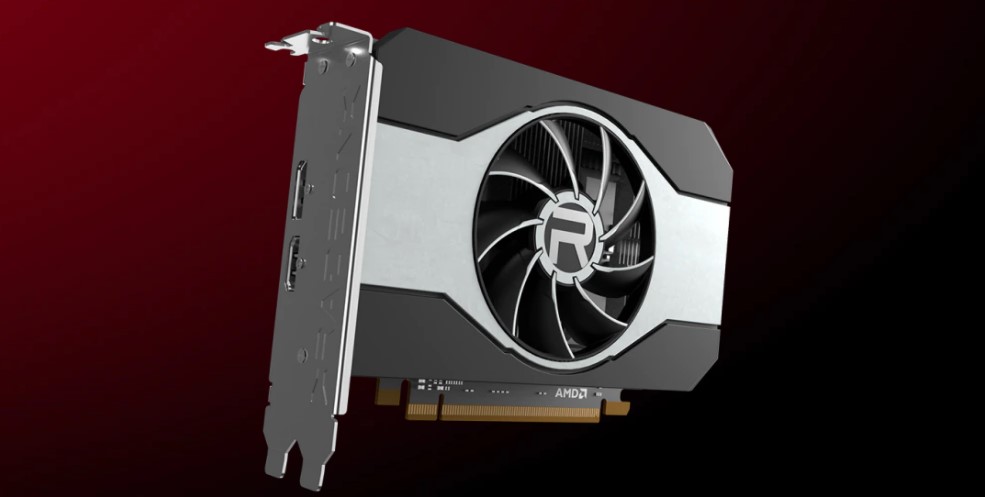
AMD's RX 6500 XT.
Enlarge / AMD’s RX 6500 XT.

AMD will begin selling its latest budget GPU, the Radeon RX 6500 XT, on January 19th. Its retail price is $199. But the ongoing GPU shortage, caused in part by cryptocurrency miners and scalpers who are snapping up every card they can get, has made it mostly impossible to get any graphics card at its list price over the past year. 

Whether the 6500 XT will be any different depends partly on supply, but AMD has also apparently designed the card to make it deliberately less appealing to miners while retaining its usefulness as an entry-level graphics card. Speaking to journalists in a press roundtable earlier this week, AMD Radeon VP Laura Smith talked about how the 6500 XT had been “optimized” for games (a transcript from a now-apparently-deleted PCWorld article is preserved here).

“We have really optimized this one to be gaming-first at that target market,” Smith said. “And you can see that with the way that we configured the part. Even with the four gigs of frame buffer. That’s a really nice frame buffer size for the majority of AAA games, but it’s not particularly attractive if you’re doing blockchain-type activities or mining activities.”

Indeed, if you look at the spec sheet of the 6500 XT, you’ll notice a few things that stick out compared to the last-gen RX 5500 XT. For starters, there isn’t an 8GB version of the 6500 XT. The 6500 XT also uses a 64-bit memory interface, which is exceedingly rare in modern GPUs—you’ll sometimes see it in low-end dedicated laptop GPUs like the GeForce MX 450, but discrete GPUs released within the last couple of generations have mostly stuck to 128-bit memory interfaces at a minimum. Both of these decisions make the 6500 XT bad for Ethereum mining in particular, since it needs more than 4GB of video RAM and really likes memory bandwidth.

To make up for the slower memory interface and help the card compete with the RX 570-class cards that AMD wants it to replace, AMD has boosted the clock speed of the RX 6500 XT way up. Its maximum boost frequency is 2815 MHz, up from 1845 MHz in the RX 5500 XT. Even the top-tier 6900 XT only boosts up to 2250 MHz—it just has a lot more GPU hardware and much more memory bandwidth to work with in the first place.

Nvidia has also taken steps to limit its GPUs’ mining capabilities, most notably when it re-issued “LHR” (or Low Hash Rate) versions of the RTX 3000-series cards in mid-2021. But the underlying hardware remains capable of better hash rates, and determined miners have used everything from alternative BIOSes to special software to buggy drivers to restore all or part of those cards’ mining performance. The 6500 XT shouldn’t have those problems—it’s generally not possible to hack more video RAM onto a graphics card. What remains to be seen is whether the design decisions that make the 6500 XT sub-optimal for mining also make it sub-optimal for gaming.

https://arstechnica.com/?p=1824623


Sega cites fan backlash in surprisingly cautious take on gaming NFTs

Sega is thinking long and hard about whether it wants NFTs to become part of its brand image.
Enlarge / Sega is thinking long and hard about whether it wants NFTs to become part of its brand image.


Non-fungible tokens have become the buzziest of concepts among big-budget game publishers these days. While Ubisoft is the only big-name publisher to actually roll out in-game NFT items thus far, everyone from Square Enix to EA and Take-Two has expressed varying levels of enthusiasm for the idea. Even aging gaming brands like Konami and Atari have used NFTs as a way to quickly cash in via artificially rare digital collectibles.

So it was somewhat notable when Sega used a recent management Q&A to take a much more skeptical position on the industry’s NFT mania.

To be clear, Sega isn’t completely rebuking the idea of NFTs in its games. The company said it “would like to try out various experiments, and we have already started many different studies and considerations” in the space, including so-called “play-to-earn” games.

In practically the same breath, though, Sega acknowledged that “there are users who show negative reactions at this point” to the use of NFTs in games. Citing unspecified “negative elements,” Sega said directly that it will need to “carefully assess… what will be accepted and what will not be by the users.”

As corporate takes go, Sega’s includes a surprising amount of insight regarding the level of grassroots anger many players have expressed about the idea of gaming companies integrating NFTs into their products. S.T.A.L.K.E.R. 2: Heart of Chernobyl developer GSC Game World canceled its plans to sell a wide range of in-game NFTs after just a day of fan outcry following its announcement. And gaming chat platform Discord quickly backed away from the mere hint of NFT integration in November, saying that “for now, we’re focused on protecting users from spam, scams, and fraud. Web3 has lots of good but also lots of problems we need to work through at our scale.”

Rather than simply enduring fan backlash after the fact, Sega seems to be carefully considering whether it’s worth pushing the concept on a largely reluctant public in the first place. And even if Sega finds some profit potential from an NFT rollout, the company says it thinks those earnings might not be worth the accompanying public image hit.

“We will consider this further if [NFTs contribute] to our mission ‘Constantly Creating, Forever Captivating,'” Sega said in the Q&A. “But if it is perceived as simple money-making, I would like to make a decision not to proceed.”

https://arstechnica.com/?p=1824589


Amazon’s Fallout TV series is about to enter production

<img src="https://rassegna.lbit-solution.it/wp-content/uploads/2022/01/amazons-fallout-tv-series-is-about-to-enter-production.png" alt="A screenshot from Fallout 4, the most recent main entry in the game franchise.”>
Enlarge / A screenshot from Fallout 4, the most recent main entry in the game franchise.

Amazon Prime Video’s adaptation of the Fallout franchise of video games is entering production this year, and its two lead writers have been named, according to reports in Deadline and Variety.

It was previously known that Jonathan Nolan and Lisa Joy (who worked together on HBO’s Westworld) would be executive producers, and Variety and Deadline both report that Nolan will direct the first episode of the show.

But Nolan and Joy will not be the primary creative leads on the series. Rather, Geneva Robertson-Dworet and Graham Wagner have been attached as showrunners.

Robertson-Dworet wrote the screenplays for the superhero movie Captain Marvel and the 2018 Tomb Raider film adaptation. She is also writing a future Star Trek film planned for release in 2023.

Wagner is best known as one of the main writers on the sketch comedy series Portlandia and for work on modern sitcoms like The Office, Silicon Valley, and Baskets.

Robertson-Dworet brings the science fiction and action/adventure credentials, and Wagner brings the comedy, covering two foundations of the Fallout franchise’s narrative style.

The series was first announced in July with Nolan and Joy attached, but there were few other details available. We still don’t know much about the series, but the selection of the above two as showrunners suggests that comedy and action will both be central.

For those unfamiliar, Fallout is a long-running video game franchise set in a post-apocalyptic alternate future where a cold war between China and the United States turns hot, leaving the world in a brutal nuclear winter with mutated creatures and violent bandits. Despite the grim setting, the series is known for its sense of humor as much as its darkness, with pop culture references, a 1950s aesthetic, heavy influences from pulp science fiction, and biting satire of American capitalism.

The series originated as a slow-paced, top-down role-playing game on the PC in the 1990s, but the intellectual property was later bought by game publisher Bethesda Softworks. Most recent installments have been made by Bethesda Game Studios, which is best known for the open-world adventure role-playing series The Elder Scrolls, and the recent Fallout games have more in common with those games than with the original Fallout titles from the ’90s.

The series has maintained a deep and consistent library of lore spanning hundreds of years throughout its run across its various games, giving the TV series’ writers a lot to draw upon.

Though the TV series begins production this year, we don’t yet know when it will start streaming to audiences.

https://arstechnica.com/?p=1824477


Final reminder: Donate to win swag in our annual Charity Drive sweepstakes

Final reminder: Donate to win swag in our annual Charity Drive sweepstakes

If you’ve been too busy playing the best games of 2021 to take part in this year’s Ars Technica Charity Drive sweepstakes, you’re running out of time to donate to a good cause and get a chance to win your share of over $1,600 worth of swag (no purchase necessary to win). The deadline is 11:59 pm EST tonight (Friday).

Over the past few weeks, over 300 readers have contributed almost $38,000 to either the Electronic Frontier Foundation or Child’s Play as part of the charity drive (EFF is now leading in the donation totals by about $8,000). That’s still a bit off from last year’s record haul of over $58,000, but it’s quickly approaching the previous record of $38,861.06 set in 2015.

If you’ve put it off this long, don’t do so any longer! There are only a few hours left to get your entry recorded and help a good cause at the same time.

See below for instructions on how to enter, and check out the Charity Drive kickoff post for a complete list of available prizes.

How it works

Donating is easy. Simply give to Child’s Play using PayPal or donate to the EFF using PayPal, credit card, or bitcoin. You can also support Child’s Play directly by picking an item from the Amazon wish list of a specific hospital on its donation page. Give as much or as little as you feel comfortable with—every bit helps.

Once that’s done, it’s time to register your entry in our sweepstakes. Just grab a digital copy of your receipt (a forwarded email, a screenshot, or simply a cut-and-paste of the text) and send it to ArsCharityDrive@gmail.com with your name, postal address, daytime telephone number, and email address by 11:59 pm EST Friday, January 7, 2022. (One entry per person, and each person can only win up to one prize. US residents only. NO PURCHASE NECESSARY. See official rules for more information, including how to enter without making a donation. Also refer to the Ars Technica privacy policy.)

We’ll then contact the winners and have them choose their prize by January 31 (choosing takes place in the order the winners are drawn). Good luck!

https://arstechnica.com/?p=1824483


Study: 1960 ramjet design for interstellar travel—a sci-fi staple—is unfeasible

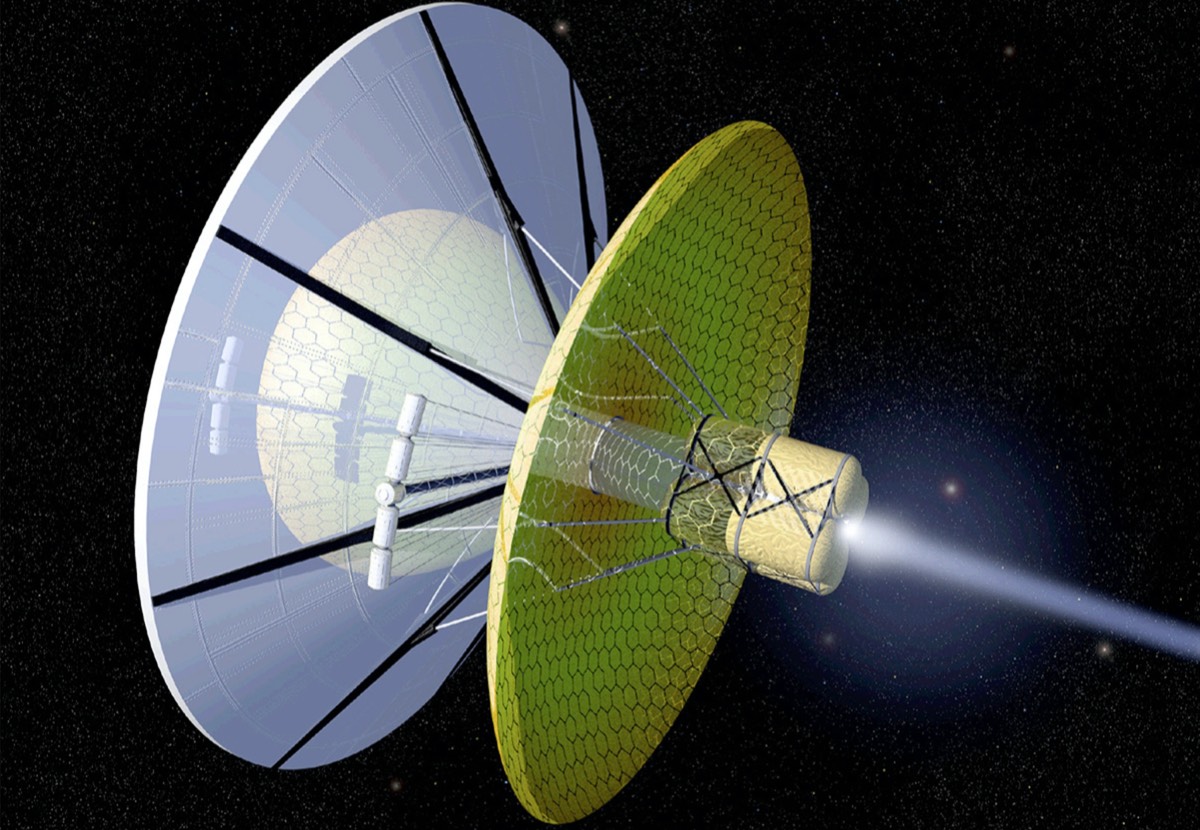
Artist's impression of the Ramjet propulsion system proposed in 1960 by physicist Robert W. Bussard
Enlarge / Artist’s impression of the Ramjet propulsion system proposed in 1960 by physicist Robert W. Bussard

In Poul Anderson’s 1970 novel Tau Zero, a starship crew seeks to travel to the star Beta Virginis in hopes of colonizing a new planet. The ship’s mode of propulsion was a so-called “Bussard ramjet,” an actual (though hypothetical) means of propulsion which had been proposed by physicist Robert W. Bussard just a decade earlier. Now, physicists have revisited this unusual mechanism for interstellar travel in a new paper published in the journal Acta Astronautica, and alas, they have found the ramjet wanting. It’s feasible from a pure physics standpoint, but the associated engineering challenges are currently insurmountable, the authors concluded.

A ramjet is basically a jet engine that “breathes” air. The best analog for the fundamental mechanism is that it exploits the engine’s forward motion to compress incoming air without the need for compressors, making ramjet engines lighter and simpler than their turbojet counterparts. A French inventor named Rene Lorin received a patent in 1913 for his concept of ramjet (aka, a flying stovepipe), although he failed to build a viable prototype. Two years later, Albert Fonó proposed a ramjet propulsion unit to increase the range of gun-launched projectiles and eventually was granted a German patent in 1932.

A basic ramjet has three components: an air intake, a combustor, and a nozzle. Hot exhaust from fuel combustion flows through the nozzle. The pressure of the combustion must be higher than the pressure at the exit of the nozzle in order to maintain a steady flow, which a ramjet engine achieves by “ramming” external air into the combustor with the forward speed of whatever vehicle is being powered by the engine. There is no need to carry oxygen on board. The downside is that ramjets can only produce thrust if the vehicle is already moving, so they require an assisted takeoff using rockets. As such, ramjets are most useful as a means of acceleration, such as for ramjet-powered missiles or for increasing the range of artillery shells.

Simple ramjet operation, with Mach numbers of flow shown.
Enlarge / Simple ramjet operation, with Mach numbers of flow shown.

Robert Bussard thought the concept might be modified as a means for interstellar propulsion. The basic premise outlined in his 1960 paper is to scoop up interstellar protons (ionized hydrogen) using enormous magnetic fields as a “ram scoop.” The protons would be compressed until they produced thermonuclear fusion, and magnetic fields would then divert that energy into rocket exhaust to produce thrust. The faster the ship traveled, the higher the proton flow, and the greater the thrust.

But then scientists discovered that there was a much lower density of hydrogen in the regions of space outside our solar system. That’s why, in a 1969 paper, John F. Fishback proposed a possible functional magnetic scoop field, taking into account such factors as radiation losses and the thermal distribution of the interstellar gas.

In particular, Fishback calculated what the cut-off speed would be. “The faster the ship, the higher the magnetic field lines that focus them into the fusion reactor,” the authors of this latest paper explained. “Stronger field induce higher mechanical stresses.” Fishback concluded that an interstellar ramjet could only constantly accelerate up to a certain threshold speed, at which point it would have to throttle back, lest the magnetic source reach a breaking point.

It’s Fishback’s solution that has been examined in this latest paper. “The idea is definitely worth investigating,” said co-author Peter Schattschneider, a science fiction author and physicist at the Vienna University of Technology (TU Wien). “In interstellar space there is highly diluted gas, mainly hydrogen—about one atom per cubic centimeter. If you were to collect the hydrogen in front of the spacecraft, like in a magnetic funnel, with the help of huge magnetic fields, you could use it to run a fusion reactor and accelerate the spacecraft.”

He and his co-author, Albert Jackson of Triton Systems in the US, relied on software developed at TU Wien for calculating electromagnetic fields in electron microscopy. Their calculations showed that Fishback’s proposal of magnetic scooping (or particle trapping) for a Bussard ramjet is physically feasible. Particle can indeed be collected by a magnetic field and guided into a fusion reactor, achieving acceleration up to relativistic speeds.

However, the authors also found that absurdly long magnetic coils would be needed for the funnel in order to achieve a thrust of 10 million newtons (twice the propulsion of the space shuttle). And that funnel would have to have a diameter of 4,000 kilometers. Hence, visiting the galactic center in a spacecraft powered with Bussard ramjet within a lifetime is unrealizable. In fact, “It is very unlikely that even Kardashev civilizations of type II might build magnetic ramjets with axial solenoids,” the authors concluded. (For reference, humans on Earth have yet to attain a Type I civilization.)

DOI: Acta Astronautica, 2021. 10.1016/j.actaastro.2021.10.039  (About DOIs).

https://arstechnica.com/?p=1821917


Konami looks to cash in on NFT mania with digital collectible collection

<img src="https://rassegna.lbit-solution.it/wp-content/uploads/2022/01/konami-looks-to-cash-in-on-nft-mania-with-digital-collectible-collection.png" alt="No, see, this copy of the image isn’t worth anything, because it’s not on signed on the blockchain…”>
Enlarge / No, see, this copy of the image isn’t worth anything, because it’s not on signed on the blockchain…


Konami became the latest gaming company to jump on the non-fungible token bandwagon Thursday with the announcement of the Konami Memorial NFT Collection. But rather than focusing on in-game cosmetics or supply-constrained virtual land as some other publishers have, Konami is simply offering a small set of NFT-backed artwork and music drawn from the Castlevania series in honor of its 35th anniversary.

Konami’s collection includes 14 individual NFTs representing five songs from the NES Castlevania games, six short videos showing off special item use in the first Castlevania, two pieces of hand-drawn promotional art from Circle of the Moon, and a unique piece of “Dracula’s Castle” pixel art inspired by the games. Each item in the collection is a “one of one” cryptographic signature that will be posted on the Ethereum blockchain after an OpenSea auction set to start on January 12. Those auctions have an effective reserve price of one “wrapped Ethereum,” or about $3,350 at today’s market value.

The NFTs will represent the associated digital collectible, whose “minting” is linked to Konami’s verified account to help establish provenance. Konami also promises that an “NFT with the exact same data will not be resold, but similar NFTs tied to the same game title may be resold in the future,” making them “unique” on the blockchain (even if the underlying images and sounds are endlessly copiable).

That said, the terms of use make it clear that “the purchaser will not, by purchasing the NFT, obtain intellectual property rights (e.g. copyrights, trademark rights) in relation to the data linked to the NFT. Thus, the purchaser may not use the data linked to the NFT (e.g. reproductions) for commercial purposes.” In other words, the digital trinkets themselves are just crypto-signed limited-edition representations of these digital works and don’t convey “ownership” of the actual work in any real sense.

Whoever wins the initial OpenSea auction for these items will also have their nickname listed on the Konami Memorial NFT website (after the company approves that nickname for appropriateness, of course). But that public listing is only guaranteed to last through the end of 2022, making it a bit less appealing than the initial ownership’s allegedly “eternal” life on the Ethereum ledger.

Despite the new collectible offering, Konami has continued to neglect the actual Castlevania game franchise in recent years. Since 2014’s Lords of Shadow 2, the only game in the series has been 2019’s Grimoire of Souls, a free-to-play mobile title that has now been reworked as an Apple Arcade exclusive.

It’s been done

If Konami’s efforts sound familiar, that might be because Atari (or the corporate entity bearing its name after decades of sales and turmoil) did something similar nine months ago, well before the current NFT mania had set in. That project raised over $110,000 in its first wave of limited-edition Centipede-themed NFTs—and even more as NFTs representing Pong and other Atari games rolled out after launch.

The post-launch life of those collectible investments has been mixed. None of the nine Centipede cartridge NFTs sold on OpenSea has been resold in the intervening months, for instance, but less limited Atari VCS cartridge NFTs continue to change hands on NFTHive, some at prices significantly above their initial offering.

Atari’s NFT selections also included one with an interesting bonus for the initial purchaser. The package offered a Centipede arcade cabinet NFT that included “a beautifully restored, and fully playable, original Centipede coin-op arcade machine” with “a unique augmented reality experience, unlockable only with the physical cabinet.” That NFT ended up selling for $12,250, and while the value of the NFT could go in any direction, the sentimental value of the cabinet is sure to persist.

https://arstechnica.com/?p=1824183


Meltdown prediction: Intellivision Amico doesn’t seem long for this world

A look at a very weird year for a retro-minded game console that may or may not exist by the end of 2022.
Enlarge / A look at a very weird year for a retro-minded game console that may or may not exist by the end of 2022.

Most of Ars’ end-of-2021 gaming coverage focused on the best stuff made during a bizarre year of delays and chip shortages. But there’s one other matter to wrap up before moving wholesale into 2022: my prediction for the biggest gaming product to not last past the end of this new year. Somehow, that prediction doesn’t involve NFTs.

When I first stumbled upon the Intellivision Amico in 2018, I was intrigued. This home-console concept looked like a unique entry into the resurgent “retro console” sector; it had an unusual touchscreen controller and designs on resurrecting Mattel’s classic Intellivision brand. Comparatively, companies like Nintendo had stopped manufacturing retro-friendly throwback consoles, leaving a gap in the market for a brand like Intellivision to potentially capitalize on.

Between recognizable licenses and a few decent games in its original sizzle reels, I wondered if this modest system might have a shot. (I was optimistic about many more things in 2018, of course.)

The more I looked at the Amico (the Italian word for “friend’), however, the more puzzled I became. The first major red flag came when its development portal was left unlocked for open view on the web. This early 2021 peek revealed less than $100 in combined parts per retail box, well below the system’s current $250 preorder price. Over 100 percent profit is unusual for a gaming console, as that device category often sells at a lower price to entice the longer tail of licensed game sales.

To its credit, the Amico is slated to come with six pack-in games, but the quality of those games, as revealed thus far, doesn’t appear to justify that cost gap. As a comparison point, Amico’s pack-in tally falls well short of the 24 games coming with the whimsical portable system Playdate, which retails for $70 less at $180.

Then there were the mounting delays. The system was once scheduled to launch in October 2020, only to fall back to April 2021—and again to October 2021. Months before last year’s originally scheduled launch, a vague delay to “December 2021” came with little assurance that the system was even being manufactured. Last month, Intellivision confirmed that the Amico wouldn’t land in any preorder customers’ hands until 2022.

Emigrating from the World of Tanks

Despite so many delays, however, Intellivision clearly had some kind of working hardware in the wild, as evidenced by brief, carefully edited videos captured at malls and family fun centers. Intellivision’s 2021 statements about delays routinely mentioned issues with parts shortages, yet those issues wouldn’t necessarily stop the company from demonstrating “final” software and OS menus at any point beyond the original 2019 launch window.

But the Amico’s “near-final” OS didn’t appear until the very end of 2021. As revealed, it could use some serious work; currently, it forces users to pick through icons of every game on sale, whether the title has been purchased or not. As for the games themselves, Amico demonstration videos so far have included glaring issues—including unlicensed art assets taken from Wargaming’s World of Tanks in one video (which, upon being exposed by critics, led to Intellivision editing and relisting the video twice) and copied-and-pasted text from Nintendo’s Star Fox series in another.

Additionally, the Amico games we’ve seen the most in the past year have a decidedly cheap “college project” vibe in both graphics and gameplay, like they were ripped from an average Flash gaming portal from the late 2000s. Curiously, the splashiest game snippets from the console’s earliest gameplay sizzle reels have yet to receive additional reveals or gameplay demonstrations, particularly the ones from known indie devs like Choice Provisions and Other Ocean.

https://arstechnica.com/?p=1823892


Sony confirms PlayStation VR2’s specs, first official game

It's not much to look at, but at least the name is official.
Enlarge / It’s not much to look at, but at least the name is official.

Sony’s trickle of information about its future in virtual reality continued on Tuesday with the surprise announcement of an unsurprising name: PlayStation VR2. Thankfully, the name comes with a dump of specs that confirm Sony’s aspirations to deliver one of the most robust VR systems yet on the consumer market.

The upcoming VR add-on, which will require a PlayStation 5 to function, is still missing crucial stats like a release date, a price, or even a photo of what the primary headset will look like. In some ways, it’s reminiscent the Meta Quest 2 (formerly Oculus Quest 2), as it includes a comparable pixel resolution (2,000 x 2,040 pixels per eye, or roughly 15.7 percent more than Quest 2’s per-eye count), a comparable field-of-view of 110 degrees, and a comparable “inside-out” array of cameras that will track a user’s space without requiring an external device like the original PSVR‘s webcam.

It’s thinking (and watching)

We previously knew that PSVR2 would require a hardwired connection to PlayStation 5 consoles, unlike the default wireless freedom of Quest 2. Today, however, Sony revealed two potentially huge differentiators over its VR headset competition: haptic feedback, and internal eye-tracking.

Neither of those features has been built directly into consumer-grade VR headsets prior to PSVR2, and the combination could be a major difference maker in the world of immersive gaming and entertainment. With haptic feedback, Sony’s announcement suggests that users might “feel a character’s elevated pulse during tense moments, the rush of objects passing close to the character’s head, or the thrust of a vehicle as the character speeds forward.” Eye tracking, meanwhile, is advertised primarily as a form of control, so that in-game elements like characters can respond directly to a user’s gaze.

But Sony also mentions the technical benefits that eye tracking can bring, as part of a system known as “foveated rendering.” With such a system in place, wherever a user’s pupil isn’t aimed, a VR system can dynamically add blur and reduce pixel count in a way that natural peripheral vision might not perceive. And with fewer pixels being rendered, VR software can run at the faster frame rates that the standard demands. Commercial VR headsets have very little in the way of formal foveated rendering systems, with only select HTC headsets employing the feature—and not in a way universally embraced by VR game developers. Having such an efficient standard on a popular platform like PlayStation, on the other hand, will likely accelerate its adoption.

And in a serious piece of good news for PSVR2’s potential screen quality, Sony confirmed that its new system will use an “HDR”-rated OLED panel, not fast-switching LCD. Most major modern VR headsets have skipped the pricier OLED standard for some time, but suffice it to say, OLED’s pure black levels and highly responsive pixels are a boon in VR—and are rated to refresh as quickly as 120 Hz inside of PSVR2.

[embedded content]
Horizon VR trailer

A good view of the VR Horizon

The only other truly new information in Tuesday’s announcement is a very brief game announcement for something dubbed Horizon VR: Call of the Mountain. This game appears to put VR players into the perspective of that series’ lead character Aloy while she explores a very Horizon-like forest full of oversized robots. But how exactly she’ll interact with that world in VR remains incredibly unclear, thanks to a teaser trailer that includes nothing in the way of hand movement, motion, or other VR-specific action.

In today’s announcement, Sony reconfirmed its plans for a totally overhauled pair of default controllers, now dubbed PlayStation VR2 Sense Controllers. Sony had already taken the wraps off these Quest-like controllers in March of last year, at which point the company confirmed they would include a lot of the fine-tuned rumbling found in PS5’s DualSense.

The Tuesday announcement follows a Saturday report from a Chinese outlet that suggests PSVR2’s production line would begin in the very near future as part of Sony’s plans to launch the VR system by the end of 2022. If such factory-based leaks persist, perhaps we’ll get a glance at the hardware before Sony wants us to see it—which would help us confirm whether it uses a brand-new “pancake” system of flatter lenses to reduce headset size and more closely resemble comfortable glasses.

This article has been updated since publication to clarify PSVR2’s formal announcement about foveated rendering.

https://arstechnica.com/?p=1823764


The hunt is on for a “new Eden” in Snowpiercer S3 trailer

[embedded content]
Sean Bean is back as Mr. Wilford in the third season of Snowpiercer.

We finally have a full trailer for the upcoming third season of Snowpiercer, and the power struggle between Layton (Daveed Diggs) and Mr. Wilford (Sean Bean) is heating up in earnest. There is also a glimmer of hope for humanity, as Melanie (Jennifer Connelly) managed to make a map to a rumored “new Eden” before presumably perishing in the harsh environment outside the train.

As I’ve written previously, Snowpiercer is TNT’s TV adaptation of the 2013 film of the same name, directed by Bong Joon-ho, about remnants of humanity trying to survive an ice age inside a 1,001-car train. The train is run by a reclusive transportation magnate named Mr. Wilford, who has separated the passengers according to class and has a nefarious plan to ensure life on the train remains sustainable. The TV series is set seven years after the climate catastrophe that produced the “Freeze.”

S1 ended on a cliffhanger twist: the re-appearance of Mr. Wilford (Sean Bean), along with Melanie’s presumed-dead daughter, Alex (Rowan Blanchard). S2 delved into the complicated relationships, political machinations, and shifting political loyalties that inevitably arose with Wilford’s unexpected return. Bean’s portrayal of Wilford gave the series the charismatic, larger-than-life (human) villain it needed to really raise the emotional stakes.

Sean Bean plays Mr. Wilford: "There's only one way. The way I do things."
Enlarge / Sean Bean plays Mr. Wilford: “There’s only one way. The way I do things.”
YouTube/TNT

Here’s where we left off in S2, per the official synopsis:

At the end of Snowpiercer S2, Layton and Ruth (Alison Wright), who were banished to Big Alice’s compost car, plotted to take back Snowpiercer. With the help of Javier (Roberto Urbina) and Alexandra, Layton and Ruth made it back to Snowpiercer and rallied with their supporters. Josie (Katie McGuinness) destroyed the Aquarium car, separating Snowpiercer’s head from the remaining 1,023 cars. S3 picks up with Layton and his inner circle commanding a small 10-car “pirate train” in search of Melanie and a possible warm location to restart civilization; while back on Snowpiercer, Mr. Wilford is consolidating power, awaiting Layton’s return.

The trailer opens with Layton’s voice over the train’s intercom, announcing that “for the first time since the world ended, a brighter future awaits beyond the train. There are places on the Earth that are warming.” We learn that Melanie sacrificed herself to make a map to what they’re calling “New Eden.” Layton offers the citizens of Snowpiercer a chance to weigh in on the ultimate destination and thus help determine their own future.

On the flip side, of course, is the charismatic authoritarian Mr. Wilford. “Hope is a slogan,” he tells the people on the train. “An empty promise. There’s only one way. The way I do things.” Granted, it’s not a pleasant way, particularly for those who displease or cross him—”Get back with Wilford, or dig a grave with Layton” isn’t exactly a comforting slogan. But he’s a known quantity in a world of uncertainty, and thus far it’s been enough to keep control of Snowpiercer.

Ever the idealist, Layton (Daveed Diggs) hopes he and Mr. Wilford can "settle this with honor."
Enlarge / Ever the idealist, Layton (Daveed Diggs) hopes he and Mr. Wilford can “settle this with honor.”
YouTube/TNT

It looks like Layton and his pirate train will eventually go back for the others, hoping to surprise Wilford, but as usual, he seems to be one step ahead and ready to do battle. And he’s unlikely to accept Layton’s offer to “settle this with honor.”

We get glimpses of Melanie, although it’s unclear whether she miraculously survived the events of S2 or whether these are flashbacks. There’s also a mysterious woman who appears amid the snow flurries. Her name is Asha, and she claims to be a survivor, despite not having been on board Snowpiercer for all those years. How did she manage to survive eight years outside the train? Is she really who she says she is? That’s a mystery that’s likely to fuel much of the narrative in S3.

Snowpiercer S3 debuts on TNT on January 24, 2022.

Listing image by YouTube/TNT

https://arstechnica.com/?p=1823375


“Digitally unwrapping” Amenhotep I’s mummy shows pharaoh died around age 35

Royal mummy of Amenhotep I, the second pharaoh of the 18th dynasty, at Cairo Museum, Egypt.
Enlarge / Royal mummy of Amenhotep I, the second pharaoh of the 18th dynasty, at Cairo Museum, Egypt.

Amenhotep I was an Egyptian pharaoh best known for building numerous temples and inspiring the formation of a funerary cult after his death. His mummy, first discovered in 1881, has never been opened because conservators were reluctant to damage something that had survived in such pristine condition. Now, scientists have succeeded in “virtually unwrapping” the mummy of Amenhotep I, providing us with our first look inside, according to a paper published last week in the journal Frontiers in Medicine.

In the process, the authors disproved their own hypothesis that those who restored the mummy sometime during the 21st dynasty (1069 to 945 BCE) did so in order to reuse the royal burial equipment for later pharaohs. Instead, Amenhotep I’s mummy seems to have been lovingly restored after being damaged by tomb robbers.

“This fact that Amenhotep I’s mummy had never been unwrapped in modern times gave us a unique opportunity: not just to study how he had originally been mummified and buried, but also how he had been treated and reburied twice, centuries after his death, by High Priests of Amun,” said Sahar Saleem of Cairo University, the radiologist of the Egyptian Mummy Project, who co-authored the paper with Zahi Hawass, former minister of antiquities of Egypt. “By digitally unwrapping the mummy and ‘peeling off’ its virtual layers—the facemask, the bandages, and the mummy itself—we could study this well-preserved pharaoh in unprecedented detail.”

This isn’t the first such digital unwrapping. As we reported in 2020, an interdisciplinary team of scientists digitally “unwrapped” three mummified animal specimens—a cat, bird, and snake—using high-resolution 3D X-ray imaging, essentially enabling them to conduct a virtual postmortem. Just last month, another team used an automated “virtual segmentation method” to more accurately visualize mummified Egyptian animals. And in 2019, we reported that German scientists used a combination of cutting-edge physics techniques to virtually “unfold” an ancient Egyptian papyrus. Their analysis revealed that a seemingly blank patch on the papyrus actually contained characters written in what had become “invisible ink” after centuries of exposure to light.

Little is known about Amenhotep I, who was the second ruler of the 18th dynasty. He succeeded his father, Ahmose I, despite having at least two older brothers who should have inherited the throne. Both presumed heirs, however, died before Ahmose I, making Amenhotep crown prince. He assumed the throne in 1526 BCE and was probably young enough at the time that his mother, Ahmose-Nefertiti, likely ruled as regent for a time. He married his older sister, Ahmose-Meritamun, as his Great Royal Wife (although it’s also possible she was his grandmother).

Historical engraving of the mummy of ancient Egyptian pharaoh Amenhotep I (1888).
Enlarge / Historical engraving of the mummy of ancient Egyptian pharaoh Amenhotep I (1888).
Bildagentur-online/Getty Images

During Amenhotep I’s reign, the Egyptian Book of the Dead may have been completed in its final form, and there is evidence that the first water clock was invented, too, although the oldest surviving such mechanism dates to the later reign of Amenhotep III. The pharaoh also built a number of temples, including his own mortuary temple and tomb, which he kept separate, presumably to safeguard his remains (and treasures) from looters. He died in 1506 BCE, with no living heirs, and was succeeded by Thutmose I. After his death, he was deified as a god.

Amenhotep I’s mummy was relocated sometime during the 20th or 21st dynasty, perhaps to protect it from looters. The exact location of Amenhotep I’s tomb still hasn’t been discovered, but his mummy was recovered in 1881 at a site called Deir el-Bahari in Luxor, along with several others. Initially, the mummy was kept at the Boulaq Museum before it was moved to a palace in Giza.

By 1902, all the mummies from Deir el-Bahari were transferred to the Egyptian Museum in Cairo. The Egyptologist in charge, Gaston Maspero, opted not to unwrap Amenhotep I’s mummy because the wrappings were still so perfectly preserved. Apparently, when the coffin was first opened, he found a preserved wasp inside, presumably drawn by the aroma of the garlands.

Egyptologists were reluctant to unwrap Amenhotep I's mummy because it was preserved in such pristine condition.
Enlarge / Egyptologists were reluctant to unwrap Amenhotep I’s mummy because it was preserved in such pristine condition.
S. Saleem and Z. Hawass

There have been two prior X-ray studies of Amenhotep I’s mummy. The first was done in 1932 by the Egyptian Museum in Cairo, and the resulting images were used to conclude that the pharaoh had been around 50 years old at the time of his death. This estimate was contradicted by a second set of X-rays taken in 1967; these pegged the age of death at around 25 years, based on the relatively good condition of the teeth. The 1967 images also revealed a beaded girdle, the right forearm flexed at the elbow and crossing the chest, and a broken left arm resting along the mummy’s flank.

According to Saleem and Hawass, the issue with conventional X-rays is that a 3D image is projected onto 2D film. This causes objects and bones to be superimposed, making the results difficult to interpret accurately—including the condition of the teeth. By contrast, CT imaging takes hundreds of thin slices of the body, and software then assembles those slides into more detailed images. This is why it has proven so popular for noninvasively imaging wrapped mummies.

https://arstechnica.com/?p=1821925