HBO Max rings in a raunchy new year with Peacemaker red band trailer
[embedded content]
Peacemaker explores the continuing story of the character that John Cena reprises from James Gunn’s 2021 film The Suicide Squad.
It’s a brand new year, and HBO Max has kicked it off with a shiny new red-band trailer for Peacemaker.
As we’ve reported previously, the eight-episode spinoff series is set after the events of Gunn’s 2021 filmm The Suicide Squad—specifically after the post-credits scene, in which we learned that Peacemaker had survived what had appeared to be a fatal shooting. The first teaser dropped in October, showing Peacemaker (aka Christopher Smith) being recruited by Clemson Murn (Chukwudi Iwuji) for another mission in order to avoid going back to prison.
Once again, he’s basically an assassin, but at least he’s only killing bad people (maybe). He gets assistance from warden John Economos (Steve Agee) of the Belle Reve penitentiary, NSA agent and former Waller aide Emilia Harcourt (Jennifer Holland), and new team member Leota Adebayo (Danielle Brooks). The cast also includes Robert Patrick (Terminator 2) as Peacemaker’s crusty father, Auggie Smith, who thinks his son is a “nancy-boy”; Freddie Stroma as Adrian Chase (aka Vigilante), a district attorney who fights crime and has rapid-healing abilities; and Nhut Le as Judomaster.
An extended teaser released in October was heavy on the cheesy, off-color bro-humor, but it showcased Cena’s gift for physical comedy, and the irreverent, over-the-top tone was note-perfect—very much in line with the character.
The full trailer, released last month, fleshed out the basic premise and gave us a Peacemaker who was a bit less mindlessly violent and more introspective after the Very Bad Events of The Suicide Squad. He had qualms about being ordered to kill women and children, for instance, and struggled to deal with long-suppressed daddy issues. (Among the standout lines: Peacemaker trying to have a heart-to-heart with his imprisoned father: “Maybe I’m a grower, not a shower. An individual you don’t and then you learn to like.”)
And now we have the red band trailer, which returns to R-rated zaniness. The trailer opens with Peacemaker making a special appearance at a local elementary school, bragging about how he defeated the world’s most dangerous villains “with only my two fists, my desert eagle, and two rocket launchers.” Oh, and also that one time he met Wonder Woman. (“She did spend an entire party eye-f—ing me from across the room.”) Hey, he’s trying, okay? It’s hard to strike the perfect balance between embodying the murderously efficient SOB his current mission needs, and being a decent human being capable of functioning in normal society.
Enlarge/ John Cena’s Peacemaker shows off his guns
YouTube/HBO Max
Harcourt is gonna be a harder sell than the schoolkids. “Just because you’re handsome doesn’t mean you’re not a piece of s–t,” she tells him after he says she can call him Chris. And because deep down he’s incredibly insecure, all he hears is that she thinks he’s handsome. There’s a lot of off-color hijinks and profane humor—Eagley gets a bit inappropriate with Economos, and Peacemaker seems just fine with Vigilante being tortured—and of course, there’s a fair amount of red-band worthy gore. The cast looks like they’re all having a great time, so this series is definitely on our watch-list for January.
The first three episodes of Peacemaker premiere on HBO Max on January 17, 2022. New episodes will air weekly every Thursday after that through February 17, 2022.
Listing image by YouTube/HBO Max
https://arstechnica.com/?p=1822998
Noblewoman’s tomb reveals new secrets of ancient Rome’s highly durable concrete
Enlarge/ The Tomb of Caecilia Metella is a mausoleum located just outside Rome at the three mile marker of the Via Appia.
Among the many popular tourist sites in Rome is an impressive 2000-year-old mausoleum along the Via Appia known as the Tomb of Caecilia Metella, a noblewoman who lived in the first century CE. Lord Byron was among those who marveled at the structure, even referencing it in his epic poem Childe Harold’s Pilgrimage (1812-1818). Now scientists have analyzed samples of the ancient concrete used to build the tomb, describing their findings in a paper published in October in the Journal of the American Ceramic Society.
“The construction of this very innovative and robust monument and landmark on the Via Appia Antica indicates that [Caecilia Metella] was held in high respect,” said co-author Marie Jackson, a geophysicist at the University of Utah. “And the concrete fabric 2,050 years later reflects a strong and resilient presence.”
Like today’s Portland cement (a basic ingredient of modern concrete), ancient Roman concrete was basically a mix of a semi-liquid mortar and aggregate. Portland cement is typically made by heating limestone and clay (as well as sandstone, ash, chalk, and iron) in a kiln. The resulting clinker is then ground into a fine powder, with just a touch of added gypsum—the better to achieve a smooth, flat surface. But the aggregate used to make Roman concrete was made up fist-size pieces of stone or bricks
In his treatise de Architectura (circa 30 CE), the Roman architect and engineer Vitruvius wrote about how to build concrete walls for funerary structures that could endure for a long time without falling into ruins. He recommended the walls be at least two feet thick, made of either “squared red stone or of brick or lava laid in courses.” The brick or volcanic rock aggregate should be bound with mortar comprised of hydrated lime and porous fragments of glass and crystals from volcanic eruptions (known as volcanic tephra).
Enlarge/ Portus Cosanus pier, Orbetello, Italy. A 2017 study found that the formation of crystals in the concrete used to build the sea walls helped prevent cracks from forming.
Jackson has been studying the unusual properties of ancient Roman concrete for many years. For instance, she and several colleagues have analyzed the mortar used in the concrete that makes up the Markets of Trajan, built between 100 and 110 CE (likely the world’s oldest shopping mall). They were particularly interested in the “glue” used in the material’s binding phase: a calcium-aluminum-silicate-hydrate (C-A-S-H), augmented with crystals of stratlingite. They found that the stratlingite crystals blocked the formation and spread of microcracks in the mortar, which could have led to larger fractures in the structures.
In 2017, Jackson co-authored a paper analyzing the concrete form the ruins of sea walls along Italy’s Mediterranean coast, which have stood for two millennia despite the harsh marine environment. The constant salt-water waves crashing against the walls would have long ago reduced modern concrete walls to rubble, but the Roman sea walls seem to have actually gotten stronger.
Jackson and her colleagues found that the secret to that longevity was a special recipe, involving a combination of rare crystals and a porous mineral. Specifically, exposure to sea water generated chemical reactions inside the concrete, causing aluminum tobermorite crystals to form out of phillipsite, a common mineral found in volcanic ash. The crystals bound to the rocks, once again preventing the formation and propagation of cracks that would have otherwise weakened the structures.
So naturally Jackson was intrigued by the Tomb of Caecilia Metella, widely considered to be one of the best-preserved monuments on the Appian Way. Jackson visited the tomb back in June 2006, when she took small samples of the mortar for analysis. Despite the day of her visit being quite warm, she recalled that once inside the sepulchral corridor, the air was very cool and moist. “The atmosphere was very tranquil, except for the fluttering of pigeons in the open center of the circular structure,” Jackson said.
Enlarge/ A plaque on the tomb reads “To Caecilia Metella, daughter of Quintus Creticus, [and wife] of Crassus”.
Carole Raddato/CC BY-SA 2.0
Almost nothing is known about Caecilia Metella, the noblewoman whose remains were once interred in the tomb, other than that she was the daughter of a Roman consul, Quintus Caecilius Metellus Creticus. She married Marcus Licinius Crassus, whose father (of the same name) was part of the First Triumvirate, along with Julius Caesar and Pompey the Great. It was likely her son—also named Marcus Licinius Crassus, because why make it easy for historians to keep track of the family genealogy?—who ordered the construction of the mausoleum, likely built sometimes between 30 and 10 BCE.
A marble sarcophagus housed in Palazzo Farnese is supposedly from the Tomb of Caecilia Metella, but it was probably not the noblewoman’s since it dates to between 180 and 190 CE. Besides, cremation was a more common burial custom at the time of the lady’s demise, and thus historians believe that the tomb’s cella probably once held a funerary urn, rather than some kind of sarcophagus.
It’s the structure of the the tomb itself that is of most interest to scientists like Jackson and her colleagues. The mausoleum is perched atop a hill. There is a cylindrical rotunda atop a square podium, with an attached castle to the rear that was built sometime in the 14th century. The exterior bears a plaque with the inscription, “To Caecilia Metella, daughter of Quintus Creticus [and wife] of Crassus.”
Enlarge/ Lava overlying volcanic tephra in the substructure of the tomb.
Marie Jackson
The foundation is built partly on tuff rock (volcanic ash that has been compacted under pressure) and lava rock from an ancient flow that once covered the area some 260,000 years ago. The podium and rotunda are both comprised of several layers of thick concrete, surrounded by travertine blocks as a frame while the concrete layers formed and hardened. The tower walls are 24 feet thick. Originally there would have been a conical earthen mound on top, but it was later replaced with medieval battlements.
To take a closer look at the tomb mortar’s microstructure, Jackson teamed up with MIT colleagues Linda Seymour and Admir Masic, as well as Lawrence Berkeley Lab’s Nobumichi Tamura. Tamura analyzed the samples at the Advanced Light Source, which helped them identify both the many different minerals contained in the samples and their orientation. The ALS beam line produces powerful x-ray beams about the size of a micron, which can penetrate through the entire thickness of the samples, per Tamura. The team also imaged the samples with scanning electron microscopy.
They discovered that the tomb’s mortar was similar to that used in the walls of the Markets of Trajan: volcanic tephra from the Pozzolane Rosse pyroclastic flow, binding together large chunks of brick and lava aggregate. However, the tephra used in the tomb’s mortar contained much more potassium-rich leucite. Over the centuries, rainwater and groundwater seeped through the tomb’s walls, which dissolved the leucite and released the potassium. This would be a disaster in modern concrete, producing micro-cracking and serious deterioration of the structure.
That obviously didn’t happen with the tomb. But why? Jackson et al. determined that the potassium in the mortar dissolved in turn and effectively reconfigured the C-A-S-H binding phase. Some parts remained intact even after over 2000 years, while other areas looked more wispy and showed some signs of splitting. In fact, the structure somewhat resembled that of nanocrystals.
Enlarge/ Scanning electron microscope image of the tomb mortar.
Marie Jackson
“It turns out that the interfacial zones in the ancient Roman concrete of the tomb of Caecilia Metella are constantly evolving through long-term remodeling,” said Masic. “These remodeling processes reinforce interfacial zones and potentially contribute to improved mechanical performance and resistance to failure of the ancient material.”
The more scientists learn about the precise combination of minerals and compounds used in Roman concrete, the closer we get to being able to reproduce those qualities in today’s concrete—such as finding an appropriate substitute (like coal fly ash) for the extremely rare volcanic rock the Romans used. This could reduce the energy emission of producing concrete by as much as 85 percent, and improve significantly on the lifespan of modern concrete structures.
“Focusing on designing modern concretes with constantly reinforcing interfacial zones might provide us with yet another strategy to improve the durability of modern construction materials,” said Masic. “Doing this through the integration of time-proven ‘Roman wisdom’ provides a sustainable strategy that could improve the longevity of our modern solutions by orders of magnitude.”
TV Technica 2021: Our favorite shows and binges helped us combat pandemic fatigue
Enlarge/ Ars staffers picked their favorite must-watch TV shows of 2021.
Aurich Lawson
Warning: Although we’ve done our best to avoid spoiling anything too major, please note this list includes a few specific references to You, Midnight Mass, Resident Alien, Post Mortem, Snowpiercer, Lupin, His Dark Materials, and Wellington Paranormal, among others.
Months of lockdown in 2020 meant fewer films but more quality TV content than ever before—much of it from streaming platforms rather than traditional broadcast television. Many of those shows were already in the pipeline, however. We feared the inevitable production shutdowns would result in fewer offerings for 2021, as the industry reckoned with rising production costs and the continued fallout from a pandemic that just keeps dragging on. And on.
Fortunately, while there were indeed some hiccups, we still had plenty of fantastic television on hand to take our minds off the grim daily reality, ranging from established franchises and quirky newcomers to imaginative adaptations and several foreign offerings that proved to be surprise breakout hits. With apologies to the many great series we just didn’t have room for on this year’s list, here are our favorite TV watches and binges for 2021, in no particular order:
<a href="https://rassegna.lbit-solution.it/wp-content/uploads/2021/12/tv-technica-2021-our-favorite-shows-and-binges-helped-us-combat-pandemic-fatigue-3.jpg" class="enlarge" data-height="793" data-width="1200" alt="Alan Tudyk stars as an alien who crash-lands on Earth and gets roped into solving murders, in Resident Alien.”><img alt="Alan Tudyk stars as an alien who crash-lands on Earth and gets roped into solving murders, in Resident Alien.” src=”https://rassegna.lbit-solution.it/wp-content/uploads/2021/12/tv-technica-2021-our-favorite-shows-and-binges-helped-us-combat-pandemic-fatigue-1.jpg” width=”640″ height=”423″ srcset=”https://rassegna.lbit-solution.it/wp-content/uploads/2021/12/tv-technica-2021-our-favorite-shows-and-binges-helped-us-combat-pandemic-fatigue-3.jpg 2x”>
Enlarge/ Alan Tudyk stars as an alien who crash-lands on Earth and gets roped into solving murders, in Resident Alien.
Resident Alien
Geekerati icon Alan Tudyk plays an alien (with an unpronounceable name) disguised as a small-town doctor, Harry Vanderspiegle, who gets roped into solving murders, in Resident Alien. He learned English by watching Law & Order, so at least he has some of the lingo down. The sci-fi dramedy is based on the Dark Horse comics created by Peter Hogan and Steve Parkhouse. Harry’s mission is to wipe out the human race for the good of the planet, but he finds himself wavering in his resolve the more time he spends in the small town of Patience, Colorado.
Harry is assisted by Asta Twelvetrees (Sara Tomko), who tutors him in basic social cues. He is tormented by a young boy name Max (Judah Prehn), the only person in town who can see Harry’s true form. (Harry’s attempts to kill Max to protect his alien identity are hilariously inept, and their mutual taunting eventually gives way to a grudging détente.) There’s also the highly insecure town sheriff, Mike (Corey Reynolds), who insists on being called Big Black, and his long-suffering deputy, Liv (Elizabeth Bowen), who is far more competent than Mike thinks. Local bar owner D’Arcy (Alice Wetterlund) is a former Olympic skier who returned home after a career-ending injury. She and the promiscuous Julia (Jenna Lamia), who owns the bowling alley, vie (in vain) for Harry’s romantic attentions.
Tudyk’s comic gifts are central to the show’s success, but he’s ably supported by the rest of the cast, and the writers clearly love these small-town characters and have done a terrific job of mining them for humor while developing deeper narrative arcs. Bonus points for surprise cameos by Nathan Fillion as the telepathic voice of an octopus in a restaurant tank who converses with Harry—it’s implied their respective species are closely related—and Linda Hamilton as General McCallister, who once saw a UFO as a child and has been hunting for proof that aliens exist ever since. Real-life ufologist Giorgio A. Tsoukalos, of Ancient Aliens fame (or meme-worthy infamy), also makes a brief appearance at a UFO convention in the S1 finale. Resident Alien is a comedic gem, and I can’t wait for S2.
Two seasons in, and Star Trek:Lower Decks still seems to be a love-it-or-hate-it proposition for people who were weaned on the ’90s Star Trek shows. Well, put me in the “love it” camp: of the four Trek shows currently airing, Lower Decks is easily my favorite.
Lower Decks succeeds because it knows its subject matter inside and out—it’s a reference-heavy commentary on the original shows, but it also understands why The Next Generation, Deep Space Nine, and Voyager all worked when they were firing on all cylinders. A typical episode of its more confident second season simultaneously parodies old Trek episodes while also just being solid-to-great episodes of Star Trek, and that makes it a refreshing break from the heavily serialized (and often exhausting) drama of Discovery and Picard.
<a href="https://rassegna.lbit-solution.it/wp-content/uploads/2021/12/tv-technica-2021-our-favorite-shows-and-binges-helped-us-combat-pandemic-fatigue-4.jpg" class="enlarge" data-height="793" data-width="1200" alt="Sean Bean played Mr. Wilford on the second season of Snowpiercer, giving the series a compelling villain.”><img alt="Sean Bean played Mr. Wilford on the second season of Snowpiercer, giving the series a compelling villain.” src=”https://rassegna.lbit-solution.it/wp-content/uploads/2021/12/tv-technica-2021-our-favorite-shows-and-binges-helped-us-combat-pandemic-fatigue-2.jpg” width=”640″ height=”423″ srcset=”https://rassegna.lbit-solution.it/wp-content/uploads/2021/12/tv-technica-2021-our-favorite-shows-and-binges-helped-us-combat-pandemic-fatigue-4.jpg 2x”>
Enlarge/ Sean Bean played Mr. Wilford on the second season of Snowpiercer, giving the series a compelling villain.
YouTube/TNT
Snowpiercer S2
Snowpiercer is TNT’s TV adaptation of the 2013 film of the same name, directed by Bong Joon-ho, about remnants of humanity trying to survive an ice age inside a 1,001-car train. The train is run by a reclusive transportation magnate named Mr. Wilford, who has separated the passengers according to class and has a nefarious plan to ensure life on the train remains sustainable. The TV series is set seven years after the climate catastrophe that produced the “Freeze.”
Daveed Diggs stars as Andre Layton, a prisoner at the tail end of the train who gets caught up in a revolutionary struggle against the imposed social hierarchy aboard Snowpiercer. Jennifer Connelly co-stars as first-class passenger Melanie Cavill, who is the Voice of the Train, responsible for daily public announcements and the train’s smooth operation (both mechanically and socially).
S1 was a bit of a slow burn but kicked into high gear for the final few episodes, ending on a cliffhanger twist: the re-appearance of Mr. Wilford (Sean Bean), along with Melanie’s presumed-dead daughter, Alex (Rowan Blanchard). Happily, the pacing issues have been resolved with S2.
Freed from the burden of building out an elaborate fictional world, showrunner Graeme Manson and his team of writers delved into the complicated relationships, political machinations, and shifting political loyalties that inevitably arose with Wilford’s unexpected return. Ultimately S2 belonged to Sean Bean, whose portrayal of Wilford gave the series the charismatic, larger-than-life (human) villain it needed to really raise the emotional stakes. He brings just the right mix of sadistic flamboyance and playful cruelty to the character—the proverbial match thrown into what was already a potentially explosive situation.
Ars Technica’s favorite films in 2021—whether projected or streamed
Aurich Lawson
When it comes to films in 2021, Ars Technica readers have been more likely to express their feelings about the logistics of seeing new offerings this year than about the films in question.
We get it. The past year-plus of world-shaking change has been a stern reminder that some stuff works just fine in our homes, which includes films—a fact that movie studios and massive theaters alike are uneasy about. Some companies embraced this reality for the entirety of 2021, committing to simul-launched films in theaters and on streaming platforms in the United States. Others toyed with the idea before backing off. Still others would rather not admit until at least 30 or 45 days after a film’s launch that you might have a masterfully calibrated 4K screen and spatial surround-sound system in your home, variants be damned.
Still, we get into such a tizzy because the films in question remain fascinating and exhilarating, no matter how, where, or when we watch them. At Ars, our critical eye continues drifting toward a substantial range of “nerd”-appropriate cinema. This year, the best stuff ranges from mainstream comic- and sci-fi-inspired blockbusters to meticulously designed cult/horror madness to documentaries that explore the dire consequences of travesties like pseudoscience or climate change.
We’re opting for an unranked list, with the exception of our “year’s best” vote at the very end so you might peruse a variety of genres and options and possibly add surprises to your eventual watchlist. As ever, we invite you to head to the comments and add your own suggestions for films released in 2021, whether you watched them in crowded, masked cineplexes or OLED-lined isolation chambers.
A monstrous monster option: Godzilla Vs. Kong
<a href="https://rassegna.lbit-solution.it/wp-content/uploads/2021/12/ars-technicas-favorite-films-in-2021-whether-projected-or-streamed-2.jpg" class="enlarge" data-height="450" data-width="948" alt="Everything I hoped for from a picture like this comes to fruition in Godzilla vs. Kong—and then some.”><img alt="Everything I hoped for from a picture like this comes to fruition in Godzilla vs. Kong—and then some.” src=”https://rassegna.lbit-solution.it/wp-content/uploads/2021/12/ars-technicas-favorite-films-in-2021-whether-projected-or-streamed-1.jpg” width=”640″ height=”304″ srcset=”https://rassegna.lbit-solution.it/wp-content/uploads/2021/12/ars-technicas-favorite-films-in-2021-whether-projected-or-streamed-2.jpg 2x”>
Enlarge/ Everything I hoped for from a picture like this comes to fruition in Godzilla vs. Kong—and then some.
Warner Bros.
As much as I enjoyed Godzilla Vs. Kong from the comfort of my living room, displayed on a nice television with a subwoofer cranked to near-max, its two hours had me craving a more collective, crowd-filled experience—perhaps more so than any film or TV series I’d seen during the peak of COVID’s lockdown. This film is a lot like its titular beasts: big, splashy, and sometimes quite dumb on the surface, yet full of animal-like cunning and the ability to land massive blows at crucial moments.
Special effects can’t be the only content in a silly monster movie, and thankfully, GvK‘s script walks a fine line between seriousness, heart, and outright cheese. The film’s logic is never outrageously bad—though at times it’s proudly paper-thin. Breaking into a disaster site full of the highest levels of corporate malfeasance? Just lick a screwdriver and jam it into the right plug. What about when a pre-teen girl sneaks past the highest-grade military security, meant to keep an eye on the murderous Kong, to go up to him and check on his feelings? GvK constantly waves its hand at these moments, since they whiz by so quickly, as if to say, “Don’t worry about that plot hole, poindexter.”
GvK‘s script and tone are paced nicely with action sequences that are the filmmaking version of a studio setting towers of money on fire—as lit by the blue-fire blasts coming out of Godzilla’s throat. Every pixel pumped into the film’s leading monsters is spent wisely. Whichever VFX house got this gig did a masterful job rendering the hairy, emotionally uncaged Kong within lush scenery—the shadows and ambient occlusion dance over his shaggy, unkempt frame. The same goes for the other monster in the film’s title, and I’m afraid I can’t say more than that for those of you who haven’t had the plot spoiled already.
GvK is big, dumb, and fun—but don’t be fooled. It takes serious filmmaking smarts to nail action and pacing like this.
It’s a Summer Film! is the best movie seemingly no one has seen (or is able to easily see) in 2021. It’s the kind of friends-on-an-adventure film I would’ve been obsessed with as a kid, yet it creates the same type of devotion for Adult Nathan because writer/director Sôshi Masumoto’s script so cleverly weaves in genre elements and the thematic hallmarks that the samurai film’s main character, Barefoot, is obsessed with.
Ostensibly, a group of three high school girls band together to make sure one of ‘em, the samurai-story devotee Barefoot, gets to make the script she’s been working on for the year-end student club festival. But It’s A Summer Film! offers surprise after surprise as the plot unfolds. This film delivers laughs, heartwarming moments, and new challenges in equal doses, and it features a handful of my favorite film moments in recent years. If I could find the film’s final samurai battle on YouTube, I might be watching it once a week this winter.
You will finish watching It’s A Summer Film! and just feel good, whether your favorite cinematic genre involves high schoolers, young romance, sci-fi and fantastical elements, or jokes anyone with an affinity for AV Club will enjoy. And within the current iteration of the film industry, that makes It’s A Summer Film! one of the easiest films to recommend. Society just needs some big US distributor, streaming or otherwise, to realize this.
Parallel universes with new twists: A Writer’s Odyssey
Based on a short story by Shuang Xuetao entitled To Kill a Novelist, A Writer’s Odyssey has a decidedly ambitious, very meta premise, shifting between parallel realms: the real world and a fictional fantasy world. Director Lu Yang is best known for the 2014 Chinese wuxia film Brotherhood of Blades and its 2017 sequel. Elements of the wuxia genre are woven into the fantasy portions of his latest film. But the other half is set in the present day.
In the film, novelist Kongwen Lu (Dong Zijian) is the author of a fantasy series following a heroic teenager, also named Kongwen. The fictional character is on a quest to confront Lord Redmane, under the guidance of a Black Armor (voiced by Guo Jingfei). But through a strange twist of fate, the fantasy world of the novel begins to impact life in the real world, leading grieving father Guan Ning (Lei Jiayin) to accept a mission from Tu Ling (Yang Mi) to kill the author.
The fantasy storyline in particular features some eye-popping visuals and special effects, which embolden its spectacular action sequences. The talented main cast gives terrific performances, and it’s impossible not to be moved by the dual quests of Ning and Kongwen, as the explanation for this mysterious linkage between the two worlds gradually becomes clear. The film is ultimately about dealing with tragic loss and the lingering grief that springs from it. With its sweeping epic scale, high-octane action, gorgeous cinematography, and high production values, A Writer’s Odyssey is very much in the big-budget vein of 2019’s The Wandering Earth.
Could we build a synthetic digestive system for Vision to make him more human?
<img src="https://rassegna.lbit-solution.it/wp-content/uploads/2021/12/could-we-build-a-synthetic-digestive-system-for-vision-to-make-him-more-human.jpg" alt="The birth of Vision in Avengers: Age of Ultron. Scientists have proposed a possible artificial digestive system for the synthezoid, although new technologies must be developed to make it a reality.”>
Enlarge/ The birth of Vision in Avengers: Age of Ultron. Scientists have proposed a possible artificial digestive system for the synthezoid, although new technologies must be developed to make it a reality.
Marvel Studios
There’s rarely time to write about every cool science-y story that comes our way. So this year, we’re once again running a special Twelve Days of Christmas series of posts, highlighting one science story that fell through the cracks in 2020, each day from December 25 through January 5. Today: How to build a synthetic digestive system for Marvel’s Vision. Bonus: assessing the health status of five Avengers to determine how their health will fare as they age.
The folks at Marvel Studios aren’t the only ones who like to imagine What If…? Inspired by Marvel’s Vision, two scientists reviewed the current state of soft robotics to determine whether it would be possible to build an artificial digestive system for the synthezoid, describing their work a paper published earlier this year in the journal Superhero Science + Technology. (It’s an open access journal published by TU Delft “that considers new research in the fields of science, technology, engineering and ethics motivated and presented using the superhero genre.”)
Hey, inquiring minds need to know! It’s not just a fun exercise in a more positive form of nerd-gassing, either. The authors note that humanity in general would benefit from advances in such systems, with applications in organ replacement and clinical treatments for patients with chronic digestive issues.
Not to be outdone, researchers at the University of Queensland in Brisbane, Australia, published a paper in the special Christmas issue of the British Medical Journal (BMJ), examining the personal traits and health behaviors of five of Marvel’s Avengers, in order to assess the challenges this extraordinary cohort might experience as they age. The BMJ’s Christmas issue is typically more light-hearted in nature, although the journal maintains that the papers published therein still “adhere to the same high standards of novelty, methodological rigour, reporting transparency, and readability as apply in the regular issue.”
Vision, as a synthezoid, notoriously does not eat. In Captain America: Civil War, for instance, he tries to make Wanda’s favorite dish, paprikash, pointing out that his culinary skills might not be up to snuff, since he has never consumed any kind of food. This point is re-iterated in the second episode of WandaVision. Instead of deriving energy from a metabolic process, Vision gets an almost endless supply of energy from the Mind Stone in his forehead.
But does the fact that Vision doesn’t eat mean he can’t? He would need an artificial digestive system to do so, per co-authors Falk J. Tauber (University of Freiberg) and Barry W. Fitzgerald (Eindhoven University of Technology). In the MCU, the synthezoid was created using Helen Cho’s regeneration cradle in 2015’s Avengers: Age of Ultron, out of vibranium and the artificial tissue Simulacra. Then the Mind Stone was placed in his forehead to power Vision’s artificial brain. There are no scenes in the Marvel films (or even the comic books) specifically revealing a digestive system.
But the regeneration cradle successfully gave Vision a brain, eyes, and a tongue, so the technology should also be capable of creating other organs—like an esophagus, stomach, intestines, and rectum, all essential elements of the human digestive system. The authors also note that Vision gets impaled in Avengers: Infinity War and experiences intense pain (but no blood loss). So Vision must have some kind of nervous system with pain receptors. But he may lack a circulatory system, which is crucial in the human body for distributing nutrients to cells.
<a href="https://rassegna.lbit-solution.it/wp-content/uploads/2021/12/could-we-build-a-synthetic-digestive-system-for-vision-to-make-him-more-human-4.jpg" class="enlarge" data-height="788" data-width="1200" alt="A scene from WandaVision, showing a disassembled Vision in a S.W.O.R.D. laboratory”><img alt="A scene from WandaVision, showing a disassembled Vision in a S.W.O.R.D. laboratory” src=”https://rassegna.lbit-solution.it/wp-content/uploads/2021/12/could-we-build-a-synthetic-digestive-system-for-vision-to-make-him-more-human-1.jpg” width=”640″ height=”420″ srcset=”https://rassegna.lbit-solution.it/wp-content/uploads/2021/12/could-we-build-a-synthetic-digestive-system-for-vision-to-make-him-more-human-4.jpg 2x”>
Enlarge/ A scene from WandaVision, showing a disassembled Vision in a S.W.O.R.D. laboratory
Marvel Studios
Lacking a regeneration chamber, Vibranium, or a Mind Stone, Tauber and Fitzgerald looked to the field of soft robotics for potential components of an artificial digestive system. For instance, a good candidate for an artificial esophagus is a soft robotic peristaltic pumping system (known by its acronym SBPP), developed by Tauber (then Esser) and several colleagues in 2017. A human esophagus (and intestines) move food along through the system via peristalsis: a series of circular muscular contractions that propagate along the tubular organs.
The SBPP’s pneumatic chambers are integrated into the tubular body of the inner conduit wall, per Tauber and Fitzgerald. So when those chambers expand, the inner diameter is reduced, much like a human esophagus (or intestines). So its possible to create an artificial peristaltic contraction wave that travels in one direction along the length of the soft robotic organ. Reversing the direction of those contractions would enable Vision to vomit up any food or liquid in case of, say, food poisoning.
Artificial stomachs have also been developed. The authors cite a human gastric simulator built in 2015 as one potential candidate, especially since it was designed to mimic and study digestion and the transport of food. The simulator consists of a cylindrical latex chamber with walls that can be contracted by rollers, mimicking the activity of the human stomach wall during digestion. Another artificial stomach (SoGut) uses an array of circular air chambers to generate contractions. Combining the two technologies “might not allow Vision to feel butterflies in his stomach, but would certainly allow Vision to process and chemically digest [food],” the authors wrote.
Illustrations of the inside of Vision’s body, redrawn from (left) 1985’s West Coast Avengers (#43) showing Vision disassembled, and (right) 2002’s Avengers Icons: The Vision #2, showing Vision’s innards as he phases through a fence.
Faulk . Tauber
Vision’s innards as depicted in 2013’s Age of Ultron #3, showing him torn in half.
Faulk . Tauber
Diagram of a possible artificial digestive system for Vision
Falk J. Tauber
For the intestines, it might be possible to stitch together several SBPP systems, although “the inner tubular geometry would need to be adapted to match the internal structure of the intestines,” per Tauber and Fitzgerald. Alternatively, one might use the Modular Endoscopy Simulation Apparatus (MESA) developed by Colorado University scientists for endoscopy training, which already has a fold-like inner tube geometry.
As for simulating the gut microbiome, organ-on-a-chip microfludic devices are capable of mimicking the conditions of the human digestive tract, “hosting living tissue and a microbial flora on non-living materials, which is essential for a functioning artificial intestinal wall,” the authors wrote. Finally, Vision would need an artificial rectum to dispel waste products. Once again, the SBPP could be used, this time as an artificial bowel outlet, since it can simulate the pressures needed for a functioning sphincter.
Those are just the most basic components; the human digestive system is extremely complex. One would need a micrifluidic network in the intestinal walls to ensure nutrient uptake and transport. This in turn would need to be connected to an artificial blood circulation system, which Vision currently seems to lack. What about digestive juices, or chemical and mechanical receptors and sensors, so Vision could experience hunger? It’s also not clear whether an artificial digestive system would provide sufficient energy for Vision’s basic bodily functions, never mind his superhero capabilities.
Even the soft robotic components described above are too large to fit inside Vision’s body, and would need to be miniaturized. So while we have a plausible blueprint for one day being able to build a fully functional artificial digestive system for Vision, we don’t have that capability just yet.
Enlarge/ He’s always angry, and that could lead to heart problems for the Hulk later in life.
Marvel Studios
Superhero health checks
Back in October, we reported on a tongue-in-cheek study of the health risks on display in all 25 James Bond films: namely, infectious agents during his global travels, covering everything from foodborne pathogens to ticks and mites, hangovers and dehydration from all those martinis, parasites, and unsafe sex. In the same spirit, a group of Australian researchers decided to examine the health benefits and risks of the Avengers. The underlying assumption is that all superheroes will age, with some exceptions—like Thor, an actual Norse god who has lived for millennia—and the factors that influence whether an ordinary human remains healthy as one ages apply to them as well.
Naturally, this required watching all 24 Marvel films released between 2008 and 2021, beginning with the original Iron Man and ending with Black Widow. Five specific Avengers were chosen for the study—Iron Man, Hulk, Black Widow, Black Panther, and Spider-Man—”because they are well-known, demonstrate notable characteristics, are reasonably diverse, and are representative of the broader superhero population, with regard to age, sex, ethnicity, and superpowers,” the authors wrote.
On the plus side, superheroes are known for regularly engaging in often strenuous physical activity and exercise, which are beneficial to healthy aging. Other positive attributes include psychological resilience, a sense of purpose, a “high degree of social cohesion and connectedness,” and a “positive or optimistic mindset.”
Only one of the five smokes or drinks (Tony Stark/Iron Man), and Black Panther is a vegetarian. Tony and T’Challa’s wealth, intelligence, and education are also beneficial factors. Factors working against our superheroes are exposure to loud noises (including interplanetary collisions and explosions), air pollution, and injuries sustained during all that strenuous crime-fighting activity.
Peter Parker/Spider-Man is the youngest of the five, and while being orphaned at a young age can cause physical and emotional issues, his nurturing relationship with Aunt May, and the positive male role models he found through the Avengers (especially Tony Stark) would mitigate that. He’s got spideriffic strength, flexibility, and agility, which reduces his risk of falling in old age. But staying up all night to fight crime in the neighborhood means he’s probably not getting enough sleep, which could have negative impacts as he ages.
Enlarge/ Spider-Man (Tom Holland), aka Peter Parker, has spider-related abilities that should help with healthy aging.
Marvel Studios
Natasha Romanoff/Black Widow was abandoned as a child and trained as an assassin and spy. A childhood filled with abuse, neglect, and constant conflict increases her risk of physical and mental ailments later in life. She was also forcibly sterilized at a young age, and hence could develop osteoporosis and cardiovascular disease, not to mention dementia and depression.
As for Bruce Banner/Hulk—well, he already arguably suffers from tachycardia (i.e., a heart rate of 200 beats per minute) every time he gets so enraged he transforms into the Big Green Guy, so he’s vulnerable to cardiac arrhythmias. This increase his risk of stroke and dementia—especially since, by his own admission, “I’m always angry.”
The authors also note Hulk’s high body mass index (BMI) of around 120, which puts him in the “obese” range. (BMI is defined as the weight in kilograms divided by the square of the height in meters.) But we feel obliged to point out that BMI is widely recognized as a flawed, imperfect metric for assessing future health outcomes. And the big, bulging, muscles that let Hulk SMASH so effectively aren’t the same as carrying a lot of excess fat.
Riot Games to pay $100 million to settle gender discrimination lawsuit
Chris Delmas | Getty Images
Riot Games has settled a class-action lawsuit for $100 million. Filed in 2018 by two female employees and later certified as a class-action, the lawsuit accused the studio of discrimination, sexual harassment, and unequal pay.
Under the terms of the settlement, Riot Games will pay $80 million directly to women who have worked at the company from November 2014 through to the present, including full-time, part-time, and temporary employees. The remaining $20 million will go to attorneys’ fees.
In addition to the $100 million payout, Riot Games will enact workplace policy reforms. These include the creation of an application pipeline for current or former contractors to apply for permanent positions and more transparency regarding salaries for job applicants.
“Three years ago, Riot was at the heart of what became a reckoning in our industry. We had to face the fact that despite our best intentions, we hadn’t always lived up to our values. As a company we stood at a crossroads; we could deny the shortcomings of our culture, or we could apologize, correct course, and build a better Riot,” the company said in a statement posted Monday. “We chose the latter. We’re incredibly grateful to every Rioter who has worked to create a culture where inclusivity is the norm, where we’re deeply committed to fairness and equality, and where embracing diversity fuels creativity and innovation..”
The lawsuit accused Riot of putting women in lower-paying roles, paying women less than men for comparable work, regularly promoting men over women, and creating an office environment that exposed women employees to “discrimination, harassment, and retaliation.”
Riot negotiated a $10 million settlement with the claimants in 2018, but the California Department of Fair Employment and Housing blocked the agreement. The DFEH said instead that women employees may be entitled to over $400 million in damages covering wage differential alone.
“This historic agreement reflects California’s commitment to strategic and effective government enforcement of the State’s robust equal-pay, anti-discrimination, and anti-harassment laws,” said DFEH Director Kevin Kish in a statement. “If entered by the court, this decree will compensate employees and contractors affected by sex discrimination and harassment, ensure lasting change in this workplace, and send the message that all industries in California, including the gaming industry, must provide equal pay and workplaces free from discrimination and harassment.”
https://arstechnica.com/?p=1822568
Sparks fly between Caped Crusader and Catwoman in latest The Batman trailer
[embedded content]
Robert Pattinson stars in the dual role of Gotham City’s vigilante detective and his alter ego, reclusive billionaire Bruce Wayne, in The Batman.
Bruce Wayne (Robert Pattinson), aka Batman, must grapple with a taunting serial killer and his family’s potential links to long-standing corruption in Gotham City in the latest trailer for The Batman. But he’s still got time for some heavily flirtatious fisticuffs with Selina Kyle/Catwoman (Zoë Kravitz), which should delight “Bat/Cat” shippers everywhere. The studio has helpfully titled the trailer “The Bat and the Cat,” lest anyone miss the intended focus.
As I’ve written previously, the original plan was to set the film within the DCEU, after the events of Justice League. But as Warner Bros. was rethinking the shared-universe model for its superhero films in favor of standalone films and franchises, Ben Affleck announced he was stepping down as director, and the studio replaced him with Matt Reeves. Affleck would eventually withdraw from the project altogether, following his divorce from Jennifer Garner and a stint in rehab for alcohol abuse.
Reeves said that the plot would follow a series of murders, revealing the history of corruption in Gotham and how Bruce’s family is linked to that corruption. The classic bad guys—the Riddler, Penguin, Catwoman—are also in the early stages of their development into full-fledged villains. Reeves has cited Alfred Hitchcock as a major influence on the overall look and feel of his film, as well asChinatown, The French Connection, and Taxi Driver.
In addition to Pattinson and Kravitz, the cast includes Jeffrey Wright (Westworld) as Commissioner Jim Gordon; Colin Farrell (Fantastic Beasts and Where to Find Them) as Oswald Cobblepot/Penguin; Andy Serkis (The Lord of the Ringstrilogy) as Bruce Wayne’s butler and mentor, Alfred Pennyworth; John Turturro (Barton Fink, The Big Lebowski) as crime boss Carmine Falcone; Paul Dano (Okja, 12 Years a Slave) as Edward Nashton/Riddler; and Peter Sarsgaard (Dopesick) as Gotham DA Gil Colson.
Enlarge/ Sparks fly between The Batman (Robert Pattinson) and Selina Kyle/Catwoman (Zoë Kravitz)
YouTube/Warner Bros.
Per the official synopsis:
Two years of stalking the streets as the Batman, striking fear into the hearts of criminals, has led Bruce Wayne deep into the shadows of Gotham City. “With only a few trusted allies — Alfred Pennyworth, Lt. James Gordon — amongst the city’s corrupt network of officials and high-profile figures, the lone vigilante has established himself as the sole embodiment of vengeance amongst his fellow citizens.
The first teaser dropped during last year’s DC FanDome, and the Warner Bros. CinemaCon panel this past August featured a brief sizzle reel of new footage. A full trailer dropped in October, in which we got a bit more footage of Batman beating up street goons, some serious sparkage with Selina/Catwoman, a fiery confrontation with Oswald Cobblepot, and our first brief glimpse of the Riddlers.
<a href="https://rassegna.lbit-solution.it/wp-content/uploads/2021/12/sparks-fly-between-caped-crusader-and-catwoman-in-latest-the-batman-trailer-3.jpg" class="enlarge" data-height="797" data-width="1200" alt="Director Matt Reeves wanted to a bring a noir aspect to his Batman. Here, he seems to be channeling Se7en“><img alt="Director Matt Reeves wanted to a bring a noir aspect to his Batman. Here, he seems to be channeling Se7en” src=”https://rassegna.lbit-solution.it/wp-content/uploads/2021/12/sparks-fly-between-caped-crusader-and-catwoman-in-latest-the-batman-trailer-1.jpg” width=”640″ height=”425″ srcset=”https://rassegna.lbit-solution.it/wp-content/uploads/2021/12/sparks-fly-between-caped-crusader-and-catwoman-in-latest-the-batman-trailer-3.jpg 2x”>
Enlarge/ Director Matt Reeves wanted to a bring a noir aspect to his Batman. Here, he seems to be channeling Se7en
YouTube/Warner Bros.
This latest trailer opens with some of the action footage we’ve previously seen, interspersed with Pattinson in his buttoned-down Bruce Wayne persona. He’s approached by Bella Reál (Jayme Lawson), a mayoral candidate for Gotham City, who seems to be targeting him as a potential donor. “You know, you really could be doing more for this city,” she tells him, laying the guilt trip on thick, as we see scenes of his nocturnal crime-fighting adventures flash by. “Your family has a history of philanthropy but as far as I can tell you’re not doing anything.”
Bruce/Batman has other things to worry about, namely a killer that keeps leaving cryptic messages for him. It’s the Riddler, who wants Batman to “unmask the truth about this cesspool we call a city.” That includes the Wayne family’s legacy. Bruce also encounters Selina Kyle, who seems to have a lot of cats (“I have a thing about strays”). Soon Batman and Catwoman are trading blows and sexually charged quips. “The Bat and the Cat—it’s got a nice ring,” Catwoman says in one clinch.
The Batman hits theaters on March 4, 2022.
Listing image by YouTube/Warner Bros.
https://arstechnica.com/?p=1822529
First, do no harm: An argument for a radical new paradigm for treating addiction
<img src="https://rassegna.lbit-solution.it/wp-content/uploads/2021/12/first-do-no-harm-an-argument-for-a-radical-new-paradigm-for-treating-addiction.jpg" alt="A call for radical empathy: In her 2021 book, Undoing Drugs: The Untold Story of Harm Reduction and the Future of Addiction, Maia Szalavitz argues for adopting the controversial practice of harm reduction when treating addiction.”>
Enlarge/ A call for radical empathy: In her 2021 book, Undoing Drugs: The Untold Story of Harm Reduction and the Future of Addiction, Maia Szalavitz argues for adopting the controversial practice of harm reduction when treating addiction.
iStock / Getty Image
There’s rarely time to write about every cool science-y story that comes our way. So this year, we’re once again running a special Twelve Days of Christmas series of posts, highlighting one science story that fell through the cracks in 2020, each day from December 25 through January 5. Today: why we should replace the punitive approach of the “war on drugs” with a radical new paradigm for treating addiction.
In 1986, Maia Szalavitz was a heroin addict in New York City, weighing a scant 80 pounds and shooting up as often as 40 times a day. She had just discovered the heady mixture of cocaine and heroin known as speedballs, and had no intention of quitting, even though HIV was spreading rapidly through the community thanks to the practice of sharing dirty needles. But a chance encounter in an East Village apartment likely saved her life.
A woman visiting from California taught Szalavitz how to protect herself by running bleach through a shared syringe at least twice, then rinsing twice with water, as well as washing the injection point. It was Szalavitz’s first encounter with so-called “harm reduction,” an approach to treating addiction that emphasizes ways to minimize the risks and negative consequences associated with substance abuse—not just the risk of addiction and disease, but also social stigma, poverty, and imprisonment. Needle exchange programs, for instance, supply free clean syringes to addicts, thereby reducing the spread of HIV.
Last year, Szalavitz finally tracked down the woman who saved her life in 1986, and was able to thank her personally. “Ours was a story of how change happens, and how even the smallest things we do can sometimes make a tremendous difference,” Szalavitz writes in Undoing Drugs. “This also brought to mind the wisdom of the Talmud, which says that saving one life is equivalent to saving the entire world. These ideas are at the very heart of harm reduction, which takes the perspective that every life is worth saving.”
Ars sat down with Szalavitz to learn more.
Enlarge/ Needle exchange programs were one of the first harm reduction strategies to gain support.
Robert Nickelsberg/Getty Images
Ars Technica: In your prior book, Unbroken Brain (2017), you advocated for a different view of addiction. We tend to either take the view that it’s morally bad and addicts are weak, or it’s a disease and addicts are broken in some way. You champion viewing addiction as a learning disorder. Can you explain a bit more about that?
Maia Szalavitz: I see addiction as a learning and developmental disorder. There’s a lot of evidence that supports this perspective because it tends to come on at a specific time in brain development: adolescence and young adulthood. Ninety percent of all addictions start in the teens and 20s. That doesn’t mean that you don’t see it developing in older people. It’s just much more rare.
Addiction requires learning because if you do not learn that this drug does something for you, you cannot find it and crave it. It requires you to learn that this fixes something for you. And that learning process is very similar to the one that you experience when you fall in love with someone, for instance, or when new parents fall in love with their baby. It completely shifts your priorities. Addiction changes your priorities in ways that may end up compelling you to do things that you wouldn’t ordinarily do.
Ars Technica: The traditional focus in the “war on drugs” has been on disrupting supply lines and reducing demand by discouraging use. Why has this approach been such a colossal failure?
Maia Szalavitz: Teenaged brains are wired to take new risks and to try to push away from their family because otherwise they would never get out of the nest. If you tell them, “Don’t do this.” they are quite likely to do it. So, the most sensible approach is to say, “Okay, we really don’t want you to do this. But if you’re going to do it, let’s make sure it doesn’t kill you.”
Scaring kids off of drugs doesn’t work. The reality is that, if you are a kid who is traumatized or beginning to develop a mental illness like depression, or who just cannot connect for whatever reason, drugs do help that. We don’t want to admit that. People don’t understand what’s actually going on when people take drugs. They think it’s only rebellion and it just needs to be crushed. Or it’s hedonism that also just needs to be crushed.
It just doesn’t work that way. The people who end up getting addicted are people who have something that is preventing them from being emotionally comfortable in their own skin. At least at first, drugs work for that. When you find something that at last makes you feel okay and warm and safe and comforted, that is going to be very attractive.
I’ve asked people about their experience of opioids in the medical system who admitted, “You know what, I had Oxycontin for some surgery and it was the best thing ever. And I knew I wouldn’t touch it again because I didn’t want to lose my job or my marriage or my kids.” They think they’re the only person that had that experience, the only one who was ever able to resist that irresistible euphoria. In fact, that is the most common experience. It’s not the case that this intense drug pleasure is irresistible to everybody. It’s irresistible when you have no alternative, when the rest of your life is dark.
It’s hard for people to understand that. And so addiction is defined as compulsive drug use despite negative consequences. We spent the last 100 years trying to use negative consequences to fix something that’s defined by its resistance to them. It’s time for something else. That’s where harm reduction comes in. Once reducing harm becomes the goal, you realize, we’re doing harm and it’s not actually helping. And you have a very strong moral weapon against prohibitionists, because their greatest goal is stopping the evil drugs. Your greatest goal is saving lives.
Ars Technica: There seems to be a strong belief in our culture that people must suffer consequences for any behavior that is seen as outside the norm. So your notion of what you call “radical empathy” is something that is quite foreign to many people.
Maia Szalavitz: People with addiction are often homeless, rejected and marginalized. Many have pre-existing mental issues. Nobody wants to see them. So when somebody approaches them with love and no judgment and says, “Hey, I don’t care if you’re using drugs, I just want you to stay alive”—that changes everything. When people feel valued, they might value themselves more.
Ssmetimes they find out that drugs are getting in the way of that and they stop the drugs. Sometimes they cut back, and sometimes they are so traumatized they still can’t get out of it. But at least they’re not dying. To me, it’s a spiritual thing. I don’t generally categorize my experience that way, but harm reduction is so different from the way people with addiction are typically treated: “You’ve got to hit bottom,” or “we’ve got to break your personality down in order to fix you.” Harm reduction is the antidote to that.
There are programs where they prescribe heroin to addicts. I mean, it’s free heroin. You’d think those people would never get into recovery because they’re getting exactly what they want. The reality is, when you get free heroin and you’re not chasing, chasing, chasing the next fix, and you don’t have all of that drama, your life suddenly has this massive hole. That’s where recovery can come in, because you actually get bored. People with especially traumatic histories might have to be on drugs for a while and learn ways of dealing with their trauma before they’re capable of stopping the drugs.
Nothing’s perfect. Nothing will work every time. This is why it’s called harm reduction. We want people to change in a flash. That makes for great TV, but that is not how most people change. If you do meet addicts where they are, if you do listen to them and hear their concerns, that’s the only way you’re going to be able to affect them. How do we try to change people who have heart disease or diabetes and need to change their diet? We certainly don’t put them in jail for having high blood sugar.
<a href="https://rassegna.lbit-solution.it/wp-content/uploads/2021/12/first-do-no-harm-an-argument-for-a-radical-new-paradigm-for-treating-addiction-7.jpg" class="enlarge" data-height="797" data-width="1200" alt="Maia Szalavitz is the author of Undoing Drugs“><img alt="Maia Szalavitz is the author of Undoing Drugs” src=”https://rassegna.lbit-solution.it/wp-content/uploads/2021/12/first-do-no-harm-an-argument-for-a-radical-new-paradigm-for-treating-addiction-3.jpg” width=”640″ height=”425″ srcset=”https://rassegna.lbit-solution.it/wp-content/uploads/2021/12/first-do-no-harm-an-argument-for-a-radical-new-paradigm-for-treating-addiction-7.jpg 2x”>
Enlarge/ Maia Szalavitz is the author of Undoing Drugs
Hachette Books/Maia Szalavitz
Ars Technica:. The difficulty is that radical empathy runs counter to the worst of human nature.
Maia Szalavitz: Absolutely. I feel radical empathy is the heart of all religions, in the true sense of actually practicing it. I’m Jewish, but when you see harm reduction in action, it is about as Christ-like as you could imagine. You’re providing something to somebody with no hope of them paying you back for it—no hope of anything other than helping that person.
Harm reduction focuses on trying to practice that. Maybe we can, for this one person, help them avoid an overdose, or provide them with medication when they’re incarcerated. The long term goal is to move beyond that. But we can do something to save these lives now. Every time I talk to people who are actively addicted I realize, these are human beings who have something to give. Every single one of them. And we just throw them away.
Ars Technica: I want to talk a little bit about the distinction between helping and enabling, because this is something that many people struggle with when dealing with addicted loved ones.
Maia Szalavitz: My feeling is that we should get rid of the word enabling. The concept of enabling comes from the idea that addiction is cured by hitting bottom. So if you enable an addict, you’re preventing them from hitting bottom and therefore preventing them from recovering. However, for many people the concept of hitting bottom is ridiculous, because every time you relapse, you hit a new bottom. It’s a narrative device, it’s not scientific. Instead, what you want to do is help the person to stay alive until they can hopefully find their way as best they’re able.
For friends or family members, you have to figure out what you’re comfortable with doing. But don’t just think, “Everybody says I should just throw them in the street and then they’ll get better.” They might get better or they might die. If you want to throw somebody out of your house because they are stealing from you or harming your children, or you can’t deal with their active addiction, that’s fine. It’s totally okay not to let somebody abuse you. But do that for you. Don’t do it for them.
Enlarge/ Artist and harm reduction activist Nan Goldin at a demonstration in White Plains, NY.
Erik McGregor/LightRocket/Getty Images
Ars Technica: The US is currently in the midst of an “opioid epidemic” in which increased prescription of opioid medications led to their widespread misuse. I know you have strong opinions on how US public health policymakers have handled the crisis.
Maia Szalavitz: Eighty percent of people who develop problems with prescription opioids did not have a prescription for the first opioid they misused. They got into someone’s leftovers. This is a sign of how non-addictive opioids generally are: between 40 percent to 60 percent of people who are prescribed opioids end up with leftovers. We had an overprescribing issue where the people who were getting addicted were not the patients. They were the friends and relatives of the patients. There were also people who would fake pain to get prescriptions, and there were pill mills. So what did we do? We decided to monitor all prescriptions and start cutting doses, and cutting people off.
It’s happening to hundreds of thousands of people. Doctors are being told, “You can’t prescribe over X amount and if you do, law enforcement’s going to be on you.” There’s even a reduction in opioid prescriptions for patients with terminal cancer. How does that make any sense? Denying people who have gotten benefit from opioids access to the medication that is often the only thing that works for them, does not help anybody. It is more likely to make that person commit suicide or turn to a street drug than it is to help them. We’ve forgotten everything we know about how to use these medications effectively.
Ars Technica: So what is the solution?
Maia Szalavitz: The solution is complicated. One, stop cutting people off of pain medications even if you think they’re addicted. It should be legal for doctors to maintain people’s prescriptions if only to avoid forcing them to resort to street drugs. Just cutting them off doesn’t “cure” the addiction. Two, stop locking them up, which is also killing them. And three, figure out ways to provide a safe supply without marketing it.
Ideally, we would fund treatment that is user-friendly and welcoming and evidence-based, and that recognizes that addiction is a highly individualized, complex thing. If I come in and my problem is depression and loneliness, and I’m using drugs to self-medicate that, we need to find a way out of that that will give me a new sense of meaning and purpose and comfort in life. That’s going to be different for different people; what helps you, I might hate.
We need to re-humanize the whole system. I’m actually hopeful about this, because two-thirds of the public now supports decriminalization of possession. You couldn’t have imagined that in the 1990s. I have seen harm reduction go from being championed by two people in Liverpool, to being an international movement that is making inroads against prohibition. There is still a fight over needle exchange programs, but now the CDC is saying that states should have them, rather than the federal government saying, “We’re going to ban funding on that because it sends the wrong message.” And I am very hopeful about medical students and young doctors who’ve really grasped the idea of harm reduction and are trying to change systems to adopt it.
https://arstechnica.com/?p=1784718
Ars Technica’s top 20 video games of 2021
In the world of video games, 2021 may forever be remembered as the year of COVID’s great reckoning. 2020 was already rough, but many of its biggest games were mostly completed in a normal development cycle. Projects slated for the following year weren’t as lucky.
Thus, this year’s gaming news was rich with delays, piping-hot launches, unfinished messes, and game publishers scrambling to fill their schedules with undercooked backup plans. And that says nothing about gamers themselves, wondering if crucial chips and parts might ever be plentiful enough again so they can buy the latest in console and PC gear.
Yet against all odds, fantastic games still crossed 2021’s finish line, ranging from big-budget behemoths to surprising indies. This year, in an effort to reduce ranking-based ire and celebrate every game on our list, we’re removing numbered rankings, with the exception of crowning a formal Ars Technica pick for Best Video Game of 2021 at the list’s very end.
This alphabetical-order list includes everything from breathless praise to caveat-filled considerations, but each game’s ability to crack this 20-strong list is, in our opinion, indication enough that each game merits a second look.
Ars Technica may earn compensation for sales from links on this post through affiliate programs.
Enlarge/ Setting xenos on fire is my new favorite way to pass the time.
If you’re a regular Ars reader with a decently powerful PC or game console and hot opinions about the convergence of Ridley Scott, HR Giger, and Dan O’Bannon, you’ll likely find something to love about the first truly fun co-op game in the Aliens universe. Fireteam Elite keeps it simple: you and two friends use gadgets and big guns to take out waves of even bigger foes, mostly in the form of xenos but eventually with Working Joes in the mix.
How does such a simple pitch compete with dozens of other co-op shooters on consoles and PC? AFE lands on this year-end list not because of refreshing new ideas but because of solid execution. Cold Iron Studios strikes a careful balance between twisty battle-arena design, compelling enemy patterns, interesting co-op strategy options, and variable combat pacing, while stringing together a lengthy, varied campaign with increasingly dire stakes that (shocker) Weyland-Yutani has made a mess of. During each campaign mission, momentum rises and falls in a way that perfectly befits leaving your mic on and catching up with your squadmates between intense firefights, while class-specific perks and weapons force teammates to keep tabs on each other and interact meaningfully.
The latter quality stands in stark contrast to the lonely feeling I get in Back 4 Blood, a 2021 co-op combat candidate that struggles to catalyze collaboration between squadmates. I need more reasons to interact with online gaming teammates in 2021, not fewer. AFE gets this right in a nicely executed package, even if its difficulty spikes will likely push your squad to die-and-retry extremes.
—Sam Machkovech, Tech Culture Editor
<a href="https://cdn.arstechnica.net/wp-content/uploads/2021/09/Cruisn-Blast-Screenshot-4.jpg" class="enlarge" data-height="720" data-width="1280" alt="Flipping past a technicolor dinosaur in a shiny, blue sports car: that's the Cruis’n Blast lifestyle at work.”><img alt="Flipping past a technicolor dinosaur in a shiny, blue sports car: that's the Cruis’n Blast lifestyle at work.” src=”https://rassegna.lbit-solution.it/wp-content/uploads/2021/12/ars-technicas-top-20-video-games-of-2021-1.jpg” width=”980″ height=”551″>
Enlarge/ Flipping past a technicolor dinosaur in a shiny, blue sports car: that’s the Cruis’n Blast lifestyle at work.
Many racing games have crises of identity; they commit to neither realism nor ridiculousness and wind up nowhere. This is not the case with Cruis’n Blast, which embraces the loud, garish, and playful spirit of the arcade to its fullest. This makes sense: the game was originally developed as an arcade exclusive in 2017 before being ported to the Switch this past September.
Cruis’n Blast is purely devoted to speed. You never have to take your finger off the accelerator once you’ve pressed the gas. When you hit a wall, you don’t stop; your car simply does a 360-degree spin and keeps pushing onward. There is no mini-map in the bottom corner, because even when you’re turning, the only direction you go is forward. This is a game where you can still zoom straight at 145 miles per hour while drifting and angling your car sideways. It’s all lovingly absurd: you can drive a tank or hammerhead shark and race through dinosaur-ridden jungles or UFO-invaded cities. You can drift and pop wheelies in a stealth chopper (complete with accompanying car engine noises). You can do a barrel roll.
There’s no online multiplayer—though there is split-screen for up to four players, which Ars appreciates—and plenty of other racing games have more cars and tracks. (Forza Horizon 5, which nearly made our 2021 list, is a better bet on that front.) Each race is more of a ride than a competition: the AI has a heavy rubber-banding effect, and every track has scripted events that occur right on cue. Winning is about using your nitrous oxide at the right time and doing Mario Kart drift-boosts as often as possible, not taking turns correctly. Still, playing Cruis’n Blast is a rush, each race a two-minute burst of effects and colors and mayhem. You get in and go, and the game never pretends to be something it’s not. It’s a big, honking, joyous dose of unreality.
—Jeff Dunn, Senior Commerce Editor
<a href="https://cdn.arstechnica.net/wp-content/uploads/2021/12/deaths_door.jpg" class="enlarge" data-height="2160" data-width="3840" alt="Isometric traversal, puzzles, and combat with gorgeously rendered creatures await you in the 2021 gaming delight Death’s Door.”><img alt="Isometric traversal, puzzles, and combat with gorgeously rendered creatures await you in the 2021 gaming delight Death’s Door.” src=”https://rassegna.lbit-solution.it/wp-content/uploads/2021/12/ars-technicas-top-20-video-games-of-2021-2.jpg” width=”980″ height=”551″>
Enlarge/ Isometric traversal, puzzles, and combat with gorgeously rendered creatures await you in the 2021 gaming delight Death’s Door.
As you scroll through this list, currently arranged in alphabetical order, you’ll find other games that arguably breathe more life into familiar gameplay conventions than Death’s Door does. By the time you get through roughly 15 minutes of this top-down adventure game, you’ll likely remark on its fusion of Zelda-like traversal and puzzles and Dark Souls-like mix of brutal battles, dodge-and-attack mechanics, and dead enemies’ spirits as currency.
But as 2021 wound down to a close, we at Ars couldn’t let go of Death’s Door as a top-notch spit-shine of both combined concepts, much in the way that 2017’s Hollow Knight took our breath away as a familiar-yet-brilliant retread of all things Metroidvania. Death’s Door coaxes its players along with a Tim Burton-caliber plot about faking like the grim reaper, but the real fun comes from how the studio Acid Nerve, which previously released Titan Quest, combines masterful combat controls with gorgeously rendered stop-motion-like worlds and monsters. So what if it’s familiar—when the execution is this snappy to play and gorgeous to look at?
Even better, after its debut earlier this year on PC and Xbox, Death’s Door has since trickled down to Nintendo Switch in the form of a solid 30 fps port—and we can’t say the same for other similar games on this year’s best-of list. So if your year-end gaming plans will largely be spent on Switch, perhaps because you’re lugging one along on vacation, you’re better off committing to Death’s Door than Nintendo’s own Switch-exclusive 2021 re-release of Zelda: Skyward Sword.
—Sam Machkovech, Tech Culture Editor
https://arstechnica.com/?p=1821496
X-ray analysis confirms forged date on Lincoln pardon of Civil War soldier
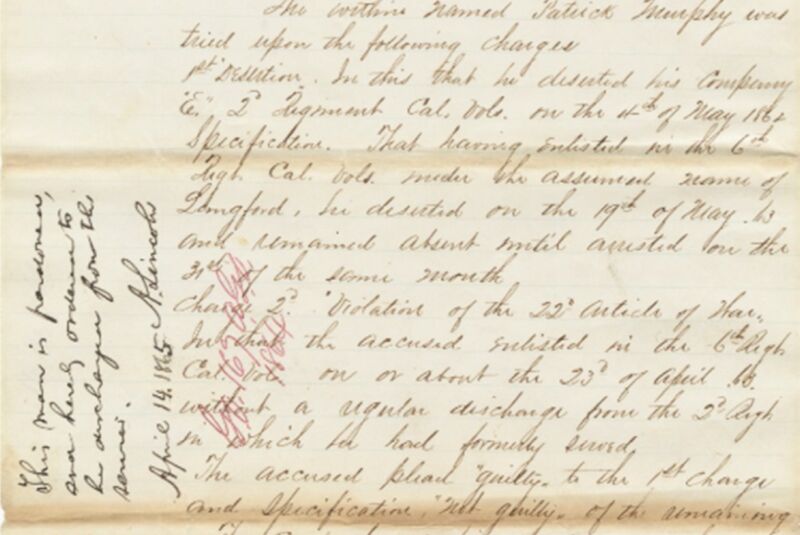
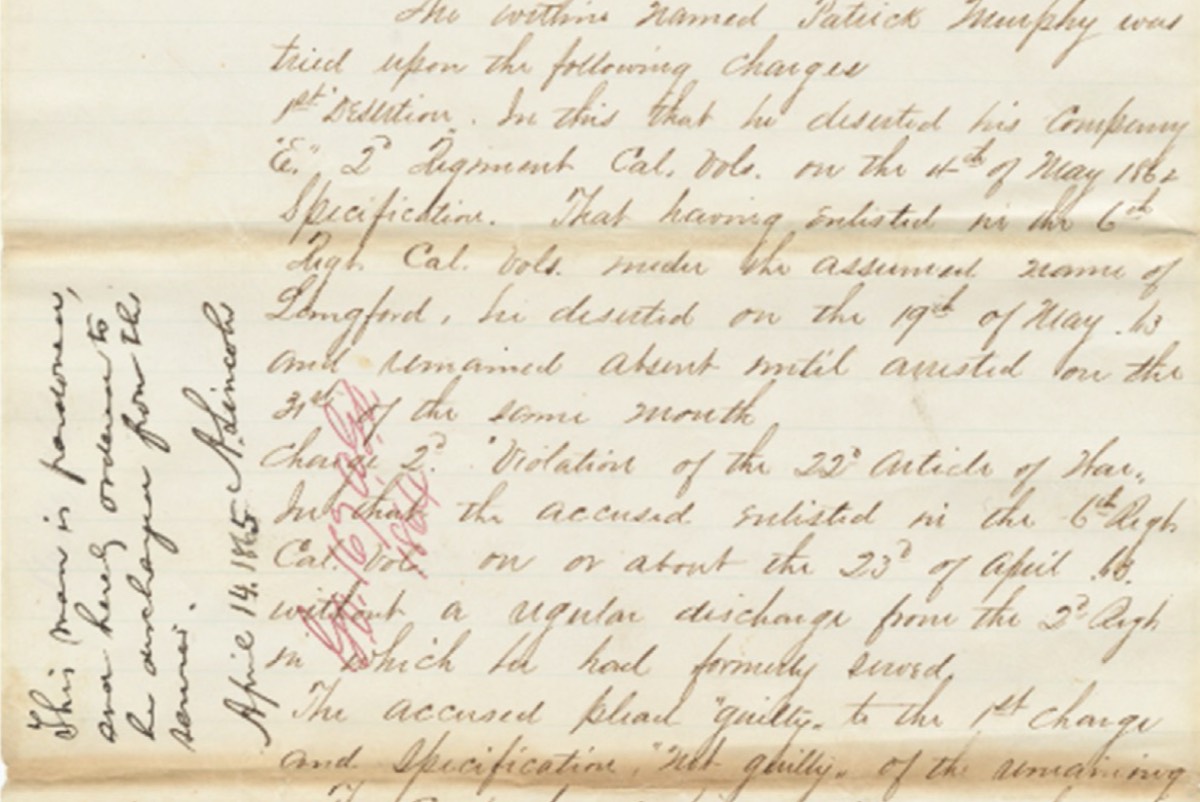
Enlarge/ Abraham Lincoln’s pardon for Patrick Murphy, a Civil War soldier in the Union Army who was court-martialed for desertion.
National Archives
There’s rarely time to write about every cool science-y story that comes our way. So this year, we’re once again running a special Twelve Days of Christmas series of posts, highlighting one story that fell through the cracks each day, from December 25 through January 5. Today: the results of forensic analysis of Abraham Lincoln’s letter pardoning a Civil War soldier confirms the April 14, 1865 date was forged—and it can’t be removed without damaging the document.
A document containing President Abraham Lincoln’s signed pardon of a Civil War soldier has been the source of much controversy since its 1998 discovery, after historians concluded that the date had likely been altered to make the document more historically significant. A new analysis by scientists at the National Archives has confirmed that the date was indeed forged (although the pardon is genuine), according to a November paper published in the journal Forensic Science International: Synergy. The authors also concluded that there is no way to restore the document to its original state without causing further damage.
Thomas Lowry is a retired psychiatrist turned amateur historian, specializing in military records of the Civil War, and has authored numerous Civil War histories. Back in 1998, he and his wife Beverly were combing through a trove of rarely studied courts martial at the National Archives, carefully indexing the documents. At the time, there were no security cameras in the room, and Archive staffers knew the Lowrys and trusted them. The couple discovered some 570 documents with Lincoln’s signature.
Among then was a pardon for a Civil War solider in the Union Army named Patrick Murphy, a private who had been court-martialed for desertion and condemned to death. The pardon is written perpendicularly in the left margin of a letter dated September 1, 1863, requesting a pardon for Murphy. Lincoln’s statement reads, “This man is pardoned and hereby ordered to be discharged from the service.” It was signed “A. Lincoln.”
It was the date that made the document significant: April 14, 1865, meaning the pardon was likely one of the last official acts of President Lincoln, since he was assassinated later that same day at Ford’s Theater in Washington, DC. The pardon was broadly interpreted as evidence for a historical narrative about the president’s compassionate nature: i.e., his last act was one of mercy. The discovery made headlines and brought Lowry considerable renown.
[embedded content]
Inside the Vaults video from January 2011 details altering of an original Lincoln document by independent researcher Thomas Lowry.
After its discovery, the Murphy pardon was exhibited in the Rotunda for the Charters of Freedom in the National Archives building. But an archivist named Trevor Plante became suspicious of the document, noting that the ink on the “5” in “1865” was noticeably darker. It also seemed as if another number was written underneath it. Then Plante consulted a seminal collection of Lincoln’s writings from the 1950s. The pardon was there, but it was dated April 14, 1864—a full year before Lincoln was assassinated by John Wilkes Booth. Clearly the document had been altered sometime between the 1950s and 1998 to make the pardon more historically significant.
Investigators naturally turned to the man who made the discovery for further information. They began corresponding with Lowry in 2010. Initially, Lowry seemed cooperative, but when he learned about the nature of the investigation, he stopped communicating with the Office of the Inspector General, thereby arousing suspicion. So the investigators knocked on the historian’s door one January morning in 2011 for an interview.
Shortly thereafter, the National Archives released a statement that Lowry had confessed to altering the date on the pardon. Lowry confessed to bringing a fountain pen into the research room, along with fade proof, pigment-based ink, and changing the “4” in “1865” to a “5.” Lowry couldn’t be charged with any crime because the statute of limitations for tampering with government property had run out, but he was barred from the National Archives for life.
Enlarge/ Close up of altered date and “A. Lincoln” signature.
National Archives
But there’s a twist: Lowry soon recanted, claiming he had signed the confession under duress from the National Archives investigators. He claimed the investigators assured him it would never be publicized and he would not suffer any consequences. “I consider these records sacred,” he told the Washington Post at the time. “It is entirely out of character for me. I am a man of honor.” His wife suggested a more likely culprit was a former Archives staffer. (The agency denied that allegation.)
Apart from the question of Lowry’s innocence or guilt, conservators at the National Archives were keen to study the altered document more closely, and to learn whether the original date might be restored by removing the forged “5.” Plante told the Washington Post he was not optimistic, because “Lowry purposely used ink that’s going to last a very long time.” The ink appeared to be iron gall ink, consistent with the period.
The National Archives has a cutting-edge heritage science laboratory, with expertise in a broad range of analytical techniques that have become popular in cultural forensics circles. In the case of Lincoln’s pardon, the team closely examined the date and signature under visible and ultraviolet light, as well as using XRF analysis to compare the elemental composition of the ink.
An examination of the “1854” under magnification and reflective fiber optic lighting showed the ink used to write the “5” was indeed different in overall color compared to the other numbers in the date. Furthermore, “Vestiges of ink from a scratched away number can be seen below and beside the darker ‘5,’ as well as smeared across the paper,” the authors wrote.
Enlarge/ Examples of three of the different analysis spots selected to compare the ink used by Lincoln in the “L” of his signature, the questionable “5,” and the vestiges of the abraded “4” also written by Lincoln.
National Archives
Additional analysis under raking light—a technique that accentuates hills and valleys in the paper texture—revealed abrasions to the paper under and around the “5” that were not observed anywhere else on the document. The team also determined that the paper around the “5” is thinner than everywhere else, and that ink residue of the scratched-away “4” were caught in the abraded paper fibers, clearly visible using transmitted light microscopy.
Then the team examined the verso of the document, since iron gall ink is known to penetrate the back of paper, making it possible to see the image of the front text on the back of the sheet. They noted that the penetration of the “5” was noticeably more intense than for the other numbers, which the authors attribute to “the darker, blacker ink being applied more heavily to the paper already thinned when the original ink of the ‘4’ was scratched away.”
Finally, the National Archives team used non-invasive XRF analysis to identify which elements were present in the ink. They found the expected presence of potassium and sulfur (common to iron gall inks) in the ink used in the “L” of Lincoln’s signature and the “8” in the date. They also found calcium, likely added to the paper as filler when it was manufactured.
They compared that ink to the ink used to write the “5” and found that the overall signals for iron, potassium, and sulfur were much higher for the latter. This is not due to the “5” ink having a thicker application. The ratios of iron to sulfur, and iron to potassium, are not the same, either. “There is strong support that the ink was not written by Lincoln but at a more recent time with a thicker application, after Lincoln’s original ‘4’ was removed,” the authors concluded.
This analysis also confirmed Plante’s pessimism about the prospect of removing the forged “5,” thereby restoring the pardon to its original state. “Any further intervention or attempted removal of the new ‘5’ could not be done selectively and would only further damage the original materials of the historical document,” the authors wrote.