Santa and the elves aren’t so cuddly in these Nordic Christmas horror gems

<img src="https://rassegna.lbit-solution.it/wp-content/uploads/2021/12/santa-and-the-elves-arent-so-cuddly-in-these-nordic-christmas-horror-gems.png" alt="(left) A young boy named Pietari (Onni Tommila) battles a mythic/demonic Santa in Rare Exports: Christmas Tale. (right) A young girl named Josefine (Sonia Steen) befriends a strange woodland creature and upsets the delicate balance of a remote island in Elves.”>
Enlarge / (left) A young boy named Pietari (Onni Tommila) battles a mythic/demonic Santa in Rare Exports: Christmas Tale. (right) A young girl named Josefine (Sonia Steen) befriends a strange woodland creature and upsets the delicate balance of a remote island in Elves.
Oscilloscope Labs/Netflix/Sean Carroll

Western Christmas tradition centers on the jolly figure of Santa Claus and his workshop manned by adorably cheery elves at the North Pole. Fantasy is dominated by figures like J.R.R. Tolkien’s majestic elves in the Lord of the Rings trilogy, inspired by Old English poetry.  But there are other, darker incarnations of elvish creatures in folklore from around the world.

If you’re in the mood for something a bit different for your holiday entertainment this weekend, I highly recommend a Christmas double feature drawing inspiration from Nordic folklore:  Elves, a new Danish series that debuted on Netflix last month, and a delightful 2010 Finnish film called Rare Exports: A Christmas Tale (2010).

(Some spoilers below but no major reveals.)

[embedded content]
You better watch out: an ‘archeological’ dig on Christmas eve in Finland unearths the real Santa Claus in Rare Exports: A Christmas Tale.

Rare Exports: A Christmas Tale

Rare Exports: A Christmas Tale has its roots in a pair of short films by a Finnish production company specializing in commercials. The first (Rare Exports Inc.), released online in 2003, showed a trio of hunters searching the wilds of Lapland for a wild Santa Claus. It proved so popular that the company released a sequel short film in 2005 (Rare Exports: The Official Safety Instructions). Both were directed by Jalmari Helander, who eventually found financing to produce a feature-length film based on the concept. And we’re so very glad he did.

Per the official synopsis:

It’s the eve of Christmas in northern Finland, and an ‘archeological’ dig has just unearthed the real Santa Claus. But this particular Santa isn’t the one you want coming to town. When the local children begin mysteriously disappearing, young Pietari and his father Rauno, a reindeer hunter by trade, capture the mythological being and attempt to sell Santa to the misguided leader of the multinational corporation sponsoring the dig. Santa’s elves, however, will stop at nothing to free their fearless leader from captivity. What ensues is a wildly humorous nightmare—a fantastically bizarre polemic on modern day morality.

The film takes place near Korvatunturi (Ear Fell) in the Finnish province of Lapland, a place said to be the home of a Santa Claus-like figure in Finnish folklore called Joulupukki. The literal translation is “Christmas goat” (or ‘Yule goat”), and the folklore figure is usually depicted wearing red robes, with a sleigh pulled by (non-flying) reindeer. Joulupukki isn’t necessarily an evil creature in the legends, although his goat-like appearance was said to frighten children. The version in Rare Exports seems to share commonalities with Krampus, a figure from Central and Eastern Alpine lore who assists St. Nicholas, punishing naughty children on Christmas with birch rods

Tonally and aesthetically, Rare Exports owes more to the Brothers Grimm and Tim Burton, than to the cheery wholesomeness of, say, Norman Rockwell or Miracle on 34th Street. Visually, it’s quite striking. Helander’s camera lingers lovingly over the frigid Lapland landscape, and the story moves along briskly, with all the right beats in all the right places.

Onni Tommila, who plays Pietari (and is Helander’s nephew), is an amazingly expressive young actor who anchors the film. We feel his fear and determination to ward off Santa and his elves, fueled in part by his deep need to win his father’s grudging approval—particularly given the recent loss of his mother. Bonus: the film provides its own explanation for the classic conundrum of how Santa can be so many places at once on Christmas eve. It all adds up to a genuinely suspenseful, action-packed, and occasionally poignant Christmas tale.

[embedded content]
Christmas vacation turns into a nightmare for a young girl and her family when an ancient menace stalks their island getaway in Elves.

Elves

While Rare Exports riffs on Joulupukki, Elves finds inspiration in what seems to be a combination of elverfolk that inhabit hills and mounds, and the trolls and huldufólk (“hidden folk”) of Scandinavian folklore. These are wild, forest-dwelling creatures and in the hands of series director Ron Ezra, they make very effective menacing Christmas monsters. Per the official synopsis:

Hoping to reconnect over Christmas, a family of four travels to a remote island in the Danish archipelago, only to find it controlled by members of a strongly religious community living in balance with fierce creatures in the woods revealed to be… elves. Real, monstrous beings that inspired the folklore and myths we all know. When the girl in the family finds and brings home a baby elf, she inadvertently disrupts the balance and throws everyone on the island into a life-or-death battle for faith, family, and pure survival.

The girl who causes all the chaos is Josefine (Sonja Steen). She has a soft spot for pretty much all animals, yet her parents—Mads (Peder Thomas Pedersen) and Charlotte (Lila Nobel)—refuse to let her get a dog. That’s a decision they’ll come to regret. En route to their vacation rental, they hit something with their car, but there’s no sign of whatever it was when they get out to investigate. Josefine eventually finds the wounded creature: an adorable baby elf.  She befriends the creature and nurses it back to health, telling only her brother, Kasper (Milo Campanale) about its existence.

Alas, the adult elves don’t take kindly to what they interpret as the theft of one of their offspring. And when a misguided Josefine decides the elves are being locked up against their will and turns off the electric fence keeping the creatures at bay, things get bloody very quickly. (The very first scene depicts the offering of a cow by local islanders, which is devoured by strange, unseen snarling creatures in a matter of minutes, so the elves are formidable opponents.)

Scholars tend to interpret these mythological creatures as representative of the powerful forces of nature in a fairly harsh environment prone to earthquakes, avalanches, volcanoes, and the like. Challenge or disrupt that natural order at your peril. That theme is infused throughout Elves.

Josefine and her family are disruptive from the start, ignoring island handyman Møller’s (Rasmus Hammerich) warning to stick to a particular road on the island. They also cut down a local tree for their Christmas decorations in express violation of local customs. They can’t plead ignorance either, since that taboo was spelled out for them by Karen (Ann Eleonora Jørgensen), a local woman who has been raising her orphaned granddaughter Liv (Vivelill Søgaard Holm) to succeed her as island guardian against the elves.

Josefine, too, ignores the warnings of Karen and Møller, but she also has genuine bond with the baby elf. That unlikely friendship, and the competing factions intent on keeping them apart, fuels the emotional stakes of the series. Neither can safely inhabit the other’s world, and a painful separation seems inevitable. With its six half-hour episodes, Elves is a perfect Christmas binge, and the finale leaves open the possibility of a second season—assuming this sleeper gem of a series manages to find an audience.

Rare Exports: A Christmas Tale is available for streaming rental on Amazon Prime Video. In Finnish (with subtitles) and English. Elves is streaming on Netflix. In Danish with English subtitles. And if you want a triple feature this holiday weekend, try adding the 1989 French film, Dial Code: Santa Clause (alternate title: Deadly Games), to your viewing list. The darkly violent (like all the best fairy tales) predecessor to 1990’s Home Alone is vailable on Blu-Ray and DVD and well worth the investment.

https://arstechnica.com/?p=1816931


The Wheel of Time’s first season wraps up in an explosive, twisty finale

Moiraine contemplates The Blight.
Enlarge / Moiraine contemplates The Blight.
Amazon Studios

Andrew Cunningham and Lee Hutchinson have spent decades of their lives with Robert Jordan and Brandon Sanderson’s Wheel of Time books, and they’re bringing that knowledge to bear as they recap each episode of Amazon’s new WoT TV series. These recaps won’t cover every element of every episode, but they will contain major spoilers for the show and the book series. If you want to stay unspoiled and haven’t read the books, these recaps aren’t for you.

The Wheel of Time‘s first season is over, but Amazon has renewed it for a second season that’s currently filming.

Lee: So! That was… definitely one way to cap off the season, and we’ve ended with a whole boatload of new questions that are going to hang fire until season two. The thing we probably need to start with, at least just for a moment, is the thing that the episode starts with—the Jetsons Age of Legends flashback, with the OG Dragon, Lews Therin Telamon. (Though the show calls him the “Dragon Reborn” as well—likely hinting that time is, you know, a Wheel and stuff.) It’s not quite the Kinslayer prologue that kicks off the books, but it was still gratifying to see—at least, I thought it felt good. And we got the obligatory “pan out the windows so we can see flying cars to show us it’s the future” shot. Did it hit the right notes for you?
Andrew: I did appreciate our glimpse into the Age of Legends! It was low-key, but now that Rand has been definitively established as a reincarnation of this specific guy, it’s helpful to see the guy’s face and to hear him and to get a sense of him. I expect we’ll see him again more than once (though it remains to be seen whether a version of Lews Therin will literally take up residence in show-Rand’s head as he does in the books).

It is definitely a busy finale. I think, mostly, I enjoyed it? But as with last week’s episode my main complaint is about time. I can list a bunch of things in this episode that would have hit better if the show had had more time to develop, more time to let us spend with Rand, more time to spend with this mysterious man in the untucked tuxedo whom Rand spends all of his time talking to.

This mysterious man (Fares Fares) remembers Rand as Lews Therin Telamon, but we don't know much about him.
Enlarge / This mysterious man (Fares Fares) remembers Rand as Lews Therin Telamon, but we don’t know much about him.
Amazon Studios
Lee: Ah, yes, “The Dark One,” played by Fares Fares (whom Ars readers probably last saw in Westworld and Chernobyl). Man, you’re right—this episode was dense as hell. I was hoping that Amazon would give us a super-sized episode to round things out, but as it is, “The Dark One” is given disappointingly short shrift. (Though check the closing credits for his billing, which should clear things up for book readers and probably really muddle things for non-readers.)

Coming at the finale here from the perspective of a book reader is a pretty fraught experience, since there’s such massive divergence. I know I’ve been the one flogging the “but the book!” point of view for most of this season, but it’s probably time to set that aside. We have diverged hard in so many ways—though we still end up in more or less the same state. I didn’t think we had the time to get us there, but apparently we did.

Andrew: Of all the departures from the book, I think the one that bothers me the most is that we have lost all sense of progression, power, and growth among our channelers. With the One Power still relegated to a sort of vague wispy white do-anything magic, it seems like any channeler under sufficient external stress can do pretty much whatever they want, including but not limited to sealing an ancient evil in its prison, nuking an army of Trollocs from the sky, and healing apparently mortal wounds.

The books make it clear that the One Power is dangerous and that wielding it without knowing what you’re doing is an easy way to kill yourself or those around you. It’s a muscle that must be exercised and a skill that must be learned. Sure, the books also get away with some hand-wavy channeling stuff when our heroes are in high-pressure situations, and Rand especially is left to do a lot of guessing early on because the only male channelers in his time are either evil, mad, gentled, or dead. But so far in the show you lose a lot of that nuance, and with it a sense of how our channelers are growing as characters.

That said, we do see some “burnt out” channelers in this episode, and I dig the show’s decision to depict that condition extremely literally.

Egwene and Nynaeve will have their own destinies to confront in season two.
Enlarge / Egwene and Nynaeve will have their own destinies to confront in season two.
Amazon Studios
Lee: Oh yeah—I absolutely agree. And I really like the effect they’ve gone with, where your face chars and your eyes collapse into dark pits. It somewhat echoes the eyeball-and-mouth fire effect “The Dark One” uses in Rand’s dreams.

I hear you also with the notion of character progress, especially considering what Perrin and Loial do in this episode—namely, very little. (Though they did help dig up the flaming Horn of Valere, which I suppose is a pretty important moment. I wonder how many Shienarans knew it was sitting underneath Lord Agelmar’s throne? Honestly, it feels like just pure insanity to have the Horn just sitting there—it’s a weapon with far too many temptations and far too few downsides to its use, and I’d imagine any self-respecting Borderlander ruler would blow it instantly, given the opportunity.)

The Horn is a huge focus of the second book (which is titled The Great Hunt, with the “hunt” part being the actual-for-real hunt for the Horn of Valere), and we wrap season two with most of The Gang being in more or less the same plot positions that they were at at the book’s ending. With a few exceptions, I guess, considering Loial has been stabbed and Moiraine has been… well, let me ask what you think about that one. My wife thinks Moiraine was possibly stilled by “The Dark One,” which means season two will have to maybe bring forward a Power-related plot event or two. I thought Moiraine was just shielded—the net-like visual effect “The Dark One” placed on her looked a lot like what the Aes Sedai were doing with Logain a few episodes back—and then the shield was tied off and left in place. Either way, Moiraine is in kind of a tough spot.

Andrew: As a quick sidebar on Perrin and Loial, the show got a huge, genuine laugh out of me when Perrin asked Loial “How can we just sit here while everyone else is willing to fight?” and Loial responds “I’m standing.”
Lee: You know what never changes? It’s not war. It’s Ogier. Ogier never change.

https://arstechnica.com/?p=1822251


Review: Matrix Resurrections has just enough of the old magic to delight fans

<img src="https://rassegna.lbit-solution.it/wp-content/uploads/2021/12/review-matrix-resurrections-has-just-enough-of-the-old-magic-to-delight-fans.jpg" alt="Keanu Reeves returns as Neo in The Matrix Resurrections“>
Enlarge / Keanu Reeves returns as Neo in The Matrix Resurrections
Warner Bros.

After nearly 20 years, moviegoers finally have the change to revisit the imaginative cyberpunk world of 1999’s The Matrix with the fourth installment in the sci-fi franchise: The Matrix Resurrections. It’s not a perfect film, but there’s enough of the old magic to delight longtime fans. The stars still radiate chemistry, there are plenty of cameos and sly nods to the franchise throughout, and the familiar themes have been subtly updated to make them more relevant than ever.

(Some minor spoilers below, but no major reveals.)

As I’ve written previously, it’s difficult to overstate the deep cultural impact of The Matrix. It redefined the sci-fi film genre and shaped an entire generation of fans—plus, it raked in $460 million worldwide, garnered multiple Oscars, and sent star Keanu Reeves’ already healthy career into the Hollywood stratosphere. Cyberpunk author William Gibson called The Matrix “an innocent delight I hadn’t felt in a long time,” and he named Neo as his all-time favorite sci-fi action hero.

We still refer to taking the “red pill” when searching for a metaphor to represent choosing between an unsettling, life-changing truth or blissful ignorance. Who can forget Reeves’ meme-worthy utterances (“Whoa!” or “I know kung fu”) or Laurence Fishburne’s fabulous sunglasses-wearing Morpheus? This is also the film that gave us “bullet time”: a special effect—used for the rooftop scene where Neo (Reeves) dodges bullets fired by one of the Matrix’s Agents—in which the shot progresses in slow motion while the camera appears to move at a normal speed through the scene.

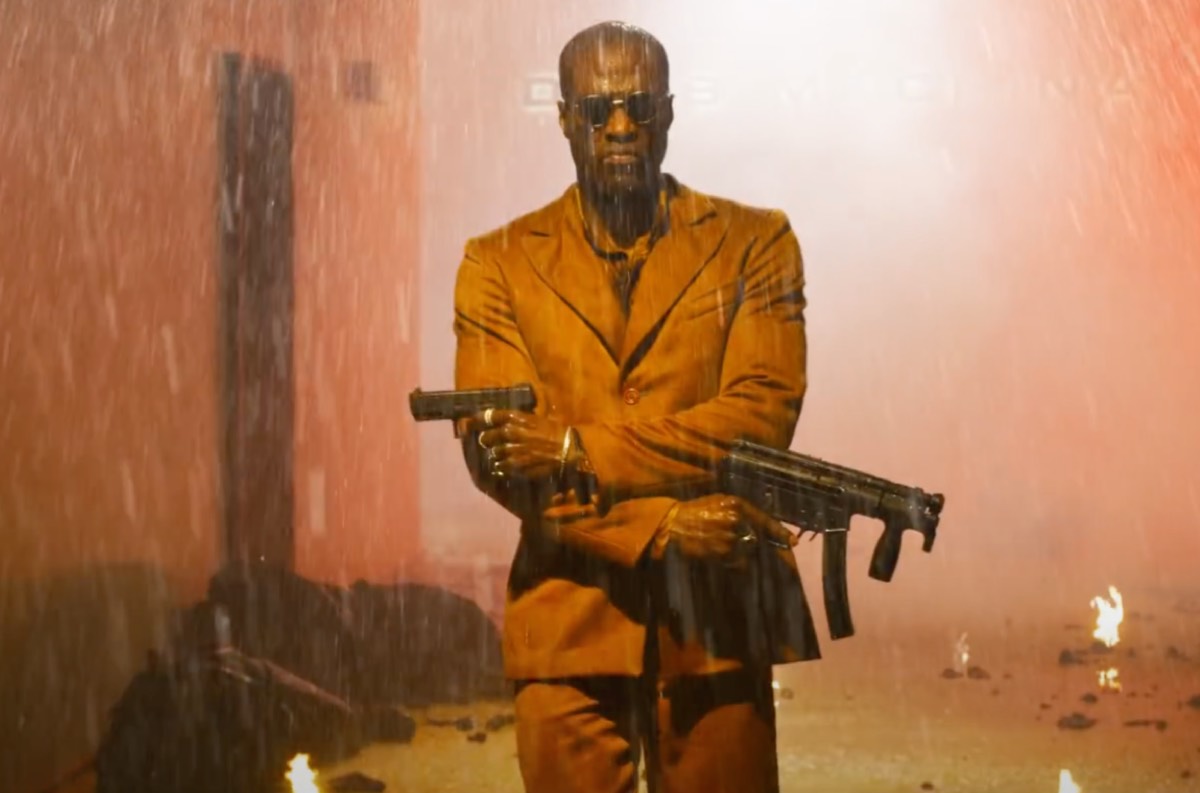
Two guns are better than one for this new version of Morpheus (Yahya Abdul-Mateen II).
Enlarge / Two guns are better than one for this new version of Morpheus (Yahya Abdul-Mateen II).
YouTube/Warner Bros.

That’s a hard act to follow, and the two subsequent films never quite reached the same heights, despite their box office success.  The same can be said about Resurrections.

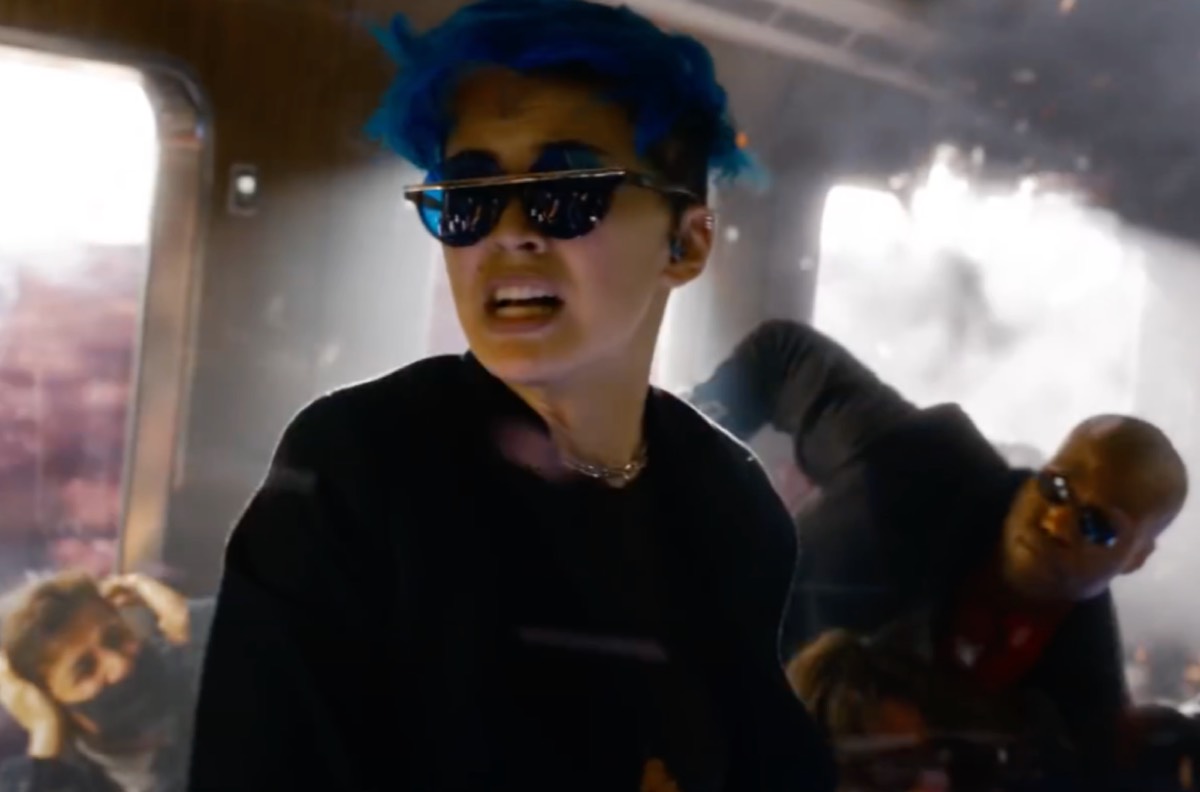
The film opens with Bugs (Jessica Henwick), captain of a rebel ship called the Mnemosyne, stumbling upon an odd program running on old code in an isolated node of the Matrix. It’s running a recreation of the original film’s famous opening scene in which Trinity takes out a group of armed officers and must flee from Agents. But certain key details are all wrong—including the presence of an Agent who turns out to be the digital embodiment of Morpheus (Yahya Abdul-Mateen II). Bugs frees Morpheus from the node and they team up to track down Neo in the Matrix.

Neo, back in his Thomas Anderson persona, is working at a game design company called Deus Machina, with his boss and partner Smith (Jonathan Goff). Thomas is famous for designing the company’s most successful gaming franchise: the Matrix. But he keeps having vivid dreams that seem like memories, and can’t shake a nagging sense that he really is imprisoned inside a fake computer reality. He regularly sees a therapist (Neil Patrick Harris), who keeps Thomas well supplied with prescription blue pills.

Thomas is also strangely drawn to a married mom named Tiffany (Carrie Ann Moss) who frequents the same cafe (aptly named Simulatte). Of course, Thomas’s intuition turns out to be correct, and it’s not long before Bugs and Morpheus track him down and figure out how to rescue him from the Matrix once again.

Carrie Ann Moss returns as Trinity—or is she a suburban housewife named Tiffany?
Enlarge / Carrie Ann Moss returns as Trinity—or is she a suburban housewife named Tiffany?
YouTube/Warner Bros

The film’s premise is ingenious: the concept of the Matrix, and the One who can control and manipulate it, is so powerful, that the system had to figure out how to dilute it. What better way to do so than by trivializing it, transforming a heroic myth into entertainment? It provides the perfect opportunity to work in clever fan-service nods to the original trilogy in some unexpected ways, such as a black cat named Deja vu. And Wachowski has come up with an especially cool twist to “bullet time” that I can’t discuss in depth without spoilers.

There have been some technological updates, too. Bugs and her fellow human rebels pass in and out of the Matrix using mirrors as portals rather than phone lines; Agents can don “skins” to blend in better with the simulated humans in the Matrix; and Morpheus can be embodied outside of the Matrix via something called the “Exomorphic Particle Codex” (basically swarms of nanobots).

Jessica Henwick is a new rebel ally named Bugs.
Enlarge / Jessica Henwick is a new rebel ally named Bugs.
YouTube/Warner Bros.

It’s well-known that the Wachowskis didn’t originally intend to make another Matrix film after Revolutions in 2003. Lilly Wachowski went so far as to call the prospect “a particularly repelling idea in these times” in a 2015 interview—a sharp critique of Hollywood’s preference for sequels, reboots, and adaptations. Nonetheless, Warner Bros. officially announced the fourth film in August 2019.

In Resurrections, Deus Machina’s parent company forces Thomas to work on a fourth installment of the Matrix game, giving Lily Wachowski, as director, a prime opportunity to skewer the studio franchise system’s obsession with focus groups and marketing. (“We need a new bullet time!”) As the game development team argues about which elements are most crucial, and what the true meaning of the Matrix is, it’s not hard to imagine the scenes as reflections of the director’s own frustrations.

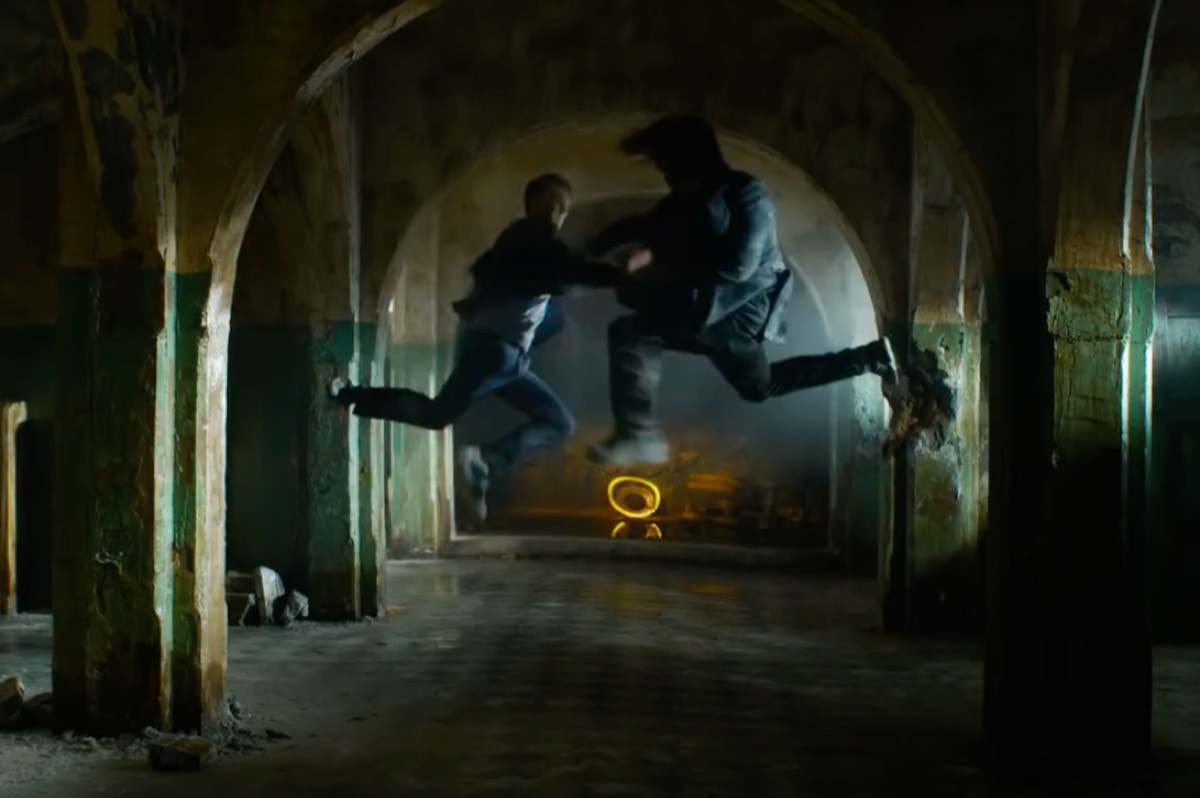
Agent Smith (Jonathan Goff) vs. Neo.
Enlarge / Agent Smith (Jonathan Goff) vs. Neo.
YouTube/Warner Bros.

Look, no sequel will ever come close to the visual pyrotechnics and breathtaking originality of the first film, and The Matrix: Resurrections has some issues. Most notably, the entire second act is poorly paced and muddled, although the third act finds its feet to bring us to a satisfying conclusion. The dialogue is often stilted, or bordering on pretentious—always a fine line to straddle when it comes to the Matrix franchise. And there is some pretty heavy-handed moralizing at times that would have benefited from a more subtle approach.

But these issues aren’t enough to sink what is otherwise a very entertaining film that gives longtime fans of the franchise pretty much exactly what they want. It’s got striking visuals, emotional resonance, dry wit, enough conceptual and thematic depth to spark some intriguing discussion, and plenty of fight scenes—even if the choreography isn’t quite as electrifying as the original film. In short, it’s a solid addition to the franchise that works more often than it doesn’t.

The Matrix Resurrections is now playing in theaters and is also streaming on HBO Max. We strongly recommend only going to see movies in theaters if you are fully vaccinated and boosted, and wear a mask for the duration of the screening.

https://arstechnica.com/?p=1821787


From 360 Hz monitors to 8,000 Hz keyboards, 2021 was the year of the hertz

From 360 Hz monitors to 8,000 Hz keyboards, 2021 was the year of the hertz
Aurich Lawson | Getty Images | MSI

When tech gets stale, one thing the industry does to try to get shoppers excited about new products is offer bigger and better specs. In 2021, a lot of focus went into beefing up the speed specs, measured in hertz, of PC peripherals (a hertz, or Hz, is a unit of frequency representing one cycle per second). We saw vendors increase the polling and refresh rates of everyday devices, turning them into advanced pieces of equipment to pique enthusiast interest.

Here’s how it all went down.

First, the monitors

2021 was the year of the hertz, but in order to get there, we have to go back to 2020, when the world was introduced to 360 Hz monitors.

Monitors may be the most sensible place to see boosted hertz figures, assuming you’re the right audience. For hardcore gamers with the right gear, higher hertz specs mean smoother motion with less choppiness. And if you had a computer that could push out 360 frames per second in certain games, you could finally get a display that could keep up. The best example I can recall of a 360 Hz monitor showing added benefit over slower gaming monitors was when I watched rapidly scrolling text on one. The words were much more legible on the 360 Hz monitor than on a 144 Hz panel, where the characters were more blurred.

For a while, 144 Hz was the gold standard for PC gamers wanting to be taken more seriously. Then we started seeing 240 Hz monitors. In late 2020, monitors with 360 Hz refresh rates, like the Asus ROG Swift 360Hz PG259QN and Acer Predator X25, became available. Today, there are five 360 Hz monitors available. The Alienware AW2521H, MSI Oculux NXG253R, and another Asus SKU with additional accessories and software round out the list.

MSI announced its 360 Hz Oculux NXG253R in April after screens with the spec started trickling out in 2020.
Enlarge / MSI announced its 360 Hz Oculux NXG253R in April after screens with the spec started trickling out in 2020.

This trend continued to have an impact into 2021. Not just because we saw the addition of MSI’s 360 Hz monitor, but also because these gaming monitors raised the bar for extreme PC gamers. If you have a powerful PC and a speedy monitor, surely your other gaming gear needs to keep pace, right? The availability of 360 Hz monitors fed that narrative and cleared the way for other tech gear boasting outrageously high Hz figures.

8,000 Hz mice

2021 saw an unprecedented peripheral when Razer released the Viper 8K Hz.

Many gaming mice sought to boost their counts-per-inch specs this year, but the Viper 8K Hz put greater emphasis on polling rate.
Enlarge / Many gaming mice sought to boost their counts-per-inch specs this year, but the Viper 8K Hz put greater emphasis on polling rate.

On the outside, it looked like a regular mouse. In fact, it looked like a Razer Viper, a popular gaming mouse from the company. But the difference was on the inside. The mouse can use an 8,000 Hz polling rate, which is at least eight times faster than almost every other mouse available.

What does that mean, exactly? Mice generally have a 1,000 Hz polling rate. We had seen 2,000 Hz mice before. A 1,000 Hz polling rate means the mouse can send a location report to the PC up to 1,000 times per second. Razer’s Viper 8K Hz was the first to do it at 8,000 times per second.

A mouse with a 1,000 Hz polling rate has an expected 1 ms delay for the mouse to send each report. One second divided by 1,000 reports is 0.001 second, or 1 ms, per report. With an 8,000 Hz mouse, the delay time is 0.125 ms (1 second divided by 8,000 reports, or 0.000125 second).

For most people, 8,000 Hz mice are completely unnecessary. But enthusiast publications, like display site Blur Busters, have pointed to elevated micro-stuttering with 1,000 Hz mice as refresh rates hit 120 Hz and higher.

Razer’s mouse came with some prerequisites, including minimum CPU and GPU specs. It also required a monitor with Adaptive-Sync off (which also has implications for how strong of a graphics card you’ll need) and at least a 144 Hz refresh rate.

With all the right equipment, gamers could now enjoy 360 fps alongside a mouse updating the PC eight times as frequently as the vast majority of mice. I tested the Viper 8K Hz with a 300 Hz screen, 10th Gen Intel Core i7, and Nvidia RTX 2070 Super Max-Q. Those parts aren’t the latest and greatest, so it’s possible I could have seen more impressive results with a more powerful build, but the Viper 8K Hz didn’t make me a better gamer. It did, however, seem to result in my display updating my cursor’s location more frequently. Trails of arrows formed when I made swiping movements, and circles made pointers appear more close together than what I’m used to.

https://arstechnica.com/?p=1821099


Benedict Cumberbatch encounters dark double in Multiverse of Madness teaser

[embedded content]
Benedict Cumberbatch stars in Doctor Strange in the Multiverse of Madness.

The first teaser trailer for Doctor Strange and the Multiverse of Madness debuted in theaters this past weekend as a post-credits addition to Spider-Man: Now Way Home. Marvel has just released it to the general public, and it looks like we’re in for another eye-popping, mind-bending ride.

(Spoilers for prior events in the MCEU below, particularly in Loki, What If? and No Way Home.)

The sequel to 2016’s Doctor Strange has been in the works for years, with director Scott Derrickson initially signed on to make the film. Derrickson left the project in January 2020, citing creative differences, although it seems it was a mutually amiable parting. (Derrickson is still an executive producer.) Sam Raimi took over directing duties.

There have been been conflicting statements made to the press about whether or not Multiverse of Madness might quality as Marvel’s first horror film or whether it just has a few scary sequences. Certainly the choices of Derrickson and Raimi, respectively, to direct—both of whom are well versed in the tropes of good horror—indicate that the studio wanted to incorporate at least some of the Gothic horror elements of the comics. Comments from cast members seem to confirm this. However, the extensive additional photography and reshoots are rumored to include more humorous elements, plus a few key cameos (one of the most enjoyable aspects of Spider-Man: No Way Home).

Benedict Cumberbatch reprises his role as Doctor Steven Strange.
Enlarge / Benedict Cumberbatch reprises his role as Doctor Steven Strange.
Marvel Studios

Plot-wise, we know the film is set after the events of No Way Home, WandaVision, and the first season of Loki. The latter introduced us to the Time Variant Authority (TVA), with our mischievous protagonist encountering multiple versions of himself from various different timelines, including a female incarnation named Sylvie (Sophia di Martino). The finale featured a confrontation with a variant of Kang the Conqueror, who had been controlling the Sacred Timeline—until an impulsive act by Sylvie unleashed more timelines than the TVA could prune, destabilizing the multiverse.

What If? introduced us to Strange Supreme, an evil alternate version of Steven Strange who gained enormous power by absorbing other mystical beings, thereby tearing reality apart. The Watcher eventually recruits Strange Supreme to be one of the Guardians of the Multiverse who collectively defeat Ultron.

As for the events of No Way Home, we won’t spoil anything here, since the film just opened in theaters. Suffice to say that Strange’s multiverse meddling in that film (revealed in the trailers) is going to have unforeseen repercussions that will likely play out in Multiverse of Madness. (“Your desecration of reality will not go unpunished.”) Per the official synopsis: “After the events of Avengers: Endgame, Dr. Stephen Strange continues his research on the Time Stone. But an old friend-turned-enemy puts an end to his plans and causes Strange to unleash unspeakable evil.”

Doctor Strange finds an ally in Elizabeth Olsen's Wanda Maximoff/Scarlet Witch
Enlarge / Doctor Strange finds an ally in Elizabeth Olsen’s Wanda Maximoff/Scarlet Witch
Marvel Studios

That old friend is Karl Mondo (Chiwetel Ejiofor), Strange’s fellow Master of the Mystic Arts, who grew disillusioned with the order and now hunts down other mages to take away their power. Benedict Wong reprises his role as Wong, now the Sorcerer Supreme (because Strange disappeared for five years in the wake of the Snappening).  The film will also introduce Xochitl Gomez as America Chavez/Miss America, and it looks like Rachel McAdams will return as Dr. Christine Palmer, perhaps as Christine from another timeline, since we see her in a wedding dress in the teaser.

Elizabeth Olsen returns as Wanda Maximoff/The Scarlet Witch, chastened after the events of WandaVision, whom Strange seeks out as an ally as the teaser opens. “The greatest threat to our universe is you,” Mondo tells Strange during one of their confrontations. (Two thumbs up for Mondo’s new hairdo.) And then we see what looks like a live-action Strange Supreme, clad all in black, insisting that “things just got out of hand.” Color us intrigued.

Doctor Strange in the Multiverse of Madness hits theaters on May 6, 2022.

Listing image by Marvel Studios

https://arstechnica.com/?p=1822283


Reminder: Donate to win swag in our annual Charity Drive sweepstakes [Updated]

Just some of the prizes available in this year's Ars Technica Charity Drive Sweepstakes.
Enlarge / Just some of the prizes available in this year’s Ars Technica Charity Drive Sweepstakes.

[Dec. 22: As we approach Christmas and the midway point of this year’s Charity Drive, we’ve now raised over $18,000 from nearly 200 separate donations. Child’s Play is in the lead over EFF, approximately $9,600 to $8,400, for those who keep track of such things.

That’s a great start, but we still have a ways to go to beat last year’s $58,000 record. Read on below to find out how you can take part!]

If you’ve been too busy playing Halo Infinite to take part in this year’s Ars Technica Charity Drive sweepstakes, don’t worry. You still have time to donate to a good cause and get a chance to win your share of over $1,600 worth of swag (no purchase necessary to win).

So far this year, after just over three days, nearly 100 readers have donated nearly $9,000 to either the Electronic Frontier Foundation or Child’s Play as part of the charity drive (Child’s Play is leading in the donation totals by about $1,100, FWIW). That’s a long way off from last year’s record haul of over $58,000, but there’s still plenty of time until the Charity Drive wraps up on Jan. 7, 2022.

That doesn’t mean you should put your donation off, though. Do yourself and the charities involved a favor and give now, while you’re thinking about it. Don’t let it slip your mind and end up kicking yourself in January for not taking part.

See below for instructions on how to enter, and check out the Charity Drive kickoff post for a complete list of available prizes.

How it works

Donating is easy. Simply donate to Child’s Play using PayPal or donate to the EFF using PayPal, credit card, or Bitcoin. You can also support Child’s Play directly by picking an item from the Amazon wish list of a specific hospital on its donation page. Donate as much or as little as you feel comfortable with—every little bit helps.

Once that’s done, it’s time to register your entry in our sweepstakes. Just grab a digital copy of your receipt (a forwarded email, a screenshot, or simply a cut-and-paste of the text) and send it to ArsCharityDrive@gmail.com with your name, postal address, daytime telephone number, and email address by 11:59 pm ET Friday, January 7, 2022. (One entry per person, and each person can only win up to one prize. US residents only. NO PURCHASE NECESSARY. See official rules for more information, including how to enter without making a donation. Also refer to the Ars Technica privacy policy.)

We’ll then contact the winners and have them choose their prize by January 31 (choosing takes place in the order the winners are drawn). Good luck!

Listing image by xJasonRogersx / Flickr

https://arstechnica.com/?p=1821590


With Intel 12th-gen CPUs looming, LG’s debut gaming laptop opts for 11th-gen

LG UltraGear 17G90Q lid
Enlarge / LG UltraGear 17G90Q.

LG has carved out a small space for itself among mainstream users seeking an attractive, slim design. But now LG wants to push laptops toward gamers, and it has the RGB and high refresh rate to prove it, alongside an interesting choice in components.

A couple of months after a Bluetooth SIG filing made it appear that LG is working on its first Chromebook, LG has announced the UltraGear 17G90Q today as its first gaming laptop. The brand is launching right into it with some extreme, gaming-ready specs, starting with a 17-inch IPS screen that has a 300 Hz refresh rate and 1 ms gray-to-gray response time.

Graphics are handled by an RTX 3080 Max-Q. The RTX 3080 is the most powerful mobile GPU Nvidia offers; although, the Max-Q variant suggests it may be slightly less powerful than a fully specced mobile RTX 3080. LG didn’t get specific about the 17G90Q GPU’s clock speed or total graphics power, but Nvidia says the RTX 3080 can be configured to boost to 1,245-1,710 MHz.

Like LG’s other laptops, the UltraGear 17G90Q stays trim, measuring 0.84 inches (21.4 mm) thick and 5.82 lbs (2.64 kg). Slim gaming laptops always bring concerns about heat, so it’ll be interesting to see how LG’s first gaming clamshell manages its gaming power, especially for players seeking to hit 300 frames per second (fps).

Will heat be a problem when trying to push 300 fps?
Enlarge / Will heat be a problem when trying to push 300 fps?

Interestingly, the 17G90Q will arrive with an 11th-gen Intel Tiger Lake-H CPU. LG didn’t name the processor that the laptop will be available with, but Intel’s H-series is aimed at delivering gaming performance, comparable to a desktop, for laptop gamers.

But it’s not the series that piques interest, it’s the generation. LG said it will be showing off the 17G90Q next month at the CES trade show. At that same trade show, Intel is expected to reveal its 12th-gen Alder Lake chips, as reported by Tom’s Hardware. The mobile offerings should introduce the big.little CPU core design to Intel laptops with as many as 14 cores, according to the publication. Of course, we won’t know for sure until Intel actually reveals its mobile Alder Lake chips. And LG likely wouldn’t have opted for a 14-core monster for its first gaming PC, which uses a 93 Wh battery, anyway.

Still, it’s interesting to see LG announce an 11th-gen laptop when we’ll likely hear about the so-called wonders of 12th-gen Intel laptops in about two weeks. It’s possible this laptop has been in the works for a while, and the 11th-gen was all that was available at the time. It could also be a result of the chip shortage. Intel CEO Pat Gelsinger for months has been saying that the chip shortage won’t be over until 2023. He reiterated the point just last week to Nikkei Asia. 

The clamshell uses an aluminum chassis and 1080p screen.
Enlarge / The clamshell uses an aluminum chassis and 1080p screen.

Still, LG seems rather committed to its gaming PC entrance. Its 17G90Q also comes with 16 or 32GB of DDR4 RAM and up to 1TB of storage. Port selection also seems well thought out, with a Thunderbolt 4 port, USB-C, two USB-A ports, HDMI, RJ-45 ethernet, a headset jack, and micro SD card reader.

The Seoul-headquartered company even went as far as to include a per-key RGB keyboard. The laptop is configurable with software designed for the gaming system and potentially future iterations called LG UltraGear Studio. The app offers the usual selection of PC insights, such as the CPU’s and GPU’s current clock speed, the GPU’s TDP, and the memory share rate.

The 17G90Q gaming laptop will make its debut in the US and South Korea in “early 2022,” according to LG’s announcement.

https://arstechnica.com/?p=1821854


That time Catherine the Great championed smallpox vaccinations

Baroque portrait of a fashionable ruler.
Enlarge / Portrait of Catherine the Great. Her 1787 letter to Count Piotr Aleksandrovich Rumiantsev—now up for auction—called for a national vaccination campaign against smallpox.

During her long reign, Catherine the Great transformed Russia into a powerhouse of Europe. She was also a leader in public health policy, championing a nationwide vaccination campaign against smallpox at a time when many viewed the practice with distrust. A letter by the empress outlining her inoculation strategy is up for auction by MacDougall’s in London. Included in the sale is a portrait of the monarch as the “Lawgiver in the Temple of Justice,” painted by Dmitry Levitsky, who was a favorite of the Russian court in the 1770s and 1780s. The two items are expected to sell for as much as $1.6 million.

As we’ve reported previously, the World Health Organization declared smallpox to be an eradicated disease in 1979, and many people don’t remember just how devastating smallpox could be. It began with a high fever and severe vomiting, followed by a skin rash. The victim would next develop sores, which eventually scabbed over and fell off, scarring the skin. About three in 10 of those infected died, and the survivors were typically badly scarred for life, sometimes even blinded or permanently disabled.

The Chinese were inoculating people against smallpox as early as the 1500s. European physicians in the early 18th century relied upon variolation (the use of smallpox to induce immunity) to control the spread of smallpox, in which scrapings from smallpox pustules were scratched into a person’s arm or inhaled through the nose. While those who received the treatment did go on to develop common smallpox symptoms like fever and rash, the death toll was significantly lower.

By the late 1700s, a handful of physicians in England and Germany noticed that people infected with the milder cowpox seemed to be immune to smallpox, and there were a couple of early vaccination tests in humans. For instance, in 1774, a farmer named Benjamin Jesty in Dorset, England, successfully vaccinated his wife and children with cowpox. But it was the English physician Edward Jenner who is credited with bringing the smallpox vaccine into mainstream medical practice after giving a cowpox inoculation against smallpox to the son of his gardener in May 1796.

Catherine the Great’s letter to Count Petr Aleksandrovich Rumiantsev is dated April 20, 1787, and hence predates Jenner’s medical breakthrough by nearly 10 years. The monarch had a long-standing horror of smallpox dating back to her childhood, and her husband, Grand Duke Piotr Fedorovich, contracted the disease on the day before their wedding, leaving him permanently disfigured.

So, naturally, Catherine feared for her son’s health when another outbreak of smallpox hit. She was advised to inoculate her son and heir Pavel Petrovich, but felt it would be “shameful not to start with myself.” This made her remarkably enlightened for the age, when even many Russian doctors opposed the practice. Catherine invited an English physician named Thomas Dimsdale to St. Petersburg, since he had inoculated the entire British Royal family and aristocracy against smallpox. She made sure to have a mail carriage ready for Dimsdale to make a speedy escape should the experiment go wrong and Catherine succumb to the disease, incurring the wrath of her people.

Dimsdale harvested the contents of a smallpox pustule from the young son of a sergeant-major and used it to inoculate Catherine. She experienced one week of mild discomfort but announced her full recovery on October 29, 1768. Her son was inoculated soon after. “Starting with me and my son, who is also recovering, there is no noble house in which there are not several vaccinated persons,” she wrote in a letter to Count Ivan Grigorievuch Chernyshev, her ambassador in Britain. “Many regret that they had smallpox naturally and so cannot be fashionable.”

Unfortunately, the fashionability of being vaccinated against smallpox amongst the nobility did not trickle down to the Russian population at large, particularly in the outer regions of the empire. That’s what prompted Catherine’s 1787 letter to the count outlining a strategy for a nationwide vaccination campaign. Here’s the text of the letter:

Count Piotr Aleksandrovich, among the other duties of the Welfare Boards in the Provinces entrusted to you, one of the most important should be the introduction of inoculation against smallpox, which, as we know, causes great harm, especially among the ordinary people. Such inoculation should be common everywhere, and it is now all the more convenient, since there are doctors or medical attendants in nearly all districts, and it does not call for huge expenditure.

To set an example of this, issue an order on the first occasion in each provincial town, to count the remaining superfluous conventual residences or the small monasteries that have been abolished, and build the minimum number of lodgings for the temporary stay of those who are unable to have this inoculation at home; money needed for this could be borrowed from town revenues. Provincial doctors can put this matter right, especially since now there are people sent from us who have a low salary against the regulations: so, since Dr Gund in Novgorod-Seversky can successfully carry out this inoculation, then add three hundred rubles to his regular salary from the remaining income from the former monastery estates. We remain, by the way, favourably disposed towards you.

The letter is signed “Iekaterina.”

https://arstechnica.com/?p=1821789


S.T.A.L.K.E.R. 2 developer quickly cancels NFT plans after fan outcry

<img src="https://rassegna.lbit-solution.it/wp-content/uploads/2021/12/s-t-a-l-k-e-r-2-developer-quickly-cancels-nft-plans-after-fan-outcry.png" alt="A screenshot from Dmarket's now-defunct promotional page for S.T.A.L.K.E.R. 2 NFTs.”>
Enlarge / A screenshot from Dmarket’s now-defunct promotional page for S.T.A.L.K.E.R. 2 NFTs.

S.T.A.L.K.E.R. 2: Heart of Chernobyl developer GSC Game World is quickly backing off plans to integrate non-fungible tokens into the upcoming game, a decision that came just a day after announcing the idea and hours after the company publicly defended its position on Thursday.

The short saga of S.T.A.L.K.E.R. 2 NFTs started Wednesday morning, when GSC Game World announced it was partnering with NFT marketplace Dmarket to offer “the rights to certain unique items” to players via NFTs. To start, the company planned to auction off three NFTs that represented the opportunity to be inserted into the game as a “metahuman” NPC through the company’s photogrammetry scanning process.

In an interview with WCCFTech, GSC Game World CEO Evgeniy Grygorovych said that after the initial auction, “the owner of the metahuman will be able to trade the right to be a metahuman [NFT] until a certain date before the official game release” (that release is planned for April 28, 2022). In February, a second planned NFT drop would have offered vaguely defined and “highly secretive genesis packs” that “won’t influence the gameplay itself or give in-game advantages over other players,” Grygorovych said.

A deleted defense

In a since-deleted tweet posted Thursday afternoon (archived here), GSC Game World defended its decision to use NFTs. “Just like all other devs, we need two main resources: time and money,” the statement read, in part. “All the funds that we earn during the development process (including the potential income from NFT) will be spent on improving the long-awaited game to make it even better.”

The company clarified that its NFT plans included in-game “gloves/tattoos/skins/badges” for the multiplayer mode, the rights to put your character nicknames on in-game decorations like “desks/walls/etc.,” and “collectible cards” that wouldn’t actually be integrated into the game at all. All those NFTs would be completely optional, the company wrote, and could “be activated only before the game’s release… We are eager to do NFT right.”

GSC Game World wanted to give “certain fans an opportunity to get into the game without interfering with other players’ experience,” the company wrote.

The company also tried to dismiss concerns about the power consumption needed for NFTs, saying its partner Dmarket’s private blockchain gives “priority to provide low energy consumption and minimize CO2 emissions and other negative environmental impacts.”

Apparently, that statement did not calm the anti-NFT sentiment among potential players. A few hours after deleting that tweet, GSC Game World posted a Thursday evening follow-up, saying, “We hear you. Based on the feedback we’ve received, we’ve made a decision to cancel anything NFT-related in S.T.A.L.K.E.R. 2. The interests of our fans and players are the top priority for the team. We’re making this game for you to enjoy—whatever the cost is. If you care, we care, too.”

The backlash continues

GSC Game World’s reversal on NFTs comes after popular gaming chat platform Discord also publicly backed away from its own hinted plans at NFT integration last month, with founder and CEO Jason Citron saying in a statement, “Web3 has lots of good but also lots of problems we need to work through at our scale.”

Plenty of other established gaming companies are still plowing ahead with NFT plans, though. Ubisoft has already distributed the first free in-game items through its baffling Quartz NFT system. That decision led French trade union Solidaires Informatique, which represents some Ubisoft employees in France, to issue a statement calling the company’s plan “a useless, costly, ecologically mortifying technology” that has been “widely criticized by our players, bringing no improvements [or] benefits to our games.”

“You like dividends, subprimes, financial derivatives, crises, speculation, fast trading, money laundering, etc.? This is the assured and unspoken promise of NFT,” the group wrote. “We are far from the enjoyment of video games.”

Peter Molyneux’s 22Cans has also attracted attention this month for selling over $54 million of virtual land in under a week as part of the company’s upcoming NFT game Legacy. But the last few of the game’s more than 4,600 tracts of virtual land seem to be selling slowly; 121 are available as of this writing, down only slightly from 140 available about 24 hours ago.

Listing image by GSC Game World

https://arstechnica.com/?p=1821468


War Stories: How Deus Ex was almost too complex for its own good

Directed by James Herron, edited by Sean Dacanay. Click here for transcript.

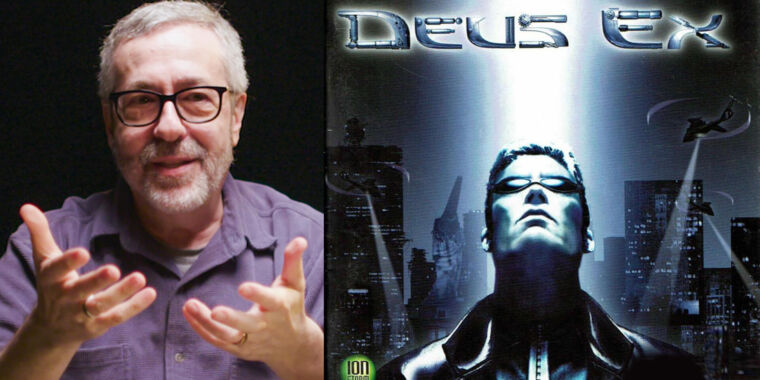
Coming in under the wire here is our last video for 2021—and we tried to make it a fun one. If you play games, chances are you’ve played something that Warren Spector was involved in creating—with stints at Origin, Ion Storm, and Disney, he helped design and/or produce a whole giant pile of famous titles, including Wing Commander, various Ultimas, System Shock, and the title we’re focusing on today: the original Deus Ex.

But even for someone with Warren’s pedigree, and with an amazing and talented design team backing him up, Deus Ex was a challenge to pull off. The idea was to produce a game that enabled the player to approach things in whatever way the player wanted. If you’re playing a shooter like Doom and you run into a difficult section that you can’t get through, there often isn’t an alternate path that involves not shooting; similarly, if you’re playing a sneaker like Thief and you run into a difficult section of a heist where you keep getting detected, you can’t just pull out your sword and start whacking things. (Well, you can, but you’ll quickly wind up dead.) Frustrated by the gameplay linearity of most genres, Warren wanted to do things a different way and make a game where all play-styles were valid.

This obviously required considerably more work than simply building a shooter or a sneaker—though, for anyone who’s gotten lost in Deus Ex‘s possibilities—from exploding barrels to “LAM ladders”—it’s clear that Warren’s team succeeded. Deus Ex is widely regarded as one of the best open-world RPGs ever created, and its flexibility led to all kinds of cool emergent gameplay tricks.

Warren was kind enough to sit down with Ars to talk about the difficulties of actually pulling off Deus Ex‘s “three-games-in-one” approach, and we’re grateful for his time. If you enjoy this interview, then good news: we’ll have a much longer extended cut coming in the new year (Warren is a great storyteller, and we had so much cut material that we’d be crazy not to do a long version that features all his stories!).

Thanks for watching, and stay tuned!

https://arstechnica.com/?p=1821174