Andrew Cunningham and Lee Hutchinson have spent decades of their lives with Robert Jordan and Brandon Sanderson’s Wheel of Time books, and they’re bringing that knowledge to bear as they recap each episode of Amazon’s new WoT TV series. These recaps won’t cover every element of every episode, but they will contain major spoilers for the show and the book series. If you want to stay unspoiled and haven’t read the books, these recaps aren’t for you.
New episodes of The Wheel of Time will be posted to Amazon Prime subscribers every Friday.
<a href="https://rassegna.lbit-solution.it/wp-content/uploads/2021/12/the-wheel-of-time-episode-7-finally-tells-us-who-the-dragon-is-4.jpg" class="enlarge" data-height="466" data-width="700" alt="Moiraine in the Ways. It's dark in here. Like, Game of Thrones season 8 dark.”><img alt="Moiraine in the Ways. It's dark in here. Like, Game of Thrones season 8 dark.” src=”https://rassegna.lbit-solution.it/wp-content/uploads/2021/12/the-wheel-of-time-episode-7-finally-tells-us-who-the-dragon-is-1.jpg” width=”640″ height=”426″ srcset=”https://rassegna.lbit-solution.it/wp-content/uploads/2021/12/the-wheel-of-time-episode-7-finally-tells-us-who-the-dragon-is-4.jpg 2x”>
Enlarge/ Moiraine in the Ways. It’s dark in here. Like, Game of Thrones season 8 dark.
Amazon Studios
Andrew: I wouldn’t say that the middle of this Wheel of Time season slowed down, exactly, but episode seven sees the show kicking back up into a busier register that reminded me more of the bewildering early episodes of the season. In just one episode, we navigate through the darkness of The Ways; we encounter our first Borderlanders, the Blight, and the fortress city of Fal Dara; we get a small info dump on Lan’s doomed homeland of Malkier; we meet a woman named Min who sees visions of the future; and the show resolves the mystery of Who The Dragon Reborn Is (we will talk about the how and the who momentarily, but let’s just say book readers won’t be surprised). That’s a long list of stuff—did any of it stick out to you?
Lee: So many things stuck out! I have so many thoughts on this one, and not all of them are positive. And I’m a little disappointed in the show for playing dirty with its big mystery—we’ll get to that.
But the thing that stuck out most is the pre-credits intro, where we get to see an Aiel Maiden of the Spear doing what Maidens do best: killing the crap out of things. The moment of compassion between Tam (wearing the Golden Bees of Illian) and the maiden during Rand’s birth was so incredibly powerful—it was an instance of pure, raw humanity that transcended conflict, and I thought it was really nice. On the other hand, book readers know precisely who Rand’s mother is, and without spoiling anything at all about that Maiden’s identity, I’m starting to wonder if the show is going to change up Rand’s mom from the books. I am somewhat doubtful, given how well the woman we see on screen fights, that her identity is the same as it is in the books. Do you think I’m off-base here, Andrew? Either way, I loved the little prologue. Easily my favorite part of the episode, and possibly my favorite series moment so far.
Enlarge/ Another image from the Ways. Like Moiraine, Lan is also good at striding purposefully.
Amazon Studios
Andrew: I think the cold open was trying to do a couple of things—show us something about Rand’s previously hinted-at parentage, and show us how well Aiel characters fight. The latter bit is endlessly discussed in the books, and while Aiel only hover at the margins of this first season, I’d expect the accelerated pace of the show to bring us in contact with more of them next year. This scene accomplishes those things! And as for a more detailed depiction of who Rand’s mother is, as a person, there’s some room for the show to fudge this, given how little we actually learn about her show-character from this brief glimpse. While we’re talking about things that were adapted well, I did think the spookiness of the Ways was pretty pitch-perfect. And if Machin Shin (or the Black Wind, if you prefer) doesn’t work exactly as it did in the books, I do really like the depiction of it as a force that breaks you down by repeating all the stuff that the shittiest part of your brain tells you about yourself. (Maybe you don’t know what I am talking about if you don’t have a history of dealing with impostor syndrome and depression! But it hit uncomfortably close to home for me.)
Enlarge/ Once in the Borderlands, we meet Agelmar Jagad, Lord of Fal Dara, and his sister Amalisa. We also find out Amalisa can channel, though not strongly enough to become a full Aes Sedai.
Amazon Studios
Lee: I am 100 percent OK with the depiction of Machin Shin in the Ways—it’s suitably creepy, and it also works as a storytelling change to hurry everybody’s plots along, because this is the second-to-last episode of the season. Whispering the characters’ inner fears back to them is a neat way to surface (or re-surface) that information to the audience.
I wish the Ways themselves had been a little easier to see on the screen—they were a little Battle of Winterfell-esque in how dark they were. (Though that may just have been the lower bitrate of the media screener we were watching.) Obviously it’s hard to depict on screen a place that’s pitch black and lit only by torches, but I could have used a little more light to actually, you know, see stuff.
There is one major complaint I have about Machin Shin’s whispers, and it has to do with the show not playing fair with its mysteries. But lemme table that for just a moment—I’ve got a big bit of spleen-venting to do about the episode’s middle, where the characters rest overnight in Fal Dara.
https://arstechnica.com/?p=1821170
What physics can teach us about Pamplona’s annual running of the bulls
[embedded content]
Physicists from Argentina and Spain have studied the pedestrian dynamics at the annual running of the bulls in Pamplona.
In his first and arguably most famous novel, The Sun Also Rises, Ernest Hemingway wrote tersely but lovingly about the annual running of the bulls in Pamplona, Spain, during the seven-day Festival of San Fermín. “One man fell, rolled to the gutter and lay quiet,” the protagonist, Jake, observes while watching from a balcony. “But the bulls went right on and did not notice him. They were all running together.” A new analysis of the physics behind the dynamics of the crowds running from the bulls takes the probability of falling into account, according to a recent paper published in the Proceedings of the National Academy of Sciences.
Local legend holds that the running of the bulls dates back to northeastern Spain in the early 14th century. Cattle herders at the time found that hurrying the beasts through the streets was an efficient way to move livestock from fields or barges to the market—or the bullfighting ring. Young men started racing in front of the charging bulls, competing to see who could make it safely to the bull pens without being overtaken (or worse, trampled and gored). The race eventually became part of the San Fermín festival and is now the festival’s most popular event.
Enlarge/ Revelers run with Nunez del Cuvillo’s fighting bulls during the eighth day of the San Fermin Running of the Bulls festival on July 13, 2017, in Pamplona, Spain.
Gari Garaialde/Getty Images
Per official records, 15 people have died during the running of the bulls in Pamplona since 1910, usually from being gored. Sometimes bystanders can be injured or killed, too, especially if they’re trying to capture live footage of the event with their smartphones. That happened during a different bull run, this time in Villaseca de la Sagra, Spain. In 2015, a 32-year-old man was gored from behind while attempting to share his experience by way of a smartphone recording. The victim died of neck and thigh wounds. Hot tip: maybe running away from charging bulls isn’t the best time to try to snap a selfie.
As I’ve written previously, pedestrian traffic is a fascinating case study in dynamic collective behavior, and hence it holds much interest for physicists. (Back in September, a pair of then-recent papers on pedestrian traffic dynamics were honored with Ig Nobel Prizes in physics and kinetics, respectively.) Physicists typically model such systems as interacting matter particles, with social forces acting on people in similar ways to physical forces. But modeling such a complex system is difficult, in part because of a dearth of high-quality experimental data. This is especially true in the case of pedestrians fleeing from real danger—say, six bulls charging through the streets.
Although the running of the bulls is often offered as an example of so-called “competitive pedestrian dynamics,” Daniel Parisi—a co-author of the recent PNAS paper and a physicist at the Instituto Tecnologico de Buenos Aires in Argentina—noticed that the scenario had not yet been studied in detail. So he and his colleagues set about to rectify that deficiency. “Runners, first waiting for and then escaping from bulls, constitute a fascinating annual scenario of real fleeing pedestrians, becoming an invaluable opportunity for studying and understanding extreme pedestrian dynamics,” the authors wrote.
The researchers recorded two runs on two consecutive days on July 8 and 9, 2019, in two different spots on Estafeta Street. (The Pamplona running of the bulls was canceled in 2020 and 2021 because of the pandemic.) They were able to extract the trajectories of individual bulls and runners from those recordings for analysis. Runners (and spectators) began the morning milling about the route to the bull ring. Once the ring doors were opened, most of the spectators moved inside. That reduced street congestion since mostly just the runners remained, waiting for the bulls to be released.
The team observed a shockwave of running pedestrians moving at high speed a few seconds before the first bulls arrived, triggering the start of the race. Once the runners in front and the bulls behind them passed, a wake of runners with decreasing speed formed behind. Within 40 or 50 seconds, the system returned to a more normal situation of pedestrians walking at a leisurely pace along the street.
Parisi et al. knew that many prior studies of pedestrian systems relied on a fundamental speed-density diagram to model such systems. The speed of a given group of pedestrians usually decreases as the density of the crowd increases. “Under ordinary circumstances, this behavior can be explained because people try to avoid physical contact and slow down when the available space reduces,” they wrote in their paper.
https://arstechnica.com/?p=1820956
Players invest $54M in Molyneux’s NFT game Legacy in hopes of earning even more
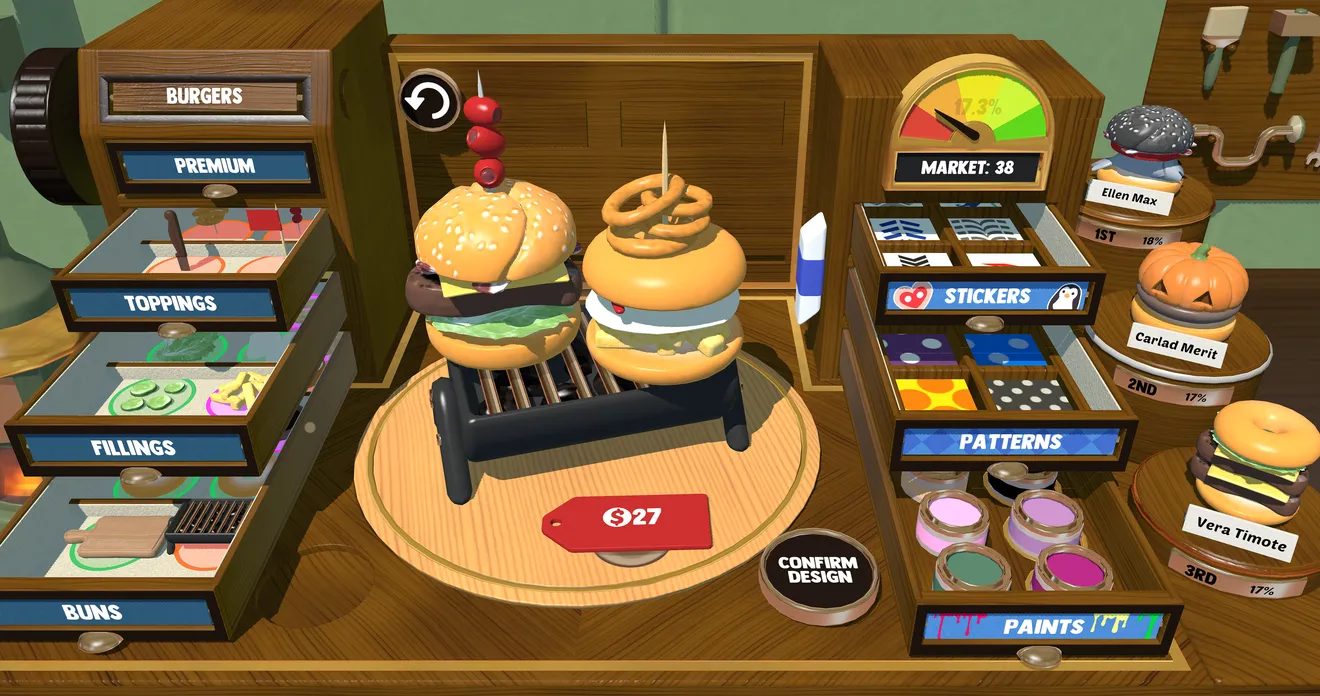
<img src="https://rassegna.lbit-solution.it/wp-content/uploads/2021/12/players-invest-54m-in-molyneuxs-nft-game-legacy-in-hopes-of-earning-even-more.png" alt="Legacy investors earn the ability to make more money in-game by crafting and selling unique items.”>
Enlarge/Legacy investors earn the ability to make more money in-game by crafting and selling unique items.
On Saturday, Peter Molyneux’s 22cans studio and blockchain gaming company Gala Games announced the first limited land sale in Legacy, an NFT-powered game being sold as “a creative entrepreneur’s dream come true.” Less than a week later, early player-investors have already poured over $54 million into the virtual-land non-fungible tokens that make up the game, which isn’t expected to launch until sometime next year.
How it works
Described as “the first ever Blockchain Business Sim,” Legacy lets players design in-game products and buildings that are then manufactured by virtual workers in in-game factories. Players can trade those items with other players in an “open market” and compete in in-game competitions for “leaderboard positions and big prizes” (denominated in the game’s own LegacyCoin cryptocurrency).
To participate in that in-game economy, though, you’ll have to be a Legacy landowner. Currently, that means purchasing one of 4,661 available plots of land in a virtual recreation of London using the Gala Games marketplace (it’s unclear how many more plots of Legacy land will eventually be made, if any).
As of this writing, over 4,500 of those plots have already been pre-sold for a combined price of about 13,365 Eth (over $54 million at today’s prices), according to public listings on Gala Games’ site. That includes a unique “Heart of London” plot that sold for 220.607 Eth (over $900,000) and 2,000 “common” startup deeds that sold for about 0.8 Eth ($3,266). Just 140 plots remain, for a combined asking price of 527.04 Eth ($2.148 million).
<a href="https://rassegna.lbit-solution.it/wp-content/uploads/2021/12/players-invest-54m-in-molyneuxs-nft-game-legacy-in-hopes-of-earning-even-more-3.png" class="enlarge" data-height="846" data-width="1252" alt="A map of the currently available plots of land being pre-sold in Legacy‘s version of London.”><img alt="A map of the currently available plots of land being pre-sold in Legacy‘s version of London.” src=”https://rassegna.lbit-solution.it/wp-content/uploads/2021/12/players-invest-54m-in-molyneuxs-nft-game-legacy-in-hopes-of-earning-even-more-1.png” width=”640″ height=”432″ srcset=”https://rassegna.lbit-solution.it/wp-content/uploads/2021/12/players-invest-54m-in-molyneuxs-nft-game-legacy-in-hopes-of-earning-even-more-3.png 2x”>
Enlarge/ A map of the currently available plots of land being pre-sold in Legacy‘s version of London.
More expensive pieces of land come with the ability to grow your business with “Business Partners,” theoretically increasing your in-game creation and earning potential. Landowners can also act as landlords by using “Legacy Keys” to loan out a portion of their land to others, earning some of the lessees’ takings as passive income (more expensive land comes with the ability to earn more Legacy Keys). And owners of land rated as “Rare” or higher (starting price: 4.55 Eth, or $18,576) are promised access to the game’s Beta test, while the purchase of “Legendary” land (30.33 Eth or $123,838) grants access to the game’s coming Alpha test.
Why NFTs?
The potential of “pay to earn” gameplay exemplified by Legacy‘s planned design doesn’t require NFTs in any real sense. Virtual spaces like Second Life and games like Counter-Strike GO and Eve Online have been officially supporting versions of the same idea for years, to name just a few. These games all manage their robust in-game economies using the same centralized servers that power the game itself.
While the Legacy NFTs can technically outlast the Legacy game and the companies that run it, it’s unclear what long-term value they’ll have if the game itself becomes unplayable. By using NFTs, though, 22cans and Gala Games have latched onto the buzzy tech trend of the moment, attracting additional early interest from investor-players eager to get in on the ground floor of a game that is currently barely a design document.
<a href="https://rassegna.lbit-solution.it/wp-content/uploads/2021/12/players-invest-54m-in-molyneuxs-nft-game-legacy-in-hopes-of-earning-even-more-4.png" class="enlarge" data-height="773" data-width="1076" alt="The description page for the unique "Heart of London" Legacy NFT that sold for about $900,000.”><img alt="The description page for the unique "Heart of London" Legacy NFT that sold for about $900,000.” src=”https://rassegna.lbit-solution.it/wp-content/uploads/2021/12/players-invest-54m-in-molyneuxs-nft-game-legacy-in-hopes-of-earning-even-more-2.png” width=”640″ height=”460″ srcset=”https://rassegna.lbit-solution.it/wp-content/uploads/2021/12/players-invest-54m-in-molyneuxs-nft-game-legacy-in-hopes-of-earning-even-more-4.png 2x”>
Enlarge/ The description page for the unique “Heart of London” Legacy NFT that sold for about $900,000.
Using the Ethereum blockchain also means that LegacyCoin transactions will use a lot of energy and could lead to much more environmental harm than a centralized database would produce. On its Legacy land sales page, Gala writes that it is “committed to the health and safety of our planet” and “committed to becoming and staying carbon negative.” To that end, the company promises to plant a tree every time you make a purchase on the site.
Technology aside, whether players’ early investment in Legacy pays off depends almost entirely on whether or not the game can attract a dedicated and growing base of players who are willing to invest additional money into the ecosystem (either to get in-game benefits or for purely speculative purposes). Early NFT gaming startups like Axie Infinity have shown that even extremely basic games can ride their “pay to earn” potential to significant success.
Final Fantasy VII Remake on PC: A gorgeous start, but where are the toggles?
Enlarge/ Cloud Strife is finally on PC again, and this image is taken directly from real-time rendering in the new PC port.
Square Enix
Final Fantasy VII Remake‘s exclusivity on consoles ends today. Nineteen months after its launch on PS4 and seven months after its PS5 update, Square Enix’s ambitious return to Midgar breaks out of Sony’s console family to land on PCs.
If you’re the type of Final Fantasy fan who wants little more than a way to play this game on your computer, you can expect a beautiful and mostly solid port that delivers the perks of the PS5 version to many more people. I went into my testing of FFVIIR on PC with higher hopes, however. For gamers like me, the news isn’t nearly as good, and that makes its unusually high PC price of $70 even harder to swallow.
A graphics menu brick wall
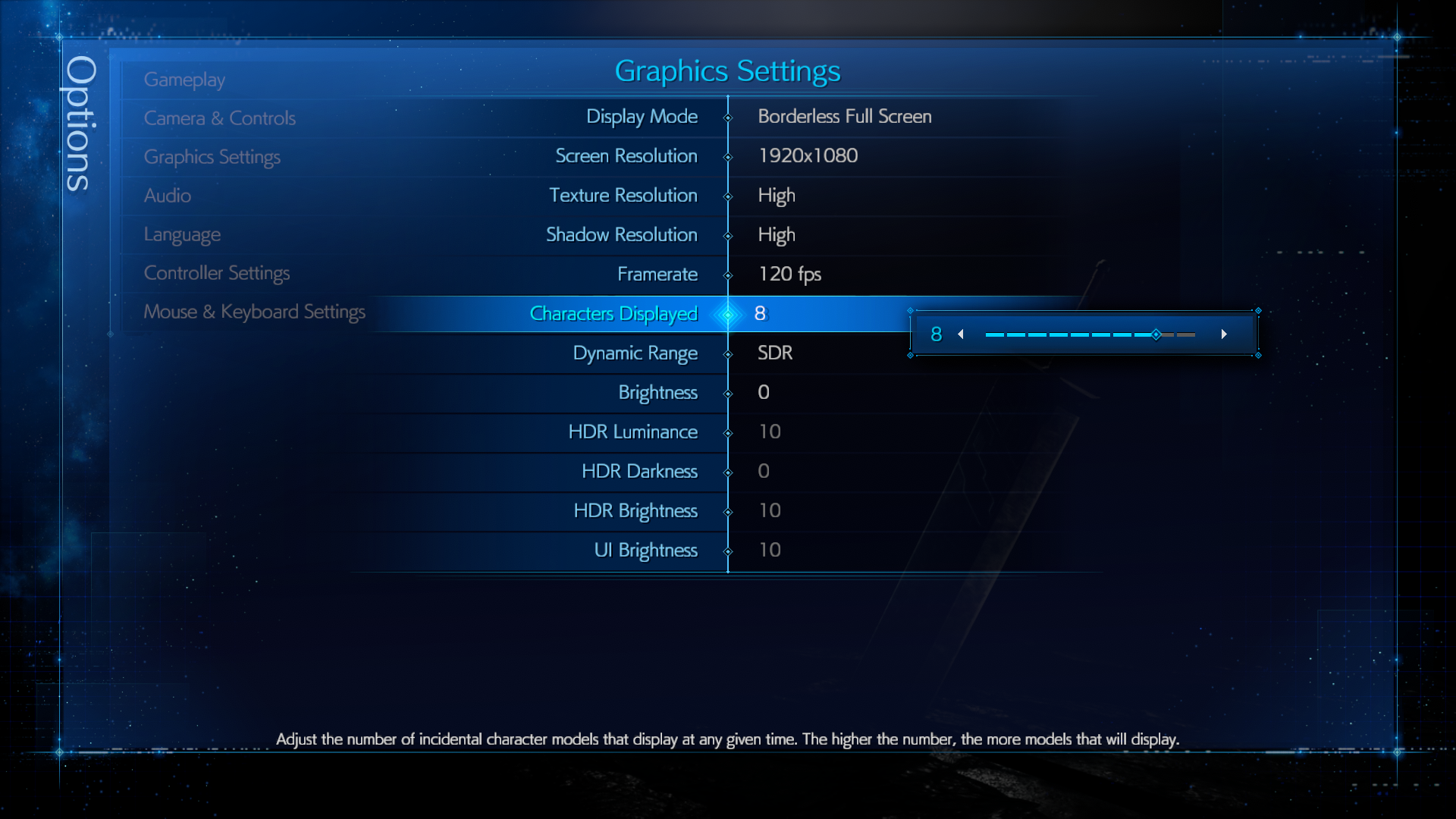
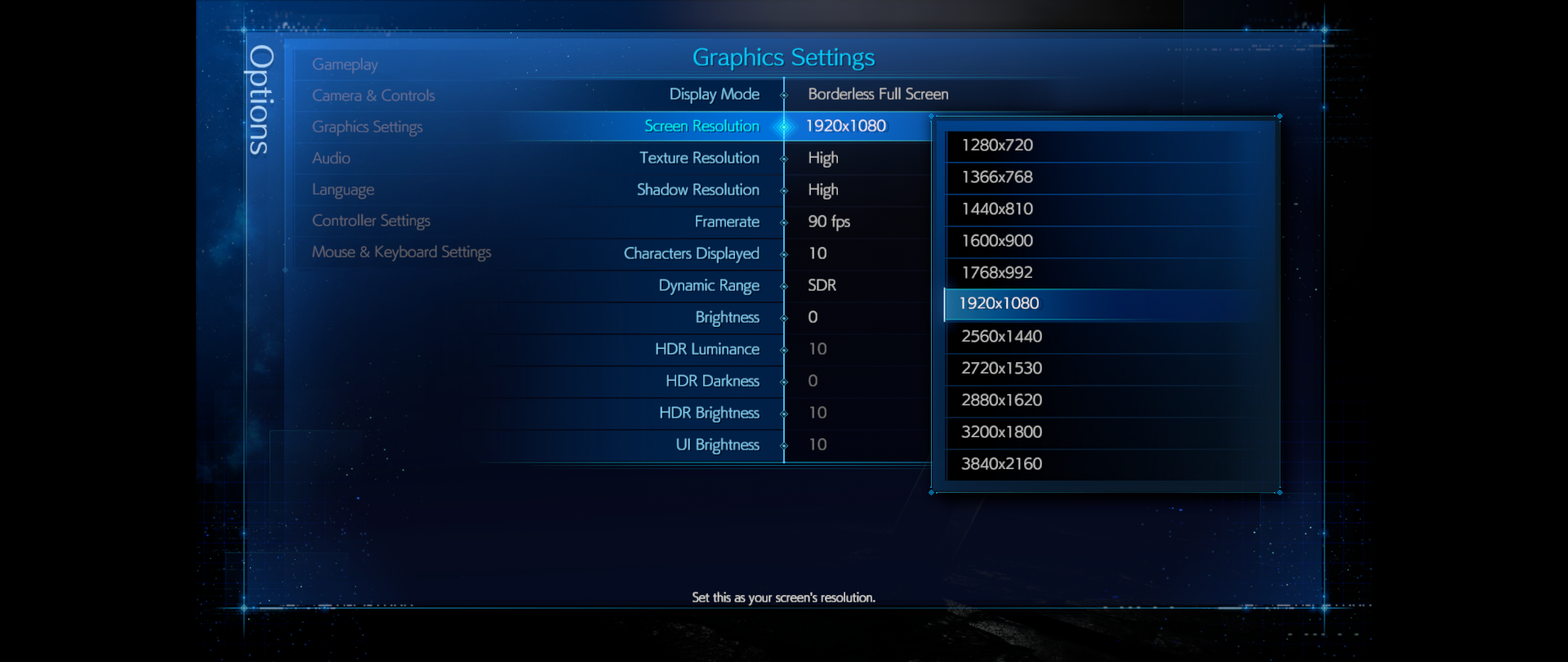
<a href="https://cdn.arstechnica.net/wp-content/uploads/2021/12/Screenshot-1308.png" class="enlarge" data-height="1080" data-width="1920" alt="You might think that this is the first of multiple graphics settings menus in FFVIIR‘s PC version. Nope. This is it.”><img alt="You might think that this is the first of multiple graphics settings menus in FFVIIR‘s PC version. Nope. This is it.” src=”https://rassegna.lbit-solution.it/wp-content/uploads/2021/12/final-fantasy-vii-remake-on-pc-a-gorgeous-start-but-where-are-the-toggles-1.png” width=”980″ height=”551″>
Enlarge/ You might think that this is the first of multiple graphics settings menus in FFVIIR‘s PC version. Nope. This is it.
My first stop before starting any FFVIIR PC gameplay was the options screen, where I slammed into the brick wall that is the above “graphics” menu.
If you’ve played an Unreal Engine 4 game on PC over the past few years, you can immediately tell which crucial settings are missing. There’s no toggle to adjust anti-aliasing quality or methodology. You can’t disable V-sync. And most of the finer-tuned graphical toggles that can increase performance for lower-powered machines are entirely absent, including ambient occlusion, reflection, depth-of-field, motion blur, and particle-effects sliders.
Worse, the included settings are limited. The “FPS” menu limits players to a few pre-selected frame rates: 30 (same as PS4), 60 (same as PS5’s default), 90, and 120. (Nothing higher for the 144 Hz and 165 Hz crowds.) As I’ve confirmed in tests, this attempt to lock frame rate to a rounded target leads to occasionally choppy performance when the game can’t hit its mark. This problem results in something that resembles frame-pacing stutter; it seems the game does not play nice with a variable refresh rate.
At 1080p resolution, my favorite medium-high-spec laptop runs the game mostly at 90 fps, but the frame rate can drop when the camera shifts to an entirely new real-time-rendered scene or when the game renders any particle-filled explosions. In these moments, frame rate stutter is quite severe, implying that some optimization work remains for Square Enix’s PC porting team.
<a href="https://cdn.arstechnica.net/wp-content/uploads/2021/12/Screenshot-1377.png" class="enlarge" data-height="810" data-width="1920" alt="This capture was taken while Windows 10's resolution was running at a 21:9 ratio. Those are black bars on the left and right of this captured screen. FFVIIR didn’t acknowledge this fact in either menus or live gameplay.”><img alt="This capture was taken while Windows 10's resolution was running at a 21:9 ratio. Those are black bars on the left and right of this captured screen. FFVIIR didn’t acknowledge this fact in either menus or live gameplay.” src=”https://rassegna.lbit-solution.it/wp-content/uploads/2021/12/final-fantasy-vii-remake-on-pc-a-gorgeous-start-but-where-are-the-toggles-2.png” width=”980″ height=”413″>
Enlarge/ This capture was taken while Windows 10’s resolution was running at a 21:9 ratio. Those are black bars on the left and right of this captured screen. FFVIIR didn’t acknowledge this fact in either menus or live gameplay.
And if you’re looking for ultra-wide monitor support, you won’t find it here. FFVIIR on PC is locked to a 16:9 ratio.
Quality comparisons. This one is hard to see. Look in the background at the NPCs. That’s the game running at “maximum” crowd settings.
Look again, and you’ll see that the crowd in the distance is not there. They’ll only appear when they’re within a certain radius of Cloud at this “minimum” setting for NPC crowds.
“High” shadow quality.
“Low” shadow quality. Lowering the quality to this setting only scrapes back about 1.25 percent performance, so I do not recommend doing so.
Currently, your only path to improving PC performance in the default menus comes from a shadow resolution option and a slider that determines the number of visible NPCs (applicable only in towns). The latter is basically a level-of-detail slider for how long it takes for a crowd of townspeople to pop into view. It doesn’t seem to impact any of the game’s more intensive battles, and changing the setting from its minimum spec to its maximum gets you only a 1.5 percent increase in performance. Switching shadow quality from high to low results in only 1.25 percent more performance at the cost of noticeably uglier shadows. Neither path to meager frame rate savings is worth the apparent visual degradation.
https://arstechnica.com/?p=1820599
Review: Spider-Man: No Way Home is the best superhero film of the year
Enlarge/ MJ and Peter Parker, dropping in one more time.
Sony Pictures / Marvel Studios
After watching Spider-Man: No Way Home, the third Tom Holland live-action film in the series, I’m befuddled. How do I fully convey its quality without spoiling even a smidge of its contents? As I left the theater, I found myself giddily talking aloud about the film, recounting its delightful surprises. It might have been enough to earn a slap from a spoiler-averse passerby.
Tricky as it may be to convey the film’s charm, laughs, excitement, and heart without revealing its twists, I’ll do my best to keep most of No Way Home‘s surprises as hidden as Peter Parker’s identity.
Something really wacky happens (shocker)
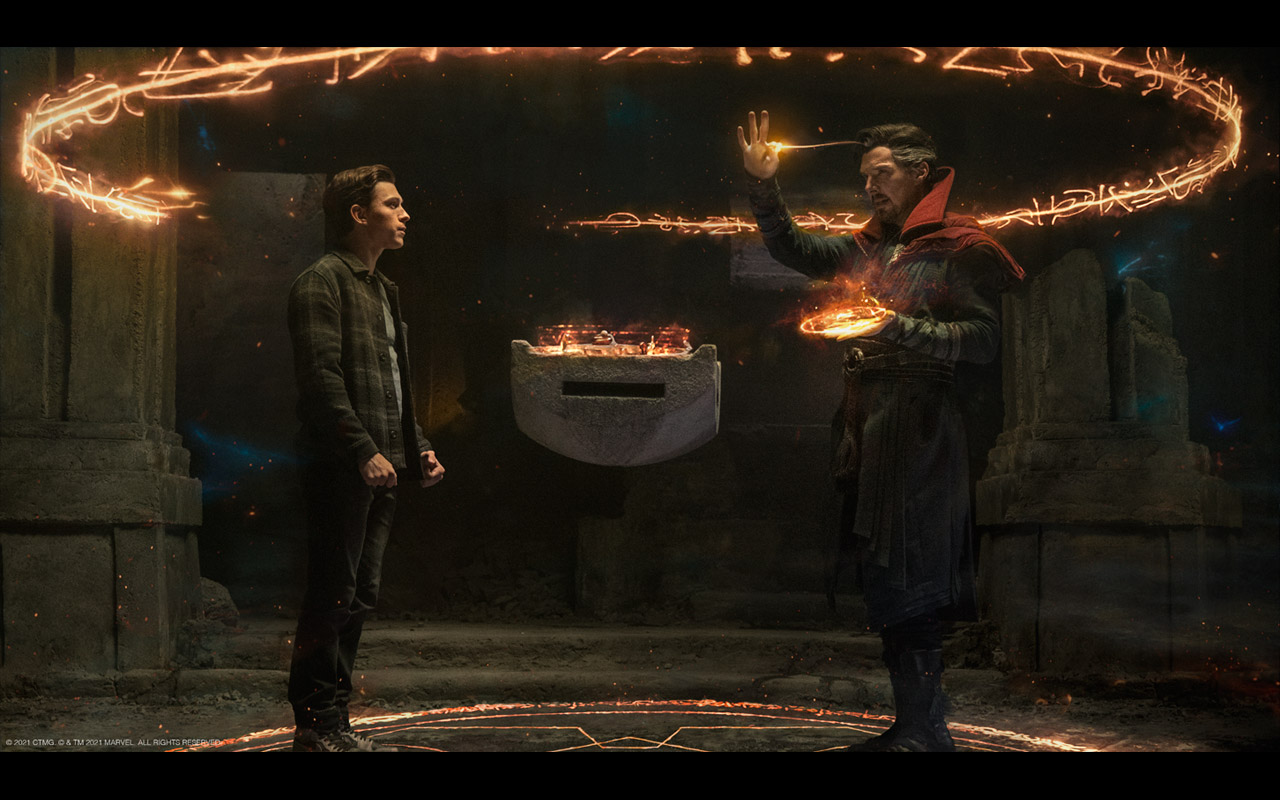
<a href="https://cdn.arstechnica.net/wp-content/uploads/2021/12/img3.jpg" class="enlarge" data-height="800" data-width="1280" alt="I don't think it's a spoiler to confirm that at least one familiar Marvel Studios character appears in No Way Home.”><img alt="I don't think it's a spoiler to confirm that at least one familiar Marvel Studios character appears in No Way Home.” src=”https://rassegna.lbit-solution.it/wp-content/uploads/2021/12/review-spider-man-no-way-home-is-the-best-superhero-film-of-the-year-1.jpg” width=”980″ height=”613″>
Enlarge/ I don’t think it’s a spoiler to confirm that at least one familiar Marvel Studios character appears in No Way Home.
Sony Pictures / Marvel Studios
That simile may make you sweat a bit, however, if you’ve been following the Holland series that kicked off with Spider-Man: Homecoming in 2017. Its 2019 sequel ended with an NYC-rocking reveal of who’s been hiding beneath Spider-Man’s mask, and NWH picks up at this exact point in time, with Parker (Tom Holland) and his girlfriend MJ (Zendaya) escaping an alarmed, newly informed mob via frantic web-swinging.
Exactly what happens from there? Let’s review what the trailers for the film have revealed: calamity ensues. Dr. Strange shows up. Something really wacky happens in the city. It involves a few familiar faces—though to be clear, those faces are familiar to real-world moviegoers, not Spidey. He has to save the day—and he gets some out-of-nowhere help.
<a href="https://cdn.arstechnica.net/wp-content/uploads/2021/12/img17.jpg" class="enlarge" data-height="800" data-width="1280" alt="There might be a spoiler in Spidey’s claws’ reflections. Don’t look too closely if you want to be safe.”><img alt="There might be a spoiler in Spidey’s claws’ reflections. Don’t look too closely if you want to be safe.” src=”https://rassegna.lbit-solution.it/wp-content/uploads/2021/12/review-spider-man-no-way-home-is-the-best-superhero-film-of-the-year-2.jpg” width=”980″ height=”613″>
Enlarge/ There might be a spoiler in Spidey’s claws’ reflections. Don’t look too closely if you want to be safe.
Sony Pictures / Marvel Studios
Depending on what trailer or magazine spread you’ve seen during the film’s promotional period, you may have pieced together at least one or two of the film’s surprises. Unless you’ve dug into the most spoiler-filled corners of the Internet, however, you’ll still go in pretty fresh. (I’ve gone back to some of the rumors and plot claims that made the online rounds a few months ago. If you happened to peek at those, I can assure you they were not exactly accurate—and are kind of funny in light of how things turn out in the film.)
A friend triangle that anyone can love
Enlarge/ Mild-mannered basement diving, made all the more fun by these actors’ electric bond.
Sony Pictures / Marvel Studios
I can still describe some of the fun and charm of NWH without giving much away, especially since it’s not a spoiler to point to the core triangle relationship that anchors the film: Peter, MJ, and best friend Ned (Jacob Batalon). 2019’s Far From Home meandered with a jealousy subplot that disrupted the trio’s chemistry. Here, Parker’s revealed identity immediately strengthens the friends’ bond, though the film ultimately favors the development of its boyfriend-girlfriend duo. NWH deftly shows each half of the dating couple reaching out to the other in loving ways that make the other aspire to be more positive and cooperative, without in any way slowing down the momentum of the plot. Ned plays into the dynamic with Batalon’s consistently hilarious timing and delivery.
As far as adult figures go, Marisa Tomei turns in her best performance as the series’ Aunt May, as she continues to buck the one-dimensional support archetype that motherly characters get in superhero films. Her blunt, no-nonsense approach moves the film into surprisingly touching directions, and she is a good counterweight to Dr. Strange (Benedict Cumberbatch) as a new version of the “doubtful overseer” role that Robert Downey Jr. offered in 2017’s Homecoming. In squaring off as adversarial allies, Strange and Parker become an otherworldly Abbott and Costello, and each superhero actor digs his heels in to push that tension-filled relationship to interesting places. (Sadly, their initial bond in the film comes from an eyeroll-worthy plot Macguffin, though thankfully, its utter lack of logic is overcome by the touching places it leads Parker by film’s end.)
And then there are… other actors. Other actors are in this film. Some of them are humdrum. Some are convincingly and surprisingly savage. And some get into conversational and slapstick hijinks that are genuinely hilarious. NWH somehow maintains its plot momentum while connecting the dots for anyone who is unfamiliar with its characters. That deserves massive praise, considering how many characters the film is juggling by the end—approaching the excess of an average Avengers film—and it rarely wastes viewers’ time.
https://arstechnica.com/?p=1820817
Turns out that “HDMI 2.1” ports don’t need to actually support HDMI 2.1 features
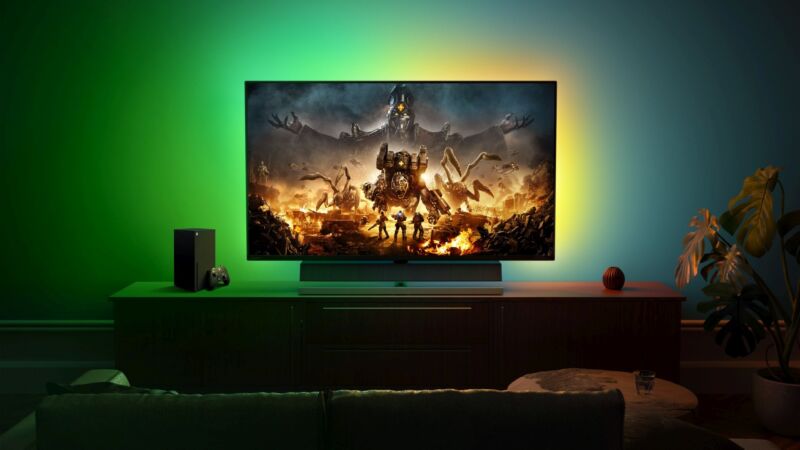
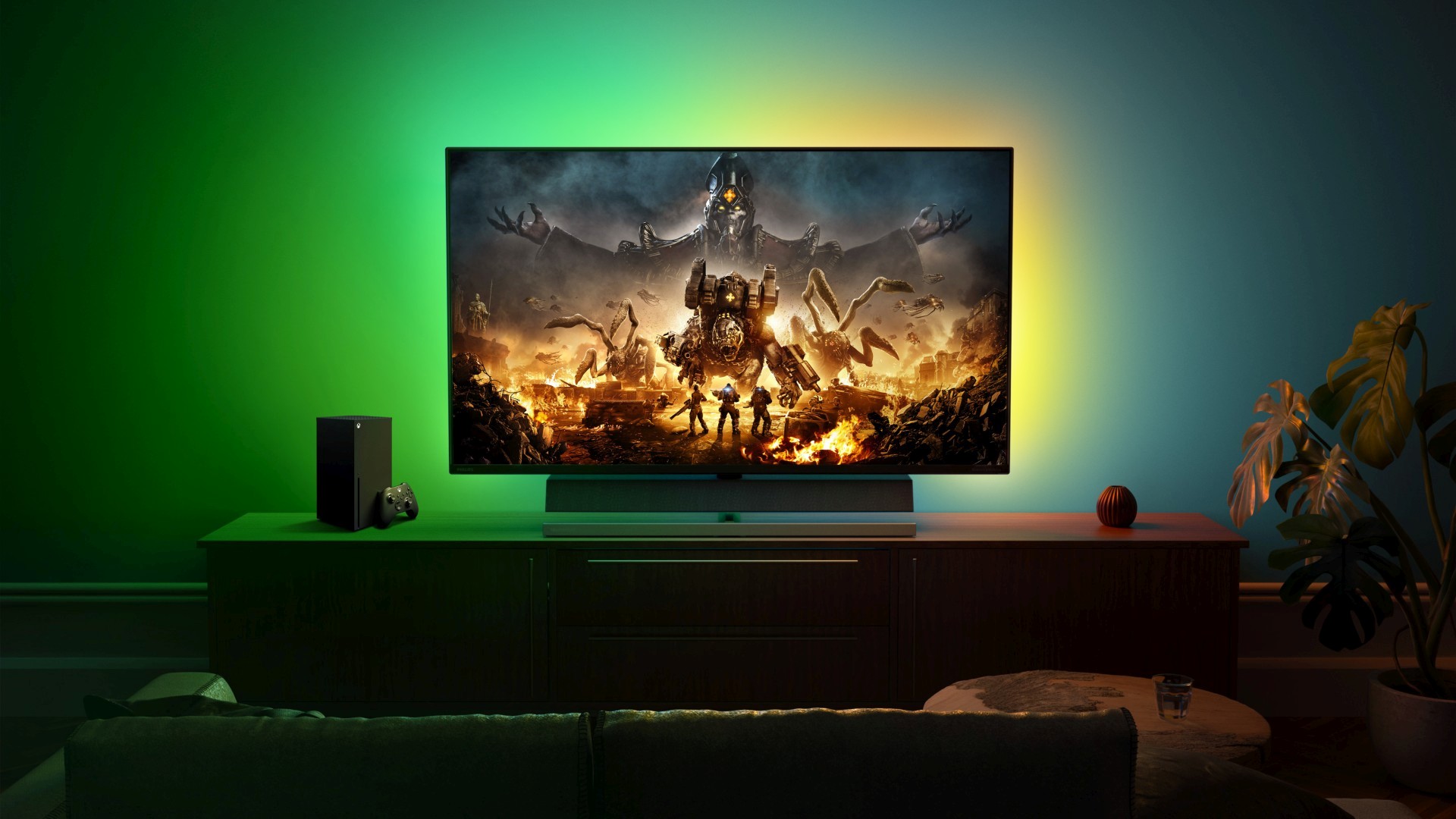
Enlarge/ Newer game consoles like the Xbox Series X and S support additional features on HDMI 2.1 displays, but HDMI 2.1 can mean different things depending on the product you’re buying.
If you dabble in high-end 8K TV equipment or own one of the newest Xbox or PlayStation consoles, you might be familiar with HDMI 2.1. The latest version of the ubiquitous display spec adds variable refresh rate support, reduces latency, and offers a big bandwidth increase that allows for higher resolutions, higher refresh rates, and greater color depth. At least, it can support those things.
It turns out that TV and monitor makers don’t actually need to support those marquee HDMI 2.1 features to claim HDMI 2.1 compliance. That’s the gist of a report from TFTCentral, which points out that the HDMI 2.1 spec actually fully replaces the HDMI 2.0 spec rather than simply upgrading it. So any manufacturer that supports HDMI 2.0-level features is technically supporting “HDMI 2.1” because the HDMI 2.0 spec doesn’t exist anymore. And the features we think of when we talk about HDMI 2.1—including Fixed Rate Link (FRL) signaling, variable refresh rate (VRR) support, Auto Low Latency Mode (ALLM), and the enhanced Audio Return Channel (eARC)—are technically optional.
“Products can no longer get certified for 2.0 only for 2.1, and also 2.1 features are optional to implement, so popular features like 4k120, ALLM, VRR are not required,” Brad Bramy, VP of marketing and operations for the HDMI LA, confirmed to Ars. “Manufacturers could only implement eARC, for example, and claim to be a 2.1-enabled device.”
Manufacturers that do claim HDMI 2.1 support are required by the HDMI Adopter Agreement to clearly specify which HDMI 2.1 features their devices support, though Bramy acknowledged that this can still be “confusing for consumers” and that individual manufacturers are ultimately responsible for letting people know what they’re getting. This confusion is being compounded by the fact that the “HDMI 2.0” terminology is still in widespread use, even though it has technically been deprecated.
“I think some older products certified under 2.0 just keep their… marketing intact,” said Bramy. “Some [manufacturers] unfortunately think that even if they are certified under 2.1, they should still refer to 2.0 if they haven’t implemented the 2.1 features, thinking that 2.0 is a known feature set. It is also just as confusing claiming 2.1 compliance and still using feature sets from 2.0 and not stating the features supported. So there are multiple scenarios, and they can all be confusing. And that is why the manufacturers and resellers should simply state which features they support. I can tell it is getting more clear as time goes by, but I’m not sure if it will ever be perfectly clear.”
Though this HDMI 2.1 situation is only making the rounds now, none of these facts is technically new—some digging in the Internet Archive Wayback Machine confirms that the HDMI 2.0 section had been removed from the hdmi.org website sometime between February 6 and February 13 of 2019. But there was a period of time when both specifications did coexist on the website, and the November 2017 press release (PDF) announcing the HDMI 2.1 spec didn’t mention that HDMI 2.0 would be going away. This also isn’t how the HDMI Forum handled the jump from HDMI 1.4 to HDMI 2.0, and it’s not how most companies and developers handle it when they release a new version of something.
There is one precedent for this, though it’s not something anyone should want to emulate: the USB Implementers Forum has continually slapped new version numbers on old versions of the USB spec, something that began when “USB 3.0” became “USB 3.1 gen 1” many years ago. The USB-IF has since raised this practice to the level of performance art, with absurd names like “USB 3.2 gen 2×2” and “USB 3.2 gen 1” (which is also USB 3.0).
This kind of naming chicanery is of obvious benefit to hardware manufacturers, who get to claim support for the newest version of a specification even if they don’t technically support all the newest and best features of that specification. These manufacturers are well-represented in the HDMI Forum and the USB-IF, both as members and as part of the former organization’s leadership. But for people who are just trying to buy things that support the features they need, this sort of behavior continues to be confusing at best and intentionally misleading at worst. You can look at Dell, HP, Lenovo, and Acer product pages and see four different terms to refer to the same kind of port: “USB 3.0,” “SuperSpeed USB 5 Gbps signaling rate,” “USB 3.2 gen 1,” and “USB 3.1 gen 1,” respectively. All of these currently are (or have been, at varying points in time) perfectly valid ways to refer to this kind of port.
The situation with HDMI 2.1 isn’t this bad yet, but if the HDMI Forum continues to introduce “new” version numbers that retroactively apply to older versions of the standard, we’ll end up in the same place. For the time being, you’ll just need to be extra careful when buying HDMI 2.1-labeled monitors and TVs if you’re interested in 8K, HDR, higher refresh rates, and other HDMI 2.1-specific features. Some companies are also taking it upon themselves to make it clearer which products support all HDMI 2.1 features, as Microsoft has done with its “Gaming Features for Xbox” monitor labels. But in the long term, I am once again begging standards bodies to just let version numbers mean something.
https://arstechnica.com/?p=1820494
New PS4 homebrew exploit points to similar PS5 hacks to come
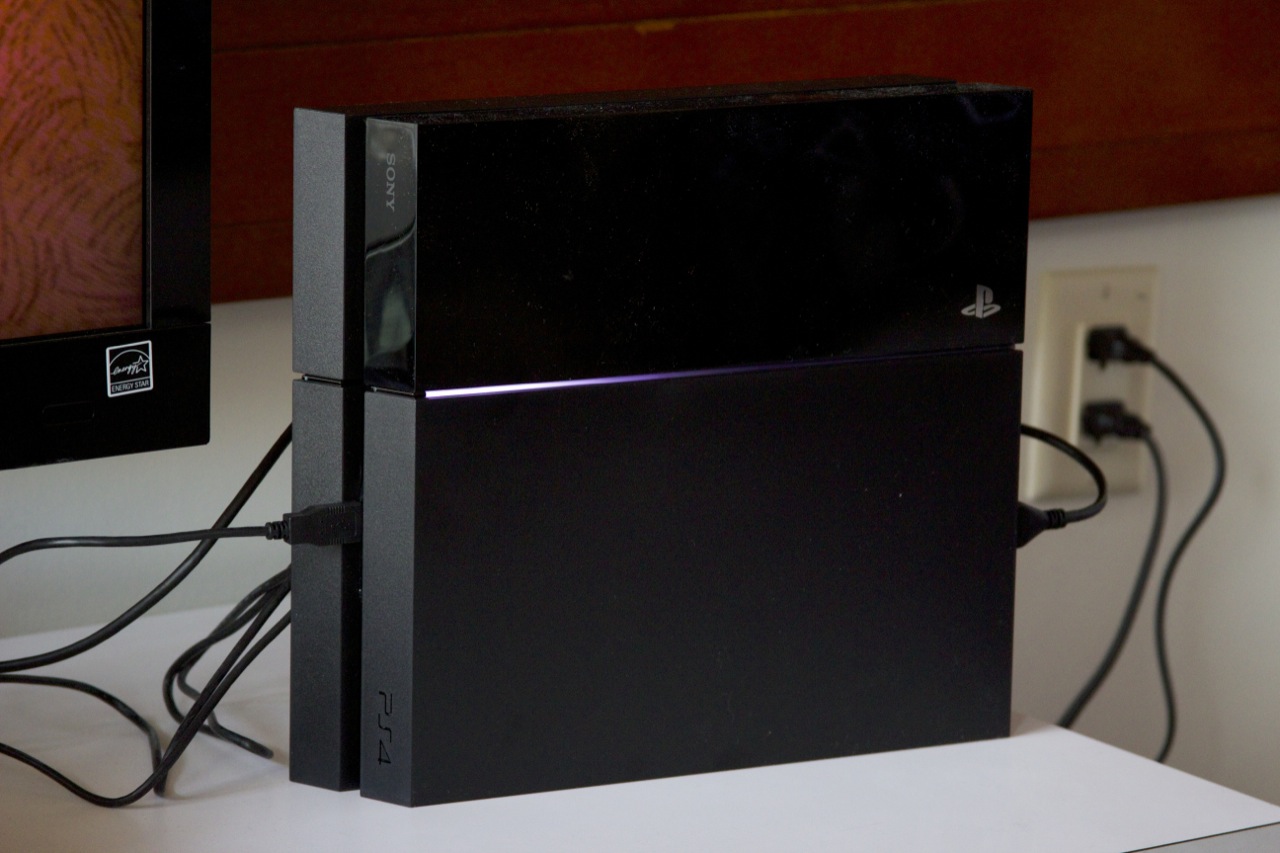
Hackers have released details of a new exploit that allows homebrew and custom firmware to be installed on PS4 consoles running relatively recent firmware. What’s more, the specifics of the exploit suggest similar homebrew capabilities may soon be available on some versions of the PlayStation 5.
On the PS4, the full exploit can now be triggered by visiting a website with specially formatted JavaScript via the PS4 web browser, allowing the system to run kernel-level code that bypasses the console’s usual security protections. From there, the exploit can read files from an inserted USB stick and install homebrew software, including existing custom PS4 firmware.
Specter, a well-known member of the console hacking scene, released a video of the exploit working on Sunday. By Monday, the files required for the exploit had been posted on GitHub alongside detailed instructions.
Not the first, not the last?
This isn’t the first time homebrew code has been executable on the PS4. A previous console exploit released publicly in March worked on consoles running firmware up to version 7.55, which was released by Sony roughly seven months prior in August 2020. This week’s exploit release, by contrast, works up to firmware version 9.00, which was released less than three months ago in late September.
Users with a fully updated PS4 won’t be able to make use of the exploit, which was already patched out in PS4 firmware version 9.03, released on December 1. In fact, the hackers suggest on GitHub that examining the differences between those two most recent firmware versions helped them figure out how to get the full exploit working.
The young age of that latest firmware patch, though, means fresh-from-retail PS4 consoles purchased today may still have the older version 9.00 firmware. That could be important for homebrew fans because there’s currently no known way to downgrade a PS4 to an earlier firmware version to make use of patched exploits.
Alright, was just a joke about caturday. The exploit is legit, and as a bonus: The kernel exploit affects Playstation5 as well! (no, ps5 is not ready or being released, the lead developer does not currently have a ps5 console)
On Github, the hackers note that the same underlying error “works on certain PS5 firmwares; however, there’s no known strategy for exploiting it at the moment.” On Twitter, hacker Znullptr (who also contributed to this latest exploit) adds that “the kernel exploit affects Playstation5 as well” but that a full exploit is not ready for that console because “the lead developer does not currently have a PS5 console.”
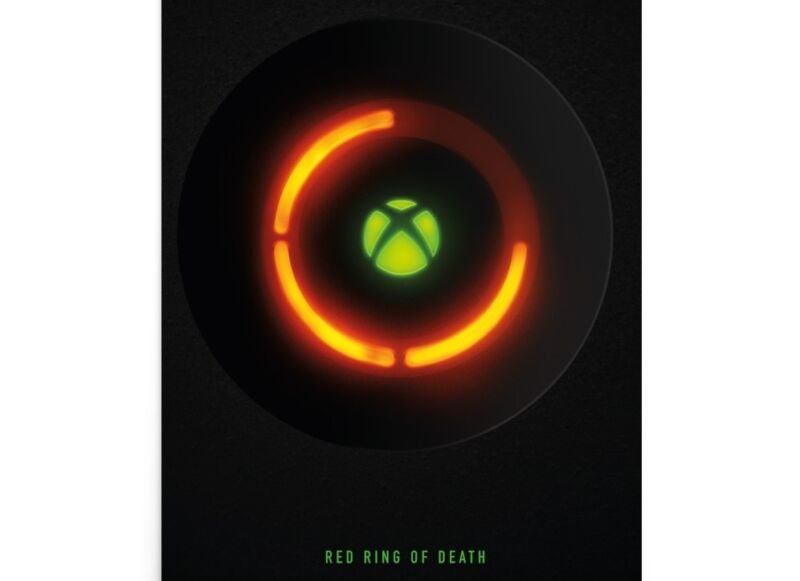
$25 Red Ring of Death poster commemorates Microsoft’s billion-dollar Xbox screw-up
If comedy equals tragedy plus time, this one is hilarious: Microsoft is now selling $25 “premium posters” to commemorate the “Red Ring of Death,” a systemic hardware failure in early Xbox 360 consoles that cost the company over $1 billion to fix.
It may be a funny story a decade and a half after the fact, but in mid-2007, the RRoD error was incredibly expensive and damaging for the then-young console and brand. Microsoft’s stopgap solution to the problem was a three-year warranty extension that was said to cost between $1.05 and $1.15 billion dollars (closer to $1.5 billion in today’s dollars). The red-ring error was caused by heat issues and “a badly designed graphics chip,” and it wasn’t fully addressed until late 2008, when a new console revision with a redesigned motherboard and cooler-running chips was released.
In an interview in 2015, then-Microsoft VP Peter Moore said that the warranty extension, while expensive, was a “Tylenol moment” that helped the company prevent irreparable damage to the Xbox brand. He also credited then-CEO Steve Ballmer with the decision to spend more than $1 billion to fix the problem—”I always remember $240 million of that was FedEx,” he said. “Their stock must have gone through the roof for the next two weeks.”
The posters are part of a marketing push commemorating the 20th anniversary of the original Xbox, a campaign that includes a six-part documentary called Power On. Despite being made and marketed by Microsoft, the presence of an entire episode about the RRoD debacle suggests that it’s not intended as a hagiography.
https://arstechnica.com/?p=1820226
Sony offers official PS5 faceplate colors after pushing out competition
[embedded content]
The faceplate trailer you’ve been waiting for.
After decades of purely black consoles, the PS5 stood out upon release for its use of striking, white faceplates. Now, more than a year after release, Sony is announcing a line of replacement faceplates in black and four other colors, alongside matching colored DualSense controllers.
The new console covers, announced this morning, will arrive in 23 countries in two waves. “Midnight Black” and “Cosmic Red” colors will be released starting on January 21, 2022, and “Nova Pink,” “Galactic Purple,” and “Starlight Blue” will follow in the first half of 2022. Each console cover can be removed and replaced easily without tools, as outlined on the PlayStation site (and this old teardown video).
Availability dates for the controllers are a little more confusing. Customers in the US, UK, France, and Germany can preorder the Galactic Purple controller from the PlayStation Direct shop for January 14 delivery, ahead of wider availability on February 11. The PlayStation Accessories site lists Nova Pink and Starlight Blue colors as available on January 14 as well, while Cosmic Red and Midnight Black colors are listed for a June 11 release on the PlayStation Direct store.
Enlarge/ The PS5 console cover can easily be removed and replaced without tools (despite the tools pictures here).
Sony’s promotional website lists its colorful console covers as “the only console covers made by PlayStation for PS5 that are designed to deliver the quality level you know and trust.” But Sony has had to take legal pains to help make that true, issuing a legal threat to one custom faceplate maker just weeks after the PS5’s release last November. More recently, Sony sent a cease-and-desist letter to Dbrand alleging the company’s darkplates replicated Sony’s “protected product design” for the PS5 casing. Dbrand subsequently changed the design for its Darkplates 2.0, which are missing the signature waves of the standard PS5 faceplates.
The announcement of Sony’s official faceplate solution comes about a month after the company was granted a design patent for the specific shape of the PS5 faceplates.
Ars Technica may earn compensation for sales from links on this post through affiliate programs.
Analogue Pocket review: The greatest Game Boy ever made
Enlarge/ Analogue Pocket, running The Legend of Zelda: Link’s Awakening in its Game Boy Color mode.
Sam Machkovech
The Analogue Pocket is a dream of a gaming device, and it begins shipping to preorder customers this week. It’s the most powerful, beautiful, and feature-rich system to revolve around the original Game Boy—and it has earned its mountain of pre-release hype. The Pocket supports any game cartridge with the words “Game Boy” on the label (including GB Color and GB Advance games), while cartridge adapters allow it to play other companies’ portable games. That combination of features makes Analogue’s latest product a wholly unique portable retro-gaming option—and for the most part, the manufacturer has nailed its execution.
But the Pocket is also a first-generation gadget. Its makers have never released a portable system before, which means that fans of the company’s previous TV-centric retro systems (like the Super Nt and Mega Sg) might wonder what they’re in for. Is the Pocket another slam-dunk—or does it have enough issues to merit waiting for an eventual system refresh?
Having now tested the Analogue Pocket for a whopping three weeks, I can say that the answer depends. If you bought during the system’s painfully brief preorder window late last year, don’t fret: your $199 purchase is an insane value. (For all future orders, the price is now $20 higher at $219.) If you didn’t buy yet, you can soften your FOMO with the knowledge that there are a few rough edges—and that an eventual Pocket 2.0 could make a great system even better.
A primer for the uninitiated: FPGA + original hardware support
A simple Analogue Pocket unboxing for a simple box.
Sam Machkovech
Beneath the console in this box is a single USB Type-C plug, no wall wart. Enjoy that flimsy in-the-box screen protector, kids, because it’s about to come off.
Sam Machkovech
The retro-obsessed engineers at Analogue have spent years rebuilding classic game consoles from scratch. Each project has brought new life to old cartridges, cables, and controllers, offering accurate recreations of the original experience. Analogue uses Field Programmable Gate Array (FPGA) motherboards—flexible boards that can be reprogrammed to fake like other systems. The result is something you might call “hardware emulation,” since these systems run older software with the same clock speeds and other hardware attributes that their original designers intended. If a game was coded for the dreadfully slow SNES CPU or the Sega Genesis’ inherently limited FM synthesizer, an accurate FPGA system can beat typical “software emulation” at recreating gameplay, visuals, and sounds.
Analogue’s FPGA systems go further by adding facsimiles of original cartridge slots and controller ports, along with modern tweaks like HDMI ports or higher rendering resolutions. Assuming your loved ones haven’t dumped your ’80s/’90s gaming collection in a donation bin, you can typically plug your original games, controllers, and accessories into an Analogue system, and they should all just work. Even better, you can plug Analogue’s newer hardware into an HDTV and expect resolutions as high as 1080p. (The results look sharper than plugging old systems’ RCA or coaxial cables into a modern TV.)
Thus far, Analogue’s output has thrilled obsessive gaming fans but left price-conscious novices confused. Why spend over $200 on an “FPGA” console, they might ask, when all-in-one boxes like the SNES Classic or Sega Genesis Mini work with HDTVs, cost less, and include bonuses like built-in games?