Defending quantum chess champion takes the title again in 2021 tournament
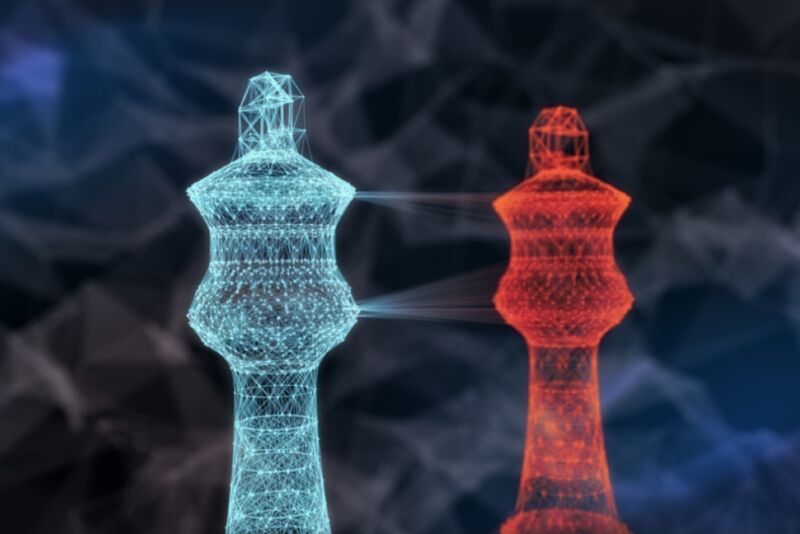
Returning champion Aleksander Kubica successful defended his title and won the second annual quantum chess tournament during last week's Q2B conference on quantum computing.
Enlarge / Returning champion Aleksander Kubica successful defended his title and won the second annual quantum chess tournament during last week’s Q2B conference on quantum computing.
lucadp/Getty Images

Returning champion Aleksander Kubica successful defended his title and won the second annual quantum chess tournament during last week’s Q2B conference on quantum computing. The tournament was streamed live in collaboration with Chess.com December 7-8.

As we’ve reported previously, quantum chess (as played in the tournament) is the brainchild of Chris Cantwell of Quantum Realm Games. When he was a graduate student in quantum computing at the University of Southern California, he got the idea while working on a project for a class on creativity and invention.

“My initial goal was to create a version of quantum chess that was truly quantum in nature, so you get to play with the phenomenon,” Cantwell told Gizmodo back in 2016. “I didn’t want it to just be a game that taught people quantum mechanics.” By playing the game, the player slowly develops an intuitive sense of the rules governing the quantum realm. In fact, “I feel like I’ve come to more intuitively understand quantum phenomena myself, just by making the game,” he said.

In quantum chess, there are multiple boards on which the pieces exist, and their number is not fixed. Players can perform “quantum moves” as well as regular chess moves; players just need to indicate which type of move they’re performing. Any quantum move will create a superposition of boards (doubling the number of possible boards in the superposition with each quantum move), although the player will see a single board representing all boards at the same time. And any individual move acts on all boards at the same time. 

Pieces can also be entangled with each other. In order to determine where the entangled piece is actually located, a player must make a measurement. In fact, that’s the only way to win a game of quantum chess, since there is no check or check mate possible. A player must capture their opponent’s king as they make a quantum measurement of its location.

The tournament games are timed, however, which is how Kubica prevailed last year over Google’s Doug Strain. Strain simply ran out of time.

Player's view of a quantum chess game.
Enlarge / Player’s view of a quantum chess game.

Kubica won his first game last year in just a few moves, essentially making use of the unique rules of quantum chess to exploit a weakness in the Sicilian defense. This year he also won his first game in just a few moves, after his opponent—Honeywell’s Byrne Norman—blundered a knight. In the final match, Kubica faced off against Seneca Meeks from Google Quantum AI, who defeated Sam Stanwyck (NVIDIA) and Austin Roberts (D-Wave) to win that final spot. Kubica ultimately prevailed, with Meeks as runner-up.

Among the players Kubica defeated on his path to victory was Sean Weinberg from QC Ware. Their dramatic match offers a glimpse into the unique scenarios that can play out during a quantum chess match. Weinberg actually had the advantage midgame, until a crucial quantum measurement broke in Kubica’s favor. Weinberg lost his queen and decided to gamble with a risky “infinite king run”: splitting his king into a superposition covering multiple locations. Kubica would capture one king, only for Weinberg to split them again.

Alas, a bug in the game suddenly prevented Weinberg from making any more moves. “The two agreed to settle the game with a king face off, where the winner would be decided randomly with probability determined by how little of a king Sean had left,” Q2B’s PR rep, Julia Wilson, told Ars via email. “He then agreed to further reduce the probability that he still had a king after Kubica argued that, had he had more time, he could have captured more of Seans’ ‘kings.’ At the face-off, Sean lost.”

https://arstechnica.com/?p=1819918


Rumbleverse adds a melee twist to the battle royale

Rumbleverse adds a melee twist to the battle royale

Any new battle royale title needs a hook: after all, we all know the formula, and Halo Infinite‘s popularity suggests that people may be tired of it. With that in mind, here’s the hook of Iron Galaxy’s new title, Rumbleverse: wrestling, and no guns.

The game was conceived back in October 2017, explains Adam Boyes, co-CEO of Iron Galaxy. “We were brainstorming, talking about different types of competitive games and Royale games, and our co-CEO, Chelsey Glasgow, was like, ‘We should do wrestling,'” he says. “And then the whole brainstorming session became what it would it feel like if you could chokeslam someone off of a 40-story building.”

Epic Games

The demonstration kicks off with a character creation screen. Iron Galaxy emphasizes that customization is critical in the game, with a huge suite of body types, faces, costumes, and accessories available for players to create their own monstrous or beautiful identity.

“Some of us have landed our characters, like my shirtless chef: I’ve been playing him for three years now–you almost become that persona,” he says. “And that’s what we’re really excited about. Because if you think about a lot of streamers, they have an in-game persona. And we’re excited to see what kind of characters they are going to build.”

The game moves into the pregame lobby area, the Battle Barge, where combatants are testing out grapples and doing the worm. The barge transports players to their destination, Grapital City, eventually firing them into the clouds so they can skydive in. A large zone blocks off a specific section of the city, so you’ll fight in a different area of the island each time: Boyes estimates an average match is shorter than a typical battle royale game, at 12 to 15 minutes.

Epic Games

This time, the game takes place in the financial district of the downtown area. Landing on top of a skyscraper, players immediately begin hurling their opponents to their destruction, while down on the ground the other rumblers, looking like ants, are whacking each other with trash cans and stop signs. To be successful, players will need to control the air and brawl proficiently down on the ground: there are no interiors in Grapital City. (The game is launching with a Duos mode, where you can split these tactics between you and your partner.)

Iron Galaxy sees Rumbleverse as a platformer: successful players will need that spatial awareness inherent to the genre. “We wanted to give people the freedom to explore the city first, and then to add the moves and brawling aspects on top of that,” says Boyes. “So what really surprised us when we started playing the game competitively in the studio is that a lot of people that were really great at platformers–we actually have some speedrunners at the studio–they became the best players.”

Epic games

Each player starts with a baseline of wrestling moves: punches, kicks, and elbow drops. Then they expand their repertoire: a rocket item lets the player jump high up from the ground so they can begin to scale the skyscraper—like Spider-Man; a superstar mode lets a player unleash a huge elbow drop. Protein pods of different colors increase arm, leg, and core stats, for more strength, health, and stamina.

The game’s complexity comes from finding magazines in the city that teach you new special moves. These are ranked in order of strength (green, blue, purple). “We’re trying to use that core inspiration of wrestling, but then layer on all types of different sports and activities and actions in there: there are lots of homages, like a poison mist that you spit in people’s faces, and that sort of gives them damage over time,” Boyes says.

Rumbleverse will launch with dozens of these magazines, and a key part of its longevity will come from increasing the numbers of these weapons and move sets. The game’s live service elements will be familiar. Not all details are available yet, but there will be a battle pass and seasons. “You’ll be able to unlock some outfits, but then other cosmetics you can obviously purchase through the game store,” says Boyes. “The cool thing is you could buy a whole costume, and that will give you the full three to eight different pieces that you can mix and match with anything else. Or you can just buy a hat or a mask individually. So we think it’s going to allow people to do a lot of self-expression.”

Comparisons to Fortnite are inevitable—this is, after all, the first multiplayer game being released through Epic Games Publishing, Epic’s publishing label, and Iron Galaxy was responsible for porting the game to PS4 and Xbox One. “We drew upon our experience in the studio with games as service,” says Boyes. “We work in a lot of broad backend systems, right? We brought the Elder Scrolls Online over to console; that was a huge undertaking. So we knew we wanted it to be a live product.”

This story originally appeared on wired.com.

https://arstechnica.com/?p=1819574


Mary, Queen of Scots, sealed her final missive with an intricate spiral letterlock

Four vector drawings show the five-slit spiral lock mechanism used by Mary, Queen of Scots; the front and back of a locked letter packet using this method; and an unfolded lock. Sections are numbered 1-20 to show the different areas created by folding.
Enlarge / Four vector drawings show the five-slit spiral lock mechanism used by Mary, Queen of Scots; the front and back of a locked letter packet using this method; and an unfolded lock. Sections are numbered 1-20 to show the different areas created by folding.
Unlocking History Research Group

On the eve of her execution for treason in February 1587, Mary, Queen of Scots, penned a letter to King Henri III of France and secured it with a paper lock that featured an intricate spiral mechanism. So-called “letterlocking” was a common practice to protect private letters from prying eyes, but this spiral lock is particularly ingenious and delicate because it incorporates a built-in self-destruct feature, according to a new paper published in the Electronic British Library Journal.

The authors are an interdisciplinary team of researchers working under the umbrella of the Unlocking History Research Group. In this paper, they describe a dozen examples of a spiral lock in letters dated between 1568 and 1638, including one from Mary’s former mother-in-law, Catherine de Medici, as well as her arch-rival, Elizabeth I, who signed Mary’s death warrant.

As we reported previously, co-author Jana Dambrogio, a conservator at MIT Libraries, coined the term “letterlocking” after discovering such letters while a fellow at the Vatican Secret Archives in 2000. The Vatican letters dated back to the 15th and 16th centuries, and they featured strange slits and corners that had been sliced off. Dambrogio realized that the letters had originally been folded in an ingenious manner, essentially “locked” by inserting a slice of the paper into a slit, then sealing it with wax. It would not have been possible to open the letter without ripping that slice of paper—evidence that the letter had been tampered with.

Dambrogio has been studying the practice of letterlocking ever since, often creating her own models to showcase different techniques, eventually forming the Unlocking History Research Group. The practice dates back to the 13th century—at least in Western history—and there are many different folding and locking techniques that emerged over the centuries. “It’s not like people could just go to a shop and buy an envelope,” Dambrogio’s co-author from King’s College London, Daniel Starza Smith, told Ars.

Queen Elizabeth I, Machiavelli, Galileo Galilei, and Marie Antoinette are among the famous personages known to have employed letterlocking for their correspondence. There are hundreds of letterlocking techniques: for example, “butterfly locks,” a simple triangular fold-and-tuck, and an ingenious method known as the “dagger-trap,” which incorporates a booby-trap disguised as another, simpler type of letter lock. And of course, there is the intricate spiral lock that Mary, Queen of Scots, used for her final missive.

The last letter written by Mary, Queen of Scots, on the eve of her execution. It was addressed to her former brother-in-law, Henri III, King of France.
Enlarge / The last letter written by Mary, Queen of Scots, on the eve of her execution. It was addressed to her former brother-in-law, Henri III, King of France.
Unlocking History Research Group

Earlier this year, Dambrogio’s team was able to use X-ray tomography to virtually “unlock” a letter written in 1697 by a man named Jacques Sennacque. Their analysis revealed its contents for the first time, right down to the watermark in the shape of a bird, as described in a paper published in the journal Nature Communications. That letter was part of the Brienne Collection, a collection of 2,600 “locked” letters—600 of which had never been opened—found in a 17th-century trunk of undelivered letters preserved in the postal museum at The Hague, the Netherlands.

The unopened letters in the Brienne Collection meant that much more material evidence (crease marks and wax seals, for instance) about a given letter’s internal security was preserved, especially evidence of tucks and layer order, which typically leave no material trace. By contrast, the letters examined in this latest paper have all been opened, presenting a different kind of challenge for the researchers in their ongoing quest to reverse-engineer the creation of letterlocks.

A high percentage of the material evidence for the letterlocks is usually destroyed by opening the letter, and the spiral lock is designed to destroy not just the lock, but also sometimes portions of the actual letter as an added security measure, according to the authors. Subsequent handling by scholars and conservationists can also obscure evidence of the use of a letterlock. Such items are sometimes bound into letter books or stored after flattening and humidification, and the remnants of wax seals might be stored separately, discarded, or reattached incorrectly.

https://arstechnica.com/?p=1819350


Microsoft pushed Apple for compromise to get Game Pass on the App Store

Microsoft pushed Apple for compromise to get Game Pass on the App Store
Aurich Lawson / Getty Images


Last year, Apple rolled out a set of onerous guidelines that required streaming game subscription services like Xbox Game Pass to package each available title as a separate app in the iOS App Store. At the time, Microsoft said this solution “remains a bad experience for customers. Gamers want to jump directly into a game from their curated catalog within one app, just like they do with movies or songs, and not be forced to download over 100 apps to play individual games from the cloud.”

However, new emails revealed as part of the Epic v. Apple trial (and unearthed by The Verge) show how seriously Microsoft was considering working within these guidelines. The emails show that Microsoft engaged Apple in detailed negotiations about how individual xCloud streaming apps could work as a technical matter and even dangled the possibility of streaming “exclusive AAA titles” from outside of Game Pass to help broker a compromise position.

Splitting the baby

In the emails, sent between February and April of 2020, Microsoft Xbox head of business development Lori Wright laid out some concerns about the idea of packaging each Xbox streaming game as an individual iOS app. For users, such a system would lead to cluttered home screens and the potential for “orphaned” app icons when games were removed from Game Pass, Wright wrote. For Microsoft and Apple, the system would also lead to lots of extra overhead in terms of app store metadata management and app review time, she wrote.

More significantly, though, packaging each streaming game as its own app would require sending out countless app updates whenever the core “streaming stack” was updated. “As we’ve run our Preview testing with hundreds of thousands of customers, our data shows that large parts of the audience play upwards of 10+ titles per month, or over 100 in the course of a year,” Wright wrote. “When we update all of the binaries at the same time, this will result in huge batches of app updates.”

To get around this problem, Wright proposed a “middle ground” option where individual streaming game apps “would effectively be a ‘shortcut’ or ‘bookmark’ to the streaming application.” The idea, as Wright laid it out, would be to have a single Xbox “streaming stack” app weighing in at roughly 150MB, alongside individual 30MB “shortcut” downloads for each available game, which would then launch inside the main xCloud streaming app.

This would be a major improvement over a system in which each Game Pass title needed to be its own 150MB download with a full copy of the streaming stack included, Wright wrote. Under this compromise system, users would “get smaller game downloads, each game will have to be installed only once, and it never requires an update for changes to the streaming stack. It also creates one single network connection per device instead of a network connection per app.”

Did someone say exclusives?

Wright’s emails also refer to discussions about “bringing Xbox exclusive games, specifically those not in Game Pass, to iOS” by allowing users to either purchase or rent streaming versions that could run on iOS. Wright sold this to Apple as “an incredibly exciting opportunity for iOS users to get access to these exclusive AAA titles in addition to the Game Pass games.” But such a setup would require splitting the core streaming tech as a separate app “to deliver the right experience,” Wright wrote.

Speaking to The Verge, Xbox Cloud Gaming CVP Kareem Choudhry said that “our proposal for bringing games through individual apps was designed to comply with App Store policies… Forcing each game to include our streaming tech stack proved to be unrealistic from a support and engineering perspective and would create an incredibly negative experience for customers.”

The Verge also cited potential Apple complaints about in-app purchases available through Game Pass games and technical issues with how Apple would take its share of any such purchases. But Choudry said those concerns were not central to scuttling the partnership, saying, “We currently provide Xbox Cloud Gaming through a singular Xbox Game Pass app in the Google Play Store without IAP enabled… and we would do the same through the App Store if allowed.”

Eventually, all these negotiations became moot, of course, and Microsoft simply rolled out iOS Game Pass streaming as a web app earlier this year to get around the issue. But these new internal emails show just how seriously Microsoft was taking the possibility of jumping through Apple’s hoops to get its streaming games listed on the App Store’s important digital real estate. https://arstechnica.com/?p=1819604


Nvidia’s GeForce Now brings 1600p game streaming to M1 MacBooks

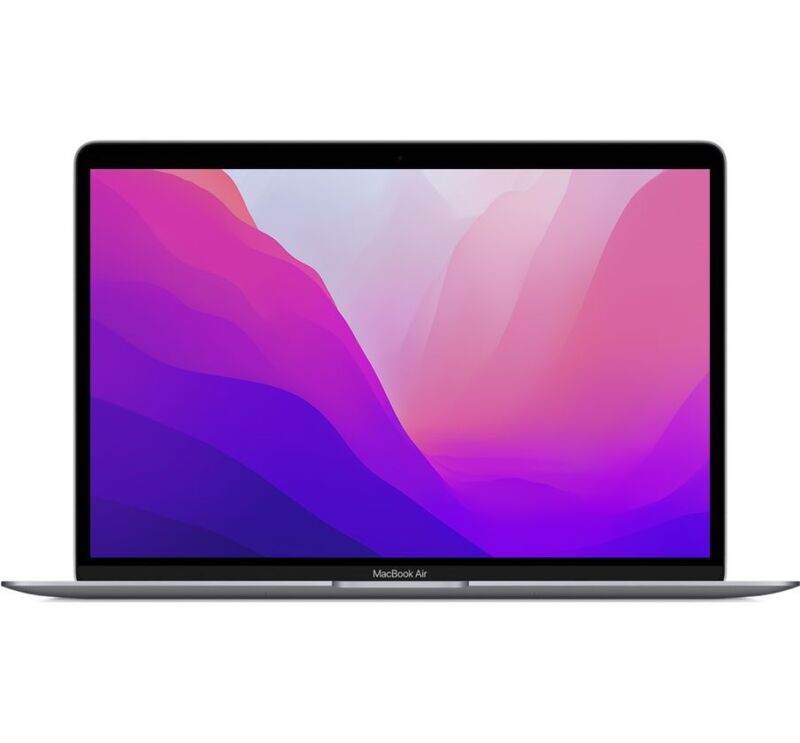
2020 MacBook Air.
Enlarge / 2020 MacBook Air.

Nvidia’s GeForce Now, like Google Stadia, lets you stream PC games to your computer, even if it’s not powerful enough to run the titles natively. Nvidia’s data centers stream content from the cloud, which means you can do high-level gaming on machines like thin-and-light Windows laptops or even MacBooks. And at a time when finding a modern GPU feels like searching for a unicorn, the idea of game streaming is starting to make even more sense.

There are some caveats, of course. There’s bound to be some lag, whether it comes from latency, Internet connectivity issues, or bandwidth overages. And while gaming services like GeForce Now aim to make it easy to run PC games on a Mac, users of the MacBook Air and MacBook Pro have had to make another sacrifice: resolution.

A different resolution

The MacBook Air has a native resolution of 2560×1600, as does the 13-inch MacBook Pro. If that seems like an odd resolution, that’s because the laptops use the 16:10 aspect ratio. 16:9 is still the most common aspect ratio among laptops, making 2560×1440 more common as well. GeForce Now subscribers with a MacBook Air or 13-inch MacBook Pro have had to resort to using that resolution, which is technically less sharp than the Macs’ native resolution (4,096,000 versus 3,686,400 pixels).

On Thursday, Nvidia announced Version 2.0.36 of its game-streaming service, and among its updates is the ability for Macs to play at 1600p. Of course, there’s another caveat. You have to subscribe to the highest tier of GeForce Now.

The RTX 3080 tier is $100 for six months, compared to $50 for six months or $10 for one month on the Priority tier and the Free tier, which limits you to one-hour gaming sessions. That said, we tested GeForce Now’s RTX 3080 tier in October and found performance to be impressive, even at higher resolutions.

In addition to 1600p MacBook gaming, the RTX 3080 tier offers the longest gaming session length (eight hours), a claimed frame rate of up to 120 frames per second, and 4K support—although, as of press time, the tier is in “preorder” status. Currently, Nvidia is also throwing in a copy of Crysis Remastered.

Nvidia’s announcement didn’t mention the 2021 MacBook Pros, which have 3024×1964 (14-inch version) and 3456×2234 (16-inch) resolutions, respectively. For those keeping track, that’s an aspect ratio of roughly 15.4:10, making it a little less tall than the M1 MacBooks GeForce Now just upgraded for.

New games, too

The latest GeForce Now update also added some games to the service:

  • Anno 1404 History Edition
  • A-Train: All Aboard! Tourism 
  • Monopoly Madness
  • Prison Architect 
  • Super Magbot 
  • Untitled Goose Game 
  • White Shadows

Team Green noted that it plans to add Syberia: The World Before at some point after its March release.

Ars Technica may earn compensation for sales from links on this post through affiliate programs.

https://arstechnica.com/?p=1819557


First Sonic 2 film trailer improves on Sonic 1’s weird debut

It’s hard to believe two years have passed since the outcry over Sonic the Hedgehog’s live-action film debut led producers to rethink their toothy, tiny-faced, pointy-nosed version of Sonic.

The resulting CGI redo pushed the film’s release date to Valentine’s Day 2020—and for Ars, the film gets the dubious honor of being the final film we were able to screen in a theater for the rest of 2020. But it wasn’t the worst film for that, as it included enough humor, charm, and salvaged CGI to squeak into that year’s best-of list.

But there was certainly room for improvement—which is why I’m already optimistic about how the sequel is shaping up, as evidenced by Sonic 2‘s Thursday night world-premiere trailer.

The kind of woodsy pep talk that seems to pass COVID protocol muster.
Enlarge / The kind of woodsy pep talk that seems to pass COVID protocol muster.

Sonic is still a plucky, young-yet-eager superhero trying to come to grips with his powers, while his caretaker and human best friend (again, played by James Marsden) reminds the otherworldly hedgehog that maybe he should slow his spin-roll instead of causing trouble as a makeshift vigilante. “There will come a moment when your powers will be needed,” Marsden’s character says in the trailer. “You don’t choose that moment—that moment chooses you.” This earns a snappy retort from Sonic, again voiced by Ben Schwarz: “Did you steal that from Oprah?”

Almost immediately, the trailer homes in on the best part of Sonic 1: Jim Carrey’s return as Dr. Robotnik. This time, he’s accompanied by an army of floating droid robots that much better resemble the machines his character rides and pilots in Sonic video games’ boss battles. Carrey is immediately eager to continue carving his own Robotnik identity, announcing his entrance with a nearly Mask-like cry of, “Papa’s got a brand new ‘stache.” (The end of Sonic 1 shows Carrey’s character getting electrocuted, and thus, transforming his somewhat overkill mustache into an absolutely cartoony exaggeration. Sonic 2 leaves this mustache in place, and I give it a giant, white-glove thumbs-up.)

After a brief, chuckle-worthy exchange between Carrey and his Sonic 1 right-hand henchman, Sonic meets longtime series character Tails for this film universe’s first time (with their introduction left unexplained in this trailer). The duo immediately spins up a few nicely staged action sequences. Sonic perches on the wing of Tails’ classic bi-plane before approaching a massive Robotnik missile-launching installation. Sonic super-runs through a lava-lined catacomb, bouncing off its walls to boost his speed. And in an assault on an apparent snow-capped fortress, Sonic rides in on a snowboard, then grabs a rocket mid-launch, flips, and throws it back, shouting, “Return to sender!” This flurry of action plays out like a high-budget Saturday morning cartoon, and it implies the film will revolve around a Sonic and Tails relationship—which I’m hopeful proves more fruitful than the serviceable Sonic-and-Madsen bonding of old. (In one brief snippet, the animal duo walks into a rough-looking biker bar, which immediately makes Tails faint. Cute.)

Since I don't have any witty rejoinders to offer about Knuckles' live-action CGI debut, I will instead suggest you look up comedian Jackee's response to Idris Elba being cast as the character's voice. It's NSFW, is all I'll say.
Enlarge / Since I don’t have any witty rejoinders to offer about Knuckles’ live-action CGI debut, I will instead suggest you look up comedian Jackee’s response to Idris Elba being cast as the character’s voice. It’s NSFW, is all I’ll say.

The trailer concludes with our first-ever look at a live-action CGI Knuckles besting Sonic’s taunt by growling, “Do I look like I need your power?” before throwing our blue hero down. This one-line dialogue hints that Knuckles’ new voice actor, Idris Elba, is aiming for a very different combination of voice and accent than we’ve heard from him before, particularly compared to his wicked, Queen’s English take on The Jungle Book’s Shere Khan. Honestly, it sounds interesting and makes me more excited to hear how Elba might transform the game series’ most mysterious hero—and to see how Elba and Carrey might play off of each other as different kinds of bad guys, each with designs on harvesting the game series’ mysterious Chaos Emeralds.

[embedded content]
Sonic 2 premiere film trailer.

Sonic 2 arrives in theaters on April 8, 2022. And while next year should be fruitful for live-action video game adaptations, most of the ones we’ve heard about thus far are slated for TV and streaming, including The Last Of Us on HBO, The Witcher‘s second season on Netflix, and Halo on Paramount Plus. (The latter got its own world premiere peek on Thursday evening, as well, but it proved incredibly short on details, lacking conversational scenes for any sense of how Master Chief will sound or talk in the show.) Meanwhile, the live-action Detective Pikachu fork of the Pokemon series has been dormant for some time, with the last news on that front being a pessimistic “on hold” description from actor Justice Smith.

Listing image by Paramount

https://arstechnica.com/?p=1819474


The Wheel of Time show totally changes who the story’s main character is

Egwene and Moiraine discuss Perrin's sudden case of acute wolfishness.
Enlarge / Egwene and Moiraine discuss Perrin’s sudden case of acute wolfishness.
Amazon Studios

Andrew Cunningham and Lee Hutchinson have spent decades of their lives with Robert Jordan and Brandon Sanderson’s Wheel of Time books, and they’re bringing that knowledge to bear as they recap each episode of Amazon’s new WoT TV series. These recaps won’t cover every element of every episode, but they will contain major spoilers for the show and the book series. If you want to stay unspoiled and haven’t read the books, these recaps aren’t for you.

New episodes of The Wheel of Time will be posted to Amazon Prime subscribers every Friday.

Andrew: Put your ear to the ground, Lee. Can you hear it? That’s the sound of every Wheel of Time shipper losing their whole minds over this week’s episode.

There’s a bunch more to talk about, and we’ll get to most of it, but this episode’s introduction of Siuan Sanche, the fisherman’s daughter who became the Amyrlin Seat, is inarguably the focal point.

I think you and I might have slightly different feelings about how her character was handled, particularly around The Big Thing, but I’ve got to say I think this was an outstanding capper for the show’s mid-season Aes Sedai interlude. It establishes Siuan’s meteoric rise and her character’s different public and private faces, while also establishing the authority and power of the Amyrlin Seat and the entire Aes Sedai organization. But it’s also clear in a bunch of little ways that Aes Sedai power is waning and Siuan’s position is more precarious than it seems. You get more information on what Moiraine has been chasing with the Two Rivers folks and why. And yeah, there’s some serious smooching.

Lee: Before we dig into the big stuff, though, I’ve got a question. Our Amyrlin Seat, Siuan Sanche, gets a nice little introduction as the poor fisherman’s daughter. But does this mean Nynaeve was lying or otherwise misinformed when she mentioned back in the first episode that the White Tower turns away poor people? It seemed an odd thing to say at the time, given that the White Tower regards women who can channel as their actual-for-real property, and in Siuan we have an example of a girl who clearly came from nothing not just being accepted for training, but becoming the Amyrlin Seat. Am I just getting too caught up in the details, or is there a piece missing in this puzzle?
Young Siuan, prior to her journeying to Tar Valon to become an Aes Sedai.
Enlarge / Young Siuan, prior to her journeying to Tar Valon to become an Aes Sedai.
Amazon Studios
Andrew: Ah, that’s interesting. I do think generally when a character in the show has told us something, it’s because the show itself wants us to know that thing and take it at face value. That’s how most of the lore dumps seem intended to be read, at any rate. But with context from the books you can more easily assume that misinformation about the White Tower and its practices runs rampant the farther you get from Tar Valon, and Nynaeve could easily be misinformed. Or maybe the Aes Sedai more readily take in refugees from channeling-averse nations like Tear. At any rate, it didn’t occur to me to be bothered by it.

It’s clear that the Aes Sedai in the show, as in the books, seem to think that you leave most of your old life behind when you join up—note how scandalized the room is when Siuan dresses down Moiraine Damodred, wielding her noble family’s name as a weapon. The read I still get is that Aes Sedai hierarchy is determined more by channeling strength than prior economic or social circumstances.

OK, now let’s talk about kissing??

Lee: Moiraine and Siuan, sitting in a tree…

OK, I admit, when Moiraine popped into Siuan’s rooms via a…what, a ter’angreal? Gotta be a ter’angreal, right? When she popped in there and they started making out, my first reaction was to roll my eyes. The books imply (maybe more than imply) that the two of them used to have a thing going back to when they were novices, but the books also imply (maybe more than imply!) that it’s pretty normal for novices to have “pillow friends” to help them get through the hardships of apprentice life in the Tower. Having Moiraine and Siuan jump each others’ bones now, though, felt… maybe just a bit performative and male-gaze-y?

My gut reaction was, “These are two powerful women who are both Blue Ajah, who commit themselves to politics and causes—isn’t it kind of disrespectful to imply that they need to have a romantic relationship, too? Can’t the fact that they’ve both dedicated their lives to finding the Dragon Reborn be a powerful enough bond?” But I’ve had a few conversations about it with my wife and also with my cousin Shaun (who is an excellent author—go buy his books!), and I think now I’m on the side of this being an expedient storytelling way to establish just how all-in they are on trying to save the world. And having someone to love—actually love, not just Warder-bond-share with—is also a good way to tie them to the realness of the world, rather than simply having them tie themselves to ideals.

I dunno, these are deep waters to navigate, but I think I’m sold on the idea of them being together. It works, and especially on the back of the stuff I’m reading about the showrunner’s commitment to lore, I’m willing to trust the narrative.

https://arstechnica.com/?p=1819372


The Matrix Awakens is 2021’s must-play flex of current-gen console power

2021 is the 25th anniversary of a gaming-related milestone: the Super Mario 64 face. This fascinating tech demo (whose creator opines about it in a May 2021 interview) is the first thing you see upon booting the N64’s signature game, and it was a declaration of the N64’s potential 3D prowess, well ahead of the likes of Sony’s first PlayStation.

Modern games rarely come with this sort of useless, whimsical tech demo, and similar tech muscle-flexes on consoles have been rare in the years since the N64’s ’90s heyday. Tonight, another unbelievable demo joins its ranks: The Matrix Awakens.

This brand-new Unreal Engine 5 showcase, now downloadable on Xbox Series X/S and PlayStation 5, is rendered almost entirely in real time on current-gen consoles. What’s more, every image in this article was not only captured on my own home Series X but is also, according to Epic Games, rendered in real time. Only a few choice snippets of the demo, now downloadable via Xbox Live and PlayStation Network, consist of premade video footage, which I skipped in favor of the impressive faces, action sequences, and cityscapes that UE5 is apparently equipped to render on the latest home consoles.

Based solely on the still images in this article, any passerby can find visual elements to nitpick or shrug at. Sunglasses cover eyes in some scenes. Or maybe there’s too much blur. While watching the demo play out on my Series X, I hunted for traces of the uncanny valley, and finding a few wasn’t hard, particularly in some slightly stilted animations.

Yet that ignores the insanity of this demo’s feature-rich contents being rendered on a consumer-grade gaming console. In all my years of covering real-time graphics on PCs and consoles, I’ve yet to see something so impressive and realistic—all opened up to the scrutiny of my controller taps.

Two parts: Narrative at first, then guns, cars, and free flight

The demo has two parts. The first is a narrative sequence that doesn’t respond to button taps, and it opens with a digital facsimile of actor Keanu Reeves—not playing a character, just Keanu being Keanu—remarking on The Matrix. He strolls through moments from the first film while pondering the original trilogy’s questions about what is and isn’t real. (Every time he passes a mirror, the bearded, long-haired Reeves who appears in it is video footage; otherwise, he’s all digital. This article doesn’t include any real-life Keanu.) Soon after, a digital facsimile of his Matrix co-star Carrie-Anne Moss appears—she only appears as a digital avatar, never as filmed footage—and their conversation eventually warps into a car chase.

At this point, the demo’s second half begins, and players take control of a digital actor Epic Games has used in prior demos. This character can shoot both a pistol and a machine gun out the car’s back seat at waves of oncoming cars, and the demo shows off a few things: massive explosions of particle effects; real-time ray tracing and global illumination; and a stunning amount of retained detail in the skyline beyond the highway.

As seen in this hands-on demo, UE5 delivers a combination of incredible next-gen rendering techniques and, perhaps more importantly, dynamic-scaling optimizations. In particular, the sequence’s very familiar faces (namely, Reeves and Moss) had me double- and triple-taking the fact that they’re not real in certain moments. This is primarily thanks to UE5’s new lighting pipeline, which emphasizes a combination of complex subsurface light scattering and ray-traced global illumination. In other words: the tiny light bounces that are inherent to skin, wrinkles, hair follicles, and other facial elements will look more realistic in a static-lighting void. That’s nifty, but the real “Wow!” factor emerges when the lights bounce off of other nearby materials and interact naturally with the characters’ faces and clothes. Put this demo’s Reeves next to his Cyberpunk 2077 version to really see the UE5 difference.

https://arstechnica.com/?p=1818922


The NES: How it began, worked, and saved an industry

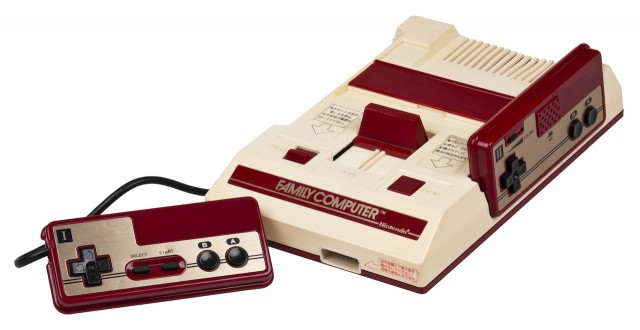
Nintendo's Family Computer, or Famicom, turns 30 today!
Nintendo’s Family Computer, or Famicom, turns 30 today!
Update, December 9, 2021: Masayuki Uemura, the lead architect for both the Famicom and Super Famicom, passed away on December 6th at the age of 78. Uemura worked at Nintendo from 1971 to 2004 and oversaw notable accessories like the Famicom Disk System and the Super Famicom’s Satellaview modem accessory.

In honor of Uemmura’s career and his lasting impact on the game industry, we’re republishing this 2013 piece we ran on the Famicom’s 30th birthday, diving deep into the technical details of the system and exploring its history and legacy.

We’re right on the cusp of another generation of game consoles, and whether you’re an Xbox One fanperson or a PlayStation 4 zealot, you probably know what’s coming if you’ve been through a few of these cycles. The systems will launch in time for the holidays, each will have one or two decent launch titles, there will be perhaps a year or two when the new console and the old console coexist on store shelves, and then the “next generation” becomes the current generation—until we do it all again a few years from now. For gamers born in or after the 1980s, this cycle has remained familiar even as old console makers have bowed out (Sega, Atari) and new ones have taken their place (Sony, Microsoft).

It wasn’t always this way.

The system that began this cycle, resuscitating the American video game industry and setting up the third-party game publisher system as we know it, was the original Nintendo Entertainment System (NES), launched in Japan on July 15, 1983, as the Family Computer (or Famicom). Today, in celebration of the original Famicom’s 30th birthday, we’ll be taking a look back at what the console accomplished, how it worked, and how people are (through means both legal and illegal) keeping its games alive today.

From Japanese beginnings to American triumphs

The Famicom wasn’t Nintendo’s first home console—that honor goes to the Japan-only “Color TV Game” consoles, which were inexpensive units designed to play a few different variations of a single, built-in game. It was, however, Nintendo’s first console to use interchangeable game cartridges.

The original Japanese Famicom looked like some sort of hovercar with controllers stuck to it. The top-loading system used a 60-pin connector to accept its 3-inch high, 5.3-inch wide cartridges and originally had two hardwired controllers that could be stored in cradles on the side of the device (unlike the NES’ removable controllers, these were permanently wired to the Famicom).

The second controller had an integrated microphone in place of its start and select buttons. A 15-pin port meant for hardware add-ons was integrated into the front of the system—we’ll talk more about the accessories that used this port in a bit. After an initial hardware recall related to a faulty circuit on the motherboard, the console became quite successful in Japan based on the strength of arcade ports like Donkey Kong Jr. and original titles like Super Mario Bros.

An early prototype of what would become the North American version of the Famicom. The Nintendo Advanced Video System communicated with its peripherals wirelessly through infrared.
Enlarge / An early prototype of what would become the North American version of the Famicom. The Nintendo Advanced Video System communicated with its peripherals wirelessly through infrared.

The North American version of the console was beset by several false starts, to say nothing of unfavorable marketing conditions. A distribution agreement with then-giant Atari fell through at the last minute after Atari executives saw a version of Nintendo’s Donkey Kong running on Coleco’s Adam computer at the 1983 Consumer Electronics Show (CES). By the time Atari was ready to negotiate again, the 1983 video game crash had crippled the American market, killing what would have been the “Nintendo Enhanced Video System” before it had a chance to live.

Nintendo decided to go its own way. By the time 1985’s CES rolled around, the company was ready to show a prototype of what had become the Nintendo Advanced Video System (AVS). This system was impressive in its ambition and came with accessories including controllers, a light gun, and a cassette drive that were all meant to interface with the console wirelessly, via infrared. The still-terrible market for video games made such a complex (and, likely, expensive) system a tough sell, though, and after a lukewarm reception, Nintendo went back to the drawing board to work on what would become the Nintendo Entertainment System we still know and love today.

https://arstechnica.com/?p=305397


Revisiting the “Tsar Bomba” nuclear test

The mushroom cloud from the Soviet detonation of "Tsar Bomba" on October 30, 1961, was so large that the photographers had a hard time capturing its full dimensions.
Enlarge / The mushroom cloud from the Soviet detonation of “Tsar Bomba” on October 30, 1961, was so large that the photographers had a hard time capturing its full dimensions.

The detonation of the first nuclear bombs over Hiroshima and Nagasaki in August 1945 is seared into our collective memory, and the world has been haunted by the prospect of a devastating nuclear apocalypse ever since. Less well-known but equally significant from a nuclear arms race standpoint was the Soviet Union’s successful detonation of a hydrogen “superbomb” in the wee hours of October 30, 1961.

Dubbed “Tsar Bomba” (loosely translated, “Emperor of Bombs”), it was the size of a small school bus—it wouldn’t even fit inside a bomber and had to be slung below the belly of the plane. The 60,000-pound (27 metric tons) test bomb’s explosive yield was 50 million tons (50 megatons) of TNT, although the design had a maximum explosive yield of 100 million tons (100 megatons).

The US had conducted the first successful test of a hydrogen bomb (codename: Ivy Mike) in 1954 and had been pondering the development of even more powerful hydrogen superbombs. But the Soviets’ successful test lent greater urgency to the matter. Ultimately, President John F. Kennedy opted for diplomacy, signing the Partial Nuclear Test Ban Treaty on October 7, 1963.

But US nuclear policy—and, hence, world history—might have ended up looking very different, according to Alex Wellerstein, a historian of science at the Stevens Institute of Technology in New Jersey and author of Restricted Data: The History of Nuclear Secrecy in the United States, released earlier this year. He also maintains the NUKEMAP, an interactive tool that enables users to model the impact of various types of nuclear weapons on the geographical location of their choice. 

Wellerstein has analyzed recently declassified documents pertaining to the US response to Tsar Bomba during the Kennedy administration. He described his conclusions in a fascinating article recently published in the Bulletin of the Atomic Scientists, coinciding with the 60th anniversary of the test.

Wellerstein gives a particularly vivid description of the Tsar Bomba detonation in his introduction:

At 11:32 a.m., the bombardier released the weapon. As the bomb fell, an enormous parachute unfurled to slow its descent, giving the pilot time to retreat to a safe distance. A minute or so later, the bomb detonated. A cameraman watching from the island recalled:

A fire-red ball of enormous size rose and grew. It grew larger and larger, and when it reached enormous size, it went up. Behind it, like a funnel, the whole earth seemed to be drawn in. The sight was fantastic, unreal, and the fireball looked like some other planet. It was an unearthly spectacle!

The flash alone lasted more than a minute. The fireball expanded to nearly six miles in diameter—large enough to include the entire urban core of Washington or San Francisco, or all of midtown and downtown Manhattan. Over several minutes it rose and mushroomed into a massive cloud. Within ten minutes, it had reached a height of 42 miles and a diameter of some 60 miles. One civilian witness remarked that it was “as if the Earth was killed.”

https://arstechnica.com/?p=1811168