Stare into the abyss of a swirling black hole with this LED monolith installation
<img src="https://rassegna.lbit-solution.it/wp-content/uploads/2021/12/stare-into-the-abyss-of-a-swirling-black-hole-with-this-led-monolith-installation.jpg" alt="Screengrab of Jesse Woolston's latest piece, The Dynamics of Flow, debuting at Art Basel Miami Beach later this week.”>
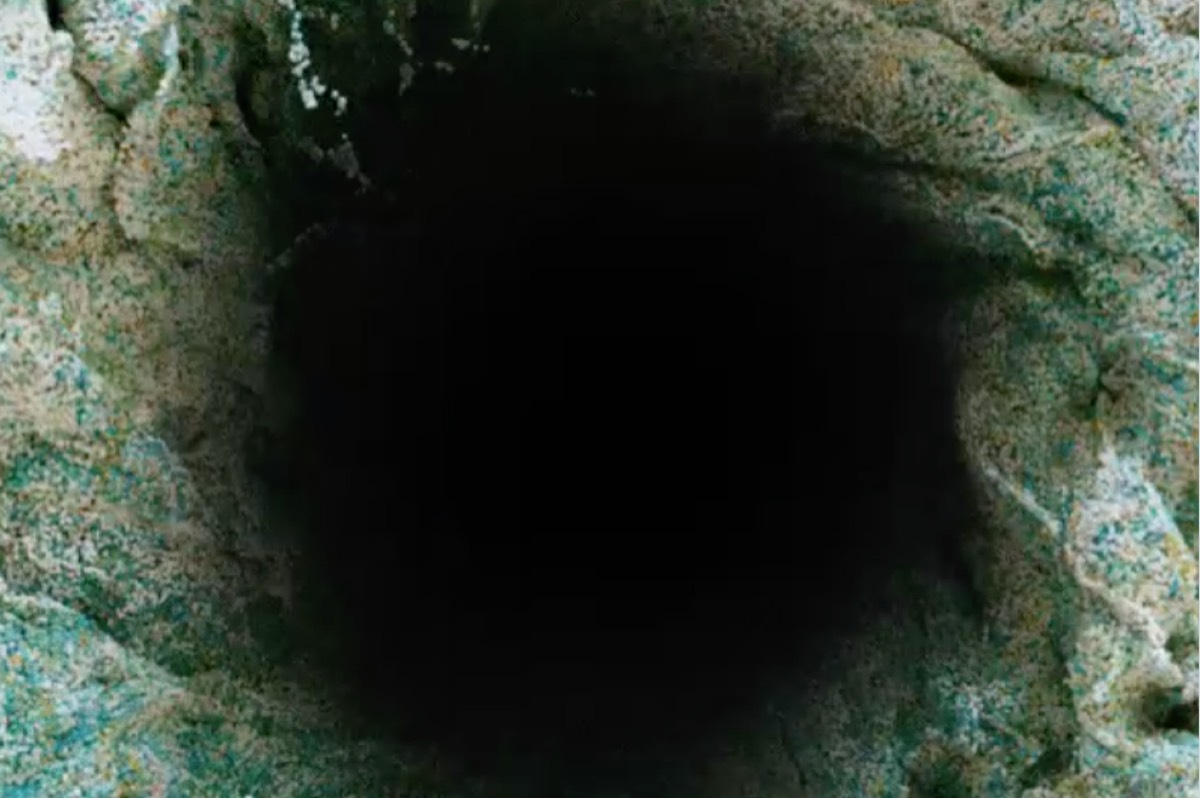
Enlarge/ Screengrab of Jesse Woolston’s latest piece, The Dynamics of Flow, debuting at Art Basel Miami Beach later this week.
Jesse Woolston
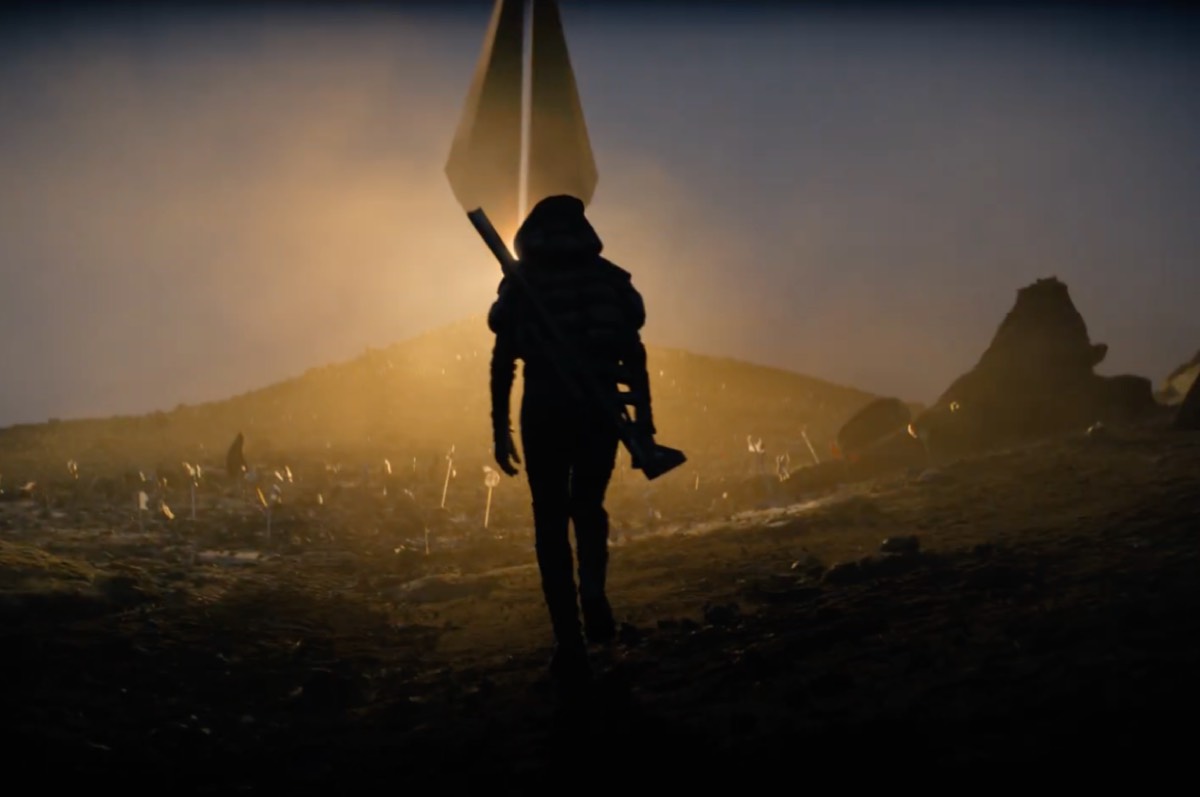
Multimedia artist, composer, and sound designer Jesse Woolston has had a recurring dream for much of his life about encountering a black hole, “falling inward, and waking up terrified.” (Who wouldn’t wake up terrified?) According to the artist, those dreams have always been a reminder to him of “nature’s terrifying awe.” Now, Woolston has channeled that emotional experience into a new multimedia installation, The Dynamics of Flow—part of an LED monolith exhibit debuting later this week at Art Basel Miami Beach. Bonus: it’s also an NFT.
My second #NFT, released on the 28th, will be part of an LED monolith installation built for the week of Art Basel.
Throughout my life, I’ve had the same dream, being confronted with a blackhole and falling inward. This installation and NFT communicates my experience. 🖤 pic.twitter.com/Kw93btpXhq
Woolston has long merged his artistic work with his love of science, aiming to “recontextualize” physics and art both visually and with sound/music. “I see scientists almost as magicians who are fantastic at understanding the world,” he told Ars. “I consider myself someone who loves to communicate the laws of the universe and what it means to be human.” He’s worked with astrophysicists at Cornell University who hunt for exoplanets, for instance, and wrote the music for a theatrical dance performance inspired by Washington State University research on glacier dynamics in Greenland. In recent years, his focus has been on building large installations that combine sound and visuals in interesting ways.
A couple of years ago, Woolston created an art installation for the Museum of the Moving Image in New York City with Levi Patel that made use of haptics technology. The tech is called Music: Not Impossible (M:NI), and I wrote about it in 2018. M:NI is designed to provide deaf and hearing users alike with a “vibrotactile” concert experience.
The basic kit includes two battery-powered wristbands, two ankle bands, and a harness that fits across the back and shoulders. It interfaces directly with a venue’s sound system and sends electrical pulses (coordinated with colored LED lights) corresponding to various tracks in the music to the sensors against the skin. Skin is a poor discriminator of frequency. It can only detect between 10 Hz and 1000 Hz, whereas our ears can hear frequencies as high as 20,000 Hz. But skin is quite sensitive to shifts in intensity and amplitude, and that’s what the M:NI system exploits.
For the MMI installation—entitled Re-framed—Woolston and Patel incorporated M:NI haptic suits that could be worn by the entirely deaf audience. “It allowed them to feel music through their bodies. I understand sound, I understand wavelengths and vibrations and how our ears interpret those things,” said Woolston. “The point was to reframe how we understand sound with technology.”
More recently, Woolston has found particular inspiration in the physics of turbulence: strong, sudden movements within air or water, usually marked by eddies and vortices. One of his installations explores color theory via a 3D fluid dynamics visualization of Monet’s Seascape. Another piece also incorporates 3D physics simulations of fluid flows, this time inspired by Vincent van Gogh’s most famous painting, Starry Night.
From a purely aesthetic viewpoint, people have long noted the turbulent nature of Van Gogh’s colorful swirls and eddies. As I’ve written previously, Concord Consortium research associate Natalya St. Clair gave a 2014 TED-Ed talk about how Van Gogh’s technique in Starry Night allowed the painter to represent the movement of light across water or in the twinkling of stars. We see this as a kind of shimmering effect, because the eye is more sensitive to changes in the intensity of light (a property called luminance) than to changes in color.
But there’s also some hard science behind the connection. NASA published an image by the Hubble Space Telescope in 2004 of turbulent eddies of dusty clouds moving around a supergiant star, noting that this “light echo” was reminiscent of Starry Night. Two years later, a group of physicists from Spain, Mexico, and England mathematically analyzed the painting and concluded it shares the same turbulent features as molecular clouds (where literal stars are born)—perhaps reflecting the artist’s turbulent state of mind when he created it.
In the 1940s, a Russian physicist named Andrey Kolmogorov predicted there would be a mathematical connection (now known as Kolmogorov scaling) between how a flow’s speed fluctuates over time and the rate at which it loses energy as friction. That is, some turbulent flows exhibit energy cascades, whereby large eddies transfer some of their energy to smaller eddies. The smaller eddies, in turn, transfer some of their energy to even smaller eddies, and so forth, producing a self-similar pattern at many spatial size scales.
Color Theory continues with a visualization of Monet’s Seascapes. I see nature as art in of itself and to create a new lens that re-composes these forces into a piece embedded in architecture, allows room to understand the power & beauty of the natural world and how we compare.🖤 pic.twitter.com/rEdlB0ttzd
As described in the resulting 2008 paper, the international team of physicists measured how the brightness varied between any two pixels in digital photographs of several Van Gogh paintings. The researchers calculated the probability that two pixels at a given distance would have the same luminance. They found evidence of something remarkably close to Kolmogorov scaling, not just in Starry Night, but also in two other paintings from the same period in Van Gogh’s life: Wheatfield with Crows and Road with Cypress and Star (both painted in 1890).
A 2019 arXiv paper by two graduate students at Australian National University in Canberra built on that earlier work. By picking a square section in the sky portion of a digital image of Starry Night, they were able to build 2D maps in three different color “channels.” Then they calculated the 2D power spectrum. They also found evidence of turbulent scaling in Starry Night. But whereas the earlier team found Kolmogorov scaling—the subsonic turbulent flow underlying the convection currents in stars as well as Earth’s atmosphere—the Australian duo found supersonic turbulence.
https://arstechnica.com/?p=1816801
Why hundreds of thousands of bots descended on one Steam arcade collection
Monday night at 11 pm EST, there were 18 players logged on and playing the Steam version of Capcom Arcade Stadium (according to SteamDB data sourced from the Steam store itself). Ten hours later, on Tuesday morning, the game peaked at over 488,000 concurrent players, putting it behind only perennial favorites Counter-Strike: GO and Dota 2 on Steam’s list of most-played games for the day.
No, the idea of playing classic Capcom arcade games on the PC didn’t get 27,000 times more popular literally overnight. Instead, the sudden “success” seems driven by automated bots taking advantage of an unexpected opportunity to score some “free” money by minting and selling Steam Trading Cards.
Steam Trading Cards explained
Since the launch of Steam Trading Cards in 2013, players have been able to earn, buy, and sell the purely digital collectibles in thousands of games on Valve’s online platform. For most supported games, a player can get half of the available trading cards just by putting in playtime. To get a game’s full card set, a player has to purchase the remainder from the Steam Community Market. There, other players can offer their excess cards for sale, with commodity pricing determined by floating buy and sell offers that fluctuate based on supply and demand.
Steam Trading Cards don’t have any inherent value outside of what the market of players is collectively willing to ascribe to them (kind of like NFTs, just without the decentralization or the “one of one” uniqueness). But many Steam users value the Trading Cards because a complete set within a game can be traded for a game-specific badge that will be tied to your Steam account and profile page. Those badges, in turn, earn XP toward raising your Steam user level, a visible online social distinction that can get a player listed on a global leaderboard if they’re really dedicated to the idea.
Most Steam Trading Cards are only worth a few cents a piece (or a little bit more in the case of rare 1-in-100 “foil” variation). But that little bit of profit potential does drive some players to earn and sell as many cards as they can. And because of this market opportunity, a wide variety of software “bots” have been designed to mimic human activity in your Steam games, thus earning trading cards without the need to actually take time to play the games themselves. While using these bots is technically against Valve’s terms of service, enforcement of this rule seems spotty, especially compared to the stricter actions against cheaters in online games.
A moneymaking opportunity?
Usually the value of Steam Trading Cards earned in-game is way lower than the game’s asking price, even in the case of extreme 99 cent sales. There are some exceptions, though, like when some Argentinian gamers discovered that the vagaries of currency arbitrage meant they could actually make money by buying certain bargain-priced games and selling the resulting trading cards on the open market.
To prevent players from farming “free money” from trading cards in free-to-play games, those titles usually don’t drop cards unless you spend money on DLC or in-game items. In fact, in 2017, Valve had to take action against “fake” game developers who were abusing the ability to generate free Steam codes for their own games to farm money from the generated trading cards.
Enlarge/ The price for this digital trading card has plummeted since it became available to “free” players.
Valve can manually turn off trading card drops for free games when it sees this happening, but often the damage has already been done by the time the company can react. The price for a representative Life Is Strange 2 trading card, for instance, plummeted from 10 cents to 4 cents after bots flooded the market last September. That price has yet to recover to its previous levels even though the game no longer gives trading cards for free downloads.
https://arstechnica.com/?p=1817060
Ocarina of Time has been fully decompiled into human-readable code
Enlarge/ Artist’s conception of voders staring in awe at the raw C code that generates Ocarina of Time.
A team of volunteer coders has reportedly completed its nearly two-year-long quest to fully decompile a version of The Legend of Zelda: The Ocarina of Time, turning the executable ROM back into human-readable (and editable) C code.
“We thought for a time that we may never be able to match every function completely, so this is an incredibly exciting accomplishment,” Zelda Reverse Engineering Team (ZRET) member Kenix wrote on the project’s Discord server Sunday. “Dozens of people helped work on this project, and together we were able to achieve something amazing.”
The final decompiled functions still need to be merged with the ZRET Github repository before the open source project is officially considered 100 percent complete, Kenix wrote. Once that submission is reviewed, though, the team should be able to run its tens of thousands of lines of C code through a compiler (alongside graphics and sound assets derived from a legitimate cartridge) to generate a bit-for-bit copy of the original Ocarina of Time ROM.
Enlarge/ A progress graph shows the march toward 100 percent decompilation over the course of nearly two years.
That full decompilation is the result of at least 21 months of work by a team of coders that walked me through the painstaking process last year. While automated software tools can help with that work, getting to human-readable C code means parsing each one of the game’s more than 15,000 functions by hand, figuring out the purpose of each portion, and cleaning up the code to remove any obfuscation or logic errors introduced in the process.
But ZRET member Rozlette told Ars last year that the process of going from C code to a PC build is “not as easy as just [saying] ‘compile it for Windows.’ There is a lot of code that deals with talking to N64 hardware. The N64 render pipeline is very different than modern OpenGL, for example.”
In any case, Kenix told Ars that such ports are “outside of the scope of what we do” at ZRET. Instead, the team told Ars it was interested in studying the code to understand more about the game’s inner workings and creation. The decompiled code could also make it easier to create new gameplay mods and randomizers that could expand appreciation of the game even further.
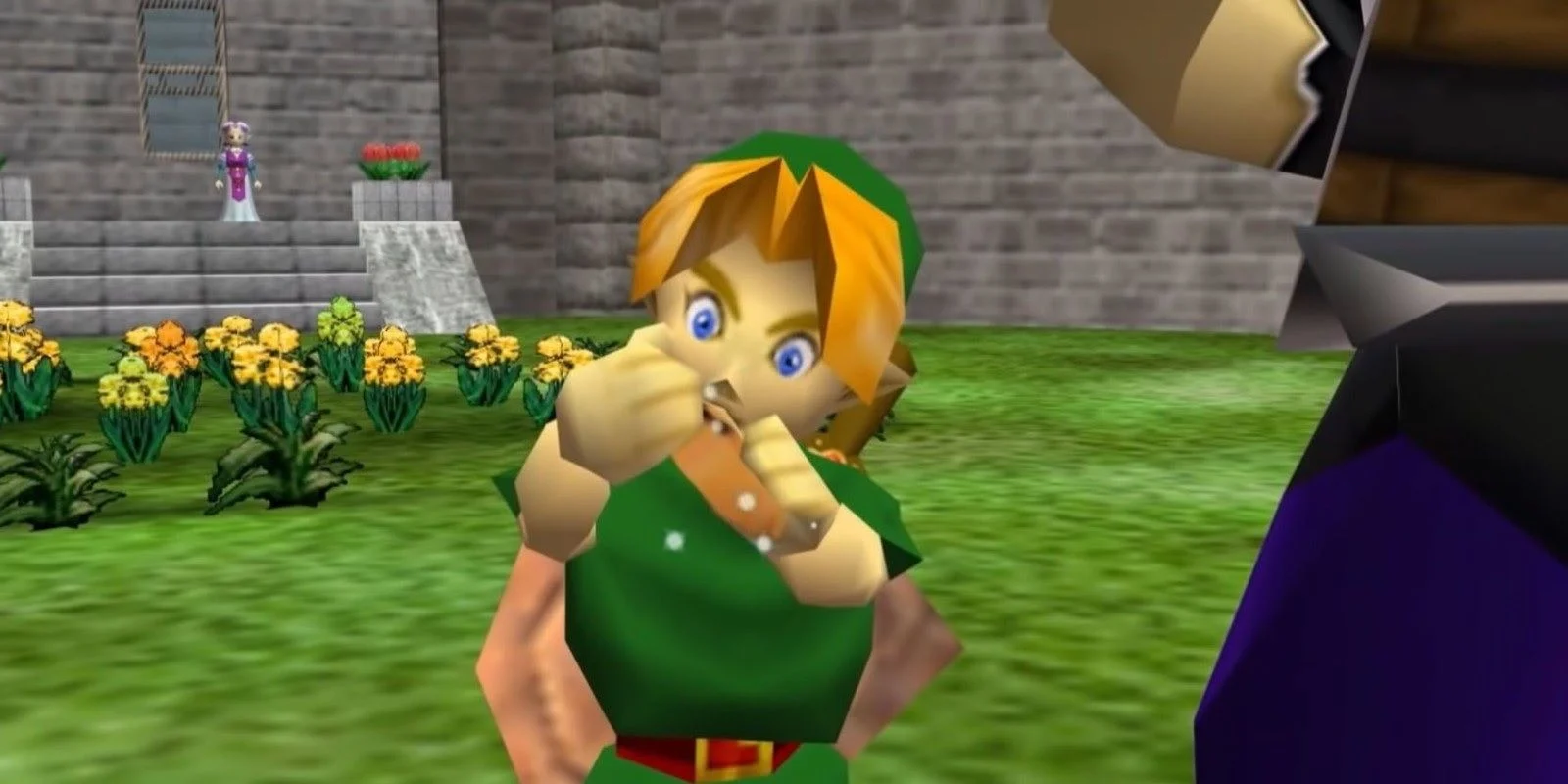
<img alt="A hidden room from a debug version of Ocarina of Time that helped unlock some reverse-engineering secrets to the game.” src=”https://rassegna.lbit-solution.it/wp-content/uploads/2021/11/ocarina-of-time-has-been-fully-decompiled-into-human-readable-code-1.jpg” width=”320″ height=”240″>
A hidden room from a debug version of Ocarina of Time that helped unlock some reverse-engineering secrets to the game.
“I do it because of my childhood love for the game,” Rozlette told Ars last year about their decompilation work. “It feels like a big puzzle to me where each function is a piece. It’s very rewarding to me when I work at an unknown function of code and then realize I recognize what this does in the game, like, ‘Hey! This is the function that spawns rupees when you cut grass!'”
While the decompilation effort may have hit “100%,” the team still has plenty of work to do, Kenix writes. “We have been working on decompiling the Master Quest Debug version of the game. However, Ocarina of Time has over a dozen other versions, which we plan to also decompile and support in the project.”
The decompiled code also still needs additional documentation, reorganization, and variable renaming to make the underlying code easier for others to work with. And work continues on related decompilation projects for Majora’s Mask and Minish Cap, which are respectively roughly 24 and 48 percent complete according to ZRET’s public tracker.
Still, Sunday’s announcement represents a major milestone for hobbyists working tirelessly to unravel and rebuild a game they love. Their success will hopefully serve as inspiration to those working to decompile other N64 games and other titles in a similar fashion.
https://arstechnica.com/?p=1816778
How Foundation preserved Asimov’s big ideas while bringing the story to vivid life
Enlarge/ The only constant is change in Apple TV’s adaptation of Isaac Asimov’s Foundation
YouTube/Apple TV+
When showrunner David S. Goyer took on the monumental task of adapting Isaac Asimov’s hugely influential Foundation series of science fiction novels for Apple TV+, he knew it would not be a straightforward matter. As I’ve written previously, the author himself admitted that he wrote strictly for the printed page, and he always refused invitations to adapt his work for film or TV.
But Asimov was more than happy to let others adapt his work to a new medium, and he was wise enough to expect that there would—and should—be significant departures from the print version. In doing so, Goyer had to strike a balance between respecting Asimov’s sweeping visionary ideas without lapsing into slavish reverence and over-pontification. To my mind, he did it beautifully, producing more of a remix than a straight adaptation that is compelling and powerful in its own right.
Another challenge was figuring out how to incorporate science and technology that was reasonably accurate. An astrobiologist and planetary scientist at Jet Propulsion Lab, Kevin Hand had worked with Goyer years before on Krypton, and the two had stayed in touch. So when Goyer needed a scientist with expertise in space, interstellar travel, and planetary dynamics, among other topics, naturally he turned to Hand.
Ars sat down with Goyer and Hand to learn more about the journey to bring this classic work to television.
(Some spoilers for the Apple TV+ series below, but no major reveals.)
Enlarge/ Jared Harris stars as visionary mathematician Hari Seldon.
Ars Technica: It’s incredibly difficult to adapt this huge body of work for the screen, even in an extended format like streaming television, in part because the Foundation series is such a beloved classic work of science fiction. What did you see as the most daunting challenges?
David Goyer: The books have been revered for 70 years. A lot of people have a very personal connection to the books. Even if you aren’t a fan of science fiction, if you go into someone’s library or home office, the one piece of science fiction that you will see on any serious person’s bookshelf is Foundation. That’s a tremendous responsibility. But I also knew that if the show was going to work, it would have to appeal to people who’d never read the books—and hopefully to people who don’t even like science fiction.
When Asimov was writing the books, he was writing in a post World War II environment. He was using science fiction as allegory to talk about his contemporary world. That was 70 years ago. If we’re using an allegory, I have to reference post 9/11. I have to reference climate change, the rise of nationalism, the Me Too movement, all of these things. These are the things that are happening now.
I asked the Asimov estate if they were okay with that, and they said, yes, of course. Asimov himself recognize even before he died that certain liberties would have to be taken. These are books about ideas, about philosophy. I think people tune into streaming shows primarily for characters and emotion. They need to become invested in the fates of these characters. For me, that was the big challenge: how do I make it emotional?
I had to figure out ways of having characters embody his themes. So the question that I posed my writers and my actors, my directors, anytime we were going over a scene was, I know we’ve got spaceships and we’ve got robots and we’ve got nanotechnology and gene editing. But if we strip all of this away, does this story still work on a purely emotional contemporary level?
Take Dawn, the youngest Cleon. That’s a story about a teenager who doesn’t feel secure in his own skin. I think a lot of people can relate to that. It’s also a story about legacy and sacrifice and what we are willing to give up for future generations for our children. I don’t think I could have adapted this prior to being a father. I don’t think I thought that much about what the world was going to be like for my hypothetical children. But I think about that a lot now.
Kevin Hand: From a science standpoint, it’s not just the magnitude of concepts like psychohistory. One could imagine that conscious beings could eventually be treated like particles in a thermodynamic system so there might be some mass predictability. That is easy to sustain from a plot standpoint because that’s what Asimov did. But the rest of the Asimov stories are pretty choppy. The original books were not really books, they were stories—little vignettes set in different periods of the galactic fall and the rise of the Foundation. As great as the original Asimov books are, from a character standpoint, they’re relatively weak. David and his team had to figure out how to maintain character consistency, as well as consistency of scenes associate with those characters. And that means maintaining consistency in the planetary environments and establishing shots of the solar system, to give a sense of where you are as you can go through the galaxy.
Enlarge/ Brother Day (Lee Pace) is not pleased with Seldon’s dire predictions.
YouTube/Apple TV+
So my role has largely been helping define and refine the solar systems and planets on which the characters act and on which the plots unfold. David loves thinking about different kinds of stars. Could we have a planet around a pulsar in this scenario, because a pulsar is just visually cool? But then we have to deal with the radiation environment that any organism would experience on that world. Do you want photosynthesis to happen on a planet? If so, you’re subscribing yourself to some variation of a G2 type star that allows yellow light to be the driving force for green plants to flourish. Certainly there might be plants that utilize other pigments on other worlds, but then you hit a practical constraint: if we’re filming in a jungle on Earth, you’re stuck with green.
We’re looking at a storyline that could go on for eight seasons. So you don’t want to make a decision that you’re going to regret later on. You don’t want to commit yourself to a planet that has certain characteristics, and then later on regret the choice of those characteristics. There’s a lot of thinking about the immediate need of science and planetary context for an episode. But also, is this a planet that’s going to be in the show for the long haul? Or is this just a one-off?
Ars Technica: The destruction of Trantor’s space elevator, the Skybridge, is a focal point of the pilot episode. What were the scientific considerations involved in staging that?
Kevin Hand: We had to think about the rotation of Trantor. What happens once you destabilize the top? Instead of just crashing down straight at the base, you’re wrapping around the planet. That much we know would certainly happen. Then you have to factor in the atmosphere and momentum. Would it spiral as opposed to just laying down flat? We played around with a few different scenarios. In the end, there is that scene of the Skybridge laying down like a long cord across the planet. That helped cut that chasm and set the stage for certain characters later going into that chasm and seeing the sub-levels of Trantor.
Ars Technica: David, you’ve said that you consider time to be a character in its own right in this series, because the books span thousands of years. Can you expound upon that?
David Goyer: In my first meeting with Apple, I said, I don’t think it’s possible to adapt this without taking time jumps. Sometimes we are going to jump forward a generation. Sometimes we’re going to jump forward 100 years. Sometimes we’re going to jump back 400 years. Sometimes we’re going to tell two stories that are not in parallel timelines. I need to know that you’re okay with that. If, you’re not, I don’t think we can do this show.
The tropes of science fiction allow us to explore time in ways that we couldn’t do in a contemporary drama. We can deal with a character going into cryo sleep and waking up 40 or 50 years later, we can deal with crazy concepts like time dilation, where time is relative. All of that is nerdy and technological, but it’s only interesting if it’s also emotional. Episode five is a major one for Gaal’s story. It very much plays with time in all sorts of different ways. The first season is largely narrated by Gaal. I’m interested in unreliable narrators. This isn’t just purely an omniscient narration. Gaal is telling the story from some distant point in the future and reflecting back on what we’ve seen. What is she editing out? What is she adding? Is it a subjective depiction of the events that are unfolding or is objective?
There’s a lot of power in history. What we choose to forget and what we choose to remember, what we choose to record in history is important because it changes our orientation to the past and to the future. Hari Seldon is using psychohistory to predict the broad movements of civilization. He can’t predict your individual lifeline, what you had for dinner, but he can predict the broad movements of humanity. Is he predicting a probable future or a definite future? And when you’re dealing with predicting the future, what does that mean in terms of our own human agency?
Enlarge/ A rare mathematical treatise with personal relevance for the young genius.
Ars Technica: Math also a character of sorts, and I especially loved how you portrayed the mathematics. It’s visually elegant and arresting, but also, in a way, emotional and human.
David Goyer: It’s funny because math was the one subject in school that I was terrible at. I had a mathematical block, even with a tutor. I got D’s. But I was always fascinated with math. I always wished in another life, I could have been a mathematician. I approached math in the show almost as if it were like communing with angels. I like this idea that Gaal and Harry are the only two people that can read the math. It’s impenetrable to everyone else. When we talk about the prime radiant and the depiction of math, I wanted the visual depiction of it to be beautiful and almost mystical. I didn’t want to have Roman numerals. We did a lot of concept art and visual effects tests for how the math would be portrayed.
Ars Technica: It’s always a challenge to determine just how accurate the science needs to be in a fictional series. Kevin, what was your basic philosophical approach as science advisor?
Kevin Hand: Our attitude was, let’s do our best to have a decent degree of fidelity to the science, but not lose sight of what’s going to be dramatically gratifying and serve the story well. As you well know, the science on screen does best when the stories and characters drive what you’re watching and the science is incorporated in a way that doesn’t jar you out of the story. If it’s bad science, then it’s just a laughable film, but if you’re overly subscribed to the science, then that breaks the viewer’s connection to the story also. The classic example is the attempt to retroactively explain the Force in Star Wars. You just didn’t need to go there scientifically.
Enlarge/ Brother Dusk (Terrance Mann) confronts an adolescent Brother Dawn (Cassian Bilton).
For example, in the scene where a professor on Synnax is drowned, originally he was just tied to books. But books are not going to sink anybody, so you need to tie some rocks to those books. Also, you want the planets to appear majestic with moons and rings. But if you actually do the Kepler’s law analysis of how fast a world should be going at what distance, you end up with systems that are somewhat similar to the Earth and our moon. As big and beautiful as our moon is, it’s really not that big in our night sky. So if you want a dramatic establishing scene of rings and moons, you need a bit of Keplerian leniency as to where exactly you place the planet and how fast it goes. Just go with a nice visual and don’t worry about the rotation of moving around the planet.
The scene where Dawn jumps off the ledge is a good example of knowing when science can inform you about what not to show. In the original script, you see him slam down into the ground, but if he really had a protective force field, he would bounce. If you want to show the full fall, then you’re going to have to show this bounce. Or just show kind of the aftermath, which is exactly what they did. You see the initiation of the jump and then you see him just kind of suspended. That’s a beautiful way to incorporate science in a way that doesn’t actually show on the screen, but helps inform a scene.
Ars Technica: David, you’ve talked about how you saw so much more in them when you re-read the books in your forties, compared to reading them as a young man. That element is incorporated into the Cleons. Brothers Dawn, Day, and Dusk are genetically the same person, yet their outlook changes as they age. To me, this says something about the timelessness of Asimov’s series, and why they still resonate today.
David Goyer: The show is about the politicization of science. Three years ago, when I was adapting it, the pandemic was not on any of our minds. I would argue that Foundation is even more relevant now than when Asimov was writing about it 70 years ago. And it’s certainly more relevant now, three years later than when I started adapting it—almost eerily so.
My father first gave me the books when I was 13. He was a fan of science fiction and he said it was the greatest science fiction work ever created. We didn’t have a great relationship, so I didn’t even read it until I was in my mid-twenties. I was still youthful and impetuous. I’d been told this was an important work, but I found it dry and I didn’t get it. I picked it up again in my forties after I became a dad, when I wasn’t maybe so impetuous and was reflecting back on my life—reflecting back on cycles that I had followed.
I think Asimov was onto something, not just with Foundation, but in its approach to history. It’s that humanity and history are cyclical. It’s human nature when you’re young to want to discount everything that’s come before, to feel like you’re unique and that you’re just discovering the stars for the first time. And then it’s human nature as you get older to realize, in some ways you are unique, in some ways you’re not. There’s a beauty and wisdom in the past, and the people who have come before you, and you learn to embrace that. That’s the journey that I think we take as human beings, and that’s the journey that’s dramatized by Dawn, Day, and Dusk in the show. That was certainly my journey when I was introduced to Foundation.
All episodes of Foundation S1 are now streaming on Apple TV+.
https://arstechnica.com/?p=1813890
David Tennant makes a dashing Phileas Fogg in Around the World in 80 Days preview
[embedded content]
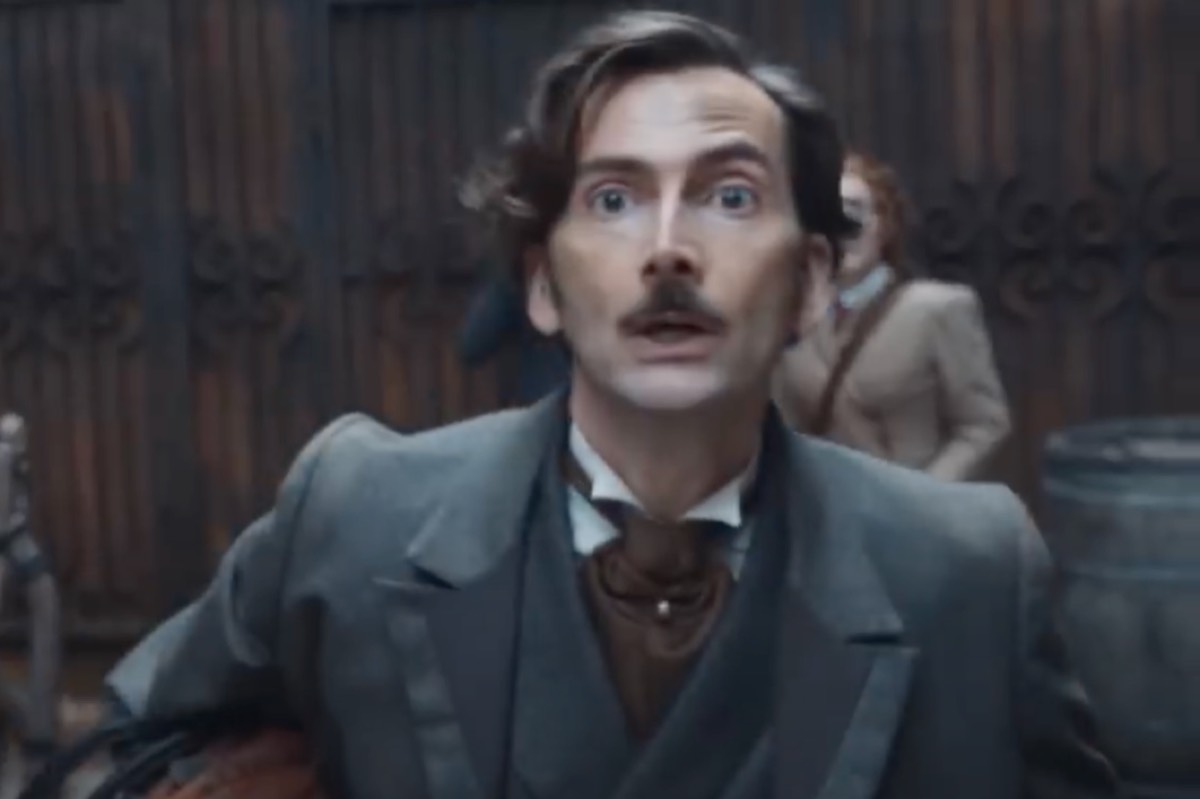
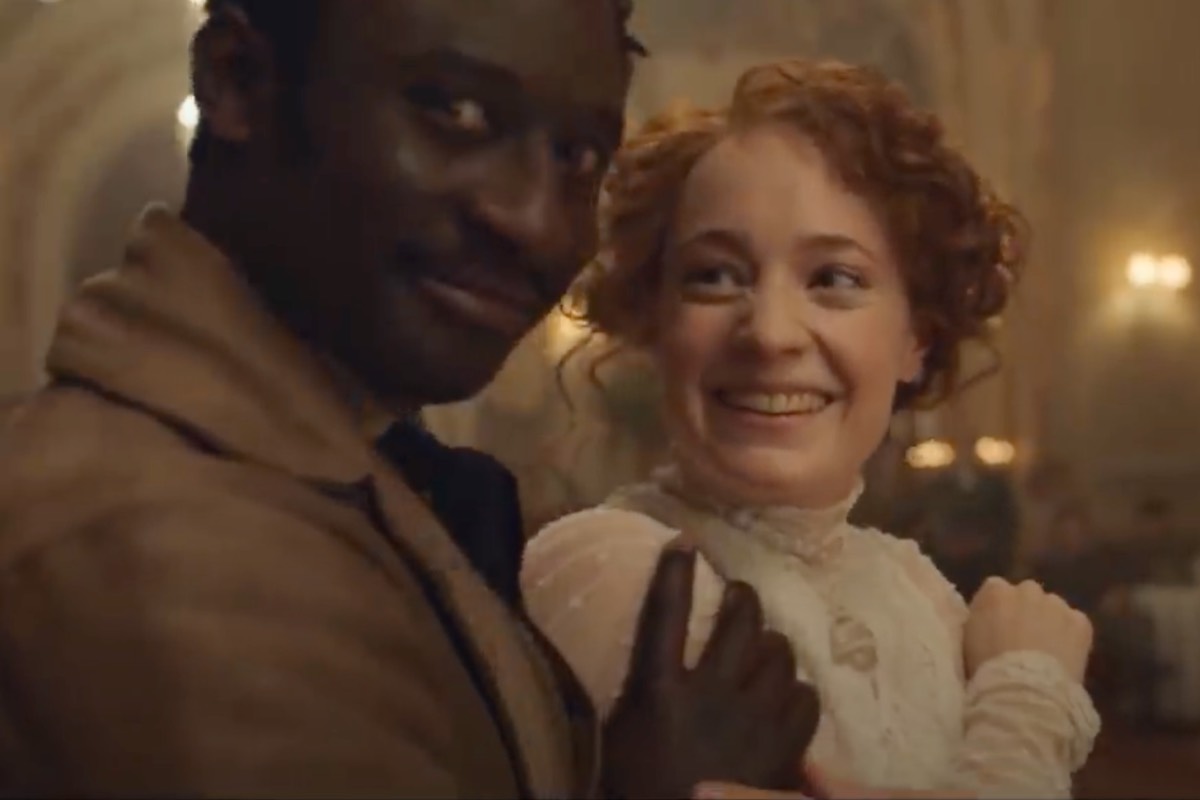
Phileas Fogg (David Tennant), Abigail Fix (Leonie Benesch), and Jean Passepartout (Ibrahim Koma) set out on the adventure of a lifetime in a new TV adaptation of Jules Verne’s Around the World in 80 Days The series debuts January 2, 2022.
Jules Verne’s 1873 novel, Around the World in Eighty Days, inspired numerous real-life attempts to navigate the globe, as well as various film, TV, and radio adaptations of varying success. The latest TV adaption by the BBC stars a perfectly cast David Tennant as the globe-trotting adventurer Phileas Fogg, and judging from the preview, it looks like a particular entertaining way to kick of the new year.
(Spoilers for the 1873 Jules Verne novel below.)
Fogg is the novel’s main protagonist, a gentleman of modest fortune who gets into an argument with his pals at the Reform Club over a newspaper article about the opening of a new railway section in India,. The article claims this makes it possible to circumnavigate the world in 80 days. Fogg’s colleagues are skeptical, so he makes a wager that he can accomplish the feat. It’s a significant wager, too, amounting to half of Fogg’s fortune, with the other half required to finance his journey. If he doesn’t succeed, he will be ruined. Fogg takes his new valet, Passepartout, with him, departing London by train. Complicating matters is a Scotland Yard detective named Fix, who mistakes Fogg for a fugitive bank robber and tracks the pair throughout their travels.
Enlarge/ David Tennant is perfectly cast as gentleman adventurer Phileas Fogg.
YouTube/Masterpiece PBS
Their means of transport include trains, steamers, paddle boats, ships, a wind-powered sledge, and even an elephant at one point. They rescue a young Indian woman named Aouda in Bombay, and overcome bison herds blocking a railroad track, Passepartout’s kidnapping by Sioux warriors, hurricane winds, and a fuel shortage as they make their way back to London.
Fogg initially thinks he has lost his wager—and his fortune—since Fix briefly arrests him once he’s back on British soil, before realizing the actual bank robber had been apprehended three days before. Then Fogg realizes that, in fact, they had lost a day during their travels, and makes it back to his club in the nick of time. He wins the bet (sharing the winnings with Passepartout and Fix) and marries Aouda.
Verne was fascinated by all the technological innovations of the late 19th century, especially the First Transcontinental Railroad in the US and the opening of the Suez Canal in 1869, as well as the linking of Indian railways across the continent the following year. Global tourism was now a reality, at least for gentlemen of means. An Englishman named Thomas Cook was the first to complete an around-the-world trip over seven months in 1872, and a newspaper article about the feat may have influenced Verne. The author may also have drawn inspiration from the world trips of one George Francis Train, and Edgar Allan Poe’s story, “Three Sundays in a Week,” which also involves a lost day as a plot device.
Enlarge/ Ibrahim Koma and Leonie Benesch co-star as Passepartout and Abigail Fix, respectively
YouTube/Masterpiece PBS
Verne’s story, in turn, inspired the late 19th century journalist Nellie Bly to make her own world tour, completing the trip in 72 days. She even met Verne in Amiens, and wrote her own bestselling book about her adventures. Monty Python alum Michael Palin made the charming TV travelogue, Around the World in 80 Days with Michael Palin, in 1988, detailing his recreation of Fogg’s journey, without resorting to airplanes. There was a 1989 miniseries adaptation starring Pierce Brosnan, and a heavily anachronistic 2004 film starring Steve Coogan and Jackie Chan, as Fogg and Passepartout, respectively. (The latter was a critical and box office failure, although it did garner a couple of Razzie Award nominations.)
In addition to Tennant, this new adaptation stars Ibrahim Koma as Passepartout and Leonie Benesch as Abigail Fix, a journalist (no doubt inspired by Bly). Shivani Ghai plays Aouda, and Peter Sullivan plays Fogg’s primary antagonist, Nyle Bellamy. Per the official synopsis: “Following an outrageous bet, Fogg and his valet, Passepartout, take on the legendary journey of circumnavigating the globe in just 80 days, swiftly joined by aspiring journalist Abigail Fix, who seizes the chance to report on this extraordinary story.”
Enlarge/ Up, up, and away in their beautiful balloon.
YouTube/Masterpiece PBS
The trailer opens with our intrepid trio taking a stagecoach ride across the Old West, which serves as the perfect mechanism for introducing them. We also see Fogg announce his ambitious goal of circumventing the globe in 80 days, drawing laughter from the stodgy men in his private club. “Some are born to adventure, and others frankly are not,” Bellamy tells him, clearly implying that Fogg is the latter. There’s some truth to that: Fogg is prone to seasickness, for starters, and when he gets a fly in his eye while walking through a field, he briefly panics, to Abigail’s exasperation.
Of course, we already know that Fogg will exceed all expectations on that score, rising to every occasion as necessary, despite his comfortable, sheltered life to date. Tennant is utterly charming here, striking the perfect balance of energetic curiosity, enthusiasm, and just enough fastidiousness to keep us chuckling. And there seems to be good chemistry among the three leads. We’re looking to this one. Let the adventure begin!
Around the World in 80 Days premieres on BBC1 in the UK and on Masterpiece PBS in the US on January 2, 2022.
Listing image by YouTube/Masterpiece PBS
https://arstechnica.com/?p=1816190
Andrew and Lee continue watching The Wheel of Time—and it’s getting real
Enlarge/ We spend time getting to know some Aes Sedai in this episode, including Liandrin (Kate Fleetwood).
Andrew Cunningham and Lee Hutchinson have spent decades of their lives with Robert Jordan and Brandon Sanderson’s Wheel of Time books, and they’re bringing that knowledge to bear as they recap each episode of Amazon’s new WoT TV series. These recaps won’t cover every element of every episode, but they will contain major spoilers for the show and the book series. If you want to stay unspoiled and haven’t read the books, these recaps aren’t for you.
New episodes of The Wheel of Time will be posted to Amazon Prime subscribers every Friday.
Andrew: If I had to come up with a Friends-style episode title for this week’s Wheel of Time episode, it would be “The One With The Dragon Reborn Misdirects.”
I’m not sure how much screen time or effort I really want the show to devote to the Great Mystery Of Who The Dragon Reborn Is. Changing who it is would vault us out of “adaptation” territory and into the realm of fanfic, so at the end of the day, I don’t really think the series is going to change it on us. But I will say that, if I knew nothing at all about the book series going in, the show is at least making a reasonable case that any of our five Two Rivers-ians could be the Dragon. And at least so far, the show is managing to do that in a way that is consistent with what we know about each of these characters’ long arcs.
Lee: Oh yeah. I like the misdirection. We don’t have the luxury in the show of getting into each character’s head and knowing their internal landscape, so playing “Who’s the Dragon?!” is a good way of giving the audience something substantial to chew on beyond just dialogue and setting. Showrunner Rafe Judkins has said that the show is not changing who the Dragon is and that book fans will know immediately. But this gives folks who haven’t read the books a nice little mystery to ponder.
This episode gives us our first on-screen showing of what a male channeler’s madness looks and feels like, too. In the scenes where Logain is facing down the king of Ghealdan, we see that the weaves he channels are mixed together with blackness—the corruption of the Dark One. (The show also uses “corruption” over the book’s choice of “taint,” presumably to avoid all the memes that would come from having everyone saying “taint” all the time. Haha, taint.) Logain is beset by shadowy figures that seem to form themselves out the corruption, and they seductively whisper dark things to him, like, “Hey, you should totally kill that king guy.” It’s a neat effect, and I think it works great.
And I’m enjoying Logain’s… whatever the actor is doing. Sumptuousness? Weird presence? Whatever it is, Álvaro Morte is doing a great job of making Logain feel like the kind of bad guy who would definitely treat you to dinner plus a Bond villain monologue before murdering you.
<a href="https://cdn.arstechnica.net/wp-content/uploads/2021/11/wot-logain.jpg" class="enlarge" data-height="1280" data-width="1920" alt="Logain Ablar (Álvaro Morte) is mentioned and seen from afar in Eye of the World, but in the show, he gives us our first up-close look at male channeling.”><img alt="Logain Ablar (Álvaro Morte) is mentioned and seen from afar in Eye of the World, but in the show, he gives us our first up-close look at male channeling.” src=”https://rassegna.lbit-solution.it/wp-content/uploads/2021/11/andrew-and-lee-continue-watching-the-wheel-of-time-and-its-getting-real-1.jpg” width=”980″ height=”653″>
Enlarge/ Logain Ablar (Álvaro Morte) is mentioned and seen from afar in Eye of the World, but in the show, he gives us our first up-close look at male channeling.
Amazon Studios
Andrew: I am glad you mentioned the “taint” thing because if this adaptation keeps all the characters from talking and thinking about “the Dark One’s taint” all the time then I will be willing to forgive any and all other shortcomings.
The visual effect of the taint corruption on the One Power is probably my favorite visual effect in the series so far, strictly in terms of how economical and effective it is. You can still see the wisps of white, mixed in among the inky tendrils, but even before you see Logain’s madness manifest itself, it’s clear that something is wrong here.
That we’re meeting and talking to Logain at all is one of this episode’s two big departure points from the books—I believe we only spy him from a distance once in Eye of the World, and he doesn’t become a player in the story until a few books in.
We meet him because we’re inside an Aes Sedai encampment, which Moiraine, Lan, and Nynaeve have sought out so that Moiraine’s Trolloc-inflicted wound can be fully Healed. And the show uses this encampment to give us our first big dose of how Aes Sedai society is structured. We get a basic outline of the different Ajahs and their motivations, we hear about the Amyrlin Seat, we meet a few named characters from the books like Liandrin and Alanna. We physically move around a lot less in this episode, and the opportunity to take a breath makes the world-building and lore-dumping feel more organic and less forced.
I actually loved all the stuff with the Warders, since in the books you hear a lot about how they interact with each other but don’t actually get to see the kind of comradely backslapping that happens here.
Enlarge/ The Warders’ comradely interaction is a highlight.
Amazon Studios
Lee: Agreed, the Warder stuff was fun. This is a very different Lan from the one we see in the books—still stoic, but not flinty and unapproachable. He and Nynaeve manage to have an entire conversation about Lan’s fallen homeland of Malkier without either of them grunting or punching each other. I’m here for it—hell, I’m here for anything that makes Nynaeve less of the emotionally stunted bully desperately in need of therapy that she starts out as in the books.
Your comment about the Aes Sedai camp showing a bit of how Aes Sedai society works is dead on, and one of the most interesting bits is watching the Green sister in charge of the camp, Kerene (Clare Perkins) keeping Red sister Liandrin (Kate Fleetwood) firmly in check. Book readers know that among the Aes Sedai, women who are stronger with the One Power are kind of automatically in authority over those with lesser power, and Kerene (who Moiraine says has turned back entire armies with her channeling) is firmly in command. For a while, at least.
We also see a bit about why False Dragons are so feared—and what happens to them. A major job of the Red Ajah is to hunt down False Dragons and “gentle” them (that is, permanently sever them from the One Power, so that they can never again channel). False Dragons that have great strength in the One Power tend to raise armies of followers and wreak massive destruction—as Logain has done with Ghealdan. The Reds have snagged him up in a cage, and they’re transporting him to the White Tower to be tried.
https://arstechnica.com/?p=1815632
Amazon is nearing a deal to make a Mass Effect TV series
Enlarge/ The galactic setting of Mass Effect, as seen in the teaser trailer for the next game in the series.
Amazon is nearing a deal with Electronic Arts to develop a TV series for the Prime Video streaming service based on the beloved Mass Effect video game franchise.
Specifically, the piece dives into Amazon’s focus on genres like fantasy to drive viewers and says that will be a focus for Prime Video moving forward. “You will see us continuing to invest in fantasy genre of all kinds, we have a genre-focused team on the ground in Studios who work tirelessly with our creative partners on those slates, and you can look forward to more,” Amazon Studios head Jennifer Salke told Deadline.
In addition to Wheel of Time, which performed well for the company, a Lord of the Rings TV series is set to premiere in 2022.
If the Mass Effect series is still in the negotiations phase as Deadline reports, then we will, in all likelihood, have to wait until well after 2022 to see the show’s premiere. The article does not go into any detail at all about the content of the series, likely because those details have not yet been decided. Would a Mass Effect TV series retell the story of the games or a new story? Would it feature characters from the games or an entirely new cast? We’ll have to wait and see.
The timing could work out, though, as publisher EA and developer BioWare (which is owned by EA) are in the relatively early stages of developing the first new Mass Effect game since 2017’s Mass Effect: Andromeda.
Andromeda saw a lukewarm reception (though some people liked it), so it’s been a while since Mass Effect has been an IP to be reckoned with. But back in the late 2000s and early 2010s, few game franchises were bigger.
https://arstechnica.com/?p=1815743
Judge dismisses Steam antitrust case for lack of factual support
Aurich Lawson
A federal judge has accepted Valve’s motion to dismiss an anti-trust lawsuit against company Steam’s store and platform, saying that plaintiff Wolfire Games failed to establish the basic facts necessary to sustain the case going forward.
Wolfire’s lawsuit in part rested on the argument that Valve was illegally tying its Steam game store (which sells the games) to the separate Steam platform (which provides game library management, social networking, achievement tracking, Steam Workshop mods, etc.). Wolfire argued that Valve was using its dominant market position in digital PC game sales (accepted in the lawsuit as 75 percent of the market for full PC game sales) to illegally prop up the platform in a way that was not conducive to competition.
In a ruling issued late last week, though, Western District of Washington Judge John Coughenour said that no illegal tying could take place because the Steam store and platform “are a single product within the integrated game platform and transaction market.” That’s because the revenues from sales of games on the Steam store go directly toward supporting the “free” services available on the platform. And in the rare cases that games sold elsewhere make use of the Steam platform, Valve lets developers create free keys to enable that integration, obviating any potential harm.
Judge Coughenour also said that Wolfire failed to show that Valve’s 30 percent standard fee on Steam was “supracompetitive.” On the contrary, that 30 percent fee has remained constant since digital downloads were at a “fledgling stage,” well before Wolfire asserts Steam became “dominant” in the market in 2013.
What’s more, the judge writes, “other [digital storefronts] who charge less have failed, even though they had significant resources at their disposal. Therefore, it would appear that the market reality, at least as plead, is that Defendant’s fee is commensurate with the Steam Platform’s value to game publishers.” That value includes Steam’s massive player base, which Wolfire argued was “locked in” to Steam due to “immense network effects” but which the judge seems to accept in his ruling as an integral part of Steam’s value to developers.
In any case, Judge Coughenour also writes that Wolfire failed to establish how Valve’s alleged monopoly power brought direct harm to the developer. For instance, even if the court accepted Wolfire’s arguments that Valve’s actions led to an alleged “reduction in output and quality” across the industry, the original lawsuit “does not provide facts describing how Wolfire directly suffered” as a result.
Wolfire technically has 30 days to amend its complaint to address the criticisms and absences of facts brought up in this dismissal. But the sweeping decision does not bode well for the future of the case, to say the least.
https://arstechnica.com/?p=1815641
“NFT” picked as word of the year—deal with it
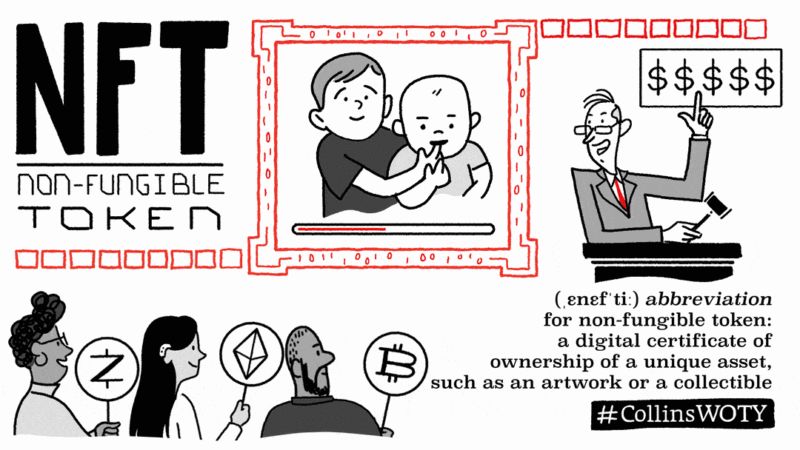
Enlarge/ Collins put out this .gif to help you grok just how non-cheugy NFTs can be.
Perhaps the best thing to come from this year’s widespread adoption of the term “Non-Fungible Token” (NFT) is greater public comfort with the word “fungible.” What a perfectly cromulent word, fungible, even if it sounds like a foot powder.
Now, dictionary-maker Collins has picked NFT as its “word of the year” for 2021, mostly because people are making SRS $$$ from the blockchain-based tech. One of those people is of course the artist who goes by “Beeple”; his collection of 5,000+ everyday digital art pieces went for $69 million earlier this year, which every subsequent article on NFTs has been required to mention. This sale made Beeple one of the best-paid artists on earth. The New York Times did not love this, arguing that the gross-out and meme-based imagery of much of Beeple’s work was puerile. Also, Beeple “struggles with flesh; as in many video games, the skins appear waxy and desiccated. It’s as if every remaining human in this cryptouniverse has scurvy, though maybe that is what happens when you subordinate your flesh to the screen.” Yikes. While I agree that this was a pretty dumb way to spend $69 million, NFTs definitely have utility; for instance, just imagine how much fun it would be to buy this critic an NFT of a high-quality “OK Boomer” meme?
As for what NFTs actually are, my explanation would probably get lost in a rant about energy efficiency and the nature of originality in the digital age. Before you know it, I, too, would be banging on about “scurvy.” So I’ll let Collins try to explain things:
Collins defines [NFT] as “a unique digital certificate, registered in a blockchain, that is used to record ownership of an asset such as an artwork or a collectible.” In other words, it’s a chunk of digital data that records who a piece of digital work belongs to. “Unique” is important here — it’s a one-off, not “fungible” or replaceable by any other piece of data. And what’s really captured the public’s imagination around NFTs is the use of this technology to sell art. For example, the rights to a work by the surrealist digital artist Beeple sold at Christie’s in March for $69m. Called EVERYDAYS: THE FIRST 5000 DAYS, it was a collage of all the images he’d created since he committed in 2007 to making one every day.
See what I mean? There’s Beeple again.
Enlarge/ Collins put out this .gif to help you grok just how non-cheugy NFTs can be.
NFTs can be divisive—do they liberate artists by providing new business models or are they just another money pit, the Pets.com (1998-2000, RIP) of our time? But I think we can all be thankful that “NFT” beat out “cheugy,” a word so ephemeral that I’ve already forgotten what it means.
As for the slightly more staid Oxford University Press, its word of the year was “vax.” Just look at this usage chart, which resembles a graph of COVID cases in its forceful upward motion this year:
Enlarge/ Oxford University Press chart showing “vax” usage surging in 2021.
So if you don’t want to be cheugy this Thanksgiving, add “vax” and “NFT” to your word-hoards, fellow language lovers. And please join me on my quest to make 2022’s adjective of the year “post-pandemic.”
Ars Technica Editor-in-Chief Ken Fisher has a rule: If you have a dumb, fun conversation in the Ars Slack that lasts for more than 10 minutes, it’s probably worth turning that conversation into some kind of article. And that’s how a weekday water-cooler-style discussion about Platonic idealism and Mario became what you’re reading now!
For people of a certain age—which, dear readers, most of us are—”video games” and “Nintendo” meant practically the same thing. (There are even a few of us who are older than a certain age, who came from the Great Long Long Ago time when “video games” meant “Atari,” and even those few acknowledge Nintendo’s culture-changing dominance in the mid-to-late 1980s.) So all of us have played at least a few different games featuring the world’s most famous plumber, Mario Mario. (Yeah, his last name is also Mario. Which means his brother’s name is Luigi Mario. Which means that calling Luigi “Green Mario” is actually correct! Vindication!)
A few Ars staffers volunteered to brave the inevitable slings and arrows of the comments section to put down their thoughts on a simple question: out of every video game in which Mario made an appearance, which one is your absolute top-shelf favorite, and why?
Ars Technica may earn compensation for sales from links on this post through affiliate programs.
Nate Anderson: Super Mario Bros.
Only one Mario game has jumped onto—or occasionally over—the flagpole of my heart. That game, of course, is Super Mario Bros. for NES. Minus worlds, water worlds, warp zones, magic mushrooms, bullets with eyes, bonus rooms, that hidden 1-UP in World 1-1, glorious 8-bit music, the egg-throwing sky-turtle (!) Lakitu, mysterious green pipes—SMB has it all.
Yes, it helped that this was the first great game of my NES-era childhood, and that to get it, I had to cajole my parents into renting the cartridge from the local video store for the weekend. But SMB is no mere nostalgia play. Unlike many games of its era, it’s still great fun today, and its iconic levels should absolutely be a part of today’s Common Core school standards. —Nate Anderson, Deputy Editor
When Nintendo puts Mario in a sandbox, the results can be… uneven. Super Mario 64, for instance, is sheer genius, while Super Mario Sunshine lacks polish and revolves around an irritating gaming mechanic.
Luckily, Super Mario Odyssey, the flagship title for the Nintendo Switch, falls into the genius category.
Odyssey can be anything you want it to be. If you want to collect just enough Power Moons to beat the game, do so. I’m not a completionist, but I loved roaming around Odyssey, collecting as many Power Moons as I could find, and discovering the odd portal between worlds.
Enlarge/ Don’t worry, Mario, you’ll get the hang of it.
Odyssey is also easy on the eyes. The Switch may lack the pure computing horsepower of Sony’s and Microsoft’s consoles, but Nintendo developers are capable of maximizing what they have to work with. I love the lushly detailed worlds throughout Odyssey, each of which has its own gameplay quirks.
If I had to boil Odyssey down to a single adjective, it would be “clever.” In the hands of a lesser development studio, Mario’s sentient hat partner Cappy could have been a cheap gimmick. Instead, it’s an integral (and fun) part of gameplay. I was able to get through the game without mastering the ability to toss Cappy and then use the airborne Bonneter to cross chasms, but I enjoyed watching my teenager take advantage of that mechanic. Young brains, young reflexes. Sigh.
Maybe the best part about Super Mario Odyssey is beating it—the first time. After an adrenaline-fueled run through the magma chambers under the surface of the Moon, I beat Bowser, rescued Peach, and found out that there was a multitude of new Power Moons scattered across every planet in the Odyssey cosmos. After spending many more hours hunting them down, I took a stab—actually many stabs—at the Darker Side of the Moon but could never defeat the fourth Broodal. Trying to run that gauntlet was out of the question.
Even though I stopped playing before I did All the Things, I came away satisfied. Nintendo knows what its fans want, and Odyssey delivers on every level.
Now if you’ll excuse me, I need to make sure my Switch is fully charged… —Eric Bangeman, Managing Editor
Nintendo’s 2D classics are easy to play, in the sense that they are easy to find and acquire. NES and SNES games are always the first to be repackaged and redistributed on new Nintendo consoles, and emulating these systems requires so little computing power that you can fire up Super Mario Bros. 3 on nearly any device that will connect to a screen.
Preservation for Nintendo’s later 3D classics has been spottier, partly because they need more powerful hardware to run well and because it can be difficult to truly replicate things like the Wii’s motion controls, the Wii U’s tablet, or the DS and 3DS’s touchscreen or stereoscopic 3D effects. These games do sometimes get repackaged and re-released for newer consoles, but they come with new-game price tags to match.
All of this is to say that there’s definitely an element of “absence makes the heart grow fonder” to my insistence that Super Mario Galaxy 2 is my favorite Mario game, because I haven’t actually played it in the better part of a decade. But clearly someone needs to stick up for it—its absence from Super Mario 3D All-Stars was a travesty nearly on par with the presence of Super Mario Sunshine. (This is a joke.)
Galaxy 2 began life as a bundle of ideas that didn’t make it into the original game, and the result is a brilliant collection of rapid-fire challenges that riff on the original Galaxy‘s mechanics in more varied and adventurous ways. (It’s a clear precursor to the Power-Moon-stuffed Super Mario Odyssey favored by Eric up above.) And once Galaxy 2‘s 120 stars have been collected, the game hits you with another 120 stars that will challenge any player’s precision platforming skills.
While games like the New Super Mario Bros. series or Super Mario 3D World have more fleshed-out multiplayer modes, Galaxy 2 also deserves recognition for its excellent two-player co-op mode, where another person can point their Wii Remote at the screen to stun enemies and collect items. Nintendo also played with this idea in the original Galaxy and Odyssey, but the iteration in Galaxy 2 is great for younger gamers or non-gamers who want to get in on the fun. The Wii Remote controls are intuitive, and the second player can do a whole bunch of genuinely useful things that don’t get in the way of the first player.
Mario Galaxy 2 is a high watermark between the technical achievements of Mario 64 and the unadulterated joy of Mario Odyssey, and I would (and, sigh, probably will) pay good money to play a 1080p version on a modern console. —Andrew Cunningham, Senior Technology Reporter