Why Thanos couldn’t have snapped his fingers while wearing the Infinity Glove

A snapping finger produces the highest rotational accelerations observed in humans, according to a new study.

The Marvel Cinematic Universe was dramatically altered at the end of Avengers: Infinity War with an infamous snap of Thanos’ fingers. But could the intergalactic warlord have managed to snap his fingers at all while wearing that cumbersome metal Infinity Glove? That question inspired a new paper published in the Journal of the Royal Society Interface, exploring the biomechanics of the finger snap, particularly the role of friction.

(Spoilers for Infinity War below.)

“For the past few years, I’ve been fascinated with how we can snap our fingers,” said co-author Saad Bhamla, an engineer at Georgia Tech. “It’s really an extraordinary physics puzzle right at our fingertips that hasn’t been investigated closely.”

Finger snaps are essentially a latch-like mechanism (technically, Latch-mediated spring actuation, or LaMSA), in which energy is loaded in a mass-spring system, held in place with a latch. When the latch is rapidly released, all the stored potential energy is released over a short period of time.

Several small organisms are capable of producing ultrafast moves through a similar latching mechanism: frogs’ legs and chameleons’ tongues, for instance, as well as exploding plant seeds, multiple termite species, and the mandibles of trap-jaw ants. In the case of the mantis shrimp‘s powerful punch, small structures in the muscle tendons called sclerites serve as the latch. The shrimp’s muscles pull on a saddle-shaped structure in the arm, causing it to bend and store potential energy, which is released with the swinging of the club-like claw.

A finger snap modeled as a 1D latch spring system.
Enlarge / A finger snap modeled as a 1D latch spring system.
R. Acharya et al., 2021

Bhamla and his co-authors are interested in studying these surprisingly powerful and ultrafast motions. But the impetus for the current study is partially due to Bhamla’s viewing of Infinity War in 2018. In the film, uber-villain Thanos collects all six Infinity Stones, places them into the metal Infinity Glove, and proceeds to wipe out half of all life in the universe with a single snap of his fingers. But Bhamla couldn’t dispel the nagging thought that perhaps Thanos wouldn’t have been able to produce a snap at all while wearing the metal glove.

That’s because he suspected that friction plays a much more pivotal role in the case of a finger snap than it does in other LaMSA systems. Per the authors, the arm muscles serve as the motor, which loads potential energy in the tendons of the fingers. These in turn serve as springs. Pressing the middle finger and thumb together builds up force, which is released as the middle finger slides past the thumb, generating the snap. Bhamla et al. hypothesized that the natural friction of skin between the middle finger and the thumb serves a dual role, both helping in the “latching” of the middle finger and hindering the unlatching motion. The researchers designed a series of experiments to test that hypothesis.

To measure the kinematics, they used a high-speed camera to record an array of snaps from three different people. The researchers placed circles of reflective tape on each subject’s wrist joint, the base of the fingers, and the first knuckle, second knuckle, and tip of the middle finger. They recorded five snaps apiece for each different surface they tested: a lubricated nitrile glove, latex rubber thimbles on both fingers, and a metal thimble on both fingers under the nitrile glove. (The authors note that participants were allowed to rest for one minute between snaps to avoid muscle and joint fatigue.)

Saad Bhamla demonstrates a friction-based latching mechanism with a snap of his fingers.
Enlarge / Saad Bhamla demonstrates a friction-based latching mechanism with a snap of his fingers.
Georgia Tech

The researchers’ measurements showed that the rotational acceleration of a finger snap is nearly three times faster than a professional baseball pitch, although the rotational velocity was less than that of the arms of professional baseball players. “When I first saw the data, I jumped out of my chair,” said Bhamla. “The finger snap occurs in only seven milliseconds, more than twenty times faster than the blink of an eye, which takes more than 150 milliseconds.”

But that’s only for a finger snap involving human skin, which constitutes a kind of sweet spot or “Goldilocks zone”: just the right amount of friction and compression to produce the perfect snap. The lubricated glove was so slippery, there wasn’t enough friction and thus not as much energy stored. The rubber thimbles produced too much friction, such that too much energy was lost as heat. The metal thimbles performed worst of all: there wasn’t sufficient build-up of energy to produce a snap.

The latter finding has important implications for the plot of Infinity War. “Our results suggest that Thanos could not have snapped because of his metal-armored fingers,” said co-author Raghav Acharya, an undergraduate at Georgia Tech. “So, it’s probably the Hollywood special effects, rather than actual physics, at play. Sorry for the spoiler.” That’s bad news for Thanos, but these results will likely help improve prosthetic designs and the friction dynamics of soft robots in the future.

DOI: Journal of the Royal Society Interface, 2021. 10.1098/rsif.2021.0672 (About DOIs).

Listing image by Marvel Studios

https://arstechnica.com/?p=1812958


Netflix begins reporting viewer numbers for its biggest hits

<img src="https://rassegna.lbit-solution.it/wp-content/uploads/2021/11/netflix-begins-reporting-viewer-numbers-for-its-biggest-hits.jpg" alt="Squid Game is currently the most popular non-English-language television show on Netflix.”>
Enlarge / Squid Game is currently the most popular non-English-language television show on Netflix.

Netflix will begin regularly reporting viewership numbers for its top programs and films, a major shift in strategy for the streaming company that has carefully guarded its data over the past decade.

The company said it will report every week how many hours people spent watching its top 10 TV shows and movies, for both English and non-English titles, including Netflix originals and content licensed from third parties.

In its first release of viewer numbers on Tuesday, Netflix said its subscribers last week spent 149 million hours watching Red Notice, the action film starring Gal Gadot, making it the most popular piece of English-language content on the platform.

Within television, the most-watched English-language show was the third season of Narcos: Mexico, drawing 50 million hours of viewing. Squid Game was the most popular non-English-language television show, racking up 43 million hours of viewing during the week ending November 14.

“Nonsense. BS. Cherry Picked. Unaudited. We’ve had a lot of feedback about our metrics over the years,” said Pablo Perez De Rosso, vice-president of content strategy. “This is an important step forward for Netflix, the creators we work with and our members.”

Ever since Netflix leapt into original content with House of Cards in 2013, the company has largely kept hidden just how popular any given program was. Netflix does not run advertisements, so the company does not need to report ratings to attract brands in the way that broadcast and cable television networks do.

Previously, Netflix has reported how many subscribers watched the first two minutes of a program. Traditional television ratings, typically provided by Nielsen, measure viewership during an average minute of a show.

Box-office sales and Nielsen television ratings—the traditional gauge of success in Hollywood—do not apply to Netflix, making it hard to determine what success means in streaming. Often, even the actors and producers involved would not know how popular their movie was, a source of frustration in the entertainment industry.

John Landgraf, chief executive of FX, a pay-TV channel owned by Disney, in 2019 slammed Netflix for its secretive practices. “When you take hundreds of at-bats, you’re going to get some singles, some doubles and even the occasional home run,” Landgraf said. “And failing to ever report a single strikeout undercuts an accurate perception of their batting average and misrepresents the scale of their hits.”

Netflix has been tiptoeing toward more transparency but has largely cherry-picked the numbers it releases to boast about its biggest hits.

While that will change under the new reporting system, Netflix will fall short of the transparency of traditional TV and film performance. The company will report data only for its 10 most successful programs, leaving out the disappointments.

Netflix executives say that traditional metrics, such as ratings, are not relevant in the streaming business model. The company’s goal is to lure new subscribers and stop existing ones from canceling, not to make money from an individual program. “Figuring out how best to measure success in streaming is hard, and there’s no one perfect metric,” said Perez De Rosso.

Netflix’s peers in streaming, such as Disney Plus and HBO Max, have released even less viewership data than Netflix. Netflix said it had hired EY to audit its metrics.

© 2021 The Financial Times Ltd. All rights reserved Not to be redistributed, copied, or modified in any way.

https://arstechnica.com/?p=1813551


After bombshell report, Activision employees walk out, demand CEO resign

A casually dressed man sits on a sofa.
Enlarge / Activision Blizzard CEO Bobby Kotick.

A group of Activision Blizzard employees staged a walkout and demanded the resignation of CEO Bobby Kotick Tuesday, in response to a bombshell Wall Street Journal report alleging Kotick failed to act decisively or inform his board of directors of widespread abuse allegations within the company.

The WSJ story is the result of months of reporting and says that Activision has received more than 500 claims of “harassment, sexual assault, bullying, pay disparities, and other issues” just in the few months since the state of California brought a lawsuit against the company over such problems. Many of those reports stem from heavy drinking at company-sponsored events, according to the Journal, including the alleged rape of one employee at the hands of Sledgehammer Games supervisor Javier Panameno (who was later fired after an internal investigation, and who has now resigned from his subsequent employer Zynga). This follows on broadly similar reports of drunken misconduct stemming from a booze-filled “Cosby suite” at BlizzCon 2013.

The Journal report also adds new context to the sudden departure of former Blizzard co-chief Jennifer Oneal, who announced she was leaving the company earlier this month, just three months after being promoted to help fill the role of former President J. Allen Brack. Oneal reportedly complained to a company lawyer of previous sexual harassment she suffered at the company, pay disparities with her Blizzard co-chief Mike Ybarra, and a lack of faith that the company’s executive leadership could change its culture. “I have been tokenized, marginalized, and discriminated against,” Oneal reportedly wrote.

The Journal also reports that Dan Bunting, the co-head of Call of Duty studio Treyarch was accused of sexually harassing a fellow employee in 2017. While an internal report in 2019 recommended that Bunting be fired, Kotick reportedly intervened to allow Bunting to stay at the company after being given counseling. Bunting has reportedly resigned from his position following questioning from the Journal.

Kotick reportedly withheld information about these and other allegations of which he was aware from Activision’s board of directors, according to the Journal. And Kotick was also the subject of a number of harassment complaints himself and reportedly threatened to have his assistant killed in a voicemail left in response to one such complaint in 2006. An Activision spokesperson told the Journal that Kotick “quickly apologized 16 years ago for the obviously hyperbolic and inappropriate voice mail, and he deeply regrets the exaggeration and tone in his voice mail to this day.”

Activision criticizes “inaccurate and misleading” report

In response to the explosive and wide-ranging allegations in the piece, Kotick shared a video message with employees in which he said the Journal’s report “paints an inaccurate and misleading view of our company, of me personally, and my leadership.” In those remarks, Kotick recommitted to “creat[ing] the most welcoming and inclusive workplace” and said that “anyone who doubts my conviction to be the most welcoming, inclusive workplace doesn’t really appreciate how important this is to me.”

In a statement provided to Bloomberg and other outlets, an Activision spokesperson echoed disappointment that the report “presents an inaccurate and misleading view of Activision Blizzard and our CEO. Instances of sexual misconduct that were brought to his attention were acted upon. The WSJ ignores important changes underway to make the this industry’s most welcoming and inclusive workplace.”

Activision’s board of directors issued a separate statement giving Kotick its support, saying the board “remains confident that Bobby Kotick appropriately addressed workplace issues brought to his attention” and that it “remains committed to the goal of making Activision Blizzard the most welcoming and inclusive company in the industry.”

Activision's publishing HQ in Santa Monica, California.
Enlarge / Activision’s publishing HQ in Santa Monica, California.

These statements were not enough for many employees. The ABK Workers Alliance publicly called for an employee walkout today, saying that “we will not be silenced until Bobby Kotick has been replaced as CEO.” That follows a “Walkout for Equality” the group helped organize in July demanding a number of concrete changes to Activision policies on arbitration, recruitment, and diversity. Kotaku reports that over 100 employees have gathered outside Blizzard’s Irvine headquarters demanding Kotick’s resignation Tuesday afternoon.

“We are fully committed to fostering a safe, inclusive and rewarding environment for all of our employees around the world,” Activision said of the walkout in a statement provided to The Washington Post. “We support their right to express their opinions and concerns in a safe and respectful manner, without fear of retaliation.”

Back in July, Kotick was forced to apologize for the company’s initial response to the public reveal of the California lawsuit, which Kotick called “tone deaf.” Activision withheld information about that California lawsuit from shareholders for two years before it became public, leading to a proposed class-action lawsuit from shareholders who say they were “economically damaged” by that secrecy.

Kotick requested and received a massive pay cut last month, reducing his total compensation to just $62,500 “until the Board has determined that we have achieved the transformational gender-related goals and other commitments described above.” That follows on a reduction of Kotick’s $1.75 million salary to $875,000 back in April, following investor pressure that called his pay “excessive.”

Activision stock was down 6 percent today, giving back early gains and dropping precipitously soon after the Journal report dropped this morning. The dip takes the company’s public valuation down to its lowest value since May of last year.

https://arstechnica.com/?p=1813535


Sorry PlayStation owners, Elder Scrolls VI will be an Xbox/PC exclusive

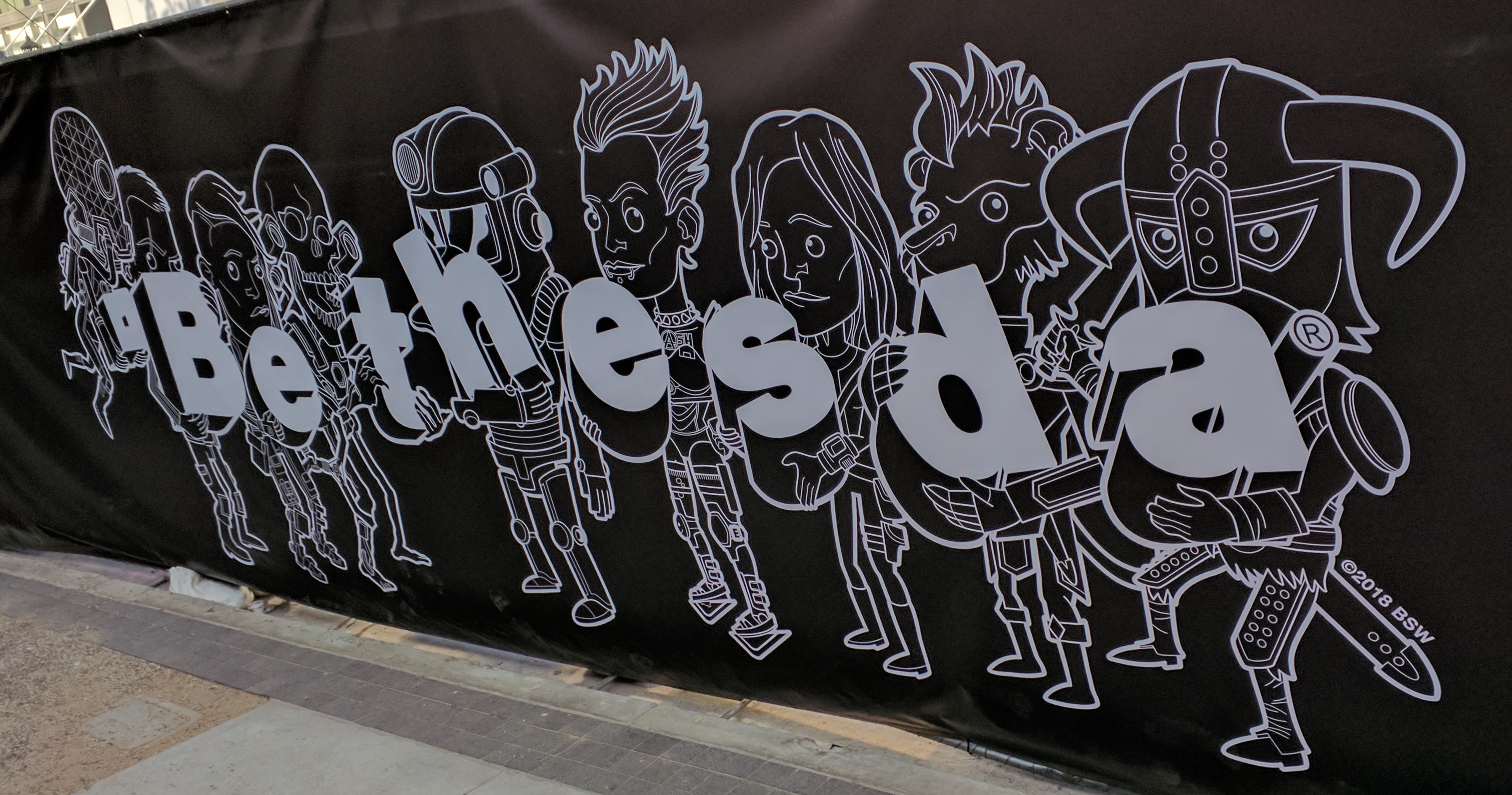
Bethesda's logo as carried by the publisher's growing roster of mascots.
Enlarge / Bethesda’s logo as carried by the publisher’s growing roster of mascots.


Since Microsoft purchased Bethesda Softworks (via parent company ZeniMax Media) last September, the question of Bethesda games on non-Xbox consoles has been on everyone’s minds. This week, Microsoft put probably the final nail in that conversational coffin, with Xbox chief Phil Spencer confirming in an interview with British GQ magazine that the upcoming Elder Scrolls VI will be available only on Xbox consoles and the PC.

In a quote that doesn’t seem likely to soothe many PlayStation owners, Spencer said the exclusivity is “not about punishing any other platform, like I fundamentally believe all of the platforms can continue to grow.” Instead, Spencer was focused on “be[ing] able to bring the full complete package of what we have” with the company’s games, meaning integration with Xbox Live, Game Pass, Xbox Cloud Gaming, etc. “And that would be true when I think about Elder Scrolls VI,” he added. “That would be true when I think about any of our franchises.”

An announcement 14 months in the making

The confirmation ends over a year of coyness and mealymouthed statements about the exclusivity of major Bethesda games. The ordeal started with a Bloomberg interview last September in which Spencer said future Bethesda titles would be considered for non-Xbox consoles “on a case-by-case basis.” An in November, Xbox CFO Tim Stuart was saying publicly that Microsoft wanted Bethesda content to be “first or better or best” on Xbox rather than necessarily exclusive to the platform.

Microsoft did allow previously announced and released titles like Deathloop, Ghostwire: Tokyo, and The Elder Scrolls Online to come out on non-Xbox consoles. But the tenor of Microsoft’s statements about future Bethesda releases began to change in March, when Microsoft confirmed that “some new [Bethesda] titles in the future… will be exclusive to Xbox and PC players.” By June, that set of “some” titles included Starfield, the highly anticipated space epic that will be exclusive to Xbox Series X/S and PC for its planned launch next year. Bethesda Senior VP of Marketing and Communications Pete Hines apologized for that state of affairs days later, saying he was “certain that [exclusivity] is frustrating to folks, but there’s not a whole lot I can do about it.”

Given all that, Elder Scrolls‘ absence from non-Xbox consoles might not be surprising. But some fans were still holding out hope that Bethesda’s massive fantasy RPG franchise would be a Minecraft-style exception to the general rule that Microsoft-owned games only appear on Microsoft platforms. After all, Bethesda producer/director Todd Howard told GamesIndustry.biz last October that it would be “hard to imagine” that the next Elder Scrolls game wouldn’t be allowed on non-Xbox consoles.

Hard to imagine or not, the sequel to an Elder Scrolls game that has appeared on the PS3, PS4, PS5, and Nintendo Switch will not appear on any of those systems. And while there’s still some possibility that other, less high-profile Bethesda games will be allowed on other consoles in the future, Microsoft apparently sees extracting the maximum value from Bethesda’s biggest franchises as a crucial part of its $7.5 billion acquisition.

https://arstechnica.com/?p=1813497


Valve provides a deep dive into Steam Deck’s custom hardware design

[embedded content]
Valve’s full, hours-long, developer-focused presentation.

Valve’s portable Steam Deck hardware may be delayed by a couple of months, but that didn’t stop Valve from discussing plenty of interesting details about the system during a wide-ranging developer-focused livestream Friday. That included a lot of nitty-gritty talk about hardware specs and software interpolation, but also design decisions surrounding how to balance hardware-power and battery-power concerns.
AMD’s custom-built Steam Deck APU, dubbed Aerith after the Final Fantasy VII character, is the core of the system and was a focus of the presentation. AMD says the system is the company’s first mobile chip to feature an RDNA2 GPU architecture, so it should have full support for DirectX 12 and the latest Vulkan APIs. That also means that not only will Steam Deck be compatible with the entire Steam library, but many Steam games will already be optimized for the specific chip configuration found inside, Valve says.

The CPU portion of the Aerith chip features four Zen 2 cores capable of running eight threads at 3.5 Ghz. Meanwhile, the GPU features eight RDNA2 compute units running at 1.6 Ghz.

While most Steam games these days get by with just 8 or 12GB of RAM, Valve said it chose to put 16GB of LPDDR5 RAM in the Steam Deck because “we want to make sure that Steam Deck is not just compatible with games today but can also run games that haven’t even come out yet.” A minimum of 1GB of that RAM is dedicated to the GPU, but Steam Deck’s unified architecture means that the GPU can access up to 8GB based on what’s happening in the game or even go past that limit “on a game-to-game basis.” The RAM’s 128-bit wide bus also allows for 88Gbps of total memory bandwidth, or 55GB/s/TFLOP, which Valve says outclasses some desktop GPUs.

As far as storage is concerned, Valve said its tests showed little difference in real-world load time between the eMMC drives (on low-end Steam Deck models), NVMe SSDs (on higher-end models), and the built-in SD card reader. Despite vastly different bandwidth speeds for each option, boot times differed by 25 percent or less between them in Valve’s early testing (though the company said that testing is currently far from comprehensive).

Battery sipping

Valve spent a lot of time talking about how the Steam Deck was optimized for battery life, specifically designed to fit in a tiny power envelope in the 4-15 W range. The LPDDR5 RAM also comes in handy there, with no shortage of power-saving features that come into play in low-stress scenarios like 2D games and idle/sleep modes. That means a suspended Steam Deck should last “hours or even days” without needing to be plugged in, Valve said.

When it is plugged in through USB-C, though, the Deck can draw 45 W of power, enough to charge at its full rate and power a game at the same time. The Steam Deck can also provide 7.5 W of power to plugged-in peripherals, enough to power webcams, wired controllers, or external storage devices. For wireless accessories, Bluetooth 5.0 means Steam Deck can support wireless headphones and “several controllers” at the same time. It can also switch to Bluetooth Low Energy mode for less-intensive use cases.

Valve says it wanted to make sure its APU delivered consistent performance rather than relying on “turbo boost” or other modes that can temporarily up the hardware power (and power draw) on laptops and phones. A game on Steam Deck should perform identically in the first ten seconds and after hours of continuous use, Valve said, and game performance on Steam Deck should be consistent whether plugged in, on battery, docked, charging, downloading games. Even moderately elevated ambient temperatures shouldn’t hurt performance, Valve said, though if things get too hot outside, the system can throttle battery charging rates, download speeds, and even SSD speeds to keep the GPU running as steadily as possible.

Since the APU doesn’t have any hard limits for its power draw, Valve says games running on Steam Deck should impose a frames-per-second limit of 60 fps (to match the display) or 30 fps (for games that push the GPU) in order to maintain battery life. That frame-rate limit also helps contribute to the Steam Deck’s battery life on many games, AMD said. If a game renders a frame faster than the 16.66 millisseconds needed for the 60 fps frame rate, the APU will instantly switch to the very low-power mode until the frame is displayed, then switch back to full power to calculate the next frame.

Valve says it’s working on a global fps limiter to enforce the 30/60 fps guidelines across all games running on the Steam Deck. Developers will have access to “extra knobs” to help tune the balance between performance and battery life as well.

https://arstechnica.com/?p=1813205


Surprise: Halo Infinite’s free multiplayer mode is available right now

As part of its Xbox 20th anniversary celebration livestream today, Microsoft announced the surprise launch of Halo Infinite‘s free-to-play multiplayer mode, which is available now for Xbox One, Series S/X, and PC (the game will be available on Xbox Cloud Streaming “later today”).

Today’s launch, which comes after two limited multiplayer “technical preview” test weekends in recent months, is still being described as a beta launch ahead of the full release planned for December 8. That’s when the game’s single-player campaign is also expected to launch (though co-op mode will have to wait).

As such, 343 Industries warns that “you may experience some bumps and bugs during this beta period.” That said, the company sees today’s roll out as the official launch of the game’s “Season One,” which is titled “Heroes of Reach” and will run through May 2, 2022 (subsequent seasons will run for three months). Any progress made in the beta will carry over to the full launch.

Today’s launch includes access to all of the game’s day-one maps and the tutorial-filled Academy mode, as well as access to paid and unlockable cosmetic add-ons via the “battle pass” system. The matchmaking system supports 4v4 Arena modes, 12v12 Big Team battles on larger maps, a “Bot Bootcamp” against computer-controlled opponents, or custom games with settings and maps of your choice. More details are available on Halo Waypoint.

Both the multiplayer and single-player versions of Halo Infinite were delayed from an initial plan for a “Holiday 2020” launch alongside the Xbox Series S/X.

Elsewhere in the stream, Microsoft announced that 70 additional titles from the original Xbox and Xbox 360 are now available for backward-compatible play on more recent Xbox consoles. This includes more than 20 original Xbox titles and all the games from the Max Payne and F.E.A.R. franchises, to name just a few.

All of these titles will be enhanced with Auto HDR on compatible hardware, while 11 will also have FPS Boost. The full list of newly available titles is available on Major Nelson’s blog.

Ars Technica may earn compensation for sales from links on this post through affiliate programs.

Listing image by Xbox Game Studios

https://arstechnica.com/?p=1813141


Doom’s creator goes after “Doomscroll”

Doom’s creator goes after “Doomscroll”
Aurich Lawson | Getty Images

Dustin Mitchell was scanning the local news one day when inspiration struck in an unlikely article. The report was on a woman who, in a fit of QAnon mania, had destroyed a display of face masks at a Scottsdale, Arizona, Target store. The woman later explained what brought her to that point: “All I did was doomscroll,” she said, referring to her voracious consumption of disastrous news on social media. Something in Mitchell clicked.

“That’s a killer name for a band,” thought Mitchell, a metal guitarist in Dallas, Texas. “I got to do that.”

Mitchell, 38, whose day job involves operations at Amazon, says he doesn’t personally doomscroll. Mitchell is not very online; he’ll check local news every now and then, maybe NPR, but doesn’t use Twitter or Reddit outside of researching new gear for his music. To Mitchell, Doomscroll was the impetus he needed to start his new “progressive thrash metal band.” To set it in stone, last February, Mitchell filed his first trademark request with the US Patent and Trademark Office for the word “doomscroll.” And a few months later, he received an email from the USPTO acknowledging that the trademark would go through in 30 days and then officially publish. At that point, Doomscroll would become Mitchell’s alone to protect and exploit as a band name and entertainment property. Doomscroll would, one day, rock. Mitchell registered www.facebook.com/doomscroll in anticipation.

In October, Mitchell was noodling around on his guitar before bed when he decided to check his email one last time. A message from a lawyer appeared in his inbox. “Dear Mr. Mitchell,” it read. “My law firm represents Id Software LLC which owns the video game DOOM and related registered trademarks.” That day, October 13, it continued, was the deadline for Id Software LLC, or anyone else, to oppose his trademark application to register “doomscroll.” The lawyer asked Mitchell to agree to extend the deadline. That way, Mitchell and the Doom developer could find time to reach a resolution before any legal action went down.

Mitchell immediately felt funny; even a little sour. He was 10 in 1993, when Doom took the gaming world by storm, empowering edgelord gamers to head-pop demons with a bevy of firearms against the background of fiery hell. He had played Doom and Doom 2 back in the day, both of which he describes as “awesome,” and had listened to the metal-inspired soundtrack for 2020’s Doom Eternal, which he describes as “not bad.” Now Mitchell found himself in an unexpected standoff with its developer. He loved those games as a kid, he says, but “they’re trying to take something away from me that is completely unrelated to them.”

The first use of doomscroll is often credited to a 2018 tweet: “Taking a break from doomscrolling and being inundated with things and stuff,” wrote artist Calla Mounkes. “I’ll be back Tuesday or something.” Mounkes says she had been using the term since 2017 but isn’t sure she came up with it. “I think it was something that was coming up in our public conscience,” she told WIRED over email. “When we are all attached to a smartphone, just as I am writing this from one, it is inevitable that we will come up with language to describe our forever fascination with social media.”

In 2020, when the crashing waves of headlines on coronavirus, police violence, and the election merged into an endless hurricane of morbidity, the term doomscrolling hit the mainstream. Searches for the term skyrocketed on Google, reflecting a collective compulsion to endlessly scroll feeds of ominous news on Twitter, Facebook, Reddit, and other social media. It was a recognition of our masochistic tendency to obsess over the negative, a shared sickness of the perennially online. Everyone from boomer parents to Stephen Colbert was saying it, doing it, trying not to do it. “In a situation like that, we engage in these more narrow, immediate survival-oriented behaviors. We’re in fight-or-flight mode,” University of Michigan School of Information professor Nicole Elisson told WIRED last year. Psychologists say doomscrolling erodes mental health, often eliciting anxiety and depression.

A fun quirk of trademarks is that nobody can trademark “doomscrolling” as defined as an online outlet for mass hysteria. You can’t trademark a generic term used to describe or define a generic phenomenon or object. Apple, for example, can’t be registered as a trademark for apples, but it can be registered as a trademark for computers, because the word “apple” doesn’t describe computers. As a name for a progressive thrash metal band, “doomscroll, in the musical context, is not generic or descriptive of music, musical performances, or musical services. So in theory, yes, you can apply to register and successfully register that mark,” says Anna Chang, a lawyer for Sideman Bancroft who specializes in trademark law. “Assuming there’s no opposition which, in this case, there is.”

If there’s anyone most associated with the word, it’s finance journalist Karen Ho of Business Insider. In April 2020, Ho noticed herself, frenzied and anxious, scrolling Twitter late into the night, which cut into her sleep. And it wasn’t just her; it was all of the journalists she knew. She began tweeting out reminders to drink a glass of water, stretch, log off, go to bed. Soon, Ho became known on Twitter as “Doomscroll Reminder Lady.” Several times, she says, people have asked her to trademark the term to write a book or sell merchandise.

“I would just like one job, please,” she tells WIRED. Plus, she says, she didn’t invent the term; she just popularized it (through, she estimates, about 55 interviews with journalists and scholars). Eventually Ho outsourced her reminders to @Doomscroll_Bot, a Twitter bot that has amassed 16,000 followers since its creation in May 2021. In June 2020, Merriam-Webster added doomscroll to its “Words We’re Watching” category, which tickled Mounkes, who is a self-described bookworm. She says she always “wanted to be a coiner of words specifically, so I kind of feel like I’ve made it.”

Chang says it’s pretty typical for a company like Id Software to scoot into a trademark filing like this to prevent other people from using the term in a way that would cause confusion around its product—in this case, the video game Doom. In 2017, sci-fi fans threw a fit when video game publisher CD Projekt Red trademarked the word “cyberpunk” in the EU for its noir open-world game Cyberpunk 2077. Cyberpunk is a time-honored genre; how could a Polish game company trademark it? In an explanatory tweet, CD Projekt Red claimed it was a “self-defense measure only,” adding that if someone else registered the trademark in the future, they could prevent the game publisher from making, say, Cyberpunk 7702. And anyway, CD Projekt Red had held the trademark “cyberpunk” in the US since 2011.

Id Software is scooting in on “doom” in the same way. The company owns several trademarks around the word “doom” and video games; in the last month, the company has also filed oppositions to trademarks for “ODoom” and “Doomlings.” Prior to that, Id Software filed oppositions to entertainment properties the Maryland Doom Fest, Garden of Doom, and Doomsday Happy Hour. JB, the guy behind the Maryland Doom Fest, says he didn’t pursue the trademark after Id’s initial opposition. It would have been too expensive, he guesses. Jeff, who tried to trademark Garden of Doom, his podcast, says he came to an agreement with the lawyers representing Id Software; he says he just can’t make a movie or video game called Garden of Doom.

Right now, the fate of Doomscroll is in the hands of Id Software and the Patent Office. The Trademark Trial and Appeal Board is processing the Doom developer’s opposition. A hefty trial schedule was sent out mid-October, which stretches deep into 2023. It may not be that Id Software even wants the Doomscroll trademark; it might just not want Mitchell to form a progressive thrash metal band that, maybe, someone will confuse with the storied game series.

Doomscroll may never rock. That could be a good thing; it could be too soon for a band that reminds us of our concentrated anxieties, the addictiveness of social media negativity. Mounkes thinks it’s good for other reasons. “I hope no one makes money off of ‘doomscroll,’” she says. “It’s a kind of a lame band name.”

This story originally appeared on wired.com.

https://arstechnica.com/?p=1812826


Disney unveils first look at Obi-Wan Kenobi, featuring showdown with Vader

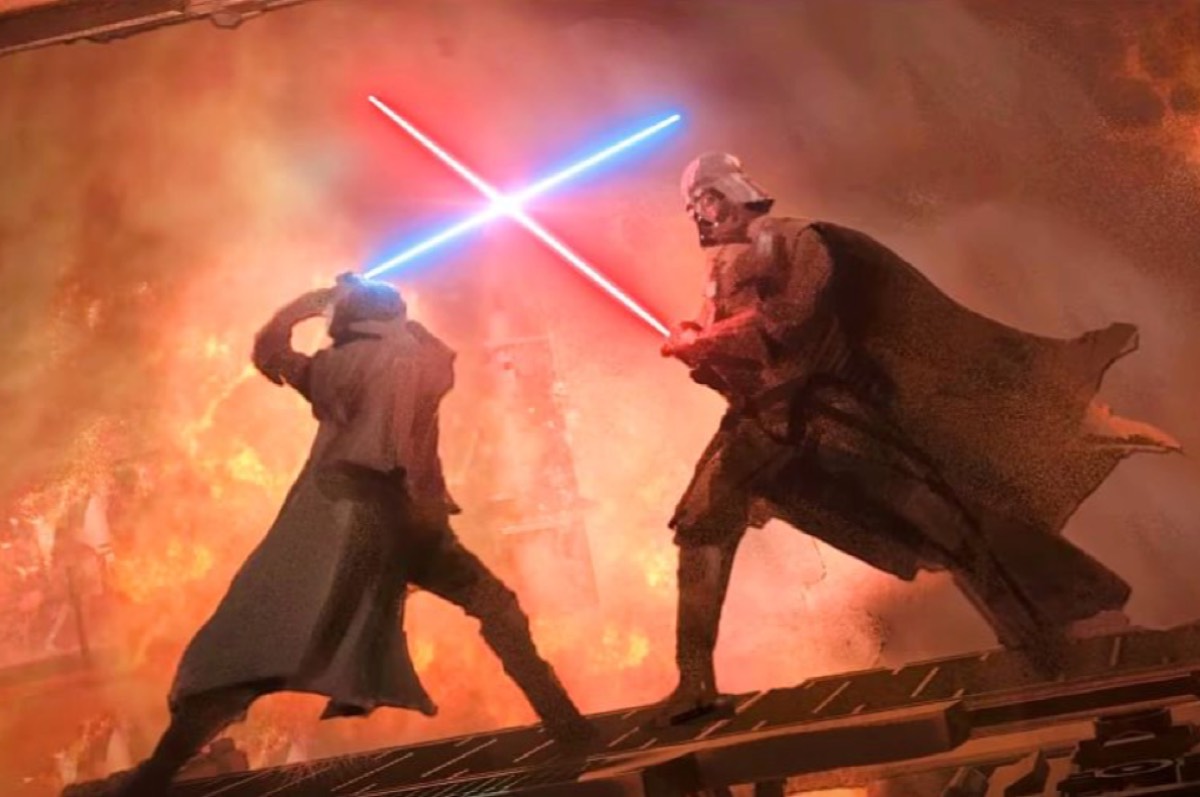
<img src="https://rassegna.lbit-solution.it/wp-content/uploads/2021/11/disney-unveils-first-look-at-obi-wan-kenobi-featuring-showdown-with-vader.jpg" alt="Concept art for Obi-Wan Kenobi shows the titular character locking light sabers with none other than Darth Vader.”>
Enlarge / Concept art for Obi-Wan Kenobi shows the titular character locking light sabers with none other than Darth Vader.

We have our first glimpse of concept art for Obi-Wan Kenobi, the six-episode series coming to Disney+ next year, as well as a behind-the-scenes sizzle reel featuring star Ewan MacGregor and director Deborah Chow. There’s no actual footage, but fans are buzzing about the concept art showcasing Obi-Wan and none other than Darth Vader, lightsabers locked in battle. The sizzle reel briefly leaked online yesterday before being pulled. It was unveiled during the streaming platform’s Disney+ Day. (You can check it out on Twitter here.)

We first learned in August 2019 that the rumors were true about a Star Wars spinoff series featuring Obi-Wan Kenobi, with McGregor reprising his role as the iconic character. The actor himself made a surprise appearance at the tail end of a showcase presentation at D23 Expo 2019, Disney’s annual fan extravaganza. Then came the big news that Hayden Christensen was reprising his role as Anakin Skywalker/Darth Vader. Lucasfilm President Kathleen Kennedy called it “the rematch of the century” at the December 2020 Disney Investors Day.

“There’s hunger for this character to come back,” MacGregor said in the sizzle reel. “The fans have been waiting long enough, you know?”

Yes, we do know. Back in 2016, the Hollywood Reporter conducted a poll asking fans which Star Wars character they’d most like to see feature in a spinoff film. Obi-Wan Kenobi was the overwhelming winner, yet for some reason, the studio opted to first make Solo: A Star Wars Story (2018) instead. That film wasn’t quite the stinker many made it out to be, but it bombed at the box office. So Disney canceled plans for a Kenobi-centered feature film and reworked the concept into a limited series for its nascent streaming platform.

More concept art features Vader in what appears to be his castle on Mustafar.
Enlarge / More concept art features Vader in what appears to be his castle on Mustafar.

Preproduction for the series started in January 2020, but then it was put on hold—partly due to the pandemic but also because Kennedy was reportedly unhappy with the script, which showed too many similarities with The Mandalorian‘s premise. Disney tapped Joby Harold to take on the rewrites. Shooting reportedly wrapped in September.

Joel Edgerton and Bonnie Piesse are reprising their roles as Owen Lars and his wife Beru, who took on the task of raising the young Luke Skywalker on Tatooine. The cast also includes Moses Ingram, Kumail Nanjiani, Indira Varma, Rupert Friend, O’Shea Jackson Jr., Sung Kang, Simone Kessell, Maya Erskine, and Benny Safdie in undisclosed roles.

<a href="https://rassegna.lbit-solution.it/wp-content/uploads/2021/11/disney-unveils-first-look-at-obi-wan-kenobi-featuring-showdown-with-vader-4.jpg" class="enlarge" data-height="800" data-width="1200" alt="Hayden Christensen does a bit of training with a mock lightsaber for the forthcoming series Obi-Wan Kenobi. “><img alt="Hayden Christensen does a bit of training with a mock lightsaber for the forthcoming series Obi-Wan Kenobi. ” src=”https://rassegna.lbit-solution.it/wp-content/uploads/2021/11/disney-unveils-first-look-at-obi-wan-kenobi-featuring-showdown-with-vader-2.jpg” width=”640″ height=”427″ srcset=”https://rassegna.lbit-solution.it/wp-content/uploads/2021/11/disney-unveils-first-look-at-obi-wan-kenobi-featuring-showdown-with-vader-4.jpg 2x”>
Enlarge / Hayden Christensen does a bit of training with a mock lightsaber for the forthcoming series Obi-Wan Kenobi.

The series will be set 10 years after Star Wars: Revenge of the Sith—you know, the film where Obi-Wan faced off against Anakin Skywalker, who turned to the dark side and eventually became Sith Lord Darth Vader. Fans have long wondered exactly what happened to our favorite Jedi in the ensuing years before he returned in A New Hope. According to Chow (who directed several episodes of The Mandalorian), that period is going to be “a dark time” for Obi-Wan, who must deal with the loss of all his friends.

Chow said that Obi-Wan and other Jedi who survived Order 66 are being hunted down by the Empire’s Jedi Hunters in the company of Stormtroopers. (There have been unconfirmed rumors that Kang will be playing an Inquisitor.) Obi-Wan is on Tatooine with a mission to protect young Luke Skywalker, at least as the series opens, although the concept art hints at other settings familiar to the Star Wars fanbase, most notably Coruscant. So Obi-Wan’s journey is likely to take him away from that initial mission at some point.

There’s also a tantalizingly brief shot of a masked Christensen training with a lightsaber prop and concept art featuring Vader in what appears to be his castle on Mustafar. “We couldn’t tell the story of Obi-Wan Kenobi without addressing Anakin or Vader,” Chow said.

Obi-Wan Kenobi is slated for a 2022 release on Disney+.

In other Star Wars news, Disney unveiled a brief teaser for a documentary special, debuting today on Disney+, exploring the legacy of Boba Fett. It comes in advance of the upcoming premiere of The Book of Boba Fett. That series stars Temuera Morrison (Attack of the Clones, Aquaman) as the titular bounty hunter and Ming-Na Wen (Agents of S.H.I.E.L.D.) as the mercenary and assassin Fennec Shand who works for him. Disney released the official trailer on November 1, giving us our first look at what we can expect from this latest project from showrunner Jon Favreau.

[embedded content]
Special Look: Under the Helmet: The Legacy of Boba Fett.

Ars Technica may earn compensation for sales from links on this post through affiliate programs.

https://arstechnica.com/?p=1812483


Rockstar servers down for nearly a day amid remastered GTA Trilogy launch [Updated]

[Update: Nearly 29 hours after the outage was first announced, Rockstar tweeted Friday evening that the Rockstar Launcher was back online and most of the company’s PC games were once again fully available. GTA: The Trilogy – The Definitive Edition was excepted, though, and remains “unavailable to play or purchase as we remove files unintentionally included in these versions. We’re sorry for the disruption and hope to have correct ones up soon,” Rockstar writes]

Original Story

The servers for the Rockstar Games Launcher on PC have been down for nearly 24 hours now, and PC versions of Rockstar’s games have been removed from sale on the company’s website. The timing of the outage is particularly tough for the company, coming amid Thursday’s launch of the remastered Grand Theft Auto: The Trilogy.

Rockstar officially noted the outage in a support tweet Thursday afternoon, merely saying that “services for the Rockstar Games Launcher and supported titles are temporarily offline for maintenance. Services will return as soon as maintenance is completed.” Fourteen hours later, the company gave a brief update, saying, “We thank you for your patience and understanding as we continue to work on restoring services for the Rockstar Games Launcher and supported titles.” That same update also appears on Rockstar’s support site.

PC Gamer reports that the launcher is loading in offline mode for players who have previously launched specific games on the service. Multiplayer titles like Grand Theft Auto Online and Red Dead Redemption Online remain inaccessible on PC for the time being, however. And for those launching recently downloaded titles like the GTA Definitive Trilogy for the first time, a required online authentication check will fail during the outage.

As Ars’ own Sam Machkovech put it in his overall negative impressions of the remastered games:

While the games’ authentication process may return before long, the fact that the games need to check in online is maddening. These games include zero online functionality—not even friend leaderboards, let alone the two-player mode from San Andreas. This hobbling of the PC version is inexcusable.

The outage comes one month after Rockstar removed downloadable versions of the original Grand Theft Auto trilogy games from console and PC storefronts ahead of the remaster’s release. Anyone who previously purchased those editions can still download and play them on their original platforms. Those versions also make use of the Rockstar Launcher on PC, though, meaning fresh downloads are still locked for the time being.

Rockstar has given no indication of when it expects its PC services to be restored. We’ll let you know if and when we hear more.

https://arstechnica.com/?p=1812593


We suggest you don’t buy the $60 Grand Theft Auto Definitive Trilogy

The PlayStation 2-era Grand Theft Auto trilogy is now available on modern gaming devices and comes with across-the-board aesthetic touch-ups. That should be good news. The series’ shift from top-down 2D to open-world 3D was a seismic event in the gaming industry, and despite showing their age, each of these games provides a fine amount of macabre criminal adventuring.

But while some parts of the trilogy’s re-release are easy to praise, others are less exciting. Shortly after the $60 GTA Definitive Trilogy went live on Thursday, I logged some time with the Nintendo Switch and Xbox Series X versions. I also spent a few hours staring at the game’s locked-up installation on my Windows 10 testing rig. I can now see why Rockstar wasn’t eager to make this collection available to the press ahead of launch—and also why the game maker didn’t want to break up this set into three $20 purchases. As Ryder might say in GTA San Andreas: This re-release is a buster. (And that’s not a good thing.)

That’s one way to encourage grand theft, Rockstar

Over 12 hours after the collection's launch on the Rockstar Games Launcher, I still can't launch the games despite having fully downloaded them.
Enlarge / Over 12 hours after the collection’s launch on the Rockstar Games Launcher, I still can’t launch the games despite having fully downloaded them.

The worst part of the release is the collection’s Windows 10 version, which is now exclusively available on the Rockstar Games Launcher. Ahead of this week’s launch, Rockstar removed the old versions of GTA III, Vice City, and San Andreas from storefronts like Steam. You can still access these versions—along with years of community-driven mod support—if you’ve already purchased them, but they are no longer for sale.

As I write this, over 12 hours after the new collection’s retail launch on PC, I still cannot play the games. The Rockstar Games Launcher is currently undergoing “temporarily offline maintenance,” which started after I finished downloading each game. I have the entire GTA Definitive Trilogy on my computer, but the files are not launchable.

On Thursday morning, I started downloading the GTA Definitive Trilogy and stepped away from my computer. Upon my return 30 minutes later, I found that Rockstar’s launcher was offline, and there was a grayed-out “install now” box on each game. Each game fully downloaded, but the executable files redirected me to an unresponsive launcher.

While the games’ authentication process may return before long, the fact that the games need to check in online is maddening. These games include zero online functionality—not even friend leaderboards, let alone the two-player mode from San Andreas. This hobbling of the PC version is inexcusable.

A less awkward version of Sesame Street

Thankfully, both the Nintendo Switch and Xbox Series X/S versions of these games appear to function, whether or not they’re connected to the Internet. I’ll start with the Xbox versions I’ve tested, since they are somewhat easier to recommend.

On a visual level, every real-time cut scene conversation in the massive trilogy has been reanimated in a way that splits the difference between “adorably dated” and “tolerably touched up.” Character animations have been modified to look a bit better than they did on the original trilogy’s awkward Sesame Street muppets. The original games never had discrete hand animations, which is one reason why characters’ arms waved around so wildly. The animations now feel like they’ve been run through a “chill out a bit” filter, which is good news. As a bonus, characters now receive individually rendered fingers, which make their hands look less like tragic N64-era stumps.

Meanwhile, nearly every NPC’s face has been altered to improve on the original games’ lip syncs and facial expressions. The catch is that there has been an across-the-board restyling of characters’ eyes and mouths. Porting studio Grove Street Games has redrawn many of these features to fill in the original blurry-texture splotches on characters’ faces, and the results are cartoonier and much more expressive.

Any character who originally hid behind sunglasses is left largely unperturbed, but that’s cold comfort depending on the cut scene in question. If you don’t have the muddy originals to compare with the new touch-ups, I won’t blame you for being weirded out by some of the faces. I had a YouTube “let’s play” video handy to compare a ton of footage with, and while some of the restyled faces look pretty bad, they generally shine compared to Rockstar’s original artistic vision—which was more cartoonish than you may remember.

Shining a more attractive light on familiar environs

The best part of the GTA Definitive Trilogy is its entirely new lighting system, which mixes dynamic and pre-baked light sources. The lighting model appears to account for material properties and light bounces to give GTA‘s usual mix of smokily lit strip clubs and garish yacht parties an appropriate level of glitz. Combine all of that with a proper implementation of ambient occlusion, and the result is scenes with much more depth and far fewer “floaty” visual elements. This pipeline update is arguably on par with the modding community’s best lighting solutions.

The result doesn’t necessarily look “correct” compared to your memories of each game, however. The cartoony brightness of the original games included a certain palette wash: gray for GTA III, light blue and magenta-pink for Vice City, and dark green and sunset-orange for San Andreas. You’ll see these tones in the revised game’s skyboxes, and Vice City pops anew thanks to how its dynamic lighting system hums with neon-sign reflections. But it’s hard not to see the changes as out of line with the original artists’ intentions, even if the result is a world that looks more three-dimensional.

Seemingly every texture has been redrawn in one way or another, and depending on certain toggles, you can expect to see a mix of bump-mapped textures and fully rendered debris on the ground. This includes new rendering systems that control things like how waves crash onto the beach and how far draw distances extend when riding a helicopter. Nothing here is up to Grand Theft Auto V‘s standards, of course—or even GTA IV‘s. But it’s the exact kind of detail bump you’d hope for in a collection with “definitive” in the title.

The full trilogy’s reflections have been touched up with a mix of screen-space reflections, cube maps, and doubly rendered polygons. Unfortunately, it doesn’t take long for an atrociously low-resolution cube map to pop up in a street puddle or car hood, even on higher-powered consoles like Xbox Series X. Considering that PC fans have built superior across-the-board reflection mods, we’re disappointed to see Rockstar’s official effort fall short in comparison.

https://arstechnica.com/?p=1812435