Playdate delays to 2022 amid scramble to revise entire handheld console

Playdate delays to 2022 amid scramble to revise entire handheld console


The global chip shortage has made a serious impact on the production of upcoming portable gaming devices this week. Barely a day after Valve announced that its handheld PC, the Steam Deck, would be delayed two months, the Game Boy-like Playdate console, initially slated to arrive by the end of 2021, followed suit on Thursday.

The system’s producers at Panic have given a lengthy explanation for why the console is being delayed to “early 2022,” with orders beyond the first 20,000 pushed back even further.

In a newsletter sent to Playdate preorder customers, Panic details the reason for the delay: broken batteries in the first batch of 5,000 systems. “We found a number of units with batteries so drained, Playdate wouldn’t power on at all—and couldn’t be charged,” Panic writes.

The discovery resulted in a “months-long” scramble, which was exacerbated by the fact that preview hardware sent to members of the press (including yours truly) didn’t suffer from those battery woes. While investigating the issue, Panic halted all Playdate manufacturing until a new battery supplier could be secured. The announcement says that the company will swap the batteries on all existing systems, and consoles will reach customers by “early 2022.” Panic’s newsletter suggests that roughly 20,000 systems were part of this initial production run.

Like, how many days?

Panic ran into another issue with systems beyond that first run. As the company writes:

With lots of pre-orders in place, we immediately placed an order at our factory for all the parts needed for 2022 units and beyond. The response was… sobering. Many of our parts have been delayed significantly. In fact, we can’t get any more of Playdate’s current CPU for—you’re not going to believe this—two years. Like, 730 days.

To reduce the two-year wait, Panic decided to revise the entire Playdate system motherboard with a different CPU for all orders beyond the first batch of 20,000 systems. The company says this CPU is “similar but more widely available.” While Panic was forthcoming about the specs of the console’s original 180 MHz CPU, the company has not said what part will replace it. The CPU change won’t alter the price for existing Playdate orders, and it’s unclear whether Panic will have to eat any cost difference. The company would only say that “board revisions are complex and costly.”

Panic insists that players won’t notice any difference in performance, implying that the revised board will include the same elements as found on the original SoC (i.e. 3.5mm headphone jack, gyroscope). After the initial hardware run is fully shipped, Panic estimates that another 20,000 revised Playdate systems will begin reaching later preorder customers in the “second half of 2022,” with another 10,000 systems landing at the end of 2022.

Any Playdate orders beyond those will “almost certainly land in 2023,” Panic writes. If you’ve already placed a Playdate preorder, you have likely received an email confirming your “group number.” Panic says this number corresponds to the air-freighted pallets of consoles that will arrive at the company’s warehouses throughout 2022.

Pulp non-fiction

Panic has confirmed that the Playdate’s web-based development platform (“Pulp”) will launch in January 2022, with the full Playdate SDK (meant to help developers build games and software using the C or Lua coding languages) following in February 2022.

Panic also said that the 24 games in the console’s “season pass,” which is included in the device’s $179 price, will be released according to when new owners first power their systems on. If you get your Playdate near the end of 2022, you’ll still have to wait for your hardware to unlock each of your games, two per week (unless you figure out an alternative way to load and play them via the system’s PC connectivity).

All eyes are now on Analogue and its portable, retro-focused Pocket console. Will preorders of that system land in customers’ hands by year’s end, or will it also be delayed?

https://arstechnica.com/?p=1812282


Discord CEO backs away from hinted NFT integration after backlash

Discord CEO backs away from hinted NFT integration after backlash

Discord’s CEO is publicly backing away from hints that the gaming-focused social networking company was seeking to integrate non-fungible tokens (NFTs) and cryptocurrency wallets into the platform directly.

The news comes after Jason Citron, who founded and leads the company, tweeted a mockup on Monday of a Discord interface showing integration with crypto products like MetaMask, WalletConnect, and Ethereum in the Discord app (alongside currently integrated services like YouTube, Twitch, etc.). That post led to serious pushback from some Discord users and watchers, leading Citron to send out a tweet backing away from the concept late Wednesday.

“Thanks for all the perspectives everyone,” Citron wrote. “We have no current plans to ship this internal concept. For now, we’re focused on protecting users from spam, scams, and fraud. Web3 has lots of good but also lots of problems we need to work through at our scale. More soon.”

In a statement provided to TechCrunch, Citron added:

We appreciate all the perspectives we’ve been hearing in response to the internal concept you may have seen in a tweet earlier this week and want to clarify we have no plans to ship it at this time. We’re excited about the potential for web3 technology and the positive ways these communities are coming together on Discord, especially those organized around environmentally friendly, creator-focused projects. However, we also recognize there are some problems we need to work through. For now, we’re focused on protecting users from spams, scams, and fraud.

Citron’s statement also comes after Internet Archive Archivist Jason Scott highlighted a now-deleted Discord survey (archived here) asking users about their familiarity with and preferences regarding NFTs and other so-called “web3” technologies. “We’re always exploring and hacking away at things we think will improve Discord for all the communities we serve,” a Discord spokesperson told The Verge earlier this week regarding that survey. “This includes research that helps us learn about what people want.”

Push and pull

Discord has become a popular gathering place for makers and supporters of various NFT-related projects; as the Not Boring newsletter recently noted, the Discord server for popular NFT game Axie Infinity has over 800,000 members. Some NFT projects, like Collab.land, even use bots to limit their Discord group membership to users that hold certain NFTs.

But other Discord users reacted loudly and angrily this week to the idea that their preferred platform might start explicitly catering to the crypto community. “Honestly, if the Discord NFT shit pisses you off, cancel your nitro [paid subscription] immediately and select ‘other’—cite the CEO’s tweet about it as your reasoning why,” read one tweet that received thousands of likes and retweets. “A loud, immediately public drop in revenue is the only thing that will change it at this point.”

On the Discord subreddit, meanwhile, a post urging Discord developers not to support NFTs gained widespread support. A popular thread on Discord’s own support forum also urged the company to “please for the love of god stay away from the NFT trashfire.”

Many of the most vociferous critics pointed to the outsized environmental impact of NFTs as central to their opposition toward Discord’s hinted plans. Others pointed to widespread scams in the space, such as an unlicensed “Squid Game” token that disappeared without a trace after raking in roughly $3.38 million in investment.

Plenty of other gaming companies have also been making vague nods toward NFT plans in recent weeks, though none of those companies seems to know exactly what form that future integration might take. In the meantime, you can always buy an NFT of an Atari cartridge if you want.

Microsoft was rumored to be close to a $10 billion deal to purchase Discord earlier this year, but Discord later said it had ended those acquisition talks to focus on expansion as a standalone company.

https://arstechnica.com/?p=1812230


Ars is reviewing Amazon’s The Wheel of Time series

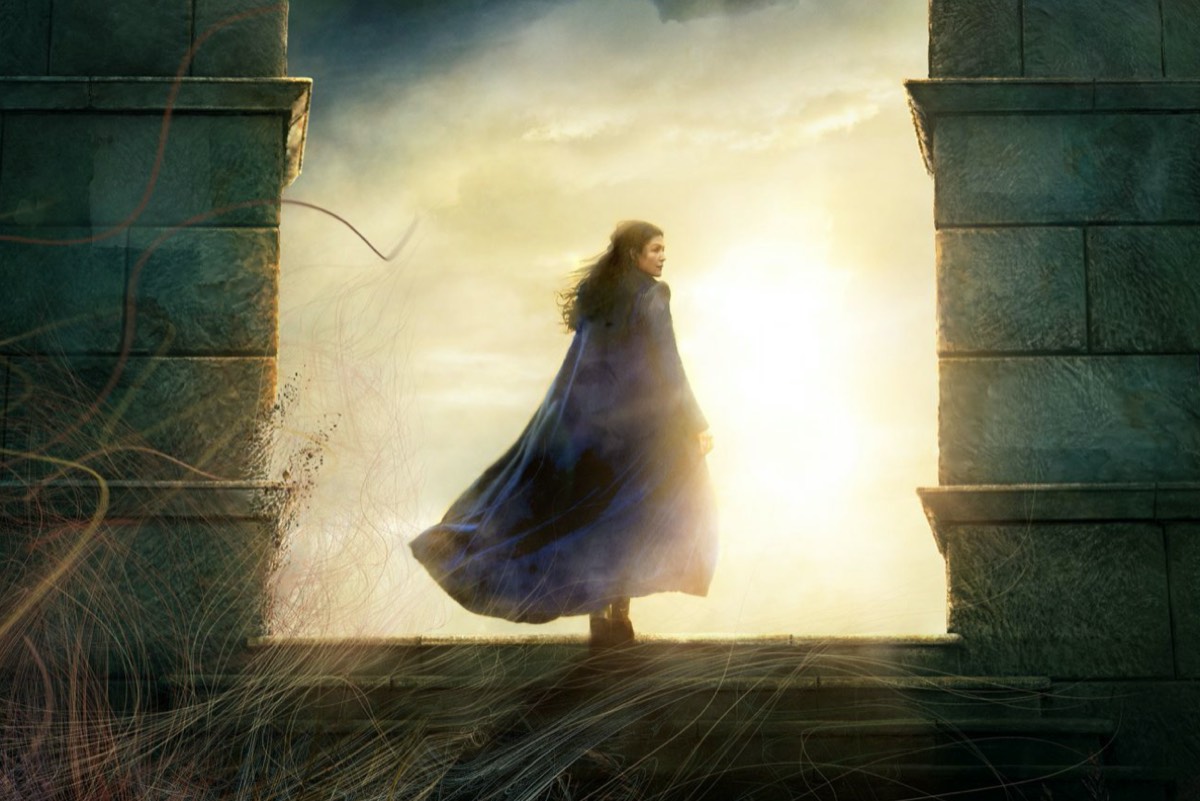
Promotional image for upcoming streaming fantasy series.
Enlarge / The hotly anticipated Wheel of Time series debuts on November 19, 2021, on Amazon Prime.

Amazon’s adaptation of The Wheel of Time series begins airing on November 19 after years of development and false starts. And as Ars Technica’s resident WoT book nerds, Andrew Cunningham (that’s me) and Lee Hutchinson will be here to recap the first season for you, episode by episode. We’ve both read Robert Jordan’s (and, later, Brandon Sanderson’s) 14-volume fantasy epic from end to end more than once, and it would be a shame to let such a ridiculous time investment go to waste!

The Wheel of Time series in its current iteration has been in the works since at least 2016, when Wheel of Time copyright owner (and Robert Jordan’s wife and editor) Harriet McDougal teased a “cutting edge TV series” from a “major studio” in the wake of a terrible low-budget pilot that aired in the wee hours one day in early 2015. Amazon has put some serious marketing muscle behind the series, with a slow-but-steady drip of trailers and promotional images, plus a gigantic interactive page walking you through the series’ main characters and some of its complex lore. Amazon has also already renewed the series for a second season.

Sprawling, multi-book series like WoT can be tough to adapt, as we learned from watching the highs and lows of HBO’s Game of Thrones over its eight-year run. Plot arcs need to be streamlined, tweaked, or dropped altogether; new characters are invented while existing ones (including fan-favorites!) are skipped over; and the unlimited special effects produced in the human mind need to be replicated by the finite capabilities of computer-generated imagery.

Will The Wheel of Time series be everything fans have always wanted? Will it become a GoT-style cultural crossover mega-hit that makes it all the way through the entire story or a valiant effort that ends after a handful of seasons? Will Andrew and Lee regret the commitment they have made to publish their opinions on every single episode? The only way to know is to read along. Our impressions will go up on November 20, after the first three episodes of the series have been released on Amazon Prime.

Ars Technica may earn compensation for sales from links on this post through affiliate programs.

https://arstechnica.com/?p=1811849


Unity purchases Weta Digital’s visual-effects tool suite for $1.6 billion

A preciousssss deal for all involved.
Enlarge / A preciousssss deal for all involved.

Unity, the company best known for its line of popular video game engines, has announced plans to purchase the tech division of the Peter Jackson-led, New Zealand-based visual-effects studio Weta Digital for $1.625 billion in cash and stock.

The acquisition means that Weta’s suite of visual-effects tools, popularized in movies like Lord of the Rings, Avatar, and Wonder Woman, will eventually be integrated into Unity’s cloud-based workflow and made available to millions of users, the company said in a press release announcing the move. Unity will also acquire the 275 engineers that build Weta’s technology and “a library of thousands of incredible assets.”

The Weta visual-effects team itself will remain as a standalone entity known as WetaFX, which will still be majority-owned by Jackson. Unity expects that entity to “become Unity’s largest customer in the Media and Entertainment space.” Weta Workshop, which focuses on practical effects and props, will also remain separate.

Weta CEO Prem Akkaraju told Variety that there was some apprehension about making the company’s exclusive tools more widely available to the public through this deal, but Weta’s goal of inspiring other creators won out in the end. “We’re Jimi Hendrix, and now we’re selling guitars,” he said. “We think this world has many, many more Jimi Hendrixes.”

While Unity made a name for itself by offering cheap-yet-robust game-creation tools, Hollywood has turned to Unity and to Epic’s competing Unreal Engine for pre-visualization and real-time motion capture for effects-heavy productions.

The Weta purchase comes about a year after Unity Technologies raised over $1.3 billion in a stock IPO and months after the company purchased game-streaming upstart Parsec for $320 million. Unity’s game engine is free for users with less than $100,000 in annual funding and revenue, or it’s available to larger companies as a $150-per-year, royalty-free subscription. https://arstechnica.com/?p=1811842


Netflix Gaming starts to look legit with impressive League of Legends spinoff

Coming to Switch and PC on November 16 and to Netflix Gaming "soon."
Enlarge / Coming to Switch and PC on November 16 and to Netflix Gaming “soon.”
Riot Games

Last week, Netflix Gaming formally launched in a way we didn’t predict when the service was first teased earlier this year. Instead of churning out games for home consoles or creating a cloud-based streaming service a la Google Stadia and others, Netflix opted to create a smartphone-exclusive gaming portal, free to anyone who has a paid Netflix subscription.

What’s more, Netflix Gaming’s day-one library consisted entirely of games that had previously launched on Android, with a mix of licensed Stranger Things games and generic tap-action smartphone fare. But game development exec Mike Verdu teased more to come: “Just like our series, films, and specials, we want to design games for any level of play and every kind of player, whether you’re a beginner or a lifelong gamer,” he said at the time.

Ziggs is ready to bomb to the beat.
Enlarge / Ziggs is ready to bomb to the beat.
Riot Games

Today, Netflix takes the wraps off a more interesting game for its smartphone-only service: a previously unannounced League of Legends spinoff with promising gameplay and serious developer pedigree.

Don’t expect competitive online MOBA battling, however. Hextech Mayhem: A League of Legends Story comes from Choice Provisions, a studio best known for the Bit.Trip series of arcade rhythm games, and the studio continues that lineage with a flashy, smartphone-friendly game that looks a bit like “Bit.Trip Bomberman.” Today, Netflix Gaming and Riot Games have confirmed that Hextech Mayhem will “soon” become part of Netflix Gaming, following its launch on Nintendo Switch and PC on November 16.

This song is da bomb

And if this is what Netflix Gaming titles will look like going forward, the service has a much better chance of standing out.

Hextech Mayhem‘s 90-second debut trailer is packed with real-time gameplay that resembles how it will look on newer smartphones. The trailer highlights three actions that main character Ziggs can do in the game: jump, butt-slam, and bomb. Much like in Bit.Trip Runner, Hextech Mayhem‘s levels and on-screen icons clarify when to use each of these actions, and Ziggs helps you in this effort by running to the beat of the game’s music. Tap each of the buttons to the beat, and you’ll trigger each level’s bomb-like blasts of percussion.

[embedded content]
Hextech Mayhem announcement trailer

A closer look at the trailer suggests many objects and triggers that stray from Ziggs’ running path, however, implying that each level will have additional depth for point-chasers to dig into. We’re still waiting to see exactly how deep the final game will turn out to be—not to mention how long Netflix Gaming users will have to wait after Hextech Mayhem‘s PC and Switch launches for their own version.

Hextech Mayhem‘s lack of a Netflix Gaming release date may very well have to do with the service’s current Android-only restriction. Netflix reps have previously suggested that the service is “on the way” to iOS, so we wonder whether that might coincide with a League of Legends-related game launch.

[embedded content]
Ruined King gameplay trailer.

Speaking of: Netflix is currently all-in on League of Legends, thanks to the recent launch of Netflix and Riot Games’ tie-in TV series Arcane. Curiously, today’s Hextech Mayhem announcement mentions the upcoming launch of Riot’s previously announced turn-based RPG Ruined King: A League of Legends Story. But the announcement tiptoes around whether Ruined King (as developed by the creators of Battle Chasers: Nightwar) might see its own launch on either smartphones or Netflix Gaming. (Either way, the game still doesn’t have a release date.) RK‘s previously released gameplay footage revolves around menu-driven RPG battling, and it looks like it might play smoothly on a smartphone. That wouldn’t be a bad possible bonus for paying Netflix subscribers.

Somehow, Hextech Mayhem‘s existence didn’t leak after Riot went on a game-announcement spree in late 2019. Many of the teased games and projects from that event have since launched, including Valorant and League of Legends: Wild Rift. Meanwhile, the company’s previously announced 2D fighting game (codenamed “Project L”) has reportedly entered a “private testing” phase while remaining otherwise hidden.

https://arstechnica.com/?p=1811274


Epic disables Fortnite shop section featuring Travis Scott dance emote

[embedded content]
Fortnite‘s “Out West” emote.

Epic temporarily disabled the “Daily” section of Fortnite‘s in-game item shop just hours after it was updated Sunday with an “Out West” emote featuring Travis Scott. The move comes after the tragic events at Houston’s Astroworld concert last Friday, where at least eight people died and 25 were hospitalized during Scott’s performance.

Fortnite confirmed that the move was “intentional” in a Twitter update Sunday night but made no mention of Scott or the specific motivation for the decision. An Epic representative was not immediately available to respond to a request for comment.

The emote in question plays a clip from the song “Out West” by Scott and Jackboys alongside a dance based on a viral TikTok sensation set to the same song. It first appeared in the game in August 2020 and has been regularly available for 500 V-Bucks (roughly $3 to $4) at least once a month ever since. Players who have previously purchased the emote can still use it in the game, alongside a Travis Scott skin that was available for purchase in April 2020.

Discussions on Reddit and various Fortnite item trackers show that the emote was briefly available once again Sunday night before the Daily section was taken down entirely. By Monday night, the Daily section had returned with a completely new set of in-game items for purchase.

Scott has been tied to Fortnite since last April, when he performed a virtual in-game concert that attracted over 27 million attendees, including 12.3 million who were watching concurrently at one point. These kinds of concerts have been key to Fortnite‘s efforts to expand beyond its shooting game core to become the center of Epic’s own metaverse plans.
Epic has previously faced controversy and lawsuits for creating Fortnite emotes out of dances created by outside artists without providing credit or compensation. https://arstechnica.com/?p=1811496


So what is “the metaverse,” exactly?

So what is “the metaverse,” exactly?
Aurich Lawson | Getty Images

These days it seems like everybody and their corporate parent company is talking about “the metaverse” as the next big thing that’s going to revolutionize our online lives. But everyone seems to have their own idea of what “the metaverse” means—that is, if they have any real idea what it means at all.

The original source of the term "metaverse"
Enlarge / The original source of the term “metaverse”

The term “metaverse” was originally coined in Neal Stephenson’s seminal 1992 cyberpunk novel, Snow Crash. In the book, the Metaverse (always capitalized in Stephenson’s fiction) is a shared “imaginary place” that’s “made available to the public over the worldwide fiber-optics network” and projected onto virtual reality goggles. In it, developers can “build buildings, parks, signs, as well as things that do not exist in Reality, such as vast hovering overhead light shows, special neighborhoods where the rules of three-dimensional spacetime are ignored, and free-combat zones where people can go to hunt and kill each other.”

Meta (formerly Facebook) CEO Mark Zuckerberg and his colleagues mentioned the word “metaverse” 80+ times in under 90 minutes during last week’s Facebook Connect keynote presentation, where the company announced its new name. But Stephenson has made it abundantly clear that “there has been zero communication between me and FB & no biz relationship.” That means Facebook’s interpretation of “the metaverse” might end up being quite different from what Stephenson originally described.

While Meta’s rebranding drives most of the metaverse conversation these days, the nearly 30 years since Snow Crash appeared have seen plenty of online networks that embody some or most of what Stephenson’s book describes. These efforts to create “the metaverse” have included numerous online games and gathering places that captured some of the metaverse’s most important concepts without ever using the term.

“But here we are,” as Oculus consulting CTO John Carmack recently put it. “Mark Zuckerberg has decided that now is the time to build the metaverse, so enormous wheels are turning and resources are flowing and the effort is definitely going to be made.”

So is the metaverse the next big advance that will revolutionize the way we all connect with each other? Is it just a repackaging of existing technologies into a new catch-all concept? Or is it just the latest buzzword marketing term?

The answer to that depends on what you mean by “metaverse.”

Defining the metaverse

In his Facebook Connect keynote last week, Zuckerberg said that “the best way to understand the metaverse is to experience it yourself, but it’s a little tough because it doesn’t fully exist yet.” From where we’re sitting, asking people to try out some nonexistent thing doesn’t seem like the best way to convey a full understanding of your bold new corporate direction.

Elsewhere in the keynote, Zuckerberg described a grandiose vision of the metaverse as an “even more immersive and embodied internet” where “you’re gonna be able to do almost anything you can imagine—get together with friends and family, work, learn, play, shop, create—as well as entirely new categories that don’t really fit how we think about computers or phones today.” That helps a bit, but any description that includes the words “almost anything you can imagine” is so broad as to be almost meaningless.

After breaking down Meta’s vision—and looking at the history of the metaverse both as a concept and as embodied multiple distinct online spaces—we’ve identified the following elements that, taken together, seem to define a metaverse. Anything that has any business using the term will include one or all of the following:

A shared social space with avatars to represent users

This basic building block of the metaverse concept is what Zuckerberg is talking about when he calls for a more “embodied” Internet. On a web site or social media network, you might be represented by a username or thumbnail picture. In the metaverse, you’re represented by a customizable avatar that can move, speak, and/or perform animated actions.

These kinds of avatars have been common in all sorts of online gaming and social spaces since the ’90s (anyone remember Habbo Hotel?). But an avatar’s fidelity and abilities can vary greatly from service to service. Recent advances in virtual reality have enabled users to truly embody their fantastical avatars, seeing through their virtual eyes and using hand-tracking controllers to gesture and interact with virtual items. Spaces like VRChat show just how elaborate those VR avatars can now be.

Is Habbo Hotel a metaverse? Well... kind of?
Enlarge / Is Habbo Hotel a metaverse? Well… kind of?

A persistent “world” for the avatars to inhabit and interact with

In some cases, this means a virtual world that mimics the space constraints and land scarcity of the real world, as seen in Second Life‘s discrete plots of land. In other cases, it just means users sharing specially created spaces for a particular game or a special time-sensitive event, like recent multimedia concerts held in Fortnite.

In an idealized metaverse, every single user shares a single virtual world, where items and property persist for everyone between online sessions. For technical reasons, though, many modern metaverse-like spaces end up splitting users into sharded servers where a small subset of users can interact.

https://arstechnica.com/?p=1810333


Eleven tries to adjust to SoCal life in underwhelming Stranger Things S4 teaser

[embedded content]
The fourth season of Stranger Things will debut on Netflix in summer 2022.

It’s Stranger Things Day, marking the anniversary of Will Byers’ mysterious disappearance  (on November 6, 1983) in S1 of the hugely popular Netflix series. The streaming giant is marking the occasion with the release of yet another teaser for S4—and it’s frankly a bit underwhelming.

Netflix has been trickling out teasers for S4 over the last year or so, and tonally, they’ve been all over the place. For instance, the teaser that appeared in May was classic Stranger Things, ominously hinting at the return of Eleven ‘s (Millie Bobby Brown) childhood tormenter and “Papa,” Dr. Martin Brenner (Matthew Modine). Brenner was supposedly killed by the Demogorgon in S1, but there have been mentions of his possible survival. We already knew that David Harbour will be returning as Hopper, along with the rest of the main cast: Winona Ryder, Finn Wolfhard, Natalia Dyer, Noah Schnapp, Charlie Heaton, Joe Keery, Caleb McLaughlin, and Sadie Sink.

We also know it will be the first season to take place largely outside of Hawkins, since Eleven and the Byers have moved away, and Hopper seems to be imprisoned by the Russians. Maya Thurman-Hawke returns as Robin, Brett Gelman will be back as Murray Bauman, Cara Buono returns as the Wheeler matriarch, and we’ll be seeing more of Priah Ferguson, who plays Lucas’ sassy younger sister, Erica. Among the new cast members is Robert Englund of Nightmare on Elm Street fame, which is a nice little link to classic ’80s horror.

Another teaser dropped in September during the Netlix Tudum global fan event. It was markedly different in tone, generating some major Scooby Doo vibes with its 50s-era flashback to a mysterious tragedy at Creed House, followed by a quick cut to the Hawkins gang exploring the now-abandoned house. The final shot featured a ticking grandfather clock, switching to the same clock ticking in the Upside Down. Creed House is thus probably connected somehow to prior seasons.

This new teaser takes yet another completely different tack, seemingly channeling 1980s high school films. We open with Eleven writing a cheery letter to Mike describing her supposedly rosy new life in California, 185 days after moving there with the Byers. She swears she’s finally adapted, likes school, and has made lots of friends—all of which is a lie. At least she’ll get to see Mike during the upcoming Spring Break. But we know better than to think it will be “the best Spring Break ever,” and the glimpses we get of gunmen invading the Byers house, the car chases, and explosions bear that out. Those are interspersed with 1980s roller rink scenes and some pretty disastrous haircuts for the Stranger Things gang, Eleven included.

Honestly, at this point, I still have no idea what this fourth season is about, or even what it’s going to look like (or feel like). Even the release of the episode titles don’t tell us much that’s new. The fourth season of Stranger Things lands on Netflix next summer, so there’s still time for the Duffer Brothers to communicate some kind of cohesive vision for S4. But this trailer isn’t it.

Listing image by YouTube/Netflix

https://arstechnica.com/?p=1810971


Faulty DRM breaks dozens of games on Intel’s Alder Lake CPUs

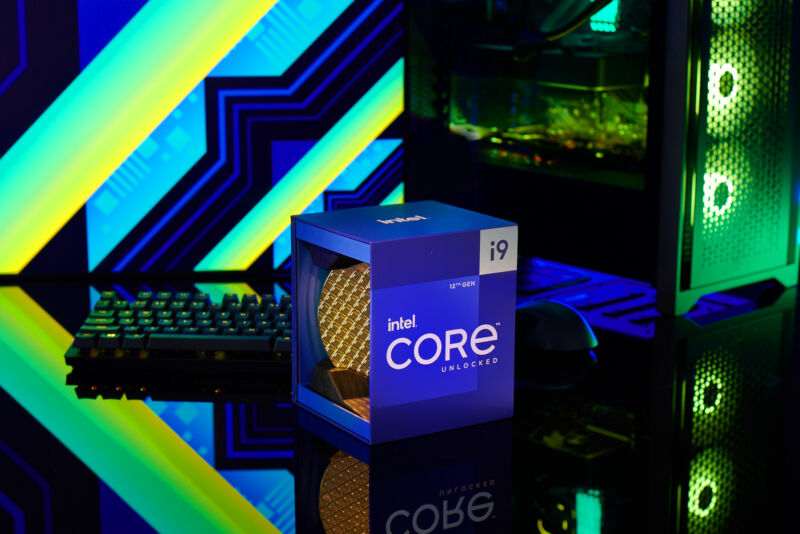
A nice CPU that doesn't play nice with some DRM...
Enlarge / A nice CPU that doesn’t play nice with some DRM…


Longtime Ars readers probably remember some of the many cases in which overly onerous DRM prevented game owners from playing their legitimate purchases. We’re seeing that situation play out again today, this time thanks to how some DRM systems interact with the unique features of Intel’s 12th-generation “Alder Lake” CPUs.
We’ve already covered how Alder Lake’s hybrid “big.little” design splits the CPU’s workload into high-powered “performance” (P) cores and low-powered “efficiency” (E) cores. But after hinting at the potential issue in a developer FAQ last month, Intel is now confirming that some games contain DRM that Intel says “may incorrectly recognize 12th Generation Intel Core Processors efficient-cores (E-cores) as another system.” That issue can lead to games that “may crash during launch or gameplay or unexpectedly shut down,” Intel says.

PC Mag’s Chris Stobing explained that the issue arises from the DRM middleware treating the two different types of cores as two distinct systems. “Once it detects that some portion of the load has been split between the P- and E-cores, it sees the new cores as a new license holder (a separate system) and force-quits the game to prevent what it believes is two PCs trying to play one game on the same key,” he said.

Intel’s list of incompatible games includes 22 that don’t work under Windows 10 or Windows 11 and 29 more that don’t currently work under Windows 10 but will work if users upgrade their OS. For those running Windows 11, Intel says a mid-November OS update should fix the issue for 11 of those games. For the remainder, Intel says it is working with the game developers to issue patches that resolve the issue.

Until those patches roll out, Intel says users can get around the problem by upgrading to Windows 11 (in some cases) or launching into the BIOS setup and turning on Legacy Game Compatibility Mode, then activating it with the Scroll Lock key. But an Intel spokesperson told PC Mag that this mode isn’t yet available on at least some Alder Lake CPUs and “should be included in a future BIOS update.”

Intel says the following games are affected on Windows 10 and above (those listed in bold should be fixed by a mid-November Windows 11 update):

  • Anthem
  • Bravely Default 2
  • Fishing Sim World
  • Football Manager 2019
  • Football Manager Touch 2019
  • Football Manager 2020
  • Football Manager Touch 2020
  • Legend of Mana
  • Mortal Kombat 11
  • Tony Hawk’s Pro Skater 1 and 2
  • Warhammer I
  • Assassin’s Creed: Valhalla
  • Far Cry Primal
  • Fernbus Simulator
  • For Honor
  • Lost in Random
  • Madden 22
  • Maneater
  • Need for Speed – Hot Pursuit Remastered
  • Sea of Solitude
  • Star Wars Jedi: Fallen Order
  • Tourist Bus Simulator

The following games currently don’t work with Adler Lake on Windows 10 but should work if you upgrade your OS:

  • Ace Combat 7
  • Assassins Creed Odyssey
  • Assassins Creed Origins
  • Code Vein
  • eFootball 2021
  • F1 2019
  • Far Cry New Dawn
  • FIFA 19
  • FIFA 20
  • Football Manager 2021
  • Football Manager Touch 2021
  • Ghost Recon Breakpoint
  • Ghost Recon Wildlands
  • Immortals Fenyx Rising
  • Just Cause 4
  • Life is Strange 2
  • Madden 21
  • Monopoly Plus
  • Need For Speed Heat
  • Scott Pilgrim vs The World
  • Shadow of the Tomb Raider
  • Shinobi Striker
  • Soulcalibur VI
  • Starlink
  • Team Sonic Racing
  • Total War Saga – Three Kingdoms
  • Train Sim World
  • Train Sim World 2
  • Wolfenstein Youngblood

https://arstechnica.com/?p=1810871


Review: Army of Thieves is a smart, witty, and ultimately poignant heist thriller

A humble, nerdy bank teller with a secret passion for safecracking finds himself taking on the heist challenge of a lifetime in Army of Thieves, a prequel to Zack Snyder’s hugely entertaining Army of the Dead, which debuted earlier this year on Netflix. Army of Thieves is light on zombies but brings the same sly humor and thrilling action to its story, making it a beautifully crafted entertaining romp in its own right.

(Spoilers for Army of the Dead below. Mostly mild spoilers for Army of Thieves, but if you haven’t seen its predecessor, there is one major spoiler at the end. We’ll give you a heads up when we get there.)

Army of the Dead followed Scott Ward (Dave Bautista) and his team of mercenaries as they ventured into zombie-infested Las Vegas to recover millions in cash from a casino vault. Brain-munching carnage ensued. In addition to Tig Notaro’s delightfully cynical pilot and Samantha Win’s martial arts fireworks, viewers loved the dynamic between zombie-killing-machine Vanderohe (Omari Hardwick) and the brilliantly nerdy, high-strung German safecracker Ludwig Dieter (Matthias Schweighöfer). Not only did the two forge a believable (albeit reluctant) bond, Dieter’s well-timed high-pitched screams whenever a zombie charged was one of several running gags. So naturally Dieter got his own prequel. And you know what? Schweighöfer’s standout character deserved one.

Army of Thieves was already in post-production when Army of the Dead debuted, having wrapped filming in Germany in December. Schweighöfer both stars and directs, and while the film is not a bona fide zombie film, it is set in the early stages of the zombie outbreak that makes up the opening backstory montage of Army of the Dead. The plot “takes place in a world where these zombies exist in America and it’s causing instability in the banking institutions,” Deborah Snyder told Indie Wire. “They’re moving money around, so it’s the perfect opportunity for a heist.”

Chillaxing before a heist with a game of beer pong.
Enlarge / Chillaxing before a heist with a game of beer pong.

As the film opens, we learn that Dieter was once Sebastian Schlencht-Wöhnert, a nervous, nebbishy bank teller in Potsdam with a lifelong fascination with safecracking. He follows the same boring daily routine and occasionally posts videos about his passion to YouTube, all of which garner exactly zero views. But then he decides to do a video about a legendary quartet of supposedly uncrackable safes modeled on Richard Wagner’s Ring cycle: the Rhinegold, the Valkyrie, the Siegfried, and the Götterdämmerung. The man who made them—a locksmith named Hans Wagner (Christian Steyer)—did so after losing his wife and child, and legend holds that when he was finished, he locked himself inside one of his own safes to die.

That video draws the attention of master their Gwendoline (Nathalie Emmanuel). She’s looking for a safecracker who might be capable of cracking Wagner’s impossible safes and decides Sebastian is the man for the job, despite his eccentricities. The rest of the team includes “master hacker” Korina (Ruby O. Fee), getaway driver Rolph (Guz Khan), and the muscular Brad Cage (Stuart Martin), “our very own live action hero.” Sebastian sums everything up nicely: “So is it like in a movie film where each one of us has a different skill set and only working together that we can pull off that which needs the pulling off?” Yes, exactly like that.

Sebastian and Gwen find their way to the Rhinegold safe—first of four in the legendary "Wagner cycle."
Enlarge / Sebastian and Gwen find their way to the Rhinegold safe—first of four in the legendary “Wagner cycle.”

The Ring Cycle safes are currently owned by billionaire Bly Tanaka (Hiroyuki Sanada), who set the events of Army of the Dead in motion. The Rhinegold is in Paris, the Valkyrie is in Prague, the Siegfried is in St. Moritz, and the Götterdämmerung is rumored to be in Las Vegas. Complicating matters is an intrepid Interpol agent named Delacroix (Jonathan Cohen), who has a personal vendetta against Brad Cage—in particular, for shooting him in the derriere on a previous job. Noemie Nakai plays Delacroix’s Interpol colleague Beatrix, who tries to rein in his worst vengeful impulses.

Schweighöfer proves to be as equally skilled a director as he is an actor, clearly drawing on classic heist films like Ocean’s Eleven and The Italian Job for inspiration. There are sly nods to the tropes of the genre throughout. Apart from a couple of lagging moments, the pacing is brisk, and the focus on a series of increasingly difficult heists ensures that the stakes (and suspense) keep rising. Most of the characters are, admittedly, not especially well developed, apart from Gwendoline and Sebastian, but they are colorfully distinctive and help keep the tone light and lively.

Wagner’s epic opera most definitely informs the plot, but Schweighöfer wisely avoids being too obvious with the parallels. Rather, those elements are woven into Sebastian’s emotional development over the course of the film, as he gains a deeper understanding of why Hans Wagner created these magnificent safes out of his grief in the first place and named them after the Ring cycle.

(WARNING: A major spoiler for Army of the Dead is below, with direct bearing on Army of Thieves.)

Brad gives Gwendoline a helpful getaway hand.
Enlarge / Brad gives Gwendoline a helpful getaway hand.

Schweighöfer’s deft performance plays up the character’s goofy sweetness and social awkwardness—the high-pitched screams remain a trademark—but also showcases the qualities that set him apart from other skilled safecrackers: a poetic nature, surprising moments of bravery, and a powerful streak of personal altruism. This is a film that celebrates characters who honor artistry above filthy lucre. Sebastian is driven by the challenge of the quest. Any money is a side benefit.

But what about the zombies, you might well ask? Well, zombies do appear, but only in news accounts playing on TV screens in the background—and in Sebastian’s increasingly vivid nightmares. Gwendoline dismisses them as just another side effect of his naturally high-strung, nervous nature, but Korina speculates that the dreams could be prophetic. Anyone who has seen Army of the Dead knows that Korina’s interpretation is more accurate; the nightmares are a narrative foreshadowing of Sebastian’s ultimate fate.

We know that Sebastian will become Ludwig Dieter and flee to America. We know that he will end up being recruited by Scott Ward for one last heist: cracking the elusive Götterdämmerung, which (as Gwendoline guessed correctly) is located in the bowels of a Las Vegas casino now under the control of a horde of zombies. And we know that he will succeed in his quest to crack it.

Interpol on the hunt.
Enlarge / Interpol on the hunt.

Alas, he does so at the cost of his life, because (sniff—give me a moment) he sacrifices himself to save his new buddy Vanderohe from zombies. Somehow, knowing Sebastian’s ultimate fate makes Army of Thieves all the more poignant. Shine on, you strange, beautiful nerd.

Zack Snyder is already working on fleshing out the franchise. There will be an animated series landing next year that Snyder has said will explain where the original zombies came from. There is also an Army of the Dead sequel, Planet of the Dead, in development. Snyder has been vague on details but told Variety that “time loops,” “portals,” and “doorways to other realms” will feature prominently. Does that mean we might see the return of Sebastian/Dieter, Scott Ward, and the rest of the Army of the Dead crew in some alternate incarnation? Signs point to “maybe.” Even if we don’t, Army of Thieves gives Ludwig Dieter the hero’s sendoff he deserves.

Listing image by Netflix

https://arstechnica.com/?p=1810551