20 years later, Second Life is launching on mobile

[embedded content]
Second Life mobile preview.

Remember Second Life? The virtual world launched on the desktop web back in 2003 with 3D avatars and spaces for various social activities. Believe it or not, it has been running continually this entire time—and now it’s coming to mobile for the first time.

In fact, this will be the first time that Second Life has expanded beyond the PC (across Windows, macOS, and Linux) in any form.

In a post to the virtual world’s community web forum, a community manager for Second Life developer Linden Lab shared a video with some details about the mobile version’s development and announced that a beta version of the mobile app will launch sometime this year.

The video reveals that the app was built using Unity—in part to make for an easy path to releasing and maintaining the app on multiple platforms, including the iPhone, iPad, Android phones, and Android tablets. It also includes a few minutes of footage of Second Life‘s detailed character models and environments, with accompanying commentary by Linden Lab developers about bringing as much of the experience to mobile as possible.

A recent article in Game Developer about the announcement argues that the launch of a mobile version could breathe, well, a second life into Second Life. There’s reason to be skeptical that it’s going to greatly expand the audience for the virtual world, though; there are much more modern tries at the concept that has more recently come to be called “the metaverse.” Even those are struggling, though, and it’s unclear exactly what Second Life—which appears saddled with plenty of technical debt, among other challenges—would offer that the newer upstarts don’t.

Linden Lab was working on a VR successor to Second Life, called Sansar, for years, but it ultimately stopped work on the project and sold it off. Sansar has hopped owners a couple of times, and its future remains uncertain.

Even though the app probably won’t fundamentally change Second Life‘s place in the market, it ought to be a welcome development for the virtual world’s surprisingly vibrant community of diehards.

As I wrote a few years ago, Second Life is still flush with both users and profit. The ambitions have been scaled down—it’s no longer aiming to become a “second Internet”—and the character of the community has shifted considerably, but it’s by no means the ghost town outsiders might expect. It’s niche, though, and a mobile app might not be enough to change that.

Listing image by Linden Lab

https://arstechnica.com/?p=1924353


New theory re-ignites debate about identity of Leonardo da Vinci’s mother

Presumed self-portrait of Leonardo (c. 1510) at the Royal Library of Turin, Italy
Enlarge / Presumed self-portrait of Leonardo da Vinci (c. 1510) at the Royal Library of Turin, Italy.
Public domain

Could Leonardo da Vinci’s mother, Caterina, have been a slave kidnapped from the mountainous Caucasus region of Central Asia? That’s the latest hypothesis re-igniting a long-running debate about the identity of this mysterious woman largely lost to history. Historian Carlo Vecce of the University of Naples told reporters at a Tuesday press conference that he discovered a previously unknown document supporting the claim. He’s also written a historical novel about Caterina’s life (Il Sorriso di Caterina or Caterina’s Smile) based on his research.

It’s well-established that Leonardo was born in 1452, the illegitimate son of a Florentine notary named Ser Piero d’Antonio and a woman named Caterina. Ser Piero went on to marry a woman named Albiera Amadori, followed by three subsequent marriages after her 1464 death. His various unions produced 16 children (11 of whom survived their early years), in addition to Leonardo, who grew up in his father’s household and received a solid education.

As for Caterina, many historians have identified her as a local peasant girl and eventual wife of a kiln worker named Antonio di Piero del Vacca (nicknamed “L’Accattabriga” or “the quarrelsome one”). But that’s all we know of her. So naturally, over the years, various alternative identifications have been suggested. Perhaps the most controversial, proposed in 2014 by Italian historian Angelo Paratico, is that Caterina had been a Chinese domestic slave imported from Crimea by Venetian traders and sold to a Florentine banker.

The only certain contemporary portrait of Leonardo, attributed to Francesco Melzi, c. 1515–1518
Enlarge / The only certain contemporary portrait of Leonardo, attributed to Francesco Melzi, c. 1515–1518
Public domain

Paratico’s book, Leonardo da Vinci: A Chinese Scholar Lost in Renaissance Italy, was published the following year. His theory was based in part on research by Renzo Cianchi of the Leonardo Library in Vinci, who proposed that Caterina had been a slave belonging to one of Ser Piero’s wealthy friends. According to the New York Times, that is also the hypothesis of a forthcoming book about Leonardo’s genealogy by Alessandro Vezzosi, director of Leonardo da Vinci Heritage.

Noted Leonardo scholar Martin Kemp of Oxford University took a different tack, arguing in his 2017 book, Mona Lisa: The People and the Painting (co-authored by Giuseppe Pallanti), that Caterina had been a 15-year-old orphan girl. Kemp unearthed documentary evidence that a young girl of that age named Caterina di Meo Lippi had lived less than a mile from Vinci with her baby brother Papo. She could have become pregnant by Ser Piero during one of his hometown visits. Among the evidence: Antonio da Vinci’s 1458 tax return, confirming that five-year-old Leonardo was then living in his household.

As for Vecce, he acknowledged that his own research had been “guided” by the slave hypotheses put forth by Paratico and Vezzosi, although he initially resisted the idea. But then he discovered a document dated November 2, 1452, six months after Leonardo had been born, emancipating an enslaved Circassian woman named Caterina on behalf of her mistress, the wife of Donato di Felippo di Salvestro Nati. The notary who signed the document was none other than Ser Piero, Leonardo’s father.

Historian Carlo Vecce found this original act of liberation of a slave named Caterina, who he believes is the mother of Leonardo da Vinci. It was notarized by Leonardo's father, Ser Piero da Vinci.
Enlarge / Historian Carlo Vecce found this original act of liberation of a slave named Caterina, who he believes is the mother of Leonardo da Vinci. It was notarized by Leonardo’s father, Ser Piero da Vinci.
Carlo Vecce via AP

“When I saw that document I couldn’t believe my eyes,” Vecce told NBC News. “I never gave much credit to the theory that she was a slave from abroad. So, I spent months trying to prove that the Caterina in that notary act was not Leonardo’s mother, but in the end all the documents I found went into that direction, and I surrendered to the evidence. At the time, many slaves were named Caterina, but this was the only liberation act of a slave named Caterina [that] Ser Piero wrote in all his long career. Moreover, the document is full of small mistakes and oversights, a sign that perhaps he was nervous when he drafted it, because getting someone else’s slave pregnant was a crime.”

A healthy bit of skepticism is warranted here, and Vecce has yet to publish a scholarly paper carefully detailing his findings. (It’s apparently in progress.)

“Carlo Vecce is a fine scholar,” Kemp told NBC News. “His ‘fictionalized’ account needs the sensation of a slave mother. I still favor our ‘rural’ mother, who is a better fit, not least as the future wife of a local ‘farmer.’ But an unremarkable story does not match the popular need for a sensational story in tune with the current obsession with slavery.” At the end of the day, Kemp added, “none of the stories are demonstrably proven.”

https://arstechnica.com/?p=1924177


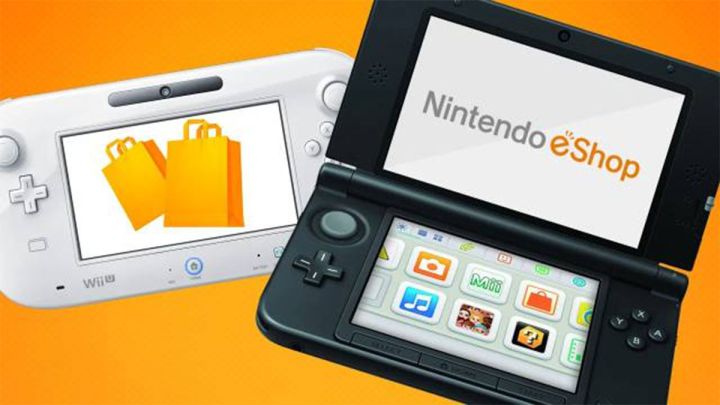
Why game archivists are dreading this month’s 3DS/Wii U eShop shutdown

The end is coming for two of Nintendo's digital storefronts.
Enlarge / The end is coming for two of Nintendo’s digital storefronts.


In just a few weeks, Nintendo 3DS and Wii U owners will finally completely lose the ability to purchase new digital games on those aging platforms. The move will cut off consumer access to hundreds of titles that can’t legally be accessed any other way.

But while that’s a significant annoyance for consumers holding onto their old hardware, current rules mean it could cause much more of a crisis for the historians and archivists trying to preserve access to those game libraries for future generations.

“While it’s unfortunate that people won’t be able to purchase digital 3DS or Wii U games anymore, we understand the business reality that went into this decision,” the Video Game History Foundation (VGHF) tweeted when the eShop shutdowns were announced a year ago. “What we don’t understand is what path Nintendo expects its fans to take, should they wish to play these games in the future.”

DMCA headaches

Libraries and organizations like the VGHF say their game preservation efforts are currently being hampered by the Digital Millennium Copyright Act (DMCA), which generally prevents people from making copies of any DRM-protected digital work.

The US Copyright Office has issued exemptions to those rules to allow libraries and research institutions to make digital copies for archival purposes. Those organizations can even distribute archived digital copies of items like ebooks, DVDs, and even generic computer software to researchers through online access systems.

But those remote-access exemptions explicitly leave out video games. That means researchers who want to access archived game collections have to travel to the physical location where that archive resides—even if the archived games themselves were never distributed on physical media.

Lewin (right) and co-director Frank Cifaldi study archived materials at the Video Game History Foundation library.
Enlarge / Lewin (right) and co-director Frank Cifaldi study archived materials at the Video Game History Foundation library.

That kind of access restriction is just “not reasonable” for video games, as VGHF co-director Kelsey Lewin put it in a conversation with Ars Technica. Even if an institution like The Strong Museum of Play obtained and maintained copies of all current 3DS and Wii U eShop games, “the only way anyone could ever legally play or study [those games] is if they flew to Rochester, signed a consent form, and sat in the premises playing it,” Lewin points out.

VGHF Library Director Phil Salvador pointed out just how impractical that kind of on-site access requirement can be for game researchers. “Right now, if a researcher wants to study an out-of-release, 50-hour-long RPG at a library, they might have to book days or even weeks of travel, lodging, research leave, and child care,” he told Ars. “Requiring researchers to access games on-site can be prohibitive. It discourages use of institutional game collections, and in turn, it discourages institutions from maintaining them. Thankfully, emulation-as-a-service technology already exists that, if permitted, could allow for secure, remote access to video game materials.”

Fear of an “online arcade”

Beyond stopping consumers from purchasing digital 3DS and Wii U games, the VGHF says Nintendo is also helping to stop this kind of easy research access to archival copies. As a member of the Entertainment Software Association (ESA), Nintendo “actively funds lobbying that prevents even libraries from being able to provide legal access to these games,” the VGHF said. “Not providing commercial access is understandable, but preventing institutional work to preserve these titles on top of that is actively destructive to video game history.”

Indeed, the ESA was one of the main groups arguing against a DMCA exemption for off-site access to library game archives during wide-ranging arguments in front of The US Copyright Office in 2021.

During those arguments, ESA lawyer Steve Englund expressed the industry lobbying group’s concerns that the exemption, as proposed, would allow a library to “put emulated games up online for a public audience” with no meaningful access restrictions. Englund pointed to The Internet Archive’s emulated game collections as an example of the kind of “online arcade” that goes beyond “research” purposes and allows for “recreational play by patrons of public libraries.” That kind of wide-ranging access could cause “potential… market harm” to the ESA’s copyright holders, Englund said.

The ESA cited the Internet Archive's "Internet Arcade" as an example of damaging "public access" to its members' copyrighted titles.
Enlarge / The ESA cited the Internet Archive’s “Internet Arcade” as an example of damaging “public access” to its members’ copyrighted titles.

Researchers at the hearing called those concerns overblown. Stanford University media curator Henry Lowood said that institutions like his were not interested in providing “unrestricted access to all” and would not “be putting anything up on the open web. This will be a closed system with authenticated users, and pretty much restricted to the researchers and students or other groups that we’ve mentioned earlier.”

But even those kind of access limitations weren’t necessarily comforting to Englund and the ESA. “College students are important consumers of video games,” Englund argued. “Merely saying that somebody is a student at a university who has been identified as being enrolled at the university ought to be able to access emulation is not a comforting message.”

https://arstechnica.com/?p=1924315


Sales of vinyl albums overtake CDs for the first time since the late ’80s

Sales of vinyl albums overtake CDs for the first time since the late ’80s

Sales of vinyl records have been on the rise for years, but according to the RIAA’s 2022 year-end revenue report for the music industry (PDF), record sales hit a new high last year. For the first time since 1987, unit sales of vinyl albums outpaced those of CDs, vindicating all the people who have spent decades of their lives talking about how vinyl “just sounds better.”

Although vinyl unit sales only surpassed CDs last year, revenue from vinyl records has been higher than revenue from CDs for a while now. In 2022, the RIAA says that vinyl albums earned $1.2 billion, compared to $483 million for CDs. The growth in vinyl was more than enough to offset a drop in CD revenue, helping overall physical media revenue climb 4 percent over 2021 (which was already way up over 2020).

Growth in vinyl revenue was more than enough to offset a drop in revenue from CDs. Vinyl unit sales have surpassed CD unit sales for the first time since 1987.

Streaming services still account for the vast majority of all music revenue in the US—84 percent, up from 83 percent in 2021. The RIAA says there was an average of 92 million streaming music subscriptions active in 2022, which, together with digital radio and ad-supported sites like YouTube, generated $13.3 billion. The growth of streaming services and physical media comes at the expense of paid digital downloads, which accounted for a mere 3 percent of all music revenue in 2022.

There have always been people who have asserted that music played on vinyl sounds better than digital music, but that probably doesn’t explain vinyl’s increasing popularity this long after the advent of CDs, MP3s, and streaming music. A vinyl album is large enough to double as an art piece, and there’s something appealing about the tactility of physical objects in an age where media is increasingly ephemeral.

Streaming still accounts for the vast majority of music industry revenue, though physical media is holding on even as downloadable music goes extinct.

There’s also a retro-tech element to vinyl’s resurgence. Old 2000s-era digital point-and-shoot cameras are currently popular with high schoolers and college students who grew up with smartphones, and there are enduring communities around modding and restoring old PCs, game consoles, typewriters, and all kinds of other things that have ostensibly been “replaced” by superior alternatives. CDs and iPods are down and out right now, but they’re apparently just one viral TikTok trend away from renewed relevance.

If you want to start (or re-start) your own vinyl collection, the format has become popular enough for companies like Audio Technica, Sony, and Victrola to release new turntables with modern amenities like Bluetooth connectivity.

https://arstechnica.com/?p=1923164


PlayStation’s new Discord integration is a key step for the cross-play dream

Cross-platform voice chat has arrived on the PlayStation 5.
Enlarge / Cross-platform voice chat has arrived on the PlayStation 5.
Samuel Axon

This week, Sony rolled out Discord voice chat support for PlayStation 5 consoles, marking the first time a third-party OS-wide game voice call option has been available on Sony’s consoles.

Previously, PlayStation 5 users could display what game they were currently playing on their Discord profiles, but they couldn’t communicate with other players without using their phones, tablets, or computers.

The rollout follows a similar one on Microsoft’s Xbox consoles last fall. Discord voice calls had long been available on PC, Mac, iOS, and Android. The only major gaming platform outlier is Nintendo’s Switch.

With PC, Xbox, and PlayStation support, Discord is poised to be the go-to voice-over-IP service for cross-platform multi-player games, which have started to progress toward ubiquity for the first time over the past couple of years.

That’s great for Discord as a platform and company, of course—and it would be great to see competing services follow so Discord doesn’t have a monopoly on this kind of functionality.

That said, though, even having just one service achieve this is a big boon for cross-play advocates and a sign that the landscape for multiplayer gaming is very different from the previous console generation.

The cross-play dream

Players of online games have been asking for the ability to play with their friends on different platforms for at least two decades, but it has been a long, rocky road to get to the point that the dream is anything close to reality.

There have been some outliers over the years, of course. The Sega Dreamcast, which launched way back in 1998, took a couple stabs at cross-play, with game developers working with Microsoft to connect Dreamcast and Windows PC players in games like Quake 3 Arena and Phantasy Star Online.

Not too long afterward, Final Fantasy XI made headlines in 2002 by offering cross-play between PlayStation 2 and PC players.

Valve President Gabe Newell famously attended Sony’s E3 press conference to announce that Portal 2 would come to the PlayStation 3 and that it would feature cross-play with PC. That’s how I played Portal 2‘s co-op mode; I played on PS3 with a friend who was playing on Steam on his gaming PC.

And Microsoft has spent many years gradually expanding cross-play options between Xbox consoles and Windows PCs in games like Minecraft or the Forza franchise.

But until very recently, cross-play between console platforms was practically nonexistent. Whichever console platform was the leader in sales in a given generation had a strong disincentive to support it. If Sony allowed PlayStation 4 players to play with their friends on Xbox One, some of the snowball effect of a console’s market dominance was reduced, as there was less social drive to purchase a PS4 instead of an Xbox One. The same went for Microsoft’s (at least initially) dominant Xbox 360 and the lower-performing PS3.

To break this, it eventually took a game so huge, so popular, so ridiculously zeitgeist-y that even in its uber-dominant position of the past several years, Sony had no choice but to acquiesce: Epic Games’ Fortnite. The game’s popularity combined with Epic chief Tim Sweeney’s controversial, outspoken activism and Microsoft’s calculated efforts to undermine Sony’s position with consumer-oriented messaging and policies bullied Sony into changing its tune.

To be clear, though, it wasn’t all resolved for developers and players in that moment; it was later revealed that Epic had to pay Sony to offer cross-play in Fortnite to offset Sony’s related losses.

Fortnite wasn’t the first and only cross-play title, but it opened the floodgates like never before. While Sony didn’t provide all developers with easy-to-use tools and APIs for facilitating cross-play, it did start playing nice-ish with a growing roster of developers who had the power to insist, notably including Activision with Call of Duty.

Now, more games than ever—big and small—are making cross-play happen, even between the PlayStation and Xbox. It’s still not the majority of new games, but the trend is headed in that direction.

https://arstechnica.com/?p=1922762


Apple Music Classical will give your smartphone some culture on March 28

The Apple Music Classical logo and app icon.
Enlarge / The Apple Music Classical logo and app icon.

Apple is launching a version of Apple Music specifically for classical music later this month, the company announced today. The Apple Music Classical app, currently available for preorder in the App Store, will be separate from the main Apple Music app. But access to the service will be included with a $17-per-month Apple One subscription or most Apple Music subscriptions (excluding the basic $5-per-month Apple Music Voice tier).

In August 2021, Apple acquired a classical music service called Primephonic. If you’re wondering why classical music might benefit from a dedicated app, this PCMag piece about Primephonic will answer that question for you: You could search for music not just by song title or its composer, but by the name of the orchestra that recorded it, or the person who conducted it, or information about soloists or other performers. Primephonic could also account for the different possible spellings of composers’ names, among other features.

Perhaps most importantly for a streaming music service, though, Primephonic used a royalty model where payouts were based on the amount of time that songs were played rather than the number of times a song was listened to. Using a per-play model, someone who listens to a 15-minute movement of a Beethoven symphony would generate as much revenue for the artists as someone who listened to a 90-second pop song.

Apple hasn’t specified how it plans to pay artists, but its press release announcing the Primephonic acquisition indicated that the service’s detailed metadata and “the best features of Primephonic” would be folded into Apple Music Classical when it launched.

The Apple Music Classical app is iPhone-only for now, though an Android version is apparently coming “soon.” There’s no word on what Apple plans for the iPad, macOS, or Windows; Windows only got its first version of the Apple Music app in a preview earlier this year.

https://arstechnica.com/?p=1923042


Rare, pristine first edition of Copernicus’ De Revolutionibus up for sale

<img src="https://rassegna.lbit-solution.it/wp-content/uploads/2023/03/rare-pristine-first-edition-of-copernicus-de-revolutionibus-up-for-sale.jpg" alt="Nicolaus Copernicus revolutionized science with the publication of De Revolutionibus Orbium Coelestium in 1543.”>
Enlarge / Nicolaus Copernicus revolutionized science with the publication of De Revolutionibus Orbium Coelestium in 1543.
Sophia Rare Books

Polish astronomer Nicolaus Copernicus revolutionized science when he challenged the 1,400-year dominance of Ptolemaic cosmology with the publication of De Revolutionibus Orbium Coelestium (On the Revolutions of the Heavenly Spheres) in 1543. His manuscript suggested that the Sun, not the Earth, was at the center of the Solar System, thereby altering our entire view of the Universe and our place in it. Now, a rare, pristine first edition is up for sale for $2.5 million.

The high price tag is a testament not just to the historical importance of the work, but also to the clear provenance and excellent condition of this particular edition, according to Christian Westergaard of Sophia Rare Books, who is handling the sale. (He will be exhibiting the edition at the upcoming New York International Antiquarian Book Fair next month.) A similar copy with just a couple of repairs and a contemporary binding sold at auction for $2.2 million in 2008. But most first editions of De Revolutionibus that come up for sale have dubious provenance, fake bindings, facsimile pages, stamps removed, or similar alterations that decrease the value.

Noted Copernican scholar Owen Gingerich spent 35 years tracking down and examining every surviving copy of the first two editions of De Revolutionibus, ultimately locating 276 first-edition copies (of about 500 originally printed) around the world, most of them part of institutional collections. There are only a handful of editions from Gingerich’s census (maybe 10 to 15) in the hands of private collectors, including this one. “It’s the holy grail for me,” Westergaard told Ars. “If you’re going to handle a book in this price range, you want good provenance. You don’t want it to suddenly be reported stolen from some library. You want it to be in Gingerich’s census. In my opinion, this copy has it all.”

The "Toruń portrait" of Nicolaus Copernicus (anonymous, c. 1580).
Enlarge / The “Toruń portrait” of Nicolaus Copernicus (anonymous, c. 1580).
Public domain

Copernicus was raised by his uncle, a canon at Frauenburg Cathedral. He traveled to Italy in 1496 to pursue degrees in canon law and medicine, but after witnessing his first lunar eclipse in March 1497, he found himself drawn to astronomy. Copernicus eventually became a canon at Frauenburg Cathedral himself. He built an observatory in his rooms in the turret of the town’s walled fortification and diligently studied the heavens each night.

In 1514, an anonymous booklet began making the rounds among a few astronomers—personal friends of Copernicus, who had authored it. The “Little Commentary” (Commentariolus) laid out his new model of the Universe with the Sun at the center and the Earth and other planets orbiting around it. He correctly determined the order of Mercury, Venus, Earth, Mars, Saturn, and Jupiter and concluded that the changing positions of the stars are caused by the rotation of the Earth itself. Finally, he explained that the apparent retrograde motion of the planets is caused because one is observing them from a moving Earth.

https://arstechnica.com/?p=1922803


Nvidia driver bug might make your CPU work harder after you close your game

Nvidia's GeForce RTX 4080.
Enlarge / Nvidia’s GeForce RTX 4080.
Andrew Cunningham

Nvidia released a new driver update for its GeForce graphics cards that, among other things, introduced a new Video Super Resolution upscaling technology that could make low-resolution videos look better on high-resolution screens. But the driver (version 531.18) also apparently came with a bug that caused high CPU usage on some PCs after running and then closing a game.

Nvidia has released a driver hotfix (version 531.26) that acknowledges and should fix the issue, which was apparently being caused by an undisclosed bug in the “Nvidia Container,” a process that exists mostly to contain other processes that come with Nvidia’s drivers. It also fixes a “random bugcheck” issue that may affect some older laptops with GeForce 1000-series or MX250 and MX350 GPUs.

Not all PCs running the newer Nvidia drivers were being affected by the bug—some reporters observed the behavior on their systems, while others didn’t. Even relatively low CPU usage in the 10 to 15 percent range can have a noticeable performance impact, taking CPU cycles from other tasks and preventing the CPU from going into an idle state. This generates more heat and uses more power and could also affect the battery life of laptops.

Another recent software bug in Nvidia’s drivers caused games to run slower when the Discord app was running in the background; an application profile issue was preventing GPU memory from reaching its peak clock speeds, reducing frame rates accordingly. This fix could be pushed silently in the background to PCs running Nvidia’s software, but installing the fix for the CPU usage bug requires that you download and install Nvidia’s typical 850MB driver package.

https://arstechnica.com/?p=1922731


A more powerful Steam Deck is “a few years” off, Valve says

Calendar Man is marking the many, many days until a more powerful Steam Deck shows up.
Enlarge / Calendar Man is marking the many, many days until a more powerful Steam Deck shows up.

If you’re waiting for a more powerful version of the Steam Deck before diving in on Valve’s Linux-based portable hardware, you may find yourself waiting a little while longer. In a recent interview with Rock Paper Shotgun, Valve designer Lawrence Yang says it will be “a few years” before the company releases “a true next-gen Deck with a significant bump in horsepower.”

A look at the Steam Deck’s performance over its first year of availability helps show why Valve might not be in a hurry to release a more powerful portable. The current Steam Deck now supports over 8,000 titles that are either rated Playable or Verified by Valve’s official Compatibility program. And that list isn’t just low-end indie games, either; heavy hitters like Cyberpunk 2077, Elden Ring, and the recent Dead Space remake run great on the handheld, and the device can even handle ray tracing on slightly older games like Doom Eternal.

That said, the Steam Deck hardware is already beginning to show its age on some recent releases. Games like Wild Hearts and Returnal will technically run on the Deck but reportedly show some significant frame rate and performance issues on the portable. While future software or OS patches could help a bit for these bleeding-edge games, the Steam Deck’s unchanging hardware may start to look increasingly dated as PC gamers continue to upgrade their rigs with plentiful graphics cards (and PC game makers continue to target those high-end desktop users with their newest titles).

<a href="https://cdn.arstechnica.net/wp-content/uploads/2022/02/vlcsnap-2022-02-24-23h40m01s072.png" class="enlarge" data-height="1080" data-width="1920" alt="Selecting Death Stranding in Steam Deck’s menus.”><img alt="Selecting Death Stranding in Steam Deck’s menus.” src=”https://rassegna.lbit-solution.it/wp-content/uploads/2023/03/a-more-powerful-steam-deck-is-a-few-years-off-valve-says.png” width=”640″ height=”360″ srcset=”https://rassegna.lbit-solution.it/wp-content/uploads/2023/03/a-more-powerful-steam-deck-is-a-few-years-off-valve-says-1.png 2x”>
Enlarge / Selecting Death Stranding in Steam Deck’s menus.
Sam Machkovech

Still, Valve designers see value in developers sticking with the Steam Deck’s current specs for a little while longer, at least. “I believe the Deck has the potential to be a solid target throughout the generation,” Valve engineer Pierre-Loup Griffais told Rock Paper Shotgun, “but the work involved is trickier than the typical Deck UX tweaks that developers have had to do for games that already perform well.”

Developers who can design top-end PC games that can scale down to work on the Steam Deck will also “enable smoother performance on a wider variety of PCs, and improve the experience for the whole playerbase,” Griffais pointed out.

Of course, Valve could still release a slightly upgraded Steam Deck with the same basic internal specs (a la Nintendo’s history of “Lite” portables). Yang and Griffais said back in December that they’d like a Steam Deck 2.0 to address “pain points” like battery life and screen quality while keeping “one target for users to understand what kind of performance level to expect.”

And Valve will obviously continue to update the Steam Deck OS and Proton compatibility layer as time goes on as well. Griffais told RPS the team is focusing on “value-add features” like HDR support for compatible external monitors. That means the Steam Deck you play a year from now won’t be exactly the same as the one you can play today, even if the internal hardware remains exactly the same.

https://arstechnica.com/?p=1922721


Remember that ancient Roman “dildo”? It might just be an old Roman drop spindle

The phallus-shaped object
Enlarge / This phallus-shaped object went viral last month, but it might not be an ancient Roman dildo after all.
Vindolanda Trust

Odds are good you read at least one of the umpteen media stories last month about a possible 2,000-year-old “dildo” unearthed near the remains of a Roman auxiliary fort in the UK called Vindolanda. Well, it’s either a dildo; a pestle used for grinding cooking, cosmetic, or medicinal ingredients; or something meant to be inserted into a statue and rubbed for good fortune (a common Roman practice). That’s what the authors of a February paper in Antiquity concluded, anyway. But now we have another possible explanation to consider: The phallus-shaped artifact might be a drop spindle used for spinning yarn.

As we’ve reported previously, the Vindolanda site is located south of the defense fortification known as Hadrian’s Wall. An antiquarian named William Camden recorded the existence of the ruins in a 1586 treatise. Over the next 200 years, many people visited the site, discovering a military bathhouse in 1702 and an altar in 1715. The Rev. Anthony Hedley began excavating the site in 1814, but he died before he could record what he found for posterity. Another altar found in 1914 confirmed that the fort had been called Vindolanda.

Serious archaeological excavation at the site began in the 1930s under the leadership of Eric Birley, whose sons and grandson continued the work after his death, right up to the present day. The oxygen-deprived conditions of the deposits (some of which extend 6 meters, or 19 feet, into the earth) mean that the recovered artifacts are remarkably well-preserved. These include wooden writing tablets and over 100 boxwood combs, which would have disintegrated long ago in more oxygen-rich conditions.

The site is most famous for the so-called Vindolanda tablets, among the oldest surviving handwritten documents in the UK. Discovered in 1973, these are thin wooden leaves, about the size of a postcard, with text written in carbon-based ink. Most of the documents are official military communications and personal messages from garrisoned soldiers to their families, revealing many details about life at the fort. By far the most famous is Tablet 291, written around 100 CE by the wife of a commander named Claudia Severa, who was in charge of a nearby fort. It was addressed to Sulpicia Lepidina, inviting her to a birthday party, and represents one of the earliest known examples of a woman writing in Latin.

Phalluses were everywhere in ancient Rome because they were believed to ward off evil. The Vindolanda site alone has 13 phallic carvings, more than have been discovered at any other dig site along Hadrian’s Wall.

For instance, last year, archaeologists excavating at Vindolanda discovered a small stone carved with the unmistakable image of a penis—basically an ancient Roman d**k pic, accompanied by a crude insulting message. Experts in Roman epigraphy recognized the lettering as a mangled version of Secundinus cacator, which translates into (ahem) “Secundinus, the shitter.” The penis image merely added insult to injury—a clever subversion of the traditional interpretation of a phallus as a positive symbol of fertility.

https://arstechnica.com/?p=1922544