This sea shanty recording is an aural representation of extreme storm data

[embedded content]
Scientists have transformed data captured during the most energetic series of extreme storms on record into a musical piece, “Song of the Sea,” demonstrating the effects of climate change.

The 26th UN Climate Change Conference of the Parties (COP26) is currently underway in Glasgow, Scotland, and researchers at the University of Plymouth in England have marked the occasion by releasing their digitally altered version of a popular sea shanty, “What Shall We Do With a Drunken Sailor.” The twist: this altered “Song of the Sea” was manipulated using actual data collected during the extreme storms that ravaged the Atlantic coasts of western Europe in 2014. The intent is to demonstrate aurally, through a well-known popular tune, the impact of climate change by providing a snapshot of the devastation and destruction of extreme storms.

“Historically, scientific data has normally been conveyed visually, as charts or illustrations,” said Richard Thompson, director of the University of Plymouth’s Marine Institute, which collaborated with the university’s Interdisciplinary Centre for Computer Music Research (ICCMR) on the project. “However, the combination of sound and images provides significantly more alternatives to convey information. ‘Song of the Sea’ is a novel way of using actual climate data in such a way that it controls the music. And with extreme natural events predicted to increase in frequency and ferocity, there is no barrier to its principles being applied to represent the far-reaching effects of climate change on our planet.”

Back in 2015, Eduardo Miranda, a Brazilian composer who heads ICCMR, designed a musical biocomputer, which  translated the electrical energy generated by the slime mold’s movement into sound to compose “music.” He even performed a “duet” with the single-celled organism at a biomusic festival. Miranda also developed a a Brain Computer Music Interface (BCMI), which enabled patients at the Royal Hospital for Neurodisability in London to interact with a string quartet through brainwave signals detected by electrodes placed on the scalp.

This latest project is the brainchild of Clive Mead and Dieter Hearle, both ICCMR members. Initially, the idea was to compose one long continuous piece of music that would interpret data flowing from a marine monitoring station. However, Mead realized that this more academic approach would likely strike the general ear as “twisted, distorted, and machine-like.”  Sea shanties seemed like a much more viable option for engaging public interest.

Mead identified seven different sea shanties for the project, ultimately choosing “What Shall We Do With a Drunken Sailor” as a proof-of-concept for COP26 because he felt it would be the most recognizable and dramatic. (The Irish Rovers have closed their shows with the tune for more than 50 years.) The first written record of the tune is a 1839 account of a whaling voyage, but some version likely existed before that. An American sailor named Richard Maitland, who performed a 1939 recording of the sea shanty, said it was typically sung “when men are walking away with the slack of a rope.”

Waves crash into the coastline at Porthleven, Cornwall, during the 2013-14 winter storms
Enlarge / Waves crash into the coastline at Porthleven, Cornwall, during the 2013-14 winter storms
University of Plymouth

A professional singer recorded different layers and harmony for all seven sea shanties Mead had selected, and Mead then wrote and choreographed the music with a mix of traditional and contemporary instruments drawn from online orchestral libraries. He also threw in some pilot whale, sperm whale, and dolphin sounds for good measure.

The storm data—on wind speed, air pressure, temperature, and wave height—was gathered by the Southwest Regional Coastal Monitoring Programme over a 48-hour period in February 2014, when an extreme storm washed away a main rail line linking Dawlish in south Devon and London.

It was Hearle’s job to turn all that data into sound and music, and keep it interesting. “The temperature, for example, might not alter up or down for a long time, so the temptation is to make that more sensitive,” he said. “But you have to keep it within limits.” Through trial and error, he and Meade figured out which parameters worked best for each musical component.

Wave heights were matched to an echo effect on the words, which become more distorted as heights increase. Tempo was aligned to wind speed, so the song speeds up as those speeds increased. Pressure was mapped onto pitch; you can hear a deepening and ominous slurring of the vocals at the storm’s peak intensity. And temperature matched with the drum’s distortion effect; the drum beat “crunches” as the temperature drops.

"Song of the Sea" co-composer Clive Mead in his studio at the University of Plymouth
Enlarge / “Song of the Sea” co-composer Clive Mead in his studio at the University of Plymouth
University of Plymouth

The final version effectively condenses that storm’s 48-hour period into three-and-a-half minutes.  Of course, “You have to strike a balance between the accuracy of the data and the way we listen to, and appreciate, music,” Mead said. “That’s been our guiding philosophy from day one. It’ll be up to the public to judge if we’ve succeeded.”

Sea shanties experienced an unusual revival over the past year, thanks to a TikTok phenomenon dubbed “ShantyTok.” Per Slate:

[U]sers are donning Shetland sweaters and belting 19th century a cappella maritime songs, to the tune of more than 74 million views. The app’s infrastructure, built to foster video collaboration, means that individual users can record echoey solos, multiply their own voice into a chorus, or join a shanty choir of strangers. There are complicated in-jokes about what your favorite shanty says about you, staged shanty raves, and a surplus of billowy white shirts.

Who doesn’t love a good sea shanty? Now that I’ve got “Drunken Sailor” playing on a loop in my head, here’s a ShantyTok mashup rendition of the tune for your listening pleasure. (Also check out this viral performance of “Soon May the Wellerman Come” by Nicholas Evans, which turned into a top ten single for the former postman.)

[embedded content]
“Drunken Sailor”: TikTok Sea Shanty Epic Mashup 2021.

Listing image by YouTube/University of Plymouth

https://arstechnica.com/?p=1810435


Big-name publishers see NFTs as a big part of gaming’s future

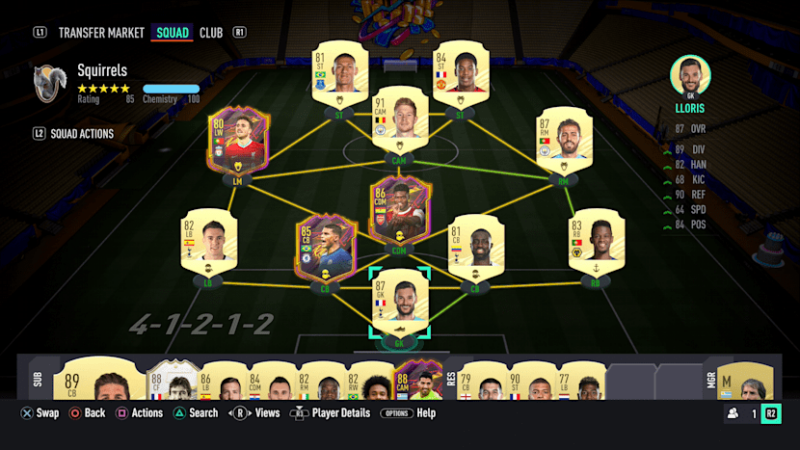
FIFA players are demanding NFT collectibles, according to EA CEO Andrew Wilson.
Enlarge / FIFA players are demanding NFT collectibles, according to EA CEO Andrew Wilson.


Some of the biggest publishers in gaming are using recent earnings calls to express bullish optimism about the concept of non-fungible tokens (and the blockchain more generally) being a part of their future business in one way or another.

Ubisoft led off this microtrend in an earnings call late last week. As reported by the International Business Times, Ubisoft CEO Yves Guillemot told investors and analysts that he believes the blockchain is “very attractive for the long term” and could represent a “revolution” in the industry.

Guillemot expressed particular interest in NFTs’ ability to help enable “play-to-earn” models, where in-game items gained through normal gameplay can be sold for a profit. That model is already in use by early NFT games like Axie Infinity, in which players (especially those in developing countries) can earn monetizable cryptocurrency by battling Pokémon-style beasts against each other. Guillemot said that kind of model “will enable more players to actually earn content, own content, and we think it’s going to grow the industry quite a lot.”

In a summary document accompanying the earnings announcement, Ubisoft also pointed out that the company is a founding member of the Blockchain Gaming Alliance, and it participated in a recent funding round for blockchain licensing company Animoca Brands. This experience gives Ubisoft “the perspective to reflect on the best ways to overcome blockchain’s initial limitations for gaming around sustainability and scalability,” the company wrote.

NFT Ultimate Team?

Ubisoft was followed this week by Electronic Arts, whose CEO Andrew Wilson said in an earnings call that fans of its FIFA games “want more digital experiences outside the game—esports, NFTs, broader sports consumption—and they want us to move really, really quickly.”

The FIFA game series (whose exclusive license with EA is currently up in the air) already makes a large percentage of its revenue by selling collectible cards for the game’s Ultimate Team mode, which some countries consider illegal gambling. While Ultimate Team has served as a fine money-maker for EA without the use of blockchain technology, EA seems curious about how NFTs can help the mode and other in-game collectibles make more money.

<a href="https://cdn.arstechnica.net/wp-content/uploads/2021/11/axie.png" class="enlarge" data-height="999" data-width="1600" alt="Current NFT games like Axie Infinity are serving as a proof-of-concept for the "pay-to-earn" model.”><img alt="Current NFT games like Axie Infinity are serving as a proof-of-concept for the "pay-to-earn" model.” src=”https://rassegna.lbit-solution.it/wp-content/uploads/2021/11/big-name-publishers-see-nfts-as-a-big-part-of-gamings-future-1.png” width=”640″ height=”400″ srcset=”https://rassegna.lbit-solution.it/wp-content/uploads/2021/11/big-name-publishers-see-nfts-as-a-big-part-of-gamings-future-2.png 2x”>
Enlarge / Current NFT games like Axie Infinity are serving as a proof-of-concept for the “pay-to-earn” model.

“As a company, we have been leaders in the creation of digital content that has real collectible value in the embedding of that content as part of live services,” Wilson said. “So still early to tell [for NFTs], but I think we’re in a really good position, and you should expect us to kind of think more innovatively and creatively about that on a go-forward basis.”

While Wilson said he thinks NFTs “will be an important part of the future of our industry,” he allowed that it’s “still early to kind of figure out how that’s going to work.”

“Anything that brings more people in and engages those people for more time in the context of the entertainment it would create—I think it’s a good thing over time,” he added. “I think the play-to-earn or the NFT conversation is still really, really early, and there’s a lot of conversation. And there’s at some level a lot of hype about it.”

Too much speculation?

The same general position was shared by Take-Two CEO Strauss Zelnick. In a chat with GamesIndustry.biz this week, Zelnick said bluntly that “if you believe in collectible physical goods, I don’t know why you wouldn’t believe in collectible digital goods.” While NFTs aren’t 100 percent necessary to track and verify those digital goods, Zelnick said they are “one way… to authenticate the fact that something singular is rare [online].”

That said, Zelnick expressed some caution about the extreme level of speculation he sees in the current market for NFTs. “What I don’t believe is that just because something is digital or an NFT that it suddenly has value and/or has value that will be increased in the future,” he said. “And I think that’s the problem. NFTs, because they’re related to the blockchain as currently contemplated, and because some have gone for a lot of money, are seen by some as just another opportunity to invest in a speculation that some think will only go up. And speculations don’t just go up; they come down, too.”

“For an NFT to be valuable and durable, it has to be found at the intersection of rarity and quality, of rarity and value,” he continued. “And there’s rarity for sure in all NFTs, but I’m not sure there’s value.”

https://arstechnica.com/?p=1810434


1,000-year-old Peruvian mask’s red paint contains human blood, study finds

A red paint sample taken from a 1,000-year-old mask excavated from a Sicán tomb in Peru contains human blood and bird egg proteins, in addition to a red cinnabar pigment.
Enlarge / A red paint sample taken from a 1,000-year-old mask excavated from a Sicán tomb in Peru contains human blood and bird egg proteins, in addition to a red cinnabar pigment.
Adapted from E. Pires et al., JPR, 2021

Ever since a 1,000-year-old gold mask was excavated from a tomb in Peru 30 years ago, archaeologists have puzzled over the surprising longevity of the red paint on its surface. According to a recent paper published in the Journal of Proteome Research, one of the secret ingredients is human blood, along with bird egg whites.

The Sican culture was prominent along the northern coast of modern Peru between the 9th and 14th centuries. There are numerous tombs of elite members of that society from the Middle Sican period (900-1100 CE) scattered throughout the region, but most of the tombs fell prey to looters. “Practically all Middle Sican gold artifacts in museums and private collections were looted from archaeological sites in modern times,” the authors wrote. “Once within illicit trade networks, these objects are commonly subject to various undocumented interventions to enhance their aesthetic qualities.”

This can involve stripping off paint and removing pigments, feathers, and bangles and cleaning the artifacts so carelessly that any ancient tool marks were smoothed over. That presents a significant challenge to researchers seeking to better understand the cultural significance of such artifacts.

That’s why this painted gold Peruvian mask is of such interest. It was carefully excavated in the early 1990s from an undisturbed tomb from the Middle Sican period located at the Huaca Loro temple mound. So its provenance has been clearly established, and its conservation history was carefully documented. The East Tomb, as it is known, contained the skeleton of a 40- to 50-year-old man, painted entirely red and placed upside down in the center of the burial chamber. The skull had been detached from the body and placed right-side up.

The skeletons of two young women were nearby, arranged in positions common to birthing and midwifery, with two child skeletons at a higher level, both in crouched positions. According to the authors, this indicates that those who buried the deceased leader hoped that he would be reborn. There were various objects in the tomb as well, including many metal artifacts. Excavators retrieved about 100 personal ornaments made of gold and silver-copper alloys (similar to the composition of today’s gold jewelry).

Among those objects was the crumpled red-painted gold mask that had covered the face of the male skeleton. The paint layer had remained intact for 1,000 years, intriguing scientists. So while the mask was being reshaped as part of the conservation efforts, researchers collected a few loose paint fragments and analyzed the composition.

Reddish paints from other Sican metal objects have proved to be a mixture of iron oxides, carob tree resin, and a substance that appears derived from fish bones. In the case of this particular gold mask, however, X-ray fluorescence identified mercury and sulfur, while X-ray diffraction showed the presence of cinnabar. The latter was typically only used for elite members of Sican society; ochre paint was used for people of lower rank.

But scientists had been unable to identify what material had been used as a binding agent—the secret to how the paint remained intact for so long. Co-authors Luciana de Costa Carvalho and James McCullagh, both from Oxford University, and their colleagues decided to take a closer look at a small sample of the red paint. Initial spectroscopic results showed that there were proteins in the sample, prompting a proteomic analysis using tandem mass spectrometry. Since they could not entirely rule out the possibility of keratin, skin, or even saliva contamination during sample handling and processing, they excluded those proteins from the final analysis.

Ultimately, the researchers clearly identified six proteins from human blood in the red paint, including serum albumin and immunoglobulin. There were also proteins like ovalbumin, found in egg whites. The proteins were highly degraded, so the authors couldn’t identify the exact species of bird’s egg used in the paint but suggest it was probably Muscovy duck—with a proteome nearly identical to that of chicken. Muscovy duck is known to be a food source to ancient Sicans. They were surprised to find no evidence of lipids, however, which are also common to both human blood and bird eggs. The researchers suggested that the lipids may have degraded during burial, or perhaps there were chemical interactions between the lipid molecules and the cinnabar.

“From an archaeological perspective, the use of human blood in the paint would not be surprising,” the authors wrote, pointing to a recent study of the remains of human sacrificial victims from Sican, indicating that many appeared to have been deliberately cut on the neck and chest to maximize bleeding. Their finding “lends weight to a hypothesis that application of this red paint on the entire deceased skeleton symbolized intensely red oxygenated blood, ‘life force’ essential for the desired effect [rebirth] to take place.”

That said, “It was not possible to analyze other artifacts or the surrounding sediments and there remains the possibility that the paint sample could have been contaminated from other materials,” the authors wrote, adding that this nonetheless seems unlikely. Given the small samples available for analysis—these artifacts are fragile and highly precious—having positive and negative control samples from excavations or archaeological sites where such items are found would make future analyses more robust. Still, their findings could eventually help archaeologists authenticate the various masks in collections around the world with no clear provenance.

DOI: Journal of Proteome Research, 2021. 10.1021/acs.jproteome.1c00472  (About DOIs).

https://arstechnica.com/?p=1810062


Blizzard delays Diablo IV, Overwatch 2 amid exec departure

Jen Oneal will be leaving her co-leadership position atop Blizzard after less than three months.
Enlarge / Jen Oneal will be leaving her co-leadership position atop Blizzard after less than three months.


It’s been less than three months since former Vicarious Visions head Jen Oneal stepped up to co-lead Blizzard alongside Mike Ybarra, following the departure of longtime veteran J. Allen Brack. On Tuesday, though, Oneal announced her sudden departure as the company continues to navigate lawsuits surrounding accusations of widespread harassment.

Oneal said in a statement that she will be stepping down from leadership immediately ahead of leaving the company entirely at the end of the year. “I am doing this not because I am without hope for Blizzard, quite the opposite—I’m inspired by the passion of everyone here, working towards meaningful, lasting change with their whole hearts,” she wrote. “This energy has inspired me to step out and explore how I can do more to have games and diversity intersect, and hopefully make a broader industry impact that will benefit Blizzard (and other studios) as well… Blizzard’s best days are ahead. I truly believe that.”

Alongside Oneal’s departure, Activision Blizzard announced a donation of $1 million to Women in Games International, a nonprofit where Oneal serves on the board. “Though we will all miss [Oneal] greatly, we wish her all the best as we work with her on a plan to make an industry-wide impact through the WIGI grant,” Blizzard head Mike Ybarra said on an earnings call Tuesday.

Game delays

Oneal’s sudden departure came just before Blizzard announced it is “planning for a later launch… than originally envisaged” for two of its most anticipated games: Diablo IV and Overwatch 2. Neither title will be released in 2022, the company said, though Blizzard is “still planning to deliver a substantial amount of content… next year.”

In an earnings call Tuesday, Activision Blizzard CEO Bobby Kotick highlighted how tumult among Blizzard staff, from executives on down, has helped contribute to those delays. “In recent months, we have taken actions that resulted in the departure of a number of individuals across the company,” he said. “Additionally, we have seen increased competition in the market for our talent and higher voluntary turnover that has partly offset our success in hiring.”

<a href="https://cdn.arstechnica.net/wp-content/uploads/2021/11/ow2.jpg" class="enlarge" data-height="720" data-width="1280" alt="It will be at least 2023 before this Overwatch 2 concept image becomes gameplay reality.”><img alt="It will be at least 2023 before this Overwatch 2 concept image becomes gameplay reality.” src=”https://rassegna.lbit-solution.it/wp-content/uploads/2021/11/blizzard-delays-diablo-iv-overwatch-2-amid-exec-departure.jpg” width=”640″ height=”360″ srcset=”https://rassegna.lbit-solution.it/wp-content/uploads/2021/11/blizzard-delays-diablo-iv-overwatch-2-amid-exec-departure-1.jpg 2x”>
Enlarge / It will be at least 2023 before this Overwatch 2 concept image becomes gameplay reality.

“As we have worked with new leadership in Blizzard and within the franchises themselves, particularly in certain key creative roles, it has become apparent that some of the Blizzard content planned for next year will benefit from more development time to reach its full potential,” Kotick continued.

Ybarra added that while both games “have made great progress and passed important milestones recently… there’s obviously been a change in leadership.” Extra development time on Diablo and Overwatch will let Blizzard “continue significantly increasing the size of our development teams ahead of the launch,” he added.

Kotick: We’re making progress

This week’s news comes just days after Blizzard announced it was canceling planning for a 2022 Blizzcon gathering, which was going to be a hybrid virtual and in-person event. In announcing that move, the company said that “the energy it would take to put on a show like this is best directed towards supporting our teams and progressing development of our games and experiences.”

All this activity points to a company struggling to retain talent and reestablish its focus after months of being in the center of a public scandal. Kotick led off the company’s earnings call Tuesday by admitting once again that, “in certain instances relating to workplace culture, we should have done a better job ensuring our values were embraced across all parts of the company.” Evolving as “a great place to work” isn’t just the right thing to do, he said; instead, it’s necessary to “retain or attract the talent we need to realize our tremendous potential.”

Kotick also highlighted a pay equity study that he said showed “women on average earned slightly more than men for comparable work in 2020,” as well as a $250 million, 10-year company pledge for “initiatives that foster expanded opportunities in gaming and technology for underrepresented communities.” And he stressed new policies that will result in immediate termination—rather than written warnings—for employees found guilty of harassment or retaliation against whistleblowers.

Despite this, Kotick complained that the company “expect[s] that we’ll continue to face challenging and negative media attention regardless of our progress.”

https://arstechnica.com/?p=1809941


Station Eleven teaser is intriguing, but will show run afoul of pandemic fatigue?

[embedded content]
A major flu epidemic wipes out most of the world’s population in Station Eleven, a new series on HBO Max.

In early 2020, when the COVID-19 pandemic was in its infancy, there was a sudden spike of interest in watching the 2011 film Contagion. Ditto for 1995’s Outbreak. Chalk it up to morbid curiosity. When feeling threatened by an actual pandemic, some people lean in to that fear and uncertainty with their media choices rather than seeking escape—perhaps as an evolved response mechanism for dealing with threats by learning from imagined experiences.

That would seem to bode well for the success of Station Eleven, a forthcoming new series from HBO Max that depicts the onset and aftermath of a global flu pandemic that wipes out most of humanity. HBO greenlit the series—which is based on the award-winning 2014 novel of the same name by Emily St. John Mandel—in the Before Times. The network just dropped an intriguing teaser, along with a few first-look still photographs.

Timing might be a factor here. Granted, there was an uptick in readership for Mandel’s novel last year, in keeping with the morbid curiosity hypothesis. But with COVID-19 cases still sporadically surging around the world and fatigue and frustration mounting, has the taste for apocalyptic pandemic scenarios (other than zombie movies) run its course?

(Spoilers for the novel below.)

Mandel has resisted describing her novel as science fiction, largely because it has a contemporary setting that features current rather than future technology. But sci-fi at its heart is about more than gadgetry; it’s about imagining possible futures, and by that standard, the novel certainly qualifies. It opens with a Toronto production of Shakespeare’s King Lear. The lead actor, Arthur Leander, has a heart attack mid-performance and collapses onstage. Paramedic trainee Jeevan is in the audience but is unable to save Arthur; instead, he comforts one of the child actors, a young girl named Kirsten.

Jeevan (Himesh Patel) befriends a young girl, Kirsten (Matilda Lawler), as a deadly flu spreads rapidly.
Enlarge / Jeevan (Himesh Patel) befriends a young girl, Kirsten (Matilda Lawler), as a deadly flu spreads rapidly.

Just after the play, a doctor friend calls Jeevan and warns him to get out of the city. An outbreak of the “Georgia Flu”—a virus that is both highly contagious and deadly—is sweeping over the world, leaving millions of corpses in its wake. Within the next few weeks, nearly the entire cast of the King Lear production succumbs to the disease, as does the majority of humanity around the world. The novel then jumps some 20 years after Year Zero, where a now-grown Kirsten travels with a group of actors and musicians from town to town, staging concerts and Shakespeare’s plays.

But not everyone has responded to this new reality with that kind of positive idealism. The troupe soon runs into trouble in a town controlled by a mysterious cult figure known only as The Prophet, who wants Kirsten to be another one of his “brides.” Kirsten’s fellow troupe members begin to mysteriously disappear, and she embarks on a personal quest to find them. There are a lot of characters, each with their own narrative arcs, complications, and flashbacks to Year Zero and the lives everyone led before, which turn out to be linked in surprising ways.

https://arstechnica.com/?p=1809864


Netflix now comes with Android video games for paying subscribers

Only five Android-only games for now, but Ars Technica is famliar with more Netflix Games projects for smartphones in the pipeline.
Enlarge / Only five Android-only games for now, but Ars Technica is famliar with more Netflix Games projects for smartphones in the pipeline.

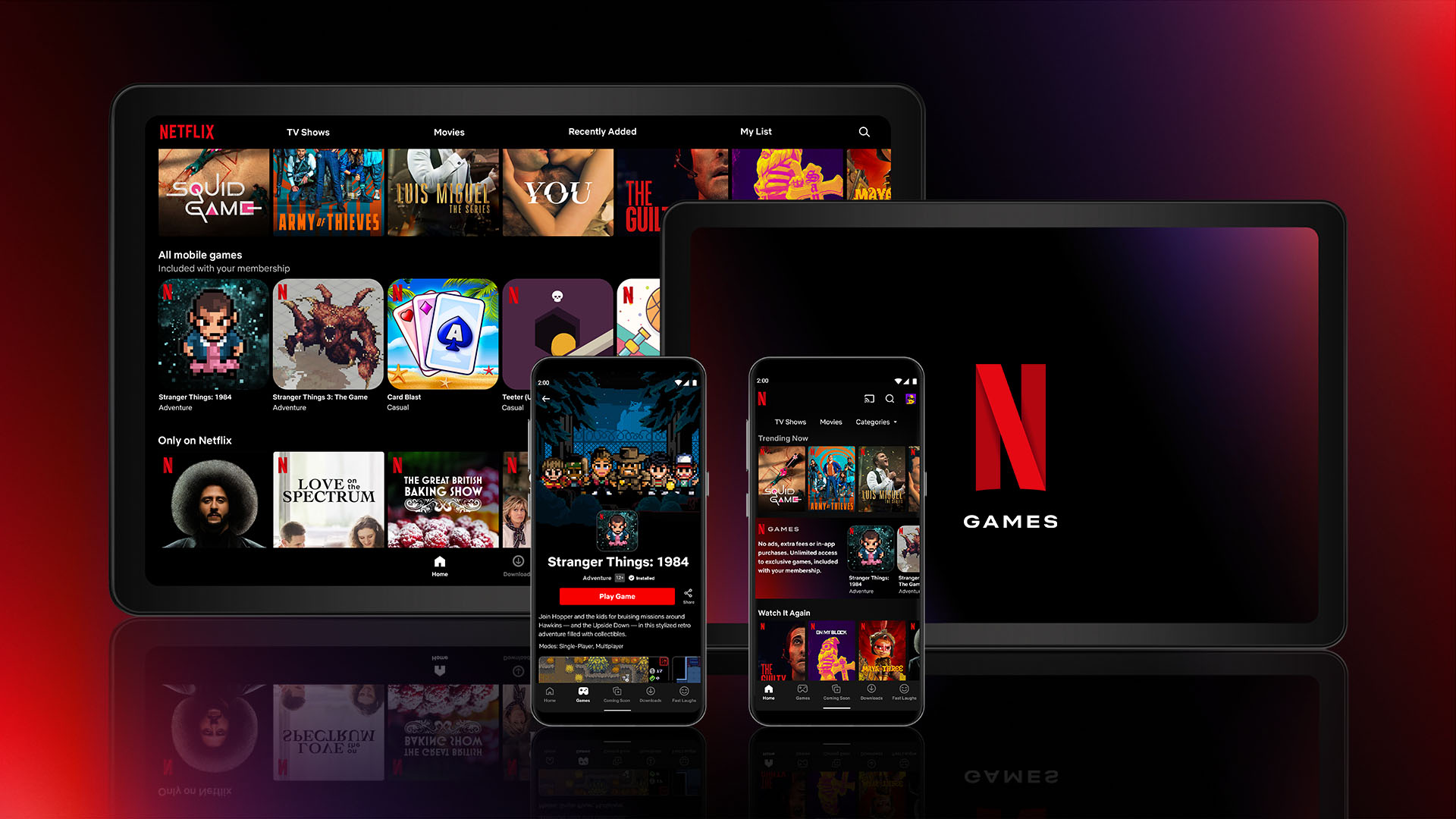
After a region-limited tease earlier this year, Netflix’s gaming push officially begins this week as the company releases an update to its Android app. Starting tomorrow, all Netflix subscribers on Android will start seeing a row labeled either “N Games” or “Games On Mobile” inside the normal video-streaming app. The games are exclusively for smartphones and tablets.

And if you don’t want to wait, you don’t have to—the games are now live.

Today’s announcement confirms what we already knew after a test version launched in late August in Poland. Netflix Games are downloaded to your Android device as opposed to being streamed from Netflix’s cloud servers. (Subscription services like Nvidia GeForce Now, Xbox Game Streaming, and Amazon Luna remain poised to vie for the “Netflix of gaming” crown, as they stream computationally intense games from server farms to your favorite screen.)

In addition to a pair of smartphone-friendly games based on the Stranger Things series, Netflix Games currently includes three other arcade-y tap-action games. And like the licensed games, these titles all previously launched on smartphone storefronts. Now that they’re part of Netflix Games, the games have been updated to work without any upfront costs or hidden microtransactions.

That’s a key differentiator for Netflix Games, and it resembles Amazon’s 2015 attempt to break into the Android gaming world by giving games away and paying game makers based on how often their games were downloaded and played. That “Amazon Underground” service required a sideloaded app download—a move that garnered a lot less attention than when Epic Games did the same thing with Fortnite years later. Amazon’s effort fizzled and died less than two years later.

Sharing your account? No problem

Today’s announcement includes no mention of a certain megaton Apple smartphone and tablet ecosystem; instead, you have to look at the official “Netflix Geeked” Twitter account to be assured that iOS support for Netflix Games is “on the way.” As we previously confirmed, the credential-checking system in place on Android should translate neatly to iOS whenever Netflix Games gets around to launching there. (This certainly isn’t the first time Netflix has rolled out new, interesting features on Android before iOS.)

An example of how Netflix Games' interface will look inside the normal Netflix app on Android starting on Wednesday, November 3.
Enlarge / An example of how Netflix Games’ interface will look inside the normal Netflix app on Android starting on Wednesday, November 3.

Once Netflix’s Android app update goes live tomorrow, it will allow users to stay within the Netflix app, find each game as an individual download, and confirm Netflix credentials before loading the games. While Netflix says some of its games will need to check in with a server every time you play, I’ve confirmed that some of the launch games can work in fully offline mode—at least, after logging in and confirming Netflix credentials before fully closing each game, putting your smartphone into airplane mode, and loading the games again.

Speaking of flexibility, if your Netflix account supports multiple, simultaneous logins (like the United States’ $17.99/month “4K” plan), Netflix Games will work the same way. Everyone can log in and simultaneously play games until an account’s “maximum devices” limit is reached. At that point, the app will dish out alerts the same way it does with video account sharing. And while all of the games so far are kid-friendly (especially as they have no microtransactions), games are currently listed as “adult” content and thus require either an adult account or PIN code access.

Today’s slate of games looks like the fare you’d expect from an ex-Zynga executive running this newly established Netflix Games category. But that exec, Mike Verdu, insists there’s more to come. “Just like our series, films, and specials, we want to design games for any level of play and every kind of player, whether you’re a beginner or a lifelong gamer,” he wrote in today’s announcement. Ars Technica is familiar with at least two Netflix Games projects that are more surprising than the games we saw in today’s roster.

https://arstechnica.com/?p=1809727


Amazon’s New World faces down a world of wild glitches

[embedded content]
A video explaining just some of the glitches New World has faced of late.

Anyone who follows online gaming knows that new titles often have a few issues at launch and that those issues can need a few post-launch updates to iron them out. Still, Amazon’s long-delayed New World has played host to some surprising bugs, security issues, and exploits in recent weeks.

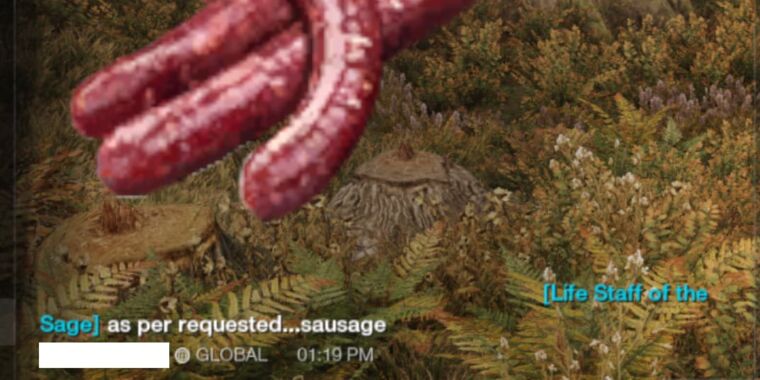
This weekend, reports started filtering in from players who had discovered how to insert and process their own HTML code inside New World‘s chat box (thanks, apparently, to some improper input scrubbing). This resulted in some amusing visual trolling, as players could use specific HTML to spam giant pictures of in-game sausages or even display large yellow boxes above their characters to block the other players’ in-game view. Other trolling was more severe, like gold duplication exploits and HTML code that could crash the game if a player hovers over a certain bit of text.

On Friday, New World Community Manager Luxendra posted that the team had just that day “discovered an issue where players were able to post images and other links in the chat that resulted in unsavory behaviour.” Luxendra added that the developers “have enabled a fix that should resolve this issue and prevent players from abusing and exploiting this feature.”

Other problems deal more directly with in-game economic systems not functioning as designed. Since the rollout of New World Patch 1.0.4 last week, players are reportedly failing to receive gold from trading-post sales that take place when they’re offline. “We are currently testing a fix for this and will be deploying it as soon as we are confident,” Amazon writes in the game’s forums. “Players who encounter this issue WILL receive their missing gold/items when the fix goes live.”

I’m invincible!

Previous New World glitches were even simpler than that. Earlier in October, YouTuber Kona demonstrated that New World players could become effectively invulnerable if they clicked and dragged the location of the game window on their local machine. Though the damage would register as soon as the game window stopped moving, players could still use the exploit to camp indefinitely on PvP capture points, gaining a massive advantage.

[embedded content]
A YouTuber shows off the (since-patched) simple method for temporary invulnerability in New World.

That particular oversight was fixed a few weeks later with patch 1.0.4, which the patch notes said “fixed several known causes of players being invulnerable [emphasis added].” But those notes also suggest that they are only “beginning work on addressing issues causing invulnerability” and “are continuing to track down fixes for additional causes of this issue.”

Some have pointed to this invulnerability bug as evidence that Amazon was giving the game client authority over the server, a big security no-no in online game design. But Luxendra shot that down in an extended post that goes into some technical detail on what was happening here:

We did have a bug, in which given certain circumstances we were waiting server-side on input from a client before processing through to outcomes. Combined with an intentional weapon effect that allows for brief invulnerability, this created a situation where players could reach an invulnerable state and prolong it by making the client unresponsive, even though the client has no say in damage (both damage the player creates and damage taken by the player are computed server-side based on the results of physics simulation plus game rules). This was a particularly bad bug given our server-based simulation, and we apologize for that. We corrected the bug in code the same day we learned about it, then tested to make sure nothing unintended came out of those changes, and published the fix immediately after that.

Despite the fixes, there are still plenty of known issues in New World, including a few that have only popped up since the last patch. Hopefully some of those issues can get fixed before the game loses even more of its quickly dwindling player base.

https://arstechnica.com/?p=1809383


Our fave bounty hunter takes on Tatooine’s underworld in Book of Boba Fett trailer

[embedded content]
Temuera Morrison and Ming-Na Wen star in a new original Star Wars series, The Book of Boba Fett, coming next month to Disney+.

The S2 finale of The Mandalorian included a tantalizing post-credits scene that served as an announcement for a spinoff series, The Book of Boba Fett. The series stars Temuera Morrison (Attack of the Clones, Aquaman) as the titular bounty hunter, and Ming-Na Wen (Agents of S.H.I.E.L.D.) as the mercenary and assassin Fennec Shand, who works for him. Disney just dropped the official trailer, giving us our first look at what we can expect from this latest project from showrunner Jon Favreau.

(Spoilers for the S2 finale of The Mandalorian below.)

A spinoff film featuring Boba Fett had been in development at Disney as far back as 2013, but then 2018’s Solo: A Star Wars Story proved to be a box office disappointment for the studio. Disney’s strategy shifted to spinoff series for its streaming platform, Disney+, beginning with The Mandalorian. That series was a commercial and critical success, winning over audiences with the relationship between Pedro Pascal’s Mandalorian and the Child (aka Grogu, although some still think of him as Baby Yoda).

Boba Fett appeared briefly in the S1 episode, “The Gunslinger,” along with Fennec, returning in S2 for a much larger role. In the finale, he played a pivotal role in rescuing Grogu from Moff Gideon, tricking the Imperials into allowing his cohorts to land in a cruiser’s fighter launch tube. Fans went wild over Mark Hamill’s surprise cameo as a (digitally de-aged) Luke Skywalker, who takes Grogu with him to complete his Jedi training. And there wasn’t a dry eye in the house as Grogu and the Mandalorian made their farewells. The aforementioned post-credits scene showed Boba Fett and Fennec invading Jabba the Hutt’s palace on Tatooine, which is pretty much where the new series picks up.

Favreau has said that The Book of Boba Fett takes place in the same timeline as The Mandalorian, jokingly dubbing it “The Mandalorian season 2.5.” But other than that, the studio has been pretty mum about the details. Per the official premise:

The Book of Boba Fett, a thrilling Star Wars adventure teased in a surprise end-credit sequence following the Season 2 finale of The Mandalorian, finds legendary bounty hunter Boba Fett and mercenary Fennec Shand navigating the galaxy’s underworld when they return to the sands of Tatooine to stake their claim on the territory once ruled by Jabba the Hutt and his crime syndicate.

In addition to Morrison and Wen, Jennifer Beals is the only other cast member officially confirmed, although nothing is known about her character. The trailer opens with a shot of Boba Fett in full Mandalorian gear, donning his iconic helmet. The people of Tatooine might prefer a bounty hunter to Jabba the Hutt—including those who are part of the underworld. “Jabba ruled with fear. I intend to rule with respect,” we hear Boba say. But first he’ll need to earn that respect.

We see Boba and Fennec meet with former captains under Jabba to propose a mutually beneficial arrangement that will make them all rich, with no need for pointless conflicts. The captains aren’t initially convinced: “What prevents us all from killing you and taking what we want?” Well, between the two, Boba and Fennec possess some pretty impressive combat skills, so that should serve as one preventative measure. Otherwise, the trailer reveals very little in the way of plot. But the same team brought us the wonderful Mandalorian series, and Morrison and Wen are both terrific performers playing fan-favorite characters, so we’re inclined to reserve judgment until the series actually airs.

The Book of Boba Fett debuts on Disney+ on December 28, 2021.

Listing image by Disney+

https://arstechnica.com/?p=1809253


John Carmack issues some words of warning for Meta and its metaverse plans

John Carmack, seen here wearing an early prototype Oculus Rift headset.

Oculus consulting CTO John Carmack has been bullish on the idea of “the metaverse” for a long time, as he’ll be among the first to point out. But the id Software co-founder spent a good chunk of his wide-ranging Connect keynote Thursday sounding pretty skeptical of plans by the newly rebranded Meta (formerly Facebook) to actually build that metaverse.

“I really do care about [the metaverse], and I buy into the vision,” Carmack said, before quickly adding, “I have been pretty actively arguing against every single metaverse effort that we have tried to spin up internally in the company from even pre-acquisition times.” The reason for that seeming contradiction is a somewhat ironic one, as Carmack puts it: “I have pretty good reasons to believe that setting out to build the metaverse is not actually the best way to wind up with the metaverse.”

Today, Carmack said, “The most obvious path to the metaverse is that you have one single universal app, something like Roblox.” That said, Carmack added, “I doubt a single application will get to that level of taking over everything.” That’s because a single bad decision by the creators of that walled-garden metaverse can cut off too many possibilities for users and makers. “I just don’t believe that one player—one company—winds up making all the right decisions for this,” he said.

<a href="https://cdn.arstechnica.net/wp-content/uploads/2021/10/roblox2.jpg" class="enlarge" data-height="1080" data-width="1920" alt="Roblox could turn into a metaverse, Carmack says, but control by a single entity makes such a thing unlikely.”><img alt="Roblox could turn into a metaverse, Carmack says, but control by a single entity makes such a thing unlikely.” src=”https://rassegna.lbit-solution.it/wp-content/uploads/2021/10/john-carmack-issues-some-words-of-warning-for-meta-and-its-metaverse-plans.jpg” width=”640″ height=”360″ srcset=”https://rassegna.lbit-solution.it/wp-content/uploads/2021/10/john-carmack-issues-some-words-of-warning-for-meta-and-its-metaverse-plans-2.jpg 2x”>
Enlarge / Roblox could turn into a metaverse, Carmack says, but control by a single entity makes such a thing unlikely.

The idea of the metaverse, Carmack says, can be “a honeypot trap for ‘architecture astronauts.'” Those are the programmers and designers who “want to only look at things from the very highest levels,” he said, while skipping the “nuts and bolts details” of how these things actually work.

These so-called architecture astronauts, Carmack said, “want to talk in high abstract terms about how we’ll have generic objects that can contain other objects that can have references to these and entitlements to that, and we can pass control from one to the other.” That kind of high-level hand-waving makes Carmack “just want to tear [his] hair out… because that’s just so not the things that are actually important when you’re building something.”

“But here we are,” Carmack continued. “Mark Zuckerberg has decided that now is the time to build the metaverse, so enormous wheels are turning and resources are flowing and the effort is definitely going to be made.”

Build products, not architecture

Carmack used his own experience creating Doom as an example of the value of concrete, product-based thinking. Rather than simply writing abstract game engines, he wrote games where “some of the technology… turned out to be reusable enough to be applied to other things,” he said. “But it was always driven by the technology itself, and the technology was what enabled the product and then almost accidentally enabled some other things after it.”

Building pure infrastructure and focusing on the “future-proofing and planning for broad generalizations of things,” on the other hand, risks “making it harder to do the things that you’re trying to do today in the name of things you hope to do tomorrow, and [then] it’s not actually there or doesn’t actually work right when you get around to wanting to do that,” he said.

To that end, Carmack spoke somewhat approvingly of concrete Meta products like Horizon Worlds and Horizon Workrooms, which can be clearly judged on how much value they’re bringing to users. Interacting with other avatars in Workrooms, in particular, can be much more enjoyable than staring at a wall of Zoom faces, Carmack said. “You’ve got to actually be using the things to make value from it,” he said. Getting Workrooms to actually work also required some detailed technical problem solving to help with unexpected audio processing and latency issues, solutions that can now be applied to many other metaverse products, he added.

Replicating a show like next year's Facebook Connect in the metaverse would be a great proof of concept, Carmack said.
Enlarge / Replicating a show like next year’s Facebook Connect in the metaverse would be a great proof of concept, Carmack said.

But while Carmack identified some “good things” about the virtual reality co-presence possible in Horizon Worlds, he noted that it’s “a far cry from the metaverse of our visions.” While chatting with 16 people in a Worlds room is nice, he said, it’s a far cry from something like a real-world conference that could have “thousands of people milling about” and wandering into sessions and conversations at a whim. Fully creating that kind of in-person conference experience, without the need to travel long distances, is “what we’ve always been pitching is the value of VR,” he said.

With that vision in mind, Carmack said he is “laying down a gauntlet” that “we should be doing [Facebook Connect] in the metaverse” by next year’s show. “I’ll be really disappointed if I’m sitting here next year in front of a video crew and a camera in physical reality doing this talk,” he said. “I want to be walking around the halls or walking around the stage as my avatar in front of thousands of people, getting the feed across multiple platforms.”

Focusing on a mission of moving Connect into the metaverse, Carmack said, is a concrete goal that will “make sure that we’re doing something that’s valuable to at least us, and then it will very likely be valuable to a lot of other places.”

https://arstechnica.com/?p=1808977


There are ominous portents of the end of days in The Witcher S2 trailer

[embedded content]
The second season of Netflix’s hugely popular sci-fi/fantasy series, The Witcher, returns on December 17.

It’s been two long years for fans of The Witcher, eager for a second season, but that long wait is nearly over. Netflix dropped a new trailer for its hugely popular sci-fi/fantasy series, starring Henry Cavill as a solitary monster hunter with magical powers.

(Some spoilers for S1 below.)

As I’ve written previously, The Witcher is based on the popular books by Andrzej Sapkowski. The series was one of the streaming platform’s top ten shows of 2019, despite boasting a fairly complicated narrative structure: three separate timelines spanning 100 years. It played a little fast and loose with the source material, but that turned out to work quite well.

Cavill’s Geralt of Riva, the titular Witcher, has a destiny that is linked to Crown Princess Ciri (Freya Allan) and complicated by his feelings for a sorceress, Yennefer of Vengerberg (Anya Cholatra), who is one-quarter elf. The first season drew on two short story collections, The Last Wish and Sword of Destiny, to follow the three main characters at different points in time, ultimately converging in a battle to defend Sodden Hill against Nilfgaardian invaders. In the season finale, Geralt and Ciri finally meet, while Yennefer has mysteriously disappeared after unleashing a stream of fire on the invaders.

The first trailer dropped last month during Netflix’s Tudum global fan event. We saw a lot of Geralt in action, slaying monsters while ruminating on the fact that “evil is evil,” whether said evil is lesser, greater, or just plain middling. We also caught glimpses of the Nilfgaardian invaders and of Geralt embracing Ciri, whom he swore to protect. And we saw Yennefer captured behind enemy lines, being told that the war has just begun.

A major theme for S2 seems to be the monsters that lurk within human beings, perhaps worse than the actual monsters that plague the Continent. Per the official premise:

Convinced Yennefer’s life was lost at the Battle of Sodden, Geralt of Rivia brings Princess Cirilla to the safest place he knows, his childhood home of Kaer Morhen. While the Continent’s kings, elves, humans and demons strive for supremacy outside its walls, he must protect the girl from something far more dangerous: the mysterious power she possesses inside.

We get even more monster slaying in this new trailer—including a giant tree-like figure that looks a bit like one of Tolkien’s Ents—but it also depicts Ciri training to become a monster-hunter herself at Kaer Morhen. Meanwhile, Yennefer must contend with the Nilfgaardian Empire’s continued aggression and the intensifying war between North and South. And Jaskier the traveling bard (Joey Batey) finds himself imprisoned with only rodents for company. He makes the best of it, as Jaskier is wont to do. (“I made new friends, get over it.”) At one point, Geralt is warned that the world is “acting strange these days” and that the “end of days” could be nigh. Geralt is refreshingly unconcerned. “I’ve lived for three supposed end of days,” he replies. “It’s all horses**t.”

All eight episodes of The Witcher S2 drop on Netflix on December 17, 2021. The series has already been renewed for a third season. There are two animated spin-off films, one of which is already out, called The Witcher: Nightmare of the Wolf, about the origins of Geralt’s mentor Vesemir. (Kaer Morden features prominently in that series.) There will also be a live-action prequel limited series, The Witcher: Blood Origins, starring Sophia Brown and Michelle Yeoh. It’s set 1,200 years before Geralt’s time, exploring the origin of the Witchers. There’s a kids’ TV series in the works, too.

Listing image by Netflix

https://arstechnica.com/?p=1808850