John Carmack pushes out unlocked OS for defunct Oculus Go headset

Ars' own Sam Machkovech, shown here modeling the Oculus Go's bright future.
Enlarge / Ars’ own Sam Machkovech, shown here modeling the Oculus Go’s bright future.

Oculus may have officially discontinued its low-end Oculus Go headset last year, but the company has one more “official” update to help future-proof the hardware. On Thursday, Oculus released an unlocked build of the Oculus Go operating system, allowing for “full root access” on more than 2 million existing units.

Oculus “Consulting CTO” (and former id Software co-founder) John Carmack announced his plans for this update last month, saying it was something he had “been pushing on for years.” In part, the unlocking is an attempt to guarantee that Go hardware will continue to be fully functional well into the future, allowing for “a randomly discovered shrink wrapped headset twenty years from now [to] be able to update to the final software version, long after over-the-air update servers have been shut down,” Carmack wrote.

Before that, though, the update will allow tinkerers to “repurpose the hardware for more things today,” as Carmack puts it. Go hardware running the unlocked OS will no longer check for a Facebook signature at the kernel level, meaning developers can create new versions of low-level system software for the entire Android-based OS. That could allow for custom versions of low-level features like the app launcher and the removal of otherwise locked system apps. The update also allows for easy sideloading of apps outside of Go’s store interface, though this was already possible on older OS versions.

Welcome to the afterlife

Initially released in 2018, the Go was Oculus’ first fully standalone headset, and it was an important evolution of phone-based VR solutions like Samsung’s Gear VR (which Oculus also worked on). While the Go was well-built and relatively full-featured given its $199 starting price, the hardware was limited by its lack of full positional tracking for the headset and controller. It started to look dated when the more expensive Oculus Quest was released in 2019.

Still, the Go served as a relatively cheap entry point for basic VR use cases and can still serve that purpose today. Used units can be found for as low as $100 on eBay, and now users can be assured they’ll have full access to those legacy units, with the possibility of new homebrew features and support in the future.

More than that, we hope this kind of official unlocking for legacy hardware is a position more companies can get behind from a corporate philosophy perspective. As we wrote when Nintendo shut down online servers for the Wii and Nintendo DS back in 2014:

There’s no reason that continued online support for these consoles should be at the whim of a company that obviously has no financial interest in them anymore. Nintendo and other console and game makers should take steps to release versions of their server code that allow players to run their own online infrastructure after the corporate servers are no longer available.

As a practical matter, though, this can apparently be easier said than done. “I hope this is a precedent for when headsets go unsupported in the future,” Carmack tweeted last month. “But damn, getting all the necessary permissions for this involved SO much more effort than you would expect.”

https://arstechnica.com/?p=1806751
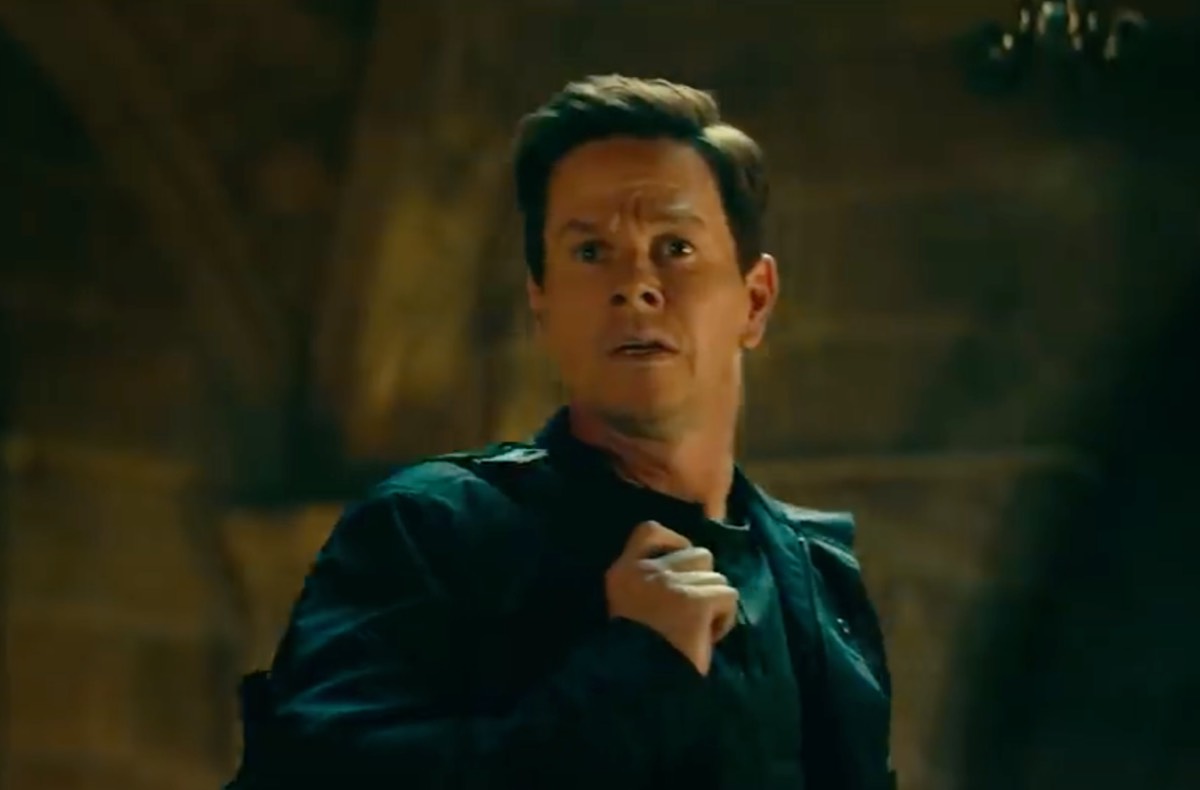


Tom Holland is a dashing young fortune hunter in Uncharted trailer

[embedded content]
Tom Holland and Mark Wahlberg star as fortune hunters in Uncharted, an origin story for the hugely popular video game franchise.

Sony Pictures has released the official trailer for Uncharted, its long-awaited adaptation based on the hugely popular action/adventure video game franchise of the same name. Movies based on video game franchises can be hit or miss, even when the games themselves are awesome. And this one has been stuck in development hell since 2008, with multiple shifts in writers, directors, and cast members. But the finished film also stars Tom Holland and is directed by Ruben Fleischer, who gave us Zombieland and Zombieland: Double Tap. And the trailer has plenty of action and humor, so color us intrigued by Uncharted.

(Some spoilers for the games below.)

Created by Amy Hennig and developed by Naughty Dog, the original Uncharted: Drake’s Fortune debuted on PlayStation 3 in 2007. Several more games followed, all receiving critical acclaim, and the franchise has sold over 41 million copies worldwide to date. The main protagonist is professional treasure hunter Nathan Drake, who claims to be a descendent of English explorer Francis Drake. The other primary characters are Victor “Sully” Sullivan, a former US Navy officer who becomes Nate’s mentor and father figure; investigative journalist Elena Fisher, who becomes Nate’s romantic partner; and Chloe Frazer, a reckless adventurer who serves as a foil to Elena.

After years of delay on the film project, Fleischer signed on as director in January 2020 and managed to wrap filming last October despite even more delays because of the ongoing pandemic. Tom Holland has said the film will be a prequel and will draw inspiration from Uncharted 4: A Thief’s End. In that game’s storyline, we get a flashback to what happened several years before the events of the first game. Nate and his brother Sam travel to Panama to hunt for the lost treasure of a pirate named Henry Avery, and they ally themselves with rival treasure hunter and businessman Rafe Adler. Sam is presumably killed on the adventure.

Mark Wahlberg was originally considered for the role of Nate Drake but aged out of the role. So he's playing Nate's mentor, Sully, instead.
Enlarge / Mark Wahlberg was originally considered for the role of Nate Drake but aged out of the role. So he’s playing Nate’s mentor, Sully, instead.
YouTube/Sony Pictures

Fifteen years after the events of Uncharted 3: Drake’s Deception, Sam shows up to see Nate, who is now married to Elena, and persuades his brother to assist him on one last treasure hunt. Sam’s life is at stake: either the brothers find Avery’s treasure, or Sam will be killed by drug lord Hector Alcázar. The storyline also includes more information about the Drake brothers’ backstory: their historian mother had a theory about the descendants of Drake, and when they got into trouble with the law, the brothers changed their last name to Drake in her honor.

Several of those story elements seem to have been preserved in Fleischer’s film, although the trailer mentions Ferdinand Magellan‘s explorations (rather than Avery’s pirate treasure) and a legendary lost treasure possibly associated with the Portuguese explorer. Per the official premise:

Based on one of the best-selling, most critically acclaimed video game series of all time, Uncharted introduces audiences to the young street-smart Nathan Drake (Tom Holland) and showcases his first treasure hunting adventure with wisecracking partner Victor “Sully” Sullivan (Mark Wahlberg). In an action-adventure epic that spans the globe, the two go in dangerous pursuit of ‘the greatest treasure never found’ while also tracking clues that may lead to Nathan’s long-lost brother.

Fun fact: Wahlberg was originally in the running to star as Nathan Drake, but the film took so long to make, he aged out of the role. Sophia Taylor Ali plays Chloe Frazer, who will also be Drake’s love interest in the film. Antonio Banderas plays a rival “ruthless treasure hunter”—possibly Rafe Adler, although the trailer mentions his family connection to the “House of Moncada.” Tati Gabrielle plays a character named Braddock, who might be the film’s equivalent of Nadine Ross, a South African mercenary in Thief’s End who works for Rafe. There’s no mention in the most recent cast list of anyone playing Elena Fisher, but that doesn’t mean she won’t make an appearance. Sam is mentioned several times in the trailer, so maybe we will eventually see him, too.

Uncharted is slated to hit theaters on February 18, 2022. Netflix and Disney have purchased the streaming rights after the film ends its theatrical run.

Listing image by YouTube/Sony Pictures

https://arstechnica.com/?p=1806591


Stardew Valley’s creator announces pixel-art followup Haunted Chocolatier

On Thursday, Stardew Valley creator Eric Barone dropped a two-minute teaser video for an entirely new game pretty much out of nowhere. The new game, titled Haunted Chocolatier, looks a lot like Stardew Valley, which means it’s a refreshingly lovely homage to all things SNES and Squaresoft.

As Barone’s first new video game since SV‘s 2016 launch, Haunted Chocolatier currently doesn’t have a release date estimate of any kind. To avoid being “tied down to any particular concept of what the game is” before its eventual launch, Barone has not yet finalized Haunted Chocolatier‘s gameplay systems, either. HC‘s reveal came alongside a lengthy FAQ, whose site has been pounded by fans’ immediate interest in the new game, and it clarifies that the game revolves around “a chocolatier living in a haunted castle” who must “gather rare ingredients, make delicious chocolates, and sell them in a chocolate shop.”

If that sounds pedestrian to you, you clearly haven’t gotten sucked into the addictive Harvest Moon homage that is Stardew Valley, which has sold millions of copies in its six years on PC and most console families. (There’s also a board game version.) Like that game, Barone suggests that HC will be an entirely self-made project (programming, art, music, and more), with outside help only coming once the game is finalized and needs help with language translations and ports to other platforms. (As of press time, Barone is only committing to a launch on PC, with other platform announcements to come later.)

Today’s announcement clarifies that HC and SV look similar for intentional reasons: they’re similar enough mechanically to fit into Barone’s self-described “town game” genre. But the newer HC will emphasize “action-RPG” systems, and the trailer shows melee and ranged combat in an outside-of-town wilderness that potentially resembles the SNES classic Secret of Mana. The teaser also shows a number of NPC interactions that hint to a bigger objective than merely collecting ingredients and making and selling treats. (Though if that’s really HC this boils down to, we’ll still bite.)

Barone’s rise from game-making obscurity to beloved indie icon is chronicled at length in the 2017 book Blood, Sweat, and Pixels. In the chapter devoted to Barone, reporter Jason Schreier scrutinizes Barone’s stubborn dedication to endlessly refining SV, even well after its retail launch. Today, Barone admits he is still not finished developing SV, in spite of the game never receiving a paid DLC update on any of its existing platforms. Work on HC, he adds, has been ongoing over “nights and weekends” since some time in 2020. Even wackier, he admits it’s not the only game concept he’s been tooling around with in his spare hours, though he estimates that HC is the one he will “finish first.”

[embedded content]
Haunted Chocolatier announcement trailer.

Listing image by ConcernedApe LLC

https://arstechnica.com/?p=1806545


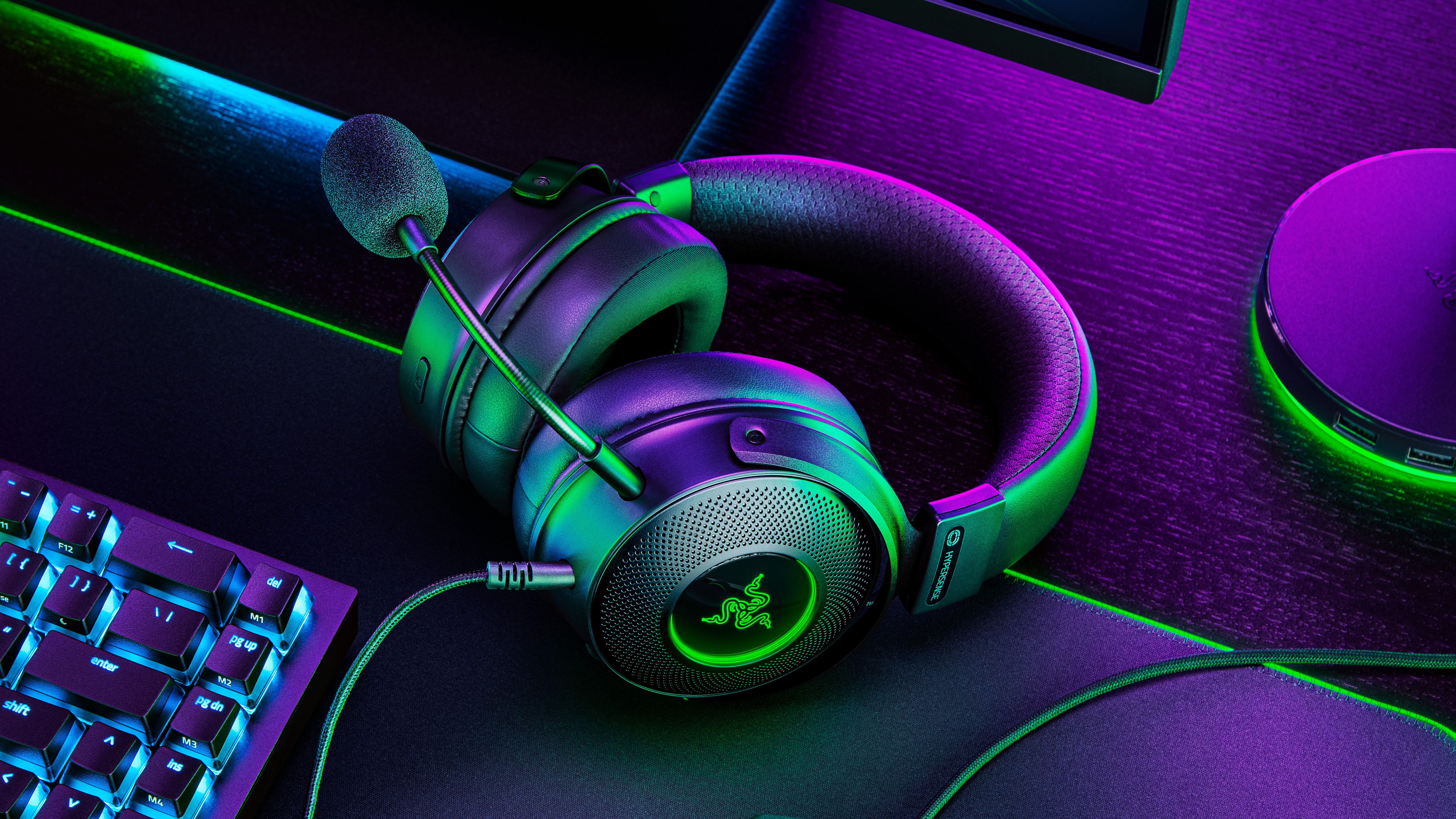
Razer’s new Kraken gaming headsets bring controller-like vibrations to your head

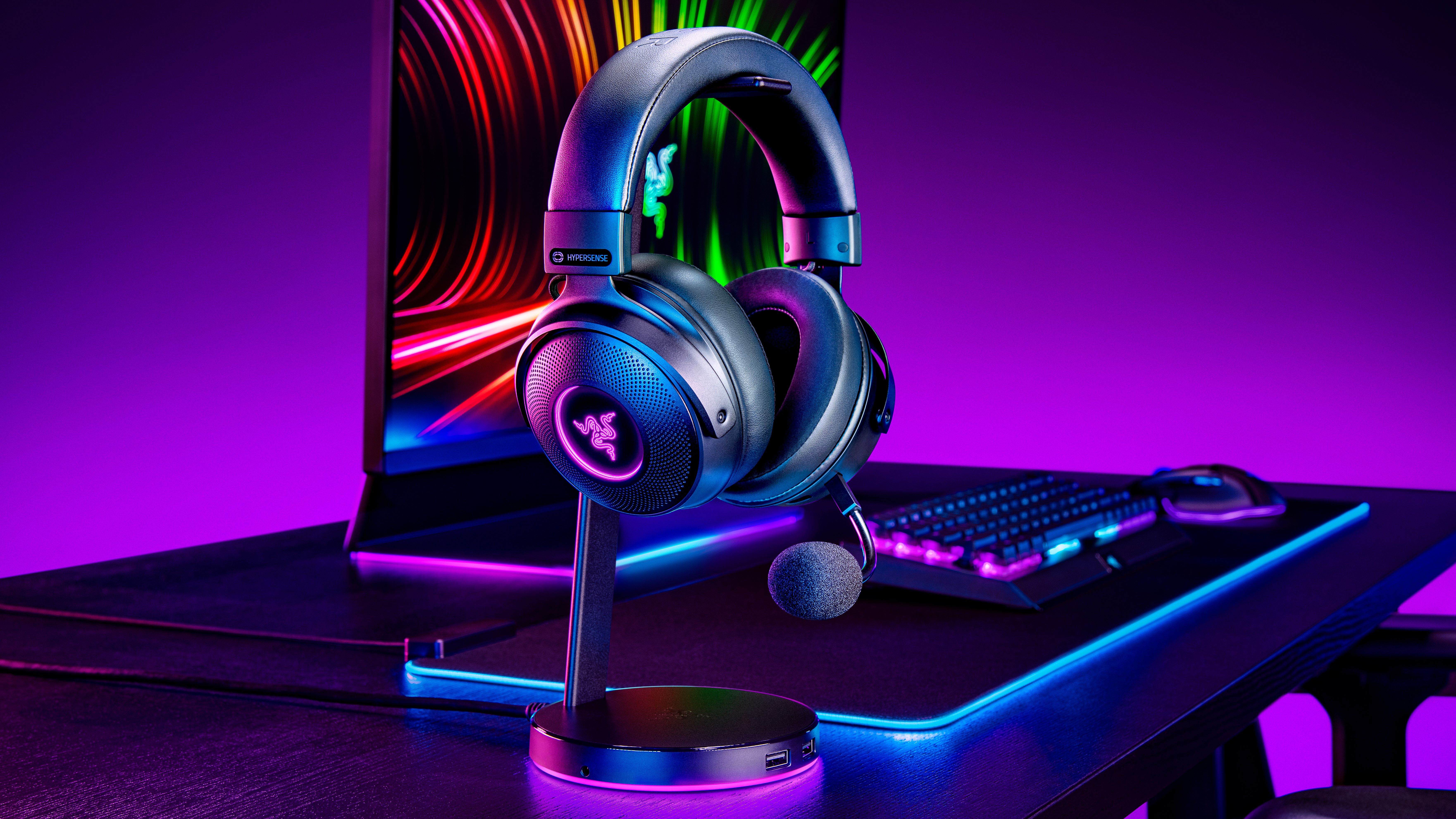
Razer Kraken V3 Pro on headset stand
Enlarge / Wireless Razer Kraken V3 Pro.

There are many different ways to evoke a feeling of immersion with your video game setup. Your choice in monitor shape and size can make virtual worlds seem more real, and responsive peripherals that eliminate lag make your movements more fluid. Audio also has a dramatic effect. Gaming hardware company Razer claims it has upped the ante by applying haptic feedback to gaming headsets, just like you would find in a controller. But do vibrations on your head make your experience more fun?

Razer announced three new headsets today: the Razer Kraken V3, the Razer Kraken V3 HyperSense, and the wireless Razer Kraken V3 Pro. As you might guess by the “V3” nomenclature, these are updates to the Razer Kraken line, which currently also includes the vibration-free Razer Kraken V3 X, among other sets.

Razer Kraken V3 HyperSense.
Enlarge / Razer Kraken V3 HyperSense.

The Kraken V3 HyperSense and Kraken V3 Pro both use haptic feedback. Razer calls the feature HyperSense, and it employs haptic drivers in each earcup. The drivers take “the shape and frequencies of game audio,” as Razer puts it, processes them in under 5 ms, and turns them into vibrations. Digital signal processing covers a frequency range of 20–200 Hz.

Each haptic driver is connected to either the left or right audio channel, depending on which earcup it calls home. The vibrations are supposed to move with game audio from left to right and at varying levels. So if there’s a truck exploding to your left, your left earcup would vibrate—at a force of up to 4.3 g. We’ve already seen this technology in Razer’s Nari Ultimate headset, which is being discontinued to make room for the fancy new Krakens.

Concerned that the feedback will be too much for you? On-ear controls let you set the intensity to high, medium, low, or off. This is a nice consideration that the Nari Ultimate doesn’t offer.

What about actual sound quality?

We won’t know how the headset sounds until we test it, but we do know that Razer is employing its TriForce Titanium 50mm drivers in the set. The technology divides the audio driver into three parts: one for low frequencies, one for highs, and one for mids. The drivers are also coated in titanium to enable higher frequencies without creating distortion. The Kraken V3 doesn’t seem to take advantage of the latter, though. Its frequency response spec tops out at 20,000 Hz, which is very typical for a gaming headset. You can also add surround sound to the headset via THX Spatial Audio, an app owned by Razer.

<a href="https://rassegna.lbit-solution.it/wp-content/uploads/2021/10/razers-new-kraken-gaming-headsets-bring-controller-like-vibrations-to-your-head-4.jpg" class="enlarge" data-height="382" data-width="680" alt="

Diagram of Razer’s TriForce Titanium 50mm audio drivers.”><img alt="

Diagram of Razer’s TriForce Titanium 50mm audio drivers.” src=”https://rassegna.lbit-solution.it/wp-content/uploads/2021/10/razers-new-kraken-gaming-headsets-bring-controller-like-vibrations-to-your-head-2.jpg” width=”640″ height=”360″ srcset=”https://rassegna.lbit-solution.it/wp-content/uploads/2021/10/razers-new-kraken-gaming-headsets-bring-controller-like-vibrations-to-your-head-4.jpg 2x”>

Enlarge /

Diagram of Razer’s TriForce Titanium 50mm audio drivers.

I’ve tried the TriForce drivers in the Razer BlackShark V2. In that headset, they delivered layered and detailed audio across games and music. But the new Krakens are tuned to a smaller frequency response (20–20,000 Hz versus 12–28,000 Hz on the BlackShark V2), and the headsets are constructed differently.

The Kraken V3 HyperSense will be available for $130, and the wireless Kraken V3 Pro will go for $200. If you’re not sold on the idea of a vibrating cranium, there’s also the similarly built Kraken V3. It skips the haptic feedback and costs $100.

Note: Ars Technica may earn compensation for sales from links on this post through affiliate programs.

https://arstechnica.com/?p=1806355


PS5 faceplate or IP violation? The law behind Dbrand’s “Darkplates”

PS5 faceplate or IP violation? The law behind Dbrand’s “Darkplates”

When gaming peripherals company Dbrand started selling its custom black PS5 faceplates in February, its website cheekily suggested that its efforts were “totally legal,” and it urged anyone who thought otherwise to “go ahead, sue us.” Now, sure enough, the company has been forced to change the design of its custom plates in response to legal threats from Sony.

Sony’s threats aren’t that surprising, especially considering that the company sent a cease-and-desist letter to console customization company The PlateStation last November. But the back-and-forth raises important legal questions about patent protections, brand confusion, and who actually controls the aftermarket for console parts.

Getting in shape

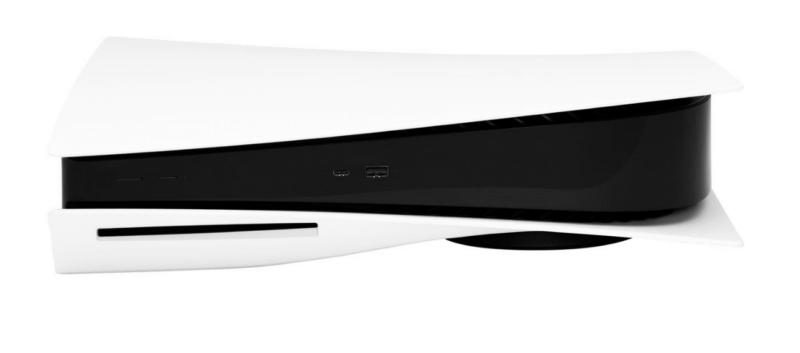
Sony’s “objection to dbrand’s Infringement of Sony Interactive Entertainment LLC’s Intellectual Property” letter lays out a few problems that the console maker sees with the specific “Darkplate” design Dbrand had been selling before this week. Chief among them was the distinctive shape of the plates themselves, which closely matched those of the stock PS5 faceplates.

The letter says:

Thanks to our client’s extensive marketing of the PS5 console, its commercial popularity, and its massive earned media coverage, the console’s unique product configuration, including without limitation the two vertical faceplates, has become exclusively associated with SIE in the minds of consumers and has come to symbolize considerable goodwill.

Dbrand’s Darkplates, which “replicate SIE’s protected product design,” thus “violate our client’s intellectual property rights in the distinctive product design,” Sony wrote.

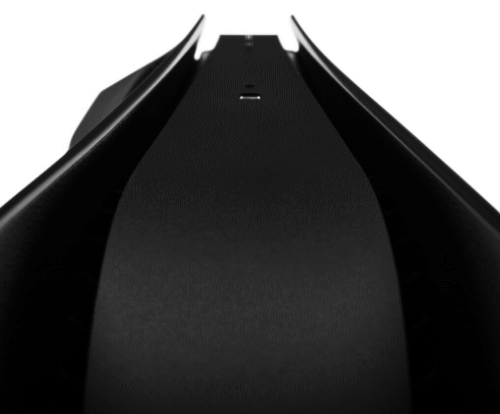
Another angle of the black version of the Dbrand Darkplate's initial design.
Another angle of the black version of the Dbrand Darkplate’s initial design.

This is probably Sony’s strongest legal point, according to Michigan attorney and Virtual Legality host Richard Hoeg. The shape of the PS5, including its faceplates, is legally protectable in the US by a design patent and internationally by “industrial design protection.” These constructs protect the “artistic and ornamental” (i.e., non-functional) parts of the console design, Hoeg told Ars.

To offer full protection, though, the patent first has to be granted. Sony didn’t file for its US design patent on the PS5’s shape until November 6, 2020, just days before the console launched. That patent was finally granted by the US Patent and Trademark Office on October 5, which could explain Sony’s decision to threaten Dbrand now, after months of sales.

Surprisingly, though, Sony’s letter to Dbrand doesn’t mention the specific design patent involved, a bewildering omission that Dbrand called out in a response on Reddit:

Under Canadian law [Dbrand is a Canadian company], the onus is on the party alleging infringement to demonstrate that the defendant’s actions infringe on a particular patent. As Sony did not declare rights over any published design patent in the C&D—instead focusing on pending patents and a litany of other complaints—we elected to focus on whether an organization should be allowed to sell replacement parts for hardware that consumers already own.

Falling out of shape

Dbrand went on to compare itself to a maker of aftermarket car replacement parts. “As a consumer, you have the right to choose which parts you’re using to modify, upgrade, or repair your F-150,” the company said. “Shouldn’t you be allowed the same for your PlayStation 5?”

That’s generally true. But because of the design patent, any replacement plate from Dbrand has to show “substantial deviation” from the shape of the stock PS5 faceplates to avoid an infringement claim, Hoeg said. Dallas Attorney Mark Methenitis echoed that sentiment, telling Ars that Dbrand’s replacement plates would be legal only if they “weren’t a completely identical shape” to the stock PS5 design.

As originally designed, that’s a test Dbrand’s Darkplates would have likely failed. “I believe the original version of the Darkplates product likely was infringing on the Sony patent once issued,” Hoeg said.

Dbrand's "Darkplate 2.0" design is much more distinct from Sony's patent.
Enlarge / Dbrand’s “Darkplate 2.0” design is much more distinct from Sony’s patent.

After briefly halting sales earlier this week, Dbrand is now attempting to get around its legal problems with “Darkplates 2.0.” The product is marketed with a cocky “Checkmate, lawyers” tagline. Dbrand says it is “cutting corners” on the new design, which features a more rounded top edge and new vents that make the product easier to distinguish from the stock PS5 part. “We may be in a maximum security prison by the end of the year, but at least your PlayStation 5 will have an indisputably original design,” the company wrote with tongue firmly in cheek.

“By changing the corners and cutting a hole in the shell, I personally believe that Dbrand has done enough to distinguish the size and shape of its offering, but reasonable minds can differ, and I can never claim to be able to read the minds of a judge or jury considering the issue,” Hoeg said. “Particularly ‘downstream’ [after initial sale], I think directly copying the curvature… of the Sony version could have confused the average third party.”

https://arstechnica.com/?p=1806436


Before the new version, let’s revisit 1984’s Dune—the greatest movie ever made

Frank Herbert’s 1965 sci-fi novel Dune gets a new film adaptation—this one helmed by Denis Villeneuve (Arrival, Blade Runner 2049)—later this month. But before Ars Technica reviews the movie, there’s the matter of its predecessor: 1984’s Dune, made by a then up-and-coming filmmaker named David Lynch.

Detractors call Lynch’s saga—a tale of two noble space families 8,000 years in the future, fighting over the most valuable resource in the universe amidst sandworms the size of aircraft carriers—incomprehensible, stilted, and ridiculous. It lost piles of money. Yet fans, especially in recent years, have reclaimed Lynch’s film as a magnificent folly, a work of holy, glorious madness.

So which group am I in? Both. Am I about to describe Dune as “so bad it’s good”? No, that’s a loser take for cowards.

I once half-heard a radio interview with someone speculating that the then-current artistic moment was not “so bad it’s good,” and it wasn’t “ironic” either—it was actually “awesome.” (I didn’t catch who he was, so if any of this sounds familiar, hit me up in the comments.) Art can speak to you while at the same time being absurd. The relatable can sometimes be reached only by going through the ridiculous. The two can be inseparable, like the gravitational pull between a gas giant and its moon—or Riggs and Murtaugh.

The example the radio interviewee gave was of Evel Knievel, the ’70s daredevil who wore a cape and jumped dirt bikes over rows of buses. Absurd? Heavens, yes. A feat of motorcycling and physicality? Absolutely. But beyond that, we can relate to Knievel’s need to achieve transcendence at such a, shall we say, niche skill. We might also marvel at our own ability to be impressed by something which should be objectively useless but is instead actually awesome.

A more contemporary example might be Tenet. It’s a relentless international thriller about fate and climate change and the need for good people to hold evil at bay. But it’s also a “dudes rock!” bromance between Two Cool Guys in Suits spouting sci-fi mumbo-jumbo. It can’t be one without the other.

Travel without moving

I love Dune because it feels just as alien as something set 80 centuries in the future should. (To put that span of time in context, remember that 8,000 years in the past would still be 3,500 years before the Great Pyramids were built.) To create this feeling, Lynch blurs the novel’s plot and characters into a Spaceballs “ludicrous speed” lightshow.

Dune is the dream you have after reading a book about the distant future while listening to a 90-minute prog-rock album. Also, you may have done a pile of blow before falling asleep, because Sting is strutting around in Batman’s speedo.

Characters drift in and out, and their identities and relationships are unclear. A bear-sized scrotal mutant can move spaceships with drug-induced mind-magic. Soldiers bring drums to a knife fight. Plot threads are left untied. Brad Dourif has breathtaking eyebrows. Cast members deliver their inner thoughts via whispered, close-to-the-mic voiceovers worthy of an ASMR YouTube channel. The pacing is leisurely, almost hypnotic. You’re here for the wild sights, the rococo spaceships, the high-collared uniforms, and conversations so formal they border on liturgical. Just sit back and let them wash over you.

In other words, this not exactly how Universal Studios intended to spend $40 million in 1980s money.

https://arstechnica.com/?p=1802795


Review: Needle in a Timestack explores how love endures when time is in constant flux

<img src="https://rassegna.lbit-solution.it/wp-content/uploads/2021/10/review-needle-in-a-timestack-explores-how-love-endures-when-time-is-in-constant-flux.jpg" alt="Oscar nominees Leslie Odom, Jr. and Cynthia Erivo co-star as a husband and wife who fear being separated by a warped time line in Needle in a Timestack, a new film from director John Ridley.”>
Enlarge / Oscar nominees Leslie Odom, Jr. and Cynthia Erivo co-star as a husband and wife who fear being separated by a warped time line in Needle in a Timestack, a new film from director John Ridley.

A happily married couple finds their life together threatened by a romantic rival who travels back in time to alter their shared past in Needle in a Timestack, a new science fiction film directed by John Ridley. Sure, it’s not the most compelling title, but Ridley has created a flawed but thought-provoking love story—featuring moving performances by two Oscar nominated actors, Leslie Odom, Jr. and Cynthia Erivo—that poses an existential question: how can love endure when time itself is constantly in flux?

(Some spoilers below for the short story and the film, but no major reveals.)

The film is based on a 1966 short story of the same name by Hugo and Nebula award-winning science fiction author Robert Silverberg.  Time travel is a common theme in Silverberg’s work, most notably in novels like House of Bones and Hawksbill Station. The story goes that Silverberg’s inspiration for “Needle in a Timestack” came during a science fiction convention, when a friend tried to rebuff a would-be interloper by telling him, “Go away, kid, or I’ll change your future.” Silverberg thought his friend should have threatened to change the interloper’s past, and realized he had a terrific premise for a story.

The technical term for time travel in Silverberg’s story is “phasing,” and for the main protagonist, Mikkelsen, the tell for something having been altered in his past is “a taste of cotton” in his mouth. The person trying to alter the past—and undo his marriage to his wife, Janine—is Tommy Hambledon, who once dated Janine and resents the fact that she married Mikkelsen instead.

Orlando Bloom plays Nick's romantic rival, Janine's ex-husband Tommy.
Enlarge / Orlando Bloom plays Nick’s romantic rival, Janine’s ex-husband Tommy.

The couple has a checklist of facts about their life together, which they review every time one of them senses a phasing has occurred to make sure nothing has changed. (There’s a window of two to three hours before people forget their previous memories after a time-phase changes their past.) The premise reminds me a bit of the 1997 X-Files episode, “Synchrony,” in which a scientist who helped invent time travel returns to the past to kill his younger self, because the future has become a nightmarish world where absolutely nothing is permanent.

Ridley’s contemplative new film hews pretty closely to the original short story, focusing on the romantic triangle at its center. Per the official premise:

If love is in the form of a circle, what lines would you cross to be with your soulmate? In this gripping, near-future love story directed by Oscar-winner John Ridley (12 Years a Slave, American Crime), Nick and Janine (Oscar nominees Leslie Odom, Jr. and Cynthia Erivo) live in marital bliss, until Janine’s ex-husband (Orlando Bloom) warps time to try to tear them apart using Nick’s college girlfriend (Freida Pinto). As Nick’s memories and reality disappear, he must decide what he’s willing to sacrifice in order to hold onto—or let go of—everything he loves. Can love endure in a future where time is fluid, and all of life may be just an illusion?

Instead of the telltale taste of cotton, when a time phase hits in the film, it’s visualized as a kind of undulating wave that washes over everyone and everything. Nick is in a meeting at his architecture firm when one hits, and the boss calls for a break so everyone can call home to run through their personal checklists and make sure nothing major has changed. Everyone lives in constant fear of getting hit by an especially large time wave. Typically, it’s just the super-rich who can afford to go on “time jaunts,” and while tinkering with the timeline is forbidden—well, it’s just human nature. People are going to tinker, with no way of knowing how even a small change can ripple through not just their lives, but the lives of everyone else. And within a few hours of the shift, people won’t even remember things were ever any different.

A massive time phase brings Nick to a new timeline where he never met Janine.
Enlarge / A massive time phase brings Nick to a new timeline where he never met Janine.

Initially, the changes are minor. Nick and Janine have a dog in one timeline, and a cat in the other, yet both are named Charlie. But Nick becomes increasingly anxious and obsessed with the idea that Tommy is trying to produce a timeline where Nick and Janine never met, and his moodiness begins to strain the marriage. And then a major time phase hits, and Nick comes to in the middle of nowhere. When he finally reaches Janine, he discovers that she is still married to Tommy, and now the clock is ticking. Can he restore their original timeline, before his memories of Janine disappear?

Ridley has done a terrific job of creating a believable near-future world. It mostly looks exactly like our world today. Well-heeled urban professional still hold lavish parties with live jazz bands, there are still malls with Foot Locker and Mrs. Fields Cookies outlets, and Nick drives a Tesla. But there are subtle differences, especially in the technology. There are smart phones with vocal assistants like Siri or Alexa, but they’re square-shaped and the design has reverted back to flip phones.

There are laptop computers, flat-screen displays, and tablets, but Janine, for instance, scrolls through her photographic archives using a wireless stylo, without ever having to touch the screen. Those small changes are subtly highlighted by Nick’s fascination with vintage tech: friends and family know the perfect birthday gift is a Sony Walkman, or a miniature portable red radio.

One small shift in the timeline, and Tommy marries Alex (Freida Pinto) instead.
Enlarge / One small shift in the timeline, and Tommy marries Alex (Freida Pinto) instead.

And memory retrieval services, akin to storing things in the cloud, have prospered as people desperately try to ensure that their pasts will be preserved. Still, a really big time phase will wipe out even those stored files, and the guaranteed refund is small comfort to those unfortunate enough to experience such a loss.

What makes this film work are the stellar, sensitive performances of its cast: Odom, Jr., Erivo, and Bloom, whose every emotion plays across their faces, enlivening what might otherwise be fairly inert scenes. Their skill also masks the occasionally cheesy dialogue that teeters on the edge of pretentiousness.

That said, it’s a challenge to build a feature film around the slim premise (however captivating) of a short story, just like it’s a different kind of challenge to condense a huge, sweeping science fiction epic into a two-hour film. Ridley has chosen to keep his focus narrow, with minimal characters and settings. Apart from the central trio, the only other notable characters are Nick’s sister Zoe (Jadyn Wong) and Nick’s ex-girlfriend, Alex; everyone else is just ornamental window dressing moving through the background.

Ridley’s decision certainly enhances the emotional stakes—Nick and Janine’s strained relationship is a deeply personal microcosm of the constant threat that everyone in this brave new world faces on a daily basis—but it also makes the film feel a bit thin and stretched out over its 1:51 run time. The pacing drags a bit at times, and because this is ultimately a love story, we don’t really get a sense of just how horrifying a world like this would be, where a sudden time shift, beyond one’s control, can irrevocably alter one’s life  in seconds. But the film is visually lovely, and we do want to root for Nick and Janine (and even Tommy) to land in a timeline where everyone is happy. It’s certainly a worthy addition to Ridley’s growing oeuvre.

Needle in a Timestack is now playing in select theaters and is also available on demand.

[embedded content]
Official trailer for Needle in a Timestack.

https://arstechnica.com/?p=1804404


Robert Pattinson broods and batters his way through new The Batman trailer

[embedded content]
Robert Pattinson stars as billionaire Bruce Wayne, aka the Caped Crusader, in director Matt Reeves’ forthcoming film, The Batman.

Robert Pattinson is appropriately dark and brooding and beating up bad guys in the latest trailer for The Batman, which debuted at DC FanDome this weekend. Directed and co-written by Matt Reeves, the film’s release has been delayed multiple times but will finally hit theaters next March.

As I’ve written previously, the original plan was to set the film within the DCEU, after the events of Justice League. But as Warner Bros. was rethinking the shared-universe model for its superhero films in favor of standalone films and franchises, Ben Affleck announced he was stepping down as director, and the studio replaced him with Reeves. Affleck would eventually withdraw from the project altogether, following his divorce from Jennifer Garner and a stint in rehab for alcohol abuse.

Reeves brought a very different vision to The Batman. He said he wanted it to be “an almost noir-driven, detective version of Batman,” focused on Bruce Wayne’s second year fighting crime as the Caped Crusader rather than once again retelling the character’s origin story. 

Reeves said that the plot would follow a series of murders, revealing the history of corruption in Gotham and how Bruce’s family is linked to that corruption. The classic bad guys—the Riddler, Penguin, Catwoman—are also in the early stages of their development into full-fledged villains. Reeves has cited Alfred Hitchcock as a major influence on the overall look and feel of his film, as well as Chinatown, The French Connection, and Taxi Driver.

Filming was paused in March 2020 due to COVID-19—dialect coach Andrew Jack died from the disease shortly thereafter—after a quarter or so of The Batman had been shot. And three days after filming resumed in September 2020, Pattinson tested positive for COVID-19, briefly shutting down production again. Filming didn’t wrap completely until March of this year, and the studio pushed the film’s release to 2022 as a result.

In addition to Pattinson, the cast includes Jeffrey Wright (Westworld) as Commissioner Jim Gordon; Colin Farrell (Fantastic Beasts and Where to Find Them) as Oswald Cobblepot/Penguin; Andy Serkis (The Lord of the Rings trilogy) as Bruce Wayne’s butler and mentor, Alfred Pennyworth; John Turturro (Barton Fink, The Big Lebowski) as crime boss Carmine Falcone; Paul Dano (Okja, 12 Years a Slave) as Edward Nashton/Riddler; and Zoë Kravitz (X-Men: First Class) as Selina Kyle/Catwoman. (Kravitz voiced the character in The Lego Batman Movie.)

Zoë Kravitz plays Selina Kyle, aka Catwoman
Enlarge / Zoë Kravitz plays Selina Kyle, aka Catwoman
YouTube/Warner Bros

The first teaser dropped during last year’s DC FanDome, and the Warner Bros. CinemaCon panel this past August featured a brief sizzle reel of new footage. This latest trailer opens with the arrest of Dano’s Riddler in a coffee shop, although we don’t see his face—just the question mark pattern in the foam of his cappuccino. We get a bit more footage of Batman beating up street goons, some serious sparkage with Selina/Catwoman, and a fiery confrontation with Oswald Cobblepot. But it’s the Riddler who seems to dominate the proceedings, with an ominous voiceover: “What’s black and blue and red all over? You.”

In other Batman news, Warner Bros. dropped a short sneak peek of footage for The Flash film that’s been in development for a good 17 years. It’s loosely based on the 2011 comic crossover story Flashpoint, in which Flash (real name Barry) travels back in time to prevent the death of his mother and (oops) accidentally unravels space and time as a result. This new footage confirms that. Ben Affleck is rumored to reprise his Batman, along with Michael Keaton, who last played the Caped Crusader in 1992’s Batman Returns. Yep, we might be getting a multiverse version of the DCEU.

We don’t see the face of either Affleck or Keaton in this footage, but we do see Barry approach Batman from behind and ask, “Are you in?” And that does sound like Keaton in the voiceover. The studio doesn’t seem to have released the footage on its own YouTube channel, but a version is embedded below. You can watch the full streamed DC FanDome event here.

The Batman is slated for release on March 4, 2022. The Flash is scheduled to hit theaters on November 4, 2022.

[embedded content]
Batman returns in a teaser-trailer for the forthcoming film The Flash.

Listing image by Warner Bros.

https://arstechnica.com/?p=1804748


John Cena shows off comedic chops in extended teaser for Peacemaker series

[embedded content]
John Cena reprises his role as Peacemaker for the forthcoming HBO Max spinoff series Peacemaker.

John Cena’s Peacemaker was among the standout characters in The Suicide Squad‘s star-studded ensemble cast, so we were intrigued by the news that a spinoff series was in the works. We knew that Peacemaker was being written and directed by James Gunn (Guardians of the Galaxy), and that the series will explore the origins of the character and his subsequent missions. And now we have our first look, thanks to HBO Max, which released an extended teaser trailer for the series during the DC FanDome event.

(A couple of spoilers for The Suicide Squad below.)

Gunn wrote the series last summer during the COVID-19 lockdown, just for fun, but then DC Films approached him about a possible spinoff series for one of the characters in The Suicide Squad. I’m not sure Peacemaker would have been my first choice—Cena’s performance was terrific, but I haven’t quite forgiven the character for the Very Bad Thing he did in that film—but Gunn’s instincts are pretty impeccable, and he clearly felt there was more story to tell.

“He’s not an evil person, he’s just a bad guy,” Gunn told Variety in August. “He seems sort of irredeemable in the film. But I think that there’s more to him. We didn’t get a chance to know him [in The Suicide Squad] in the way we get to know some of the other characters. And so that’s what the whole show is about.” HBO Max was sufficiently impressed with his take that it ordered Peacemaker straight to series.

The eight-episode series is set after the events of The Suicide Squad, specifically after the post-credits scene, in which we learned that Peacemaker had survived what had appeared to be a fatal shooting. That scene hinted that the US government still had some use for him. The teaser makes that hint explicit, as Peacemaker (aka Christopher Smith) is recruited by Clemson Murn (Chukwudi Iwuji) for another mission in order to avoid going back to prison.

That mission is even less noble than the one he was assigned by Amanda Waller: he’s basically an assassin, but hey, at least he’s only killing bad people. He gets assistance from John Economos (Steve Agee)—warden of the Belle Reve penitentiary—NSA agent and former Waller aide Emilia Harcourt (Jennifer Holland), and new team member Leota Adebayo (Danielle Brooks). The cast also includes Robert Patrick as Peacemaker’s crusty father, Auggie Smith (who thinks his son is a “nancy-boy”); Freddie Stroma as Adrian Chase, aka Vigilante, a district attorney who fights crime and has rapid healing abilities; and Nhut Le as Judomaster.

The teaser is heavy on the cheesy, off-color bro-humor, including shots of Peacemaker bending over to to shoot at a target during practice, as well as having Vigilante fire at a bottle held at groin level. Then there’s the whole bizarre conversation about “butt babies.” But in Gunn’s capable hands, the irreverent, over-the-top tone is note-perfect—very much in line with the character and with the tone of The Suicide Squad (which I loved)—and we already know Cena has a remarkable gift for physical comedy, shown to good advantage here. Honestly, we’ll be tuning in to just watch him dance in his apartment in his underwear, and bond with a bald eagle. (“Oh my god. He’s hugging me.”)

Peacemaker debuts on January 13, 2022, on HBO Max.

John Cena's Peacemaker gets his own spinoff series on HBO Max and a brand new team—including a bald eagle because why not?
Enlarge / John Cena’s Peacemaker gets his own spinoff series on HBO Max and a brand new team—including a bald eagle because why not?
YouTube/HBO Max

Listing image by YouTube/HBO Max

https://arstechnica.com/?p=1804724


Star Trek: Exploring New Worlds exhibit comes to LA’s Skirball Center

Back in 2016, the Museum of Pop Culture (MoPOP) in Seattle unveiled an immersive new exhibit, Star Trek: Exploring New Worlds, in its Science Fiction Museum and Hall of Fame–a tribute to the hugely influential long-running franchise. The exhibit embarked on a national tour two years later and has been traveling around the country ever since. And now it’s come to the final stop on its journey: the Skirball Cultural Center in Los Angeles, California, where Gene Roddenberry first created his visionary series, Star Trek: The Original Series (TOS).

“Star Trek’s vision resonates deeply with the Skirball’s commitment to using the power of arts and storytelling to help build a society in which everyone belongs,” museum director Sheri Bernstein said during the press preview last month.

Among the highlights of the exhibit are Captain Kirk’s command chair, and the wooden helm and navigation console from TOS, fully restored. There are plenty of props: different designs of tricorders, communicators, phasers, and P.A.D.Ds; a model of a Borg cube; and lots of weaponry, including a Klingon disruptor pistol.  

And of course, there are many, many models of the various spacecraft featured in the franchise over the decades, including filming models for the Enterprise, the USS Excelsior, and the Deep Space Nine space station. “I love spaceship models,” MoPOP’s Brooks Peck, curator of the exhibit, admitted. “Now it’s all digital, but back then it was all about plastic and wood models, so there’s a wonderful craft to those pieces.”

Peck is also proud of the fact that the exhibit showcases the captain’s uniforms from all the major Star Trek TV shows. His personal favorite? Kathryn Janeway from Star Trek: Voyager. “Best Star Trek captain ever,” Peck joked. “I will fight you over that.” There are also many original costumes worn by cast members of the various series, from TOS —including the tunic worn by evil Captain Kirk in the episode “Mirror, Mirror”—all the way through to Star Trek: Discovery.

On the interactive side of things, visitors can crawl through a Jeffries tube, or be “assimilated” by the Borg. A transporter simulation lets people create short films of themselves beaming down to to the surface of an alien planet. There’s a station where one can listen to people reminisce about their favorite Star Trek films and shows, and what the franchise has meant to them. And of course, there are tons of tribbles lurking throughout, for eagle-eyed visitors who want to try and spot them.

In his press preview remarks, Peck emphasized that the characters and themes of TOS were quite radical when it first aired in 1966. This was a time when the Cold War was in full swing, and there was a great deal of racial tension in the US, despite passage of the Civil Rights Act in 1964 and the Voting Rights Act the following year. This was the broad cultural backdrop against which Captain Kirk and the crew of the USS Enterprise had their adventures, all infused with Roddenberry’s optimism for the future.

“Roddenberry believed not that we would get past our differences, but that we would, in fact, embrace our differences, in the sense of diversity,” said Peck. “Sadly, this is a rough time in this nation. We’re seeing a lot of division again. So I’m pleased that we can take some time to look at Star Trek, and its idea of inclusion and working together to build a better and just society, and to hold that up in a fun, artistic form. What Star Trek brings is this optimistic vision of the future that is really inspiring to people.”

Laura Mart, managing curator for the exhibition, also expressed her hope that the exhibit would channel the original Star Trek ethos, ending her remarks with an especially apt quote from Roddenberry:

I believe in humanity. We are an incredible species. We’re still just a child creature, we’re still being nasty to each other, and all children go through those phases. We’re still growing up. We’re moving into adolescence now. When we grow up, man, we’re going to be something.

Listing image by Skirball Center/MoPOP

https://arstechnica.com/?p=1796392