Metal Gear, Silent Hill, and Castlevania could return in 2022, allegedly
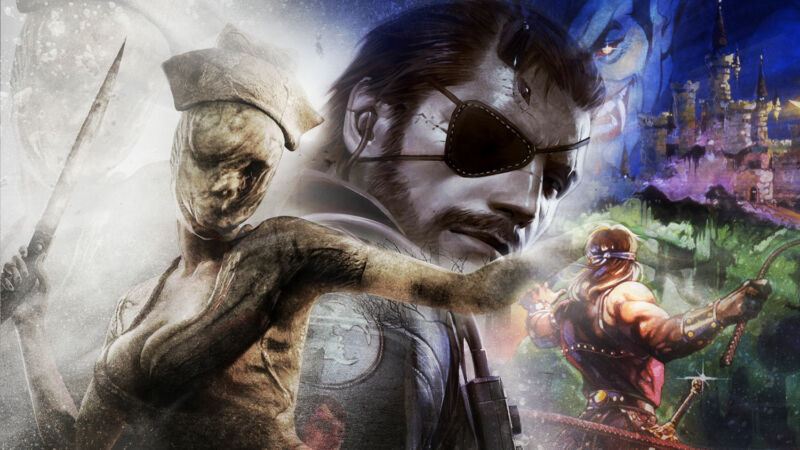
Metal Gear, Silent Hill, and Castlevania could return in 2022, allegedly
Collage by Aurich Lawson

Konami is rumored to be bringing back some of its most classic—and long dormant—series, including Metal Gear and Silent Hill, with multiple new titles set to be revealed in 2022.

The embattled Japanese publisher and developer has been largely inactive since pivoting to focus on mobile games in 2015. But as reported by VGC, it allegedly has several large-scale projects currently in production. Anonymous sources told the news site that a “reimagining” of Castlevania is being made internally in Japan with help from “local external studios,” while outside developers are working on new entries for Metal Gear and Silent Hill.

Could it be true?

Beyond Konami proper, the Metal Gear project is alleged to be a remake of 2004’s Metal Gear Solid 3: Snake Eater, headed up by the Singapore-based outfit Virtuos. The auxiliary studio has recently worked on the Switch ports of Dark Souls Remastered and The Outer Worlds, and it otherwise offered development support in various capacities on hit series like Uncharted, Call of Duty, and Battlefield. (Last November, rumors began circulating that it was actually Bluepoint Games that was working on a remake of 1998’s Metal Gear Solid, which continued until the studio confirmed this week its next project will be an original game.)

Remastered editions of classic Metal Gear Solid titles for modern consoles are also being planned, VGC was told.

As for Silent Hill, the outlet’s sources said that multiple games are in the works externally, with one of them outsourced to a “prominent Japanese developer.” If true, this seemingly verifies the smoke from fires lit by multiple industry leakers over the last year claiming that Konami’s beloved horror series was being primed to return.

The publisher also revealed in a June statement that it had entered into a strategic partnership with The Medium developer Bloober Team (a game with a soundtrack co-written by Silent Hill veteran Akira Yamaoka), though thus far no games have been officially announced from this alliance. The series has not had a mainline entry since 2012’s Silent Hill Downpour, which had been outsourced to a western studio and was poorly received.

A tarnished legacy

The recent whispers about Silent Hill have been a particular sticking point for fans. Konami’s perceived ambivalence for its own games—with a track record of inactivity and lackluster releases that goes back years—has left its reputation in ruins. And really, the company’s trajectory over the past six years has arguably been one of the wilder falls from grace in modern video game history.

The inflection point happened in 2015. In the wake of a bitter falling out with Metal Gear creator Hideo Kojima, Konami removed the director’s name from the soon-to-be-released Metal Gear Solid V and cancelled his in-development Silent Hills revival. After several botched attempts by western studios, Kojima’s name lent weight to the notion of rescuing Silent Hill from its limbo state—and players were especially taken after P.T., a terrifying proof-of-concept teaser he had developed for PS4, released as a free download on the PlayStation Network in August 2014.

Shortly after it confirmed Silent Hills had been cancelled in April 2015, Konami also removed P.T. from PSN. The demo has since taken on almost mythic status as a piece of video game history, confined to PS4 consoles with it already on their hard drives. The move sent prices for the consoles with the demo installed skyrocketing on ebay and even led hobbyists to resurrect it in other forms.

In May, more bad news hit that Konami was winding down major game development in favor of mobile titles as part of a corporate restructuring, information that the publisher itself then pushed back on in an open letter to Ars Technica.

The following year saw a resuscitation of sorts for Metal Gear, but not in a form that anyone asked for. Instead, it released a trailer with lavish, remade scenes from Metal Gear Solid 3—which was being repurposed as a pachinko gambling machine. (Pachinko and health clubs are among the more diverse business elements of the company’s multi-pronged business overseas.)

A month later came an announcement for a “sequel” to Kojima’s critically-acclaimed MGSV, except it was multiplayer-focused, took place in a non-canonical alternate dimension timeline, and featured melee combat against hordes of crystalline zombies. Fans were not pleased with these developments.

Over the summer, the publisher announced it would skip E3 2021, citing a number of projects in active development that weren’t ready to be shown. Should VGC’s report prove accurate, Konami plans to reveal its rumored roster at major industry events next year, barring COVID-related complications.

If any of these rumblings bear fruit, they could mark the beginning of a huge comeback for Konami. It feels entirely possible that someone over there has been closely watching the recent rise of Capcom—which has had hit after hit since it rebooted Resident Evil in 2017 with Resident Evil 7, a game that seemingly changed the company’s then-flagging fortunes—and hopes to learn from it.

https://arstechnica.com/?p=1800174



Venom 2 film review: Let there be (mostly) boredom

My favorite parts of underwhelming films come when on-screen characters say the insulting things we, the audience, are all thinking. Out of all the modern comic book-iverse characters to hand these honors to, none relishes this duty better than Venom in his latest sequel, Let There Be Carnage.

“This guy makes zero sense,” the CGI beast, voiced by Tom Hardy, blurts after one puzzling dialogue exchange. He’s even harsher to his real-life co-star Woody Harrelson in a climactic kiss-off, exclaiming “Fuck this guy!” after an utterly tone-deaf confession.

That’s mostly what Venom: Let There Be Carnage has going for it: a willingness to let Hardy off his leash and channel his id. Whether he’s going for violence or compassion in his beast form, it’s hilarious stuff. But the fun only reigns for about 30 minutes before the production loses momentum, all while failing to make up its mind on whether to deliver an overwrought plot or throw logic out the window.

A positive feedback loop, via chicken brains

What exactly has Eddie Brock (played by non-CGI Hardy, Mad Max: Fury Road) been up to since the first Venom film? It’s not really clear, beyond coexisting with the needy, obnoxious Venom, who apparently only subsists on brains and chocolate. Keeping Venom sated isn’t going well, since Brock sticks to a Terminator 2-like rule: don’t kill people.

We eventually learn, after the fact, that Brock’s work in journalism has dried up but he’s granted a lifeline by a detective (Stephen Graham, The Irishman). Cletus Kasady (Harrison), a serial killer on death row, will only grant an interview with Brock for some reason, no other reporters—and the razor-thin logic goes down like this, verbatim.

“Why me?”
“I like you.”
“OK, it’s a deal.”

Kasady then loses his mind further when Brock’s initial interview turns up clues about Kasady’s years of murders, which transforms his life-in-prison sentence to an execution. The criminal quickly vows revenge. (Maybe hire a PR firm instead of spilling secrets to a journalist next time, Kasady.) It’s here that we get any semblance of a positive feedback loop between Venom and Brock: Venom’s superpowers proved essential in cracking the case, and in exchange, he gets Brock’s help finding and eating precious chicken brains. This concept is no less weird when acted out in real time.

An all-too-brief Looney Tune

This sequel hits the ground running because it opens relishing the inherent comedy in the Brock-Venom relationship, as opposed to that fun taking far too long to develop in the first film. Each half demonstrates a clueless neediness for the other. There’s lots of announced annoyance and “I don’t need you” banter, but all the while they stick around through each other’s nonsense in order to fulfill this violently codependent friendship. This symbiosis creates hilarious circumstances along the way.

I had high hopes at the outset that we’d get something in the way of “Detective Venom,” between the duo’s superpowered sleuthing work (full of Venom insulting Brock) and their split-personality chats with either the sniveling detective or an old flame (Michelle Williams, returning as Anne Weying). Director Andy Serkis has a CGI blast in these moments, allowing Venom to animate through and beyond Hardy’s body to create a delightful real-life Looney Tunes equivalent.

But the word “Carnage” in the title alludes to a popular Venom spinoff villain, and that means V:LTBC has to come up with some way to get that blood-red monster into the proceedings. What follows is grave mistake after grave mistake.

First, the film breaks up the band, as Venom bails on Brock to find other host bodies that will let him be “free.” Hardy’s beastly voice never finds anyone else to click with, an issue that the film wastes too much time hammering over our heads until the duo eventually reunites. During this lull, we hear an overlong speech about how his newfound freedom should be celebrated. But that’s immediately followed by Venom saying to himself, “I wish you could’ve seen me tonight, Eddie.” Yes, Venom. That might’ve been more fun.

That separation allows Kasady to develop his own symbiotic bond with an otherworldly monster, which he does primarily to reunite with Shriek, his captured, tortured, and superpowered villain girlfriend (Naomie Harris, Pirates of the Caribbean). Harrelson consistently feels like the wrong casting call for Kasady’s bounces between wacky, squirrelly poet and vengeance-hungry monster, and he’s never able to hit either end of that manic-depressive spectrum. I kept imagining actors like Nicholas Cage or Jim Carrey riffing off the uneven script they were given and breathing life into the performance. Harrelson, unfortunately, sticks to the underwhelming, logic-be-damned script and cashes a check.

The Kidz Bop version of Godzilla Vs. Kong‘s finale

In order to build each plot point that follows—Kasady’s long-trapped romance, Brock and Venom’s faltering friendship, Brock’s entanglement with the boring detective’s investigation—the script works overtime to make sure we’re kept abreast of the “what”s and the “why”s.

By the end, there’s no payoff. We watch Kasady ignore the clear signs that Carnage will renege on their scratch-each-other’s-back deal, which mostly comes in the form of Carnage harming Shriek, who we’re otherwise told is his precious life partner. And we see Kasady crumple in the film’s conclusion and murmur to Brock that this storied serial killer “wanted [his] friendship.” Er, where’s the “see issue #72” footnote on the screen to direct us to how that lines up with the rest of the film’s plot?

Perhaps worst of all, Serkis’s turn as director doesn’t see him pay forward any of his expertise in CGI-filled productions. Carnage is an utter snoozer of a monster, confined to cramped, seen-these-before environments for each of his action sequences (a prison, a church, and a single driveway in front of a mansion). The eventual, expected Venom-versus-Carnage battle looks like the Kidz Bop version of Godzilla Vs. Kong‘s finale.

This review doesn’t rattle off the successful comedy that Hardy delivers with two versions of himself, and I’d rather not spoil that. At its best, Hardy’s two-character performance is the film’s beating heart—and, truly, a fine reason to eventually rent this film on a dark, spooky night. (You’ll laugh with friends at the outset and then pull your phones out once the film’s momentum craters.) I wish the film was as good as its first 30 minutes, as this portion relishes silliness, cheese, and a James Gunn-like attitude about entertainment over all else. Let there be a better sequel, I suppose.

Listing image by Sony

https://arstechnica.com/?p=1800147


X-rays reveal censored portions of Marie Antoinette’s letters to Swedish count

1775 portrait of Marie Antoinette, Queen of France, by Jean-Baptiste-André Gautier-Dagoty. X-ray analysis of letters between the queen and a Swedish count revealed words that had been blacked out, rendering them illegible—until now.
Enlarge / 1775 portrait of Marie Antoinette, Queen of France, by Jean-Baptiste-André Gautier-Dagoty. X-ray analysis of letters between the queen and a Swedish count revealed words that had been blacked out, rendering them illegible—until now.
Public domain

Most people associate Marie Antoinette with the affair of the diamond necklace, “Let them eat cake!” and the onset of the French Revolution. The French queen and her royal husband, Louis XVI, were guillotined in 1793, 10 months apart. But her colorful life also included a possible clandestine love affair with a Swedish count, and historians have been diligently working to decipher the surviving letters between the two for years.

The letters were cyphered, as was the custom at the time for politically sensitive correspondence. Fifteen of the surviving letters in the collection of the French National Archives also have significant portions redacted, amounting to some 108 illegible lines in all. Thanks to cutting-edge x-ray imaging techniques and data processing methods, the redacted portions of eight of those letters have finally been revealed, according to a new paper published in the journal Science Advances. The research is a collaboration between the National Archives, the French Museum of Natural History, and the Fondation de France.

Marie Antoinette and Count Hans Axel von Fersen of Sweden met as teenagers at a masquerade ball, when she was still Dauphine of France, and he became a frequent visitor to Versailles thereafter. Her royal husband famously proved unable to consummate the marriage for the first seven years.

Some speculated that Louis XVI had a medical condition that made it difficult to perform, but the queen’s brother, Holy Roman Emperor Joseph II, concluded during a visit that it was primarily due to the king’s inexperience and the queen’s lack of interest.  He described the pair as “complete bumblers,” and as for the young king—let’s just say that the emperor’s letters home included very frank references to what is currently going viral on social media as the alleged Mormon practice of “soaking.“

Eventually the couple figured things out and Marie Antoinette went on to have four children, only one of whom lived to adulthood. But by then rumors were already swirling about her supposed infidelity, and von Fersen was among her rumored lovers. (Other candidates included the Duc d’Orleans and the Comte d’Artois.) They were certainly quite close. In 1780 von Fersen requested a transfer to America, as an aide-de-camp to General Rochambeau, and fought valiantly at the Siege of Yorktown. Eventually he returned to France as a Swedish ambassador to Versailles, and became part of the queen’s private inner circle.

When the French Revolution ignited, the royal family were placed under house arrest at the Tuileries Palace in 1791. The ever-loyal von Fersen helped devise the botched escape plan that resulted in the royals being recaptured in Varennes before they reached a safe haven. It was during this period that the queen and the count exchanged the letters now housed in France’s National Archives.

Von Fersen was in Brussels when he heard the news that Marie Antoinette had been executed, pronouncing himself “devastated” and “tortured” by the thought that she might have doubted his attachment to her. He survived the Revolution but also suffered a violent death: He was beaten to death by a Swedish mob who thought he was among those responsible for the demise of the Swedish Crown Prince. (He wasn’t).

Portrait of Count Axel von Fersen, close friend and confidant of the French queen, and possibly her lover.
Enlarge / Portrait of Count Axel von Fersen, close friend and confidant of the French queen, and possibly her lover.
Public domain

The ability to finally read the redacted portions of those letters could help researchers decipher other censored or defaced historical documents. Studying fragile ancient artifacts with cutting-edge, non-invasive imaging technology has become a powerful tool for unlocking the secrets of the past. As we’ve reported previously, back in 2016, an international team of scientists developed a method for “virtually unrolling” the badly damaged En Gedi scroll  found on the western shore of the Dead Sea, revealing the first few verses from the book of Leviticus.

In 2019, a team of German scientists used a combination of cutting-edge physics techniques to virtually “unfold” an ancient Egyptian papyrus, part of an extensive collection housed in the Berlin Egyptian Museum. Their analysis revealed that a seemingly blank patch on the papyrus actually contained characters written in what had become “invisible ink” after centuries of exposure to light. In 2020, micro CT imaging enabled researchers to conduct a virtual postmortem on the remains of a mummified Egyptian cat. 

Earlier this year, we reported that scientists had used multispectral imaging on four supposedly blank Dead Sea Scrolls and found the scrolls contained hidden text, most likely a passage from the book of Ezekiel. Researchers have also used x-ray tomography to virtually “unlock” a 17th century letter sealed with an intricate folding method known as “letterlocking,” a type of physical cryptography, to safeguard the contents from prying eyes.

So when Fabien Pottier and several colleagues at the Museum of Natural History’s Research Center for the Conservation of Collections (CRCC) took on the task of uncovering the censored portions of letters between Marie Antoinette and von Fersen, they naturally turned to similar techniques. The challenge was to disentangle the ink used for the original text from the ink used to black it out. So the first stage of the project involved testing various potential techniques that might be capable of distinguishing between the physical or chemical properties of the different inks, to see if one could achieve sufficient contrast to disentangle them.

Hyperspectral imaging in the visible and near-infrared ranges initially seemed promising. Unfortunately, the black redaction ink absorbed almost all light in the visible range, and in the NIR range, the two inks were rendered largely transparent. They were too similar to draw any conclusive results. Pottier and his collaborators got the best results with X-ray fluorescence (XRF) spectroscopy in a microscanning mode, and their preliminary analysis revealed that all the letters (and redactions) were written with metal-gall ink. The metal component is predominantly iron, but other metals can sneak in as impurities during preparation of the ink (copper and zinc, for example). These can provide a signature of sorts to help researchers differentiate between different inks.

(top) First page of a letter between Marie Antoinette and Axel von Fersen. (bottom) Elemental map of the inks used. Un-redacted text: "non pas sans vous."
Enlarge / (top) First page of a letter between Marie Antoinette and Axel von Fersen. (bottom) Elemental map of the inks used. Un-redacted text: “non pas sans vous.”
Anne Michelin et al., 2021

The XRF imaging yielded helpful elemental maps, but the team still needed to employ some customized imaging processing and other strategies in specific cases to read the redacted text—included instances where redacted passages were written on both sides of the paper. Thus far, Pottier et al. have been able to “de-censor” eight of the 15 redacted letters.

As for the remaining seven redacted letters, “All the methodological tools that are presented failed at recovering any of the censored writings,” the authors wrote. “In these cases, both inks (redaction and underlying text) seem to have similar compositions, making it impossible to read the redacted passages by the data processing described in this article.”

But they were able to conclude that von Fersen himself likely censored the letters, and that the queen’s letters to von Fersen were actually copies made by the count (a common practice at the time). “He decided to keep his letters instead of destroying them, but redacting some sections, indicating that he wanted to protect the honor of the queen (or maybe also for his own interests),” the authors wrote. “These redactions are a way to identify the passages that he considered to be private.”

While scholars are still transcribing all of the once-redacted paragraphs, one such letter, written by Fersen and dated October 10-12, 1791, contained the phrase “Goodbye my good friend, I will never stop worshipping you.” There are many examples of similar vocabulary in the letters (“beloved,” “tender friend,” “adore,” “madly”) that hint of a passionate attachment, but the authors are careful not to hypothesize beyond the evidence.

“To read under the censorship does not make it possible to know the truth about the nature of their feelings as the interpretation of texts is always questionable,” they wrote. “But for the historian, this correspondence remains a precious testimony of a troubled time, and of the way in which the tragic political events influence the transformation of the emotions and the exacerbation of the feelings visible, in particular in the personal writings here in these redaction sections.”

DOI: Science Advances, 2021. 10.1126/sciadv.abg4266  (About DOIs).

https://arstechnica.com/?p=1799832


Research says the gaming monitor and PC trend isn’t over yet

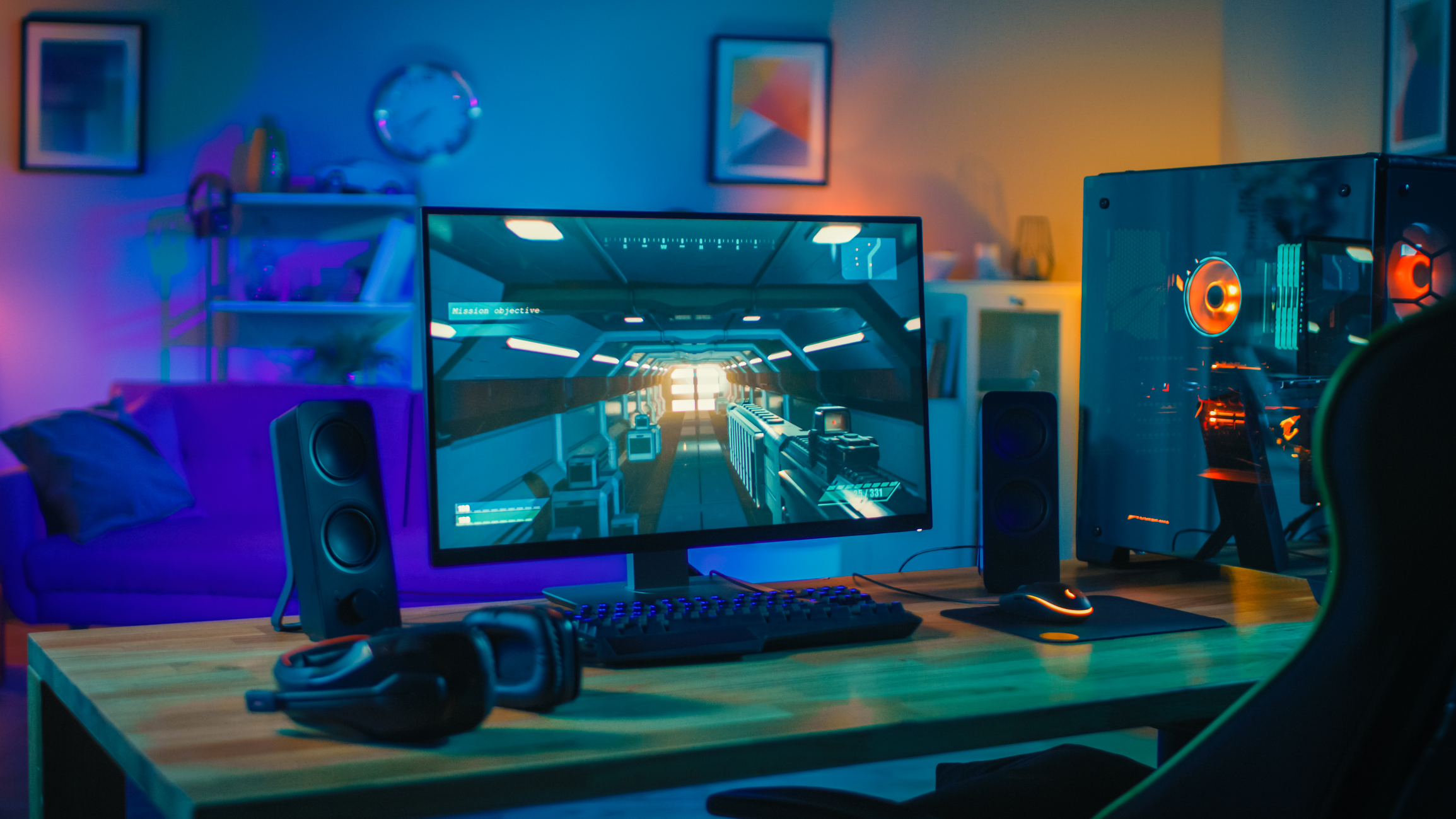
Powerful Personal Computer Gamer Rig with First-Person Shooter Game on Screen. Monitor Stands on the Table at Home. Cozy Room with Modern Design is Lit with Warm and Neon Light.
Enlarge / Not even the GPU shortage can kill gaming.

If you thought heightened interest in gaming-focused monitors, desktops, and laptops would falter as the pandemic eased, you might want to hold onto your RGB gaming chair: the International Data Corporation (IDC) is predicting four more years of increased demand, with each segment growing faster than its parent market.

This week, the global researcher shared the latest numbers from its Worldwide Quarterly Gaming Tracker and predicted that gaming monitor shipments will surge, growing from 14.2 million screens in 2020 to 26.4 million in 2025 for a compound annual growth rate (CAGR) of 13.2 percent.

As the pandemic brought a scarcity across gaming hardware, from graphics cards to CPUs and even the latest consoles, gaming monitors were among the few pieces of serious hardware in stock for gamers. And with lockdowns mandated across the globe, many people were simply seeking something to do.

According to IDC, 41.3 million gaming PCs shipped last year, and 52.3 million will do the same in 2025, representing a 4.8 percent growth rate.

IDC expects a steep decline in growth next year but an increase in number of units shipped.

“Increasingly accessible price points and the ability to handle a variety of tasks outside of gaming are just some of the reasons we expect the gaming PC market to remain healthy in the coming years,” Jay Chou, research manager for IDC’s Worldwide Quarterly PC Monitor Tracker, said in a statement accompanying the IDC’s announcement.

IDC predictions come as 2021 already shows rising numbers, even though there are still GPU and other PC component shortages and supply issues affecting displays. In Q2 2021, gaming monitor and gaming PC shipments, combined, grew 19.3 percent compared to Q2 2020 to 15.6 million in total.

“The gaming market was on fire for years leading into the start of the pandemic in 2020, and things only accelerated as most people were spending more time at home and in front of screens,” Ryan Reith, group vice president with IDC’s Mobility and Consumer Device Trackers, said in a statement.

IDC is confident that this trend will continue, even as pandemic restrictions lift and cause other markets, such as Chromebooks, to see a decline in demand.

“At this point the global supply shortage is well known and continues to be a moving target, yet demand for gaming hardware (PCs, consoles, monitors, etc.) and titles continues to surge,” Reith said. “Many have speculated that as reopening slowly begins around the world this growth could be in jeopardy, but we are just not seeing that.”

So what does this all add up to besides a lot of gaming cred? IDC thinks the gaming monitor and PC market will be worth $60 billion in 2025, a big boost from 2020’s $43 billion.

Gaming monitors may even become cheaper. The average sales price (ASP) for a gaming display was $339 in 2020 but will be a slightly scanter $309 come 2025, IDC said.

We probably won’t be so lucky with gaming PCs, though. The ASP for gaming systems is expected to hit four-figure territory in 2025 at $1,007, compared to $925 last year.

https://arstechnica.com/?p=1799982


Sony acquires its most prominent remaster studio, Bluepoint Games

Sony acquires its most prominent remaster studio, Bluepoint Games

After months of speculation, it’s finally official: Sony is acquiring Demon’s Souls developer Bluepoint Games.

News of Bluepoint’s addition to the PlayStation Studios roster shouldn’t surprise many. The Austin-based studio turned heads with 2018’s Shadow of the Colossus remake before tackling its redux of FromSoftware’s Demon’s for the PS5. It has been a longtime independent collaborator with Sony, remastering critical favorites like Uncharted, Metal Gear Solid, and Gravity Rush, and it has almost exclusively worked with PlayStation-branded properties. (Other than Metal Gear, Bluepoint’s only other third-party project was its 2014 port of Titanfall for the Xbox 360.)

A long history with Sony

Rumors that Sony would be buying the developer date back to the company’s acquisition of Returnal developer Housemarque in June. That’s when the PlayStation Japan Twitter account accidentally tweeted out a PlayStation Studios splash image that included key art from both Returnal and Demon’s Souls alongside other established Sony games. Naturally, the tweet was quickly deleted, but not before the image was saved.

Given their long history together, making Bluepoint’s relationship to PlayStation official was a natural choice, PlayStation Studios head Hermen Hulst said in an interview with IGN.

“Bluepoint is now in a place where there’s hardly an entity imaginable that knows PlayStation better than they do, because they’ve worked with so many different teams on their respective, iconic franchises that they’ve had a developer insight in a wonderful way,” Hulst told the outlet.

Though Bluepoint has until now been recognized for its remasters and more recent remakes—with rumors that kicked up after Demon’s Souls launched in November even pointing to Bluepoint potentially working on a Metal Gear Solid remake—President Marco Thrush revealed in the same interview the studio’s next project will actually be an original game.

“Our next project, we’re working on original content right now. We can’t talk about what that is, but that’s the next step in the evolution for us,” Thrush told IGN.

As a former member of the Metroid Prime team at Retro Studios, Thrush knows how to breathe new life into a beloved series. He started Bluepoint with co-founder Andy O’Neil in 2006, and the company soon made a name of itself as a technical powerhouse known for producing industry-standard remasters over establishing brand-new, hit properties.

Acquisitions, acquisitions, acquisitions

Compared to PlayStation, Xbox is playing with a different handbook when it comes to adding new studios. Microsoft has bought up a number of developers over the past few years, including Psychonauts 2‘s Double Fine Productions and, most significantly, the entire slate of Bethesda studios, including Doom‘s id Software and Wolfenstein‘s MachineGames, under its parent company, ZeniMax Media.

But unlike PlayStation, almost all of Xbox’s first-party games debut on its platform-agnostic Xbox Game Pass service, which players can access on-demand from Xbox hardware, PCs, tablets, and phones (with its Azure-powered cloud gaming infrastructure planned to add even more devices in the future). Sony has preferred, for the most part, to keep its first-party exclusives firmly locked to PlayStation consoles, though it has recently started to thaw to the idea of porting some of its hit titles to PC.

Bluepoint is the fourth studio brought into Sony’s first-party fold this year. It follows Housemarque, PC-port specialists Nixxes, and the UK-based developer Firesprite (makers of the former PSVR-exclusive sci-fi horror game, The Persistence). Between Bluepoint developing its own title and the upcoming Uncharted Legacy of Thieves PC port not being handled by Nixxes (but instead by former PlayStation VP Adam Boyes’ studio, Iron Galaxy), it’s possible Sony could be quietly encouraging its developers to prioritize more original ideas moving forward…

https://arstechnica.com/?p=1799744


Jon Stewart’s new Apple TV+ series: Old man yells at cloud—but it hits the spot

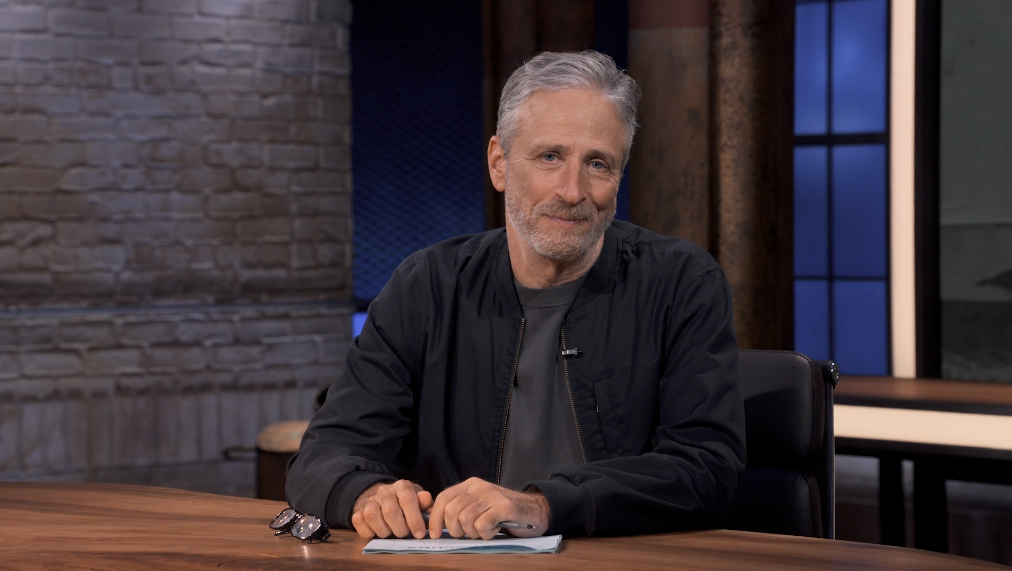
Jon Stewart is back on TV to set some things on fire.
Enlarge / Jon Stewart is back on TV to set some things on fire.
Apple TV+ / Busboy

In Jon Stewart’s first-ever conversation with an Apple TV+ studio audience, he offers a curious send-off—in fact, it argues against the point of his new multi-million dollar hosting deal. “You’re probably just going to look at aggregated clips of” this first episode of The Problem With Jon Stewart, he says, instead of subscribing to Apple TV+. It’s a bit meandering, followed by a joke about pirating episodes of Ted Lasso.

If anybody can show up to a new streaming service and make a joke at the expense of subscriptions, it’s probably Stewart. Online video sharing—and we’re talking the renegade kind, uploaded by fans and shared freely—greatly contributed to The Daily Show‘s massive cultural footprint before Stewart left that show behind in 2015. And as you may have noticed, the TV landscape has dramatically changed since then. These days, every major player is throwing stuff at the video-streaming wall to see what sticks (or, in Quibi’s case last year, what absolutely doesn’t).

So after six years off the “fake news” desk, what path does Stewart and Apple’s new production take? His aforementioned joke may suggest a series that’s meant to be shared and remixed in small clips, but The Problem arrives with a different modus operandi: empathy, not sound bites, and patience, not pulverization. You can arguably pluck out some zingers tailor-made for quick swipes on a service like TikTok, but Stewart seems more invested in relishing the full 44 minutes of each episode. As a result, this fake-news innovator spends the runtime of his new series punting the “fake” out of his reputation, expectations be damned.

Gentle corralling of charged conversations

<a href="https://cdn.arstechnica.net/wp-content/uploads/2021/09/stewart-apple-01.png" class="enlarge" data-height="571" data-width="1012" alt="Jon Stewart jokes in the first episode about "looking like this now."”><img alt="Jon Stewart jokes in the first episode about "looking like this now."” src=”https://rassegna.lbit-solution.it/wp-content/uploads/2021/10/jon-stewarts-new-apple-tv-series-old-man-yells-at-cloud-but-it-hits-the-spot-1.png” width=”980″ height=”553″>
Enlarge / Jon Stewart jokes in the first episode about “looking like this now.”
Apple TV+ / Busboy

At some point today, if not already, the series’ pilot episode will go live, and it revolves around US veterans. In particular, it homes-in squarely on the aggravating issue of “burn pits,” and how the US’s decision to dispose of wartime waste via acres-wide burning sites (reportedly a mix of human flesh, toxic waste, and other trash) appears to have caused cancer in vets who’d toured through Afghanistan and Iraq. The series’s second episode, which lands in two weeks but I’ve also seen, focuses on the general topic of “freedom” and veers in a few directions, ranging from American anti-vaxxers to how free speech is threatened around the world.

Neither begins with a topical, headline-filled monologue, and neither includes chats with stand-up comedians faking as “senior correspondents.” Though both episodes open with a smattering of jokes, often at Stewart’s own expense, it doesn’t take long for him to settle into his apparent dream role: a Dan Rather-caliber newscaster who runs a news program at the local dive bar. F-bombs and pointed drops of “are you #$#$ing kidding me” punctuate his reporting-filled breakdowns of whatever topic’s at hand, and he’s happy to let anger boil over when talking about aggrieved veterans—a topic he’s been front-and-center about in the public eye since testifying on Capitol Hill about the 9/11 First Responders’ bill.

Both episodes include a similar formula: Stewart opens alone at his desk to break down a story, comment on news clips, and alternate between jokes and rants. Then pre-filmed skits emerge during one or two fake commercial breaks. And finally, Stewart hosts a roundtable panel with at least three interviewees, where he’s careful to split the difference between letting guests open up about their expertise and interrupting to move the conversation along. The latter is easily the best part in this early series gestation period, and it plays out almost exactly like you might expect from someone who previously made criticism of Crossfire and Fox News an extracurricular hobby. Any American who has ever tuned-in to overseas cable news panel discussions and thought, “Oh, this isn’t awful” will appreciate Stewart’s gentle corralling of these charged conversations.

https://arstechnica.com/?p=1799516


Hot Wheels Unleashed game review: The good, the bad, and the tiny

This week’s Hot Wheels Unleashed is one of the best video games ever made using licensed toy cars. To be fair, that specific concept isn’t necessarily common in gaming, but Codemasters’ legendary Micro Machines series holds a lot of water for a certain type of arcade-racing fan. That’s decent company to land in.

Yet while handsomely modeled toy cars and cute environments might look like a basis for newbie-friendly racing, it’s not the case here. In my week of testing the game ahead of its launch this week, I found that Hot Wheels Unleashed feels like a Micro Machines skin on top of the modern, hardcore-leaning Trackmania series. That’s not a bad thing—and I had a good-enough time with Unleashed to write about it at Ars, as I think some people will really enjoy what’s going on here.

But you’ll have a better time with HWU going into it fully aware of its weird and tricky design decisions—along with quibbles about its in-game economy of cars and tracks.

Boost through meaty, plastic straightaways

Hot Wheels Unleashed [PS4, PS5, Switch, Xbox, PC]

(Ars Technica may earn compensation for sales from links on this post through affiliate programs.)

HWU throws back to an older arcade-racing era by opening with very few racetracks to select from—and a campaign that you must play through to unlock many of the game’s contents. You start with three randomly selected toy cars, which are split between Hot Wheels facsimiles of real-life cars and the company’s own toys; the latter pool ranges from sedans to race cars to Kitt from Knight Rider to dinosaurs with wheels. With every campaign level you beat, you unlock “coins” (which can be spent on new cars) and “gears” (which can upgrade existing cars).

Every racetrack in Unleashed combines a prebuilt room and a series of recognizable, plastic Hot Wheels tracks, usually bright orange or blue. Imagine going into someone’s garage, then routing a nearly infinite budget of plastic straightaways, curves, loop-the-loops, and more throughout the space—while also occasionally using that world’s geometry (a table, a countertop) as part of a given racing line. That’s HWU.

The devs at Milestone, longtime makers of the MotoGP series, have stripped pretty much all Mario Kart-ness out of this colorful affair. Instead of picking up weapons, bananas, or random items, drivers are expected to accumulate and spend a nitro-boost meter—which grows primarily when you drift. Tap the brakes in the middle of a high-speed turn, and you’ll go into a drift that feels arcade-y but not entirely unrealistic. It’s more Forza Horizon than Ridge Racer or Mario Kart. The more you drift, the more your boost meter grows, though racetracks include purple and green strips that you can steer across for instant, free boosts, as well.

The result, on a sheer driving level, is mostly a blast. Drifting around an unnaturally bendy curve of plastic track feels good, because it’s accompanied by a legitimate sense of speed, a clear formula for your specific car’s handling to optimally drift, and the satisfying whoosh of tapping your boost button after a successful drift into a meaty straightaway. And Milestone has brought its years of racing-game development to bear in building its own incredible racetracks within the Hot Wheels universe, especially when tracks alternate between plastic constructions and real-world environs.

Funny cars, serious physics

I can’t really say I’ve found any outright stinkers among the 40 built-in tracks, though their reliance on same-samey plastic constructions and five frequently reused real-world scenes kills the tracks’ ability to stick in my mind as recognizable favorites. Once again, I’m racing around the hipster basement with a pool table, a “gamer” desk, and a variety of plastic tracks that include loop-the-loops and wild, nitro-filled turns. It can all start to blur together.

Additionally, the physics model of “small cars going at high speeds over bendy tracks” is arguably too realistic, at least in terms of cars flying off the track at a moment’s notice and requiring “hold Y to restart” prompts. Unleashed‘s momentum comes to a screeching halt in these moments, and without a legitimate tutorial that explains “funny cars, serious physics,” that leads to a rage-inducing learning experience. Some of the upside-down moments include “electric” tracks that keep your car’s wheels planted, but that’s an exception. A decent amount of the game requires keeping an eye out for sudden elevation changes that might send a car off the track, should it boost at the wrong time. Worse, HWU lets players rotate their car while flying in midair—so you can do useless, fun 360-degree spins while taking an expected leap over a hilarious, thrilling gap. But there’s no way to fudge your midair car’s trajectory toward a preferred landing spot, should you launch at the wrong angle.

HWU includes animated, plastic beasts that are meant to add fun and silliness to the tracks. A massive spider can shoot car-slowing webs at the oncoming track, and a snake’s mouth can open and close as a gate to your next destination. But the “tells” on these monsters are tragically lacking in the game’s launch version. The snake’s mouth doesn’t include a countdown or visual hint to when it will open or close, so the only safe option is to slam the brakes when you see one no matter what. The spider’s webs are typically abetted by computer-aided cheating, which means they’ll usually land directly in your racing path with too little time to swerve out of the way. These monsters, as currently coded, stomp out the fun whenever they show up. Milestone, please revise them.

https://arstechnica.com/?p=1799401


A new “standalone” Valve VR headset teased by deep SteamVR file dive

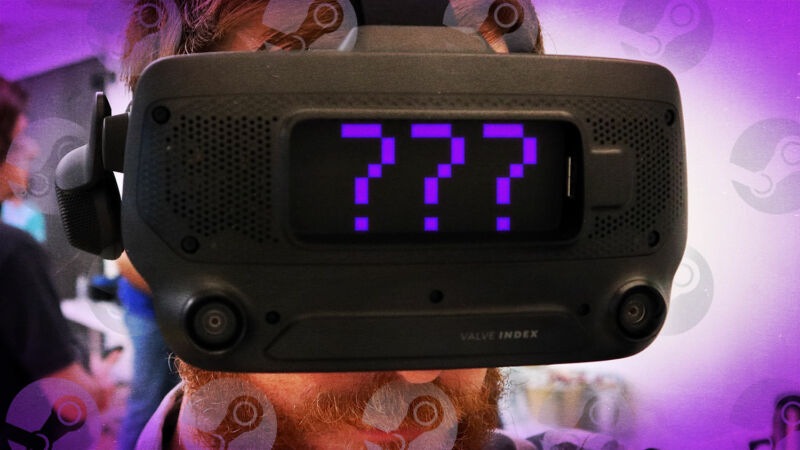
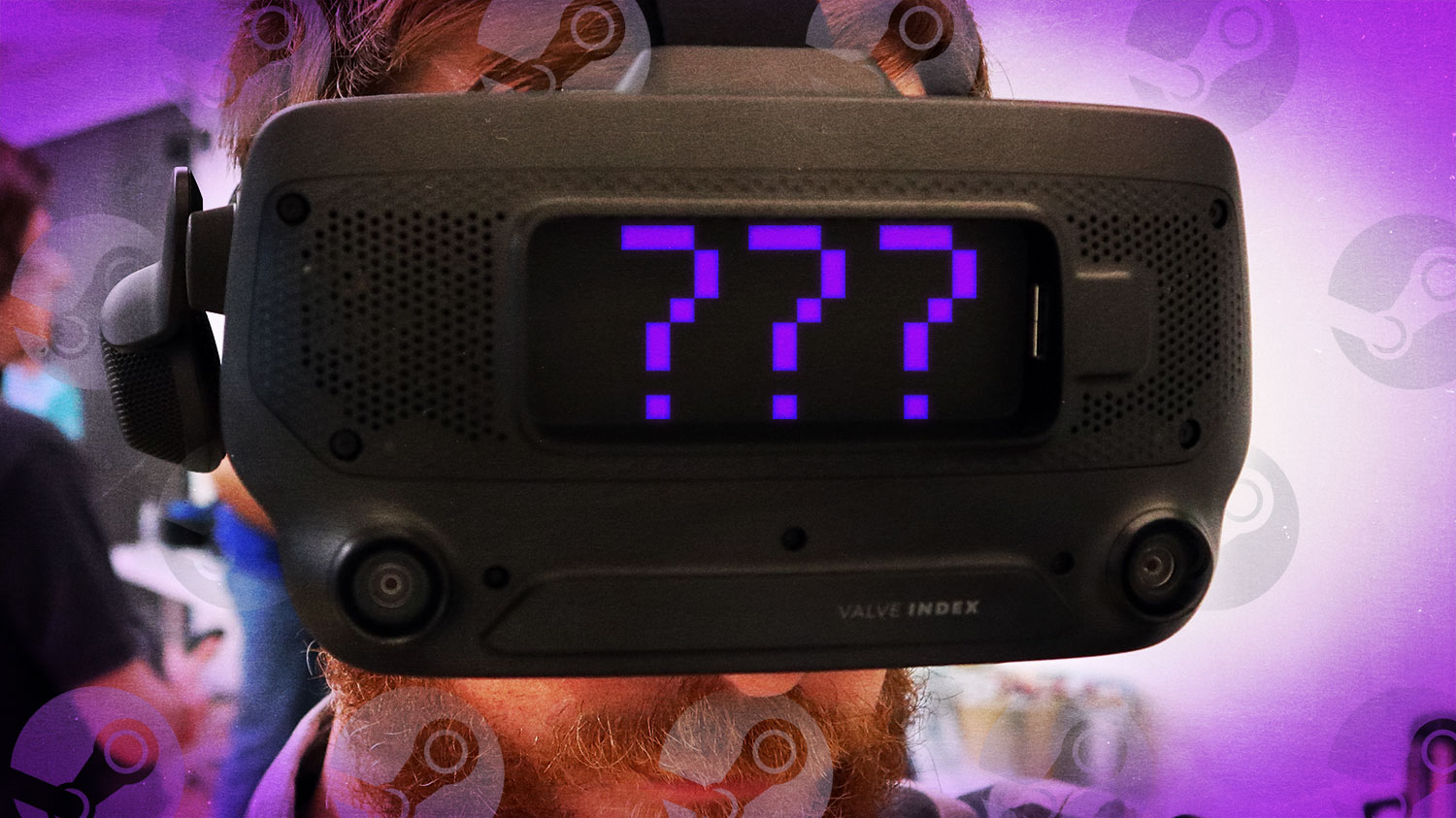
What might the next Valve VR headset look like? Will it resemble the existing Valve Index, complete with a "frunk" and giant, hovering speakers? And will it ever launch at retail? Those details remain unclear, but our reporting suggests something that features Oculus Quest-like "standalone" operability.
Enlarge / What might the next Valve VR headset look like? Will it resemble the existing Valve Index, complete with a “frunk” and giant, hovering speakers? And will it ever launch at retail? Those details remain unclear, but our reporting suggests something that features Oculus Quest-like “standalone” operability.
Aurich Lawson | Ars Technica

What’s in the future for VR headsets made by Valve, which launched the pricey, bulky, and impressive Valve Index in August 2019? The best information in the wild right now seems to be coming from Valve itself: data-mining discoveries and patent applications are adding up to something that looks like a brand-new Valve VR system with some form of built-in wireless functionality.

Sources familiar with matters at Valve have confirmed to Ars that information in the wild is legitimate—at least in terms of products being made within Valve’s headquarters, even if those products don’t ultimately see retail launches.

A new, unclear “ism”

This week’s information roundup comes courtesy of VR industry reporter and YouTube channel host Brad Lynch, who received a tip after tracking months of Valve patent applications. The tip came in the form of a device code-named “Deckard,” which is mentioned in SteamVR’s publicly available branches from as far back as January. Ars can confirm the legitimacy of “Deckard” as a code-named device worked on inside of Valve’s headquarters.

The information gleaned by Lynch points to multiple iterations of this new code-named headset, including an updated “proof of concept” version referenced this June, along with the ability to activate a “Valve internal menu” that brings up two new SteamVR menu options. These options, dubbed “prism” and “standalone system layer,” have yet to be activated in meaningful ways, so their names and meaning remain a matter of speculation. The latter term, “standalone,” implies that the hardware might work all by itself—as opposed to, say, being plugged into a computer or tracked by Valve’s unwieldy SteamVR Tracking Boxes.

The word “standalone” happens to describe Facebook’s Oculus Quest platform, which can either wirelessly connect to a powerful PC or run software using its own weaker, built-in hardware. Lynch points to a DLL that can be found in public SteamVR filesets, which currently includes calls about 160MHz wireless signals. However, his speculation about this doesn’t necessarily confirm anything about an upcoming wireless Valve VR system, since that speed rating matches the Wi-Fi 6 controller found in Oculus Quest 2 headsets.

Perhaps the most tantalizing mention of “Deckard” came from a string that Lynch discovered in a SteamVR Linux ARM binary, which hints to, but doesn’t outright confirm, some form of processing built into a new Valve VR headset—as opposed to sending calls to a connected system like a gaming PC.

Multiple VR concepts had been in the works

Sources have previously told Ars Technica that Valve had at least two VR headset design concepts in the works, and in the concept stage, they diverged. During this preproduction phase, one prototype concept more closely resembled the Valve Index in terms of requiring some kind of connection to a PC and the existing SteamVR Tracking Boxes. The other revolved around a built-in processor à la Oculus Quest with aspirations to ditch external tracking boxes and adopt Quest-like “inside-out tracking.”

The sources also suggest Valve previously had trouble getting any form of inside-out tracking to match the performance of Oculus Quest, and the company brought on at least one outside firm to work on a competitive option. Such a system’s efficiency could very well have changed in the time since Ars heard these reports.

Lynch’s video tries to connect the dots of prior patent filings about what may come in a future Valve VR headset model, and in at least one respect, his report is on the right track: updated optics. Ars’ sources point to public documents filed by companies like Facebook about the future of VR optics technology, which involve lenses that can be closer to a user’s face—and offer better performance, better weight distribution, and more comfortable virtual movement. They suggest that Valve is moving in a similar direction for whatever shape its next headset may take.

Neither Lynch’s report nor any of Ars’ reporting has dug up any hint of Valve developing an upgrade for existing Index headsets through the front-trunk (“frunk”) port on its face. Valve representatives did not immediately respond to Ars Technica’s questions about the code-named Deckard device.

“These are some really interesting debug commands that [Valve is] throwing out there without encryption,” Lynch says incredulously at the end of his report. Lynch says this despite Valve having a track record of letting its dedicated fans discover clues inside of Steam and theorize about what might be coming next. The fact that some of this information has hidden in plain sight since January suggests that Valve isn’t necessarily about to pull the trigger on a massive VR announcement, however. Additionally, Valve has already begun dedicating manufacturing lines to its Switch-like Steam Deck system, which is likely stretched thin by the realities of the modern chip shortage. Piling a new VR system on top of that doesn’t necessarily seem likely at this early point.

Still, the fact that Valve is moving forward with a compact, all-in-one PC—which rocks an AMD SoC and a default install of Linux (specifically, the upcoming “SteamOS 3”)—lines up neatly with Lynch’s discoveries about XRDesktop, a virtual desktop environment developed by a Valve-funded developer. Lynch points out that this application environment has received updates that refer to AMD drivers and SteamOS 3—which would make the transplant of Steam Deck’s SoC into a standalone VR headset that much easier. (This month, Valve dispelled rumors about the first-gen Steam Deck being a suitable VR system, but that’s not to say a VR-optimized version of its AMD SoC couldn’t eventually follow.)

As with our other reports on unannounced Valve hardware and software, we must point out that the company has a long and bloody track record of ideating, prototyping, and killing projects before they’re announced. Public-facing calls inside of SteamVR files do not guarantee a retail launch. Even so, Valve loudly hinted to both the Valve Index and “Half-Life VR” before their formal announcements. This leaves us somewhat comfortable hoping that an updated Valve VR product—which offers standalone VR features without any Facebook login requirements—amounts to an eventual retail launch, as well.

https://arstechnica.com/?p=1799079


Occultist tries to imprison Death in first The Sandman teaser

[embedded content]
Tom Sturridge stars as Dream/Morpheus in the Netflix adapted series, The Sandman.

It has been a long time coming, but we finally have our first glimpse of footage from The Sandman, Netflix’s adaptation of the DC Comics graphic novels created by Neil Gaiman. The streaming giant also released several character posters for the series during its Tudum global fan event. And in addition to The Sandman, we got a tantalizing new teaser for Stranger Things S4, the opening credits for Cowboy Bebop, and new trailers for Army of Thieves and The Witcher S2, among other goodies.

The Sandman teaser

As I’ve written previously, the titular “sandman” is Dream, aka Morpheus, among other names. He is one of seven entities known as the Endless, and he is seeking to set right his past mistakes. The other Endless are Destiny, Destruction, Despair, Desire, Delirium, and Death (portrayed as a perky punk/goth young woman). They became almost as popular as Dream himself (especially Death) and were featured in several spinoff comics. The series opens when Morpheus, the King of Dreams, escapes from a 70-year imprisonment by an occultist—who actually wanted to capture Dream’s sibling Death but trapped the Sandman by mistake.

Gaiman has been heavily involved with this Netflix adaptation, which bodes well for the project. Tom Sturridge snagged the coveted role of Morpheus, Lord of the Dreaming, no doubt due in part to his well-sculpted cheekbones. As for Dream’s Endless Siblings, Kirby Howell-Baptiste plays Death, Donna Preston plays Despair, and Mason Alexander Park plays Desire. Game of Thrones alums Gwendoline Christie and Charles Dance play a gender-swapped Lucifer and the charlatan magician Roderick Burgess, respectively. (Burgess is styled after real-life occultist Aleister Crowley and is Crowley’s arch-rival within the world of DC Comics.)

The cast also includes Boyd Holbrook as The Corinthian, one of the (failed) nightmares created by Dream; Vivienne Acheampong as a gender-swapped Lucienne, chief librarian of the Dreaming; David Thewlis as John Dee/Doctor Destiny; Jenna Coleman as Johanna Constantine, occult detective and ancestor of DC Comics antihero John Constantine; Patton Oswalt as the voice of Dream’s raven emissary, Matthew; Razane Jammal as Lyta Hall; Kyo Ra as Rose Walker, who encounters the Corinthian while searching for her lost brother; Stephen Fry as Rose’s guardian, Gilbert; Sandra James-Young as Unity Kinkaid; and Sanjeev Bhaskar and Asim Chaudhry as Cain and Abel, respectively.

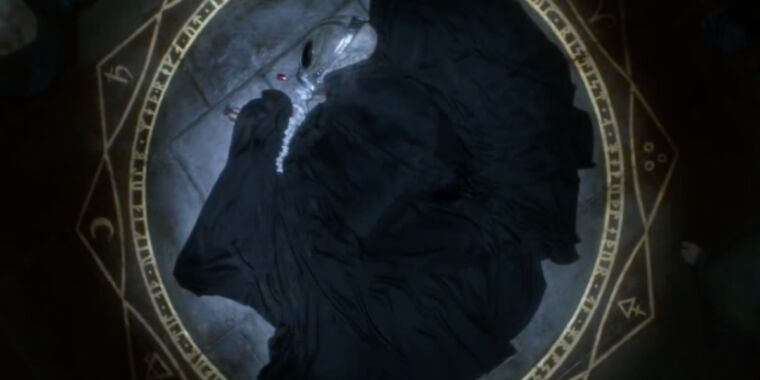
Dream’s initial capture by Roderick Burgess and his acolytes is the focus of this brief first-look teaser. We see Dance’s Burgess and Co. gathering for a dark ritual. “Tonight we will achieve what no one has ever attempted: We will summon and imprison Death,” Burgess proclaims. There’s some spooky chanting, a blood offering, a few mystical artifacts (“a coin made from stone,” “a feather pulled from an angel’s wing”), and voila! Except we all know the spell didn’t work as planned, and they capture Death’s sibling, Dream, instead. (That shot of a robed and masked Morpheus in the center of the circle is iconic.) The final image shows a caged (shirtless) Morpheus glowering as an off-camera voice says, “You’re gonna need all the help you can get.”

Netflix has yet to announce an official premiere date for The Sandman. It was rumored to be dropping late this year, but I wouldn’t be surprised if it gets pushed into early 2022. Regardless, color me excited to see more.

Stranger Things S4 teaser

[embedded content]
It’s a blast from a haunted past in new teaser for Strange Things S4.

Netflix dropped a teaser for the fourth season of Stranger Things back in May, hinting strongly at the return of Eleven ‘s (Millie Bobby Brown) childhood tormenter and “Papa,” Dr. Martin Brenner (Matthew Modine). And we already knew that David Harbour will be returning as Hopper, along with the rest of the main cast: Winona Ryder, Finn Wolfhard, Natalia Dyer, Noah Schnapp, Charlie Heaton, Joe Keery, Caleb McLaughlin, and Sadie Sink. We also know it will be the first season to take place largely outside of Hawkins, since Eleven and the Byers have moved away, and Hopper seems to be imprisoned by the Russians.

Maya Thurman-Hawke returns as Robin, Brett Gelman will be back as Murray Bauman, Cara Buono returns as the Wheeler matriarch, and we’ll be seeing more of Priah Ferguson, who plays Lucas’ sassy younger sister, Erica. Among the new cast members is Robert Englund of Nightmare on Elm Street fame, which is a nice little link to classic ’80s horror.

This S4 teaser is very different, tonally speaking, from what we’ve seen thus far. It conjures up a haunted house and some major Scooby Doo vibes. It opens with a ’50s-era family moving into a large mansion known as Creed House. But all is not hunky dory: there are strange sounds, flickering lights, and the occasional disemboweled cat left by the porch. There’s a blink-and-you’ll-miss-it shot of the two children lying (presumably) dead on the floor, hinting at tragedy. Then we cut to the present, in which the Hawkins gang explores the now-abandoned house for “clues.” (Nobody appreciates Dustin’s Sherlock Holmes reference.) What does this have to do with seasons past? The final shot features a ticking grandfather clock, and then suddenly it’s ticking in… the Upside Down.

We don’t yet have a premier date for Stranger Things S4, but expect it to drop sometime next year.

https://arstechnica.com/?p=1798435


Iké Boys review: If you love kaiju so much, why not just be one?

[embedded content]
A clip from Iké Boys, now playing at Fantastic Fest 2021.

Iké Boys, the debut feature from writer/director Eric McEver enjoying a world premiere at Fantastic Fest this week, will feel like a secret handshake to certain people who grew up in the late 1980s or the 1990s. In a prestreaming era when Saturday morning cartoons and after-school kids’ programming still meant reliable ratings, a wave of pop culture born in Japan was brought over to the US in the hope of finding a new audience. Many, many of these things became timeless hits for a generation: Power Rangers, Dragon Ball Z, Pokémon, Cowboy Bebop, Sailor Moon, yet another Ultraman syndication, etc.

Depending on where you grew up, getting really into any of that may have meant getting really left out of some social circles. The need to fit in at all costs, even if it means abandoning what you love or what makes you unique, is strong during childhood. But filmmaker McEver has a clear, feel-good message with Iké Boys: Be you. After all, humanity may someday need someone with a very special set of skills to save us—and those skills may involve an encyclopedic knowledge of Japanese kaiju stories.

They listen to the Flaming Lips, too

If anyone knows about hard-to-find cult anime films worth seeking out, it’s Shawn (Quinn Lord), a mild-mannered high schooler in late ’90s Oklahoma. He and his pal Vik (Ronak Gandhi) have grown up as outcasts amidst their Zack Morris-lookin’ schoolmates while consuming a steady stream of kaiju and mecha fiction. So when Shawn finally acquires a copy of once-believed-lost 1960s title Go! Great Decisive Battle at the End of the Century with Rainbows, they are watching it immediately no matter what.

That, coincidentally, means their school’s mousy new Japanese exchange student Miki (Christina Higa) will be stuck on the TV-watching couch with them. Though Miki only knows rudimentary English, she chose Oklahoma as her destination because she loves everything she’s read about American Indian culture. And as much as Shawn and Vik wish her home country meant she had an affinity for anime and kaiju, too, well… the screening doesn’t play out as they hope.

[Watching the film in Japanese without subtitles] “Ah, I don’t think anyone’s had a chance to translate it yet,” says Shawn.

“It’s been 30 years,” says Vik.

“Miki, are you able to…” [Miki, already asleep, understandably jet-lagged.]

What these three don’t yet know is that Go! Great Decisive Battle at the End of the Century with Rainbows wasn’t just a film from the “almost as influential as Kurosawa” creator named Mr. Orgata. Back in the late 1960s, Orgata had visions of a great world-ending threat that would arrive right before the new millennium, and the only way he knew how to warn the world was to create a film and hope it finds “the unlikeliest of heroes in the unlikeliest of places that can save us all from destruction.” (Editor’s note: Stop me if you see where Iké Boys might be headed.) Go! Great Decisive Battle mysteriously turns to static at its climax and emanates some kind of electrical shock from the TV set. Shawn, Vik, and Miki wake up the next day woozy but no worse for the wear. As the town inches toward New Year’s, however, Y2K fear and unrest ramps up, and a weird group of hooded figures starts gathering in the fields with scythes in hand and chants on the lips.

Love and kaiju

McEver may be a Vik or Shawn himself; he grew up in Oklahoma but attended college in Japan and studied cinema (parts of Iké Boys were even filmed on location at his old school in the Sooner State). His affection for the inspiration material is evident in all aspects of this film. The script has the references you want (a bully calls Miki the Yellow Ranger when she stands up while Shawn and Vik back down), and the cinematography and production design make the visual references you want (Shawn kinda sorta looks like a young Billy, no? And the death cult members certainly fight like the Putty Patrol). At the same time, Iké Boys never gets stuck in its source materials. Instead, McEver has seamlessly woven love for those childhood works into an original story that cleverly leverages its tropes.

Iké Boys is a fairly lean ~90 minutes that mixes its anime-mirroring plot with just enough growing-up/high school drama. Shawn and Vik grapple with how pop culture has shaped their social identity and whether they want to maintain that going forward. They navigate era-appropriate sophomoric BS from classmates and family members who just don’t understand them. But simultaneously with all that, they begin to understand that the situation they’ve been thrust into is changing them, and they must decide whether to accept or reject that new identity (and their relationship with each other).

The performances carry the film’s slower moments, particularly Gandhi as Vik since that character has a little more internal conflict to navigate than his pal Shawn. And a “hey, that’s Billy Zane!” appearance from Billy Zane as Shawn’s Japan-loving, ex-military karate sensei is immediately familiar (think slightly turned-down Rex Kwon Do from Napoleon Dynamite). I like how Iké Boys eventually uses that familiarity to flip the script on our heroes and the audience.

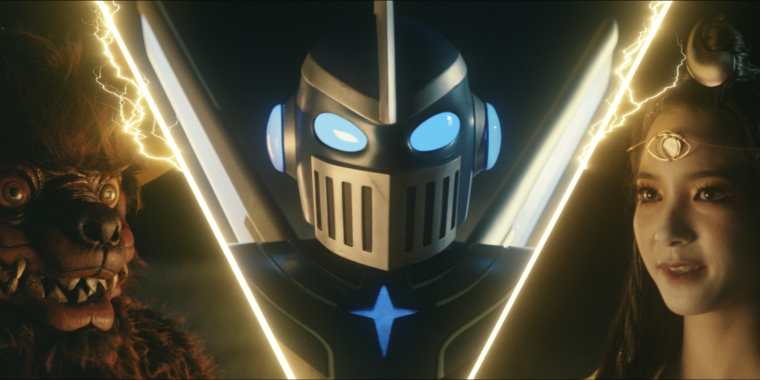
My favorite part of Iké Boys, though, is the film’s use of animation. After we see clips of Go! Great Decisive Battle at the End of the Century with Rainbows early on, that art style is adopted again and again—sometimes taking over the frame entirely, sometimes overlapping with the real-life footage—as Shawn and Vik piece together their situation bit by bit. In addition to being aesthetically cool, it strikes me as a smart way to approach ’90s Japanese TV action for modern audiences. As much as I loved Ultraman when I was in elementary school, I imagine its battles would look hokey or kitschy to modern audiences. Rather than risking that or significantly increasing the production budget for slick VFX, Iké Boys leans into its anime heart.

McEver says he uses this mixed-media approach—live action, 500+ visual effects, traditional Japanese suit acting (Tokusatsu), and hand-drawn animation—because that’s what inspired him to eventually head to Japan in real life. And had he never done that, well, clearly Iké Boys wouldn’t exist, either.

“I belong to an entire generation who grew up steeped in anime, giant monster films, and manga—there are literally millions of fans around the world,” McEver wrote in his director’s statement. “The more I mulled it over, the more I realized that there was a movie to be made here, a movie that I was uniquely qualified to make.”

Iké Boys had its world premiere at Fantastic Fest this weekend. The film continues to play the festival circuit, and no distribution plans have been announced at this time.

Listing image by Eric McEver / Fantastic Fest

https://arstechnica.com/?p=1798309