2,064-piece Lego set recreates Super Mario 64 in miniature for $170
The Super Mario 64 Lego set is a “? block” with four levels from the game hidden inside.
Lego Group
The block also closes up.
Lego Group
The “? block” has some clever hinges that open to reveal the worlds inside.
Lego Group
The set’s “microfigures” are minimalist but effective. Mario is made out of just three blocks but is nevertheless instantly recognizable.
Lego Group
Peach’s Castle, complete with tiny Peach and Lakitu microfigures.
Lego Group
Cool, Cool Mountain, overrun with penguins.
Lego Group
Bob-omb Battlefield, with a miniature king, chain chomp, and cannons.
Lego Group
Lethal Lava Land, with its trademark volcano and sliding puzzle (and eyeball).
Lego Group
The attention to detail on these sets is excellent—you’ll even spot Yoshi hiding on top of Peach’s castle, waiting for you to get all 120 stars.
Lego Group
Interactive Mario figure not included.
Lego Group
Many of the set’s 2,064 pieces are used to put together the “? block” itself.
Lego Group
The Mario 64 Lego set comes out on October 1.
Lego Group
Nintendo and the Lego group have been on a collaborative tear for the last couple of years, with releases including the interactive “Adventures with Mario” series for kids and a $230 replica NES set aimed directly at nostalgic adults with disposable income. The team’s latest creation is another one for that latter group—today, the companies announced a $170 replica “? block” that opens up to reveal four miniature recreations of worlds from Super Mario 64.
The tiny size of each replica level means that some detail is lost, and the “microfigures” of characters like Mario, Peach, and Lakitu are all made out of just a handful of pieces. But despite that, everything in the set is instantly recognizable, from the chain chomp lying in wait on the Bob-omb Battlefield to the ski slopes of Cool, Cool Mountain to the Bowser sliding puzzle in Lethal Lava Land. Yoshi is even hiding on the top of Peach’s Castle, waiting for you to find all 120 stars. The “? block” uses a clever hinge mechanism that makes it simple to pop the worlds out and tuck them back inside.
The 2,064-piece Mario 64 set is recommended for ages 18 and up and will be exclusive to Lego stores and Lego.com when it launches on October 1, 2021. Other retailers will get it sometime in 2022.
Listing image by Lego Group
https://arstechnica.com/?p=1793170
Matrix: Resurrections trailer is sheer perfection, both fresh and familiar
Back in the Matrix? Thomas (Keanu Reeves), aka Neo, has been having dreams that don’t feel like dreams.
YouTube/Warner Bros.
The telltale code that signals the presence of the Matrix.
YouTube/Warner Bros.
Truly the stuff of sci-fi nightmares.
YouTube/Warner Bros.
He’s jacked in.
YouTube/Warner Bros.
Trying to catch a speeding bullet.
YouTube/Warner Bros.
Neo’s psychiatrist (Neil Patrick Harris) assures him they don’t use the word “crazy.”
YouTube/Warner Bros.
All doped up on the blue pills.
YouTube/Warner Bros.
Yeah, we get it, we’re slaves to our screens.
YouTube/Warner Bros.
It’s Trinity (Carrie-Anne Moss)!
YouTube/Warner Bros.
Trinity is also plugged back into the Matrix.
YouTube/Warner Bros.
Follow the white rabbit.
YouTube/Warner Bros.
Through the looking-glass.
YouTube/Warner Bros.
A new version of Morpheus (Yahya Abdul-Mateen II) offers the red pill.
YouTube/Warner Bros.
Neo re-discovers his power.
YouTube/Warner Bros.
Jessica Henwick is a new rebel ally.
YouTube/Warner Bros.
Two guns are better than one.
YouTube/Warner Bros.
Agent vs. Neo.
YouTube/Warner Bros.
Fighting for her freedom.
YouTube/Warner Bros.
Neo stops a hail of bullets.
YouTube/Warner Bros.
Jonathan Groff welcomes Neo back.
YouTube/Warner Bros.
Those attending last month’s CinemaCon in Las Vegas were treated to a sneak preview of the first trailer for The Matrix: Resurrections, the fourth installment in the hugely influential franchise that launched with the premiere of The Matrix in 1999. But the trailer was not released to the general public—until now. The Resurrections title is apt, since we do indeed seem to be going back to the beginning: an alternate version of that simulated reality, with some new faces and many similar shots and very much the same theme of discovering (or in this case, rediscovering) one’s power. It’s at once familiar and fresh… in other words, sheer perfection.
(Spoilers for the first three films in the franchise below.)
It’s hard to overstate the deep cultural impact of The Matrix. It redefined the sci-fi film genre and shaped an entire generation of fans—plus, it raked in $460 million worldwide, garnered multiple Oscars, and sent star Keanu Reeves’ already healthy career into the Hollywood stratosphere. We still refer to taking the “red pill” when searching for a metaphor to represent choosing between an unsettling, life-changing truth or blissful ignorance. Who can forget Reeves’ meme-worthy utterances (“Whoa!” or “I know kung fu”) or Laurence Fishburne’s fabulous sunglasses-wearing Morpheus? This is also the film that gave us “bullet time”: a special effect—used for the rooftop scene where Neo (Reeves) dodges bullets fired by one of the Matrix’s Agents—in which the shot progresses in slow motion while the camera appears to move at a normal speed through the scene.
Cyberpunk author William Gibson called The Matrix “an innocent delight I hadn’t felt in a long time,” and he named Neo as his all-time favorite sci-fi action hero. Writers/directors Lilly and Lana Wachowski followed up the film’s success with two sequels, The Matrix Reloaded and The Matrix Revolutions, both released in 2003. Reloaded was a box office smash, taking in $739 million worldwide—the most successful of the trilogy, although the cliffhanger ending was criticized. Revolutions earned $427 million globally and was critically panned as being an unsatisfying conclusion to the saga. The franchise also includes a collection of animated short films, comics, and video games.
The Wachowskis didn’t originally intend to make another Matrix film after Revolutions, but rumors about a possible fourth film have been swirling since 2012. Lilly Wachowski went so far as to call the prospect “a particularly repelling idea in these times” in a 2015 interview—a sharp critique of Hollywood’s preference for sequels, reboots, and adaptations. Nonetheless, Warner Bros. officially announced the fourth film in August 2019. Lana Wachowski signed on to direct and co-write the film with novelist David Mitchell (Cloud Atlas) and Aleksandar Hemon (Sense8). Lilly Wachowski gave the project her blessing but declined to be involved, partly because she was busy with Showtime’s Work in Progress.
Reeves and Moss will return to their roles as Neo and Trinity, respectively. Three actors will be reprising their roles in Reloaded and Revolutions: Jada Pinkett Smith as Niobe, captain of the Logos; Lambert Wilson as The Merovingian, a rogue Matrix program with his own agenda; and Daniel Bernhardt as Agent Johnson. We’re also getting a host of new cast members: Yahya Abdul-Mateen II (currently lighting up the box office in Candyman), Neil Patrick Harris, Jessica Henwick, Jonathan Groff, Toby Onwumere, Max Riemelt, Eréndira Ibarra, Priyanka Chopra, Andrew Caldwell, Brian J. Smith, Ellen Hollman, and Christina Ricci.
On Tuesday, Warner Bros. released a teaser poster and urged fans to go to the website WhatisTheMatrix.com. Those who remember when the first movie was released in 1999 will recognize it as the original marketing site. It has been updated to allow users to click on a Blue Pill or a Red Pill, after which they are rewarded with one of 180,000 variations of a short teaser—brief glimpses of film footage in advance of today’s trailer. (You can see an example here.)
The trailer opens with Thomas/Neo talking to a psychiatrist, played to smarmy perfection by Harris. Thomas has been triggered by the sight of a black cat (“Deja vu”) in the psychiatrist’s office. “We don’t use that word in here,” Harris says when Neo cops to having vividly realistic dreams that make him worry he might be crazy. (We get a rapid series of images showing aspects of the Matrix as he does so.) Then the unmistakable notes of Jefferson Airplane’s “White Rabbit” kick in, and we see the new world the Matrix has wrought as humanity’s prison. It’s an entirely believable one, where Neo takes two blue pills daily (one assumes to “regulate his moods”) and everyone is glued to their iPhones and tablets—whatever it takes to keep the masses sedated. Trinity is there, too, but when Neo meets her, the two feel only a vague sense of recognition.
Then a bookstore clerk gives him a copy of Alice in Wonderland with a wink, and he follows the “white rabbit” down the rabbit hole once again—or rather, Neo literally walks through the looking-glass, which serves as a portal to somewhere else. The movie is clearly leaning heavily into the whole “Wonderland” them, and we’re just fine with that. We see what is likely a new version of Morpheus (Abdul-Mateen II) offer Neo a red pill: “Time to fly.”
That’s when things start to get interesting for Neo. “The only thing that matters to you is still here,” Morpheus tells Neo as they square off in a callback to the classic virtual dojo scene. “I know it’s why you’re still fighting, and why you will never give up.” He goads Neo into unleashing that long-latent power to manipulate the Matrix.
There are agents, explosions, gravity-defying fight scenes, and a shot of Neo stopping a hail of bullets. The final shot is Jonathan Groff. “After all these years, to be going back to where it all started,” he says. “Back to the Matrix.” Our sentiments exactly.
The Matrix Resurrections will be released in theaters on December 22, 2021, and will simultaneously be available for streaming on HBO Max for one month.
[embedded content]
Official trailer for The Matrix: Revolutions.
Listing image by YouTube/Warner Bros.
https://arstechnica.com/?p=1792669
Riot Games’ anti-cheat software will require TPM, Secure Boot on Windows 11
<img src="https://rassegna.lbit-solution.it/wp-content/uploads/2021/09/riot-games-anti-cheat-software-will-require-tpm-secure-boot-on-windows-11.jpg" alt="Vanguard-protected titles like Valorant will require more security features when running on Windows 11. “>
Enlarge/ Vanguard-protected titles like Valorant will require more security features when running on Windows 11.
We already know that Windows 11 will officially require a TPM 2.0 module and Secure Boot support for installation when the operating system is released on October 5, but it looks like Riot Games’ Vanguard anti-cheat software will be getting in on the fun, too. Users running Vanguard on Windows 11 systems have seen pop-ups notifying them that a TPM 2.0 module and Secure Boot support will both need to be present and enabled before Vanguard-protected games like Valorant will run on a Windows 11 PC. PCGamer reports that those requirements do not appear to apply to Windows 10 users, at least not yet (any Windows 10 system bought or built within the last five years or so will usually include TPM 2.0 and Secure Boot support, though one or both may be disabled by default).
Vanguard is already notable for the low-level access it has to your system—it uses a kernel-mode driver that launches when Windows boots, whether you’re playing a game that requires it or not. Shut down Vanguard for any reason, and you need to reboot Windows before you can launch a protected game. Services like Easy Anti-Cheat also advertise kernel-level protection.
These kernel-level services do work better than anti-cheat services that run in “user mode” with most of your other apps, but buggy or compromised kernel-level software can also potentially cause more instability and security problems. They also aren’t foolproof; external hardware can still be used to get around kernel-level anti-cheat software, and many online games rely on user reports to identify and ban cheaters.
Windows 11 will be able to run on TPM-less systems in some fashion if you have an older computer without a built-in TPM or if you just opt to use Windows with your TPM disabled. Vanguard is one of the first apps we’re aware of that is also requiring a TPM when running on Windows 11 instead of just assuming that the TPM is there because Windows 11 is running. TPMs have historically been used primarily for security features like BitLocker disk encryption—important but not something that makes a big difference in the day-to-day experience of running apps on your PC. Windows 11’s new security requirements will likely lead to even more software taking advantage of the module, since programs will be able to assume that it’s present and enabled on most Windows 11 PCs.
https://arstechnica.com/?p=1792789
Life is Strange: True Colors hands-on preview: Not afraid to make you sad
Life is Strange: True Colors wears its heart on its sleeve as Alex Chen strums a plaintive rendition of Radiohead’s “Creep” on the guitar.
From Portland, Alex embodies the hipster-chic look the series is known for.
Square Enix
Luckily for Alex, people tend to conveniently turn around whenever she needs to read their strongest emotional auras.
Square Enix
Haven Springs is a town that earns its name.
Square Enix
Alex accompanies her brother Gabe and his friend Ryan to an abandoned mining site.
Square Enix
There’s an underlying musical personality all over True Colors (even in the loading screen).
Square Enix
One of many sad scenes in the game.
Square Enix
Haven Springs strongly resembles an old western movie set.
Square Enix
This preview is based on limited impressions tested on PS5 and made available by Square Enix ahead of the game’s September 10 launch.
With four games released over the past six years (including one mini-spinoff, The Awesome Adventures of Captain Spirit), the Life is Strange series has established a reputation as an unlikely type of narrative adventure. Its YA protagonists, hipster-slanted coming-of-age stories, and proximity to trauma make it part of a specific genre, and the series has proven unexpectedly adept at mostly reinventing itself from entry to entry.
In theory, these underpinnings might suggest a (hear us out) Silent Hill-style problem that the series has so far managed to avoid. But where Konami’s survival horror series punished its protagonists through unique, hellish manifestations reflecting their specific inner demons, Life is Strange‘s supernatural abilities empower its characters. Our protagonists aren’t defined by their tragedies. They could be anything, which allows series developers much more freedom to try new ideas.
A fresh start
Its latest sequel, True Colors, is a great example of just how versatile Life is Strange’s conceit can be. Rather than being able to rewind time or practice telekinesis, protagonist Alex Chen is an actual empath who can see people’s emotions physically. She feels their feelings as powerfully as if they were her own. Her gift is a kind of inversion on the normal series motifs, leading to a number of compelling scenarios and choice-based dilemmas over the several hours we spent testing out the game. It’s classic Life is Strange yet cast in a new, nonepisodic light.
Alex’s power feels more basic than that at first. Most of the first chapter sees her leaving a troubled life of foster care in Portland to live with her estranged brother Gabe in Colorado. While meeting Gabe’s friends and getting to know her new home of Haven Springs (or Haven, as the locals call it), the action mostly unfolds in typical Telltale-esque fashion—a minor dialogue choice here, a major branching moral decision there. This isn’t a big departure from the series, and the usual minor environmental investigations, interactions, and light puzzle-solving occasionally breaking up the conversations.
That’s not to say this focused character development is poorly done. Though initially somewhat awkward (mirroring Alex’s feeling of being an outsider) and maybe a touch too emotionally earnest before you get a good grasp on what makes anyone tick, the dialogue is sharp and authentic, which hasn’t always been true with this series. Despite their distance, the bond is evident between Alex and Gabe, whose heart of gold and goofy exuberance is so infectious you can’t help liking him. This foundation becomes critical to the story as it progresses, and it gradually touches everyone in the town.
Pure empathy
A fascinating, if maybe overlooked, implication of Alex’s empathy is that it essentially allows to her to practice a form of, uh, benevolent emotional manipulation. At the beginning, she can only express a worried voiceover after experiencing someone’s intense anger or pain. But as the game progresses, she finds it necessary push dialogue in one direction or another. Gaining new information or changing her perspective on various situations soon becomes central to her solving problems.
From the chapters we played, Alex’s ability to manipulate other characters was only briefly addressed in the pages of her journal. (Reading her journal is optional, as are the social media and organically written text messages that illuminate the lives of the rest of the cast.) But her skills at manipulation could come to bear harder in the game’s final act. Either way, as Alex awakens to her true potential, she finds it’s possible to change her perspective in surprising ways. Without getting too far into specifics, this opens up rich, imaginative new layers of exploration, introspection, and her effect on the world.
While elevated by strong performances and writing, the script we saw didn’t always make an effort to prioritize the “serious” plot driving its central mystery, which may feel odd depending on what you’re looking for. And we found small inconsistencies in dialogue based on actions the player has or hasn’t already taken. The game is nothing to write home about from a technical standpoint, with sporadic frame drops while exploring Haven Springs and hit-or-miss visual quality. And don’t get us started on the inexplicable, upwards-of-10-second loading times whenever Alex enters a new scene or building, despite running on the SSD-fueled PS5.
Still, focusing on these quibbles would miss the point. Square Enix hasn’t been shy that True Colors revolves around loss, and it’s through Alex’s new relationships and shared experiences with her newfound community that the game shines. True Colors might end up being the series’ most genuine reinvention yet.
Anthony’s work gets darker and darker as his obsession with Candyman grows.
Brianna worries about the changes in Anthony.
YouTube/Universal Pictures
Anthony sees Candyman in his own reflection.
YouTube/Universal Pictures
A hook emerges from behind the mirror to meet his outstretched hand.
Universal Pictures
Anthony has a date with destiny.
A bogeyman for the ages, with an ever-changing face.
Universal Pictures
With thought-provoking films like Get Out and Us, writer/director Jordan Peele has already cemented his status as a master of smart, socially relevant modern horror. His influence is even broader as a producer, bringing fresh voices, directorial visions, and diverse perspectives to a genre badly in need of all three. His latest production is Candyman, director Nia DaCosta‘s imaginative sequel (of sorts) to the 1992 horror classic Candyman. This is only DaCosta’s second feature film, yet she handles the material deftly and transforms the singular slasher known as Candyman into an ageless malevolence whose curse reverberates through time.
(Spoilers for the 1992 film below; mostly mild spoilers for the new film.)
As I’ve written previously, the original 1992 Candyman was based on the Clive Barker short story “The Forbidden.” The film starred Virginia Madsen as a Chicago graduate student in sociology/semiotics whose thesis deals with urban legends. She hears about a series of brutal murders in the Cabrini-Green public housing project. The killer is rumored to be the ghost of a late 19th-century artist named Daniel Robitaille (Tony Todd) who was lynched because he fathered an illegitimate child with a white woman. The mob cut off his right hand and smeared him with honey to attract bees to sting him to death before burning his corpse and scattering his ashes over what is now the project’s grounds.
The legend holds that anyone can summon Robitaille, aka Candyman, by repeating his name five times while looking in a mirror. Candyman will then appear to kill the summoner with a hook in place of his mangled stump. Helen’s disbelief in the legend somehow reawakens Candyman, who embarks on a new series of murders while framing Helen as the perpetrator. When Candyman kidnaps the baby boy of a Cabrini-Green resident name Anne-Marie McCoy (Vanessa Williams), Helen strikes a deal to join him in immortality in exchange for releasing the baby.
The famous kiss—in which bees pour out of Candyman’s mouth and down Helen’s throat—involved 500 real honeybees, although these particular bees were of the nonstinging variety since Madsen was allergic to bee stings. (Todd wore a protective mouthpiece for the scene. Over 200,000 bees were used in the film, and Todd received a $1,000 bonus for each of the 23 stings he received during filming.)
But Candyman reneges on the deal and tries to burn all three of them to death in the project’s annual giant bonfire. Helen manages to escape with the baby but dies from severe burns. Candyman appears to perish in the flames. In the final scene, Helen’s cheating husband, Trevor (Xander Berkeley), wracked by guilt, repeats Helen’s name five times while looking in the mirror. Helen’s spirit appears and she kills him with a hook, thereby becoming part of the Candyman legend herself.
Candyman debuted at the 1992 Toronto International Film Festival and hit theaters in October of that year. The film earned mostly positive reviews from critics, who praised screenwriter/director Bernard Rose’s unusual combination of highbrow ideas with spooky chills and the requisite slasher film gore. Todd’s performance made Candyman an iconic horror movie slasher, and the film’s success spawned two terrible sequels: Candyman: Farewell to the Flesh (1995) and Candyman: Day of the Dead (1999).
A fourth film, presumably set in winter at a New England women’s college, got stuck in development hell and was ultimately scrapped. (Todd himself nixed the idea of a Candyman vs. Leprechaun movie, which would have been laughably disastrous.) That’s when Jordan Peele’s Monkeypaw Productions stepped in.
It’s easy to see why Peele would be drawn to the story, given the original’s themes of race and social class in Chicago’s public housing projects. Barker’s novel was set in the author’s native Liverpool in England,and focused on the British class system. Rose changed the setting to Cabrini-Green after he was struck by the irrational fear it inspired in local residents, many of whom were afraid to even drive by the project. Rose even drew upon newspaper accounts of the real-life murder of a woman named Ruthie Mae McCoy, killed in another housing project by intruders who gained access through the medicine cabinet.
2021’s take on Candyman is set a decade after the Cabrini towers have been torn down, which puts it 30 years after the events of the first film. Visual artist Anthony McCoy (Yahya Abdul-Mateen II, Us, Watchmen) and his gallery-owner girlfriend Brianna (Teyonah Parris, If Beale Street Could Talk) move into a luxury loft in the now-gentrified neighborhood.
With his career flagging, Anthony searches for inspiration and latches onto the urban legend of Candyman after hearing about it from the owner of a local laundromat, William Burke (Colman Domingo, If Beale Street Could Talk). The story is told not in traditional flashbacks, but through re-enactments using shadow puppets—a novel and visually striking narrative device. In this version, Candyman is the ghost of a man with a hook for a hand named Sherman Fields, who liked to give out candy to kids in the 1970s. When razor blades started appearing in candy, police targeted Sherman and beat him to death. He was innocent, of course, and the Sherman/Candyman entity committed a rash of brutal killings, just like the previous incarnation.
Fascinated by the tale, Anthony decides to create an art exhibit around Candyman. Per the official premise, Anthony is “unknowingly opening a door to a complex past that unravels his own sanity and unleashes a terrifying viral wave of violence that puts him on a collision course with destiny.” Anyone who has seen the original film will likely guess Anthony’s connection to it.
Peele is fascinated by doppelgängers and mirror imagery, and the 1992 Candyman certainly played with those motifs. DaCosta’s film brings those motifs front and center, starting with the opening credits. Sammy Davis Jr.’s 1972 recording of “The Candy Man” (a song written for the film Willy Wonka & the Chocolate Factory) is playing, but it’s muted and distorted, as if we’re hearing it from the other side of a mirror—almost as if we are Candyman. And the piece Anthony creates for his entry into the gallery exhibition (titled “Say His Name”) is a mirrored medicine cabinet that opens to reveal several paintings in the space behind it.
And yes, some people take the dare to say “Candyman” five times into the mirror. They die horribly.
[embedded content]
Official trailer #2 for Candyman.
The performances are terrific across the board, and DaCosta strikes a nice balance when it comes to the requisite gore by using it sparingly. Just as often, the violence occurs off-screen, at a distance, or in the reflection of a mirror, thereby avoiding the blood-soaked monotony of your average slasher film.
Above all, DaCosta and Peele have created a compelling story that explores how urban legends rise out of traumatic injustices; how those traumas continue to haunt communities over generations; and how the victims of those injustices can be turned into monsters by the stories we choose to tell. As Helen Lyle posited decades before, creating the narrative of Candyman was how the residents of Cabrini-Green tried to make sense of the senseless. It’s not a coincidence that, in DaCosta’s film, Helen has attained her own local lore: the cautionary tale of a white woman who went insane, committed several murders, and kidnapped a baby before burning to death in a bonfire.
Quibbles
I do have a couple of minor quibbles. The art world is a bit too easy to ridicule, and on that score, Candyman falls a bit flat. (Velvet Buzzsaw did a better job at combining satire and horror elements set in the art world.) The story gets a little overcomplicated in the final act, and the film’s symbolism occasionally becomes heavy-handed, taking on a preachy, moralistic tone. (The movie even has an accompanying online “educational curriculum” featuring commentary by “Black educators, genre experts, and the horror-obsessed examining the legend of Candyman and Black culture.”)
But those aspects can’t quell the strength of the storytelling and the undeniable cultural resonance of Candyman as a timeless avatar channeling the repressed anger over centuries of Black pain and trauma. The terrific end credits bring back the shadow-puppet motif to show the endless cycle of violence that leads to different incarnations of Candyman over the decades. What could be more horrifying than that?
Moviegoers apparently agree: Candyman topped the box office last weekend, making DaCosta the first Black female director to open a movie in the top slot. She is currently directing the MCU Phase Four film, The Marvels, the sequel to 2019’s blockbuster Captain Marvel. Given what’s she’s accomplished with Candyman, I can’t wait to see how DaCosta reimagines the superhero genre.
Candyman is now playing in theaters. We strongly recommend caution when viewing movies in theaters. Only do so if fully vaccinated and wearing a mask for the duration of the screening.
When you hear the name Crash Bandicoot, you probably think of it as Sony’s platformy, mascoty answer to Mario and Sonic. Before getting the full Sony marketing treatment, though, the game was developer Naughty Dog’s first attempt at programming a 3D platform game for Sony’s brand-new PlayStation. And developing the game in 1994 and 1995—well before the release of Super Mario 64—involved some real technical and game design challenges.
In our latest War Stories video, coder Andy Gavin walks us through a number of the tricks he used to overcome some of those challenges. Those include an advanced virtual memory swapping technique that divided massive (for the time) levels into 64KB chunks. Those chunks could be loaded independently from the slow (but high-capacity) CD drive into the scant 2MB of fast system RAM only when they were needed for Crash’s immediate, on-screen environment.
The result allowed for “20 to 30 times” the level of detail of a contemporary game like Tomb Raider, which really shows when you look at the game’s environments. Similar dynamic memory management techniques are now pretty standard in open-world video games, and they all owe a debt of gratitude to Gavin’s work on Crash Bandicoot as a proof of concept.
Behind the scenes at the video shoot with Crash Bandicoot creator Andy Gavin.
A camera-operator’s-eye-view of the shooting process.
Our Crash set, sans Andy.
Revel in Ars Creative Director Aurich Lawson’s latest glorious Ars logo photochop!
Squeezing memory for stretchy animation
Getting expressive, stretchy Warner Bros.-style animation was also a priority for Gavin and partner Jason Rubin—so much so that Crash himself used up 600 of the 1,500 polygons they got the PlayStation to render for every animation frame. But those characters would still look too stiff if they used the standard “skeletal” 3D animation of the day, which layered body part on top of virtual “bones” that moved a bit robotically.
To get around that, the Naughty Dog team pre-baked and stored positional animation data for all of Crash’s 500 different vertices across every in-game animation. Getting all that data to fit on the PlayStation’s limited hardware, though, involved writing a custom compression algorithm that threw out unnecessary data for vertices that didn’t move as much. The result was a “50 or 80 to 1 compression,” Gavin recalls, a huge savings that allowed for much more fluid and cartoonish animations.
Watch the full video for more stories about how Naughty Dog hacked the PlayStation’s built-in code libraries to their bone to maximize the available memory and mathematical speed on the largely untested hardware. Also tune in to figure out which dimension the team decided to restrict in order to avoid the “empty space” problem inherent in many early 3D platformers (hint: it’s a dimension the characters in Doctor Who have a lot of experience manipulating).
https://arstechnica.com/?p=1656632
How a flight-sim cockpit helps me get away from it all (figuratively)
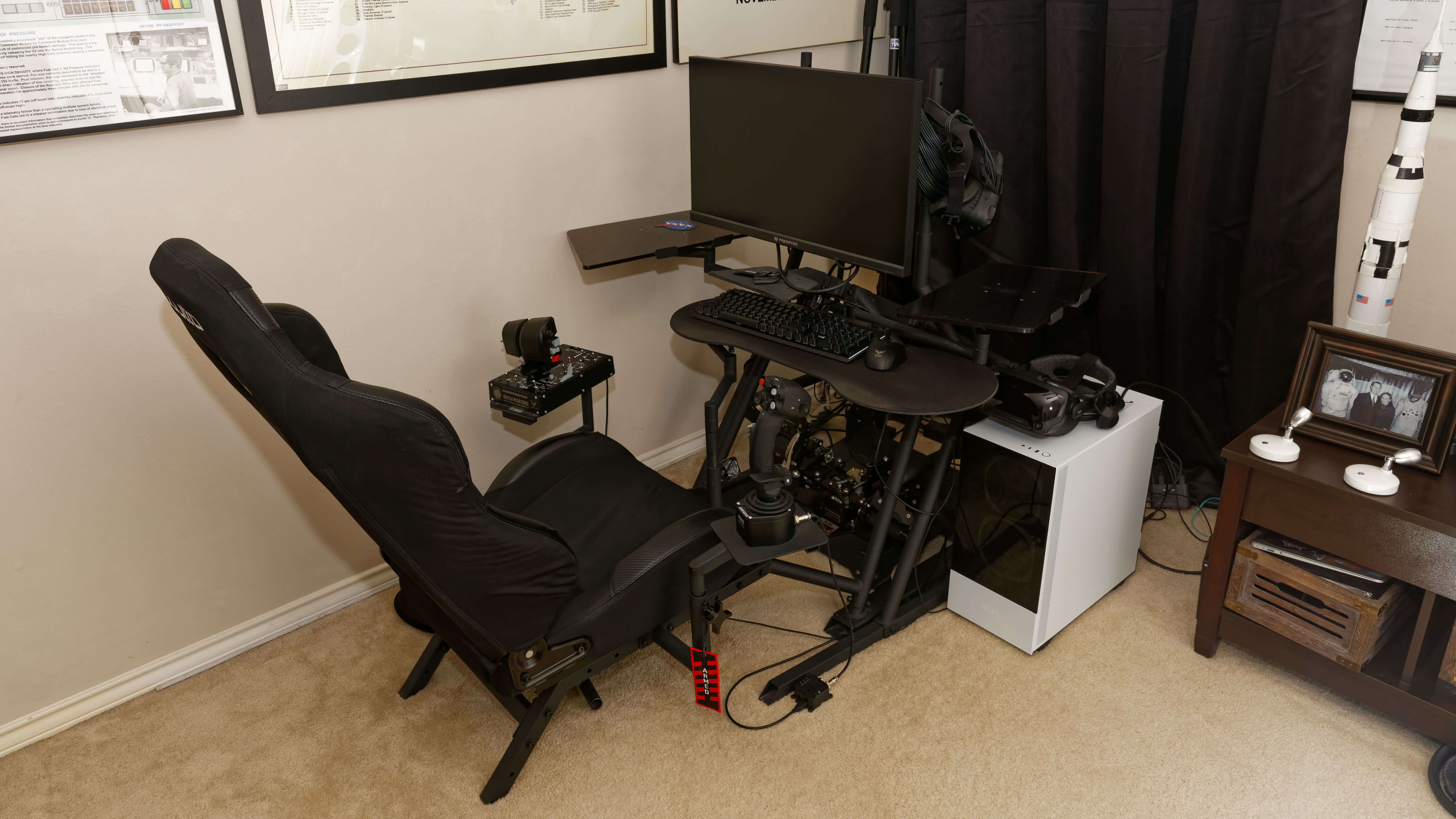
Enlarge/ The Obutto R3v that sits in the corner of Lee’s office. The two little dark plastic tray-looking things on swing arms are exactly that and are a great help for both scribbling notes and also holding food and beverages.
Lee Hutchinson
One of the great things about working from home is that you have a lot of freedom to set your home office up just the way you like it, whether you’re perfecting your PC setup to make it more comfortable for long days of Zoom meetings or buying weird niche gaming accessories for after-hours fun. Now that he’s back around the Orbital HQ, Ars Senior Technology Reporter Andrew Cunningham is interviewing Ars staffers about the gadgets they use to put the “home” into “home office,” starting with Senior Technology Editor Lee Hutchinson and his intricate flight-sim setup.
What’s the thing on your desk/part of your setup/etc that you want to tell me about?
It forms the base around which my gaming PC setup is built. It gives me a place to sit and mount peripherals (like joysticks, throttles, wheels, pedals, keyboard, mouse, monitors) in a way that’s conducive to flying or driving. And it’s pretty comfy, too.
Was it an impulse purchase, or one of those things you had been thinking about for a long time?
A little bit of both, I guess—I’d been thinking for years that I should get one, but the actual buying process was pretty impulsive. I was in a mood, and I bought it because my purchasing discipline is basically zero.
Tell me, a person who knows nothing about any flight-sim anything, why this is cool and why I would want one.
There’s nothing wrong with playing flying/driving sims seated at a desk. There are all kinds of awesome clampy-type things that will let you mount joysticks and throttles to a normal desk, and they work really well.
But a cockpit setup can be a lot more comfortable if you’re planning on multi-hour gaming sessions. It gives you options on where to mount stuff and what you can mount—you can configure a side-stick setup if you’re flying an aircraft that has its flight controls set up that way IRL (like an F-16, for example), or center stick if you’re flying an aircraft with center controls (like most other fighters). A cockpit also allows for easy swaps, so you can change your physical control setup from airplane to helicopter to car to Elite: Dangerous spaceship just by moving a few bits around.
The cockpit takes up a lot of room, but it’s comfortable and puts you in a more “natural” reclined position for piloting and driving, and it’s really nice to have the controls for your plane or car or whatever be where they’re “supposed” to be.
The Obutto R3v that sits in the corner of Lee’s office. The two little dark plastic tray-looking things on swing arms are exactly that and are a great help for both scribbling notes and also holding food and beverages.
Lee Hutchinson
Pillot’s-eye view, more or less. At left is my old Thrustmaster Warthog throttle, and at right is a VKB Gunfighter III base with MCG Pro grip. The empty mount plate below the monitor is where I’d attach a wheel if I were racing cars instead of flying spaceships and jets.
Lee Hutchinson
Still one of my favorite purchases: the Slaw Device RX Viper rudder pedals.
Lee Hutchinson
So often when I make a big purchase or find a new song or play a new game it always gets mixed in with these associative memories, so I can never think about the one thing without thinking about whatever was going on the first time I found it. So tell me, what was going on in your life when you got it?
There are associative memories galore—mostly from Elite: Dangerous, which is what I’m usually playing (DCS is a distant second, because I am all about that space). Elite is kind of an odd game where there’s not much game to it—it’s more like a you-are-flying-a-spaceship simulator than it is a traditional space combat sim or anything like that. You spend a lot of time doing mundane things—docking, undocking, ferrying cargo from point A to point B, working out profitable trade routes, gathering minerals, engineering your ship(s), that kind of stuff. But because I play Elite in VR, it feels less like a game and more like an actual place where I can go and spend time. Having somewhere like that to escape to has been hella palliative over the past two years.
Has it pulled you deeper into any hobbyist rabbit holes? Is there anything cool you learned about while you were researching it or as you were learning how it worked?
Yeah, it really has pulled me deeper into the hobbyist rabbit hole. I think I buy flight control peripherals like most other folks buy shoes at this point. Once you’ve broken the proverbial seal and assembled a giant cockpit in your office, buying a replica F-14 grip specifically for your DCS adventures doesn’t seem crazy at all anymore.
I’m not sure if that kind of rampant consumerism is really healthy, but it’s definitely been a good distraction while the world burns.
Have you seen any other setups that make you jealous? What’s the maximalist version of a flight sim setup? I’ve seen the setups of people who are WAY into racing sims, for example, and they are… intense.
I am solidly mid-tier when it comes to my flight setup ambitions—I’ve got a gaming cockpit and some flight peripherals. There are folks who go waaaaaaaaaaaaaaaaaay beyond that, though. You can spend five figures (per item!) on high-fidelity sim peripherals from these guys, for example. And calling my Obutto cockpit a “cockpit” is really kind of silly when you can just go buy full-fidelity aircraft cockpit components, actual-for-real surplused military cockpit trainers, or go full “’scuse me while I kiss the sky” bonkers and call up Boeing and get a bid directly on the real thing. The only thing holding you back are your own fears. (And bank account.)
What memories have you made with this thing?
I play a lot of Elite, but zooming around in real-world airplanes in DCS is what really helped keep me centered in the past year. During the cruddiest moments of lockdown, that cockpit is where I retreated. I’d pull down the VR headset and load up a mission I’d created in the editor where I start out in the Tomcat at about 30,000 feet, with the aircraft slicked down and nearly empty on gas, and the infinite fuel cheat turned on. Jam the throttle to the stops, wings back, watching the airspeed indicator as it wheels madly clockwise. Mach 1 comes and goes, and I tip the nose up 60 degrees and rocket upwards, fleeing the world at the tip of a resounding glass-shattering shockwave.
Level out at angels 65 as the sun cracks the horizon and the cockpit is touched with buttery orange light. The simulated world spreads out beneath as the turbofans keep working, keep pushing the jet faster.
Mach 2 is a distant memory as the airspeed indicator hovers at a truly ludicrous number, the sun flooding the cockpit now. I look back over my shoulder at the F-14’s graceful fuselage and the spreading dawn behind it, and just then, just for that moment—just for that moment, there’s no pandemic. There’s no work stress. There’s no politics or worry or strife or any of the other garbage that occupies my day to day.
There’s just me, racing the sunrise. And that’s good enough.
Listing image by Lee Hutchinson
https://arstechnica.com/?p=1791282
Mad God: What happens when the best practical VFX artist, ever, writes a film?
[embedded content]
A teaser for Mad God.
By now, anyone who would agree to the label of “film fan” knows the legendary Phil Tippett. Perhaps the greatest visual effects artist of the last 50 years (if not ever), Tippett brought to life the dinosaurs of Jurassic Park and the creatures of Star Wars while also enriching many, many stellar visual feasts like RoboCop, Willow, and Starship Troopers. Heck, Starship Troopers producer Jon Davison has famously said he did that film for one reason: “I wanted to do a movie with Phil Tippett. I wanted to do a giant bug movie with Phil Tippett.”
Despite his lengthy, award-riddled career, one filmmaking feat had eluded Tippett until this year—being the writer/director of a feature film. Tippett has finally crossed that goal off the list, too, with the arrival of Mad God on the festival scene (including its North American premiere at Fantasia Fest last month).
Say hello to the nameless central figure of Mad God.
Our little gas-masked, leather-gloved adventurer encounters some drop-dead gorgeous worlds (even if they’re not exactly bright and sunny).
Tippett Studio
The adventurer seems to be on a quest to help these nameless mummy-like drones who are seemingly forced into endless labor by some monsters…
Tippett Studio
… but even the nameless drone things exist against stunning scenery.
Tippett Studio
See? (The film is *all* practical effects-based, too.)
Tippett Studio
On the Mad God site, you can find some of the inspiration drawings behind certain scenes and characters.
This is a Phil Tippett joint, so of course there will be creatures.
Tippett Studio
There are also creepy babies…
Tippett Studio
… and diabolical doctors.
Truly, my favorite part of Mad God had to be environments. It’s as if you’re being taken through a gallery of kinetic art while on your couch.
Tippett Studio
I want those clouds for my home office.
Tippett Studio
What’s happening (action-wise) in this scene is gross, but it sure is gorgeous.
Tippett Studio
Tippett working on movement for one of the many, many monsters in Mad God.
Tippett Studio
Tippett has apparently had the visions and ideas behind Mad God for three decades. But this passion project perennially remained on the back burner as he took on all those highly, highly successful commercial projects. This creative struggle has been chronicled somewhat in two documentaries, the career-retrospective Phil Tippet—Mad Dreams and Monsters and the Mad God behind-the-scenes project Worse Than the Demon (which his daughter Maya directed for her undergrad thesis). Recently, the VFX legend told The Observer he started working on Mad God after RoboCop 2, which means this dates back to 1990. (About three minutes of work on 35 mm from then made it to 2021).
It simply took years to find the time and some crowdfunding initiatives to help foot the bills, given how painstakingly time- and effort-intensive Tippett’s preferred filmmaking styles can be. Just consider what he told Letterboxd it took to bring one scene to life:
I did a lot of talks around the San Francisco Bay. On Saturdays, I would invite the people from the schools to come in. They had no skill, per se, so it was just getting experience. I would advise them, and I would spend a certain amount of the week figuring out processes for what they could do, and then they would accomplish those tasks, but very glacially.
There’s one scene with mountains of dead soldiers, and I used thousands of little army men, and they would melt them onto these wire structures. And that took three years to complete, with six people working on Saturdays.
Under a barrage of enemy fire, an intrepid special agent in a suspended container is lowered steadily into an ominous shaft. Down, down, inexorably down, through the many strata of ruin and residue bearing enigmatic witness to time’s passing. At last, the pod touches down on terra firma, and its occupant emerges, map in hand and mission in mind. The surrounding landscape is a broken place of corruption and decay, of casual horror and degradation. Our hero will not be deterred, though the path ahead holds only more horrors, so many to behold…
Yeah, that provides an accurate sense of how clear, easy-to-follow, and traditional the plot of Mad God proves to be. Dialogue is equally minimal.
Instead, you watch this film to luxuriate in the exquisite grotesqueness Tippett dreams up and executes through a barrage of old-school filmmaking techniques: mixed media, stop-motion animation, modeling, silhouettes, and puppets—you name it. The sound design includes squishy noises as a sinister surgeon digs into intestines, and the cries of a genuine infant give voice to an alien baby in distress. Each subtle creak of our adventurer’s leather gloves and every measured breath through their gas mask sticks with you—the sound design equivalent of an earworm, I suppose. And sitting through this film on your couch (or in your theater seat for some lucky few) is like being guided through a gallery of lavish kinetic art pieces. The zoomed-out environments themselves are wallpaper-worthy whether Tippet has created a war-torn landscape midstorm, a speeding-by universe, or a room full of giants strapped to electric chairs being zapped to the point of soiling themselves incessantly. That last sequence is truly gross if you stop and think about it, but the sound design and visuals are stunning in the moment.
Our hero has set out to save mummy-like drones, and this being a Phil Tippett project, they meet all manner of extravagant subterranean creatures. Early on, the adventurer encounters something I could best describe as a whale crossed with a dinosaur covered in boils and sores. Later, there are trippy polka-dot arachnids you might find in a Guillermo del Toro version of Alice in Wonderland. Some kind of octopus-ish spirit creature has a hint of Raiden from Mortal Kombat to it as it demands to be handed an alien infant. “It’s a reflection of the world I live in and the craziness of it,” Tippett said of his visions in the documentary Mad Dreams and Monsters. “But I have to find some kind of expression to make sense of stuff that doesn’t make sense to me.”
Mad God won’t be a story you remember as fondly as Luke and Vader, but its sensory gifts will stay with any Tippett admirer just as long. There’s a reason this film took home two Fantasia Fest audience awards, one for Best Animation and another for Most Groundbreaking Film. Just remember that Fantasia Fest is a heavy, heavy genre festival with an audience who knows that—adjust your expectations accordingly and steer any kids toward something by Aardman Animations (Farmegeddon, Wallace & Gromit) instead if they’re itching for a stop-motion adventure.
Mad God continues to play the festival circuit, including hosting its upcoming US premiere at Fantastic Fest in Austin, Texas. The most up-to-date screening information can be found on the film’s website, which also offers VOD options.
PAX-demic West impressions: Creating fun out of thin, masked air
The opening queue for PAX West 2021, angle one.
Sam Machkovech
The opening queue for PAX West 2021, angle two.
Seattle’s Pink Gorilla Games, setting up before the public enters.
Seattle’s Pink Gorilla Games, which proceeded to be swarmed for its selection of toys and classic game cartridges and discs.
Sam Machkovech
The board-games-and-dice pavilion, before the expo opened.
The board-games-and-dice pavilion, shortly after the expo opened to the public.
Fangamer’s usual selection of quality shirts, toys, and plushies.
We’ve only seen Dial-Up Games at conventions, since it mostly operates as an eBay-only shop, so this proved to be a nice collection to sift through.
Highlights behind glass. All three Dragon Warriors from the NES!
PAX Arena, a stage dedicated to both public and competitive play.
The public computer lab, before it was swarmed by folks eager to play in a massive LAN party.
Check out classic game cartridges here.
Not enough CRTs in the classic console freeplay zone, but hey, freeplay is freeplay.
In good news, PAX’s tradition of hosting massive Steel Battalion sessions on the original Xbox remains intact.
Full squad gets the tutorial.
SEATTLE—From the ongoing wreckage of a variant-riddled pandemic comes… a modest, regional, and relatively fun nerd convention.
My perspective on PAX West, arguably the largest Northwest expo dedicated to gaming culture, is biased by the lines, crowds, and hype I’ve seen attached to every incarnation since its first downtown Seattle sellout in 2007. Back then, the show was firmly attached to the webcomic Penny Arcade (also a Seattle creation), but the show’s reputation grew quickly enough to become a multi-day, multi-building extravaganza.
Ever since, the fest formula has been increasingly divorced from its comic origins. The PAX model has officially duplicated and been liberally borrowed in other regions. In recent years, of course, a little worldwide dilemma got in the way.
This year, PAX has beaten most other wildly visible American nerd expos to the punch of putting the “public” back into “public expo.” Their plan was set into motion back when vaccination rates and optimism made Labor Day 2021 seem like a solid time to try again. But, uh, yeah—about that.
An anecdotal crowd estimate on day one
I have now survived three direct delta exposures in the past month (leading me to a weekly nose-swab testing regimen, all negative, all good). I also do not have any regular contact with vulnerable populations like kids. So when the start of PAX finally arrived, I decided to mask up and dive in. The result, at least on PAX West 2021’s first of four days, was weird. It was uneasy. Yet, it was somehow also cozy, relatively comfortable, and fun.
This PAX, like most PAXes, is split clearly between two parts. First, there’s the vendor-filled expo hall full of brand-new games, hands-on demos, and mountains of merch. Elsewhere, you can find the DIY play spaces, buttressed by TVs, consoles, large tables, and massive lending libraries of board and tabletop games. Both are a lot less crowded this time around.
How much less crowded? It’s hard to say. PAX’s showrunners made clear that they were reducing maximum attendance for this year’s show, so the smaller crowds are to some extent intentional. Up until the show’s opening hour, however, single-day and full-weekend passes were still on sale. My eyeball estimate of the main expo hall’s queue, ahead of the show’s 10 a.m. start on Friday, reached approximately 3,000 showgoers. That’s a decent crowd, sure, but not the 10,000-plus I’ve regularly seen line up on an average PAX West morning.
100% mask compliance, thank goodness
Board game loans courtesy of PAX itself.
Tabletop loans courtesy of the Alexandria RPG Library, a local non-profit.
Both tabletop and board game loans can be enjoyed on this smattering of tables, which are much more spaced out than this angle may make you think.
Sam Machkovech
A future-retro platformer took over the prime floor real estate normally meant for major console publishers like Sony and Microsoft.
No line to sample games made by students from local private game university Digipen.
Mid-day on PAX West 2021’s first day. Sizable crowd in the middle of the exhibition hall, and thankfully, every single person is masked and has shown some proof of vaccination or clear COVID testing.
Lots of open space depending on what angle you peer from. No need for this queue line.
The procedurally generated Cursed to Golf is a side-scrolling golfing adventure that lands somewhere between Golf Story and Spelunky. Fun stuff from Chuhai Labs.
Residual is a PAX West 2021 highlight, as it combines randomly generated worlds, Terraria-like controls, and complex survival systems.
Proceeds from any play of the smartphone game Rescue Pets go towards animal shelters. Nice.
Rivals of Aether, a popular platform-fighting game that compares favorably to Super Smash Bros. Melee, had a consistent crowd angling to play using old-school GameCube controllers.
I Expect You To Die 2 is a clever VR puzzle game, even if its name isn’t quite welcome in a public expo full of delta fears.
Console freeplay from one angle.
Console freeplay from another angle.
Sadly, PAX’s organizers at ReedPOP elected to block off some considerably large spaces in the convention center’s main exhibitor hall instead of using them to organically spread booths out—and better guarantee six feet of social distancing. A few marked queues inside the hall suggest staying six feet away from others, but the occasional mass of bodies near, say, a game demo is bunched enough to make me hope the show’s 100% mask compliance, and proof of vaccination or recent COVID tests, is doing the trick.
It’s at least refreshing to know complete mask compliance can happen in America, all noses properly tucked in even. Bless PAX’s gamers for getting this right (at least, from what I saw in the show’s first morning and afternoon, though believe me, I spent hours hunting for violations).
Ultimately, this PAX is far less crowded on a between-booth basis than years past. Smaller attendance is winning out. Worth noting: two maskless food court centers sit directly next to this hall’s mask-mandated paths, full of chairs and with a decent space buffer from masked folks. This doesn’t mean anyone is spitting particles less than six feet away from a gaming booth, but part of me wishes these zones were shifted to the expo hall’s barricaded, blacked out zone—where I would have preferred people eat in shame (kidding, kind of).
Some DIY-gaming support, but less than usual
Level Up Dice sells this very, very heavy 20-sided die, the size of a mandarin orange, made entirely of tungsten, for $1,300. Do not roll this thing on glass.
Level Up Dice’s heaviest, most expensive dice: bronze on the left, tungsten on the right.
Level Up’s “unicorn” dice set works by screwing each of its separate pieces into a horn, then rolling to see which number pops up on top.
Different top, same horn, different roll.
Level Up Dice’s wooden sets cost around $200 and feature hand-carved number markings. These come with an 86% “unbiased” rating, as opposed to the 99.9% unbiased rolls from metal sets. But they do feel really nice in the hands.
A different set, with a different wood foundation. The way they sound when they land on glass is really something else.
More standard dice from Level Up Dice. Pricey, nicely made, good feel in the hand.
More standard dice from Level Up Dice. Pricey, nicely made, good feel in the hand.
Chest-shaped cases from Level Up Dice with quirky mouths to chomp them shut.
In years past, I maintained that the more fun PAX experience comes not from its gargantuan lines and hype-filled demos, but from its DIY elements. This year, the hype-filled demo options are pretty much nil, so if you’re coming to PAX-demic West, you’re forced to take my advice by default.
PAX West continues to fuel this side of the experience by offering massive lending libraries across the gaming spectrum, all available on a one-per-attendee basis. Console “free play” rooms offer every system imaginable, from a PS5 to a Nintendo Entertainment System, and discs, cartridges, and controllers to match. A massive computer lab comes stocked with powerful machines and a seemingly infinite selection of software—along with networked opportunities to face off in specific games at various hours.
And the show’s tabletop lounge continues to operate with hundreds of open-box board games, plus a massive, dedicated Magic: The Gathering space. If you and your friends have been eager to test a rare or expensive board game, like Wasteland Express, Tokyo Highway, or anything from Ars’s regular best-of lists, before plunking down cash, this year’s PAX West still has your back. But the same cannot be said for the show’s usual variety of tabletop games, particularly massive war games like Warhammer. You can find ways to spin up Dungeons & Dragons campaigns, but not with its creators’ official massive support like at previous PAXes.
The main exhibitor hall, on the other hand, has sputtered out into a ditch compared to years past. The chicken-and-egg argument of what came first—lower attendance or fewer known companies participating—is arguably up to much deeper analysis than I can access. Either way, the result is a bummer omelet, one in which only Bandai Namco counts as a triple-A publisher. Sadly, that company only brought a single game to show off, the RPG sequel Tales of Arise—fine stuff if you’ve played Tales games before, I suppose.
An unwelcome speedrunning record
Welcome to PAX West 2021’s entirely masked cosplay gallery.
Unsurprisingly, PAX West 2021 had a lot of masks with mustaches printed or sewn on top.
At PAX West 2021, we’re all trying to find the guy who did this.
It’s hard to see from this angle how nicely made Gordon’s gravity gun is made. And I for one would love to have a Barney tail me at something like PAX West.
I did a laughing triple take when I saw this It Takes Two cosplay. Nicely done. Bonus points for the guy of this duo telling me, “Yeah, it’s a good game, but the husband is a jerk.”
A fun, simple costume that also makes it easy to find your friends… until you run into the other two groups faking like Sims at PAX West 2021. (I counted three groups in only a few hours.)
No belch scent detected from this mask.
Earthbound represent.
I know people are all about Resident Evil Village’s “tall lady,” but Karl Heisenberg as a cosplay option is also quite fetching. Absolutely impeccable construction on that hammer. Oh, the hero from that Ubisoft game, too, I guess.
Charizard, complete with retractable wings.
2B is a great masked cosplay option.
Is that a nice Keyblade on your shoulder, or are you happy to see me?
Someone in the comments tell me whether my “some character from League of Legends” guess is correct.
Specific video game characters? Random assortment of fantasy elements? I’d believe you either way.
Ocelot from Metal Gear Solid 3 (left), Ludens from the Kojima Productions logo (right). Yes, I had to ask Steve Haske to identify these.
But if you come to PAX in search of previous show highlights, like experimental VR, last-minute teases of the year’s biggest console releases, the official presence of any console manufacturer, or even a crowded “megabooth” of critically acclaimed indies, brace yourself for a big goose egg. I still managed to have fun sampling a few indies on the show floor, particularly Cursed to Golf, a charming roguelike that combines Golf Story with Spelunky and has already landed on my gonna-buy list. But my exhibition hall “lap,” complete with game demos and merchandise perusal, took less than two hours. That’s a personal PAX speedrunning record, and I don’t say that as a compliment.
The galleries through this article includes some show highlights, including inventive cosplay, a $1,300, 20-sided die made of incredibly heavy tungsten, and a solid selection of nicely made gamer merchandise. But it’s not the show’s usual feast of the senses, and its roster of discussion panels severely lacks the name recognition of prior PAXes. In good news for delta-conscious gamers, all of these panels are streaming via PAX’s Twitch channel, should you wish to tune in and support compelling topics like inclusion and diversity among various gaming trades.
As is, this downgraded show’s best potential rests in its ability to support a DIY gaming spirit, and that may very well have to be the model for public gaming and nerd expos for the foreseeable future. If triple-A gaming publishers can’t staff up to make public splashes out of their next big things, then you and your friends will have to look for your own surprises. Shows like PAX can still create the perfect environment for that by supplying borrowable games, massive tables, clear masking and vaccine-testing policies, and like-minded, health-conscious nerds ready to fill in any empty spots in video or board games.
Listing image by Sam Machkovech
https://arstechnica.com/?p=1791988
Too much of a good thing: Mourning the slow death of the retail game store
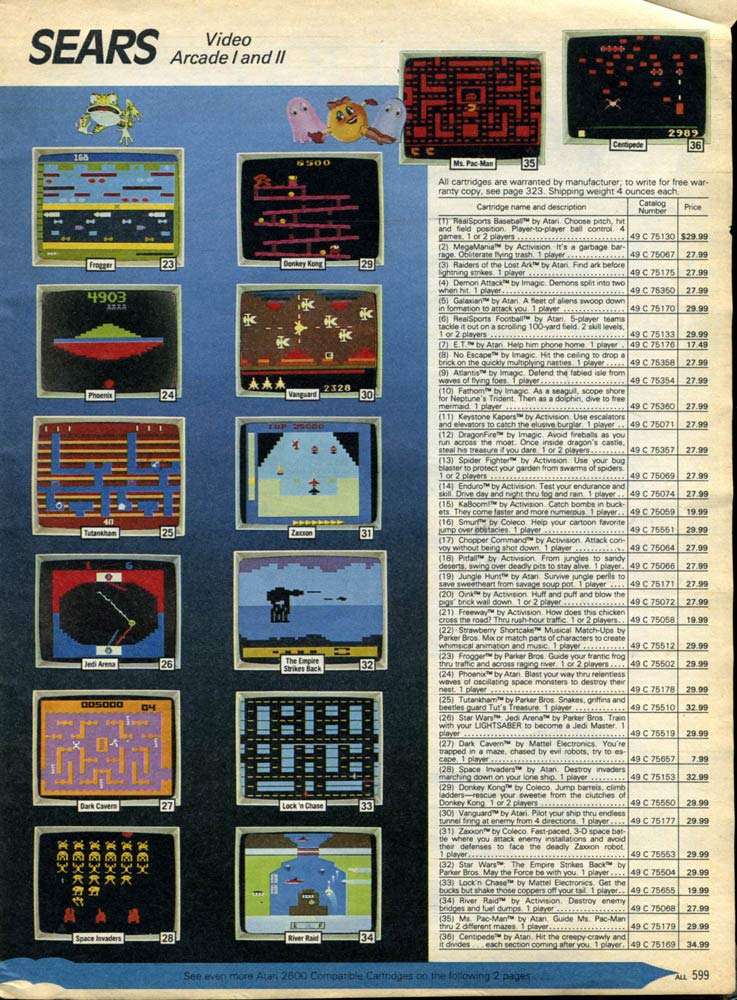
$34.99 for Centipede on the Atari 2600 might sound cheap, but that 1983 price is the equivalent of roughly $90 today. [credit: Retro Waste ]
When I was a kid, buying video games was an incredibly stressful process. In the late ’80s, I was too young to buy magazines to find out what games deserved my hard-earned pocket-money. So, in an experience all too familiar to many millennial gamers, I used my (poor) intuition to look at the box art to decide what to bring home.
At the time, a console title cost something in the realm of $100 in today’s dollars (or over €85-95), which made each game purchase an investment requiring long consideration and thoughtful planning. At that price, every game needed to last weeks, if not months, to justify the investment. Most games achieved this with the good old “Nintendo-hard” philosophy: Brutal challenges make a relative dearth of original content last longer.
In those days, buying a game felt like being given rare access to a magical kingdom, paying a dear price for access behind golden gates instead of trying to catch a glimpse from the outside. Getting a game was an all-too-sacred ritual involving a mystical and intimate relationship with store owners who, on average, were just interested in duping naive children into buying whatever leftover stock the store had lying around.