As CDPR mothership CD Projekt Group held its H1 2021 financial earnings presentation with investors this week, it put its ongoing support for Cyberpunk front and center. The company’s public report highlights the high number of patches and hotfix additions added to the game since launch, improved performance across platforms, and Cyberpunk‘s recent re-addition to the PlayStation Store after Sony pulled the title from its digital storefronts in December. The incremental experience fans have been getting, the report suggests, is slowly making progress.
Joint CEO Adam Kiciński even reiterated during the presentation that continued improvements to Cyberpunk will be the company’s top-priority for “as long as it takes.” (He also noted that, despite its myriad issues, the game was the leading revenue driver for CDPR in the first half of 2021.)
The Wheel of Time teaser is here, and it looks and feels exactly right
Rosamund Pike stars as Moiraine, a member of a powerful, all-woman organization called the Aes Sedai. [credit: YouTube/Amazon Prime ]
It’s been just a few weeks since we got our first look at still images from Amazon’s forthcoming The Wheel of Time series, adapted from the late Robert Jordan‘s bestselling 14-book series of epic fantasy novels. And now we have the first official teaser trailer. Count several Ars staffers among the many fans of Jordan’s books who have been eagerly following the years-long development of the series. From what we’ve seen, it looks like showrunner Rafe Judkins (Agents of S.H.I.E.L.D.) has gotten the overall look and feel of the books exactly right. Fans should be pleased.
As I’ve written previously, the TV series will center on Moiraine (played by Oscar-nominee Rosamund Pike), a member of a powerful, all-woman organization called the Aes Sedai. Magic, known as the One Power, is divided into male (saidin) and female (saidar) flavors. The latter is the province of the Aes Sedai. Long ago, a great evil called the Dark One caused the saidin to become tainted, such that most men who show an ability to channel that magic go mad. It’s the job of the Aes Sedai to track down such men and strip them of their abilities—a process known as “gentling” that, unfortunately, is often anything but. There is also an ancient prophecy concerning the Dragon Reborn: the reincarnation of a person who will save or destroy humanity.
Given the epic scope of the novels, it’s no surprise that the TV series boasts a sprawling cast. In addition to Pike, Josha Stradowski stars as Rand al’Thor, while Marcus Rutherford plays apprentice blacksmith and dream-walker Perrin Aybara. Zoë Robins plays healer Nynaeve al’Meara, and Madeleine Madden plays Egwene al’Vere. Barney Harris plays series comic relief Matrim Cauthon. Hammed Animashaun has been cast as Loail, a close friend to Perrin and Rand al’Thor. Alexandre Willaume portrays Thom Merrilin, a “gleeman and adventurer”—basically a traveling bard—while Johann Myers plays the villainous Padan Fain, and Alvaro Morte plays Logain.
Michelle Gomez is a time-traveling Madame Rouge in Doom Patrol S3 trailer
The Doom Patrol is at a difficult crossroads
Is that a time machine?
YouTube/HBO Max
Madame Rouge (Michelle Gomez) knows how to make an entrance.
YouTube/HBO Max
Madame Rouge warns of an imminent threat—but she can’t quite remember what it is.
YouTube/HBO Max
The Brain’s presence is a clue that the Brotherhood of Evil is likely involved.
YouTube/HBO Max
Monsieur Mullah’s appearance confirms it.
YouTube/HBO Max
That might just be the alien Garguax.
YouTube/HBO Max
This might be Frenzy, a member of the Brotherhood of Dada in the comics.
YouTube/HBO Max
Someone has the ability to change everyone into clown costumes on a whim.
YouTube/HBO Max
Robotman encounters a talking bicycle. “I am so high right now.”
YouTube/HBO Max
Rita (April Bowlby), aka Elasti-Woman, has a master plan.
YouTube/HBO Max
Zombie Patrol.
YouTube/HBO Max
Attack of the talking butts.
YouTube/HBO Max
Cliff/Robotman (Brendan Fraser/Riley Shanahan) gets a blood transfusion.
YouTube/HBO Max
Larry/Negative Man (Matt Bomer/ Matthew Zuk) has an existential confrontation.
YouTube/HBO Max
Rita’s losing control of her elasticity.
YouTube/HBO Max
Vic/Cyborg (Joivan Wade) undergoes an operation
YouTube/HBO Max
One of Crazy Jane’s (Diane Guerrero) 64 personalties is clearly in a pretty dark place.
YouTube/HBO Max
Burn it down, madame.
YouTube/HBO Max
Michelle Gomez is always a welcome addition to any series, whether playing the Master on Doctor Who or Madame Satan on the Chilling Adventures of Sabrina. So we were thrilled to learn she was joining the cast for the upcoming third season of Doom Patrol. And now we have our first good look at her portrayal of Madame Rouge in the official S3 trailer.
(Spoilers for S2 below.)
A S3 teaser dropped a few weeks ago, largely focused on the lingering plot line from the pandemic-curtailed S2: namely, Dorothy Spinner’s (Abigail Shapiro) confrontation with The Candlemaker. Dorothy, as fans will know, is Caulder’s (Timothy Dalton) daughter, who has a special ability to bring imaginary friends to life. That’s not so bad when it was a friendly giant beast named Manny or Herschel the giant spider. But The Candlemaker is linked to a tribal curse and is a far more insidious creature. He emerges whenever Dorothy makes a wish, and widespread slaughter is usually the result. In the S2 finale, Dorothy got her first period, marking her transition into womanhood, and The Candlemaker’s powers began to manifest in the real world.
And then, the season just… ended. The first episode or two of S3 will almost certainly resolve that particular storyline, and HBO Max has hinted at a “devastating loss.” Neither Dorothy nor Caulder is anywhere to be seen in this new trailer, so it’s possible the show will be continuing on without them (much as the Doom Patrol in the comics moves on without Caulder). We do know that Willoughby Kipling (Mark Sheppard), the occult detective and chaos magician, will be back, however.
Instead, the official trailer is mostly all about Gomez’s Madame Rouge, a supervillain who first appeared in the Doom Patrol comics in 1964. A former actress with a split personality, Rouge flips between good and evil in the comics. She’s also a shapeshifter/master of disguise and was the only female member of the Brotherhood of Evil—until a romantic bond with Caulder helped her beat back her evil personality and join forces with the Doom Patrol.
Madame Rouge arrives in a time machine to warn the Doom Patrol of a great threat to the world, although she can’t remember precisely what that danger might be. Whatever it is, the Brotherhood of Evil appears to be involved. Bringing the Brotherhood into the S3 narrative arc is a neat callback to S1’s archvillain Eric Morden, aka Mr. Nobody (Alan Tudyk), who could travel through dimensions and alter reality. Morden was a former member of the Brotherhood, and in a flashback we learned that he was kicked out by the group’s leader, The Brain, and replaced by a superintelligent French gorilla named Monsieur Mallah. Monsieur Mallah definitely makes a brief appearance in the trailer along with the Brain and possibly the alien Garguax.
Dada
And as Gizmodo’s sharp-eyed Charles Pulliam-Moore noted, “There’s a very brief mention of the Sisterhood of Dada also factoring into this season of Doom Patrol, which may be an indication that the show will borrow elements of the comics where the Brotherhood of Evil rebrands itself as the Brotherhood of Dada.” That group—devoted to all things absurd and bizarre—is named after the Dada art movement, and its founder is none other than Morden/Mr. Nobody.
That does appear to be Dada member Frenzy with the two bicycle wheels on his back. (In the comics, he can transform into a whirling cyclone.) Is that The Fog Crazy Jane encounters in one brief scene? In the comics, The Fog is a psychedelic death cloud that absorbs people. Absorbing Crazy Jane, however, proved to be a mistake. That might be The Quiz changing everyone into clown costumes at a club. We don’t get a very good look at her, but she certainly has the trademark long gown and mask, only without the question marks. So she looks more like a nurse/nun. The talking bicycle Robotman encounters is definitely a nod to when the Brotherhood of Dada stole the bicycle of Albert Hoffman, which has “lysergic resonance.”
As for other adventures, it looks like the Doom Patrol’s members will become zombies at some point in their journey toward self discovery and will likely face a group of talking butts, because why not? And who knows what complications messing with time travel will bring—or whether Madame Rouge has something else in mind entirely?
The first three episodes of Doom Patrol S3 will air on HBO Max on September 23, 2021, followed by weekly installments after that. If you haven’t seen this underappreciated series, now’s the time to catch up.
[embedded content]
Official trailer for season 3 of HBO Max’s Doom Patrol.
EA bucks convention with preview of extremely unfinished Dead Space remake
The Dead Space remake is aiming to look even better than this when it launches on an unannounced date.
The remake’s art team at Motive first used the original game’s legacy assets as a baseline to build from.
Next, the artists added greater environmental detail.
The next step was adding material shaders to capture the metallic look of the Ishimura.
Then the art team took a first pass at lighting the environment.
Finally, basic VFX were added to capture the atmospheric, Alien-esque atmosphere.
An early look at a corridor in the Ishimura running on the Frostbite engine.
Isaac Clarke’s engineering suit is a work-in-progress.
Thirteen years after EA first scared players senseless with Dead Space, the publisher confirmed plans for a stem-to-stern remake of the sci-fi survival horror classic. The brief, cinematic sizzle reel of brooding tracking shots and environmental gore from July’s EA Play event was followed this week by a behind-the-scenes look, full of clearly unfinished content, rudimentary “gray boxes,” and a glimmer of hope that EA’s attitude behind this retelling might be the right one.
The 40-minute broadcast with Motive’s senior producer Philippe Ducharme and creative director Roman Campos-Oriola was, much like Dead Space‘s working-class protagonist Isaac Clarke, fairly lean and utilitarian. Right now, what we still don’t know about the remake could fill a haunted derelict infested with ravenous space zombies—and that’s intentional.
Out of the gate, Ducharme and Campos-Oriola stressed that the preproduction build they had running on the Frostbite engine was nowhere near representative of final gameplay. Instead, they offered only the slightest indication of how the developer behind Star Wars Squadrons plans on tackling a faithful—yet more gruesome—reimagining of the 2008 original for modern hardware. What we saw were a few work-in-progress environments for the decrepit mining freighter USG Ishimura, a rough in-game model of Clarke’s engineering suit, and a lesson in destructible necromorph biology inside an entirely unfinished framework. The reason for this unusually candid approach was to provide a sounding board so that the Dead Space team can get as much feedback as early as possible from the game’s fans.
Stripped down
Ducharme and Campos-Oriola spent most of the stream telling rather than showing in a loose Q&A format. Discussing the team’s wider vision, they touched upon several familiar-sounding highlights: Motive’s desire to maintain the authenticity and honor the legacy of the original game; how the series and the game industry have evolved over the past 13 years, paving the way for new gameplay opportunities; and how the oppressive, stressful atmosphere of the Ishimura remains a pillar of the remake’s design principles.
To reintroduce the planet-scavenging Ishimura, the developers showed a series of slides detailing how the art team went back to Dead Space ’08’s legacy assets as a baseline to spruce up an Alien-esque passage with greater environmental detail—adding material shaders, lighting, and volumetric VFX—before transitioning to Clarke moving through the finished L-shaped room.
While clearly representing only a first visual pass, Clarke’s trademark cumbersome suit and the ship interior looked the part, though seemingly without any of the next-gen bells and whistles like ray tracing that Motive has planned for the final product. With less than a full year of work on the game under the team’s belt, it’s safe to say that the basic visuals should see improvements as development continues.
Peel off their limbs?
Motive also demonstrated its so-called “dismemberment gym,” an incomplete, gray-box testing room where the developers could press a button to spawn a low-level necromorph for limb-shooting target practice. The difference from the original game is in the “peeling system,” a gross term for a new bodily destruction system that will allow players to separate the skin (and, in turn, the gooey bits underneath) from a monster’s body.
To give a basic idea, Ducharme and Campos-Oriola demoed a small X-ray gore tool visually “cutting” through a T-posed necromorph. In clinical, tech-demo fashion, the tool cut through the top dermal layer to reveal the musculature and skeleton underneath. The developers gushed about the potential for peeling the fleshy layers off Dead Space‘s cast of beasties and promised bold upgrades to the game’s infamous dismemberment damage modeling. Motive hopes to make disturbingly realistic wounds, down to hyperspecific bullet-entry locations and physics. This includes even graphic scenarios like ripped-open ligaments leading to dangling limbs.
The remake will host some modern design tweaks as well, replacing the surface-to-surface superman jump of the original with the full 360-degree zero-G movement suite of Dead Space 2 and 3. Ducharme and Campos-Oriola indicated this change will offer some fresh, interactive ways to probe the dark spaces on the Ishimura that were previously only cinematic. In a nice narrative tie to Dead Space‘s sequels, Gunner Wright, whose gravelly voice gave Clarke life in Dead Space 2 and 3, will be playing the engineer in the remake. This change does away with the original’s mostly silent protagonist—with the caveat that he will only speak when there’s a good narrative reason to.
Motive’s so-called “dismemberment gym” allows developers to practice precise shooting at enemy limbs.
The developers promised a host of improvements to Dead Space‘s dismemberment damage modeling, though only general ideas were shown in the reveal.
An early attempt at lighting bouncing off Isaac’s engineering suit.
The necromorph model could look even more detailed than this in the final game.
Motive used an X-ray demo to illustrate a very basic look at the layers of destructible gore.
Concept art of the Ishimura‘s grim medical bay, reimagined.
A more transparent EA
Realistic guts and stomach-churning fear are great benchmarks to shoot for, but what’s really fascinating here is that EA allowed Motive to show anything from the remake this soon. After years of being dogged by fans for scandals over microtransactions, Star Wars Battlefront II‘s loot-box debacle (and a generally botched rollout for the IP until 2019’s Jedi: Fallen Order), and indifference to its consumer base, maybe the publisher has finally wised up to the merits of being open and honest from the start. We were enamored with the original game on its release, describing it as an experience that “takes all the best parts of the genre and makes them better, while avoiding almost every pit similar titles fall into.”
While it remains to be seen whether Motive will keep up this degree of transparency throughout the remake’s development, even this first bare-bones glimpse seems to be on the right track.
First Marvel’s Midnight Suns gameplay footage: XCOM with cards looks rad
Flashy cinematic attacks in Marvel’s Rising Suns certainly eclipse the kinds of attacks you can pull off in the same developer’s XCOM games.
The Hunter (left) always teams up with two other Marvel superheroes in this game’s tactics battles.
Notice that certain trios have the option of accessing team-specific cards.
I hope this derpy pose in Dr. Strange’s animation remains in the final game.
An example of a card-based attack. Shoving seems like a good idea…
… and that shove gets even better when your aim sends an enemy into an explosive barrel.
Ka-blammo!
Fight atop of Avengers Tower…
… or in one of Dr. Strange’s domains.
“Chain” to slice through multiple nearby enemies.
Set foes up for the next round.
Here’s an example of a card that emphasizes getting more cards in a future round. Nice buff.
Line ‘em up…
… and cut ‘em down.
After getting a world-premiere CGI reveal last week, the new Firaxis strategy game Marvel’s Midnight Suns received a full-blown gameplay premiere on Wednesday. Sure enough, it looks exactly like last week’s promise of a superhero take on XCOM—yet the new, six-minute reveal actually makes the upcoming game look like an intriguing twist on Firaxis’ well-trod tactics territory.
Midnight Suns is slated to launch in March 2022 on PC and a wide variety of consoles, and it sees the existing XCOM development team inject deckbuilding and card-based abilities into turn-based, tactical combat. Every battle brings a brand-new Marvel superhero, dubbed The Hunter, into fisticuffs alongside two previously established Marvel superheroes, including members of the Avengers, X-Men, and other ensembles. Each squad member appears to get their own deck of cards, and your makeshift trio must then tap into supernatural powers and fight in XCOM-like combat. At the start of each turn, your fighters flip up six cards from their individual decks.
When it’s a character’s turn, they can move around the battlefield up to a certain radius and play up to three cards, which include attacks, buffs for allies, and negative conditions for foes. Some of these emphasize positioning each hero on the battlefield in order to, say, hit a bunch of enemies in a straight line or dump an area-of-effect radius of pain onto a cluster of bad guys. One revealed attack went so far as to smash open a barrier at a cliff’s edge, then knock a foe over that newly exposed gap. Each turn has an apparent three-card limit, but it’s currently unclear whether that’s three cards per hero or three cards for the entire squad during a turn. Either way, players must also mind a squad’s “heroism” meter, as some supercharged cards expend that meter’s points, as noted by an orange number on a card’s top-left corner. “Basic” attacks and abilities do not use the meter.
Between missions: Training, conversations, and, er, currencies
Things you can do between missions at the Abbey include… petting this delightful demon dog!
Blade will help you upgrade or unlock new cards.
A sampling of possible unlocks from one training session.
Or spend one of the game’s currencies on other training montages and bonuses.
Looks like Ghost Rider wants to help train.
That is a lot of currencies, Firaxis.
Firaxis / 2K Games / Marvel
Conversations will include icons that indicate a decision that may affect progress down the line.
Blade also loves kicking back and waxing nostalgic, apparently.
A pleasant walk through a meadow with Tony Stark always ends in him complaining about work.
Rain and idle banter.
Off to the next mission.
When you’re not on the battlefield, you and your favorite superheroes kick back at The Abbey, a conversation- and training-filled hub where The Hunter chats with allies you enlist throughout your quest. Samples of this text whizz by in the trailer, and upon closer examination, they appear to include extracurricular excursions with text conversations and choices you can make to affect how characters respond to you. Chill on a couch with Blade, take a walk through a prairie with Tony Stark, chat about ’80s horror flicks with Magik—but also pay attention to the icons on certain choices, as they may affect a hero’s card unlocks.
Outside of conversation, Midnight Suns appears to be riddled with—ugh—a slew of in-game currencies. In just one screen, I count:
Attack Essence
Heroic Essence
Skill Essence
Blueprints
Artifacts
Additionally, a “training” facility shows how to spend the game’s “credits” currency on upgrading existing cards. I’m all for a progression system that encourages players to, say, replay missions at harder difficulties or complete challenges to either unlock new cards or supercharge existing ones. But a profusion of confusing currencies never makes an RPG better, even if they’re all completely free. I hope Firaxis’ publisher at 2K Games is careful not to turn these currencies into an excuse to add pay-to-win opportunities, of course. The game’s official social media presence says that players shouldn’t expect any microtransactions beyond “cosmetic” options, and we hope that promise bears out in the final product.
We still have tons of questions about how Midnight Suns‘ campaign will feel. How much of the campaign is procedurally generated? Will the game come up with a creative twist on XCOM‘s usual “permadeath” option, since its devs have confirmed that permadeath doesn’t necessarily align with Marvel’s universe of characters? Will additional heroes be gated either behind paid “season passes” or free, after-launch patches? But beyond those questions, this reveal does a lot to confirm that Midnight Suns‘ real-time graphics look bold yet clear, with a variety of battling environments and flashy, cinematic attacks (which we hope can be disabled or fast-forwarded if we get sick of them). And the card system could be just the jolt the genre needs, both to enable Firaxis to create wacky attacks that (due to card draws) cannot be spammed repeatedly and to make players scramble when a bad card draw forces their strategic hands.
[embedded content]
Half of this week’s Midnight Suns gameplay reveal; another half was hosted by IGN and is linked above.
MGM releases last trailer for No Time to Die, Daniel Craig’s final 007 film
Daniel Craig is back for one last stint as James Bond/007.
YouTube/MGM
A flashback to the kill in Casino Royale that granted Bond 007 status.
YouTube/MGM
The death of Vesper (Eva Green) in Casino Royale was a defining moment for Craig’s Bond.
YouTube/MGM
Lea Seydoux is back as psychiatrist Dr. Madeleine Swann, who has a secret.
YouTube/MGM
Bond will not be happy when he learns about it.
YouTube/MGM
Christoph Waltz is back as Ernst Stavro Blofeld, still plotting against Bond from his cell.
YouTube/MGM
Rami Malek plays Lyutsifer Safin, a terrorist leader on a revenge mission. Chances are it involves Bond.
YouTube/MGM
Safin’s mask was inspired by Japanese Noh theater.
YouTube/MGM
Ralph Fiennes is back as M, head of MI6.
YouTube/MGM
And Ben Whishaw is back as Q.
YouTube/MGM
New faces include Ana de Armas as CIA agent Paloma.
YouTube/MGM
We have another 007 in Nomi (Lashana Lynch), who assumed the title when Bond “retired.”
YouTube/MGM
These days, the villains are flitting about in the ether.
YouTube/MGM
Facial recognition fail.
YouTube/MGM
Some very Bond-like derring-do
YouTube/MGM
Yes, there will be cars. Lots of fabulous cars.
YouTube/MGM
Does Nomi actually know how to fly that thing?
YouTube/MGM
Daniel Craig strikes the classic Bond pose.
YouTube/MGM
One of the first major films to be postponed due to the pandemic was No Time to Die, Daniel Craig’s final outing as 007. Originally slated for an April 2020 release, the film was first postponed until November 2020 and then delayed again until April 2021. While some theaters remain closed around the world, MGM is sticking with its latest release dates: a world premiere at Royal Albert Hall in London on September 28, 2021, followed by a general release on September 30 in the UK and October 8 in the US. And the studio has released one last trailer to remind audiences that yes, this premiere is finally happening.
As we’ve reported previously, this 25th installment in the franchise is co-produced by MGM and Eon Productions, with United Artists and Universal serving as distributors in North America and internationally, respectively. Directed by Cary Joji Fukunaga (True Detective, Beast of No Nation), the film takes place about five years after the capture of Spectre‘s archvillain Ernst Stavro Blofeld (Christoph Waltz), a criminal mastermind and head of the organization SPECTRE. (Ian Fleming’s original character inspired Dr. Evil and his cat, Mr. Bigglesworth, in the Austin Powers film series.)
Spectre sees Bond being suspended from MI6 after carrying out an unauthorized mission to stop a terrorist bombing in Mexico City—based on a posthumous message from Judi Dench’s late, lamented M. The new M (Ralph Fiennes) finds his agency in competition with a rival, privately backed intelligence service led by C (Andrew Scott).
Things get complicated, as they always do, leading to a showdown between Bond and Blofeld, who is behind an attempt to infiltrate a planned global intelligence surveillance system so that SPECTRE can access information about any investigations into its criminal activities. (In an unusual twist, Blofeld turns out to be Bond’s foster-brother.) The film ends with Blofeld captured and Bond driving off into the sunset with his romantic interest, psychiatrist Madeleine Swann (Lea Seydoux).
Danny Boyle (Sunshine) was originally supposed to direct No Time to Die, but he left early in production due to the usual “creative differences.” He was replaced by Cary Joji Fukunaga, best known for directing the war drama Beasts of No Nation (2015) and the critically acclaimed first season of True Detective. The film is expected to wrap up several loose narrative threads from the prior Bond films starring Craig, including the loss of Vesper (Eve Green), his love interest from Casino Royale. Per the official synopsis:
In No Time to Die, Bond has left active service and is enjoying a tranquil life in Jamaica. His peace is short-lived when his old friend Felix Leiter (Jeffrey Wright) from the CIA turns up asking for help. The mission to rescue a kidnapped scientist turns out to be far more treacherous than expected, leading Bond onto the trail of a mysterious villain armed with dangerous new technology.
Seydoux reprises her role as Madeleine Swann, and Waltz returns as Blofeld, currently imprisoned but obviously still plotting against Bond and the world in general. Other returning cast members include Ben Whishaw as Q, Naomie Harris as Eve Moneypenny, Rory Kinnear as M’s chief of staff Bill Tanner, and Ralph Fiennes as M. New characters include Rami Malek as the archvillain Safin, described by the director as a “hyper intelligent and worthy adversary” for Bond; Lashana Lynch as Nomi, a new “00” agent who joined MI6 following Bond’s assumed retirement; Ana de Armas as Paloma, a CIA agent assigned to help Bond; and David Dencik as Valdo Obruchev, a scientist who has disappeared, prompting Bond’s return to the field to investigate.
There’s an almost elegiac quality to the opening of this final trailer, as we flash back to the beginning of Casino Royale, when Bond becomes, well, Bond, earning his 007 status after taking out a bad guy in a bathroom. Bond acknowledges that “00s” have a very short life expectancy as we see a few quick shots of past missions. There’s also a shot of that devastating moment when Bond finds Vesper’s drowned body—the defining heartbreak of his life (so far). “Every mission, every sacrifice has led to this,” the text announces, culminating in our first glimpse of Safin in his trademark Noh-inspired mask.
While No Time to Die opens five years after Spectre, with Bond and Swann enjoying domestic bliss, no Bond gets to live happily ever after. As the trailer makes clear, Swann has her own secrets, and Blofeld and Safin know all about her. (“When her secret finds its way out, it will be the death of him,” Blofeld gloats from his cell.) As for the villainous plot threatening the world, “We used to be able to get into a room with the enemy,” Fiennes’ M says, lamenting the fact that evildoers are now largely operating “in the ether.” That ephemeral aspect seems to play a role in Blofeld/Safin’s nefarious scheme. “Target enough people…” Q says. “And the people become the weapon,” Bond concludes.
And of course, we’ve got all the exotic locations, beautiful women, and trademark Aston Martins one could ask for in a Bond film. The latter include the classic DB5, now avec miniguns, as well as a DBS and what may have been a 1980s-era Vantage in the first trailer released last December. The film also reportedly features one of Aston Martin’s brand-new midengined hybrid hypercars, the Valhalla, developed in conjunction with legendary F1 aerodynamicist Adrian Newey, as Ars’ Jonathan Gitlin reported last year.
No Time To Die opens exclusively in theaters on September 30, 2021, in the UK, and on October 8, 2021, in the US.
[embedded content]
Final US trailer for No Time to Die.
Listing image by MGM
https://arstechnica.com/?p=1790882
Far Cry 6 hands-on preview: Enough issues to make us say, “Ay, Dios mío”
[embedded content]
The trailer for Far Cry 6 featuring a very familiar voice for modern TV fans.
Roughly six weeks before Far Cry 6‘s upcoming launch on PC and consoles, Ubisoft elected to unlock the entirety of this first-person shooter’s opening beats for a press-only, hands-on demo. This kind of access differs from the carefully selected “slices” we sometimes play in preview events, as those are meant to show an unfinished game in its best light.
But after going hands-on with Far Cry 6 for nearly four hours, I was reminded why game studios are sometimes cagey about prerelease reveals.
The demo I played was equal parts massive and unwieldy. I couldn’t help but feel like hundreds of Ubisoft staffers’ efforts to create a beautiful and convincing pseudo-Cuban adventure wound up squeezed into a single, tiny clown car of a package. The issues didn’t end with game-breaking bugs and wonky AI, which may very well be resolved on, erm, October 7. At this point, I’m more concerned about uninspiring new loadout systems, a narrative tone that can’t make up its mind, and an absolute yawn of a return to the Ubisoft open-world bloat of old.
Yara mean one, Mr. Esposito
For the uninitiated: every new Far Cry game, much like games in the Final Fantasy series, changes the location and characters while otherwise sticking to a familiar gameplay core. In FC6‘s case, that’s open-world, first-person gunplay. Players must typically move by foot, four-wheeler, boat, or other modes of transport between massive forests, expansive shorelines, and run-down cities, all while battling whatever megalomaniacal leader is dominating said remote locale.
Far Cry 6 stars Giancarlo Esposito as a ruthless dictator in a facsimile of Cuba.
You play as Dani, a woman (or man, if you choose in the game’s opening menus) eager to take the dictator down.
The game opens with a full-motion video rendered with “in-game assets,” but in the actual game, Esposito isn’t quite as sharp-looking.
A plan to make a worldwide cure for cancer…
…but the montage played over dictator Castillo’s narration makes clear that it’s being made in far more evil fashion than he lets on.
I don’t suppose unionization is an option when your dictator enslaves you and makes you work his farms.
Rustling up draft dodgers anywhere Castillo can.
What could possibly be wrong in the fictional nation of Yara?
This time, the setting is Yara, which is a thinly veiled fictional Cuba, and its megalomaniac is Antón Castillo, portrayed by beloved actor Giancarlo Esposito (Breaking Bad). Over the years of his reign, Castillo has converted his island nation into a massive research and pharmaceutical laboratory, and he is so set on selling a cancer-beating cure to the rest of the world that his regime forces locals to work his farms and labs as unpaid slaves—or be killed for resisting. You start the game as Dani, a born-and-raised “Yaran” who questions this leadership approach and joins a rebellion.
The game immediately lands on the wrong foot in terms of tone. While Far Cry games’ villains haven’t necessarily been the epitome of nuance, Castillo is easily the series’ corniest one yet, saved (almost) by Esposito’s adept performance. To the plot’s credit, we’ve been fast-forwarded to the part of the story where Castillo has tricked enough of the party faithful into aligning with his murderous regime—you don’t have to look far in history books to see how accurately that checks—but FC6‘s plot-filled opening has no interest in establishing how Castillo ever became beloved. His valuation of all other civilians’ lives is comically nil.
Meanwhile, everything posed from Dani’s perspective can’t make up its mind: should Far Cry 6 be bludgeoningly serious or distractingly cheeky? Harrowing murders and ripped-apart families suggest one extreme, while giddy nihilism and comically large flamethrowers point firmly in the opposite direction. I’m working from a deficit in guessing how the full package plays out, but I already suspect that Esposito’s solid acting and legitimacy will continue to get in the way of FC6‘s hankering to descend into dumb, dumb, dumb.
Yes, you can pet the dogs… with bullets
After watching loved ones die, you wake up on the shore of a Yara-adjacent island. Every image in this article is captured from real-time gameplay on a PC with an RTX 3090 and most settings cranked to max. (No ray tracing yet, sadly.)
In one cute gimmick, you’ll hold Dani’s smartphone in the screen’s corner, which will offer a visual hint of a nearby puzzle. This one is meant to be quite simple: follow the blue marks (or the blue line on your minimap).
You’ll be shocked to learn that an open-world Ubisoft game includes “sneak-and-knife” stealth attacks.
Kill man, get pants.
Get ready for a lot of statistical min-maxing in Far Cry 6.
Hmm, looks like some road spikes ahead.
But we still had enough speed to take one of the guards out.
This is how you heal yourself in Far Cry 6. Surgeon General, pay attention.
One mission requires that you torch an entire field of tobacco. Sadly, this doesn’t turn your in-game character into an INVINCIBLE GOD.
You’ll eventually recruit a variety of helper animals, which you can send into the distance to attack foes.
Parachute down, begin the assault.
This is the kind of game, after all, where you’ll get seriously hurt in the middle of frenetic machine-gun combat, then tap the “heal” button and watch yourself… light and puff a cigar? Because Cuba, I guess? It’s also the kind of game where you’ll head to an out-of-the-way farm because a “battle chicken” you’d just befriended instantly warps about half a mile from your current location. Hop in a car, track the farm down, and help this bird kill a bunch of trained guard dogs over some sort of thinly explained animal spat. To repeat that: you must murder barking dog after barking dog, with very little explanation as to what evils these dogs had ever committed or what nasty names they may have called the chicken’s mother.
Content warning: This gallery begins with a punk-rock rooster (see the collar?) and ends with dead virtual dogs. It’s honestly a bit disturbing.
Chicharron cannot be contained.
Unless, of course, you finish this quest, at which point the rooster can become one of your mid-mission “helper” animals.
Do I really have to shoot the dogs?
Apparently, I do. Yikes.
In my head, I’ve already started cataloguing every emotionally numb, head-scratching narrative turn I faced in this four-hour demo, and I’m not convinced that explaining each of those beats at length is worth your reading time. It certainly wasn’t worth my attention inside the game.
But if you’ve played previousFar Crygames, you may already assume the narrative-worst with this series and instead hope that this sequel cranks up the massive-island battling opportunities to the point you can mash the “skip cut scene” button and have fun anyway. The nicest thing I can say on that front is how pretty, lush, and varied FC6‘s Cuba-like cities and islands looked in my preview session. Ubisoft’s global network of studios has clearly put a ton of work into building Yara’s landscapes, and the environs alternate between full forest zones, roadside encampments, boozy shoreline towns, castle-like fortresses, and more.
These are even more fun to explore when you commandeer a car, horse, biplane, or helicopter to tread ground more quickly, though FC6 has many unsurprising “finish a quest before exploring freely” road bumps in place. Some road checkpoints will slash your car’s or bike’s tires if you try to drive through, and anti-air turrets will blow unexpected aircraft out of the sky mighty quickly. Kill all of the guards at any of these pesky anti-rebel encampments to drive or fly through freely.
https://arstechnica.com/?p=1790742
New PS5 model’s weight-loss mystery solved: A smaller, likely better heatsink
Over the weekend, Sony’s curious new PlayStation 5 hardware revision—same price, same performance, slightly changed internals—began finding its way into fans’ hands, and at least one rushed to figure out exactly why it weighs 0.6 lb less than the launch model. The most obvious answer, at least parceled out on a measuring scale, is a smaller, wholly redesigned heatsink element, though the person behind the discovery didn’t necessarily make the right call about this PS5 revision being “worse.”
Tech reporter Austin Evans posted his findings on YouTube on Saturday, after sourcing a new Japanese PS5 and upgrading his purchase to overnight shipping (holy bank account, Batman). The resulting breakdown is informative, though not entirely authoritative. Evans and fellow YouTuber Jimmy Champane tore down both the new PS5 and a launch model in short order, noticing almost immediately that the newer heatsink takes up far less physical real estate. Before the teardown is complete, one visible heatsink portion near the system’s primary fan is reduced enough that a finger can fit in, but that’s nothing compared to the final comparison.
Old PS5 heatsink (left), new “11-series” PS5 heatsink (right).
Before the heatsink is fully removed, the launch model (left) and revised model (right) show a heatsink difference in the top-left corner, where there’s now space for a single finger to fit.
The launch model’s heatsink included a complete airflow-encompassing plate of copper, along with conductive metal all along the way. The updated heatsink, on the other hand, has been re-engineered to reduce both the base copper plate and the amount of metal attached to the cooling system’s heat pipes, all while leaving the heat pipe concept intact—and likely still relying on a liquid metal application on PS5’s System-on-Chip (SoC). After weighing the two consoles while fully assembled, Evans then weighed the extracted heatsink constructions, finding these accounted for nearly the entirety of the 0.6 lb difference.
Do not mod your PS5 with shag carpeting
However, Evans’ findings come with a gross misunderstanding of what the heatsink assemblies are meant to do: dissipate internal heat by any means necessary. His basic conclusion of the new console revision’s thermals comes from pointing a thermal camera at both consoles’ rear exhaust ports while testing the console’s launch game Astro’s Playroom. In doing this, Evans measures an increase in exhaust temperatures that averages out to 5° Celsius on the new revision. However, he doesn’t run the same tests with either thermal cameras or direct temperature measurements aimed at more crucial internal spots like the SoC, the motherboard-soldered DIMM modules, or the SSD storage expansion slot.
Without that data in hand, it’s unclear whether the re-engineered heatsink is getting more heat away from those crucial system elements. If that’s indeed the case, Evans’ claim that he’d prefer to own the launch PS5, with its heavier, over-engineered heatsink, doesn’t actually add up. Arguably, the new PS5 revision’s jump in average exhaust temperature is worse for anyone who might stow their console in a cramped entertainment center, at which point an abundance of copper to distribute trapped, hot air might be the only thing keeping your sweaty PS5 SoC from buckling. But if you’re trapping a PS5 in a tiny glass enclosure, surrounding it in carpet, or otherwise misunderstanding how hot an average PS5 runs, no amount of copper will keep your console in decent shape forever.
As a test of a single revised PS5, of course, Evans’ examination could turn out to be anecdotal, but it stands to reason that Sony has a vested interest in both reducing manufacturing costs per console and not cheaping its way into a Red Ring of Death scenario. Getting an extra chip-shortage year to refine and touch up the PS5’s heatsink probably meant ample time to test both the SoC’s heat envelope and new airflow opportunities. And if reducing the material weight without impacting internal heat measures—or, heck, improving them—gets more consoles onto store shelves (and, according to Sony, gets them to per-unit profitability), we’ll take it.
Sony representatives did not immediately respond to Ars Technica’s request for comment.
The modern challenge of gaming without a strong Internet connection
Enlarge/ More and more these days, your ability to play new games depends on the quality of your Internet connection.
For many players these days, the video game industry’s increasing reliance on online connections is an afterthought. But for the significant portion of the world without a quality Internet connection, it can sometimes feel like the game industry at large is leaving them behind.
Pointing out the frustration of large day-one updates has been a feature of the gaming industry for more than a decade now. The topic perhaps reached its global breakthrough with the November 13 announcement that the Xbox One would require a day-one update to function. More recently, the Xbox Series X requires a one-time online check-in before some disc-based games will work.
Both Sony and Microsoft also introduced disc-drive-free options for their latest consoles, perhaps presaging the day when those drives are gone from consoles for good. And that’s not even mentioning the many multiplayer games that require a strong online connection for a reasonable play experience or the offline games that require not only day-one updates, but sometimes months of patching and downloadable fixes before they begin to resemble the product which consumers had hoped for.
Who’s being left behind?
Studies show that even the US and Europe, whose states and nations rank highly in terms of Internet quality, still have millions of households with low-or-no Internet. As recently as November 2019, 13.4 percent of US households reported having no Internet connection at all. In addition to this, 0.6 percent were still on dial-up, and 4.1 percent were on satellite connections, both of which have lower top-speed capabilities. Numbers are similar in Europe where, in 2019, 90 percent of households had Internet access; only 88 percent of which had a broadband connection.
Even in these technologically advanced countries, those numbers represented tens of millions of potential players being essentially left behind by one of the largest and fastest-growing entertainment industries in the world. In other parts of the world, even more people are unable to play video games because of increasing Internet requirements and are at risk of being pushed out of the hobby because of it.
I write from personal experience. I live in the Falkland Islands, a British territory off the coast of South America, where I pay 120 pounds (roughly $165) per month for 57.2GB of capped data. That data comes in at maximum connection speeds of 5.25Mbps download & 768kbps upload. It often has a ping time between 500 and 800 ms.
Enlarge/ The Falkland Islands are a very welcoming place, unless you’re looking for high-speed Internet.
In recent years, thankfully, the sole Internet provider of the Falkland Islands—Sure South Atlantic—has allowed all downloads between midnight and 6 am to not count towards our monthly data package. That means we can freely update devices and download large files during that time. As a result, though, almost everyone in the country sets up downloads during that time frame, and speeds become very slow. When I try to download a game or an update, it isn’t uncommon for the download to take a week, even if I’m downloading nothing else. And thanks to the high ping, playing online in anything but a turn-based game is difficult.
Before I moved back to the Falklands from the UK, I was enjoying Elite Dangerous on the PS4 and got a strange pleasure out of getting trounced in Call of Duty. Since then, my multiplayer gaming has been limited primarily to real-time strategy games played through the in-the-same-room magic of the old-fashioned LAN party.
What’s being lost?
Despite my Internet troubles, I realize that I am lucky to live in a place where society is relatively safe and stable. Many of the places around the world with the most limited Internet access also have other socioeconomic issues with infrastructure, poverty, or disease that would make playing games seem like an amazing luxury. I’ll leave those topics to a writer with a greater specific understanding and experience.
Even absent other problems, though, the lack of a quality Internet connection remains a significant bottleneck for many gamers. As it stands, the industry is showing that a house, neighborhood, city, or country that has less-developed Internet infrastructure might as well be a second-class citizen in the gaming world.
We’re amid a gaming revolution, and millions of people worldwide are being left behind. The ever-increasing number of people purchasing and playing games in recent years has been integral to helping improve the average quality of those games. When people are left behind by an industry, and the industry feels it has achieved this without losing any significant profit, they phase out the product which the abandoned group was previously purchasing: in this case, single player and couch co-op games.
Hey, this sounds familiar!
If you share in this struggle, then I’m sorry to say I don’t have much in the way of good advice. On a personal level, you could get a new modem or router and make sure to plug your gaming devices in with a wired connection. You can also practice deep-breathing techniques to calm down when the Internet slows down, as I’m sure others have suggested.
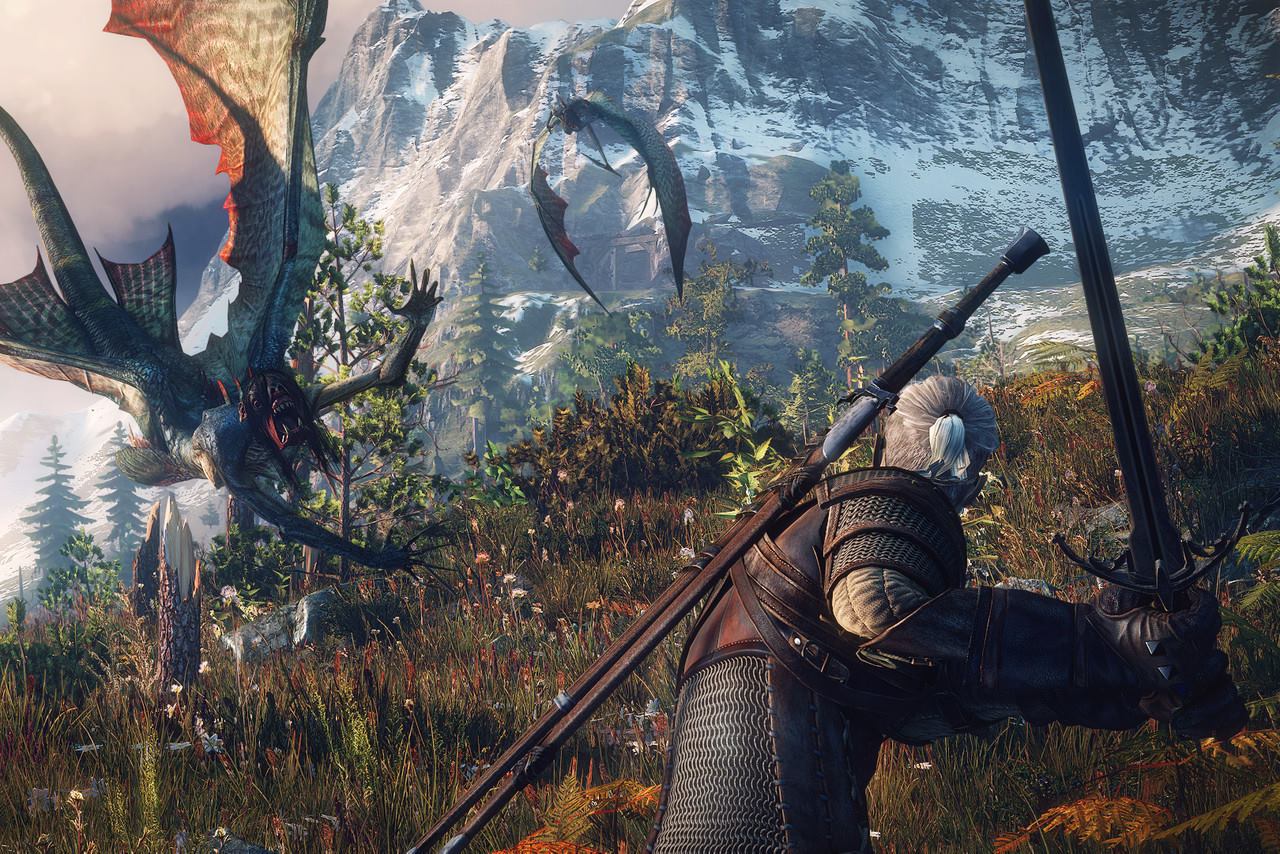
<a href="https://cdn.arstechnica.net/wp-content/uploads/2021/08/witcher3.jpg" class="enlarge" data-height="854" data-width="1280" alt="Massive single-player RPGs like The Witcher 3 provide some of the most accessible modern gaming opportunities for those without a strong Internet connection.”><img alt="Massive single-player RPGs like The Witcher 3 provide some of the most accessible modern gaming opportunities for those without a strong Internet connection.” src=”https://rassegna.lbit-solution.it/wp-content/uploads/2021/08/the-modern-challenge-of-gaming-without-a-strong-internet-connection-2.jpg” width=”640″ height=”427″ srcset=”https://rassegna.lbit-solution.it/wp-content/uploads/2021/08/the-modern-challenge-of-gaming-without-a-strong-internet-connection-4.jpg 2x”>
Enlarge/ Massive single-player RPGs like The Witcher 3 provide some of the most accessible modern gaming opportunities for those without a strong Internet connection.
On consoles, at least, single-player RPGs tend to provide the best opportunity to play games without any mandatory downloads. So, while downloads may be present, they are primarily for patches and minor content add-ons. Ghost of Tsushima, Witcher 3: Wild Hunt, and God of War are obvious choices. Games like Greedfall, Outer Worlds, and Darkest Dungeon have also been recent favorites on PC.
So, for now, there are titles you can play without being plagued by massive downloads or getting butchered in an online game—not because of the other players, but because the game is unplayable on your connection. But that may not continue to be the case if the video game industry continues to abandon millions of people around the world who don’t have the luxury of a high-speed Internet connection. With this in mind players should—when possible—support the companies that don’t consciously abandon potential customers, and companies should take into account the needs of the people who have made the current success of the industry possible.
https://arstechnica.com/?p=1790312
How game makers are catering to disabled players
<img src="https://rassegna.lbit-solution.it/wp-content/uploads/2021/08/how-game-makers-are-catering-to-disabled-players.png" alt="The high-contract backgrounds in Ratchet & Clank: Rift Apart are just one of the more prominent examples of game designs tuned for the visually impaired.”>
Enlarge/ The high-contract backgrounds in Ratchet & Clank: Rift Apart are just one of the more prominent examples of game designs tuned for the visually impaired.
According to a recent study, more than 2 percent of the US population can’t play video games due to poor accessibility options. This same study suggests more than 9 percent are unable to enjoy the traditional gaming experience because of visual, cognitive, or physical impairments. Additional research suggests 20 percent of the casual gaming audience is disabled in some fashion.
That amounts to millions of disabled players who are locked out of games because of a lack of support. But after decades in which accessibility options were absent or an afterthought, game developers in recent years have shown an increasing willingness to cater to this audience explicitly.
Last year’s mega-hit Hades provided buffing support when your character dies in an effort to match the game’s difficulty to the player’s skill level. More recently, Ratchet & Clank: Rift Apart made waves with accessibility options such as high-contrast backgrounds, shader categories, and speed settings for fans and beginners alike.
Many independent game producers are continuing to invest in the hardware, tech, and tools necessary to bring gaming to a patiently waiting audience. Indie maven Aaron Fothergill, the co-founder of UK’s Strange Flavour studio harnesses the power of gyro/camera controls and AR systems to assist the mobility impaired in his flagship game AiRburst. “This would also potentially make it playable from a wheelchair for someone with limited dexterity but the ability to rotate their chair,” Fothergill said in an interview.
These are just a few prominent examples of a trend that’s bubbling up across all corners of the game industry.
Setting the standards
According to researchers at Universal Access in the Information Society, accessibility options in games should overcome three primary barriers: sensory-impaired feedback, motor impairments, and cognitive delays. In order for a game to be truly accessible, it should meet or exceed standards in each of these categories. The number of development tools focused on providing these considerations is quickly growing, as evidenced by the Library of Congress’ accessibility research and developments page.
Not every video game maker takes all three factors into account, though. Some studios prefer to follow the bare-minimum guidelines, such as adding subtitles and other easy-to-implement features. Others go above and beyond, such as 2018’s Celeste or 2020’s HyperDot, winner of the Innovation in Accessibility Award.
Accessible games encompassing a wide variety of needs assist more than just disabled players, too. “Accessibility helps everyone,” says Diane Landais, co-founder and programmer at indie studio Accidental Queens, in a Pocket Gamer interview. “Thinking about accessibility doesn’t only mean catering to an audience with a given set of disabilities or specific needs; it’s about making sure the experience you want to create can be enjoyed equally by as many people as possible in as many situations as possible.”
Accessibility is particularly important for indie developers like Nathan Fouts, founder of Mommy’s Best Games. One-switch or mouth-powered inputs are important for games like Shoot 1UP, which adds a twist to a familiar shoot-‘em-up genre. According to Fouts, accessibility options should include “remappable controls, subtitles, high-contrast backgrounds, colour-blind icons and symbols, gameplay speed adjustments and of course difficulty adjustments.” These are evident in other games produced by the studio, including Pig Eat Ball, a top-down action-adventure.
Hardware solutions
Software-specific considerations—as in the examples cited above—may be difficult or costly to implement for small or independent development teams. But generalized hardware accessories, including handheld tools and single inputs, can make an enormous impact on the player base without the need for explicit software support. Hardware and software working together can provide the greatest amount of compatibility for the greatest number of players.
The Microsoft Adaptive Controller is easily the most prominent example of adaptive controls. With 19 different 3.5 mm jacks, it can be mounted for players who cannot hold or manipulate standard controllers. Dozens of different add-on attachments can be plugged into the jacks, making it a well-rounded tool for many kinds of disabilities.
<a href="https://cdn.arstechnica.net/wp-content/uploads/2021/08/xbadaptive.png" class="enlarge" data-height="959" data-width="1440" alt="The Microsoft Adaptive Controller is easily the most prominent example of adaptive controls.”><img alt="The Microsoft Adaptive Controller is easily the most prominent example of adaptive controls.” src=”https://rassegna.lbit-solution.it/wp-content/uploads/2021/08/how-game-makers-are-catering-to-disabled-players-1.png” width=”300″ height=”200″ srcset=”https://rassegna.lbit-solution.it/wp-content/uploads/2021/08/how-game-makers-are-catering-to-disabled-players-2.png 2x”>
Broadened Horizons, an assistive technology company that specializes in gaming, offers disability controls for those requiring hands-free inputs as well as adaptive handhelds that meet accessibility needs in a variety of games and genres. According to its site, two-step adaptive controls (one button and one joystick) provides access to 100 percent of games on every console ever made.
Tools like the Racing Auditory Display (RAD) can help blind or visually impaired players navigate racing games and flight simulators. By timing auditory tones with oncoming obstacles, players can complete driving or flying games without much difficulty.
New developments in “puff and sip” inputs are changing the ways people play indie games. Also called “adaptive switches,” these tools allow players to provide two separate inputs for different types of consoles. “Puffing” (blowing air into the tube) and “sipping” (breathing air from the tube) allow for the hands-free input of commands.
The future of accessibility may not be altogether clear, but passionate accessibility activists are working long days and nights to bring the world of gaming to diverse individuals. It’s their hope, and ours, that the accessibility revolution will one day become the status quo. In time, studios large and small may be opting for a more enjoyable, open, and inclusive gaming future.