Upcoming game turns Quest VR headsets into real-life laser tag machines

Coming September 9. We've only played a few minutes of this, but rest assured, Ars Technica will absolutely have a review of this real-world VR laser tag option upon the game's launch on Oculus Quest VR headsets.
Enlarge / Coming September 9. We’ve only played a few minutes of this, but rest assured, Ars Technica will absolutely have a review of this real-world VR laser tag option upon the game’s launch on Oculus Quest VR headsets.
I-Illusions

If you own either of the Oculus Quest VR headset models, you’re about to get one heck of a must-buy gaming option… especially if you have access to a massive play space and a friend with a Quest system.

Space Pirate Trainer, one of the first arcade-shooter games to launch on the HTC Vive VR system in 2016, has continued receiving support on newer VR systems in the years since. The game’s next update, launching on September 9, is its biggest yet—and it’s entirely free for existing game owners. Dubbed Space Pirate Trainer Arena, the long-teased mode is currently an Oculus Quest exclusive, and it requires a massive play space and up to two untethered VR systems to enable real-world laser tag.

In the real world, you and a friend will stand on opposite sides of a large play space, like an indoor tennis or basketball court, and map out a Quest “chaperone” space for your system, no smaller than 10 m x 10 m (33 ft x 33 ft). Once the game starts, onlookers will see the two of you flailing around with headsets, looking like danged fools. In the VR space, however, your and your friend’s play will sync up, and you’ll each see a far more complicated virtual battlefield full of walls, hallways, and other architecture, as if you’re inside an elaborate laser tag arena—with the object of finding and blasting your opponent before they do the same to you.

Cheating, by lifting your headset to examine the real world, won’t really work. You still need to confirm line of sight on your opponent in the virtual world to line up a shot. Nice try, though, jerk.

Whaddya wanna lug: Headsets or cardboard boxes?

The mode’s aesthetic resembles the original Space Pirate Trainer, albeit shifted into an indoor laser tag universe, and as the above gallery hints at, the VR version includes five battling arenas, each designed with entirely different hallway layouts and hiding places. Players can also build their own levels with a built-in editor. As a result, your enjoyment can be boosted by concocting new battling arenas out of thin air—which owners of plastic laser tag toy sets can’t necessarily do without lugging around a lot of cardboard boxes.

If you happen to have a large garage or otherwise sizable battling space at your home, you can elect to play by yourself and connect to other game owners online or test out the mode’s single-player challenges. The catch here is that any sessions with a real-life friend within the game’s “Co-located Arena Mode” require both players to connect to the Internet to handshake with SPT‘s servers before the system transfers the battling to a local peer-to-peer protocol. (The devs at I-Illusions pointed Ars to this article explaining how such a system will work on a technical level.) We’ll be testing exactly how much this system affects the game’s laser tag latency—and whether we face any issues connecting newer Quest 2 headsets to older Quest 1 models for such two-player battling.

And if you’re nowhere near a massive play space, the game’s September update includes another new online-versus mode that may be more up your alley. It more closely resembles the original Space Pirate Trainer single-player experience, with waves of enemies descending on you Galaga-style. Now, though, a second player is in the same virtual room as you and is contending with their own waves of enemies. Shoot the enemies targeting you (colored red) while avoiding the enemies targeting your opponent (colored green), and see who can last the longest.

Both modes are already intriguing in my very brief preview tests, and I’ll have more on the complete package, dubbed Space Pirate Trainer DX, once it formally launches on all Oculus Quest systems on September 9.

This is the first release of any such real-world battling concept on untethered, consumer-grade VR systems, and it’s one I have been dreaming of ever since Oculus reps demonstrated the idea at its Oculus Connect 2018 expo. That demo, pictured above, included a far more elaborate physical setup, complete with cardboard boxes placed exactly where the virtual world’s boxes and debris had been placed so that players could more physically fake a duck-and-cover assault. Plus, it was in a larger space (4,000 square feet) with more players (two teams of three). Space Pirate Trainer Arena is admittedly more scaled-down, but we’ve yet to see VR arcades invest in that 2018 proof of concept with their own massive versus-battling zones.

https://arstechnica.com/?p=1789644


Halo Infinite to skip co-op at launch: “We needed to pick a moment”

The latest Halo Infinite development update has confirmed that the highly anticipated shooter sequel is still slated to land in the vague time window of “Holiday 2021.” But the latest news confirms that the game will ship with a bit less content than series fans might have expected. For the first time in the series’ history, a Halo shooter game will launch without multiplayer co-op as an option for its “campaign” half.

Joseph Staten—a longtime Halo writer and producer who currently serves as Creative Lead of the 343 Industries studio—presented the bad news in an update video on Friday, after going so far as to assert that “campaign co-op is fundamental to the Halo experience.” Though Infinite will eventually get co-op, it won’t be ready as part of the product being sold (or included in paid Xbox Game Pass subscriptions) later this year. The exact technical reasoning for the mode’s delay is unclear, but fans may be able to read between the lines of Staten’s explanation about why that mode has yet to reach his team’s “quality bar.”

Staten said:

[The campaign] is this wonderful, wide-open nonlinear take on a Halo campaign. It’s gonna offer so much more flexibility: take down Banished [enemy] bases from different angles and progress through the game in your own way. At the same time, that’s complicated when you think about save systems and all the technology that’s needed to drive this nonlinear experience. In a co-op scenario, that’s even more complicated.

Staten doesn’t go into further detail than that, though other parts of the presentation confirm the studio’s current efforts to scale the game’s campaign and versus modes on everything from a base Xbox One to a high-end PC. And the presentation doesn’t include a firm confirmation that co-op will eventually arrive on every compatible device, either locally or online.

The presentation does confirm that “split-screen” options will land in the final game on all consoles, though this was part of a conversation about the free-to-play versus-multiplayer side of the Halo Infinite package. As Halo producer Bonnie Ross confirmed years ago, all future first-person Halo games will include split-screen options for local multiplayer; that decision was made after the company was hammered for dumping split-screen support from Halo 5.

However, this is only for console players, as the game’s PC version won’t have split-screen options at launch. Staten’s carefully worded statement doesn’t inspire confidence that split-screen will ever arrive. “It’s something the team is absolutely excited about exploring post-launch,” he said. (That is the opposite of a commitment to PC split-screen modes, if you’re wondering.)

“It’s never really done”

Like the Halo Master Chief Collection, Halo Infinite will revolve around a “season” philosophy of regular updates, each lasting “about three months.” Staten says that his team is “targeting” a campaign co-op launch with Infinite‘s second season, followed by another delayed feature coming in the game’s third season: the “Forge” customization suite.

This news is less surprising, as Halo 5 also delayed its Forge mode until roughly two months after its October 2015 launch. All Halo shooters since Halo 3 have included Forge modes to let players create and share custom multiplayer levels and rulesets. Staten assured fans that they can expect Forge testing access a bit earlier than the launch of the game’s third season, should they take part in Halo Infinite‘s “flight” series of prerelease tests. (Hopeful co-op fans did not get the same assurance about flight access.)

After clarifying those content delays, Staten insisted that 343 Industries and Xbox Game Studios are “100 percent committed” to launching Halo Infinite‘s single-player campaign mode and free-to-play multiplayer by the end of 2021. The video confirmed that the team had mulled delaying the entire game, once again, to have co-op ready at launch. However, Staten insisted that this staggered release fits the game’s release philosophy. “Halo Infinite is a live game,” he said. “It’s never really done. It’s going to progress and evolve from season to season. To have a beginning, we need to pick a moment and actually begin.” That moment, then, is one without co-op.

[embedded content]
Halo Infinite August Developer Update.

Listing image by 343 Industries

https://arstechnica.com/?p=1789476


iFixit says the Playdate is a surprisingly repairable Game Boy throwback

The teardown artists at iFixit have gotten their hands on the banana-yellow plastic Playdate, the be-cranked retro throwback handheld gaming system we previewed last month ahead of its launch later this year. And just as Game Boys of yore are simple to take apart, fix, and rebuild, the Playdate will be relatively easy to fix if you ever need to replace its battery or buttons.

The most interesting findings: The Playdate’s signature crank uses a Hall effect sensor rather than a spring or another kind of wear-out-able physical mechanism, so it shouldn’t suffer from drift over time like some console controller joysticks do. And while there is a warranty sticker inside the Playdate, it specifically says that you’ll void the system’s warranty if you break anything inside it, not that you’ll void it just by taking the system apart. This strikes a good balance between “don’t come in here if you don’t know what you’re doing” and “we trust you to make your own repairs if you need to.”

The teardown also gives us a few specifics on the Playdate’s intentionally low-powered hardware, which includes a 216MHz ARM Cortex M7 processor, 128 megabits (or 16MB) of RAM, and 4GB of eMMC storage. The one major complaint iFixit had is that the LCD screen appears to be glued to the front of the Playdate—replacing the screen will probably necessitate replacing the entire rest of the casing as well. But since the front of the Playdate is simple yellow plastic rather than metal and glass, this part shouldn’t cost as much as it does when your phone’s screen breaks.

This DIY repair mentality aligns with how Panic, the portable system’s producer, has advertised the system’s coder-friendly ethos. Once the portable system is out, enterprising game-makers can use either Lua or C—or a newbie-friendly, web-based development platform—to code games and then freely upload and test on real hardware with an included SDK.

We had a lot of fun with the Playdate in our preview of the hardware—it’s an intentionally simple, pared-down, toy-like system that has a lot more in common with ’90s Tamagotchi and Tiger Electronics handhelds than with complex modern systems like the Nintendo Switch or Steam Deck. The Playdate is currently available for preorder for $179, which includes the hardware and a total of 24 games. Some orders will ship later in 2021, but preorders placed today won’t arrive until sometime next year.

Listing image by iFixit

https://arstechnica.com/?p=1789401


Shang-Chi film review: Marvel’s latest grabs the brass ring—all ten of them

If you want to know what direction Marvel’s post-Avengers superhero films are going, Shang-Chi and the Legend of the Ten Rings is a pretty clear indicator—and it’s an optimistic one at that.

I had a blast watching Shang-Chi, which arrives exclusively in theaters on Friday, September 3, and I spent most of the time after my screening wishing for more. It could have been longer. Maybe there’s a director’s cut. Or, maybe this is the darned good launch of an entirely new film franchise, and this film is merely meant to set up the even more fully rounded sequel(s). Whatever the case, that’s a decidedly better way to leave theaters than being bored, annoyed, or otherwise shaken out of a good moviegoing experience by bad writing, acting, and directing decisions.

Shang-Chi seems driven by an apparent top-down directive to fortify a new class of mystical superheroes while sticking to Marvel’s guns of inclusion and fully rounded character development. The result is good news for anyone looking for a mix of refreshing surprises and comfort food in their superhero tentpole films. Plus, this superhero big screen debut delivers enough “holy whoa” moments to make any viewer feel like a kid again.

“I’m the Asian Jeff Gordon”

In terms of cinematic transformations from the comics, Shang-Chi‘s is more severe than other Marvel Cinematic Universe characters. Instead of loudly aping all things Bruce Lee, like the character’s original 1970s ink-and-paper version, today’s Shang-Chi (played by Simu Liu, Kim’s Convenience) dances between straightforward Chinese martial arts and the ancient, barely understood powers of a series of magical rings, meant to be worn five on each arm. (The film also punts much of the comic series’ Fu Manchu lineage, in ways that nobody new to the series would ever notice.)

The character Shang-Chi begins his film nowhere near said rings, thanks to his father controlling them. At the outset, Shang-Chi rejects his powerful origins, so much so that we get to know him as a mild-mannered car valet who does not sneak out at night to fight crime. It’s at this job in modern-day San Francisco that he pals around with party-loving Katy (played by Awkwafina, The Farewell), who catches flak from her family for falling short of high expectations.

A chance encounter pulls Shang-Chi right back into his family’s business, though. Katy, flabbergasted to find out that her valet buddy has been a secret martial arts dynamo the whole time, insists on being part of the ride. And that leads the duo across the world—and beyond.

A heroic performance for a villain

That brief, spoiler-free summary tiptoes around the family drama you can expect from Shang-Chi, but suffice it to say that the film’s heart beats its loudest and fullest when mother and father figure heavily into this hero’s story. In particular, Tony Chiu-Wai Leung (Chungking Express, The Grandmaster) brings his legendary film career to bear in his turn as one of the most hypnotizing personalities ever seen in a modern Marvel film. “Villain” doesn’t do his performance justice.

There’s truly no greater kryptonite to a powerful hero than disenchantment with a parent—or a child, for that matter—and Leung is fascinating here as a brooding-yet-loyal father. Leung’s performance hums with the slow burn of a father for whom nothing is ever good enough, and he radiates an unforgettably condescending aura, off which his co-stars feed ravenously.

Sometimes, a film can drag while trying to reflect characters’ cultural origins, yet Shang-Chi benefits from its own emphasis. Katy, Shang-Chi, and his sister Xialing (Meng’er Zhang) each grapple with Chinese family expectations that run counter to how they live their lives, whether in America or abroad. Yet director and co-writer Destin Daniel Cretton (The Glass Castle) is careful not to tie those issues up with cute, family-friendly bows. Shang-Chi in particular takes his conflict with his father to the very end of the film, stumbling and revolting at all turns, and it adds a rare heft to a Marvel film’s central conflict. Awkwafina is clearly here to chew scenery with comic relief, yet even her workload is tasteful here—and her character gets a development payoff by film’s end, to boot.

Cast nitpicks, action-scene acclaim

Sadly, the film misses a few opportunities to buttress its characters’ inspirations and origin stories. I would have savored another 5-10 minutes of Wenwu and Shang-Chi’s fraught relationship on the screen, if only because we only begin to see Simu Liu come into his own as a titular star at the very end of this duo’s screen time. And the family matriarch (Fala Chen, The Undoing) seems to have her on-screen time cut a bit too short, mostly because of how handily her performance neutralizes the character of Wenwu. Also, if you’re forcing me to keep score, Zhang’s turn as Xialing is shortchanged by the script, as the character has little to do beyond brood in her brother’s shadow—not a dealbreaker, but worth noting.

[embedded content]
Shang-Chi and the Legend of the Ten Rings trailer

Still, the overall quality of the film’s plot and human connections is quite high, and from that foundation, Shang-Chi launches some seriously memorable action sequences.

At their best, Shang-Chi’s fight scenes toy with visual expectations in ways that emulate some of modern Chinese cinema’s finest. One character commands the wind in sync with their motions—giddily recalling and building upon the aerial wonder of Crouching Tiger Hidden Dragon. Another trades brutal blows inside of a high-speed bus, and the resulting brutality feels like a PG-13, Disney version of Police Story. Still another sequence decides that the construction catwalks on the edge of a skyscraper are a good place to flip between wooden planks on multiple levels and kick the crap out of anything that moves; it’s a scene paying homage in both humor and bombast to the directorial likes of Stephen Chow.

That list doesn’t even touch upon the film’s massive, climactic fight, which explodes thanks to a frantic ring-on-ring melee light show. It only gets bigger from there.

Good butt-kickings with a strong family foundation, whether that family is unified or dysfunctional: Shang-Chi nails this idea in ways that are truly unique to the superhero film canon. Quite frankly, I can’t think of other Chinese martial arts films that mix family chaos, beautifully staged action, and a new hero’s fantastical origin story this impeccably, either. Shang-Chi is exactly the blast I was hoping for ahead of next year’s massive Dr. Strange in the Multiverse of Madness. Dare I let one good Marvel film make me optimistic about next year’s oft-hyped, cameo-filled series-synergy extravaganza?

https://arstechnica.com/?p=1789087


Windows 11 ISOs make it easier to test the betas with a clean install

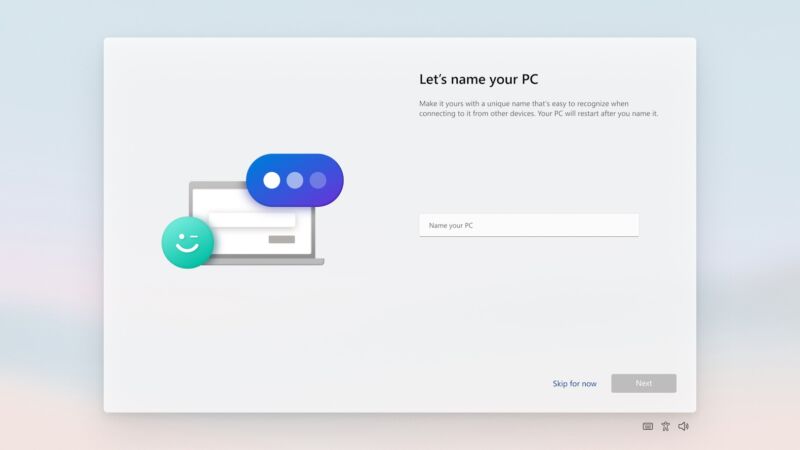
New ISO files make it easier to do clean installs of the Windows 11 preview (and to see its first-time setup screens).
Enlarge / New ISO files make it easier to do clean installs of the Windows 11 preview (and to see its first-time setup screens).

When Microsoft released the latest Windows 11 Insider Preview builds to Dev and Beta channel testers late last week, the company also posted traditional ISO files of the new operating system for download for the first time. These ISO files can be burned to a disc or copied to a USB drive, making it faster to install Windows 11 to multiple PCs (or just to do a clean install on a single PC).

Previously, it was possible to do a clean install of Windows 11 by using tools that convert Insider builds to ISOs, or by installing one of the Insider Preview builds through Windows Update and then resetting your PC. These new official ISOs can save you those steps, even though they’re based on preview builds that will already need to be updated right after you set them up (the ISOs are based on build 22000.132, while both Dev and Beta channels have already moved on to 22000.160). Microsoft offers ISOs for both the Dev and Beta channels—you can switch between channels as you normally would once Windows is up and running, but the ISO you use determines which channel your PC is automatically signed up for.

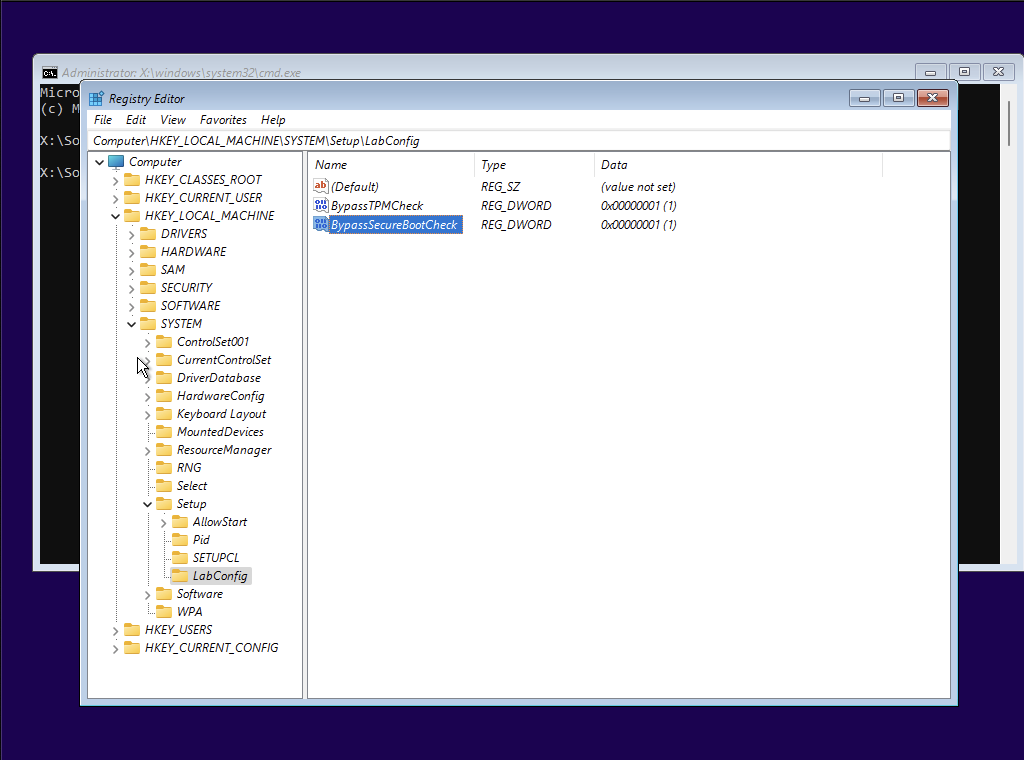
As with other Insider Preview builds, the version of the WinPE preinstall environment that you boot to use these ISOs will not enforce Windows 11’s processor requirement but will enforce the Secure Boot and TPM requirements (for now, having any version of TPM seems to satisfy the installer, though Microsoft says you’ll need a TPM 2.0 module for the final version). And as when installing the Windows 11 Insider builds from within Windows 10, you can use a handful of registry tweaks to disable those checks, at least for now.

After booting from the Windows 11 install media you created:

  1. Press Shift + F10 to open a Command Prompt window
  2. Type “regedit” and press Enter to open the Registry Editor
  3. Navigate to HKEY_LOCAL_MACHINE\SYSTEM\Setup, right-click “Setup,” and create a new key called “LabConfig”
  4. Click “LabConfig,” then right-click in the right Registry Editor pane to create one DWORD (32-bit Value) named “BypassTPMCheck” and one named “BypassSecureBootCheck”
  5. Double-click both of those new values and change their values from 0 to 1
  6. Quit Registry Editor and the Command Prompt and install Windows normally
The registry edits you can make while booted from a Windows 11 USB key or DVD to enable installation on unsupported systems—at least for now.
Andrew Cunningham

Once you’ve made these changes, the Windows 11 preview should install on essentially anything that can run the 64-bit version of Windows 10, including older Core 2 Duo computers without any kind of UEFI boot support. We’ll continue to test these kinds of workarounds in the final release builds of Windows 11, too—we expect Microsoft to introduce new compatibility checks in the final version, but at least for now, Windows 11 seems about as happy to run on older computers as Windows 10 does. We’ve been testing the Windows 11 preview on all kinds of PCs and will report more about our findings in the coming weeks.

Listing image by Microsoft

https://arstechnica.com/?p=1789111


New PS5 model is lighter, has a better screw

An unannounced PlayStation 5 hardware revision, first noticed in Australia by Press Start, brings two changes to Sony’s console. First, the new model, CFI-1102A, runs 0.6 pounds lighter compared to the original console, although Sony has given no indication about what has changed. Back in May, reports emerged that a new wireless module was planned, and that’s likely what is inside these tweaked consoles. The update applies to both the digital and disc versions.

Secondly, and most importantly, there’s a new screw for the console’s annoying and required base/stand. While the screw isn’t necessary when the system is placed in a horizontal position (there’s a small compartment to store the screw), anyone setting up a PS5 vertically needs the screw to keep the stand stable. The revised screw can be tightened by hand thanks to a new grip around the head. While that doesn’t make aligning the base/stand any easier, you no longer need a screwdriver to do the operation.

The console, which has been plagued by a scalper market since launch, remains in short supply. A quick glance at eBay auctions shows new PS5s still consistently running near $700–$900, well over the $400–$500 MSRP, depending on edition. Apps like StockInformer can alert those who are still trying to track one down—minus the reseller premium.

https://arstechnica.com/?p=1789108


This rare Nintendo Game & Watch just broke an auction record

Before Nintendo released the Game Boy, the company sold simplistic, LCD-based Game & Watch units—and lots of them. When sales broke 20 million units, creator Gunpei Yokoi commissioned special edition Donkey Kong Game & Watch pieces to commemorate the achievement. One of those units, which came on the market for the first time, recently sold in an online auction for $9,000—the most paid for a single Game & Watch to date.

The device features work by artist Makoto Kano, programmer Hiroshi Momose, and sound engineer Naoto Ishida. It’s unknown how many Yokoi produced. John Hardie, director at the National Video Game Museum in Frisco, Texas, speculated with Ars, saying, “Were there just three made (one for each of them) or [was] it a limited thing Nintendo made and sold/gave away? Maybe there’s 50 of them? Maybe Nintendo has a pallet in their warehouse. It’s just hard to know since there’s very little information. If I had to guess, I would say there were more than three made, but again, just a guess.”

Even if 50 were made, $9,000 for such a rare piece of Nintendo memorabilia, especially given the recent million-dollar Zelda and Super Mario 64 video game auctions, remains cheap. Hardie wasn’t surprised by the price given the current state of the collector’s market, but he did note, “We at the museum would have paid that,” and sadly, the NVM does not have one in their otherwise sizable collection.

More recently, Nintendo dipped into the Game & Watch nostalgia bin by releasing a full-color Mario Bros. unit, with a Legend of Zelda edition planned as a follow-up. Unlike the originals, which played choppy adaptations of Nintendo properties (think Tiger’s LCD handhelds from the ’80s and ’90s), those new versions play the classic NES games and include bonus features. Vintage Game & Watch handhelds vary in value, from around $50 for unboxed common ones to the super rare, like a Balloon Fight variant, which can fetch close to $2,000 if complete.

https://arstechnica.com/?p=1789102


Aliens: Fireteam Elite review: Finally, co-op action worthy of this franchise

2013’s Aliens: Colonial Marines was arguably the last huge video game to focus on the “Aliens with an S” side of all things xenomorphic. Between flashy trailers and Gearbox’s reputation at the time, series fans got their hopes up that the 1986 James Cameron film would finally inspire a modern shooter worth a loud oorah. Not so much.

This week, the letter S returns to PCs and game consoles with far lower expectations in the form of Aliens: Fireteam Elite. And I gotta say, this three-player co-op romp’s success makes me angry about Colonial Marines all over again.While losing hours to this new game’s faithful, no-frills fun, I imagined Gearbox CEO Randy Pitchford sitting next to me. Between missions, I would ask him why his development teams couldn’t surpass a little-known indie studio’s slimmed-down excuse to rev up machine guns and flamethrowers with friends.

Still, a genuinely fun Aliens game is better late than never. And this is much better.

Aliens: Fireteam Elite [PS4, PS5, Xbox One, Xbox Series X/S, PC]

(Ars Technica may earn compensation for sales from links on this post through affiliate programs.)

No need to swear on a Covenant

To be fair, Aliens: Fireteam Elite starts with milder aspirations. This game barely crawls past its $40 price tag in terms of included content and variety—albeit with all the production value and series-appropriate bombast you might hope for. And nothing here suggests a cinema-caliber Aliens entry with famous cameos and Cameron-caliber set pieces. (Worth noting: Stabs at such nostalgia don’t always work out for the Aliens-verse, so maybe that’s a point in Cold Iron Studios’ favor.)

Instead, AFE opens with a single cut scene suggesting that Marines have been assigned some unpleasant clean-up duties involving Weyland-Yutani, decades after the original trilogy concluded. From there, you create a generic Marine, pick from four soldier classes, listen to canon-filled mission briefings, and get to work.

That work will look familiar to anyone who’s played modern co-op shooters like Left 4 Dead. Squads of three marines, played by either friends or AI, must march through dimly lit environments, all pockmarked with a staggering number of vents and crawl holes—no Weyland-Yutani carpenters on duty?—and kill monsters on their way from point A to point Z. This all happens via third-person combat in pre-built levels, which range from chrome-plated industrial base interiors to lush, Prometheus-like excavations on planets.

Xenos and Joes: quantity over quality, with solid “supers” in the mix

The first thing that stands out is how AFE funnels players into an endorphin hit of tight, authentic combat against diabolical, swarming xenos. [Editor’s note: “Xenos” as shorthand for the Alien series’ most famous monsters is a contentious topic, we know.] The game immediately fills your ears with a full-orchestra score, serviceable radio chatter, familiar tracker beeps, and ominous 3D-mapped sounds of xeno skittering. The environs, as rendered in Unreal Engine 4, are bathed in tantalizing lighting—the kind that typically carves any path or hallway with alternating slivers of bright highlights and shadowy contrast.

And the xenos themselves are appropriately terrifying. They operate in a quantity-over-quality philosophy, since this is Aliens we’re talking about. Each of the game’s four classes are equipped to mow down waves of advancing xenos in relatively short order. The enemies’ first edge is their ability to appear from all sides, typically in formations that pop out of holes in walls and ceilings from all directions, and they crawl in your direction in a compelling show-of-force manner. AFE‘s xeno animation cycles are on target, and it’s awesome to watch them gecko-sneak across every surface imaginable. The game’s worst visual aspect is that xenos are bathed in a yellow highlight if aimed at. This looks unbecoming in screenshot form, but in the midst of swarm-filled combat, it quickly becomes essential.

Much like Left 4 Dead, AFE mixes its weaker xenos up with a few “supers,” and these come with a mix of stronger exoskeleton “shields,” distant acid-spitting powers, explode-upon-death abilities, and sneaky tackle-and-pin attacks. I would have liked to see Cold Iron Studios get more wiggle room to create a few more “magical” or atypical super xenos, but the variety here is still pretty solid.

Things really ramp up on an enemy level once Weyland Yutani’s line of creepy Working Joe androids enters the mix. At first, Joes appear in relatively underwhelming fashion, since their dumbest grunts hang back as easily sniped cannon fodder. Eventually, Cold Iron’s level design delivers some fantastic battling choke points where Joes will converge on your position from one side, while xenos surround you from the other. By this point, the Joe side of combat has been spiced up with its own “supers”—rush-and-explode grunts, shield-holding brutes, flamethrowing guards, and pesky snipers.

Occasionally, when both kinds of baddies converge, the xenos and Joes will focus on each other. This is always delightful stuff to see in action, but the laughs don’t last, since enough bad guys are appearing by this point in a fight to target your squad, as well.

Decent depth in classes, tactics, and badges

Surviving AFE‘s difficulty spikes often boils down to how well you and your squadmates juggle your slate of tactical abilities. Even upon first boot, the differentiation between the game’s four classes feels solid, and this only gets better the longer you play the game.

The above gallery breaks down the four classes, which will look familiar to anyone who’s played an online team-battling game or MMO in the past 15 years. There’s an all-around commando, a gadget specialist, a medic, and a heavy. Some classes have weapon overlap, but generally, each has its own unique loadout path, and each has at least one powerful, punchy weapon to focus on. Medics can still pitch in significantly by leaning on a slow-and-powerful pistol like a magnum, while the sheer brutality of the Demolisher’s auto-rifle and flamethrower is balanced by how ammo-intensive those are.

Even the weakest machine gun is fun to shoot, at least, thanks to sound design that lifts the guns’ classic pitch-shifty sound from the original films. You know it when you hear it: that vacuum cleaner-like warble, ringing in higher frequencies while splats, screams, and ‘splosions fill the rest of the air. Beyond weapons, each class has rechargeable abilities, and many of these either activate temporary bonuses for your squadmates or benefit from teammates maintaining physical proximity. Your squad should generally stick together, lest a xeno split the party, but “get back here so my meter recharges faster” is a nifty, organic nudge to keep that attitude in players’ minds.

As you rack up experience points in each class, AFE opens up a slate of upgrade opportunities. Instead of skill trees, AFE offers a series of “badges” that can be affixed to each class’s ability screen. These appear in a physical grid, in such a way that they must touch other badges to activate and don’t necessarily fit perfectly together. This results in some spicy “ugh, not quite perfect” decisions to make in tuning each class. And the more you play, the more this combination of badge variety and grid size expands, thus letting you further dial in your preferred playstyle as you come to terms with you and your teammates’ combat preferences.

https://arstechnica.com/?p=1787505


Tiong Bahru Social Club review: Won’t you be my algorithmic neighbor?

[embedded content]
The trailer for Tiong Bahru Social Club

Many of us can relate to, have related to, or will relate to Ah Bee, hero of the near-future, tech-fantasy film, Tiong Bahru Social Club. He lives with his mom in a high rise apartment building in Singapore. And as he approaches his 30th birthday, he lives a comfortable but pretty unglamorous life—an office job during the day, a seat on the couch in front of the TV and next to mom each night. With this big round number birthday gifting his family a new level of anxiety, they decide it’s time for a change.

Ah Bee (played by Thomas Pang) suddenly finds himself in a new role as the latest Happiness Agent at the Tiong Bahru Social Club (TBSC), a community living experiment where decisions are driven by an algorithm measuring happiness. TBSC is a developer whose facilities ostensibly serve elderly Singapore residents like Ah Bee’s mother, but each resident gets paired with a younger Happiness Agent who becomes responsible for their happiness. Happiness Agents get new roles or perks at TBSC based on both their resident’s and the overall community’s Happiness Index. And TBSC tries to optimize each agent by constantly monitoring their feelings (agents wear Happiness Rings allowing the company to track how actions impact an agent’s happiness) and offering continual training (everything from improving your laugh to mastering three different hug techniques).

At first, Ah Bee seems to be enjoying his new existence just fine despite being paired with Ms. Wee (Jalyn Han), an older woman who adores cats and clearly prefers one of her fingers over all others. But “fine”—happiness scores hovering in between 40-60—doesn’t keep management at TBSC off your back. New plans for Ah Bee are clearly coming.

Better than an HOA?

Tiong Bahru Social Club may sound like the premise for some dark, near-future, dystopian techno thriller. And it is, sort of. This is a whimsical black comedy. It’s as if a Black Mirror premise (maybe a twist on that early episode with Daniel Kaluuya) was mixed with Wes Anderson sensibilities right down to a Futura-esque credits font (so maybe Grand Budapest Hotel, just with algorithms instead of Nazis). Unlike the elaborate casts and over-the-top storylines of Anderson’s work, the plot here can be a little thin and all of the film’s characters beyond Ah Bee and Ms. Wee seem a bit under explored. In particular, TBSC manager Haslinna (Noorlinah Mohamed) has a nefarious undercurrent to everything she does, but it’s left untouched. And Happiness Agent Geok (Jo Tan) may have the highest Happiness Index score, but she seems unspoken-ly dissatisfied. She eventually gets paired with Ah Bee as TBSC management tries to improve both agents, but Geok’s desires and thoughts never really become a central focus of any scene.

Still, the production design and visual decisions will elicit smirks even if stopping to think about the concept of a TBSC-like community is consistently depressing. Rooms at TBSC look like the chicest historical hotel renovated for the near-future, with rounded mid-century furniture and loads of pinks, purples, and turquoises. Happiness Agents’ uniforms could double as costuming for the Polyphonic Spree, while management must’ve hung out with Stanley Tucci in The Hunger Games. And there are many, many absurdist individual frames or sequences to be enjoyed: panning across Ms. Wee’s hand-painted cat portraits all in a row as she tells Ah Bee how they died; zooming out on a group of Happiness Agents as they essentially do a synchronized swimming routine in children’s arm floaties; a mass of old residents chanting for Ah Bee in the streets. As Ah Bee, Pang approaches it all with a level of stylized deadpan Bill Murray could admire.

As fun as Tiong Bahru Social Club is to look at, the film may be even more delightful to ponder. You could call it dystopian satire, but really TBSC-style entities already exist on a sliding scale from amusing (your Apple Watch may remind you to breath, walk, and remember it’s your mother’s birthday) to downright horrifying (China’s social credit score concept). The broader concept of relying on tech to diagnose dissatisfaction or failure and maximize happiness or completion is so common it’s now mundane; it’s an approach already lurking in many apps, wearables, subscription services, and social platforms of today. At least, in real life, we’ve largely recognized the imperfections with this.

In fairness, the tech seemingly does well for Ah Bee. He lands in a beautiful apartment, alongside a perfectly matched partner, with a job that gives him purpose—all selected for him by an optimizing algorithm. “You’re a winner,” his room AI assistant proudly declares. But Ah Bee’s thoughts tell viewers otherwise: “Modern society presents us with too many options, but they are all an illusion. The only decision I make in life is to make no decisions.” By signing a comically hard-to-read ToS (terms of service) upon entry, he’s willingly given himself over to the machines in the most explicit way possible. At TBSC, he and Geok don’t even have to think about intimacy, as the AI sets the atmosphere and provides its humans charts(!) for any actions it can’t take itself. Ah Bee later unironically quotes philosopher Lao Tzu, “It’s the emptiness inside that makes a vessel useful.” Leveraging invasive modern tech to the fullest means abandoning free will to a degree.

The film’s other big theme does center on what all this fancy tech sets out to maximize—happiness. Ah Bee is perhaps the most silent (read: dialogue-light) character this side of Ryan Gosling in Drive. Things happen to him, but rarely does he initiate. So when he does speak, especially in the film’s final third, it really implies this is what’s been consuming his mind the whole time. After an algorithmic-affair with Geok, she turns to him in their perfect apartment to ask a simple question, Are you happy? After living on such a tailored, holistic track for this long, Ah Bee seems caught off guard. “How do you know?” he responds.

Ah Bee’s saga shows that happiness will always take a lot of forms even in a world where one particular vision of it—that idealistic Instagram sheen applied to travel or parenting or creative work or cooking or linear career growth or whatever—gets propagated again and again by algorithms merely looking to maximize engagement. The TBSC’s model rewards smiles, group pictures, and sex, but it doesn’t see value in adoration for a quiet evening sit under the stars or a conversation exploring anything that isn’t obviously happy. Ah Bee’s ultimate choice indicates one size fits all happiness, even a flavor justified by the best data available, will likely never work. TBSC’s next moves, though, suggest companies will never stop trying—especially if there’s more marketshare to be had.

Tiong Bahru Social Club is currently available via VOD as part of the 2021 hybrid edition of the great genre event, Fantasia Fest. The film continues to play the festival circuit otherwise, and the most up to date availability can be found on the film’s Facebook page.

https://arstechnica.com/?p=1788129


On Roblox, kids learn it’s hard to earn money making games

On Roblox, kids learn it’s hard to earn money making games

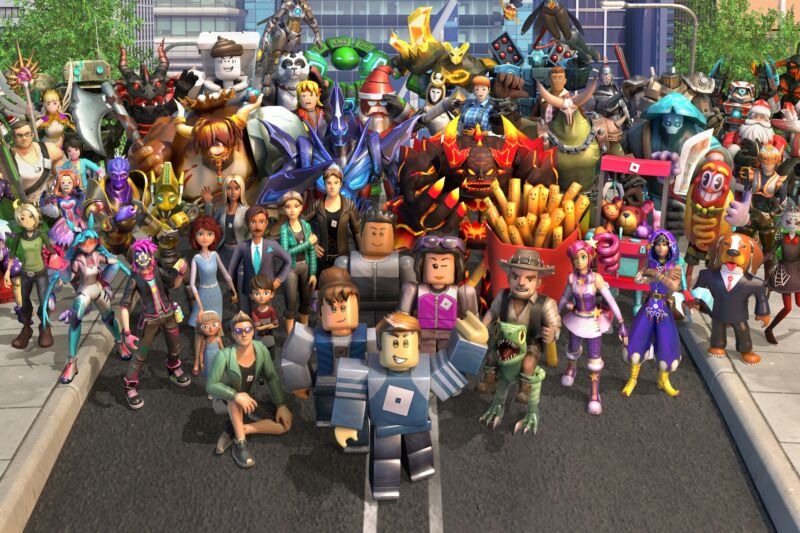
Roblox has become a video game titan, in recent years dominating the world of kids’ gaming and earning $454 million in revenue last quarter alone. A new report argues that success is built on exploiting young game developers, many of them children, who are making content for the game.

As a platform, Roblox provides gamers the tools to both create and play an almost unfathomable array of “experiences,” from climbing an enormous stairway to running a restaurant to escaping a prison. Tens of millions of these games live on Roblox’s browser—hundreds of times more titles than exist on Steam. Every day, 43 million people play those games, mostly kids. Some of the most popular experiences have received billions of visits and earn their developers millions annually.

According to a new report, however, this model—which powers much of Roblox’s enormous success—may take advantage of young game developers. Published Thursday by People Make Games, a YouTube channel by independent games journalists, “How Roblox Is Exploiting Young Game Developers” takes a deep dive into the promise of “making it” on Roblox and alleges that the platform actually sets kid developers up for failure.

“Since becoming a publicly traded company, Roblox is now worth more than Electronic Arts,” producer Quintin Smith of People Make Games tells WIRED. The company was valued at $45 billion in a direct listing earlier this year. “With most of the games on the platform being made by minors and a revenue split that’s just one third of the industry standard, we looked into whether these young developers were in fact being exploited.” (Traditionally, game stores have taken a 30 percent cut of revenue that publishers earn on their platforms, and hand 70 percent over to the devs. Roblox gives developers just 25 percent, plus payouts based on engagement.)

People Make Games’ analysis of Roblox’s economics highlights the chasm between Roblox’s promise as a way for kids to become game developers and the reality: It is very challenging to make money on Roblox, and Roblox profits from people trying.

[embedded content]

Few things are more tantalizing than making bank doing what you love, and with the ballooning value of the games industry, it finally seems possible for young gamers: working for a game development studio, streaming on Twitch, competing professionally in esports. Over the past decade, though, the games industry has reckoned with widespread poor labor practices—from 12-hour workdays at top studiosto ludicrously imbalanced contracts with managers. Low wages and egregious workplace conditions are common. The furious, all-consuming passion gamers feel for their favored media makes them an easy target for exploitation.

Roblox leans into the potential for financial success developing games in its marketing copy. The website for Roblox Studio, its developer engine, advertises the company’s three tenants for aspiring young developers: “Make Anything,” “Reach Millions of Players,” and “Earn Serious Cash.” On that last point, Roblox notes that top developers earn over $2 million a year through the platform. Developer testimonials celebrate how Roblox set them free from the financial difficulties of being a college student or even tease the prospect of a lifelong career in games. Roblox’s YouTube channel also promotes mini documentaries glamorizing its most successful developers. Across the Internet, publications like Forbes and the BBC publish stories about Roblox developers paying off their parents’ mortgage or their college tuition.

Roblox provides a lot for its developers: server space, marketplace infrastructure, cross-platform capability. Roblox Studio is, like the game, free. Developers can make money through Roblox with its Developer Exchange program, or DevEx, which gives developers 25 percent of a game’s earnings. (Part of Roblox’s justification for this split is its huge investment in infrastructure for these devs.) Roblox’s VP of marketing toldAListDaily in 2018, “From the very beginning, it was about having kids develop games for other kids.” DevEx’s terms require users to be 13 or over.

Most of Roblox’s user base is under 18, with about a third between 9 and 12. Emil, 11, tells People Make Games that he “saw other developers getting money in a way that looked easy.” It wasn’t easy. To withdraw money earned through microtransactions in a game, a developer must earn a minimum of 100,000 Robux, the platform’s in-game currency. Buying 100,000 Robux through Roblox’s store costs $1,000. Selling 10,000 Robux back to Roblox earns you just $350. Withdrawal is not even possible unless these developers pay a five-dollar monthly fee for a Roblox Premium Subscription. (Second Life and Entropia Universe, which also allow players to sell items, respectively have $10 and $100 minimums for withdrawing money.)

“If you accept that we need to treat minors who are doing a job better than we treat adults doing the same job, that’s just abhorrent,” says Smith. “Especially when you consider the platform is encouraging kids to come and work for them.”

Smith believes this setup disincentivizes users from withdrawing Robux. They’re devalued off-platform, so why not spend them on other Roblox games? Smith compares Roblox’s currency to mining camps’ company scrips, a now-illegal currency used by miners to purchase goods at company stores. Miners were encouraged to spend their money on their employers’ goods because, elsewhere, the scrip was moot.

A Roblox spokesperson tells WIRED that “building experiences on Roblox teaches the fundamentals of coding, digital civility, and entrepreneurship and has helped many begin their careers in STEM.” Roblox gave developers $129.7 million in the second quarter of 2021, and according to the spokesperson, over 600 developers earn over $85,000 a year from their Roblox creations. The company also hosts programs and offers Developer Relations professionals to help developers succeed.

Roblox’s gargantuan valuation and outstanding success is in part due to the number of children hoping to strike a vein of gold making games. Children can’t organize for better working conditions, though; in fact, adults in the games industry are having trouble reaching quorum to unionize.

“Kids working too hard with unreasonable expectations isn’t bad for the company. This is the heart of Roblox’s success,” says Smith in the video. “In convincing its young users that making money on the platform is possible, it gets hundreds of thousands of young people pouring their imagination and spirit into making the next big Roblox success story.”

This story originally appeared on wired.com.

https://arstechnica.com/?p=1788915