New Jeopardy! host Mike Richards resigns on first day of production

<img src="https://rassegna.lbit-solution.it/wp-content/uploads/2021/08/new-jeopardy-host-mike-richards-resigns-on-first-day-of-production.jpg" alt="Jeopardy! EP Mike Richards was chosen to replace longtime host Alex Trebek just last week. He resigned in the wake of controversy surrounding comments made during a podcast he co-hosted in 2013-2014.”>
Enlarge / Jeopardy! EP Mike Richards was chosen to replace longtime host Alex Trebek just last week. He resigned in the wake of controversy surrounding comments made during a podcast he co-hosted in 2013-2014.
Sony Pictures Television

Drama and controversy continue to swirl over the selection of a replacement host for Jeopardy! in the wake of Alex Trebek’s passing from pancreatic cancer complications late last year. Jeopardy! executive producer Mike Richards was named the new host just last week, a decision that sparked an immediate backlash among fans and former contestants of the show. And now, Richards will be stepping down on his very first day of official hosting duties, Deadline Hollywood reports. Richards will continue in his role as executive producer on the game show.

As we previously reported, Trebek’s last episodes aired in January 2021. Throughout the rest of its 37th season, the show used a long list of guest hosts to fill in for Trebek at the podium, including Richards and Mayim Bialik, best known for her roles on The Big Bang Theory and Blossom. (She also has a PhD in neuroscience from UCLA.) The rotation included former Jeopardy! champion Ken Jennings, newscasters Katie Couric and Anderson Cooper, and book enthusiast LeVar Burton. Both Burton and Jennings proved to be fan favorites, and Jennings’ run posted the highest ratings of the season. (Burton’s ratings were lower, perhaps due in part to his episodes competing with the Summer Olympics on NBC.)

Even before his selection, allegations began circulating that Richards had discriminated against several pregnant employees while serving as executive producer of The Price Is Right. (Both suits were eventually settled.) “These were allegations made in employment disputes against the show,” Richards wrote in a memo to Jeopardy! staff. “I want you all to know that the way in which my comments and actions have been characterized in these complaints does not reflect the reality of who I am or how we worked together on The Price is Right.”

On August 11, Sony announced that Richards and Bialik would share hosting duties on Jeopardy! when the show returns for its 38th season later this year, with Richards hosting the regular version of the show and Bialik hosting “prime time and spinoff series, including the upcoming all-new Jeopardy! National College Championship.” The backlash was swift and strong, with some questioning the integrity of the selection process, given Richards’ executive producer role and how little-known he is to audiences compared to the other candidates.

Richards might have weathered that backlash, but then a damning investigative article by Claire McNear appeared two days ago on The Ringer. The piece detailed multiple instances of offensive comments Richards made during his podcast The Randumb Show (purportedly a peek behind the scenes of The Price Is Right), which aired in 2013-2014. McNear’s account relies on a number of unnamed sources, but the podcast comments were public.

McNear combed through all 41 episodes, taking note of all the times Richards “used offensive language and disparaged women’s bodies.” His frequently off-color remarks targeted Haitians, Asians, and Jews, for instance, and he used an offensive term for little people when discussing Broadway star Kristin Chenoweth. The Anti-Defamation League called for an investigation in response.

The podcast audio was pulled down just hours after McNear contacted Sony and Richards for comment, and the hosting site was deleted. Richards issued the following statement to The Ringer:

It is humbling to confront a terribly embarrassing moment of misjudgment, thoughtlessness, and insensitivity from nearly a decade ago. Looking back now, there is no excuse, of course, for the comments I made on this podcast and I am deeply sorry. The podcast was intended to be a series of irreverent conversations between longtime friends who had a history of joking around. Even with the passage of time, it’s more than clear that my attempts to be funny and provocative were not acceptable, and I have removed the episodes. My responsibilities today as a father, husband, and a public personality who speaks to many people through my role on television means I have substantial and serious obligations as a role model, and I intend to live up to them.

In the end, however, there were just too many past controversies, fueling fears that keeping Richards on as host would permanently tarnish the Jeopardy! brand. “We support Mike’s decision to step down as host,” a Sony spokesperson told Deadline Hollywood. “We were surprised this week to learn of Mike’s 2013/2014 podcast and the offensive language he used in the past. We have spoken with him about our concerns and our expectations moving forward. Mike has been with us for the last two years and has led the Jeopardy! team through the most challenging time the show has ever experienced. It is our hope that as EP he will continue to do so with professionalism and respect.”

So what happens to Jeopardy! now? Sony has said it will renew the search for a permanent host, and perhaps that means Jennings and Burton, among other contenders, will get one more chance at assuming Trebek’s mantle. Presumably, Bialik will remain as host for special Jeopardy! projects.

Here is Richards’ resignation memo to Jeopardy! staff in full:

Dear Team,

It pains me that these past incidents and comments have cast such a shadow on Jeopardy! as we look to start a new chapter.

As I mentioned last week, I was deeply honored to be asked to host the syndicated show and was thrilled by the opportunity to expand my role. However, over the last several days it has become clear that moving forward as host would be too much of a distraction for our fans and not the right move for the show. As such, I will be stepping down as host effective immediately. As a result, we will be canceling production today.

SPT will now resume the search for a permanent syndicated host. In the meantime, we will be bringing back guest hosts to continue production for the new season, details of which will be announced next week.

I want to apologize to each of you for the unwanted negative attention that has come to Jeopardy! over the last few weeks and for the confusion and delays this is now causing. I know I have a lot of work to do to regain your trust and confidence.

Mike

https://arstechnica.com/?p=1788827


Intel provides more details on its Arc GPUs, which will be made by TSMC

Promotional image for computer components.
Enlarge / Intel disclosed a few more details about the Xe-HPG architecture underpinning its upcoming Arc GPUs.

Earlier this week, Intel announced Arc, the branding for the new gaming GPUs that will face off with Nvidia’s GeForce and AMD’s Radeon cards when they launch early in 2022. Today, Intel provided a few additional details on Arc, its underlying Xe-HPG architecture, its graphics drivers, and the “XeSS” upscaling technology that will work with both Intel’s GPUs as well as GPUs from Nvidia and AMD.

The HPG in Xe-HPG stands for “high-performance gaming,” and it builds on the Xe-LP (“low-power”) graphics tech included in Intel’s 11th-generation Tiger Lake laptop processors and the low-end DG1 dedicated GPU. At a high level, Xe-HPG will support all of the features in DirectX 12 Ultimate, just like Nvidia’s RTX 2000- and 3000-series GPUs and AMD’s RDNA2-based Radeon RX 6000-series cards. This includes, most notably, support for hardware-accelerated ray tracing, variable rate shading, and mesh shaders.

Since at least 2006, Intel has talked about its GPU hardware in terms of “execution units,” or EUs. The company is doing away with that terminology for Xe-HPG, replacing it instead with the concept of the “Xe-core.” Each Xe-core is composed of 16 vector engines and 16 matrix (or XMX) engines, as well as L1 cache and some other hardware. Four Xe-cores combine with ray-tracing units and other fixed-function hardware to form a “render slice,” which is the bare minimum any Xe-HPG GPU will need to function (along with L2 cache and a memory interface).

Alchemist-based chips can include “up to” eight of these render slices, which implies that we’ll see at least a couple of different Arc GPUs with different levels of computing power. But Intel hasn’t disclosed any specific hardware configurations, and it also hasn’t gone into any detail about clock speeds, the memory interface, or the amount or type of RAM that the first Arc GPUs will include. (Quick terminology reminder: Xe-HPG is the name of the GPU microarchitecture, Alchemist is the codename for the chips based on Xe-HPG, and Arc is the consumer branding you’ll see on store shelves.)

Intel says that the Intel-specific XMX version of XeSS will provide the best image quality and the shortest render time. But the DP4a version will have the benefit of working on some Nvidia and AMD GPUs, which may make it more appealing to game developers.

The XMX hardware in Xe-HPG GPUs will be key to Intel’s AI-accelerated upscaling technology, also called Xe Super Sampling or XeSS. Like Nvidia’s DLSS, the idea is to upscale lower-resolution images with as little quality loss as possible. Doing so will make it possible to play a game at 4K resolutions without requiring the graphical horsepower necessary to actually render a native 4K image.

Intel says that you’ll get the best image quality and performance out of XeSS if you’re taking advantage of its XMX hardware, but there’s a separate version of XeSS that uses DP4a instructions common in modern GPUs from Nvidia and AMD as well. Intel didn’t call out specific GPU models, but DP4a instructions are included as far back as the Pascal architecture in Nvidia’s still-popular GTX 1060 and 1050 series cards. Nvidia doesn’t actually support either of these models with DLSS. Integrated GPUs will be able to benefit from XeSS as well. The SDK for the XMX version of XeSS will be available this month, with the DP4a version following later this year.

Intel talked about its upcoming GPU codenames earlier this week when it announced the Arc branding. Alchemist is Xe-HPG, Battlemage will be Xe2-HPG, and Celestial will be Xe3-HPG. Druid's architecture doesn't have a name yet—we might suggest Xe4-HPG.
Intel talked about its upcoming GPU codenames earlier this week when it announced the Arc branding. Alchemist is Xe-HPG, Battlemage will be Xe2-HPG, and Celestial will be Xe3-HPG. Druid’s architecture doesn’t have a name yet—we might suggest Xe4-HPG.

When they’re released, Arc GPUs will use the exact same driver package as Intel’s integrated GPUs, so improvements made to benefit one architecture can potentially benefit all of them (Intel boasted that it had overhauled its graphics driver in the past year to improve performance in CPU-bound games running on Xe-LP GPUs by between 15 and 80 percent).

Finally, the elephant in the room: Intel isn’t making Alchemist chips in its own chip factories, at least not now. The company announced that it will use TSMC’s 6 nm process for Alchemist chips, meaning that Intel’s GPUs will need to fight for capacity with AMD, Apple, and everyone else manufacturing cutting-edge chips at TSMC.

“The reason [for using TSMC for Xe-HPG] is simple,” wrote Intel SVP Stuart Penn in an accompanying press release. “Just as our designers use the right architecture for the right workload, we also choose the node that best fits that architecture. At this point in time, these foundry nodes are the right choice for our discrete graphics products.”

https://arstechnica.com/?p=1788686


Quake “enhanced” re-release out before it’s announced (with Quake 64, too)

Quake “enhanced” re-release out before it’s announced (with Quake 64, too)

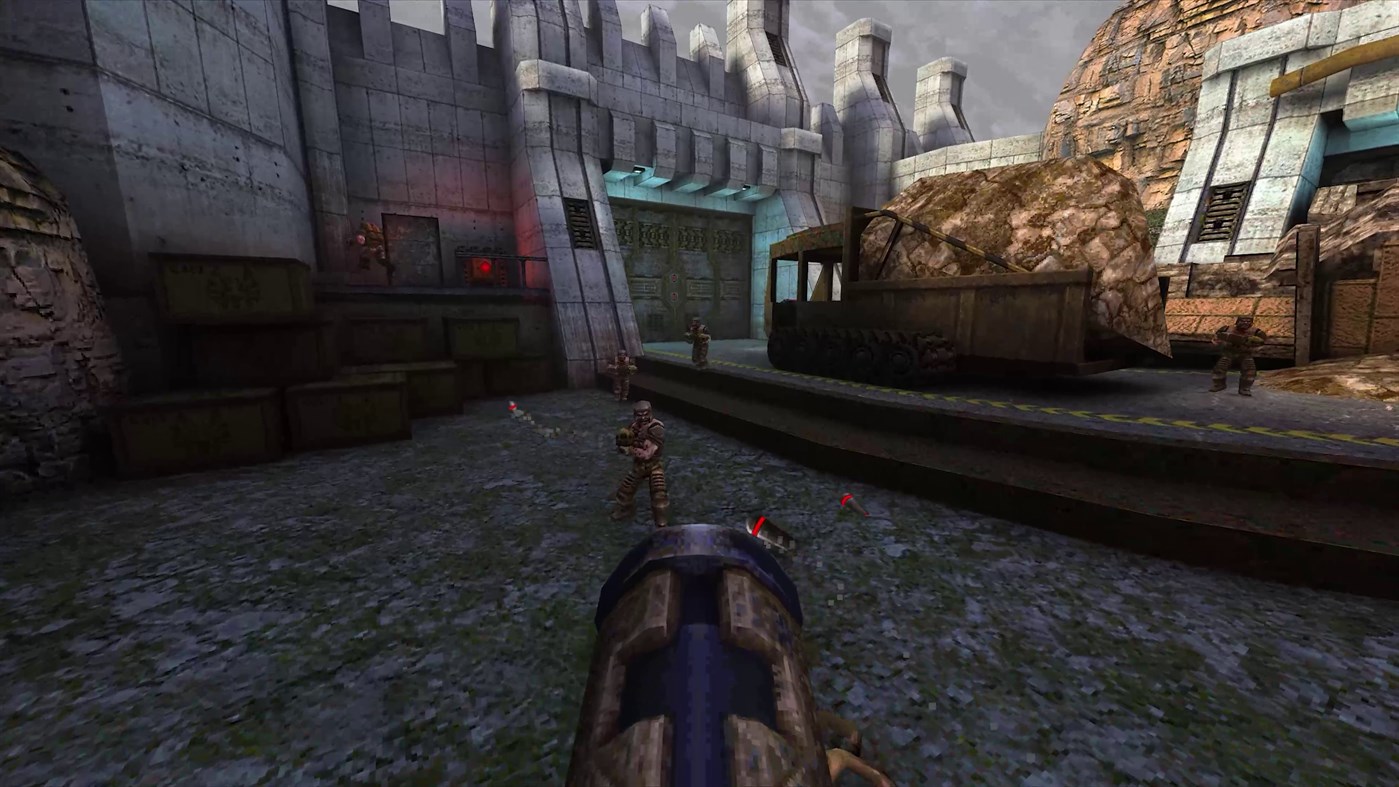
As leaked a few weeks ago by a QuakeCon scheduling slip-up, a re-release of iconic FPS Quake slipped onto console digital storefronts on Thursday, slightly ahead of the project’s official announcement. The $10 release is out now. Those who own Quake on Steam or from the official Bethesda.net store can access this update for free.

Bethesda’s re-release is available for Switch, Xbox, and PlayStation. This might be positive news after Microsoft’s acquisition of that studio, which generated worries about exclusivity moving forward, although Xbox Game Pass subscribers can access this visually updated edition as part of that service. For those who don’t mind waiting, Limited Run Games has a physical disc/card release for the PS4/Switch, respectively, including a pricey limited edition that comes in a box mirroring the in-game nail-gun ammo.

Looking mighty fine in 4K.
Enlarge / Looking mighty fine in 4K.

Four expansions are included: “Scourge of Armagon” and “Dissolution of Eternity,” which launched at retail shortly after the original 1996 game, along with MachineGames’ “Dimension of the Past” and “Dimension of the Machine.” And, yes, online matchmaking is available, too, complete with platform crossplay. Local split screen remains intact for up to four players, and a quick run through the Xbox version reveals numerous graphical options, even on the Xbox Series X. For instance, players can drop the resolution to “SD” levels and apply fog.

One other notable inclusion: players can access a built-in add-on menu to download a simulated Quake 64 using the PC version as a base to mimic the original. That version includes simulated, N64-like blur effects, which cannot be turned off. The add-on interface resembles Bethesda’s recent Doom and Doom 2 port projects on consoles and PC, which suggests more “mod” packs of levels and content will come to this Quake 1 re-release in future updates.

According to a press release, the PlayStation 5 and Xbox Series X versions of the game will run at full 4K and 120 fps once a future update goes live.

Sam Machkovech contributed to this report.

https://arstechnica.com/?p=1788552


Stunning official trailer for Foundation whets the appetite for more

A mathematical genius predicts the imminent collapse of a galactic empire, and he and his protegé set plans in motion to preserve the foundational knowledge of their civilization in Foundation, Apple TV+’s adaptation of Isaac Asimov’s hugely influential series of science fiction novels. It’s a story that takes place across multiple planets over 1,000 years, with a huge cast of characters. That makes adapting it extremely difficult, particularly to film. But the streaming platform is betting that the series format will be better suited to bring Asimov’s futuristic vision to life. It’s certainly one of several hotly anticipated science fiction projects debuting this fall.

As I’ve written previously, Asimov’s original trilogy centered on a mathematician named Hari Seldon, who has developed a mathematical approach to sociology. Called “psychohistory,” it enables him to predict the future of large populations—like the Galactic Empire, which incorporates all inhabitants of the Milky Way. Unfortunately, Seldon’s theory predicts an imminent collapse of the empire. This will usher in a Dark Age lasting 30,000 years, after which a second empire will arise.

Seldon cannot stop the collapse, but he insists there is a way to limit those Dark Ages to just 1,000 years. He proposes creating a Foundation, a group of the most intelligent minds in the empire, charged with preserving all human knowledge in the Encyclopedia Galactica. Rather than executing Seldon, the committee decides to exile him to a remote world called Terminus, along with the members of the new Foundation, where they can begin compiling the encyclopedia.

The Apple TV+ series looks like it will hew pretty closely to the fundamental narrative arc of the books. Per the official synopsis:

When revolutionary Dr. Hari Seldon (Jared Harris) predicts the impending fall of the Empire, he and a band of loyal followers venture to the far reaches of the galaxy to establish The Foundation in an attempt to rebuild and preserve the future of civilization. Enraged by Hari’s claims, the ruling Cleons—a long line of emperor clones—fear their grasp on the galaxy may be weakening as they’re forced to reckon with the potential reality of losing their legacy forever.

In addition to Harris, Lee Pace co-stars as Brother Day, current emperor of the galaxy and part of that long line of emperor clones. The other Cleons are Brother Dusk (Terrence Mann), the ruling family’s oldest living member, and Brother Dawn (Cassian Bilton), the youngest member and heir apparent to Brother Day. All three are original characters created for the series. Lou Llobell plays Seldon’s mathematical genius protegé, Gaal; Leah Harvey plays a gender-swapped Salvor, warden of Terminus; and Laura Birn plays Eto Demerzel, aide to Brother Day. The cast also includes Daniel MacPherson as Hugo, T’Nia Miller as Halima, Pravessh Rana as Rowan, Kubbra Sait as Phara, Mido Hamada as Shadow Master Obrecht, Amy Tyger as Azura, Alfred Enoch as Raych Seldon, and Buddy Skelton as Keir.

The first teaser appeared in June 2020 at the Worldwide Developers Conference (WWDC). That included some behind-the-scenes images and brief commentary from showrunner David S. Goyer, who co-wrote Terminator: Dark Fate, and Batman v. Superman. He noted all the past efforts to adapt Foundation over the last 50 years, as well as the enormous influence the series had on Star Wars. A second teaser appeared this past June, focused heavily on Brother Dusk and his ruling Cleon family, particularly their reliance on cloned fetuses to ensure the dynasty endures.

This latest trailer opens with a focus on Gaal’s perspective as she arrives on the capital planet Tranton to study under Seldon. “When I was a child at the edge of the galaxy, I heard stories about a man who could forecast the future,” she says in a voiceover. “But the story remained dark to me until many years later. It became my story—until it became the only story.” She meets Seldon, assuring him that she is familiar with his theory of psychohistory, and he responds that it is not a theory. Rather, he tells her, “It’s the future of mankind expressed in numbers. And the Empire won’t like the future I predict.”

The Empire most definitely does not like his predictions, and there seems to be a smear campaign to dismiss him as a charlatan or false messiah. But Seldon’s influence still grows as he predicts endless wars and “a thousand worlds reduced to cinders.” People seem to like his brand of what one might call rational fatalism. Brother Dusk suggests killing him, but Brother Day quickly spots the flaw in this strategy. “We can murder the man, but what about the movement, brother?” he says. “Martyrs tend to have a long half-life.” And then all hell breaks loose as everyone realizes that Seldon’s math was correct, and the Empire is indeed dying.

Asimov was strongly influenced by Edward Gibbons’ The History of the Decline and Fall of the Roman Empire, particularly while writing the earlier books. This trailer really brings out the theme of embracing inevitable change, even if it’s frightening—and there’s nothing more frightening to a ruler than the imminent collapse of his empire. In Seldon’s view, only by facing that change can one sufficiently prepare a foundation of knowledge to enable humanity to one day “climb from the ashes.”

The first three episodes of Foundation will premiere on Apple TV+ on September 24, 2021. After that, new episodes will air weekly every Friday. The series is clearly expansive and ambitious, with terrific visuals, and we look forward to seeing just how well Goyer has captured the essence of these classic novels.

[embedded content]
Official trailer for Foundation, coming to Apple TV+ in September.

Listing image by YouTube/Apple TV+

https://arstechnica.com/?p=1788601


Ghost of Tsushima Director’s Cut: Reflections, both literal and physical

Ghost of Tsushima‘s Iki Island expansion, included in the new Director’s Cut version of the game, presents an even better narrative than what we saw in the base game. The Director’s Cut, which releases on August 20, also brings new armor sets, a director’s commentary, and a digital art book. The PlayStation 5 edition costs $69.99, and the PlayStation 4 version is $59.99—though you can upgrade a PS4 copy of the base game to the Director’s Cut for $19.99. (Note: A co-op multiplayer mode was not available in the prelaunch review code.)

The Iki content is separate from the stories and characters of the original game, which took place on the mainland. Ghost of Tsushima‘s protagonist, Jin, is still the main character, and as he travels to the island of Iki, he encounters an isolated people who resent outside influence, especially from samurai like him.

Jin is viewed with suspicion, even as the Mongols—the primary antagonists of Ghost of Tsushima—continue their raids on Iki’s outnumbered pirate population. The islanders’ distrust of outsiders is explained as the plot unfolds, and the new material explores themes ignored by the original game. The expansion focuses on Jin’s propensity for violence and gives thematic weight to the frequent battles that result in ludicrous body counts. Ghost of Tsushima retains its brutal gameplay, but the narrative forces players to consider the downside of cutting down anyone who looks at you funny.

Arrival on Iki.
Enlarge / Arrival on Iki.

Iki is small compared to the mainland, but it’s big enough for the expansion’s story and activities. The expansion offers new skills, armor, and side missions, and it will take you hours to work through it all. The island is also populated by enjoyable personalities who put Jin in uncomfortable situations as he tries to make up for his family’s cruel past. Iki’s plight brings to mind the fate of Okinawa, a Japanese island lost to the imperial forces during World War II. The fighting cost Okinawa a distinctive culture, and Iki’s islanders want to avoid a similar outcome.

Technical gains

Ghost of Tsushima’s expansion provides enough content to make it worth a purchase, although Iki’s main story lasts only a few (lengthy) missions. But the Director’s Cut also brings technical enhancements, especially to the PS5 edition. You’ll still see texture pop-in when running through dense environments, but the game’s ambient effects, such as leaves blowing in the wind, have received boosted fidelity and clarity. An early, breathtaking scene with Jin’s father features thousands of red leaves covering the ground. And be prepared to see a lot of mist—just as J.J. Abrams loves lens flares, Ghost of Tsushima’s developers are obsessed with attractive mist effects.

An absolutely massive flower field stretches to the horizon.
Enlarge / An absolutely massive flower field stretches to the horizon.

Both the PS5 and PS4 Pro versions of the Director’s Cut offer 4K options, but the resolution doesn’t appear to be visibly improved from the original release, at least up close. The PS4 Pro handles the new material well enough, albeit at 30 fps. The PS5 version, on the other hand, is locked at 60 fps when in fidelity mode. Also noteworthy on the PS5 are improved reflections. The update doesn’t appear to have added ray tracing, but lighting has improved noticeably on the newer console; a reflection that looks like a smudged blob on the water’s surface on the PS4 version shows much more detail on the PS5. Farther into the ocean waters, we get only repeating textures and basic sunlight reflections, though. Load times last mere seconds on the PS5, compared to the 30+ seconds for the initial boot on the PS4, and the comparison is similar for fast travel.

Ghost of Tsushima is a beautiful game, and although the Director’s Cut ups the ante, it doesn’t do quite enough to justify a purchase on the technical upgrades alone. The value comes from the content itself. If you have a copy of the original PS4 version, the $20 upgrade fee is an easy sell. If you’ve never played the game at all—and you should—this is the version to get.

Listing image by Sucker Punch Productions

https://arstechnica.com/?p=1788476


We have our first look at images from Amazon’s new Wheel of Time series

Promotional image for upcoming streaming fantasy series.
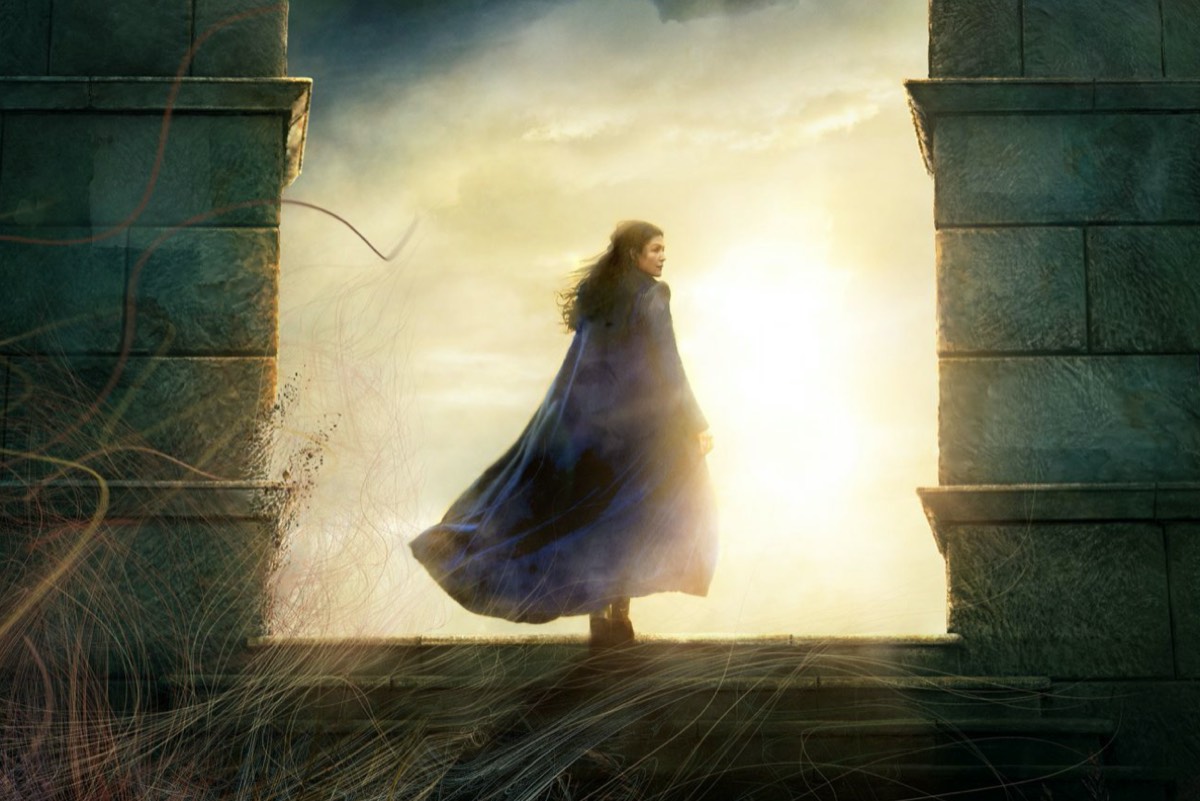
Enlarge / The hotly anticipated Wheel of Time series is expected to debut in November 2021 on Amazon Prime.

So far, we’ve only seen a few tantalizing video teasers (which contain only split seconds of actual footage) and some poster art for The Wheel of Time, Amazon’s long-awaited TV adaptation of the late Robert Jordan‘s bestselling 14-book series of epic fantasy novels. But Entertainment Weekly just unveiled an exclusive first look at the new series, featuring four stunning images that give us a welcome taste of showrunner Rafe Judkins’ (Agents of S.H.I.E.L.D.) vision for this fictional world.

(Some spoilers for the first book in Jordan’s series below.)

“Wheel of Time is the first fantasy series that really dove into the political and cultural worlds of all these different characters,” Judkins told Entertainment Weekly. “It was also one of the first to dive into multiple POV characters, so you’re following an ensemble, with each of them having their own agendas and approaches to everything. That’s always felt to me like the missing piece of the fantasy-literature landscape that hasn’t been brought to TV or film yet.”

The TV series will center on Moiraine (played by Oscar-nominee Rosamund Pike), a member of a powerful, all-woman organization called the Aes Sedai. Magic exists in this unnamed fictional world, known as the One Power, divided into male (saidin) and female (saidar) halves. The latter is the province of the Aes Sedai. Long ago, a great evil called the Dark One caused the saidin to become tainted, such that most men who show an ability to channel that magic go mad. It’s the job of the Aes Sedai to track down such men and strip them of their abilities—a process known as “gentling” that, unfortunately, is often anything but. There is also an ancient prophecy concerning the Dragon Reborn: the reincarnation of a person who will save or destroy humanity.

Given the epic scope of the novels, it’s no surprise that the TV series boasts a sprawling cast. In addition to Pike, Josha Stradowski stars as Rand al’Thor, while Marcus Rutherford plays apprentice blacksmith and dream-walker Perrin Aybara. Zoë Robins plays healer Nynaeve al’Meara, and Madeleine Madden plays Egwene al’Vere. Barney Harris plays series comic relief Matrim Cauthon. Hammed Animashaun has been cast as Loail, a close friend to Perrin and Rand al’Thor. Alexandre Willaume portrays Thom Merrilin, a “Gleeman and adventurer”—basically a traveling bard—while Johann Myers plays the villainous Padan Fain, and Alvaro Morte plays Logain.

“I try to stick to the spine and the heart of the books, and bring that to the screen,” Judkins said of his approach to adapting the books. “If I can successfully do that, the story and the characters will sell themselves.” So at the very least, we can probably expect the events of the TV series to hew closely to the overall narrative arc of the first book, The Eye of the World.

We do know that, as in the book, Pike’s Moraine will befriend a group of five young people—Egwene, Nynaeve, Rand, Mat, and Perrin—whose small village has been attacked by monsters called Trollocs. The two women (Egwene and Nynaeve) show some promise as future members of the Aes Sedai. But Moraine also suspects one of the young men might be the Dragon Reborn. “Moiraine is the guide figure in this world, the mysterious stranger who comes to town and changes their lives forever,” Pike told Entertainment Weekly. “They leave with her on a journey that will either save or destroy humanity.”

Jordan’s world includes the ruins of a once-great city called Shadar Logoth, shrouded in a white fog called Mashadar that can kill anyone it touches. So of course, the members of our little entourage must pass through the ghost city on their travels, as they flee from the Trollocs. Those scenes were shot in Eastern Europe.

“We literally built Shadar Logoth from scratch just for 15 minutes of airtime, because it’s that important to the series,” Judkins told EW. “That’s where it becomes very clear it’s not just the forces of good and evil. There are lots of different angles.”

We’ll also be getting a separate Wheel of Time film trilogy focusing events in Jordan’s fictional world before the events of the books. As we’ve reported previously, most of the canonical prehistory of Jordan’s fictional world is revealed in flashbacks and legends found in The Wheel of Time Companion, but it is otherwise largely unexplored territory. The intent is to complement rather than compete with the storyline in Amazon’s adaptation for TV. Screenwriter Zack Stentz (Thor, X-Men: First Class, Jurassic World Camp Cretaceous) will take on screenwriting duties for the first film.

Wheel of Time is expected to debut on Amazon Prime this November. Amazon is so confident in the series, it has already renewed Wheel of Time for a second season.

https://arstechnica.com/?p=1788240


It’s now possible to play early ‘90s CD-ROM games via ScummVM

Screenshot from 1990s video game shows anthropomorphic frog police.
Project Starship’s frog cops out in force.

The ScummVM community has just made the early CD-ROM gaming era more accessible. For five years, multiple people have worked on making Macromedia Director games playable on modern hardware, and today, that work is done.

Director was a critical component of early CD games that failed to scale up as Windows advanced (and as software like QuickTime fell by the wayside). But playing Spaceship Warlock or the bizarre Japanese art piece Eastern Mind: The Lost Souls of Tong Nou is now possible on current hardware—without the use of specific emulators.

Time travel and killer robots at their most '90s.
Time travel and killer robots at their most ’90s.

Librarian, historian, and game archivist Phil Salvador, who runs The Obscuritory, tweeted about the project on Tuesday. “In many cases, the classic games you can purchase on platforms like GOG.com are being run through an emulator like DOSBox or ScummVM,” Salvador told Ars. “But because Director games use features of their operating systems like Windows 3.1 or external plugins like QuickTime, there’s been no clean, easy way to re-release those [games] on the commercial marketplace. As the ScummVM team continues to improve support for Director, there’s a good chance we could see some of these games on the market again.”

Beyond coding issues, CD-ROM games frequently used copyrighted music or art. Because so many of the games’ original publishers and developers shuttered over the past three decades, the legal hurdles standing in the way of re-releases might prove insurmountable. But that doesn’t mean the original hard copies stopped working for gamers looking to legally play their old software. Now there’s a means, even in a modern Windows/Mac environment.

[embedded content]
Footage from the 1993 video game L-Zone.

Salvador is clearly enthusiastic about old games. Regarding Spaceship Warlock, Salvador wrote, “It’s the sort of game where you can order a drink at the bar, and the designers programmed in hundreds of possible options, just in case somebody tried to order Frangelico.”

This project isn’t only about games, though. “Director was used for so many things besides games, like digital magazines, educational programs, and experimental art like Laurie Anderson’s Puppet Motel,” wrote Salvador. “As ScummVM keeps improving support for Director, more of this software will be easier to run as well. This could have a big impact on software preservation beyond just games.”

The ScummVM team is trying to get later Director-based games to work as well. One Director-3 game, L-Zone, is already fully supported.

https://arstechnica.com/?p=1787885


Exploding power supplies are now the worst thing about the Newegg Shuffle

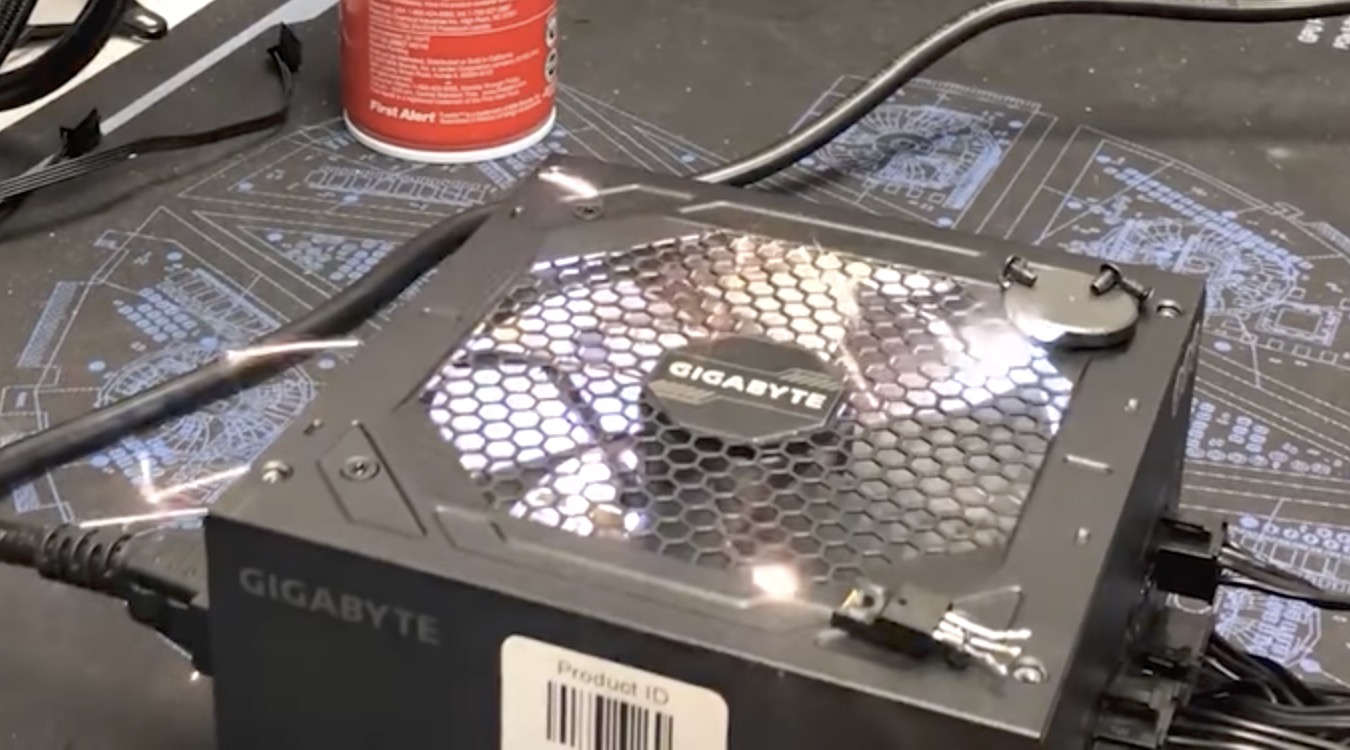
A Gigabyte power supply explodes during Gamers Nexus' testing.
Enlarge / A Gigabyte power supply explodes during Gamers Nexus’ testing.
Gamers Nexus

If you’ve been trying to buy a GPU this year, you may be familiar with the Newegg Shuffle, a lottery system that Newegg instituted in January to try to beat bots and scalpers. You may also know that the GPUs and consoles in the Newegg Shuffle are often bundled with components like RAM, motherboards, and power supplies as a package deal—if you want dessert (in this case, a GPU), you have to eat your vegetables (or, a product you might be able to use but weren’t looking to buy).

Earlier this month, the PC gaming YouTubers at Gamers Nexus posted a video showing that two Gigabyte power supplies commonly bundled with GPUs in the Newegg Shuffle were prone to “catastrophic” failure. Some of the GP-P850GM and GP-P750GM models that were tested sparked as they died, creating a fire risk, and one also ruined an attached RTX 3080 GPU. Gigabyte has now released a statement that (inaccurately) takes issue with Gamers Nexus’ findings before outlining how the company is addressing the problem and offering exchanges for anyone who has bought a power supply within the affected range of serial numbers (the company has stopped short of a formal recall, however).

Affected GP-P850GM and GP-P750GM models can be exchanged, whether they've failed or not.
Affected GP-P850GM and GP-P750GM models can be exchanged, whether they’ve failed or not.

Gigabyte claims that the Gamers Nexus team ran the power supplies over capacity for “extended lengths of time” and that these conditions “would not be typical of any real world usage.” In a response video posted today, Gamers Nexus pointed out that this statement mischaracterizes their tests, which were carefully designed to find where the power supplies’ Over-Power Protection (OPP) feature would trigger and shut the power supply off (as OPP is designed to do when functioning properly). The power supplies were then left to sit for a few minutes and brought back online at 60 percent of their capacity to ensure that they were still working properly after the shutdown—the full testing methodology section of the first video is here. Gamers Nexus also pointed to numerous product reviews claiming that the power supplies had shown up dead on arrival, before they were ever installed or used.

As for what it’s doing to prevent future problems with these power supplies, Gigabyte has responded by lowering the OPP wattage limit to improve the odds that the power supplies will safely shut themselves down and continue working. Both models would accept power spikes of up to 150 percent their rated capacity before shutting down (1300 W for the 850 W power supply, and 1125 W for the 750 W model), and that ceiling has been lowered to 120 percent. The statement doesn’t say whether Gigabyte is making other manufacturing changes to address the problem.

The issue is partly that Gigabyte has made a poor product, but bad power supplies happen. This has only become a newsworthy problem because Newegg has been pushing these parts onto buyers who are desperate to get a GPU at anywhere near the advertised retail price. At best, buying a bundle means getting some things you can actually use but didn’t plan to pay for, like an extra controller or a game with a game console, or decent RAM or a motherboard to go with a GPU. But at worst, it’s a way for retailers to offload things they can’t normally sell to people who are so eager to buy something that they will gladly accept the inflated cost along with the unwanted accessories.

We’ve contacted Newegg to see if the problems with the Gigabyte power supplies will result in any changes to the Newegg Shuffle return policy or the kinds of products that get bundled with GPUs in the first place (the current return policy says that you need to return all bundled items together to get a refund). We’ll update if we get a response.

https://arstechnica.com/?p=1787728


How a game about dwarves mining in space has helped me weather the pandemic

<img src="https://rassegna.lbit-solution.it/wp-content/uploads/2021/08/how-a-game-about-dwarves-mining-in-space-has-helped-me-weather-the-pandemic.jpg" alt="Deep Rock Galactic is a bug-killing, gold-mining good time. “>
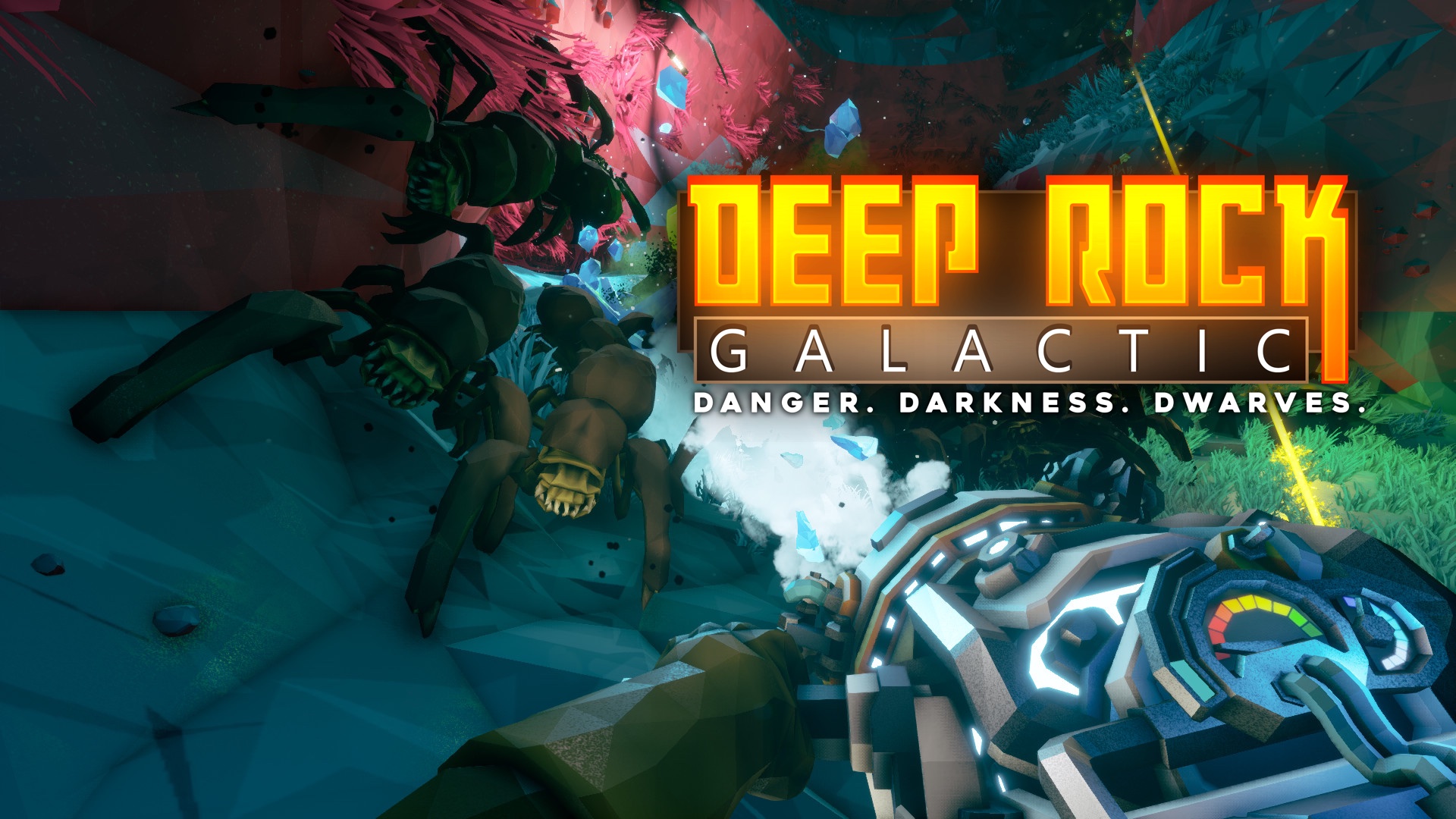
Enlarge / Deep Rock Galactic is a bug-killing, gold-mining good time.
Ghost Ship Games

I’ve never loved online multiplayer games. I’m always up for a few rounds of Smash Bros. or Towerfall on the couch with a couple beers and a couple buds, but when it comes to playing online, I never put in the work to find a group I could play with regularly. I also never wanted to invest the time it would take to really get good at highly competitive first-person shooters or MOBAs or battle royale games. But like so many things—working, parenting, my relationship to the concept of time—that began to change when the pandemic hit. Couch multiplayer was no longer an easy option, but I was starving for human interaction, so I turned to my PC.

What began with me and one other person intermittently dabbling in Age of Empires II eventually became a group of three-to-four people who were meeting to play games once or twice a week, every week. We started with group Geoguessr sessions and a sort of pass-the-controller-style thing where we’d chat while we took turns streaming American Truck Simulator. Then we played Ultimate Chicken Horse until we’d unlocked all the levels, and we stuck with Fall Guys through a couple of seasons. But it wasn’t until a group replay of Left 4 Dead 2 that we realized what we really wanted was a game where we could work together. And when we were done with that, at long last, we landed on the game this piece is actually about: Deep Rock Galactic.

Deep Rock Galactic (hereafter DRG) is a co-op game where between one and four players suit up to explore the planet Hoxxes IV, collecting its resources and fighting its hostile insectoid inhabitants on behalf of a comically heartless, hypercapitalist space mining corporation. You only have a few distinct mission types to choose from, but the tunnels of Hoxxes IV (and the enemy encounters) are all procedurally generated and you can play as any one of four classes, making each playthrough unique. Also, you’re all dwarves.

Deep Rock Galactic [Xbox, PC]

(Ars Technica may earn compensation for sales from links on this post through affiliate programs.)

DRG is a PC and Xbox One game that was originally released in preview form in early 2018. It was continually developed over the next two years before getting a 1.0 release in May of 2020, and its developers have continued to release big content updates and smaller rebalancing updates since then (the next one, Update 35, is due out sometime in Q3). It’s the first release from Ghost Ship Games, a Danish studio that formed specifically to work on co-op games back in 2016. The core game costs $30 (Microsoft Store link here, Steam link here; note that cross-play is supported between the Xbox and Microsoft Store versions of the game, but not between the Microsoft and Steam versions, and that the game is included in a Game Pass Ultimate subscription). And while there is a ton of paid DLC on top of that, it’s exclusively cosmetic and you don’t need to buy any of it to have a good time.

The trauma and nastiness of the last 18 months have made basic, unalloyed kindness feel precious, and DRG, its developers, and its community overflow with kindness. Job postings at Ghost Ship Games go up with “NO CRUNCH!” in all caps as the second bullet point under “competitive salary,” and the developers stream regular play sessions where they often join public games just to hang out among their playerbase while they answer questions (common answers: there are no plans for more classes, they will never focus on PvP, and they are working on non-male dwarves). The fan community on Reddit is also an improbably wholesome place where fans post DRG memes, strategies, videos of funny things that happened on their runs, and more. Those Redditors just generally seem excited to welcome new players into the fold.

That’s all nice (niceness: it’s nice!), but it wouldn’t matter that much if the game wasn’t fun—but it’s a lot of fun. The core mechanics are part Minecraft, part Left 4 Dead, and most missions intersperse more laid-back stretches of mining and exploration with more heated “swarm” sections where you’ve got to fight your way through waves of angry bugs. Completing missions earns you gold and minerals that you use to upgrade your weapons and unlock cosmetic customizations (you will spend lots of money on beards and mustaches), experience points that will increase your level and rank, and perk points that you can spend on small active and passive buffs. The higher your level and rank, the more upgrades and customizations you’ll be able to buy. The game is good at giving you rewards whether you choose to play a single class and get really good at it, or whether you prefer to hop between the classes for more variety.

The game is fun enough in single-player mode, which gives you an AI-controlled robot companion to help you mine and fight. But it really shines in its multiplayer mode, whether you’re playing private games regularly with one or two small groups of friends or hopping into public games to join a team of complete strangers. Even if you’re a complete newbie joining a team of grizzled experts, people will almost always treat “greenbeard” players kindly (since you don’t fail a mission unless the whole team goes down and you can revive downed players as often as you want; one inexperienced player usually won’t tank a team that knows what it’s doing).

If you want to start playing the game (and you should!), here are some tips to get you started:

  • Play your class! Each of the game’s four classes has unique strengths and weaknesses: the gunner is your brute-force damage dealer, while the engineer is more of a strategist who can guard your flanks. The driller’s flamethrower can take out loads of enemies at close range and your drills can create shortcuts for the party by drilling directly through walls and floors. And the scout isn’t as good in a fight, but it excels at grabbing minerals in hard-to-reach places and lighting up caverns for the other players.
  • Hopping between classes is fine, but new players should pick one and focus on leveling them up to level 25. At that point, you can “promote” the character, which unlocks access to special high-risk/high-reward “Deep Dive” missions, more powerful weapon upgrades called “overclocks,” and more class-specific cosmetic options.
  • Learn to use the mini-map, which you bring up by pressing M or Tab. Move the mouse to look around, and scroll to zoom in or out. Press the spacebar to point your dwarf in the direction that you’re looking on the map.
  • Most people playing online are happy to help new players find their feet, if you don’t want to play alone and don’t have a group to play with. Your character’s progress is also totally independent of who you’re playing with, so your resources and experience points will always accumulate no matter how you’re playing.
  • Press V early and often. It’s by far the most powerful move in the game.

It doesn’t take more than a couple dozen hours to play through all of DRG‘s missions and biomes, and by the time you’ve promoted your first character, you’ll have seen most of what the game has to offer. But the procedurally generated maps, well-balanced character classes and loadout options, weekly missions, and the sheer chaos of the game’s higher difficulty levels keep things feeling fresh while adding tons of replay value. The PC version also isn’t exceptionally demanding, hardware-wise, which makes it a bit easier to get a crew together. In my experience, you won’t have a good time if you’re trying to run it on Intel’s HD 620 or 630 integrated GPUs, but it runs fine at low-to-medium settings on the newer Intel Iris Xe laptop GPUs and AMD’s last few generations of Ryzen APUs if you don’t own an Xbox or a high-end gaming PC.

I know I’ll get tired of this silly dwarf mining game eventually. I’ll swing my pickaxe to grab some gold or I’ll kill a bug with a well-timed throwing axe and it won’t feel as thrilling, or a friend will be crushed beneath an incoming supply drop and it won’t be as hilarious. But I’m 104 hours in, and it hasn’t happened yet.

https://arstechnica.com/?p=1787136


Strawberry Mansion: A great sci-fi premise with trippy, arthouse execution

[embedded content]
The trailer for Strawberry Mansion.

In the world of the artsy new sci-fi film Strawberry Mansion, society has developed the technology to record dreams. And in typical over-the-top Silicon Valley fashion, if someone can track people’s thoughts and actions, they’ll definitely try to monetize it. The government now has a team of auditors that reviews these dreams and applies a small tax on certain goods that appear. Dreaming about a hot air balloon? That’ll be $0.52. Have thoughts of maple trees dancing through your head? A modest $0.08, please.

James Preble (played by co-writer/co-director Kentucker Audley) works as a dream auditor. And he’s been assigned to audit the dream inventory of an older woman named Bella (Penny Fuller). Unfortunately, Bella hasn’t kept up with technology very well, and all her dreams have been stored on old VHS tapes instead of the more modern (and USB-like) dreamstick technology. So this audit will take a bit longer than usual. Accordingly, Preble ends up staying with Bella for a few days in the spare room of her giant, countryside house.

While Preble stays with Bella, however, he starts to take up some kind of relationship with the young Bella (Grace Glowicki) he meets in her dreams. And the longer he stays with present-day Bella, the more he begins to learn there may be more to this dream inventory technology than he originally believed. “Do you believe your dreams are your own?” she asks one day over ominous afternoon tea.

Sounds like a great premise for a sci-fi flick, right? A dash of Inception mixed with a pinch of 1984 alongside some romance and the dry comic sensibility of I Heart Huckabees. Writer/directors Albert Birney and Kentucker Audley (who partnered on the 2017 SXSW film, Sylvio) absolutely have some great ideas, from the overall premise to the evil lurking in the movie’s second half and what that evil says about modern society (hint: it’s damning satire). Strawberry Mansion also has an extreme level of craft put into it. You’ll want to immediately queue up the Dan Deacon-penned score on Spotify. The absurdist visual ideas within the dream sequences are often delightful. And all throughout, there’s hazy lensing that visually mimics beloved genre B-movies of yore (Birney evidently shot the film digitally before transferring it to 16mm film). It’s a sensual feast of a film… but whether it works for a given viewer likely depends on their tolerance for arthouse sensibilities.

While it’s never dull to look at, Strawberry Mansion often has a glacial pace. It takes nearly the first third of the film to get a grasp on the basic plot as described above. The middle act picks up, like a tense thriller is about to unfold post-reveal. But then the final stretch reverts to the more luxurious, museum-gazing pacing complete with some really over-the-top dreams. There were moments when I couldn’t determine whether Preble was alive or dead or somewhere in between… but either way, he definitely sails across the seas as a 19th-century naval captain to find his lost “love.” She is, of course, the younger dream version of an old woman he had to audit. And he has two anthropomorphic rats as his crew.

Strawberry Mansion can be a lot.

The main performances are all engaging, regardless. Audley is restrained as Preble, and his auditor is often just as bewildered as the audience. Fuller as Bella may not be up with the latest technology, but she clearly has a lot of wisdom about modern life and morsels it out coyly. And veteran character actor Reed Birney (Vice President Blythe in middle seasons of House of Cards) is ideally cast as a perfectly unlikable try-hard from Bella’s past who shows up to complicate matters.

I may have muttered WTF to myself several times throughout Strawberry Mansion, yet I have thought about the film more after the fact than I would have imagined. Still, would I recommend it to others? First, I’d ask if you’ve ever been to a place like the R Bar in New Orleans. It’s that particular kind of hip, dimly lit but unpretentious pub that keeps a TV above the bar, usually on silent. Such a set functions essentially as kinetic wallpaper to whatever adventure lies ahead of you, so these bar TVs usually play trippy, retro fantasy films of the ’70s and ’80s. Limited resources and a lack of digital VFX meant some ridiculous puppets, backdrops, or costumes made it to screen. Hokey in the moment; charmingly retro and interesting now.

Strawberry Mansion can and should totally screen in this setting someday. And when it does, some patrons will get caught up by the eyeful and lean in, wanting to know more and allowing themselves to get lost in this fantastical world for ~90 minutes. Everyone else? They’ll turn to the person next to them, mutter WTF, chuckle, then move on.

Strawberry Mansion debuted at the 2021 Sundance Film Festival and is currently available on VOD as part of the 2021 hybrid edition of the great genre event, Fantasia Fest. As of this summer, distributor Music Box Films reportedly had plans for a theatrical and digital release later this year, but no release date has been announced.

https://arstechnica.com/?p=1786242