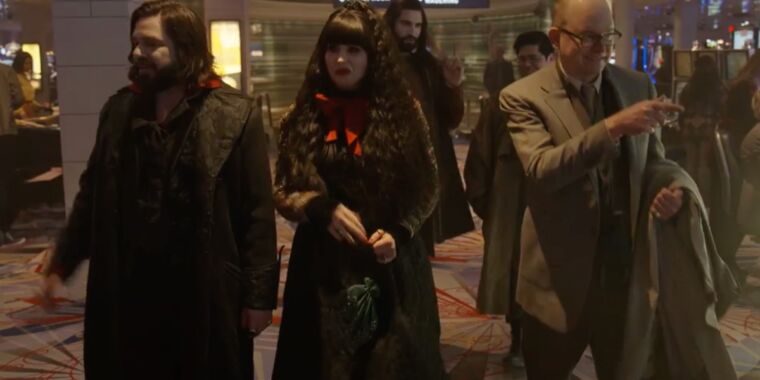
It’s time for more undead shenanigans with What We Do in the Shadows S3
Human “familiar” Guillermo (Harvey Guillen) wants nothing more than to be a vampire someday.
YouTube/FX
Nandor (Kayvan Novak) and Nadja (Natasia Demetriou) both want to be Supreme Leader of the Vampire Council.
YouTube/FX
Who wouldn’t want to sit on that spiffy throne?
YouTube/FX
The gang arrives in Atlantic City.
YouTube/FX
“Am I flying?”
YouTube/FX
“Bazinga!”
YouTube/FX
Energy vampire Colin (Mark Proksch) finds a ton of yummy negative energy at a wedding.
YouTube/FX
Laszlo (Matt Berry) tries his hand at the law.
YouTube/FX
Nandor struggles with the vacuum cleaner.
YouTube/FX
Nandor’s courtship skills are hopelessly out of date.
YouTube/FX
Colin is on fire, but it’s okay.
YouTube/FX
There’s gotta be at least one werewolf sighting.
YouTube/FX
Guillermo the vampire hunter.
YouTube/FX
An odd nighttime hunting party.
YouTube/FX
Nandor says goodnight.
YouTube/FX
It’s no secret that several Ars staffers are big fans of What We Do in the Shadows, FX’s Emmy-nominated supernatural comedy series; S2 even made our year’s best TV list last year. FX just dropped the official trailer for the eagerly awaited third season. Even better, the network has given the show an early S4 renewal, so we’ll be getting plenty more undead shenanigans from our favorite band of bumbling bloodsuckers.
(Some spoilers for first two seasons below.)
As I’ve written previously, Taika Waititi and Jemaine Clement wrote, directed, and starred in the original 2014 horror-comedy, playing vampire roommates Vladislav (Clement) and Viago (Waititi) in Wellington, New Zealand. Given their nocturnal nature, they and their vampire friends haven’t adapted to modern life particularly well, and their mishaps as they struggle to navigate mundane trivialities in the 21st century are the source of much of the film’s deadpan humor.
The FX adaptation is set in New York City’s Staten Island. The vampire roommates are Nandor (Kayvan Novak), Laszlo (Matt Berry), his lover Nadja (Natasia Demetriou), and their human “familiar” Guillermo (Harvey Guillen), as well as an “energy vampire” named Colin (Mark Proksch). Over two seasons, they’ve feuded with werewolves; tried to hang out with the cool Manhattan vampires; and attended their first Super Bowl party (believing it to be a “Superb Owl” party). Mark Hamill had a cameo in S2 as a vengeful vampire named Jim. And who could forget Colin the energy vampire figuring out that he could engage in online trolling and consume negative energy virtually?
Inasmuch as there’s been an overall narrative arc, it stems from the fact that our four vampire protagonists are pretty much outcasts in the vampire community. S1 opened with the roommates preparing for the arrival of an ancient vampire called The Baron, whom they accidentally killed by exposing him to sunlight, thereby incurring the wrath of the Vampire Council. And Guillermo eventually discovered that he is secretly a descendent of Van Helsing, the infamous vampire slayer.
In the S2 finale, Guillermo revealed his vampire slaying abilities by slaughtering a ton of vampires at the Nouveau Théâtre des Vampires. He did so in order to save the lives of his vampire housemates who had been captured and sentenced to death by the Council. There’s bound to be some repercussions from that. Per the official S3 synopsis:
After the shocking season two finale, we find the housemates in a panic about what to do with Guillermo after discovering that he is a vampire killer. This season, the vampires are elevated to a new level of power and will encounter the vampire from which all vampires have descended, a tempting Siren, gargoyles, werewolf kickball, Atlantic City casinos, wellness cults, ex-girlfriends, gyms, and supernatural curiosities galore. Plus, Colin Robinson is turning 100. And Nandor, faced with his own eternal-life crisis, tries to inject his life with more meaning. Will he find love or is he destined to be an immortal bachelor with 37 ex-wives?
You’d think that the vampire crew would be sufficiently grateful to Guillermo to grant him his dearest wish and finally make him a vampire, too. But alas, once again Guillermo’s hopes seem to be dashed. (They still don’t know he’s a descendant of Van Helsing, either.) The vampires find that they are now in charge of the Vampiric Council, sparking a competition between Nandor and Nadja over who will get to sit on the throne as Supreme Leader.
Mostly, the trailer gives us a taste of the usual shenanigans, such as the vampires learning about vacuum cleaners and escalators. (“What is happening? Am I flying?” Nadja exclaims.) A wintry game of werewolf kickball gets interrupted when all the werewolves chase after a passing car, Nandor accidentally sets Colin on fire, and Nandor apparently wins big at the casino, shouting “Bazinga!” in jubilation.
As for S4, executive producer Paul Simms told Deadline Hollywood that it will explore Guillermo’s lineage even more. “In S4 Episode 4, you’re going to meet all of Guillermo’s family in a way that makes him very anxious,” said Simms. “We’ll learn that if he has Van Helsing DNA, then so does the rest of his family even though they might not realize it themselves. But we haven’t even shot that yet. We’ll also learn in S4 that Guillermo is feeling the effects of having dedicated ten years of his life to these vampires and neglecting his family and his responsibilities to them and how he tries to make amends for that.”
The first two episodes of What We Do in the Shadows S3 premiere on FX on September 2, 2021, with next-day streaming on Hulu. Expect S4 to debut sometime next year.
[embedded content]
Trailer for S3 of What We Do in the Shadows.
Listing image by YouTube/FX
https://arstechnica.com/?p=1787188
QuakeCon schedule leak shows Quake “revitalized edition” from MachineGames
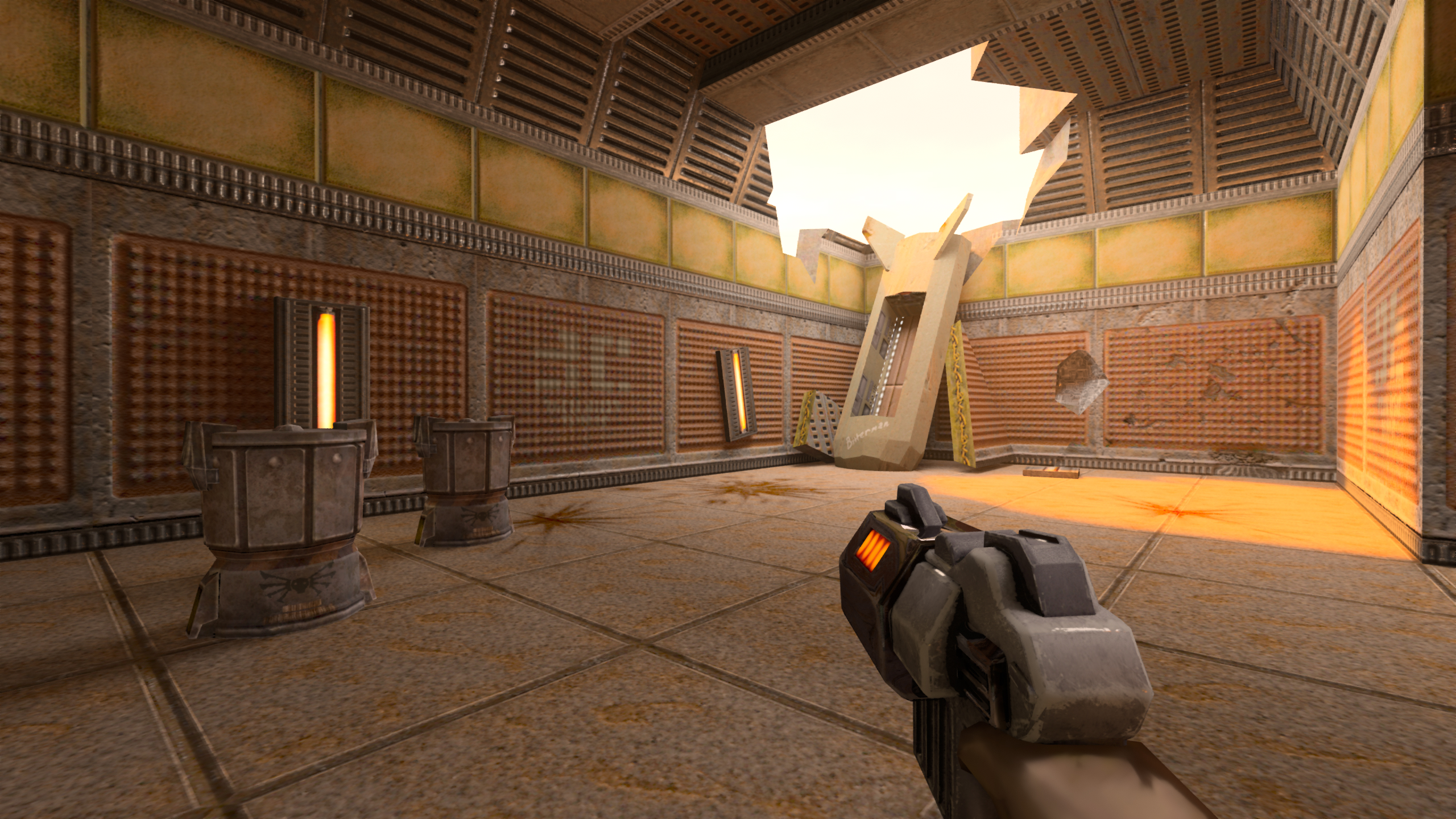
<img src="https://rassegna.lbit-solution.it/wp-content/uploads/2021/08/quakecon-schedule-leak-shows-quake-revitalized-edition-from-machinegames.jpg" alt="We wonder how the "revitalized" Quake will compare to this 2019 raytracing update of Quake II.”>
Enlarge/ We wonder how the “revitalized” Quake will compare to this 2019 raytracing update of Quake II.
After two shiny, modernized updates to the venerable Doom franchise in recent years, it looks like Bethesda and fellow Zenimax subsidiary MachineGames (Wolfenstein: The New Order) are getting ready to announce a “revitalized edition” of Quake.
That tidbit comes by way of the recently posted schedule for Bethesda’s virtual QuakeCon 2021, which will be streamed online next week. As noticed by Xbox Era (and still visible in this archived version), the schedule initially included a description for a “Let’s talk Quake” session that mentioned participants will “discuss the additional content MachineGames have contributed to this revitalized edition [emphasis added].”
That line was scrubbed from the live version of the schedule sometime in the last 24 hours, implying that someone jumped the gun in mentioning the new “revitalized” edition. But the current listing still mentions that “Quake is back,” which suggests we might hear an official announcement at the “QuakeCon Digital Welcome + Celebrating 25 Years of Quake with id Software and MachineGames” opening session on Thursday, August 19.
For now, we’re left to speculate on what exact “revitalizations” MachineGames has in mind for this “revitalized” edition. While we wait, we’ll throw that speculation to the comments section—what would you like to see in a version of Quake updated for modern times?
https://arstechnica.com/?p=1787166
Free Guy review: Finally, an authentic gaming film—and it’s fun, not perfect
Guy (Ryan Reynolds) discovers that things inside his world look a lot different when you have special sunglasses.
Same moment, glasses off. Not as augmented, eh?
20th Century Studios
FPS stands for first-person… sinema?
20th Century Studios
Lots of quests to pick from.
20th Century Studios
Lil Rey Howery plays Guy’s best friend.
20th Century Studios
Jodie Comer plays MolotovGirl inside of the movie’s video game.
20th Century Studios
Eventually, she teams up with Guy.
20th Century Studios
Does that motorcycle fly?
20th Century Studios
Guy starts annoying certain interested parties.
20th Century Studios
This sequence leads to comical jokes about “skins,” a common video game term for cosmetics. Guy doesn’t understand, which turns out hilariously.
20th Century Studios
In video games and computer graphics, the concept of the “uncanny valley” can emerge once something approaches visual realism. The more a virtual character looks like a human, the more our brains squarely focus on the CGI inaccuracies.
I kept thinking about this concept after seeing Free Guy, a new film from the combined Disney-Fox borg that takes gaming authenticity very seriously. But it didn’t feel that way because the movie, starring Ryan Reynolds (Deadpool) and Taika Waititi (What We Do in the Shadows), resembles the CGI tragedy of 1999’s Final Fantasy: The Spirits Within.
Rather, Free Guy‘s insistence on gaming-universe authenticity, which it takes damned seriously, means it approaches a conceptual uncanny valley. How much that’ll annoy you is arguably the biggest question mark attached to an otherwise solid, fun, and family-friendly action flick.
Free will inside of Free City?
I’ll start with the good news, because that’s less spoiler-y and might be enough for some readers to go to theaters with their families (should you be comfortable visiting a theater in August 2021). Movies about video games are finally evolving into a respectable genre, and on a sheer gaming-fluency basis, Free Guy surpasses them all.
The film follows Guy, a “nonplayable character” (NPC) inside of a video game who wakes up one day with a sense that the world around him isn’t what it seems. Free Guy opens with him realizing that there’s something fishy about how his days always have the same schedule and regimen, usually interrupted by ridiculous crimes and murders—which everyone miraculously survives by waking up unscathed the next day.
Turns out, he and his friends live inside of Free City, a fictional, Grand Theft Auto-like MMO game. (Imagine the real-life game APB made over a decade later with a more compelling metaverse and VR-like UI draped over everything.) Before long, a chance encounter with a real-life gamer, known in-game by the nickname “MolotovGirl” (Jodie Comer, Killing Eve), inspires Guy to face his own pixellated existential crisis.
In terms of comedy and likability, Ryan Reynolds nails the character of Guy, particularly in how he acts out the innocence and naivety of a freshly awoken, crudely coded video game character. This requires a different comedy edge than the better-than-you snark of Deadpool or the expectation-subverting weirdness of a man inside Pikachu’s body. Reynolds excels with his most intentionally dimwitted character yet. You’re still in for his signature snark and rhythm, however, so I won’t go so far as to say Free Guy will disabuse anyone of an anti-Reynolds bias.
When hacks and cheat codes turn out well
Ryan Reynolds stars as Guy, an NPC in the game Free City, an amalgamation of Grand Theft Auto and other titles.
Lil Rel Howery plays Buddy, a fellow NPC and Guy’s BFF.
YouTube/20th Century Studios
Guy’s existential ennui is triggered by the appearance of Milly/MolotovGirl (Jodie Comer).
YouTube/20th Century Studios
Watch out for the Murder Train!
YouTube/20th Century Studios
Seeing his world through new glasses.
YouTube/20th Century Studios
A confused Milly in the meat world.
YouTube/20th Century Studios
Her fellow programmer Keys (Joe Keery) is as surprised as she is.
YouTube/20th Century Studios
Guy starts doing heroic things outside his basic programming.
YouTube/20th Century Studios
Blue Shirt Guy becomes a big star.
YouTube/20th Century Studios
Keys and Milly’s evil boss, Antoine (Taika Waititi), tells them to shut it all down.
YouTube/20th Century Studios
Milly enters Free City to warn Guy.
YouTube/20th Century Studios
It’s harder to take Guy out than Antoine realizes.
YouTube/20th Century Studios
“Did that look cool?”
Yeah, it looked cool, bro.
YouTube/20th Century Studios
Free City begins to fall apart.
YouTube/20th Century Studios
Guy urges his fellow NPCs to join him in the uprising to save their game.
YouTube/20th Century Studios
As far as comedy is concerned, the cast doesn’t match Reynolds. Comer’s character has her own earnest journey to contend with, leaving her primarily with straight-woman duties for Reynolds to bounce off of. Still, she’s ultimately likable and becomes more charming as we learn what her character is really searching for. Guy’s one consistent buddy is played by Lil Rel Howery, who gives a note-for-note, family-friendly translation of his Get Out performance. That’s amusing enough, even if we lose some of the actor’s edge to make room for his own heartwarming buddies-surviving-together evolution.
Waititi shines as the antagonist Antoine, though he’s left adrift without an equal comedic-showdown foil. Saying more about Antoine is arguably a spoiler, which I’ll get to in a moment.
At its best, Free Guy succeeds both as action and comedy with its dedication to all things gaming, whether as a celebration or a satire. The movie is an explosion of gags about the modern gaming industry. With its authentic and impressive “augmented reality” UI, the game-within-the-film, Free City, looks like a legitimate game, and it provides ample fodder for jokes and silly references. A few action sequences genuinely resemble quest lines inside of video games, and Free Guy ramps these up by having “hackers” mess with the game’s code and cheats in real time.
Spoilers begin here: When is a “gaming” movie too authentic?
Now I’m going to spoil select plot elements to clarify some of my criticisms. You have been warned. If you’d prefer, skip to the final paragraph for a spoiler-free “verdict.”
[embedded content]
Ryan Reynolds discovers he is a background character in a video game in the epic adventure-comedy Free Guy.
Free Guy‘s “uncanny valley” issues begin early on: turns out, Free City‘s development included some shady, cost-cutting moves. The worst of these was the decision to steal another project’s code without attribution, then build an entire GTA-like game on top of it. MolotovGirl, we discover, was previously an indie game developer who worked alongside Keys (Joe Keery, Stranger Things) on a dream project involving advanced artificial intelligence.
Keys went on to work for Antoine’s gargantuan video game company, which MolotovGirl is clearly not a fan of: “How’s it feel to work for a galactic black hole of shit?” she asks him early on. The rest of Free Guy follows these two indie game makers looking for and uncovering their stolen code inside of Free City. The newly sentient Guy figures into this plot.
Imagine a film that has to break so much down—a game with specific code, programming, and AI routines inside of another game, with rival factions battling to either expose that truth or bury it. Then ask yourself how any screenwriter can neatly tuck all of that into a fast-paced, comedic action movie. Free Guy somewhat botches this landing with info-dumps that had me checking my watch by the 90-minute mark.
Worse, by spending so much energy clarifying this two-games-in-one concept, Free Guy opens itself up to too many questions about its internal logic. For starters, if Keys works for the game studio in question and has lowly “programmer” duties that put him in control of the source code, how in the world does he not stumble upon some very familiar code within the film’s first 10 minutes and immediately resolve the plot? Your mileage will obviously vary on how much you care about or question the film’s logic—and let’s be clear, Free Guy also includes the Hollywood trope of “hacking” playing out in the form of a stone-faced person at a computer typing furiously. So it wears some inauthenticity on its sleeve.
I wasn’t looking for “insert token to continue”
Then there’s the film’s brief token moments of handing power and agency to the NPC women in Free City. “I don’t have to be with any guy,” one blurts upon her free-will awakening, and with that, she casts off her gaming identity as scantily clad arm candy. The same thing happens again later, when Guy suggests a different woman NPC could be in whatever relationship she wants. That character responds with an interest in starting her own business.
These brief moments stand out because of how poorly they match the rest of the movie. While MolotovGirl is in the driver’s seat for some action sequences, Free Guy otherwise makes sure that men dominate both the film’s momentum and the cast of “important” characters. Waititi’s role as the scummy game studio lead arguably leans into this for comedic effect, whether he’s bossing around a female-filled art department or delivering icky game-executive lines like “IP recognition is rock-hard” or “Wait, which lawsuit are we talking about?”
But the ending is what really left a bad taste in my mouth. MolotovGirl falls for Keys once she learns that he had coded his favorite things about her into Free City. He remembered personal details like her favorite snack, her favorite childhood activity, and her favorite song, and these were coded in the game as activators of an AI routine. The film began with him abandoning their original indie game and partnership (amidst obvious signs that her work had been stolen) to work for a triple-A studio. Then he turns around, realizes the error of his ways, and assists her in uncovering the stolen-code truth. Good for him. But I’m not convinced that the actors’ chemistry and the insertion of one-sided devotion into code earn the romantic turn after so much work-related betrayal. And I question whether that conclusion will sit well with anyone who’s faced real-life marginalization at major tech firms.
End of spoilers, and my overall positive verdict
When Free Guy flies that close to the Sun of game-industry authenticity, I struggled to turn my brain off and enjoy the ride. Younger viewers will certainly have an easier time doing so, and they’ll relish cameos from known gaming personalities, along with riotous game-comedy sequences—particularly when an actor you’ve seen and heard before speaks and acts like a teenager on a microphone and really, really goes there with the performance.
While I have a beef with parts of Free Guy, I found myself choking up thanks to a certain personal bias. My inner-nerd was floored that a film could care so much about gaming authenticity in order to tell a unique story about free will in a modern, connected world. The same tingle I felt the first times I saw TRON or The Wizard—flicks that made my gaming-obsessed self feel seen as a child—overtook me as Free Guy reached its climax. Despite some stumbles, I loved watching Reynolds do what he does best, while Comer comes into her own as a star (with a role that lets her flex some welcome depth). And I appreciated the virtual world’s insane attention to authentic gaming detail.
Verdict: If you have gamers in your family and want to have a mostly good time while they cheer and laugh through most of this film, I highly recommend Free Guy. Without a family in tow, keep expectations low and expect a perfectly serviceable action-comedy with a smidge too much gaming focus.
Star Trek: Lower Decks still understands what makes Trek tick
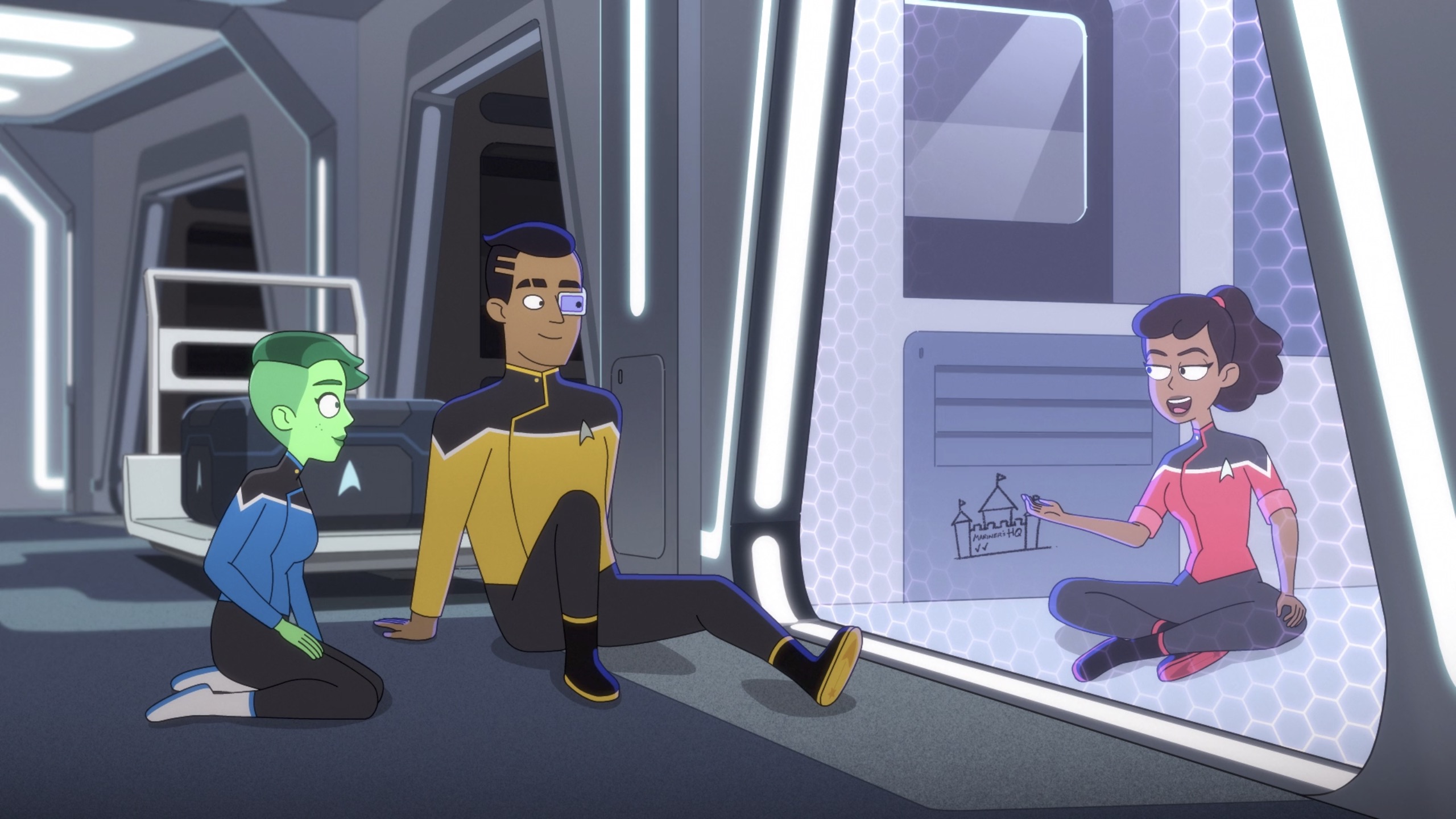
<img src="https://rassegna.lbit-solution.it/wp-content/uploads/2021/08/star-trek-lower-decks-still-understands-what-makes-trek-tick.jpg" alt="Star Trek: Lower Decks is back for more low-stakes fun in its second season. “>
Enlarge/Star Trek: Lower Decks is back for more low-stakes fun in its second season.
Paramount+
By the end of the first season of Star Trek: Lower Decks, the show was my favorite of the three Trek series that had premiered on Paramount+ (née CBS All Access) since Discovery brought the franchise back to TV in 2017.
Some of that is definitely rooted in nostalgia. Lower Decks intentionally recreates the aesthetic of ’90s-era Trek shows like The Next Generation and Voyager, from the ship design to the scoring to the blue typeface used for the credits. But it’s mostly because the show isn’t afraid to be low-stakes and silly and tell self-contained stories. This was a hallmark of ’90s Trek—Deep Space 9 followed the gorgeous, nuanced Far Beyond the Stars episode with a Honey I Shrunk the Kids spoof where someone accidentally makes a shuttlecraft tiny—but this sense of playfulness is often absent from the nonstop world-saving bombast of Discovery or the convoluted storytelling of Picard.
This isn’t to say that Lower Decks is always top-tier Trek. Its irreverent, self-referential style can get tiring in large doses, and there’s a fine line between “clever” and “lazy” in any show that leans this heavily on references to older shows for everything from throwaway sight gags to major plot points. But by the end of its first season, Lower Decks had proven it could be a good Trek show in addition to being a Trek reference factory, combining well-established characters, comedy, and genuinely engaging action sequences in the way that Futurama could when it was firing on all cylinders, and season two is more of the same.
Boldly going where someone has gone before
Jonathan Frakes is clearly having the time of his life returning as an animated Will Riker.
Paramount+
Life aboard the USS Titan gets too exciting for Boimler.
Paramount+
Ensign Tendi (Noël Wells) needs to be sure that Rutherford (Eugene Cordero) will still be her best friend after he loses his memories of their year aboard the Cerritos together.
Paramount+
“You don’t need to keep a trinket from EVERY side mission we do together,” says Mariner (Tawny Newsome) to her captain and mother (Dawnn Lewis).
Paramount+
Energy beings? Godlike powers? Just another day in Starfleet.
Paramount+
If you’re not familiar (or need a refresher), Lower Decks focuses on a group of ensigns serving aboard the USS Cerritos, a starship generally assigned to less-than-glamorous, paperwork-intensive “second contact” missions while the Enterprises and Titans of the fleet are off having adventures in uncharted space. It’s a permission slip for the show to continually riff on characters, alien races, and concepts from throughout Trek’s history (in one first-season adventure, the Cerritos visits an original-series-era planet where Captain Kirk freed the populace from the thrall of a dictatorial supercomputer, only to find that everyone on the planet went back to worshipping the supercomputer the moment the Federation’s back was turned).
When we left our heroes, ensign Brad Boimler (Jack Quaid) had been promoted to lieutenant and transferred to the USS Titan under the command of one William Riker. Beckett Mariner (Tawny Newsome), outed as the ne’er-do-well daughter of the Cerritos‘ captain (Dawnn Lewis), has agreed to work with her mother to circumvent some of the Federation’s red tape. Sam Rutherford (Eugene Cordero) has just lost his memory of his time aboard the Cerritos after having his cybernetic implant torn out, and his best friend D’Vana Tendi (Noël Wells) is determined to make them best friends all over again.
If you’ve ever watched anything on TV, it’s only the very lightest of spoilers to reveal that the show substantially reverts to the season-one status quo within the first couple of episodes, with Boimler and the others reunited on the Cerritos as put-upon ensigns. But the way the show gets there is fun and out of left field, and the vision of life on the Titan under Riker that we do get is a blast because of how much fun Jonathan Frakes is clearly having returning to his best-known role. Lower Decks dabbles in some lightly serialized storytelling across the five episodes that were provided to reviewers, but like the ’90s Trek shows it emulates, it’s the most at home telling character-driven monster-of-the-week stories.
And the second season of the show benefits immensely from having established, likable characters. As fast and jokey as the show often is, no one in the main cast exists just to be a punchline. The first season of Lower Decks drew a lot of Rick & Morty comparisons because of creator Mike McMahan’s time as a writer on that show, but none of R&M‘s all-encompassing cynicism or nihilism has seeped into Lower Decks, and it makes them completely different shows. When Mariner simultaneously misses Boimler and tries to seem like she doesn’t care about Boimler, or when Tendi frets that Rutherford might not become friends with her given a second chance, those emotional beats really work. (My favorite bit of the season so far explores Tendi’s complicated relationship with her Orion heritage.)
But here’s the thing: I can only review this show as a Star Trek fan, and the show is clearly written specifically for me. As fun as I think it is, and as much as I enjoy this world and these characters, it’s hard to think it would succeed quite as well for someone with no background in Star Trek or a casual Next Generation viewer who has never loaded up a page on Memory Alpha. The second season isn’t interested in changing this, and each of these episodes hinges on a plot point from some prior Trek episode in a way that rewards fans and lightly punishes anyone else. You’ll get the most out of these episodes if you know who Gary Mitchell is, or if you have a lot of affection for the earlier energy-whip-toting version of the Ferengi, or if you know about that episode where the guy tries to add Data to his collection of rare objects (“they always try to collect Data,” mutters the captain). And even fans who just want latter-day Trek to break more new ground may get frustrated by the show’s endless recycling and repurposing.
That’s not me, though. Lower Decks is still giving me pretty much exactly what I want from Star Trek: episodic fun where the very fabric of the world/the Federation/the universe/reality as we know it is almost never in mortal peril. Lower Decks never asks me to feel feelings I don’t feel about one-note, tropey characters I just met, and it’s refreshingly light on mysterious people with troubled pasts and unknown allegiances.
Describing life on the Titan, Boimler wearily explains that “it was a bunch of complex characters thrown into heavily serialized battles, which always ended in mind-blowing twists that made me question the basic tenets of my reality.” I’d be tired of that, too, buddy.
The second season of Star Trek: Lower Decks premieres today on Paramount+. New episodes will air every Thursday through October 14.
Listing image by Paramount+
https://arstechnica.com/?p=1786380
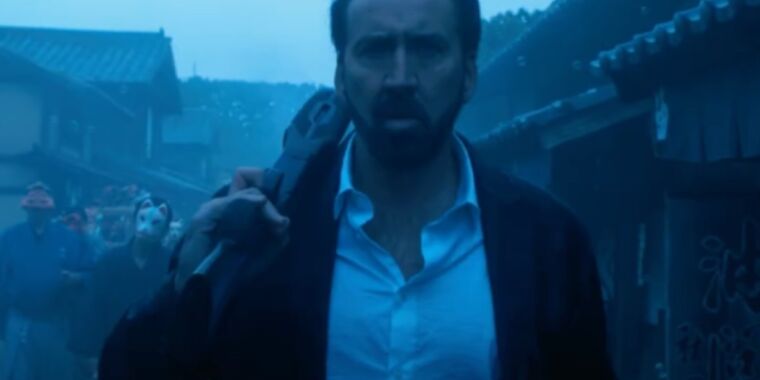
Nic Cage chews scenery with gusto in Prisoners of the Ghostland trailer
Nicholas Cage is an imprisoned bank robber named Hero.
The Governor (Bill Moseley) recruits Hero to track down his missing granddaughter… within five days.
YouTube/RLJE Films
There will be explosive consequences for Hero’s genitals should he fail.
YouTube/RLJE Films
Sofia Boutella plays the granddaughter, Bernice, who finds herself trapped in Ghostland.
YouTube/RLJE Films
Ghostland looks like your typical post-apocalyptic dystopia by day.
YouTube/RLJE Films
At night, things get a bit weirder.
YouTube/RLJE Films
One of the denizens, channeling Pris from Blade Runner.
YouTube/RLJE Films
This clock holds some significance for the residents of Ghostown.
YouTube/RLJE Films
Masked figures roam the ruins, which are dotted with discarded mannequins.
YouTube/RLJE Films
A creepy close-up.
YouTube/RLJE Films
Bernice witnesses a mushroom cloud.
YouTube/RLJE Films
Tak Sakaguchi as a warrior named Yasujiro? Sure, why not.
YouTube/RLJE Films
Mano a mano.
YouTube/RLJE Films
Hero is probably glad to have some firepower.
YouTube/RLJE Films
Will Bernice and Hero be able to escape the Ghostland?
YouTube/RLJE Films
Nicholas Cage’s unusual artistic choices over the years have been frequently remarked upon by critics, and no doubt he’s been in some pretty bad films over his long and storied career (*cough* The Wicker Man *cough*). But he’s also chosen some truly original, visionary independent projects, most recently 2019’s Lovecraft adaptation Color Out of Space and the bloody horror comedy Willy’s Wonderland earlier this year. He’s currently earning critical raves for his portrayal of a chef turned truffle hunter in search of his stolen truffle pig in Pig. And now we have the official trailer for Cage’s latest film, Prisoners of the Ghostland, a post-apocalyptic thriller that looks like Max Max transported into a surreal samurai Western.
Prisoners is helmed by idiosyncratic auteur Sion Sono. While Sono isn’t a household name in the US, he has enjoyed a fair amount of fame in his native Japan and on the film festival circuit. The Hollywood Reporter once called him “the most subversive director working in Japanese cinema today, with nearly 50 films of various genres—rite-of-passage stories fueled with social transgressions, all-out sex-and-gore thrillers, hip-hop musicals, and warm human drama.” He’s perhaps best known for 2008’s Love Exposure, a four-hour (!) art-house comedy drama inspired by Sono’s own youthful experience with a cult.
Prisoners of the Ghostland is Sono’s English-language debut, and it looks like a good fit for Cage’s colorfully flamboyant, mega-acting style. (Cage himself has called his method “Nouveau Shamanic” or “Western kabuki.”) The film premiered in January at the Sundance Film Festival to decidedly mixed reviews, although both Cage’s performance and Sono’s striking visuals received praise.
Per the official premise:
In the treacherous frontier city of Samurai Town, a ruthless bank robber (Cage) is sprung from jail by wealthy warlord The Governor (Bill Moseley, Carnivale), whose adopted granddaughter Bernice (Sofia Boutella, Kingsman) has gone missing. The Governor offers the prisoner his freedom in exchange for retrieving the runaway. Strapped into a leather suit that will self-destruct within five days, the bandit sets off on a journey to find the young woman—and his own path to redemption.
Complicating matters is the fact that Bernice is caught in a “dark supernatural universe” (aka the titular Ghostland) ruled by a creepy group of ghostly revenants. Break the curse, and Cage’s antihero bank robber (named Hero) and Bernice will be able to escape. The film also stars actor/director Nick Cassavetes (Face/Off, The Other Woman) as a character named Psycho, Tak Sakaguchi as Yasujiro, Yuzuka Nakaya as Bernice’s adoptive sister, and Ed Skrein (Game of Thrones, Alita: Battle Angel) in an as-yet-unnamed role.
The trailer’s opening sets up the basic premise, showing Hero being marched out in chains to meet the Governor, who is dressed all in white and has a suitably smarmy drawl. Hero puts on the leather suit, with explosive devices in each arm, in the collar, and—just for good measure—the crotch area. (This prompts giggles from the women in the crowd and a sardonic “really?” from Cage.) Next, we’re off to the highway “where evil reigns” and from there into the Ghostland, “a land of no escape.” It’s not long before Hero is desperate to find a way out, but to do so, he must “surrender to fate.” Apparently, that involves engaging in a sword fight with Sakaguchi’s samurai warrior, a nuclear explosion, and something strange going on with a tower clock.
Overall, this film looks like a beautifully bonkers mishmash of stylistic influences. Say what you will of his eccentric and uneven choice of projects, but at least Cage is never boring. The actor called this “the wildest movie I’ve ever made… and that’s saying something.” So Prisoners of the Ghostland just might be worth a watch.
Prisoners of the Ghostland debuts in theaters and on demand on September 17, 2021.
Jeopardy! selects executive producer of Jeopardy! as new host of Jeopardy!
<img src="https://rassegna.lbit-solution.it/wp-content/uploads/2021/08/jeopardy-selects-executive-producer-of-jeopardy-as-new-host-of-jeopardy.jpg" alt="Mike Richards (right) will be the new regular host of Jeopardy! when it returns for its 38th season. The Big Bang Theory star Mayim Bialik will host "primetime and spinoff series." “>
Enlarge/ Mike Richards (right) will be the new regular host of Jeopardy! when it returns for its 38th season. The Big Bang Theory star Mayim Bialik will host “primetime and spinoff series.”
Sony Pictures Entertainment
Sony Pictures Entertainment announced today that Mike Richards and Mayim Bialik would share hosting duties on Jeopardy! when the show returns for its 38th season later this year, with Richards hosting the regular version of the show and Bialik hosting “primetime and spinoff series, including the upcoming all-new Jeopardy! National College Championship.”
The former co-host of Beauty and the Geek and the 2012 reboot of The $100,000 Pyramid, Richards has served as an executive producer of Jeopardy! since 2020 and will continue in those duties while hosting the show. Bialik is best known for her roles on The Big Bang Theory and Blossom, and she also has a PhD in neuroscience from UCLA.
Richards and Bialik will take over for longtime host Alex Trebek, who passed away in late 2020 following a pancreatic cancer diagnosis; his last episodes aired in January 2021. Throughout the rest of its 37th season, the show used a long list of guest hosts to fill in for Trebek at the podium, including Richards and Bialik but also former Jeopardy! champion Ken Jennings, newscasters Katie Couric and Anderson Cooper, and book enthusiast LeVar Burton.
After news of Richards’ potential selection began circulating earlier this month, he sent a memo to the Jeopardy! team claiming that he did not have final say over who the new host would be.
“I know I have mentioned this to you all before, but the choice on this is not my decision and never has been,” wrote Richards. “Throughout this search, Sony’s top priority has always been to continue the incredible legacy you and Alex built. As you know, Alex always believed the game itself and the contestants are the most important aspects of the show, and that will continue to be the guiding principle as the decision is finalized.”
The memo also addressed allegations that Richards had discriminated against several pregnant employees while serving as executive producer of The Price Is Right. (Both suits were eventually settled.)
“These were allegations made in employment disputes against the show,” wrote Richards. “I want you all to know that the way in which my comments and actions have been characterized in these complaints does not reflect the reality of who I am or how we worked together on The Price is Right.”
Warner Bros says Back 4 Blood racial slur was “unintentional”
Zombie-killing with friends: You’ve done this before, but Back 4 Blood makes a strong case for its version feeling surprisingly fresh.
This monster chases you through one act’s chapter, and you can either run away or burn through ammo resolving his disagreements.
Turtle Rock / WB Games
Fog and god rays alike spill through many of B4B‘s environments.
Turtle Rock / WB Games
The way light shafts filter through these branches looks even better in motion.
Turtle Rock / WB Games
Fire typically does a great job annoying oncoming zombies.
Turtle Rock / WB Games
So do bullets.
Turtle Rock / WB Games
You can see a howitzer through the subtitles on this one.
Turtle Rock / WB Games
The fog obscures some, but not all, of the impending doom in this image.
Turtle Rock / WB Games
This ferry is now boarding… the dead.
Turtle Rock / WB Games
Farmville.
Turtle Rock / WB Games
Offer a prayer for the dead, or just stock up on weapons and ammo in that box over there.
Turtle Rock / WB Games
Some real Pacific Northwest vibes in this valley.
Turtle Rock / WB Games
A number of players taking part in the recent beta test for co-op zombie shooter Back 4 Blood were shocked to hear the undead hordes screaming what seemed to be a racial slur as they shambled forward. Now, publisher WB Games says it is working to fix an audio phenomenon it says was an “unintended” result of two separate sound files mixing during gameplay.
Twitter user HomBKE was among the first to publicize video of Back 4 Blood‘s undead “Ridden” groaning what sounds a lot like the n-word shortly after the game’s closed beta launch on Friday (“What did you call me?” he responds incredulously in the clip). User Dotodoya responded with a similar clip. Kotaku’s Zack Zweizen also reported hearing the audio over the weekend, a situation he described as “100% likely unintentional but also 100% unfortunate.”
Since then, WB Games has confirmed that supposition in a statement provided to media outlets:
Our team has been made aware of offensive language that can be heard when playing the game. This was not recorded or ever intended to be part of our gameplay. The audio is a result of two different Ridden growls that are playing simultaneously and when heard together sound like that word. We are working diligently to fix this issue, which should be completed either in time for the Beta or when the game launches.
While we didn’t notice any unintended slurs during our time with the Back 4 Blood beta, we did enjoy the Left 4 Dead-style gameplay, especially the zombies-versus-humans competitive modes. The game is set to enter open beta on Thursday before a wider release planned for October.
AMD RX 6600XT review: A sad trombone noise of a “$379” 2021 GPU
MSI’s version of the AMD RX 6600XT, which is the one Ars Technica tested for this review.
It comes in a relatively nondescript box, as opposed to AMD’s higher-end RDNA 2 GPU boxes.
How the GPU looks on my kitchen floor.
Sam Machkovech
You can’t see from this angle, but it only requires one 8-pin connector for power, and includes a TPD of 160W.
Here’s a better angle of that 8-pin connector.
Sam Machkovech
In a traditional PC hardware cycle, AMD’s new RX 6600XT could have been a welcome stopgap for a budget audience. Over the years, we’ve regularly seen this kind of GPU from both major GPU manufacturers. Those companies regularly turn down some specs, repurpose sub-optimal chips, and get a moderately priced option to follow their biggest kahunas for anybody tiptoeing into solid 1080p or 1440p gaming options on PC.
Unfortunately, there’s nothing traditional about the latest traditional PC hardware cycle. Today’s supply-and-demand ecosystem of computer GPUs looks like something out of a terrifying Dario Argento film. The horrors that lurk in every shadow include chip shortages and bot-fueled scalper waves.
And that context really helps us frame the $379 RX 6600XT—an underpowered, overpriced, and downright disappointing GPU whose primary sales pitch is 1080p gaming. That category is famously CPU-limited, not GPU-limited, so this GPU’s mileage will truly vary based on your rig. In general, Nvidia’s RTX 3060 Ti (at only $20 more MSRP) wins handily, while Nvidia’s RTX 2060 Super (which launched for $399 in July 2019) is within shouting distance of this brand-new card. That latter yardstick in particular makes AMD’s newest product a hard GPU to recommend.
Any changes in cabin pressure yet?
This is arguably the loudest example yet of GPU manufacturers getting in on the sector’s recent price inflation, as opposed to letting the market do so. A $379 price tag is not a great cost for the 6600XT, but it’s not clear that a more appropriate MSRP, like $299 or $319, would lead to a fairer price reaching average customers. “Street value” is a real thing. When calculating actual market prices, for example, we’re closer to the $500 range for both aforementioned Nvidia GPUs.
As such, I once again have to smother this piece in reminders about general GPU availability. And, once again, AMD (like its competition Nvidia) isn’t forthcoming about how many of its new cards will go on sale later this week. The best data point we have is how far AMD trails behind Nvidia on the metric of installed GPUs in the wild. Steam’s publicly available hardware surveys point to Nvidia’s RTX 3000 cards landing inside far more Steam-connected PCs than AMD’s RDNA 2 cards. That could be because Nvidia has sold more cards, or at least sold more cards to active Steam gamers. Either way, I don’t have a firm indication that the 6600XT will dramatically change the availability story.
(Editor’s note: After saying so many similar things in so many recent GPU reviews, I feel like a flight attendant reading rote notes ahead of a flight. “Should the GPU market stabilize in the near future, please look to the exit doors at the front, sides, and rear of the PC marketplace.”)
A note on 6600XT’s 1080p emphasis
RX 6600XT reference-model specs, as provided by AMD. Click forward to see how much it’s downgraded from the RX 6700XT.
RX 6700XT specs, as compared to 2019’s RX 5700XT.
When it comes down to it, the RX 6600 is a peculiar GPU option for one main reason: its pledge of solid PC performance at 1080p resolution, as opposed to 1440p or higher. AMD swears that this differential bears out in its own cherry picked test results, promising statistically significant 1080p gains over Nvidia’s RTX 3060 (MSRP: $329). Its charts include tests run on a Ryzen 5 5600X system, where the RX 6600 beat the cheaper Nvidia card with games set to 1080p resolution and identical “maxed out” visual settings at anything from 5 percent to 30 percent.
However, Ars favors 4K resolutions for GPU tests, as anything lower can contribute more CPU-bound limitations to resulting frame rate charts. Our measurements are meant to offer you percentages of difference that you can then expect to scale to your own PC. When AMD’s RDNA 2 line began promising significantly better performance at 1440p over Nvidia’s competition—and claimed this was an intentional engineering direction on their part—we ran resulting tests. Sure enough, we saw significant percentage gains that weren’t necessarily CPU bound.
But dropping all the way to 1080p with a testing rig that maxes out at an Intel i7-8700K GPU means we can’t reliably duplicate AMD’s own 1080p performance-boost sales pitch. Our percentages in those tests vary with both higher and lower results based on the game, and these games are stretching into 120 fps territory and above at that point, which is typically the threshold where a CPU begins to top out. Our 1080p charts are therefore, in our opinion, misleading enough for average customers to not be worth factoring into our usual comparison matrix.
I’m not printing AMD’s exact numbers because we cannot verify them, and because their own 1080p tests weren’t also conducted on the $399 RTX 3060 Ti, nor on 2019’s RTX 2060 Super. Having already written my own negative review of the RTX 3060, I understand why AMD might be tempted to have the press directly compare the RX 6800 to that card. However, that card’s MSRP is roughly 15 percent cheaper—and AMD’s list of 1080p results for that card are, whaddya know, roughly 15 percent worse.
https://arstechnica.com/?p=1785836
Review: James Gunn’s The Suicide Squad is like The Boys on steroids
<img src="https://rassegna.lbit-solution.it/wp-content/uploads/2021/08/review-james-gunns-the-suicide-squad-is-like-the-boys-on-steroids.jpg" alt="Don't call it a reboot: Margot Robbie stars in James Gunn's The Suicide Squad“>
Enlarge/ Don’t call it a reboot: Margot Robbie stars in James Gunn’s The Suicide Squad
Warner Bros.
Fan enthusiasm has been high leading up to the premiere of The Suicide Squad, James “Don’t Call It a Reboot” Gunn’s band-of-misfit-supervillains homage to the classic 1967 film The Dirty Dozen (among many other influences). That enthusiasm was not misplaced. This tenth installment in the DCEU is a fast-paced, blood-soaked, wildly irreverent escapade that skillfully balances gore and goofiness, with equal amounts of irreverence and sincerity. Think The Boys pumped up on a steroids.
(Some spoilers below but no major reveals.)
As I’ve written previously, The Suicide Squad is not a direct sequel to the 2016 film directed by David Ayer. Gunn wanted to take the franchise in a new direction and introduce new characters. But Joel Kinnaman and Viola Davis do reprise their 2016 roles as Col. Rick Flag, the squad’s understandably jaded field leader, and Intelligence Officer Amanda Waller, respectively. Steve Agee plays John Economos, prison warden and aide to Waller. As with the 2016 film, the titular squad is composed entirely of criminal supervillains, led by Flag, under the authority of Waller. Waller plants nanite bombs in their necks to keep them reasonably under control, promising to shorten their sentences if their missions are successfully fulfilled.
In addition to fan favorite Harley Quinn (Margot Robbie), the squad this time around includes Bloodsport (Idris Elba), aka Robert DuBois, a mercenary with military training who is in prison for shooting Superman with a kryptonite bullet. Gunn has said he modeled many of the squad characters after different film genres, and Bloodsport channels the 1960s action hero Steve McQueen. He has a a bickering rivalry with Peacemaker (John Cena), another military veteran portrayed as a “douchey, bro-y Captain America,” purportedly inspired by 1970s TV series like Wonder Woman.
Jai Courtney reprises his role as Captain Boomerang. There’s also Ratcatcher 2, aka Cleo Cazo (Daniela Melchior); vigilante hacker Savant (Michael Rooker); Nanaue, aka King Shark (voiced by Rooker’s Cliffhanger co-star Sylvester Stallone); Blackguard (Pete Davidson); Javelin (Flula Borg), Weasel (Sean Gunn, James’ kid brother), an anthropomorphic weasel; alien mass murderer Mongal (Mayling Ng); TDK (Nathan Fillion), a metahuman whose arms detach from his body; and Polka-Dot Man (David Dastmalchian), who is far more deadly than his trademark polka-dot suit and big-time mommy issues would imply.
That is a jam-packed ensemble cast, and anyone familiar with The Dirty Dozen knows that many of them are bound to become cannon fodder. Gunn had hinted as much in pre-release interviews, expressing his delight that the studio gave him permission to draw deep from the DC Comics archives and kill off characters as he saw fit, thereby ensuring the film lives up to its name.
Joel Kinnaman is back as Colonel Rick Flag, heroic leader of Task Force X, aka The Suicide Squad.
YouTube/Warner Bros.
Viola Davis reprises her role as A.R.G.U.S. agent Amanda Waller.
YouTube/Warner Bros.
John Economos (Steve Agee) is the prison warden and an aide to Waller.
YouTube/Warner Bros.
Margot Robbie is as delightful as ever as the sweetly psychotic Harley Quinn.
Idris Elba plays Bloodsport.
YouTube/Warner Bros.
John Cena plays Peacemaker, a “douchey Captain America.”
YouTube/Warner Bros
King Shark (voiced by Sylvester Stallone) raises his hand.
YouTube/Warner Bros.
We are here for the morose Polka-Dot Man (David Dastmalchian).
YouTube/Warner Bros.
Daniela Melchior plays Ratcatcher 2.
YouTube/Warner Bros.
Peter Capaldi plays Thinker.
YouTube/Warner Bros.
Meet Javelin (Flula Borg).
YouTube/Warner Bros.
Mayling Ng is Mongal.
YouTube/Warner Bros.
Pete Davidson as Blackguard.
YouTube/Warner Bros.
Then there’s Weasel (Sean Gunn).
YouTube/Warner Bros.
Apparently T.D.K. (Nathan Fillion) can separate his arms from his body?
YouTube/Warner Bros.
Michael Rooker plays vigilante computer hacker Savant.
YouTube/Warner Bros.
Honestly, it doesn’t seem like they’re sending their best.
YouTube/Warner Bros.
King Shark does his thing.
YouTube/Warner Bros.
Check out Polka-Dot Man in action.
YouTube/Warner Bros.
Peacemaker thinks there’s “nothing like a bloodbath to start the day.”
YouTube/Warner Bros.
When rats attack.
YouTube/Warner Bros.
Bloodsport has a shiny new toy.
YouTube/Warner Bros.
This mission is suicide.
YouTube/Warner Bros.
The director wastes no time establishing that he’s willing to do just that. The mission kicks off with the squad’s disastrous deployment on a Corto Maltese beach that is reminiscent of the opening sequence in Saving Private Ryan, except with a lot more (very) dark humor. Let’s just say Belle Reve penitentiary hasn’t really sent their best.
The survivors do manage to regroup and carry on with their mission: to infiltrate a high-security prison call Jotunheim—a former WW2 Nazi stronghold—and destroy all evidence related to the mysterious “Project Starfish.” The squad must kidnap mad scientist Gaius Grieves, aka The Thinker (Peter Capaldi), to gain access to Jotunheim. Fortunately, Flag finds an unexpected ally in Sol Soria (Alice Braga), leader of a band of rebels seeking to regain control of their country’s government. The current president is President Silvio Luna (Juan Diego Botto), who has only just assumed the role in the wake of a military coup, led by Major General Mateo Suarez (Joaquin Cosio).
Gunn’s willingness to sacrifice characters ensures that there are very real stakes for this squad, and while some are obviously doomed to die, there’s a few genuine surprises in the mix. That alone is a welcome change from your average superhero movie, where heroes are almost always protected by the plot (if only to ensure a possible sequel).
The director is also careful to develop key relationships among the surviving squad members, which makes later events that much more poignant as they unfold. Bloodsport and Peacemaker are highly competitive and engage in a lot of testosterone-fueled one-up-manship, while Flag and Peacemaker have a shared “brothers in arms” history despite their differences. Ratcatcher 2, with her trusty pet rat, Sebastian, serves as the group’s heart, befriending King Shark and forming a bond with Bloodsport. Even though the latter really hates rats, Cleo is confident there is good in him, if only because Sebastian really likes him. (Taika Waititi has a cameo in flashbacks as Cleo’s late father, the original Ratcather.)
As for Harley Quinn, she gets a twisted narrative arc that includes a literal Cinderella story when President Luna becomes enamored—if Cinderella were a crazed, wildly unpredictable psychopath. It ends about as well as you’d expect, given Harley’s terrible taste in men. Birds of Prey played up a certain bubble-gum sweetness to the character, despite her violent outbreaks. There’s still some of that sweetness here, but Robbie also shows just how dangerously unhinged her character is, switching emotional gears on a dime and perceiving all the carnage she inflicts through a burst of Technicolor flowers and butterflies.
Gunn proved with the PG-13 Guardians of the Galaxy that he could take an ensemble cast of B- and C-list comic book characters and still produce a wildly entertaining, action-packed blockbuster with tons of irreverent humor and a touch of heart. He brings a similar slyly self-aware sensibility to The Suicide Squad, but the R rating meant the director could pull out all the stops on the blood and gore front. This is not a film for the squeamishly inclined. The humor is darker, the body count is higher, and the finale becomes truly bonkers with the appearance of a giant alien starfish (Starro the Conquerer, another deep cut from the comics). In Gunn’s capable hands, it all comes together to give us the group of supervillains-turned-unexpected-heroes that we all wanted to see.
The Suicide Squad is now playing in theaters, as well as streaming on HBO Max. We strongly recommend only watching movies in theaters if you are fully vaccinated. HBO Max has already ordered a Peacemaker spinoff straight-to-series, with Cena and Agee reprising their roles, although Gunn was cagey about revealing whether it would be set before or after the film until after The Suicide Squad‘s release. The series is slated for a January 2022 debut.
https://arstechnica.com/?p=1784974
Why I love Bandcamp: Waived-fee Fridays, solid app, no DRM, more
Enlarge/ For the rest of 2021, Bandcamp Friday is back on the first Friday of every month (including today). That’s one of many reasons I recommend checking out Bandcamp as a solid digital music storefront.
The digital music universe has come a long way since the Napster era, and these days, that means a good number of paid subscription services are angling to serve all the music you could imagine in a legally acceptable package. But getting music-subscription dollars into your favorite musicians’ hands remains a sticking point.
As far as musicians are concerned, Apple Music is still one of the better payout services, with the company officially estimating as much as one penny paid per streamed song, while Spotify maxes out at less than half a penny per stream—and those payouts can drop based on whatever wacky spreadsheet-calculus each service runs in the background. Either way, that math checks out; your $10 or $15 per month can only be divided so far between hundreds of song streams.
If you’re willing to open your wallet a little wider for downloaded music, today’s return of the Bandcamp Fridays promotion is a massive counterbalance to underpaying subscription services. And it’s a good excuse to point to Bandcamp as a feature-rich, mobile-friendly option for buying music online.
You down with OGG?
Bandcamp Fridays launched in early 2020 as a way to drive more money into bands’ and artists’ pockets, especially after so many COVID-19 tour cancellations. Buy any digital-only content via Bandcamp on the first Friday of a month when the promotion is active, and the service waives its normal cut of artist revenue (which is 15 percent by default and 10 percent once a user exceeds $5,000 USD in revenue over the past 12 months). The promotion stuck to its every-first-Friday cadence for nearly a year before skipping some months in seemingly unpredictable fashion. This week, Bandcamp has confirmed that the Bandcamp Friday promotion will resume for the rest of 2021.
If you want nothing to do with Bandcamp’s app, buying albums via the service’s web interface works great—and offers tons of easy download options, instead of making you download raw files and compress them yourself.
Tapping through my recent purchases via the Android app.
“Download album” works as you might hope.
My “featured” roll reminded me that Noveller, an experimental musician who I am a huge fan of, has a brand-new album today. Targeted advertising that I don’t actually mind.
An example of Bandcamp Radio.
An example of Bandcamp Radio.
From a digital-rights perspective, it’s easy to recommend Bandcamp as a storefront, since any purchase includes unlimited downloads of DRM-free audio files—and you can choose between lossless FLAC, uncompressed WAV, and a variety of other lossy and lossless formats. If you’re not ready to buy, Bandcamp also makes it easy for artists to enable uninterrupted preview listens of their songs and albums, along with an optional “you’ve listened enough, maybe buy it” nag after a single machine uses the preview feature a few times. And once you buy anything via Bandcamp, you can use the service’s mobile app on Android and iOS to download offline copies, see news updates from artists you’ve bought from previously, and access Bandcamp-curated playlists. This app, in particular, has matured greatly over the past year on both feature and stability fronts.
Bandcamp’s normal 15 percent revenue cut is certainly competitive compared to other popular digital storefronts, including gaming services like Steam and Epic Games Store. That’s made me more likely to buy on days other than the first Friday of a month, though I’ll admit that Bandcamp Fridays drove me to the service as a way to pay my favorite artists when I can’t see them in concert. Since then, Bandcamp has won me over as a preferred music service and app for daily use. (And if you’re an international user, you can shop at Bandcamp using a wide range of compatible currencies, whether using its built-in payment processing or Paypal, which I appreciate.) You have until midnight Pacific Time today to take advantage of this month’s waived-fee promotion.